

Real-World Variability in the Prediction of Intracranial Aneurysm Wall Shear Stress: The 2015 International Aneurysm CFD Challenge
Open accessThe DOI matches its Crossref record; 50 of the 50 references it cites were found in a registry or an index.
Abstract
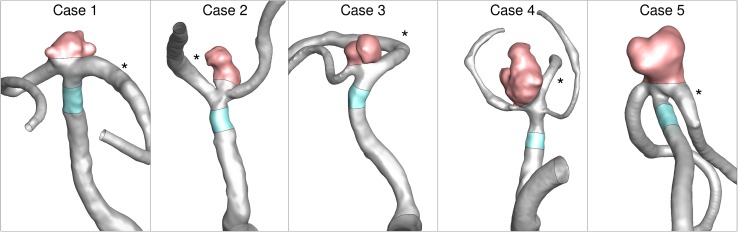
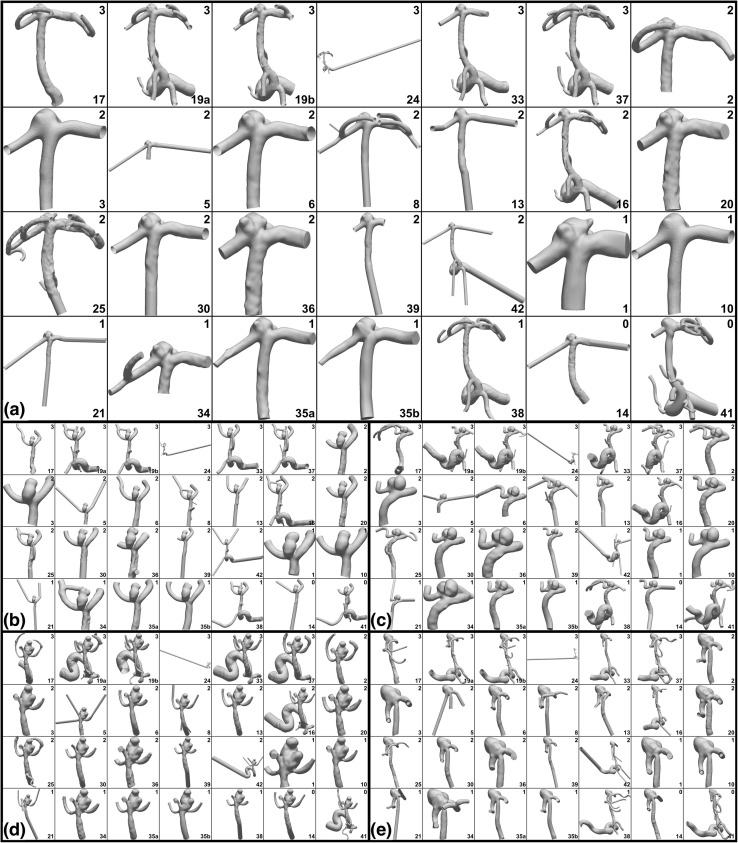
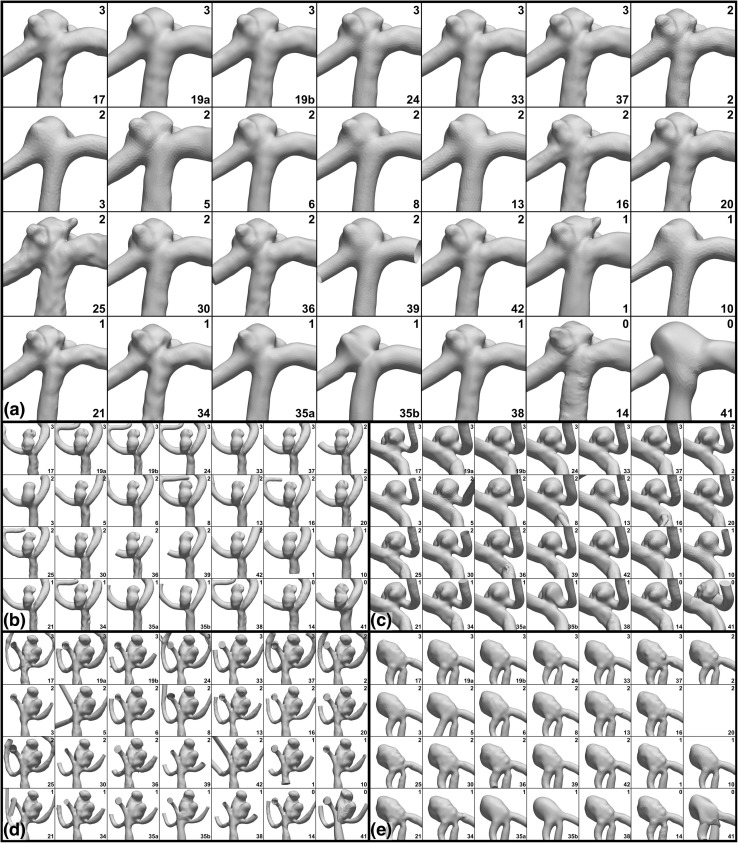
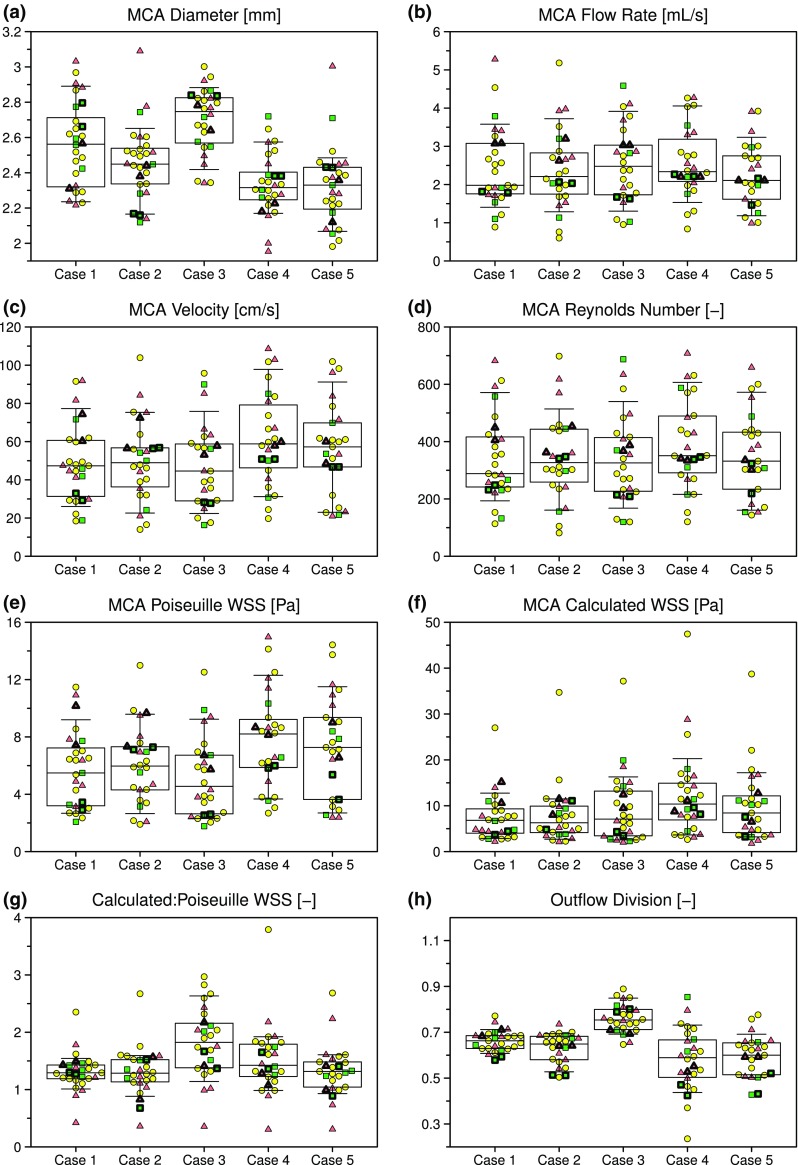
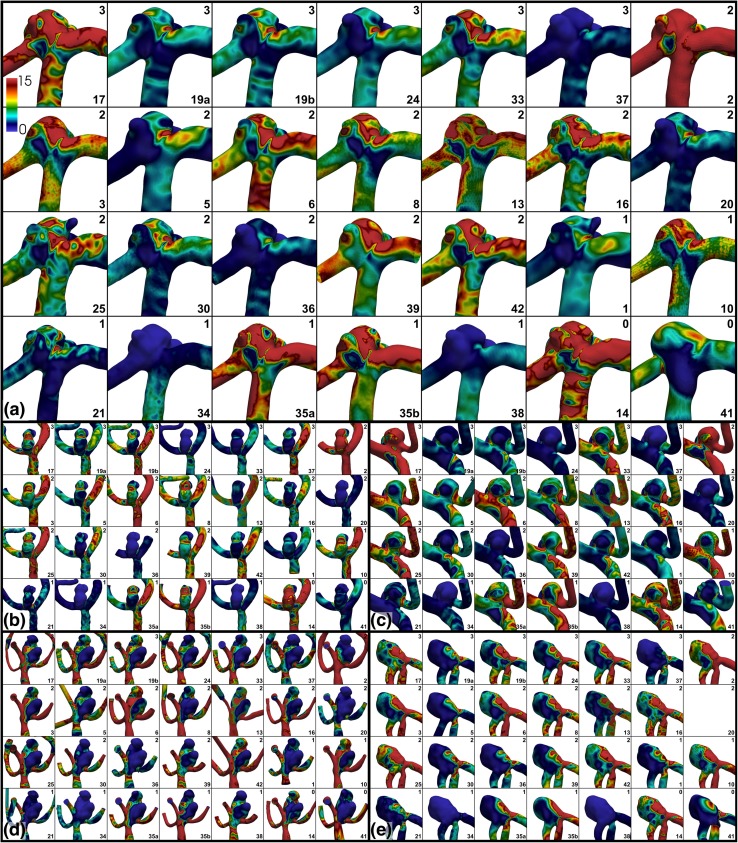
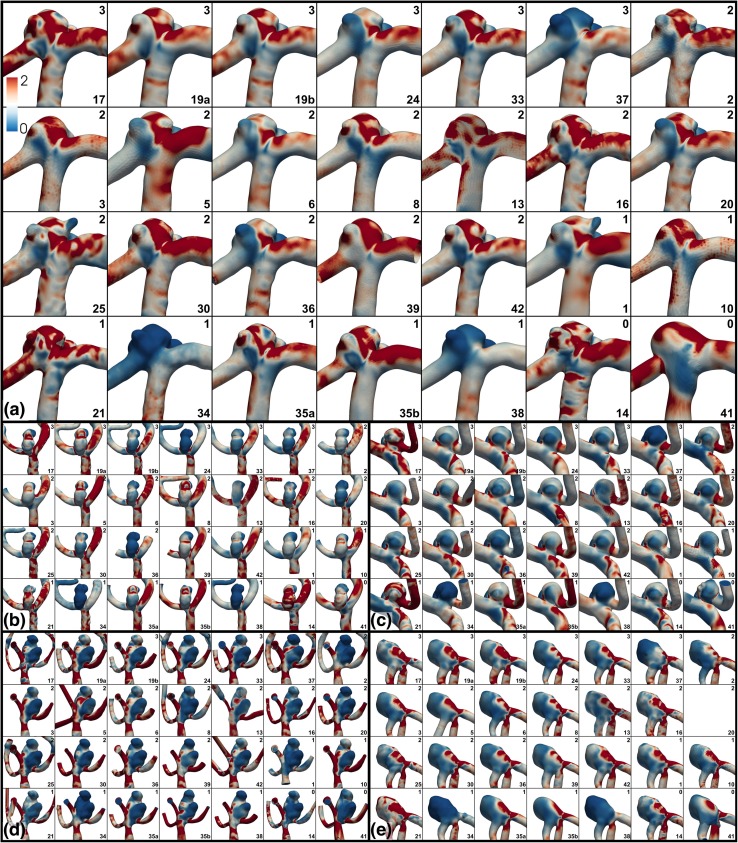
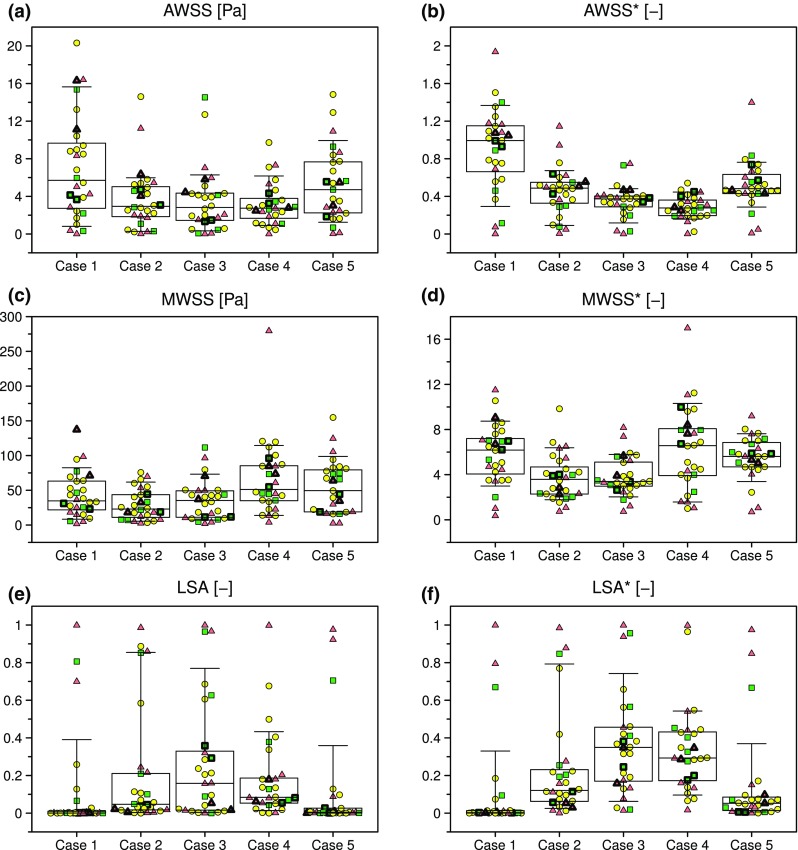
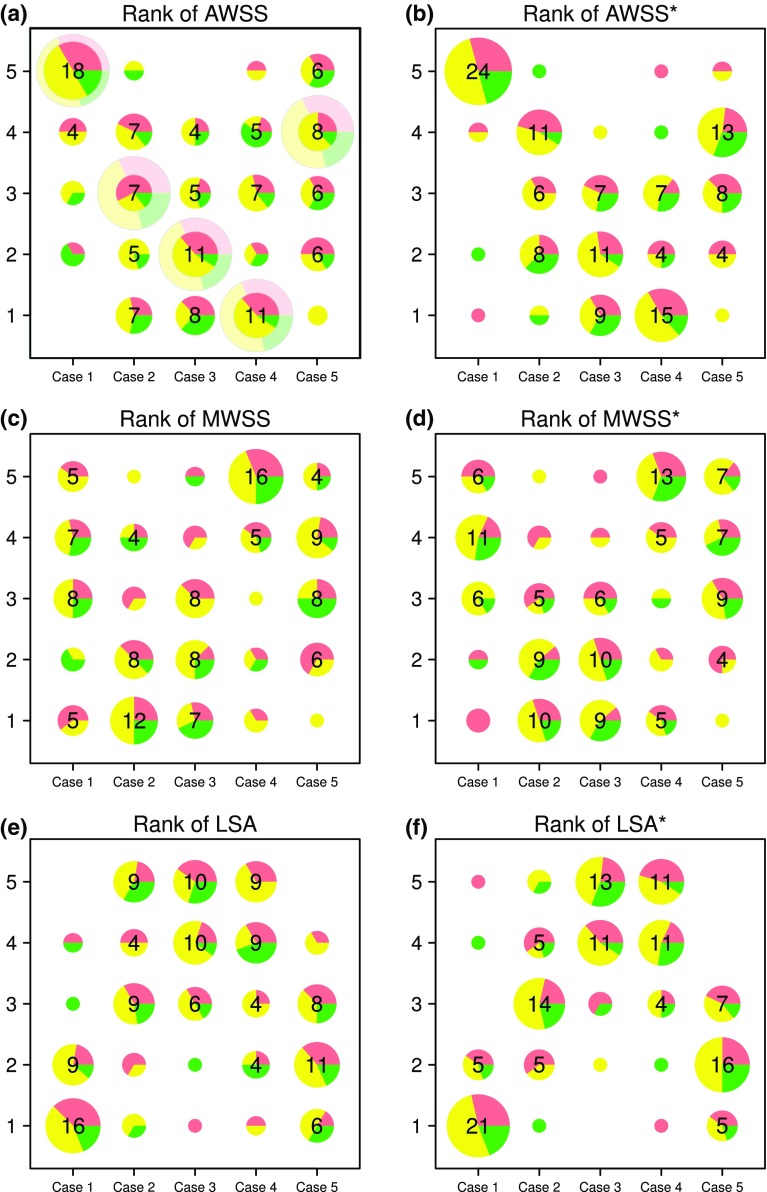
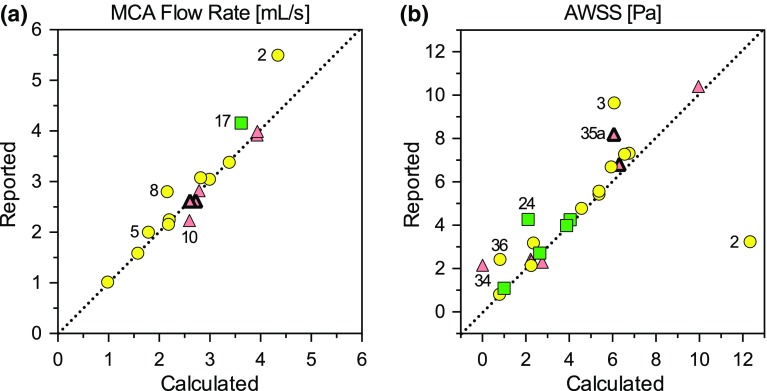
PURPOSE: Image-based computational fluid dynamics (CFD) is widely used to predict intracranial aneurysm wall shear stress (WSS), particularly with the goal of improving rupture risk assessment. Nevertheless, concern has been expressed over the variability of predicted WSS and inconsistent associations with rupture. Previous challenges, and studies from individual groups, have focused on individual aspects of the image-based CFD pipeline. The aim of this Challenge was to quantify the total variability of the whole pipeline. METHODS: 3D rotational angiography image volumes of five middle cerebral artery aneurysms were provided to participants, who were free to choose their segmentation methods, boundary conditions, and CFD solver and settings. Participants were asked to fill out a questionnaire about their solution strategies and experience with aneurysm CFD, and provide surface distributions of WSS magnitude, from which we objectively derived a variety of hemodynamic parameters. RESULTS: A total of 28 datasets were submitted, from 26 teams with varying levels of self-assessed experience. Wide variability of segmentations, CFD model extents, and inflow rates resulted in interquartile ranges of sac average WSS up to 56%, which reduced to < 30% after normalizing by parent artery WSS. Sac-maximum WSS and low shear area were more variable, while rank-ordering of cases by low or high shear showed only modest consensus among teams. Experience was not a significant predictor of variability. CONCLUSIONS: Wide variability exists in the prediction of intracranial aneurysm WSS. While segmentation and CFD solver techniques may be difficult to standardize across groups, our findings suggest that some of the variability in image-based CFD could be reduced by establishing guidelines for model extents, inflow rates, and blood properties, and by encouraging the reporting of normalized hemodynamic parameters.
Overview
The claims and statistics of this paper haven’t been checked yet.
Free: it reads the open-access text and checks the first 5 claims that cite a source we can check. Create a free account to check every claim.
Integrity signals
Registry
Cites
Statistics
Figures
Verification
Claims the paper makes
The claims and statistics of this paper haven’t been checked yet.
Free: it reads the open-access text and checks the first 5 claims that cite a source we can check. Create a free account to check every claim.
Claims other papers make about this one
Each is checked against this paper’s own text: does it say what the citing paper says it does?
The source backs part of the claim, not all of it — or backs it for a different population, condition or comparison.
In the citing paper
“Studies where multiple modeling groups attempt to solve the same pre-specified problem have been useful in various fields for code verification and, more generally, for scientific reproducibility [48–50].”
From Credibility assessment of in silico clinical trials for medical devices (2024) · cites this paper as [48]
Experimental — accuracy not yet measured
Self-check
Percentages, sums and reported differences re-computed from the paper’s own numbers.
The self-check needs the paper’s full text.
Citations
Cites
Hemodynamic shear stress and its role in atherosclerosis
Malek, A. M. (1999) · JAMA · doi:10.1001/jama.282.21.2035 · Cited by 3,650
Meng, H., Tutino, V. M., Xiang, J., & Siddiqui, A. (2014) · American Journal of Neuroradiology · doi:10.3174/ajnr.a3558 · Cited by 955
Hemodynamic–Morphologic Discriminants for Intracranial Aneurysm Rupture
Xiang, J., Natarajan, S. K., Tremmel, M., Ma, D., Mocco, J., Hopkins, L. N., Siddiqui, A. H., Levy, E. I., & Meng, H. (2011) · Stroke · doi:10.1161/strokeaha.110.592923 · Cited by 782
Cebral, J. R., Castro, M. A., Appanaboyina, S., Putman, C. M., Millan, D., & Frangi, A. F. (2005) · IEEE Transactions on Medical Imaging · doi:10.1109/tmi.2005.844159 · Cited by 545
Cebral, J. R., Mut, F., Weir, J., & Putman, C. (2011) · American Journal of Neuroradiology · doi:10.3174/ajnr.a2419 · Cited by 470
Image-based computational simulation of flow dynamics in a giant intracranial aneurysm.
Steinman, D. A., Milner, J. S., Norley, C. J. D., Lownie, S. P., & Holdsworth, D. W. (2003) · PubMed · Cited by 468
Self-citationBlood Flow Distribution in Cerebral Arteries
Zarrinkoob, L., Ambarki, K., Wåhlin, A., Birgander, R., Eklund, A., & Malm, J. (2015) · Journal of Cerebral Blood Flow & Metabolism · doi:10.1038/jcbfm.2014.241 · Cited by 365
A Framework for Geometric Analysis of Vascular Structures: Application to Cerebral Aneurysms
Piccinelli, M., Veneziani, A., Steinman, D. A., Remuzzi, A., & Antiga, L. (2009) · IEEE Transactions on Medical Imaging · doi:10.1109/tmi.2009.2021652 · Cited by 346
Self-citationCastro, M. A., Putman, C. M., & Cebral, J. R. (2006) · PubMed Central · Cited by 263
Bazilevs, Y., Hsu, M.-C., Zhang, Y., Wang, W., Kvamsdal, T., Hentschel, S., & Isaksen, J. G. (2010) · Biomechanics and Modeling in Mechanobiology · doi:10.1007/s10237-010-0189-7 · Cited by 244
Cited by
Berg, P., Saalfeld, S., Voß, S., Beuing, O., & Janiga, G. (2019) · Neurosurgical FOCUS · doi:10.3171/2019.4.focus19181 · Cited by 103
Self-citationLiu, H., Lan, L., Abrigo, J., Ip, H. L., Soo, Y. O. Y., Zheng, D., Wong, K. S., Wang, D., Shi, L., Leung, T. W. H., et al. (2021) · Frontiers in Physiology · doi:10.3389/fphys.2021.718540 · Cited by 93
Multiple aneurysms anatomy challenge 2018 (MATCH): phase I: segmentation
Berg, P., Voß, S., Saalfeld, S., Janiga, G., Bergersen, A. W., Valen-Sendstad, K., Bruening, J., Goubergrits, L., Spuler, A., Cancelliere, N. M., et al. (2018) · Cardiovascular Engineering and Technology · doi:10.1007/s13239-018-00376-0 · Cited by 79
Self-citationSteinman, D. A., & Pereira, V. M. (2019) · Neurosurgical FOCUS · doi:10.3171/2019.4.focus19123 · Cited by 73
Self-citationSteinman, D. A., & Migliavacca, F. (2018) · Cardiovascular Engineering and Technology · doi:10.1007/s13239-018-00393-z · Cited by 71
Self-citationAssociation between aneurysm hemodynamics and wall enhancement on 3D vessel wall MRI
Khan, M. O., Arana, V. T., Rubbert, C., Cornelius, J. F., Fischer, I., Bostelmann, R., Mijderwijk, H.-J., Turowski, B., Steiger, H., May, R., et al. (2020) · Journal of neurosurgery · doi:10.3171/2019.10.jns191251 · Cited by 60
Credibility assessment of in silico clinical trials for medical devices
Pathmanathan, P., Aycock, K., Badal, A., Bighamian, R., Bodner, J., Craven, B. A., & Niederer, S. (2024) · PLOS Computational Biology · doi:10.1371/journal.pcbi.1012289 · Cited by 62
“Studies where multiple modeling groups attempt to solve the same pre-specified problem have been useful in various fields for code verification and, more generally, for scientific reproducibility [48–50].”
He, Y., Northrup, H. M., Le, H., Cheung, A. K., Berceli, S. A., & Shiu, Y.-T. E. (2022) · Frontiers in Bioengineering and Biotechnology · doi:10.3389/fbioe.2022.855791 · Cited by 60
Mousavi, S. V., Gerdroodbary, M. B., Sabernaeemi, A., Salavatidezfouli, S., & Valipour, P. (2024) · AIP Advances · doi:10.1063/5.0224235 · Cited by 54
Hemodynamics of Cerebral Aneurysms: Connecting Medical Imaging and Biomechanical Analysis
Rayz, V. L., & Cohen‐Gadol, A. (2020) · Annual Review of Biomedical Engineering · doi:10.1146/annurev-bioeng-092419-061429 · Cited by 59
“The CFD challenges demonstrated variability in segmenting the same image data sets among participating research groups (79, 82).”
BackgroundMethodPerinajová, R., Juffermans, J. F., Westenberg, J. J. M., van der Palen, R. L. F., van den Boogaard, P. J., Lamb, H. J., & Kenjereš, S. (2021) · Computers in Biology and Medicine · doi:10.1016/j.compbiomed.2021.104385 · Cited by 48
Khani, M., Burla, G. K. R., Sass, L. R., Arters, O., Xing, T., Wu, H., & Martin, B. A. (2022) · Fluids and Barriers of the CNS · doi:10.1186/s12987-022-00304-4 · Cited by 49
“Verification of numerical modeling approach Studies show that wide variability exists in CFD modeling techniques, and the choice of numerical solvers and settings, are complex and can yield disparate results for biofluids simulations [34].”
BackgroundMultiple Aneurysms AnaTomy CHallenge 2018 (MATCH)—phase II: rupture risk assessment
Berg, P., Voß, S., Janiga, G., Saalfeld, S., Bergersen, A. W., Valen‐Sendstad, K., Brüning, J., Goubergrits, L., Spuler, A., Chiu, T. L., et al. (2019) · International Journal of Computer Assisted Radiology and Surgery · doi:10.1007/s11548-019-01986-2 · Cited by 42
Self-citationDeep learning-based recognition and segmentation of intracranial aneurysms under small sample size
Zhu, G., Luo, X., Yang, T., Cai, L., Yeo, J. H., Yan, G., & Yang, J. (2022) · Frontiers in Physiology · doi:10.3389/fphys.2022.1084202 · Cited by 39
“Inaccurate segmentation (especially for important anatomical features, such as aneurysm necks) may result in unrealistic flow patterns and diverging flow parameter values and therefore may even lead to erroneous conclusions (Berg et al., 2018, 2019; Valen-Sendstad et al., 2018).”
ResultComputational Hemodynamic Modeling of Arterial Aneurysms: A Mini-Review
Lipp, S. N., Niedert, E. E., Cebull, H. L., Diorio, T. C., Ma, J. L., Rothenberger, S. M., Stevens, K. A., & Goergen, C. J. (2020) · Frontiers in Physiology · doi:10.3389/fphys.2020.00454 · Cited by 40
“Unique challenges exist for modeling IAs.”
BackgroundInfluentialMesh neural networks for SE(3)-equivariant hemodynamics estimation on the artery wall
Suk, J., de Haan, P., Lippe, P., Brüne, C., & Wolterink, J. M. (2024) · Computers in Biology and Medicine · doi:10.1016/j.compbiomed.2024.108328 · Cited by 56
Multiple Aneurysms AnaTomy CHallenge 2018 (MATCH)—Phase Ib: Effect of morphology on hemodynamics
Voß, S., Beuing, O., Janiga, G., & Berg, P. (2019) · PLoS ONE · doi:10.1371/journal.pone.0216813 · Cited by 34
Self-citationParitala, P. K., Anbananthan, H., Hautaniemi, J., Smith, M., George, A., Allenby, M. C., Mendieta, J. B., Wang, J., Maclachlan, L., Liang, E. S., et al. (2023) · Scientific Reports · doi:10.1038/s41598-022-27354-w · Cited by 33
Mu, Z., Qiu, X., Zhao, D., Li, X., Fu, M., Liu, Y., Gao, B., Zhao, P., & Wang, Z. (2020) · Computer Methods and Programs in Biomedicine · doi:10.1016/j.cmpb.2020.105373 · Cited by 31
Cancelliere, N. M., Najafi, M., Brina, O., Bouillot, P., Vargas, M. I., Lövblad, K., Krings, T., Pereira, V. M., & Steinman, D. A. (2019) · Journal of NeuroInterventional Surgery · doi:10.1136/neurintsurg-2019-015389 · Cited by 29
Self-citationKhani, M., Sass, L. R., Sharp, M. K., McCabe, A. R., Verbick, L. Z., Lad, S. P., & Martin, B. A. (2020) · Fluids and Barriers of the CNS · doi:10.1186/s12987-020-00185-5 · Cited by 35
Song, M., Wang, S., Qian, Q., Zhou, Y., Luo, Y., & Gong, X. (2024) · Scientific Data · doi:10.1038/s41597-024-04056-8 · Cited by 32
Gao, H., Zhu, X., & Wang, J.-X. (2020) · Computer Methods in Applied Mechanics and Engineering · doi:10.1016/j.cma.2020.113047 · Cited by 27
FSI modeling on the effect of artery-aneurysm thickness and coil embolization in patient cases
Paz, C., Suárez, E., Cabarcos, A., & Pinto, S. I. S. (2021) · Computer Methods and Programs in Biomedicine · doi:10.1016/j.cmpb.2021.106148 · Cited by 27
Frieberg, P., Aristokleous, N., Sjöberg, P., Töger, J., Liuba, P., & Carlsson, M. (2021) · Journal of Cardiovascular Translational Research · doi:10.1007/s12265-021-10198-6 · Cited by 27
Self-citationKjeldsberg, H. A., Albors, C., Mill, J., Viladés, D., Cámara, Ó., Sundnes, J., & Valen‐Sendstad, K. (2024) · International Journal for Numerical Methods in Biomedical Engineering · doi:10.1002/cnm.3825 · Cited by 26
“Image-based CFD studies come with a number of general limitations and potential error sources, including image segmentation and registration variability, 88,89 mitral valve modeling, 90 and non-Newtonian modeling, 91,92 which also apply to our study.”
BackgroundSelf-citationNajafi, M., Cancelliere, N. M., Brina, O., Bouillot, P., Vargas, M. I., Delattre, B. M. A., Pereira, V. M., & Steinman, D. A. (2020) · Journal of NeuroInterventional Surgery · doi:10.1136/neurintsurg-2020-015993 · Cited by 26
Self-citationIvantsits, M., Goubergrits, L., Kuhnigk, J., Hüllebrand, M., Brüning, J., Kossen, T., Pfahringer, B., Schaller, J., Spuler, A., Kühne, T., et al. (2021) · Medical Image Analysis · doi:10.1016/j.media.2021.102333 · Cited by 30
Self-citationKhalili, E., Daversin, C., Olivares, A. L., Mill, J., Cámara, Ó., & Valen‐Sendstad, K. (2024) · International Journal for Numerical Methods in Biomedical Engineering · doi:10.1002/cnm.3804 · Cited by 23
“…pipeline, which has shown to be highly sensitive to factors, such as segmentation differences, as demonstrated for other cardiovascular regions, 58 and it is clear that operator dependent tasks such as semi-automatic LA geometry extraction from images can have profound impact on simulation…”
BackgroundSelf-citationSouche, A., & Valen‐Sendstad, K. (2022) · Journal of Biomechanics · doi:10.1016/j.jbiomech.2022.111369 · Cited by 22
Self-citationReview of CFD Based Simulations to Study the Hemodynamics of Cerebral Aneurysms
Maramkandam, E. B., Kannan, A., Valeti, C., Manjunath, N., Panneerselvam, N. K., Alagan, A. K., Panchal, P. M., Kannath, S. K., Darshan, H. R., Nekkanti, R. K., et al. (2024) · Journal of the Indian Institute of Science · doi:10.1007/s41745-024-00431-x · Cited by 28
“There are several aspects of CFD simulations which can cause variability among research groups 82,83 .”
A Bi-fidelity ensemble kalman method for PDE-constrained inverse problems in computational mechanics
Gao, H., & Wang, J. (2021) · Computational Mechanics · doi:10.1007/s00466-021-01979-6 · Cited by 24
Hu, H., Luo, P., Kadir, D. H., & Hassanvand, A. (2023) · Physics of Fluids · doi:10.1063/5.0165575 · Cited by 20
Bauer, A., Wegt, S., Bopp, M., Jakirlic, S. Z., Tropea, C. D., Krafft, A. J., Shokina, N. Y., Hennig, J., Teschner, G., & Egger, H. (2019) · Experiments in Fluids · doi:10.1007/s00348-019-2758-6 · Cited by 26
morphMan: Automated manipulation of vascular geometries
Kjeldsberg, H. A., Bergersen, A. W., & Valen‐Sendstad, K. (2019) · The Journal of Open Source Software · doi:10.21105/joss.01065 · Cited by 18
“To use realistic geometries we could instead correlate the shape and computed stresses based on hundreds of patient-specific models, but this is very labor intensive and error-prone (Berg et al., 2018; Valen-Sendstad et al., 2018).”
MethodSelf-citationBozzetto, M., Remuzzi, A., & Valen‐Sendstad, K. (2023) · Physical and Engineering Sciences in Medicine · doi:10.1007/s13246-023-01355-z · Cited by 18
“Setting aside general limitations of patient-specific modelling of the cardiovascular system related to potential errors during segmentation [46] and the assumption of Newtonian rheology [47–49], there are a couple of specific limitations associated with the current study.”
BackgroundSelf-citationthe Unruptured Intracranial Aneurysms and SAH CDE Project Investigators, Hackenberg, K. A. M., Etminan, N., Wintermark, M., Meyers, P. M., Lanzino, G. S., Rüfenacht, D. A., Krings, T., Huston, J., Rinkel, G. J. E., et al. (2019) · Neurocritical Care · doi:10.1007/s12028-019-00728-1 · Cited by 18
Hemodynamic changes after intracranial aneurysm growth
Cornelissen, B. M. W., Leemans, E. L., Slump, C. H., van den Berg, R., Marquering, H. A., & Majoie, C. B. L. M. (2021) · Journal of neurosurgery · doi:10.3171/2021.6.jns204155 · Cited by 17
Self-citationWang, Q., Guo, X., Stäb, D., Jin, N., Poon, E., Lim, R., & Ooi, A. S. H. (2022) · International Journal of Heat and Fluid Flow · doi:10.1016/j.ijheatfluidflow.2022.108986 · Cited by 17
Shimano, K., Serigano, S., Ikeda, N., Yuchi, T., Shiratori, S., & Nagano, H. (2019) · Journal of Biorheology · doi:10.17106/jbr.33.32 · Cited by 14
“In references [6, 28, 29], the zero pressure condition was jointly used with restrictions on velocity gradient such as the traction-free condition and the zero velocity gradient condition.”
MethodYang, H., Hong, I., Kim, Y. B., Cho, K., & Oh, J. H. (2023) · Acta Neurochirurgica · doi:10.1007/s00701-022-05467-5 · Cited by 16
“[27] provided 3D rotational angiography image volumes of five middle cerebral artery aneurysms to 26 research groups in order to analyze cerebral aneurysms using CFD.”
MethodResultOn the Role and Effects of Uncertainties in Cardiovascular in silico Analyses
Celi, S., Vignali, E., Capellini, K., & Gasparotti, E. (2021) · Frontiers in Medical Technology · doi:10.3389/fmedt.2021.748908 · Cited by 19
“While calcifications are associated with chronic systemic inflammatory diseases, their presence also affects the surface morphology and consequently the WSS. Similar results also were found for intracranial aneurysm (69) and more recently for the aorta in Perinajová et al. (56).”
ResultVardhan, M., & Randles, A. P. (2021) · Biophysics Reviews · doi:10.1063/5.0040315 · Cited by 23
Zhang, M., Hou, X., Qian, Y., Chong, W., Zhang, X., Duan, C., & Ou, C. (2022) · Journal of NeuroInterventional Surgery · doi:10.1136/neurintsurg-2022-018691 · Cited by 15
Fillingham, P., Belur, N., Sweem, R., Barbour, M. C., Marsh, L. M. M., Aliseda, A., & Levitt, M. R. (2023) · Medical Physics · doi:10.1002/mp.16926 · Cited by 16
Self-citationAnXplore: a comprehensive fluid-structure interaction study of 101 intracranial aneurysms
Goetz, A., Rico, P. J., Pelissier, U., Chau, Y., Sédat, J., & Hachem, E. (2024) · Frontiers in Bioengineering and Biotechnology · doi:10.3389/fbioe.2024.1433811 · Cited by 27
Nannini, G., Suk, J., Rygiel, P., Saitta, S., Mariani, L., Maranga, R., Baggiano, A., Pontone, G., Wolterink, J. M., & Redaelli, A. C. L. (2025) · Computers in Biology and Medicine · doi:10.1016/j.compbiomed.2025.110477 · Cited by 16
Yong, K. W., Janmaleki, M., Pachenari, M., Mitha, A. P., Sanati‐Nezhad, A., & Sen, A. (2021) · Acta Biomaterialia · doi:10.1016/j.actbio.2021.09.022 · Cited by 16
Kjeldsberg, H. A., Sundnes, J., & Valen‐Sendstad, K. (2023) · International Journal for Numerical Methods in Biomedical Engineering · doi:10.1002/cnm.3703 · Cited by 13
“The cylinder position followed a sinusoidal profile in the transverse direction to the flow: x(χ , t) = (0, ?̂?(t)) = (0, A sin(2πft)), (23) where A = AratioD is the amplitude, and Aratio = 0.”
BackgroundSelf-citationYang, H., Cho, K., Hong, I., Kim, Y., Kim, Y. B., Kim, J., & Oh, J. H. (2024) · Scientific Reports · doi:10.1038/s41598-024-59042-2 · Cited by 13
Biomechanical Forces and Atherosclerosis: From Mechanism to Diagnosis and Treatment
Genkel, V. V., Kuznetcova, A. S., & Иосифович, Ш. И. (2019) · Current Cardiology Reviews · doi:10.2174/1573403x15666190730095153 · Cited by 17
Corso, P., Walheim, J., Dillinger, H., Giannakopoulos, G., Gülan, U., Frouzakis, C. E., Kozerke, S., & Holzner, M. (2021) · Magnetic Resonance in Medicine · doi:10.1002/mrm.28795 · Cited by 13
Bergersen, A. W., Kjeldsberg, H. A., & Valen‐Sendstad, K. (2020) · International Journal for Numerical Methods in Biomedical Engineering · doi:10.1002/cnm.3330 · Cited by 11
“Furthermore, segmentation has been shown to be a labor-intensive and error-prone process.(14,15) On the other hand, idealized models have the advantage of a parametric, objective, and isolated modification of morphological features.”
BackgroundSelf-citationTurbulent blood flow in a cerebral artery with an aneurysm
Luciano, R. D., da Silva, B. L., Chen, D., & Bergstrom, D. J. (2024) · Journal of Biomechanics · doi:10.1016/j.jbiomech.2024.112214 · Cited by 10
Suk, J., Nannini, G., Rygiel, P., Brüne, C., Pontone, G., Redaelli, A. C. L., & Wolterink, J. M. (2025) · Computer Methods and Programs in Biomedicine · doi:10.1016/j.cmpb.2025.108958 · Cited by 18
AI-powered automated model construction for patient-specific CFD simulations of aortic flows
Du, P., An, D., Wang, C., & Wang, J. (2025) · Science Advances · doi:10.1126/sciadv.adw2825 · Cited by 16
Rico, P. J., Goetz, A., Méliga, P., Larcher, A., Özpeynirci, Y., & Hachem, E. (2023) · Fluids · doi:10.3390/fluids9010001 · Cited by 10
Gao, F., Chen, B., Zhou, T., & Luo, H. (2022) · Computer Methods and Programs in Biomedicine · doi:10.1016/j.cmpb.2022.106928 · Cited by 9
Biology and Hemodynamics of Aneurysm Rupture
Chitwood, C. A., Shih, E. D., Amili, O., Larson, A. S., Ogle, B. M., Alford, P. W., & Grande, A. W. (2022) · Neurosurgery Clinics of North America · doi:10.1016/j.nec.2022.06.002 · Cited by 11
Multi-Dimensional Modeling of Cerebral Hemodynamics: A Systematic Review
Korte, J., Klopp, E. S., & Berg, P. (2024) · Bioengineering · doi:10.3390/bioengineering11010072 · Cited by 9
Self-citationPhysics-informed graph neural networks for flow field estimation in carotid arteries
Suk, J., Alblas, D., Hutten, B. A., Wiegman, A., Brüne, C., van Ooij, P., & Wolterink, J. M. (2026) · Medical Image Analysis · doi:10.1016/j.media.2026.103974 · Cited by 9
“However, 4D flow requires expensive, specialised software and expert knowledge, in particular for the setting of scan parameters.”
Zolfaghari, H., Andiapen, M., Baumbach, A., Mathur, A., & Kerswell, R. R. (2023) · PLoS Computational Biology · doi:10.1371/journal.pcbi.1011479 · Cited by 12
“The elevated wall shear stress in a turbulent flow environment has since been used as an important risk stratification parameter in numerous studies involving an impaired aortic flow [6, 7, 8, 9] or other diseased arterial flow scenarios such as for intracranial aneurysms and stenoses [10, 11, 12, 13].”
BackgroundSwiatek, V. M., Voß, S., Sprenger, F., Fischer, I., Kader, H., Stein, K., Schwab, R., Saalfeld, S., Rashidi, A., Behme, D., et al. (2025) · Scientific Reports · doi:10.1038/s41598-025-08478-1 · Cited by 8
“Hemodynamic forces play a pivotal role in the initiation, growth, and rupture of aneurysms 23–25 .”
Self-citationXin, S., Chen, Y., Zhao, B., & Liang, F. (2022) · Journal of Biomechanical Engineering · doi:10.1115/1.4053793 · Cited by 8
Zhou, J., Li, J., Qin, S., Liu, J., Lin, Z., Xie, J. M., Zhang, Z., & Chen, R. (2022) · Computer Methods and Programs in Biomedicine · doi:10.1016/j.cmpb.2022.107004 · Cited by 7
Role of disturbed wall shear stress in the development of cerebral aneurysms
Shimogonya, Y., & Fukuda, S. (2024) · Journal of Biomechanics · doi:10.1016/j.jbiomech.2024.112355 · Cited by 7
Self-citationImage-based hemodynamic simulations for intracranial aneurysms: the impact of complex vasculature
Gaidzik, F., Korte, J., Saalfeld, S., Janiga, G., & Berg, P. (2024) · International Journal of Computer Assisted Radiology and Surgery · doi:10.1007/s11548-023-03045-3 · Cited by 6
Self-citationImpact of workflow variability on image-based intracranial aneurysm hemodynamics
Voß, S., Niemann, U., Saalfeld, S., Janiga, G., & Berg, P. (2025) · Computers in Biology and Medicine · doi:10.1016/j.compbiomed.2025.110018 · Cited by 6
Self-citationSprengel, U., Saalfeld, P., Stahl, J., Mittenentzwei, S., Drittel, M., Behrendt, B., Kaneko, N., Behme, D., Berg, P., Preim, B., et al. (2021) · International Journal of Computer Assisted Radiology and Surgery · doi:10.1007/s11548-021-02532-9 · Cited by 6
“Nevertheless, extensive validation studies were carried out in advance [6,11,16,19] and recommendations regarding the hemody-”
BackgroundSelf-citationVaMPy: An Automated and Objective Pipeline for Modeling Vascular Geometries
Kjeldsberg, H. A., Bergersen, A. W., & Valen‐Sendstad, K. (2023) · The Journal of Open Source Software · doi:10.21105/joss.05278 · Cited by 6
Self-citationCabaniss, T. L., Bodlak, R., Liu, Y., Colby, G. P., Lee, H., Bohnstedt, B. N., Garziera, R., Holzapfel, G. A., & Lee, C. (2024) · Biomechanics and Modeling in Mechanobiology · doi:10.1007/s10237-024-01910-x · Cited by 6
“Further qualitative comparisons of the WSS contours with those of the 2015 International Aneurysm CFD Challenge (Valen-Sendstad et al. 2018) showed good agreement in the WSS distributions along the aneurysm surface (Fig.”
InfluentialIntegrated Image-Based Computational Fluid Dynamics Modeling Software as an Instructional Tool
Stevens, K. A., Dong, M. L., Oakes, J. M., Bellini, C. M., Rayz, V. L., LaDisa, J. F., Parker, D., Wilson, N. M., Shadden, S. C., Marsden, A. L., et al. (2020) · Journal of Biomechanical Engineering · doi:10.1115/1.4047479 · Cited by 5
Self-citationYoneyama, Y., Isoda, H., Ishiguro, K., Terada, M., Kamiya, M., Otsubo, K., Perera, R., Mizuno, T., Fukuyama, A., Takiguchi, K., et al. (2020) · Physical and Engineering Sciences in Medicine · doi:10.1007/s13246-020-00936-6 · Cited by 5
Systematic review of hemodynamic discriminators for ruptured intracranial aneurysms
Takanobu, Y. A. G. I., Ishida, F., Shojima, M., Anzai, H., Fujimura, S., Sano, T., Shinozaki, S., Yamanaka, Y., Yamamoto, Y., Okamoto, Y., et al. (2019) · Journal of Biorheology · doi:10.17106/jbr.33.53 · Cited by 5
“The inter-observer variability between groups has been quantified in a CFD Challenge trial [41].”
MethodSelf-citationVaSP: Vascular Fluid–Structure Interaction Pipeline
Yamamoto, K., Bruneau, D. A., Ring, J., Dokken, J. S., & Valen‐Sendstad, K. (2025) · SoftwareX · doi:10.1016/j.softx.2025.102392 · Cited by 5
Self-citationBabel, S., & Peeran, S. R. H. (2025) · Neurosurgical FOCUS · doi:10.3171/2025.4.focus241024 · Cited by 4
Lampropoulos, D. S., & Hadjinicolaou, Μ. (2024) · Computers & Mathematics with Applications · doi:10.1016/j.camwa.2024.10.039 · Cited by 4
Fast simulation of hemodynamics in intracranial aneurysms for clinical use
Deuter, D., Haj, A., Brawanski, A. T., Krenkel, L., Schmidt, N. O., & Doenitz, C. (2025) · Acta Neurochirurgica · doi:10.1007/s00701-025-06469-9 · Cited by 4
“Because of this variety of possible influences and parameters to consider, different challenges compared CFD results of different authors [5, 36, 68, 77].”
Bergersen, A. W., Chnafa, C., Gallo, D., Piccinelli, M., Steinman, D. A., & Valen‐Sendstad, K. (2019) · Journal of Biomechanics · doi:10.1016/j.jbiomech.2019.109342 · Cited by 4
Self-citationResonances in Pulsatile Channel Flow with an Elastic Wall
Xu, D., Heil, M., Seeböck, T., & Avila, M. (2020) · Physical Review Letters · doi:10.1103/physrevlett.125.254501 · Cited by 4
Perez‐Raya, I., Fathi, M. F., Baghaie, A., Sacho, R. H., & D’Souza, R. M. (2021) · Cardiovascular Engineering and Technology · doi:10.1007/s13239-020-00511-w · Cited by 4
Cerebral Aneurysm Detection and Analysis Challenge 2020 (CADA)
Ivantsits, M., Goubergrits, L., Kuhnigk, J., Hüllebrand, M., Brüning, J., Kossen, T., Pfahringer, B., Schaller, J., Spuler, A., Kühne, T., et al. (2021) · Lecture notes in computer science · doi:10.1007/978-3-030-72862-5_1 · Cited by 4
Self-citationInfluence of different outflow boundary conditions on hemodynamic analysis of cerebral aneurysm
Makino, S., Shimano, K., Shiratori, S., Nagano, H., & Ujiié, H. (2023) · Journal of Biorheology · doi:10.17106/jbr.37.21 · Cited by 4
VICTORIA: VIrtual neck Curve and True Ostium Reconstruction of Intracranial Aneurysms
Berg, P., Behrendt, B., Voß, S., Beuing, O., Neyazi, B., Sandalcioglu, I. E., Preim, B., & Saalfeld, S. (2021) · Cardiovascular Engineering and Technology · doi:10.1007/s13239-021-00535-w · Cited by 3
Self-citationNarata, A. P., de Moura, F. S., Patat, F., Marzo, A., Larrabide, I., Grégoire, J., Perrault, C. M., Sennoga, C. A., & Bouakaz, A. (2020) · AIP Advances · doi:10.1063/1.5141350 · Cited by 3
Self-citationMacDonald, C. J., Hellmuth, R., Priba, L., Murphy, E., Gandy, S. J., Matthew, S. Z., Ross, R., & Houston, J. G. (2020) · Cardiovascular Engineering and Technology · doi:10.1007/s13239-020-00473-z · Cited by 3
Self-citationEngelhard, S., van de Velde, L., Jebbink, E. G., Jain, K., Westenberg, J., Zeebregts, C. J., Versluis, M., & Reijnen, M. M. P. J. (2021) · Surgical Technology Online · doi:10.52198/21.sti.38.cv1410 · Cited by 3
Self-citationNumerical simulation flow dynamics of an intracranial aneurysm
Zhang, Y., Fan, J., Xiu, Y., Zhang, L., Chen, G., Fan, J., Lin, X., Ding, C., Feng, M., Wang, R., et al. (2021) · Bio-Medical Materials and Engineering · doi:10.3233/bme-211270 · Cited by 3
“This was confirmed by a previous study [15].”
Chen, B., Huang, S., Zhang, L., Yang, L., Liu, Y., & Li, C. (2023) · Frontiers in Physiology · doi:10.3389/fphys.2023.1157787 · Cited by 3
Uchikawa, H., Kin, T., Takeda, Y., Koike, T., Kiyofuji, S., Koizumi, S., Shiode, T., Suzuki, Y., Miyawaki, S., Nakatomi, H., et al. (2021) · World Neurosurgery X · doi:10.1016/j.wnsx.2021.100098 · Cited by 3
“Various temporary parameter settings are needed for analysis with CFD, but the methods differ for each facility, sometimes leading to different results.(20,21) In addition, it might not reflect accurate hemodynamics because problems, such as blood-wall interaction, have not been technically solved.”
MethodSelf-citationKey influencers in an aneurysmal thrombosis model: A sensitivity analysis and validation study
Liu, Q., Lassila, T., Lin, F., MacRaild, M., Patankar, T. F., Islim, F. I., Song, S., Xu, H., Chen, X., Taylor, Z. A., et al. (2025) · APL Bioengineering · doi:10.1063/5.0223753 · Cited by 2
Kjeldsberg, H. A., Bergersen, A. W., & Valen‐Sendstad, K. (2021) · BioMedical Engineering OnLine · doi:10.1186/s12938-021-00957-6 · Cited by 3
“In consistency with the previous section, we chose the models that extended beyond the carotid siphon from the 2015 International Aneurysm Computational Fluid Dynamics (CFD) Challenge, where 26 teams were provided medical images to study variability in segmentation and aneurysm hemodynamics [16, 29].”
MethodSelf-citationVoxel2Hemodynamics: An End-to-End Deep Learning Method for Predicting Coronary Artery Hemodynamics
Ni, Z., Wei, L., Xu, L., Xia, Q., Li, H., Zhang, S., & Metaxas, D. (2024) · Lecture notes in computer science · doi:10.1007/978-3-031-52448-6_2 · Cited by 2
Nozaleda, G. L., Poloni, S., Soliveri, L., & Valen‐Sendstad, K. (2024) · Simula SpringerBriefs on computing · doi:10.1007/978-3-031-53145-3_7 · Cited by 2
Self-citationBao, Q., Meng, X., Hu, M., Jian, X., Jin, D., Liu, H., Jiang, J., & Yin, Y.-W. (2021) · Bio-Medical Materials and Engineering · doi:10.3233/bme-211225 · Cited by 2
Csippa, B., Sándor, L., & Paál, G. (2021) · Periodica Polytechnica Mechanical Engineering · doi:10.3311/ppme.18517 · Cited by 2
Computational Physiology: Simula Summer School 2023 − Student Reports
McCabe, K. J. (2024) · Simula SpringerBriefs on computing · doi:10.1007/978-3-031-53145-3 · Cited by 2
Kjeldsberg, H. A., Schnabel, R. B., Sundnes, J., & Valen‐Sendstad, K. (2025) · Journal of Biomechanics · doi:10.1016/j.jbiomech.2025.112594 · Cited by 1
Self-citationPredicting Cerebral Aneurysm Rupture
Goudarzian, F., Kondratiuk, K., & Rayz, V. L. (2025) · Neuroimaging Clinics of North America · doi:10.1016/j.nic.2025.05.002 · Cited by 1
Weyland, C. S., Neidlin, M., Danker, C., Puppendahl, L., Sitzer, C., Wynhoff, J., Steinseifer, U., & Nikoubashman, O. (2025) · Journal of Stroke and Cerebrovascular Diseases · doi:10.1016/j.jstrokecerebrovasdis.2025.108486 · Cited by 1
Metadata
- Authors
- Valen-Sendstad, K., Bergersen, A. W., Shimogonya, Y., Goubergrits, L., Bruening, J., Pallares, J., Cito, S., Piskin, S., Pekkan, K., Geers, A. J., Larrabide, I., Rapaka, S., Mihalef, V., Fu, W., Qiao, A., Jain, K., Roller, S., Mardal, K.-A., Kamakoti, R., Spirka, T., Ashton, N., Revell, A., Aristokleous, N., Houston, J. G., Tsuji, M., Ishida, F., Menon, P. G., Browne, L. D., Broderick, S., Shojima, M., Koizumi, S., Barbour, M., Aliseda, A., Morales, H. G., Lefèvre, T., Hodis, S., Al-Smadi, Y. M., Tran, J. S., Marsden, A. L., Vaippummadhom, S., Einstein, G. A., Brown, A. G., Debus, K., Niizuma, K., Rashad, S., Sugiyama, S.-I., Owais Khan, M., Updegrove, A. R., Shadden, S. C., Cornelissen, B. M. W., Majoie, C. B. L. M., Berg, P., Saalfield, S., Kono, K., & Steinman, D. A.
- Affiliations
- University of Oslo (NO)
- Nihon University (JP)
- Charité – Universitätsmedizin Berlin (DE)
- Universitat Rovira i Virgili (ES)
- Koç University (TR)
- Universitat Pompeu Fabra (ES)
- Universidad Nacional del Centro de la Provincia de Buenos Aires (AR)
- Siemens Healthcare (United States) (US)
- Beijing Union University (CN)
- Beijing University of Technology (CN)
- University of Zurich (CH)
- University of Siegen (DE)
- Simpleware (United Kingdom) (GB)
- University of Oxford (GB)
- University of Manchester (GB)
- University of Limerick (IE)
- University of Dundee (GB)
- Mie Chuo Medical Center (JP)
- University of Pittsburgh (US)
- The University of Tokyo (JP)
- University of Washington (US)
- Philips (France) (FR)
- Texas A&M University – Kingsville (US)
- Jordan University of Science and Technology (JO)
- Stanford University (US)
- Tohoku University (JP)
- Kohnan Hospital (JP)
- University of California, Berkeley (US)
- Amsterdam UMC Location University of Amsterdam (NL)
- Otto-von-Guericke-Universität Magdeburg (DE)
- Wakayama Rosai Hospital (JP)
- University of Toronto (CA)
- Corresponding author
- Steinman, David A.
- ORCID
- Bergersen, Aslak W.
- Shimogonya, Yuji
- Goubergrits, Leonid
- Cito, Salvatore
- Pekkan, Kerem
- Geers, Arjan J.
- Larrabide, Ignacio
- Rapaka, Saikiran
- Mihalef, Viorel
- Fu, Wenyu
- Qiao, Aike
- Jain, Kartik
- Roller, Sabine
- Ashton, Neil
- Revell, Alistair
- Aristokleous, Nicolas
- Tsuji, Masanori
- Ishida, Fujimaro
- Menon, Prahlad G.
- Browne, Leonard D.
- Shojima, Masaaki
- Koizumi, Satoshi
- Barbour, Michael
- Aliseda, Alberto
- Morales, Hernán G.
- Hodis, Simona
- Al-Smadi, Yahia M.
- Marsden, Alison L.
- Niizuma, Kuniyasu
- Rashad, Sherif
- Sugiyama, Shin-ichiro
- Updegrove, Adam R.
- Shadden, Shawn C.
- Cornelissen, Bart M. W.
- Majoie, Charles B. L. M.
- Berg, Philipp
- Kono, Kenichi
- Steinman, David A.
- Venue
- Cardiovascular Engineering and Technology
- Published
- 2018-09-10
- Volume
- 9
- Issue
- 4
- Pages
- 544-564
- ISSN
- 1869-408X (ISSN-L)
- 1869-4098
- PMC
- PMC6290689
- OpenAlex
- W2890609830
- Cited by
- 128
- References
- 50
- Citations by year
- 2026: 12 · 2025: 19 · 2024: 22 · 2023: 12 · 2022: 10 · 2021: 26 · 2020: 13 · 2019: 12 · 2018: 2
- FWCI
- 9.00
- Type
- journal article
- Language
- en
- Open access
- hybrid
- doi.org
- Licence
- cc-by
- creativecommons.org/licenses/by/4.0 (tdm)
- Locations
- Cardiovascular Engineering and Technology (publishedVersion, cc-by)
- Europe PMC (PubMed Central) (publishedVersion, cc-by)
- PubMed Central (publishedVersion, cc-by)
- PubMed (publishedVersion)
- Research Explorer (The University of Manchester) (publishedVersion, cc-by)
- University of Limerick Institutional Repository (University of Limerick) (acceptedVersion, other-oa)
- Data Archiving and Networked Services (DANS) (submittedVersion)
- Arrow@dit (Dublin Institute of Technology) (submittedVersion, cc-by-nc-sa)
- Discovery Research Portal (University of Dundee) (submittedVersion, cc-by)
- Figshare (submittedVersion, cc-by-nc-sa)
- Institutional Repositories DataBase (IRDB) (submittedVersion)
- Pure Amsterdam UMC (submittedVersion, other-oa)
- CONICET Digital (CONICET) (submittedVersion, cc-by)
- Funders
- Heart and Stroke Foundation of Canada (MC7455)
- Norges Forskningsråd (179578, 203489/O30, 262827)
- Topics
- Health Sciences › Medicine › Clinical Neurology › Intracranial Aneurysms: Treatment and Complications
- Health Sciences › Medicine › Surgery › Aortic aneurysm repair treatments
- Health Sciences › Medicine › Cardiology and Cardiovascular Medicine › Cerebrovascular and Carotid Artery Diseases
- Keywords
- intracranial aneurysm, wall shear stress, image-based computational fluid dynamics, aneurysm rupture risk, interobserver variability, middle cerebral artery aneurysm, 3D rotational angiography, segmentation variability, hemodynamic parameters
- MeSH terms
- Blood Flow Velocity, Intracranial Aneurysm, Cerebral Angiography, Cerebrovascular Circulation, Hemodynamics, Humans, Models, Cardiovascular, Predictive Value of Tests, Prognosis, Radiographic Image Interpretation, Computer-Assisted, Regional Blood Flow, Stress, Mechanical, Reproducibility of Results, Middle Cerebral Artery, Imaging, Three-Dimensional, Patient-Specific Modeling
About these checks
Registry, retraction, Cites and statistics results are computed, not judged, with one exception: a printed reference that no index lists is read once by a model before it counts as a citation error. Claims are extracted by a model and kept only when their quote appears verbatim in the text; each cited source is then checked, with a model’s help, for whether it says what the claim relies on. Those verdicts can be wrong — read the claim’s quote and the cited source before relying on one.
Statistics and arithmetic are recomputed, not judged.
Confidence bands are shown only for fields calibrated on our annotated test set. None is calibrated yet, so no band is shown.
What counts as a claim ›How we measure confidence ›How we check this ›
Are you an author, or do you see a problem with this page? Request a review
Data sources
Bibliographic data: Semantic Scholar, OpenAlex, Crossref.
Contains information from the Semantic Scholar Academic Graph Datasets, made available under the ODC Attribution License (ODC-BY 1.0).
Semantic Scholar’s data is described in: Kinney, R., et al. (2023). The Semantic Scholar Open Data Platform. arXiv:2301.10140.
