

Convolutional neural networks: an overview and application in radiology
Open accessThe DOI matches its Crossref record; 65 of the 65 references it cites were found in a registry or an index; 30 of the 49 sources its claims cite were checked for support.
Abstract
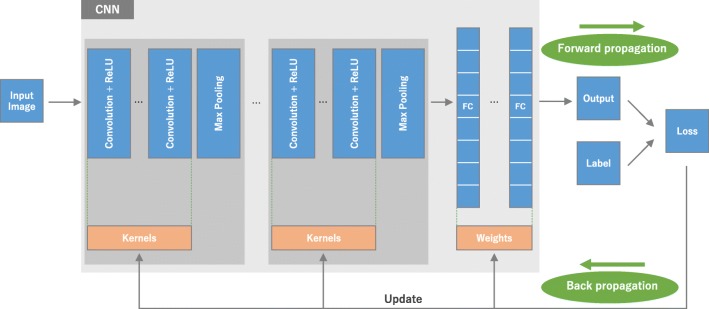
Convolutional neural network (CNN), a class of artificial neural networks that has become dominant in various computer vision tasks, is attracting interest across a variety of domains, including radiology. CNN is designed to automatically and adaptively learn spatial hierarchies of features through backpropagation by using multiple building blocks, such as convolution layers, pooling layers, and fully connected layers. This review article offers a perspective on the basic concepts of CNN and its application to various radiological tasks, and discusses its challenges and future directions in the field of radiology. Two challenges in applying CNN to radiological tasks, small dataset and overfitting, will also be covered in this article, as well as techniques to minimize them. Being familiar with the concepts and advantages, as well as limitations, of CNN is essential to leverage its potential in diagnostic radiology, with the goal of augmenting the performance of radiologists and improving patient care. KEY POINTS: • Convolutional neural network is a class of deep learning methods which has become dominant in various computer vision tasks and is attracting interest across a variety of domains, including radiology. • Convolutional neural network is composed of multiple building blocks, such as convolution layers, pooling layers, and fully connected layers, and is designed to automatically and adaptively learn spatial hierarchies of features through a backpropagation algorithm. • Familiarity with the concepts and advantages, as well as limitations, of convolutional neural network is essential to leverage its potential to improve radiologist performance and, eventually, patient care.
Overview
CoChat Summary
TL;DR
This narrative review explains the basic concepts of convolutional neural networks (CNNs) — their building blocks, training, and data requirements — and surveys their application to radiological tasks such as classification, segmentation, detection, image denoising, and report analysis. It highlights small datasets and overfitting as the two central challenges for CNN use in radiology and reviews techniques to mitigate them.
Key findings
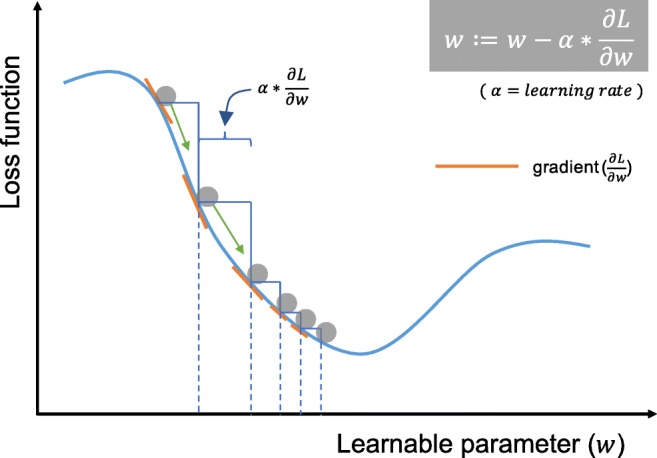
- CNN is composed of convolution, pooling, and fully connected layers; convolution and pooling perform feature extraction while fully connected layers map features to outputs, with kernels and weights learned via backpropagation and gradient descent.
- CNN differs from conventional radiomics in that it does not require hand-crafted feature extraction or expert segmentation, but is far more data hungry and computationally expensive, typically requiring GPUs.
- Reported application results cited in the review include: an ensemble of AlexNet and GoogLeNet 2D-CNNs achieving a best AUC of 0.99 for detecting pulmonary tuberculosis on 1007 chest radiographs; a CNN-based CADe system trained on ~45,000 mammography images outperforming a hand-crafted-feature CADe system at low sensitivity and matching it at high sensitivity; and a detection system built from 33,688 bounding boxes mined from radiologists' reports showing significantly improved detection accuracy with pseudo-category labels.
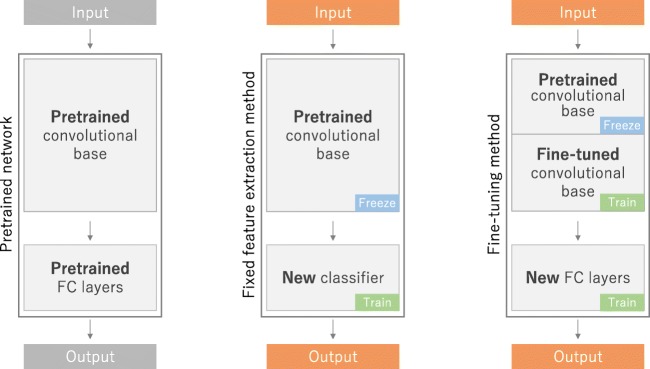
- Transfer learning from ImageNet (1.4 million images, 1000 classes) via fixed feature extraction or fine-tuning is presented as a key strategy for training on small datasets; U-net is highlighted for segmentation because it captures multiscale spatial context and can be trained end-to-end from limited data.
Methods
- Design: narrative review article (not a primary study), covering CNN concepts, training, data/label considerations, overfitting, small-dataset strategies, and radiology applications.
- Scope: applications are organized into classification, segmentation, detection, and "others" (denoising, image reconstruction, report classification); recurrent neural networks and other deep learning models are explicitly stated to be beyond the article's scope.
- Evidence base: illustrative prior studies are cited rather than systematically searched or quantitatively pooled; no new data, sample, or statistical analysis is generated by the authors.
Limitations
- Stated: the article is a perspective/overview, and other deep learning models such as recurrent neural networks for sequence models are beyond its scope; the details of improved gradient descent algorithms (momentum, RMSprop, Adam) are also stated to be beyond scope.
- Stated: whether semi-supervised techniques (pseudo-label, GANs) actually improve deep learning performance in radiology "is not clear and remains an area of active investigation," and whether medical pretrained networks would outperform ImageNet-pretrained transfer learning is likewise unclear.
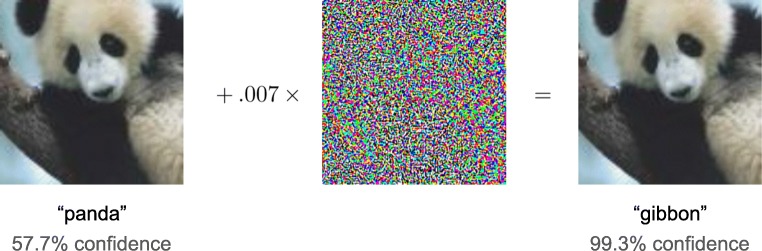
- Evident from the text: as a narrative review it reports no systematic search strategy, inclusion criteria, or quantitative synthesis, so the cited performance figures are illustrative examples rather than a comparative or exhaustive assessment; the authors also note deep learning's "black box" nature and vulnerability to adversarial examples as unresolved concerns for clinical robustness.
Model-written summary. Check it against the paper before relying on it.
Integrity signals
Registry
Cites
Statistics
Figures
Verification
Claims the paper makes
23 Valid · 11 Not valid · 6 Not checked · 47 Own results and interpretations
The sources with a verdict support this claim; the rest weren’t checked yet, have no full text we could read, or their verdicts aren’t rated yet.
In the paper
“several studies have already been published in areas such as lesion detection [7], classification [8], segmentation [9], image reconstruction [10, 11], and natural language processing [12].”
§ Convolutional neural networks: an overview and application in radiology > Introduction
What the sources say
- Not checked — no full text of the sourcecites [7] Lakhani P Sundaram B Deep learning at chest radiography: automated classification of pulmonary tuberculosis by using convolutional neural networks Radiology 2017 284 574 582 10.1148/radiol.2017162326 28436741 source
- Not checked — no full text of the sourcecites [8] Yasaka K Akai H Abe O Kiryu S Deep learning with convolutional neural network for differentiation of liver masses at dynamic contrast-enhanced CT: a preliminary study Radiology 2018 286 887 896 10.1148/radiol.2017170706 29059036 source
- Supportedcites [9] Christ PF, Elshaer MEA, Ettlinger F et al (2016) Automatic liver and lesion segmentation in CT using cascaded fully convolutional neural networks and 3D conditional random fields. In: Ourselin S, Joskowicz L, Sabuncu M, Unal G, Wells W (eds) Proceedings of Medical image computing and computer-assisted intervention – MICCAI 2016. 10.1007/978-3-319-46723-8_48 source
The citation [9] is attached to “segmentation,” not to the other listed applications. The paper’s opening page (p. 1) describes its CNN-based method for segmenting liver and lesions in CT images, so it is an example of the cited kind of study. (LLM, conf=0.95)
plain- Asserted: passes — The authors put it forward as true.
- Checkable: passes — It can be checked against evidence.
- Load-bearing: unclear — It is unclear whether the paper’s conclusions depend on it.
- Based: passes — The paper gives a reason why it holds.
Every source the paper cites for this claim was checked and supports it.
In the paper
“The results demonstrate that detection accuracy could be significantly improved by incorporating pseudo-category labels.”
§ Convolutional neural networks: an overview and application in radiology > Applications in radiology > Others
What the sources say
- Supportedcites [55] Yan K, Wang X, Lu L, Summers RM (2017) DeepLesion: automated deep mining, categorization and detection of significant radiology image findings using large-scale clinical lesion annotations. arXiv. Available online at: https://arxiv.org/pdf/1710.01766.pdf. Accessed 29 Jan 2018 source
In Results and Discussion (p. 7), the paper compares detection without categorization labels against detection with pseudo-category labels. Test accuracy rises from 59.45% to 64.30% overall, with improvements of 3–8 percentage points across the five lesion clusters. (LLM, conf=0.92)
hedgedstates a possible cause- Asserted: passes — The authors put it forward as true.
- Checkable: passes — It can be checked against evidence.
- Load-bearing: passes — The paper’s conclusions depend on it.
- Based: passes — The paper gives a reason why it holds.
- Supported
Every source the paper cites for this claim was checked and supports it.
In the paper
“As a result, U-net could be trained end-to-end from a limited number of training data.”
§ Convolutional neural networks: an overview and application in radiology > Applications in radiology > Segmentation
What the sources say
- Supportedcites [48] Ronneberger O, Fischer P, Brox T (2015) U-net: convolutional networks for biomedical image segmentation. In: Navab N, Hornegger J, Wells W, Frangi A (eds) Proceedings of Medical Image Computing and Computer-Assisted Intervention – MICCAI 2015. 10.1007/978-3-319-24574-4_28 source
The paper’s opening section states directly that U-Net can be trained end-to-end from very few images. The Conclusion likewise says it needs very few annotated images, thanks to data augmentation with elastic deformations. (LLM, conf=0.95)
hedgedstates a cause- Asserted: passes — The authors put it forward as true.
- Checkable: passes — It can be checked against evidence.
- Load-bearing: unclear — It is unclear whether the paper’s conclusions depend on it.
- Based: passes — The paper gives a reason why it holds.
- Supported
The sources with a verdict support this claim; the rest weren’t checked yet, have no full text we could read, or their verdicts aren’t rated yet.
In the paper
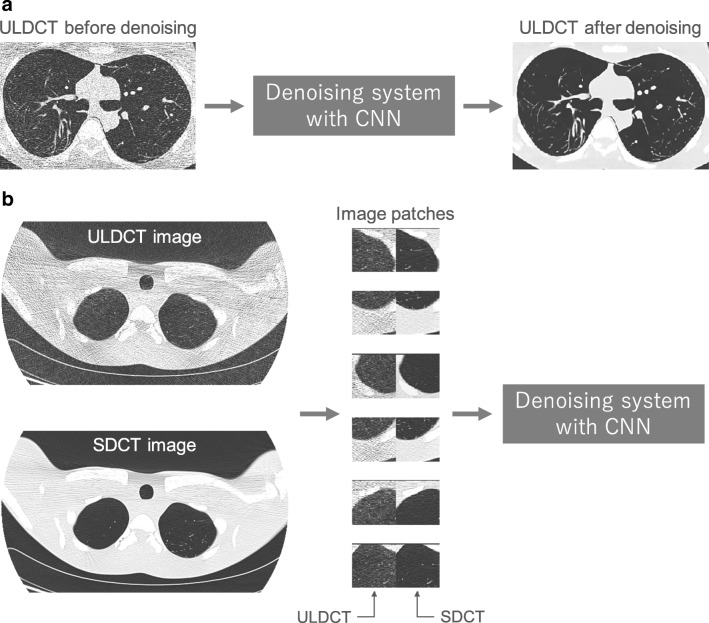
“Two previous studies showed that low-dose and ultra-low-dose CT images could be effectively denoised using deep learning [52, 53].”
§ Convolutional neural networks: an overview and application in radiology > Applications in radiology > Others
What the sources say
- Not checked — no full text of the sourcecites [52] Chen H Zhang Y Zhang W Low-dose CT via convolutional neural network Biomed Opt Express 2017 8 679 694 10.1364/BOE.8.000679 28270976 PMC5330597 source
- Supportedcites [53] Nishio M Nagashima C Hirabayashi S Convolutional auto-encoder for image denoising of ultra-low-dose CT Heliyon 2017 3 e00393 10.1016/j.heliyon.2017.e00393 28920094 PMC5577435 source
The Abstract (Materials and methods; Conclusion) reports that a convolutional auto-encoder denoised ultra-low-dose CT images of a chest phantom and performed better in visual assessments than the comparison methods. This supports the ultra-low-dose portion attributed to this study; the sentence cites two studies for the combined low-dose and ultra-low-dose claim. (LLM, conf=0.92)
hedgedstates a cause- Asserted: passes — The authors put it forward as true.
- Checkable: passes — It can be checked against evidence.
- Load-bearing: unclear — It is unclear whether the paper’s conclusions depend on it.
- Based: passes — The paper gives a reason why it holds.
The cited sources support only part of this claim — read each source’s verdict below.
In the paper
“Their study showed that U-net could effectively produce noiseless CT images from the subsampled sinogram.”
§ Convolutional neural networks: an overview and application in radiology > Applications in radiology > Others
What the sources say
- Partly supportedcites [54] Jin KH McCann MT Froustey E Unser M Deep convolutional neural network for inverse problems in imaging IEEE Trans Image Process 2017 26 4509 4522 10.1109/TIP.2017.2713099 28641250 sourceExperimental — accuracy not yet measured
The Experiments and Results section (p. 9) tests FBPConvNet on subsampled CT sinograms, and the Biomedical Dataset results (p. 13) report satisfactory removal of streaking artifacts and improved SNR. The network uses a modified U-net, but the paper does not claim its output is noiseless; the Discussion (p. 16) notes that artifacts can remain. (LLM, conf=0.88)
boostedstates a cause- Asserted: passes — The authors put it forward as true.
- Checkable: passes — It can be checked against evidence.
- Load-bearing: passes — The paper’s conclusions depend on it.
- Based: passes — The paper gives a reason why it holds.
- Partly supported
18 more claims · 8 with their cited sources checked
Create a free account to see all 87 claims and to verify the 4 references still open.
- Probably not a substantial claim. 56
- It may state two separate claims as one. 31
Citations
Cites
Deep Residual Learning for Image Recognition
He, K., Zhang, X., Ren, S., & Sun, J. (2016) · 2016 IEEE Conference on Computer Vision and Pattern Recognition (CVPR) · doi:10.1109/cvpr.2016.90 · Cited by 235,474 · cited 1×
“At present, many models pretrained on the ImageNet challenge dataset are open to the public and readily accessible, along with their learned kernels and weights, such as AlexNet [3], VGG [30], ResNet [31], Inception [32], and DenseNet [33].”
MethodVery Deep Convolutional Networks for Large-Scale Image Recognition
Simonyan, K., & Zisserman, A. (2014) · arXiv · doi:10.48550/arxiv.1409.1556 · Cited by 114,148 · cited 2×
“To perform unsupervised categorization, the following three steps were iteratively performed: (i) feature extraction using pretrained VGG16 model [30] from the lesions in the bounding box, (ii) clustering of the features, and (iii) fine-tuning of VGG16 based on the results of the clustering.”
MethodU-Net: Convolutional Networks for Biomedical Image Segmentation
Ronneberger, O., Fischer, P., & Brox, T. (2015) · Lecture notes in computer science · doi:10.1007/978-3-319-24574-4_28 · Cited by 99,404 · cited 1×
“Although segmentation based on image patch was successfully performed in deep learning, U-net of Ronneberger et al. [48] outperformed the image patch-based method on the ISBI [IEEE (The Institute of Electrical and Electronics Engineers) International Symposium on Biomedical Imaging] challenge for…”
MethodAdam: A Method for Stochastic Optimization
Kingma, D. P., & Ba, J. (2014) · arXiv · doi:10.48550/arxiv.1412.6980 · Cited by 98,946
LeCun, Y., Bengio, Y., & Hinton, G. (2015) · Nature · doi:10.1038/nature14539 · Cited by 84,126
Faster R-CNN: Towards Real-Time Object Detection with Region Proposal Networks
Ren, S., He, K., Girshick, R., & Sun, J. (2017) · IEEE Transactions on Pattern Analysis and Machine Intelligence · doi:10.1109/tpami.2016.2577031 · Cited by 73,472 · cited 1×
“The study also suggested that the detection system was built using the Faster R-CNN method [56], the lesions in the bounding box, and their corresponding pseudo-category.”
MethodFaster R-CNN: Towards Real-Time Object Detection with Region Proposal Networks
Ren, S., He, K., Girshick, R., & Sun, J. (2015) · arXiv · doi:10.48550/arxiv.1506.01497 · Cited by 70,812
Densely Connected Convolutional Networks
Huang, G., Liu, Z., Van Der Maaten, L., & Weinberger, K. Q. (2017) · 2017 IEEE Conference on Computer Vision and Pattern Recognition (CVPR) · doi:10.1109/cvpr.2017.243 · Cited by 48,566 · cited 1×
“At present, many models pretrained on the ImageNet challenge dataset are open to the public and readily accessible, along with their learned kernels and weights, such as AlexNet [3], VGG [30], ResNet [31], Inception [32], and DenseNet [33].”
MethodGoing deeper with convolutions
Szegedy, C., Liu, W., Jia, Y., Sermanet, P., Reed, S., Anguelov, D., Erhan, D., Vanhoucke, V., & Rabinovich, A. (2015) · 2015 IEEE Conference on Computer Vision and Pattern Recognition (CVPR) · doi:10.1109/cvpr.2015.7298594 · Cited by 48,562 · cited 5×
“According to the results, the best area under the curve of receiver operating characteristic curves for detecting pulmonary tuberculosis from healthy cases was 0.99, which was obtained by ensemble of the AlexNet and GoogLeNet 2D-CNNs.”
MethodInfluentialImageNet Large Scale Visual Recognition Challenge
Russakovsky, O., Deng, J., Su, H., Krause, J., Satheesh, S., Ma, S., Huang, Z., Karpathy, A., Khosla, A., Bernstein, M., et al. (2015) · International Journal of Computer Vision · doi:10.1007/s11263-015-0816-y · Cited by 39,380 · cited 1×
“…neural network (CNN), a class of artificial neural networks that has been a dominant method in computer vision tasks since the astonishing results were shared on the object recognition competition known as the ImageNet Large Scale Visual Recognition Competition (ILSVRC) in 2012 [2, 3].”
Method
Research works printed but not linked: 3
- Krizhevsky A, Sutskever I, Hinton GE (2012) ImageNet classification with deep convolutional neural networks. Adv Neural Inf Process Syst 25. Available online at: https://papers.nips.cc/paper/4824-imagenet-classification-with-deep-convolutional-neural-networks.pdf. Accessed 22 Jan 2018
- Lee DH (2013) Pseudo-label: the simple and efficient semi-supervised learning method for deep neural networks. In: Proceedings of the ICML 2013 Workshop: Challenges in Representation Learning. Available online at: http://deeplearning.net/wp-content/uploads/2013/03/pseudo_label_final.pdf. Accessed 23 Jan 2018
- Kurata Y, Nishio M, Fujimoto K et al (2018) Automatic segmentation of uterus with malignant tumor on MRI using U-net. In: Proceedings of the Computer Assisted Radiology and Surgery (CARS) 2018 congress (accepted)
Cited by
Items 3,001–3,100 of 4,673
Artificial intelligence-driven advancements in agricultural biotechnology
Hossen, Z., Forhad, M. N. U., Ayez, M. R. B., Karmaker, S., Islam, M. N., Hossain, M. S., Haque, M. E., Hasan, M. N., & Islam, M. M. (2026) · Journal of Genetic Engineering and Biotechnology · doi:10.1016/j.jgeb.2026.100749 · Cited by 2
“They use convolutional filters to extract hierarchical spatial features from raw input data [31].”
AI-Powered Biomaterial Design for Tissue Engineering
Egbon, E. (2026) · Artificial intelligence · doi:10.5772/intechopen.1015273 · Cited by 2
Geometric Deep Learning‐Based Drug Design Models for Small‐Molecule Drug Discovery
Srivastav, A. K., Modi, U., Kumar, R., Bhatia, D. D., & Solanki, R. (2026) · Molecular Informatics · doi:10.1002/minf.70047 · Cited by 2
“3D CNNs learn a spatial hierarchy of interaction features from low-level atomistic contacts to higher-order structural motifs and functional binding interfaces by stacking many convolutional layers with pooling and nonlinear activation functions [46].”
Accuracy-aware Structured Filter Pruning for Deep Neural Networks
Carballo, M. V., & Lee, B. K. (2020) · International Conference on Computational Science and Computational Intelligence (CSCI) · doi:10.1109/csci51800.2020.00122 · Cited by 2
Predictive Analysis for Human Chest Diseases Detection Using Transfer Learning
Ramadan, R. Α., Yadav, K., & Hamad, S. A. S. (2020) · doi:10.1109/contesa50436.2020.9302859 · Cited by 2
“Feature extraction is performed by the first two layers and mapping of the extracted features into the final output is done by the third layer [2].”
MethodSeesan, T., Oida, D., Oikawa, K., et al. (2020) · Biomedical Imaging and Sensing Conference (BISC) · doi:10.1117/12.2573236 · Cited by 2
“Recently, convolutional neural networks (CNNs) were very successfully used for medical image processing and also parameter estimation (regression) problems [3].”
A Convolutional Neural Network Model for Automatic Leaf Recognition
Ghosh, A., & Roy, P. (2021) · Lecture notes in networks and systems · doi:10.1007/978-981-16-4435-1_24 · Cited by 2
Combined Forecast Model of LSTM-CNN Hypertension Based on EEMD
Song, X., Zhu, L. Z., Feng, X., Wu, H., & Li, Y. (2021) · doi:10.1145/3483207.3483227 · Cited by 2
Violence Detection in Ranches Using Computer Vision and Convolution Neural Network
Yange, T. S., Egbunu, C. O., Onyekware, O., et al. (2021) · Journal of Computer Scine and Information Technology · doi:10.35134/jcsitech.v7i4.22 · Cited by 2
“However, several socio-psychology studies have shown that SFM-based methods may not be capable of explaining behaviours in complex crowd scenarios[28] This, an alternative approach consists in describing the cognitive processes giving rise to the behavioural patterns observed in crowd using heuristics.”
BackgroundComparison of ASM and CNN based prostate segmentation in CT images
Kos, A., & Bułat, J. (2021) · IEEE International Conference on Imaging Systems and Techniques (IST) · doi:10.1109/ist50367.2021.9651376 · Cited by 2
An Integrated Framework Based on GAN and RBI for Learning with Insufficient Datasets
Lin, Y.-S., Lin, L.-S., & Chen, C.-C. (2022) · Symmetry · doi:10.3390/sym14020339 · Cited by 2
A Channeled Multilayer Perceptron as Multi-Modal Approach for Two Time-Frames Algo-Trading Strategy
Fikri, N., Moussaid, K., Rida, M., Omri, A. E., & Abghour, N. (2022) · International Journal of Advanced Computer Science and Applications · doi:10.14569/ijacsa.2022.0130259 · Cited by 2
“3, a convolutional neural network is composed of, Convolution Layer, Pooling Layer, Flatten Layer, Fully connected layer, and SoftMax Layer [24], [25], [26], [30]: 3) Recurrent neural network: RNN is a feed-forward neural network that remembers the past.”
BackgroundMethodInfluentialA review of intelligent medical imaging diagnosis for the COVID-19 infection
Saurabh, N., & Shetty, J. (2022) · Intelligent Decision Technologies · doi:10.3233/idt-200178 · Cited by 2
“Transfer learning [97,110] is an effective method of using a pretrained model usually trained on huge datasets such as ImageNet [111], and re-use them for a chosen task.”
BackgroundMethodCoffeeSE: Interpretable Transfer Learning Method for Estimating the Severity of Coffee Rust
Quispe, F. I., Cárdenas, E. H., Pilares-Figueroa, D., et al. (2022) · Communications in computer and information science · doi:10.1007/978-3-031-04447-2_23 · Cited by 2
DLEB: a web application for building deep learning models in biological research
Wy, S., Kwon, D., Kwon, K., & Kim, J. (2022) · Nucleic Acids Research · doi:10.1093/nar/gkac369 · Cited by 3
“For example, the convolutional neural network (CNN) is useful for extracting and using local patterns in image data (9), and the recurrent neural network (RNN) is a good model for processing sequential or signal data (1).”
Wet Road Detection Using CNN With Transfer Learning
Shariff, K. K. M., Ali, A., Rahim, S. A. E. A., et al. (2022) · IEEE Symposium on Computer Applications & Industrial Electronics (ISCAIE) · doi:10.1109/iscaie54458.2022.9794528 · Cited by 2
Detecting A Medical Mask During The COVID-19 Pandemic Using Machine Learning: A Review Study
mzeri, M., & Ibrahim, L. M. (2022) · Mağallaẗ al-tarbiyaẗ wa-al-ʻilm · doi:10.33899/edusj.2022.133181.1221 · Cited by 2
Almuhana, H. A.-J., & Abbas, H. H. (2022) · International Journal of Health Sciences · doi:10.53730/ijhs.v6ns7.12476 · Cited by 3
Choi, J., Aghaeepour, N., & Becker, M. (2022) · Hot topics in acute care surgery and trauma · doi:10.1007/978-3-031-13818-8_12 · Cited by 2
Aortic Enlargement Detection using Chest X-rays to Identify Potential Marfan Syndrome
Rosenwasser, T., Lain, R., & Cohen, M. W. (2022) · Procedia Computer Science · doi:10.1016/j.procs.2022.09.272 · Cited by 2
Training in robotic pancreatic surgery
Body, S., Kawka, M., & Gall, T. (2022) · Artificial Intelligence Surgery · doi:10.20517/ais.2022.28 · Cited by 2
Automated Classification of Snow-Covered Solar Panel Surfaces Based on Deep Learning Approaches
Al-Dulaimi, A. A., Güneşer, M. T., Hameed, A. A., & Salman, M. (2023) · Computer Modeling in Engineering & Sciences · doi:10.32604/cmes.2023.026065 · Cited by 2
Leveraging Potential of Deep Learning for Remote Sensing Data: A Review
Bathe, K. D., & Patil, N. S. (2023) · Lecture notes in electrical engineering · doi:10.1007/978-981-19-8477-8_11 · Cited by 2
Liu, Y. (2023) · Soft Computing · doi:10.1007/s00500-023-08206-9 · Cited by 2
“The literature replaced the encoder and decoder with a convolutional neural network, which achieved a performance close to state of the art (Yamashita et al. 2018).”
BackgroundRetractedRice variety identification system based on drone images to support seed certification process
Ardiyansah, A., Zamzami, A., & Wulandari, W. (2023) · Jurnal Agronomi Indonesia (Indonesian Journal of Agronomy) · doi:10.24831/ija.v51i1.44111 · Cited by 3
Breast Cancer Diagnosis Using Artificial Intelligence Approaches: A Systematic Literature Review
Alshehri, A., & AlSaeed, D. (2023) · Intelligent Automation & Soft Computing · doi:10.32604/iasc.2023.037096 · Cited by 7
Artificial Intelligence, Machine Learning, and Neural Network
Choi, A. H. (2023) · Tissue repair and reconstruction · doi:10.1007/978-981-99-1425-8_7 · Cited by 3
Deep Learning Models for Efficient Detection of Electricity Fraud in Smart Grids
Nadjib, M. M., ferial, O., Mouméne, Z. A. E., et al. (2023) · International Journal of Emerging Technology and Advanced Engineering · doi:10.46338/ijetae0523_09 · Cited by 2
Gao, J. (2023) · Soft Computing · doi:10.1007/s00500-023-08474-5 · Cited by 2
RetractedAlzheimer’s Disease Diagnosis Using CNN Based Pre-trained Models
Davuluri, R., Mallapragada, V., Mamillapalli, U. M. R., Manikanta, M. S., & Peeka, S. (2023) · International Journal on Recent and Innovation Trends in Computing and Communication · doi:10.17762/ijritcc.v11i4.6456 · Cited by 3
Human Activity Recognition Based on CNN and LSTM
Tan, X.-N. T. X.-N. (2023) · 電腦學刊 · doi:10.53106/199115992023063403016 · Cited by 2
Scholtyssek, J., Bislich, L. J., Cordes, F., & Krieger, K.-L. (2023) · Applied Sciences · doi:10.3390/app13148239 · Cited by 2
Development of a new body weight estimation method using head CT scout images
Kondo, T., Umezu, M., Kondo, Y., et al. (2023) · Journal of X-Ray Science and Technology · doi:10.3233/xst-230087 · Cited by 2
“In addition, there are various reports regarding deep learning models [19, 20], and changing the deep learning model could potentially improve the accuracy of weight estimation.”
Kniep, I., Mieling, R., Gerling, M., Schlaefer, A., Heinemann, A., & Ondruschka, B. (2023) · Journal of Imaging · doi:10.3390/jimaging9090170 · Cited by 3
“Established reconstruction methods in the context of deep learning methods are convolutional neural networks (CNNs) trained in a supervised procedure [28].”
MethodUsing Data Mining Techniques to Predict Chronic Kidney Disease: A Review Study
Sattari, M. A., & Mohammadi, M. (2023) · International Journal of Preventive Medicine · doi:10.4103/ijpvm.ijpvm_482_21 · Cited by 2
“[14] Support vector machine (SVM) technique is an efficient method for classification of linear and non‑linear data.”
MethodTexture and CNN Based Doppler Signal Classification
Lone, A. W., & Aydın, N. (2023) · doi:10.1109/ubmk59864.2023.10286759 · Cited by 2
“Black-box network called CNN has been used extensively in biomedical data systems and especially in emboli detection and classification [12], [13].”
BackgroundMethodTechnologies and Innovations for Smart Health Care System in Society 5.0
Yadav, N., Bala, S., Thakur, L., Yadav, N., & Yadav, D. (2023) · Springer eBooks · doi:10.1007/978-981-99-6472-7_10 · Cited by 3
A Review of Techniques for Detecting Illicit Messages on Twitter
Román-Niemes, S., & Cuenca, E. (2023) · IEEE Ecuador Technical Chapters Meeting (ETCM) · doi:10.1109/etcm58927.2023.10309025 · Cited by 3
“Said operation allows CNNs to learn spatial properties, features, and patterns [21], [23], [24].”
BackgroundComparative Study of CNN Architectures For Driver Drowsiness
Jain, B., Yadav, A., & Gill, R. (2023) · International Conference on Computing, Communication and Networking Technologies (ICCCNT) · doi:10.1109/icccnt56998.2023.10307002 · Cited by 2
“[19] 1) Setting CNN: We have used a modified CNN method to assess the current states of the extracted eye and mouth areas (whether open or closed).”
MethodA Method of Printmaking Image Generation Based on Convolutional Neural Network
Zhou, Z., & Luo, H. (2023) · Journal of Circuits Systems and Computers · doi:10.1142/s0218126624501512 · Cited by 2
Liana, V., Arifiandika, R., Rohmatulloh, B., Nafi’ah, R. W., Hidayat, A., Hendrawan, Y., Riza, D. F. A., Mahatmanto, T., & Nugroho, H. (2023) · Advances in Food Science Sustainable Agriculture and Agroindustrial Engineering · doi:10.21776/ub.afssaae.2023.006.04.6 · Cited by 3
Ramdhani, S. G., & Sela, E. I. (2023) · Indonesian Journal of Computer Science · doi:10.33022/ijcs.v12i6.3498 · Cited by 2
Nishiyama, K. (2024) · AIP Advances · doi:10.1063/5.0172344 · Cited by 2
Better Understanding of Human Organs with the Growing Technology Augmented Reality
Gupta, N., Khan, I. R., & Arora, V. (2023) · International Conference on Technological Advancements in Computational Sciences (ICTACS) · doi:10.1109/ictacs59847.2023.10390029 · Cited by 2
Deep Learning Methods for Diagnosing Thyroid Cancer
Kaur, G., Busi, R. B., Satyanarayana, T., & Marlapalli, K. (2024) · Journal of Engineering and Science in Medical Diagnostics and Therapy · doi:10.1115/1.4064705 · Cited by 5
Kanadath, A., Jothi, J. A. A., & Urolagin, S. (2024) · Communications in computer and information science · doi:10.1007/978-3-031-53728-8_13 · Cited by 4
Multi-Class Brain Tumor Classification with VGG Models: An MRI-Based Analysis
Gupta, S., Agrawal, V., Allapakam, V., et al. (2023) · International Conference on Next Generation Electronics (NELEX) · doi:10.1109/nelex59773.2023.10421017 · Cited by 2
“The convolutional layers are responsible for feature extraction while the fully connected layers conduct classification based on the derived features [3].”
BackgroundBlasT: Blood Clot Classification Model Using Transfer Learning Based Convolutional Neural Network
Mishra, S., Pal, S., & Dey, S. (2024) · International Conference on Communication Systems & Networks (COMSNETS) · doi:10.1109/comsnets59351.2024.10427213 · Cited by 2
Multimodal Emotion Recognition through Deep Fusion of Audio-Visual Data
Sultana, T., Jahan, M., Uddin, M. K., Kobayashi, Y., & Hasan, M. (2023) · International Conference on Computer and Information Technology (ICCIT) · doi:10.1109/iccit60459.2023.10441424 · Cited by 2
“3) Fusion Model: Models built using deep learning are excellent for object recognition systems because of their broad adoption, particularly CNN’s [12].”
BackgroundMethodLi, S., Xie, J., Liu, J., Wu, Y., Wang, Z., Cao, Z., Dong, W., Zhang, X., Wang, B., Yang, Y., et al. (2024) · Journal of Computer Assisted Tomography · doi:10.1097/rct.0000000000001584 · Cited by 2
Tahermanesh, S., Beirami, B. A., & Mokhtarzade, M. (2023) · doi:10.3390/ecrs2023-16186 · Cited by 2
“The denotes the convolution operator [13].”
Low-latency full precision optical convolutional neural network accelerator
Jahannia, B., Ye, J., Altaleb, S., Peserico, N., Asadizanjani, N., Heidari, E., Sorger, V. J., & Dalir, H. (2024) · AI and Optical Data Sciences · doi:10.1117/12.3003314 · Cited by 8
Deep learning and saliency-based parking IoT classification under different weather conditions
Mago, N., Mittal, M., Hemanth, D. J., & Sharma, R. (2024) · Intelligent Decision Technologies · doi:10.3233/idt-230573 · Cited by 2
“CNN is a mathematical model that is usually composed of three building blocks [30].”
Guo, B., Liu, Y., Zhou, H. M., Yan, W. Q., & Zhang, S. (2024) · Applied Sciences · doi:10.3390/app14062583 · Cited by 2
Performance Evaluation of Hardhat Image Classification Using Deep Learning and Grad-CAM
Yafi, A., Muchtar, K., Saddami, K., Dawood, R., Nurdin, N., & Bahri, A. (2023) · International Seminar on Research of Information Technology and Intelligent Systems (ISRITI) · doi:10.1109/isriti60336.2023.10467745 · Cited by 2
“CNN works by taking features in images directly to be scanned and studied the different features of many images [6].”
BackgroundDigital Image Forgery Detection using Convolutional Neural Network (CNN): A Survey
Ahirwar, S., & Pandey, A. (2024) · IEEE International Students' Conference on Electrical, Electronics and Computer Science (SCEECS) · doi:10.1109/sceecs61402.2024.10481917 · Cited by 3
“[26] CM The proposed approach involves pre-training the AlexNet architecture followed by the utilization of a Support Vector Machine (SVM) for further processing”
MethodZein, O. M. E., & Ghannam, N. E. (2024) · International Journal of Power Electronics and Drive Systems/International Journal of Electrical and Computer Engineering · doi:10.11591/ijece.v14i3.pp3094-3105 · Cited by 2
Combined Unet and CNN image classification model for COVID disease detection using CXR/CT imaging
Haennah, J. H. J., Christopher, C. S., & King, G. R. G. (2024) · Journal of Intelligent & Fuzzy Systems · doi:10.3233/jifs-230523 · Cited by 2
Improving Alzheimer's Disease Diagnosis on Brain MRI Scans with an Ensemble of Deep Learning Models
Reza, M. S., Kabir, M. M. J., & Mollah, M. A. R. (2023) · International Conference on Artificial Intelligence for Innovations in Healthcare Industries (ICAIIHI) · doi:10.1109/icaiihi57871.2023.10489062 · Cited by 2
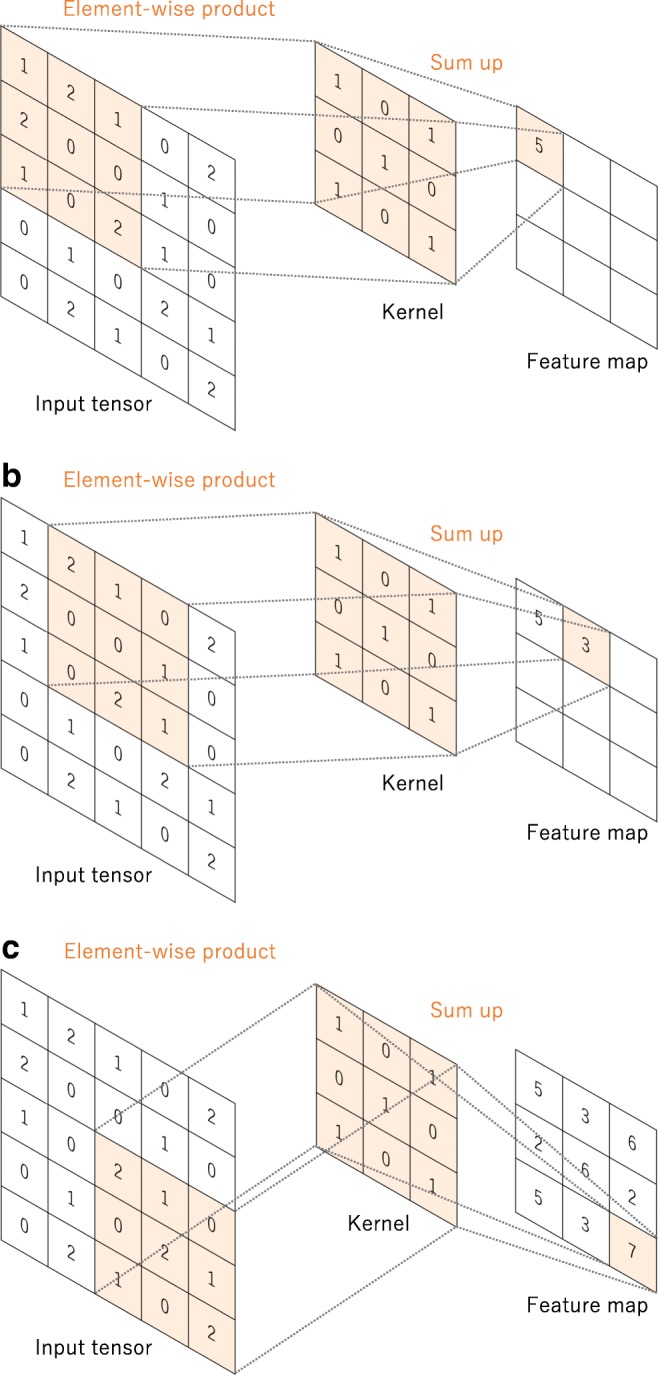
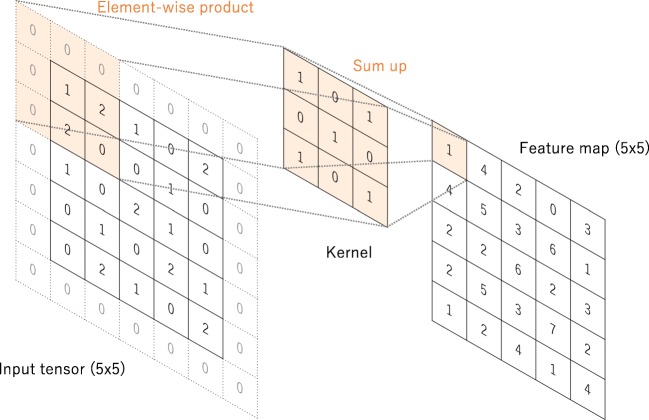
“This involves using a small numerical array called a kernel on an input represented as a tensor [13].”
MethodTransmission Line Fault Identification Method based on Attention Mechanism and Deep Neural Network
Zhao, C., Zhang, Y., & Xie, B. (2023) · International Conference on Electrical, Mechanical and Computer Engineering (ICEMCE) · doi:10.1109/icemce60359.2023.10490931 · Cited by 2
“There are two types of object detection algorithms based on deep learning: one is a two-stage detection algorithm, and representative algorithms include region convolutional neural networks (R-CNN) [5], Fast R-CNN [6], and Faster R-CNN [7].”
MethodEffect of Pectoral Muscles on CNN based Mammographic Cancer Detection
Dhimann, S. K., Sawhney, T., & Yadav, R. K. (2024) · International Conference on Computing for Sustainable Global Development · doi:10.23919/indiacom61295.2024.10499140 · Cited by 2
“Breast cancer detection accuracy falls within the range of 80% to 95% [13],[14].”
BackgroundZhang, J. (2024) · Entertainment Computing · doi:10.1016/j.entcom.2024.100689 · Cited by 2
Caesarendra, W., Wulandari, P. A., Gatnar, K., & Triwiyanto, T. (2024) · Lecture notes in electrical engineering · doi:10.1007/978-981-97-1463-6_40 · Cited by 2
Mutation types and pathogenicity classification using multi-label multi-class deep networks
Saloom, R., & Khafaji, H. K. (2024) · AIP conference proceedings · doi:10.1063/5.0213291 · Cited by 2
The Comparison of Neural Networks for Contactless BPM Estimation
Sturekova, J., Kamencay, P., & Hlavata, R. (2024) · International Conference Radioelektronika · doi:10.1109/radioelektronika61599.2024.10524084 · Cited by 2
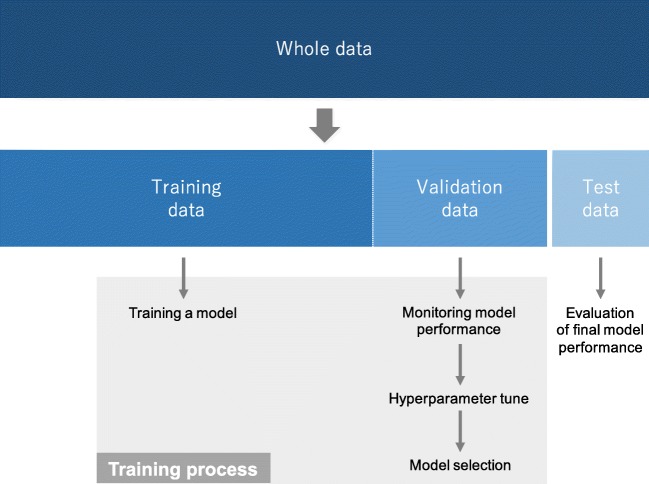
“Additionally, validation assists in hyperparameter tuning, ensuring the model generalises well to unseen data [22].”
BackgroundBauer, A., & Kruggel‐Emden, H. (2024) · Chemie Ingenieur Technik · doi:10.1002/cite.202300170 · Cited by 3
Tada, D. K., Teng, P.-Y., Vyapari, K., Banola, A., Foster, G., Diaz, E., Kim, G. H. J., Goldin, J. G., Abtin, F. G., McNitt‐Gray, M. F., et al. (2024) · Journal of medical imaging · doi:10.1117/1.jmi.11.3.034502 · Cited by 3
“18,21 This is an issue for developing a DL approach for fissure segmentation because annotated lung fissure data are not publicly available.”
BackgroundSentiment Analysis of FLO Applications For Women's Needs Using The CNN And LSTM Algorithms.
Herlia, A. D., & Andriansyah, M. (2024) · Eduvest - Journal Of Universal Studies · doi:10.59188/eduvest.v4i5.1182 · Cited by 2
“CNN learns the spatial hierarchy of features through backpropagation using several building blocks, namely fully connected layers, convolutional layers, and pooling layers (Yamashita et al., 2018).”
MethodUsing Reinforcement Learning to Generate Levels of Super Mario Bros. With Quality and Diversity
Nam, S., Hsueh, C.-H., Rerkjirattikal, P., & Ikeda, K. (2024) · IEEE Transactions on Games · doi:10.1109/tg.2024.3416472 · Cited by 4
“The layer composition was set up according to the general manner [65] of the CNN. 2) Level length was set to 41.”
He, R., Li, C., Yang, X., et al. (2024) · Intelligent Medicine · doi:10.1016/j.imed.2024.02.001 · Cited by 2
Applications of machine learning to MR imaging of pediatric low-grade gliomas
Kudus, K., Wagner, M. W., Ertl-Wagner, B. B., & Khalvati, F. (2024) · Child s Nervous System · doi:10.1007/s00381-024-06522-5 · Cited by 2
Lee, G., Kim, S., Seo, D., & Kang, Y. (2024) · IEEE Intelligent Vehicles Symposium · doi:10.1109/iv55156.2024.10588745 · Cited by 6
“In the CNN used in this paper [23], the input data passes through a convolutional layer followed by layers of batch normalization and ReLU activation functions.”
MethodAttention on Attention as a part of decoder for the vehicle license plate recognition
Zhumabay, Y. (2024) · IEEE AITU: Digital Generation · doi:10.1109/ieeeconf61558.2024.10585566 · Cited by 2
“Modern neural network architectures use convolutional neural networks CNNs [20], which are more robust to various types of noise in images compared to classical methods.”
MethodMulti-scale DNA language model improves 6 mA binding sites prediction
Hou, A., Luo, H., Huan, L., Luo, L., & Ding, P. (2024) · Computational Biology and Chemistry · doi:10.1016/j.compbiolchem.2024.108129 · Cited by 2
An Overview on Diagnosis of Endometriosis Disease Based on Machine Learning Methods
Scutelnicu, L.-A., Maftei, R., & Luca, M. (2024) · Lecture notes in networks and systems · doi:10.1007/978-981-97-3289-0_20 · Cited by 4
Cao, J., Gao, M., Guo, J., et al. (2024) · Sustainability · doi:10.3390/su16156665 · Cited by 2
He, T., & Huang, W. (2024) · Applied Mathematics and Nonlinear Sciences · doi:10.2478/amns-2024-2435 · Cited by 3
Multi-layer Optical Convolutional Neural Network with Nonlinear Activation
Huang, Z., Wang, C., Shi, W., et al. (2024) · doi:10.1364/cleo_si.2024.sf2a.7 · Cited by 2
VQGG: Generating Adaptive Graphs for Traffic Forecasting via a Vector-Quantized Graph Generator
Ke, S., Wu, C., Guo, J., et al. (2024) · doi:10.1109/ijcnn60899.2024.10649950 · Cited by 2
“…advent of deep learning technology, researchers have begun to utilize recurrent neural networks (RNN) [4] and convolutional neural networks (CNN) [5] to capture the temporal dependencies in time-series data, and some researchers also try to capture spatial correlations via CNNs on grid-form…”
BackgroundMapanao, J. R., & Lozano, P. L. (2024) · International Conference on Computer Communication and the Internet (ICCCI) · doi:10.1109/iccci62159.2024.10674599 · Cited by 2
“Convolutional Neural Networks (CNNs) are a type of artificial neural network designed for processing and analyzing visual data, such as images [27].”
BackgroundИспользование искусственного интеллекта в бизнес-аналитике
Карцан, И. Н., & Нуриев, С. А. (2024) · Современные инновации системы и технологии - Modern Innovations Systems and Technologies · doi:10.47813/2782-2818-2024-4-3-0146-0156 · Cited by 3
Ha, H.-G., Jeung, D., Ullah, I., et al. (2024) · Computers in Biology and Medicine · doi:10.1016/j.compbiomed.2024.109309 · Cited by 2
Machine learning for base transceiver stations power failure prediction: A multivariate approach
Ahmed, S., Debella, T. T., & Hailemariam, D. (2024) · e-Prime - Advances in Electrical Engineering Electronics and Energy · doi:10.1016/j.prime.2024.100814 · Cited by 5
Ahmadsaidulu, S., Tiwari, A., Neelapu, B. C., Jain, P., & Banoth, E. (2024) · International Journal of Imaging Systems and Technology · doi:10.1002/ima.23204 · Cited by 6
“Using feature maps from the backbone and neck, the head generates bounding boxes and class probabilities for each image feature [40].”
A Machine Learning Model for Prediction of Malaria from Microscopic Blood Cell Images
Ooko, S. O., & Kagwi, C. T. (2024) · doi:10.1109/ithings-greencom-cpscom-smartdata-cybermatics62450.2024.00060 · Cited by 2
“CNNs as presented in [11] are well-suited for medical imaging tasks because they mimic the way the human brain processes visual information, allowing them to recognize complex patterns in data [12].”
BackgroundDetection and Characterization of Thyroid Cancer Nodule Using Deep Neural Networks -A Review
Devi, T. K., Baluprithviraj, K. N., Suresh, J. S., et al. (2024) · International Conference on Computing, Communication and Networking Technologies (ICCCNT) · doi:10.1109/icccnt61001.2024.10723941 · Cited by 2
“All the neurons are collectively gathered into a single node, which is the classified output [4].”
BackgroundAndroid Malware Detection Based on Novel Representations of Apps
Sun, T., Daoudi, N., Allix, K., Samhi, J., Kim, K., Zhou, X., Kaboré, A. K., Kim, D., Lo, D., Bissyandé, T. F., et al. (2024) · Advances in information security · doi:10.1007/978-3-031-66245-4_8 · Cited by 3
Harnessing Deep Learning for Ocular Disease Diagnosis
Ryan, J., Nathaniel, D. A., Purwanto, E. S., & Ario, M. K. (2024) · Procedia Computer Science · doi:10.1016/j.procs.2024.10.319 · Cited by 4
Li, J. (2024) · Thermal Science and Engineering Progress · doi:10.1016/j.tsep.2024.103063 · Cited by 3
RetractedZhang, C., Iqbal, M. F. B., Iqbal, I., et al. (2024) · Big Data · doi:10.1089/big.2024.0071 · Cited by 2
Suryono, M. E. P., & Djunaidy, A. (2024) · International Conference on Electronic and Electrical Engineering and Intelligent System (ICE3IS) · doi:10.1109/ice3is62977.2024.10775785 · Cited by 2
“Convolutional neural networks (CNN) are artificial neural networks that automatically and adaptively learn spatial hierarchies of features through backpropagation, gaining interest in various domains, including radiology [23].”
Facial Recognition Based on Machine and Deep Learning
Hamou, A. O., & Chelali, F. Z. (2024) · International Conference on Advanced Electrical Engineering (ICAEE) · doi:10.1109/icaee61760.2024.10783355 · Cited by 2
Automatic Segmentation of Metastatic Livers by Means of U-Net-Based Procedures
Tiraboschi, C., Parenti, F., Sangalli, F., Resovi, A., Belotti, D., & Lanzarone, E. (2024) · Cancers · doi:10.3390/cancers16244159 · Cited by 2
Torres, P. J. R., Chen, C., Macías-Aguayo, J., Rodrı́guez, S., Prieto, J., Llanes‐Santiago, O., Gershenson, C., & Kanaan-Izquierdo, S. (2024) · Energies · doi:10.3390/en17246399 · Cited by 3
Özatılgan, A., & Kaya, M. (2024) · Sakarya University Journal of Computer and Information Sciences · doi:10.35377/saucis...1518139 · Cited by 3
An Efficient Deep Learning based Real Time Facial Expression Recognition System
M.Saleem, S., Zeebaree, S. R. M., & Abdulrazzaq, M. B. (2024) · Qalaai Zanist Scientific Journal · doi:10.25212/lfu.qzj.9.4.55 · Cited by 2
Derin Öğrenme ile Soket Kablo Sıralama Hata Tespiti
ELMAS, B., & Korkmaz, H. (2025) · Journal of Polytechnic · doi:10.2339/politeknik.1500454 · Cited by 2
Convolutional Neural Networks-based Evaluation for the FER-2013 and Revised CK+ Datasets
Ma, Y. (2024) · International Conference on Electronics and Devices, Computational Science (ICEDCS) · doi:10.1109/icedcs64328.2024.00020 · Cited by 2
“Convolutional Neural Network (CNN), comprise an advanced artificial neural network system, excelling in diverse areas within computational vision [3].”
Fishing for data: AI approaches to advance recreational fisheries monitoring
Baker, L. R., Knott, N. A., Gorkin, R. A., III, et al. (2025) · New Zealand Journal of Marine and Freshwater Research · doi:10.1080/00288330.2024.2438227 · Cited by 2
“Convolutional neural network (CNN) is deep a learning method often used for computer vision tasks including in ecology (Yamashita et al. 2018).”
Tanvir, K., Huda, M. S. A., Kabir, M. S., et al. (2024) · doi:10.1109/icict64387.2024.10839690 · Cited by 2
“However, challenges like variability in handwritten characters, hyperparameter tuning for ResNet50V2, and data efficiency [8] issues with ViTs remain.”
Metadata
- Authors
- Yamashita, R., Nishio, M., Do, R. K. G., & Togashi, K.
- Affiliations
- Memorial Sloan Kettering Cancer Center (US)
- Kyoto University (JP)
- Corresponding author
- Yamashita, Rikiya
- Venue
- Insights into Imaging
- Published
- 2018-06-22
- Volume
- 9
- Issue
- 4
- Pages
- 611-629
- ISSN
- 1869-4101 (ISSN-L)
- PMC
- PMC6108980
- OpenAlex
- W2809254203
- Cited by
- 4,682
- References
- 55
- Citations by year
- 2026: 390 · 2025: 701 · 2024: 915 · 2023: 889 · 2022: 772 · 2021: 592 · 2020: 312 · 2019: 97 · 2018: 12
- FWCI
- 5.66
- Type
- journal article
- Language
- en
- Open access
- gold
- doi.org
- Licence
- cc-by
- creativecommons.org/licenses/by/4.0 (tdm)
- creativecommons.org/licenses/by/4.0 (vor)
- Locations
- Insights into Imaging (publishedVersion, cc-by)
- Europe PMC (PubMed Central) (publishedVersion, other-oa)
- PubMed Central (publishedVersion, cc-by)
- PubMed (publishedVersion)
- DOAJ (DOAJ: Directory of Open Access Journals) (submittedVersion, cc-by-sa)
- Funders
- Japan Society for the Promotion of Science (JP16K19883)
- Topics
- Health Sciences › Medicine › Health Informatics › Artificial Intelligence in Healthcare and Education
- Health Sciences › Medicine › Radiology, Nuclear Medicine and Imaging › Radiomics and Machine Learning in Medical Imaging
- Physical Sciences › Computer Science › Computer Vision and Pattern Recognition › Advanced Neural Network Applications
- Keywords
- convolutional neural networks, deep learning in radiology, convolutional layers, pooling layers, small datasets, overfitting, computer-aided diagnosis, radiology image analysis
About these checks
Registry, retraction, Cites and statistics results are computed, not judged, with one exception: a printed reference that no index lists is read once by a model before it counts as a citation error. Claims are extracted by a model and kept only when their quote appears verbatim in the text; each cited source is then checked, with a model’s help, for whether it says what the claim relies on. Those verdicts can be wrong — read the claim’s quote and the cited source before relying on one.
The claim verdicts this report counts are experimental: their accuracy is not yet measured.
A language model drew the claims from the paper on 2026-10-10, under version 3 of the claim definition (model deepseek-v4.1-flash, prompt extract-v3).
A second model labelled each claim on 2026-10-10 (model jev-1.13-20260917, definition revision gold-guideline-v0.2).
Cited sources are checked with a language model’s help (gpt-6-sol).
Statistics and arithmetic are recomputed, not judged.
Confidence bands are shown only for fields calibrated on our annotated test set. None is calibrated yet, so no band is shown.
What counts as a claim ›How we measure confidence ›How we check this ›
Are you an author, or do you see a problem with this page? Request a review
Data sources
Bibliographic data: Semantic Scholar, OpenAlex, Crossref.
Contains information from the Semantic Scholar Academic Graph Datasets, made available under the ODC Attribution License (ODC-BY 1.0).
Semantic Scholar’s data is described in: Kinney, R., et al. (2023). The Semantic Scholar Open Data Platform. arXiv:2301.10140.
