

Convolutional neural networks: an overview and application in radiology
Open accessThe DOI matches its Crossref record; 65 of the 65 references it cites were found in a registry or an index; 30 of the 49 sources its claims cite were checked for support.
Abstract
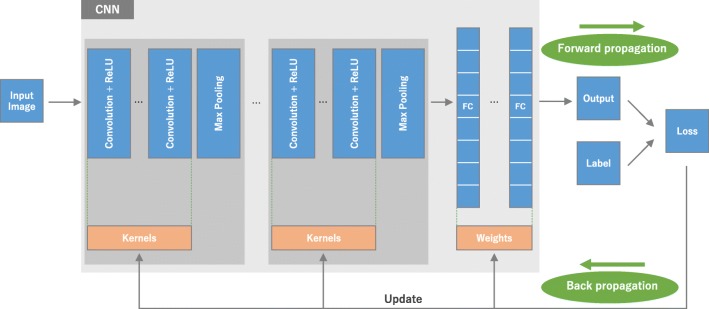
Convolutional neural network (CNN), a class of artificial neural networks that has become dominant in various computer vision tasks, is attracting interest across a variety of domains, including radiology. CNN is designed to automatically and adaptively learn spatial hierarchies of features through backpropagation by using multiple building blocks, such as convolution layers, pooling layers, and fully connected layers. This review article offers a perspective on the basic concepts of CNN and its application to various radiological tasks, and discusses its challenges and future directions in the field of radiology. Two challenges in applying CNN to radiological tasks, small dataset and overfitting, will also be covered in this article, as well as techniques to minimize them. Being familiar with the concepts and advantages, as well as limitations, of CNN is essential to leverage its potential in diagnostic radiology, with the goal of augmenting the performance of radiologists and improving patient care. KEY POINTS: • Convolutional neural network is a class of deep learning methods which has become dominant in various computer vision tasks and is attracting interest across a variety of domains, including radiology. • Convolutional neural network is composed of multiple building blocks, such as convolution layers, pooling layers, and fully connected layers, and is designed to automatically and adaptively learn spatial hierarchies of features through a backpropagation algorithm. • Familiarity with the concepts and advantages, as well as limitations, of convolutional neural network is essential to leverage its potential to improve radiologist performance and, eventually, patient care.
Overview
CoChat Summary
TL;DR
This narrative review explains the basic concepts of convolutional neural networks (CNNs) — their building blocks, training, and data requirements — and surveys their application to radiological tasks such as classification, segmentation, detection, image denoising, and report analysis. It highlights small datasets and overfitting as the two central challenges for CNN use in radiology and reviews techniques to mitigate them.
Key findings
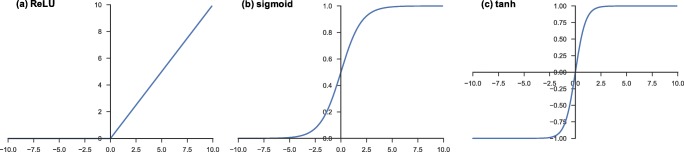
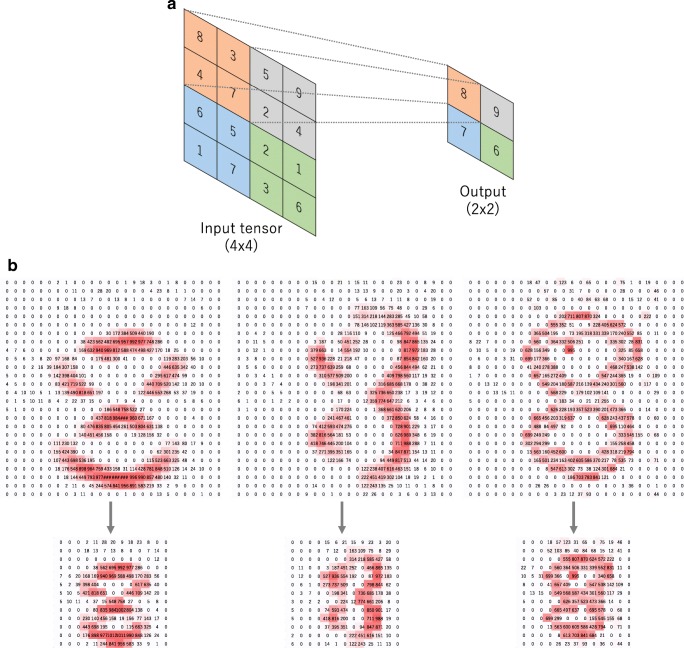
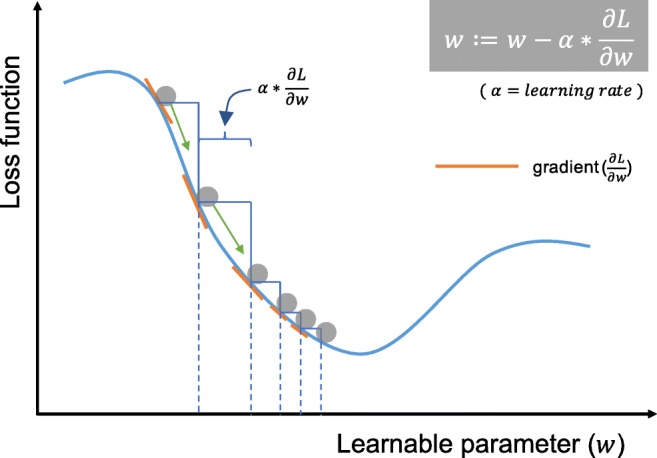
- CNN is composed of convolution, pooling, and fully connected layers; convolution and pooling perform feature extraction while fully connected layers map features to outputs, with kernels and weights learned via backpropagation and gradient descent.
- CNN differs from conventional radiomics in that it does not require hand-crafted feature extraction or expert segmentation, but is far more data hungry and computationally expensive, typically requiring GPUs.
- Reported application results cited in the review include: an ensemble of AlexNet and GoogLeNet 2D-CNNs achieving a best AUC of 0.99 for detecting pulmonary tuberculosis on 1007 chest radiographs; a CNN-based CADe system trained on ~45,000 mammography images outperforming a hand-crafted-feature CADe system at low sensitivity and matching it at high sensitivity; and a detection system built from 33,688 bounding boxes mined from radiologists' reports showing significantly improved detection accuracy with pseudo-category labels.
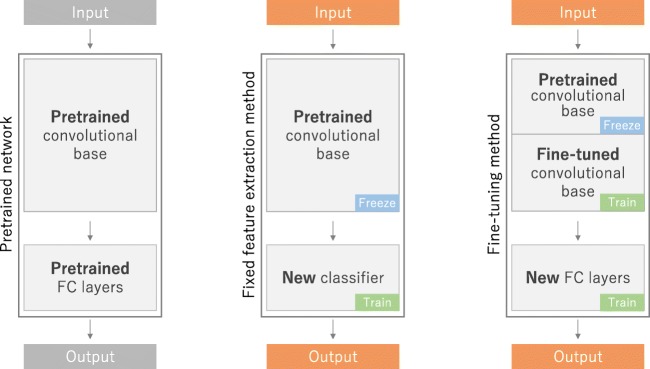
- Transfer learning from ImageNet (1.4 million images, 1000 classes) via fixed feature extraction or fine-tuning is presented as a key strategy for training on small datasets; U-net is highlighted for segmentation because it captures multiscale spatial context and can be trained end-to-end from limited data.
Methods
- Design: narrative review article (not a primary study), covering CNN concepts, training, data/label considerations, overfitting, small-dataset strategies, and radiology applications.
- Scope: applications are organized into classification, segmentation, detection, and "others" (denoising, image reconstruction, report classification); recurrent neural networks and other deep learning models are explicitly stated to be beyond the article's scope.
- Evidence base: illustrative prior studies are cited rather than systematically searched or quantitatively pooled; no new data, sample, or statistical analysis is generated by the authors.
Limitations
- Stated: the article is a perspective/overview, and other deep learning models such as recurrent neural networks for sequence models are beyond its scope; the details of improved gradient descent algorithms (momentum, RMSprop, Adam) are also stated to be beyond scope.
- Stated: whether semi-supervised techniques (pseudo-label, GANs) actually improve deep learning performance in radiology "is not clear and remains an area of active investigation," and whether medical pretrained networks would outperform ImageNet-pretrained transfer learning is likewise unclear.
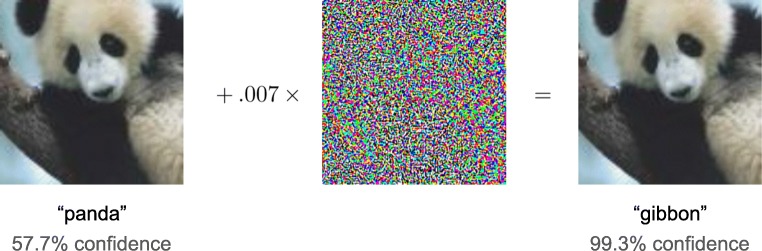
- Evident from the text: as a narrative review it reports no systematic search strategy, inclusion criteria, or quantitative synthesis, so the cited performance figures are illustrative examples rather than a comparative or exhaustive assessment; the authors also note deep learning's "black box" nature and vulnerability to adversarial examples as unresolved concerns for clinical robustness.
Model-written summary. Check it against the paper before relying on it.
Integrity signals
Registry
Cites
Statistics
Figures
Verification
Claims the paper makes
23 Valid · 11 Not valid · 6 Not checked · 47 Own results and interpretations
The sources with a verdict support this claim; the rest weren’t checked yet, have no full text we could read, or their verdicts aren’t rated yet.
In the paper
“several studies have already been published in areas such as lesion detection [7], classification [8], segmentation [9], image reconstruction [10, 11], and natural language processing [12].”
§ Convolutional neural networks: an overview and application in radiology > Introduction
What the sources say
- Not checked — no full text of the sourcecites [7] Lakhani P Sundaram B Deep learning at chest radiography: automated classification of pulmonary tuberculosis by using convolutional neural networks Radiology 2017 284 574 582 10.1148/radiol.2017162326 28436741 source
- Not checked — no full text of the sourcecites [8] Yasaka K Akai H Abe O Kiryu S Deep learning with convolutional neural network for differentiation of liver masses at dynamic contrast-enhanced CT: a preliminary study Radiology 2018 286 887 896 10.1148/radiol.2017170706 29059036 source
- Supportedcites [9] Christ PF, Elshaer MEA, Ettlinger F et al (2016) Automatic liver and lesion segmentation in CT using cascaded fully convolutional neural networks and 3D conditional random fields. In: Ourselin S, Joskowicz L, Sabuncu M, Unal G, Wells W (eds) Proceedings of Medical image computing and computer-assisted intervention – MICCAI 2016. 10.1007/978-3-319-46723-8_48 source
The citation [9] is attached to “segmentation,” not to the other listed applications. The paper’s opening page (p. 1) describes its CNN-based method for segmenting liver and lesions in CT images, so it is an example of the cited kind of study. (LLM, conf=0.95)
plain- Asserted: passes — The authors put it forward as true.
- Checkable: passes — It can be checked against evidence.
- Load-bearing: unclear — It is unclear whether the paper’s conclusions depend on it.
- Based: passes — The paper gives a reason why it holds.
Every source the paper cites for this claim was checked and supports it.
In the paper
“The results demonstrate that detection accuracy could be significantly improved by incorporating pseudo-category labels.”
§ Convolutional neural networks: an overview and application in radiology > Applications in radiology > Others
What the sources say
- Supportedcites [55] Yan K, Wang X, Lu L, Summers RM (2017) DeepLesion: automated deep mining, categorization and detection of significant radiology image findings using large-scale clinical lesion annotations. arXiv. Available online at: https://arxiv.org/pdf/1710.01766.pdf. Accessed 29 Jan 2018 source
In Results and Discussion (p. 7), the paper compares detection without categorization labels against detection with pseudo-category labels. Test accuracy rises from 59.45% to 64.30% overall, with improvements of 3–8 percentage points across the five lesion clusters. (LLM, conf=0.92)
hedgedstates a possible cause- Asserted: passes — The authors put it forward as true.
- Checkable: passes — It can be checked against evidence.
- Load-bearing: passes — The paper’s conclusions depend on it.
- Based: passes — The paper gives a reason why it holds.
- Supported
Every source the paper cites for this claim was checked and supports it.
In the paper
“As a result, U-net could be trained end-to-end from a limited number of training data.”
§ Convolutional neural networks: an overview and application in radiology > Applications in radiology > Segmentation
What the sources say
- Supportedcites [48] Ronneberger O, Fischer P, Brox T (2015) U-net: convolutional networks for biomedical image segmentation. In: Navab N, Hornegger J, Wells W, Frangi A (eds) Proceedings of Medical Image Computing and Computer-Assisted Intervention – MICCAI 2015. 10.1007/978-3-319-24574-4_28 source
The paper’s opening section states directly that U-Net can be trained end-to-end from very few images. The Conclusion likewise says it needs very few annotated images, thanks to data augmentation with elastic deformations. (LLM, conf=0.95)
hedgedstates a cause- Asserted: passes — The authors put it forward as true.
- Checkable: passes — It can be checked against evidence.
- Load-bearing: unclear — It is unclear whether the paper’s conclusions depend on it.
- Based: passes — The paper gives a reason why it holds.
- Supported
The sources with a verdict support this claim; the rest weren’t checked yet, have no full text we could read, or their verdicts aren’t rated yet.
In the paper
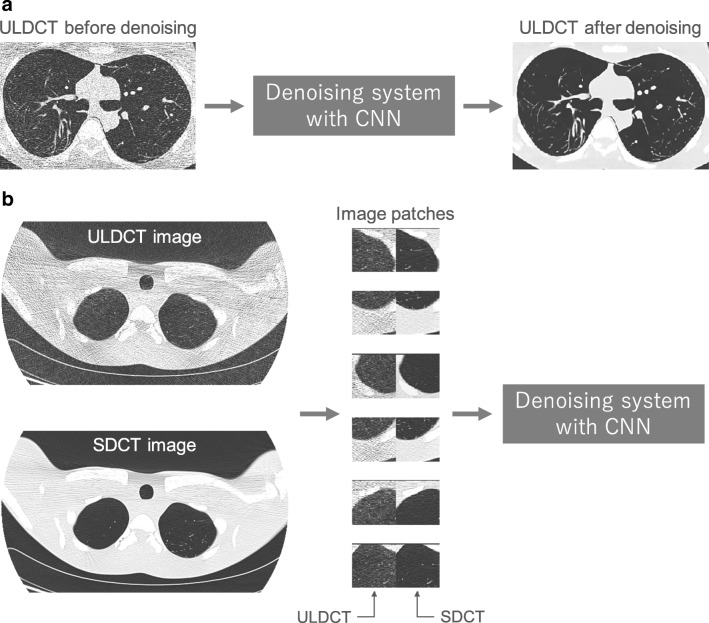
“Two previous studies showed that low-dose and ultra-low-dose CT images could be effectively denoised using deep learning [52, 53].”
§ Convolutional neural networks: an overview and application in radiology > Applications in radiology > Others
What the sources say
- Not checked — no full text of the sourcecites [52] Chen H Zhang Y Zhang W Low-dose CT via convolutional neural network Biomed Opt Express 2017 8 679 694 10.1364/BOE.8.000679 28270976 PMC5330597 source
- Supportedcites [53] Nishio M Nagashima C Hirabayashi S Convolutional auto-encoder for image denoising of ultra-low-dose CT Heliyon 2017 3 e00393 10.1016/j.heliyon.2017.e00393 28920094 PMC5577435 source
The Abstract (Materials and methods; Conclusion) reports that a convolutional auto-encoder denoised ultra-low-dose CT images of a chest phantom and performed better in visual assessments than the comparison methods. This supports the ultra-low-dose portion attributed to this study; the sentence cites two studies for the combined low-dose and ultra-low-dose claim. (LLM, conf=0.92)
hedgedstates a cause- Asserted: passes — The authors put it forward as true.
- Checkable: passes — It can be checked against evidence.
- Load-bearing: unclear — It is unclear whether the paper’s conclusions depend on it.
- Based: passes — The paper gives a reason why it holds.
The cited sources support only part of this claim — read each source’s verdict below.
In the paper
“Their study showed that U-net could effectively produce noiseless CT images from the subsampled sinogram.”
§ Convolutional neural networks: an overview and application in radiology > Applications in radiology > Others
What the sources say
- Partly supportedcites [54] Jin KH McCann MT Froustey E Unser M Deep convolutional neural network for inverse problems in imaging IEEE Trans Image Process 2017 26 4509 4522 10.1109/TIP.2017.2713099 28641250 sourceExperimental — accuracy not yet measured
The Experiments and Results section (p. 9) tests FBPConvNet on subsampled CT sinograms, and the Biomedical Dataset results (p. 13) report satisfactory removal of streaking artifacts and improved SNR. The network uses a modified U-net, but the paper does not claim its output is noiseless; the Discussion (p. 16) notes that artifacts can remain. (LLM, conf=0.88)
boostedstates a cause- Asserted: passes — The authors put it forward as true.
- Checkable: passes — It can be checked against evidence.
- Load-bearing: passes — The paper’s conclusions depend on it.
- Based: passes — The paper gives a reason why it holds.
- Partly supported
18 more claims · 8 with their cited sources checked
Create a free account to see all 87 claims and to verify the 4 references still open.
- Probably not a substantial claim. 56
- It may state two separate claims as one. 31
Citations
Cites
Deep Residual Learning for Image Recognition
He, K., Zhang, X., Ren, S., & Sun, J. (2016) · 2016 IEEE Conference on Computer Vision and Pattern Recognition (CVPR) · doi:10.1109/cvpr.2016.90 · Cited by 235,474 · cited 1×
“At present, many models pretrained on the ImageNet challenge dataset are open to the public and readily accessible, along with their learned kernels and weights, such as AlexNet [3], VGG [30], ResNet [31], Inception [32], and DenseNet [33].”
MethodVery Deep Convolutional Networks for Large-Scale Image Recognition
Simonyan, K., & Zisserman, A. (2014) · arXiv · doi:10.48550/arxiv.1409.1556 · Cited by 114,148 · cited 2×
“To perform unsupervised categorization, the following three steps were iteratively performed: (i) feature extraction using pretrained VGG16 model [30] from the lesions in the bounding box, (ii) clustering of the features, and (iii) fine-tuning of VGG16 based on the results of the clustering.”
MethodU-Net: Convolutional Networks for Biomedical Image Segmentation
Ronneberger, O., Fischer, P., & Brox, T. (2015) · Lecture notes in computer science · doi:10.1007/978-3-319-24574-4_28 · Cited by 99,404 · cited 1×
“Although segmentation based on image patch was successfully performed in deep learning, U-net of Ronneberger et al. [48] outperformed the image patch-based method on the ISBI [IEEE (The Institute of Electrical and Electronics Engineers) International Symposium on Biomedical Imaging] challenge for…”
MethodAdam: A Method for Stochastic Optimization
Kingma, D. P., & Ba, J. (2014) · arXiv · doi:10.48550/arxiv.1412.6980 · Cited by 98,946
LeCun, Y., Bengio, Y., & Hinton, G. (2015) · Nature · doi:10.1038/nature14539 · Cited by 84,126
Faster R-CNN: Towards Real-Time Object Detection with Region Proposal Networks
Ren, S., He, K., Girshick, R., & Sun, J. (2017) · IEEE Transactions on Pattern Analysis and Machine Intelligence · doi:10.1109/tpami.2016.2577031 · Cited by 73,472 · cited 1×
“The study also suggested that the detection system was built using the Faster R-CNN method [56], the lesions in the bounding box, and their corresponding pseudo-category.”
MethodFaster R-CNN: Towards Real-Time Object Detection with Region Proposal Networks
Ren, S., He, K., Girshick, R., & Sun, J. (2015) · arXiv · doi:10.48550/arxiv.1506.01497 · Cited by 70,812
Densely Connected Convolutional Networks
Huang, G., Liu, Z., Van Der Maaten, L., & Weinberger, K. Q. (2017) · 2017 IEEE Conference on Computer Vision and Pattern Recognition (CVPR) · doi:10.1109/cvpr.2017.243 · Cited by 48,566 · cited 1×
“At present, many models pretrained on the ImageNet challenge dataset are open to the public and readily accessible, along with their learned kernels and weights, such as AlexNet [3], VGG [30], ResNet [31], Inception [32], and DenseNet [33].”
MethodGoing deeper with convolutions
Szegedy, C., Liu, W., Jia, Y., Sermanet, P., Reed, S., Anguelov, D., Erhan, D., Vanhoucke, V., & Rabinovich, A. (2015) · 2015 IEEE Conference on Computer Vision and Pattern Recognition (CVPR) · doi:10.1109/cvpr.2015.7298594 · Cited by 48,562 · cited 5×
“According to the results, the best area under the curve of receiver operating characteristic curves for detecting pulmonary tuberculosis from healthy cases was 0.99, which was obtained by ensemble of the AlexNet and GoogLeNet 2D-CNNs.”
MethodInfluentialImageNet Large Scale Visual Recognition Challenge
Russakovsky, O., Deng, J., Su, H., Krause, J., Satheesh, S., Ma, S., Huang, Z., Karpathy, A., Khosla, A., Bernstein, M., et al. (2015) · International Journal of Computer Vision · doi:10.1007/s11263-015-0816-y · Cited by 39,380 · cited 1×
“…neural network (CNN), a class of artificial neural networks that has been a dominant method in computer vision tasks since the astonishing results were shared on the object recognition competition known as the ImageNet Large Scale Visual Recognition Competition (ILSVRC) in 2012 [2, 3].”
Method
Research works printed but not linked: 3
- Krizhevsky A, Sutskever I, Hinton GE (2012) ImageNet classification with deep convolutional neural networks. Adv Neural Inf Process Syst 25. Available online at: https://papers.nips.cc/paper/4824-imagenet-classification-with-deep-convolutional-neural-networks.pdf. Accessed 22 Jan 2018
- Lee DH (2013) Pseudo-label: the simple and efficient semi-supervised learning method for deep neural networks. In: Proceedings of the ICML 2013 Workshop: Challenges in Representation Learning. Available online at: http://deeplearning.net/wp-content/uploads/2013/03/pseudo_label_final.pdf. Accessed 23 Jan 2018
- Kurata Y, Nishio M, Fujimoto K et al (2018) Automatic segmentation of uterus with malignant tumor on MRI using U-net. In: Proceedings of the Computer Assisted Radiology and Surgery (CARS) 2018 congress (accepted)
Cited by
Items 2,601–2,700 of 4,673
Classifying Dual-Energy X-ray Absorptiometry Images Using Machine Learning
Kirilov, N., & Kirilova, E. (2021) · International Scientific Conference on Information, Communication and Energy Systems and Technologies (ICEST) · doi:10.1109/icest52640.2021.9483559 · Cited by 4
A Deep Learning and GIS Approach for the Optimal Positioning of Wave Energy Converters
Batsis, G., Partsinevelos, P., & Stavrakakis, G. S. (2021) · Energies · doi:10.3390/en14206773 · Cited by 4
Bus journey simulation to develop public transport predictive algorithms
Reich, T., Budka, M., & Hulbert, D. (2021) · Soft Computing Letters · doi:10.1016/j.socl.2021.100029 · Cited by 4
Remote Sensing Image Classification using Deep Learning
Gupta, S., Dwivedi, R. K., Kumar, V., Jain, R., Jain, S., & Singh, M. (2021) · International Conference on System Modeling & Advancement in Research Trends (SMART) · doi:10.1109/smart52563.2021.9676295 · Cited by 6
Application of Deep Convolution Neural Network in Breast Cancer Prediction using Digital Mammograms
Mamun, R. A., Rafin, G. A., Alam, A., & Sefat, M. A. I. (2021) · International Informatics and Software Engineering Conference (IISEC) · doi:10.1109/iisec54230.2021.9672368 · Cited by 5
The Role of Artificial Intelligence in Many Dental Specialties
Humairo, C. N., Hapsari, A., & Bramanti, I. (2021) · BIO Web of Conferences · doi:10.1051/bioconf/20214103005 · Cited by 4
“One of the classes of ANN is Convolutional Neural Network (CNN) which is dominantly in charge for computer vision [9].”
BackgroundA comprehensive study on early detection of Alzheimer disease using convolutional neural network
Oommen, D. K., & Arunnehru, J. (2022) · AIP conference proceedings · doi:10.1063/5.0071058 · Cited by 5
Introduction to Artificial Intelligence in Medicine
Romeny, B. M. T. H. (2022) · Springer eBooks · doi:10.1007/978-3-030-64573-1_27 · Cited by 4
A improved detection method for lung nodule based on multi‐scale 3D convolutional neural network
Tan, Y., Fu, X., Zhu, J., & Chen, L. (2022) · Concurrency and Computation Practice and Experience · doi:10.1002/cpe.7034 · Cited by 5
Cao, Y. (2022) · Communications in computer and information science · doi:10.1007/978-981-19-1166-8_3 · Cited by 5
Using Deep Learning in Lyme Disease Diagnosis
Koduru, T. N., & Zhang, E. (2021) · Journal of Student Research · doi:10.47611/jsrhs.v10i4.2389 · Cited by 7
“The preprocessing required in a DCNN is much lower compared to other traditional classification algorithms where filters are hand-engineered [17].”
BackgroundMethodVital Signs Evaluator and Blood Type Identification using Deep Learning for Blood Donation
Rosales, M. A., Fernandez, E. O., Concepcion, R., et al. (2021) · IEEE International Conference on Humanoid, Nanotechnology, Information Technology, Communication and Control, Environment, and Management (HNICEM) · doi:10.1109/hnicem54116.2021.9731813 · Cited by 4
“Before the training process begins, the size of the kernels, the number of kernels, padding, and stride are all hyperparameters that must be specified properly[19].”
BackgroundMendonça, F., Mostafa, S. S., Freitas, D., Morgado‐Dias, F., & Ravelo-García, A. G. (2022) · Entropy · doi:10.3390/e24050688 · Cited by 4
“[46] identified the most important hyper-parameters to tune a 1DCNN, where the dominant parameters are the kernel size, number of kernels, and the number of layers [47].”
BackgroundA Framework for Generating an ICGA from a Fundus Image using GAN
Tanachotnarangkun, P., Marukatat, S., Kumazawa, I., et al. (2022) · International Conference on Electrical Engineering/Electronics, Computer, Telecommunications and Information Technology (ECTI-CON) · doi:10.1109/ecti-con54298.2022.9795543 · Cited by 4
“Convolutional neural network (CNN) [11] is the deep learning model that consists of three main types of layers: convolutional, pooling, and fully connected.”
BackgroundConvolutional Neural Network-Based Virtual Reality Real-Time Interactive System Design for Unity3D
Li, H. (2022) · Computational Intelligence and Neuroscience · doi:10.1155/2022/2530836 · Cited by 6
“As a key issue within the VR field, it has received a lot of attention from researchers [11].”
BackgroundChoubineh, A., Chen, J., Coenen, F., & Ma, F. (2022) · Journal of Computing and Information Science in Engineering · doi:10.1115/1.4054868 · Cited by 5
Plant Disease Detection and Classification Using Deep Learning CNN Algorithms
Karunanidhi, B., Nandhini, B., Kumari, S. R. J., et al. (2022) · IEEE International Conference on Electronics, Computing and Communication Technologies (CONECCT) · doi:10.1109/conecct55679.2022.9865677 · Cited by 4
A composite learning approach for multiple fault diagnosis in gears
Inyang, U. I., Petrunin, I. V., & Jennions, I. K. (2022) · Proceedings of the Institution of Mechanical Engineers Part O Journal of Risk and Reliability · doi:10.1177/1748006x221129954 · Cited by 6
“53 Generally, some layers of the CNN are the convolutional layer, pooling layer, and fully connected layer.”
BackgroundGohel, B., Kumar, L., & Shah, D. (2023) · Procedia Computer Science · doi:10.1016/j.procs.2023.01.082 · Cited by 5
Gender recognition based fingerprints using dynamic horizontal voting ensemble deep learning
Olufunso, O. S., Evwiekpaefe, A. E., & Irhebhude, M. E. (2022) · International Journal of Advances in Intelligent Informatics · doi:10.26555/ijain.v8i3.927 · Cited by 10
CTR Prediction Using Wide & Deep and CCPM
Singh, U., Barman, A., Saurabh, K., Vyas, R., & Vyas, O. P. (2022) · IEEE India Conference · doi:10.1109/indicon56171.2022.10039769 · Cited by 4
Abid, A., & Zo-Afshan (2023) · Springer eBooks · doi:10.1007/978-3-031-23239-8_9 · Cited by 4
Electric Wheelchair with Avoiding Obstacle Feature using LiDAR and CNN Method
Shiddiqi, Rivai, M., Dikairono, R., et al. (2022) · International Conference on Information Technology, Information Systems and Electrical Engineering (ICITISEE) · doi:10.1109/icitisee57756.2022.10057839 · Cited by 4
“It will be processed at the max pool layer and the dropout layer to reduce the dimensions of the data, then goes to the fully connected layer and resulting 2 voltage values for the wheelchair movement [6].”
BackgroundWang, J. (2023) · Computer and Information Science · doi:10.5539/cis.v16n2p20 · Cited by 4
“CNNs are often used in computer vision applications, such as object recognition and face detection (Yamashita et al., 2018).”
BackgroundAdaptive Chaotic Injection to Reduce Overfitting in Artificial Neural Networks
Reid, S., Ferens, K., & Kinsner, W. (2022) · IEEE International Conference on Cognitive Informatics and Cognitive Computing · doi:10.1109/iccicc57084.2022.10101500
“Applications include object detection for self-driving cars [2], disease prediction in medicine [3], and malware detection in cybersecurity [4].”
BackgroundMachine Learning Techniques in Keratoconus Classification: A Systematic Review
Aatila, M., Lachgar, M., Hrimech, H., & Kartit, A. (2023) · International Journal of Advanced Computer Science and Applications · doi:10.14569/ijacsa.2023.0140569 · Cited by 6
“7) Convolutional neural networks (CNN): Initially designed to process images more efficiently [53], CNNs are a particular type of ANN belonging to such a broad category of methods called DL.”
Zafar, S., Nizami, I. F., Rehman, M. U., Majid, M., & Ryu, J. (2023) · Sensors · doi:10.3390/s23125652 · Cited by 6
“For this purpose, the input data is usually resized, which may cause a loss of important features and information resulting in degradation in the performance of the NI-SQA technique [33].”
MethodGround Reflection-Based Misalignment Detection of Automotive Radar Sensors
Park, C., & Lee, S. (2023) · IEEE Access · doi:10.1109/access.2023.3291143 · Cited by 5
“well as reducing the risk of overfitting [22].”
BackgroundHou, Y., & Navarro‐Cía, M. (2023) · Biomedical Physics & Engineering Express · doi:10.1088/2057-1976/ace4cf · Cited by 6
Beyin Tümörü Tespiti İçin Derin Öğrenme Yöntemlerinin Karşılaştırmalı Analizi
KARADAĞ, C., & Özdemir, D. (2023) · Artificial Intelligence Studies · doi:10.30855/ais.2023.06.01.01 · Cited by 4
(2023) · International Journal of Advanced Technology and Engineering Exploration · doi:10.19101/ijatee.2022.10100468 · Cited by 6
Detection of Behavioral Health Cases from Sensitive Police Officer Narratives
Brown, M., Khan, M. A. A. H., Thomas, D. M., et al. (2023) · IEEE Annual Computers, Software, and Applications Conference (COMPSAC) · doi:10.1109/compsac57700.2023.00213 · Cited by 4
“The convolutional and pooling layers extract features from input data, and the fully connected layer maps these features to output classification classes [16].”
BRAIN TUMOR CLASSIFICATION USING MACHINE LEARNING
(2023) · International Research Journal of Modernization in Engineering Technology and Science · doi:10.56726/irjmets44174 · Cited by 4
Breast MRI Segmentation by Deep Learning: Key Gaps and Challenges
Askaripour, K., & Żak, A. J. (2023) · IEEE Access · doi:10.1109/access.2023.3321272 · Cited by 4
“However, deep learning algorithms based on convolutional neural networks have revolutionized this field by enabling direct learning and recognition of relevant features from the images [15].”
BackgroundPerformance Analysis of LEACH with Deep Learning in Wireless Sensor Networks
Prajapati, H., & Joshi, R. C. (2022) · International Journal of Electronics and Telecommunications · doi:10.24425/ijet.2022.143888 · Cited by 6
“Convolutional neural networks (CNNs), a type of ANN that has been popular in computer vision, are gaining popularity in various fields like network traffic control, traffic classification & prediction, video analysis and so on [11].”
BackgroundSayyad, E. A. J. (2023) · International Journal on Recent and Innovation Trends in Computing and Communication · doi:10.17762/ijritcc.v11i10.8494 · Cited by 3
How much data do I need? A case study on medical data
Cengiz, A. B., & McGough, A. S. (2023) · IEEE International Conference on Big Data (BigData) · doi:10.1109/bigdata59044.2023.10386440 · Cited by 6
“To exploit these benefits, especially in the field of medical image classification (MIC), we can utilise pre-trained CNNs using the ImageNet [8] dataset (see [11], [32]).”
MethodSecurity establishment using deep convolutional network model in cyber-physical systems
Meganathan, R., Manjunath, B., Anand, R., Murugesh, V., Jaganathan, S. C. B., & Suriyan, K. (2024) · Multimedia Tools and Applications · doi:10.1007/s11042-024-18535-y · Cited by 8
“In contrast to synchronous DoS attacks, asynchronous DoS assaults may result in control signal update failures that last a long time [10].”
BAT Algorithm-Based Multi-Class Crop Leaf Disease Prediction Bootstrap Model
Choudhary, V., & Thakur, A. (2024) · Proceedings of Engineering and Technology Innovation · doi:10.46604/peti.2024.13352 · Cited by 4
Evaluating ChatGPT in pathology: towards multimodal AI in medical imaging
Koga, S. (2024) · Journal of Clinical Pathology · doi:10.1136/jcp-2024-209483 · Cited by 4
Breast Cancer Segmentation on Ultrasound Images using U-Net and Grad-CAM
Bhuiyan, S. U., Mahin, M. R. H., Siddique, M. J., Hossain, N., Ahmed, S. F., Abeer, M., & Rasel, A. A. (2023) · International Conference on Machine Learning and Applications · doi:10.1109/icmla58977.2023.00318 · Cited by 4
“Within the sphere of medical imaging, deep learning had marked a paradigm shift [16].”
BackgroundAhmed, B., Rai, A. K., Gawdiya, S., Barman, M., Haque, M. A., & Singh, S. (2024) · Vegetos · doi:10.1007/s42535-024-00874-8 · Cited by 5
Utilizing A Deep Learning Model's Hotspot Detection Technique for Uterine Cancer Image Segmentation
Singh, T. G., Karthik, B., & Wahengbam, M. (2024) · doi:10.1109/adics58448.2024.10533621 · Cited by 4
“A suitable deep learning architecture, often a Convolutional Neural Network (CNN), is selected and trained on the dataset [4, 5].”
MethodADHDNet: A DNN Based Framework for Efficient ADHD Detection from fMRI Dataset
Chowdhury, A., Chatterjee, R., Aich, G., & Ghosh, K. (2024) · Lecture notes in computer science · doi:10.1007/978-3-031-12700-7_15 · Cited by 4
Influence of Image Pre-processing to Improve the Accuracy in a Convolutional Neural Network
Campo, F. A. D., Villegas, O. O. V., Sánchez, V. G. C., Tena, L. A. G., & Nandayapa, M. (2020) · International Journal of Combinatorial Optimization Problems and Informatics. · Cited by 5
Auto Segmentation of Lung in Non-small Cell Lung Cancer Using Deep Convolution Neural Network
Patil, R. C., Wee, L., & Dekker, A. L. A. J. (2020) · Communications in computer and information science · doi:10.1007/978-981-15-6634-9_31 · Cited by 4
e-ASPECTS for early detection and diagnosis of ischemic stroke
Haifa, T., Boughariou, J., Lamia, S., et al. (2020) · International Conference on Advanced Technologies for Signal and Image Processing · doi:10.1109/atsip49331.2020.9231788 · Cited by 4
“Random forest learning (RFL)[21] and convolutional neural networks (CNN) [22] are the most popular methods.”
MethodInfluentialModified Model-Agnostic Meta-Learning
Pawar, A. (2020) · IEEE International Conference on Machine Learning and Applied Network Technologies (ICMLANT) · doi:10.1109/icmlant50963.2020.9355973 · Cited by 4
The implementation of intelligent systems in automating vehicle detection on the road
Susanto, S., Budiarjo, D. D., Hendrawan, A., & Pungkasanti, P. T. (2021) · IAES International Journal of Artificial Intelligence · doi:10.11591/ijai.v10.i3.pp571-575 · Cited by 6
Rapid and sensitive mycoplasma detection system using image-based deep learning
Iseoka, H., Sasai, M., Miyagawa, S., et al. (2021) · Journal of Artificial Organs · doi:10.1007/s10047-021-01282-4 · Cited by 4
Breast Cancer Histopathological Image Classification Using Convolutional Neural Networks
Adhikari, A., Choudhuri, A. R., Ghosh, D., Chattopadhyay, N., & Chakraborty, R. (2021) · Studies in autonomic, data-driven and industrial computing · doi:10.1007/978-981-16-4301-9_14 · Cited by 4
Breast Mass Classification with Deep Transfer Feature Extractor Model and Random Forest Classifier
Bokade, A., & Shah, A. K. (2021) · International Conference on Recent Trends on Electronics, Information, Communication & Technology (RTEICT) · doi:10.1109/rteict52294.2021.9573909 · Cited by 5
“TL transfers the knowledge from pretrained CNN models for learning the new task specific information in two different ways [11].”
MethodSian, L. J., Stofa, M. M., Min, K. S., & Zulkifley, M. A. (2021) · International Journal of Advanced Computer Science and Applications · doi:10.14569/ijacsa.2021.0121274 · Cited by 6
A CNN-based CADx Model for Pneumonia Detection from Chest Radiographs with Web Application
Khan, M. B., Islam, M. T., & Ahmad, M. (2021) · doi:10.1109/icsct53883.2021.9642603 · Cited by 4
Budiyanta, N. E., Sereati, C. O., & Manalu, F. R. G. (2022) · Bulletin of Electrical Engineering and Informatics · doi:10.11591/eei.v11i2.3483 · Cited by 4
(2019) · International Journal of Innovative Technology and Exploring Engineering · doi:10.35940/ijitee.l1189.10812s19 · Cited by 4
A Survey of Weed Identification Using Convolutional Neural Networks
Shekhawat, N., Verma, S., Vijayvargiya, A., Agarwal, M., & Jailia, M. (2023) · Advances in computational intelligence and robotics book series · doi:10.4018/978-1-6684-6821-0.ch022 · Cited by 4
Mamun, M. M. R. K., & Alouani, A. T. (2020) · Journal of Biomedical Engineering and Biosciences · doi:10.11159/jbeb.2020.001 · Cited by 5
“The most common form of pooling layer is with filter 2X2 applied with a stride 2 to discard 75% of the activations [63].”
BackgroundTransfer Learning on Inception ResNet V2 for Expiry Reminder: A Mobile Application Development
Ong, W.-Y., Too, C. W., & Khor, K. (2021) · Lecture notes in computer science · doi:10.1007/978-3-030-83164-6_12 · Cited by 5
Multisource Smart Computer-Aided System for Mining COVID-19 Infection Data
Abou-Kreisha, M. T., Yaseen, H. K., Fathy, K. A. M., Ebeid, E. A., & ElDahshan, K. A. (2022) · Healthcare · doi:10.3390/healthcare10010109 · Cited by 7
“Algorithm Accuracy Precision Recall Proposed (Enhanced TL VGG-19+SVM) 98.94 99.59 99.38 Muhammed E.H. et al. [51] 98.30 100.00 96.70 Armando Ugo Cavallo et al. [52] 91.80 -- 93.00 Sheetal et al. [53] 94.40 -- 94.50 Amira et al. [54] 91.34 91.00 88.33 Figure 13.”
BackgroundMethodInfluentialZhang, Y., Lobo-Mueller, E. M., Karanicolas, P. J., et al. (2019) · arXiv (Cornell University) · doi:10.48550/arxiv.1907.04822 · Cited by 4
Thoomkuzhy, A. M. (2020) · Arrow - TU Dublin (Technological University Dublin) · doi:10.21427/fcve-2g86 · Cited by 6
Li, X., Hu, W., Li, C., Jiang, T., Sun, H., Li, X., Huang, X., & Grzegorzek, M. (2021) · arXiv (Cornell University) · doi:10.48550/arxiv.2104.06243 · Cited by 4
Medical Image Segmentation using 3D Convolutional Neural Networks: A Review.Preprint
Niyas, S., Pawan, S. J., Kumar, M. A., & Rajan, J. (2021) · arXiv (Cornell University) · Cited by 4
Convolutional Neural Networks in Computer-Aided Diagnosis of Colorectal Polyps and Cancer: A ReviewPreprint
Keshtkar, K. (2021) · Preprints.org · doi:10.20944/preprints202110.0135.v1 · Cited by 4
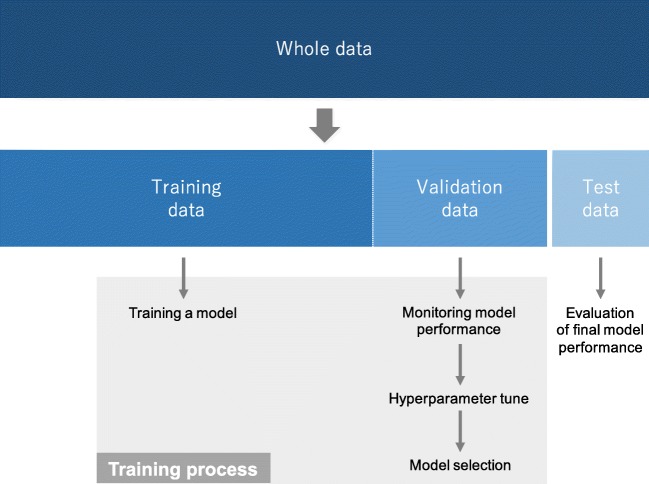
“In the validation phase, hyperparameters such as learning rate, mini-batch size, number of epochs, and type of loss function and optimizer are tuned, and the values are determined [26].”
BackgroundMethodInfluentialPersonalized Therapy Using Deep Learning Advances
Gaur, N., Dharwadkar, R., & Thomas, J. (2022) · Wiley eBooks · doi:10.1002/9781119857983.ch6 · Cited by 5
Detection of Cardiovascular Disease Using Gut Microbiota DataPreprint
Duyar, C., Senica, S. O., & Kalkan, H. (2023) · Research Square · doi:10.21203/rs.3.rs-2794999/v1 · Cited by 4
Peach Leaf Diseases Identification Using Convolutional Neural Network and Fastai FrameworkPreprint
Zhang, D., HongYu, Y., Cao, J., Gong, Q., & Kumaran, S. R. (2023) · Research Square · doi:10.21203/rs.3.rs-3005284/v1 · Cited by 4
Sentiment Analysis for Vietnamese – Based Hybrid Deep Learning ModelsPreprint
Dang, C. N., Garcı́a, M. N. M., la Prieta, F. D., et al. (2023) · Preprints.org · doi:10.20944/preprints202306.1318.v1 · Cited by 4
Convolutional Neural Network Based Malaysian Sign-Language Recognition Web ApplicationPreprint
Riskhan, B., Aziz, M. A. A., & Arifa, H. (2024) · Preprints.org · doi:10.20944/preprints202405.1601.v1 · Cited by 3
Verenich, E., Martin, T., Velasquez, A., Khan, N., & Hussain, F. (2021) · arXiv · doi:10.48550/arxiv.2109.00573 · Cited by 4
“Yamashita et al. [5] provide an excellent overview of CNNs and their application in radiology, while we provide a general summary.”
BackgroundRedefining Security: Unveiling the Vulnerabilities of Captcha Mechanisms Using Deep Learning
Puneet, P., & deepika, D. (2024) · International Conference on Emerging Smart Computing and Informatics (ESCI) · doi:10.1109/esci59607.2024.10497359 · Cited by 3
Islam, M. T., Islam, M. R., & Mamun, A. A. (2024) · Journal of Spatial Science · doi:10.1080/14498596.2024.2364231 · Cited by 3
“Output characteristics are then mapped based on neuron inputs, with the Rectified Linear Unit (ReLU) function serving as the activation function (Yamashita et al .”
Facial Segmentation in Deepfake Classification: a Transfer Learning Approach
Tanfoni, M., Ceroni, E. G., Pancino, N., Bianchini, M., & Maggini, M. (2024) · Procedia Computer Science · doi:10.1016/j.procs.2024.09.255 · Cited by 5
The role of deep learning in drug discovery
Ahmad, A., & Mohamed, A. A. M. (2024) · Elsevier eBooks · doi:10.1016/b978-0-443-27574-6.00001-1 · Cited by 5
Liu, K., Zhao, X., Mou, M., & Hui, Y. (2024) · Applied Intelligence · doi:10.1007/s10489-024-06002-y · Cited by 4
Hage, I. S., Seif, C. Y., Quinsaat, J. E. Q., van de Pas, D. J., Vendamme, R., Eevers, W., Vanbroekhoven, K., & Féghali, E. (2025) · Polymer · doi:10.1016/j.polymer.2025.128235 · Cited by 5
Ryu, H.-S., Jo, S., & Hong, S. (2025) · IEEE Transactions on Geoscience and Remote Sensing · doi:10.1109/tgrs.2025.3555803 · Cited by 3
“Additionally, given the linear relationship between the input and output data in the conversion process, employing CNN [45], which consists of convolutional layers designed to extract features from input data efficiently, could produce distinct results.”
Hendaoui, S., & Zangar, N. (2025) · Cluster Computing · doi:10.1007/s10586-024-04958-7 · Cited by 3
“SDN architecture serves as the central hub, dynamically generating and managing these slices according to real-time conditions and service requirements [11].”
Lee, H., Kwak, J. Y., & Lee, E. (2025) · Scientific Reports · doi:10.1038/s41598-025-00416-5 · Cited by 4
Wafer scale assessment of dislocation defects on SiC wafers using a convolutional neural network
Gallagher, J. C., Mahadik, N. A., Stahlbush, R. E., et al. (2025) · Semiconductor Science and Technology · doi:10.1088/1361-6641/ade4f7 · Cited by 3
Explainable AI predicting Alzheimer’s disease with latent multimodal deep neural networks
Chen, X., Thompson, J. A., Yao, Z., Cappelleri, J. C., Amponsah, J. K., Mukherjee, R., & Hu, J. (2025) · Journal of Biopharmaceutical Statistics · doi:10.1080/10543406.2025.2511194 · Cited by 4
Self-attention mechanism prior to modality fusion for multimodal sentiment analysis
Chen, Z., Lu, C., & Wang, Y. (2025) · Multimedia Systems · doi:10.1007/s00530-025-01868-5 · Cited by 7
“With the advent of deep learning, models such as Convolutional Neural Networks (CNN) and Gated Recurrent Units (GRU) were widely adopted, significantly improving the performance of text sentiment analysis [18, 19].”
Automated detection of sea cucumbers in turbid subtidal marine habitats: An explainable approach
Chu, C., Gu, Y., Wong, A., & Russell, B. D. (2025) · Ecological Informatics · doi:10.1016/j.ecoinf.2025.103342 · Cited by 3
Pravin Savaridass, M., & Esakkirajan, S. (2025) · Electric Power Systems Research · doi:10.1016/j.epsr.2025.112031 · Cited by 6
Sabile, J. M. G., Zhang, P., Parwani, A. V., Chobrutskiy, B. I., Gandhi, A. P., & Srisuwananukorn, A. (2025) · Acta Haematologica · doi:10.1159/000547532 · Cited by 8
“There are many variations of ANNs, including CNNs, that are typically categorized by the type of data processing that occurs within the hidden layer in the algorithm [11].”
Park, H. J., Ham, S., Shim, E., Suh, D. H., & Kim, J. G. (2025) · Journal of Bone and Joint Surgery · doi:10.2106/jbjs.24.01530 · Cited by 5
Artificial Intelligence and Machine Learning in Reconstructive Microsurgery
Lin, T.-C., Yang, H.-A., Huang, R., & Lin, C. (2025) · Seminars in Plastic Surgery · doi:10.1055/s-0045-1810062 · Cited by 9
Tripathi, S., Misra, R., & Singh, T. N. (2025) · Future Generation Computer Systems · doi:10.1016/j.future.2025.108096 · Cited by 4
Tiwari, A., & Chavali, K. (2025) · Egyptian Journal of Forensic Sciences · doi:10.1186/s41935-025-00481-x · Cited by 5
“Convolution, pooling, and FC layers are the three types of layers (or building blocks) that make up a CNN, a mathematical construct (Yamashita et al. 2018).”
Łajczak, P. M., Sahin, O. K., Matyja, J., Sánchez, L. R. P., Sayudo, I. F., Ayesha, A., Lopes, V., Majeed, M. W., Krishna, M. M., Joseph, M., et al. (2025) · The International Journal of Cardiovascular Imaging · doi:10.1007/s10554-025-03497-5 · Cited by 5
“For example, convolutional NNs (CNNs), are a group of high-performance DL models capable of processing massive sets of data, including CMR images, with the advantage of automatically learning spatial features, from low-to high-level patterns [ 11 ].”
Adaptive Random Testing of Deep Learning Systems Using Image Hashing
Yi, L., Cui, C., Huang, R., Towey, D., & Wang, R. (2025) · IEEE Transactions on Reliability · doi:10.1109/tr.2025.3607784 · Cited by 8
“Conversely,CNNsfocusonfeatureextraction throughconvolutional,pooling,andfullyconnectedlayers[27].”
Talukder, M. S. H., Akter, S., Nur, A. H., et al. (2025) · Journal Of Big Data · doi:10.1186/s40537-025-01278-4 · Cited by 3
“Image recognition or classification often uses a Convolutional Neural Network (CNN) which incorporates pooling layers, fully linked layers and several convolution layers [27].”
Durlind, G., Martínez-Hernández, U., & Assaf, T. (2025) · Machine Learning and Knowledge Extraction · doi:10.3390/make7040118 · Cited by 3
New Challenges for the Semiconductor Ecosystem
Wyon, C., & de Voorde, M. H. V. (2025) · IEEE electron devices reviews. · doi:10.1109/edr.2025.3638339 · Cited by 6
“In order to reach a very high energy efficiency, the computing hardware is more specialized (ASIC, MCU … ), involving for example the use of NMC or IMC architectures, and models like Convolutional Neural Networks (CNNs) [115], [116] or SNNs with far fewer neuron layers than DNNs.”
Aridhi, E., Laabidi, K., & Mami, A. (2025) · Array · doi:10.1016/j.array.2025.100622 · Cited by 7
Lee, S.-H., Jiang, Q.-W., Cheng, C.-H., Tsai, Y.-S., & Huang, Y. (2025) · Agriculture · doi:10.3390/agriculture15232494 · Cited by 5
Current Role of Artificial Intelligence in the Management of Gastric Cancer
Liatsou, Ε., Driva, T. S., Vergadis, C., Sakellariou, S., Lykoudis, P. M., Apostolou, K. G., Tsapralis, D., & Schizas, D. (2025) · Biomedicines · doi:10.3390/biomedicines13122939 · Cited by 6
“A specialized approach in image analysis using convolutional neutral networks (CNNs) enables the elaboration and extraction of visual features from a source image through nonlinear activation functions, followed by processing with pooling and dimensionality reduction [18].”
Ayaz, H., Xu, J., Aslam, M. U., Khan, A. U., & Ahmad, S. (2025) · Concurrency and Computation Practice and Experience · doi:10.1002/cpe.70455 · Cited by 4
Early bearing fault diagnosis based on dynamic learning and MSWKN-transformer
Wang, Q., Zhang, P., Ma, X., Jia, K., Wu, W., & Yang, Q. (2025) · Journal of Mechanical Science and Technology · doi:10.1007/s12206-025-1106-4 · Cited by 4
“A trade-off is made among computational efficiency, feature representation, and model performance [27, 28].”
Metadata
- Authors
- Yamashita, R., Nishio, M., Do, R. K. G., & Togashi, K.
- Affiliations
- Memorial Sloan Kettering Cancer Center (US)
- Kyoto University (JP)
- Corresponding author
- Yamashita, Rikiya
- Venue
- Insights into Imaging
- Published
- 2018-06-22
- Volume
- 9
- Issue
- 4
- Pages
- 611-629
- ISSN
- 1869-4101 (ISSN-L)
- PMC
- PMC6108980
- OpenAlex
- W2809254203
- Cited by
- 4,682
- References
- 55
- Citations by year
- 2026: 390 · 2025: 701 · 2024: 915 · 2023: 889 · 2022: 772 · 2021: 592 · 2020: 312 · 2019: 97 · 2018: 12
- FWCI
- 5.66
- Type
- journal article
- Language
- en
- Open access
- gold
- doi.org
- Licence
- cc-by
- creativecommons.org/licenses/by/4.0 (tdm)
- creativecommons.org/licenses/by/4.0 (vor)
- Locations
- Insights into Imaging (publishedVersion, cc-by)
- Europe PMC (PubMed Central) (publishedVersion, other-oa)
- PubMed Central (publishedVersion, cc-by)
- PubMed (publishedVersion)
- DOAJ (DOAJ: Directory of Open Access Journals) (submittedVersion, cc-by-sa)
- Funders
- Japan Society for the Promotion of Science (JP16K19883)
- Topics
- Health Sciences › Medicine › Health Informatics › Artificial Intelligence in Healthcare and Education
- Health Sciences › Medicine › Radiology, Nuclear Medicine and Imaging › Radiomics and Machine Learning in Medical Imaging
- Physical Sciences › Computer Science › Computer Vision and Pattern Recognition › Advanced Neural Network Applications
- Keywords
- convolutional neural networks, deep learning in radiology, convolutional layers, pooling layers, small datasets, overfitting, computer-aided diagnosis, radiology image analysis
About these checks
Registry, retraction, Cites and statistics results are computed, not judged, with one exception: a printed reference that no index lists is read once by a model before it counts as a citation error. Claims are extracted by a model and kept only when their quote appears verbatim in the text; each cited source is then checked, with a model’s help, for whether it says what the claim relies on. Those verdicts can be wrong — read the claim’s quote and the cited source before relying on one.
The claim verdicts this report counts are experimental: their accuracy is not yet measured.
A language model drew the claims from the paper on 2026-10-10, under version 3 of the claim definition (model deepseek-v4.1-flash, prompt extract-v3).
A second model labelled each claim on 2026-10-10 (model jev-1.13-20260917, definition revision gold-guideline-v0.2).
Cited sources are checked with a language model’s help (gpt-6-sol).
Statistics and arithmetic are recomputed, not judged.
Confidence bands are shown only for fields calibrated on our annotated test set. None is calibrated yet, so no band is shown.
What counts as a claim ›How we measure confidence ›How we check this ›
Are you an author, or do you see a problem with this page? Request a review
Data sources
Bibliographic data: Semantic Scholar, OpenAlex, Crossref.
Contains information from the Semantic Scholar Academic Graph Datasets, made available under the ODC Attribution License (ODC-BY 1.0).
Semantic Scholar’s data is described in: Kinney, R., et al. (2023). The Semantic Scholar Open Data Platform. arXiv:2301.10140.
