

Convolutional neural networks: an overview and application in radiology
Open accessThe DOI matches its Crossref record; 65 of the 65 references it cites were found in a registry or an index; 30 of the 49 sources its claims cite were checked for support.
Abstract
Convolutional neural network (CNN), a class of artificial neural networks that has become dominant in various computer vision tasks, is attracting interest across a variety of domains, including radiology. CNN is designed to automatically and adaptively learn spatial hierarchies of features through backpropagation by using multiple building blocks, such as convolution layers, pooling layers, and fully connected layers. This review article offers a perspective on the basic concepts of CNN and its application to various radiological tasks, and discusses its challenges and future directions in the field of radiology. Two challenges in applying CNN to radiological tasks, small dataset and overfitting, will also be covered in this article, as well as techniques to minimize them. Being familiar with the concepts and advantages, as well as limitations, of CNN is essential to leverage its potential in diagnostic radiology, with the goal of augmenting the performance of radiologists and improving patient care. KEY POINTS: • Convolutional neural network is a class of deep learning methods which has become dominant in various computer vision tasks and is attracting interest across a variety of domains, including radiology. • Convolutional neural network is composed of multiple building blocks, such as convolution layers, pooling layers, and fully connected layers, and is designed to automatically and adaptively learn spatial hierarchies of features through a backpropagation algorithm. • Familiarity with the concepts and advantages, as well as limitations, of convolutional neural network is essential to leverage its potential to improve radiologist performance and, eventually, patient care.
Overview
CoChat Summary
TL;DR
This narrative review explains the basic concepts of convolutional neural networks (CNNs) — their building blocks, training, and data requirements — and surveys their application to radiological tasks such as classification, segmentation, detection, image denoising, and report analysis. It highlights small datasets and overfitting as the two central challenges for CNN use in radiology and reviews techniques to mitigate them.
Key findings
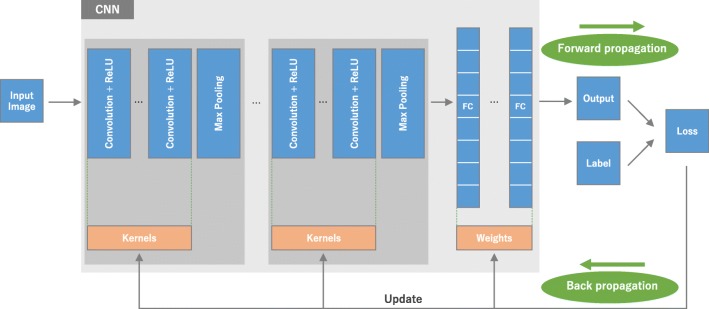
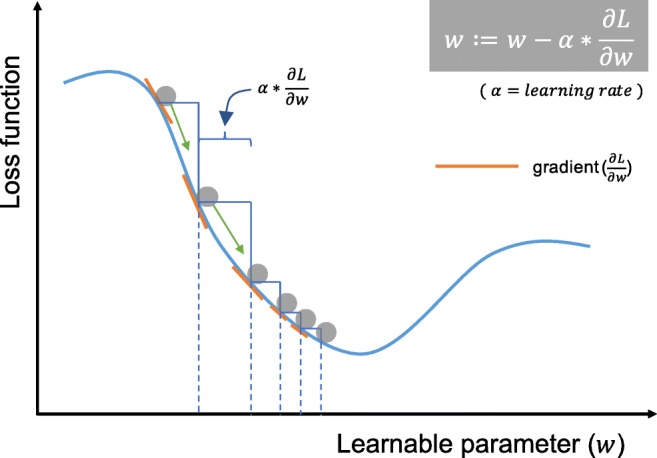
- CNN is composed of convolution, pooling, and fully connected layers; convolution and pooling perform feature extraction while fully connected layers map features to outputs, with kernels and weights learned via backpropagation and gradient descent.
- CNN differs from conventional radiomics in that it does not require hand-crafted feature extraction or expert segmentation, but is far more data hungry and computationally expensive, typically requiring GPUs.
- Reported application results cited in the review include: an ensemble of AlexNet and GoogLeNet 2D-CNNs achieving a best AUC of 0.99 for detecting pulmonary tuberculosis on 1007 chest radiographs; a CNN-based CADe system trained on ~45,000 mammography images outperforming a hand-crafted-feature CADe system at low sensitivity and matching it at high sensitivity; and a detection system built from 33,688 bounding boxes mined from radiologists' reports showing significantly improved detection accuracy with pseudo-category labels.
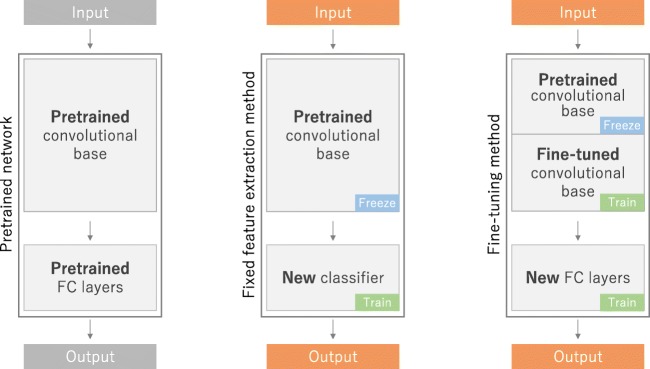
- Transfer learning from ImageNet (1.4 million images, 1000 classes) via fixed feature extraction or fine-tuning is presented as a key strategy for training on small datasets; U-net is highlighted for segmentation because it captures multiscale spatial context and can be trained end-to-end from limited data.
Methods
- Design: narrative review article (not a primary study), covering CNN concepts, training, data/label considerations, overfitting, small-dataset strategies, and radiology applications.
- Scope: applications are organized into classification, segmentation, detection, and "others" (denoising, image reconstruction, report classification); recurrent neural networks and other deep learning models are explicitly stated to be beyond the article's scope.
- Evidence base: illustrative prior studies are cited rather than systematically searched or quantitatively pooled; no new data, sample, or statistical analysis is generated by the authors.
Limitations
- Stated: the article is a perspective/overview, and other deep learning models such as recurrent neural networks for sequence models are beyond its scope; the details of improved gradient descent algorithms (momentum, RMSprop, Adam) are also stated to be beyond scope.
- Stated: whether semi-supervised techniques (pseudo-label, GANs) actually improve deep learning performance in radiology "is not clear and remains an area of active investigation," and whether medical pretrained networks would outperform ImageNet-pretrained transfer learning is likewise unclear.
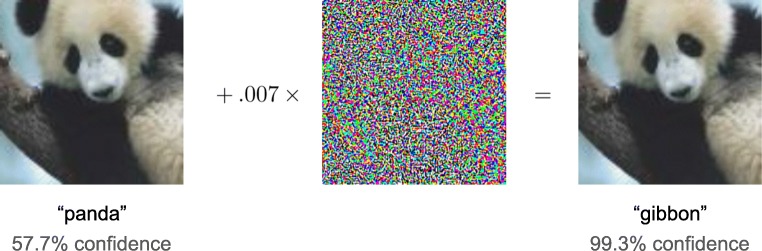
- Evident from the text: as a narrative review it reports no systematic search strategy, inclusion criteria, or quantitative synthesis, so the cited performance figures are illustrative examples rather than a comparative or exhaustive assessment; the authors also note deep learning's "black box" nature and vulnerability to adversarial examples as unresolved concerns for clinical robustness.
Model-written summary. Check it against the paper before relying on it.
Integrity signals
Registry
Cites
Statistics
Figures
Verification
Claims the paper makes
23 Valid · 11 Not valid · 6 Not checked · 47 Own results and interpretations
The sources with a verdict support this claim; the rest weren’t checked yet, have no full text we could read, or their verdicts aren’t rated yet.
In the paper
“several studies have already been published in areas such as lesion detection [7], classification [8], segmentation [9], image reconstruction [10, 11], and natural language processing [12].”
§ Convolutional neural networks: an overview and application in radiology > Introduction
What the sources say
- Not checked — no full text of the sourcecites [7] Lakhani P Sundaram B Deep learning at chest radiography: automated classification of pulmonary tuberculosis by using convolutional neural networks Radiology 2017 284 574 582 10.1148/radiol.2017162326 28436741 source
- Not checked — no full text of the sourcecites [8] Yasaka K Akai H Abe O Kiryu S Deep learning with convolutional neural network for differentiation of liver masses at dynamic contrast-enhanced CT: a preliminary study Radiology 2018 286 887 896 10.1148/radiol.2017170706 29059036 source
- Supportedcites [9] Christ PF, Elshaer MEA, Ettlinger F et al (2016) Automatic liver and lesion segmentation in CT using cascaded fully convolutional neural networks and 3D conditional random fields. In: Ourselin S, Joskowicz L, Sabuncu M, Unal G, Wells W (eds) Proceedings of Medical image computing and computer-assisted intervention – MICCAI 2016. 10.1007/978-3-319-46723-8_48 source
The citation [9] is attached to “segmentation,” not to the other listed applications. The paper’s opening page (p. 1) describes its CNN-based method for segmenting liver and lesions in CT images, so it is an example of the cited kind of study. (LLM, conf=0.95)
plain- Asserted: passes — The authors put it forward as true.
- Checkable: passes — It can be checked against evidence.
- Load-bearing: unclear — It is unclear whether the paper’s conclusions depend on it.
- Based: passes — The paper gives a reason why it holds.
Every source the paper cites for this claim was checked and supports it.
In the paper
“The results demonstrate that detection accuracy could be significantly improved by incorporating pseudo-category labels.”
§ Convolutional neural networks: an overview and application in radiology > Applications in radiology > Others
What the sources say
- Supportedcites [55] Yan K, Wang X, Lu L, Summers RM (2017) DeepLesion: automated deep mining, categorization and detection of significant radiology image findings using large-scale clinical lesion annotations. arXiv. Available online at: https://arxiv.org/pdf/1710.01766.pdf. Accessed 29 Jan 2018 source
In Results and Discussion (p. 7), the paper compares detection without categorization labels against detection with pseudo-category labels. Test accuracy rises from 59.45% to 64.30% overall, with improvements of 3–8 percentage points across the five lesion clusters. (LLM, conf=0.92)
hedgedstates a possible cause- Asserted: passes — The authors put it forward as true.
- Checkable: passes — It can be checked against evidence.
- Load-bearing: passes — The paper’s conclusions depend on it.
- Based: passes — The paper gives a reason why it holds.
- Supported
Every source the paper cites for this claim was checked and supports it.
In the paper
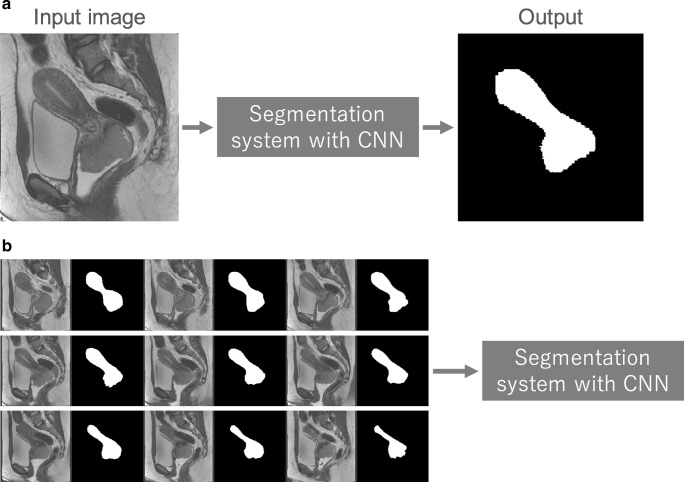
“As a result, U-net could be trained end-to-end from a limited number of training data.”
§ Convolutional neural networks: an overview and application in radiology > Applications in radiology > Segmentation
What the sources say
- Supportedcites [48] Ronneberger O, Fischer P, Brox T (2015) U-net: convolutional networks for biomedical image segmentation. In: Navab N, Hornegger J, Wells W, Frangi A (eds) Proceedings of Medical Image Computing and Computer-Assisted Intervention – MICCAI 2015. 10.1007/978-3-319-24574-4_28 source
The paper’s opening section states directly that U-Net can be trained end-to-end from very few images. The Conclusion likewise says it needs very few annotated images, thanks to data augmentation with elastic deformations. (LLM, conf=0.95)
hedgedstates a cause- Asserted: passes — The authors put it forward as true.
- Checkable: passes — It can be checked against evidence.
- Load-bearing: unclear — It is unclear whether the paper’s conclusions depend on it.
- Based: passes — The paper gives a reason why it holds.
- Supported
The sources with a verdict support this claim; the rest weren’t checked yet, have no full text we could read, or their verdicts aren’t rated yet.
In the paper
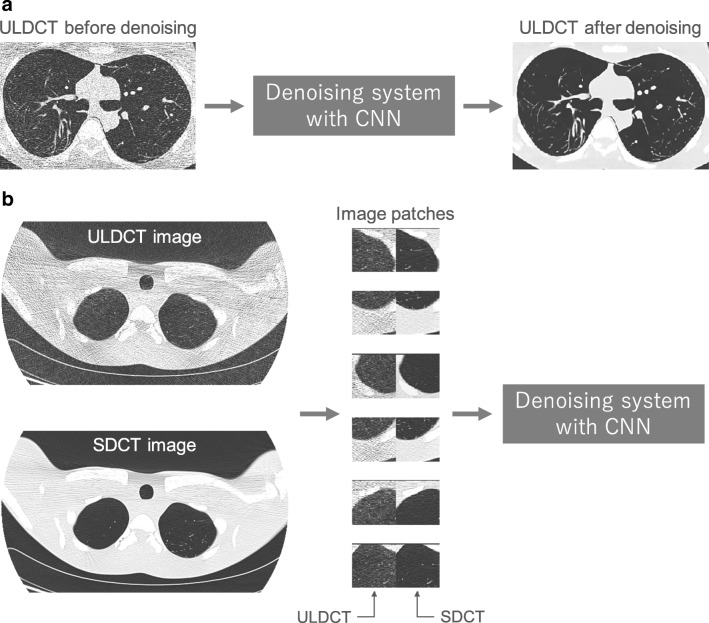
“Two previous studies showed that low-dose and ultra-low-dose CT images could be effectively denoised using deep learning [52, 53].”
§ Convolutional neural networks: an overview and application in radiology > Applications in radiology > Others
What the sources say
- Not checked — no full text of the sourcecites [52] Chen H Zhang Y Zhang W Low-dose CT via convolutional neural network Biomed Opt Express 2017 8 679 694 10.1364/BOE.8.000679 28270976 PMC5330597 source
- Supportedcites [53] Nishio M Nagashima C Hirabayashi S Convolutional auto-encoder for image denoising of ultra-low-dose CT Heliyon 2017 3 e00393 10.1016/j.heliyon.2017.e00393 28920094 PMC5577435 source
The Abstract (Materials and methods; Conclusion) reports that a convolutional auto-encoder denoised ultra-low-dose CT images of a chest phantom and performed better in visual assessments than the comparison methods. This supports the ultra-low-dose portion attributed to this study; the sentence cites two studies for the combined low-dose and ultra-low-dose claim. (LLM, conf=0.92)
hedgedstates a cause- Asserted: passes — The authors put it forward as true.
- Checkable: passes — It can be checked against evidence.
- Load-bearing: unclear — It is unclear whether the paper’s conclusions depend on it.
- Based: passes — The paper gives a reason why it holds.
The cited sources support only part of this claim — read each source’s verdict below.
In the paper
“Their study showed that U-net could effectively produce noiseless CT images from the subsampled sinogram.”
§ Convolutional neural networks: an overview and application in radiology > Applications in radiology > Others
What the sources say
- Partly supportedcites [54] Jin KH McCann MT Froustey E Unser M Deep convolutional neural network for inverse problems in imaging IEEE Trans Image Process 2017 26 4509 4522 10.1109/TIP.2017.2713099 28641250 sourceExperimental — accuracy not yet measured
The Experiments and Results section (p. 9) tests FBPConvNet on subsampled CT sinograms, and the Biomedical Dataset results (p. 13) report satisfactory removal of streaking artifacts and improved SNR. The network uses a modified U-net, but the paper does not claim its output is noiseless; the Discussion (p. 16) notes that artifacts can remain. (LLM, conf=0.88)
boostedstates a cause- Asserted: passes — The authors put it forward as true.
- Checkable: passes — It can be checked against evidence.
- Load-bearing: passes — The paper’s conclusions depend on it.
- Based: passes — The paper gives a reason why it holds.
- Partly supported
18 more claims · 8 with their cited sources checked
Create a free account to see all 87 claims and to verify the 4 references still open.
- Probably not a substantial claim. 56
- It may state two separate claims as one. 31
Citations
Cites
Deep Residual Learning for Image Recognition
He, K., Zhang, X., Ren, S., & Sun, J. (2016) · 2016 IEEE Conference on Computer Vision and Pattern Recognition (CVPR) · doi:10.1109/cvpr.2016.90 · Cited by 235,474 · cited 1×
“At present, many models pretrained on the ImageNet challenge dataset are open to the public and readily accessible, along with their learned kernels and weights, such as AlexNet [3], VGG [30], ResNet [31], Inception [32], and DenseNet [33].”
MethodVery Deep Convolutional Networks for Large-Scale Image Recognition
Simonyan, K., & Zisserman, A. (2014) · arXiv · doi:10.48550/arxiv.1409.1556 · Cited by 114,148 · cited 2×
“To perform unsupervised categorization, the following three steps were iteratively performed: (i) feature extraction using pretrained VGG16 model [30] from the lesions in the bounding box, (ii) clustering of the features, and (iii) fine-tuning of VGG16 based on the results of the clustering.”
MethodU-Net: Convolutional Networks for Biomedical Image Segmentation
Ronneberger, O., Fischer, P., & Brox, T. (2015) · Lecture notes in computer science · doi:10.1007/978-3-319-24574-4_28 · Cited by 99,404 · cited 1×
“Although segmentation based on image patch was successfully performed in deep learning, U-net of Ronneberger et al. [48] outperformed the image patch-based method on the ISBI [IEEE (The Institute of Electrical and Electronics Engineers) International Symposium on Biomedical Imaging] challenge for…”
MethodAdam: A Method for Stochastic Optimization
Kingma, D. P., & Ba, J. (2014) · arXiv · doi:10.48550/arxiv.1412.6980 · Cited by 98,946
LeCun, Y., Bengio, Y., & Hinton, G. (2015) · Nature · doi:10.1038/nature14539 · Cited by 84,126
Faster R-CNN: Towards Real-Time Object Detection with Region Proposal Networks
Ren, S., He, K., Girshick, R., & Sun, J. (2017) · IEEE Transactions on Pattern Analysis and Machine Intelligence · doi:10.1109/tpami.2016.2577031 · Cited by 73,472 · cited 1×
“The study also suggested that the detection system was built using the Faster R-CNN method [56], the lesions in the bounding box, and their corresponding pseudo-category.”
MethodFaster R-CNN: Towards Real-Time Object Detection with Region Proposal Networks
Ren, S., He, K., Girshick, R., & Sun, J. (2015) · arXiv · doi:10.48550/arxiv.1506.01497 · Cited by 70,812
Densely Connected Convolutional Networks
Huang, G., Liu, Z., Van Der Maaten, L., & Weinberger, K. Q. (2017) · 2017 IEEE Conference on Computer Vision and Pattern Recognition (CVPR) · doi:10.1109/cvpr.2017.243 · Cited by 48,566 · cited 1×
“At present, many models pretrained on the ImageNet challenge dataset are open to the public and readily accessible, along with their learned kernels and weights, such as AlexNet [3], VGG [30], ResNet [31], Inception [32], and DenseNet [33].”
MethodGoing deeper with convolutions
Szegedy, C., Liu, W., Jia, Y., Sermanet, P., Reed, S., Anguelov, D., Erhan, D., Vanhoucke, V., & Rabinovich, A. (2015) · 2015 IEEE Conference on Computer Vision and Pattern Recognition (CVPR) · doi:10.1109/cvpr.2015.7298594 · Cited by 48,562 · cited 5×
“According to the results, the best area under the curve of receiver operating characteristic curves for detecting pulmonary tuberculosis from healthy cases was 0.99, which was obtained by ensemble of the AlexNet and GoogLeNet 2D-CNNs.”
MethodInfluentialImageNet Large Scale Visual Recognition Challenge
Russakovsky, O., Deng, J., Su, H., Krause, J., Satheesh, S., Ma, S., Huang, Z., Karpathy, A., Khosla, A., Bernstein, M., et al. (2015) · International Journal of Computer Vision · doi:10.1007/s11263-015-0816-y · Cited by 39,380 · cited 1×
“…neural network (CNN), a class of artificial neural networks that has been a dominant method in computer vision tasks since the astonishing results were shared on the object recognition competition known as the ImageNet Large Scale Visual Recognition Competition (ILSVRC) in 2012 [2, 3].”
Method
Research works printed but not linked: 3
- Krizhevsky A, Sutskever I, Hinton GE (2012) ImageNet classification with deep convolutional neural networks. Adv Neural Inf Process Syst 25. Available online at: https://papers.nips.cc/paper/4824-imagenet-classification-with-deep-convolutional-neural-networks.pdf. Accessed 22 Jan 2018
- Lee DH (2013) Pseudo-label: the simple and efficient semi-supervised learning method for deep neural networks. In: Proceedings of the ICML 2013 Workshop: Challenges in Representation Learning. Available online at: http://deeplearning.net/wp-content/uploads/2013/03/pseudo_label_final.pdf. Accessed 23 Jan 2018
- Kurata Y, Nishio M, Fujimoto K et al (2018) Automatic segmentation of uterus with malignant tumor on MRI using U-net. In: Proceedings of the Computer Assisted Radiology and Surgery (CARS) 2018 congress (accepted)
Cited by
Items 2,801–2,900 of 4,673
Getting Smarter with Fatrix: A Facial Recognition Access Control System
Ayub, A. M., Kolandaisamy, R., & Keoy, K. H. (2023) · IEEE International Maghreb Meeting of the Conference on Sciences and Techniques of Automatic Control and Computer Engineering (MI-STA) · doi:10.1109/mi-sta57575.2023.10169208 · Cited by 3
“Figure 1: The typical architecture of the CNN model [5]”
BackgroundInfluentialResidual encoding framework to compress DNN parameters for fast transfer
Zhou, L., Song, R., Chen, G., Festag, A., & Knoll, A. (2023) · Knowledge-Based Systems · doi:10.1016/j.knosys.2023.110815 · Cited by 4
Classifying Breast Cancer Using Deep Convolutional Neural Network Method
Rahman, M., Deb, K., & Jo, K.-H. (2023) · Communications in computer and information science · doi:10.1007/978-981-99-4914-4_11 · Cited by 3
Transforming Healthcare: Leveraging Vision-Based Neural Networks for Smart Home Patient Monitoring
Tani, H. G., Eloutouate, L., Elouaai, F., Bouhorma, M., & Hajoub, M. W. (2023) · International Journal of Online and Biomedical Engineering (iJOE) · doi:10.3991/ijoe.v19i10.40381 · Cited by 4
Detection and Classification of Dental Caries Using Deep and Transfer Learning
Rajput, D., Rane, H., Nikam, D., et al. (2023) · Lecture notes in networks and systems · doi:10.1007/978-981-99-3734-9_3 · Cited by 3
Intelligent Wearable Healthcare Monitoring Framework: Trends in Sensor-Deep Learning Approaches
Choudhury, A., & Sarma, K. K. (2023) · Advances in systems analysis, software engineering, and high performance computing book series · doi:10.4018/978-1-6684-8602-3.ch008 · Cited by 4
Solar Power Forecasting Using Deep Learning Approach
Amreen, T. S., Panigrahi, R., & Patne, N. R. (2023) · Advances in sustainability science and technology · doi:10.1007/978-981-99-4175-9_8 · Cited by 3
Artificial intelligence in nephrology
Anand, S. K., & Verma, A. (2023) · Elsevier eBooks · doi:10.1016/b978-0-443-15688-5.00035-8 · Cited by 3
Group-Scanning by Face Identification and Real time Emotion detection using Faster R-CNN
Jayanthi, K., Chitradevi, D., Saranya, N., et al. (2023) · International Conference on Advanced Computing · doi:10.1109/icoac59537.2023.10249758 · Cited by 3
“The face detection process involves employing the Region Proposal algorithm to identify regions within the images that contain facial objects [10].”
Method3BResNet: A Novel Residual Block-Based ResNet Model Approach for COVID19 Detection
KILINÇ, E. E., Aka, F., & Metlek, S. (2023) · Bitlis Eren Üniversitesi Fen Bilimleri Dergisi · doi:10.17798/bitlisfen.1346730 · Cited by 3
Face Mask Recognition System-Based Convolutional Neural Network
Idoko, J. B., & Simsek, E. (2023) · Studies in computational intelligence · doi:10.1007/978-3-031-42924-8_3 · Cited by 4
Investigation of Deep Learning Techniques for Classification of Intracranial Hemorrhage in CT Images
Zakaria, F., Esperence, E. A., & Jana, A.-A. (2023) · International Conference on Advances in Biomedical Engineering (ICABME) · doi:10.1109/icabme59496.2023.10293069 · Cited by 3
“Networks [11] continue to be an active area of research and development.”
BackgroundSharma, R., Gulati, A., & Chopra, K. (2023) · Springer eBooks · doi:10.1007/978-981-99-6472-7_2 · Cited by 4
An Automated System for Osteoarthritis Severity Scoring Using Residual Neural Networks
Rachmad, A., Sonata, F., Hutagalung, J., Hapsari, D. P., Fuad, M., & Rochman, E. M. S. (2023) · Mathematical Modelling and Engineering Problems · doi:10.18280/mmep.100538 · Cited by 7
“Previous studies, such as Yamashita et al. [9], have attested to the efficacy of the CNN method in medical research, stating its potential to enhance the performance of radiologists and improve patient handling efficiency.”
MethodExamination of AI Algorithms for Image and MRI-based Autism Detection
Mukherjee, P. K., Gokul, R., & Godse, M. (2023) · WSEAS Transactions on Computers archive · doi:10.37394/23205.2023.22.28 · Cited by 5
Using Machine Learning and Deep Learning Methods in Predicting the Islamic Index Price
Şimşek, A. İ. (2023) · Advances in finance, accounting, and economics book series · doi:10.4018/979-8-3693-1038-0.ch018 · Cited by 4
James, J., Govind, P. V. S., & Francis, J. (2023) · Lecture notes in electrical engineering · doi:10.1007/978-981-99-7216-6_12 · Cited by 7
Models for Detecting Electricity Thieves Using 1D and 2D Convolutional Neural Networks
Meadi, M. N., Ouamane, F., & Djeffal, A. (2023) · Revue d intelligence artificielle · doi:10.18280/ria.370620 · Cited by 3
“A traditional CNN architecture comprises one or more convolutional layers, followed by a pooling layer and a fully connected layer [22].”
BackgroundWang, M. X., Kim, J. K., Kim, C. R., & Chang, M. C. (2024) · Pain and Therapy · doi:10.1007/s40122-023-00573-3 · Cited by 5
“The CNN model is predominantly used in various computer vision tasks and is used to process image data and recognize the patterns of image data [24].”
MethodZakaria, N., & Hassim, Y. M. M. (2023) · JOIV International Journal on Informatics Visualization · doi:10.30630/joiv.7.4.1752 · Cited by 9
Classification of orbital tumors using convolutional neural networks
Allam, E., Salem, A.-B. M., & Alfonse, M. (2024) · Neural Computing and Applications · doi:10.1007/s00521-023-09406-y · Cited by 3
Dixit, A., Singh, S., & Kumar, M. (2023) · International Conference on Advancement in Electronics & Communication Engineering (AECE) · doi:10.1109/aece59614.2023.10428311 · Cited by 3
“This barely gets us midway to the Stop Tb Strategies and Tactics goal of a 20 percent decrease in TB Reported cases from 2015 until 2020[9].”
BackgroundMusic Generation Using RNN-LSTM with GRU
Patil, S. S., Patil, S. H., Pawar, A. M., Shandilya, R., Kadam, A., Jadhav, R., & Bewoor, M. S. (2023) · International Conference on Integration of Computational Intelligent System (ICICIS) · doi:10.1109/icicis56802.2023.10430293 · Cited by 6
“While CNN models can be adapted for music generation tasks, they may not perform as well as RNN-LSTM with GRU models because they are not optimized for processing sequential data [21].”
MethodClassifying for interval and applying for image based on the extracted texture feature
Nguyen-Thihong, D., & Vovan, T. (2024) · Granular Computing · doi:10.1007/s41066-024-00450-0 · Cited by 3
“Convolutional neural networks (CNN) are very powerful classification methods, especially for image objects (Yamashita et al. 2018).”
Harrouche, S., Nacereddine, N., & Goumeidane, A. B. (2023) · International Conference on Electrical, Communication, and Computer Engineering (ICECCE) · doi:10.1109/icecce61019.2023.10442057 · Cited by 4
“Generally, transfer learning can be applied in two different formats [20]; first, as a feature extractor by keeping the pre-trained model’s weighted layers to extract features without updating weights (freezing all weights of the convolutional layers) during training with a new dataset.”
BackgroundAnalysis of Wire Rolling Processes Using Convolutional Neural Networks
CAPELIN, M., Martínez, G. A. S., Xing, Y. T., Siqueira, A. F., & Qian, W. (2024) · Advances in Science and Technology – Research Journal · doi:10.12913/22998624/183699 · Cited by 5
Detection of Multiple Sclerosis Using Convolutional Neural Networks: A Comparative Study
Afifi, N. M., Abdel-Hamid, A. T., & Abdullah, B. A. (2023) · International Conference on Soft Computing & Machine Intelligence (ISCMI) · doi:10.1109/iscmi59957.2023.10458634 · Cited by 4
“They can automatically recognize and extract patterns from images by using multiple convolutional layers, pooling layers, and fully connected layers [10].”
BackgroundA Novel Framework for Classification of MRI Images to Diagnose Brain Tumors using DenseNet 201
Sachdeva, A., Dhar, A., & Agarwal, A. (2023) · IEEE Region Humanitarian Technology Conference · doi:10.1109/r10-htc57504.2023.10461821 · Cited by 3
“Data processing for a CNN occurs in a grid-like pattern, and these models are designed to adapt to the spatial hierarchies of features [8] CNNs will break down an image into sections and based on the sections and features of the section, place the image into the category that fits best in…”
MethodBrain tumor detection using deep learning from magnetic resonance images
Hassanain, E., & Subaşı, A. (2024) · Elsevier eBooks · doi:10.1016/b978-0-443-22308-2.00017-2 · Cited by 4
EEG-Based Human Emotion Recognition Using Deep Learning
Ahmed, H., Ali, Z., Narejo, S., et al. (2024) · doi:10.1109/khi-htc60760.2024.10481938 · Cited by 3
Matsunaga, T., Kono, A. K., Nishio, M., et al. (2024) · PLoS ONE · doi:10.1371/journal.pone.0300716 · Cited by 3
Self-citationResNet-Based Detection of SYN Flood DDoS Attacks
Bazzi, H., Nassar, A. H., Haidar, I. M., Haidar, A. M., & Doughan, Z. F. (2024) · IEEE International Conference on Computing, Power and Communication Technologies (IC2PCT) · doi:10.1109/ic2pct60090.2024.10486707 · Cited by 4
“CNN are renowned for their proficiency in handling image data, making them an excellent tool for pattern recognition and anomaly detection tasks [6].”
BackgroundLiterature Review: Global Criticality Assessment Based on Feature Surrogates at the PCBA Levels
Yu, Q., Kamble, V. G., Gruber, D. P., Fuchs, P., Fendt, K., & Krivec, T. (2024) · International Conference on Thermal, Mechanical and Multi-Physics Simulation and Experiments in Microelectronics and Microsystems (EuroSimE) · doi:10.1109/eurosime60745.2024.10491544 · Cited by 4
Transformer and CNN Comparison for Time Series Classification Model
Sonata, I., & Heryadi, Y. (2023) · doi:10.1109/iiai-aai-winter61682.2023.00038 · Cited by 3
Non-contact, portable, and stand-off infrared thermal imager for security scanning applications
Khor, W., Chen, Y. K., Roberts, M., & Ciampa, F. (2024) · AIP Advances · doi:10.1063/5.0188862 · Cited by 7
Zhang, M., & Yang, S. (2024) · Undergraduate Research in Natural and Clinical Science and Technology (URNCST) Journal · doi:10.26685/urncst.564 · Cited by 3
Ulrich, F., Sedlmeyr, T., & Stemmer, C. (2024) · International Journal of Heat and Fluid Flow · doi:10.1016/j.ijheatfluidflow.2024.109375 · Cited by 3
Multilevel Classification of Drowsiness States using ECG with Optimized Convolutional Neural Network
Taki, K., Ma, J., Guo, A., et al. (2023) · doi:10.1109/ithings-greencom-cpscom-smartdata-cybermatics60724.2023.00090 · Cited by 3
“CNN is a deep learning model that typically consists of convolutional layers for feature extraction, pooling layers to improve robustness to translations, and fully connected layers before the final output for classification [19].”
BackgroundNandan, A. K., & Mathew, A. (2024) · Stochastic Environmental Research and Risk Assessment · doi:10.1007/s00477-024-02728-w · Cited by 3
“(Yamashita et al. 2018; Yuan et al. 2020; Li et al. 2020).”
InfluentialJaradat, J. H., Amro, R., Hamamreh, R., Musleh, A. M., & Abdelgalil, M. S. (2024) · High Yield Medical Reviews · doi:10.59707/hymrpfnz8344 · Cited by 6
Deep learning approaches for recognizing facial emotions on autistic patients
Rhatassi, F. E. E., Ghali, B. E., & Daoudi, N. (2024) · International Journal of Power Electronics and Drive Systems/International Journal of Electrical and Computer Engineering · doi:10.11591/ijece.v14i4.pp4034-4045 · Cited by 3
“Specialized in image processing; using input images to learn the spatial hierarchies of features [25] Effective capturing global dependencies in the data and good understanding on how facial features extract to convey an emotion [21] Specialized in local feature identification as edges, textures…”
BackgroundMethodVilkelytė, Ž., Wojciechowski, J., Bojarczak, P., Fallah, S. E., Kharbach, J., Jamil, M. O., & Vanagas, J. (2024) · IEEE Open Conference of Electrical, Electronic and Information Sciences (eStream) · doi:10.1109/estream61684.2024.10542612 · Cited by 5
“Important to notice that a CNN may contain other non-convolutional layers [10].”
BackgroundRukmangad, A., Deshpande, A., Jamthikar, A. D., Gupta, D., Bhurane, A. A., & Meshram, N. B. (2024) · Learning and analytics in intelligent systems · doi:10.1007/978-3-031-62316-5_3 · Cited by 3
Image Feature Extraction Using Symbolic Data of Cumulative Distribution Functions
Winarni, S., Indratno, S. W., Arisanti, R., & Pontoh, R. S. (2024) · Mathematics · doi:10.3390/math12132089 · Cited by 6
Peng, B., Chen, Z., Parthasarathy, S., & Ning, X. (2024) · ACM Transactions on Knowledge Discovery from Data · doi:10.1145/3676560 · Cited by 7
Image Enhancement Method for Detection in Logistics Loading and Unloading Robots
Kang, J.-S., Kang, J. K., Son, S., et al. (2024) · IEEE Access · doi:10.1109/access.2024.3434599 · Cited by 3
“Convolutional Neural Networks (CNN) [28], [29], [30], most commonly used for visual image analysis, obtain optimal filters through deep learning, unlike the traditional method of hand-engineering filters to extract meaningful features from an image.”
An Improved YOLOv5s-Based Smoke Detection System for Outdoor Parking Lots
Zuo, R., Huang, X., Jiao, X., et al. (2024) · Computers, materials & continua/Computers, materials & continua (Print) · doi:10.32604/cmc.2024.050544 · Cited by 3
Convolutional Neural Network Model for Diabetic Retinopathy Feature Extraction and Classification
Subramanian, S., & Gilpin, L. H. (2024) · Journal of Student Research · doi:10.47611/jsrhs.v13i1.6093 · Cited by 7
Featurizing Koopman mode decomposition for robust forecasting
Aristoff, D., Copperman, J., Mankovich, N., & Davies, A. E. (2024) · The Journal of Chemical Physics · doi:10.1063/5.0220277 · Cited by 3
Multi-Feature Fusion in Graph Convolutional Networks for Data Network Propagation Path Tracing
Jing, D., Yang, Y., Gu, Z., Feng, R., Li, Y., & Jiang, H. (2024) · Electronics · doi:10.3390/electronics13173412 · Cited by 4
Loci Features and Neural Network for Handwritten Text Recognition
Melhaoui, O. E., Said, S., Guetbach, Y., et al. (2024) · Information systems engineering and management · doi:10.1007/978-3-031-66850-0_13 · Cited by 3
Shenouda, M., Gudmundsson, E., Li, F., Straus, C. M., Kindler, H. L., Dudek, A. Z., Stinchcombe, T. E., Wang, X., Starkey, A., & Armato, S. G. (2024) · Journal of Imaging Informatics in Medicine · doi:10.1007/s10278-024-01092-z · Cited by 3
Explainable AI for Healthcare Diagnosis in Renal Cancer
Yukta, Y., Biswas, A. P., & Kashyap, S. (2024) · OPJU International Technology Conference on Smart Computing for Innovation and Advancement in Industry (OTCON) · doi:10.1109/otcon60325.2024.10687607 · Cited by 6
Bieger, E. N. S., Horstmann, L. P., & Fröhlich, A. A. (2024) · IEEE International Conference on Emerging Technologies and Factory Automation (ETFA) · doi:10.1109/etfa61755.2024.10710943 · Cited by 3
“In other words, we do believe since CNNs can automatically and adaptively learn spatial hierarchies of features as seen in [13], they are less sensitive to changes related to data station-arity as they do not explicitly model temporal dependencies as LSTMs do.”
BackgroundWhat is artificial intelligence, machine learning, and deep learning: terminologies explained
Cui, Z., & Hung, A. J. (2024) · Elsevier eBooks · doi:10.1016/b978-0-443-22132-3.00002-2 · Cited by 4
Traditional and advanced AI methods used in the area of neuro-oncology
Panda, S., Biswal, S. S., Rath, S. S., & Saxena, S. (2024) · Elsevier eBooks · doi:10.1016/b978-0-443-18509-0.00008-6 · Cited by 4
CNN Modeling for Recognizing Rice Leaf Diseases
Ghosh, U., Rokoni, S., Rahman, M. A., et al. (2024) · International Conference on Computing, Communication and Networking Technologies (ICCCNT) · doi:10.1109/icccnt61001.2024.10725764 · Cited by 3
“In a wide variety of applications, including object identification, medical imaging, and agricultural monitoring, these algorithms have demonstrated extraordinary performance [6].”
BackgroundA compressed video quality enhancement algorithm based on CNN and transformer hybrid network
Li, H., He, X., Xiong, S., He, H., & Chen, H. (2024) · The Journal of Supercomputing · doi:10.1007/s11227-024-06654-0 · Cited by 5
“2 The structure of our U-net network dimensional feature space [50].”
Salama, G. M., Mohamed, A., & Abd-Ellah, M. K. (2024) · Soft Computing · doi:10.1007/s00500-024-10362-5 · Cited by 4
“In this paper, we reviewed many important studies on COVID-19 diagnosis based on the ability of machine learning (ML) and deep learning (DL) to help overcome this challenge (Yamashita et al. 2018).”
A Hybrid Deep Learning Approach for Modelling and Optimising Data Centre Energy Efficiency
Gebreyesus, Y., Dalton, D., Chiara, D. D., & Chinnici, M. (2024) · Procedia Computer Science · doi:10.1016/j.procs.2024.09.572 · Cited by 4
Hongyi, 葛. G., Yuwei, 补. B., Yuying, 蒋. J., Xiaodi, 季. J., Keke, 贾. J., Xuyang, 吴. W., Yuan, 张. Z., Yujie, 张. Z., Qingcheng, 孙. S., & Shun, 王. W. (2024) · Laser & Optoelectronics Progress · doi:10.3788/lop240937 · Cited by 3
Tonge, V. G., & Ambhaikar, A. (2024) · Nanotechnology in the life sciences · doi:10.1007/978-3-031-72004-8_21 · Cited by 3
Kaushik, B., Mahajan, A., Chadha, A., Khan, Y. F., & Sharma, S. (2025) · Physica Scripta · doi:10.1088/1402-4896/adaf62 · Cited by 5
Ezekwueme, F., Tolu-Akinnawo, O. Z., Smith, Z., & Ogunniyi, K. E. (2025) · Cureus · doi:10.7759/cureus.78994 · Cited by 10
Epileptic Seizure Prediction Using a Deep Hybrid CNN-GAN Model on EEG Data
Hasan, N., Sharif, M. M., Rahman, M., et al. (2024) · IEEE International Conference on Robotics, Automation, Artificial-Intelligence and Internet-of-Things (RAAICON) · doi:10.1109/raaicon64172.2024.10928493 · Cited by 3
“A typical CNN architecture includes four main layers: convolution, pooling, normalization, and fully connected (FC) layers [25].”
Doorly, R., Ong, J., Waisberg, E., Sarker, P., Zaman, N., Tavakkoli, A., & Lee, A. G. (2025) · Graefe s Archive for Clinical and Experimental Ophthalmology · doi:10.1007/s00417-025-06830-9 · Cited by 4
Hu, Z. J., Liu, J., Li, X., Huang, Z., Qi, X., & Du, W. (2025) · Chemistry · doi:10.3390/chemistry7030080 · Cited by 5
Yu, C.-H., & Wang, S. (2025) · Statistics and data science in imaging. · doi:10.1080/29979676.2025.2497555 · Cited by 5
Rybak, A., Rybak, A., & Kolev, S. D. (2025) · Energy Reports · doi:10.1016/j.egyr.2025.08.029 · Cited by 4
TRAFFIC SIGN DETECTION USING DEEP LEARNING
Chauhan, A., Rastogi, A., Gaur, A., et al. (2020) · International Journal of Engineering Applied Sciences and Technology · doi:10.33564/ijeast.2020.v05i01.057 · Cited by 3
A Deep Learning Model for Predicting DNA N6-Methyladenine (6mA) Sites in Eukaryotes
Roland, L. H., & Wannige, C. T. (2020) · IEEE Access · doi:10.1109/access.2020.3025990 · Cited by 3
“For the lengths along the dimension X, that doesn’t represent any nucleotide the other two dimensions (Y and Z) are encoded with 0 in a 2D array which is a padding mechanism commonly used in CNN [79].”
MethodLung Sounds Classification Using Wavelet Reconstructed Sub-bands Signal and Machine Learning
Vu, T. A., Trinh, T., Nguyen, H. T., Tran, H., Nguyen, K., Huy, H. Q., & Pham, H. (2021) · Lecture notes in networks and systems · doi:10.1007/978-981-16-2094-2_27 · Cited by 3
Endale, B., Tullu, A., Shi, H.-Y., & Kang, B.-S. (2021) · Applied Sciences · doi:10.3390/app11157148 · Cited by 4
Lung Cancer Detection Using Image Processing and Convolutional Neural Network
Gupta, A., Manda, V. L. K., & Seraphim, B. I. (2021) · Annals of the Romanian Society for Cell Biology · Cited by 3
Snekhalatha, U., Thanaraj, K. P., & Sangamithrai, K. (2021) · Advances in intelligent systems and computing · doi:10.1007/978-981-16-2123-9_45 · Cited by 3
Artificial Intelligence Approaches for the COVID-19 Pandemic
Srinivas, P., Chakkaravarthy, D. M., & Bhattacharyya, D. (2021) · EAI/Springer Innovations in Communication and Computing · doi:10.1007/978-3-030-72752-9_13 · Cited by 2
Bakar, M. Y. A., & Adiwijaya, A. (2021) · Jurnal Teknologi Informasi dan Ilmu Komputer · doi:10.25126/jtiik.2021853750 · Cited by 4
Krishnammal, P. M., Therase, L. M., Devi, E. A., et al. (2022) · Smart innovation, systems and technologies · doi:10.1007/978-981-16-3945-6_23 · Cited by 3
Diagnostic Value of Knee Osteoarthritis Through Self-learning
Castillo, D., Cueva, J. H., Díaz, P., et al. (2022) · Lecture notes in networks and systems · doi:10.1007/978-3-031-11295-9_17 · Cited by 3
A Novel Cloud-Based Additive Manufacturing Technique for Semiconductor Chip Casings
Viswanath, S., Siddharth, S., & Subramanian, J. (2022) · SAE International Journal of Materials and Manufacturing · doi:10.4271/05-15-04-0025 · Cited by 3
A Novel Explainable CNN Model for Screening COVID-19 on X-ray Images
Moujahid, H., Cherradi, B., Gannour, O. E., Nagmeldin, W., Abdelmaboud, A., Al-Sarem, M., Bahatti, L., Saeed, F., & Hadwan, M. (2023) · Computer Systems Science and Engineering · doi:10.32604/csse.2023.034022 · Cited by 4
Petrelli, M. (2023) · Springer textbooks in earth sciences, geography and environment · doi:10.1007/978-3-031-35114-3_12 · Cited by 3
A New Multichannel Parallel Network Framework for the Special Structure of Multilead ECG
Lu, P., Xi, H., Zhou, B., Zhang, H., Lin, Y., Chen, L.-W., Gao, Y., Zhang, Y., & Hu, Y. (2020) · Journal of Healthcare Engineering · doi:10.1155/2020/8889483 · Cited by 3
“A 2D convolutional neural network (2D-CNN) uses two-dimensional convolution operation, which is originally designed for the recognition of two-dimensional digital images [16].”
MethodPapandrianos, N. I., Papageorgiou, E. I., Anagnostis, A., Papageorgiou, K., Feleki, A., & Bochtis, D. (2020) · International Conference on Information, Intelligence, Systems & Applications (IISA) · doi:10.1109/iisa50023.2020.9284370 · Cited by 4
“It is important to highlight that authors have conducted an exploratory analysis for both CNNs for different dropouts, while they have paid special attention to avoid overfitting [32] by reducing the number of weights (in order to find a network complexity, appropriate for the problem).”
BackgroundMethodInfluentialNeha, K., Joshi, K. P., Jyothi, N. A., et al. (2021) · Indian Journal of Computer Science and Engineering · doi:10.21817/indjcse/2021/v12i1/211201064 · Cited by 3
Smart staff attendance system using Convolutional Neural Network
Natesan, P., Gothai, E., Rajalaxmi, R. R., et al. (2021) · International Conference on Computer Communication and Informatics (ICCCI) · doi:10.1109/iccci50826.2021.9402589 · Cited by 3
“The authors in the research article [1] discussed the significance and basic concepts of CNN and its application to medical domain for various radiological analyses, and discuss its implementation challenges and possible problems to be solved in future in the field of radiology.”
BackgroundDyna-PTM: OD-enhanced GCN for Metro Passenger Flow Prediction
He, C., Wang, H., Jiang, X., Ma, M., & Wang, P. (2021) · International Joint Conference on Neural Networks (IJCNN) · doi:10.1109/ijcnn52387.2021.9534153 · Cited by 7
“It also has achieved expert-level performance in various fields [21] such as classification, segmentation [22] and natural language processing [23].”
BackgroundOntology-Driven Approach for Liver MRI Classification and HCC Detection
Messaoudi, R., Jaziri, F., Mtibaa, A., Gargouri, F., & Vacavant, A. (2021) · International Journal of Pattern Recognition and Artificial Intelligence · doi:10.1142/s0218001421600077 · Cited by 3
Modeling Deep Neural Networks For Breast Cancer Thermography Classification: A Review Study
Abed, A. H., & Shaaban, E. M. (2021) · International Journal of Advanced Networking and Applications · doi:10.35444/ijana.2021.13209 · Cited by 3
Review of Various Learning Algorithms Applied to Satellite Image Classification
Gupta, M. V., Dwivedi, R. K., & Kumar, A. (2021) · International Conference on System Modeling & Advancement in Research Trends (SMART) · doi:10.1109/smart52563.2021.9676215 · Cited by 3
Al-Afandy, K. A., Omara, H., Lazaar, M., & Achhab, M. A. (2022) · Advances in healthcare information systems and administration book series · doi:10.4018/978-1-7998-8929-8.ch006 · Cited by 4
Learning Local Distribution for Extremely Efficient Single-Image Super-Resolution
Wu, W., Xu, W. J., Zheng, B., et al. (2022) · Electronics · doi:10.3390/electronics11091348 · Cited by 3
(2019) · International Journal of Innovative Technology and Exploring Engineering · doi:10.35940/ijitee.f1111.0486s419 · Cited by 5
Semantic Super-Resolution of Text Images via Self-Distillation
Park, H. (2022) · Electronics · doi:10.3390/electronics11142137 · Cited by 3
Face Mask Detection Using OpenCv and Machine Learning
Khan, A. A., Yadav, S., & Kumar, L. (2022) · International Conference on Advance Computing and Innovative Technologies in Engineering (ICACITE) · doi:10.1109/icacite53722.2022.9823772 · Cited by 3
Voice Quality Evaluation of Singing Art Based on 1DCNN Model
Liusong, Y., & Du, H. (2022) · Mathematical Problems in Engineering · doi:10.1155/2022/2074844 · Cited by 3
DuETNet: Dual Encoder based Transfer Network for thoracic disease classification
Lee, M. S., & Han, S. W. (2022) · Pattern Recognition Letters · doi:10.1016/j.patrec.2022.08.007 · Cited by 4
Butt, M., & de Keijzer, A. (2022) · Data · doi:10.3390/data7090126 · Cited by 6
Jassim, M. M., & Jaber, M. M. (2022) · Eastern-European Journal of Enterprise Technologies · doi:10.15587/1729-4061.2022.263644 · Cited by 4
“Proposed convolutional neural network archi tecture The data generated from each balancing technique is entered separately to the convolutional neural network algorithm [18] for the purpose of feature extraction and classification by sequential CNN architecture as follows: 1.”
MethodDixit, S., Mao, W., McDade, K. K., Schäferhoff, M., Ogbuoji, O., & Yamey, G. (2022) · Frontiers in Public Health · doi:10.3389/fpubh.2022.1031147 · Cited by 4
“Convolutionalneuralnetwork: Aclassofdeeplearningmethodsthathas become dominant in various computer vision tasks (12).”
Background
Metadata
- Authors
- Yamashita, R., Nishio, M., Do, R. K. G., & Togashi, K.
- Affiliations
- Memorial Sloan Kettering Cancer Center (US)
- Kyoto University (JP)
- Corresponding author
- Yamashita, Rikiya
- Venue
- Insights into Imaging
- Published
- 2018-06-22
- Volume
- 9
- Issue
- 4
- Pages
- 611-629
- ISSN
- 1869-4101 (ISSN-L)
- PMC
- PMC6108980
- OpenAlex
- W2809254203
- Cited by
- 4,682
- References
- 55
- Citations by year
- 2026: 390 · 2025: 701 · 2024: 915 · 2023: 889 · 2022: 772 · 2021: 592 · 2020: 312 · 2019: 97 · 2018: 12
- FWCI
- 5.66
- Type
- journal article
- Language
- en
- Open access
- gold
- doi.org
- Licence
- cc-by
- creativecommons.org/licenses/by/4.0 (tdm)
- creativecommons.org/licenses/by/4.0 (vor)
- Locations
- Insights into Imaging (publishedVersion, cc-by)
- Europe PMC (PubMed Central) (publishedVersion, other-oa)
- PubMed Central (publishedVersion, cc-by)
- PubMed (publishedVersion)
- DOAJ (DOAJ: Directory of Open Access Journals) (submittedVersion, cc-by-sa)
- Funders
- Japan Society for the Promotion of Science (JP16K19883)
- Topics
- Health Sciences › Medicine › Health Informatics › Artificial Intelligence in Healthcare and Education
- Health Sciences › Medicine › Radiology, Nuclear Medicine and Imaging › Radiomics and Machine Learning in Medical Imaging
- Physical Sciences › Computer Science › Computer Vision and Pattern Recognition › Advanced Neural Network Applications
- Keywords
- convolutional neural networks, deep learning in radiology, convolutional layers, pooling layers, small datasets, overfitting, computer-aided diagnosis, radiology image analysis
About these checks
Registry, retraction, Cites and statistics results are computed, not judged, with one exception: a printed reference that no index lists is read once by a model before it counts as a citation error. Claims are extracted by a model and kept only when their quote appears verbatim in the text; each cited source is then checked, with a model’s help, for whether it says what the claim relies on. Those verdicts can be wrong — read the claim’s quote and the cited source before relying on one.
The claim verdicts this report counts are experimental: their accuracy is not yet measured.
A language model drew the claims from the paper on 2026-10-10, under version 3 of the claim definition (model deepseek-v4.1-flash, prompt extract-v3).
A second model labelled each claim on 2026-10-10 (model jev-1.13-20260917, definition revision gold-guideline-v0.2).
Cited sources are checked with a language model’s help (gpt-6-sol).
Statistics and arithmetic are recomputed, not judged.
Confidence bands are shown only for fields calibrated on our annotated test set. None is calibrated yet, so no band is shown.
What counts as a claim ›How we measure confidence ›How we check this ›
Are you an author, or do you see a problem with this page? Request a review
Data sources
Bibliographic data: Semantic Scholar, OpenAlex, Crossref.
Contains information from the Semantic Scholar Academic Graph Datasets, made available under the ODC Attribution License (ODC-BY 1.0).
Semantic Scholar’s data is described in: Kinney, R., et al. (2023). The Semantic Scholar Open Data Platform. arXiv:2301.10140.
