

A Practical Review of C-Peptide Testing in Diabetes
Open accessThe DOI matches its Crossref record; 74 of the 74 references it cites were found in a registry or an index.
Abstract
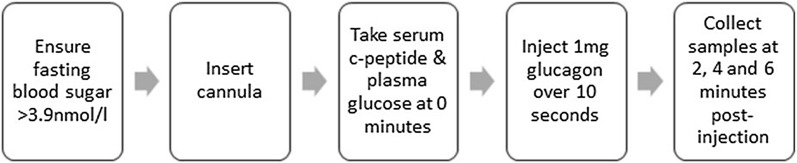
C-peptide is a widely used measure of pancreatic beta cell function. It is produced in equimolar amounts to endogenous insulin but is excreted at a more constant rate over a longer time. Methods of estimation include urinary and unstimulated and stimulated serum sampling. Modern assays detect levels of c-peptide which can be used to guide diabetes diagnosis and management. We explore the evidence behind the various tests available. We recommend the glucagon stimulation c-peptide testing owing to its balance of sensitivity and practicality. C-peptide levels are associated with diabetes type and duration of disease. Specifically a c-peptide level of less than 0.2 nmol/l is associated with a diagnosis of type 1 diabetes mellitus (T1DM). C-peptide level may correlate with microvascular and macrovascular complications and future use of insulin therapy, as well as likely response to other individual therapies. We explore the potential uses of c-peptide measurement in clinical practice.
Overview
The claims and statistics of this paper haven’t been checked yet.
Free: it reads the open-access text and checks the first 5 claims that cite a source we can check. Create a free account to check every claim.
Integrity signals
Registry
Cites
Statistics
Figures
Verification
Claims the paper makes
The claims and statistics of this paper haven’t been checked yet.
Free: it reads the open-access text and checks the first 5 claims that cite a source we can check. Create a free account to check every claim.
Claims other papers make about this one
Each is checked against this paper’s own text: does it say what the citing paper says it does?
The cited source says what the claim attributes to it.
In the citing paper
“Measurement of the C-peptide, in the fasting state or in response to intravenous glucagon, can aid in instances in which it is difficult to differentiate between the diagnosis of type 1 and type 2 diabetes (5,511).”
From Guidelines and Recommendations for Laboratory Analysis in the Diagnosis and Management of Diabetes Mellitus (2023) · cites this paper as [511]
In the citing paper
“C-peptide and insulin are both derived from proinsulin, with C-peptide being a valuable measure of insulin secretion and therefore pancreatic beta cell function.(17)”
From Putting humpty dumpty back together again: what does protein quantification mean in bottom-up proteomics? (2022) · cites this paper as [17]
Self-check
Percentages, sums and reported differences re-computed from the paper’s own numbers.
The self-check needs the paper’s full text.
Citations
Cites
(1993) · New England Journal of Medicine · doi:10.1056/nejm199309303291401 · Cited by 24,667
Insulin Biosynthesis: Evidence for a Precursor
Steiner, D. F., Cunningham, D., Spigelman, L., & Aten, B. (1967) · Science · doi:10.1126/science.157.3789.697 · Cited by 712 · cited 1×
“31-amino-acid peptide c-peptide are produced in equal amounts [3, 4].”
BackgroundThe Diabetes Control and Complications Trial (DCCT)/Epidemiology of Diabetes Interventions and Complications (EDIC) Study Research Group (2016) · Diabetes Care · doi:10.2337/dc15-1990 · Cited by 712
Steffes, M. W., Sibley, S., Jackson, M., & Thomas, W. (2003) · Diabetes Care · doi:10.2337/diacare.26.3.832 · Cited by 695
Handelsman, Y., Bloomgarden, Z. T., Grunberger, G., Umpierrez, G., Zimmerman, R. S., Bailey, T. S., Blonde, L., Bray, G. A., Cohen, A. J., Dagogo-Jack, S., et al. (2015) · Endocrine Practice · doi:10.4158/ep15672.gl · Cited by 629
The clinical utility of C‐peptide measurement in the care of patients with diabetes
Jones, A. G., & Hattersley, A. T. (2013) · Diabetic Medicine · doi:10.1111/dme.12159 · Cited by 628 · cited 2×
“assessing pancreatic beta cell function [1, 2].”
BackgroundPalmer, J. P., Fleming, G. A., Greenbaum, C. J., Herold, K. C., Jansa, L. D., Kolb, H., Lachin, J. M., Polonsky, K. S., Pozzilli, P., Skyler, J. S., et al. (2004) · Diabetes · doi:10.2337/diabetes.53.1.250 · Cited by 491
A1C Variability and the Risk of Microvascular Complications in Type 1 Diabetes
Kilpatrick, E. S., Rigby, A. S., & Atkin, S. L. (2008) · Diabetes Care · doi:10.2337/dc08-0864 · Cited by 420
C-peptide Response to Glucagon: A Test for the Residual β-cell Function in Diabetes Mellitus
Faber, O. K., & Binder, C. (1977) · Diabetes · doi:10.2337/diab.26.7.605 · Cited by 386
Handelsman, Y., Henry, R. R., Bloomgarden, Z. T., Dagogo-Jack, S., DeFronzo, R. A., Einhorn, D., Ferrannini, E., Fonseca, V. A., Garber, A. J., Grunberger, G., et al. (2016) · Endocrine Practice · doi:10.4158/ep161292.ps · Cited by 358 · cited 1×
“Unfortunately, low c-peptide is not a consistent finding in patients on SGLT-2 inhibitors who have ketoacidosis [52, 53].”
Background
Cited by
Items 101–200 of 800
Chan, K. H., Lim, J., Jee, J., Aw, J. H., & Lee, S. S. (2020) · International Journal of Molecular Sciences · doi:10.3390/ijms21249671 · Cited by 15
“Just as APL1b28 [4] and natriuretic peptides [5,6] can serve as biomarkers for Alzheimer’s disease and myocardial ischemia reperfusion injury respectively, it is desirable to monitor C-peptide concentration in the blood to permit timely intervention [7,8].”
BackgroundGhasemi, A., Afzali, H., & Jeddi, S. (2021) · Biomedical Journal · doi:10.1016/j.bj.2021.04.004 · Cited by 15
Wang, H., Wang, J., Zhu, Y., Yan, H., & Lu, Y. (2021) · International Journal of Environmental Research and Public Health · doi:10.3390/ijerph182413141 · Cited by 16
“Meanwhile, C-peptide is released in the same way with insulin but more stable, thus the function of insulin secretion of pancreatic β-cells can be assessed more precisely by it [25].”
BackgroundDiagnosis and Classification of Type II Diabetes based on Multilayer Neural Network
Nasser, E. S., & Dawood, F. A. A. (2021) · Iraqi Journal of Science · doi:10.24996/ijs.2021.62.10.33 · Cited by 14
“The first one is C-peptide test which is a measurement of pancreatic beta cell function [9], the second is fasting blood sugar (FBS) which was measured using a glucometer [10], and the third is haemoglobin A1c (HbA1c) that occurs due to the non-enzymatic binding of hexose molecule to N-terminal amino acid in the haemo…”
MethodKufe, C. N., Micklesfield, L. K., Masemola, M., Chikowore, T., Kengne, A. P., Karpe, F., Norris, S. A., Crowther, N. J., Olsson, T., & Goedecke, J. H. (2022) · European Journal of Endocrinology · doi:10.1530/eje-21-0527 · Cited by 14
“…men and women with a mean age of 54.6 years, after adjustments for differences in body fat, insulin sensitivity, secretion and beta-cell function were lower in black SA men compared to women, while insulin clearance ( 24, 25 ); Insulinogenic Index: measure of insulin response: ΔI 30 /ΔG 30 (26 ).”
InfluentialGressner, A. M., & Arndt, T. (2019) · Springer Reference Medizin · doi:10.1007/978-3-662-48986-4_300418 · Cited by 14
Campbell, P. T., Newton, C. C., Jacobs, E. J., McCullough, M. L., Wang, Y., Rees‐Punia, E., Guinter, M. A., Murphy, N., Koshiol, J. E., Dehal, A. N., et al. (2022) · Cancer Research Communications · doi:10.1158/2767-9764.crc-22-0082 · Cited by 15
“c-peptide values are also difficult to interpret because it conveys information on more than insulin secretion and the moleculemay have pleiotropic effects, including acting as an antioxidant; in addition, low levels of c-peptide may be correlated with longer diabetes duration, pancreatic damage, and poorer glycemic c…”
BackgroundPisano, S., Coppola, G., Catone, G., Carotenuto, M., Iuliano, R., D’Esposito, V., Cabaro, S., del Giudice, E. M., Bravaccio, C., & Formisano, P. (2018) · Clinical Drug Investigation · doi:10.1007/s40261-018-0627-3 · Cited by 15
Halpern, B., & Mancini, M. C. (2019) · Obesity Reviews · doi:10.1111/obr.12837 · Cited by 14
“However, there is no consensus about a cutoff value for C‐peptide (noting that very low C‐peptide levels could be a sign of latent autoimmune diabetes of adults—LADA, in which the beneficial effect of surgery is minimal).(105) In the STAMPEDE trial, however, baseline insulin use or C‐peptide”
BackgroundVonderau, J. S., Williams, B. M., DeCherney, S. G., Jones, M., McKnight, L., Hanson, M., Hanson, H., & Desai, C. S. (2021) · Clinical Transplantation · doi:10.1111/ctr.14450 · Cited by 14
Main Organs Involved in Glucose Metabolism
Lema-Pérez, L. (2021) · IntechOpen eBooks · doi:10.5772/intechopen.94585 · Cited by 18
Practical Clinical Applications of Islet Autoantibody Testing in Type 1 Diabetes
Winter, W. E., Pittman, D. L., & Jialal, I. (2022) · The Journal of Applied Laboratory Medicine · doi:10.1093/jalm/jfab113 · Cited by 17
Vorobjova, T., Tagoma, A., Talja, I., Janson, H., Kirss, A., & Uibo, R. (2022) · Journal of Diabetes Research · doi:10.1155/2022/1089434 · Cited by 15
“Moreover, FABP4 has been correlated with C-peptide [37], which denotes endogenous insulin production [38].”
BackgroundEffect of Dietary Insulinemia on All-Cause and Cause-Specific Mortality: Results From a Cohort Study
Mazidi, M., Katsiki, N., Mikhailidis, D. P., Banach, M., & (ILEP), O. B. O. T. I. L. E. P. (2019) · Journal of the American College of Nutrition · doi:10.1080/07315724.2019.1646167 · Cited by 15
Zhu, L., Cheung, Y.-M. M., Chiang, C. Y., Gallagher, E. J., Hamnvik, O. R., Mammen, J. S., Quandt, Z., Jones, R., McDunn, J., Al-Bahadili, H., et al. (2025) · Journal for ImmunoTherapy of Cancer · doi:10.1136/jitc-2025-011865 · Cited by 17
“94 95 C-peptide reflects the endogenous pancreatic beta cell reserve, an inappropriately low or low-normal C-peptide in the setting of hyper-glycemia would point towards a diagnosis of ir-T1DM.”
Colorimetric nano-biosensor for low-resource settings: insulin as a model biomarker
Syed, Z., Samaraweera, S., Wang, Z., & Krishnan, S. (2024) · Sensors & Diagnostics · doi:10.1039/d4sd00197d · Cited by 13
“Monitoring insulin levels is also necessary for understanding unexplained factitious hypoglycemia in non-diabetic individuals, 21 assisting athletes with type 1 diabetes in achieving peak performance, 22 and in the management of artificial pancreatic systems.”
Ekberg, N. R., Hellberg, A., Sundqvist, M. L., Hirschberg, A. L., Catrina, S., & Brismar, K. (2024) · International Journal of Molecular Sciences · doi:10.3390/ijms25179731 · Cited by 16
“Circulating insulin is dependent on hepatic extraction and hepatic insulin resistance, and therefore fasting connecting peptide (C-peptide), a marker of insulin secretion [23], is important to analyze in T2D.”
BackgroundC-Peptide Inhibits Decidualization in Human Endometrial Stromal Cells via GSK3β-PP1
Khaliq, S. A., Baek, M., Cho, H., Chon, S. J., & Yoon, M. (2020) · Frontiers in Cell and Developmental Biology · doi:10.3389/fcell.2020.609551 · Cited by 14
Zhou, W., Deng, Y., Zhao, H., & Zhang, C. (2022) · Annals of Laboratory Medicine · doi:10.3343/alm.2022.42.4.428 · Cited by 13
“Insulin and C-peptide measurements are the most frequently ordered laboratory tests to assess residual beta-cell function and insulin resistance for patients with diabetes [3, 4].”
BackgroundChen, Y.-Z., Gu, J. L., Chuang, W.-T., Du, Y., Zhang, L., Lu, M., Xu, J., Li, H.-Q., Liu, Y., Feng, H., et al. (2022) · Frontiers in Nutrition · doi:10.3389/fnut.2022.854725 · Cited by 13
“C-peptide levels decline with the duration of diabetes (26).”
BackgroundSalah, N. Y., Madkour, S. S., & Soliman, K. S. (2022) · Pediatric Radiology · doi:10.1007/s00247-022-05363-1 · Cited by 13
“It is widely used as a measure of insulin secretion and pancreatic beta cell function [7].”
BackgroundBiology and Natural History of Type 1 Diabetes Mellitus
Fernandes, T. A. A. D. M., de Azevedo, J. C. V., Cavalcante, G. A., de Medeiros, I. A. C. M., Lanza, D. C. F., de Araújo, J. M. G., Bezerra, F. L., & Fernandes, J. V. (2022) · Current Pediatric Reviews · doi:10.2174/1573396318666220409001955 · Cited by 16
Munchausen syndrome by proxy: a case report
Alkhattabi, F., Bamogaddam, I. Y., Alsagheir, A., Al-Ashwal, A. A., & Alhuthil, R. T. (2023) · Journal of Medical Case Reports · doi:10.1186/s13256-023-03848-7 · Cited by 14
“As a result, high levels of insulin with low C-peptide instantly indicate exogenous insulin administration [16].”
BackgroundMetabolic Syndrome Screening and Nutritional Status of Patients with Psoriasis: A Scoping Review
Haris, N. H. M., Krishnasamy, S., Chin, K., Mariappan, V., & Arumugam, M. (2023) · Nutrients · doi:10.3390/nu15122707 · Cited by 14
“2 nmol/L indicates the diagnosis of type 1 diabetes mellitus and it is also a marker for microvascular and macrovascular complications [72].”
BackgroundInterlaboratory Comparison of Antibody-Free LC-MS/MS Measurements of C-peptide and Insulin
Moradian, A., Goonatilleke, E., Lin, T., Hatten-Beck, M., Emrick, M. A., Schepmoes, A., Fillmore, T., MacCoss, M. J., Sechi, S., Sobhani, K., et al. (2024) · Clinical Chemistry · doi:10.1093/clinchem/hvae034 · Cited by 13
Loss of Caveolin-1 Is Associated with a Decrease in Beta Cell Death in Mice on a High Fat Diet
Urzúa, P. L., Murillo, O. I. N., Castro‐Sepúlveda, M., Torres‐Quintana, M. A., Lladser, Á., Quest, A. F. G., Robles, C. E., Llanos, P., & Wehinger, S. (2020) · International Journal of Molecular Sciences · doi:10.3390/ijms21155225 · Cited by 14
“Additionally, C-peptide is removed from the blood stream at a rate that is notably less variable and slower than insulin, so differences between insulin and C-peptide secretion have been reported [46,47].”
BackgroundSeidel‐Jacobs, E., Ptushkina, V., Straßburger, K., Icks, A., Kuß, O., Burkart, V., Szendroedi, J., Müssig, K., Bódis, K. B., Karusheva, Y., et al. (2022) · Diabetic Medicine · doi:10.1111/dme.14833 · Cited by 13
Ray, M. K., Chen, L., White, N. H., Ni, R., Hershey, T. G., & Marshall, B. A. (2021) · Pediatric Diabetes · doi:10.1111/pedi.13291 · Cited by 12
Agyekum, A. K., Columbus, D. A., Farmer, C., & Beaulieu, A. D. (2019) · Journal of Animal Science · doi:10.1093/jas/skz242 · Cited by 12
The heterogeneity of type 1 diabetes: From immunopathology to immune intervention
Infante, M., Alejandro, R., Fabbri, A., & Ricordi, C. (2022) · Elsevier eBooks · doi:10.1016/b978-0-12-824466-1.00001-7 · Cited by 12
Cook, T. W., Wilstermann, A. M., Mitchell, J. T., Arnold, N. E., Rajasekaran, S., Bupp, C. P., & Prokop, J. W. (2023) · Biomolecules · doi:10.3390/biom13020257 · Cited by 12
Hota, D., Padhy, B. M., Maiti, R., Bisoi, D., Sahoo, J. P., Patro, B. K., Kumar, P., Goel, A., Banik, S. P., Chakraborty, S., et al. (2023) · Journal of the American Nutrition Association · doi:10.1080/27697061.2023.2233008 · Cited by 15
Elzahar, W., Arafa, A., Youssef, A., Erfan, A. A., & Amrousy, D. M. E. (2020) · European Journal of Pediatrics · doi:10.1007/s00431-020-03606-7 · Cited by 13
Primeaux, S. D., Simon, L., Ferguson, T. F., Levitt, D. E., Brashear, M. M., Yeh, A. Y., & Molina, P. E. (2021) · Alcoholism Clinical and Experimental Research · doi:10.1111/acer.14667 · Cited by 13
Love, K. M., Horton, W. B., Patrie, J. T., Jahn, L. A., Hartline, L. M., & Barrett, E. J. (2022) · BMJ Open Diabetes Research & Care · doi:10.1136/bmjdrc-2021-002491 · Cited by 13
Capturing residual beta cell function in type 1 diabetes
Pociot, F. (2018) · Diabetologia · doi:10.1007/s00125-018-4768-y · Cited by 12
Tuccinardi, D., Giorgino, R., Pieralice, S., Watanabe, M., Maggi, D., Palermo, A., Defeudis, G., Fioriti, E., Pozzilli, P., & Manfrini, S. (2020) · Acta Diabetologica · doi:10.1007/s00592-020-01634-1 · Cited by 13
Peralta, F. G., Pinés-Corrales, P. J., Santos, E., Cuesta, M., Albarrán, O. G., Azriel, S., & on behalf the AGORA Diabetes Collaborative Group (2024) · Journal of Clinical Medicine · doi:10.3390/jcm13164839 · Cited by 14
“Because C-peptide is produced in equal amounts to insulin, mirroring pancreatic beta-cell function, it represents a valuable clinical biomarker of endogenous insulin secretion in patients with diabetes [46].”
BackgroundPodobnik, J., & Prentice, K. J. (2025) · Diabetes Obesity and Metabolism · doi:10.1111/dom.16154 · Cited by 15
Call for Standardization of C-Peptide Measurement
Schleicher, E. D., Kabytaev, K., Nauck, M., Müller‐Wieland, D., Peter, A., Little, R. R., & Heinemann, L. (2025) · Journal of Diabetes Science and Technology · doi:10.1177/19322968251362848 · Cited by 14
“10,11 2.”
C-peptide in Precision Diabetes Care and Beyond: A Comprehensive Review
Eligar, V. S., Rao, B. L. N., Naqvi, S., & Gautam, D. (2026) · Clinical Medicine Insights Endocrinology and Diabetes · doi:10.1177/11795514251397811 · Cited by 18
“3 In current practise, a substantial overlap is found amongst patients at presentation with type 1 and type 2 diabetes.”
de Leur, K., Vollenbrock, C. E., Dekker, P., de Vries, M., Birnie, E., Mul, D., Wolffenbuttel, B. H. R., Groen, J., Aanstoot, H., & Boesten, L. S. M. (2022) · Diabetic Medicine · doi:10.1111/dme.14785 · Cited by 11
Use of c-peptide as a measure of cephalic phase insulin release in humans
Pullicin, A. J., Newsom, S. A., Robinson, M. M., & Lim, J. (2022) · Physiology & Behavior · doi:10.1016/j.physbeh.2022.113940 · Cited by 13
Watanabe, Y., Yamaguchi, T., Nagayama, D., Tanaka, S., Sasaki, A., Naitoh, T., Matsubara, H., Yokote, K., Okazumi, S., Ugi, S., et al. (2023) · Obesity Facts · doi:10.1159/000529546 · Cited by 13
C-peptide concentrations in patients with type 2 diabetes treated with insulin
Uzunlulu, M., Oğuz, A., Bahadır, M. A., Erbakan, A. N., Keskinler, M. V., & Mesçi, B. (2019) · Diabetes & Metabolic Syndrome Clinical Research & Reviews · doi:10.1016/j.dsx.2019.11.010 · Cited by 11
Unmasking the Therapeutic Potential of Biomarkers in Type-1 Diabetes Mellitus
(2021) · Biointerface Research in Applied Chemistry · doi:10.33263/briac115.1318713201 · Cited by 11
“com/ 13192 T1D can be manifested when only 10-20% of the β-cells that produce insulin are functioning during diagnosis [28].”
BackgroundAleppo, G., Parkin, C. G., Carlson, A. L., Galindo, R. J., Kruger, D. F., Levy, C. J., Umpierrez, G. E., Forlenza, G. P., & McGill, J. B. (2021) · Diabetes Technology & Therapeutics · doi:10.1089/dia.2021.0196 · Cited by 11
Luo, H., Zhao, M., Feng, X., Gao, X., Hong, M., Liu, M., Li, Y., Liu, W., Liu, Y., Yu, C., et al. (2020) · Journal of Diabetes Investigation · doi:10.1111/jdi.13469 · Cited by 11
Hassan, A. A., Elshall, S., Erfan, A. A., Hafez, M., Salah, W., Elrifaey, S. M., & Amrousy, D. M. E. (2021) · Pediatric Research · doi:10.1038/s41390-021-01847-2 · Cited by 10
“Moreover, 5% of C-peptide is excreted unchanged in the urine unlike insulin making urinary measures possible.(15,16) UCP needs 24 h of urine collection to be measured.”
BackgroundPark, Y. M., Yang, C. M., & Cho, H. Y. (2022) · International Journal of Molecular Sciences · doi:10.3390/ijms23136877 · Cited by 11
“Since C-peptide is secreted in equimolar amounts to insulin, its levels are considered equivalent to those of insulin [54].”
BackgroundАнатольевна, К. О., Naryzhnaya, N. V., Кологривова, И. В., Суслова, Т. Е., Kravchenko, E. S., Анатольевна, Х. О., Andreev, S. L., Margolis, N. Y., Sharipova, N. G., & Сергеевна, К. А. (2023) · Сибирский журнал клинической и экспериментальной медицины · doi:10.29001/2073-8552-2023-38-1-64-74 · Cited by 10
Foreman, R. E., Miedzybrodzka, E. L., Eiríksson, F. F., Þorsteinsdóttir, M., Bannon, C. A. M., Wheller, R., Reimann, F. M., Gribble, F. M., & Kay, R. G. (2023) · Journal of Proteome Research · doi:10.1021/acs.jproteome.3c00272 · Cited by 10
Computational peptide discovery with a genetic programming approach
Scalzitti, N., Miralavy, I., Korenchan, D. E., Farrar, C. T., Gilad, A. A., & Banzhaf, W. (2024) · Journal of Computer-Aided Molecular Design · doi:10.1007/s10822-024-00558-0 · Cited by 11
“Peptide biomarkers are used in different disease diagnostics such as cancer [20, 21], type II diabetes [22] or neurodegenerative disorders such as Alzheimer’s disease [23].”
Yan, X., Ma, J., Liu, Y., Wang, X., Li, S., Yan, S., Mo, Z., Zhu, Y., Lin, J., Liu, J., et al. (2024) · The Lancet Regional Health - Western Pacific · doi:10.1016/j.lanwpc.2024.101101 · Cited by 12
Serbis, A., Kantza, E., Siomou, E. C., Galli‐Τsinopoulou, A., Kanaka‐Gantenbein, C., & Tigas, S. K. (2024) · International Journal of Molecular Sciences · doi:10.3390/ijms251910501 · Cited by 12
“Of course, one must keep in mind that T1D cannot be excluded based on C-peptide alone, since serum C-peptide levels may be measurable at an early stage following diagnosis or in the so-called “honeymoon period” [87].”
BackgroundNonlinear Analysis for a Type-1 Diabetes Model with Focus on T-Cells and Pancreatic β-Cells Behavior
Gamboa, D., Vázquez, C. E., & Campos-Hernández, P. J. (2020) · Mathematical and Computational Applications · doi:10.3390/mca25020023 · Cited by 11
Khaliq, S. A., Umair, Z., Baek, M., Chon, S. J., & Yoon, M. (2022) · Frontiers in Cell and Developmental Biology · doi:10.3389/fcell.2022.800181 · Cited by 10
Huang, J. B., Xue, S., Xie, Y., Teixeira, A. P., & Fussenegger, M. (2024) · Advanced Science · doi:10.1002/advs.202309411 · Cited by 12
Radford, B. N., & Han, V. K. M. (2018) · Journal of Developmental Origins of Health and Disease · doi:10.1017/s2040174418000983 · Cited by 12
“In addition to hormone release, c-peptide, the cleaved portion of proinsulin, can indicate changes in insulin maturation.(15) Leptin, resistin(16) and plasminogen activator inhibitor (PAI-1)(17) are secreted primarily from adipose tissue in mice.”
BackgroundGuercio, B. J., Zhang, S., Ou, F., Venook, A. P., Niedzwiecki, D., Lenz, H., Innocenti, F., Pollak, M., Nixon, A. B., Mullen, B. C., et al. (2020) · JNCI Cancer Spectrum · doi:10.1093/jncics/pkaa074 · Cited by 11
“Given the impact of fasting on C-peptide, C-peptide analyses were further adjusted for fasting state defined as ≥8 hours from last meal (22).”
Alemán-Contreras, R., Gómez-Díaz, R. A., Noyola-García, M. E., Mondragón-González, R., Wacher, N. H., & Ferreira‐Hermosillo, A. (2024) · Life · doi:10.3390/life14050550 · Cited by 17
“For its determination, C-peptide requires immediate lab analysis due to its quick degradation [25].”
BackgroundPharmacometabolomics of sulfonylureas in patients with type 2 diabetes: a cross-sectional study
Naja, K., Anwardeen, N. R., Bashraheel, S. S., & Elrayess, M. A. (2024) · Journal of Pharmacy & Pharmaceutical Sciences · doi:10.3389/jpps.2024.13305 · Cited by 10
Qian, F., Guo, Y., Li, C., Liu, Y., Luttmann‐Gibson, H., Gomelskaya, N., Demler, O., Cook, N. R., Lee, I.-M. M., Buring, J. E., et al. (2024) · Cardiovascular Diabetology · doi:10.1186/s12933-024-02470-1 · Cited by 9
Andrews, C., Monthé‐Drèze, C., Sacks, D. A., Ronald, C. W., Tam, W. H., McIntyre, D. H., LOWE, J. M., Catalano, P. M., & Sen, S. (2020) · International Journal of Obesity · doi:10.1038/s41366-020-00705-1 · Cited by 10
Cawley, A., Keen, B., Tou, K., Elbourne, M., & Keledjian, J. (2022) · Drug Testing and Analysis · doi:10.1002/dta.3250 · Cited by 9
Phenotypic Screening for Small Molecules that Protect β-Cells from Glucolipotoxicity
Small, J. C., Joblin-Mills, A., Carbone, K., Kost‐Alimova, M., Ayukawa, K., Khodier, C., Dančík, V., Clemons, P. A., Munkacsi, A. B., & Wagner, B. K. (2022) · ACS Chemical Biology · doi:10.1021/acschembio.2c00052 · Cited by 9
Rohlfing, C. L., Petroski, G. F., Connolly, S. M., Hanson, S. E., Little, R. R., & Kabytaev, K. (2025) · Clinical Chemistry and Laboratory Medicine (CCLM) · doi:10.1515/cclm-2024-1260 · Cited by 8
Chen, Q., Lu, M., Liu, X., Yu, Y., & Li, J. (2023) · Journal of Orthopaedic Surgery and Research · doi:10.1186/s13018-023-04298-z · Cited by 8
“C-peptide is a reliable indicator of pancreatic β-cell function [32], a biologically active peptide that activates a variety of cell signaling pathways by binding to cell membrane surface signaling molecules, exerting antioxidant, anti-apoptotic, and regulating inflammatory responses [33, 34], with…”
BackgroundChae, S., Choi, J. H., Lim, S.-J., Choi, H. J., Park, J., Hong, S. H., Park, C. S., Choi, J. H., & Chae, M. S. (2020) · PLoS ONE · doi:10.1371/journal.pone.0243873 · Cited by 8
“Because of its lower degradation rate and negligible hepatic clearance compared to insulin, C-peptide is a cornerstone for the assessment of non-diabetesassociated hypoglycemia and the diagnosis of conditions including insulinoma and factitious hypoglycemia [8].”
BackgroundApparent Insulin Deficiency in an Adult African Population With New-Onset Type 2 Diabetes
Kibirige, D., Sekitoleko, I., Balungi, P., Lumu, W., & Nyirenda, M. (2022) · Frontiers in Clinical Diabetes and Healthcare · doi:10.3389/fcdhc.2022.944483 · Cited by 8
Ganie, M. A., Chowdhury, S., Suri, V., Joshi, B. N., Bhattacharya, P. K., Agrawal, S., Malhotra, N., Sahay, R. K., Jabbar, P. K., Nair, A., et al. (2023) · The Lancet Regional Health - Southeast Asia · doi:10.1016/j.lansea.2023.100226 · Cited by 9
Chowdhury, A. S., Palui, R., Pramanik, S., & Mondal, S. (2024) · Diabetes & Metabolic Syndrome Clinical Research & Reviews · doi:10.1016/j.dsx.2024.103100 · Cited by 8
Weakly Supervised Multi-output Regression via Correlated Gaussian Processes
Chung, S., Kontar, R. A., & Wu, Z. (2022) · INFORMS Journal on Data Science · doi:10.1287/ijds.2022.0018 · Cited by 10
“Estimating latent curves relating the insulin to the C-peptide level is important as C-peptide is often used as an indicator of how much insulin is being produced (Leighton et al. 2017).”
BackgroundThe effect of short-term intensive insulin therapy in newly-diagnosed Type-2 diabetic patients
Karacaer, C., Demirci, T., Cengiz, H., Varım, C., & Tamer, A. (2021) · Pakistan Journal of Medical Sciences · doi:10.12669/pjms.37.7.4013 · Cited by 9
Mamtani, M., Jaisinghani, M. T., Jaiswal, S. G., Pipal, K. V., Patel, A. A., & Kulkarni, H. R. (2021) · PLoS ONE · doi:10.1371/journal.pone.0257390 · Cited by 8
“SCP was measured using an ultrasensitive enzyme linked immunosorbent assay [26].”
MethodTao, Y., Zhu, M., Pu, J., Zhang, P., Wan, L., & Tang, C. (2021) · Frontiers in Pharmacology · doi:10.3389/fphar.2021.786613 · Cited by 9
“Endogenous insulin and C-peptide are also released from islet β-cells; therefore, the C-peptide could be applied as a marker to measure the suppression of endogenous insulin secretion (Alieva et al., 1985; Jones and Hattersley, 2013; Leighton et al., 2017; Yaribeygi et al., 2019).”
BackgroundDeng, Y., Zhang, C., Wang, J., Zeng, J., Zhang, J., Zhang, T., Zhao, H., Zhou, W., & Zhang, C. (2023) · Annals of Laboratory Medicine · doi:10.3343/alm.2023.43.4.345 · Cited by 8
“Accurate information about intrinsic insulin secretion activity and residual islet beta-cell function is essential for the classification and therapeutic monitoring of patients with diabetes mellitus [3, 4].”
Fisher, C., Johnson, K., Moore, M. N., Sadrati, A., Janecek, J. L., Graham, M. L., & Klein, A. H. (2024) · Diabetes · doi:10.2337/db23-1030 · Cited by 8
Inferring Insulin Secretion Rate from Sparse Patient Glucose and Insulin Measures
Abohtyra, R. M., Chan, C. L., Albers, D. J., & Gluckman, B. J. (2022) · Frontiers in Physiology · doi:10.3389/fphys.2022.893862 · Cited by 10
Biomarkers of Gestational Diabetes Mellitus: Mechanisms, Advances, and Clinical Utility
Pramodkumar, T. A., Hannah, W., Anjana, R. M., Ram, U., Tiwaskar, M., Gokulakrishnan, K., Popova, P. V., & Mohan, V. (2025) · Journal of The Association of Physicians of India · doi:10.59556/japi.73.0849 · Cited by 7
“44 In GDM, insulin resistance rises significantly during the second and third trimesters, largely due to placental hormones like human placental lactogen (hPL), progesterone, and cortisol, which interfere with insulin’s effects on target tissues.”
Pantet, O., Viana, M. V., ENGELEN, M. P. K. J., Deutz, N. E. P., Gran, S., & Berger, M. M. (2022) · Clinical Nutrition ESPEN · doi:10.1016/j.clnesp.2022.11.017 · Cited by 7
Renklint, R., Chninou, Y., Heni, M., Fritsche, A., Haering, H.-U., Wagner, R. J., & Otten, J. (2024) · BMJ Open Diabetes Research & Care · doi:10.1136/bmjdrc-2024-004256 · Cited by 7
“There was a difference between the calculation methods of the reference methods in correlation to both HOMA-beta (p 0.05), and to IGI(30) (p 0.05) This is also reflected in the high heterogeneity for both HOMA-beta and IGI, 24 with an I 2 of 87% and 81%, respectively (online supplemental figure 1A–”
InfluentialChoi, H., Choi, J.-H., Jang, Y., Lee, Y., Kang, M.-H., Kwon, H.-S., Kim, S., & Kwon, J. (2024) · Applied Sciences · doi:10.3390/app14156412 · Cited by 9
The course of C-peptide levels in patients developing diabetes during anti-PD-1 therapy
Basak, E. A., de Joode, K., Uyl, T. J. J., van der Wal, R., Schreurs, M. W. J., van den Berg, S. A. A., Hoop, E. O., van der Leest, C. H., Chaker, L., Feelders, R. A., et al. (2022) · Biomedicine & Pharmacotherapy · doi:10.1016/j.biopha.2022.113839 · Cited by 7
Carter, S., Hill, A. M., Buckley, J. D., Tan, S., Rogers, G. B., & Coates, A. M. (2022) · European Journal of Nutrition · doi:10.1007/s00394-022-03027-2 · Cited by 9
“C-peptide is a part of proinsulin that is cleaved before co-secretion with insulin from the β-cells of the pancreas [40].”
BackgroundOral glucose sensing in cephalic phase insulin release
Pullicin, A. J., Wils, D., & Lim, J. (2023) · Appetite · doi:10.1016/j.appet.2023.107070 · Cited by 7
“C-peptide is a component of the insulin precursor (i.e., proinsulin) that is cleaved off and co-secreted from pancreatic beta cells in equimolar amounts to insulin (Leighton et al., 2017).”
BackgroundCanagliflozin-induced Fanconi syndrome in a patient with previously unrecognized type 1 diabetes
Khan, N., Tso, K., Broussard, J., & Dziuba, M. S. (2019) · American Journal of Health-System Pharmacy · doi:10.1093/ajhp/zxz226 · Cited by 7
Use of expert consensus to improve the diagnosis and management of type 1 diabetes mellitus
Lin, C.-H., Tung, Y., Chang, T., Huang, C., & Hwu, C. (2022) · Journal of the Chinese Medical Association · doi:10.1097/jcma.0000000000000751 · Cited by 7
Immune checkpoint inhibitor-induced diabetes mellitus with nivolumab
Irani, A. Z., Gibbons, H., & Teh, W. X. (2023) · BMJ Case Reports · doi:10.1136/bcr-2022-253696 · Cited by 7
Frequency of type I and II diabetes in newly diagnosed diabetic patients: Measuring C-Peptide level
Shahbazian, H. B., Aleali, A. M., Rashidi, H., Latifi, S. M., Rashidi, M., Yazdanpanah, L., Zaman, F., Payami, S. P., Moradi, L., Jahanshahi, A., et al. (2019) · Diabetes & Metabolic Syndrome Clinical Research & Reviews · doi:10.1016/j.dsx.2019.04.018 · Cited by 8
The evolution of C-peptide's role in diabetes care
Briggs, L., Read, A., Darch, S. J., Williams, E. L., Loh, W. J., & Kenkre, J. S. (2025) · Current Opinion in Endocrinology Diabetes and Obesity · doi:10.1097/med.0000000000000947 · Cited by 7
Alan, M. S., Tayebi, A., Afshar, E. J., Seifi-Alan, S., Alan, M. S., Fazeli, R., Sohbatzade, T., Samimisedeh, P., & Rastad, H. (2024) · Journal of Diabetes and its Complications · doi:10.1016/j.jdiacomp.2024.108867 · Cited by 8
Amadi, P. U., Osuoha, J. O., Ekweogu, C. N., Jarad, S., Efiong, E. E., Odika, P. C., Ejiofor, C. C., Aloy-Amadi, O., Gill, G. S., Adumekwe, C. W., et al. (2025) · Pharmacological Research · doi:10.1016/j.phrs.2025.107602 · Cited by 6
Rapid Point-of-Care Test for Determination of C-Peptide Levels
Rao, P. V., Bean, E., Nair-Schaef, D., Chen, S., Kazmierczak, S. C., Roberts, C. T., & Nagalla, S. R. (2021) · Journal of Diabetes Science and Technology · doi:10.1177/1932296821995557 · Cited by 8
Stankutė, I., Verkauskienė, R., Dobrovolskienė, R., Danytė, E., Jašinskienė, E., Mockevičienė, G., & Schwitzgebel, V. (2021) · Diabetes Research and Clinical Practice · doi:10.1016/j.diabres.2021.108938 · Cited by 6
Endocrine Pancreas and Glucose Metabolism
Al-Suhaimi, E. A., Aljfary, M. A., & Khan, F. A. (2022) · Springer eBooks · doi:10.1007/978-981-16-9016-7_8 · Cited by 10
Uddén, J., Leijonmarck, C.-E., & Klingvall, M. (2022) · BMJ Open Diabetes Research & Care · doi:10.1136/bmjdrc-2021-002572 · Cited by 7
Co-segregation analysis and functional trial in vivo of candidate genes for monogenic diabetes
Stankutė, I., Kazlauskienė, M., Blouin, J., Schwitzgebel, V., & Verkauskienė, R. (2022) · BMJ Open Diabetes Research & Care · doi:10.1136/bmjdrc-2022-003038 · Cited by 6
Aziz, F., Sternad, C., Sourij, C., Knoll, L., Kojzar, H., Schranz, A., Bürger, A., Sourij, H., & Aberer, F. (2023) · Diabetes Obesity and Metabolism · doi:10.1111/dom.15409 · Cited by 6
“18 However, data on C-peptide levels and future insulin needs are scarce.”
BackgroundKennedy, E. C., & Hawkes, C. P. (2024) · Children · doi:10.3390/children11020186 · Cited by 6
“There can be assay cross-reactivity between endogenous and exogenous insulin [101], endogenous insulin has a short half-life [102] and up to 80% of secreted insulin is excreted through hepatic first-pass metabolism [101,103–105].”
Background
Metadata
- Authors
- Leighton, E., Sainsbury, C. A., & Jones, G. C.
- Affiliations
- Gartnavel General Hospital (GB)
- Corresponding author
- Jones, Gregory C.
- Venue
- Diabetes Therapy
- Published
- 2017-05-08
- Volume
- 8
- Issue
- 3
- Pages
- 475-487
- ISSN
- 1869-6953 (ISSN-L)
- 1869-6961
- PMC
- PMC5446389
- OpenAlex
- W2612702080
- Semantic Scholar
- 201713a9dc7f149a96676695027ce61eb08fc4d3
- Cited by
- 773
- References
- 74
- Citations by year
- 2026: 41 · 2025: 51 · 2024: 56 · 2023: 64 · 2022: 79 · 2021: 56 · 2020: 46 · 2019: 356 · 2018: 20 · 2017: 3
- FWCI
- 14.91
- Type
- journal article
- Language
- en
- Open access
- gold
- doi.org
- Licence
- cc-by-nc
- creativecommons.org/licenses/by/4.0 (tdm)
- Locations
- Diabetes Therapy (publishedVersion, cc-by-nc)
- Europe PMC (PubMed Central) (publishedVersion, cc-by-nc)
- PubMed Central (publishedVersion, cc-by-nc)
- PubMed (publishedVersion)
- Topics
- Life Sciences › Biochemistry, Genetics and Molecular Biology › Genetics › Diabetes and associated disorders
- Health Sciences › Medicine › Endocrinology, Diabetes and Metabolism › Pancreatic function and diabetes
- Health Sciences › Medicine › Endocrinology, Diabetes and Metabolism › Diabetes Management and Research
- Keywords
- beta-cell function, type 1 diabetes, glucagon stimulation test, diabetes diagnosis, diabetes management, microvascular complications, macrovascular complications, insulin therapy, disease duration
About these checks
Registry, retraction, Cites and statistics results are computed, not judged, with one exception: a printed reference that no index lists is read once by a model before it counts as a citation error. Claims are extracted by a model and kept only when their quote appears verbatim in the text; each cited source is then checked, with a model’s help, for whether it says what the claim relies on. Those verdicts can be wrong — read the claim’s quote and the cited source before relying on one.
Statistics and arithmetic are recomputed, not judged.
Confidence bands are shown only for fields calibrated on our annotated test set. None is calibrated yet, so no band is shown.
What counts as a claim ›How we measure confidence ›How we check this ›
Are you an author, or do you see a problem with this page? Request a review
Data sources
Bibliographic data: Semantic Scholar, OpenAlex, Crossref.
Contains information from the Semantic Scholar Academic Graph Datasets, made available under the ODC Attribution License (ODC-BY 1.0).
Semantic Scholar’s data is described in: Kinney, R., et al. (2023). The Semantic Scholar Open Data Platform. arXiv:2301.10140.
