

A Practical Review of C-Peptide Testing in Diabetes
Open accessThe DOI matches its Crossref record; 74 of the 74 references it cites were found in a registry or an index.
Abstract
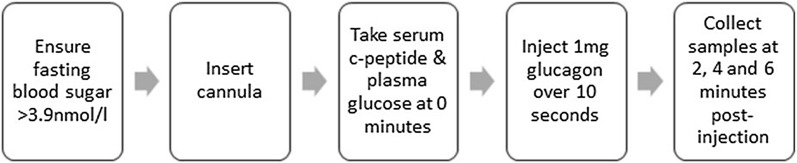
C-peptide is a widely used measure of pancreatic beta cell function. It is produced in equimolar amounts to endogenous insulin but is excreted at a more constant rate over a longer time. Methods of estimation include urinary and unstimulated and stimulated serum sampling. Modern assays detect levels of c-peptide which can be used to guide diabetes diagnosis and management. We explore the evidence behind the various tests available. We recommend the glucagon stimulation c-peptide testing owing to its balance of sensitivity and practicality. C-peptide levels are associated with diabetes type and duration of disease. Specifically a c-peptide level of less than 0.2 nmol/l is associated with a diagnosis of type 1 diabetes mellitus (T1DM). C-peptide level may correlate with microvascular and macrovascular complications and future use of insulin therapy, as well as likely response to other individual therapies. We explore the potential uses of c-peptide measurement in clinical practice.
Overview
The claims and statistics of this paper haven’t been checked yet.
Free: it reads the open-access text and checks the first 5 claims that cite a source we can check. Create a free account to check every claim.
Integrity signals
Registry
Cites
Statistics
Figures
Verification
Claims the paper makes
The claims and statistics of this paper haven’t been checked yet.
Free: it reads the open-access text and checks the first 5 claims that cite a source we can check. Create a free account to check every claim.
Claims other papers make about this one
Each is checked against this paper’s own text: does it say what the citing paper says it does?
The cited source says what the claim attributes to it.
In the citing paper
“Measurement of the C-peptide, in the fasting state or in response to intravenous glucagon, can aid in instances in which it is difficult to differentiate between the diagnosis of type 1 and type 2 diabetes (5,511).”
From Guidelines and Recommendations for Laboratory Analysis in the Diagnosis and Management of Diabetes Mellitus (2023) · cites this paper as [511]
In the citing paper
“C-peptide and insulin are both derived from proinsulin, with C-peptide being a valuable measure of insulin secretion and therefore pancreatic beta cell function.(17)”
From Putting humpty dumpty back together again: what does protein quantification mean in bottom-up proteomics? (2022) · cites this paper as [17]
Self-check
Percentages, sums and reported differences re-computed from the paper’s own numbers.
The self-check needs the paper’s full text.
Citations
Cites
(1993) · New England Journal of Medicine · doi:10.1056/nejm199309303291401 · Cited by 24,667
Insulin Biosynthesis: Evidence for a Precursor
Steiner, D. F., Cunningham, D., Spigelman, L., & Aten, B. (1967) · Science · doi:10.1126/science.157.3789.697 · Cited by 712 · cited 1×
“31-amino-acid peptide c-peptide are produced in equal amounts [3, 4].”
BackgroundThe Diabetes Control and Complications Trial (DCCT)/Epidemiology of Diabetes Interventions and Complications (EDIC) Study Research Group (2016) · Diabetes Care · doi:10.2337/dc15-1990 · Cited by 712
Steffes, M. W., Sibley, S., Jackson, M., & Thomas, W. (2003) · Diabetes Care · doi:10.2337/diacare.26.3.832 · Cited by 695
Handelsman, Y., Bloomgarden, Z. T., Grunberger, G., Umpierrez, G., Zimmerman, R. S., Bailey, T. S., Blonde, L., Bray, G. A., Cohen, A. J., Dagogo-Jack, S., et al. (2015) · Endocrine Practice · doi:10.4158/ep15672.gl · Cited by 629
The clinical utility of C‐peptide measurement in the care of patients with diabetes
Jones, A. G., & Hattersley, A. T. (2013) · Diabetic Medicine · doi:10.1111/dme.12159 · Cited by 628 · cited 2×
“assessing pancreatic beta cell function [1, 2].”
BackgroundPalmer, J. P., Fleming, G. A., Greenbaum, C. J., Herold, K. C., Jansa, L. D., Kolb, H., Lachin, J. M., Polonsky, K. S., Pozzilli, P., Skyler, J. S., et al. (2004) · Diabetes · doi:10.2337/diabetes.53.1.250 · Cited by 491
A1C Variability and the Risk of Microvascular Complications in Type 1 Diabetes
Kilpatrick, E. S., Rigby, A. S., & Atkin, S. L. (2008) · Diabetes Care · doi:10.2337/dc08-0864 · Cited by 420
C-peptide Response to Glucagon: A Test for the Residual β-cell Function in Diabetes Mellitus
Faber, O. K., & Binder, C. (1977) · Diabetes · doi:10.2337/diab.26.7.605 · Cited by 386
Handelsman, Y., Henry, R. R., Bloomgarden, Z. T., Dagogo-Jack, S., DeFronzo, R. A., Einhorn, D., Ferrannini, E., Fonseca, V. A., Garber, A. J., Grunberger, G., et al. (2016) · Endocrine Practice · doi:10.4158/ep161292.ps · Cited by 358 · cited 1×
“Unfortunately, low c-peptide is not a consistent finding in patients on SGLT-2 inhibitors who have ketoacidosis [52, 53].”
Background
Cited by
Clinical and Laboratory Standards Institute
(2019) · Springer Reference Medizin · doi:10.1007/978-3-662-48986-4_300416 · Cited by 5,091
Endocrine Toxicity of Cancer Immunotherapy Targeting Immune Checkpoints
Chang, L.-S., Barroso-Sousa, R., Tolaney, S. M., Hodi, F. S., Kaiser, U. B., & Min, L. (2019) · Endocrine Reviews · doi:10.1210/er.2018-00006 · Cited by 532
(2019) · Springer Reference Medizin · doi:10.1007/978-3-662-48986-4_310898 · Cited by 473
CAH (Congenital Adrenal Hyperplasia)-Screening
(2019) · Springer Reference Medizin · doi:10.1007/978-3-662-48986-4_300351 · Cited by 368
Sacks, D. B., Arnold, M., Bakris, G. L., Bruns, D. E., Horvath, A. R., Lernmark, Å., Metzger, B. E., Nathan, D. M., & Kirkman, M. S. (2023) · Diabetes Care · doi:10.2337/dci23-0036 · Cited by 351
Assessment of Insulin Secretion and Insulin Resistance in Human
Park, S. Y., Gautier, J.-F., & Chon, S. (2021) · Diabetes & Metabolism Journal · doi:10.4093/dmj.2021.0220 · Cited by 281
Complement-associated protein SP-40,40
(2019) · Springer Reference Medizin · doi:10.1007/978-3-662-48986-4_300426 · Cited by 297
Beta-cell failure in type 2 diabetes: mechanisms, markers, and clinical implications
Wysham, C., & Shubrook, J. (2020) · Postgraduate Medicine · doi:10.1080/00325481.2020.1771047 · Cited by 193
Montgomery, R. A., Tatapudi, V. S., Leffell, M. S., & Zachary, A. A. (2018) · Nature Reviews Nephrology · doi:10.1038/s41581-018-0039-x · Cited by 171
Early onset type 2 diabetes mellitus: an update
Strati, M., Moustaki, M., Psaltopoulou, T., Vryonidou, A., & Paschou, S. A. (2024) · Endocrine · doi:10.1007/s12020-024-03772-w · Cited by 148
“…vary among individuals with autoimmune diabetes, by the time that full-blown picture of insulinopenia is established, plasma C-peptide level is usually undetectable and may be used to differentiate immune-mediated diabetes from other DM types [44, 45], except from the honeymoon phase of LADA.”
BackgroundHo, J., Nicolucci, A. C., Virtanen, H., Schick, A., Meddings, J., Reimer, R. A., & Huang, C. (2019) · The Journal of Clinical Endocrinology & Metabolism · doi:10.1210/jc.2019-00481 · Cited by 160
Autoreactive CD8+ T cell exhaustion distinguishes subjects with slow type 1 diabetes progression
Wiedeman, A. E., Muir, V. S., Rosasco, M. G., DeBerg, H. A., Presnell, S., Haas, B., Dufort, M. J., Speake, C., Greenbaum, C. J., Serti, E., et al. (2019) · Journal of Clinical Investigation · doi:10.1172/jci126595 · Cited by 168
“Upon diagnosis (stage 3), most individuals with T1D retain some level of functioning β cells, as indicated by the presence of circulating C-peptide, a byproduct of endogenous insulin processing (2), and the preservation of these functional β cells is associated with fewer clinical complications (3).”
BackgroundSacks, D. B., Arnold, M. A., Bakris, G. L., Bruns, D. E., Horvath, A. R., Lernmark, Å., Metzger, B. E., Nathan, D. M., & Kirkman, M. S. (2023) · Clinical Chemistry · doi:10.1093/clinchem/hvad080 · Cited by 206
Phenformin as an Anticancer Agent: Challenges and Prospects
Rubiño, M. E. G., Carrillo, E., Ruiz-Alcalá, G., Domínguez‐Martín, A., Marchal, J. A., & Boulaiz, H. (2019) · International Journal of Molecular Sciences · doi:10.3390/ijms20133316 · Cited by 133
“Various causes are common in both diseases, due to high levels of C-peptide [7], insulin resistance, hyperactivation of IGF-1 receptors due to the mitogenic effect of insulin [8], leptin, low adiponectin, and a pro-inflammatory environment [9].”
BackgroundEngineering islets from stem cells for advanced therapies of diabetes
Siehler, J., Blöchinger, A. K., Meier, M., & Lickert, H. (2021) · Nature Reviews Drug Discovery · doi:10.1038/s41573-021-00262-w · Cited by 125
Personalized type 2 diabetes management: an update on recent advances and recommendations
Williams, D. M., Jones, H., & Stephens, J. W. (2022) · Diabetes, Metabolic Syndrome and Obesity: Targets and Therapy · doi:10.2147/dmso.s331654 · Cited by 121
“Indeed, the presence (or absence) of these biomarkers associates with the response to non-insulin- and insulin-based therapies for T2D, and often guides personalized treatment choices already in current clinical practice.(105,106)”
BackgroundUpdate on clinical screening of maturity-onset diabetes of the young (MODY)
Peixoto-Barbosa, R., Reis, A. F., & Giuffrida, F. M. A. (2020) · Diabetology & Metabolic Syndrome · doi:10.1186/s13098-020-00557-9 · Cited by 116
“Urinary C-peptide/ creatinine ratio (UCPCR) is a reproducible measure that correlates well with 24-h UCP in nondiabetic subjects [81].”
BackgroundWu, L., Nahm, C. B., Jamieson, N. B., Samra, J. S., Clifton-Bligh, R. J., Mittal, A., & Tsang, V. (2020) · Clinical Endocrinology · doi:10.1111/cen.14168 · Cited by 108
Anti-diabetic effects of bioactive peptides: recent advances and clinical implications
Acquah, C., Dzuvor, C. K. O., Tosh, S. M., & Agyei, D. (2020) · Critical Reviews in Food Science and Nutrition · doi:10.1080/10408398.2020.1851168 · Cited by 98
“This peptide is co-produced with insulin in equimolar amounts and plays physiological function including prevention of diabetic vascular dysfunction and micro- and macro-vascular damage (Bhatt, Lim, and Ha 2014; Leighton, Sainsbury, and Jones 2017).”
BackgroundChang, K.-J., Chen, J.-H., & Chen, K.-H. (2024) · International Journal of Molecular Sciences · doi:10.3390/ijms25169037 · Cited by 108
“Clinical applications include urinary C peptide (UCP) testing, serum C peptide testing, random non-Int fasting sampling, glucagon-stimulated C peptide test (GST), etc., to evaluate the function of β -cells [54].”
BackgroundPlubell, D. L., Käll, L., Webb-Robertson, B.-J., Bramer, L. M., Ives, A., Kelleher, N. L., Smith, L. M., Montine, T. J., Wu, C. C., & MacCoss, M. J. (2022) · Journal of Proteome Research · doi:10.1021/acs.jproteome.1c00894 · Cited by 85
Adherence to the Mediterranean diet by the Greek and Cypriot population: a systematic review
Kyriacou, A., Evans, J. M. M., Economides, N., & Kyriacou, A. (2015) · European Journal of Public Health · doi:10.1093/eurpub/ckv124 · Cited by 100
Serum biomarkers for diagnosis and prediction of type 1 diabetes
Yi, L., Swensen, A., & Qian, W. (2018) · Translational research · doi:10.1016/j.trsl.2018.07.009 · Cited by 86
“Stimulated serum C-peptide level (as a surrogate for insulin) has been considered a consistent and sensitive measure of β-cell function and can be used to help differentiate autoimmune-diabetes from other diabetes subtypes[17] With the discovery of more and highly prevalent complications, C-peptide test needs to be co…”
BackgroundHarmonization of immunoassays for biomarkers in diabetes mellitus
Hörber, S., Achenbach, P., Schleicher, E. D., & Peter, A. (2019) · Biotechnology Advances · doi:10.1016/j.biotechadv.2019.02.015 · Cited by 85
“This enables reliable and correct decisions concerning diabetes diagnosis, distinction between diabetes mellitus type 1 and 2 (Leighton et al., 2017) and therapy, thereby directly increasing the patient's safety.”
BackgroundA pathway level analysis of PFAS exposure and risk of gestational diabetes mellitus
Birru, R. L., Liang, H.-W., Farooq, F., Bedi, M., Feghali, M., Haggerty, C. L., Mendez, D. D., Catov, J. M., Ng, C. A., & Adibi, J. J. (2021) · Environmental Health · doi:10.1186/s12940-021-00740-z · Cited by 70
“ing it a stable biomarker of insulin secretion [50].”
BackgroundSimplifying Complex Insulin Regimens While Preserving Good Glycemic Control in Type 2 Diabetes
Taybani, Z., Bótyik, B., Katkó, M., Gyimesi, A., & Várkonyi, T. (2019) · Diabetes Therapy · doi:10.1007/s13300-019-0673-8 · Cited by 59
“C-peptide is produced in equimolar amounts to endogenous insulin but is excreted at a more consistent rate over a longer period [22].”
BackgroundDiabetes mellitus type 2 in adults
Dedov, I. I., Shestakova, M. V., Mayorov, A. Y., Шамхалова, М. Ш., Sukhareva, O. Y., Galstyan, G. R., Tokmakova, A. Y., Nikonova, T. V., Surkova, E. V., Кононенко, И. В., et al. (2020) · Diabetes Mellitus · doi:10.14341/dm12507 · Cited by 69
Liang, Z., Sun, D., Lu, S., Lei, Z., Wang, S., Luo, Z., Zhan, J., Wu, S., Jiang, Y., Lu, Z., et al. (2023) · Nature Metabolism · doi:10.1038/s42255-022-00713-7 · Cited by 59
Raimundo, A., Félix, F. I. B., Andrade, R., García‐Conesa, M., González‐Sarrías, A., Gilsa-Lopes, J., Ó, D. D., Raimundo, A., Ribeiro, R. T., Rodriguez‐Mateos, A., et al. (2020) · European Journal of Nutrition · doi:10.1007/s00394-020-02189-1 · Cited by 62
Tanoey, J., & Becher, H. (2021) · Global Health Action · doi:10.1080/16549716.2021.2001144 · Cited by 65
“Further studies with more comprehensive laboratory confirmed diabetes diagnosis, including C-peptide level to distinguish type 1 diabetes [64], is warranted to investigate these associations.”
BackgroundOptical Nanosensors for Real‐Time Feedback on Insulin Secretion by β‐Cells
Ehrlich, R., Hendler‐Neumark, A., Wulf, V., Amir, D., & Bisker, G. (2021) · Small · doi:10.1002/smll.202101660 · Cited by 62
Adult-onset autoimmune diabetes in 2020: An update
Maddaloni, E., Moretti, C., Mignogna, C., & Buzzetti, R. (2020) · Maturitas · doi:10.1016/j.maturitas.2020.04.014 · Cited by 53
Amyloid Fibrillation of Insulin: Amelioration Strategies and Implications for Translation
Fagihi, M. H. A., & Bhattacharjee, S. (2022) · ACS Pharmacology & Translational Science · doi:10.1021/acsptsci.2c00174 · Cited by 47
Lau, H. H., Krentz, N. A. J., Abaitua, F., Perez‐Alcantara, M., Chan, J. W., Ajeian, J., Ghosh, S., Lee, Y., Yang, J., Thaman, S., et al. (2023) · Nature Communications · doi:10.1038/s41467-023-41860-z · Cited by 47
“Participants carrying the p.His192 allele have a dose-dependent earlier age of T2D-onset 6 and have lower C-peptide levels 7 , consistent with pancreatic beta cell dysfunction 8 .”
Singh, P., Adderley, N. J., Hazlehurst, J., Price, M. J., Tahrani, A. A., Nirantharakumar, K., & Bellary, S. (2021) · Diabetes Care · doi:10.2337/dc21-0166 · Cited by 51
Zashikhina, N., Sharoyko, V. V., Antipchik, M., Tarasenko, I. I., Anufrikov, Y. A., Lavrentieva, A. V., Tennikova, T. B., & Korzhikova‐Vlakh, E. (2019) · Pharmaceutics · doi:10.3390/pharmaceutics11010027 · Cited by 41
The effect of C-peptide on diabetic nephropathy: A review of molecular mechanisms
Yaribeygi, H., Maleki, M., Sathyapalan, T., & Sahebkar, A. (2019) · Life Sciences · doi:10.1016/j.lfs.2019.116950 · Cited by 40
BBO-10203 inhibits tumor growth without inducing hyperglycemia by blocking RAS-PI3Kα interaction
Simanshu, D. K., Xu, R., Stice, J. P., Czyzyk, D. J., Feng, S., Denson, J.-P., Riegler, E., Yang, Y., Zhang, C., Donovan, S., et al. (2025) · Science · doi:10.1126/science.adq2004 · Cited by 41
Chu, S., Zhang, F., Wang, H., Xie, L., Chen, Z., Zeng, W., Zhou, Z., & Hu, F. (2022) · Frontiers in Pharmacology · doi:10.3389/fphar.2022.907702 · Cited by 43
“It reflects the amount of endogenous insulin secreted and maintained at a more constant rate over a longer period of time (Leighton et al., 2017).”
BackgroundAli, I. H., Hassan, R. M., Kerdawy, A. M. E., Abo-Elfadl, M. T., Abdallah, H. M. I., Sciandra, F., & Ghannam, I. A. Y. (2024) · European Journal of Medicinal Chemistry · doi:10.1016/j.ejmech.2024.116279 · Cited by 38
Valentin‐Escalera, J., Leclerc, M., & Calon, F. (2024) · Journal of Alzheimer s Disease · doi:10.3233/jad-230118 · Cited by 42
“Both insulin and C-peptide are produced in equimolar concentrations by pancreatic (cid:2) -cells and can thus inform on insulin production [213].”
BackgroundWszola, M., Klak, M., Kosowska, A., Tymicki, G., Berman, A., Adamiok‐Ostrowska, A., Olkowska‐Truchanowicz, J., Uhrynowska‐Tyszkiewicz, I., & Kamiński, A. (2021) · Biomedicines · doi:10.3390/biomedicines9121790 · Cited by 45
“This is a significantly longer half-life than that of insulin, which is about 3–5 min [6,7].”
BackgroundUndernutrition-Associated Diabetes Mellitus: Pathophysiology of a Global Problem
Wadivkar, P., Thomas, N., Jebasingh, F., Bacot-Davis, V. R., Maini, R., & Hawkins, M. (2025) · Physiology · doi:10.1152/physiol.00065.2024 · Cited by 44
Chan, C., Fabek, H., Mollard, R. C., Jones, P. J. H., Tulbek, M. C., Chibbar, R. N., Gangola, M. P., Ramadoss, B. R., Sánchez‐Hernández, D., & Anderson, G. H. (2019) · Food & Function · doi:10.1039/c9fo01186b · Cited by 36
Mansour, A., Mohajeri‐Tehrani, M. R., Samadi, M., Gerami, H., Qorbani, M., Bellissimo, N., Poustchi, H., & Hekmatdoost, A. (2019) · Acta Diabetologica · doi:10.1007/s00592-019-01374-x · Cited by 35
Advances in GLP-1 treatment: focus on oral semaglutide
Eliaschewitz, F. G., & Canani, L. H. (2021) · Diabetology & Metabolic Syndrome · doi:10.1186/s13098-021-00713-9 · Cited by 34
Huang, Y., Wang, Y., Liu, C., Zhou, Y., Wang, X., Cheng, B., Che, K., & Wang, Y. (2021) · Diabetes/Metabolism Research and Reviews · doi:10.1002/dmrr.3514 · Cited by 35
“Although previous studies have shown that C‐peptide was associated with diabetic complications, low C‐peptide is associated with increasing microvascular complications.(21) But the relationship between C‐peptide and diabetic complications is more complicated.”
ResultBiomarkers of insulin sensitivity/resistance
Kosmas, C. E., Sourlas, A., Oikonomakis, K., Zoumi, E.-A., Papadimitriou, A., & Kostara, C. E. (2024) · Journal of International Medical Research · doi:10.1177/03000605241285550 · Cited by 38
“221,222 Unlike insulin, C-peptide is subjected to negligible first-pass metabolism by the liver and, consequently, has a twofold to fivefold longer half-life than insulin.”
BackgroundC-peptide as a key risk factor for non-alcoholic fatty liver disease in the United States population
Atsawarungruangkit, A., Chenbhanich, J., & Dickstein, G. (2018) · World Journal of Gastroenterology · doi:10.3748/wjg.v24.i32.3663 · Cited by 32
Maher, A. M., Saleh, S. R., Elguindy, N. M., Hashem, H. M., & Yacout, G. A. (2020) · Life Sciences · doi:10.1016/j.lfs.2020.117427 · Cited by 32
Distinguishing between type 1 and type 2 diabetes
Butler, A. E., & Misselbrook, D. (2020) · BMJ · doi:10.1136/bmj.m2998 · Cited by 36
Brazilian guide to nutrition in bariatric and metabolic surgery
Pereira, S. E., Rossoni, C., Cambi, M. P. C., Faria, S. L., Mattos, F. C. C., De Campos, T. B. F., Petry, T. B. Z., Da Silva, S. A., Pereira, A. Z., Umeda, L. M., et al. (2023) · Langenbeck's Archives of Surgery · doi:10.1007/s00423-023-02868-7 · Cited by 20
“Thus, it is necessary to evaluate the function of beta cells (pancreas) to later adjust the prognosis in relation to diabetes remission, avoid diabetic ketoacidosis (for patients with undiagnosed autoimmune diabetes), plan glycemic monitoring, avoid diabetic complications, and assess the need for postoperative supplem…”
Chan, C. L., Granados, A., Moheet, A. A., Singh, S. B., Vigers, T., Arbeláez, A. M., Yi, Y., Hu, S., Norris, A. W., & Ode, K. L. (2022) · Journal of Clinical & Translational Endocrinology · doi:10.1016/j.jcte.2022.100311 · Cited by 33
“However, C-peptide is a valid and widely used method of assessing pancreatic β-cell function and arguably preferable to insulin due to its slower half-life and more stable testing window, as well as more predictable peripheral clearance [32].”
MethodMathur, A., Taurin, S., & Alshammary, S. (2023) · Diabetes Metabolic Syndrome and Obesity · doi:10.2147/dmso.s392161 · Cited by 29
Infante, M., Ricordi, C., & Fabbri, A. (2020) · Journal of Diabetes · doi:10.1111/1753-0407.13053 · Cited by 29
“(24, 25) However, these findings cannot be directly translated to HCQ, even though chloroquine and HCQ display similar pharmacodynamic properties.”
BackgroundBarrett, C. E., Park, J., Kompaniyets, L., Baggs, J. M., Cheng, Y. J., Zhang, P., Imperatore, G., & Pavkov, M. E. (2021) · Diabetes Care · doi:10.2337/dc21-0604 · Cited by 28
“For our purposes, we considered C-peptide results negative if <6 ng/mL, a cutoff associated with diagnosis of T1DM (13,21).”
Boarescu, P.-M., Boarescu, I., Bulboacă, A. E., Bocșan, I. C., Pop, R. M., Gheban, D., Râjnoveanu, R., Râjnoveanu, A. G., Roşian, Ş. H., Buzoianu, A. D., et al. (2021) · Applied Sciences · doi:10.3390/app11125497 · Cited by 29
“C-peptide is widely used to measure the pancreatic beta-cell function of insulin secretion, as it is produced in equimolar amounts to endogenous insulin and is not influenced by therapeutically administered exogenous insulin [22].”
BackgroundMathrani, A., Yip, W. C. Y., Sequeira, I. R., Barnett, D., Stevenson, O. G., Taylor, M. W., & Poppitt, S. D. (2023) · Nutrients · doi:10.3390/nu15153360 · Cited by 30
“C-peptide is secreted by β-cells after cleavage of proinsulin [44] and, with low variability and steady hepatic clearance [45], more accurately represents endogenous insulin secretion [46].”
BackgroundVerhoeff, K. K., Marfil‐Garza, B. A., Sandha, G. S., Cooper, D. K. C., Dajani, K. Z., Bigam, D. L., Anderson, B. L., Kin, T., Lam, A. P., O’Gorman, D., et al. (2022) · Transplantation · doi:10.1097/tp.0000000000004180 · Cited by 29
Zhao, Y., Liu, Y., Yi, F., Zhang, J., Xu, Z., Liu, Y., & Tao, Y. (2021) · International Immunopharmacology · doi:10.1016/j.intimp.2021.107406 · Cited by 31
“2 nmol/l) [16], and glutamate decarboxylase antibody positivity (GADA + ) to diagnose the latent autoimmune diabetes in adults (LADA) [17].”
C-peptide and residual β-cell function in pediatric diabetes – state of the art
Jamiołkowska‐Sztabkowska, M., Głowińska‐Olszewska, B., & Bossowski, A. T. (2021) · Pediatric Endocrinology Diabetes and Metabolism · doi:10.5114/pedm.2021.107165 · Cited by 31
“In such a situation a GST, may play an important role owing to its short duration leading to less patient inconvenience with satisfactory sensitivity and reproducibility [6].”
BackgroundInfluentialSharma, H., Sahlot, R., Purwar, N., Garg, U., Saran, S., Sharma, B., & Mathur, S. K. (2022) · Diabetes & Metabolic Syndrome Clinical Research & Reviews · doi:10.1016/j.dsx.2022.102405 · Cited by 28
Biomarkers in metabolic syndrome
Cho, Y. H., Lee, Y., Choi, J. I., Lee, S. R., & Lee, S. Y. (2022) · Advances in clinical chemistry · doi:10.1016/bs.acc.2022.07.003 · Cited by 29
Hidden MODY—Looking for a Needle in a Haystack
Urbanová, J., Brunerová, L., & Brož, J. (2018) · Frontiers in Endocrinology · doi:10.3389/fendo.2018.00355 · Cited by 27
“Normal C-peptide, however, needn’t necessarily exclude type 1 diabetes since endogenous insulin production in type 1 diabetes may be detectable for a variable length of time, including honeymoon period (17), particularly in LADA (late-onset autoimmune diabetes in adults).”
BackgroundFlexible and highly ordered nanopillar electrochemical sensor for sensitive insulin evaluation
Park, Y. M., Choi, Y. S., Lee, H.-R., Heo, Y. S., Bae, N. H., Lee, T. J., & Lee, S. J. (2020) · Biosensors and Bioelectronics · doi:10.1016/j.bios.2020.112252 · Cited by 28
Prystupa, K., Renklint, R., Chninou, Y., Otten, J., Fritsche, L., Hörber, S., Peter, A., Birkenfeld, A. L., Fritsche, A., Heni, M., et al. (2022) · BMJ Open Diabetes Research & Care · doi:10.1136/bmjdrc-2022-002909 · Cited by 24
“15 CP is considered to better reflect insulin release, 30 31 but the vast majority of previously studied surrogate indices are based on measuring insulin.”
Fan, B., Lim, C. K. P., Poon, E. W. M., Lau, E. S. H., Wu, H., Yang, A., Shi, M., Tam, C. H. T., Wong, S. Y. S., Lee, E. K. P., et al. (2023) · Diabetes Care · doi:10.2337/dc22-2301 · Cited by 27
“We undertook the following sensitivity analyses: 1) we repeated the analyses using CP level <250 pmol/L to define poor b-cell function (21); 2) we repeated the analyses in patients with preserved eGFR >30 mL/min/1.”
MethodShajith Anoop, S., Misra, A., Bhatt, S. P., Gulati, S., & Mahajan, H. (2018) · Diabetes & Metabolic Syndrome Clinical Research & Reviews · doi:10.1016/j.dsx.2018.11.041 · Cited by 29
Urrutia, I., Martínez, R., Rica, I., de la Piscina, I. M., García‐Castaño, A., Aguayo, A., Calvo, B., Castaño, L. A., & on behalf of The Spanish Pediatric Diabetes Collaborative Group (2019) · PLoS ONE · doi:10.1371/journal.pone.0220634 · Cited by 25
Lu, J., Ni, J., Su, H., He, X., Lu, W., Zhu, W., Wang, Y., Ma, X., Bao, Y., & Zhou, J. (2024) · Diabetes · doi:10.2337/db24-0652 · Cited by 23
Shi, S., Ni, L., Tian, Y., Zhang, B., Xiao, J., Xu, W., Gao, L., & WU, X.-Y. (2023) · Journal of Diabetes Research · doi:10.1155/2023/3819830 · Cited by 24
“Obesity or increased FCP indicated shorter duration, better islet function, and glycemic control and was therefore associated with fewer complications [39].”
BackgroundMellor, J., Jeyam, A., Beulens, J. W. J., Bhandari, S., Broadhead, G., Chew, E. Y., Fickweiler, W., van der Heijden, A. A. W. A., Gordin, D., Simó, R., et al. (2024) · Ophthalmology Science · doi:10.1016/j.xops.2024.100494 · Cited by 26
Sharma, G., Ashhar, M. U., Aeri, V., & Katare, D. P. (2018) · Life Sciences · doi:10.1016/j.lfs.2018.11.005 · Cited by 26
Zaidi, H., Byrkjeland, R., Njerve, I. U., Åkra, S., Solheim, S., Arnesen, H., Seljeflot, I., & Opstad, T. B. (2019) · Diabetes and Vascular Disease Research · doi:10.1177/1479164119836922 · Cited by 23
Microsampling Collection Methods for Measurement of C-peptide in Whole Blood
Jones, C. A., Dunseath, G. J., Lemon, J., & Luzio, S. D. (2018) · Journal of Diabetes Science and Technology · doi:10.1177/1932296818763464 · Cited by 23
Nelson, M. L., Pfeifer, J. A., Hickey, J. P., Collins, A. E., & Kalisch, B. E. (2023) · Biology · doi:10.3390/biology12071042 · Cited by 25
A Comprehensive Review of Novel Advances in Type 1 Diabetes Mellitus
Ebrahimpour, Y., Khatami, S. M., Saffar, M., Fereidouni, A., Biniaz, Z., Erfanian, N., & Fereidouni, M. (2025) · Journal of Diabetes · doi:10.1111/1753-0407.70120 · Cited by 24
“The most common metabolic biomarkers are glycemic variability [78], advanced glycation end products (AGEs) [79], ketone bodies [80], and measuring β-cell function [81].”
Insulin sensitivity in mesolimbic pathways predicts and improves with weight loss in older dieters
Tiedemann, L. J., Meyhöfer, S. M., Francke, P., Beck, J., Büchel, C., & Brassen, S. (2022) · eLife · doi:10.7554/elife.76835 · Cited by 21
Fürtbauer, I., Christensen, C., Bracken, A. M., O'Riain, M. J., Heistermann, M., & King, A. J. (2020) · Hormones and Behavior · doi:10.1016/j.yhbeh.2020.104846 · Cited by 23
Watanabe, A., Kadota, Y., Kamio, R., Tochio, T., Endo, A., Shimomura, Y., & Kitaura, Y. (2020) · Scientific Reports · doi:10.1038/s41598-020-72773-2 · Cited by 22
Exploring the potential role of C‐peptide in type 2 diabetes management
Lin, Y., McCrimmon, R. J., & Pearson, E. R. (2025) · Diabetic Medicine · doi:10.1111/dme.15469 · Cited by 20
Pikkemaat, M., Andersson, T., Melander, O., Chalmers, J. P., Rådholm, K., & Boström, K. B. (2019) · Diabetes Research and Clinical Practice · doi:10.1016/j.diabres.2019.03.014 · Cited by 22
Lean type 2 diabetes: the overlooked epidemic reshaping global health
Singh, V. (2025) · Diabetology & Metabolic Syndrome · doi:10.1186/s13098-025-02015-w · Cited by 21
“Although metformin retains its first-line therapeutic status, its clinical effectiveness may be compromised in lean diabetes patients who lack the obesity-driven insulin resistance typically targeted by this medication [68].”
Diabetes mellitus type 1 in adults
Dedov, I. I., Shestakova, M. V., Mayorov, A. Y., Шамхалова, М. Ш., Nikonova, T. V., Sukhareva, O. Y., Пекарева, Е. В., Ibragimova, L. I., Mikhina, M. S., Galstyan, G. R., et al. (2020) · Diabetes Mellitus · doi:10.14341/dm12505 · Cited by 26
“• Рекомендуется исследование уровня C-пептида в крови лицам с впервые выявленным СД 1 для определения остаточной секреции инсулина [13, 21, 22].”
Anti-apoptotic activity of human matrix metalloproteinase-2 attenuates diabetes mellitus
Nishihama, K., Yasuma, T., Yano, Y., Alessandro‐Gabazza, C. N. D., Toda, M., Hinneh, J. A., Tonto, P. B., Takeshita, A., Totoki, T., Mifuji‐Moroka, R., et al. (2018) · Metabolism · doi:10.1016/j.metabol.2018.01.016 · Cited by 20
Pathophysiology and management of hypoglycemia in diabetes
RANGEL, E. S., Deajon-Jackson, J. D., & Hwang, J. J. (2022) · Annals of the New York Academy of Sciences · doi:10.1111/nyas.14904 · Cited by 21
Clayton, Z. S., Fusco, E., Schreiber, L., Carpenter, J. N., Hooshmand, S., Hong, M. Y., & Kern, M. (2019) · Nutrition Research · doi:10.1016/j.nutres.2019.03.002 · Cited by 18
“Although the production of C-peptide and insulin are tightly coupled, C-peptide is excreted at a more constant rate over a longer period of time [40], which may explain the discrepancy between the fasting C-peptide and insulin data in the current study.”
ResultDuggan, S. N., O’Connor, D. B., Antanaitis, A., Campion, J. R., Lawal, O., Ahmed, M. F., Rakovac, A., Sherlock, M., Boran, G. P., le Roux, C. W., et al. (2020) · Pancreatology · doi:10.1016/j.pan.2020.03.016 · Cited by 20
Kurpiewska, E., Ciężki, S., Jamiołkowska‐Sztabkowska, M., Polkowska, A., Starosz, A., Grubczak, K., Moniuszko, M., Bossowski, A. T., & Głowińska‐Olszewska, B. (2023) · Frontiers in Immunology · doi:10.3389/fimmu.2023.1176403 · Cited by 19
“Because of the fact that C-peptide is produced in equimolar amounts to endogenous insulin, its elevated levels are characteristic of insulin resistance and the metabolic syndrome phenotype (42), which are associated with hyperinsulinemia (43).”
BackgroundKhoury, D. T. D. E., Vien, S., Sánchez‐Hernández, D., Kung, B., Wright, A. J., Goff, H. D., & Anderson, G. H. (2019) · Journal of Dairy Science · doi:10.3168/jds.2019-16358 · Cited by 20
“prandial levels of C-peptide were not affected by protein concentration; C-peptide is the part of proinsulin that is cleaved before co-secretion with insulin from the pancreatic β cells, so it is produced in equimolar amounts to endogenous insulin (Leighton et al., 2017).”
BackgroundAn Insight into the Polymeric Nanoparticles Applications in Diabetes Diagnosis and Treatment
Sivakumar, P. M., Zarrabi, A., Dehghani, P., Rad, M. E., & Zarepour, A. (2021) · Mini-Reviews in Medicinal Chemistry · doi:10.2174/1389557521666211116123002 · Cited by 18
Development of a double-antibody sandwich ELISA for rapid detection to C-peptide in human urine
Lv, R., Chen, Y., Xia, N., Liang, Y., He, Q., Minyou, L., Qi, Z., Lu, Y., & Zhao, S. (2018) · Journal of Pharmaceutical and Biomedical Analysis · doi:10.1016/j.jpba.2018.07.049 · Cited by 17
Lagunas‐Rangel, F. A., Koshelev, D., Nedorubov, A., Kosheleva, L., Trukhan, V., Rabinovitch, A., Schiöth, H. B., & Levit, S. (2022) · Frontiers in Endocrinology · doi:10.3389/fendo.2022.1028114 · Cited by 19
“Circulating levels of C-peptide in diabetic patients are widely used to determine the effects of interventions designed to preserve or improve residual b-cell function (45, 46), and the C-peptide response is often evaluated as the primary outcome in T1D intervention trials (10, 47, 48).”
BackgroundTabei, S., Chamorro, R., Meyhöfer, S. M., & Wilms, B. (2024) · Biomedicines · doi:10.3390/biomedicines12030537 · Cited by 19
“Furthermore, assessment of only fasting glucose concentration might not provide a reliable indicator of changes in glucose metabolism, i.e., due to cold [61,62].”
BackgroundContinuous glucose monitoring to assess glucose variability in type 3c diabetes
Lee, V. T. Y., Poynten, A. M., & Depczynski, B. (2022) · Diabetic Medicine · doi:10.1111/dme.14882 · Cited by 17
Nkuna, D. X., Khoza, S. P., George, J. A., & Maphayi, M. R. (2023) · Clinical Chemistry and Laboratory Medicine (CCLM) · doi:10.1515/cclm-2023-0339 · Cited by 15
“These analytes are requested for assessment of insulin resistance, insulinoma and hypoglycaemia [1].”
BackgroundBanerjee, O., Singh, S., Prasad, S. K., Bhattacharjee, A., Seal, T., Mandal, J., Sinha, S., Banerjee, A., Maji, B. K., & Mukherjee, S. (2023) · Toxicology · doi:10.1016/j.tox.2023.153693 · Cited by 15
Sundheim, B., Hirani, K., Blaschke, M., Lemos, J. R. N., & Mittal, R. (2025) · Journal of Clinical Medicine · doi:10.3390/jcm14020383 · Cited by 16
Recent advances in stem cell-based therapies for type 1 diabetes: A glimpse into the future
Hassanein, A., & Akhtar, S. (2025) · Biomolecules and Biomedicine · doi:10.17305/bb.2025.12222 · Cited by 17
“Additionally, fasting C-peptide levels surged from 0 pmol/L to 721.6 pmol/L, exceeding the normal range for healthy non-diabetics (300– 600 pmol/L) [48].”
InfluentialRajkumar, V., & Levine, S. N. (2021) · StatPearls · Cited by 29
Metadata
- Authors
- Leighton, E., Sainsbury, C. A., & Jones, G. C.
- Affiliations
- Gartnavel General Hospital (GB)
- Corresponding author
- Jones, Gregory C.
- Venue
- Diabetes Therapy
- Published
- 2017-05-08
- Volume
- 8
- Issue
- 3
- Pages
- 475-487
- ISSN
- 1869-6953 (ISSN-L)
- 1869-6961
- PMC
- PMC5446389
- OpenAlex
- W2612702080
- Semantic Scholar
- 201713a9dc7f149a96676695027ce61eb08fc4d3
- Cited by
- 773
- References
- 74
- Citations by year
- 2026: 41 · 2025: 51 · 2024: 56 · 2023: 64 · 2022: 79 · 2021: 56 · 2020: 46 · 2019: 356 · 2018: 20 · 2017: 3
- FWCI
- 14.91
- Type
- journal article
- Language
- en
- Open access
- gold
- doi.org
- Licence
- cc-by-nc
- creativecommons.org/licenses/by/4.0 (tdm)
- Locations
- Diabetes Therapy (publishedVersion, cc-by-nc)
- Europe PMC (PubMed Central) (publishedVersion, cc-by-nc)
- PubMed Central (publishedVersion, cc-by-nc)
- PubMed (publishedVersion)
- Topics
- Life Sciences › Biochemistry, Genetics and Molecular Biology › Genetics › Diabetes and associated disorders
- Health Sciences › Medicine › Endocrinology, Diabetes and Metabolism › Pancreatic function and diabetes
- Health Sciences › Medicine › Endocrinology, Diabetes and Metabolism › Diabetes Management and Research
- Keywords
- beta-cell function, type 1 diabetes, glucagon stimulation test, diabetes diagnosis, diabetes management, microvascular complications, macrovascular complications, insulin therapy, disease duration
About these checks
Registry, retraction, Cites and statistics results are computed, not judged, with one exception: a printed reference that no index lists is read once by a model before it counts as a citation error. Claims are extracted by a model and kept only when their quote appears verbatim in the text; each cited source is then checked, with a model’s help, for whether it says what the claim relies on. Those verdicts can be wrong — read the claim’s quote and the cited source before relying on one.
Statistics and arithmetic are recomputed, not judged.
Confidence bands are shown only for fields calibrated on our annotated test set. None is calibrated yet, so no band is shown.
What counts as a claim ›How we measure confidence ›How we check this ›
Are you an author, or do you see a problem with this page? Request a review
Data sources
Bibliographic data: Semantic Scholar, OpenAlex, Crossref.
Contains information from the Semantic Scholar Academic Graph Datasets, made available under the ODC Attribution License (ODC-BY 1.0).
Semantic Scholar’s data is described in: Kinney, R., et al. (2023). The Semantic Scholar Open Data Platform. arXiv:2301.10140.
