

Three European Retrospective Real-World Chart Review Studies to Determine the Effectiveness of Flash Glucose Monitoring on HbA1c in Adults with Type 2 Diabetes
Open accessThe DOI matches its Crossref record; 23 of the 23 references it cites were found in a registry or an index.
Abstract
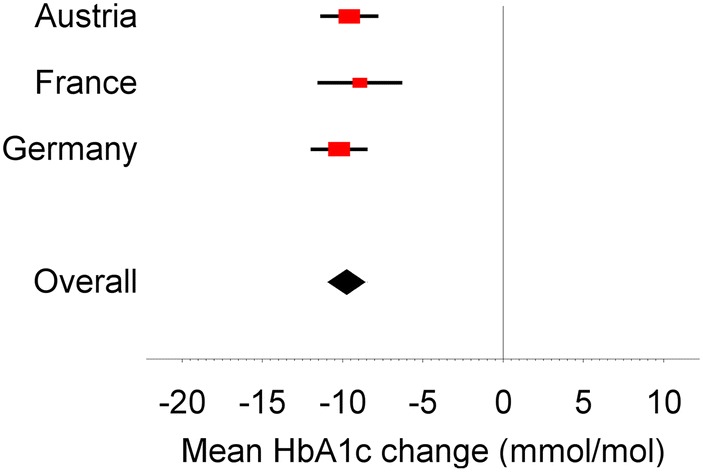
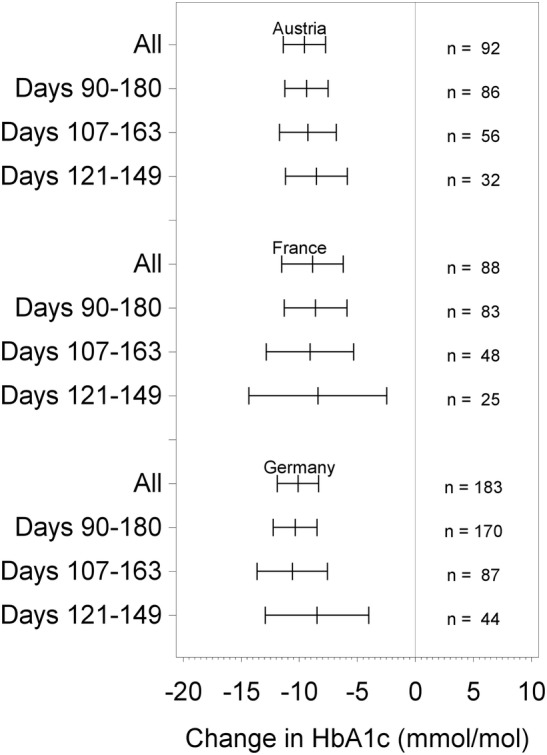
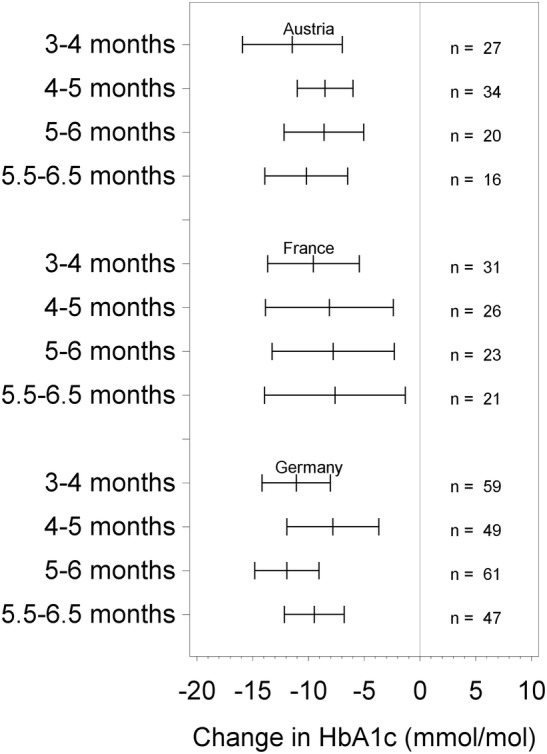
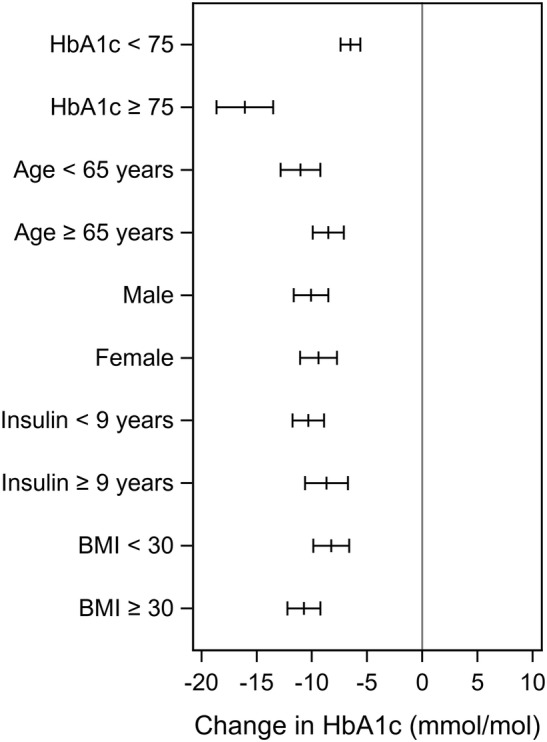
INTRODUCTION: The impact of flash glucose monitoring technology on HbA1c in type 2 diabetes managed by basal bolus insulin is uncertain. Three parallel European retrospective non-interventional chart review studies collected data reported in medical records. Each country's study aim was to determine the effectiveness of the device on HbA1c when used by their population for 3-6 months as their standard of care for management of glycaemia in a real-world setting. METHODS: Medical records were eligible for adult patients with type 2 diabetes, on a basal bolus insulin regimen for 1 year or more, device use for 3 months or more before the start of the study, an HbA1c concentration up to 3 months prior to starting device use (patients were using blood glucose monitoring for self-management) between 64 and 108 mmol/mol (8.0-12.0%) plus an HbA1c determination 3-6 months after commencing flash glucose monitoring use. RESULTS: Records were analysed from 18 medical centres in Austria (n = 92), France (n = 88) and Germany (n = 183). Baseline HbA1c results, recorded up to 90 days before the start of device use, were comparable across the three countries and were reduced significantly by 9.6 ± 8.8 mmol/mol mean ± SD (Austria [0.9 ± 0.8%], p < 0.0001), 8.9 ± 12.5 mmol/mol (France [0.8% ± 1.1], p < 0.0001) and 10.1 ± 12.2 mmol/mol (Germany [0.9% ± 1.1], p < 0.0001). No significant differences were detected between age group, sex, BMI or duration of insulin use. CONCLUSIONS: Three European real-world, chart review studies in people with type 2 diabetes managed using basal bolus insulin therapy each concluded that HbA1c was significantly reduced after changing to use of flash glucose monitoring for 3-6 months in a real-world setting.
Overview
The claims and statistics of this paper haven’t been checked yet.
Free: it reads the open-access text and checks the first 5 claims that cite a source we can check. Create a free account to check every claim.
Integrity signals
Registry
Cites
Statistics
Figures
Verification
Claims the paper makes
The claims and statistics of this paper haven’t been checked yet.
Free: it reads the open-access text and checks the first 5 claims that cite a source we can check. Create a free account to check every claim.
Claims other papers make about this one
Each is checked against this paper’s own text: does it say what the citing paper says it does?
The source backs part of the claim, not all of it — or backs it for a different population, condition or comparison.
In the citing paper
“The clinical efficacy of CGM has been demonstrated in numerous retrospective studies and RCTs of individuals with T1D regardless of insulin delivery method.156–161”
From American Association of Clinical Endocrinology Clinical Practice Guideline: Developing a Diabetes Mellitus Comprehensive Care Plan-2022 Update. (2022) · cites this paper as [160]
Experimental — accuracy not yet measuredThe source backs part of the claim, not all of it — or backs it for a different population, condition or comparison.
In the citing paper
“Regardless of the insulin delivery method (MDI vs CSII), glycemic control metrics, including A1C and CGM TIR, hypoglycemic events, QoL, and patient satisfaction are substantially improved when MDI or CSII is augmented with CGM, with better results when CSII is combined with CGM or integrated into AID systems, compared with using CGM.158,160,1129–1131”
From American Association of Clinical Endocrinology Clinical Practice Guideline: Developing a Diabetes Mellitus Comprehensive Care Plan-2022 Update. (2022) · cites this paper as [160]
Experimental — accuracy not yet measured
Self-check
Percentages, sums and reported differences re-computed from the paper’s own numbers.
The self-check needs the paper’s full text.
Citations
Cites
Measuring inconsistency in meta-analyses
Higgins, J. P. T., Thompson, S. G., Deeks, J. J., & Altman, D. G. (2003) · BMJ · doi:10.1136/bmj.327.7414.557 · Cited by 63,139
Standards of Medical Care in Diabetes
Power, D. (2006) · Diabetes Care · doi:10.2337/diacare.29.02.06.dc05-1593 · Cited by 8,673
Turner, R. C., Fox, C., Matthews, McElroy, H. H., Cull, C. A., Holman, R. R., Neil, P., Hadden, D. R., Wright, D., Manley, E., et al. (1998) · The Lancet · Cited by 8,419
Gupta, A., & Uribarri, J. (2016) · Hormone Research in Paediatrics · doi:10.1159/000444053 · Cited by 4,006
Davies, M. J., D’Alessio, D. A., Fradkin, J., Kernan, W. N., Mathieu, C., Mingrone, G., Rossing, P., Tsapas, A., Wexler, D. J., & Buse, J. B. (2018) · Diabetes Care · doi:10.2337/dci18-0033 · Cited by 3,518
Einarson, T. R., Acs, A., Ludwig, C., & Panton, U. H. (2018) · Cardiovascular Diabetology · doi:10.1186/s12933-018-0728-6 · Cited by 2,312
Davies, M. J., D’Alessio, D. A., Fradkin, J., Kernan, W. N., Mathieu, C., Mingrone, G., Rossing, P., Tsapas, A., Wexler, D. J., & Buse, J. B. (2018) · Diabetologia · doi:10.1007/s00125-018-4729-5 · Cited by 1,455 · cited 2×
“In line with international guidance [2], the most commonly prescribed oral medication in all three countries was metformin (54–63%, Table 2).”
BackgroundMethodBeck, R. W., Riddlesworth, T. D., Ruedy, K., Ahmann, A., Haller, S., Kruger, D., McGill, J. B., Polonsky, W., Price, D., Aronoff, S., et al. (2017) · Annals of Internal Medicine · doi:10.7326/m16-2855 · Cited by 635
Blak, B., Thompson, M., Dattani, H., & Bourke, A. (2011) · Journal of Innovation in Health Informatics · doi:10.14236/jhi.v19i4.820 · Cited by 630 · cited 1×
“The demographic and baseline characteristics data extracted from the medical records were broadly similar across the three studies; mean baseline HbA1c value, percentage of data for male patients, age, use of basal bolus insulin therapy, and BMI measurements are comparable to other studies in the same population [3, 9…”
Result
Cited by
Blonde, L., Umpierrez, G. E., Reddy, S. S., McGill, J. B., Berga, S. L., Bush, M., Chandrasekaran, S., DeFronzo, R. A., Einhorn, D., Galindo, R. J., et al. (2022) · Endocrine Practice · doi:10.1016/j.eprac.2022.08.002 · Cited by 507
7. Diabetes Technology: Standards of Medical Care in Diabetes—2021
American Diabetes Association (2021) · Diabetes Care · doi:10.2337/dc21-s007 · Cited by 202
Fokkert, M., van Dijk, P., Edens, M., Barents, E., Mollema, J., Slingerland, R., Gans, R., & Bilo, H. (2019) · BMJ Open Diabetes Research & Care · doi:10.1136/bmjdrc-2019-000809 · Cited by 163
Continuous glucose monitoring: The achievement of 100 years of innovation in diabetes technology
Galindo, R. J., & Aleppo, G. (2020) · Diabetes Research and Clinical Practice · doi:10.1016/j.diabres.2020.108502 · Cited by 133
Continuous glucose monitoring for the routine care of type 2 diabetes mellitus
Ajjan, R. A., Battelino, T., Cos, X., Del Prato, S., Philips, J.-C., Meyer, L., Seufert, J., & Seidu, S. (2024) · Nature Reviews Endocrinology · doi:10.1038/s41574-024-00973-1 · Cited by 117
Oser, T. K., Hall, T. L., Dickinson, L. M., Callen, E., Carroll, J. K., Nease, D. E., Michaels, L., & Oser, S. M. (2022) · The Annals of Family Medicine · doi:10.1370/afm.2876 · Cited by 72
Guerci, B., Roussel, R., Levrat-Guillen, F., Detournay, B., Vicaut, E., De Pouvourville, G., Emery, C., & Riveline, J.-P. (2023) · Diabetes Technology & Therapeutics · doi:10.1089/dia.2022.0271 · Cited by 69
Lin, Y. K., Fisher, S. J., & Pop‐Busui, R. (2020) · Journal of Diabetes Investigation · doi:10.1111/jdi.13290 · Cited by 82
A review of flash glucose monitoring in type 2 diabetes
Krakauer, M., Botero, J. F., Lavalle-González, F. J., Proietti, A., & Barbieri, D. E. (2021) · Diabetology & Metabolic Syndrome · doi:10.1186/s13098-021-00654-3 · Cited by 71
Carlson, A. L., Daniel, T. D., DeSantis, A., Jabbour, S., Karslioglu French, E., Kruger, D., Miller, E., Ozer, K., & Elliott, T. (2022) · BMJ Open Diabetes Research & Care · doi:10.1136/bmjdrc-2021-002590 · Cited by 69
Riveline, J.-P., Roussel, R., Vicaut, E., de Pouvourville, G., Detournay, B., Emery, C., Levrat-Guillen, F., & Guerci, B. (2022) · Diabetes Technology & Therapeutics · doi:10.1089/dia.2022.0085 · Cited by 64
Elliott, T., Beca, S., Beharry, R., Tsoukas, M. A., Zarruk, A., & Abitbol, A. (2021) · Diabetes and Vascular Disease Research · doi:10.1177/14791641211021374 · Cited by 49
Landscape of Continuous Glucose Monitoring (CGM) and Integrated CGM: Accuracy Considerations
Bailey, T. S., & Alva, S. (2021) · Diabetes Technology & Therapeutics · doi:10.1089/dia.2021.0236 · Cited by 56
Continuous Glucose Monitoring Use in Older Adults for Optimal Diabetes Management
Munshi, M. N. (2023) · Diabetes Technology & Therapeutics · doi:10.1089/dia.2023.0111 · Cited by 63
Oser, T. K., Litchman, M. L., Allen, N. A., Kwan, B. M., Fisher, L., Jortberg, B. T., Polonsky, W. H., & Oser, S. M. (2021) · Current Diabetes Reports · doi:10.1007/s11892-021-01408-1 · Cited by 43
Bellido, V., Aguilera, E., Cardona‐Hernandez, R., Díaz-Soto, G., de Villar, N. G. P., César, M. J. P., & Ampudia‐Blasco, F. J. (2022) · Journal of Diabetes Science and Technology · doi:10.1177/19322968221088601 · Cited by 47
Guerci, B., Levrat‐Guillen, F., Vicaut, É., de Pouvourville, G., Detournay, B., Emery, C., & Riveline, J. (2023) · Diabetes Technology & Therapeutics · doi:10.1089/dia.2023.0034 · Cited by 41
Eeg-Olofsson, K., Svensson, A.-M., Franzén, S., Ahmed Ismail, H., Törnblom, M., & Levrat-Guillen, F. (2023) · Diabetes and Vascular Disease Research · doi:10.1177/14791641211067418 · Cited by 29
Galindo, R. J., Parkin, C. G., Aleppo, G., Carlson, A. L., Kruger, D. F., Levy, C. J., Umpierrez, G. E., & McGill, J. B. (2021) · Diabetes Technology & Therapeutics · doi:10.1089/dia.2021.0107 · Cited by 39
Klonoff, D. C., Gabbay, M., Moon, S. J., & Wilmot, E. G. (2025) · Journal of Diabetes Science and Technology · doi:10.1177/19322968241250357 · Cited by 36
Norman, G. J., Paudel, M. L., Parkin, C. G., Bancroft, T., & Lynch, P. M. (2022) · Diabetes Technology & Therapeutics · doi:10.1089/dia.2021.0525 · Cited by 37
“23–27 This suggests that cost-effectiveness studies of CGM in the broader T2D population are needed to further examine the economic value of this technology, similar to the study conducted by Roze et al. 28 It is important to note that our analysis focused on only health care resource utilization…”
Glennie, J. L., Berard, L., & Levrat‐Guillen, F. (2022) · ClinicoEconomics and Outcomes Research · doi:10.2147/ceor.s346736 · Cited by 35
Frank, J., Blissett, D. B., Hellmund, R., & Virdi, N. S. (2021) · Diabetes Technology & Therapeutics · doi:10.1089/dia.2021.0263 · Cited by 31
Gavin, J. R., & Bailey, C. J. (2021) · Diabetes Technology & Therapeutics · doi:10.1089/dia.2021.0211 · Cited by 29
“33,34 As noted in some other studies, 21 there was a slight, but statistically significant, ( P 0.05) increase in the number (but not duration) of hypoglycemic events at 12 months, which correlated with improvements in A1C and may be attributed largely to awareness with use of CGM.”
InfluentialMobile health in preventive cardiology: current status and future perspective
Kozik, M., Isakadze, N., & Martin, S. S. (2021) · Current Opinion in Cardiology · doi:10.1097/hco.0000000000000891 · Cited by 30
The emerging role of digital health in the management of asthma
Kaplan, A. G., Boivin, M. R., Bouchard, J., Kim, J., Hayes, S. W., & Licskai, C. J. (2023) · Therapeutic Advances in Chronic Disease · doi:10.1177/20406223231209329 · Cited by 27
Utilizing continuous glucose monitoring in primary care practice: What the numbers mean
Edelman, S. V., Cavaiola, T. S., BOEDER, S. C., & Pettus, J. (2020) · Primary care diabetes · doi:10.1016/j.pcd.2020.10.013 · Cited by 27
Rose, L., Klausmann, G., & Seibold, A. (2021) · Diabetes Therapy · doi:10.1007/s13300-020-00978-9 · Cited by 18
Blissett, R., Blissett, D. B., Levrat‐Guillen, F., Deshmukh, H., Wilmot, E. G., Ryder, R. E. J., Walton, C., & Sathyapalan, T. (2022) · BMJ Open Diabetes Research & Care · doi:10.1136/bmjdrc-2021-002580 · Cited by 24
Integrating Continuous Glucose Monitoring Into Clinical Practices and Patients' Lives
Hirsch, I. B., & Miller, E. M. (2021) · Diabetes Technology & Therapeutics · doi:10.1089/dia.2021.0233 · Cited by 25
Bosi, E., Gregori, G., Cruciani, G., Irace, C., Pozzilli, P., & Buzzetti, R. (2021) · Diabetes Research and Clinical Practice · doi:10.1016/j.diabres.2021.109172 · Cited by 22
“However, there is still limited data reported by European clinical trials to support the use of CGM technology in type 2 diabetes treatedwith basal-bolus insulin therapy [3,4].”
BackgroundResultInfluentialNarrative Review: Continuous Glucose Monitoring (CGM) in Older Adults with Diabetes
Wilson, A., Morrison, D., Sainsbury, C. A. R., & Jones, G. C. (2025) · Diabetes Therapy · doi:10.1007/s13300-025-01720-z · Cited by 21
“A significant reduction in HbA1c has also been reported in real-world data of patients with T2DM, in addition to no significant difference between patients < 65 and > 65 in the context of both basal-bolus and basal-only insulin regimens [27, 31, 32].”
Dávila-Rúales, V., Córdoba, L. F. G., Medina, A. M. G., Múñoz, Ó., Serrano, M. N., & Henao, D. C. (2024) · Therapeutic Advances in Endocrinology and Metabolism · doi:10.1177/20420188241304459 · Cited by 22
Flash Continuous Glucose Monitoring: A Summary Review of Recent Real-World Evidence
Bailey, C. J., & Gavin, J. R. (2020) · Clinical Diabetes · doi:10.2337/cd20-0076 · Cited by 20
“Kröger et al., 2020 (32) • European pragmatic, parallel retrospective, noninterventional chart review study • 363 adults with type 2 diabetes • Use of flash CGM over 3–6 months • A1C • Mean (6 SD) A1C levels were reduced by 9.6 6 8.8 mmol/mol (0.96 0.8%, P,0.0001) in Austria, 8.9 6 12.5 mmol/mol…”
BackgroundInfluentialGalindo, R. J., Aleppo, G., Parkin, C. G., Baidal, D. A., Carlson, A. L., Cengiz, E., Forlenza, G. P., Kruger, D. F., Levy, C. J., McGill, J. B., et al. (2022) · Journal of Diabetes Science and Technology · doi:10.1177/19322968221144052 · Cited by 19
“Studies have demonstrated that use of CGM by T2D patients confers significant reductions in HbA1c levels, 29,31,40-45 significant increases in time above range (%TIR), 29,40 significant decreases in time below range (%TBR), 19,48 and significant reductions in diabetes-related hospitalizations 39,49…”
Riveline, J., Wojtusciszyn, A., Guerci, B., Alves, C., Kao, K., Xu, Y., & Dunn, T. C. (2022) · Diabetes Obesity and Metabolism · doi:10.1111/dom.14795 · Cited by 17
National Asthma Education and Prevention Program 2020 Guidelines: What’s Important for Primary Care
Murphy, M. (2021) · The Journal of Family Practice · doi:10.12788/jfp.0219 · Cited by 16
How use of continuous glucose monitoring can address therapeutic inertia in primary care
Martens, T. W., & Parkin, C. G. (2022) · Postgraduate Medicine · doi:10.1080/00325481.2022.2080419 · Cited by 16
Harris, S. B., & Levrat‐Guillen, F. (2023) · Diabetes Obesity and Metabolism · doi:10.1111/dom.15025 · Cited by 16
Al Hayek, A., Al Dawish, M., & El Jammal, M. (2021) · Cureus · doi:10.7759/cureus.16007 · Cited by 11
CASTORINO, K. N., Durnwald, C. P., Ehrenberg, S., Ehrhardt, N. M., Isaacs, D., Levy, C. J., Valent, A. M., & Continuous Glucose Monitoring for Gestational Diabetes Management Working Group (2024) · Journal of Women s Health · doi:10.1089/jwh.2023.0864 · Cited by 15
Ajjan, R., Bilir, S. P., Hellmund, R., & Souto, D. (2022) · Diabetes Therapy · doi:10.1007/s13300-022-01325-w · Cited by 14
“The scenario analysis used cohort data from Kröger where available [11], with REPLACE trial cohort for any missing cohort values [8].”
BackgroundMethodInfluentialVirtual visits and the use of continuous glucose monitoring for diabetes care in the era of COVID-19
UNDERWOOD, P. C., Hibben, J., Gibson, J. M., & DiNardo, M. M. (2021) · Journal of the American Association of Nurse Practitioners · doi:10.1097/jxx.0000000000000659 · Cited by 13
“Case study 1: Elevated A1c with early morning hypoglycemia History of present illness: 68-year-old Caucasian man with insulin-dependent DM2, obesity (body mass index [BMI] 42 kg/m2), hypertension (HTN), chronic kidney disease 3a (eGFR 45), and coronary artery disease status post coronary artery bypass grafting.”
BackgroundMethodInfluentialMolfetta, S. D., Rossi, A., Assaloni, R., Cherubini, V., Consoli, A., Bartolo, P. D., Guardasole, V., Laurenzi, A., Lombardo, F., Maffeis, C., et al. (2022) · Diabetes Research and Clinical Practice · doi:10.1016/j.diabres.2022.109867 · Cited by 14
Gao, Y., Zhou, M., Xu, X., & Chen, W. Y. (2022) · Journal of Diabetes and its Complications · doi:10.1016/j.jdiacomp.2022.108314 · Cited by 13
Levy, C. J., Galindo, R. J., Parkin, C. G., Gillis, J., & Argento, N. B. (2023) · Journal of Diabetes Science and Technology · doi:10.1177/19322968231161317 · Cited by 13
“…initial randomization to BGM or CGM, patients in the CGM group were then allocated to early and late subgroups in which patients in the early subgroup wore their CGM devices during gestational weeks 24 to 28, and patients in the late sub-group wore their devices during gestational weeks 28 to 36.”
Screening for Autoantibodies in Type 1 Diabetes: A Call to Action
Петерс (2021) · The Journal of Family Practice · doi:10.12788/jfp.0223 · Cited by 11
Miller, E., Chuang, J. S., Roberts, G. J., Nabutovsky, Y., Virdi, N., & Wright, E. E. (2024) · Diabetes Therapy · doi:10.1007/s13300-024-01619-1 · Cited by 9
Continuous Glucose Monitoring: Optimizing Diabetes Care: Executive Summary
Miller, E. M., Gavin, J. R., Kruger, D. F., & Brunton, S. (2022) · Clinical Diabetes · doi:10.2337/cd22-0043 · Cited by 9
Primary Prevention of CVD with Aspirin: Benefits vs Risks
Weisman (2021) · The Journal of Family Practice · doi:10.12788/jfp.0222 · Cited by 9
Reddy, S., Wu, C. C., José, A. S., Hsieh, J. L., & Rautela, S. D. (2023) · Clinical Diabetes · doi:10.2337/cd22-0128 · Cited by 8
Riveline, J., Levrat‐Guillen, F., Detournay, B., Vicaut, É., de Pouvourville, G., Emery, C., & Guerci, B. (2024) · Diabetes Technology & Therapeutics · doi:10.1089/dia.2024.0171 · Cited by 8
Gómez-Lumbreras, A., Ghule, P., Panchal, R., Giannouchos, T. V., Lockhart, C. M., & Brixner, D. I. (2023) · International Ophthalmology · doi:10.1007/s10792-023-02853-5 · Cited by 8
Obesity 2021: Current Clinical Management of a Chronic, Serious Disease
Kushner (2021) · The Journal of Family Practice · doi:10.12788/jfp.0221 · Cited by 8
A Position Statement of the Utilization and Support Status of Continuous Glucose Monitoring in Korea
Kim, W. J., Kim, J. H., Yoo, H. J., Son, J. W., Khang, A. R., Kwon, S. K., Kim, J. H., Kim, T. H., Ryu, O. H., Park, K. H., et al. (2021) · Journal of Korean Diabetes · doi:10.4093/jkd.2021.22.4.225 · Cited by 7
Heer, R. S., Lovegrove, J., & Welsh, Z. (2024) · Diabetes Research and Clinical Practice · doi:10.1016/j.diabres.2024.111950 · Cited by 6
Insurance Coverage for Emerging Diabetes Technologies: Payers' Perspective
Nolan, T., & Frazzitta, M. A. (2021) · Diabetes Technology & Therapeutics · doi:10.1089/dia.2021.0262 · Cited by 6
Adamson, K., Gibb, F. W., McLaren, J. B., Min, T., Price, H. C., Sankaranarayanan, S., & Strzelecka, A. (2024) · Diabetes Therapy · doi:10.1007/s13300-024-01629-z · Cited by 5
“In this study population, a relatively high baseline HbA1c was observed when compared to studies conducted in other countries with a similar inclusion criteria [9, 10, 15, 16].”
MethodResultInfluentialLilly, A. N., King, C. A., & Ortiz, J. (2025) · JACCP JOURNAL OF THE AMERICAN COLLEGE OF CLINICAL PHARMACY · doi:10.1002/jac5.70090 · Cited by 4
Litwak, L., Carreño, N., Carnero, R., Daín, A., Grosembacher, L., Musso, C., PROIETTI, A. E., Rista, L., Rovira, G., Rubín, G., et al. (2020) · Revista de la Sociedad Argentina de Diabetes · doi:10.47196/diab.v54i3.455 · Cited by 5
“Journal of the Endocrine Society 2017 Dec; 1(12):14451460.”
BackgroundJoubert, M., Bouillet, B., Prévost, G., Vermesse, B., Mosnier-Pudar, H., Thébaut, J.-F., Riveline, J., Davoust, N., Guerci, B., & Meyer, L. (2025) · Médecine des Maladies Métaboliques · doi:10.1016/j.mmm.2025.04.002 · Cited by 3
Ruiz, M. P., Jiménez, B. R., Gómez, P. R. D. V., Robles, N. L., Ortega, R. P., Sánchez-Laguna, F. J., Cruz, I. V., Sánchez, E. M., Sánchez-Álvarez, M., Fernandez-Delgado, C., et al. (2026) · Endocrinología Diabetes y Nutrición (English ed ) · doi:10.1016/j.endien.2025.501661 · Cited by 3
Accuracy and feasibility of continuous glucose monitoring system in pancreatectomy patients
Choi, Y. J., Jeon, S. M., Yu, S., Jo, H.-S., Kim, D., & Yu, Y. (2025) · Langenbeck s Archives of Surgery · doi:10.1007/s00423-024-03601-8 · Cited by 3
“The feasibility of the CGM has been studied in various patients, including those with type 1 and 2 diabetes [15–17], pregnant women with diabetes [8], and patients undergoing islet cell transplantation [18–20].”
Use of SGLT-2 Inhibitors in Patients with Chronic Kidney Disease
Mottl (2021) · The Journal of Family Practice · doi:10.12788/jfp.0225 · Cited by 3
Impact of pharmacist-led continuous glucose monitoring program on reduction in A1c in an FQHC
Evers, M., Draime, J. A., & Barhorst, R. (2025) · JAPhA Practice Innovations · doi:10.1016/j.japhpi.2025.100039 · Cited by 2
Ruíz, M. P., Jiménez, B. R., Gómez, P. R. D. V., Robles, N. L., Ortega, R. P., Sánchez-Laguna, F. J., Cruz, I. V., Sánchez, E. M., Sánchez-Álvarez, M., Fernandez-Delgado, C., et al. (2025) · Endocrinología Diabetes y Nutrición · doi:10.1016/j.endinu.2025.501661 · Cited by 2
Chico, A. I., Aguilera, E., Albareda, M., Moreno-Fernández, J., Beato-Víbora, P. I., Fernández-Rubio, E., Cuesta, M., Rodrigo, A. B., Ampudia‐Blasco, F. J., Bandrés, O., et al. (2026) · Acta Diabetologica · doi:10.1007/s00592-026-02682-9 · Cited by 2
New Perspectives in COPD Management
Yawn (2021) · The Journal of Family Practice · doi:10.12788/jfp.0220 · Cited by 2
Utilizing CGM Ambulatory Glucose Profiles to Optimize Diabetes Management
Miller (2021) · The Journal of Family Practice · doi:10.12788/jfp.0226 · Cited by 2
“CGM overcomes many of the shortcomings observed with A1c and SMBG, with numerous real-world benefits shown in clinical studies (TABLE 1).(9-16) Of key importance is that CGM provides an early warning of high, low, and/or rapidly changing blood glucose levels, which allows for early intervention, thereby improving glyc…”
Mesure continue du glucose : quels sont les nouveaux indicateurs de suivi ?
Joubert, M. (2024) · Médecine des Maladies Métaboliques · doi:10.1016/j.mmm.2024.05.001 · Cited by 1
Adoption of Diabetes Technology in Denmark: Continuous Glucose Monitor as Time-Machine
Anesen, A. A. (2024) · Medical Anthropology · doi:10.1080/01459740.2024.2362883 · Cited by 1
Dover, A. R., Wright, R. J., Forbes, S., Strachan, M. W. J., Stimson, R. H., & Gibb, F. W. (2024) · Diabetes Obesity and Metabolism · doi:10.1111/dom.16003 · Cited by 1
Outcomes of hyperglycaemia in pregnancy in Africa: Systematic review and meta-analysis
Musa, E., Chivese, T., Werfalli, M., Soepnel, L. M., Nicolaou, V., Matjila, M. J., Norris, S. A., & Levitt, N. S. (2026) · PLoS ONE · doi:10.1371/journal.pone.0345743 · Cited by 1
“Preterm delivery, defined as the delivery of a baby before 37 completed weeks of pregnancy, is associated with higher morbidity and mortality in infants, particularly in Africa, where most facilities and expertise for managing premature babies are inadequate [76].”
Hayek, A. A., Zahrani, W. M. A., Alotaibi, H. F., & Dawish, M. A. A. (2026) · Journal of Diabetes Science and Technology · doi:10.1177/19322968261447256 · Cited by 1
Domínguez-Navarro, A., Lee, M., Chen, Y., Batten, J., Mensah, B. A., & Nam, S. (2026) · Geriatric Nursing · doi:10.1016/j.gerinurse.2026.104075 · Cited by 1
Outcomes of Diabetes Management with Continuous Glucose Monitoring Technology
Vayser, D., Wang, P., Dafesh, N., & Agrawal, D. K. (2026) · Archives of Internal Medicine Research · doi:10.26502/aimr.0243 · Cited by 1
“These findings are also supported by Kröger et al. [73], who showed consistent HbA1c reductions of ~−0.8-0.9% across multiple European cohorts, and Elliot et al. [74], who reported a −0.8% decrease in a Canadian real-world population.”
InfluentialDecision Points in the Management of Patients with Diabetic Kidney Disease
Weir (2021) · The Journal of Family Practice · doi:10.12788/jfp.0217 · Cited by 1
Interstitial glucose monitoring in people with diabetes
Casado-Hoces, S. V., Inglada-Infante, P., Algora-Donoso, I., & González-Tejedor, D. (2023) · Revista Española de Sanidad Penitenciaria · doi:10.18176/resp.00071 · Cited by 1
The Application of Digital Health in Diabetes Management
Ye, J. (2023) · Highlights in Science Engineering and Technology · doi:10.54097/hset.v66i.11711 · Cited by 1
Seufert, J., Dänschel, I., Gölz, S., Haller, N., Kulzer, B., Tan, S., Schnell, O., Wiesner, T., & Kroeger, J. (2024) · Diabetologie und Stoffwechsel · doi:10.1055/a-2305-9093 · Cited by 1
Cardiometabolic Risk Reduction: A Review of Clinical Guidelines and the Role of SGLT-2 Inhibitors
Reid (2021) · The Journal of Family Practice · doi:10.12788/jfp.0216
Improving Shingles Vaccination Rates in Family Medicine
Luther (2021) · The Journal of Family Practice · doi:10.12788/jfp.0218
The Challenge: Finding the Most Appropriate Statin and Dose for Each Patient
Lillo (2021) · The Journal of Family Practice · doi:10.12788/jfp.0224
Glucose flash monitoring systems: sources of funding, procurement and delivering to patients
Федоров, А. А., Сергеевна, П. О., & Ratushnyak, S. S. (2021) · Medical Technologies Assessment and Choice · doi:10.17116/medtech20214304144
Use of digital health and telehealth in the US
Ahn, D. T. (2022) · Elsevier eBooks · doi:10.1016/b978-0-323-90557-2.00022-4
Sistemas de monitorización de la glucemia intersticial
Navarro-Pérez, J., & Girardot, S. K. (2022) · Diabetes práctica · doi:10.52102/diabet/pract/nuevastecnologias/art2
Saxena, R. K., Singh, A. B., & .Singh, N. P. (2023) · International Journal of Life Science and Pharma Research · doi:10.22376/ijlpr.2023.13.4.sp6.l87-l99
Congreso Nacional de la Sociedad Española de Diabetes 2023
Vela, N. S., & Sanz, F. V. (2023) · Diabetes práctica · doi:10.52102/diabet/pract.2023.2.art5
Yépez-Rodríguez, A. E., Garduño-Pérez, Á. A., Martínez-Abundis, E., Lavalle-González, F. J., Canto, J. A. C., Garnica-Cuéllar, J. C., Vera-Zertuche, J. M., la Garza-Hernández, N. E. D., Almeda‐Valdés, P., & Faradji, R. N. (2026) · Revista Mexicana de Endocrinología Metabolismo y Nutrición · doi:10.24875/rme.m24000032
“En adultos con DM2 con control subóptimo tratados con insulina basal-bolo por más de un año se comparó el uso del fMCG por 3-6 meses, reportando reducciones estadísticamente significativas (p 0.0001) del –1.56% de HbA1c 26 .”
InfluentialAssessment of basal insulin adherence in people with type 2 diabetes
Nørlev, J. T. D. (2024) · VBN Forskningsportal (Aalborg Universitet) · doi:10.54337/aau771502052
Titova, V. V., Yanovskaya, E. A., & Яновская, М. Е. (2025) · FOCUS Endocrinology · doi:10.62751/2713-0177-2025-6-1-09
Hassan, T. A. M., Abusnana, S., Mussa, B. M., Bhamidimarri, P. M., Zakaria, H., Ashfaq, A., Merie, H., & Alawadi, F. (2025) · Clinical Diabetology · doi:10.5603/cd.103990
"Usefulness of continuous interstitial glucose in diabetic patient undergoing hemodialysis
Berchoux, E., Szwarc, I., Bonnet, J., Pissarra, J., Avignon, A., Jugant, S., Quintrec, M. L., & Sultan, A. (2025) · Diabetes & Metabolism · doi:10.1016/j.diabet.2025.101720
Gilbert, J., Reichert, S. M., Cadieux, T., & Senior, P. A. (2026) · Canadian Journal of Diabetes · doi:10.1016/j.jcjd.2026.04.007
Cuenca, A. M. C., de la Puente, J. B., Hermida, Á. B. Á., Cabello, M. I. E., Cambra, G. C., Martínez, E. A., Cruz, N. M., Pérez, J. N., & de la Cuadra-Grande, A. (2026) · Medicina de Familia SEMERGEN · doi:10.1016/j.semerg.2026.102872
Aldahash, R., Alibrahim, A. R., Samih, M. A., Alagrafy, N., Alkhalaf, M., Alqahtani, Y., & Alshahrani, S. M. (2026) · Healthcare · doi:10.3390/healthcare14223931
Metadata
- Authors
- Kröger, J., Fasching, P., & Hanaire, H.
- Affiliations
- Wilhelminen Hospital (AT)
- Centre Hospitalier Universitaire de Toulouse (FR)
- Corresponding author
- Kröger, Jens
- Venue
- Diabetes Therapy
- Published
- 2019-12-12
- Volume
- 11
- Issue
- 1
- Pages
- 279-291
- ISSN
- 1869-6953 (ISSN-L)
- 1869-6961
- PMC
- PMC6965548
- OpenAlex
- W2995322095
- Cited by
- 90
- References
- 23
- Citations by year
- 2026: 5 · 2025: 8 · 2024: 13 · 2023: 12 · 2022: 19 · 2021: 26 · 2020: 6 · 2019: 1
- FWCI
- 10.55
- Type
- journal article
- Language
- en
- Open access
- gold
- doi.org
- Licence
- cc-by-nc
- creativecommons.org/licenses/by-nc/4.0 (tdm)
- creativecommons.org/licenses/by-nc/4.0 (vor)
- Locations
- Diabetes Therapy (publishedVersion, cc-by-nc)
- PubMed Central (publishedVersion, cc-by-nc)
- PubMed (publishedVersion)
- Funders
- Abbott Diabetes Care
- Topics
- Health Sciences › Medicine › Endocrinology, Diabetes and Metabolism › Diabetes Management and Research
- Health Sciences › Medicine › Endocrinology, Diabetes and Metabolism › Diabetes Treatment and Management
- Health Sciences › Medicine › Endocrinology, Diabetes and Metabolism › Diabetes Management and Education
- Keywords
- flash glucose monitoring, type 2 diabetes, HbA1c, multiple daily insulin injections, glycemic control, real-world effectiveness, continuous glucose monitoring, self-monitoring of blood glucose
About these checks
Registry, retraction, Cites and statistics results are computed, not judged, with one exception: a printed reference that no index lists is read once by a model before it counts as a citation error. Claims are extracted by a model and kept only when their quote appears verbatim in the text; each cited source is then checked, with a model’s help, for whether it says what the claim relies on. Those verdicts can be wrong — read the claim’s quote and the cited source before relying on one.
Statistics and arithmetic are recomputed, not judged.
Confidence bands are shown only for fields calibrated on our annotated test set. None is calibrated yet, so no band is shown.
What counts as a claim ›How we measure confidence ›How we check this ›
Are you an author, or do you see a problem with this page? Request a review
Data sources
Bibliographic data: Semantic Scholar, OpenAlex, Crossref.
Contains information from the Semantic Scholar Academic Graph Datasets, made available under the ODC Attribution License (ODC-BY 1.0).
Semantic Scholar’s data is described in: Kinney, R., et al. (2023). The Semantic Scholar Open Data Platform. arXiv:2301.10140.
