

Cost-Effectiveness of Canagliflozin Added to Standard of Care for Treating Diabetic Kidney Disease (DKD) in Patients with Type 2 Diabetes Mellitus (T2DM) in England: Estimates Using the CREDEM-DKD Model
Open accessThe DOI matches its Crossref record; 37 of the 37 references it cites were found in a registry or an index.
Abstract
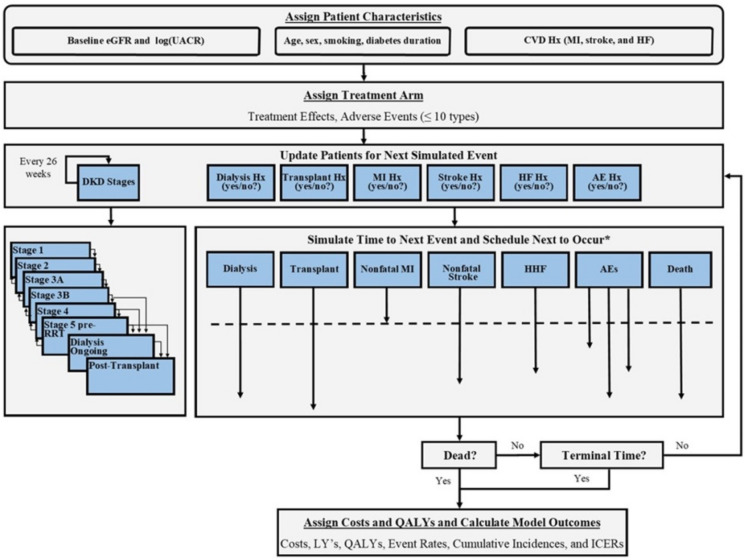
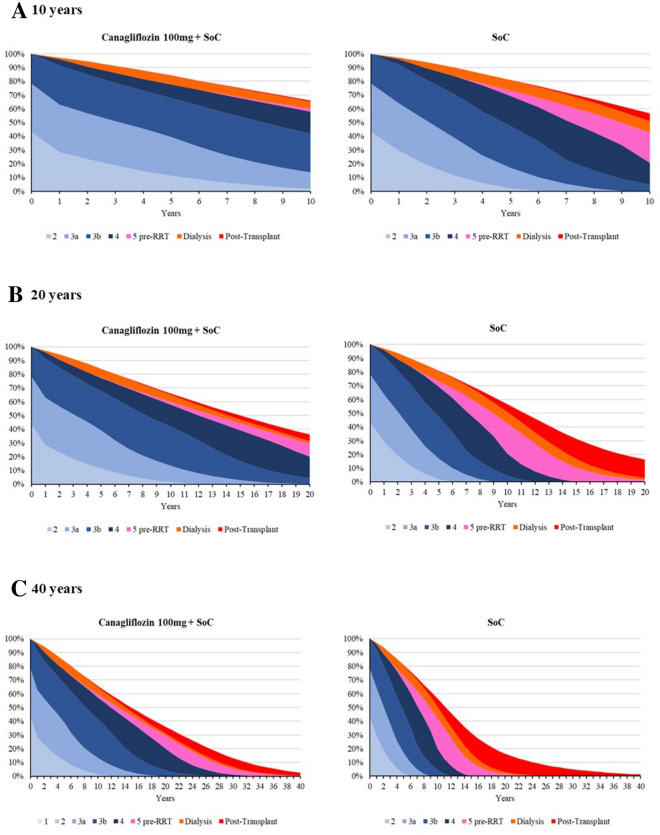
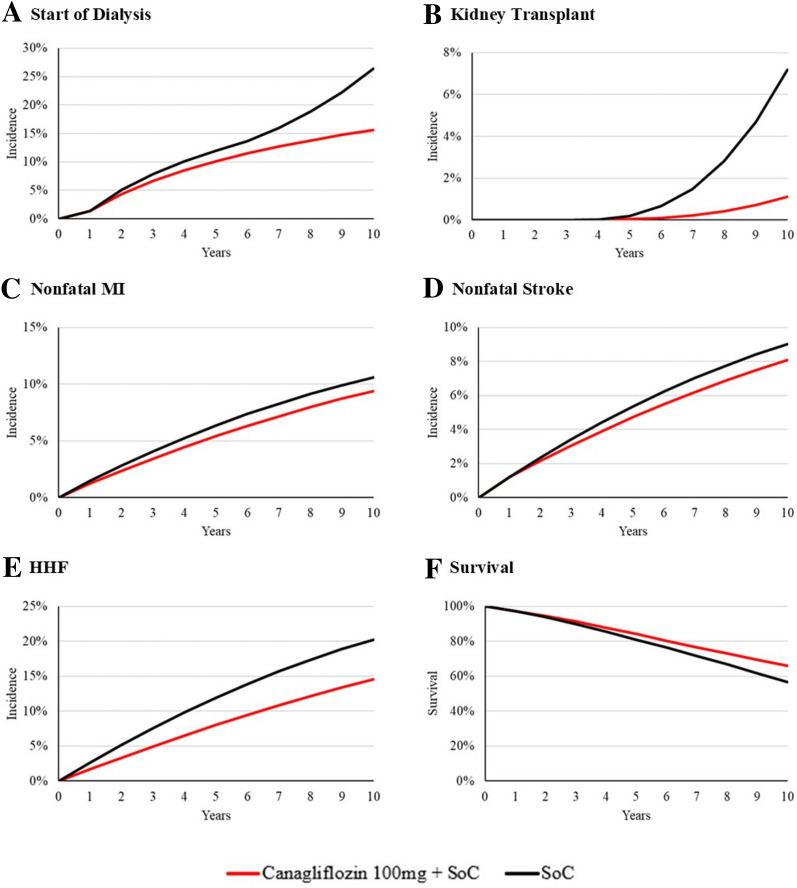
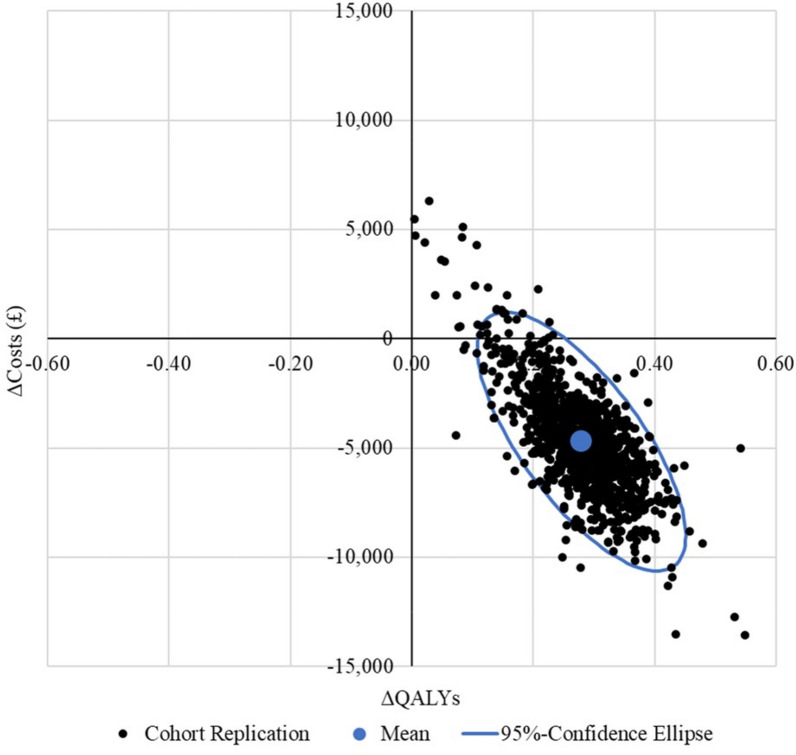
INTRODUCTION: On the basis of reductions in diabetic kidney disease (DKD) progression and major adverse cardiovascular events observed in the landmark CREDENCE trial, canagliflozin 100 mg received an extension to its EU marketing authorisation in July 2020 to include the treatment of DKD in people with type 2 diabetes mellitus (T2DM) making it the first pharmacological therapy to receive regulatory authorisation for treatment of DKD since the RENAAL and IDNT trials in nearly 20 years. Efficient allocation of limited healthcare resources requires evaluation not only of clinical safety and efficacy but also economic consequences. The study aim was to estimate the cost-effectiveness of canagliflozin when added to current standard of care (SoC) versus SoC alone from the perspective of the NHS in England. METHODS: A microsimulation model was developed using patient-level data from CREDENCE, including risk equations for the key clinical outcomes of start of dialysis, hospitalisation for heart failure, nonfatal myocardial infarction, nonfatal stroke, and all-cause mortality. DKD progression was modelled using estimated glomerular filtration rate and urinary albumin-to-creatinine ratio evolution equations. Risk for kidney transplant was sourced from UK-specific sources given the near absence of events in CREDENCE. Patient characteristics and treatment effects were sourced from CREDENCE. Unit costs (£2019) and disutility weights were sourced from the literature and discounted at 3.5% annually. The time horizon was 10 years in the base case, and sensitivity analysis was performed. RESULTS: Canagliflozin was associated with sizable gains in life-years and quality-adjusted life-year (QALYs) over 10 years, with gains increasing with simulation duration. Cost offsets associated with reductions in cardiovascular and renal complications were sufficient to achieve overall net cost savings. The findings were generally confirmed in the sensitivity analyses. CONCLUSION: Model results suggest that adding canagliflozin 100 mg to SoC can improve patient outcomes while reducing overall net costs from the NHS perspective in England. TRIAL REGISTRATION: ClinicalTrials.gov identifier, NCT02065791.
Overview
The claims and statistics of this paper haven’t been checked yet.
Free: it reads the open-access text and checks the first 5 claims that cite a source we can check. Create a free account to check every claim.
Integrity signals
Registry
Cites
Statistics
Figures
Verification
Claims the paper makes
The claims and statistics of this paper haven’t been checked yet.
Free: it reads the open-access text and checks the first 5 claims that cite a source we can check. Create a free account to check every claim.
Claims other papers make about this one
Each is checked against this paper’s own text: does it say what the citing paper says it does?
The source backs part of the claim, not all of it — or backs it for a different population, condition or comparison.
In the citing paper
“the cardiovascular and kidney benefits appear to be cost-saving in diabetic chronic kidney disease.”
From Impact of diabetes on the effects of sodium glucose co-transporter-2 inhibitors on kidney outcomes: collaborative meta-analysis of large placebo-controlled trials (2022) · cites this paper as [51]
Experimental — accuracy not yet measured
Self-check
Percentages, sums and reported differences re-computed from the paper’s own numbers.
The self-check needs the paper’s full text.
Citations
Cites
Toprak, O., Kurt, H., Sarı, Y., Şarkış, C., Us, H., & Kırık, A. (2017) · Kidney and Blood Pressure Research · doi:10.1159/000468530 · Cited by 29,627
Methods for the Economic Evaluation of Health Care Programmes
Drummond, M. E., Sculpher, M. J., Torrance, G. W., O’Brien, B. J., & Stoddart, G. L. (2005) · doi:10.1093/oso/9780198529446.001.0001 · Cited by 13,648
Ahmed, A., Jorna, T., & Bhandari, S. (2016) · Nephron · doi:10.1159/000447068 · Cited by 11,717
Levey, A. S., Coresh, J., Bolton, K., Culleton, B. F., Harvey, K. S., Ikizler, T. A., Johnson, C. A., Kausz, A., Kimmel, P. L., Kusek, J. W., et al. (2002) · University of Groningen research database (University of Groningen / Centre for Information Technology) · Cited by 11,633
Canagliflozin and Cardiovascular and Renal Events in Type 2 Diabetes
Neal, B., Perkovic, V., Mahaffey, K. W., de Zeeuw, D., Fulcher, G., Erondu, N., Shaw, W., Law, G., Desai, M., & Matthews, D. R. (2017) · New England Journal of Medicine · doi:10.1056/nejmoa1611925 · Cited by 7,830
Brenner, B. M., Cooper, M. E., de Zeeuw, D., Keane, W. F., Mitch, W. E., Parving, H.-H., Remuzzi, G., Snapinn, S. M., Zhang, Z., & Shahinfar, S. (2001) · New England Journal of Medicine · doi:10.1056/nejmoa011161 · Cited by 7,493
Canagliflozin and Renal Outcomes in Type 2 Diabetes and Nephropathy
Perkovic, V., Jardine, M. J., Neal, B., Bompoint, S., Heerspink, H. J. L., Charytan, D. M., Edwards, R., Agarwal, R., Bakris, G., Bull, S., et al. (2019) · New England Journal of Medicine · doi:10.1056/nejmoa1811744 · Cited by 6,189
Lewis, E. J., Hunsicker, L. G., Clarke, W. R., Berl, T., Pohl, M. A., Lewis, J. B., Ritz, E., Atkins, R. C., Rohde, R., & Raz, I. (2001) · New England Journal of Medicine · doi:10.1056/nejmoa011303 · Cited by 5,987
(2013) · Kidney International Supplements · doi:10.1038/kisup.2012.73 · Cited by 3,206
Decision Modelling For Health Economic Evaluation
Briggs, A., Claxton, K., & Sculpher, M. (2006) · doi:10.1093/oso/9780198526629.001.0001 · Cited by 3,153
Cited by
KDIGO 2024 clinical practice guideline for the evaluation and management of chronic kidney disease
Stevens, P. E., Ahmed, S. B., Carrero, J. J., Foster, B., Francis, A., Hall, R. K., Herrington, W. G., Hill, G., Inker, L. A., Kazancıoğlu, R., et al. (2024) · Kidney International · doi:10.1016/j.kint.2023.10.018 · Cited by 8,530
Baigent, C., Emberson, J., Haynes, R., Herrington, W. G., Judge, P., Landray, M. J., Mayne, K. J., Ng, S. Y. A., Preiss, D., Roddick, A. J., et al. (2022) · The Lancet · doi:10.1016/s0140-6736(22)02074-8 · Cited by 1,020
Applications of SGLT2 inhibitors beyond glycaemic control
O’Hara, D. V., Lam, C. S. P., McMurray, J. J. V., Yi, T. W., HOCKING, S. L., Dawson, J., Raichand, S., Januszewski, A. S., & Jardine, M. (2024) · Nature Reviews Nephrology · doi:10.1038/s41581-024-00836-y · Cited by 131
Overcoming barriers to implementing new guideline-directed therapies for chronic kidney disease
Nee, R. J., Yuan, C. M., Narva, A. S., Yan, G., & Norris, K. C. (2022) · Nephrology Dialysis Transplantation · doi:10.1093/ndt/gfac283 · Cited by 98
Nephron overload as a therapeutic target to maximize kidney lifespan
Luyckx, V. A., Rule, A. D., Tuttle, K. R., Delanaye, P., Liapis, H., Gandjour, A., Romagnani, P., & Anders, H. (2021) · Nature Reviews Nephrology · doi:10.1038/s41581-021-00510-7 · Cited by 75
Madero, M., Chertow, G. M., & Mark, P. B. (2024) · Kidney Medicine · doi:10.1016/j.xkme.2024.100851 · Cited by 81
“26,27 Increasing focus is being placed on early diagnosis and treatment of CKD, 28 and SGLT2 inhibitors provide an effective option with a good safety profile for disease management.”
InfluentialNatale, P., Tunnicliffe, D. J., Toyama, T., Palmer, S. C., Saglimbene, V. M., Ruospo, M., Gargano, L., Stallone, G., Gesualdo, L., & Strippoli, G. F. (2024) · Cochrane Database of Systematic Reviews · doi:10.1002/14651858.cd015588.pub2 · Cited by 70
Chaudhry, K., & Karalliedde, J. J. (2024) · Diabetes Obesity and Metabolism · doi:10.1111/dom.15765 · Cited by 42
Gastaldi, G., Lucchini, B., Thalmann, S., Alder, S., Laimer, M. W., Brändle, M., Wiesli, P., Lehmann, R., & Working group of the SGED/SSED (2023) · Swiss Medical Weekly · doi:10.57187/smw.2023.40060 · Cited by 38
Wilding, J. P. H., Evans, M., Fernando, K., Górriz, J. L., Cebrián, A., Diggle, J., Hicks, D., James, J., Newland‐Jones, P., Ali, A., et al. (2022) · Diabetes Therapy · doi:10.1007/s13300-022-01228-w · Cited by 30
Clinical implications and guidelines for CKD in type 2 diabetes
Zhang, R. M., Persson, F., McGill, J. B., & Rossing, P. R. (2022) · Nephrology Dialysis Transplantation · doi:10.1093/ndt/gfac285 · Cited by 27
Ngoc, N. B., Mital, S., Bugden, S., & Nguyen, H. V. (2023) · Diabetes Obesity and Metabolism · doi:10.1111/dom.15201 · Cited by 19
Abegaz, T. M., Diaby, V., Sherbeny, F., & Ali, A. A. (2022) · Clinical Drug Investigation · doi:10.1007/s40261-022-01160-8 · Cited by 15
“Another cost-utility study revealed that canagliflozin, a class of SGLT2i, was found to be cost effective attributing to high cost savings with low cardiovascular and renal complications [54].”
BackgroundDefining the Role of SGLT2 Inhibitors in Primary Care: Time to Think Differently
Evans, M., Morgan, A. R., Bain, S. C., Davies, S., Dashora, U. K., Sinha, S., Seidu, S., Patel, D., Beba, H., & Strain, W. D. (2022) · Diabetes Therapy · doi:10.1007/s13300-022-01242-y · Cited by 18
“preservation of eGFR, reductions in the risks of dialysis, CV events, and mortality) and cost savings of £4706 per person over 10 years, in the UK setting [87].”
BackgroundLin, Z., Huo, H., Huang, M., Tao, J., Yang, Y., & Guo, J. (2024) · Journal of Ethnopharmacology · doi:10.1016/j.jep.2024.118698 · Cited by 13
Sönmez, A., Sabbour, H. M., Echtay, A. S., Rahmah, A. M., Alhozali, A. M., Sabaan, F. S. A., Haddad, F., Iraqi, H., Elebrashy, I., Assaad, S. N., et al. (2022) · Journal of Diabetes · doi:10.1111/1753-0407.13266 · Cited by 16
“The cost-effectiveness of the novel antidiabetic therapies, particularly SGLT2is, has been widely reported in the literature.(162-166) The costeffective benefit is likely to have an even greater significance in resource-limited countries, as utilization of complication-preventing therapies would have an impact on popu…”
BackgroundEvans, M., Morgan, A. R., Whyte, M., Hanif, W., Bain, S. C., Kalra, P. A., Davies, S., Dashora, U. K., Yousef, Z. R., Patel, D., et al. (2021) · Drugs · doi:10.1007/s40265-021-01655-2 · Cited by 17
Hospital costs associated with adverse events in people with diabetes in the UK
Keng, M. J., Leal, J., Bowman, L. J., Armitage, J., Mihaylova, B., & ASCEND Study Collaborative Group (2022) · Diabetes Obesity and Metabolism · doi:10.1111/dom.14796 · Cited by 9
“are frequently used in costeffectiveness analyses of diabetes treatments.(14-18) However, these costs were derived using data from 1998 to 2007 and may not reflect the contemporary costs of diabetes complications because of changing patterns of care and the availability of new treatments.”
MethodJorissen, W., Annemans, L., Louis, N., Nilsson, A., & Willis, M. S. (2021) · Acta Clinica Belgica · doi:10.1080/17843286.2021.2015554 · Cited by 9
“More information and details about the model and model validation can be found in Willis et al 2020 [15].”
MethodSelf-citationChen, A. X., Fletcher, R., Neuen, B. L., Neal, B. C., & Arnott, C. G. (2024) · Diabetes Obesity and Metabolism · doi:10.1111/dom.15751 · Cited by 12
“Current T2D guidelines recommend that SGLT2 inhibitors be considered as a first-line treatment option with metformin in all patients with T2D and comorbid atherosclerotic CV disease or CKD. 16,18,49,50 Recognizing the significant mortality, CV and CKD benefits of SGLT2 inhibitors, T2D treatment guidelines have also mo…”
InfluentialZhou, J., Williams, C., Staplin, N., Judge, P. K., Mayne, K. J., Agrawal, N., Arimoto, R., Green, J. B., Cherney, D. Z. I., Tuttle, K. R., et al. (2025) · EClinicalMedicine · doi:10.1016/j.eclinm.2025.103338 · Cited by 13
Paving a Path to Equity in Cardiorenal Care
Mohottige, D. (2024) · Seminars in Nephrology · doi:10.1016/j.semnephrol.2024.151519 · Cited by 8
Huo, Y., Zhang, W., Zhang, X., Su, L., Li, H., Wang, F., & Zhang, Y. (2022) · Hormone and Metabolic Research · doi:10.1055/a-1945-3036 · Cited by 5
Toan, A. T. N., Phung, T. L., Dang, T. T. P., Alcusky, M. J., Amante, D. J., Nguyen, H. L., & Goldberg, R. J. (2024) · Expert Review of Pharmacoeconomics & Outcomes Research · doi:10.1080/14737167.2024.2420654 · Cited by 7
“In terms of saving cost versus SoC alone, Empagliflozin plus SoC provided the smallest saving (from $743.29 to $1782.65) [ 27] while the figure was higher by using Dapagliflozin plus SoC and Canagliflozin plus SoC ($23,953.25 [21] and from $8006.5 [15] to $29,946.04 [21], respectively).”
InfluentialJennings, A. C., Rutherford, M. J., Latimer, N. R., Sweeting, M. J., & Lambert, P. C. (2023) · Value in Health · doi:10.1016/j.jval.2023.12.008 · Cited by 6
Health economic evaluation of a risk-stratified intervention in diabetic kidney disease
Kalhan, T. A., Luo, M., Chai, J. H., Tai, E. S., Lim, S. C., Coffman, T. M., & Venkataraman, K. (2025) · Diabetologia · doi:10.1007/s00125-025-06498-0 · Cited by 5
“Modelling studies using extrapolated trial data from EMPA-REG, DELIGHT and CREDENCE have previously reported SGLT2i therapy as cost-effective using lifetime and 10 year perspectives [10, 11, 42, 43].”
Payment, Coverage, and Health Economics of SGLT2 Inhibitors
Pham, N.-Y. T., Argyropoulos, C., & Koppula, S. (2021) · Kidney360 · doi:10.34067/kid.0000742021 · Cited by 3
Modelling Adverse Events in Patients Receiving Chronic Oral Corticosteroids in the UK
Gibson, D., Branscombe, N., Martin, N., Menzies-Gow, A. N., Jain, P., Padgett, K., & Yeates, F. (2024) · PharmacoEconomics - Open · doi:10.1007/s41669-024-00520-8 · Cited by 5
Advancing American Kidney Health and the Role of Sodium-Glucose Cotransporter-2 Inhibitors
Li, J., Tummalapalli, S. L., & Mendu, M. L. (2021) · Clinical Journal of the American Society of Nephrology · doi:10.2215/cjn.05450421 · Cited by 3
“Although ongoing clinical trials are testing the efficacy and safety of SGLT2is in advanced CKD, there is a clear opportunity to incentivize SGLT2i use in patients with CKD G3A3, among whom the number needed to treat to prevent one kidney failure in 2.6 years is 27 according to the CREDENCE trial (6).”
BackgroundInfluentialMisaligned Pharmacy Incentives in Value-Based Care
Jain, N., Rome, B. N., & Mendu, M. L. (2024) · JAMA · doi:10.1001/jama.2024.8140 · Cited by 2
Khine, A. K., & Lin, E. (2022) · Clinical Journal of the American Society of Nephrology · doi:10.2215/cjn.09900822 · Cited by 3
Rossing, P. R., & Persson, F. (2021) · Advances in Chronic Kidney Disease · doi:10.1053/j.ackd.2021.06.002 · Cited by 1
Canagliflozin in T2DM-related nephropathy improves QALYs, reduces cost
(2020) · PharmacoEconomics & Outcomes News · doi:10.1007/s40274-020-7339-7
Darbà, J., Ascanio, M., & Rodríguez, A. (2026) · PharmacoEconomics · doi:10.1007/s40273-026-01611-6
Ye, W., Ding, X., Li, J., Singh, R., Farej, R., Kuo, S., Elliott, J., Lott, J. P., Yang, C.-T., Kong, S. X., et al. (2026) · Medical Decision Making · doi:10.1177/0272989x261455313
Porta, E. L., Russo, E., Chiarenza, D. S., Verrina, E. E., Leoncini, G., Viazzi, F. C., & Pontremoli, R. (2026) · Pediatric Nephrology · doi:10.1007/s00467-026-07434-z · Cited by 1
Metadata
- Authors
- Willis, M., Nilsson, A., Kellerborg, K., Ball, P., Roe, R., Traina, S., Beale, R., & Newell, I.
- Affiliations
- Swedish Institute for Health Economics (SE)
- Mundipharma (United Kingdom) (GB)
- Napp Pharmaceuticals (United Kingdom) (GB)
- Costello Medical Consulting (United Kingdom) (GB)
- Corresponding author
- Willis, Michael
- Venue
- Diabetes Therapy
- Published
- 2020-12-02
- Volume
- 12
- Issue
- 1
- Pages
- 313-328
- ISSN
- 1869-6953 (ISSN-L)
- 1869-6961
- PMC
- PMC7843731
- OpenAlex
- W3109444236
- Cited by
- 36
- References
- 37
- Citations by year
- 2026: 3 · 2025: 2 · 2024: 11 · 2023: 3 · 2022: 10 · 2021: 6 · 2020: 1
- FWCI
- 4.25
- Type
- journal article
- Language
- en
- Open access
- gold
- doi.org
- Licence
- cc-by-nc
- creativecommons.org/licenses/by-nc/4.0 (tdm)
- creativecommons.org/licenses/by-nc/4.0 (vor)
- Locations
- Diabetes Therapy (publishedVersion, cc-by-nc)
- PubMed Central (publishedVersion, cc-by-nc)
- PubMed (publishedVersion)
- Topics
- Social Sciences › Economics, Econometrics and Finance › Economics and Econometrics › Health Systems, Economic Evaluations, Quality of Life
- Health Sciences › Medicine › Nephrology › Chronic Kidney Disease and Diabetes
- Health Sciences › Medicine › Endocrinology, Diabetes and Metabolism › Diabetes Treatment and Management
- Keywords
- canagliflozin, diabetic nephropathy, type 2 diabetes, cost-effectiveness, SGLT2 inhibitors, CREDENCE trial, microsimulation model, quality-adjusted life years, dialysis, cardiovascular events, kidney transplantation, healthcare resource allocation, NHS England
About these checks
Registry, retraction, Cites and statistics results are computed, not judged, with one exception: a printed reference that no index lists is read once by a model before it counts as a citation error. Claims are extracted by a model and kept only when their quote appears verbatim in the text; each cited source is then checked, with a model’s help, for whether it says what the claim relies on. Those verdicts can be wrong — read the claim’s quote and the cited source before relying on one.
Statistics and arithmetic are recomputed, not judged.
Confidence bands are shown only for fields calibrated on our annotated test set. None is calibrated yet, so no band is shown.
What counts as a claim ›How we measure confidence ›How we check this ›
Are you an author, or do you see a problem with this page? Request a review
Data sources
Bibliographic data: Semantic Scholar, OpenAlex, Crossref.
Contains information from the Semantic Scholar Academic Graph Datasets, made available under the ODC Attribution License (ODC-BY 1.0).
Semantic Scholar’s data is described in: Kinney, R., et al. (2023). The Semantic Scholar Open Data Platform. arXiv:2301.10140.
