

A Cell-Based Approach to the Human Proteome Project
Open accessThe DOI matches its Crossref record; 20 of the 21 references it cites were found in a registry or an index.
Abstract
The general scope of a project to determine the protein molecules that comprise the cells within the human body is framed. By focusing on protein primary structure as expressed in specific cell types, this concept for a cell-based version of the Human Proteome Project (CB-HPP) is crafted in a manner analogous to the Human Genome Project while recognizing that cells provide a primary context in which to define a proteome. Several activities flow from this articulation of the HPP, which enables the definition of clear milestones and deliverables. The CB-HPP highlights major gaps in our knowledge regarding cell heterogeneity and protein isoforms, and calls for development of technology that is capable of defining all human cell types and their proteomes. The main activities will involve mapping and sorting cell types combined with the application of beyond the state-of-the art in protein mass spectrometry.
Overview
The claims and statistics of this paper haven’t been checked yet.
Free: it reads the open-access text and checks the first 5 claims that cite a source we can check. Create a free account to check every claim.
Integrity signals
Registry
Cites
Statistics
Figures
Verification
Claims the paper makes
The claims and statistics of this paper haven’t been checked yet.
Free: it reads the open-access text and checks the first 5 claims that cite a source we can check. Create a free account to check every claim.
Claims other papers make about this one
Each is checked against this paper’s own text: does it say what the citing paper says it does?
The source backs part of the claim, not all of it — or backs it for a different population, condition or comparison.
In the citing paper
“While today’s mass spectrometric platforms are pushing toward detection limits of ~25 copies per cell ( 7 ),”
From The Human Proteoform Project: Defining the human proteome (2021) · cites this paper as [7]
Experimental — accuracy not yet measuredThe source backs part of the claim, not all of it — or backs it for a different population, condition or comparison.
In the citing paper
“Due to alternative splicing and post translational modifications, protein diversity dramatically exceeds RNA diversity3, which argues for the direct evaluation of proteins in a cell-type specific manner.”
From Neuron Enriched Nuclear Proteome Isolated from Human Brain (2013) · cites this paper as [3]
Experimental — accuracy not yet measured
Self-check
Percentages, sums and reported differences re-computed from the paper’s own numbers.
The self-check needs the paper’s full text.
Citations
Cites
A map of human genome variation from population-scale sequencing.
The 1000 Genomes Project Consortium (2010) · Nature · doi:10.1038/nature09534 · Cited by 7,877
Bendall, S. C., Simonds, E. F., Qiu, P., Amir, E.-A. D., Krutzik, P. O., Finck, R., Bruggner, R. V., Melamed, R., Trejo, A., Ornatsky, O. I., et al. (2011) · Science · doi:10.1126/science.1198704 · Cited by 2,279
Addona, T. A., Abbatiello, S. E., Schilling, B., Skates, S. J., Mani, D. R., Bunk, D. M., Spiegelman, C. H., Zimmerman, L. J., Ham, A.-J. L., Keshishian, H., et al. (2009) · Nature Biotechnology · doi:10.1038/nbt.1546 · Cited by 1,037 · cited 1×
“One additional achievement of HUPO has been to begin unifying the field of proteomics via the Proteomics Standards Initiative [7] and to provide a forum for coordinated efforts to improve cross-lab reproducibility [8].”
BackgroundDeep proteome and transcriptome mapping of a human cancer cell line
Nagaraj, N., Wisniewski, J. R., Geiger, T., Cox, J., Kircher, M., Kelso, J., Pääbo, S., & Mann, M. (2011) · Molecular Systems Biology · doi:10.1038/msb.2011.81 · Cited by 979 · cited 2×
“Thanks to the great advances in Bottom Up proteomics combined with RNA-seq, the full extent of gene expression in a single human cell type is coming into view, with ~9000–10,000 proteins expressed above a copy number of ~50 [15, 16].”
BackgroundMethodThe quantitative proteome of a human cell line
Beck, M., Schmidt, A., Malmstroem, J., Claassen, M., Ori, A., Szymborska, A., Herzog, F., Rinner, O., Ellenberg, J., & Aebersold, R. (2011) · Molecular Systems Biology · doi:10.1038/msb.2011.82 · Cited by 816
Mapping intact protein isoforms in discovery mode using top-down proteomics
Tran, J. C., Zamdborg, L., Ahlf, D. R., Lee, J. E., Catherman, A. D., Durbin, K. R., Tipton, J. D., Vellaichamy, A., Kellie, J. F., Li, M., et al. (2011) · Nature · doi:10.1038/nature10575 · Cited by 665 · cited 2×
“mass spectrometric strategy for analyzing molecules, now achievable for thousands of intact proteoforms [14].”
BackgroundSelf-citationMass-spectrometric identification and relative quantification of N-linked cell surface glycoproteins
Wollscheid, B., Bausch-Fluck, D., Henderson, C., O'Brien, R., Bibel, M., Schiess, R., Aebersold, R., & Watts, J. D. (2009) · Nature Biotechnology · doi:10.1038/nbt.1532 · Cited by 547
Proteomics of organelles and large cellular structures
Yates III, J. R., Gilchrist, A., Howell, K. E., & Bergeron, J. J. M. (2005) · Nature Reviews Molecular Cell Biology · doi:10.1038/nrm1711 · Cited by 392 · cited 1×
“Also, by linking “Top Down” and “Bottom Up” flavors of mass spectrometry to separations that fractionate organelles or protein complexes, their composition can be built up using the concept of cofractionation [18, 19].”
BackgroundThe human proteome project: current state and future direction
Legrain, P., Aebersold, R., Archakov, A., Bairoch, A., Bala, K., Beretta, L., Bergeron, J., Borchers, C. H., Corthals, G. L., Costello, C. E., et al. (2011) · Molecular & Cellular Proteomics · doi:10.1074/mcp.m111.009993 · Cited by 352 · cited 1×
“) [2, 3].”
Prabakaran, S., Lippens, G., Steen, H., & Gunawardena, J. (2012) · WIREs Systems Biology and Medicine · doi:10.1002/wsbm.1185 · Cited by 335
Cited by
How many human proteoforms are there?
Aebersold, R., Agar, J. N., Amster, I. J., Baker, M. S., Bertozzi, C. R., Boja, E. S., Costello, C. E., Cravatt, B. F., Fenselau, C., Garcia, B. A., et al. (2018) · Nature Chemical Biology · doi:10.1038/nchembio.2576 · Cited by 907
Self-citationThe Quantified Self: Fundamental Disruption in Big Data Science and Biological Discovery
Swan, M. (2013) · Big Data · doi:10.1089/big.2012.0002 · Cited by 931
“A broad consumer application of integrated omics data streams is not yet available, as institutional projects 28,29 are themselves in early stages, but could quickly emerge from academia through consumer proteomics services such as Talking20 (the body’s 20 amino acids) who offers $5 home blood-test…”
The Human Proteoform Project: Defining the human proteome
Smith, L. M., Agar, J. N., Chamot-Rooke, J., Danis, P. O., Ge, Y., Loo, J. A., Paša-Tolić, L., Tsybin, Y. O., Kelleher, N. L., & The Consortium for Top-Down Proteomics (2021) · Science Advances · doi:10.1126/sciadv.abk0734 · Cited by 242
“The depth of proteoform analysis obtained depends on the detection sensitivity of the technology used: While today’s mass spectrometric platforms are pushing toward detection limits of ~25 copies per cell (7), aggressive technology investment is needed to further develop these platforms and to develop new approaches a…”
BackgroundMethodSelf-citationProtein Termini and Their Modifications Revealed by Positional Proteomics
Marino, G., Eckhard, U., & Overall, C. M. (2015) · ACS Chemical Biology · doi:10.1021/acschembio.5b00189 · Cited by 114
Castrec, B., Dian, C., Ciccone, S., Ebert, C. L., Bienvenut, W. V., Caër, J. L., Steyaert, J., Giglione, C., & Meinnel, T. (2018) · Nature Chemical Biology · doi:10.1038/s41589-018-0077-5 · Cited by 103
Fornelli, L., Durbin, K. R., Fellers, R. T., Early, B. P., Greer, J. B., LeDuc, R. D., Compton, P. D., & Kelleher, N. L. (2017) · Journal of Proteome Research · doi:10.1021/acs.jproteome.6b00698 · Cited by 88
Self-citationComprehensive Identification of Proteins from MALDI Imaging
Maier, S. K., Hahne, H., Gholami, A. M., Balluff, B., Meding, S., Schöne, C., Walch, A. K., & Küster, B. (2013) · Molecular & Cellular Proteomics · doi:10.1074/mcp.m113.027599 · Cited by 92
“localization and abundance of proteoforms (11) that naturally”
BackgroundZhan, X., Li, B., Zhan, X., Schlüter, H., Jungblut, P. R., & Coorssen, J. R. (2019) · Proteomes · doi:10.3390/proteomes7040036 · Cited by 94
“Furthermore, while there have been different processes used to estimate the size of the human proteome [42,43] with values ranging from at least one million proteoforms in a given cell type [44], up to even ≈1 billion proteoforms [45], it should come as no surprise that each gel spot may contain many proteoforms with…”
MethodDDX3Y, a Male-Specific Region of Y Chromosome Gene, May Modulate Neuronal Differentiation
Vakilian, H., Mirzaei, M., Tabar, M. S., Pooyan, P., Rezaei, L. H., Parker, L. M., Haynes, P. A., Gourabi, H., Baharvand, H., & Salekdeh, G. H. (2015) · Journal of Proteome Research · doi:10.1021/acs.jproteome.5b00512 · Cited by 98
Zhan, X., Yang, H., Peng, F., Li, J., Mu, Y., Long, Y., Cheng, T., Huang, Y., Zhao, L., Lu, M., et al. (2018) · Electrophoresis · doi:10.1002/elps.201700330 · Cited by 76
pTop 1.0: A High-Accuracy and High-Efficiency Search Engine for Intact Protein Identification
Sun, R.-X., Luo, L., Wu, L., Wang, R.-M., Zeng, W.-F., Chi, H., Liu, C., & He, S.-M. (2016) · Analytical Chemistry · doi:10.1021/acs.analchem.5b03963 · Cited by 71
Neuron Enriched Nuclear Proteome Isolated from Human Brain
Dammer, E. B., Duong, D. M., Diner, I., Gearing, M., Feng, Y., Lah, J. J., Levey, A. I., & Seyfried, N. T. (2013) · Journal of Proteome Research · doi:10.1021/pr400246t · Cited by 70
Proteomics of protein post-translational modifications implicated in neurodegeneration
Ren, R.-J., Dammer, E. B., Wang, G., Seyfried, N. T., & Levey, A. I. (2014) · Translational Neurodegeneration · doi:10.1186/2047-9158-3-23 · Cited by 63
“MS-based proteomics has provided a powerful means to profile complex protein mixtures as tens to hundreds of thousands of peptides in bottom-up proteomics, and will open the door to the identification of a billion estimated proteoforms due to specific combinations of PTMs on intact proteins across different cell types…”
Triple-Stage Mass Spectrometry Unravels the Heterogeneity of an Endogenous Protein Complex
Ben-Nissan, G., Belov, M. E., Morgenstern, D., Levin, Y., Dym, O., Arkind, G., Lipson, C., Makarov, A. A., & Sharon, M. (2017) · Analytical Chemistry · doi:10.1021/acs.analchem.7b00518 · Cited by 54
Developing top down proteomics to maximize proteome and sequence coverage from cells and tissues
Ahlf, D. R., Thomas, P. M., & Kelleher, N. L. (2013) · Current Opinion in Chemical Biology · doi:10.1016/j.cbpa.2013.07.028 · Cited by 45
“Figures are approximate and projections are not based on advanced modeling (adapted from [8 ]).”
BackgroundInfluentialSelf-citationSystems Proteomics View of the Endogenous Human Claudin Protein Family
Liu, F., Koval, M. H., Ranganathan, S., Fanayan, S., Hancock, W. S., Lundberg, E. K., Beavis, R. C., Lane, L., Duek, P. D., McQuade, L. R., et al. (2016) · Journal of Proteome Research · doi:10.1021/acs.jproteome.5b00769 · Cited by 52
Self-citationY Chromosome Missing Protein, TBL1Y, May Play an Important Role in Cardiac Differentiation
Meyfour, A., Ansari, H., Pahlavan, S., Mirshahvaladi, S., Rezaei–Tavirani, M., Gourabi, H., Baharvand, H., & Salekdeh, G. H. (2017) · Journal of Proteome Research · doi:10.1021/acs.jproteome.7b00391 · Cited by 49
Végvári, Á., Sjödin, K., Rezeli, M., Malm, J., Lilja, H. G., Laurell, T., & Marko‐Varga, G. (2013) · Molecular & Cellular Proteomics · doi:10.1074/mcp.m113.028365 · Cited by 45
“Selection of Proteotypic Peptides of PSA—We previously found that PSA exists in several molecular forms in seminal plasma (38), which may be commonly regarded as proteoforms, a term recently introduced for a general category of closely related proteins that includes isoforms, splicing variants, and their post-translat…”
BackgroundMethodNew Views of Old Proteins: Clarifying the Enigmatic Proteome
Burnum-Johnson, K. E., Conrads, T. P., Drake, R. R., Herr, A. E., Iyengar, R., Kelly, R. T., Lundberg, E., MacCoss, M. J., Naba, A., Nolan, G. P., et al. (2022) · Molecular & Cellular Proteomics · doi:10.1016/j.mcpro.2022.100254 · Cited by 36
“Indeed, amassing a reference set of human proteoforms has been proposed (6, 38, 39) using both cell- and gene-based approaches (39).”
MethodSelf-citationProtein species as diagnostic markers
Steffen, P., Kwiatkowski, M., Robertson, W. D., Zarrine‐Afsar, A., Deterra, D., Richter, V., & Schlüter, H. (2015) · Journal of Proteomics · doi:10.1016/j.jprot.2015.12.015 · Cited by 41
LRP6 is identified as a potential prognostic marker for oral squamous cell carcinoma via MALDI-IMS
Yao Zong, Y. U. A. N., Xie, X., Jiang, Y., Wei, Z., Wang, P., Chen, F., Li, X., Sun, C., Zhao, H., Zeng, X. Y., et al. (2017) · Cell Death and Disease · doi:10.1038/cddis.2017.433 · Cited by 33
“One of the major advantages of this technology lies in that it is capable of measuring both the abundance and distribution of the entire proteome throughout a tissue section, without any artificial labeling or modification.(7) Although possessing 'profiling' property, other proteomic approaches, such as twodimensional…”
BackgroundInventory of proteoforms as a current challenge of proteomics: Some technical aspects
Naryzhny, S. (2018) · Journal of Proteomics · doi:10.1016/j.jprot.2018.05.008 · Cited by 33
Nicolardi, S., Giera, M. A., Kooijman, P. C., Kraj, A., Chervet, J.-P., Deelder, A. M., & van der Burgt, Y. E. M. (2013) · Journal of the American Society for Mass Spectrometry · doi:10.1007/s13361-013-0725-7 · Cited by 29
“Lowppm mass measurement precision allows a detailed analysis of for instance PTMs, or even all proteoforms [10, 19].”
BackgroundJungblut, P. R., Thiede, B., & Schlüter, H. (2016) · Journal of Proteomics · doi:10.1016/j.jprot.2016.01.012 · Cited by 34
“species (proteoforms) to be in the range of 1 billion [2] coded by approximately 20.”
BackgroundRussell, J. D., Scalf, M., Book, A. J., Ladror, D. T., Vierstra, R. D., Smith, L. M., & Coon, J. J. (2013) · PLoS ONE · doi:10.1371/journal.pone.0058157 · Cited by 31
“However, protein quantification is becoming increasingly important because it is often the changes in protein expression and modification state that drive biological events, not exclusively the presence or absence of a particular protein or proteoform (proteoforms describe the protein products derived from a single ge…”
BackgroundIntact protein mass spectrometry and top-down proteomics
Whitelegge, J. P. (2013) · Expert Review of Proteomics · doi:10.1586/epr.13.10 · Cited by 24
The use of mass spectrometry in a proteome‐centered multiomics study of human pituitary adenomas
Li, N., Desiderio, D. M., & Zhan, X. (2021) · Mass Spectrometry Reviews · doi:10.1002/mas.21710 · Cited by 30
van der Burgt, Y. E. M., & Cobbaert, C. M. (2018) · Clinics in Laboratory Medicine · doi:10.1016/j.cll.2018.05.001 · Cited by 22
Top‐Down Proteomics: Why and When?
Kaulich, P. T., & Tholey, A. (2025) · PROTEOMICS · doi:10.1002/pmic.202400338 · Cited by 24
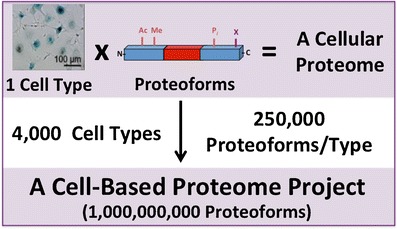
“…alternative and/or short open reading frames, which themselves also can form a plethora of proteoforms) [4], current estimates range from several million up to more than a billion possible different proteoforms [5, 6]; for single human cell lines, 250,000 unique proteoforms are estimated [7].”
Current Approaches in Supersecondary Structures Investigation
Rudnev, V. R., Kulikova, L. I., Nikolsky, K. S., Malsagova, K. A., Kopylov, A. T., & Kaysheva, A. L. (2021) · International Journal of Molecular Sciences · doi:10.3390/ijms222111879 · Cited by 22
The Human Proteoform Project: A Plan to Define the Human ProteomePreprint
Smith, L. M., Agar, J. N., Chamot‐Rooke, J., Danis, P. O., Ge, Y., Loo, J. A., Paša‐Tolić, L., Tsybin, Y. O., & Kelleher, N. L. (2020) · Preprints.org · doi:10.20944/preprints202010.0368.v1 · Cited by 16
Self-citationSingh, S. A., Aïkawa, E., & Aikawa, M. (2016) · Circulation Journal · doi:10.1253/circj.cj-16-0499 · Cited by 14
Protein Cysteinyl-S-Nitrosylation
Wiktorowicz, J. E., Stafford, S. J., & Garg, N. J. (2017) · Methods in enzymology on CD-ROM/Methods in enzymology · doi:10.1016/bs.mie.2016.10.016 · Cited by 12
Chorev, D. S., Ben‐Nissan, G., & Sharon, M. (2015) · PROTEOMICS · doi:10.1002/pmic.201400517 · Cited by 12
“In fact, recent estimates suggest that the total number of protein variants, termed “proteoforms,” is somewhere between ten million [18] and one billion [19, 20].”
BackgroundNery, T. G. M., Silva, E., Tavares, R., & Passetti, F. (2018) · Journal of Molecular Neuroscience · doi:10.1007/s12031-018-1220-1 · Cited by 7
Mapping the Multiscale Proteomic Organization of Cellular and Disease Phenotypes
Cesnik, A. J., Schaffer, L. V., Gaur, I., Jain, M., Ideker, T., & Lundberg, E. K. (2024) · Annual Review of Biomedical Data Science · doi:10.1146/annurev-biodatasci-102423-113534 · Cited by 11
“…maps and parts lists have been refined,including the recently completed telomere-to-telomere genome (41), the creation of inventories of proteomes (42, 43) and transcriptomes (33, 44, 45) across diverse cell types, and ongoing efforts to identify all human proteoforms in many cell types (46, 47).”
BackgroundA database for inventory of proteoform profiles: “2DE‐pattern”
Naryzhny, S., Nv, K., Ronzhina, N. L., Zorina, E. S., Zgoda, V. G., Kleyst, O. A., Belyakova, N. V., & Legina, O. K. (2020) · Electrophoresis · doi:10.1002/elps.201900468 · Cited by 9
Nafian, S., Khani, F., Hassani, S., Baharvand, H., Soleimanpour‐Lichaei, H. R., & Salekdeh, G. H. (2021) · PubMed Central · doi:10.22074/cellj.2021.7145 · Cited by 10
The Russian part of the human proteome project:first results and prospects
Ponomarenko, E. A., Zgoda, V. G., Kopylov, A. T., Poverennaya, E. V., Ilgisonis, E. V., Лисица, А. В., & Archakov, A. I. (2015) · Biomeditsinskaya Khimiya · doi:10.18097/pbmc20156102169 · Cited by 8
Rudnev, V. R., Kulikova, L. I., Kaysheva, A. L., Efimov, A. V., & Tikhonov, D. A. (2021) · Symmetry · doi:10.3390/sym13071193 · Cited by 7
Proteoforms: Methods of Analysis and Clinical Prospects
Kiseleva, O. I., Лисица, А. В., & Poverennaya, E. V. (2018) · Molecular Biology · doi:10.1134/s0026893318030068 · Cited by 6
SPE-MALDI Profiling of Serum Peptides and Proteins by Ultrahigh Resolution FTICR-MS
Nicolardi, S., Bladergroen, M. R., Deelder, A. M., Tollenaar, R. A. �. �., Palmblad, M., Mesker, W. E., & van der Burgt, Y. E. M. (2014) · Chromatographia · doi:10.1007/s10337-014-2812-8 · Cited by 4
“In fact, knowledge on protein isoforms, or proteoforms, has become a crucial aspect in many studies that involve proteome analysis [15].”
BackgroundMethodPoncha, K. F., Paparella, A. T., & Young, N. L. (2025) · Mass Spectrometry Reviews · doi:10.1002/mas.21941 · Cited by 8
“Histone proteoforms also vary between cell lines and the media used to grow cells (Wang et al. 2018a; Drown et al. 2022; Taylor et al. 2024; Provez et al. 2022; Kelleher 2012; Taylor and Young 2023).”
Is it Time for Cognitive Bioinformatics?
Andrey, L., Elizabeth, S., & Kolker, E. (2015) · Journal of Data Mining in Genomics & Proteomics · doi:10.4172/2153-0602.1000173 · Cited by 2
“An in-depth study of the proteome can quantify up to 10,000 protein products of the genome [3] and elucidate structural modifications of at least one third of them [4].”
BackgroundFundamental Disruption in Big Data Science and Biological Discovery
Swan, M. (2013) · Cited by 1
Proteomics: recent advances in the analysis of diabetic kidney disease
He, S., Chen, L., Liang, Q. I. N., Dai, X., KaiDi, Q. I. U., DiFan, C. H. E. N., & Wang, X. (2020) · Scientia Sinica Vitae · doi:10.1360/ssv-2020-0151
Lottspeich, F., Jooß, K., Kelleher, N. L., Götze, M., Friedrich, B., & Aebersold, R. H. (2021) · Springer eBooks · doi:10.1007/978-3-662-61707-6_42 · Cited by 1
Self-citationEditorial overview: Omics techniques to map the chemistry of life
Schroeder, F. C., & Pohnert, G. (2017) · Current Opinion in Chemical Biology · doi:10.1016/j.cbpa.2017.02.014 · Cited by 1
2DE-pattern: A Database for Inventory of Human ProteoformsPreprint
Naryzhny, S., Nv, K., Ronzhina, N. L., Zorina, E. S., Zgoda, V. G., Kleyst, O. A., Belyakova, N. V., & Legina, O. K. (2019) · Preprints.org · doi:10.20944/preprints201907.0074.v1
Functional Analysis of Prostate Cancer-Associated Germline Variants in the Kallikrein-3 Gene
Srinivasan, S. (2017) · Queensland University of Technology · doi:10.5204/thesis.eprints.108027
Two-Dimensional Gel Electrophoresis as an Information Base for Human Proteome
Naryzhny, S. (2018) · InTech eBooks · doi:10.5772/intechopen.75125
Tran, T. T. (2018) · NVA (Nasjonalt vitenarkiv)
Preparing Proteoforms of Therapeutic Proteins for Top-Down Mass Spectrometry
Hidayah, S. N., Gaikwad, M., Heikaus, L., & Schlüter, H. (2019) · IntechOpen eBooks · doi:10.5772/intechopen.89644 · Cited by 1
Hahn, J., Moritz, M., Walter, A., Wieck, T., Moustafa, A., Mansour, W. Y., Harms, C., Stenzel, P., Heeren, J., Haider, M., et al. (2024) · Imaging, Manipulation, and Analysis of Biomolecules, Cells, and Tissues · doi:10.1117/12.3003707
Top-Down versus Bottom-Up Proteomics in Highly Sensitive LC-MS-Based Profiling of Limited Samples
Gao, Y., Greguš, M., Kostas, J. C., Marie, A., & Ivanov, A. R. (2026) · Analytical Chemistry · doi:10.1021/acs.analchem.6c01310
Metadata
- Authors
- Kelleher, N. L.
- Affiliations
- Northwestern University (US)
- Corresponding author
- Kelleher, Neil L.
- ORCID
- Kelleher, Neil L.
- Venue
- Journal of the American Society for Mass Spectrometry
- Publisher
- American Chemical Society (ACS)
- Published
- 2012-09-14
- Volume
- 23
- Issue
- 10
- Pages
- 1617-1624
- ISSN
- 1044-0305 (ISSN-L)
- PMC
- PMC3456959
- OpenAlex
- W2033159891
- Cited by
- 55
- References
- 21
- Citations by year
- 2026: 1 · 2025: 2 · 2024: 2 · 2022: 1 · 2021: 6 · 2020: 3 · 2019: 3 · 2018: 8 · 2017: 7 · 2016: 4 · 2015: 7 · 2014: 2 · 2013: 9
- FWCI
- 2.55
- Type
- journal article
- Language
- en
- Open access
- green
- www.ncbi.nlm.nih.gov
- Licence
- cc-by
- Locations
- Journal of the American Society for Mass Spectrometry (publishedVersion)
- PubMed Central (publishedVersion, cc-by)
- PubMed (publishedVersion)
- Funders
- David and Lucile Packard Foundation
- Burroughs Wellcome Fund
- Northwestern University
- Searle Scholars Program
- Chicago Biomedical Consortium
- National Institutes of Health
- National Institute of General Medical Sciences (R01GM067193)
- Topics
- Physical Sciences › Chemistry › Spectroscopy › Advanced Proteomics Techniques and Applications
- Physical Sciences › Chemistry › Spectroscopy › Mass Spectrometry Techniques and Applications
- Life Sciences › Biochemistry, Genetics and Molecular Biology › Molecular Biology › Bioinformatics and Genomic Networks
- Keywords
- Human Proteome Project, human cell types, cellular heterogeneity, protein isoforms, protein primary structure, proteome mapping
- MeSH terms
- Cells, Humans, Proteins, Mass Spectrometry, Protein Isoforms, Proteome, Proteomics
About these checks
Registry, retraction, Cites and statistics results are computed, not judged, with one exception: a printed reference that no index lists is read once by a model before it counts as a citation error. Claims are extracted by a model and kept only when their quote appears verbatim in the text; each cited source is then checked, with a model’s help, for whether it says what the claim relies on. Those verdicts can be wrong — read the claim’s quote and the cited source before relying on one.
Statistics and arithmetic are recomputed, not judged.
Confidence bands are shown only for fields calibrated on our annotated test set. None is calibrated yet, so no band is shown.
What counts as a claim ›How we measure confidence ›How we check this ›
Are you an author, or do you see a problem with this page? Request a review
Data sources
Bibliographic data: Semantic Scholar, OpenAlex, Crossref.
Contains information from the Semantic Scholar Academic Graph Datasets, made available under the ODC Attribution License (ODC-BY 1.0).
Semantic Scholar’s data is described in: Kinney, R., et al. (2023). The Semantic Scholar Open Data Platform. arXiv:2301.10140.
