

The Impact of Physical Activity on Food Reward: Review and Conceptual Synthesis of Evidence from Observational, Acute, and Chronic Exercise Training Studies
Open accessThe DOI matches its Crossref record; 72 of the 72 references it cites were found in a registry or an index.
Abstract
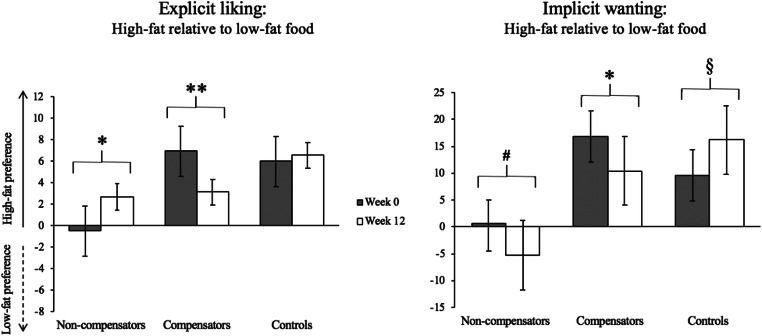
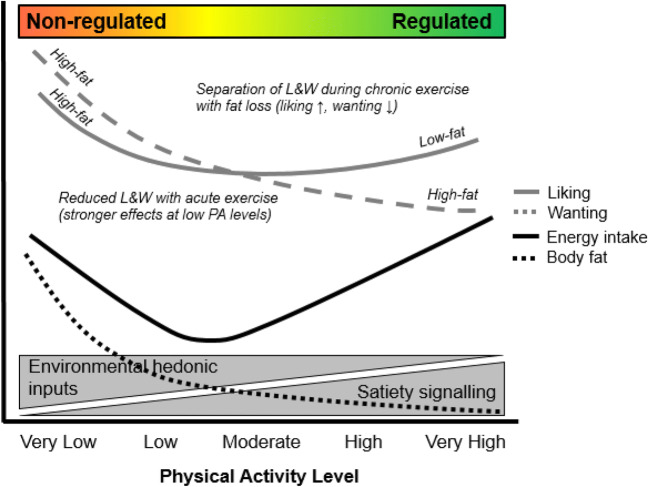
Purpose of Review: This review brings together current evidence from observational, acute, and chronic exercise training studies to inform public debate on the impact of physical activity and exercise on food reward. Recent Findings: Low levels of physical activity are associated with higher liking and wanting for high-energy food. Acute bouts of exercise tend to reduce behavioral indices of reward for high-energy food in inactive individuals. A dissociation in liking (increase) and wanting (decrease) may occur during chronic exercise training associated with loss of body fat. Habitual moderate-to-vigorous physical activity is associated with lower liking and wanting for high-fat food, and higher liking for low-fat food. Summary: Food reward does not counteract the benefit of increasing physical activity levels for obesity management. Exercise training appears to be accompanied by positive changes in food preferences in line with an overall improvement in appetite control.
Overview
The claims and statistics of this paper haven’t been checked yet.
Free: it reads the open-access text and checks the first 5 claims that cite a source we can check. Create a free account to check every claim.
Integrity signals
Registry
Cites
Statistics
Figures
Verification
Claims the paper makes
The claims and statistics of this paper haven’t been checked yet.
Free: it reads the open-access text and checks the first 5 claims that cite a source we can check. Create a free account to check every claim.
Claims other papers make about this one
Each is checked against this paper’s own text: does it say what the citing paper says it does?
In the citing paper
“Furthermore, exercise may reduce liking and wanting for high fat foods23.”
Self-check
Percentages, sums and reported differences re-computed from the paper’s own numbers.
The self-check needs the paper’s full text.
Citations
Cites
A short questionnaire for the measurement of habitual physical activity in epidemiological studies
Baecke, J., Burema, J., & Frijters, J. (1982) · The American Journal of Clinical Nutrition · doi:10.1093/ajcn/36.5.936 · Cited by 3,945
DONNELLY, J. E., BLAIR, S. N., JAKICIC, J. M., MANORE, M. M., RANKIN, J. W., & SMITH, B. K. (2009) · Medicine & Science in Sports & Exercise · doi:10.1249/mss.0b013e3181949333 · Cited by 2,658
Dissecting components of reward: ‘liking’, ‘wanting’, and learning
Berridge, K. C., Robinson, T. E., & Aldridge, J. W. (2009) · Current Opinion in Pharmacology · doi:10.1016/j.coph.2008.12.014 · Cited by 1,942
Exercise, Glucose Transport, and Insulin Sensitivity
Goodyear, L. J., & Kahn, B. B. (1998) · Annual Review of Medicine · doi:10.1146/annurev.med.49.1.235 · Cited by 1,056
Exercise for overweight or obesity
Shaw, K. A., Gennat, H. C., O'Rourke, P., & Del Mar, C. (2006) · Cochrane Database of Systematic Reviews · doi:10.1002/14651858.cd003817.pub3 · Cited by 950
Pate, R. R., Heath, G. W., Dowda, M., & Trost, S. G. (1996) · American Journal of Public Health · doi:10.2105/ajph.86.11.1577 · Cited by 528
Stiegler, P., & Cunliffe, A. (2006) · Sports Medicine · doi:10.2165/00007256-200636030-00005 · Cited by 474
Development and Validation of the Food‐Craving Inventory
White, M. A., Whisenhunt, B. L., Williamson, D. A., Greenway, F. L., & Netemeyer, R. G. (2002) · Obesity Research · doi:10.1038/oby.2002.17 · Cited by 471
Blaming the brain for obesity: integration of hedonic and homeostatic mechanisms
Berthoud, H.-R., Münzberg, H., & Morrison, C. D. (2017) · Gastroenterology · doi:10.1053/j.gastro.2016.12.050 · Cited by 445
Mela, D. J. (2006) · Appetite · doi:10.1016/j.appet.2006.02.006 · Cited by 384
Cited by
JAKICIC, J. M., APOVIAN, C. M., BARR-ANDERSON, D. J., COURCOULAS, A. P., DONNELLY, J. E., EKKEKAKIS, P., HOPKINS, M., LAMBERT, E. V., NAPOLITANO, M. A., & VOLPE, S. L. (2024) · Medicine & Science in Sports & Exercise · doi:10.1249/mss.0000000000003520 · Cited by 68
Beaulieu, K., Blundell, J. E., van Baak, M. A., Battista, F., Busetto, L., Carraça, E. V., Dicker, D., Encantado, J., Ermolao, A., Farpour‐Lambert, N., et al. (2021) · Obesity Reviews · doi:10.1111/obr.13251 · Cited by 59
“A small number of studies in the current review also suggest that exercise could also improve food reward/preferences 7,35,41,53,69 ; this has recently been reviewed extensively elsewhere by Beaulieu et al. 78 Therefore, exercise However, as stated above and in prior work, 19,79 it appears that regular exercise enhanc…”
Self-citationJensen, S. B. K., Janus, C., Lundgren, J. R., Juhl, C. R., Sandsdal, R. M., Olsen, L. M., Andresen, A., Borg, S. A., Jacobsen, I. C., Finlayson, G., et al. (2022) · Nature Communications · doi:10.1038/s41467-022-32307-y · Cited by 42
Self-citationMichels, N., Debra, G., Mattheeuws, L., & Hooyberg, A. (2022) · Environmental Research · doi:10.1016/j.envres.2022.113643 · Cited by 46
Hedonic hunger status and related factors in adults
Kahraman, C. Ş., & Ok, M. A. (2022) · Perspectives In Psychiatric Care · doi:10.1111/ppc.13036 · Cited by 46
Michels, N., & Hamers, P. (2023) · Environment and Behavior · doi:10.1177/00139165231174622 · Cited by 42
“Participants had to report how pleasant it would be to taste the presented 12 food items on a 0 to 10 scale before the actual craving scoring (Beaulieu et al., 2020).”
BackgroundMicrobiota–gut–brain axis: the mediator of exercise and brain health
Kang, P., & Wang, A. (2024) · Psychoradiology · doi:10.1093/psyrad/kkae007 · Cited by 34
“…ence and desir e for foods with high energy density, while conv ersel y, habitual moder ate-to-vigor ous physical activity inhibit such behaviours (Beaulieu et al. , 2020 ). fMRI studies have shown different hemodynamic responses to visual images representing high-and low-calorie diets at the…”
BackgroundInfluentialMetz, L., Isacco, L., & Redman, L. M. (2021) · Metabolism · doi:10.1016/j.metabol.2021.154919 · Cited by 27
Atlas of exercise-induced brain activation in mice
Skovbjerg, G., Fritzen, A. M., Svendsen, C., Perens, J., Skytte, J. L., Lund, C., Lund, J. T., Madsen, M. R., Roostalu, U., Hecksher‐Sørensen, J., et al. (2024) · Molecular Metabolism · doi:10.1016/j.molmet.2024.101907 · Cited by 29
Jakicic, J. M., Apovian, C. M., Barr‐Anderson, D. J., Courcoulas, A. P., Donnelly, J. E., Ekkekakis, P., Hopkins, M., Lambert, M., Napolitano, M. A., & Volpe, S. L. (2024) · Translational Journal of the American College of Sports Medicine · doi:10.1249/tjx.0000000000000266 · Cited by 34
Diet- but not exercise-induced iso-energetic deficit induces compensatory appetitive responses
Thivel, D., Metz, L., Julian, V., Isacco, L., Verney, J., Ennequin, G., Charlot, K., Beaulieu, K., Finlayson, G., & King, J. A. (2021) · European Journal of Clinical Nutrition · doi:10.1038/s41430-020-00853-7 · Cited by 25
Self-citationDoes exercising before or after a meal affect energy balance in adolescents with obesity?
Fillon, A., Beaulieu, K., Miguet, M., Bailly, M., Finlayson, G., Julian, V., Masurier, J., Mathieu, M.-E., Pereira, B., Duclos, M., et al. (2020) · Nutrition Metabolism and Cardiovascular Diseases · doi:10.1016/j.numecd.2020.04.015 · Cited by 26
Self-citationPhysical Activity, Obesity and Weight Loss Maintenance
Brandt, C., & Pedersen, B. K. (2022) · Handbook of experimental pharmacology · doi:10.1007/164_2021_575 · Cited by 23
LaVela, S. L., Wu, J. C., Nevedal, A., Frayne, S. M., Harris, A. H. S., Arnow, K. D., Davis‐Lopez, K. M., Farkas, G. J., Reyes, L., & Eisenberg, D. (2024) · Rehabilitation Psychology · doi:10.1037/rep0000544 · Cited by 21
Oustric, P., Beaulieu, K., Casanova, N., O’Connor, D., Gibbons, C., Hopkins, M., Blundell, J. E., & Finlayson, G. (2021) · Nutrients · doi:10.3390/nu13010182 · Cited by 20
“However, it has recently been suggested that chronic exercise could decrease wanting for high-energy food while increasing liking for low-energy food, raising the questions of the mechanisms of change in food reward: cognitive processes, modulation of brain reward systems or other mechanisms [11].”
BackgroundSelf-citationSkinfold Thickness as a Cardiometabolic Risk Predictor in Sedentary and Active Adult Populations
González-Torres, S., Esparza, L. M. A., Valle, G., Rivera-León, E. A., Villagrán, Z., & Sánchez‐Enríquez, S. (2023) · Journal of Personalized Medicine · doi:10.3390/jpm13091326 · Cited by 22
“Although the benefit of physical activity and regular exercise in regulating appetite and satiety has been documented, there are also reported actions showing compensatory mechanisms; these include a preference for the intake of sweet and high-fat foods in exercisers compared to non-exercisers [42].”
BackgroundChronotypical influence on eating behaviour and appetite control
Beaulieu, K., Finlayson, G., & Quist, J. S. (2024) · Proceedings of The Nutrition Society · doi:10.1017/s0029665124007511 · Cited by 20
Self-citationFood addiction and the physical and mental health status of adults with overweight and obesity
Zielińska, M., Łuszczki, E., Szymańska, A., & Dereń, K. (2024) · PeerJ · doi:10.7717/peerj.17639 · Cited by 17
“It is clear that low levels of PA and SB are associated with appetite regulation, snacking, and a greater preference and desire for energy-dense foods ( Beaulieu, Oustric & Finlayson, 2020 ; Beltrán-Carrillo et al., 2022 ).”
BackgroundHolliday, A., Warner, J., Hulston, C. J., Corfe, B. M., & Crabtree, D. R. (2024) · Appetite · doi:10.1016/j.appet.2024.107259 · Cited by 15
“Physical activity exhibits a J-shaped relationship with appetite and energy intake (Beaulieu et al., 2020; Mayer et al., 1956), so it cannot be ruled out that differences in physical activity may have influenced appetite.”
Dera, A. M., Shen, T., Thackray, A. E., Hinton, E. C., King, J. A., James, L. J., Morgan, P. S., Rush, N., Miyashita, M., Batterham, R. L., et al. (2023) · Neuroscience & Biobehavioral Reviews · doi:10.1016/j.neubiorev.2023.105247 · Cited by 16
Sweat it for sustainability: Impact of physical activity/exercise on sustainable consumption
Sarkar, J. G., Sarkar, A., Dwivedi, Y. K., & Balaji, M. S. (2022) · Psychology and Marketing · doi:10.1002/mar.21722 · Cited by 14
Narrative Review on the Factors Affecting Fast Food Consumption among Adults
Bhatoolaul, Y., Alrefaei, A. F., & Jeewon, R. (2024) · Current Research in Nutrition and Food Science Journal · doi:10.12944/crnfsj.12.2.4 · Cited by 13
Bougault, V., Schiano-Lomoriello, S., Castanier, C., Buisson, C., Ericsson, M., Teulier, C., & Collomp, K. (2023) · Frontiers in Physiology · doi:10.3389/fphys.2023.1185343 · Cited by 13
“Exercise training appears to be accompanied by positive changes in food preferences in line with an overall improvement in appetite control (Beaulieu et al., 2020), and we think it may reduce sugar/fat cravings during PM, although currently controversial (Maged et al.”
BackgroundEnergy Balance Dynamics: Exercise, Appetite, Diet, and Weight Control
Esquivel, M. K. (2021) · American Journal of Lifestyle Medicine · doi:10.1177/1559827621989285 · Cited by 12
“activity showed preference for low-fat foods.(7) Another systematic review found”
BackgroundZhou, Y., Stubbs, R. J., & Finlayson, G. (2022) · Appetite · doi:10.1016/j.appet.2022.106446 · Cited by 11
Self-citationHedonic hunger: eating for desire and not calories
Mankad, M., & Gokhale, D. (2021) · Cardiometry · doi:10.18137/cardiometry.2021.20.160166 · Cited by 10
Dericioglu, D., Methven, L., & Clegg, M. (2025) · European Journal of Nutrition · doi:10.1007/s00394-024-03571-z · Cited by 10
“…hold true for older adults; they have proposed a distorted relationship where energy intake is very low at very low physical activity (presenting as a severely impaired drive to eat), and subsequently energy intake increases with increasing physical activity, but not at a proportional rate [31–33].”
Beaulieu, K., Hudayb, A. B., Alhussain, M. H., Finlayson, G., & Alkahtani, S. A. (2022) · Appetite · doi:10.1016/j.appet.2022.106364 · Cited by 10
Self-citationLifestyle-Related Factors for Improving Diet Quality
Fischer, D., & Ouyang, P. (2025) · Nutrients · doi:10.3390/nu17030448 · Cited by 10
Panissa, V. L. G., Cardoso, L. K. D. A., Rossi, P. A. Q., Fukuda, D. H., & Rossi, F. E. (2023) · Appetite · doi:10.1016/j.appet.2023.107155 · Cited by 10
Hsieh, S., Bala, A., Layzell, K., Fatima, Q., Pushparajah, C., Maguire, R. K., Chen, Y., Finlayson, G., & Allgrove, J. E. (2025) · European Journal of Clinical Nutrition · doi:10.1038/s41430-025-01574-5 · Cited by 8
“Notably, research has shown that individuals with lower physical activity or fi tness levels tend to have increased disordered eating traits [28 – 30], as well as weaker satiety signalling and greater responsiveness to hedonic inputs [1].”
Self-citationThackray, A. E., Willis, S. A., Clayton, D. J., Broom, D. R., Finlayson, G., Goltz, F. R., Sargeant, J. A., Woods, R. M., Stensel, D. J., & King, J. A. (2020) · Nutrients · doi:10.3390/nu12092635 · Cited by 9
Self-citationMitchell, J. J., Bu, F., Fancourt, D. E., Steptoe, A., & Bone, J. K. (2022) · Scientific Reports · doi:10.1038/s41598-022-20196-6 · Cited by 11
Domaradzki, J. (2023) · Nutrients · doi:10.3390/nu15051230 · Cited by 9
“Furthermore, these results are in line with pre-pandemic studies showing that physically active persons preferred the consumption of healthier food (fruits, vegetables, lower fat savory foods, and water), while less active or non-active people preferred non-healthy foods (meat, fast food, sweetened beverages, or energ…”
ResultHopkins, M., Beaulieu, K., & Finlayson, G. (2020) · Canadian Journal of Diabetes · doi:10.1016/j.jcjd.2020.10.018 · Cited by 11
Self-citationLu, Y., Jiang, Y., Tian, L., & Ke, X. (2025) · Scientific Reports · doi:10.1038/s41598-025-31103-0 · Cited by 7
Crabtree, D. R., Cox, N. J., Lim, S. E. R., & Holliday, A. (2023) · Aging Clinical and Experimental Research · doi:10.1007/s40520-022-02317-3 · Cited by 7
“[15] to include the relationship between habitual PA and food reward.”
BackgroundThe German Leeds food preference Questionnaire (LFPQ-G): A validation study
Schamarek, I., Richter, F. C., Tönjes, A., Stümvoll, M., Blüher, M., Rohde‐Zimmermann, K., & Finlayson, G. (2023) · Food Quality and Preference · doi:10.1016/j.foodqual.2023.105035 · Cited by 8
Self-citationYamada, Y., Hiratsu, A., Thivel, D., Beaulieu, K., Finlayson, G., Nagayama, C., Kamemoto, K., Siripiyavatana, S., Tataka, Y., Sakazaki, M., et al. (2024) · Appetite · doi:10.1016/j.appet.2024.107562 · Cited by 7
“Furthermore, the present study was conducted with young healthy men and this limits the generalisability of our findings to other different age groups and sexes, and health conditions (Beaulieu et al., 2020).”
Self-citationAcute high‐intensity interval exercise attenuates incubation of craving for foods high in fat
Kirkpatrick, G. E., Dingess, P. M., Aadland, J. A., & Brown, T. E. (2022) · Obesity · doi:10.1002/oby.23418 · Cited by 8
“Exercise is correlated with a reduction in preference for highfat food and it may reduce food reward (both liking and wanting) to curb hedonic eating (9).”
BackgroundMoore, H., Siroux, J., Sevilla-Lorente, R., do Prado, W. L., Dâmaso, A. R., Pereira, B., & Thivel, D. (2024) · Obesity Reviews · doi:10.1111/obr.13832 · Cited by 7
“…peptide YY [PYY], glucagon-like peptide 1 [GLP-1]) are suppressed and increased, respectively, after acute bouts of exercise in addition to reduced self-reported hunger, 17,22,23 and such effects may be modulated by exercise intensity exceeding 60 to 70% of peak aerobic capacity [e.g., 24,25].”
Vidanage, D., Wasalathanthri, S., & Hettiarachchi, P. (2023) · BMC Sports Science Medicine and Rehabilitation · doi:10.1186/s13102-023-00655-x · Cited by 7
“In addition to the changes in appetite markers, as suggested by our findings, alteration in the liking for specific food types induced by regular physical activity [10] is another likely factor that contributes to the changes in energy intake.”
BackgroundPélissier, L., Lambert, C., Stensel, D. J., Beraud, D., Finlayson, G., Pereira, B., Boirie, Y., Duclos, M., Isacco, L., & Thivel, D. (2024) · Appetite · doi:10.1016/j.appet.2024.107568 · Cited by 6
Self-citationBeyond Sex Differences: Body Composition and Dietary Behaviors
Evans, C., Tartar, J. L., Banks, J., Austin, J., & António, J. (2025) · Muscles · doi:10.3390/muscles4030038 · Cited by 6
“Other factors besides sex such as physical activity or dietary intake influence food cravings [44,47,48].”
Evaluation of a child food reward task and its association with maternal feeding practices
Toh, J. Y., Quah, P. L., Wong, C. H., Yuan, W. L., Aris, I. M., McCrickerd, K., Godfrey, K. M., Chong, Y. S., Shek, L. P., Tan, K. H., et al. (2021) · PLoS ONE · doi:10.1371/journal.pone.0254773 · Cited by 5
“Defined as “the momentary value of a food to the individual at the time of ingestion”, food reward can be further characterised by two psychological processes–“liking” and “wanting” [3, 4].”
BackgroundKhataei, S. M., Amiri, E., & Machado, D. G. D. S. (2025) · International Journal of Behavioral Nutrition and Physical Activity · doi:10.1186/s12966-025-01773-0 · Cited by 5
“Research indicates that exercise improves physiological and hormonal factors associated with obesity and also induces beneficial psycho-cognitive changes, reducing food craving and enhancing cognitive control over appetite [20, 21].”
Changes in Dietary Behavior of Shift Work Nurses: A Longitudinal Study
Kim, S., Choi‐Kwon, S., Ki, J., Ryu, J. G., Baek, J., & Kim, K. (2022) · Journal of Korean Academy of Nursing Administration · doi:10.11111/jkana.2022.28.5.596 · Cited by 5
Kim, S., Ki, J., Choi, J. Y., Choi, W. H., & Choi‐Kwon, S. (2023) · Korean journal of women health nursing/Yeoseong geon'gang ganho hag'hoeji/Yeoseong geon-gang ganho hakoeji · doi:10.4069/kjwhn.2023.02.21.1 · Cited by 4
“신체활동으로 분석함에 따라[21], 본 연구 또한 여가시간 신체활동 량을 신체활동으로 분석하였다.”
Kołota, A., & Głąbska, D. (2023) · Nutrients · doi:10.3390/nu15112504 · Cited by 4
“…it was observed that a higher physical activity level was accompanied by more beneficial food preferences, which is in agreement with the results of other studies indicating that a low physical activity level is associated with a higher preference for food products of a high energy value [60].”
ResultNasser, J. A., Albajri, E. A., Lanza, L., Gilman, A. D., Altayyar, M., Thomopoulos, D., & Bruneau, M. L. (2022) · Nutrients · doi:10.3390/nu14040884 · Cited by 4
“Habitual physical activity also tends to dampen food reward signaling [16,17], but the ability of habitual physical activity to modulate the effect of protein intake in close proximity to reduce the intake of energy-dense ultra-processed foods is still in question.”
BackgroundThe effect of different intensities of treadmill exercise on food reward in young men
Li, Y., Sakazaki, M., Kamemoto, K., Nagayama, C., & Miyashita, M. (2025) · Physiology & Behavior · doi:10.1016/j.physbeh.2025.114844 · Cited by 3
“This discrepancy may be attributed to differences in inter-individual variability [22] or habitual physical activity status [10].”
Sarlo, M., Cristaldi, F. D. P., Buodo, G., & Belacchi, C. (2025) · Frontiers in Nutrition · doi:10.3389/fnut.2025.1622087 · Cited by 3
Mazumdar, S., Adnan, M. M., Shuvo, S. D., Kamal, M. M., Tarannum, R., Siddika, S., Khuku, T. K., Hossain, M. S., & Shanto, M. R. H. (2026) · Health Science Reports · doi:10.1002/hsr2.71760 · Cited by 3
Covariate Selection in Physical Activity Epidemiology: Too Little, Too Much, or Just Right?
Blodgett, J. M., Mitchell, J. J., Steele, E. M., Milton, K. E., Hamer, M., Lee, I.-M. M., & Hallal, P. C. (2026) · Journal of Physical Activity and Health · doi:10.1123/jpah.2026-0426 · Cited by 3
Ramírez-Díaz, M. D. P., Luna-Hernández, J. F., Cruz, E. L., & González-Jiménez, A. (2023) · Revista chilena de nutrición · doi:10.4067/s0717-75182023000400392 · Cited by 3
Assessing the association between diet quality and sociodemographic factors in young Saudi adults
Alzaben, A. S., Alresheedi, K. R., Bakry, H., Ozayb, R. A., Aldawsari, H. A., Alnamshan, A. O., & Bawazeer, N. M. (2025) · Frontiers in Nutrition · doi:10.3389/fnut.2025.1641284 · Cited by 3
Maternal health during pregnancy and oral health of 4-year-olds: a birth cohort study from Brazil
Fôlha, C. N., Schuch, H. S., Karam, S. A., Domingues, M. R., Hallal, P. C., & Demarco, F. F. (2025) · Brazilian Oral Research · doi:10.1590/1807-3107bor-2025.vol39.038 · Cited by 5
“32 Medapati & Pachava 33 carried out a systematic review and studied the effect of physical activity on oral health and concluded that individuals who practice physical activity regularly have a decrease in inflammatory biomarkers, which results in an improvement in periodontal disease.”
Wang, Q., Xiao, W. H., Danaee, M., Soh, K. G., Gan, W. Y., Zhu, W. L., & Mai, Y. Q. (2025) · Frontiers in Public Health · doi:10.3389/fpubh.2025.1589036 · Cited by 5
Alshahrani, N. Z. (2025) · Frontiers in Public Health · doi:10.3389/fpubh.2025.1571899 · Cited by 4
Bravo, P. R., Ureña, G. D., Rodríguez-Rodríguez, B., Láiz, N. M., & García-Merino, S. (2025) · Healthcare · doi:10.3390/healthcare13141679 · Cited by 2
“Regular participation in moderate-to-vigorous physical activity is correlated with healthier eating attitudes, a reduced preference for ultra-processed foods, and a stronger adherence to balanced dietary patterns [3,4,7].”
Evans, C., Tartar, J. L., Banks, J., Austin, J., & António, J. (2026) · Nutrients · doi:10.3390/nu18101561 · Cited by 2
Shi, S., Huang, S., Yin, Z., Guo, Q., Liu, T., & Dai, F. (2026) · Frontiers in Psychology · doi:10.3389/fpsyg.2026.1840333 · Cited by 2
“Physiologically, excessive exercise disrupts energy balance, increasing cravings for high-calorie foods (Beaulieu et al., 2020).”
Dera, A. M., Hinton, E. C., Batterham, R. L., Davies, M. J., King, J. A., Miyashita, M., Morgan, P. S., Papamargaritis, D., Thompson, J., Stensel, D. J., et al. (2025) · Human Brain Mapping · doi:10.1002/hbm.70192 · Cited by 2
“…findings to emerge from this work are that individuals with higher levels of physical activity exhibit lower liking and wanting of high-fat foods (Beaulieu et al. 2020), faster gastric emptying (Horner et al. 2015), and are better able to adjust energy intake after high-energy preloads…”
Wang, J., Ding, F., Lian, S.-L., & Yu, L. (2025) · International Journal of Clinical and Health Psychology · doi:10.1016/j.ijchp.2025.100632 · Cited by 2
“Previous studies showed that exercise may consistently reduce the liking and wanting for high-energy food (Beaulieu et al., 2020 for review), as well as the attentional bias toward high-energy, palatable food cues (Cui, 2020; Liu, 2021; Oh & Taylor, 2013).”
Why exercise by itself is often ineffective for weight loss but crucial for weight management
Höchsmann, C., & Koehler, K. (2022) · Swiss Sports & Exercise Medicine · doi:10.34045/sems/2022/21 · Cited by 3
Moore, H., Fillon, A., Beaulieu, K., Pereira, B., Drapeau, V., Mathieu, M.-E., & Thivel, D. (2025) · Journal of Nutrition · doi:10.1016/j.tjnut.2025.01.007 · Cited by 2
Self-citationLes effets des comportements sédentaires (temps assis) sur la santé. Quelle prévention ?
Duclos, M. (2025) · Bulletin de l Académie Nationale de Médecine · doi:10.1016/j.banm.2024.12.017 · Cited by 5
The Impact of Exercise on Dietary Fat Taste Perception: A Report on Its Role in Obesity Prevention
Shanmugamprema, D., Ganapathy, D., Muthuswamy, K., & Selvakumar, S. (2025) · Obesity Reviews · doi:10.1111/obr.70010 · Cited by 1
“There is increasing evidence that both acute and chronic physical activity can modulate the perception of fat taste by altering receptor activation, taste bud morphology, metabolic hormone levels, and central reward processing [9, 50, 53].”
Malaikah, S., Alruwaili, A., Sanders, J. P., Thackray, A. E., Stensel, D. J., Thivel, D., Henson, J. J., Rowlands, A. V., Willis, S. A., & King, J. A. (2025) · Nutrients · doi:10.3390/nu17193163 · Cited by 1
de França, E., dos Santos, R. V. T., Aquino, R. D. C., Cavalcante, M. M., Salvalágio, B. R., Hofmann, P., Martins, R. A., Baptista, L. C. P., Lira, F. S., & Caperuto, É. C. (2026) · Nutrients · doi:10.3390/nu18040614 · Cited by 1
Adıgüzel, K. T., Özişler, Z., Ilter, N. B., & Adıgüzel, E. (2026) · Journal of Spinal Cord Medicine · doi:10.1080/10790268.2026.2697605 · Cited by 1
Luo, S., Chen, B., Li, X., & Gary, J. M. (2026) · Healthcare · doi:10.3390/healthcare14172747 · Cited by 2
“Exercise research has documented changes in appetite control, satiety sensitivity, and some eating behavior traits across different populations and activity conditions [36,62,63].”
Johnstone, A. M., & Brown, A. C. (2021) · Nutrition Bulletin · doi:10.1111/nbu.12493 · Cited by 1
“These experienced researchers presented a valuable update on food choice and reward in food reward (Beaulieu et al. 2020) and bariatric surgery (Makaronidis et al.”
BackgroundBiological and behavioral predictors of relative energy intake after acute exercise
Höchsmann, C., Beckford, S. E., French, J. A., Boron, J. B., Stevens, J. R., & Koehler, K. (2023) · Appetite · doi:10.1016/j.appet.2023.106520 · Cited by 1
Bewegungsempfehlungen in der Prävention und Therapie der Adipositas
Joisten, C. (2023) · Adipositas - Ursachen Folgeerkrankungen Therapie · doi:10.1055/a-1973-8793 · Cited by 1
Gauthier, A.-C., & Mathieu, M.-E. (2021) · medRxiv · doi:10.1101/2021.09.30.21264372 · Cited by 1
Mitchell, J. J., Bu, F., Fancourt, D. E., Steptoe, A., & Bone, J. K. (2022) · medRxiv · doi:10.1101/2022.04.07.22273555 · Cited by 1
Mitchell, J. J., Bu, F., Fancourt, D. E., Steptoe, A., & Bone, J. K. (2022) · Research Square · doi:10.21203/rs.3.rs-1807928/v1 · Cited by 1
Biopsychological examination of changes in food reward during weight loss in women
Oustric, P. (2021) · White Rose eTheses Online (University of Leeds, The University of Sheffield, University of York) · Cited by 1
Self-citationAYDEMİR, E., & Yetgin, M. K. (2022) · Turkish Journal of Diabetes and Obesity · doi:10.25048/tudod.995691
Dupont, F., Gauthier, A.-C., Drapeau, V., Guimarães, R. D. F., & Mathieu, M.-E. (2024) · doi:10.51224/srxiv.373
Viliod, M. C. D. L. (2024) · Digital Library of Theses and Dissertations (Universidade de São Paulo) · doi:10.11606/d.109.2024.tde-08032024-080317
Zhou, W., Cao, W., Wang, W., Zeng, G., Liang, R., Liu, C., Chen, X., Lin, W.-C., Shi, X., Zhou, H., et al. (2024) · Frontiers in Psychiatry · doi:10.3389/fpsyt.2024.1477953
Nematolahi, F., Sharifi, N., Rahimi, H., Finlayson, G., & Mohtashamian, A. (2025) · Nutrition Clinique et Métabolisme · doi:10.1016/j.nupar.2025.11.002
Self-citationSevilla-Lorente, R., Mármol-Pérez, A., González‐García, P., Gallego, B. R., Aragón‐Vela, J., Galvez, J. M. M., Salmerón, L. M., Huertas, J. R., López, L. C., Amaro‐Gahete, F. J., et al. (2025) · SSRN Electronic Journal · doi:10.2139/ssrn.5823331
Sá, P. F. S. S. D. (2024) · Portuguese National Funding Agency for Science, Research and Technology (RCAAP Project by FCT) · doi:10.34626/29cj-ks49
Relation bidirectionnelle entre l’activité physique et l’odorat
Cournoyer, M. (2023) · Papyrus : Institutional Repository (Université de Montréal) · doi:10.71781/27986
Meng, Y. S., Liu, P., Chen, J., Wang, J., & Gao, M. (2026) · Research Square · doi:10.21203/rs.3.rs-8485476/v1
Liu, Y., Zou, J., Sun, Z., Zhang, Y., Li, X., & Chen, P. (2026) · Nutrients · doi:10.3390/nu18030486
“Existing evidence further suggested PA has been linked to altered food reward processing and food preferences [14,15].”
Dupont, F., Gauthier, A.-C., Drapeau, V., Guimarães, R. D. F., & Mathieu, M.-E. (2026) · American Journal of Health Education · doi:10.1080/19325037.2026.2626698
“Changes in these hormones can thus lead to decreased food intake and a preference for low-fat food following physical activity (Beaulieu et al., 2020).”
Fillon, A. (2020) · theses.fr (ABES) · doi:10.70675/50aad462za2a1z400dz9d4fzf774bdf19915
Adaptations énergétiques aux variations de poids et au statut hormonal ovarien chez les athlètes
Bagot, S. (2024) · theses.fr (ABES) · doi:10.70675/13a08bf4ze417z4cb4z80cfz47892200b6c8
Feng, Q.-Y., Guo, Z.-M., & Quan, H.-Y. (2026) · Behavioral Sciences · doi:10.3390/bs16050727
“From the physiological pathway, physical exercise promotes the spontaneous formation of healthy dietary behavior by regulating appetite-related hormones and food reward mechanisms (Stensel, 2011; Beaulieu et al., 2020; Bilski et al., 2009).”
Rachma, J. M., & Rakhma, L. R. (2026) · PREPOTIF Jurnal Kesehatan Masyarakat · doi:10.31004/prepotif.v10i1.55207
St‐Martin, P., Dougkas, A., Roux, E. L., Ritsch, N., Bourdier, P., Breit, M. J., Chery, I., Zahariev, A., Oustric, P., Berghe, L. V. D., et al. (2026) · Research Square · doi:10.21203/rs.3.rs-10461935/v1
Self-citationExercise intervention modulates food reward in obesity: efficacy, mechanisms, and prospects
Dongfei, L. I. U., Jiang, Y., Wang, Z., & Mo, X. (2026) · Frontiers in Nutrition · doi:10.3389/fnut.2026.1895299
Greier, C., Drenowatz, C. J., Dudás, J., Ruedl, G., Posch, M., & Greier, K. (2026) · Translational Pediatrics · doi:10.21037/tp-2026-0432
“The potential displacement of physical activity due to high screen time may further disrupt appetite regulation and elevate food reward signals that stimulate the desire for energy dense foods (67,68).”
Metadata
- Authors
- Beaulieu, K., Oustric, P., & Finlayson, G.
- Affiliations
- University of Leeds (GB)
- Corresponding author
- Finlayson, Graham
- Venue
- Current Obesity Reports
- Published
- 2020-04-15
- Volume
- 9
- Issue
- 2
- Pages
- 63-80
- ISSN
- 2162-4968 (ISSN-L)
- PMC
- PMC7261263
- OpenAlex
- W3017015422
- Cited by
- 93
- References
- 72
- Citations by year
- 2026: 13 · 2025: 21 · 2024: 14 · 2023: 14 · 2022: 18 · 2021: 9 · 2020: 4
- FWCI
- 1.52
- Type
- journal article
- Language
- en
- Open access
- hybrid
- doi.org
- Licence
- cc-by
- creativecommons.org/licenses/by/4.0 (tdm)
- creativecommons.org/licenses/by/4.0 (vor)
- Locations
- Current Obesity Reports (publishedVersion, cc-by)
- PubMed Central (publishedVersion, cc-by)
- PubMed (publishedVersion)
- White Rose Research Online (University of Leeds, The University of Sheffield, University of York) (acceptedVersion)
- Funders
- University of Leeds
- Topics
- Life Sciences › Neuroscience › Endocrine and Autonomic Systems › Regulation of Appetite and Obesity
- Health Sciences › Nursing › Nutrition and Dietetics › Nutrition, Health and Food Behavior
- Social Sciences › Psychology › Clinical Psychology › Eating Disorders and Behaviors
- Keywords
- physical activity, exercise training, food reward, food liking, desire to eat, energy-dense foods, high-fat foods, obesity treatment, appetite regulation, food preferences, fat loss, moderate-to-vigorous physical activity
- MeSH terms
- Adipose Tissue, Appetite Regulation, Choice Behavior, Eating, Food Preferences, Humans, Motivation, Obesity, Reward, Health Behavior, Exercise, Observational Studies as Topic
About these checks
Registry, retraction, Cites and statistics results are computed, not judged, with one exception: a printed reference that no index lists is read once by a model before it counts as a citation error. Claims are extracted by a model and kept only when their quote appears verbatim in the text; each cited source is then checked, with a model’s help, for whether it says what the claim relies on. Those verdicts can be wrong — read the claim’s quote and the cited source before relying on one.
Statistics and arithmetic are recomputed, not judged.
Confidence bands are shown only for fields calibrated on our annotated test set. None is calibrated yet, so no band is shown.
What counts as a claim ›How we measure confidence ›How we check this ›
Are you an author, or do you see a problem with this page? Request a review
Data sources
Bibliographic data: Semantic Scholar, OpenAlex, Crossref.
Contains information from the Semantic Scholar Academic Graph Datasets, made available under the ODC Attribution License (ODC-BY 1.0).
Semantic Scholar’s data is described in: Kinney, R., et al. (2023). The Semantic Scholar Open Data Platform. arXiv:2301.10140.
