

Oral Spironolactone for Acne Vulgaris in Adult Females: A Hybrid Systematic Review
Open accessThe DOI matches its Crossref record; 115 of the 116 references it cites were found in a registry or an index.
Abstract
BACKGROUND: The management of acne in adult females is problematic, with many having a history of treatment failure and some having a predisposition to androgen excess. Alternatives to oral antibiotics and combined oral contraceptives (COCs) are required. OBJECTIVE: Our aim was to conduct a hybrid systematic review of the evidence for benefits and potential harms of oral spironolactone in the management of acne in adult females. METHODS: The review was conducted according to a previously published protocol. Three reviewers independently selected relevant studies from the search results, extracted data, assessed the risk of bias, and rated the quality of the evidence using the Grading of Recommendations Assessment, Development and Evaluation (GRADE) approach. RESULTS: Ten randomized controlled trials (RCTs) and 21 case series were retrieved. All trials were assessed as being at a 'high risk' of bias, and the quality of evidence was rated as low or very low for all outcomes. Apart from one crossover trial that demonstrated statistical superiority of a 200 mg daily dose versus inflamed lesions compared with placebo, data from the remaining trials were unhelpful in establishing the degree of efficacy of lower doses versus active comparators or placebo. Menstrual side effects were significantly more common with the 200 mg dose; frequency could be significantly reduced by concomitant use of a COC. Pooling of results for serum potassium supported the recent recommendation that routine monitoring is not required in this patient population. CONCLUSION: This systematic review of RCTs and case series identified evidence of limited quality to underpin the expert endorsement of spironolactone at the doses typically used (≤100 mg/day) in everyday clinical practice.
Overview
The claims and statistics of this paper haven’t been checked yet.
Free: it reads the open-access text and checks the first 5 claims that cite a source we can check. Create a free account to check every claim.
Integrity signals
Registry
Cites
Statistics
Figures
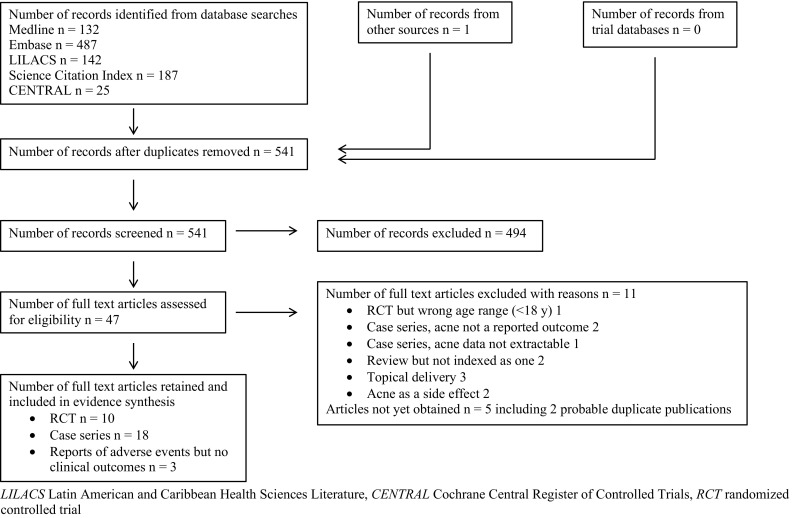
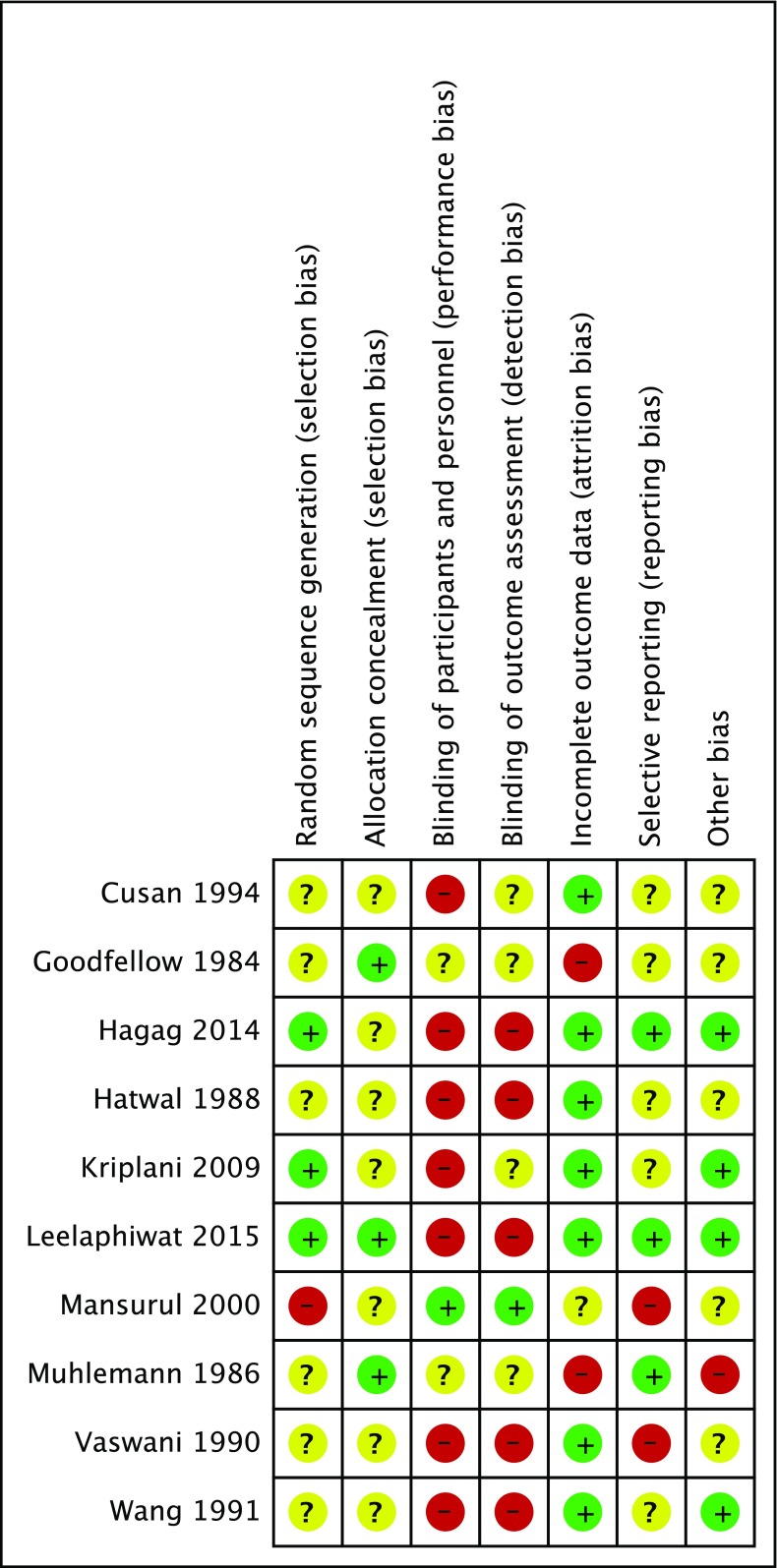
Verification
Claims the paper makes
The claims and statistics of this paper haven’t been checked yet.
Free: it reads the open-access text and checks the first 5 claims that cite a source we can check. Create a free account to check every claim.
Claims other papers make about this one
Each is checked against this paper’s own text: does it say what the citing paper says it does?
The cited source says what the claim attributes to it.
In the citing paper
“Menstrual irregularities were commonly reported (40.6% vs 0%; RR, 10.89 [1.54, 77.08]), 140,141 may be dose-dependent, 232 and are less common among those using COC.233”
From Guidelines of care for the management of acne vulgaris (2024) · cites this paper as [232]
Self-check
Percentages, sums and reported differences re-computed from the paper’s own numbers.
The self-check needs the paper’s full text.
Citations
Cites
Hay, R. J., Johns, N. E., Williams, H. C., Bolliger, I. W., Dellavalle, R. P., Margolis, D. J., Marks, R., Naldi, L., Weinstock, M. A., Wulf, S. K., et al. (2014) · Journal of Investigative Dermatology · doi:10.1038/jid.2013.446 · Cited by 1,706 · cited 1×
“1 Introduction Acne is the eighth most prevalent disease globally [1].”
BackgroundGuidelines of care for the management of acne vulgaris
Zaenglein, A. L., Pathy, A. L., Schlosser, B. J., Alikhan, A., Baldwin, H. E., Berson, D. S., Bowe, W. P., Graber, E. M., Harper, J. C., Kang, S., et al. (2016) · Journal of the American Academy of Dermatology · doi:10.1016/j.jaad.2015.12.037 · Cited by 1,597 · cited 2×
“It is interesting to note that several current acne guidelines and treatment recommendations include spironolactone on the basis of consensus and/or expert opinion [112, 116, 117].”
BackgroundAndrogen Excess in Women: Experience with Over 1000 Consecutive Patients
Azziz, R., Sanchez, L. A., Knochenhauer, E. S., Moran, C., Lazenby, J., Stephens, K. C., Taylor, K., & Boots, L. R. (2004) · The Journal of Clinical Endocrinology & Metabolism · doi:10.1210/jc.2003-031122 · Cited by 1,132
Classification and pharmacology of progestins
Schindler, A. E., Campagnoli, C., Druckmann, R., Huber, J., Pasqualini, J. R., Schweppe, K. W., & Thijssen, J. H. H. (2003) · Maturitas · doi:10.1016/j.maturitas.2003.09.014 · Cited by 745
A comparison of current acne grading systems and proposal of a novel system
Doshi, A., Zaheer, A., & Stiller, M. J. (1997) · International Journal of Dermatology · doi:10.1046/j.1365-4362.1997.00099.x · Cited by 638 · cited 1×
“Assessed using the global acne grading system [80], both treatments were similarly effective in reducing the acne severity score from baseline, with an MD of -2.”
MethodEuropean evidence-based (S3) guideline for the treatment of acne - update 2016 - short version
Nast, A., Dréno, B., Bettoli, V., Bukvic Mokos, Z., Degitz, K., Dressler, C., Finlay, A. Y., Haedersdal, M., Lambert, J., Layton, A., et al. (2016) · Journal of the European Academy of Dermatology and Venereology · doi:10.1111/jdv.13776 · Cited by 393
Self-citationHow to formulate research recommendations
Brown, P., Brunnhuber, K., Chalkidou, K., Chalmers, I., Clarke, M., Fenton, M., Forbes, C., Glanville, J., Hicks, N. J., Moody, J., et al. (2006) · BMJ · doi:10.1136/bmj.38987.492014.94 · Cited by 381 · cited 1×
“[125] Oral Spironolactone for Acne in Women 187”
BackgroundThe assessment of acne vulgaris—the Leeds technique
BURKE, B. M., & CUNLIFFE, W. J. (1984) · British Journal of Dermatology · doi:10.1111/j.1365-2133.1984.tb04020.x · Cited by 376 · cited 2×
“Using their own grading method [81], Burke and Cunliffe [43] observed a 35% reduction in acne severity at month 3, and an average 52% reduction at month 6, in eight women receiving a spironolactone dose of 200 mg/day (no measures of dispersion or p values were reported).”
MethodCombined oral contraceptive pills for treatment of acne
Arowojolu, A. O., Gallo, M. F., Lopez, L. M., & Grimes, D. A. (2012) · Cochrane Database of Systematic Reviews · doi:10.1002/14651858.cd004425.pub6 · Cited by 308
Adult female acne: a new paradigm
Dréno, B., Layton, A., Zouboulis, C. C., López‐Estebaranz, J. L., Zalewska‐Janowska, A., Bagatin, E., Zampeli, V. A., Yutskovskaya, Y., & Harper, J. C. (2013) · Journal of the European Academy of Dermatology and Venereology · doi:10.1111/jdv.12061 · Cited by 224
Self-citation
Research works printed but not linked: 14
- Review Manager (RevMan) (computer program). Version 5.3. Copenhagen: The Nordic Cochrane Centre, The Cochrane Collaboration; 2014.
- Mansurul A Islam AZM Effect of spironolactone on acne vulgaris: a double blind study Bangladesh J Dermatol Venereol Leprol. 2000 17 1 4
- Wang XM Zhang XP Li CH Comparative observation on the therapeutic effect of acne vulgaris with spironolactone, ketoconazole and cimetidine J Clin Dermatol. 1991 20 303 305
- Azizlerli G Özarmagan G Taklifi B Südogan S Azizlerli H Spironolactone therapy in acne patients [Aknede spironolatone ile tedavi] Deri Hastalıkları ve Frengi Arşivi 1988 22 125 129
- Beksac MS Önderglu LS Atac B Idiopathic hirsutism with spironolactone Adv Contracept Deliv Syst. 1990 6 265 269
- Bravo Garcia M Barroeta S Mejia de Alejos M, Franco de Arias M, Yustiz MA, Mascia S. Use of spironoactone in patients with acne [Uso de spironolactona en pacientes con acne] Arch Argent Dermatol 1987 37 231 238
- Anonymous. Different concentrations of spironolactone in the treatment of acne. Chinese J Dermatol. 1989;22:258-9.
- Molinatti GM Messina M Biffignandi P Manieri C Therapeutic possibilities in women with skin androgenic manifestations [Possibilita terapeutichein donne affette da manifestazionidi androgenizzazione a livello cutaneo] G Ital Dermatol Venereol 1980 115 579 584
- Arenberger P Vohradnikova O Zaruba F Treatment of acne vulgaris with spironolactone Cesk Dermatol. 1988 63 224 227
- Cortez de Castro G, Pacheco A, Naranjo H, Palacios A. Acnevulgaris: treatment with spironolactone [Acne vulgar: tratamiento con espironolactona]. Salus Militia. 1987;12:34–7.
- Havrenne JED Halbe HW Treatment of idiopathic hirsutism with spironolactone [Tratamento do hirsutismo idiopático com espironolactona] Ginecol Obstet Bras 1985 8 73 74
- Vohradnikova O Arenberger P Kratochvilova M Zaruba F Treatment of acne vulgaris with spironolactone and Androcur Cesk Dermatol. 1988 63 308 310
- Yemisci A Gorgulu A Piskin S Spironolactone therapy in acne vulgaris [Acne vulgaris tedavisinde spironolakton] Türkderm Deri Hastaliklari ve Frengi Arivi 1994 28 209 212
- vanVloten WA, van Haselen CW, van Zuuren EJ, Gerlinger C, Heithecker R. The effect of 2 combined oral contraceptives containing either drospirenone or cyproterone acetate on acne and seborrhea. Cutis. 2002;69(4 Suppl):2–15. 12096825
Cited by
Items 101–135 of 135
Spironolactone for Acne: Practical Strategies for Optimal Clinical Outcomes
Ershadi, S., & Barbieri, J. S. (2025) · Cutis · doi:10.12788/cutis.1239 · Cited by 1
Systemic Nonantibiotic Therapy in Acne and Rosacea
WEBSTER, G. F. (2017) · Springer eBooks · doi:10.1007/978-3-319-66884-0_45 · Cited by 1
Aktürk, A. Ş. (2020) · TURKDERM · doi:10.4274/turkderm.galenos.2020.87533
La espironolactona como alternativa efectiva e infrautilizada en el tratamiento del acné en la mujer
Morgado‐Carrasco, D., Vargas‐Mora, P., & Piquero‐Casals, J. (2020) · Piel · doi:10.1016/j.piel.2020.05.008 · Cited by 1
Dadrass, F., & Lake, E. P. (2021) · Journal of the Dermatology Nurses’ Association · doi:10.1097/jdn.0000000000000607
Marín, N. C., Morgado‐Carrasco, D., & Piquero‐Casals, J. (2021) · FMC - Formación Médica Continuada en Atención Primaria · doi:10.1016/j.fmc.2020.09.006
Penggunaan Mineralocorticoid Receptor Antagonist pada Heart Failure Reduced Ejection Fraction
Sihombing, D. H. P., Polii, N. C. I., & Panda, A. L. (2021) · e-CliniC · doi:10.35790/ecl.v9i2.33144 · Cited by 1
Modulation of the Androgen Receptor Axis
Mohler, M. L., & Dalton, J. T. (2021) · Wiley eBooks · doi:10.1002/0471266949.bmc055.pub2
Eficacia de la espironolactona en el tratamiento del acné vulgar. Una revisión sistemática
Pichardo-Ávalos, A. L., Ortiz, M. I., & Cariño‐Cortés, R. (2021) · Educación y Salud Boletín Científico Instituto de Ciencias de la Salud Universidad Autónoma del Estado de Hidalgo · doi:10.29057/icsa.v10i19.7936 · Cited by 1
Is spironolactone an effective treatment for adult women with acne?
Reddy, H., Truss, A., Mischell, S., & Amico, J. (2022) · Evidence-Based Practice · doi:10.1097/ebp.0000000000001563
Hossain, M. M., Ahsan, D. A., Rahman, S. M., Islam, R., Ahamed, M., Afroza, S. I., & Amanullah, M. (2022) · Scholars Academic Journal of Biosciences · doi:10.36347/sajb.2022.v10i05.004
Spironolacton tegen hoge bloeddruk en puistjes
Gaanderse, M., Bugter, R., & Souwer, I. (2022) · Huisarts en Wetenschap · doi:10.1007/s12445-022-1523-x
Albab, C. F., Mahardika, N. P., Tazkira, B. Z., Zhafira, Z. R., & Lazuwardi, R. A. (2022) · International Journal of Research Publications · doi:10.47119/ijrp1001081920223855
Lloyd, J. (2019) · EMJ Dermatology · doi:10.33590/emjdermatol/10312023
Areloegbe, S. E. J., Peter, M. U., Oniyide, A. A., Akintayo, C. O., Fafure, A. A., Oyeleke, M. B., Ajadi, I. O., Amusa, O. A., Aturamu, A., & Olaniyi, K. S. (2022) · Endocrine and Metabolic Science · doi:10.1016/j.endmts.2022.100123
Dréno, B., Nguyen, J., Hainaut, E., Machet, L., Leccia, M. ‐., Bénéton, N., Claudel, J. P., Celérier, P., Moigne, M. L., Naour, S. L., et al. (2023) · SSRN Electronic Journal · doi:10.2139/ssrn.4526504
Disordini endocrini e acne refrattaria
Frizza, F., Ravelli, S. A., & Vignozzi, L. (2023) · L Endocrinologo · doi:10.1007/s40619-023-01358-8
“Una revisione sistematica del 2017 ha concluso che, sebbene in assenza di evidenze di alta qualità, lo spironolattone si è dimostrato efficace nella terapia dell’acne refrattaria (riducendo il numero di lesioni infiammatorie), con effetti collaterali contenuti [6].”
BackgroundRole of Chronotherapy in the Management of Hypertension: An Overview
Raj, R., Mazumder, R., Mishra, R., Mishra, R., & Baghel, D. S. (2024) · Current Drug Therapy · doi:10.2174/0115748855278395240119063324 · Cited by 1
Immunomodulators for Common Dermatologic Disorders: A Focus on Acne, Rosacea, Seborrheic Dermatitis
Veirup, N. N., Sharma, A., & Glick, B. P. (2024) · Springer eBooks · doi:10.1007/978-3-031-66590-5_11
Navigating the Intersection of Hormonal Therapy and Acne Management in Trans Youth
Berman, J., Elena Myalo, B. S., Zimmer, D., Jackson, T., Liu, A., Severini, C., Murphy, R., & Vinagolu-Baur, J. R. (2025) · ARC Journal of Dermatology · doi:10.20431/2456-0022.0801004
“Spironolactone, a non-selective mineralocorticoid receptor antagonist, is widely used for androgen-mediated acne, as it reduces sebaceous gland activity and sebum production, making it especially effective for cisgender females with persistent acne [18].”
Estratégias Para O Controle Da Acne Hormonal
Almeida, K. K., Micale, A., Melo, S. D. S., & Alencar, G. A. (2025) · Editora Pasteur eBooks · doi:10.59290/9273850071
Endocrinologia e Medicina Estética - Ed. VIII
de Freitas, G. B. L., & Vascão, E. (2025) · Editora Pasteur eBooks · doi:10.59290/978-65-6029-283-3
Farmácia Normal - Vila do Conde e nos Serviços Farmacêuticos do Opca Bolnica Pula - Pula, Croácia
Santos, D. A. (2024) · Portuguese National Funding Agency for Science, Research and Technology (RCAAP Project by FCT)
Efficacy Of Different Topical Spironolactone Treatments For Acne Vulgaris: A Meta-Analysis
Huang, W., Tian, C., Lin, B., & Yu, H. (2026) · Pakistan Journal of Pharmaceutical Sciences · doi:10.36721/pjps.2026.39.2.reg.14557.1
Uso do espironolactona no tratamento da acne vulgar na mulher adulta: uma revisão integrativa
de Oliveira, E. G., Silva, A. R. F., Feitoza, S. O. S., & Cavalcante, M. G. (2025) · Saúde (Santa Maria) · doi:10.5902/2236583473998
Jing, X., Yang, J., He, S., & Ren, J. (2026) · Dermatologic Therapy · doi:10.1155/dth/4066937
Rodrigues‐Braz, D. (2023) · theses.fr (ABES) · doi:10.70675/b5ea077fz3ec6z4238z8e5ez326aeef1629e
Carvalho, G. D. A. C., Souza, S. I. M. M., Ferreira, I. D. S., Martinho, P. L. D. M., da Silva, E. S., Freire, H. P. S., & Freire, A. S. A. (2026) · Cuadernos de Educación y Desarrollo · doi:10.55905/cuadv18n4-027
Dhillon, S., Horneck, N. C., & Smogorzewski, J. M. (2026) · Advances in Pediatrics · doi:10.1016/j.yapd.2025.12.007
Impact of Acne Vulgaris on Mental Health and Quality of Life Among Adolescents and Young Adults
Sattar, M. A., Ahammed, S., Hossain, M. F., Zaman, S., Parvin, L., & Farazi, M. S. H. (2026) · Kushtia Medical College Journal · doi:10.70945/kumcj.v10.i01.97
“13 In Bangladesh, a rapidly urbanising LMIC with a youthful demographic profile, epidemiological data on the psychosocial impact of acne vulgaris remain exceedingly scarce, creating a critical evidence gap that impedes evidence-based policy formulation.”
Khan, A., Hanif, S., Shaukat, R., Hamadani, A., Kausar, I., Chattha, A. A., Nabi, H., Pavin, O., & Rao, B. K. (2026) · Pakistan Journal of Health Sciences · doi:10.54393/pjhs.v7i6.4125
de Barros, M. P., Birtche, J. V. M., Silveira, P. Y. D., Godoy, J. M., & Chaves, A. V. D. (2026) · Revista de Geopolítica · doi:10.56238/revgeov17n8-218
Łyko, M., Złotowska, A., & Jankowska‐Konsur, A. (2026) · Clinical Cosmetic and Investigational Dermatology · doi:10.2147/ccid.s630692
“21 In addition to its systemic form, topical preparations (2–5”
Modulation of sebocyte function in acne: A pathway‐inclusive review
Zouboulis, C. C., Pappas, A., Martin, K., & Picardo, M. (2026) · Journal of the European Academy of Dermatology and Venereology · doi:10.1111/jdv.70752
Metadata
- Authors
- Layton, A. M., Eady, E. A., Whitehouse, H., Del Rosso, J. Q., Fedorowicz, Z., & van Zuuren, E. J.
- Affiliations
- Harrogate and District NHS Foundation Trust (GB)
- Corresponding author
- Eady, E. Anne
- Venue
- American Journal of Clinical Dermatology
- Published
- 2017-02-02
- Volume
- 18
- Issue
- 2
- Pages
- 169-191
- ISSN
- 1175-0561 (ISSN-L)
- 1179-1888
- PMC
- PMC5360829
- OpenAlex
- W2585329337
- Cited by
- 126
- References
- 116
- Citations by year
- 2026: 9 · 2025: 7 · 2024: 20 · 2023: 15 · 2022: 20 · 2021: 15 · 2020: 19 · 2019: 11 · 2018: 6 · 2017: 2
- FWCI
- 1.86
- Type
- journal article
- Language
- en
- Open access
- hybrid
- doi.org
- Licence
- Locations
- American Journal of Clinical Dermatology (publishedVersion, cc-by-nc)
- PubMed Central (publishedVersion, cc-by-nc)
- PubMed (publishedVersion)
- Leiden Repository (Leiden University) (submittedVersion)
- Data Archiving and Networked Services (DANS) (submittedVersion, other-oa)
- Topics
- Health Sciences › Medicine › Dermatology › Acne and Rosacea Treatments and Effects
- Health Sciences › Medicine › Dermatology › Dermatologic Treatments and Research
- Health Sciences › Medicine › Reproductive Medicine › Ovarian function and disorders
- Keywords
- spironolactone, acne, adult female acne, hyperandrogenism, combined oral contraceptives, serum potassium monitoring, treatment efficacy, risk of bias
- MeSH terms
- Acne Vulgaris, Administration, Oral, Adult, Mineralocorticoid Receptor Antagonists, Androgens, Anti-Bacterial Agents, Contraceptives, Oral, Combined, Female, Humans, Sebaceous Glands, Spironolactone, Randomized Controlled Trials as Topic, Treatment Failure, Hyperandrogenism
About these checks
Registry, retraction, Cites and statistics results are computed, not judged, with one exception: a printed reference that no index lists is read once by a model before it counts as a citation error. Claims are extracted by a model and kept only when their quote appears verbatim in the text; each cited source is then checked, with a model’s help, for whether it says what the claim relies on. Those verdicts can be wrong — read the claim’s quote and the cited source before relying on one.
Statistics and arithmetic are recomputed, not judged.
Confidence bands are shown only for fields calibrated on our annotated test set. None is calibrated yet, so no band is shown.
What counts as a claim ›How we measure confidence ›How we check this ›
Are you an author, or do you see a problem with this page? Request a review
Data sources
Bibliographic data: Semantic Scholar, OpenAlex, Crossref.
Contains information from the Semantic Scholar Academic Graph Datasets, made available under the ODC Attribution License (ODC-BY 1.0).
Semantic Scholar’s data is described in: Kinney, R., et al. (2023). The Semantic Scholar Open Data Platform. arXiv:2301.10140.
