

Prevention and Reduction of Atrophic Acne Scars with Adapalene 0.3%/Benzoyl Peroxide 2.5% Gel in Subjects with Moderate or Severe Facial Acne: Results of a 6-Month Randomized, Vehicle-Controlled Trial Using Intra-Individual Comparison
Open accessThe DOI matches its Crossref record; 30 of the 31 references it cites were found in a registry or an index.
Abstract
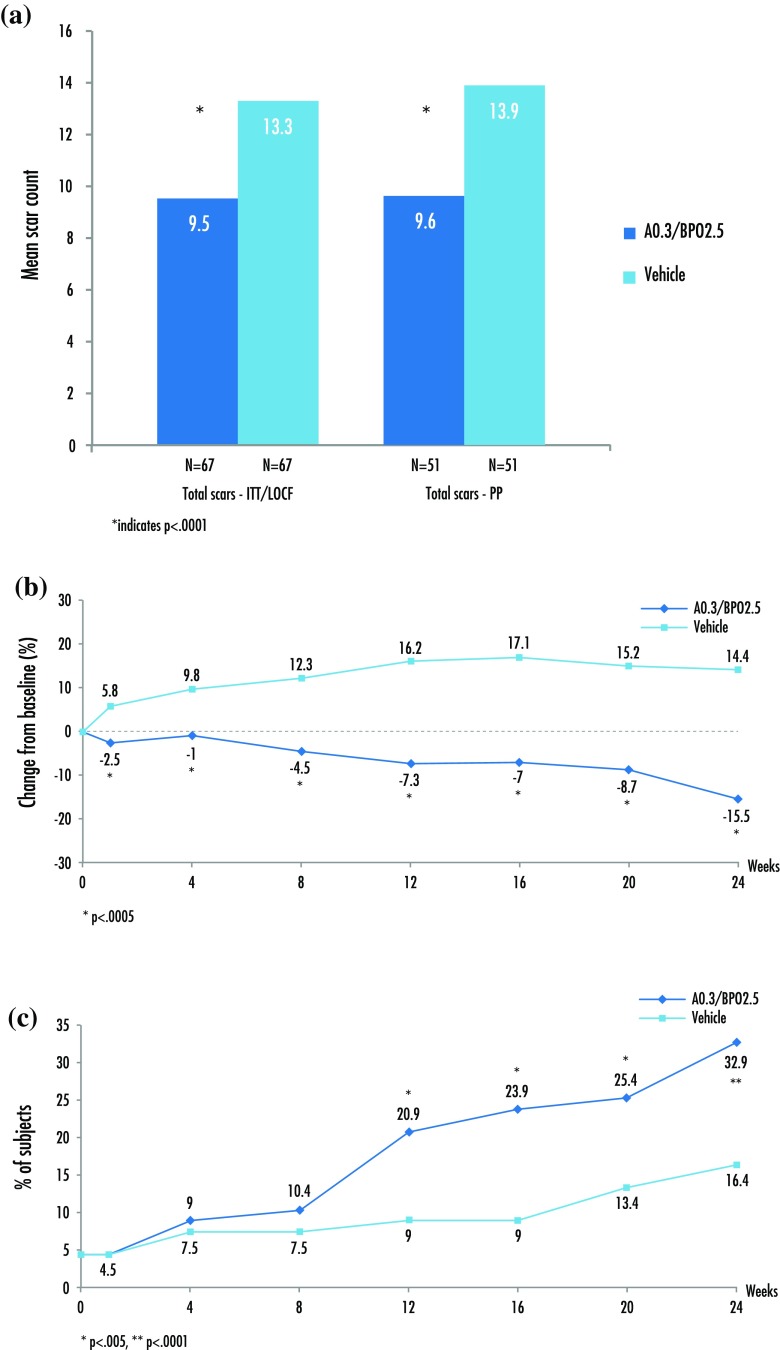
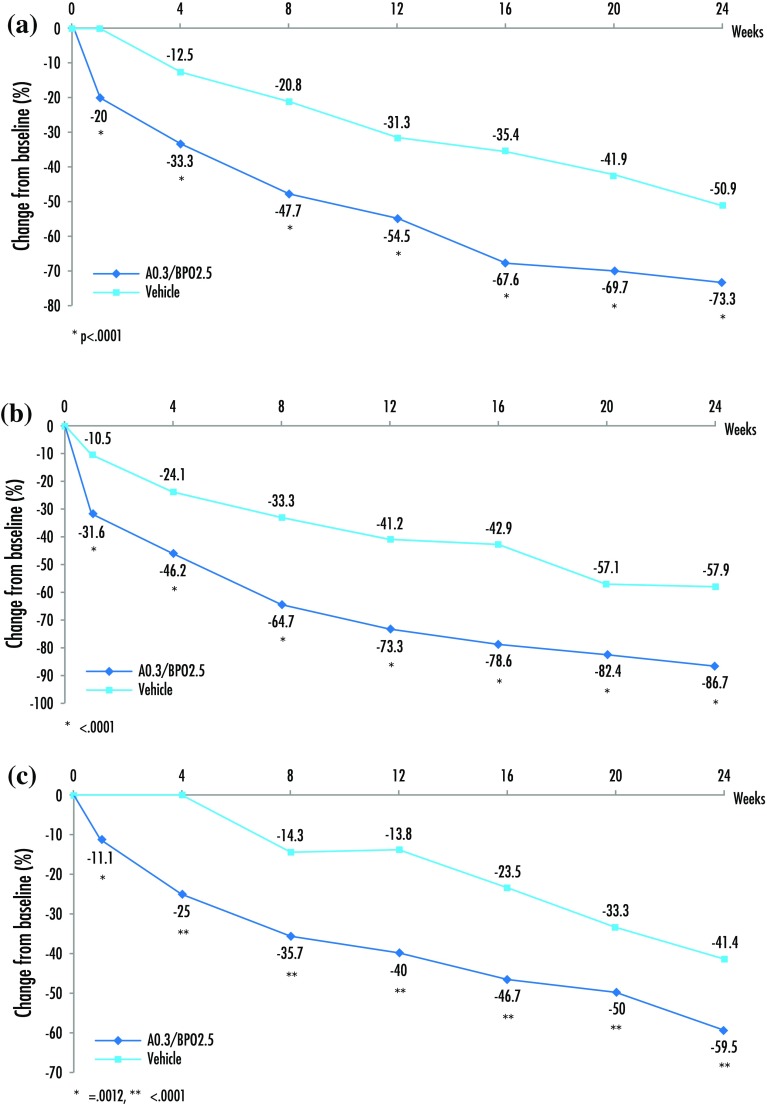
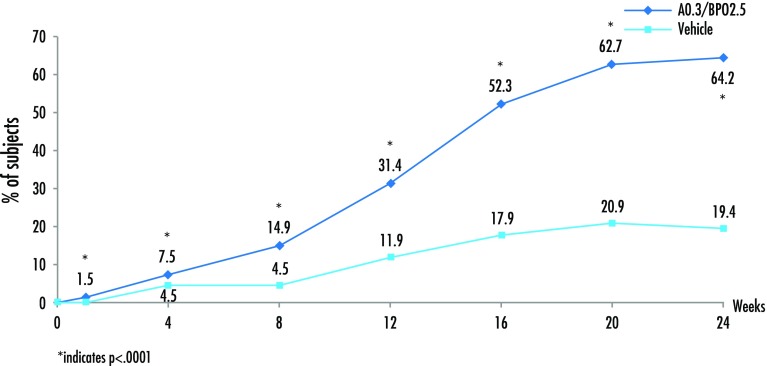
BACKGROUND: Very few clinical trials have investigated the effect of topical acne treatment on scarring. OBJECTIVES: Our objective was to evaluate the efficacy of adapalene 0.3%/benzoyl peroxide 2.5% gel (A0.3/BPO2.5) in atrophic acne scar formation in patients with acne. METHODS: In this multicenter, randomized, investigator-blinded, vehicle-controlled study, subjects with moderate or severe facial acne (Investigator's Global Assessment [IGA] score 3 or 4; ≥ 25 inflammatory lesions; ten or more atrophic acne scars) applied A0.3/BPO2.5 or vehicle daily per half face for 24 weeks. Subjects with acne requiring systemic treatment were excluded. Assessments included investigator atrophic acne scar count, Scar Global Assessment (SGA), acne lesion count, IGA, skin roughness and skin texture, subject self-assessment of clinical acne-related scars and satisfaction questionnaire, tolerability, and safety. RESULTS: Included subjects (n = 67) had mainly moderate acne (92.5% IGA 3); mean scores at baseline were approximately 40 acne lesions and 12 scars per half face. By week 24, the change from baseline in total scar count was - 15.5% for A0.3/BPO2.5 versus + 14.4% for vehicle (approximately 30% difference), with a mean of 9.5 scars versus 13.3 per half face, respectively (p < 0.0001). For SGA at week 24, a total of 32.9% with A0.3/BPO2.5 versus 16.4% with vehicle (p < 0.01) were clear/almost clear. Inflammatory acne lesions decreased by 86.7% for A0.3/BPO2.5 versus 57.9% for vehicle (p < 0.0001), and 64.2 versus 19.4% of subjects, respectively, were IGA clear/almost clear (p < 0.0001) at week 24. Treatment-related AEs were reported by 20.9% for A0.3/BPO2.5 versus 9% for vehicle side, most commonly skin irritation (14.9 vs. 6%, respectively). CONCLUSIONS: Topical A0.3/BPO2.5 prevented and reduced atrophic scar formation. Scar count increased with vehicle (+ 14.4%) but decreased with A0.3/BPO2.5 (- 15.5%) over 24 weeks. TRIAL REGISTRY: ClinicalTrials.gov identifier NCT02735421.
Overview
The claims and statistics of this paper haven’t been checked yet.
Free: it reads the open-access text and checks the first 5 claims that cite a source we can check. Create a free account to check every claim.
Integrity signals
Registry
Cites
Statistics
Figures
Verification
Claims the paper makes
The claims and statistics of this paper haven’t been checked yet.
Free: it reads the open-access text and checks the first 5 claims that cite a source we can check. Create a free account to check every claim.
Claims other papers make about this one
Each is checked against this paper’s own text: does it say what the citing paper says it does?
The cited source says what the claim attributes to it.
In the citing paper
“Compared to vehicle at 12 weeks, a greater proportion of patients treated with combined BP and topical retinoid achieved IGA success in 3 RCTs (RR, 2.19 [1.77, 2.72]).63,64,109”
From Guidelines of care for the management of acne vulgaris (2024) · cites this paper as [109]
Self-check
Percentages, sums and reported differences re-computed from the paper’s own numbers.
The self-check needs the paper’s full text.
Citations
Cites
Gollnick, H., Cunliffe, W., Berson, D., Dreno, B., Finlay, A., Leyden, J. J., Shalita, A. R., & Thiboutot, D. (2003) · Journal of the American Academy of Dermatology · doi:10.1067/mjd.2003.618 · Cited by 817 · cited 1×
“5 gel; Epiduo Gel; Galderma Laboratories, TX, USA) combines a retinoid with BPO, which exhibits potent and rapid bactericidal effect on Cutibacterium (formerly Propionibacterium [13]) acnes [14].”
BackgroundSelf-citationRestoration of Collagen Formation in Photodamaged Human Skin by Tretinoin (Retinoic Acid)
Griffiths, C., Russman, A. N., Majmudar, G., Singer, R. S., Hamilton, T. A., & Voorhees, J. J. (1993) · New England Journal of Medicine · doi:10.1056/nejm199308193290803 · Cited by 474 · cited 1×
“Furthermore, treatment with topical tretinoin has been shown to stimulate the production of procollagen in photodamaged skin [25, 26].”
BackgroundScholz, C. F. P., & Kilian, M. (2016) · International Journal of Systematic and Evolutionary Microbiology · doi:10.1099/ijsem.0.001367 · Cited by 463
Thiboutot, D. M., Dréno, B., Abanmi, A., Alexis, A. F., Araviiskaia, E., Barona Cabal, M. I., Bettoli, V., Casintahan, F., Chow, S., da Costa, A., et al. (2018) · Journal of the American Academy of Dermatology · doi:10.1016/j.jaad.2017.09.078 · Cited by 418 · cited 2×
“inflammation) and have a unique class action in reducing the formation of acne precursor lesions (microcomedones) and limiting the development of new lesions [5, 7].”
BackgroundSelf-citationA clinical evaluation of acne scarring and its incidence
LAYTON, A. M., HENDERSON, C. A., & CUNLIFFE, W. J. (1994) · Clinical and Experimental Dermatology · doi:10.1111/j.1365-2230.1994.tb01200.x · Cited by 361 · cited 1×
“Facial scarring is frequent in patients with acne, especially if acne is not treated early and effectively [1, 2].”
BackgroundKang, S., Cho, S., Chung, J. H., Hammerberg, C., Fisher, G. J., & Voorhees, J. J. (2005) · The American Journal of Pathology · doi:10.1016/s0002-9440(10)62479-0 · Cited by 247 · cited 1×
“Loss of dermal matrix via degradation of collagen, induced by inflammation, is a contributing factor in atrophic acne scars [22].”
BackgroundTrivedi, N. R., Gilliland, K. L., Zhao, W., Liu, W., & Thiboutot, D. M. (2006) · Journal of Investigative Dermatology · doi:10.1038/sj.jid.5700213 · Cited by 196 · cited 1×
“Gene array expression profiling comparing lesional and non-lesional skin in patients with acne indicated a prominent role of inflammation and matrix remodeling, including matrix metalloproteinases, inflammatory cytokines, and antimicrobial peptides in acne lesions [23, 24].”
BackgroundWhy Topical Retinoids Are Mainstay of Therapy for Acne
Leyden, J., Stein-Gold, L., & Weiss, J. (2017) · Dermatology and Therapy · doi:10.1007/s13555-017-0185-2 · Cited by 164 · cited 1×
“A variety of topical therapies exist for the treatment of mild to moderate acne vulgaris [5, 6].”
BackgroundPrevalence and Risk Factors of Acne Scarring Among Patients Consulting Dermatologists in the USA
Tan, J. K. L., Kang, S., & Leyden, J. (2017) · PubMed · Cited by 164
Self-citationA consensus‐based practical and daily guide for the treatment of acne patients
Gollnick, H. P., Bettoli, V., Lambert, J., Araviiskaia, E., Binic, I., Dessinioti, C., Galadari, I., Ganceviciene, R., Ilter, N., Kaegi, M., et al. (2016) · Journal of the European Academy of Dermatology and Venereology · doi:10.1111/jdv.13675 · Cited by 125 · cited 2×
“5 gel is recommended as first-line therapy in all but the most severe cases of inflammatory and/or comedonal acne vulgaris [12].”
BackgroundSelf-citation
Cited by
Guidelines of care for the management of acne vulgaris
Reynolds, R. V., Yeung, H., Cheng, C. E., Cook-Bolden, F., Desai, S. R., Druby, K. M., Freeman, E. E., Keri, J. E., Stein Gold, L. F., Tan, J. K. L., et al. (2024) · Journal of the American Academy of Dermatology · doi:10.1016/j.jaad.2023.12.017 · Cited by 518
Self-citationManagement of Acne Vulgaris: A Review
Eichenfield, D. Z., Sprague, J., & Eichenfield, L. F. (2021) · JAMA · doi:10.1001/jama.2021.17633 · Cited by 389
Current Issues in the Treatment of Acne Vulgaris
Habeshian, K. A., & Cohen, B. A. (2020) · Pediatrics · doi:10.1542/peds.2019-2056l · Cited by 179
A Comprehensive Review of Acne Vulgaris
Mohiuddin, A. K. (2019) · Journal of Clinical Research in Dermatology · doi:10.15226/2378-1726/6/2/00186 · Cited by 130
“175].”
Topical benzoyl peroxide for acne
Yang, Z., Zhang, Y., Mosler, E. L., Hu, J., Li, H., Zhang, Y., Liu, J., & Zhang, Q. (2020) · Cochrane Database of Systematic Reviews · doi:10.1002/14651858.cd011154.pub2 · Cited by 90
Acne scarring—pathophysiology, diagnosis, prevention and education: Part I
Jennings, T., Duffy, R. F., McLarney, M., Renzi, M. A., Heymann, W. R., Decker, A., & Lawrence, N. (2022) · Journal of the American Academy of Dermatology · doi:10.1016/j.jaad.2022.04.021 · Cited by 78
Dragicevic-Curic, N., & Maïbach, H. I. (2024) · Pharmaceutics · doi:10.3390/pharmaceutics16030309 · Cited by 56
“Adapalene has often been used together with benzoyl peroxide in conventional preparations for the treatment of acne vulgaris, as shown by different clinical studies [105–107].”
MethodDréno, B., Bissonnette, R., Gagné-Henley, A., Barankin, B., Lynde, C. W., Chavda, R., Kerrouche, N., & Tan, J. K. L. (2019) · American Journal of Clinical Dermatology · doi:10.1007/s40257-019-00454-6 · Cited by 43
Self-citationPractical Guidelines for Managing Patients With Hidradenitis Suppurativa: An Update
Johnston, L., Alhusayen, R. O., Bourcier, M., Delorme, I., George, R., O’Brien, E. A., Wong, S. M., & Poelman, S. (2022) · Journal of Cutaneous Medicine and Surgery · doi:10.1177/12034754221116115 · Cited by 39
Dermatology today and tomorrow: from symptom control to targeted therapy
Blume‐Peytavi, U., Bagot, M., Tennstedt, D., Aroman, M. S., Stockfleth, E., Zlotogorski, A., Mengeaud, V., Schmitt, A.-M., Paul, C. F., Lim, H. W., et al. (2018) · Journal of the European Academy of Dermatology and Venereology · doi:10.1111/jdv.15335 · Cited by 41
Self-citationSelective RAR agonists for acne vulgaris: A narrative review
Kassir, M., Karagaiah, P., Sonthalia, S., Katsambas, A., Galadari, H., Gupta, M., Lotti, T., Wollina, U., Abdelmaksoud, A., Grabbe, S., et al. (2020) · Journal of Cosmetic Dermatology · doi:10.1111/jocd.13340 · Cited by 37
Trifarotene Reduces Risk for Atrophic Acne Scars: Results from A Phase 4 Controlled Study
Schleicher, S., Moore, A. Y., Rafal, E. S., Gagné-Henley, A., Johnson, S. M., Dhawan, S., Chavda, R., York, J. P., Sforzolini, B. S., Holcomb, K., et al. (2023) · Dermatology and Therapy · doi:10.1007/s13555-023-01042-7 · Cited by 36
“Topical retinoids are well established in active acne treatment, and increasing evidence indicates that these drugs may also improve acne scarring [11, 16–18].”
BackgroundMethodInfluentialSelf-citationNew and emerging drugs for the treatment of acne vulgaris in adolescents
de Sousa, I. C. V. D. (2019) · Expert Opinion on Pharmacotherapy · doi:10.1080/14656566.2019.1584182 · Cited by 32
Acne treatment challenges – Recommendations of Latin American expert consensus
Rocha, M., Barnes, F., Calderón, J., Fierro‐Arias, L., Gómez, C., Muñoz, C., Jannell, O., & Troielli, P. (2024) · Anais Brasileiros de Dermatologia · doi:10.1016/j.abd.2023.09.001 · Cited by 30
Chien, A. L.-L. (2018) · PubMed · Cited by 29
New Concepts, Concerns, and Creations in Acne
Marson, J. W., & Baldwin, H. E. (2018) · Dermatologic Clinics · doi:10.1016/j.det.2018.07.002 · Cited by 28
Joseph, J. H., Shamban, A. T., Eaton, L. L., Lehman, A., Cohen, S. R., SPENCER, J. M., Bruce, S., Grimes, P. E., Tedaldi, R., Callender, V. D., et al. (2019) · Dermatologic Surgery · doi:10.1097/dss.0000000000001863 · Cited by 26
Myhill, T., Coulson, W., Nixon, P., Royal, S., McCormack, T., & Kerrouche, N. (2017) · Dermatology and Therapy · doi:10.1007/s13555-017-0203-4 · Cited by 24
Self-citationEvidence-based management of cutaneous scarring in dermatology part 2: atrophic acne scarring
Kim, E., Wong, J. H., Hussain, A. N., & Khachemoune, A. (2023) · Archives of Dermatological Research · doi:10.1007/s00403-023-02737-9 · Cited by 21
“A 48 weeks randomized, investigator-blinded, split-face study showed that Adapalene 0.3%/BPO 2.5% gel was well-tolerated and effectively reduced scar count [12, 13].”
BackgroundInfluentialEvaluation, Prevention, and Management of Acne Scars: Issues, Strategies, and Enhanced Outcomes
Fabbrocini, G., & Cacciapuoti, S. (2018) · PubMed · Cited by 20
Kakpovbia, E., Young, T. K., Milam, E. C., Qian, Y., Yassin, S. M., Nicholson, J., Hu, J., Troxel, A. B., & Nagler, A. R. (2024) · Journal of the European Academy of Dermatology and Venereology · doi:10.1111/jdv.20154 · Cited by 16
“14,21,23,26,29,31,40,42 Clindamycin-tretinoin and tretinoin had more AEs than clindamycin and placebo.”
Araviiskaia, E., Murashkin, N. N., Namazova-Baranova, L. S., & Ivanov, R. A. (2020) · Вопросы современной педиатрии · doi:10.15690/vsp.v19i6.2141 · Cited by 15
Novel and emerging treatment options for
Auffret, N., Claudel, J. P., Leccia, M. ‐., Ballanger, F., & Dréno, B. (2022) · European Journal of Dermatology · doi:10.1684/ejd.2022.4306 · Cited by 15
“5% (Epiduo forte, Galderma International, Lausanne, Switzerland) was made available to treat moderate-to-severe acne scars and moderate-to-severe inflammatory acne [36, 37].”
BackgroundSelf-citationScar Management in Pediatric Patients
Barone, S., Bao, E., Rothberg, S. E., Palacios, J. F., Smith, I. T., Tanna, N., & Bastidas, N. (2025) · Medicina · doi:10.3390/medicina61040553 · Cited by 14
Acne Scarring: Why We Should Act Sooner Rather Than Later
Dréno, B., & Gold, L. S. (2021) · Dermatology and Therapy · doi:10.1007/s13555-021-00562-4 · Cited by 14
Self-citationEmmerich, V. K., Purvis, C. G., & Feldman, S. R. (2021) · Expert Opinion on Pharmacotherapy · doi:10.1080/14656566.2021.1939678 · Cited by 14
“5%) gel in adults with atrophic acne scars and primary acne lesions (NCT02735421; 2016) [34]”
BackgroundAdapalene/benzoyl peroxide gel 0.3%/2.5% for acne vulgaris
Dréno, B., Layton, A., Troielli, P., Rocha, M., & Chavda, R. (2022) · European Journal of Dermatology · doi:10.1684/ejd.2022.4275 · Cited by 12
“Acne is associated with facial scarring, particularly when it is not effectively treated at an early timepoint after onset [31].”
BackgroundSelf-citationvan Zuuren, E. J., Arents, B. W. M., Miklas, M., Schoones, J. W., & Tan, J. K. L. (2020) · British Journal of Dermatology · doi:10.1111/bjd.19675 · Cited by 11
Self-citationSattar, K., Sakina, S., Mumtaz, S., Behram, F., Akbar, A., Jadoon, S. K., & Tasneem, S. (2024) · Cureus · doi:10.7759/cureus.69341 · Cited by 11
“Systemic treatments include retinoids (e.g., isotretinoin), antibiotics (e.g., erythromycin, azithromycin, doxycycline, and clindamycin), and sometimes contraceptives [21].”
BackgroundWeinstein, A., Koren, A., Sprecher, E., Zur, E., Mehrabi, J. N., & Artzi, O. (2019) · Clinical and Experimental Dermatology · doi:10.1111/ced.14032 · Cited by 10
Efficacy of Saline Injection Therapy for Atrophic Acne Scars
Khan, S. S., Ghafoor, R., & Kaleem, S. (2020) · Journal of College of Physicians And Surgeons Pakistan · doi:10.29271/jcpsp.2020.04.359 · Cited by 9
Osman‐Ponchet, H., Sevin, K., Gaborit, A., Wagner, N., & Poncet, M. (2016) · Dermatology and Therapy · doi:10.1007/s13555-016-0159-9 · Cited by 9
Schachner, L. A., Andriessen, A., Benjamin, L., Dones, M., Kircik, L., Pinera-Llano, A., & Hebert, A. A. (2023) · Journal of Drugs in Dermatology · doi:10.36849/jdd.7440 · Cited by 8
Choe, J., Urbonas, R., Xia, E., Yan, A., Gaurav, A., Fladger, A., & Barbieri, J. S. (2025) · Journal of Investigative Dermatology · doi:10.1016/j.jid.2025.02.135 · Cited by 7
Madnani, N., Saraswat, A., Nott, A., Jakhar, D., Gupta, L., Kohli, M., Puhan, M. R., Sangolli, P., Nagar, R., Rathi, S. K., et al. (2025) · Antibiotics · doi:10.3390/antibiotics14080844 · Cited by 8
“For moderate-to-severe acne, adapalene 0.3% combined with BPO 2.5% has demonstrated sustained efficacy, with improvements in both active lesions and atrophic scars maintained over 48 weeks [67–69].”
InfluentialUpdates on Topical Dyad and Triple Combination Therapies Approved for Acne Vulgaris
Podwójniak, A., Tan, I. J., Sauer, J., Parikh, A. K., COHEN, B. A., & Heath, C. R. (2024) · Cureus · doi:10.7759/cureus.61413 · Cited by 7
“This study found similar mild adverse effects as seen in Dreno et al [30].”
BackgroundResultInfluentialAnnunziata, M. C., Barbareschi, M., Bettoli, V., Dall’Oglio, F., Micali, G., Monfrecola, G., Skroza, N., Clementoni, M. T., & Veraldi, S. (2025) · Dermatology and Therapy · doi:10.1007/s13555-024-01329-3 · Cited by 7
Schachner, L. A., Andriessen, A., Benjamin, L., Dones, M., Kircik, L., Pinera-Llano, A., Keller, L., & Hebert, A. A. (2022) · Journal of Drugs in Dermatology · doi:10.36849/jdd.6872 · Cited by 7
Lee, S., Kim, D. H., Jo, S. J., Lim, Y., Lee, J. W., Lee, J. H., Kim, T. M., Kim, S. R., Kang, J., Yoon, J. Y., et al. (2023) · Photodermatology Photoimmunology & Photomedicine · doi:10.1111/phpp.12922 · Cited by 6
Zhang, J., Liu, S., Guo, W., & Li, N. (2024) · Journal of Cosmetic Dermatology · doi:10.1111/jocd.16394 · Cited by 6
“14,15 However, these therapeutic agents may induce adverse reactions, including skin erythema and irritation.”
Treatment of acne in the aesthetic patient: A round table update
Fabi, S. G., Beleznay, K., Berson, D. S., Cohen, J. L., Lee, S., & Dayan, S. H. (2023) · Journal of Cosmetic Dermatology · doi:10.1111/jocd.15913 · Cited by 6
Yanık, H. İ., Acer, E., Yilmaz-Karaman, I. G., Ağaoğlu, E., Erdoğan, H. K., Bilgin, M., & Saraçoğlu, Z. N. (2026) · Journal of Cosmetic Dermatology · doi:10.1111/jocd.70838 · Cited by 5
Han, H. S., Park, J. W., Shin, S. H., Yoo, K. H., Sohn, Y. S., & Kim, B. J. (2022) · Journal of Cosmetic Dermatology · doi:10.1111/jocd.14693 · Cited by 5
Acne Protection: Measures & Miseries
(2019) · ARC Journal of Pharmaceutical Sciences · doi:10.20431/2455-1538.0502004 · Cited by 5
Vitamins and the skin: Vitamin A and retinoids in dermatology
Dessinioti, C., & Katsambas, A. (2026) · Clinics in Dermatology · doi:10.1016/j.clindermatol.2026.02.005 · Cited by 4
Farfán, J., Gutiérrez, M. V., Ondo-Méndez, A., González, J. M., & Vives, M. J. (2025) · Current Research in Microbial Sciences · doi:10.1016/j.crmicr.2025.100356 · Cited by 4
“Biochemical identification involved hemolysis in blood agar, indole production, catalase activity, and ribose and sorbitol fermentation (Corvec et al., 2019; Dr ´ eno, Bissonnette, et al., 2018; Lomholt & Kilian, 2010).”
Buckley, D. A. (2024) · Wiley eBooks · doi:10.1002/9781119709268.rook018 · Cited by 4
Augustin, M., Dirschka, T., Gerber, P. A., Kerscher, M. J., Kirsten, N., & Ochsendorf, F. R. (2025) · JDDG Journal der Deutschen Dermatologischen Gesellschaft · doi:10.1111/ddg.15913 · Cited by 3
Miranti, S. M. (2024) · SKIN The Journal of Cutaneous Medicine · doi:10.25251/skin.8.supp.391 · Cited by 3
Rujirawan, P., Charoenchaipiyakul, K., Krithin, S., Washrawirul, C., & Kumtornrut, C. (2025) · Lasers in Surgery and Medicine · doi:10.1002/lsm.70056 · Cited by 2
Clinical implications of skincare: lessons from placebo-controlled dermatology trials
Siripanich, C., Chow, Y. C., & Ali, F. R. (2026) · Skin Health and Disease · doi:10.1093/skinhd/vzag020 · Cited by 2
Acne Vulgaris: Measures and Miseries
Mohiuddin, A. K. (2019) · International Journal For Research In Biology & Pharmacy · doi:10.28933/ajodrr-2019-01-2001 · Cited by 2
Marchitto, M. C., Kang, S., & Chien, A. L.-L. (2021) · Updates in clinical dermatology · doi:10.1007/978-3-030-68996-4_5 · Cited by 2
Batra, R., Yogendra, M., Gaurkar, S., Mukhopadhyay, P., Sen, D., & Jadhwar, S. (2024) · Cureus · doi:10.7759/cureus.65894 · Cited by 2
“5% in acne management have been reported to be 71.6% at 12 weeks [20] and 90.1% at 24 weeks [12].”
BackgroundResultInfluentialPradhan, M., Prajapati, S., Bichchha, R., & Guragain, A. (2024) · Nepal Mediciti Medical Journal · doi:10.3126/nmmj.v5i1.68433 · Cited by 2
The use of a combination drug with adapalene/metronidazole for acne
Владиславовна, М. Е., Vladimirova, E. V., & Matushevskaya, Y. I. (2023) · Meditsinskiy sovet = Medical Council · doi:10.21518/ms2023-249 · Cited by 1
Lee, J.-H., Kim, D.-W., Yoon, J. Y., Kim, T., Kim, S.-R., & Suh, D. (2024) · Italian Journal of Dermatology and Venereology · doi:10.23736/s2784-8671.24.07800-9 · Cited by 1
Acne tarda: Empfehlungen zu Einordnung, Therapie und Pflege als Ergebnis einer Expertendiskussion
Augustin, M., Dirschka, T., Gerber, P. A., Kerscher, M., Kirsten, N., & Ochsendorf, F. R. (2026) · JDDG Journal der Deutschen Dermatologischen Gesellschaft · doi:10.1111/ddg.15913_g · Cited by 1
Wang, R., Cai, K., Xu, T., Luo, A., Wang, Y., Lai, Z., Wang, J., Zhao, J., & Nie, H. (2026) · European Journal of Pharmaceutics and Biopharmaceutics · doi:10.1016/j.ejpb.2026.115057 · Cited by 1
Asri, R. C., & Sari, D. N. (2022) · Bioscientia Medicina Journal of Biomedicine and Translational Research · doi:10.37275/bsm.v6i9.575 · Cited by 1
Safety Assessment of a Novel Topical Vehicle for Personalized Treatments in Acne
Polonini, H. C., Ameneiro-Alvarez, A., & Zander, C. (2022) · Journal of Cosmetics Dermatological Sciences and Applications · doi:10.4236/jcdsa.2022.124016 · Cited by 1
Dermatose: Wenn Akne Spuren hinterlässt
Reinholz, M. (2020) · Deutsches Ärzteblatt · doi:10.3238/persderma.2020.06.12.02
Verbesserung der Lebensqualität als zentrales Therapieziel
Reinholz, M. (2022) · Deutsche Dermatologie · doi:10.1007/s15011-022-4993-z
Endocrine Disorders and Hormonal Therapy for Adolescent Acne
Assawaruangsin, C. (2022) · International Journal of Current Science Research and Review · doi:10.47191/ijcsrr/v5-i6-39
Pesántez, S. A. V., García, B. E. C., Mendes, A. E. C., Ávila, E. E. I., Calderón, D. J. C., Merino, B. J. H., & Medina, D. A. P. (2022) · EPRA International Journal of Multidisciplinary Research (IJMR) · doi:10.36713/epra11160
Lloyd, J. (2019) · EMJ Dermatology · doi:10.33590/emjdermatol/10312023
Papulopustular Acne: Differential Diagnosis and Therapy Algorithms in Prepubertal and Pubertal Age
Murashkin, N. N., Leonova, M. A., Opryatin, L. A., Materikin, A. I., Epishev, R. V., & Fedorov, D. V. (2023) · Вопросы современной педиатрии · doi:10.15690/vsp.v22i5.2639
Effective Skin Care Guidance for Patients with Acne Vulgaris after Standard Treatment
Kikuchi, K., Murakami, Y., Sato, H., Yamashita, R., Saya, Y., Morino, I., Uchino, R., & Matsunaka, H. (2023) · Journal of Cosmetics Dermatological Sciences and Applications · doi:10.4236/jcdsa.2023.134027
Razaq, T., Sabri, A. N., Hussain, N., & Babar, M. M. (2023) · Lahore Garrison University Journal of Life Sciences · doi:10.54692/lgujls.2023.0704316
Sen, D., Walia, P., Agarwal, M., & Jadhwar, S. (2024) · IP Indian Journal of Clinical and Experimental Dermatology · doi:10.18231/j.ijced.2024.029
Akne 2025 – neue Daten, neue Fakten, neuer Standard?
Lenders, D., & Schaller, M. (2025) · Aktuelle Dermatologie · doi:10.1055/a-2631-9086
Nevoralová, Z. (2025) · Dermatologie pro praxi · doi:10.36290/der.2025.021
Rocha, M., Fierro‐Arias, L., Troielli, P., Viana, A., & Miot, H. A. (2025) · Surgical & Cosmetic Dermatology · doi:10.5935/scd1984-8773.2025170456
Febriana, M., Lubis, N. Z., Sufitni, S., & Mardiani, T. H. (2026) · Vitalitas Medis : Jurnal Kesehatan Dan Kedokteran · doi:10.62383/vimed.v3i2.2704
Atrophic acne scars and post-acne hyperpigmentation: potential and prospects of trifarotene cream
Snarskaya, E. S., Olisova, O. Y., & Khayrieva, G. (2026) · Russian Journal of Skin and Venereal Diseases · doi:10.17816/dv700302
Veronica, A. D., & Hidayat, D. E. (2026) · The International Journal of Medical Science and Health Research · doi:10.70070/htwn1y81
Faghihi, G., Aghaei, M., Varastehpour, H., Seyedyousefi, S., & Abtahi‐Naeini, B. (2026) · Journal of Cosmetic Dermatology · doi:10.1111/jocd.71017
The Evolution of Topical Retinoids in Dermatology: A Cornerstone of Acne Management (1971-2025).
Gold, L. S., Baldwin, H. E., Rosso, J. Q. D., Desai, S., Harper, J. C., Hougeir, F. G., Howard-Verovic, C., Kircik, L., Li, M. K., Nathan, N. R., et al. (2026) · PubMed Central
Metadata
- Authors
- Dréno, B., Bissonnette, R., Gagné-Henley, A., Barankin, B., Lynde, C., Kerrouche, N., & Tan, J.
- Affiliations
- Inserm (FR)
- Innovaderm (Canada) (CA)
- Lynde Centre for Dermatology (CA)
- Galderma (France) (FR)
- Western University (CA)
- Corresponding author
- Dréno, Brigitte
- Venue
- American Journal of Clinical Dermatology
- Published
- 2018-03-16
- Volume
- 19
- Issue
- 2
- Pages
- 275-286
- ISSN
- 1175-0561 (ISSN-L)
- 1179-1888
- PMC
- PMC5978908
- OpenAlex
- W2794146536
- Semantic Scholar
- cceaf6387dc815eed32658a16e2b8976805dabf8
- Cited by
- 69
- References
- 31
- Citations by year
- 2026: 6 · 2025: 9 · 2024: 11 · 2023: 9 · 2022: 10 · 2021: 4 · 2020: 7 · 2019: 7 · 2018: 4
- FWCI
- 5.95
- Type
- journal article
- Language
- en
- Open access
- hybrid
- doi.org
- Licence
- cc-by-nc
- creativecommons.org/licenses/by-nc/4.0 (tdm)
- creativecommons.org/licenses/by-nc/4.0 (vor)
- Locations
- American Journal of Clinical Dermatology (publishedVersion, cc-by-nc)
- Europe PMC (PubMed Central) (publishedVersion, cc-by-nc)
- PubMed Central (publishedVersion, cc-by-nc)
- PubMed (publishedVersion)
- HAL (submittedVersion, other-oa)
- Funders
- Galderma
- Topics
- Health Sciences › Medicine › Dermatology › Acne and Rosacea Treatments and Effects
- Health Sciences › Medicine › Dermatology › Dermatologic Treatments and Research
- Health Sciences › Medicine › Dermatology › Dermatology and Skin Diseases
- Keywords
- atrophic acne scars, adapalene, benzoyl peroxide, topical acne treatment, facial acne, inflammatory acne lesions, skin texture, safety and tolerability, intraindividual comparison, acne, patient satisfaction, skin roughness
- MeSH terms
- Adapalene, Acne Vulgaris, Administration, Cutaneous, Adolescent, Adult, Atrophy, Benzoyl Peroxide, Cicatrix, Dermatologic Agents, Double-Blind Method, Drug Combinations, Face, Female, Gels, Humans, Male, Severity of Illness Index, Skin, Treatment Outcome, Young Adult
About these checks
Registry, retraction, Cites and statistics results are computed, not judged, with one exception: a printed reference that no index lists is read once by a model before it counts as a citation error. Claims are extracted by a model and kept only when their quote appears verbatim in the text; each cited source is then checked, with a model’s help, for whether it says what the claim relies on. Those verdicts can be wrong — read the claim’s quote and the cited source before relying on one.
Statistics and arithmetic are recomputed, not judged.
Confidence bands are shown only for fields calibrated on our annotated test set. None is calibrated yet, so no band is shown.
What counts as a claim ›How we measure confidence ›How we check this ›
Are you an author, or do you see a problem with this page? Request a review
Data sources
Bibliographic data: Semantic Scholar, OpenAlex, Crossref.
Contains information from the Semantic Scholar Academic Graph Datasets, made available under the ODC Attribution License (ODC-BY 1.0).
Semantic Scholar’s data is described in: Kinney, R., et al. (2023). The Semantic Scholar Open Data Platform. arXiv:2301.10140.
