

Prevention and Reduction of Atrophic Acne Scars with Adapalene 0.3%/Benzoyl Peroxide 2.5% Gel in Subjects with Moderate or Severe Facial Acne: Results of a 6-Month Randomized, Vehicle-Controlled Trial Using Intra-Individual Comparison
Open accessThe DOI matches its Crossref record; 30 of the 31 references it cites were found in a registry or an index.
Abstract
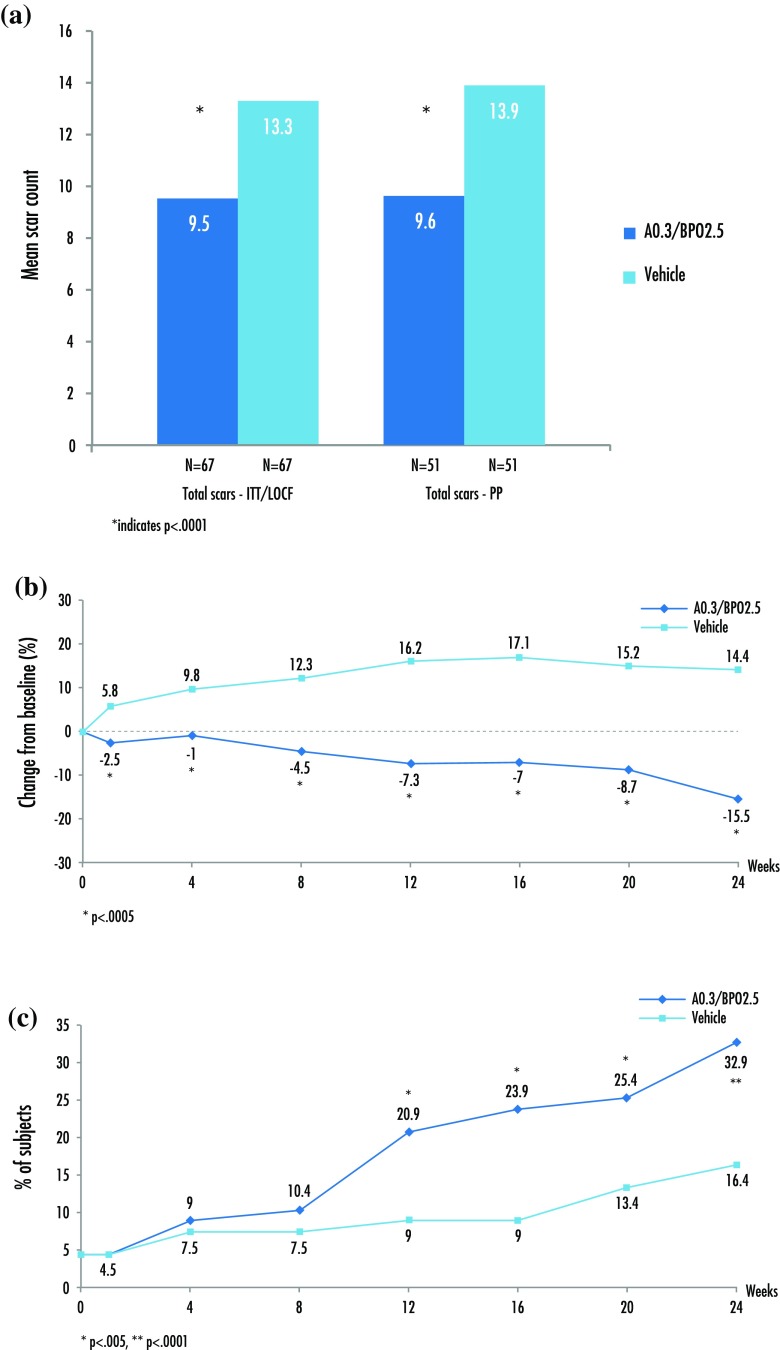
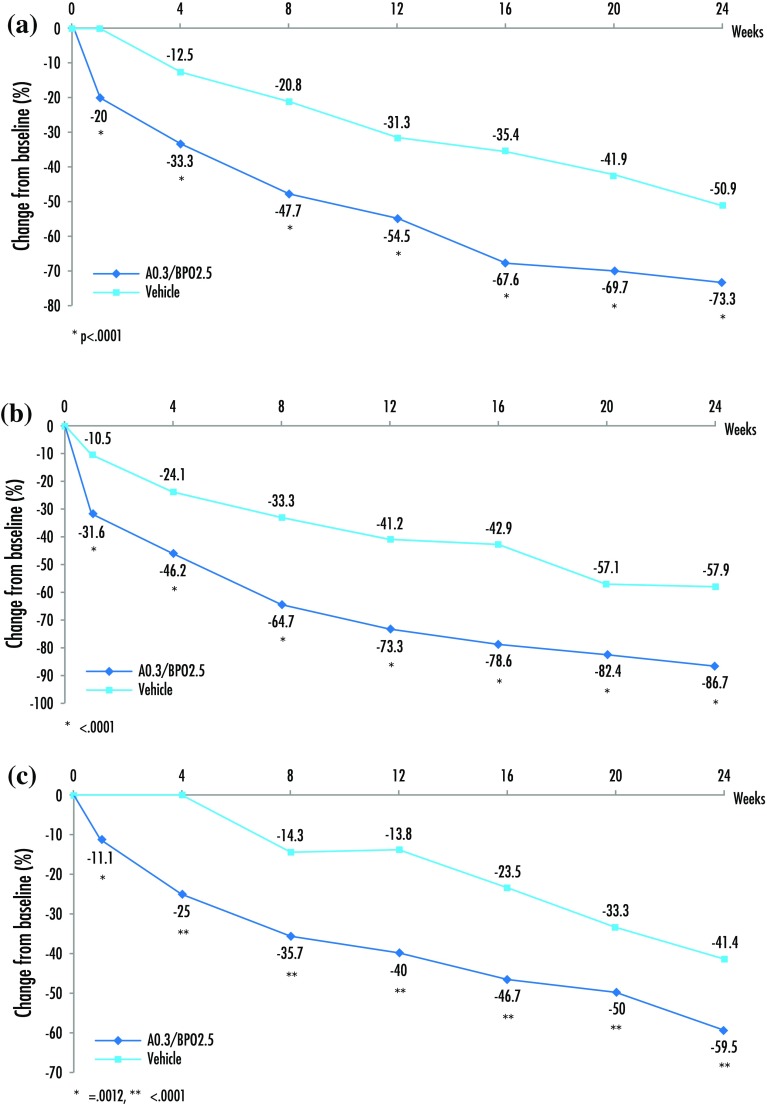
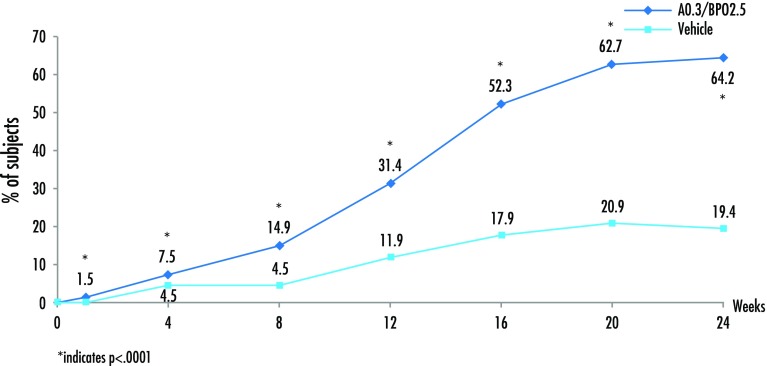
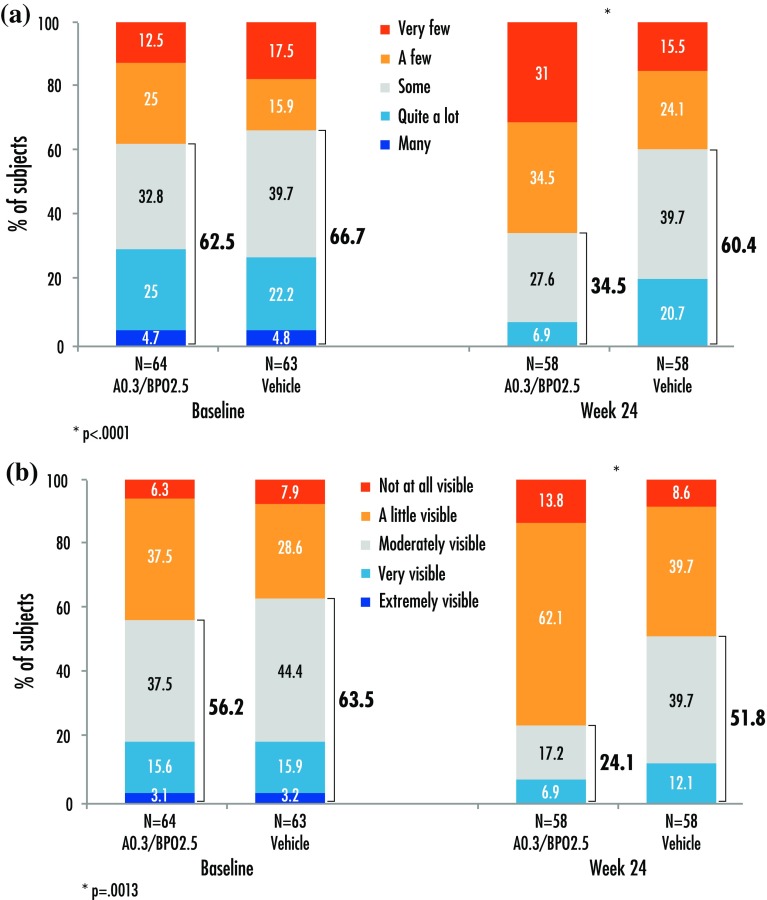
BACKGROUND: Very few clinical trials have investigated the effect of topical acne treatment on scarring. OBJECTIVES: Our objective was to evaluate the efficacy of adapalene 0.3%/benzoyl peroxide 2.5% gel (A0.3/BPO2.5) in atrophic acne scar formation in patients with acne. METHODS: In this multicenter, randomized, investigator-blinded, vehicle-controlled study, subjects with moderate or severe facial acne (Investigator's Global Assessment [IGA] score 3 or 4; ≥ 25 inflammatory lesions; ten or more atrophic acne scars) applied A0.3/BPO2.5 or vehicle daily per half face for 24 weeks. Subjects with acne requiring systemic treatment were excluded. Assessments included investigator atrophic acne scar count, Scar Global Assessment (SGA), acne lesion count, IGA, skin roughness and skin texture, subject self-assessment of clinical acne-related scars and satisfaction questionnaire, tolerability, and safety. RESULTS: Included subjects (n = 67) had mainly moderate acne (92.5% IGA 3); mean scores at baseline were approximately 40 acne lesions and 12 scars per half face. By week 24, the change from baseline in total scar count was - 15.5% for A0.3/BPO2.5 versus + 14.4% for vehicle (approximately 30% difference), with a mean of 9.5 scars versus 13.3 per half face, respectively (p < 0.0001). For SGA at week 24, a total of 32.9% with A0.3/BPO2.5 versus 16.4% with vehicle (p < 0.01) were clear/almost clear. Inflammatory acne lesions decreased by 86.7% for A0.3/BPO2.5 versus 57.9% for vehicle (p < 0.0001), and 64.2 versus 19.4% of subjects, respectively, were IGA clear/almost clear (p < 0.0001) at week 24. Treatment-related AEs were reported by 20.9% for A0.3/BPO2.5 versus 9% for vehicle side, most commonly skin irritation (14.9 vs. 6%, respectively). CONCLUSIONS: Topical A0.3/BPO2.5 prevented and reduced atrophic scar formation. Scar count increased with vehicle (+ 14.4%) but decreased with A0.3/BPO2.5 (- 15.5%) over 24 weeks. TRIAL REGISTRY: ClinicalTrials.gov identifier NCT02735421.
Overview
The claims and statistics of this paper haven’t been checked yet.
Free: it reads the open-access text and checks the first 5 claims that cite a source we can check. Create a free account to check every claim.
Integrity signals
Registry
Cites
Statistics
Figures
Verification
Claims the paper makes
The claims and statistics of this paper haven’t been checked yet.
Free: it reads the open-access text and checks the first 5 claims that cite a source we can check. Create a free account to check every claim.
Claims other papers make about this one
Each is checked against this paper’s own text: does it say what the citing paper says it does?
The cited source says what the claim attributes to it.
In the citing paper
“Compared to vehicle at 12 weeks, a greater proportion of patients treated with combined BP and topical retinoid achieved IGA success in 3 RCTs (RR, 2.19 [1.77, 2.72]).63,64,109”
From Guidelines of care for the management of acne vulgaris (2024) · cites this paper as [109]
Self-check
Percentages, sums and reported differences re-computed from the paper’s own numbers.
The self-check needs the paper’s full text.
Citations
Cites
Gollnick, H., Cunliffe, W., Berson, D., Dreno, B., Finlay, A., Leyden, J. J., Shalita, A. R., & Thiboutot, D. (2003) · Journal of the American Academy of Dermatology · doi:10.1067/mjd.2003.618 · Cited by 817 · cited 1×
“5 gel; Epiduo Gel; Galderma Laboratories, TX, USA) combines a retinoid with BPO, which exhibits potent and rapid bactericidal effect on Cutibacterium (formerly Propionibacterium [13]) acnes [14].”
BackgroundSelf-citationRestoration of Collagen Formation in Photodamaged Human Skin by Tretinoin (Retinoic Acid)
Griffiths, C., Russman, A. N., Majmudar, G., Singer, R. S., Hamilton, T. A., & Voorhees, J. J. (1993) · New England Journal of Medicine · doi:10.1056/nejm199308193290803 · Cited by 474 · cited 1×
“Furthermore, treatment with topical tretinoin has been shown to stimulate the production of procollagen in photodamaged skin [25, 26].”
BackgroundScholz, C. F. P., & Kilian, M. (2016) · International Journal of Systematic and Evolutionary Microbiology · doi:10.1099/ijsem.0.001367 · Cited by 463
Thiboutot, D. M., Dréno, B., Abanmi, A., Alexis, A. F., Araviiskaia, E., Barona Cabal, M. I., Bettoli, V., Casintahan, F., Chow, S., da Costa, A., et al. (2018) · Journal of the American Academy of Dermatology · doi:10.1016/j.jaad.2017.09.078 · Cited by 418 · cited 2×
“inflammation) and have a unique class action in reducing the formation of acne precursor lesions (microcomedones) and limiting the development of new lesions [5, 7].”
BackgroundSelf-citationA clinical evaluation of acne scarring and its incidence
LAYTON, A. M., HENDERSON, C. A., & CUNLIFFE, W. J. (1994) · Clinical and Experimental Dermatology · doi:10.1111/j.1365-2230.1994.tb01200.x · Cited by 361 · cited 1×
“Facial scarring is frequent in patients with acne, especially if acne is not treated early and effectively [1, 2].”
BackgroundKang, S., Cho, S., Chung, J. H., Hammerberg, C., Fisher, G. J., & Voorhees, J. J. (2005) · The American Journal of Pathology · doi:10.1016/s0002-9440(10)62479-0 · Cited by 247 · cited 1×
“Loss of dermal matrix via degradation of collagen, induced by inflammation, is a contributing factor in atrophic acne scars [22].”
BackgroundTrivedi, N. R., Gilliland, K. L., Zhao, W., Liu, W., & Thiboutot, D. M. (2006) · Journal of Investigative Dermatology · doi:10.1038/sj.jid.5700213 · Cited by 196 · cited 1×
“Gene array expression profiling comparing lesional and non-lesional skin in patients with acne indicated a prominent role of inflammation and matrix remodeling, including matrix metalloproteinases, inflammatory cytokines, and antimicrobial peptides in acne lesions [23, 24].”
BackgroundWhy Topical Retinoids Are Mainstay of Therapy for Acne
Leyden, J., Stein-Gold, L., & Weiss, J. (2017) · Dermatology and Therapy · doi:10.1007/s13555-017-0185-2 · Cited by 164 · cited 1×
“A variety of topical therapies exist for the treatment of mild to moderate acne vulgaris [5, 6].”
BackgroundPrevalence and Risk Factors of Acne Scarring Among Patients Consulting Dermatologists in the USA
Tan, J. K. L., Kang, S., & Leyden, J. (2017) · PubMed · Cited by 164
Self-citationA consensus‐based practical and daily guide for the treatment of acne patients
Gollnick, H. P., Bettoli, V., Lambert, J., Araviiskaia, E., Binic, I., Dessinioti, C., Galadari, I., Ganceviciene, R., Ilter, N., Kaegi, M., et al. (2016) · Journal of the European Academy of Dermatology and Venereology · doi:10.1111/jdv.13675 · Cited by 125 · cited 2×
“5 gel is recommended as first-line therapy in all but the most severe cases of inflammatory and/or comedonal acne vulgaris [12].”
BackgroundSelf-citationHay, R. M. A., Shalaby, K., Zaher, H. A. E.-M., Hafez, V. G., Chi, C., Dimitri, S., Nabhan, A. F., & Layton, A. (2016) · Cochrane Database of Systematic Reviews · doi:10.1002/14651858.cd011946.pub2 · Cited by 109 · cited 1×
“Furthermore, a recent Cochrane review concluded that quality evidence to support the first-line use of any invasive procedure in the treatment of acne scars was lacking, and whether any shortterm benefit would translate to long-term effects is unclear [19].”
BackgroundLayton, A. M., Seukeran, D., & Cunliffe, W. J. (1997) · Dermatology · doi:10.1159/000246015 · Cited by 107
Thielitz, A., Helmdach, M., Ropke, E.-M., & Gollnick, H. (2001) · British Journal of Dermatology · doi:10.1046/j.1365-2133.2001.04276.x · Cited by 91 · cited 1×
“inflammation) and have a unique class action in reducing the formation of acne precursor lesions (microcomedones) and limiting the development of new lesions [5, 7].”
BackgroundControl of microcomedone formation throughout a maintenance treatment with adapalene gel, 0.1%
Thielitz, A., Sidou, F., & Gollnick, H. (2007) · Journal of the European Academy of Dermatology and Venereology · doi:10.1111/j.1468-3083.2007.02190.x · Cited by 70
Photoaging therapy with topical tretinoin: an evidence-based analysis
Kang, S., & Voorhees, J. J. (1998) · Journal of the American Academy of Dermatology · doi:10.1016/s0190-9622(98)70446-3 · Cited by 69 · cited 1×
“Furthermore, treatment with topical tretinoin has been shown to stimulate the production of procollagen in photodamaged skin [25, 26].”
BackgroundGoodman, G. J. (2011) · International Journal of Dermatology · doi:10.1111/j.1365-4632.2011.05029.x · Cited by 69
Thiboutot, D., Pariser, D. M., Egan, N., Flores, J., Herndon, J. H., Kanof, N. B., Kempers, S. E., Maddin, S., Poulin, Y. P., Wilson, D. C., et al. (2006) · Journal of the American Academy of Dermatology · doi:10.1016/j.jaad.2004.10.879 · Cited by 67
Rao, J. (2011) · Facial Plastic Surgery Clinics of North America · doi:10.1016/j.fsc.2011.04.004 · Cited by 67
Stein Gold, L., Weiss, J., Rueda, M. J., Liu, H., & Tanghetti, E. (2016) · American Journal of Clinical Dermatology · doi:10.1007/s40257-016-0178-4 · Cited by 61 · cited 3×
“5; Epiduo Forte Gel; Galderma Laboratories) was developed to address greater acne severity levels [15, 16].”
BackgroundInfluentialTretinoin reverses upregulation of matrix metalloproteinase‐13 in human keloid‐derived fibroblasts
Uchida, G., Yoshimura, K., Kitano, Y., Okazaki, M., & Harii, K. (2003) · Experimental Dermatology · doi:10.1034/j.1600-0625.12.s2.6.x · Cited by 59 · cited 1×
“Gene array expression profiling comparing lesional and non-lesional skin in patients with acne indicated a prominent role of inflammation and matrix remodeling, including matrix metalloproteinases, inflammatory cytokines, and antimicrobial peptides in acne lesions [23, 24].”
BackgroundAdapalene 0.3% Gel Shows Efficacy for the Treatment of Atrophic Acne Scars
Loss, M. J., Leung, S. G., Chien, A. L.-L., Kerrouche, N., Fischer, A. H., & Kang, S. (2018) · Dermatology and Therapy · doi:10.1007/s13555-018-0231-8 · Cited by 52 · cited 3×
“3% gel improved skin texture and the appearance of atrophic acne scars according to investigator and subject global assessment over 24 weeks, which may have been related to enhanced collagen production [20].”
BackgroundSelf-citationProspective Study of Pathogenesis of Atrophic Acne Scars and Role of Macular Erythema.
Tan, J., Bourdès, V., Bissonnette, R., Eng, L. P. B., Reynier, P., Khammari, A., & Dréno, B. (2017) · PubMed · Cited by 46
Self-citationDréno, B., Tan, J. K. L., Rivier, M., Martel, P., & Bissonnette, R. (2016) · Journal of the European Academy of Dermatology and Venereology · doi:10.1111/jdv.14026 · Cited by 40 · cited 2×
“4%) was lower than the increase with vehicle in that previous study (? 25%) [21], which may have been due to providing a skin care regimen (foam wash and moisturizer) to improve the skin barrier; the vehicle combined with the skin care regimen may have had an effect on inflammatory lesions and contributed to an improv…”
BackgroundSelf-citationTan, J. K. L., Bissonnette, R., Gratton, D., Kerrouche, N., & Canosa, J. M. (2018) · European Journal of Dermatology · doi:10.1684/ejd.2018.3367 · Cited by 36
Self-citationPariser, D. M., Thiboutot, D. M., Clark, S. D., Jones, T. M., Liu, Y., & Graeber, M. (2005) · PubMed · Cited by 28
Myhill, T., Coulson, W., Nixon, P., Royal, S., McCormack, T., & Kerrouche, N. (2017) · Dermatology and Therapy · doi:10.1007/s13555-017-0203-4 · Cited by 24 · cited 1×
“It is also important to educate patients about irritation, manage expectations, and improve adherence to treatment [28].”
BackgroundSelf-citationLong-term safety and efficacy study of adapalene 0.3% gel.
Weiss, J., Thiboutot, D. M., Hwa, J., Liu, Y., & Graeber, M. (2008) · PubMed · Cited by 20
Weiss, J., Gold, L. S., Leoni, M. J., Rueda, M. J., Liu, H., & Tanghetti, E. A. (2015) · PubMed · Cited by 15
Osman‐Ponchet, H., Sevin, K., Gaborit, A., Wagner, N., & Poncet, M. (2016) · Dermatology and Therapy · doi:10.1007/s13555-016-0159-9 · Cited by 9 · cited 1×
“5 results in the highest absorption [17].”
Bouloc, A., Roó, E., Imko‐Walczuk, B., Moga, A., Chadoutaud, B., & Dréno, B. (2017) · Journal of the European Academy of Dermatology and Venereology · doi:10.1111/jdv.14379 · Cited by 9 · cited 1×
“Mild irritation of facial skin is expected with topical retinoids, but most side effects resolve within 2–3 weeks of continued use of retinoids; moisturizers and pH-balanced, non-soap cleansers can be used to improve both efficacy and tolerability [12, 27].”
BackgroundSelf-citation
Cited by
Guidelines of care for the management of acne vulgaris
Reynolds, R. V., Yeung, H., Cheng, C. E., Cook-Bolden, F., Desai, S. R., Druby, K. M., Freeman, E. E., Keri, J. E., Stein Gold, L. F., Tan, J. K. L., et al. (2024) · Journal of the American Academy of Dermatology · doi:10.1016/j.jaad.2023.12.017 · Cited by 518
Self-citationManagement of Acne Vulgaris: A Review
Eichenfield, D. Z., Sprague, J., & Eichenfield, L. F. (2021) · JAMA · doi:10.1001/jama.2021.17633 · Cited by 389
Current Issues in the Treatment of Acne Vulgaris
Habeshian, K. A., & Cohen, B. A. (2020) · Pediatrics · doi:10.1542/peds.2019-2056l · Cited by 179
A Comprehensive Review of Acne Vulgaris
Mohiuddin, A. K. (2019) · Journal of Clinical Research in Dermatology · doi:10.15226/2378-1726/6/2/00186 · Cited by 130
“175].”
Topical benzoyl peroxide for acne
Yang, Z., Zhang, Y., Mosler, E. L., Hu, J., Li, H., Zhang, Y., Liu, J., & Zhang, Q. (2020) · Cochrane Database of Systematic Reviews · doi:10.1002/14651858.cd011154.pub2 · Cited by 90
Metadata
- Authors
- Dréno, B., Bissonnette, R., Gagné-Henley, A., Barankin, B., Lynde, C., Kerrouche, N., & Tan, J.
- Affiliations
- Inserm (FR)
- Innovaderm (Canada) (CA)
- Lynde Centre for Dermatology (CA)
- Galderma (France) (FR)
- Western University (CA)
- Corresponding author
- Dréno, Brigitte
- Venue
- American Journal of Clinical Dermatology
- Published
- 2018-03-16
- Volume
- 19
- Issue
- 2
- Pages
- 275-286
- ISSN
- 1175-0561 (ISSN-L)
- 1179-1888
- PMC
- PMC5978908
- OpenAlex
- W2794146536
- Semantic Scholar
- cceaf6387dc815eed32658a16e2b8976805dabf8
- Cited by
- 69
- References
- 31
- Citations by year
- 2026: 6 · 2025: 9 · 2024: 11 · 2023: 9 · 2022: 10 · 2021: 4 · 2020: 7 · 2019: 7 · 2018: 4
- FWCI
- 5.95
- Type
- journal article
- Language
- en
- Open access
- hybrid
- doi.org
- Licence
- cc-by-nc
- creativecommons.org/licenses/by-nc/4.0 (tdm)
- creativecommons.org/licenses/by-nc/4.0 (vor)
- Locations
- American Journal of Clinical Dermatology (publishedVersion, cc-by-nc)
- Europe PMC (PubMed Central) (publishedVersion, cc-by-nc)
- PubMed Central (publishedVersion, cc-by-nc)
- PubMed (publishedVersion)
- HAL (submittedVersion, other-oa)
- Funders
- Galderma
- Topics
- Health Sciences › Medicine › Dermatology › Acne and Rosacea Treatments and Effects
- Health Sciences › Medicine › Dermatology › Dermatologic Treatments and Research
- Health Sciences › Medicine › Dermatology › Dermatology and Skin Diseases
- Keywords
- atrophic acne scars, adapalene, benzoyl peroxide, topical acne treatment, facial acne, inflammatory acne lesions, skin texture, safety and tolerability, intraindividual comparison, acne, patient satisfaction, skin roughness
- MeSH terms
- Adapalene, Acne Vulgaris, Administration, Cutaneous, Adolescent, Adult, Atrophy, Benzoyl Peroxide, Cicatrix, Dermatologic Agents, Double-Blind Method, Drug Combinations, Face, Female, Gels, Humans, Male, Severity of Illness Index, Skin, Treatment Outcome, Young Adult
About these checks
Registry, retraction, Cites and statistics results are computed, not judged, with one exception: a printed reference that no index lists is read once by a model before it counts as a citation error. Claims are extracted by a model and kept only when their quote appears verbatim in the text; each cited source is then checked, with a model’s help, for whether it says what the claim relies on. Those verdicts can be wrong — read the claim’s quote and the cited source before relying on one.
Statistics and arithmetic are recomputed, not judged.
Confidence bands are shown only for fields calibrated on our annotated test set. None is calibrated yet, so no band is shown.
What counts as a claim ›How we measure confidence ›How we check this ›
Are you an author, or do you see a problem with this page? Request a review
Data sources
Bibliographic data: Semantic Scholar, OpenAlex, Crossref.
Contains information from the Semantic Scholar Academic Graph Datasets, made available under the ODC Attribution License (ODC-BY 1.0).
Semantic Scholar’s data is described in: Kinney, R., et al. (2023). The Semantic Scholar Open Data Platform. arXiv:2301.10140.
