

Immunogenicity of Recombinant Adeno-Associated Virus (AAV) Vectors for Gene Transfer
Open accessThe DOI matches its Crossref record; 230 of the 238 references it cites were found in a registry or an index; 52 of the 243 sources its claims cite were checked for support.
Abstract
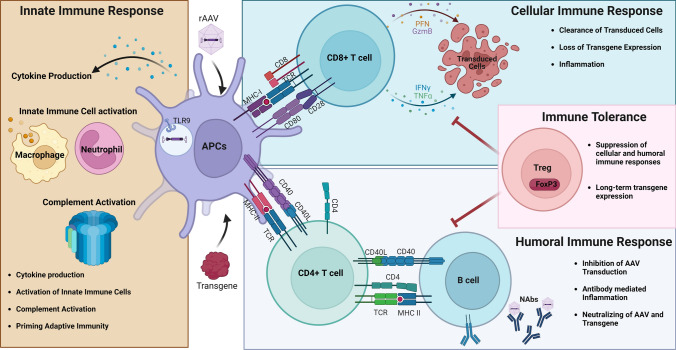
Recombinant adeno-associated viruses (AAVs) have emerged as promising gene delivery vehicles resulting in three US Food and Drug Administration (FDA) and one European Medicines Agency (EMA)-approved AAV-based gene therapies. Despite being a leading platform for therapeutic gene transfer in several clinical trials, host immune responses against the AAV vector and transgene have hampered their widespread application. Multiple factors, including vector design, dose, and route of administration, contribute to the overall immunogenicity of AAVs. The immune responses against the AAV capsid and transgene involve an initial innate sensing. The innate immune response subsequently triggers an adaptive immune response to elicit a robust and specific response against the AAV vector. AAV gene therapy clinical trials and preclinical studies provide important information about the immune-mediated toxicities associated with AAV, yet studies suggest preclinical models fail to precisely predict the outcome of gene delivery in humans. This review discusses the contribution of the innate and adaptive immune response against AAVs, highlighting the challenges and potential strategies to mitigate these responses, thereby enhancing the therapeutic potential of AAV gene therapy.
Overview
CoChat Summary
TL;DR
Recombinant AAV vectors are a leading gene-transfer platform, but innate and adaptive immune responses against the capsid, vector DNA, and transgene limit efficacy and safety. This review summarizes those immune mechanisms and the preclinical/clinical strategies being developed to mitigate them.
Key findings
- AAV-based therapies have reached the clinic: three FDA-approved products (Luxturna, Zolgensma, HEMGENIX) and one EMA-approved AAV5-Factor 8 vector (Roctavian).
- Pre-existing anti-AAV neutralizing antibodies are common, with 2–60% of human sera containing antibodies that limit AAV gene therapy depending on capsid variant; anti-AAV2 and AAV1 NAbs are most prevalent, and 10–100% of healthy human subjects have functional circulating capsid-specific T cells against multiple AAV serotypes.
- High-dose intravenous AAV can trigger complement activation and thrombotic microangiopathy (TMA): in DMD and SMA1 trials, patients receiving >1×10^14 vg/kg presented with complement activation/TMA, and TMA was reported in two MMA patients who received 5×10^13 vg/kg AAV-LK03.
- Zolgensma is administered at 1.1×10^14 vg/kg; among >1400 treated patients, the FDA reported nine TMA cases, and the EMA reported five TMA cases among 800 patients.
- Mitigation strategies under study include CpG depletion, TLR9 inhibition, complement inhibitors (APL-9, eculizumab), immunosuppression, capsid engineering, plasmapheresis, ImmTOR, and Treg-based approaches.
Methods
- Narrative review of published preclinical and clinical literature on AAV immunogenicity, including innate sensing, complement activation, humoral and T-cell responses, transgene immunity, and post-approval safety data.
- No primary experimental data, systematic search strategy, or meta-analysis is reported; the paper synthesizes findings from AAV gene therapy trials, animal studies, and post-licensure surveillance.
- Main analysis is descriptive, organized around immune mechanisms and candidate mitigation strategies, with a summary table of strategies and their clinical status.
Limitations
- The paper states that much remains unknown about immune responses to AAV gene therapy in patients, that lack of standard immune-assay protocols and inability to collect relevant samples cause variability across studies, and that appropriate animal models are not readily available.
- The paper states that preclinical models fail to precisely predict gene-delivery outcomes in humans, and that variability in dose, route, and capsid serotypes complicates comparison and interpretation.
- Evident from the text: as a narrative review, it does not provide a systematic search, quantitative synthesis, or primary data to resolve the variability it describes.
Model-written summary. Check it against the paper before relying on it.
Integrity signals
Registry
Cites
Statistics
Figures
Verification
Claims the paper makes
37 Valid · 7 Not valid · 118 Not checked · 36 Own results and interpretations
The cited sources support only part of this claim — read each source’s verdict below.
In the paper
“Endosomal TLR9, present in Kupffer cells or DCs, particularly binds to unmethylated CpG dinucleotides in the double-stranded DNA (dsDNA) vector genomes [36].”
§ Immunogenicity of Recombinant Adeno-Associated Virus (AAV) Vectors for Gene Transfer > Immune Responses to Adeno-Associated Viruses (AAVs) > Innate Immune Response to AAV
What the sources say
- Partly supportedcites [36] Rabinowitz, J., Y.K. Chan, and R.J. Samulski, Adeno-associated Virus (AAV) versus Immune Response. Viruses. 2019;11(2). 102; 10.3390/v11020102. PMC6409805 30691064 sourceExperimental — accuracy not yet measured
Section 2.1 (Host Response to AAV) states that TLR9 is an endosomal receptor ('TLR3, 7, 8 and 9 in the endosome') that 'binds to a specific unmethylated DNA sequence, the CpG motif ... present in the genomes of bacteria and DNA viruses', and that AAV endosomal trafficking/uncoating 'may result in TLR9 sensing of CpG motifs', with innate recognition of AAV2 by mouse or human plasmacytoid dendritic cells (pDCs) mediated by TLR9 — so the endosomal-CpG-binding and dendritic-cell parts are supported. However, our copy never mentions Kupffer cells or any liver macrophage as a TLR9-bearing cell (searched: Kupffer cells, liver macrophages, antigen-presenting cells; the only liver cell passage is the TLR2-mediated response of primary human nonparenchymal liver cells [17]). Nor does it attribute TLR9 binding to double-stranded DNA vector genomes: the Introduction describes AAV as 'single-stranded DNA, non-enveloped viruses' with 'linear single-stranded genomes', and the genome-configuration discussion only says self-complementary genomes increased the innate response relative to single-stranded vectors [16] without stating dsDNA as the TLR9 ligand. (LLM, conf=0.75)
plainstates a cause- Asserted: passes — The authors put it forward as true.
- Checkable: passes — It can be checked against evidence.
- Load-bearing: passes — The paper’s conclusions depend on it.
- Based: passes — The paper gives a reason why it holds.
- Partly supported
The cited sources support only part of this claim — read each source’s verdict below.
In the paper
“Maximizing the potential vector-antibody interaction results in reducing efficacy or safety of the gene therapy [18].”
§ Immunogenicity of Recombinant Adeno-Associated Virus (AAV) Vectors for Gene Transfer > Introduction
What the sources say
- Partly supportedcites [18] Fitzpatrick Z Influence of pre-existing anti-capsid neutralizing and binding antibodies on AAV vector transduction Mol Ther Methods Clin Dev 2018 9 119 129 10.1016/j.omtm.2018.02.003 29766022 PMC5948224 sourceExperimental — accuracy not yet measured
The Introduction (page unavailable) says neutralizing anti-capsid antibodies can block AAV transduction and cause gene transfer to lack efficacy. But the Abstract and Results report that non-neutralizing binding antibodies can enhance transduction, so the paper does not support a general claim that vector–antibody interactions reduce efficacy. The Introduction also says their impact on safety is only partially understood. (LLM, conf=0.88)
plainstates a cause- Asserted: passes — The authors put it forward as true.
- Checkable: passes — It can be checked against evidence.
- Load-bearing: passes — The paper’s conclusions depend on it.
- Based: passes — The paper gives a reason why it holds.
- Partly supported
The cited sources support only part of this claim — read each source’s verdict below.
In the paper
“Direct injection into the subretinal space, as was the route for the first FDA-approved AAV vector, results in less exposure to plasma proteins, circulating antibodies, blood cells, and tissue-resident phagocytic cells [15].”
§ Immunogenicity of Recombinant Adeno-Associated Virus (AAV) Vectors for Gene Transfer > Introduction
What the sources say
- Partly supportedcites [15] Bainbridge JW Effect of gene therapy on visual function in Leber's congenital amaurosis N Engl J Med 2008 358 21 2231 2239 10.1056/NEJMoa0802268 18441371 sourceExperimental — accuracy not yet measured
The Methods (p. 3) confirm that this study delivered an AAV vector directly into the subretinal space. The cited paper does not establish that this route reduces exposure to plasma proteins, circulating antibodies, blood cells, or tissue-resident phagocytes. It also does not identify the vector as the first FDA-approved AAV vector. (LLM, conf=0.82)
plainstates a cause- Asserted: passes — The authors put it forward as true.
- Checkable: passes — It can be checked against evidence.
- Load-bearing: unclear — It is unclear whether the paper’s conclusions depend on it.
- Based: passes — The paper gives a reason why it holds.
- Partly supported
The cited sources support only part of this claim — read each source’s verdict below.
In the paper
“In addition, other studies have shown that self-complementary AAV (scAAV) vectors exhibited an increased innate immune response to the transgene compared with single-stranded AAVs (ssAAVs), possibly due to enhanced activation of the TLR9/MyD88 signaling cascade [30, 44, 45].”
§ Immunogenicity of Recombinant Adeno-Associated Virus (AAV) Vectors for Gene Transfer > Immune Responses to Adeno-Associated Viruses (AAVs) > Innate Immune Response to AAV
What the sources say
- Not checked yetcites [30] Rogers GL Unique roles of TLR9- and MyD88-dependent and -independent pathways in adaptive immune responses to AAV-mediated gene transfer J Innate Immun 2015 7 3 302 314 10.1159/000369273 25612611 PMC4417066 source
- Partly supportedcites [44] Martino AT The genome of self-complementary adeno-associated viral vectors increases Toll-like receptor 9-dependent innate immune responses in the liver Blood 2011 117 24 6459 6468 10.1182/blood-2010-10-314518 21474674 PMC3123017 sourceExperimental — accuracy not yet measured
The Discussion (page not available) reports a stronger TLR9-dependent innate response to scAAV than to ssAAV, and the paper describes MyD88 as part of TLR9 signaling. But it locates the innate response in the liver, not specifically against the transgene; the Discussion says adaptive responses increased against the vector, not the transgene product. (LLM, conf=0.90)
- Partly supportedcites [45] Wu T Self-complementary AAVs induce more potent transgene product-specific immune responses compared to a single-stranded genome Mol Ther 2012 20 3 572 579 10.1038/mt.2011.280 22186792 PMC3293612 sourceExperimental — accuracy not yet measured
The Discussion of our copy does state that scAAV vectors provoke stronger innate activation than ssAAV and hypothesizes recognition of the double-stranded genome by pathogen recognition receptors "such as toll-like receptor 9 (TLR9) or other cytoplasmic DNA sensors, e.g., DAI", but it explicitly credits the heightened-innate comparison to "recent studies" (its refs 26, 27 — Herzog, 2010 ASH abstract, and Martino et al., Blood 2011) rather than reporting it as its own finding. Moreover, the innate signal in our copy is tied to the vector genome, not "to the transgene": what this paper actually demonstrates is markedly higher transgene product-specific CD8+ T and B cell (adaptive) responses to scAAV vs ssAAV (Introduction/Discussion). MyD88 is nowhere mentioned in our copy (searched: MyD88, TLR9-dependent innate immune response), so the "TLR9/MyD88 signaling cascade" framing is not this source's. (LLM, conf=0.72)
hedgedstates a possible cause- Asserted: passes — The authors put it forward as true.
- Checkable: passes — It can be checked against evidence.
- Load-bearing: unclear — It is unclear whether the paper’s conclusions depend on it.
- Based: passes — The paper gives a reason why it holds.
The cited sources support only part of this claim — read each source’s verdict below.
In the paper
“Finally, certain host responses have only been observed with very high doses of intravenous AAV, suggesting a threshold effect for these host reactions [19–21].”
§ Immunogenicity of Recombinant Adeno-Associated Virus (AAV) Vectors for Gene Transfer > Introduction
What the sources say
- Not checked yetcites [19] Hinderer C Severe toxicity in nonhuman primates and piglets following high-dose intravenous administration of an adeno-associated virus vector expressing human SMN Hum Gene Ther 2018 29 3 285 298 10.1089/hum.2018.015 29378426 PMC5865262 source
- Not checked yetcites [20] Wilson JM Flotte TR Moving forward after two deaths in a gene therapy trial of myotubular myopathy Hum Gene Ther 2020 31 13–14 695 696 10.1089/hum.2020.182 32605399 source
- Partly supportedcites [21] Nathwani AC Adenovirus-associated virus vector–mediated gene transfer in hemophilia B N Engl J Med 2011 365 25 2357 2365 10.1056/NEJMoa1108046 22149959 PMC3265081 sourceExperimental — accuracy not yet measured
The Results (Safety and Efficacy; page not provided) report liver-enzyme elevations in the high-dose participants, consistent with a dose-related host reaction. But the Results (Immune Responses to Vector and Transgene; page not provided) also report significant capsid-specific T-cell responses at the intermediate dose and humoral responses in all six participants. The Discussion says factors besides dose influence immune responses, so this study does not establish a general threshold for host reactions. (LLM, conf=0.84)
hedgedstates an association- Asserted: passes — The authors put it forward as true.
- Checkable: passes — It can be checked against evidence.
- Load-bearing: unclear — It is unclear whether the paper’s conclusions depend on it.
- Based: passes — The paper gives a reason why it holds.
117 more claims · 19 with their cited sources checked
Create a free account to see all 198 claims and to verify the 191 references still open.
- Probably not a substantial claim. 13
- It may state two separate claims as one. 66
Claims other papers make about this one
Each is checked against this paper’s own text: does it say what the citing paper says it does?
The cited source says what the claim attributes to it.
In the citing paper
“AAV immune response and subsequent toxicity have arguably limited gene transfer and therapeutic efficacy, making the prevention of immunogenicity a key focus of gene therapy research.20,38,39”
From Characterization of the ocular inflammatory response to AAV reveals divergence by sex and age (2025) · cites this paper as [39]
Citations
Cites
Items 201–230 of 230
Fu, R. Y., Chen, A. C., Lyle, M. J., Chen, C.-Y., Liu, C. L., & Miao, C. H. (2020) · Cellular Immunology · doi:10.1016/j.cellimm.2020.104216 · Cited by 34
Fuchs, S. P., Martinez-Navio, J. M., Rakasz, E. G., Gao, G., & Desrosiers, R. C. (2020) · Molecular Therapy - Methods & Clinical Development · doi:10.1016/j.omtm.2019.11.010 · Cited by 32
The impact of tacrolimus exposure on extrarenal adverse effects in adult renal transplant recipients
Campagne, O., Mager, D. E., Brazeau, D., Venuto, R. C., & Tornatore, K. M. (2019) · British Journal of Clinical Pharmacology · doi:10.1111/bcp.13811 · Cited by 31
Gene therapy in an era of emerging treatment options for hemophilia B
Monahan, P. E. (2015) · Journal of Thrombosis and Haemostasis · doi:10.1111/jth.12957 · Cited by 31
Nathwani, A. C., McIntosh, J., & Sheridan, R. (2022) · Human Gene Therapy · doi:10.1089/hum.2022.169 · Cited by 31
An Observational Study from Long-Term AAV Re-administration in Two Hemophilia Dogs
Sun, J., Shao, W., Chen, X., Merricks, E. P., Wimsey, L., Abajas, Y. L., Niemeyer, G. P., Lothrop, C. D., Monahan, P. E., Samulski, R. J., et al. (2018) · Molecular Therapy - Methods & Clinical Development · doi:10.1016/j.omtm.2018.07.011 · Cited by 30
Gardner, M. R., Mendes, D. E., Muniz, C. P., Martinez-Navio, J. M., Fuchs, S. P., Gao, G., & Desrosiers, R. C. (2022) · Molecular Therapy - Methods & Clinical Development · doi:10.1016/j.omtm.2022.01.003 · Cited by 30
Viney, L., Bürckstümmer, T., Eddington, C., Mietzsch, M., Choudhry, M. S., Henley, T., & Agbandje‐McKenna, M. (2021) · Journal of Virology · doi:10.1128/jvi.02023-20 · Cited by 27
VIGNAL-CLERMONT, C., YU-WAI-MAN, P., NEWMAN, N. J., CARELLI, V., MOSTER, M. L., BIOUSSE, V., SUBRAMANIAN, P. S., WANG, A.-G., DONAHUE, S. P., LEROY, B. P., et al. (2023) · American Journal of Ophthalmology · doi:10.1016/j.ajo.2022.11.026 · Cited by 25
Gene therapy’s next installment
(2019) · Nature Biotechnology · doi:10.1038/s41587-019-0194-z · Cited by 25
Herzog, R. W., Kuteyeva, V., Saboungi, R., Terhorst, C., & Biswas, M. (2019) · Frontiers in Immunology · doi:10.3389/fimmu.2019.00274 · Cited by 24
Vandamme, C., Xicluna, R., Hesnard, L., Devaux, M., Jaulin, N., Guilbaud, M., Le Duff, J., Couzinié, C., Moullier, P., Saulquin, X., et al. (2020) · Frontiers in Immunology · doi:10.3389/fimmu.2019.03110 · Cited by 23
Pohl, A. D. P., Venkatesha, S. H., Zhang, A.-H., & Scott, D. W. (2020) · Frontiers in Immunology · doi:10.3389/fimmu.2020.00693 · Cited by 22 · cited 1×
“Subsequently BAR Tregs were created by transducing Tregs with BAR construct and showed promising results in suppression of transgene-specific B cells [239, 240].”
Fanigliulo, D., Lazzerini, P. E., Capecchi, P. L., Ulivieri, C., Baldari, C. T., & Laghi-Pasini, F. (2015) · International Immunopharmacology · doi:10.1016/j.intimp.2014.12.021 · Cited by 21
Palaschak, B., Marsic, D., Herzog, R. W., Zolotukhin, S., & Markusic, D. M. (2017) · Molecular Therapy - Methods & Clinical Development · doi:10.1016/j.omtm.2017.04.004 · Cited by 19 · cited 1×
“However, transfer of expanded and activated capsid-specific T cells to mice resulted in reduced transgene expression and loss of transduced cells [100, 101].”
BackgroundrAAV8 and rAAV9-Mediated Long-Term Muscle Transduction with Tacrolimus (FK506) in Non-Human Primates
Ishii, A., Okada, H., Hayashita-Kinoh, H., Shin, J.-H., Tamaoka, A., Okada, T., & Takeda, S. (2020) · Molecular Therapy - Methods & Clinical Development · doi:10.1016/j.omtm.2020.05.012 · Cited by 18 · cited 7×
“In one study, muscle delivery of AAV resulted in formation of anti-transgene antibodies in some patients, which was predicted by NHP studies [120–123].”
BackgroundInfluentialFrentsch, M., Japp, A. S., Dingeldey, M., Matzmohr, N., Thiel, A., Scheiflinger, F., Reipert, B. M., & de la Rosa, M. (2020) · Journal of Thrombosis and Haemostasis · doi:10.1111/jth.14757 · Cited by 17
Zhong, C., Jiang, W., Wang, Y., Sun, J., Wu, X., Zhuang, Y., & Xiao, X. (2022) · Human Gene Therapy · doi:10.1089/hum.2021.129 · Cited by 17
Early clinical data raise the bar for hemophilia gene therapies
Dolgin, E. (2016) · Nature Biotechnology · doi:10.1038/nbt1016-999 · Cited by 16 · cited 1×
“history of immune response to protein replacement therapy or null mutations were excluded from these studies [127, 128].”
BackgroundA Cure For Hemophilia: the Promise Becomes a Reality
Herzog, R. W. (2016) · Molecular Therapy · doi:10.1038/mt.2016.169 · Cited by 15 · cited 1×
“history of immune response to protein replacement therapy or null mutations were excluded from these studies [127, 128].”
BackgroundStolte, B., Schreiber-Katz, O., Günther, R., Wurster, C. D., Petri, S., Osmanovic, A., Freigang, M., Uzelac, Z., Leo, M., von Velsen, O., et al. (2022) · Human Gene Therapy · doi:10.1089/hum.2022.054 · Cited by 15
Immunosuppressive agents are associated with peptic ulcer bleeding
Tomizawa, M., Shinozaki, F., Hasegawa, R., Shirai, Y., Motoyoshi, Y., Sugiyama, T., Yamamoto, S., & Ishige, N. (2017) · Experimental and Therapeutic Medicine · doi:10.3892/etm.2017.4214 · Cited by 11
Haar, J., Blazevic, D., Strobel, B., Kreuz, S., & Michelfelder, S. (2022) · Molecular Therapy - Methods & Clinical Development · doi:10.1016/j.omtm.2022.04.008 · Cited by 11 · cited 1×
“A recent study established a Meso Scale Discovery (MSD)-based assay for the quantification of BAbs and Nabs, which allows for rapid and quantitative assessment of AAV-specific antibodies [81].”
BackgroundThe Promise of Gene Therapy For The Treatment of α-1 Antitrypsin Deficiency
Cruz, P. E., Mueller, C., & Flotte, T. R. (2007) · Pharmacogenomics · doi:10.2217/14622416.8.9.1191 · Cited by 10
Self-citation2022 ASGCT Annual Meeting Abstracts
(2022) · Molecular Therapy · doi:10.1016/j.ymthe.2022.04.017 · Cited by 9
Everson, E. M., Olzsko, M. E., Leap, D. J., et al. (2016) · Molecular Therapy · doi:10.1038/mt.2016.78 · Cited by 8
Flushing Out Antibodies to Make AAV Gene Therapy Available to More Patients
Raper, S. E., Wilson, J. M., & Nunes, F. A. (2013) · Molecular Therapy · doi:10.1038/mt.2013.5 · Cited by 7 · cited 1×
“Moreover, in this study, NHPs with low NAbs were used and the efficacy of this method in animals with high NAbs needs further evaluation [183, 184].”
MethodSvetkey, L. P., Weinberger, M. H., Gavras, H., Gavras, I., Brown, T. S., Deterding, J., & Klotman, P. E. (1987) · PubMed · Cited by 6
AAV Vector Dose Determines TLR9 Dependence of CD8+ T Cell Response to Transgene Product
Li, N., Bertolini, T., & Herzog, R. W. (2020) · Blood · doi:10.1182/blood-2020-141054 · Cited by 5
Evaluating Readministration of Adeno-Associated Virus for Gene Therapy
Arjomandnejad, M., & Keeler, A. M. (2022) · Human Gene Therapy · doi:10.1089/hum.2022.29204.mar · Cited by 2
Self-citation
Research works printed but not linked: 8
- LogicBio LogicBio therapeutics reports second quarter 2022 FINANCIAL RESULTS AND PROVIDES CORPORATE UPDATE 2022 LogicBio
- Shirley JL Type I IFN sensing by cDCs and CD4+ T cell help are both requisite for cross-priming of AAV capsid-specific CD8+ T cells Mol Ther 2020 28 3 758 770 10.1016/j.ymthe.2019.11.011 31780366 PMC7054715 · DOI · Paper page
- Rogers GL Plasmacytoid and conventional dendritic cells cooperate in crosspriming AAV capsid-specific CD8+ T cells Blood 2017 129 24 3184 3195 10.1182/blood-2016-11-751040 28468798 PMC5472899 · DOI · Paper page
- Sullivan L Apellis pharmaceuticals will commence APL-9 program to control the complement system in host responses to AAV vector administration for gene Therapies 2019 Appellis Pharmaceuticals
- Schroeder, H., et al. Functional assessment of T cell responses to AAV8 empty capsids in healthy volunteers. Molecular Therapy. 2022;30(4):19-20.
- Calcedo R Immune responses in 101HEMB01, a Phase 1/2 open-Label, single ascending dose-finding trial of DTX101 (AAVrh10FIX) in patients with severe hemophilia B Blood 2017 130 3333
- Samelson-Jones BJ Timing of intensive immunosuppression impacts risk of transgene antibodies after AAV gene therapy in nonhuman primates Mol Ther-Methods Clin Dev 2020 17 1129 1138 10.1016/j.omtm.2020.05.001 32490034 PMC7256432 · DOI · Paper page
- Li C Adeno-associated virus capsid antigen presentation is dependent on endosomal escape J Clin Investig 2013 123 3 1390 1401 10.1172/JCI66611 23454772 PMC3582142 · DOI · Paper page
Cited by
Patel, M. N., Tiwari, S., Wang, Y., O’Neill, S., Wu, J., Omo‐Lamai, S., Espy, C. L., Chase, L. S., Majumder, A., Hoffman, E. T., et al. (2025) · Nature Biotechnology · doi:10.1038/s41587-025-02556-5 · Cited by 121
“Upon DNA binding, cGAS activates downstream STING signaling, which leads to inflammation characterized by upregulation of type 1 interferons (IFNs), such as IFN-β, and pro-inflammatory cytokines, such as interleukin 6 (IL-6) 13 .”
Srivastava, A. (2023) · Molecular Therapy — Nucleic Acids · doi:10.1016/j.omtn.2023.05.014 · Cited by 71
“It should be pointed out, however, that the vector genomehas been shown to increase theToll-like receptor 9-dependent immune response, at least in a murine models,(88,89) and that immune response to transgene products can and does occur.(90)”
BackgroundDaci, R., & Flotte, T. R. (2024) · International Journal of Molecular Sciences · doi:10.3390/ijms25021050 · Cited by 81
“In some cases, a strong T-cell response can result in the clearance of AAV-transduced cells [67,71].”
BackgroundSelf-citationCo-opting templated aggregation to degrade pathogenic tau assemblies and improve motor function
Miller, L. V. C., Papa, G., Vaysburd, M., Cheng, S., Sweeney, P. W., Smith, A. N., Franco, C., Katsinelos, T., Huang, M., Sanford, S., et al. (2024) · Cell · doi:10.1016/j.cell.2024.08.024 · Cited by 62
“44 Intrathecal and stereotaxic delivery routes are additionally being investigated for a range of CNS therapeutics, which could circumvent this problem.”
CAR-macrophages in solid tumors: promise, progress, and prospects
Alrehaili, M., Couto, P. S., Khalife, R., & Rafiq, Q. A. (2025) · npj Precision Oncology · doi:10.1038/s41698-025-01170-7 · Cited by 65
“Alternative vectors with reduced immunogenicity, such as adeno-associated viruses (AAV), or the use of genome editing tools like CRISPR/Cas9, offer potential for more durable and effective modi fi cations 17,18 .”
Metadata
- Authors
- Arjomandnejad, M., Dasgupta, I., Flotte, T. R., & Keeler, A. M.
- Affiliations
- University of Massachusetts Chan Medical School (US)
- Corresponding author
- Keeler, Allison M.
- Venue
- BioDrugs
- Published
- 2023-03-02
- Volume
- 37
- Issue
- 3
- Pages
- 311-329
- ISSN
- 1172-7039 (ISSN-L)
- 1173-8804
- 1179-190X
- PMC
- PMC9979149
- OpenAlex
- W4322758747
- Cited by
- 159
- References
- 238
- Citations by year
- 2026: 45 · 2025: 52 · 2024: 49 · 2023: 13
- FWCI
- 6.14
- Type
- journal article
- Language
- en
- Open access
- hybrid
- doi.org
- Licence
- cc-by-nc
- creativecommons.org/licenses/by-nc/4.0 (tdm)
- creativecommons.org/licenses/by-nc/4.0 (vor)
- Locations
- BioDrugs (publishedVersion, cc-by-nc)
- PubMed Central (publishedVersion, cc-by-nc)
- PubMed (publishedVersion)
- Funders
- NHLBI Division of Intramural Research (P01 HL158506)
- Topics
- Life Sciences › Biochemistry, Genetics and Molecular Biology › Genetics › Virus-based gene therapy research
- Life Sciences › Biochemistry, Genetics and Molecular Biology › Molecular Biology › RNA Interference and Gene Delivery
- Life Sciences › Immunology and Microbiology › Immunology › Immunotherapy and Immune Responses
- Keywords
- recombinant adeno-associated virus vectors, gene therapy, innate immune response, adaptive immune response, AAV capsid, immune-mediated toxicity, preclinical models, vector design, route of administration
- MeSH terms
- Dependovirus, Genetic Vectors, Humans, Immunity, Innate, Genetic Therapy, Gene Transfer Techniques
About these checks
Registry, retraction, Cites and statistics results are computed, not judged, with one exception: a printed reference that no index lists is read once by a model before it counts as a citation error. Claims are extracted by a model and kept only when their quote appears verbatim in the text; each cited source is then checked, with a model’s help, for whether it says what the claim relies on. Those verdicts can be wrong — read the claim’s quote and the cited source before relying on one.
The claim verdicts this report counts are experimental: their accuracy is not yet measured.
A language model drew the claims from the paper on 2026-10-04, under version 3 of the claim definition (model deepseek-v4.1-flash, prompt extract-v3).
A second model labelled each claim on 2026-10-04 (model jev-1.13-20260917, definition revision gold-guideline-v0.2).
Cited sources are checked with a language model’s help (qwen3.8-omni-flash and gpt-6-sol).
Statistics and arithmetic are recomputed, not judged.
Confidence bands are shown only for fields calibrated on our annotated test set. None is calibrated yet, so no band is shown.
What counts as a claim ›How we measure confidence ›How we check this ›
Are you an author, or do you see a problem with this page? Request a review
Data sources
Bibliographic data: Semantic Scholar, OpenAlex, Crossref.
Contains information from the Semantic Scholar Academic Graph Datasets, made available under the ODC Attribution License (ODC-BY 1.0).
Semantic Scholar’s data is described in: Kinney, R., et al. (2023). The Semantic Scholar Open Data Platform. arXiv:2301.10140.
