

Immunogenicity of Recombinant Adeno-Associated Virus (AAV) Vectors for Gene Transfer
Open accessThe DOI matches its Crossref record; 230 of the 238 references it cites were found in a registry or an index; 52 of the 243 sources its claims cite were checked for support.
Abstract
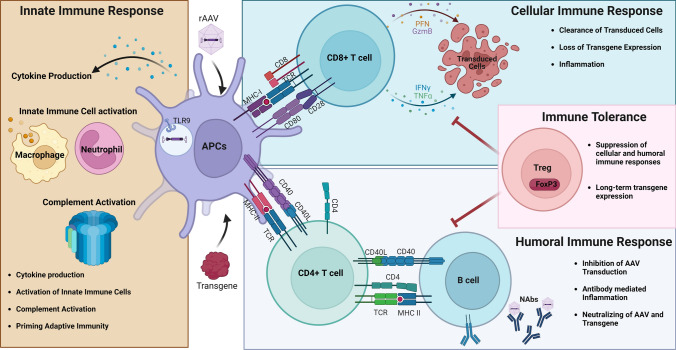
Recombinant adeno-associated viruses (AAVs) have emerged as promising gene delivery vehicles resulting in three US Food and Drug Administration (FDA) and one European Medicines Agency (EMA)-approved AAV-based gene therapies. Despite being a leading platform for therapeutic gene transfer in several clinical trials, host immune responses against the AAV vector and transgene have hampered their widespread application. Multiple factors, including vector design, dose, and route of administration, contribute to the overall immunogenicity of AAVs. The immune responses against the AAV capsid and transgene involve an initial innate sensing. The innate immune response subsequently triggers an adaptive immune response to elicit a robust and specific response against the AAV vector. AAV gene therapy clinical trials and preclinical studies provide important information about the immune-mediated toxicities associated with AAV, yet studies suggest preclinical models fail to precisely predict the outcome of gene delivery in humans. This review discusses the contribution of the innate and adaptive immune response against AAVs, highlighting the challenges and potential strategies to mitigate these responses, thereby enhancing the therapeutic potential of AAV gene therapy.
Overview
CoChat Summary
TL;DR
Recombinant AAV vectors are a leading gene-transfer platform, but innate and adaptive immune responses against the capsid, vector DNA, and transgene limit efficacy and safety. This review summarizes those immune mechanisms and the preclinical/clinical strategies being developed to mitigate them.
Key findings
- AAV-based therapies have reached the clinic: three FDA-approved products (Luxturna, Zolgensma, HEMGENIX) and one EMA-approved AAV5-Factor 8 vector (Roctavian).
- Pre-existing anti-AAV neutralizing antibodies are common, with 2–60% of human sera containing antibodies that limit AAV gene therapy depending on capsid variant; anti-AAV2 and AAV1 NAbs are most prevalent, and 10–100% of healthy human subjects have functional circulating capsid-specific T cells against multiple AAV serotypes.
- High-dose intravenous AAV can trigger complement activation and thrombotic microangiopathy (TMA): in DMD and SMA1 trials, patients receiving >1×10^14 vg/kg presented with complement activation/TMA, and TMA was reported in two MMA patients who received 5×10^13 vg/kg AAV-LK03.
- Zolgensma is administered at 1.1×10^14 vg/kg; among >1400 treated patients, the FDA reported nine TMA cases, and the EMA reported five TMA cases among 800 patients.
- Mitigation strategies under study include CpG depletion, TLR9 inhibition, complement inhibitors (APL-9, eculizumab), immunosuppression, capsid engineering, plasmapheresis, ImmTOR, and Treg-based approaches.
Methods
- Narrative review of published preclinical and clinical literature on AAV immunogenicity, including innate sensing, complement activation, humoral and T-cell responses, transgene immunity, and post-approval safety data.
- No primary experimental data, systematic search strategy, or meta-analysis is reported; the paper synthesizes findings from AAV gene therapy trials, animal studies, and post-licensure surveillance.
- Main analysis is descriptive, organized around immune mechanisms and candidate mitigation strategies, with a summary table of strategies and their clinical status.
Limitations
- The paper states that much remains unknown about immune responses to AAV gene therapy in patients, that lack of standard immune-assay protocols and inability to collect relevant samples cause variability across studies, and that appropriate animal models are not readily available.
- The paper states that preclinical models fail to precisely predict gene-delivery outcomes in humans, and that variability in dose, route, and capsid serotypes complicates comparison and interpretation.
- Evident from the text: as a narrative review, it does not provide a systematic search, quantitative synthesis, or primary data to resolve the variability it describes.
Model-written summary. Check it against the paper before relying on it.
Integrity signals
Registry
Cites
Statistics
Figures
Verification
Claims the paper makes
37 Valid · 7 Not valid · 118 Not checked · 36 Own results and interpretations
The cited sources support only part of this claim — read each source’s verdict below.
In the paper
“Endosomal TLR9, present in Kupffer cells or DCs, particularly binds to unmethylated CpG dinucleotides in the double-stranded DNA (dsDNA) vector genomes [36].”
§ Immunogenicity of Recombinant Adeno-Associated Virus (AAV) Vectors for Gene Transfer > Immune Responses to Adeno-Associated Viruses (AAVs) > Innate Immune Response to AAV
What the sources say
- Partly supportedcites [36] Rabinowitz, J., Y.K. Chan, and R.J. Samulski, Adeno-associated Virus (AAV) versus Immune Response. Viruses. 2019;11(2). 102; 10.3390/v11020102. PMC6409805 30691064 sourceExperimental — accuracy not yet measured
Section 2.1 (Host Response to AAV) states that TLR9 is an endosomal receptor ('TLR3, 7, 8 and 9 in the endosome') that 'binds to a specific unmethylated DNA sequence, the CpG motif ... present in the genomes of bacteria and DNA viruses', and that AAV endosomal trafficking/uncoating 'may result in TLR9 sensing of CpG motifs', with innate recognition of AAV2 by mouse or human plasmacytoid dendritic cells (pDCs) mediated by TLR9 — so the endosomal-CpG-binding and dendritic-cell parts are supported. However, our copy never mentions Kupffer cells or any liver macrophage as a TLR9-bearing cell (searched: Kupffer cells, liver macrophages, antigen-presenting cells; the only liver cell passage is the TLR2-mediated response of primary human nonparenchymal liver cells [17]). Nor does it attribute TLR9 binding to double-stranded DNA vector genomes: the Introduction describes AAV as 'single-stranded DNA, non-enveloped viruses' with 'linear single-stranded genomes', and the genome-configuration discussion only says self-complementary genomes increased the innate response relative to single-stranded vectors [16] without stating dsDNA as the TLR9 ligand. (LLM, conf=0.75)
plainstates a cause- Asserted: passes — The authors put it forward as true.
- Checkable: passes — It can be checked against evidence.
- Load-bearing: passes — The paper’s conclusions depend on it.
- Based: passes — The paper gives a reason why it holds.
- Partly supported
The cited sources support only part of this claim — read each source’s verdict below.
In the paper
“Maximizing the potential vector-antibody interaction results in reducing efficacy or safety of the gene therapy [18].”
§ Immunogenicity of Recombinant Adeno-Associated Virus (AAV) Vectors for Gene Transfer > Introduction
What the sources say
- Partly supportedcites [18] Fitzpatrick Z Influence of pre-existing anti-capsid neutralizing and binding antibodies on AAV vector transduction Mol Ther Methods Clin Dev 2018 9 119 129 10.1016/j.omtm.2018.02.003 29766022 PMC5948224 sourceExperimental — accuracy not yet measured
The Introduction (page unavailable) says neutralizing anti-capsid antibodies can block AAV transduction and cause gene transfer to lack efficacy. But the Abstract and Results report that non-neutralizing binding antibodies can enhance transduction, so the paper does not support a general claim that vector–antibody interactions reduce efficacy. The Introduction also says their impact on safety is only partially understood. (LLM, conf=0.88)
plainstates a cause- Asserted: passes — The authors put it forward as true.
- Checkable: passes — It can be checked against evidence.
- Load-bearing: passes — The paper’s conclusions depend on it.
- Based: passes — The paper gives a reason why it holds.
- Partly supported
The cited sources support only part of this claim — read each source’s verdict below.
In the paper
“Direct injection into the subretinal space, as was the route for the first FDA-approved AAV vector, results in less exposure to plasma proteins, circulating antibodies, blood cells, and tissue-resident phagocytic cells [15].”
§ Immunogenicity of Recombinant Adeno-Associated Virus (AAV) Vectors for Gene Transfer > Introduction
What the sources say
- Partly supportedcites [15] Bainbridge JW Effect of gene therapy on visual function in Leber's congenital amaurosis N Engl J Med 2008 358 21 2231 2239 10.1056/NEJMoa0802268 18441371 sourceExperimental — accuracy not yet measured
The Methods (p. 3) confirm that this study delivered an AAV vector directly into the subretinal space. The cited paper does not establish that this route reduces exposure to plasma proteins, circulating antibodies, blood cells, or tissue-resident phagocytes. It also does not identify the vector as the first FDA-approved AAV vector. (LLM, conf=0.82)
plainstates a cause- Asserted: passes — The authors put it forward as true.
- Checkable: passes — It can be checked against evidence.
- Load-bearing: unclear — It is unclear whether the paper’s conclusions depend on it.
- Based: passes — The paper gives a reason why it holds.
- Partly supported
The cited sources support only part of this claim — read each source’s verdict below.
In the paper
“In addition, other studies have shown that self-complementary AAV (scAAV) vectors exhibited an increased innate immune response to the transgene compared with single-stranded AAVs (ssAAVs), possibly due to enhanced activation of the TLR9/MyD88 signaling cascade [30, 44, 45].”
§ Immunogenicity of Recombinant Adeno-Associated Virus (AAV) Vectors for Gene Transfer > Immune Responses to Adeno-Associated Viruses (AAVs) > Innate Immune Response to AAV
What the sources say
- Not checked yetcites [30] Rogers GL Unique roles of TLR9- and MyD88-dependent and -independent pathways in adaptive immune responses to AAV-mediated gene transfer J Innate Immun 2015 7 3 302 314 10.1159/000369273 25612611 PMC4417066 source
- Partly supportedcites [44] Martino AT The genome of self-complementary adeno-associated viral vectors increases Toll-like receptor 9-dependent innate immune responses in the liver Blood 2011 117 24 6459 6468 10.1182/blood-2010-10-314518 21474674 PMC3123017 sourceExperimental — accuracy not yet measured
The Discussion (page not available) reports a stronger TLR9-dependent innate response to scAAV than to ssAAV, and the paper describes MyD88 as part of TLR9 signaling. But it locates the innate response in the liver, not specifically against the transgene; the Discussion says adaptive responses increased against the vector, not the transgene product. (LLM, conf=0.90)
- Partly supportedcites [45] Wu T Self-complementary AAVs induce more potent transgene product-specific immune responses compared to a single-stranded genome Mol Ther 2012 20 3 572 579 10.1038/mt.2011.280 22186792 PMC3293612 sourceExperimental — accuracy not yet measured
The Discussion of our copy does state that scAAV vectors provoke stronger innate activation than ssAAV and hypothesizes recognition of the double-stranded genome by pathogen recognition receptors "such as toll-like receptor 9 (TLR9) or other cytoplasmic DNA sensors, e.g., DAI", but it explicitly credits the heightened-innate comparison to "recent studies" (its refs 26, 27 — Herzog, 2010 ASH abstract, and Martino et al., Blood 2011) rather than reporting it as its own finding. Moreover, the innate signal in our copy is tied to the vector genome, not "to the transgene": what this paper actually demonstrates is markedly higher transgene product-specific CD8+ T and B cell (adaptive) responses to scAAV vs ssAAV (Introduction/Discussion). MyD88 is nowhere mentioned in our copy (searched: MyD88, TLR9-dependent innate immune response), so the "TLR9/MyD88 signaling cascade" framing is not this source's. (LLM, conf=0.72)
hedgedstates a possible cause- Asserted: passes — The authors put it forward as true.
- Checkable: passes — It can be checked against evidence.
- Load-bearing: unclear — It is unclear whether the paper’s conclusions depend on it.
- Based: passes — The paper gives a reason why it holds.
The cited sources support only part of this claim — read each source’s verdict below.
In the paper
“Finally, certain host responses have only been observed with very high doses of intravenous AAV, suggesting a threshold effect for these host reactions [19–21].”
§ Immunogenicity of Recombinant Adeno-Associated Virus (AAV) Vectors for Gene Transfer > Introduction
What the sources say
- Not checked yetcites [19] Hinderer C Severe toxicity in nonhuman primates and piglets following high-dose intravenous administration of an adeno-associated virus vector expressing human SMN Hum Gene Ther 2018 29 3 285 298 10.1089/hum.2018.015 29378426 PMC5865262 source
- Not checked yetcites [20] Wilson JM Flotte TR Moving forward after two deaths in a gene therapy trial of myotubular myopathy Hum Gene Ther 2020 31 13–14 695 696 10.1089/hum.2020.182 32605399 source
- Partly supportedcites [21] Nathwani AC Adenovirus-associated virus vector–mediated gene transfer in hemophilia B N Engl J Med 2011 365 25 2357 2365 10.1056/NEJMoa1108046 22149959 PMC3265081 sourceExperimental — accuracy not yet measured
The Results (Safety and Efficacy; page not provided) report liver-enzyme elevations in the high-dose participants, consistent with a dose-related host reaction. But the Results (Immune Responses to Vector and Transgene; page not provided) also report significant capsid-specific T-cell responses at the intermediate dose and humoral responses in all six participants. The Discussion says factors besides dose influence immune responses, so this study does not establish a general threshold for host reactions. (LLM, conf=0.84)
hedgedstates an association- Asserted: passes — The authors put it forward as true.
- Checkable: passes — It can be checked against evidence.
- Load-bearing: unclear — It is unclear whether the paper’s conclusions depend on it.
- Based: passes — The paper gives a reason why it holds.
117 more claims · 19 with their cited sources checked
Create a free account to see all 198 claims and to verify the 191 references still open.
- Probably not a substantial claim. 13
- It may state two separate claims as one. 66
Claims other papers make about this one
Each is checked against this paper’s own text: does it say what the citing paper says it does?
The cited source says what the claim attributes to it.
In the citing paper
“AAV immune response and subsequent toxicity have arguably limited gene transfer and therapeutic efficacy, making the prevention of immunogenicity a key focus of gene therapy research.20,38,39”
From Characterization of the ocular inflammatory response to AAV reveals divergence by sex and age (2025) · cites this paper as [39]
Citations
Cites
The role of pattern-recognition receptors in innate immunity: update on Toll-like receptors
Kawai, T., & Akira, S. (2010) · Nature Immunology · doi:10.1038/ni.1863 · Cited by 9,304 · cited 1×
“Cell surface TLRs recognize membrane components of pathogens, such as lipoproteins and lipids, and intracellular TLRs recognize pathogen-derived nucleic acids [32, 33].”
BackgroundPattern Recognition Receptors and Inflammation
Takeuchi, O., & Akira, S. (2010) · Cell · doi:10.1016/j.cell.2010.01.022 · Cited by 8,895 · cited 2×
“In summary, the transgene immune response is mostly observed in patients with no residual protein expression; therefore, clinical studies preferably choose subjects with missense mutation or subjects with no response in protein replacement therapy [21, 24].”
BackgroundRegulation of type I interferon responses
Ivashkiv, L. B., & Donlin, L. T. (2014) · Nature Reviews Immunology · doi:10.1038/nri3581 · Cited by 3,297 · cited 1×
“Secreted IFNs and cytokines in turn mediate expression of genes that limit viral replication, as well as stimulate adaptive and memory immune responses [26].”
BackgroundAdeno-associated virus vector as a platform for gene therapy delivery
Wang, D., Tai, P. W. L., & Gao, G. (2019) · Nature Reviews Drug Discovery · doi:10.1038/s41573-019-0012-9 · Cited by 2,444
Single-Dose Gene-Replacement Therapy for Spinal Muscular Atrophy
Mendell, J. R., Al-Zaidy, S., Shell, R., Arnold, W. D., Rodino-Klapac, L. R., Prior, T. W., Lowes, L., Alfano, L., Berry, K., Church, K., et al. (2017) · New England Journal of Medicine · doi:10.1056/nejmoa1706198 · Cited by 2,381 · cited 1×
“Zolgensma was able to achieve clinically relevant therapeutic outcomes and has attained promising results in reducing premature death in SMA patients [141, 142].”
BackgroundManno, C. S., Pierce, G. F., Arruda, V. R., Glader, B., Ragni, M., Rasko, J. J. E., Ozelo, M. C., Hoots, K., Blatt, P., Konkle, B., et al. (2006) · Nature Medicine · doi:10.1038/nm1358 · Cited by 2,163 · cited 2×
“Additionally, capsid-specific cell-mediated cytotoxic T-cell responses affect transgene expression and result in clearance of transduced cells hindering therapeutic efficacy [14].”
BackgroundEffect of gene therapy on visual function in Leber’s congenital amaurosis
Bainbridge, J. W. B., Smith, A. J., Barker, S. S., Robbie, S., Henderson, R., Balaggan, K., Viswanathan, A., Holder, G. E., Stockman, A., Tyler, N., et al. (2008) · New England Journal of Medicine · doi:10.1056/nejmoa0802268 · Cited by 1,924 · cited 1×
“Direct injection into the subretinal space, as was the route for the first FDA-approved AAV vector, results in less exposure to plasma proteins, circulating antibodies, blood cells, and tissue-resident phagocytic cells [15].”
BackgroundAdenovirus-Associated Virus Vector–Mediated Gene Transfer in Hemophilia B
Nathwani, A. C., Tuddenham, E. G. D., Rangarajan, S., Rosales, C., McIntosh, J., Linch, D. C., Chowdary, P., Riddell, A., Pie, A. J., Harrington, C., et al. (2011) · New England Journal of Medicine · doi:10.1056/nejmoa1108046 · Cited by 1,864
Coutinho, A. E., & Chapman, K. E. (2011) · Molecular and Cellular Endocrinology · doi:10.1016/j.mce.2010.04.005 · Cited by 1,815
Complement System Part I – Molecular Mechanisms of Activation and Regulation
Merle, N. S., Church, S. E., Fremeaux-Bacchi, V., & Roumenina, L. T. (2015) · Frontiers in Immunology · doi:10.3389/fimmu.2015.00262 · Cited by 1,620
Research works printed but not linked: 8
- LogicBio LogicBio therapeutics reports second quarter 2022 FINANCIAL RESULTS AND PROVIDES CORPORATE UPDATE 2022 LogicBio
- Shirley JL Type I IFN sensing by cDCs and CD4+ T cell help are both requisite for cross-priming of AAV capsid-specific CD8+ T cells Mol Ther 2020 28 3 758 770 10.1016/j.ymthe.2019.11.011 31780366 PMC7054715 · DOI · Paper page
- Rogers GL Plasmacytoid and conventional dendritic cells cooperate in crosspriming AAV capsid-specific CD8+ T cells Blood 2017 129 24 3184 3195 10.1182/blood-2016-11-751040 28468798 PMC5472899 · DOI · Paper page
- Sullivan L Apellis pharmaceuticals will commence APL-9 program to control the complement system in host responses to AAV vector administration for gene Therapies 2019 Appellis Pharmaceuticals
- Schroeder, H., et al. Functional assessment of T cell responses to AAV8 empty capsids in healthy volunteers. Molecular Therapy. 2022;30(4):19-20.
- Calcedo R Immune responses in 101HEMB01, a Phase 1/2 open-Label, single ascending dose-finding trial of DTX101 (AAVrh10FIX) in patients with severe hemophilia B Blood 2017 130 3333
- Samelson-Jones BJ Timing of intensive immunosuppression impacts risk of transgene antibodies after AAV gene therapy in nonhuman primates Mol Ther-Methods Clin Dev 2020 17 1129 1138 10.1016/j.omtm.2020.05.001 32490034 PMC7256432 · DOI · Paper page
- Li C Adeno-associated virus capsid antigen presentation is dependent on endosomal escape J Clin Investig 2013 123 3 1390 1401 10.1172/JCI66611 23454772 PMC3582142 · DOI · Paper page
Cited by
Patel, M. N., Tiwari, S., Wang, Y., O’Neill, S., Wu, J., Omo‐Lamai, S., Espy, C. L., Chase, L. S., Majumder, A., Hoffman, E. T., et al. (2025) · Nature Biotechnology · doi:10.1038/s41587-025-02556-5 · Cited by 121
“Upon DNA binding, cGAS activates downstream STING signaling, which leads to inflammation characterized by upregulation of type 1 interferons (IFNs), such as IFN-β, and pro-inflammatory cytokines, such as interleukin 6 (IL-6) 13 .”
Srivastava, A. (2023) · Molecular Therapy — Nucleic Acids · doi:10.1016/j.omtn.2023.05.014 · Cited by 71
“It should be pointed out, however, that the vector genomehas been shown to increase theToll-like receptor 9-dependent immune response, at least in a murine models,(88,89) and that immune response to transgene products can and does occur.(90)”
BackgroundDaci, R., & Flotte, T. R. (2024) · International Journal of Molecular Sciences · doi:10.3390/ijms25021050 · Cited by 81
“In some cases, a strong T-cell response can result in the clearance of AAV-transduced cells [67,71].”
BackgroundSelf-citationCo-opting templated aggregation to degrade pathogenic tau assemblies and improve motor function
Miller, L. V. C., Papa, G., Vaysburd, M., Cheng, S., Sweeney, P. W., Smith, A. N., Franco, C., Katsinelos, T., Huang, M., Sanford, S., et al. (2024) · Cell · doi:10.1016/j.cell.2024.08.024 · Cited by 62
“44 Intrathecal and stereotaxic delivery routes are additionally being investigated for a range of CNS therapeutics, which could circumvent this problem.”
CAR-macrophages in solid tumors: promise, progress, and prospects
Alrehaili, M., Couto, P. S., Khalife, R., & Rafiq, Q. A. (2025) · npj Precision Oncology · doi:10.1038/s41698-025-01170-7 · Cited by 65
“Alternative vectors with reduced immunogenicity, such as adeno-associated viruses (AAV), or the use of genome editing tools like CRISPR/Cas9, offer potential for more durable and effective modi fi cations 17,18 .”
The roles of Th cells in myocardial infarction
Liu, J., Liu, F., Liang, T., Zhou, Y., Su, X., Li, X., Zeng, J., Qu, P., Wang, Y., Chen, F., et al. (2024) · Cell Death Discovery · doi:10.1038/s41420-024-02064-6 · Cited by 51
“CD8 + T cells can amplify in fl ammation by direct cytotoxicity to healthy cardiomyocytes, activate macrophage-mediated clearance of necrotic debris, and also induce and also lead to deterioration of cardiac function by degranulation [27].”
BackgroundComplement System Response to Adeno-Associated Virus Vector Gene Therapy
Kropf, E., Markusic, D. M., Majowicz, A., Mingozzi, F., & Kuranda, K. (2024) · Human Gene Therapy · doi:10.1089/hum.2023.194 · Cited by 39
Tau degradation in Alzheimer's disease: Mechanisms and therapeutic opportunities
Wang, L., Banesh, S., Kumar, R., Schedin‐Weiss, S., Tjernberg, L. O., & Winblad, B. G. (2025) · Alzheimer s & Dementia · doi:10.1002/alz.70048 · Cited by 64
“169 Combining strategies to overcome AAV immune responses or apply alternative delivery methods for administration will increase the potential of RING-Bait technology in clinical study.”
Recent Advances in Gene Therapy for Hemophilia: Projecting the Perspectives
Chernyi, N., Gavrilova, D., Saruhanyan, M., Oloruntimehin, E. S., Karabelsky, A. V., Bezsonov, E. E., & Malogolovkin, A. S. (2024) · Biomolecules · doi:10.3390/biom14070854 · Cited by 49
“Alternatively, transgene immune responses can also be turned off through the use of systemic immune suppression or Treg-based strategy or targeted delivery to tissues [142].”
Kachanov, A., Kostyusheva, A. P., Brezgin, S. A., Karandashov, I. V., Ponomareva, N. I., Tikhonov, A., Lukashev, A. N., Pokrovsky, V. S., Zamyatnin, A. A., Parodi, A., et al. (2024) · Medicinal Research Reviews · doi:10.1002/med.22036 · Cited by 49
Harkins, A. L., Ambegaokar, P. P., & Keeler, A. M. (2024) · Neurotherapeutics · doi:10.1016/j.neurot.2024.e00435 · Cited by 39
“Immune responses to AAV gene therapy have been reviewed at more depth elsewhere [29,30].”
Self-citationGene Therapy for Inherited Hearing Loss: Updates and Remaining Challenges
Hahn, R., & Avraham, K. B. (2023) · Audiology Research · doi:10.3390/audiolres13060083 · Cited by 33
“Despite this advantage, our current understanding of the host immune responses to AAV within the mammalian inner ear remains limited [118,119].”
BackgroundPurdy, R., John, M., Bray, A., Clare, A. J., Copland, D. A., Chan, Y. K., Henderson, R. H., Nerinckx, F., Leroy, B. P., Yang, P., et al. (2025) · Progress in Retinal and Eye Research · doi:10.1016/j.preteyeres.2025.101354 · Cited by 24
Systemic Toxicity of Recombinant Adeno-Associated Virus Gene Therapy Vectors
Assaf, B. T. (2024) · Toxicologic Pathology · doi:10.1177/01926233241298892 · Cited by 26
“1 In addition, CTLs can recognize and destroy transduced cells presenting AAV-derived peptides on major histocompatibility complex (MHC) class I molecules.”
Clinical and Translational Landscape of Viral Gene Therapies
Yudaeva, A., Kostyusheva, A. P., Kachanov, A., Brezgin, S. A., Ponomareva, N., Parodi, A., Pokrovsky, V. S., Lukashev, A. N., Chulanov, V., & Kostyushev, D. S. (2024) · Cells · doi:10.3390/cells13221916 · Cited by 34
Zaidman, C. M., Goedeker, N. L., Aqul, A. A., Butterfield, R. J., Connolly, A. M., Crystal, R. G., Godwin, K. E., Hor, K. N., Mathews, K. D., Proud, C. M., et al. (2024) · Journal of Neuromuscular Diseases · doi:10.3233/jnd-230185 · Cited by 26
“Cases of IMM emerge four to eight weeks after infusion and likely result from adaptive immunogenicity against the newly expressed transgenic protein, possibly due to T cell immunity [13, 16, 25].”
BackgroundBase editing of the mutated TERT promoter inhibits liver tumor growth
Zhao, G., Ma, Q., Huang, Y., Jiang, H., Xu, Q., Luo, S., Meng, Z., Liu, J., Zhu, L., Lin, Q., et al. (2023) · Hepatology · doi:10.1097/hep.0000000000000700 · Cited by 26
“[27] LNPs for mRNA delivery have emerged as a new category of therapeutic agent to prevent and treat various diseases.”
BackgroundRetina-directed gene therapy: Achievements and remaining challenges
Biber, J., Gandor, C. L. A., Bećirović, E., & Michalakis, S. (2025) · Pharmacology & Therapeutics · doi:10.1016/j.pharmthera.2025.108862 · Cited by 25
Ford, J. L., Karatza, E., Mody, H. R., Shastri, P. N., Khajehpour, S., Yang, T., Swanson, M., Chao, D. L., & Devineni, D. (2024) · Clinical Pharmacology & Therapeutics · doi:10.1002/cpt.3230 · Cited by 26
“21,27 Several additional studies were performed to evaluate safety of repeat dosing.”
BackgroundCharacterization of the ocular inflammatory response to AAV reveals divergence by sex and age
Clare, A. J., Langer, P. M., Ward, A., Chan, Y. K., Dick, A. D., & Copland, D. A. (2025) · Molecular Therapy · doi:10.1016/j.ymthe.2025.01.028 · Cited by 19
Targeting Drug Delivery System to Skeletal Muscles: A Comprehensive Review of Different Approaches
Li, X., Xu, J., Yao, S., Zhang, N., Zhang, B., & Zhang, Z. (2025) · Journal of Cachexia Sarcopenia and Muscle · doi:10.1002/jcsm.13691 · Cited by 26
“Besides, immunosuppressive drugs and plasmapheresis could help reduce the immune response [56, 57].”
Gene therapy and kidney diseases
Tavakolidakhrabadi, N., Ding, W. Y., Saleem, M. A., Welsh, G. I., & May, C. (2024) · Molecular Therapy — Methods & Clinical Development · doi:10.1016/j.omtm.2024.101333 · Cited by 30
“34”
Pfaller, A. M., Kaplan, L., Carido, M., Graßmann, F., Díaz‐Lezama, N., Ghaseminejad, F., Wunderlich, K. A., Glänzer, S., Bludau, O., Pannicke, T., et al. (2024) · Journal of Neuroinflammation · doi:10.1186/s12974-024-03021-x · Cited by 20
“This finding underscores the current debate in the field on the need for a thorough re-evaluation and optimization of the immunogenic potential of AAV constructs in order to increase the efficacy of gene therapy approaches [114, 115].”
BackgroundWeaving the gates of life: Pioneering a new era in oral gene delivery with metal-organic frameworks
Jiang, M., Zhang, G., Zeng, Q., Xiong, D., Bai, X., Wu, Y., Liu, J., Chen, J., Jiang, T., Liu, W.-X., et al. (2024) · Chemical Engineering Journal · doi:10.1016/j.cej.2024.158522 · Cited by 18
Delivery of DNA-Based Therapeutics for Treatment of Chronic Diseases
Sussman, C., Liberatore, R. A., & Drozdz, M. M. (2024) · Pharmaceutics · doi:10.3390/pharmaceutics16040535 · Cited by 21
Gushchina, L. V., Bradley, A., Vetter, T. A., Lay, J. W., Rohan, N., Frair, E. C., Wein, N., & Flanigan, K. M. (2023) · Molecular Therapy — Methods & Clinical Development · doi:10.1016/j.omtm.2023.101144 · Cited by 17
Recent advances and future challenges in gene therapy for hearing loss
Amariutei, A. E., Jeng, J., Safieddine, S., & Marcotti, W. (2023) · Royal Society Open Science · doi:10.1098/rsos.230644 · Cited by 24
Advances in viral vector-based delivery systems for gene therapy: a comprehensive review
Singh, K., Jain, D., Sethi, P., Gupta, J. K., Dubey, A., Noman, A. A., lal, S., Sharma, P., & Abdallah, E. M. (2025) · 3 Biotech · doi:10.1007/s13205-025-04366-7 · Cited by 24
“Preclinical strategies like empty capsid decoys and tolerogenic nanoparticle coatings mitigate complement activation and cytotoxic T-cell responses (Arjomandnejad et al. 2023).”
Neutralizing Antibodies: Role in Immune Response and Viral Vector Based Gene Therapy
Tsaregorodtseva, T. S., Gubaidullina, A. A., Kayumova, B. R., Shaimardanova, A. A., Issa, S. S., Solovyeva, V. V., Sufianov, A. A., Суфианова, Г. З., & Rizvanov, A. A. (2025) · International Journal of Molecular Sciences · doi:10.3390/ijms26115224 · Cited by 20
“As previously mentioned, it is also important to consider individual factors in nAb activity: pre-existing nAb levels can vary substantially among patients, leading to significant variations in gene therapy outcomes [85].”
InfluentialDevelopment of New Genome Editing Tools for the Treatment of Hyperlipidemia
Preta, G. (2023) · Cells · doi:10.3390/cells12202466 · Cited by 20
“AAV-based gene delivery is known to last for years in terminally differentiated cells or exhibits a higher tendency to induce unwanted off-target effects over time [136,137] to trigger an immune response [138].”
BackgroundTherapeutic Application and Structural Features of Adeno-Associated Virus Vector
Matsuzaka, Y., & Yashiro, R. (2024) · Current Issues in Molecular Biology · doi:10.3390/cimb46080499 · Cited by 16
“For example, immune recognition of the same AAV vector may change when delivered by different routes [265].”
BackgroundPan, X. M., Jiang, S., Zhang, X., Wang, Z., Wang, X., Cao, L., & Xiao, W. (2024) · British Journal of Pharmacology · doi:10.1111/bph.17356 · Cited by 20
Redundancy in Innate Immune Pathways That Promote CD8+ T-Cell Responses in AAV1 Muscle Gene Transfer
Li, N., Kumar, S. R. P., Cao, D., Muñoz-Melero, M., Arisa, S., Brian, B. A., Greenwood, C. M., Yamada, K., Duan, D., & Herzog, R. W. (2024) · Viruses · doi:10.3390/v16101507 · Cited by 14
“However, this outcome also raises the possibility that io2 has additional effects besides TLR9 inhibition, as has been speculated by others [33,64].”
The science and practice of current environmental risk assessment for gene therapy: a review
Liu, F. (2024) · Cytotherapy · doi:10.1016/j.jcyt.2024.04.067 · Cited by 16
Egorova, T. V., Starikova, A. V., & Polikarpova, A. V. (2025) · Pharmaceutics · doi:10.3390/pharmaceutics17111492 · Cited by 20
“Following AAV transduction, antigens are presented to CD 4+ T-helper cells, leading to B-cell maturation, expansion, class switching, and increased production of antibodies against the AAV capsid [12].”
InfluentialKonkle, B. A., Peyvandi, F., Foster, G. R., Hermans, C. R. J. R., Mura, V. L., Leavitt, A. D., Lillicrap, D., Mahlangu, J. N., Ozelo, M. C., Pipe, S. W., et al. (2025) · Journal of Thrombosis and Haemostasis · doi:10.1016/j.jtha.2025.02.042 · Cited by 16
Application of hydrogels for targeting cancer stem cells in cancer treatment
Li, F., Li, Z., Wei, C., Xu, L., Liang, Y., Yan, J., Li, Y., He, B., & Sun, C. (2024) · Biomedicine & Pharmacotherapy · doi:10.1016/j.biopha.2024.117486 · Cited by 19
Qiu, B., Manzanares, D., Li, Y., Wang, X., Li, Z., Terreau, S., He, Z., Lyu, J., Wang, W., & Lara‐Sáez, I. (2024) · Molecular Therapy — Methods & Clinical Development · doi:10.1016/j.omtm.2024.101292 · Cited by 13
Wu, F., He, W., Xiao, Y., Wu, Q., Zhang, Q., Zhang, T., Xu, L., & Pang, X. (2025) · Advanced Science · doi:10.1002/advs.202408397 · Cited by 17
Developing AAV-delivered nonsense suppressor tRNAs for neurological disorders
Wang, J., Gao, G., & Wang, D. (2024) · Neurotherapeutics · doi:10.1016/j.neurot.2024.e00391 · Cited by 10
“However, it often requires a high systemic dose compared with local injection, and may trigger deleterious immune responses [146 – 148].”
BackgroundHepatitis after gene therapy, what are the possible causes?
Maina, A. M., & Foster, G. R. (2024) · Journal of Viral Hepatitis · doi:10.1111/jvh.13919 · Cited by 14
“20 Capsid-specific CD8 + T cells can be triggered by hepatocytes which act as antigen-presenting cells by expressing capsid proteins on MHC class 1 receptors on the cell surface.”
BackgroundTang, Y., Ebadi, M., Lei, J., Feng, Z., Fakhari, S., Wu, P., Smith, M. D., Limberis, M. P., Kolbeck, R., Excoffon, K. J. D. A., et al. (2024) · Molecular Therapy — Methods & Clinical Development · doi:10.1016/j.omtm.2024.101244 · Cited by 11
Mucopolysaccharidosis type IIIB: a current review and exploration of the AAV therapy landscape
Rouse, C. J., Jensen, V. N., & Heldermon, C. D. (2023) · Neural Regeneration Research · doi:10.4103/1673-5374.377606 · Cited by 16
“The innate immune systems response to AAV begins with the uptake of AAV by antigen-presenting cells followed by the recognition of a foreign pathogen by pattern recognition receptors which are expressed on macrophages and dendritic cells, and can be classified into families, which include toll-like receptors (Chen et…”
Jarvi, N. L., Hofman, K., Venkatesh, A., Gorecki, E., & Balu‐Iyer, S. V. (2024) · Journal of Pharmaceutical Sciences · doi:10.1016/j.xphs.2024.09.006 · Cited by 10
Benemei, S., Gatto, F., Marcucci, R., & Gresele, P. (2024) · Thrombosis and Haemostasis · doi:10.1055/a-2413-4345 · Cited by 11
“5,10,11 In particular, adaptive immune responses against the virus capsid and the transgene product can impair replacement gene-therapy by reducing the effectiveness of cell transduction with the AAV-vector and the amount of available transgene product.”
InfluentialPonta, S., Bonato, A., Neidenbach, P., Bruhin, V. F., Laurent, A. E., Applegate, L. A., Zenobi‐Wong, M., & Barreto, G. (2024) · Arthritis Research & Therapy · doi:10.1186/s13075-024-03294-w · Cited by 12
“While undoubtedly efficient, these approaches carry significant limitations, including rAAV packaging [14], immunogenicity [15], pre-existing synovial antibodies targeting AAV capsid proteins [9], and the risk of genomic integration, albeit low [16].”
BackgroundFuchs, S. P., Mondragon, P. G., Zabizhin, R., Tomer, S., Wang, L., Cook, E., Dudley, D. M., Weisgrau, K. L., Furlott, J. R., Coonen, J., et al. (2025) · Nature Communications · doi:10.1038/s41467-025-63970-6 · Cited by 10
“Furthermore, adaptive immune responses to the AAV-delivered bnAb are primed and potentiated by innate immune responses to the AAV vector itself 14,19 .”
Iroanya, G. I., Subramanyam, P. N., Wells, K. D., & Green, J. A. (2025) · Human Gene Therapy · doi:10.1177/10430342251378524 · Cited by 11
“63 These insights emphasize the need to consider age-strati fi ed antibody screening in clinical trial design and patient selection.”
Luthers, C. R., Ha, S.-M., Mittelhauser, A., Morselli, M., Long, J. D., Kuo, C. Y., Romero, Z. G., & Kohn, D. B. (2024) · Molecular Therapy — Methods & Clinical Development · doi:10.1016/j.omtm.2024.101334 · Cited by 9
Rhee, J., Kang, J., Jo, Y., Yoo, K., Kim, Y. L., Hann, S., Kim, Y., Kim, H., Kim, J., & Kong, Y. (2024) · Journal of Cachexia Sarcopenia and Muscle · doi:10.1002/jcsm.13486 · Cited by 8
“33 Therefore, research on lowering the viral dosage of AAV-mediated therapy is still needed.”
BackgroundGene therapy approaches for GM1 gangliosidosis: Focus on animal and cellular studies
Hosseini, K., Fallahi, J., Tabei, K., & Razban, V. (2023) · Cell Biochemistry and Function · doi:10.1002/cbf.3887 · Cited by 8
Portero, V., Deng, S., Boink, G. J. J., Zhang, G., de Vries, A. A. F., & Pijnappels, D. A. (2023) · Journal of Internal Medicine · doi:10.1111/joim.13744 · Cited by 9
“Moreover, AAV vectors induce a large repertoire of innate, humoral, and cellular antiviral immune responses [101, 102].”
Background(2024) · doi:10.1016/j.omton.2024.200805 · Cited by 8
Rajwade, A., Liu, S., Kumar, M., Ghobrial, A., Hahn, S., & Shah, D. K. (2025) · Journal of Pharmacology and Experimental Therapeutics · doi:10.1016/j.jpet.2025.103601 · Cited by 8
Advances in clinical neurorestorative treatments of Parkinson's disease
Yin, Y., Su, D., Lam, J. S. T., & Feng, T. (2025) · Journal of Neurorestoratology · doi:10.1016/j.jnrt.2025.100204 · Cited by 9
Modern Approaches and Emerging Biological Therapies to Treat Fracture Nonunion
Wier, J. R., Shelby, H., Bergren, S., Patterson, J. T., & Lieberman, J. R. (2025) · Pharmaceutics · doi:10.3390/pharmaceutics17111457 · Cited by 11
Potential MiRNA therapies for premature ovarian failure: new challenges and opportunities
Xinyue, W., Li, H., Chunhui, G., Chen, J., & Yu, H. (2025) · Stem Cell Research & Therapy · doi:10.1186/s13287-025-04514-z · Cited by 8
“Viral vectors (e.g., AAV [66] and lentivirus [67, 68]) exhibit high transduction efficiency but carry inherent immunogenicity risks [69].”
Esmaeilzadeh, A., Hadiloo, K., Yaghoubi, S., Makoui, M. H., & Mostanadi, P. (2025) · Cellular Oncology · doi:10.1007/s13402-025-01056-7 · Cited by 8
Patel, M. N., Tiwari, S., Wang, Y., et al. (2024) · bioRxiv (Cold Spring Harbor Laboratory) · doi:10.1101/2024.06.11.598533 · Cited by 6
“…would offer the advantages of long-term expression (and thus infrequent dosing) and low cost-of-goods-sold (COGS), along with the advantages LNPs already provide, including high levels of expression, low immunogenicity (compared to viral vectors) 6 , and fewer limitations on cargo size 7 .”
Wie sicher ist die Gentherapie? Zweiter Todesfall nach Therapie der Duchenne-Muskeldystrophie
Horn, S., & Fehse, B. (2024) · Die Innere Medizin · doi:10.1007/s00108-024-01711-5 · Cited by 13
“Einen aktuellen Über-blick geben [25, 26] und .”
Glenn, J. D., Negash, H., Henry, W., Qian, R., Liu, Y., Danos, O., Bruder, J. T., & Karumuthil-Melethil, S. (2024) · Cellular Immunology · doi:10.1016/j.cellimm.2024.104823 · Cited by 6
Abdelhamid, L., & Mazor, R. (2025) · The AAPS Journal · doi:10.1208/s12248-025-01127-5 · Cited by 7
“Innate immune sensing of AAV capsids and the viral genome were shown to prime the adaptive immune response including B cells or cytotoxic CD8 + T cells (CTL) (32, 33).”
Xie, Y., Zhou, Y., Guo, J., Zhang, Z., Zhu, Y., Goldys, E. M., Deng, W., & Chen, W. (2025) · Materials Today · doi:10.1016/j.mattod.2025.06.034 · Cited by 5
Zhong, Y., Zhang, Y., Liu, Y., Zeng, K., Fan, L., Wang, Q., & Zhang, J. (2025) · International Journal of Biological Macromolecules · doi:10.1016/j.ijbiomac.2025.145360 · Cited by 8
Enrichment of Full AAV2 Using Multicolumn Countercurrent Solvent Gradient Purification (MCSGP)
Müller, J. M., Müllerová, T., Tobler, D., Hauri, D., Plieninger, R., Higuchi, Y., Takahashi, R., Vogg, S., Müller‐Späth, T., & Villiger, T. K. (2025) · Biotechnology and Bioengineering · doi:10.1002/bit.29036 · Cited by 9
“These variants in the final drug decrease therapeutic activity and potency, increase immunogenicity and potentially cause harmful im-munotoxic reactions (Arjomandnejad et al. 2023; Gimpel et al. 2021; Jarvi et al. 2024; Wright 2014).”
Reshaping the Treatment Landscape of a Galactose Metabolism Disorder
Rubio‐Gozalbo, M. E., Vos, E. N., Rivera, I. A., Lai, K., & Berry, G. T. (2025) · Journal of Inherited Metabolic Disease · doi:10.1002/jimd.70013 · Cited by 6
Wang, H., Tang, X., Pan, X., Tang, H., Gao, J., & Li, Q. (2026) · Synthetic and Systems Biotechnology · doi:10.1016/j.synbio.2026.02.013 · Cited by 5
“Adeno-associated virus (AAV) is a clinically established gene delivery vector with a non-enveloped, icosahedral capsid (~25 nm) enclosing a single-stranded DNA genome (~4.7 kb) flanked by inverted terminal repeats (ITRs) [16,17].”
InfluentialOssi, L., Marie, H., Schulte, M., & Sponchioni, M. (2025) · Journal of Chromatography A · doi:10.1016/j.chroma.2025.466219 · Cited by 6
Emerging role of gene therapy in immune modulation and beta-cell preservation in Type 1 diabetes
Mittal, R., Mutha, V., Valerio, E. A., Hirani, K., Arevalo, G., Panchal, A., Mittal, M., Lemos, J. R. N., & Hirani, K. (2025) · Journal of drug targeting · doi:10.1080/1061186x.2025.2522869 · Cited by 6
“…which can impair vector transduction, particularly with systemic delivery [106,107]. in addition, AAv capsid-derived peptides presented via MHc class i can trigger cytotoxic t lymphocyte responses, resulting in the clearance of transduced cells and transient loss of transgene expression [108,109].”
Levart, T. K., Kar, N. O., Pegan, C. M., Vrščaj, E., Gergeli, A. T., Loboda, T., & Osredkar, D. (2025) · Case Reports in Nephrology and Dialysis · doi:10.1159/000546114 · Cited by 6
“A strong immune response is expected after AVV9-associated treatment [3], especially when infused systemically [4].”
Zeng, C., Lin, Y., Lu, X., Chen, S., Xia, Y., Zhang, K., Shao, Y., Guan, Z., Du, R., Liu, Z., et al. (2025) · Molecular Therapy — Methods & Clinical Development · doi:10.1016/j.omtm.2025.101435 · Cited by 6
“35, 39 Notably, safety considerations Due to the limitations of AAV-based gene therapy, non-viral delivery vehicles have been studied for gene therapies.”
Delivery of genome editors with engineered virus-like particles
Lu, C., Li, Y., Cummings, J. R., & Banskota, S. (2025) · Methods in enzymology on CD-ROM/Methods in enzymology · doi:10.1016/bs.mie.2025.01.007 · Cited by 10
Liu, Y., Liang, F., Zhang, R., Tang, C., Li, X., Wang, Y., He, Z., & Liu, H. (2025) · Materials Horizons · doi:10.1039/d5mh00203f · Cited by 4
Egorova, T. V., Piskunov, A. A., & Poteryaev, D. A. (2024) · Biological Products Prevention Diagnosis Treatment · doi:10.30895/2221-996x-2024-24-2-123-139 · Cited by 5
Applications of genome editing technologies in the treatment of human diseases
Alshorman, J., Mehran, M. J., Tembo, K. M., Mostafavi, N., Bolideei, M., & Wang, Y. L. (2026) · Gene Therapy · doi:10.1038/s41434-026-00627-z · Cited by 5
Tsaregorodtseva, T. S., Radyukhina, M. A., Ayupova, A. I., Solovyeva, V. V., Sufianov, A. A., Суфианова, Г. З., & Rizvanov, A. A. (2026) · International Journal of Molecular Sciences · doi:10.3390/ijms27114818 · Cited by 5
“Physical isolation of the vector from the circulating immune system allows avoidance of both humoral and cellular immune responses to the capsid, making such approaches the safest in terms of systemic toxicity [92].”
Transforming healthcare through in-body bioelectronic systems
Ceto, S., Elshove, S. A., Wu, M., Ramadi, K. B., Tondera, C., Minev, I. R., Srinivasan, S. S., Lee, K., Gora, M. J., Rogers, J. A., et al. (2026) · Nature Communications · doi:10.1038/s41467-026-71188-3 · Cited by 5
“The most common opsins used in optogenetic research originate from phylogenetically distant species and therefore have the potential to evoke an innate or adaptive immune response in humans, posing a risk to diminish the long-term ef fi cacy of these therapies 139 – 141 .”
Mokhtari, T., Taheri, M. N., Akhlaghi, S., Aryannejad, A., Xiang, Y., Mahajan, V., Kamyar Keshavarz, F., Kiani, A., Yang, S., LoPresti, S. T., et al. (2026) · ACS Synthetic Biology · doi:10.1021/acssynbio.5c00188 · Cited by 19
Artificial miRNA-mediated reduction of SNCA for the treatment of α-synucleinopathies
Elmer, B. M., Wischhof, E., Chan, T., Mahendran, T., Ardinger, J. A., Richards, B., Liu, D., Bladon, J. H., He, Y., Jackson, R., et al. (2025) · Molecular Therapy · doi:10.1016/j.ymthe.2025.11.017 · Cited by 6
The hepatic Odyssey of Adeno-associated virus: from gene delivery to long-term outcomes
Simini, G., & Batty, P. A. (2025) · Journal of Thrombosis and Haemostasis · doi:10.1016/j.jtha.2025.08.028 · Cited by 3
Teaching an old vector new tricks: the surprising versatility of AAV vaccines
Winston, S. M., Wiggins, K., Schultz‐Cherry, S., & Davidoff, A. M. (2025) · Journal of Virology · doi:10.1128/jvi.00730-25 · Cited by 4
Ross, M., Sade, K., Obolensky, A., Averbukh, E., Desrosiers, M., Rosov, A., Dvir, H., Gootwine, E., Banin, E., Dalkara, D., et al. (2024) · Gene Therapy · doi:10.1038/s41434-024-00495-5 · Cited by 3
Therapeutic Efficacy of Nanocarrier‐Mediated Inhalable Gene Transfection for Lung Cancer
Sarkar, P., Sardar, M., Sen, O., Das, S., & Manna, S. (2024) · ChemistrySelect · doi:10.1002/slct.202402903 · Cited by 6
Eisenkölbl, A., & Pühringer, M. (2024) · Journal of Neuromuscular Diseases · doi:10.3233/jnd-221659 · Cited by 4
AAV Immunotoxicity: Implications in Anti-HBV Gene Therapy
Jacobs, R., Dogbey, D. M., Mnyandu, N., Neves, K., Barth, S., Arbuthnot, P. B., & Maepa, M. B. (2023) · Microorganisms · doi:10.3390/microorganisms11122985 · Cited by 3
“Complement inhibition with agents such as eculizumab and a synthetic peptide APL-9 has been successfully achieved to alleviate AAV-induced toxicity in clinical trials [29,118,119,135].”
BackgroundRe-administration of AAV-mediated gene therapy for OTOF-related deafness: a single-arm trial
Fan, X., Zhang, L., Gao, Z., Han, L., Yang, P., Wang, D., Yu, H., Cao, Q., Jiang, L., Chen, X., et al. (2026) · Nature Medicine · doi:10.1038/s41591-026-04505-4 · Cited by 2
“AAV capsids can trigger cytotoxic T lymphocyte-mediated clearance of transduced cells, limiting sustained transgene expression 32–34 .”
Recent Advances in the Non-viral Delivery of Genes to Central Nervous System Disorders
Marei, H. E. S. (2026) · Cellular and Molecular Neurobiology · doi:10.1007/s10571-026-01703-z · Cited by 4
Flotte, T. R., Blackwood, M., Arjomandnejad, M., Harkins, A. L., Sylvia, K., Iyer, S., Kokoski, D., Artinian, R., & Keeler, A. M. (2025) · medRxiv · doi:10.1101/2025.05.07.25327170 · Cited by 3
Self-citationNi, X., Liu, H., Ji, X., Chen, Z., Chen, X., Luo, Y., Chen, W., & Yang, S. (2025) · Acta Oto-Laryngologica · doi:10.1080/00016489.2025.2492366 · Cited by 5
“As primary sentinels of the innate immune system, macrophages are activated upon AAV delivery into the host [9].”
Goens, M. M., Howard, E. L., Warner, B. M., Susta, L., & Wootton, S. K. (2024) · Viruses · doi:10.3390/v16111794 · Cited by 2
Key challenges in developing a gene therapy for Usher syndrome: machine-assisted scoping review
Bhat, R. S., Bhargavi, N., Shethia, F., CHHAYA, V. A., & KHAMBHOLJA, K. M. (2024) · Journal of Community Genetics · doi:10.1007/s12687-024-00749-0 · Cited by 2
“Viral vectors Adeno-associated virus are favoured for gene therapy due to their low pathogenesis risk, minimal immunogenicity, precise targeting, and sustained gene expression (Arjomandnejad et al. 2023).”
Adeno-Associated Viral Vectors in the Treatment of Epilepsy
Mullagulova, A. I., Евгеньевна, Т. Е., Solovyeva, V. V., Yakimov, A. M., Ibrahim, A., Дмитренко, Д. В., Sufianov, A. A., Суфианова, Г. З., & Rizvanov, A. A. (2024) · International Journal of Molecular Sciences · doi:10.3390/ijms252212081 · Cited by 10
Hua, H., Zhao, Q.-Q., Kalagbor, M. N., Yu, G.-Z., Liu, M., Bian, Z.-R., Zhang, B., Yu, Q., Xu, Y., Tang, R., et al. (2024) · World Journal of Gastroenterology · doi:10.3748/wjg.v30.i5.471 · Cited by 3
Cui, M., Liu, H., Cai, L., Zhang, Q., Yuan, L., Gao, C., Li, C., Xi, J., Li, Y., Wu, C., et al. (2026) · Molecular Therapy Advances · doi:10.1016/j.omta.2026.201806 · Cited by 1
Cona, A., Newbold, E. J., Kesmen, D., Snape, R., Danner, J., White, N., Borden, W., Iseson, A., Schanz, S. J., Chandler-Militello, D., et al. (2026) · Nature Biotechnology · doi:10.1038/s41587-026-03185-2 · Cited by 4
Wiedermann, U., Wagner, A., Bartuschka, A., Berghoff, A. S., Donschacher, A., Eser, A., Förster‐Waldl, E., Göschl, L., Grabmeier‐Pfistershammer, K., Keil, F., et al. (2026) · Wiener klinische Wochenschrift · doi:10.1007/s00508-026-02754-4 · Cited by 3
Hsieh, L., Cacciottolo, M., LeClaire, M. J., Morrison, W., Murphy, B., Lau, C., Elliott, K., Marbán, L., & Sun, M. (2026) · International Journal of Molecular Sciences · doi:10.3390/ijms27093785 · Cited by 3
“…including pre-existing immune responses against gene therapy vectors and immune-mediated toxicities after the administration of AAV vectors [28,29], genotoxicity of AAV-based therapies [30,31], the inability of intracellular delivery of hepatocytes [7], and the safety and adverse effects of…”
Hao, W., Renchang, C., Wa, X., Wenhao, H., Bingqian, Z., Xiqiu, Z., Jiahao, W., Yadong, W., & Li, N. (2026) · Frontiers in Bioengineering and Biotechnology · doi:10.3389/fbioe.2026.1803183 · Cited by 2
“Host immune response is a barrier to the widespread application of AAV vectors (Arjomandnejad et al., 2023) .”
Pan, Y., Zhong, Y., Chen, H., Zhang, Y., Dai, Z., Chen, J., Tan, K., Chen, X., Qiu, D., Sheng, L., et al. (2026) · Molecular Therapy Advances · doi:10.1016/j.omta.2026.201725 · Cited by 2
“20 AAV tropism is governed by receptor-binding motifs on the capsid surface, which mediate viral attachment to cells and facilitate entry.”
Lyophilization of Adeno-Associated Virus Serotypes for Storage and Global Distribution
McGlinch, E. B., Mudrick, H. E., Evans, C. H., & Barry, M. A. (2025) · Biomedicines · doi:10.3390/biomedicines14010025 · Cited by 2
Metadata
- Authors
- Arjomandnejad, M., Dasgupta, I., Flotte, T. R., & Keeler, A. M.
- Affiliations
- University of Massachusetts Chan Medical School (US)
- Corresponding author
- Keeler, Allison M.
- Venue
- BioDrugs
- Published
- 2023-03-02
- Volume
- 37
- Issue
- 3
- Pages
- 311-329
- ISSN
- 1172-7039 (ISSN-L)
- 1173-8804
- 1179-190X
- PMC
- PMC9979149
- OpenAlex
- W4322758747
- Cited by
- 159
- References
- 238
- Citations by year
- 2026: 45 · 2025: 52 · 2024: 49 · 2023: 13
- FWCI
- 6.14
- Type
- journal article
- Language
- en
- Open access
- hybrid
- doi.org
- Licence
- cc-by-nc
- creativecommons.org/licenses/by-nc/4.0 (tdm)
- creativecommons.org/licenses/by-nc/4.0 (vor)
- Locations
- BioDrugs (publishedVersion, cc-by-nc)
- PubMed Central (publishedVersion, cc-by-nc)
- PubMed (publishedVersion)
- Funders
- NHLBI Division of Intramural Research (P01 HL158506)
- Topics
- Life Sciences › Biochemistry, Genetics and Molecular Biology › Genetics › Virus-based gene therapy research
- Life Sciences › Biochemistry, Genetics and Molecular Biology › Molecular Biology › RNA Interference and Gene Delivery
- Life Sciences › Immunology and Microbiology › Immunology › Immunotherapy and Immune Responses
- Keywords
- recombinant adeno-associated virus vectors, gene therapy, innate immune response, adaptive immune response, AAV capsid, immune-mediated toxicity, preclinical models, vector design, route of administration
- MeSH terms
- Dependovirus, Genetic Vectors, Humans, Immunity, Innate, Genetic Therapy, Gene Transfer Techniques
About these checks
Registry, retraction, Cites and statistics results are computed, not judged, with one exception: a printed reference that no index lists is read once by a model before it counts as a citation error. Claims are extracted by a model and kept only when their quote appears verbatim in the text; each cited source is then checked, with a model’s help, for whether it says what the claim relies on. Those verdicts can be wrong — read the claim’s quote and the cited source before relying on one.
The claim verdicts this report counts are experimental: their accuracy is not yet measured.
A language model drew the claims from the paper on 2026-10-04, under version 3 of the claim definition (model deepseek-v4.1-flash, prompt extract-v3).
A second model labelled each claim on 2026-10-04 (model jev-1.13-20260917, definition revision gold-guideline-v0.2).
Cited sources are checked with a language model’s help (qwen3.8-omni-flash and gpt-6-sol).
Statistics and arithmetic are recomputed, not judged.
Confidence bands are shown only for fields calibrated on our annotated test set. None is calibrated yet, so no band is shown.
What counts as a claim ›How we measure confidence ›How we check this ›
Are you an author, or do you see a problem with this page? Request a review
Data sources
Bibliographic data: Semantic Scholar, OpenAlex, Crossref.
Contains information from the Semantic Scholar Academic Graph Datasets, made available under the ODC Attribution License (ODC-BY 1.0).
Semantic Scholar’s data is described in: Kinney, R., et al. (2023). The Semantic Scholar Open Data Platform. arXiv:2301.10140.
