

Immunogenicity of Recombinant Adeno-Associated Virus (AAV) Vectors for Gene Transfer
Open accessThe DOI matches its Crossref record; 230 of the 238 references it cites were found in a registry or an index; 52 of the 243 sources its claims cite were checked for support.
Abstract
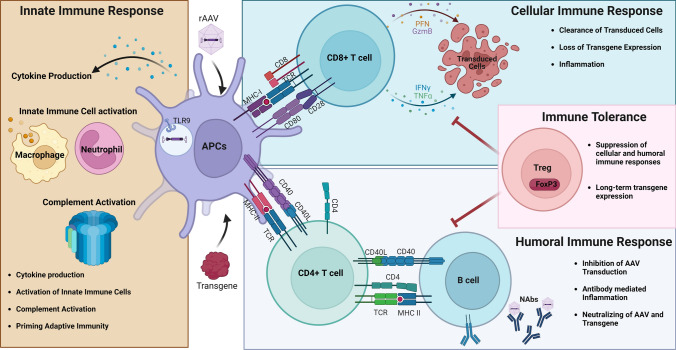
Recombinant adeno-associated viruses (AAVs) have emerged as promising gene delivery vehicles resulting in three US Food and Drug Administration (FDA) and one European Medicines Agency (EMA)-approved AAV-based gene therapies. Despite being a leading platform for therapeutic gene transfer in several clinical trials, host immune responses against the AAV vector and transgene have hampered their widespread application. Multiple factors, including vector design, dose, and route of administration, contribute to the overall immunogenicity of AAVs. The immune responses against the AAV capsid and transgene involve an initial innate sensing. The innate immune response subsequently triggers an adaptive immune response to elicit a robust and specific response against the AAV vector. AAV gene therapy clinical trials and preclinical studies provide important information about the immune-mediated toxicities associated with AAV, yet studies suggest preclinical models fail to precisely predict the outcome of gene delivery in humans. This review discusses the contribution of the innate and adaptive immune response against AAVs, highlighting the challenges and potential strategies to mitigate these responses, thereby enhancing the therapeutic potential of AAV gene therapy.
Overview
CoChat Summary
TL;DR
Recombinant AAV vectors are a leading gene-transfer platform, but innate and adaptive immune responses against the capsid, vector DNA, and transgene limit efficacy and safety. This review summarizes those immune mechanisms and the preclinical/clinical strategies being developed to mitigate them.
Key findings
- AAV-based therapies have reached the clinic: three FDA-approved products (Luxturna, Zolgensma, HEMGENIX) and one EMA-approved AAV5-Factor 8 vector (Roctavian).
- Pre-existing anti-AAV neutralizing antibodies are common, with 2–60% of human sera containing antibodies that limit AAV gene therapy depending on capsid variant; anti-AAV2 and AAV1 NAbs are most prevalent, and 10–100% of healthy human subjects have functional circulating capsid-specific T cells against multiple AAV serotypes.
- High-dose intravenous AAV can trigger complement activation and thrombotic microangiopathy (TMA): in DMD and SMA1 trials, patients receiving >1×10^14 vg/kg presented with complement activation/TMA, and TMA was reported in two MMA patients who received 5×10^13 vg/kg AAV-LK03.
- Zolgensma is administered at 1.1×10^14 vg/kg; among >1400 treated patients, the FDA reported nine TMA cases, and the EMA reported five TMA cases among 800 patients.
- Mitigation strategies under study include CpG depletion, TLR9 inhibition, complement inhibitors (APL-9, eculizumab), immunosuppression, capsid engineering, plasmapheresis, ImmTOR, and Treg-based approaches.
Methods
- Narrative review of published preclinical and clinical literature on AAV immunogenicity, including innate sensing, complement activation, humoral and T-cell responses, transgene immunity, and post-approval safety data.
- No primary experimental data, systematic search strategy, or meta-analysis is reported; the paper synthesizes findings from AAV gene therapy trials, animal studies, and post-licensure surveillance.
- Main analysis is descriptive, organized around immune mechanisms and candidate mitigation strategies, with a summary table of strategies and their clinical status.
Limitations
- The paper states that much remains unknown about immune responses to AAV gene therapy in patients, that lack of standard immune-assay protocols and inability to collect relevant samples cause variability across studies, and that appropriate animal models are not readily available.
- The paper states that preclinical models fail to precisely predict gene-delivery outcomes in humans, and that variability in dose, route, and capsid serotypes complicates comparison and interpretation.
- Evident from the text: as a narrative review, it does not provide a systematic search, quantitative synthesis, or primary data to resolve the variability it describes.
Model-written summary. Check it against the paper before relying on it.
Integrity signals
Registry
Cites
Statistics
Figures
Verification
Claims the paper makes
37 Valid · 7 Not valid · 118 Not checked · 36 Own results and interpretations
The cited sources support only part of this claim — read each source’s verdict below.
In the paper
“Endosomal TLR9, present in Kupffer cells or DCs, particularly binds to unmethylated CpG dinucleotides in the double-stranded DNA (dsDNA) vector genomes [36].”
§ Immunogenicity of Recombinant Adeno-Associated Virus (AAV) Vectors for Gene Transfer > Immune Responses to Adeno-Associated Viruses (AAVs) > Innate Immune Response to AAV
What the sources say
- Partly supportedcites [36] Rabinowitz, J., Y.K. Chan, and R.J. Samulski, Adeno-associated Virus (AAV) versus Immune Response. Viruses. 2019;11(2). 102; 10.3390/v11020102. PMC6409805 30691064 sourceExperimental — accuracy not yet measured
Section 2.1 (Host Response to AAV) states that TLR9 is an endosomal receptor ('TLR3, 7, 8 and 9 in the endosome') that 'binds to a specific unmethylated DNA sequence, the CpG motif ... present in the genomes of bacteria and DNA viruses', and that AAV endosomal trafficking/uncoating 'may result in TLR9 sensing of CpG motifs', with innate recognition of AAV2 by mouse or human plasmacytoid dendritic cells (pDCs) mediated by TLR9 — so the endosomal-CpG-binding and dendritic-cell parts are supported. However, our copy never mentions Kupffer cells or any liver macrophage as a TLR9-bearing cell (searched: Kupffer cells, liver macrophages, antigen-presenting cells; the only liver cell passage is the TLR2-mediated response of primary human nonparenchymal liver cells [17]). Nor does it attribute TLR9 binding to double-stranded DNA vector genomes: the Introduction describes AAV as 'single-stranded DNA, non-enveloped viruses' with 'linear single-stranded genomes', and the genome-configuration discussion only says self-complementary genomes increased the innate response relative to single-stranded vectors [16] without stating dsDNA as the TLR9 ligand. (LLM, conf=0.75)
plainstates a cause- Asserted: passes — The authors put it forward as true.
- Checkable: passes — It can be checked against evidence.
- Load-bearing: passes — The paper’s conclusions depend on it.
- Based: passes — The paper gives a reason why it holds.
- Partly supported
The cited sources support only part of this claim — read each source’s verdict below.
In the paper
“Maximizing the potential vector-antibody interaction results in reducing efficacy or safety of the gene therapy [18].”
§ Immunogenicity of Recombinant Adeno-Associated Virus (AAV) Vectors for Gene Transfer > Introduction
What the sources say
- Partly supportedcites [18] Fitzpatrick Z Influence of pre-existing anti-capsid neutralizing and binding antibodies on AAV vector transduction Mol Ther Methods Clin Dev 2018 9 119 129 10.1016/j.omtm.2018.02.003 29766022 PMC5948224 sourceExperimental — accuracy not yet measured
The Introduction (page unavailable) says neutralizing anti-capsid antibodies can block AAV transduction and cause gene transfer to lack efficacy. But the Abstract and Results report that non-neutralizing binding antibodies can enhance transduction, so the paper does not support a general claim that vector–antibody interactions reduce efficacy. The Introduction also says their impact on safety is only partially understood. (LLM, conf=0.88)
plainstates a cause- Asserted: passes — The authors put it forward as true.
- Checkable: passes — It can be checked against evidence.
- Load-bearing: passes — The paper’s conclusions depend on it.
- Based: passes — The paper gives a reason why it holds.
- Partly supported
The cited sources support only part of this claim — read each source’s verdict below.
In the paper
“Direct injection into the subretinal space, as was the route for the first FDA-approved AAV vector, results in less exposure to plasma proteins, circulating antibodies, blood cells, and tissue-resident phagocytic cells [15].”
§ Immunogenicity of Recombinant Adeno-Associated Virus (AAV) Vectors for Gene Transfer > Introduction
What the sources say
- Partly supportedcites [15] Bainbridge JW Effect of gene therapy on visual function in Leber's congenital amaurosis N Engl J Med 2008 358 21 2231 2239 10.1056/NEJMoa0802268 18441371 sourceExperimental — accuracy not yet measured
The Methods (p. 3) confirm that this study delivered an AAV vector directly into the subretinal space. The cited paper does not establish that this route reduces exposure to plasma proteins, circulating antibodies, blood cells, or tissue-resident phagocytes. It also does not identify the vector as the first FDA-approved AAV vector. (LLM, conf=0.82)
plainstates a cause- Asserted: passes — The authors put it forward as true.
- Checkable: passes — It can be checked against evidence.
- Load-bearing: unclear — It is unclear whether the paper’s conclusions depend on it.
- Based: passes — The paper gives a reason why it holds.
- Partly supported
The cited sources support only part of this claim — read each source’s verdict below.
In the paper
“In addition, other studies have shown that self-complementary AAV (scAAV) vectors exhibited an increased innate immune response to the transgene compared with single-stranded AAVs (ssAAVs), possibly due to enhanced activation of the TLR9/MyD88 signaling cascade [30, 44, 45].”
§ Immunogenicity of Recombinant Adeno-Associated Virus (AAV) Vectors for Gene Transfer > Immune Responses to Adeno-Associated Viruses (AAVs) > Innate Immune Response to AAV
What the sources say
- Not checked yetcites [30] Rogers GL Unique roles of TLR9- and MyD88-dependent and -independent pathways in adaptive immune responses to AAV-mediated gene transfer J Innate Immun 2015 7 3 302 314 10.1159/000369273 25612611 PMC4417066 source
- Partly supportedcites [44] Martino AT The genome of self-complementary adeno-associated viral vectors increases Toll-like receptor 9-dependent innate immune responses in the liver Blood 2011 117 24 6459 6468 10.1182/blood-2010-10-314518 21474674 PMC3123017 sourceExperimental — accuracy not yet measured
The Discussion (page not available) reports a stronger TLR9-dependent innate response to scAAV than to ssAAV, and the paper describes MyD88 as part of TLR9 signaling. But it locates the innate response in the liver, not specifically against the transgene; the Discussion says adaptive responses increased against the vector, not the transgene product. (LLM, conf=0.90)
- Partly supportedcites [45] Wu T Self-complementary AAVs induce more potent transgene product-specific immune responses compared to a single-stranded genome Mol Ther 2012 20 3 572 579 10.1038/mt.2011.280 22186792 PMC3293612 sourceExperimental — accuracy not yet measured
The Discussion of our copy does state that scAAV vectors provoke stronger innate activation than ssAAV and hypothesizes recognition of the double-stranded genome by pathogen recognition receptors "such as toll-like receptor 9 (TLR9) or other cytoplasmic DNA sensors, e.g., DAI", but it explicitly credits the heightened-innate comparison to "recent studies" (its refs 26, 27 — Herzog, 2010 ASH abstract, and Martino et al., Blood 2011) rather than reporting it as its own finding. Moreover, the innate signal in our copy is tied to the vector genome, not "to the transgene": what this paper actually demonstrates is markedly higher transgene product-specific CD8+ T and B cell (adaptive) responses to scAAV vs ssAAV (Introduction/Discussion). MyD88 is nowhere mentioned in our copy (searched: MyD88, TLR9-dependent innate immune response), so the "TLR9/MyD88 signaling cascade" framing is not this source's. (LLM, conf=0.72)
hedgedstates a possible cause- Asserted: passes — The authors put it forward as true.
- Checkable: passes — It can be checked against evidence.
- Load-bearing: unclear — It is unclear whether the paper’s conclusions depend on it.
- Based: passes — The paper gives a reason why it holds.
The cited sources support only part of this claim — read each source’s verdict below.
In the paper
“Finally, certain host responses have only been observed with very high doses of intravenous AAV, suggesting a threshold effect for these host reactions [19–21].”
§ Immunogenicity of Recombinant Adeno-Associated Virus (AAV) Vectors for Gene Transfer > Introduction
What the sources say
- Not checked yetcites [19] Hinderer C Severe toxicity in nonhuman primates and piglets following high-dose intravenous administration of an adeno-associated virus vector expressing human SMN Hum Gene Ther 2018 29 3 285 298 10.1089/hum.2018.015 29378426 PMC5865262 source
- Not checked yetcites [20] Wilson JM Flotte TR Moving forward after two deaths in a gene therapy trial of myotubular myopathy Hum Gene Ther 2020 31 13–14 695 696 10.1089/hum.2020.182 32605399 source
- Partly supportedcites [21] Nathwani AC Adenovirus-associated virus vector–mediated gene transfer in hemophilia B N Engl J Med 2011 365 25 2357 2365 10.1056/NEJMoa1108046 22149959 PMC3265081 sourceExperimental — accuracy not yet measured
The Results (Safety and Efficacy; page not provided) report liver-enzyme elevations in the high-dose participants, consistent with a dose-related host reaction. But the Results (Immune Responses to Vector and Transgene; page not provided) also report significant capsid-specific T-cell responses at the intermediate dose and humoral responses in all six participants. The Discussion says factors besides dose influence immune responses, so this study does not establish a general threshold for host reactions. (LLM, conf=0.84)
hedgedstates an association- Asserted: passes — The authors put it forward as true.
- Checkable: passes — It can be checked against evidence.
- Load-bearing: unclear — It is unclear whether the paper’s conclusions depend on it.
- Based: passes — The paper gives a reason why it holds.
117 more claims · 19 with their cited sources checked
Create a free account to see all 198 claims and to verify the 191 references still open.
- Probably not a substantial claim. 13
- It may state two separate claims as one. 66
Claims other papers make about this one
Each is checked against this paper’s own text: does it say what the citing paper says it does?
The cited source says what the claim attributes to it.
In the citing paper
“AAV immune response and subsequent toxicity have arguably limited gene transfer and therapeutic efficacy, making the prevention of immunogenicity a key focus of gene therapy research.20,38,39”
From Characterization of the ocular inflammatory response to AAV reveals divergence by sex and age (2025) · cites this paper as [39]
Citations
Cites
The role of pattern-recognition receptors in innate immunity: update on Toll-like receptors
Kawai, T., & Akira, S. (2010) · Nature Immunology · doi:10.1038/ni.1863 · Cited by 9,304 · cited 1×
“Cell surface TLRs recognize membrane components of pathogens, such as lipoproteins and lipids, and intracellular TLRs recognize pathogen-derived nucleic acids [32, 33].”
BackgroundPattern Recognition Receptors and Inflammation
Takeuchi, O., & Akira, S. (2010) · Cell · doi:10.1016/j.cell.2010.01.022 · Cited by 8,895 · cited 2×
“In summary, the transgene immune response is mostly observed in patients with no residual protein expression; therefore, clinical studies preferably choose subjects with missense mutation or subjects with no response in protein replacement therapy [21, 24].”
BackgroundRegulation of type I interferon responses
Ivashkiv, L. B., & Donlin, L. T. (2014) · Nature Reviews Immunology · doi:10.1038/nri3581 · Cited by 3,297 · cited 1×
“Secreted IFNs and cytokines in turn mediate expression of genes that limit viral replication, as well as stimulate adaptive and memory immune responses [26].”
BackgroundAdeno-associated virus vector as a platform for gene therapy delivery
Wang, D., Tai, P. W. L., & Gao, G. (2019) · Nature Reviews Drug Discovery · doi:10.1038/s41573-019-0012-9 · Cited by 2,444
Single-Dose Gene-Replacement Therapy for Spinal Muscular Atrophy
Mendell, J. R., Al-Zaidy, S., Shell, R., Arnold, W. D., Rodino-Klapac, L. R., Prior, T. W., Lowes, L., Alfano, L., Berry, K., Church, K., et al. (2017) · New England Journal of Medicine · doi:10.1056/nejmoa1706198 · Cited by 2,381 · cited 1×
“Zolgensma was able to achieve clinically relevant therapeutic outcomes and has attained promising results in reducing premature death in SMA patients [141, 142].”
BackgroundManno, C. S., Pierce, G. F., Arruda, V. R., Glader, B., Ragni, M., Rasko, J. J. E., Ozelo, M. C., Hoots, K., Blatt, P., Konkle, B., et al. (2006) · Nature Medicine · doi:10.1038/nm1358 · Cited by 2,163 · cited 2×
“Additionally, capsid-specific cell-mediated cytotoxic T-cell responses affect transgene expression and result in clearance of transduced cells hindering therapeutic efficacy [14].”
BackgroundEffect of gene therapy on visual function in Leber’s congenital amaurosis
Bainbridge, J. W. B., Smith, A. J., Barker, S. S., Robbie, S., Henderson, R., Balaggan, K., Viswanathan, A., Holder, G. E., Stockman, A., Tyler, N., et al. (2008) · New England Journal of Medicine · doi:10.1056/nejmoa0802268 · Cited by 1,924 · cited 1×
“Direct injection into the subretinal space, as was the route for the first FDA-approved AAV vector, results in less exposure to plasma proteins, circulating antibodies, blood cells, and tissue-resident phagocytic cells [15].”
BackgroundAdenovirus-Associated Virus Vector–Mediated Gene Transfer in Hemophilia B
Nathwani, A. C., Tuddenham, E. G. D., Rangarajan, S., Rosales, C., McIntosh, J., Linch, D. C., Chowdary, P., Riddell, A., Pie, A. J., Harrington, C., et al. (2011) · New England Journal of Medicine · doi:10.1056/nejmoa1108046 · Cited by 1,864
Coutinho, A. E., & Chapman, K. E. (2011) · Molecular and Cellular Endocrinology · doi:10.1016/j.mce.2010.04.005 · Cited by 1,815
Complement System Part I – Molecular Mechanisms of Activation and Regulation
Merle, N. S., Church, S. E., Fremeaux-Bacchi, V., & Roumenina, L. T. (2015) · Frontiers in Immunology · doi:10.3389/fimmu.2015.00262 · Cited by 1,620
Terminal Complement Inhibitor Eculizumab in Atypical Hemolytic–Uremic Syndrome
Legendre, C. M., Licht, C., Muus, P., Greenbaum, L. A., Babu, S., Bedrosian, C., Bingham, C., Cohen, D. J., Delmas, Y., Douglas, K., et al. (2013) · New England Journal of Medicine · doi:10.1056/nejmoa1208981 · Cited by 1,586 · cited 1×
“One monoclonal antibody that is used against complement hyperactivation and functions by inhibiting C5 and MAC formation is eculizumab [163].”
BackgroundMycophenolate mofetil and its mechanisms of action
Allison, A. C., & Eugui, E. M. (2000) · Immunopharmacology · doi:10.1016/s0162-3109(00)00188-0 · Cited by 1,433 · cited 1×
“Mycophenolate mofetil (MMF) depletes guanosine nucleotides preferentially in T and B lymphocytes and inhibits their proliferation [218].”
BackgroundCooperation of Toll-like receptor signals in innate immune defence
Trinchieri, G., & Sher, A. (2007) · Nature Reviews Immunology · doi:10.1038/nri2038 · Cited by 1,364 · cited 1×
“These signaling cascades induce the expression of major histocompatibility complex (MHC) gene expression and pro-inflammatory cytokines or type I and III interferon (IFN) secretion [24, 25].”
BackgroundCodon bias and heterologous protein expression
Gustafsson, C., Govindarajan, S., & Minshull, J. (2004) · Trends in Biotechnology · doi:10.1016/j.tibtech.2004.04.006 · Cited by 1,330 · cited 1×
“Studies suggest codon optimization, a technique to improve transgene expression, may increase CpG motifs in AAV vectors [37, 38].”
BackgroundLong-Term Safety and Efficacy of Factor IX Gene Therapy in Hemophilia B
Nathwani, A. C., Reiss, U. M., Tuddenham, E. G. D., Rosales, C., Chowdary, P., McIntosh, J., Della Peruta, M., Lheriteau, E., Patel, N., Raj, D., et al. (2014) · New England Journal of Medicine · doi:10.1056/nejmoa1407309 · Cited by 1,273
Engineering adeno-associated virus vectors for gene therapy
Li, C., & Samulski, R. J. (2020) · Nature Reviews Genetics · doi:10.1038/s41576-019-0205-4 · Cited by 1,175 · cited 1×
“However, host immune responses against AAV vectors and delivered transgene impact effective and stable transgene expression [10, 11].”
BackgroundClades of Adeno-Associated Viruses Are Widely Disseminated in Human Tissues
Gao, G., Vandenberghe, L. H., Alvira, M. R., Lu, Y., Calcedo, R., Zhou, X., & Wilson, J. M. (2004) · Journal of Virology · doi:10.1128/jvi.78.12.6381-6388.2004 · Cited by 1,070 · cited 1×
“Originally discovered in 1965 [7] as contaminants in adenovirus (Ad) preparations, wild-type AAVs are parvoviruses that are naturally found in multiple vertebrate species, including humans and non-human primates (NHPs) [8], but were never associated with any known disease.”
BackgroundThe complement system in regulation of adaptive immunity
Carroll, M. C. (2004) · Nature Immunology · doi:10.1038/ni1113 · Cited by 1,035 · cited 1×
“Mice lacking the complement proteins CR1/2 or C3 did not exhibit a robust humoral immune response to AAV, suggesting that the complement system plays a role in the production of AAV-specific antibodies [53].”
BackgroundTwo-Year, Randomized, Controlled Trial of Belimumab in Lupus Nephritis
Furie, R., Rovin, B. H., Houssiau, F., Malvar, A., Teng, Y. K. O., Contreras, G., Amoura, Z., Yu, X., Mok, C.-C., Santiago, M. B., et al. (2020) · New England Journal of Medicine · doi:10.1056/nejmoa2001180 · Cited by 1,032 · cited 1×
“Belimumab, an antiB-cell-activating factor (BAFF), is another B-cell-depleting antibody that has shown promising results in controlling autoimmune diseases [171, 172].”
BackgroundAdenovirus-Associated Defective Virus Particles
Atchison, R. W., Casto, B. C., & Hammon, W. M. (1965) · Science · doi:10.1126/science.149.3685.754 · Cited by 1,004
Immune responses to AAV vectors: overcoming barriers to successful gene therapy
Mingozzi, F., & High, K. A. (2013) · Blood · doi:10.1182/blood-2013-01-306647 · Cited by 955 · cited 2×
“The activation of CD4+ T cells results in production of cytokines further activating humoral or cell-mediated immune responses and creating immunological memory [62, 63, 85].”
BackgroundTherapeutic in vivo gene transfer for genetic disease using AAV: Progress and challenges
Mingozzi, F., & High, K. A. (2011) · Nature Reviews Genetics · doi:10.1038/nrg2988 · Cited by 893
Goubau, D., Deddouche, S., & Reis e Sousa, C. (2013) · Immunity · doi:10.1016/j.immuni.2013.05.007 · Cited by 843 · cited 1×
“(NLRs), C-type lectin receptors (CLRs), and DNA sensors [23].”
BackgroundBonilla, F. A., & Oettgen, H. C. (2010) · Journal of Allergy and Clinical Immunology · doi:10.1016/j.jaci.2009.09.017 · Cited by 839
Hinderer, C., Katz, N., Buza, E. L., Dyer, C., Goode, T., Bell, P., Richman, L. K., & Wilson, J. M. (2018) · Human Gene Therapy · doi:10.1089/hum.2018.015 · Cited by 814
Worldwide epidemiology of neutralizing antibodies to adeno-associated viruses
Calcedo, R., Vandenberghe, L. H., Gao, G., Lin, J., & Wilson, J. M. (2009) · The Journal of Infectious Diseases · doi:10.1086/595830 · Cited by 808 · cited 1×
“Of these, anti-AAV2 and AAV1 NAbs are the most prevalent NAbs among AAV capsid variants [69].”
BackgroundImmune Responses to Viral Gene Therapy Vectors
Shirley, J. L., de Jong, Y. P., Terhorst, C., & Herzog, R. W. (2020) · Molecular Therapy · doi:10.1016/j.ymthe.2020.01.001 · Cited by 788 · cited 1×
“Switching capsid variants is another alternative to allow for readministration of AAV but is limited by varying tropism of AAV capsids, cross-reactivity of NAbs, and complexity of developing different products [207].”
BackgroundHemophilia B Gene Therapy with a High-Specific-Activity Factor IX Variant
George, L. A., Sullivan, S. K., Giermasz, A., Rasko, J. E. J., Samelson-Jones, B. J., Ducore, J., Cuker, A., Sullivan, L. M., Majumdar, S., Teitel, J., et al. (2017) · New England Journal of Medicine · doi:10.1056/nejmoa1708538 · Cited by 762 · cited 1×
“Multiple studies reduced the therapeutic dose of AAV and utilized hyperactive variants of delivered transgene [88, 193, 230].”
BackgroundAAV-mediated factor IX gene transfer to skeletal muscle in patients with severe hemophilia B
Manno, C. S., Chew, A. J., Hutchison, S., Larson, P. J., Herzog, R. W., Arruda, V. R., Tai, S. J., Ragni, M. V., Thompson, A., Ozelo, M., et al. (2003) · Blood · doi:10.1182/blood-2002-10-3296 · Cited by 749
Dalkara, D., Byrne, L. C., Klimczak, R. R., Visel, M., Yin, L., Merigan, W. H., Flannery, J. G., & Schaffer, D. V. (2013) · Science Translational Medicine · doi:10.1126/scitranslmed.3005708 · Cited by 734
Grimm, D., Lee, J. S., Wang, L., Desai, T., Akache, B., Storm, T. A., & Kay, M. A. (2008) · Journal of Virology · doi:10.1128/jvi.00254-08 · Cited by 696
Immune responses to adenovirus and adeno-associated virus in humans
Chirmule, N., Propert, K. J., Magosin, S. A., Qian, Y., Qian, R., & Wilson, J. M. (1999) · Gene Therapy · doi:10.1038/sj.gt.3300994 · Cited by 684
Hoang Thi, T. T., Pilkington, E. H., Nguyen, D. H., Lee, J. S., Park, K. D., & Truong, N. P. (2020) · Polymers · doi:10.3390/polym12020298 · Cited by 668
Dystrophin Immunity in Duchenne's Muscular Dystrophy
Mendell, J. R., Campbell, K., Rodino-Klapac, L., Sahenk, Z., Shilling, C., Lewis, S., Bowles, D., Gray, S., Li, C., Galloway, G., et al. (2010) · New England Journal of Medicine · doi:10.1056/nejmoa1000228 · Cited by 655 · cited 1×
“Similarly, capsid-specific T-cell responses were limited or not observed in DMD clinical trials [94, 95].”
BackgroundMechanism of endosomal TLR inhibition by antimalarial drugs and imidazoquinolines
Kužnik, A., Benčina, M., Švajger, U., Jeras, M., Rozman, B., & Jerala, R. (2011) · The Journal of Immunology · doi:10.4049/jimmunol.1000702 · Cited by 606 · cited 1×
“Additionally, the antimalarial drug hydroxychloroquine (HCQ) may act as a TLR9 inhibitor [158].”
BackgroundZhong, L., Li, B., Mah, C. S., Govindasamy, L., Agbandje-McKenna, M., Cooper, M., Herzog, R. W., Zolotukhin, I., Warrington, K. H., Weigel-Van Aken, K. A., et al. (2008) · Proceedings of the National Academy of Sciences · doi:10.1073/pnas.0802866105 · Cited by 558 · cited 1×
“Therefore, mutation of surface tyrosine has been suggested, which resulted in reduced presentation of AAV capsid, decreased T-cell toxicity, and required therapeutic dose [100, 225, 229].”
BackgroundDirected evolution of adeno-associated virus yields enhanced gene delivery vectors
Maheshri, N., Koerber, J. T., Kaspar, B. K., & Schaffer, D. V. (2006) · Nature Biotechnology · doi:10.1038/nbt1182 · Cited by 538 · cited 5×
“A recent abstract showed coadministration of ImmTOR with belimumab reduced anti-AAV IgM antibodies, provided more durable suppression of anti-AAV IgG antibodies, and allowed for multiple re-administrations of an AAV8 vector in mice.”
BackgroundInfluentialDay, J. W., Finkel, R. S., Chiriboga, C. A., Connolly, A. M., Crawford, T. O., Darras, B. T., Iannaccone, S. T., Kuntz, N. L., Peña, L. D. M., Shieh, P. B., et al. (2021) · The Lancet Neurology · doi:10.1016/s1474-4422(21)00001-6 · Cited by 494 · cited 1×
“Zolgensma was able to achieve clinically relevant therapeutic outcomes and has attained promising results in reducing premature death in SMA patients [141, 142].”
BackgroundJooss, K., Yang, Y., Fisher, K. J., & Wilson, J. M. (1998) · Journal of Virology · doi:10.1128/jvi.72.5.4212-4223.1998 · Cited by 470 · cited 1×
“transgene due to the low transduction efficiency of APCs by AAVs [113, 114].”
BackgroundBennett, J., Wellman, J., Marshall, K. A., McCague, S., Ashtari, M., DiStefano-Pappas, J., Elci, O. U., Chung, D. C., Sun, J., Wright, J. F., et al. (2016) · The Lancet · doi:10.1016/s0140-6736(16)30371-3 · Cited by 461 · cited 1×
“Furthermore, in the clinical setting, ocular and intrathecal AAV gene delivery have shown limited transgene-related immune responses, possibly due to their compartmentation and reduced antigen presentation [16, 132, 133].”
BackgroundHuang, L. S., Hong, Z., Wu, W., Xiong, S., Zhong, M., Gao, X., Rehman, J., & Malik, A. B. (2020) · Immunity · doi:10.1016/j.immuni.2020.02.002 · Cited by 435 · cited 1×
“An alternative possibility is that proteasomal degradation of the AAV capsid upon its entry results in exposure of the genome, which may then be sensed by DNA sensors [48].”
BackgroundViral Vectors for Gene Therapy: Translational and Clinical Outlook
Kotterman, M. A., Chalberg, T. W., & Schaffer, D. V. (2015) · Annual Review of Biomedical Engineering · doi:10.1146/annurev-bioeng-071813-104938 · Cited by 424 · cited 1×
“There are substantial ongoing AAV gene therapy clinical trials for several diseases, including hemophilia, neurodegenerative diseases, and muscular dystrophies [4], yet one of the factors that hinders the clinical success of these trials is AAV immunogenicity, which remains an unmet challenge in the field.”
BackgroundGaudet, D., Méthot, J., Déry, S., Brisson, D., Essiembre, C., Tremblay, G., Tremblay, K., de Wal, J., Twisk, J., van den Bulk, N., et al. (2013) · Gene Therapy · doi:10.1038/gt.2012.43 · Cited by 404 · cited 1×
“The follow-up studies showed commencing immunosuppression before AAV dosing and additional corticosteroid treatment is beneficial [93, 219, 220].”
BackgroundImmunogenicity and toxicity of AAV gene therapy
Ertl, H. C. J. (2022) · Frontiers in Immunology · doi:10.3389/fimmu.2022.975803 · Cited by 402
Phase 1 Gene Therapy for Duchenne Muscular Dystrophy Using a Translational Optimized AAV Vector
Bowles, D. E., McPhee, S. W., Li, C., Gray, S. J., Samulski, J. J., Camp, A. S., Li, J., Wang, B., Monahan, P. E., Rabinowitz, J. E., et al. (2012) · Molecular Therapy · doi:10.1038/mt.2011.237 · Cited by 400 · cited 1×
“Similarly, capsid-specific T-cell responses were limited or not observed in DMD clinical trials [94, 95].”
BackgroundCurrent Concepts of Antigen Cross-Presentation
Embgenbroich, M., & Burgdorf, S. (2018) · Frontiers in Immunology · doi:10.3389/fimmu.2018.01643 · Cited by 397 · cited 1×
“Endogenous or intracellular antigens are presented on MHC I, whereas exogenous or extracellular antigens are presented on MHC II [84].”
BackgroundAAV2 Gene Therapy Readministration in Three Adults with Congenital Blindness
Bennett, J., Ashtari, M., Wellman, J., Marshall, K. A., Cyckowski, L. L., Chung, D. C., McCague, S., Pierce, E. A., Chen, Y., Bennicelli, J. L., et al. (2012) · Science Translational Medicine · doi:10.1126/scitranslmed.3002865 · Cited by 395 · cited 1×
“Furthermore, in the clinical setting, ocular and intrathecal AAV gene delivery have shown limited transgene-related immune responses, possibly due to their compartmentation and reduced antigen presentation [16, 132, 133].”
BackgroundEndosomal processing limits gene transfer to polarized airway epithelia by adeno-associated virus
Duan, D., Yue, Y., Yan, Z., Yang, J., & Engelhardt, J. F. (2000) · Journal of Clinical Investigation · doi:10.1172/jci8317 · Cited by 391 · cited 1×
“In vitro and preclinical animal studies have shown administration of bortezomib prevents degradation of internalized AAVs, reduces capsid presentation, and increases transduction efficiency by enhancing nuclear translocation of AAV [165, 224, 225].”
BackgroundIgG endopeptidase in highly sensitized patients undergoing transplantation
Jordan, S. C., Lorant, T., Choi, J., Kjellman, C., Winstedt, L., Bengtsson, M., Zhang, X., Eich, T., Toyoda, M., Eriksson, B.-M., et al. (2017) · New England Journal of Medicine · doi:10.1056/nejmoa1612567 · Cited by 377
Pre-existing Anti–Adeno-Associated Virus Antibodies as a Challenge in AAV Gene Therapy
Louis Jeune, V., Joergensen, J. A., Hajjar, R. J., & Weber, T. (2013) · Human Gene Therapy Methods · doi:10.1089/hgtb.2012.243 · Cited by 358
Human Immune Responses to Adeno-Associated Virus (AAV) Vectors
Ronzitti, G., Gross, D.-A., & Mingozzi, F. (2020) · Frontiers in Immunology · doi:10.3389/fimmu.2020.00670 · Cited by 357 · cited 3×
“Cell-mediated immune response against AAV resulting in loss of transgene expression was not widely observed in animal studies [31, 83].”
BackgroundOvercoming Preexisting Humoral Immunity to AAV Using Capsid Decoys
Mingozzi, F., Anguela, X. M., Pavani, G., Chen, Y., Davidson, R. J., Hui, D. J., Yazicioglu, M., Elkouby, L., Hinderer, C. J., Faella, A., et al. (2013) · Science Translational Medicine · doi:10.1126/scitranslmed.3005795 · Cited by 355 · cited 1×
“One approach is to use decoy empty capsids to absorb circulating NAbs [187].”
BackgroundLeborgne, C., Barbon, E., Alexander, J. M., Hanby, H., Delignat, S., Cohen, D. M., Collaud, F., Muraleetharan, S., Lupo, D., Silverberg, J., et al. (2020) · Nature Medicine · doi:10.1038/s41591-020-0911-7 · Cited by 336
Flotte, T. R., Trapnell, B. C., Humphries, M., Carey, B., Calcedo, R., Rouhani, F., Campbell-Thompson, M., Yachnis, A. T., Sandhaus, R. A., McElvaney, N. G., et al. (2011) · Human Gene Therapy · doi:10.1089/hum.2011.053 · Cited by 335
Self-citationZhu, J., Huang, X., & Yang, Y. (2009) · Journal of Clinical Investigation · doi:10.1172/jci37607 · Cited by 330 · cited 3×
“Furthermore, the TLR9/ MyD88 pathway is not only vital for mounting a CD8+ T-cell response against the AAV capsid but also liver and muscle-directed transgenes [28, 34, 35, 41].”
BackgroundCorticosteroids and risk of gastrointestinal bleeding: a systematic review and meta-analysis
Narum, S., Westergren, T., & Klemp, M. (2014) · BMJ Open · doi:10.1136/bmjopen-2013-004587 · Cited by 327
Brantly, M. L., Chulay, J. D., Wang, L., Mueller, C., Humphries, M., Spencer, L. T., Rouhani, F., Conlon, T. J., Calcedo, R., Betts, M. R., et al. (2009) · Proceedings of the National Academy of Sciences · doi:10.1073/pnas.0904514106 · Cited by 327 · cited 1×
“In contrast, other trials have observed T-cell immune responses that did not clear transgene expression, particularly muscle-directed trials [86, 90, 91].”
ResultSelf-citationChand, D., Mohr, F., McMillan, H., Tukov, F. F., Montgomery, K., Kleyn, A., Sun, R., Tauscher-Wisniewski, S., Kaufmann, P., & Kullak-Ublick, G. (2021) · Journal of Hepatology · doi:10.1016/j.jhep.2020.11.001 · Cited by 306
Adeno-Associated Virus Serotype 9 Transduction in the Central Nervous System of Nonhuman Primates
Samaranch, L., Salegio, E. A., San Sebastian, W., Kells, A. P., Foust, K. D., Bringas, J. R., Lamarre, C., Forsayeth, J., Kaspar, B. K., & Bankiewicz, K. S. (2012) · Human Gene Therapy · doi:10.1089/hum.2011.200 · Cited by 299 · cited 1×
“Injection into other sites such as the central nervous system (CNS) may partially restrict the exposure to serum antibodies prior to target cell entry [16, 17].”
BackgroundMingozzi, F., Meulenberg, J. J., Hui, D. J., Basner-Tschakarjan, E., Hasbrouck, N. C., Edmonson, S. A., Hutnick, N. A., Betts, M. R., Kastelein, J. J., Stroes, E. S., et al. (2009) · Blood · doi:10.1182/blood-2008-07-167510 · Cited by 295 · cited 1×
“In contrast, other trials have observed T-cell immune responses that did not clear transgene expression, particularly muscle-directed trials [86, 90, 91].”
ResultWobus, C. E., Hügle-Dörr, B., Girod, A., Petersen, G., Hallek, M., & Kleinschmidt, J. A. (2000) · Journal of Virology · doi:10.1128/jvi.74.19.9281-9293.2000 · Cited by 273
Toll-Like Receptor Signaling and Its Inducible Proteins
Satoh, T., & Akira, S. (2016) · Microbiology Spectrum · doi:10.1128/microbiolspec.mchd-0040-2016 · Cited by 273 · cited 1×
“Cell surface TLRs recognize membrane components of pathogens, such as lipoproteins and lipids, and intracellular TLRs recognize pathogen-derived nucleic acids [32, 33].”
BackgroundMeliani, A., Boisgerault, F., Hardet, R., Marmier, S., Collaud, F., Ronzitti, G., Leborgne, C., Costa Verdera, H., Simon Sola, M., Charles, S., et al. (2018) · Nature Communications · doi:10.1038/s41467-018-06621-3 · Cited by 265 · cited 3×
“In addition to engineering AAV capsid, ImmTOR particles showed promising results in capsid-specific T cell and humoral immune responses [103].”
BackgroundSOD1 Suppression with Adeno-Associated Virus and MicroRNA in Familial ALS
Mueller, C., Berry, J. D., McKenna-Yasek, D. M., Gernoux, G., Owegi, M. A., Pothier, L. M., Douthwright, C. L., Gelevski, D., Luppino, S. D., Blackwood, M., et al. (2020) · New England Journal of Medicine · doi:10.1056/nejmoa2005056 · Cited by 264 · cited 1×
“Thus, rapamycin in combination with rituximab or prednisone has been frequently used to induce tolerance in AAV clinical trials [16, 119, 223].”
BackgroundSelf-citationCpG-depleted adeno-associated virus vectors evade immune detection
Faust, S. M., Bell, P., Cutler, B. J., Ashley, S. N., Zhu, Y., Rabinowitz, J. E., & Wilson, J. M. (2013) · Journal of Clinical Investigation · doi:10.1172/jci68205 · Cited by 254 · cited 1×
“Immune responses mounted by IFN induction resulted in a loss of transgene expression delivered by AAV in mice [34, 40].”
BackgroundMingozzi, F., Hasbrouck, N. C., Basner-Tschakarjan, E., Edmonson, S. A., Hui, D. J., Sabatino, D. E., Zhou, S., Wright, J. F., Jiang, H., Pierce, G. F., et al. (2007) · Blood · doi:10.1182/blood-2007-03-080093 · Cited by 254 · cited 1×
“However, systemic IS may increase the risk of infection and is not effective in complete remission of high titer NAbs [107, 169].”
BackgroundIntracellular trafficking of adeno-associated viral vectors
Ding, W., Zhang, L., Yan, Z., & Engelhardt, J. F. (2005) · Gene Therapy · doi:10.1038/sj.gt.3302527 · Cited by 251 · cited 1×
“AAV transduction may cause the cell to release its mitochondrial DNA into the cytoplasm, thereby activating the cytosolic DNA sensors [47].”
BackgroundMendell, J. R., Rodino‐Klapac, L. R., Rosales, X. Q., Coley, B. D., Galloway, G., Lewis, S., Malik, V., Shilling, C., Byrne, B. J., Conlon, T., et al. (2010) · Annals of Neurology · doi:10.1002/ana.22251 · Cited by 248 · cited 1×
“Nonetheless, AAV gene therapy in limbgirdle muscular dystrophy resulted in a capsid-specific T-cell response [96].”
BackgroundMartino, A. T., Suzuki, M., Markusic, D. M., Zolotukhin, I., Ryals, R. C., Moghimi, B., Ertl, H. C. J., Muruve, D. A., Lee, B., & Herzog, R. W. (2011) · Blood · doi:10.1182/blood-2010-10-314518 · Cited by 246 · cited 4×
“For example, TLR9 inhibitory oligonucleotides restored the increased macrophage infiltration, triggered by scAAV administration [44].”
BackgroundInfluentialHumoral immune response to AAV
Calcedo, R., & Wilson, J. M. (2013) · Frontiers in Immunology · doi:10.3389/fimmu.2013.00341 · Cited by 243 · cited 2×
“Nonetheless, engineering AAV capsid instead of utilizing currently available and well-studied capsids is time-consuming, labor intensive, and requires identification of NAb recognition sites [70, 197].”
BackgroundBucher, K., Rodríguez-Bocanegra, E., Dauletbekov, D., & Fischer, M. D. (2021) · Progress in Retinal and Eye Research · doi:10.1016/j.preteyeres.2020.100915 · Cited by 242 · cited 1×
“Mild immune responses observed in Luxturna and LHON patients can be attributed to local injection into a compartmentalized environment containing elevated concentrations of immunomodulatory neuropeptides and cytokines [139].”
BackgroundHösel, M., Broxtermann, M., Janicki, H., Esser, K., Arzberger, S., Hartmann, P., Gillen, S., Kleeff, J., Stabenow, D., Odenthal, M., et al. (2012) · Hepatology · doi:10.1002/hep.24625 · Cited by 219
The complement system as a potential therapeutic target in rheumatic disease
Trouw, L. A., Pickering, M. C., & Blom, A. M. (2017) · Nature Reviews Rheumatology · doi:10.1038/nrrheum.2017.125 · Cited by 216 · cited 1×
“, are being tested for suppressing complement activation [162].”
BackgroundEngineering adeno-associated viral vectors to evade innate immune and inflammatory responses
Chan, Y. K., Wang, S. K., Chu, C. J., Copland, D. A., Letizia, A. J., Costa Verdera, H., Chiang, J. J., Sethi, M., Wang, M. K., Neidermyer, W. J., et al. (2021) · Science Translational Medicine · doi:10.1126/scitranslmed.abd3438 · Cited by 215 · cited 1×
“In another study, it has been reported that the incorporation of TLR9-inhibitory (TLR9i) DNA sequences in the AAV genome can reduce immune responses in mice and pigs [155].”
BackgroundWhole body correction of mucopolysaccharidosis IIIA by intracerebrospinal fluid gene therapy
Haurigot, V., Marcó, S., Ribera, A., Garcia, M., Ruzo, A., Villacampa, P., Ayuso, E., Añor, S., Andaluz, A., Pineda, M., et al. (2013) · Journal of Clinical Investigation · doi:10.1172/jci66778 · Cited by 215 · cited 1×
“In addition, direct delivery of AAV to the CNS was well tolerated in animal models [185, 186].”
BackgroundTardieu, M., Zérah, M., Gougeon, M.-L., Ausseil, J., de Bournonville, S., Husson, B., Zafeiriou, D., Parenti, G., Bourget, P., Poirier, B., et al. (2017) · The Lancet Neurology · doi:10.1016/s1474-4422(17)30169-2 · Cited by 214
Tse, L. V., Klinc, K. A., Madigan, V. J., Castellanos Rivera, R. M., Wells, L. F., Havlik, L. P., Smith, J. K., Agbandje-McKenna, M., & Asokan, A. (2017) · Proceedings of the National Academy of Sciences · doi:10.1073/pnas.1704766114 · Cited by 210
Chand, D. H., Zaidman, C., Arya, K., Millner, R., Farrar, M. A., Mackie, F. E., Goedeker, N. L., Dharnidharka, V. R., Dandamudi, R., & Reyna, S. P. (2021) · The Journal of Pediatrics · doi:10.1016/j.jpeds.2020.11.054 · Cited by 210 · cited 1×
“Activation of the complement system via the alternate pathway was reported in two of the cases, and one patient who received eculizumab did not show significant clinical improvement [55].”
BackgroundMonteilhet, V., Saheb, S., Boutin, S., Leborgne, C., Veron, P., Montus, M.-F., Moullier, P., Benveniste, O., & Masurier, C. (2011) · Molecular Therapy · doi:10.1038/mt.2011.108 · Cited by 206
Moving Forward After Two Deaths in a Gene Therapy Trial of Myotubular Myopathy
Wilson, J. M., & Flotte, T. R. (2020) · Human Gene Therapy · doi:10.1089/hum.2020.182 · Cited by 203
Self-citationChirmule, N., Xiao, W., Truneh, A., Schnell, M. A., Hughes, J. V., Zoltick, P., & Wilson, J. M. (2000) · Journal of Virology · doi:10.1128/jvi.74.5.2420-2425.2000 · Cited by 198 · cited 1×
“Following AAV transduction, APCs present antigens to CD4+ helper T cells, which results in B-cell maturation, expansion, class switching, and an increase in antibody production against AAV capsid [65, 66].”
BackgroundInfluence of Pre-existing Anti-capsid Neutralizing and Binding Antibodies on AAV Vector Transduction
Fitzpatrick, Z., Leborgne, C., Barbon, E., Masat, E., Ronzitti, G., van Wittenberghe, L., Vignaud, A., Collaud, F., Charles, S., Simon Sola, M., et al. (2018) · Molecular Therapy - Methods & Clinical Development · doi:10.1016/j.omtm.2018.02.003 · Cited by 192 · cited 2×
“Moreover, mice immunized with BAbs showed a more efficient liver transduction compared with mice immunized with NAbs [18].”
BackgroundPien, G. C., Basner-Tschakarjan, E., Hui, D. J., Mentlik, A. N., Finn, J. D., Hasbrouck, N. C., Zhou, S., Murphy, S. L., Maus, M. V., Mingozzi, F., et al. (2009) · Journal of Clinical Investigation · doi:10.1172/jci36891 · Cited by 192 · cited 1×
“Additional characterization showed capsid-specific CD8+ T cells eliminate human hepatocytes after cross-presentation of capsid peptides on MHC I in vitro [89].”
BackgroundKruzik, A., Fetahagic, D., Hartlieb, B., Dorn, S., Koppensteiner, H., Horling, F. M., Scheiflinger, F., Reipert, B. M., & de la Rosa, M. (2019) · Molecular Therapy - Methods & Clinical Development · doi:10.1016/j.omtm.2019.05.014 · Cited by 182
Complement Is an Essential Component of the Immune Response to Adeno-Associated Virus Vectors
Zaiss, A. K., Cotter, M. J., White, L. R., Clark, S. A., Wong, N. C. W., Holers, V. M., Bartlett, J. S., & Muruve, D. A. (2008) · Journal of Virology · doi:10.1128/jvi.01990-07 · Cited by 177 · cited 2×
“One study suggested that AAV capsid interacts with C3, resulting in a higher AAV2 uptake in macrophages and a subsequent upregulation of cytokines, such as IL-8, IL-1β, and macrophage inflammatory protein [52].”
BackgroundHerzog, R. W., Mount, J. D., Arruda, V. R., High, K. A., & Lothrop, C. D. (2001) · Molecular Therapy · doi:10.1006/mthe.2001.0442 · Cited by 176 · cited 1×
“Short-term treatment with cyclophosphamide, an alkylating agent causing a decrease in proinflammatory cytokine production, led to successful gene expression in mice and canine models [124, 125].”
BackgroundAdeno-associated viral vector-mediated immune responses: Understanding barriers to gene delivery
Nidetz, N. F., McGee, M. C., Tse, L. V., Li, C., Cong, L., Li, Y., & Huang, W. (2020) · Pharmacology & Therapeutics · doi:10.1016/j.pharmthera.2019.107453 · Cited by 174 · cited 2×
“Delivered transgene products often contain foreign antigens, therefore they may induce humoral or cellular immune responses that neutralize secreted transgenes and clear transduced cells [112].”
BackgroundPEG conjugation moderately protects adeno‐associated viral vectors against antibody neutralization
Lee, G. K., Maheshri, N., Kaspar, B., & Schaffer, D. V. (2005) · Biotechnology and Bioengineering · doi:10.1002/bit.20562 · Cited by 169 · cited 1×
“However, these chemical modifications can potentially decrease transduction efficiency, lower production yield, alter biodistribution of AAV vectors, and result in anti-polymer antibody formation [198, 199].”
BackgroundMueller, C., Chulay, J. D., Trapnell, B. C., Humphries, M., Carey, B., Sandhaus, R. A., McElvaney, N. G., Messina, L., Tang, Q., Rouhani, F. N., et al. (2013) · Journal of Clinical Investigation · doi:10.1172/jci70314 · Cited by 169 · cited 2×
“Tolerance induction and long-term expression of transgene in local muscle-directed AAV gene therapy was attributed to Tregs due to their ability to suppress immune responses [92].”
BackgroundSelf-citationFatal thrombotic microangiopathy case following adeno-associated viral SMN gene therapy
Guillou, J., de Pellegars, A., Porcheret, F., Frémeaux-Bacchi, V., Allain-Launay, E., Debord, C., Denis, M., Péréon, Y., Barnérias, C., Desguerre, I., et al. (2022) · Blood Advances · doi:10.1182/bloodadvances.2021006419 · Cited by 166 · cited 8×
“Gene therapy using recombinant adeno-associated viral (AAV) vectors have yielded encouraging results over recent years, in addition to the three US Food and Drug Administration (FDA)-approved AAV gene therapy products, Luxturna, Zolgensma, and HEMGENIX, for treating Leber’s congenital amaurosis, spinal muscular atroph…”
BackgroundInfluentialGao, K., Li, M., Zhong, L., Su, Q., Li, J., Li, S., He, R., Zhang, Y., Hendricks, G., Wang, J., et al. (2014) · Molecular Therapy - Methods & Clinical Development · doi:10.1038/mtm.2013.9 · Cited by 165
Martino, A. T., Basner-Tschakarjan, E., Markusic, D. M., Finn, J. D., Hinderer, C., Zhou, S., Ostrov, D. A., Srivastava, A., Ertl, H. C. J., Terhorst, C., et al. (2013) · Blood · doi:10.1182/blood-2012-10-460733 · Cited by 162 · cited 2×
“However, transfer of expanded and activated capsid-specific T cells to mice resulted in reduced transgene expression and loss of transduced cells [100, 101].”
BackgroundPaulk, N. K., Pekrun, K., Zhu, E., Nygaard, S., Li, B., Xu, J., Chu, K., Leborgne, C., Dane, A. P., Haft, A., et al. (2018) · Molecular Therapy · doi:10.1016/j.ymthe.2017.09.021 · Cited by 161
Smith, B. K., Collins, S. W., Conlon, T. J., Mah, C. S., Lawson, L. A., Martin, A. D., Fuller, D. D., Cleaver, B. D., Clément, N., Phillips, D., et al. (2013) · Human Gene Therapy · doi:10.1089/hum.2012.250 · Cited by 158
Differences between clinical trials and postmarketing use
Martin, K., Bégaud, B., Latry, P., Miremont‐Salamé, G., Fourrier, A., & Moore, N. (2004) · British Journal of Clinical Pharmacology · doi:10.1046/j.1365-2125.2003.01953.x · Cited by 157 · cited 1×
“Therefore, discrepancies in safety profile and responses may be observed [137].”
BackgroundGyörgy, B., Fitzpatrick, Z., Crommentuijn, M. H. W., Mu, D., & Maguire, C. A. (2014) · Biomaterials · doi:10.1016/j.biomaterials.2014.05.032 · Cited by 153
Cordier, L., Gao, G.-P., Hack, A. A., McNally, E. M., Wilson, J. M., Chirmule, N., & Sweeney, H. L. (2001) · Human Gene Therapy · doi:10.1089/104303401750061267 · Cited by 152 · cited 2×
“In addition to systemic immune suppression, preclinical studies pointed out the role of tissue-specific promoters in reducing immune responses against delivered transgene [232, 233].”
BackgroundYoon, J., Schmidt, A., Zhang, A.-H., Königs, C., Kim, Y. C., & Scott, D. W. (2017) · Blood · doi:10.1182/blood-2016-07-727834 · Cited by 150
Exosome-associated AAV vector as a robust and convenient neuroscience tool
Hudry, E., Martin, C., Gandhi, S., György, B., Scheffer, D. I., Mu, D., Merkel, S. F., Mingozzi, F., Fitzpatrick, Z., Dimant, H., et al. (2016) · Gene Therapy · doi:10.1038/gt.2016.11 · Cited by 146
AAV8 Can Induce Innate and Adaptive Immune Response in the Primate Eye
Reichel, F. F., Dauletbekov, D. L., Klein, R., Peters, T., Ochakovski, G. A., Seitz, I. P., Wilhelm, B., Ueffing, M., Biel, M., Wissinger, B., et al. (2017) · Molecular Therapy · doi:10.1016/j.ymthe.2017.08.018 · Cited by 145 · cited 1×
“High levels of MDA5 and RIG-1 were also observed post AAV transduction in primate retina [50].”
BackgroundAAV gene therapy for Tay-Sachs disease
Flotte, T. R., Cataltepe, O., Puri, A., Batista, A. R., Moser, R., McKenna-Yasek, D., Douthwright, C., Gernoux, G., Blackwood, M., Mueller, C., et al. (2022) · Nature Medicine · doi:10.1038/s41591-021-01664-4 · Cited by 143
Self-citationB-cell depletion is protective against anti-AAV capsid immune response: a human subject case study
Corti, M., Elder, M., Falk, D., Lawson, L., Smith, B., Nayak, S., Conlon, T., Clément, N., Erger, K., Lavassani, E., et al. (2014) · Molecular Therapy - Methods & Clinical Development · doi:10.1038/mtm.2014.33 · Cited by 140 · cited 1×
“Studies have shown promising results of B-cell depletion with decreased NAb titers after utilizing rituximab, an anti-CD20 antibody [118, 169].”
BackgroundHaberman, R. P., McCown, T. J., & Samulski, R. J. (2000) · Journal of Virology · doi:10.1128/jvi.74.18.8732-8739.2000 · Cited by 139 · cited 1×
“As a result, dsRNA will not be generated and innate immune responses that stem from binding to the cytosolic dsDNA and dsRNA can be avoided [159].”
BackgroundMingozzi, F., Chen, Y., Edmonson, S. C., Zhou, S., Thurlings, R. M., Tak, P. P., High, K. A., & Vervoordeldonk, M. J. (2013) · Gene Therapy · doi:10.1038/gt.2012.55 · Cited by 138 · cited 2×
“However, systemic IS may increase the risk of infection and is not effective in complete remission of high titer NAbs [107, 169].”
BackgroundRescuing AAV gene transfer from neutralizing antibodies with an IgG-degrading enzyme
Elmore, Z. C., Oh, D. K., Simon, K. E., Fanous, M. M., & Asokan, A. (2020) · JCI Insight · doi:10.1172/jci.insight.139881 · Cited by 137
Ferreira, V., Twisk, J., Kwikkers, K., Aronica, E., Brisson, D., Methot, J., Petry, H., & Gaudet, D. (2014) · Human Gene Therapy · doi:10.1089/hum.2013.169 · Cited by 137
Safety and long-term efficacy of AAV4 gene therapy in patients with RPE65 leber congenital amaurosis
Le Meur, G., Lebranchu, P., Billaud, F., Adjali, O., Schmitt, S., Bézieau, S., Péréon, Y., Valabregue, R., Ivan, C., Darmon, C., et al. (2018) · Molecular Therapy · doi:10.1016/j.ymthe.2017.09.014 · Cited by 137
Bereshchenko, O., Coppo, M., Bruscoli, S., Biagioli, M., Cimino, M., Frammartino, T., Sorcini, D., Venanzi, A., Di Sante, M., & Riccardi, C. (2014) · Cell Reports · doi:10.1016/j.celrep.2014.03.004 · Cited by 131 · cited 1×
“Moreover, they increase anti-inflammatory cytokine production and Treg proliferation [208, 209].”
BackgroundPriddy, F. H., Lewis, D. J. M., Gelderblom, H. C., Hassanin, H., Streatfield, C., LaBranche, C., Hare, J., Cox, J. H., Dally, L., Bendel, D., et al. (2019) · The Lancet HIV · doi:10.1016/s2352-3018(19)30003-7 · Cited by 131
Rogers, G. L., Shirley, J. L., Zolotukhin, I., Kumar, S. R. P., Sherman, A., Perrin, G. Q., Hoffman, B. E., Srivastava, A., Basner-Tschakarjan, E., Wallet, M. A., et al. (2017) · Blood · doi:10.1182/blood-2016-11-751040 · Cited by 131 · cited 1×
“Capsid-specific CD8+ T cells expand and potentially clear AAV transduced cells, which results in loss of transgene expression and inflammation of target organs [59, 60].”
BackgroundMeliani, A., Boisgerault, F., Fitzpatrick, Z., Marmier, S., Leborgne, C., Collaud, F., Simon Sola, M., Charles, S., Ronzitti, G., Vignaud, A., et al. (2017) · Blood Advances · doi:10.1182/bloodadvances.2017010181 · Cited by 127
Fields, P. A., Arruda, V. R., Armstrong, E., Chu, K., Mingozzi, F., Hagstrom, J. N., Herzog, R. W., & High, K. A. (2001) · Molecular Therapy · doi:10.1006/mthe.2001.0441 · Cited by 127 · cited 1×
“Short-term treatment with cyclophosphamide, an alkylating agent causing a decrease in proinflammatory cytokine production, led to successful gene expression in mice and canine models [124, 125].”
BackgroundAkimova, T., Kamath, B. M., Goebel, J. W., Meyers, K. E. C., Rand, E. B., Hawkins, A., Levine, M. H., Bucuvalas, J. C., & Hancock, W. W. (2012) · American Journal of Transplantation · doi:10.1111/j.1600-6143.2012.04269.x · Cited by 126 · cited 17×
“Subsequently BAR Tregs were created by transducing Tregs with BAR construct and showed promising results in suppression of transgene-specific B cells [239, 240].”
BackgroundInfluentialMonahan, P. E., Lothrop, C. D., Sun, J., Hirsch, M. L., Kafri, T., Kantor, B., Sarkar, R., Tillson, D. M., Elia, J. R., & Samulski, R. J. (2010) · Molecular Therapy · doi:10.1038/mt.2010.170 · Cited by 125
Mendell, J. R., Connolly, A. M., Lehman, K. J., Griffin, D. A., Khan, S. Z., Dharia, S. D., Quintana-Gallardo, L., & Rodino-Klapac, L. R. (2022) · Molecular Therapy - Methods & Clinical Development · doi:10.1016/j.omtm.2022.02.011 · Cited by 124 · cited 1×
“Since TAb assays screen out all antibodies against AAV capsid, neutralizing and non-neutralizing, the resulting titer is more conservative and safer [78].”
BackgroundAdeno-Associated Virus (AAV) Versus Immune Response
Rabinowitz, J., Chan, Y. K., & Samulski, R. J. (2019) · Viruses · doi:10.3390/v11020102 · Cited by 122
Targeting the TLR9–MyD88 pathway in the regulation of adaptive immune responses
Huang, X., & Yang, Y. (2010) · Expert Opinion on Therapeutic Targets · doi:10.1517/14728222.2010.501333 · Cited by 121 · cited 1×
“TLR9 involvement favors activation of AAV-specific cytotoxic CD8+ T-cell response due to increased antigen presentation on MHC I [39].”
BackgroundWinstedt, L., Järnum, S., Nordahl, E. A., Olsson, A., Runström, A., Bockermann, R., Karlsson, C., Malmström, J., Palmgren, G. S., Malmqvist, U., et al. (2015) · PLOS ONE · doi:10.1371/journal.pone.0132011 · Cited by 120
Corti, M., Liberati, C., Smith, B. K., Lawson, L. A., Tuna, I. S., Conlon, T. J., Coleman, K. E., Islam, S., Herzog, R. W., Fuller, D. D., et al. (2017) · Human Gene Therapy Clinical Development · doi:10.1089/humc.2017.146 · Cited by 120
Immune responses to AAV-vectors, the Glybera example from bench to bedside
Ferreira, V., Petry, H., & Salmon, F. (2014) · Frontiers in Immunology · doi:10.3389/fimmu.2014.00082 · Cited by 120
Shao, W., Earley, L. F., Chai, Z., Chen, X., Sun, J., He, T., Deng, M., Hirsch, M. L., Ting, J., Samulski, R. J., et al. (2018) · JCI Insight · doi:10.1172/jci.insight.120474 · Cited by 119 · cited 2×
“Following AAV transduction of human hepatocytes, upregulation of MDA5 and RIG-1 was observed in some of the human subjects, triggering IFN-β production [49].”
BackgroundMethodClinical Trial and Postmarketing Safety of Onasemnogene Abeparvovec Therapy
Day, J. W., Mendell, J. R., Mercuri, E., Finkel, R. S., Strauss, K. A., Kleyn, A., Tauscher-Wisniewski, S., Tukov, F. F., Reyna, S. P., & Chand, D. H. (2021) · Drug Safety · doi:10.1007/s40264-021-01107-6 · Cited by 119
Glucocorticoids Attenuate T Cell Receptor Signaling
Van Laethem, F., Baus, E., Smyth, L. A., Andris, F., Bex, F., Urbain, J., Kioussis, D., & Leo, O. (2001) · The Journal of Experimental Medicine · doi:10.1084/jem.193.7.803 · Cited by 118
In vitro effects of cyclosporine a and tacrolimus on regulatory T-cell proliferation and function
Miroux, C., Morales, O., Ghazal, K., Othman, S. B., de Launoit, Y., Pancré, V., Conti, F., & Delhem, N. (2012) · Transplantation · doi:10.1097/tp.0b013e3182590d8f · Cited by 117 · cited 1×
“In vitro studies showed Treg proliferation inhibition by tacrolimus and cyclosporine [221].”
BackgroundChallenges Posed by Immune Responses to AAV Vectors: Addressing Root Causes
Hamilton, B. A., & Wright, J. F. (2021) · Frontiers in Immunology · doi:10.3389/fimmu.2021.675897 · Cited by 117
Finn, J. D., Hui, D., Downey, H. D., Dunn, D., Pien, G. C., Mingozzi, F., Zhou, S., & High, K. A. (2010) · Molecular Therapy · doi:10.1038/mt.2009.257 · Cited by 115 · cited 2×
“In vitro and preclinical animal studies have shown administration of bortezomib prevents degradation of internalized AAVs, reduces capsid presentation, and increases transduction efficiency by enhancing nuclear translocation of AAV [165, 224, 225].”
BackgroundSuperior In vivo Transduction of Human Hepatocytes Using Engineered AAV3 Capsid
Vercauteren, K., Hoffman, B. E., Zolotukhin, I., Keeler, G. D., Xiao, J. W., Basner-Tschakarjan, E., High, K. A., Ertl, H. C., Rice, C. M., Srivastava, A., et al. (2016) · Molecular Therapy · doi:10.1038/mt.2016.61 · Cited by 114 · cited 1×
“However, AAV tropism and immune responses are not identical in humans and mice [83, 105].”
BackgroundKaminski, J. J., Schattgen, S. A., Tzeng, T.-C., Bode, C., Klinman, D. M., & Fitzgerald, K. A. (2013) · The Journal of Immunology · doi:10.4049/jimmunol.1300530 · Cited by 112
Steinhagen, F., Zillinger, T., Peukert, K., Fox, M., Thudium, M., Barchet, W., Putensen, C., Klinman, D., Latz, E., & Bode, C. (2018) · European Journal of Immunology · doi:10.1002/eji.201747338 · Cited by 112
Gene therapy community grapples with toxicity issues, as pipeline matures
Mullard, A. (2021) · Nature Reviews Drug Discovery · doi:10.1038/d41573-021-00164-x · Cited by 112
Finn, J. D., Nichols, T. C., Svoronos, N., Merricks, E. P., Bellenger, D. A., Zhou, S., Simioni, P., High, K. A., & Arruda, V. R. (2012) · Blood · doi:10.1182/blood-2012-06-440123 · Cited by 110 · cited 1×
“Multiple studies reduced the therapeutic dose of AAV and utilized hyperactive variants of delivered transgene [88, 193, 230].”
BackgroundMonahan, P. E., Sun, J., Gui, T., Hu, G., Hannah, W. B., Wichlan, D. G., Wu, Z., Grieger, J. C., Li, C., Suwanmanee, T., et al. (2015) · Human Gene Therapy · doi:10.1089/hum.2014.106 · Cited by 108 · cited 2×
“The addition of empty capsids is often not effective and may exacerbate immunotoxicity of AAV and reduce transduction efficiency [188, 189].”
BackgroundExposure to wild-type AAV drives distinct capsid immunity profiles in humans
Kuranda, K., Jean-Alphonse, P., Leborgne, C., Hardet, R., Collaud, F., Marmier, S., Costa Verdera, H., Ronzitti, G., Veron, P., & Mingozzi, F. (2018) · Journal of Clinical Investigation · doi:10.1172/jci122372 · Cited by 104 · cited 1×
“Adaptive anti-capsid humoral [27] and cytotoxic [28, 29] immune responses have been shown to be restricted in vivo by inhibiting innate immune activation pathways.”
BackgroundDiverse IgG subclass responses to adeno‐associated virus infection and vector administration
Murphy, S. L., Li, H., Mingozzi, F., Sabatino, D. E., Hui, D. J., Edmonson, S. A., & High, K. A. (2009) · Journal of Medical Virology · doi:10.1002/jmv.21360 · Cited by 101 · cited 2×
“Characterization of anti-AAV NAbs showed IgG1 is the dominant subclass among Nabs, followed by IgG2 and IgM [74].”
BackgroundStrategy to detect pre-existing immunity to AAV gene therapy
Falese, L., Sandza, K., Yates, B., Triffault, S., Gangar, S., Long, B., Tsuruda, L., Carter, B., Vettermann, C., Zoog, S. J., et al. (2017) · Gene Therapy · doi:10.1038/gt.2017.95 · Cited by 101 · cited 1×
“For example, the pivotal trials of the BioMarin AAV5-FVIII vector (Roctavian) excluded patients who had detectable anti-AAV5 NAb titers and anti-AAV5 total binding antibody (TAb) titers [77].”
Hyperfunctional coagulation factor IX improves the efficacy of gene therapy in hemophilic mice
Cantore, A., Nair, N., Della Valle, P., Di Matteo, M., Màtrai, J., Sanvito, F., Brombin, C., Di Serio, C., D'Angelo, A., Chuah, M., et al. (2012) · Blood · doi:10.1182/blood-2012-05-432591 · Cited by 101 · cited 1×
“Multiple studies reduced the therapeutic dose of AAV and utilized hyperactive variants of delivered transgene [88, 193, 230].”
BackgroundGaudet, D., Stroes, E. S., Méthot, J., Brisson, D., Tremblay, K., Bernelot Moens, S. J., Iotti, G., Rastelletti, I., Ardigo, D., Corzo, D., et al. (2016) · Human Gene Therapy · doi:10.1089/hum.2015.158 · Cited by 100 · cited 1×
“The follow-up studies showed commencing immunosuppression before AAV dosing and additional corticosteroid treatment is beneficial [93, 219, 220].”
BackgroundCapsid-specific removal of circulating antibodies to adeno-associated virus vectors
Bertin, B., Veron, P., Leborgne, C., Deschamps, J.-Y., Moullec, S., Fromes, Y., Collaud, F., Boutin, S., Latournerie, V., van Wittenberghe, L., et al. (2020) · Scientific Reports · doi:10.1038/s41598-020-57893-z · Cited by 100 · cited 1×
“To overcome this obstacle, one study used an AAVspecific plasmapheresis column to deplete anti-AAV NAbs from the plasma in NHPs, without affecting total IgG levels [181].”
MethodImmune Response Mechanisms against AAV Vectors in Animal Models
Martino, A. T., & Markusic, D. M. (2020) · Molecular Therapy - Methods & Clinical Development · doi:10.1016/j.omtm.2019.12.008 · Cited by 97 · cited 2×
“Cell-mediated immune response against AAV resulting in loss of transgene expression was not widely observed in animal studies [31, 83].”
BackgroundPipe, S., Leebeek, F. W. G., Ferreira, V., Sawyer, E. K., & Pasi, J. (2019) · Molecular Therapy - Methods & Clinical Development · doi:10.1016/j.omtm.2019.08.015 · Cited by 92 · cited 1×
“Thirteen different wild-type AAV serotypes and more than 108 capsid variants have been identified and classified [5, 6].”
BackgroundCao, O., Hoffman, B. E., Moghimi, B., Nayak, S., Cooper, M., Zhou, S., Ertl, H. C., High, K. A., & Herzog, R. W. (2009) · Molecular Therapy · doi:10.1038/mt.2009.159 · Cited by 92
Casazza, J. P., Cale, E. M., Narpala, S., Yamshchikov, G. V., Coates, E. E., Hendel, C. S., Novik, L., Holman, L. A., Widge, A. T., Apte, P., et al. (2022) · Nature Medicine · doi:10.1038/s41591-022-01762-x · Cited by 91
T Cell-Mediated Immune Responses to AAV and AAV Vectors
Ertl, H. C. J. (2021) · Frontiers in Immunology · doi:10.3389/fimmu.2021.666666 · Cited by 88
Lin, S.-W., Hensley, S. E., Tatsis, N., Lasaro, M. O., & Ertl, H. C. J. (2007) · Journal of Clinical Investigation · doi:10.1172/jci33138 · Cited by 88 · cited 6×
“Mild immune responses observed in Luxturna and LHON patients can be attributed to local injection into a compartmentalized environment containing elevated concentrations of immunomodulatory neuropeptides and cytokines [139].”
BackgroundInfluentialVeron, P., Leborgne, C., Monteilhet, V., Boutin, S., Martin, S., Moullier, P., & Masurier, C. (2012) · The Journal of Immunology · doi:10.4049/jimmunol.1200620 · Cited by 88
Smith, C. J., Ross, N., Kamal, A., Kim, K. Y., Kropf, E., Deschatelets, P., Francois, C., Quinn, W. J., Singh, I., Majowicz, A., et al. (2022) · Frontiers in Immunology · doi:10.3389/fimmu.2022.999021 · Cited by 86 · cited 1×
“AAV uptake, and cytokine/chemokine secretion in response to AAV in vitro [161].”
BackgroundRogers, G. L., Suzuki, M., Zolotukhin, I., Markusic, D. M., Morel, L. M., Lee, B., Ertl, H. C. J., & Herzog, R. W. (2015) · Journal of Innate Immunity · doi:10.1159/000369273 · Cited by 85 · cited 4×
“any specific TLR alone but on the intrinsic MyD88 signaling in B cells [30, 43].”
BackgroundInfluentialCell Biology of T Cell Activation and Differentiation
Santana, M. A., & Esquivel-Guadarrama, F. R. (2006) · International review of cytology · doi:10.1016/s0074-7696(06)50006-3 · Cited by 85 · cited 1×
“Furthermore, Tregs prevent hyperimmune activation and return the immune response to homeostasis by direct interaction with immune cells or producing immunosuppressive cytokines [82].”
BackgroundAAV capsid CD8+ T-cell epitopes are highly conserved across AAV serotypes
Hui, D. J., Edmonson, S. C., Podsakoff, G. M., Pien, G. C., Ivanciu, L., Camire, R. M., Ertl, H., Mingozzi, F., High, K. A., & Basner-Tschakarjan, E. (2015) · Molecular Therapy - Methods & Clinical Development · doi:10.1038/mtm.2015.29 · Cited by 84
Li, H., Lasaro, M. O., Jia, B., Lin, S. W., Haut, L. H., High, K. A., & Ertl, H. C. (2011) · Molecular Therapy · doi:10.1038/mt.2011.81 · Cited by 83 · cited 1×
“Further analysis confirmed the majority of AAV-specific CD8+ and/or CD4+ T cells belong to central memory subsets [108].”
BackgroundNovartis Confirms Deaths of Two Patients Treated with Gene Therapy Zolgensma
Philippidis, A. (2022) · Human Gene Therapy · doi:10.1089/hum.2022.29216.bfs · Cited by 82
Xin, K.-Q., Mizukami, H., Urabe, M., Toda, Y., Shinoda, K., Yoshida, A., Oomura, K., Kojima, Y., Ichino, M., Klinman, D., et al. (2006) · Journal of Virology · doi:10.1128/jvi.00890-06 · Cited by 81
Effect of CpG Depletion of Vector Genome on CD8+ T Cell Responses in AAV Gene Therapy
Bertolini, T. B., Shirley, J. L., Zolotukhin, I., Li, X., Kaisho, T., Xiao, W., Kumar, S. R. P., & Herzog, R. W. (2021) · Frontiers in Immunology · doi:10.3389/fimmu.2021.672449 · Cited by 80
Codon Modification and PAMPs in Clinical AAV Vectors: The Tortoise or the Hare?
Wright, J. F. (2020) · Molecular Therapy · doi:10.1016/j.ymthe.2020.01.026 · Cited by 80 · cited 1×
“Studies suggest codon optimization, a technique to improve transgene expression, may increase CpG motifs in AAV vectors [37, 38].”
BackgroundCalcedo, R., Somanathan, S., Qin, Q., Betts, M. R., Rech, A. J., Vonderheide, R. H., Mueller, C., Flotte, T. R., & Wilson, J. M. (2017) · Proceedings of the National Academy of Sciences · doi:10.1073/pnas.1617726114 · Cited by 79 · cited 1×
“In an AAT clinical trial with muscle delivery of AAV, a transgene immune response was only observed in one human subject with a common non-pathogenic polymorphism and a less common HLA-haplotype [115].”
BackgroundSelf-citationShirley, J. L., Keeler, G. D., Sherman, A., Zolotukhin, I., Markusic, D. M., Hoffman, B. E., Morel, L. M., Wallet, M. A., Terhorst, C., & Herzog, R. W. (2020) · Molecular Therapy · doi:10.1016/j.ymthe.2019.11.011 · Cited by 79 · cited 1×
“Capsid-specific CD8+ T cells expand and potentially clear AAV transduced cells, which results in loss of transgene expression and inflammation of target organs [59, 60].”
BackgroundWang, Z., Storb, R., Halbert, C. L., Banks, G. B., Butts, T. M., Finn, E. E., Allen, J. M., Miller, A. D., Chamberlain, J. S., & Tapscott, S. J. (2012) · Molecular Therapy · doi:10.1038/mt.2012.111 · Cited by 78 · cited 1×
“and MMF prevented the immune responses and achieved transgene expression in a canine study [231].”
BackgroundType I interferon inhibits antibody responses induced by a chimpanzee adenovirus vector.
Hensley, S. E., Cun, A. S., Giles-Davis, W., Li, Y., Xiang, Z., Lasaro, M. O., Williams, B. R. G., Silverman, R. H., & Ertl, H. C. J. (2007) · Molecular Therapy · doi:10.1038/sj.mt.6300024 · Cited by 78
Sebina, I., & Pepper, M. (2018) · Current Opinion in Immunology · doi:10.1016/j.coi.2018.02.001 · Cited by 75 · cited 1×
“marking them for phagocytosis, or antibody binding resulting in initiation of the classical complement pathway activation [64].”
BackgroundMimuro, J., Mizukami, H., Hishikawa, S., Ikemoto, T., Ishiwata, A., Sakata, A., Ohmori, T., Madoiwa, S., Ono, F., Ozawa, K., et al. (2013) · Molecular Therapy · doi:10.1038/mt.2012.258 · Cited by 74
Long‐term functional adeno‐associated virus‐microdystrophin expression in the dystrophic CXMDj dog
Koo, T., Okada, T., Athanasopoulos, T., Foster, H., Takeda, S., & Dickson, G. (2011) · The Journal of Gene Medicine · doi:10.1002/jgm.1602 · Cited by 74 · cited 2×
“In addition to systemic immune suppression, preclinical studies pointed out the role of tissue-specific promoters in reducing immune responses against delivered transgene [232, 233].”
BackgroundOrlowski, A., Katz, M. G., Gubara, S. M., Fargnoli, A. S., Fish, K. M., & Weber, T. (2020) · Molecular Therapy - Methods & Clinical Development · doi:10.1016/j.omtm.2020.01.004 · Cited by 74 · cited 1×
“Another study showed AAV9 particles coupled to Sepharose beads selectively depleted anti-AAV antibodies in rats [182].”
BackgroundCurrent treatment of atypical hemolytic uremic syndrome
Kaplan, B. S., Ruebner, R. L., Spinale, J. M., & Copelovitch, L. A. (2014) · Intractable & Rare Diseases Research · doi:10.5582/irdr.2014.01001 · Cited by 74
McIntosh, J. H., Cochrane, M., Cobbold, S., Waldmann, H., Nathwani, S. A., Davidoff, A. M., & Nathwani, A. C. (2012) · Gene Therapy · doi:10.1038/gt.2011.64 · Cited by 70 · cited 2×
“Following AAV transduction, APCs present antigens to CD4+ helper T cells, which results in B-cell maturation, expansion, class switching, and an increase in antibody production against AAV capsid [65, 66].”
BackgroundTLR9 signaling mediates adaptive immunity following systemic AAV gene therapy
Ashley, S. N., Somanathan, S., Giles, A. R., & Wilson, J. M. (2019) · Cellular Immunology · doi:10.1016/j.cellimm.2019.103997 · Cited by 67 · cited 2×
“Furthermore, the TLR9/ MyD88 pathway is not only vital for mounting a CD8+ T-cell response against the AAV capsid but also liver and muscle-directed transgenes [28, 34, 35, 41].”
BackgroundThe Effect of CpG Sequences on Capsid-Specific CD8+ T Cell Responses to AAV Vector Gene Transfer
Xiang, Z., Kurupati, R. K., Li, Y., Kuranda, K., Zhou, X., Mingozzi, F., High, K. A., & Ertl, H. C. J. (2020) · Molecular Therapy · doi:10.1016/j.ymthe.2019.11.014 · Cited by 67 · cited 1×
“of ovalbumin immunodominant epitope to AAV capsid was not able to trigger specific killing [99].”
BackgroundWu, T., Töpfer, K., Lin, S.-W., Li, H., Bian, A., Zhou, X. Y., High, K. A., & Ertl, H. C. (2012) · Molecular Therapy · doi:10.1038/mt.2011.280 · Cited by 66 · cited 1×
“In addition, other studies have shown that self-complementary AAV (scAAV) vectors exhibited an increased innate immune response to the transgene compared with single-stranded AAVs (ssAAVs), possibly due to enhanced activation of the TLR9/MyD88 signaling cascade [30, 44, 45].”
BackgroundVaccines Based on Novel Adeno-Associated Virus Vectors Elicit Aberrant CD8+T-Cell Responses in Mice
Lin, J., Zhi, Y., Mays, L., & Wilson, J. M. (2007) · Journal of Virology · doi:10.1128/jvi.01253-07 · Cited by 66
Targeting Antigen-Specific B Cells Using Antigen-Expressing Transduced Regulatory T Cells
Zhang, A.-H., Yoon, J., Kim, Y. C., & Scott, D. W. (2018) · The Journal of Immunology · doi:10.4049/jimmunol.1701800 · Cited by 63
Lorain, S., Gross, D.-A., Goyenvalle, A., Danos, O., Davoust, J., & Garcia, L. (2008) · Molecular Therapy · doi:10.1038/sj.mt.6300377 · Cited by 62
Ex Vivo Expanded Autologous Polyclonal Regulatory T Cells Suppress Inhibitor Formation in Hemophilia
Sarkar, D., Biswas, M., Liao, G., Seay, H. R., Perrin, G. Q., Markusic, D. M., Hoffman, B. E., Brusko, T. M., Terhorst, C., & Herzog, R. W. (2014) · Molecular Therapy - Methods & Clinical Development · doi:10.1038/mtm.2014.30 · Cited by 62 · cited 1×
“suppress immune responses against factor 8 and 9 in protein replacement therapy [234].”
BackgroundStrategies to circumvent humoral immunity to adeno-associated viral vectors
Tse, L. V., Moller-Tank, S., & Asokan, A. (2015) · Expert Opinion on Biological Therapy · doi:10.1517/14712598.2015.1035645 · Cited by 61 · cited 1×
“However, current therapeutic approaches suggest that repeated dosing of AAV may be necessary in neonates, children, and adult patients with degenerative disorders due to vector dilution or loss [76].”
BackgroundAdeno-associated virus capsid antigen presentation is dependent on endosomal escape
Li, C., He, Y., Nicolson, S., Hirsch, M., Weinberg, M. S., Zhang, P., Kafri, T., & Samulski, R. J. (2013) · Journal of Clinical Investigation · doi:10.1172/jci66611 · Cited by 61 · cited 2×
“Therefore, mutation of surface tyrosine has been suggested, which resulted in reduced presentation of AAV capsid, decreased T-cell toxicity, and required therapeutic dose [100, 225, 229].”
BackgroundComplexity of immune responses to AAV transgene products – Example of factor IX
Herzog, R. W. (2019) · Cellular Immunology · doi:10.1016/j.cellimm.2017.05.006 · Cited by 60 · cited 2×
“transgene due to the low transduction efficiency of APCs by AAVs [113, 114].”
BackgroundGardner, M. R., Fetzer, I., Kattenhorn, L. M., Davis-Gardner, M. E., Zhou, A. S., Alfant, B., Weber, J. A., Kondur, H. R., Martinez-Navio, J. M., Fuchs, S. P., et al. (2019) · Molecular Therapy · doi:10.1016/j.ymthe.2019.01.004 · Cited by 60
MyD88 Signaling in B Cells Regulates the Production of Th1-dependent Antibodies to AAV
Sudres, M., Ciré, S., Vasseur, V., Brault, L., Da Rocha, S., Boisgérault, F., Le Bec, C., Gross, D. A., Blouin, V., Ryffel, B., et al. (2012) · Molecular Therapy · doi:10.1038/mt.2012.101 · Cited by 59 · cited 1×
“any specific TLR alone but on the intrinsic MyD88 signaling in B cells [30, 43].”
BackgroundHigh, K. A., George, L. A., Eyster, M. E., Sullivan, S. K., Ragni, M. V., Croteau, S. E., Samelson-Jones, B. J., Evans, M., Joseney-Antoine, M., Macdougall, A., et al. (2018) · Blood · doi:10.1182/blood-2018-99-115495 · Cited by 57
Recommendations for the Development of Cell-Based Anti-Viral Vector Neutralizing Antibody Assays
Gorovits, B., Fiscella, M., Havert, M., Koren, E., Long, B., Milton, M., & Purushothama, S. (2020) · The AAPS Journal · doi:10.1208/s12248-019-0403-1 · Cited by 57 · cited 3×
“Gene therapy using recombinant adeno-associated viral (AAV) vectors have yielded encouraging results over recent years, in addition to the three US Food and Drug Administration (FDA)-approved AAV gene therapy products, Luxturna, Zolgensma, and HEMGENIX, for treating Leber’s congenital amaurosis, spinal muscular atroph…”
BackgroundA versatile toolkit for overcoming AAV immunity
Li, X., Wei, X., Lin, J., & Ou, L. (2022) · Frontiers in Immunology · doi:10.3389/fimmu.2022.991832 · Cited by 57 · cited 1×
“Eculizumab has been used successfully to limit complement activation in AAV gene therapy for SMA and DMD (NCT03362502, NCT03368742, NCT03381729, NCT02122952) [164].”
MethodFDA approves hereditary blindness gene therapy
(2018) · Nature Biotechnology · doi:10.1038/nbt0118-6a · Cited by 57
Greig, J. A., Limberis, M. P., Bell, P., Chen, S.-J., Calcedo, R., Rader, D. J., & Wilson, J. M. (2017) · Human Gene Therapy Clinical Development · doi:10.1089/humc.2017.014 · Cited by 56
Parvathaneni, K., & Scott, D. W. (2018) · Blood Advances · doi:10.1182/bloodadvances.2018018556 · Cited by 56 · cited 1×
“BAR T cells successfully eliminated FVIII reactive B cells in vitro and in vivo [238].”
BackgroundHarbison, C. E., Weichert, W. S., Gurda, B. L., Chiorini, J. A., Agbandje-McKenna, M., & Parrish, C. R. (2012) · Journal of General Virology · doi:10.1099/vir.0.035113-0 · Cited by 54
Welles, H. C., Jennewein, M. F., Mason, R. D., Narpala, S., Wang, L., Cheng, C., Zhang, Y., Todd, J.-P., Lifson, J. D., Balazs, A. B., et al. (2018) · PLOS Pathogens · doi:10.1371/journal.ppat.1007395 · Cited by 53 · cited 1×
“In one study, re-administration of AAV8 in NHP did not result in increased transgene expression, but increased anti-AAV antibody levels were observed [75].”
BackgroundXiao, Y., Muhuri, M., Li, S., Qin, W., Xu, G., Luo, L., Li, J., Letizia, A. J., Wang, S. K., Chan, Y. K., et al. (2019) · JCI Insight · doi:10.1172/jci.insight.99052 · Cited by 53
CAR- and TRuC-redirected regulatory T cells differ in capacity to control adaptive immunity to FVIII
Rana, J., Perry, D. J., Kumar, S. R. P., Muñoz-Melero, M., Saboungi, R., Brusko, T. M., & Biswas, M. (2021) · Molecular Therapy · doi:10.1016/j.ymthe.2021.04.034 · Cited by 53 · cited 2×
“Belimumab, an antiB-cell-activating factor (BAFF), is another B-cell-depleting antibody that has shown promising results in controlling autoimmune diseases [171, 172].”
BackgroundResultGorovits, B., Azadeh, M., Buchlis, G., Harrison, T., Havert, M., Jawa, V., Long, B., McNally, J., Milton, M., Nelson, R., et al. (2021) · The AAPS Journal · doi:10.1208/s12248-021-00628-3 · Cited by 53
Rational engineering of a functional CpG-free ITR for AAV gene therapy
Pan, X., Yue, Y., Boftsi, M., Wasala, L. P., Tran, N. T., Zhang, K., Pintel, D. J., Tai, P. W. L., & Duan, D. (2022) · Gene Therapy · doi:10.1038/s41434-021-00296-0 · Cited by 53
Humoral immune responses to AAV gene therapy in the ocular compartment
Whitehead, M., Osborne, A., Yu‐Wai‐Man, P., & Martin, K. (2021) · Biological Reviews · doi:10.1111/brv.12718 · Cited by 52
Pompe disease gene therapy: neural manifestations require consideration of CNS directed therapy
Byrne, B. J., Fuller, D. D., Smith, B. K., Clement, N., Coleman, K., Cleaver, B., Vaught, L., Falk, D. J., McCall, A., & Corti, M. (2019) · Annals of Translational Medicine · doi:10.21037/atm.2019.05.56 · Cited by 51 · cited 1×
“The combination of rituximab with rapamycin, mTOR inhibitor, or with rapamycin and corticosteroids were successful in inducing tolerance and preventing antibody formation in clinical trials [16, 170].”
BackgroundMuhuri, M., Zhan, W., Maeda, Y., Li, J., Lotun, A., Chen, J., Sylvia, K., Dasgupta, I., Arjomandnejad, M., Nixon, T., et al. (2021) · Frontiers in Immunology · doi:10.3389/fimmu.2021.674242 · Cited by 50 · cited 1×
“MicroRNA (miRNA)-mediated detargeting is another strategy that enables target tissue and cell-specific expression by blocking unwanted expression from other cells [167, 168].”
BackgroundSelf-citationSamelson-Jones, B. J., Finn, J. D., Favaro, P., Wright, J. F., & Arruda, V. R. (2020) · Molecular Therapy - Methods & Clinical Development · doi:10.1016/j.omtm.2020.05.001 · Cited by 50
Chandler, L. C., Barnard, A. R., Caddy, S. L., Patrício, M. I., McClements, M. E., Fu, H., Rada, C., MacLaren, R. E., & Xue, K. (2019) · Molecular Therapy - Methods & Clinical Development · doi:10.1016/j.omtm.2019.05.012 · Cited by 50
AAV9 supports wide-scale transduction of the CNS and TDP-43 disease modeling in adult rats
Jackson, K. L., Dayton, R. D., & Klein, R. L. (2015) · Molecular Therapy - Methods & Clinical Development · doi:10.1038/mtm.2015.36 · Cited by 49 · cited 1×
“In addition, direct delivery of AAV to the CNS was well tolerated in animal models [185, 186].”
BackgroundModulation of CD8+ T cell responses to AAV vectors with IgG-derived MHC class II epitopes
Hui, D. J., Basner-Tschakarjan, E., Chen, Y., Davidson, R. J., Buchlis, G., Yazicioglu, M., Pien, G. C., Finn, J. D., Haurigot, V., Tai, A., et al. (2013) · Molecular Therapy · doi:10.1038/mt.2013.166 · Cited by 47 · cited 2×
“Moreover, immunization of mice with AAV or adenoviruses expressing VP1 capsid protein resulted in induction of capsid-specific T cells [102, 103].”
BackgroundArjomandnejad, M., Sylvia, K., Blackwood, M., Nixon, T., Tang, Q., Muhuri, M., Gruntman, A. M., Gao, G., Flotte, T. R., & Keeler, A. M. (2021) · Molecular Therapy - Methods & Clinical Development · doi:10.1016/j.omtm.2021.10.010 · Cited by 44 · cited 2×
“In this study, AAV-specific CAR Tregs and polyclonal Tregs were used to allow for transgene expression despite a capsid-specific T-cell response [104].”
BackgroundMethodSelf-citationIlyinskii, P. O., Michaud, A. M., Rizzo, G. L., Roy, C. J., Leung, S. S., Elkins, S. L., Capela, T., Chowdhury, A., Li, L., Chandler, R. J., et al. (2021) · Molecular Therapy - Methods & Clinical Development · doi:10.1016/j.omtm.2021.06.015 · Cited by 39 · cited 1×
“ImmTOR treatment resulted in inhibition of AAV-specific antibody formation and reduced B- and T-cell activation [103, 174].”
Xiang, Z., Kuranda, K., Quinn, W. J., Chekaoui, A., Ambrose, R., Hasanpourghadi, M., Novikov, M., Newman, D., Cole, C., Zhou, X., et al. (2022) · Human Gene Therapy · doi:10.1089/hum.2021.258 · Cited by 37
Butterfield, J. S. S., Biswas, M., Shirley, J. L., Kumar, S. R. P., Sherman, A., Terhorst, C., Ling, C., & Herzog, R. W. (2019) · Human Gene Therapy Methods · doi:10.1089/hgtb.2019.013 · Cited by 35 · cited 1×
“Furthermore, the TLR9/ MyD88 pathway is not only vital for mounting a CD8+ T-cell response against the AAV capsid but also liver and muscle-directed transgenes [28, 34, 35, 41].”
BackgroundGalletta, F., Cucinotta, U., Marseglia, L., Cacciola, A., Gallizzi, R., Cuzzocrea, S., Messina, S., Toscano, A., & Gitto, E. (2022) · Journal of Clinical Pharmacy and Therapeutics · doi:10.1111/jcpt.13733 · Cited by 35
Research works printed but not linked: 8
- LogicBio LogicBio therapeutics reports second quarter 2022 FINANCIAL RESULTS AND PROVIDES CORPORATE UPDATE 2022 LogicBio
- Shirley JL Type I IFN sensing by cDCs and CD4+ T cell help are both requisite for cross-priming of AAV capsid-specific CD8+ T cells Mol Ther 2020 28 3 758 770 10.1016/j.ymthe.2019.11.011 31780366 PMC7054715 · DOI · Paper page
- Rogers GL Plasmacytoid and conventional dendritic cells cooperate in crosspriming AAV capsid-specific CD8+ T cells Blood 2017 129 24 3184 3195 10.1182/blood-2016-11-751040 28468798 PMC5472899 · DOI · Paper page
- Sullivan L Apellis pharmaceuticals will commence APL-9 program to control the complement system in host responses to AAV vector administration for gene Therapies 2019 Appellis Pharmaceuticals
- Schroeder, H., et al. Functional assessment of T cell responses to AAV8 empty capsids in healthy volunteers. Molecular Therapy. 2022;30(4):19-20.
- Calcedo R Immune responses in 101HEMB01, a Phase 1/2 open-Label, single ascending dose-finding trial of DTX101 (AAVrh10FIX) in patients with severe hemophilia B Blood 2017 130 3333
- Samelson-Jones BJ Timing of intensive immunosuppression impacts risk of transgene antibodies after AAV gene therapy in nonhuman primates Mol Ther-Methods Clin Dev 2020 17 1129 1138 10.1016/j.omtm.2020.05.001 32490034 PMC7256432 · DOI · Paper page
- Li C Adeno-associated virus capsid antigen presentation is dependent on endosomal escape J Clin Investig 2013 123 3 1390 1401 10.1172/JCI66611 23454772 PMC3582142 · DOI · Paper page
Cited by
Patel, M. N., Tiwari, S., Wang, Y., O’Neill, S., Wu, J., Omo‐Lamai, S., Espy, C. L., Chase, L. S., Majumder, A., Hoffman, E. T., et al. (2025) · Nature Biotechnology · doi:10.1038/s41587-025-02556-5 · Cited by 121
“Upon DNA binding, cGAS activates downstream STING signaling, which leads to inflammation characterized by upregulation of type 1 interferons (IFNs), such as IFN-β, and pro-inflammatory cytokines, such as interleukin 6 (IL-6) 13 .”
Srivastava, A. (2023) · Molecular Therapy — Nucleic Acids · doi:10.1016/j.omtn.2023.05.014 · Cited by 71
“It should be pointed out, however, that the vector genomehas been shown to increase theToll-like receptor 9-dependent immune response, at least in a murine models,(88,89) and that immune response to transgene products can and does occur.(90)”
BackgroundDaci, R., & Flotte, T. R. (2024) · International Journal of Molecular Sciences · doi:10.3390/ijms25021050 · Cited by 81
“In some cases, a strong T-cell response can result in the clearance of AAV-transduced cells [67,71].”
BackgroundSelf-citationCo-opting templated aggregation to degrade pathogenic tau assemblies and improve motor function
Miller, L. V. C., Papa, G., Vaysburd, M., Cheng, S., Sweeney, P. W., Smith, A. N., Franco, C., Katsinelos, T., Huang, M., Sanford, S., et al. (2024) · Cell · doi:10.1016/j.cell.2024.08.024 · Cited by 62
“44 Intrathecal and stereotaxic delivery routes are additionally being investigated for a range of CNS therapeutics, which could circumvent this problem.”
CAR-macrophages in solid tumors: promise, progress, and prospects
Alrehaili, M., Couto, P. S., Khalife, R., & Rafiq, Q. A. (2025) · npj Precision Oncology · doi:10.1038/s41698-025-01170-7 · Cited by 65
“Alternative vectors with reduced immunogenicity, such as adeno-associated viruses (AAV), or the use of genome editing tools like CRISPR/Cas9, offer potential for more durable and effective modi fi cations 17,18 .”
Metadata
- Authors
- Arjomandnejad, M., Dasgupta, I., Flotte, T. R., & Keeler, A. M.
- Affiliations
- University of Massachusetts Chan Medical School (US)
- Corresponding author
- Keeler, Allison M.
- Venue
- BioDrugs
- Published
- 2023-03-02
- Volume
- 37
- Issue
- 3
- Pages
- 311-329
- ISSN
- 1172-7039 (ISSN-L)
- 1173-8804
- 1179-190X
- PMC
- PMC9979149
- OpenAlex
- W4322758747
- Cited by
- 159
- References
- 238
- Citations by year
- 2026: 45 · 2025: 52 · 2024: 49 · 2023: 13
- FWCI
- 6.14
- Type
- journal article
- Language
- en
- Open access
- hybrid
- doi.org
- Licence
- cc-by-nc
- creativecommons.org/licenses/by-nc/4.0 (tdm)
- creativecommons.org/licenses/by-nc/4.0 (vor)
- Locations
- BioDrugs (publishedVersion, cc-by-nc)
- PubMed Central (publishedVersion, cc-by-nc)
- PubMed (publishedVersion)
- Funders
- NHLBI Division of Intramural Research (P01 HL158506)
- Topics
- Life Sciences › Biochemistry, Genetics and Molecular Biology › Genetics › Virus-based gene therapy research
- Life Sciences › Biochemistry, Genetics and Molecular Biology › Molecular Biology › RNA Interference and Gene Delivery
- Life Sciences › Immunology and Microbiology › Immunology › Immunotherapy and Immune Responses
- Keywords
- recombinant adeno-associated virus vectors, gene therapy, innate immune response, adaptive immune response, AAV capsid, immune-mediated toxicity, preclinical models, vector design, route of administration
- MeSH terms
- Dependovirus, Genetic Vectors, Humans, Immunity, Innate, Genetic Therapy, Gene Transfer Techniques
About these checks
Registry, retraction, Cites and statistics results are computed, not judged, with one exception: a printed reference that no index lists is read once by a model before it counts as a citation error. Claims are extracted by a model and kept only when their quote appears verbatim in the text; each cited source is then checked, with a model’s help, for whether it says what the claim relies on. Those verdicts can be wrong — read the claim’s quote and the cited source before relying on one.
The claim verdicts this report counts are experimental: their accuracy is not yet measured.
A language model drew the claims from the paper on 2026-10-04, under version 3 of the claim definition (model deepseek-v4.1-flash, prompt extract-v3).
A second model labelled each claim on 2026-10-04 (model jev-1.13-20260917, definition revision gold-guideline-v0.2).
Cited sources are checked with a language model’s help (qwen3.8-omni-flash and gpt-6-sol).
Statistics and arithmetic are recomputed, not judged.
Confidence bands are shown only for fields calibrated on our annotated test set. None is calibrated yet, so no band is shown.
What counts as a claim ›How we measure confidence ›How we check this ›
Are you an author, or do you see a problem with this page? Request a review
Data sources
Bibliographic data: Semantic Scholar, OpenAlex, Crossref.
Contains information from the Semantic Scholar Academic Graph Datasets, made available under the ODC Attribution License (ODC-BY 1.0).
Semantic Scholar’s data is described in: Kinney, R., et al. (2023). The Semantic Scholar Open Data Platform. arXiv:2301.10140.
