

Liraglutide in Type 2 Diabetes Mellitus: Clinical Pharmacokinetics and Pharmacodynamics
Open accessThe DOI matches its Crossref record; 78 of the 78 references it cites were found in a registry or an index.
Abstract
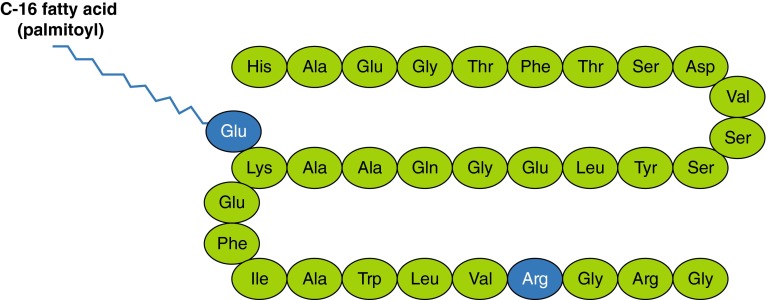
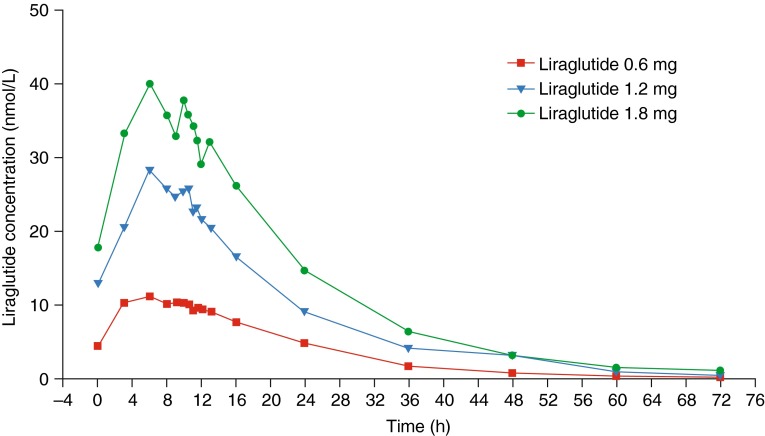
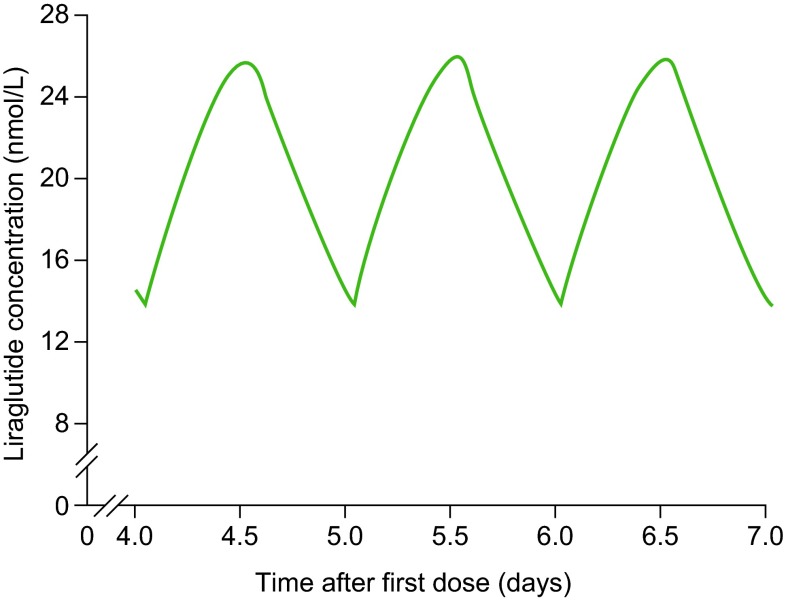
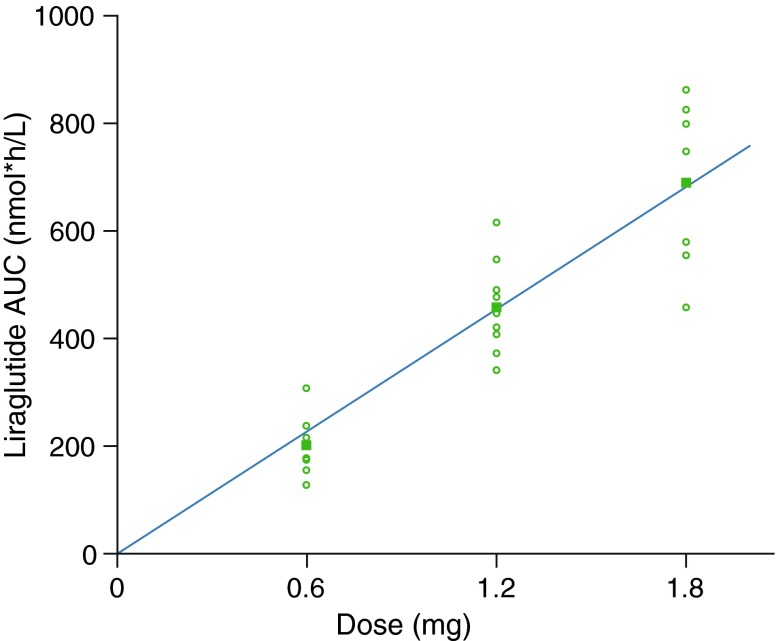
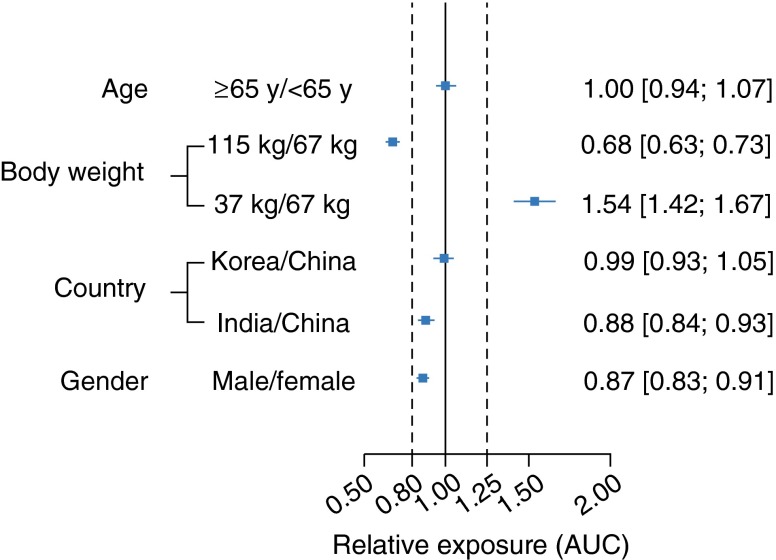
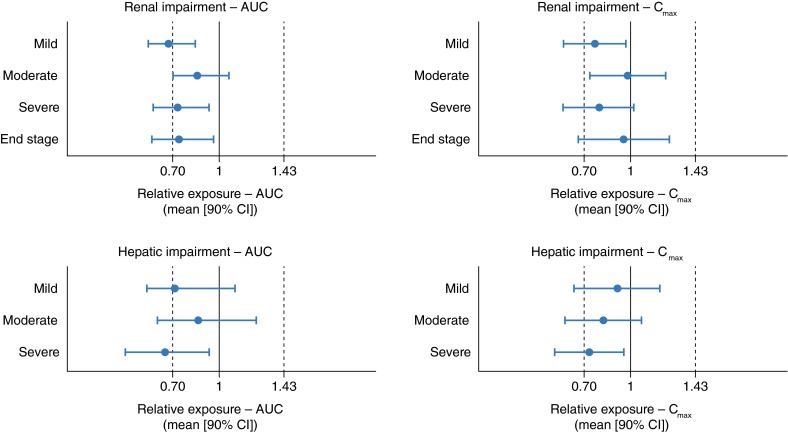
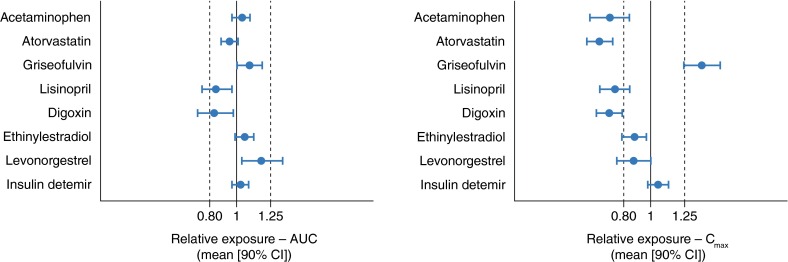
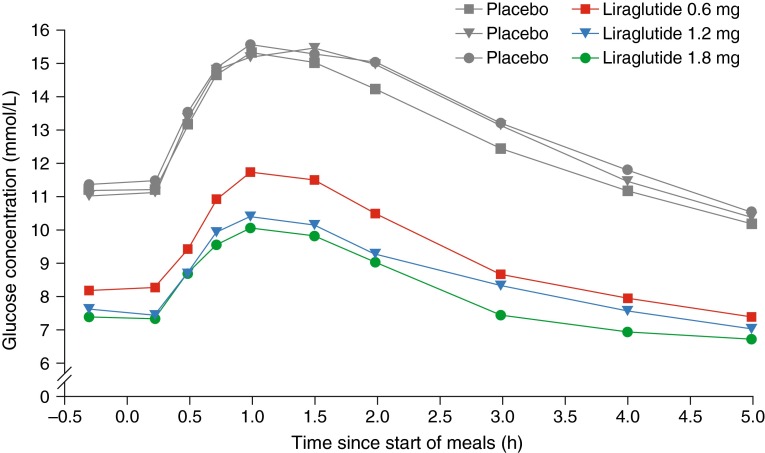
Liraglutide is an acylated glucagon-like peptide-1 analogue with 97 % amino acid homology with native glucagon-like peptide-1 and greatly protracted action. It is widely used for the treatment of type 2 diabetes mellitus, and administered by subcutaneous injection once daily. The pharmacokinetic properties of liraglutide enable 24-h exposure coverage, a requirement for 24-h glycaemic control with once-daily dosing. The mechanism of protraction relates to slowed release from the injection site, and a reduced elimination rate owing to metabolic stabilisation and reduced renal filtration. Drug exposure is largely independent of injection site, as well as age, race and ethnicity. Increasing body weight and male sex are associated with reduced concentrations, but there is substantial overlap between subgroups; therefore, dose escalation should be based on individual treatment outcome. Exposure is reduced with mild, moderate or severe renal or hepatic impairment. There are no clinically relevant changes in overall concentrations of various drugs (e.g. paracetamol, atorvastatin, griseofulvin, digoxin, lisinopril and oral combination contraceptives) when co-administered with liraglutide. Pharmacodynamic studies show multiple beneficial actions with liraglutide, including improved fasting and postprandial glycaemic control (mediated by increased insulin and reduced glucagon levels and minor delays in gastric emptying), reduced appetite and energy intake, and effects on postprandial lipid profiles. The counter-regulatory hormone response to hypoglycaemia is largely unaltered. The effects of liraglutide on insulin and glucagon secretion are glucose dependent, and hence the risk of hypoglycaemia is low. The pharmacokinetic and pharmacodynamic properties of liraglutide make it an important treatment option for many patients with type 2 diabetes.
Overview
The claims and statistics of this paper haven’t been checked yet.
Free: it reads the open-access text and checks the first 5 claims that cite a source we can check. Create a free account to check every claim.
Integrity signals
Registry
Cites
Statistics
Figures
Verification
Claims the paper makes
The claims and statistics of this paper haven’t been checked yet.
Free: it reads the open-access text and checks the first 5 claims that cite a source we can check. Create a free account to check every claim.
Claims other papers make about this one
Each is checked against this paper’s own text: does it say what the citing paper says it does?
The source backs part of the claim, not all of it — or backs it for a different population, condition or comparison.
In the citing paper
“In the treatment of T2DM, liraglutide helps lower blood sugar levels by increasing insulin production and reducing glucose production by the liver.81”
From Glucagon-like peptide-1 receptor: mechanisms and advances in therapy (2024) · cites this paper as [81]
Experimental — accuracy not yet measured
Self-check
Percentages, sums and reported differences re-computed from the paper’s own numbers.
The self-check needs the paper’s full text.
Citations
Cites
International Diabetes Federation 2017
Carracher, A. M., Marathe, P. H., & Close, K. L. (2018) · Journal of Diabetes · doi:10.1111/1753-0407.12644 · Cited by 13,418
Inzucchi, S. E., Bergenstal, R. M., Buse, J. B., Diamant, M., Ferrannini, E., Nauck, M., Peters, A. L., Tsapas, A., Wender, R., & Matthews, D. R. (2012) · Diabetologia · doi:10.1007/s00125-012-2534-0 · Cited by 3,919
Nordestgaard, B. G., Benn, M., Schnohr, P., & Tybjærg-Hansen, A. (2007) · JAMA · doi:10.1001/jama.298.3.299 · Cited by 2,058
Buse, J. B., Rosenstock, J., Sesti, G., Schmidt, W. E., Montanya, E., Brett, J. H., Zychma, M., & Blonde, L. (2009) · The Lancet · doi:10.1016/s0140-6736(09)60659-0 · Cited by 1,503
GLP-1 receptor agonists for individualized treatment of type 2 diabetes mellitus
Meier, J. J. (2012) · Nature Reviews Endocrinology · doi:10.1038/nrendo.2012.140 · Cited by 1,311 · cited 1×
“In any case, it has been suggested that the effect of liraglutide on gastric emptying decreases over time, owing to tolerance development as a result of continuous activation of the GLP-1 receptor [79].”
BackgroundNauck, M., Frid, A., Hermansen, K., Shah, N. S., Tankova, T., Mitha, I. H., Zdravkovic, M., Düring, M., Matthews, D. R., & for the LEAD-2 Study Group (2009) · Diabetes Care · doi:10.2337/dc08-1355 · Cited by 1,129
Nauck, M. A., Kleine, N., �rskov, C., Holst, J. J., Willms, B., & Creutzfeldt, W. (1993) · Diabetologia · doi:10.1007/bf00401145 · Cited by 1,092 · cited 1×
“However, although intravenous infusion of native GLP-1 can normalise plasma glucose levels in patients with type 2 diabetes [22, 23], it is not a practical option for exogenous therapy.”
BackgroundGarber, A., Henry, R., Ratner, R., Garcia-Hernandez, P. A., Rodriguez-Pattzi, H., Olvera-Alvarez, I., Hale, P. M., Zdravkovic, M., & Bode, B. (2009) · The Lancet · doi:10.1016/s0140-6736(08)61246-5 · Cited by 1,057 · cited 8×
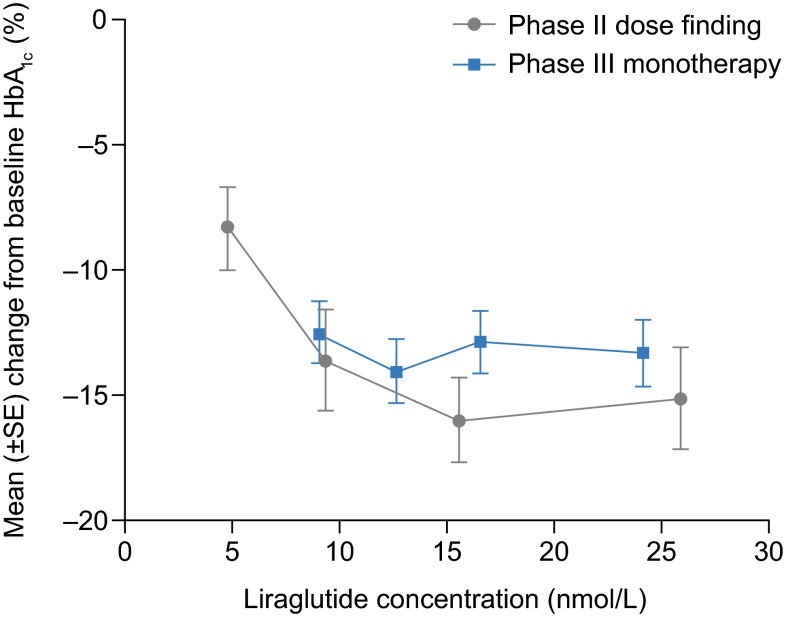
“Based on data from a phase III study in the USA, as well as a dose-finding phase II study, the mean change from baseline in HbA1c at 12–14 weeks was plotted for various doses of liraglutide (up to 1.8 mg and including placebo) given as monotherapy [33].”
BackgroundMethodInfluentialGhoos, Y. F., Maes, B. D., Geypens, B. J., Mys, G., Hiele, M. I., Rutgeerts, P. J., & Vantrappen, G. (1993) · Gastroenterology · doi:10.1016/0016-5085(93)90640-x · Cited by 946
Deacon, C. F., Nauck, M. A., Toft-Nielsen, M., Pridal, L., Willms, B., & Holst, J. J. (1995) · Diabetes · doi:10.2337/diab.44.9.1126 · Cited by 878
Research works printed but not linked: 1
- International Diabetes Federation. Diabetes atlas: sixth edition. 2014 update. http://www.idf.org/diabetesatlas. Accessed 24 Sep 2015.
Cited by
Items 101–200 of 217
Ingwersen, S. H., Petri, K. C. C., Tandon, N., Yoon, K.-H., Chen, L., Vora, J. P., & Yang, W. (2015) · Diabetes Research and Clinical Practice · doi:10.1016/j.diabres.2015.01.001 · Cited by 15
Self-citationAn unusual case of a generalised cutaneous drug reaction to liraglutide
Bovijn, L., Arianayagam, S., & Asher, R. G. (2019) · European Journal of Dermatology · doi:10.1684/ejd.2019.3691 · Cited by 16
Drug-drug interactions when treating HIV-related metabolic disorders
Gutiérrez, M. D. M., Mateo, G. M., Corbacho, N., Vidal, F., & Domingo, P. (2019) · Expert Opinion on Drug Metabolism & Toxicology · doi:10.1080/17425255.2019.1667334 · Cited by 14
Mader, J. K., Jensen, L., Ingwersen, S. H., Christiansen, E., Heller, S. R., & Pieber, T. R. (2016) · Clinical Pharmacokinetics · doi:10.1007/s40262-016-0413-4 · Cited by 14
“13 h) in individuals with T1D than previously reported in healthy volunteers and individuals with T2D [26, 27]; methodological differences between studies (e.”
ResultSelf-citationPharmacokinetics of Biopharmaceuticals: Their Critical Role in Molecular Design
Ogihara, T., Mizoi, K., & Ishii‐Watabe, A. (2023) · Biomedicines · doi:10.3390/biomedicines11051456 · Cited by 15
“All authors have read and agreed to the published version of the”
BackgroundSong, J. G., Kim, D. H., & Han, H. (2023) · International Journal of Nanomedicine · doi:10.2147/ijn.s413515 · Cited by 14
“Specially, type 2 diabetes is prevalent in 90% of diabetes patients and is a leading cause of mortality, increasing the risk of various diseases, including cardiovascular disorders, blindness, renal failure, and chronic liver diseases.(4,5) For more effective treatment of type 2 diabetes, protein drugs are often used…”
BackgroundStrategies targeting IL-33/ST2 axis in the treatment of allergic diseases
Li, W., Liu, M., & Chu, M. (2023) · Biochemical Pharmacology · doi:10.1016/j.bcp.2023.115911 · Cited by 15
Gameil, M. A., Yousef, E. A. A. M., Marzouk, R. E., Emara, M., Abdelkader, A. H., & Salama, R. I. (2024) · Diabetology & Metabolic Syndrome · doi:10.1186/s13098-024-01526-2 · Cited by 17
“%) than other GLP-1RAs [13, 14].”
Brahma, S., Goyal, A. K., Prakash, D., Kumari, M. R., Sadasivam, J., Usha, T., & Middha, S. K. (2023) · Current Diabetes Reviews · doi:10.2174/1573399819666230314093721 · Cited by 16
Biesenbach, P., Heinsen, L. J., Overgaard, K. S., Andersen, T. R., Auscher, S., & Egstrup, K. (2023) · Cardiovascular Therapeutics · doi:10.1155/2023/5126825 · Cited by 13
“On the other hand, studies on nondiabetic [23] and type 2 diabetic [24–26] rats as well as studies on cultured human vascular endothelial cells [27–29] have disclosed that liraglutide exerts marked antioxidant and anti-inflammatory properties at therapeutic plasma concentrations [42].”
BackgroundPharmacologically relevant drug interactions of Glucagon-like peptide-1 receptor agonists
Maideen, N. M. P. (2019) · Journal of Analytical & Pharmaceutical Research · doi:10.15406/japlr.2019.08.00311 · Cited by 14
Wu, H., Lu, Z., Chen, R., Cai, Q., Wang, M., Zhang, L., & Zhu, Z. (2023) · Frontiers in Endocrinology · doi:10.3389/fendo.2023.1098032 · Cited by 15
“Several studies have found that GLP-1 receptor agonists may cause thyroid C-cell adenomas and C-cell carcinomas in rodents (26, 27), and thus GLP-1 receptor agonists are contraindicated in those with a history of medullary thyroid cancer.”
BackgroundInfluentialGrannes, H., Ueland, T., Simeone, P., Liani, R., Guagnano, M. T., Aukrust, P., Michelsen, A. E., Birkeland, K. I., Castelnuovo, A. F. D., Cipollone, F., et al. (2024) · Cardiovascular Diabetology · doi:10.1186/s12933-024-02237-8 · Cited by 13
“It is widely used for the treatment of T2DM and administered by sub-cutaneous injection once daily [18].”
MethodLigumsky, H., Amir, S., Rubinstein, T. A., Guion, K., Scherf, T., Karasik, A., Wolf, I., & Rubinek, T. (2024) · Medical Oncology · doi:10.1007/s12032-024-02390-w · Cited by 17
“The concentrations of liraglutide utilized for several experiments exceeds the concentrations evaluated for glycemic control in humans [30].”
He, Y., Song, W., Deng, Y., Lin, X., Gao, Z., & Ma, P. (2024) · Molecular and Cellular Endocrinology · doi:10.1016/j.mce.2024.112441 · Cited by 13
Glucagon-Like Peptide 1 (GLP-1) Action on Hypothalamic Feeding Circuits
Hwang, E., Portillo, B., & Williams, K. W. (2025) · Endocrinology · doi:10.1210/endocr/bqaf125 · Cited by 10
Incidence of adhesions in patients using liraglutide before laparoscopic sleeve gastrectomy
Hakim, M., Fathi, M. A., Abdulraziq, M., & Shehri, M. A. A. (2022) · Surgical Endoscopy · doi:10.1007/s00464-022-09294-8 · Cited by 11
Machado, T. R., Honório, T. D. S., Domingos, T. F. S., de Paula, D. C., Cabral, L. M., Rodrigues, C. R., Abrahim-Vieira, B. D. A., & de Souza, A. M. T. (2023) · British Journal of Clinical Pharmacology · doi:10.1111/bcp.15816 · Cited by 10
Liu, X., Su-qin, W., Sun, J., Ni, S., Lu, L., Hu, W. M., Wei, H., Zou, Y., Li, T., Li, J., et al. (2021) · Pharmacology Research & Perspectives · doi:10.1002/prp2.729 · Cited by 10
Song, J. G., Lee, S. H., & Han, H. (2024) · Journal of Pharmaceutical Investigation · doi:10.1007/s40005-024-00663-0 · Cited by 9
“In the case of SC injection, the pharmacokinetic profile of Lira was comparable to those reported in previous studies (Jacobsen et al. 2016; Mader et al. 2016; Dong et al. 2018; Zhai et al. 2020).”
Shi, Y., Liu, L., Yin, M., Zhao, Z., Liang, Y., Sun, K., & Li, Y. (2022) · Journal of drug targeting · doi:10.1080/1061186x.2022.2104296 · Cited by 10
Tibaldi, J. M., Mercado, M. E., & Strong, J. L. (2020) · Clinical Diabetes · doi:10.2337/cd20-0014 · Cited by 10
“Their respective mechanisms of protraction and stability—formation of multihexamer degludec chains (23) and slowed release of liraglutide from injection site, as well as reduced elimination rate (24)—enable them to be dosed once daily.”
BackgroundLu, F., Li, E., & Yang, X. (2023) · Heliyon · doi:10.1016/j.heliyon.2023.e19371 · Cited by 9
Zhong, W., Yang, Y., & Yanru, W. (2025) · Tissue and Cell · doi:10.1016/j.tice.2025.102882 · Cited by 9
A Pharmacological Dose of Liraglutide Improves Mitochondrial Performance in Mouse Leydig Cells
Oliveira‐Lopes, B., Braga, P. C., Oliveira, P. F., Alves, M. G., & Bernardino, R. L. (2025) · International Journal of Molecular Sciences · doi:10.3390/ijms26188903 · Cited by 8
“Cells were treated without (control group) or with sub-pharmacologic, pharmacologic, or supra-pharmacologic concentrations of liraglutide (25 nM, 50 nM, and 100 nM, respectively) [44,45] in normoglycemic conditions (glucose 5 mM) for 48 h.”
Wolff, M., Schüler, A., Gast, K., Seckler, R., Evers, A., Pfeiffer‐Marek, S., Kurz, M. E., Nagel, N., Haack, T., Wagner, M., et al. (2020) · Molecular Pharmaceutics · doi:10.1021/acs.molpharmaceut.9b01195 · Cited by 9
Ziebarth, J., Diedrich, C., Machado, C. S., & Mainardes, R. M. (2024) · Journal of Chromatography B · doi:10.1016/j.jchromb.2024.124015 · Cited by 8
Liraglutide toxicity presenting to the emergency department: A case report and literature review
Rotella, J., & Wong, A. (2019) · Emergency Medicine Australasia · doi:10.1111/1742-6723.13343 · Cited by 8
“Liraglutide is slowly absorbed via subcutaneous injection with a plasma half-life of approximately 13 h prior to metabolism in the plasma by dipeptyl-peptidase-4 and neutral endopeptidase and excreted in the urine.(2) This likely contributed to the ongoing symptomatology in the present case.”
MethodAnalysis of the effect of liraglutide on glycemic variability in patients with type 2 diabetes
Xing, Y., Chen, J., Zhao, L., & Ma, H. (2020) · Endocrine Journal · doi:10.1507/endocrj.ej19-0530 · Cited by 8
Liraglutide (Saxenda®) as a Treatment for Obesity
Onge, E. S., Miller, S. A., & Motycka, C. A. (2016) · Food and Nutrition Sciences · doi:10.4236/fns.2016.74024 · Cited by 15
Tian, X., Wang, W., Zhang, L., Wang, L., Zhang, K., Ge, X., Luo, Z., Zhao, Y., Zhai, X., & Li, C. (2024) · Diabetes Metabolic Syndrome and Obesity · doi:10.2147/dmso.s492626 · Cited by 9
Kim, S., Jeon, J., Park, S. J., & Kim, M. (2018) · Clinical Pharmacology in Drug Development · doi:10.1002/cpdd.625 · Cited by 8
Liraglutide, GLP-1 receptor agonist, for chronic weight loss
Moore, K. G., Shealy, K. M., & Clements, J. N. (2016) · Expert Review of Endocrinology & Metabolism · doi:10.1080/17446651.2016.1220295 · Cited by 7
Current status of Liraglutide delivery systems for the management of type 2 diabetes mellitus
Chatterjee, R., Galave, V. S. B., & Jindal, A. B. (2025) · Drug Delivery and Translational Research · doi:10.1007/s13346-025-01965-y · Cited by 7
Ren, G., Ma, X., & Jiao, P. (2022) · PubMed Central · Cited by 6
The treament of hyperglycemia in acute ischemic stroke with incretin-based drugs
Ferrari, F., Moretti, A., & Villa, R. F. (2020) · Pharmacological Research · doi:10.1016/j.phrs.2020.105018 · Cited by 6
Ke, Z., Ma, Q., Ye, X., Jin, Y., Wang, Y., Zhao, X., & Su, Z. (2025) · Microbiology Spectrum · doi:10.1128/spectrum.02828-24 · Cited by 8
“By contrast, our peptide construct features an active form of GLP-1, specifically GLP-1 (7–37), fused with an HSA-binding peptide to significantly extend the half-life of GLP-1 ( 7– 37 ), as demonstrated In summary, this study demonstrates the development of an engineered probiotic system for the…”
InfluentialMultimodal Prehabilitation for Hernia Repair: Linking Metabolic Modulation and Mechanical Methods
Păduraru, D. N., Palcău, A. C., Daniel, I., & Seicaru, R. (2025) · Biomedicines · doi:10.3390/biomedicines13123117 · Cited by 8
“Shorter-acting agents like liraglutide (half-life~13 h) may permit shorter discontinuation periods (3–5 days) compared to semaglutide (half-life ~7 days, optimal discontinuation 14–21 days) or tirzepatide (half-life ~ 5 days, discontinuation 10–14 days) in high-risk patients [92,97,98].”
Fan, D., Zhang, Y., Lu, L., Yin, F., & Liu, B. (2024) · BMC Genomics · doi:10.1186/s12864-024-10076-w · Cited by 5
Wang, L., Hu, T., Zhang, R., Shi, Y., Wang, Y., Xuan, Q., & Zhou, X. (2025) · Biochemical and Biophysical Research Communications · doi:10.1016/j.bbrc.2025.151583 · Cited by 6
Zhou, R., Guo, L., Gao, X., Wang, Y., Xu, W., Zou, Y., Li, W., Zhuang, Y., Liu, G., & Liu, Y. (2022) · Clinical and Translational Science · doi:10.1111/cts.13374 · Cited by 4
Cheng, L., Xu, Y., Long, Y., Yu, F., Gui, L., Zhang, Q., & Lu, Y. (2023) · Naunyn-Schmiedeberg s Archives of Pharmacology · doi:10.1007/s00210-023-02572-9 · Cited by 7
Does liraglutide alleviate inflammation in brain-dead donors? A randomized clinical trial
Custódio, G., Massutti, A. M., da Igreja, M. R., Lemos, N. E., Crispim, D., Visioli, F., Palma, V. D. M., Leitão, C. B., & Rech, T. H. (2023) · Liver Transplantation · doi:10.1097/lvt.0000000000000298 · Cited by 6
“[18] The intervention group received 3 mg of liraglutide subcutaneously, corresponding to 0.5 mL immediately after randomization and every 6 hours until organ recovery.”
BackgroundMethodInfluentialZheng, L., Yang, Y., Dong, G., Qin, X., Li, W., Zhang, Y., Li, H., Zhang, S., He, P. C., Ye, Q., et al. (2025) · Diabetes Obesity and Metabolism · doi:10.1111/dom.70159 · Cited by 4
Molecular engineering of designer diabetes therapeutics
DeWolf, E. L., Webber, B., & Webber, M. J. (2026) · Journal of Controlled Release · doi:10.1016/j.jconrel.2026.114705 · Cited by 5
Liu, C., Xu, H., Yuan, F., Chen, H., Sheng, L., Chen, W., Xie, H., Xu, H., & Li, X. (2023) · Frontiers in Pharmacology · doi:10.3389/fphar.2023.1326865 · Cited by 4
Tang, Y., Tang, C., Lu, X., & Xing, X. (2025) · Biochemical and Biophysical Research Communications · doi:10.1016/j.bbrc.2025.151967 · Cited by 4
Lateral Septum as a Key Integrative Regulator of Feeding: Role of the GLP ‐1/ GLP ‐ 1R System
Dib, T., Covarrubias, M. J., Escobar, A. P., Renard, G. M., Bravo, J. A., & Sotomayor‐Zárate, R. (2025) · Journal of Neurochemistry · doi:10.1111/jnc.70301 · Cited by 3
“The estimated plasma half-life is approximately 13 h (range: 11–15 h), and it is slowly absorbed following subcutaneous administration, with a time to maximum concentration (Tmax) of approximately 12 h (range: 7–14 h) (Jacobsen et al. 2016).”
Xu, H., & Zhang, Y. L. (2026) · Medicine · doi:10.1097/md.0000000000046197 · Cited by 3
GLP-1 Receptor Agonists at the Crossroads of Circadian Biology, Sleep, and Metabolic Disease
Gandhi, A., Phyu, E. M., Koom‐Dadzie, K., Dickson, K. B., & Halm, J. K. (2026) · International Journal of Molecular Sciences · doi:10.3390/ijms27062853 · Cited by 6
“Liraglu-tide’s shorter half-life (~13 h) raises the theoretical possibility of time-of-day tailoring, but current clinical guidance supports consistent daily dosing rather than circadian-directed administration [75,97].”
Ma, Y., Lai, J., Chen, Z., Wan, Q., Shi, X., Zhou, H., Li, J., Yang, Z., & Wu, J. (2024) · Medicine · doi:10.1097/md.0000000000039104 · Cited by 4
Андреевна, Л. Е., Shevelyova, M. P., Андреевна, В. А., Deryusheva, E. I., Chaplygina, A. V., Rastrygina, V. A., Валериевич, М. А., Alikova, V. D., Nazipova, A. A., Permyakova, M. E., et al. (2025) · International Journal of Molecular Sciences · doi:10.3390/ijms26094095 · Cited by 3
“…of 1–119 pM for GLP-1/Exen) [70–72] and 20–120 nM for Sema/Lira [61,62], GLP-1RAs predominantly existed in monomeric form. concentration, at plasma concentrations of 1–119 pM for GLP-1/Exen) [70–72] and 20–120 nM for Sema/Lira [61,62], GLP-1RAs predominantly existed in monomeric form.”
InfluentialLiraglutide pharmacokinetics and exposure-response in pediatric patients with type 2 diabetes
Petri, K. C. C., Hale, P. M., Hofman, P. L., & Jacobsen, L. V. (2020) · Journal of Pediatric Endocrinology and Metabolism · doi:10.1515/jpem-2020-0053 · Cited by 4
Self-citationDing, X., Wang, Y., Zhang, S., Zhang, R., Chen, D., Liu, C., Xu, J., & Chen, L. (2024) · Amino Acids · doi:10.1007/s00726-023-03366-2 · Cited by 3
Gao, X., Di, Y., Lv, Y., Luan, Y., Xiong, Y., Xu, Y., Li, Y., Guo, L., Li, X. X., Deng, L., et al. (2024) · Clinical and Translational Science · doi:10.1111/cts.13775 · Cited by 3
Oligopeptide Regulatory Affairs and Challenges
Wolf, A. J., & Ricci, A. (2024) · Royal Society of Chemistry eBooks · doi:10.1039/9781837674541-00169 · Cited by 3
HIV Treatment and Obesity: What’s New?
Freitas, P., & Ribeiro, S. (2024) · Infectious diseases · doi:10.5772/intechopen.112667 · Cited by 2
A synergic GLP-1/Acylethanolamide-based combined therapy for MAFLD: Studies in rat models
de Ceglia, M., Tovar, R., Rodríguez-Pozo, M., Vargas, A., Gavito, A., Suárez, J., Baixerás, E., de Fonseca, F. R., & Decara, J. M. (2025) · Biochemical Pharmacology · doi:10.1016/j.bcp.2025.117364 · Cited by 2
Ji, Y., Gao, Y., Li, X., Hu, H., Zhang, Y., & Shi, Y. (2025) · European Journal of Medicinal Chemistry · doi:10.1016/j.ejmech.2025.117237 · Cited by 2
The Prevalence of Diabetes Mellitus Among High School and University Teachers in Mogadishu, Somalia
Ibrahim, M. E., Sönmez, R. E., Guleid, A. Y., & Alımoğlu, O. (2020) · International Journal of Human and Health Sciences (IJHHS) · doi:10.31344/ijhhs.v4i2.182 · Cited by 3
“Journal of atherosclerosis and thrombosis 14(3):122-7.”
Pharmacologically relevant drug interactions of Glucagon-like peptide-1 receptor agonists
Maideen, N. M. P. (2019) · Journal of Analytical & Pharmaceutical Research · doi:10.15406/japlr.2019.08.00310 · Cited by 7
Enhancing Stability and Albumin Binding Efficiency of α-Conotoxin GI through Fatty Acid Modification
Qi, P., He, Q., Zhang, J., Lian, Y., Xie, T., Dong, J., Zhangsun, D., Wu, Y., & Luo, S. (2023) · Biochemistry · doi:10.1021/acs.biochem.3c00385 · Cited by 3
Anti-Obesity Medications in Cancer Therapy: A Comprehensive Insight
Shekhawat, R., & Mandal, C. C. (2021) · Current Cancer Drug Targets · doi:10.2174/1568009621666210322122829 · Cited by 3
Bai, S., Lin, C., Jiao, R., Cai, X., Hu, S., Lv, F., Yang, W., Zhu, X., & Ji, L. (2023) · European Journal of Internal Medicine · doi:10.1016/j.ejim.2023.01.008 · Cited by 2
Correlation between type 2 diabetes mellitus remission and intrapancreatic fat deposition
Liu, J., Luo, Y., Zhu, Y.-R., Wu, Z.-T., Hou, Y., Xu, Y., Li, L., & Ma, C. (2024) · World Journal of Clinical Cases · doi:10.12998/wjcc.v12.i21.4536 · Cited by 2
Resistant and Refractory Obesity: The Complexity of Anti-Obesity Therapy Failure
Nicze, M., Borówka, M., Dec, A., Bułdak, Ł., Bołdys, A., & Okopień, B. (2026) · International Journal of Molecular Sciences · doi:10.3390/ijms27062539 · Cited by 7
Song, S., Kim, J., Kim, S., Shin, B. S., & Shin, S. (2026) · Biomedicine & Pharmacotherapy · doi:10.1016/j.biopha.2026.119345 · Cited by 2
Broksø, A. D., Brüner, M., Hartmann, B., Josefsen, K. E., Holst, J. J., & Kragstrup, T. W. (2026) · The Lancet Rheumatology · doi:10.1016/s2665-9913(26)00074-3 · Cited by 2
Lamos, E. M., & Davis, S. N. (2016) · Expert Opinion on Drug Metabolism & Toxicology · doi:10.1080/17425255.2016.1216974 · Cited by 1
“There are no pharmacodynamic (PD) studies of fixed-ratio combination IDegLira but the PK/PD properties of the individual components, degludec and liraglutide, have been studied and reviewed extensively [8,13].”
BackgroundWinkler, G. (2019) · Diabetologia Hungarica · doi:10.24121/dh.2019.8 · Cited by 2
“Az albiglutid esetében humán szérumalbuminhoz kapcsolt két módosított szerkezetű GLP-1(7-36) molekula,(13,14) a dulaglutidnál két immunglobulin G (IgG) nehézlánc (Fc)-fragmenthez kapcsolt ugyancsak két, módosított GLP-1(7-36) szekvencia eredményezi a hosszabb plazmakeringési időt.”
Kumari, K., Kumar, S., Sinha, R. K., & Toppo, M. S. (2023) · Cureus · doi:10.7759/cureus.41495 · Cited by 1
“) once daily due to its longer halflife (13 hours) [9] due to which it maintains 24-hour glycemic control [10].”
BackgroundAlbaghlany, R. M., Shahsavani, M. B., Hoshino, M., Moosavi‐Movahedi, A. A., Ghasemi, Y., & Yousefi, R. (2023) · Biochimie · doi:10.1016/j.biochi.2023.10.020 · Cited by 2
Sodium Glucose Cotransporter-2 Inhibitors: An Overview from Evolution to Clinical Implications
Ravi, R., Balasubramaniam, V., Dhingra, S., Murti, K., & Ponnusankar, S. (2024) · Indian Journal of Pharmaceutical Sciences · doi:10.36468/pharmaceutical-sciences.1292 · Cited by 1
Wang, W., Yang, Y.-Z., Xing, Y., Zhou, Z.-A., Jiang, Q.-Y., Huang, L., Kong, L., & Zhang, D. (2024) · Phytomedicine · doi:10.1016/j.phymed.2024.156242 · Cited by 1
Xie, Y., He, Q., Wang, X., & Wang, J. (2024) · Authorea · doi:10.22541/au.170670903.33408087/v1
Non-alcoholic fatty liver disease (NAFLD) and type 2 diabetes: a close and developing relationship
Mayo, P. (2019) · Gastrointestinal Nursing · doi:10.12968/gasn.2019.17.2.30
Gysling, E. (2017) · pharma-kritik · doi:10.37667/pk.2017.1022
He, S., Zhang, J., Wang, T., Wu, P., Liu, J., Li, M., & Ma, B. (2020) · International Journal of Peptide Research and Therapeutics · doi:10.1007/s10989-020-10123-6
“A number of GLP-1 analogs including CJC1131, Exendin-4, and Liraglutide have been produced with the goal of extending the half-life of this compound (Edwards et al. 2001; Tiessen et al. 2008; Jacobsen et al. 2016; Marso et al. 2016; Fusco et al. 2017).”
BackgroundGLP-1R Activation by Liraglutide Promotes Breast Cancer Through NOX4/ROS/VEGF PathwayPreprint
Liu, Z., Duan, X., Yuan, M., Yu, J. Y., Hu, X., Han, X., Lan, L., Liu, B., Wang, Y., & Qin, J. (2021) · SSRN Electronic Journal · doi:10.2139/ssrn.3977559
Glucagon Like Peptide-1: More than Glucose Control and Weight ReductionPreprint
Chen, Y., Shao, S., Zhang, X., Xu, Q., & Pan, R. (2022) · SSRN Electronic Journal · doi:10.2139/ssrn.4161722
Clinical Potential of Glucagon-like Peptide-1 Analogs in the Management of Diabesity
Sharma, N., & Singh, S. (2023) · Journal of Diabetology · doi:10.4103/jod.jod_102_22
Investigation the impact of liraglutide on the thyroid function tests
Urhan, E. (2023) · Turkish Journal of Clinics and Laboratory · doi:10.18663/tjcl.1284003 · Cited by 1
Weight Loss in Diabetes: Pharmacological Management and Other Strategies
Coral, M. I. G. (2023) · Current Research in Diabetes & Obesity Journal · doi:10.19080/crdoj.2023.17.555953
Alarcón‐Romero, L. D. C., Zubillaga‐Guerrero, M. I., William, C. I. M., Illades‐Aguiar, B., García, A. M. E., Rivera, M. J. M., Barrera, J. A. P., Gómez‐Gómez, Y., & Hernández, M. V. (2024) · doi:10.22533/at.ed.8022401044
A CONEXÃO CURIOSA ENTRE DIABETES MELLITUS E A DOENÇA DE PARKINSON
Maciel, L. M., dos Santos, A. V. F., da Silva, C. V. B. G., dos Santos, G. L. G., Galdino, E. D. S., de Moraes, J. G. F., Miranda, M. A., Silva, M. A. P. D. C. C., Barbosa, J. O. L., & de Lira, A. C. L. (2024) · doi:10.22533/at.ed.8022401047
FATORES QUE INFLUENCIAM NA PREMATURIDADE
Carneiro, C. R. D. N., Reis, C. C. C., Dias, R. A., Sales, E. Q., Ferreira, T. P. A., Silva, P. S. L. E., Costa, P. N., Soares, J. B., Reis, M. C. P., Fernandes, L., et al. (2024) · doi:10.22533/at.ed.8022401043
de Freitas, S. S., Alves, J. D. L., da Silva, W. L. S., Paulino, B. D. S., Prado, N. S., de Arruda, M. A., Amancio, S. R. F., de Barros, C. F. E., Bezerra, A. M. F. D. A., de Souza, F. R., et al. (2024) · doi:10.22533/at.ed.8022401046
IMUNOLÓGICOS ENVOLVIDOS NA PATOGÊNESE DA DOENÇA PERIODONTAL
Freire, J. M. D. O., Sousa, L. M. V. L., Rodrigues, Í. A., de Sousa, B. S., de Menezes, R. L. R., Nascimento, A. L. S., de Oliveira, M. M., & da Costa, I. B. (2024) · doi:10.22533/at.ed.8022401042
CUIDADOS PALIATIVOS NEONATAIS PARA A FAMÍLIA
Silva, F. A., Chady, C. S., & Dias, R. A. (2024) · doi:10.22533/at.ed.8022401045
USO DE PSICOTRÓPICOS EN CULTURAS ANCESTRALES: UN VIAJE A TRAVÉS DEL TIEMPO Y LAS TRADICIONES
de Aparicio, C. X. P., Guerrero, D. A. H., & Pazmiño, P. V. L. (2024) · doi:10.22533/at.ed.8022401041
Obesidad y riesgo cardiovascular: liraglutida y sus beneficios terapéuticos
Mendoza, W. M. M., Vaca, L. E. B., Bazurto, M. A. C., Velez, E. M. D. V., Pin, M. B. M., & Alencastro, J. A. P. (2024) · AlfaPublicaciones · doi:10.33262/ap.v6i3.1.526
“Según Jacobsen et al. (2016), consideran a la liraglutida como un análogo del GLP-1 humano, con un 97% de homología con el GLP-1 nativo (con el reemplazo de la lisina 34 por arginina y la incorporación de una molécula de ácido graso en la posición 26), el cual debido a sus propiedades…”
BackgroundInfluentialThe developmental trajectory of GLP-1 receptor agonists
Kou, B., & Qian, H. (2025) · Elsevier eBooks · doi:10.1016/b978-0-443-27402-2.00001-2
Liraglutide-induced oral hyperpigmentation: a case report and review of management strategies
Alzahrani, A. K., Basendwh, M. A., Alzaidi, R. S., Aldraibi, S. M., & Abualola, A. H. (2025) · International Journal of Research in Dermatology · doi:10.18203/issn.2455-4529.intjresdermatol20251050
Liraglutide Increases Gastric Fundus Tonus and Reduces Food Intake in Type 2 Diabetic Rats
Carrêlo, A. C. L., Martins, B. D., Seiça, R. M. F., Ribeiro, C., Matafome, P. N., & Silva, S. (2025) · Diabetology · doi:10.3390/diabetology6090096
Grannes, H., Ueland, T., Simeone, P., Liani, R., Guagnano, M. T., Aukrust, P., Michelsen, A. E., Birkeland, K., di Castelnuovo, A., Cipollone, F., et al. (2024) · Figshare · doi:10.6084/m9.figshare.25720188
Fan, D., Zhang, Y., Lu, L., 尹福在, & Liu, B. (2024) · Figshare · doi:10.6084/m9.figshare.25194870
Fan, D., Zhang, Y., Lu, L., 尹福在, & Liu, B. (2024) · Figshare · doi:10.6084/m9.figshare.25195100
Deng, M., Wen, Y., Yan, J., Fan, Y., Wang, Z., Zhang, R., Ren, L., Ba, Y., Wang, H., Lu, Q., et al. (2023) · Figshare · doi:10.6084/m9.figshare.24580347
Yu, M., Wang, R., Pei, L., Zhang, X., Wei, J., Wen, Y., Liu, H., Ye, H., Wang, J., & Wang, L. (2024) · Figshare · doi:10.6084/m9.figshare.26606593
Metadata
- Authors
- Jacobsen, L. V., Flint, A., Olsen, A. K., & Ingwersen, S. H.
- Affiliations
- Novo Nordisk (Denmark) (DK)
- Corresponding author
- Ingwersen, Steen H.
- ORCID
- Flint, Anne
- Venue
- Clinical Pharmacokinetics
- Published
- 2015-11-23
- Volume
- 55
- Issue
- 6
- Pages
- 657-672
- ISSN
- 0312-5963 (ISSN-L)
- 1179-1926
- PMC
- PMC4875959
- OpenAlex
- W2174832318
- Cited by
- 217
- References
- 78
- Citations by year
- 2026: 24 · 2025: 21 · 2024: 43 · 2023: 34 · 2022: 20 · 2021: 14 · 2020: 18 · 2019: 20 · 2018: 11 · 2017: 4 · 2016: 7 · 2015: 1
- FWCI
- 6.65
- Type
- journal article
- Language
- en
- Open access
- hybrid
- doi.org
- Licence
- Locations
- Clinical Pharmacokinetics (publishedVersion, cc-by-nc)
- Europe PMC (PubMed Central) (publishedVersion, cc-by-nc)
- PubMed Central (publishedVersion, cc-by-nc)
- PubMed (publishedVersion)
- Funders
- Novo Nordisk
- Topics
- Health Sciences › Medicine › Endocrinology, Diabetes and Metabolism › Diabetes Treatment and Management
- Health Sciences › Medicine › Endocrinology, Diabetes and Metabolism › Diabetes Management and Research
- Health Sciences › Medicine › Pharmacology (medical) › Pharmacology and Obesity Treatment
- Keywords
- liraglutide, type 2 diabetes, glucagon-like peptide-1 analogues, pharmacokinetics, pharmacodynamics, glycemic control, insulin secretion, glucagon secretion, gastric emptying, hypoglycemia, renal dysfunction, liver dysfunction, drug interactions, dose escalation, subcutaneous injection
- MeSH terms
- Liraglutide, Blood Glucose, Body Weight, Diabetes Mellitus, Type 2, Drug Interactions, Glucagon, Humans, Hypoglycemic Agents, Injections, Subcutaneous, Insulin, Lipids, Sex Factors, Liver Failure, Area Under Curve, Renal Insufficiency, Glucagon-Like Peptide 1
About these checks
Registry, retraction, Cites and statistics results are computed, not judged, with one exception: a printed reference that no index lists is read once by a model before it counts as a citation error. Claims are extracted by a model and kept only when their quote appears verbatim in the text; each cited source is then checked, with a model’s help, for whether it says what the claim relies on. Those verdicts can be wrong — read the claim’s quote and the cited source before relying on one.
Statistics and arithmetic are recomputed, not judged.
Confidence bands are shown only for fields calibrated on our annotated test set. None is calibrated yet, so no band is shown.
What counts as a claim ›How we measure confidence ›How we check this ›
Are you an author, or do you see a problem with this page? Request a review
Data sources
Bibliographic data: Semantic Scholar, OpenAlex, Crossref.
Contains information from the Semantic Scholar Academic Graph Datasets, made available under the ODC Attribution License (ODC-BY 1.0).
Semantic Scholar’s data is described in: Kinney, R., et al. (2023). The Semantic Scholar Open Data Platform. arXiv:2301.10140.
