

The DOI matches its Crossref record; 53 of the 53 references it cites were found in a registry or an index.
Clinical Pharmacokinetics and Pharmacodynamics of Afatinib
Open accessAbstract
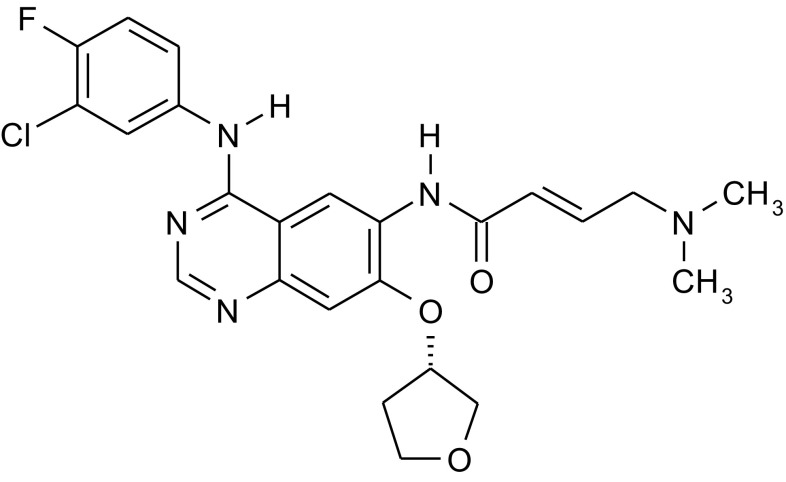
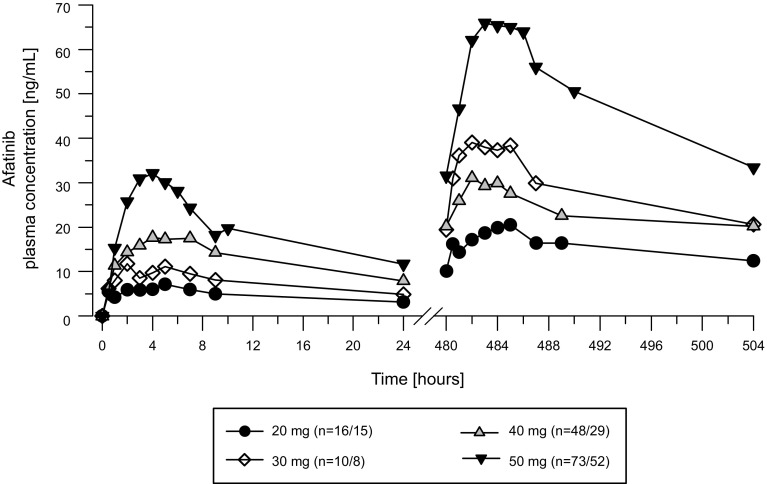
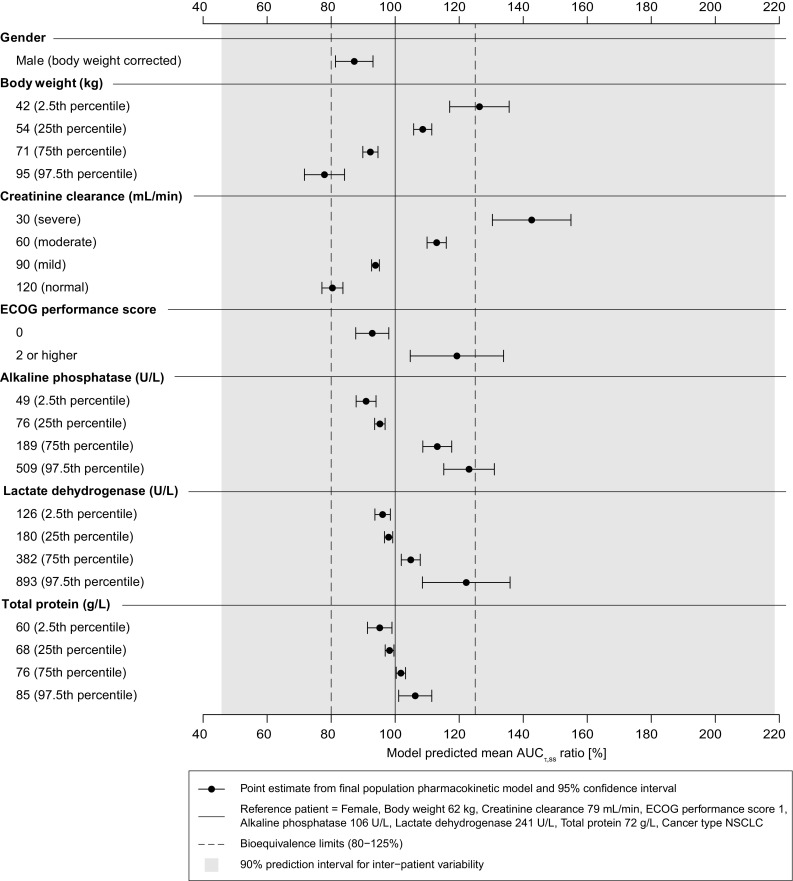
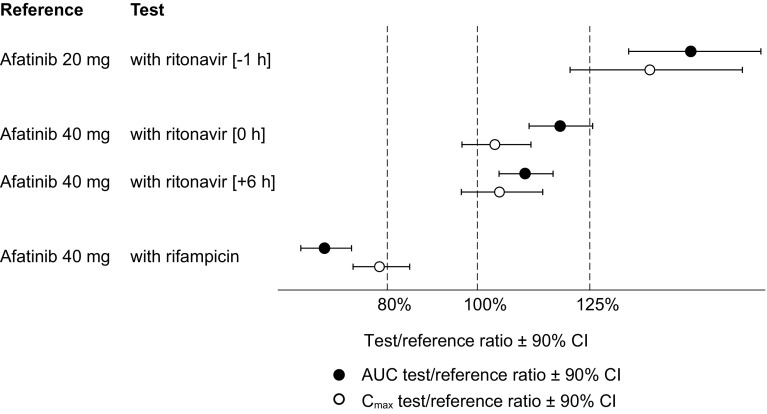
Afatinib is an oral, irreversible ErbB family blocker that covalently binds to the kinase domains of epidermal growth factor receptor (EGFR), human EGFRs (HER) 2, and HER4, resulting in irreversible inhibition of tyrosine kinase autophosphorylation. Studies in healthy volunteers and patients with advanced solid tumours have shown that once-daily afatinib has time-independent pharmacokinetic characteristics. Maximum plasma concentrations of afatinib are reached approximately 2-5 h after oral administration and thereafter decline, at least bi-exponentially. Food reduces total exposure to afatinib. Over the clinical dose range of 20-50 mg, afatinib exposure increases slightly more than dose proportional. Afatinib metabolism is minimal, with unchanged drug predominantly excreted in the faeces and approximately 5 % in urine. Apart from the parent drug afatinib, the major circulation species in human plasma are the covalently bound adducts to plasma protein. The effective elimination half-life is approximately 37 h, consistent with an accumulation of drug exposure by 2.5- to 3.4-fold based on area under the plasma concentration-time curve (AUC) after multiple dosing. The pharmacokinetic profile of afatinib is consistent across a range of patient populations. Age, ethnicity, smoking status and hepatic function had no influence on afatinib pharmacokinetics, while females and patients with low body weight had increased exposure to afatinib. Renal function is correlated with afatinib exposure, but, as for sex and body weight, the effect size for patients with severe renal impairment (approximately 50 % increase in AUC) is only mildly relative to the extent of unexplained interpatient variability in afatinib exposure. Afatinib has a low potential as a victim or perpetrator of drug-drug interactions, especially with cytochrome P450-modulating agents. However, concomitant treatment with potent inhibitors or inducers of the P-glycoprotein transporter can affect the pharmacokinetics of afatinib. At a dose of 50 mg, afatinib does not have proarrhythmic potential.
Overview
The claims and statistics of this paper haven’t been checked yet.
Run the check — free, no account needed. It reads the open-access text and checks the sources it cites.
Integrity signals
Registry
Cites
Statistics
Figures
Verification
Claims the paper makes
The claims and statistics of this paper haven’t been checked yet.
Run the check — free, no account needed. It reads the open-access text and checks the sources it cites.
Claims other papers make about this one
Each is checked against this paper’s own text: does it say what the citing paper says it does?
The source backs part of the claim, not all of it — or backs it for a different population, condition or comparison.
In the citing paper
“concomitant administration of ritonavir, a well-known, potent inhibitor of P-glycoprotein and BCRP (another ATP binding cassette drug transporter inhibitor) has shown no relevant impact on afatinib pharmacokinetics in healthy male adults.”
From Afatinib for the treatment of EGFR mutation-positive NSCLC: A review of clinical findings (2020) · cites this paper as [62]
Experimental — accuracy not yet measuredThe cited source says what the claim attributes to it.
In the citing paper
“Afatinib is highly soluble across the physiological pH range of 1–7.5 and is not expected to interact with acid-reducing agents.”
From Afatinib for the treatment of EGFR mutation-positive NSCLC: A review of clinical findings (2020) · cites this paper as [62]
The cited source says what the claim attributes to it.
In the citing paper
“Smoking status does not impact the pharmacokinetics of afatinib”
From Afatinib for the treatment of EGFR mutation-positive NSCLC: A review of clinical findings (2020) · cites this paper as [62]
The cited source says what the claim attributes to it.
In the citing paper
“P-glycoprotein inducers such as rifampicin can reduce afatinib exposure.”
From Afatinib for the treatment of EGFR mutation-positive NSCLC: A review of clinical findings (2020) · cites this paper as [62]
The cited source says what the claim attributes to it.
In the citing paper
“afatinib does not relevantly inhibit or induce CYP enzymes, including those involved in drug metabolism.62 Therefore, the risk of interactions between afatinib and co-administered drugs that undergo CYP enzyme metabolism is thought to be minimal.”
From Afatinib for the treatment of EGFR mutation-positive NSCLC: A review of clinical findings (2020) · cites this paper as [62]
The cited source says what the claim attributes to it.
In the citing paper
“Afatinib is a substrate and inhibitor of P-glycoprotein in vitro, and concomitant use of strong P-glycoprotein inhibitors can increase exposure to afatinib.”
From Afatinib for the treatment of EGFR mutation-positive NSCLC: A review of clinical findings (2020) · cites this paper as [62]
Self-check
Percentages, sums and reported differences re-computed from the paper’s own numbers.
The self-check needs the paper’s full text.
Citations
Cites
Gefitinib or Carboplatin–Paclitaxel in Pulmonary Adenocarcinoma
Mok, T. S., Wu, Y.-L., Thongprasert, S., Yang, C.-H., Chu, D.-T., Saijo, N., Sunpaweravong, P., Han, B., Margono, B., Ichinose, Y., et al. (2009) · New England Journal of Medicine · doi:10.1056/nejmoa0810699 · Cited by 8,261
Gefitinib or Chemotherapy for Non–Small-Cell Lung Cancer with Mutated EGFR
Maemondo, M., Inoue, A., Kobayashi, K., Sugawara, S., Oizumi, S., Isobe, H., Gemma, A., Harada, M., Yoshizawa, H., Kinoshita, I., et al. (2010) · New England Journal of Medicine · doi:10.1056/nejmoa0909530 · Cited by 5,525
Rosell, R., Carcereny, E., Gervais, R., Vergnenegre, A., Massuti, B., Felip, E., Palmero, R., Garcia-Gomez, R., Pallares, C., Sanchez, J. M., et al. (2012) · The Lancet Oncology · doi:10.1016/s1470-2045(11)70393-x · Cited by 5,489
Mitsudomi, T., Morita, S., Yatabe, Y., Negoro, S., Okamoto, I., Tsurutani, J., Seto, T., Satouchi, M., Tada, H., Hirashima, T., et al. (2010) · The Lancet Oncology · doi:10.1016/s1470-2045(09)70364-x · Cited by 4,090
Zhou, C., Wu, Y.-L., Chen, G., Feng, J., Liu, X.-Q., Wang, C., Zhang, S., Wang, J., Zhou, S., Ren, S., et al. (2011) · The Lancet Oncology · doi:10.1016/s1470-2045(11)70184-x · Cited by 4,081
Genotypic and Histological Evolution of Lung Cancers Acquiring Resistance to EGFR Inhibitors
Sequist, L. V., Waltman, B. A., Dias-Santagata, D., Digumarthy, S., Turke, A. B., Fidias, P., Bergethon, K., Shaw, A. T., Gettinger, S., Cosper, A. K., et al. (2011) · Science Translational Medicine · doi:10.1126/scitranslmed.3002003 · Cited by 3,499 · cited 14×
“AUCs area under the drug plasma concentration–time curve over a uniform dosing interval s, ECOG Eastern Cooperative Oncology Group, NSCLC non-small cell lung cancer.”
BackgroundInfluentialSequist, L. V., Yang, J. C.-H., Yamamoto, N., O'Byrne, K., Hirsh, V., Mok, T., Geater, S. L., Orlov, S., Tsai, C.-M., Boyer, M., et al. (2013) · Journal of Clinical Oncology · doi:10.1200/jco.2012.44.2806 · Cited by 3,228 · cited 21×
“A dose modification schedule based on tolerability was applied in the LUX-Lung 3 trial [19].”
BackgroundMethodResultInfluentialEpidermal growth factor receptor mutations in lung cancer
Sharma, S. V., Bell, D. W., Settleman, J., & Haber, D. A. (2007) · Nature Reviews Cancer · doi:10.1038/nrc2088 · Cited by 3,170 · cited 17×
“AUCs area under the drug plasma concentration–time curve over a uniform dosing interval s, ECOG Eastern Cooperative Oncology Group, NSCLC non-small cell lung cancer.”
BackgroundInfluentialYu, H. A., Arcila, M. E., Rekhtman, N., Sima, C. S., Zakowski, M. F., Pao, W., Kris, M. G., Miller, V. A., Ladanyi, M., & Riely, G. J. (2013) · Clinical Cancer Research · doi:10.1158/1078-0432.ccr-12-2246 · Cited by 2,454 · cited 14×
“AUCs area under the drug plasma concentration–time curve over a uniform dosing interval s, ECOG Eastern Cooperative Oncology Group, NSCLC non-small cell lung cancer.”
BackgroundInfluentialThe T790M mutation in EGFR kinase causes drug resistance by increasing the affinity for ATP
Yun, C.-H., Mengwasser, K. E., Toms, A. V., Woo, M. S., Greulich, H., Wong, K.-K., Meyerson, M., & Eck, M. J. (2008) · Proceedings of the National Academy of Sciences · doi:10.1073/pnas.0709662105 · Cited by 2,118
Cited by
Sorted by citations
Properties of FDA-approved small molecule protein kinase inhibitors
Roskoski, R. (2019) · Pharmacological Research · doi:10.1016/j.phrs.2019.03.006 · Cited by 554
Inhibition and induction of CYP enzymes in humans: an update
Hakkola, J., Hukkanen, J., Turpeinen, M., & Pelkonen, O. (2020) · Archives of Toxicology · doi:10.1007/s00204-020-02936-7 · Cited by 443
A comprehensive review of protein kinase inhibitors for cancer therapy
Kannaiyan, R., & Mahadevan, D. (2018) · Expert Review of Anticancer Therapy · doi:10.1080/14737140.2018.1527688 · Cited by 315
“The ORR was 2% in patients who had progressed on crizotinib only, 9% in patients who had progressed on crizotinib and chemotherapy, 17% in patients who had progressed on 2 ALK TKIs and chemotherapy, and 7% in patients who had progressed on 3 prior TKIs and chemotherapy [135].”
BackgroundInfluentialPractical Recommendations for Therapeutic Drug Monitoring of Kinase Inhibitors in Oncology
Verheijen, R. B., Yu, H., Schellens, J. H. M., Beijnen, J. H., Steeghs, N., & Huitema, A. D. R. (2017) · Clinical Pharmacology & Therapeutics · doi:10.1002/cpt.787 · Cited by 285
“6 ng/mL in those with only Grade 1–2 rash.(29) A consistent relationship between exposure and response has not been found yet for afatinib.”
Roles of Mitogen-Activated Protein Kinases in Osteoclast Biology
Lee, K., Seo, I., Choi, M. H., & Jeong, D. (2018) · International Journal of Molecular Sciences · doi:10.3390/ijms19103004 · Cited by 258
“The anti-tumor agent afatinib (an ATP-competitive 4-anilinoquinazoline derivative), an irreversible epidermal growth factor receptor tyrosine kinase inhibitor, has proven efficacious in phase III trials in patients with non-small cell lung cancer, which is known as the third most common cause of bone metastases [84].”
BackgroundPreclinical Comparison of the Blood–brain barrier Permeability of Osimertinib with Other EGFR TKIs
Colclough, N., Chen, K., Johnström, P., Strittmatter, N., Yan, Y., Wrigley, G. L., Schou, M., Goodwin, R. J. A., Varnäs, K., Adua, S. J., et al. (2020) · Clinical Cancer Research · doi:10.1158/1078-0432.ccr-19-1871 · Cited by 244
The Ascension of Targeted Covalent Inhibitors
Singh, J. (2022) · Journal of Medicinal Chemistry · doi:10.1021/acs.jmedchem.1c02134 · Cited by 214
Abourehab, M. A. S., Alqahtani, A. M., Youssif, B. G. M., & Gouda, A. M. (2021) · Molecules · doi:10.3390/molecules26216677 · Cited by 211
“[50] also revealed a minimal metabolism of afatinib.”
BackgroundAfatinib for the treatment of EGFR mutation-positive NSCLC: A review of clinical findings
Harvey, R. D., Adams, V. R., Beardslee, T., & Medina, P. (2020) · Journal of Oncology Pharmacy Practice · doi:10.1177/1078155220931926 · Cited by 115
“62 In contrast, other EGFR TKIs interact with different CYP enzymes to varying extents, potentially impacting the metabolism of concomitant drugs.”
BackgroundInfluentialShah, R. R., & Shah, D. R. (2019) · Drug Safety · doi:10.1007/s40264-018-0772-x · Cited by 99
Estrada‐Bernal, A., Le, A. T., Doak, A. E., Tirunagaru, V. G., Silva, S., Bull, M. R., Smaill, J. B., Patterson, A. V., Kim, C., Liu, S. V., et al. (2020) · Clinical Cancer Research · doi:10.1158/1078-0432.ccr-20-3555 · Cited by 84
“The FDA-approved dose of afatinib is 40 mg (orally, once daily) providing a plasma AUCtotal for afatinib of 324 ng hour/mL (31).”
BackgroundTargeted Inhibitors of EGFR: Structure, Biology, Biomarkers, and Clinical Applications
Shaban, N., Kamashev, D., Emelianova, A., & Buzdin, A. A. (2023) · Cells · doi:10.3390/cells13010047 · Cited by 88
“Its mechanism of action is different from first-generation EGFR inhibitors erlotinib and gefitinib, as afatinib irreversibly inhibits autophosphorylation of EGFR, HER2, and HER4 receptors by forming irreversible covalent bonds with ATP-binding sites (Table 1) [118].”
BackgroundHigh-Throughput Functional Evaluation of Variants of Unknown Significance in ERBB2
Nagano, M., Kohsaka, S., Ueno, T., Kojima, S., Saka, K., Iwase, H., Kawazu, M., & Mano, H. (2018) · Clinical Cancer Research · doi:10.1158/1078-0432.ccr-18-0991 · Cited by 79
Haider, K., Das, S., Joseph, A., & Yar, M. S. (2022) · Drug Development Research · doi:10.1002/ddr.21925 · Cited by 76
Therapeutic Drug Monitoring of Kinase Inhibitors in Oncology
van der Kleij, M. B. A., Guchelaar, N. A. D., Mathijssen, R. H. J., Versluis, J., Huitema, A. D. R., Koolen, S. L. W., & Steeghs, N. (2023) · Clinical Pharmacokinetics · doi:10.1007/s40262-023-01293-9 · Cited by 81
A Review of HER4 (ErbB4) Kinase, Its Impact on Cancer, and Its Inhibitors
El–Gamal, M. I., Mewafi, N. H., Abdelmotteleb, N. E., Emara, M. A., Tarazi, H., Sbenati, R. M., Madkour, M. M., Zaraei, S., Shahin, A. I., & Anbar, H. S. (2021) · Molecules · doi:10.3390/molecules26237376 · Cited by 75
“EGFR, HER2, and HER4 have an effect on tumor cell proliferation and are presumed to be overly expressed in many cancer cells [125].”
BackgroundȘandor, A., Ionuţ, I. A., Marc, G., Oniga, I., Eniu, D. T., & Oniga, O. (2023) · Pharmaceuticals · doi:10.3390/ph16040534 · Cited by 79
Interaction between phytotherapy and oral anticancer agents: prospective study and literature review
Clairet, A., Boiteux-Jurain, M., Curtit, E., Jeannin, M., Gérard, B., Nerich, V., & Limat, S. (2019) · Medical Oncology · doi:10.1007/s12032-019-1267-z · Cited by 67
Truini, A., Starrett, J. H., Stewart, T. F., Ashtekar, K. D., Walther, Z., Wurtz, A., Lu, D. M., Park, J. H., DeVeaux, M., Song, X., et al. (2019) · Clinical Cancer Research · doi:10.1158/1078-0432.ccr-19-0780 · Cited by 66
Reis, R., Labat, L., Allard, M., Boudou, P., Chapron, J., Bellesœur, A., Thomas‐Schoemann, A., Arrondeau, J., Giraud, F., Alexandre, J., et al. (2018) · Journal of Pharmaceutical and Biomedical Analysis · doi:10.1016/j.jpba.2018.05.052 · Cited by 64
Expert-Augmented computational drug repurposing identified baricitinib as a treatment for COVID-19
Smith, D. P., Oechsle, O., Rawling, M. J., Savory, E., Lacoste, A. M. B., & Richardson, P. J. (2021) · Frontiers in Pharmacology · doi:10.3389/fphar.2021.709856 · Cited by 62
Xu, Z., & Li, J. (2019) · OncoTargets and Therapy · doi:10.2147/ott.s194870 · Cited by 60
“Afatinib is a moderate inhibitor of P-gp in vitro,(5,125) but clinical data suggest that changes in plasma concentrations of other P-gp substrates are unlikely to occur due to concomitant administration of afatinib.(120,126)”
BackgroundWecker, H., & Waller, C. F. (2018) · Recent results in cancer research/Recent Results in Cancer Research · doi:10.1007/978-3-319-91442-8_14 · Cited by 57
Vishwanathan, K., Dickinson, P. A., Bui, K., Cassier, P. A., Greystoke, A., Lisbon, E. A., Moreno, V., So, K., Thomas, K., Weilert, D. K., et al. (2017) · The Journal of Clinical Pharmacology · doi:10.1002/jcph.1035 · Cited by 55
van Hoppe, S., Sparidans, R. W., Wagenaar, E., Beijnen, J. H., & Schinkel, A. H. (2017) · Pharmacological Research · doi:10.1016/j.phrs.2017.01.035 · Cited by 54
Approaches to mitigate the risk of serious adverse reactions in covalent drug design
Baillie, T. A. (2020) · Expert Opinion on Drug Discovery · doi:10.1080/17460441.2021.1832079 · Cited by 53
Lv, X., Feng, L., Ai, C., Hou, J., Wang, P., Zou, L., Cheng, J., Ge, G., Cui, J., & Yang, L. (2017) · Journal of Medicinal Chemistry · doi:10.1021/acs.jmedchem.7b01097 · Cited by 53
A Review on Fused Pyrimidine Systems as EGFR Inhibitors and Their Structure–Activity Relationship
Yadav, T., Shaikh, G. M., Kumar, M. S., Chintamaneni, M., & Mayur, Y. C. (2022) · Frontiers in Chemistry · doi:10.3389/fchem.2022.861288 · Cited by 54
EGFR, the Lazarus target for precision oncology in glioblastoma
Lin, B., Ziebro, J. K., Smithberger, E., Skinner, K., Zhao, E., Cloughesy, T. F., Binder, Z. A., O’Rourke, D. M., Nathanson, D. A., Furnari, F. B., et al. (2022) · Neuro-Oncology · doi:10.1093/neuonc/noac204 · Cited by 50
Zhou, L., Wang, S., Chen, M., Huang, S., Zhang, M., Bao, W., Bao, A., Zhang, P., Guo, H., Liu, Z., et al. (2021) · Journal of Chromatography B · doi:10.1016/j.jchromb.2021.122752 · Cited by 48
Joly‐Tonetti, N., Ondet, T., Monshouwer, M., & Stamatas, G. N. (2021) · BMC Cancer · doi:10.1186/s12885-020-07685-5 · Cited by 50
Synergistic drug combinations and machine learning for drug repurposing in chordoma
Anderson, E. N., Havener, T. M., Zorn, K. M., Foil, D. H., Lane, T. R., Capuzzi, S. J., Morris, D., Hickey, A. J., Drewry, D. H., & Ekins, S. (2020) · Scientific Reports · doi:10.1038/s41598-020-70026-w · Cited by 44
Aghai, F., Zimmermann, S., Kurlbaum, M., Jung, P., Pelzer, T., Klinker, H., Isberner, N., & Scherf‐Clavel, O. (2020) · Analytical and Bioanalytical Chemistry · doi:10.1007/s00216-020-03031-7 · Cited by 42
Zhang, S., Zhu, L., Jiang, Y., Zhang, J., Xu, R., Xu, Y., Xia, B., & Ma, S. (2016) · Acta Pharmacologica Sinica · doi:10.1038/aps.2016.107 · Cited by 40
Bayer, F. P., Gander, M., Küster, B., & The, M. (2023) · Nature Communications · doi:10.1038/s41467-023-43696-z · Cited by 38
Immunotherapy and targeted therapy for lung cancer: Current status and future perspectives
Zulfiqar, B., Farooq, A. V., Kanwal, S., & Asghar, K. (2022) · Frontiers in Pharmacology · doi:10.3389/fphar.2022.1035171 · Cited by 42
Ricciuti, B., Baglivo, S., Giglio, A. D., & Chiari, R. (2018) · Therapeutic Advances in Respiratory Disease · doi:10.1177/1753466618808659 · Cited by 39
Chen, L., Zhang, Y., Zhang, Y., Wang, W.-L., Sun, D.-M., Li, P., Feng, X., & Tan, Y. (2023) · Journal of Pharmaceutical Analysis · doi:10.1016/j.jpha.2023.11.006 · Cited by 36
Federico, A. D., Filippini, D. M., Dall’Olio, F. G., Conci, N., Minari, R., Tiseo, M., & Ardizzoni, A. (2020) · Clinical Cancer Research · doi:10.1158/1078-0432.ccr-19-2441 · Cited by 36
Nakao, K., Kobuchi, S., Marutani, S., Iwazaki, A., Tamiya, A., Isa, S., Okishio, K., Kanazu, M., Tamiya, M., Hirashima, T., et al. (2019) · Scientific Reports · doi:10.1038/s41598-019-54804-9 · Cited by 35
Targeting HER2 genomic alterations in non-small cell lung cancer
Zeng, J., Ma, W., Young, R. B., & Li, T. (2021) · Journal of the National Cancer Center · doi:10.1016/j.jncc.2021.04.001 · Cited by 37
“Afatinib (BIBW2992) is a highly selective, potent, irreversible inhibitor for EGFR, HER2 and HER4 kinases 38 , 39 .”
Background[EGFR-TKI ADR Management Chinese Expert Consensus].
(2019) · Europe PMC (PubMed Central) · doi:10.3779/j.issn.1009-3419.2019.02.01 · Cited by 36
Zimmermann, S., Aghai, F., Schilling, B., Kraus, S., Grigoleit, G. U., Kalogirou, C., Goebeler, M.-E., Jung, P., Pelzer, T., Klinker, H., et al. (2022) · Journal of Pharmaceutical and Biomedical Analysis · doi:10.1016/j.jpba.2022.114623 · Cited by 33
Exposure–Response Analysis of Osimertinib in Patients with Advanced Non-Small-Cell Lung Cancer
Rodier, T., Puszkiel, A., Cardoso, E., Balakirouchenane, D., Narjoz, C., Arrondeau, J., Fallet, V., Khoudour, N., Guidi, M., Vidal, M., et al. (2022) · Pharmaceutics · doi:10.3390/pharmaceutics14091844 · Cited by 33
Dhiwar, P. S., Matada, G. S. P., Pal, R., Singh, E., Ghara, A., Maji, L., Sengupta, S., & Andhale, G. S. (2023) · Journal of Biomolecular Structure and Dynamics · doi:10.1080/07391102.2023.2204351 · Cited by 33
“Lapatinib is a bind reversibly to both receptors of EGFR and HER2 (Wind et al., 2017).”
BackgroundAfatinib and Erlotinib in the treatment of squamous-cell lung cancer
Tagliamento, M., Genova, C., Rijavec, E., Rossi, G., Biello, F., Bello, M. G. D., Alama, A., Coco, S., Boccardo, S., & Grossi, F. (2018) · Expert Opinion on Pharmacotherapy · doi:10.1080/14656566.2018.1540591 · Cited by 33
“It also inhibits transphosphorylation of HER3 [27].”
Afatinib Exerts Immunomodulatory Effects by Targeting the Pyrimidine Biosynthesis Enzyme CAD
Tu, H.-F., Ko, C., Lee, C., Lee, C., Lan, S.-W., Lin, H.-H., Lin, H.-Y., Ku, C., Lee, D., Chen, I., et al. (2021) · Cancer Research · doi:10.1158/0008-5472.can-20-3436 · Cited by 31
Clinical updates on tyrosine kinase inhibitors in HER2-positive breast cancer
Singh, D. D., Lee, H., & Yadav, D. K. (2022) · Frontiers in Pharmacology · doi:10.3389/fphar.2022.1089066 · Cited by 30
Effects of trastuzumab and afatinib on kinase activity in gastric cancer cell lines
Keller, S., Zwingenberger, G., Ebert, K., Hasenauer, J., Wasmuth, J., Maier, D., Haffner, I., Schierle, K., Weirich, G., & Luber, B. (2018) · Molecular Oncology · doi:10.1002/1878-0261.12170 · Cited by 29
“Published by FEBS Press and John Wiley & Sons Ltd. tumors (Wind et al., 2016).”
MethodEGFR-TKIs in Non-Small-Cell Lung Cancer: Focus on Clinical Pharmacology and Mechanisms of Resistance
Fogli, S., Polini, B., Re, M. D., Petrini, I., Passaro, A., Crucitta, S., Rofi, E., & Danesi, R. (2018) · Pharmacogenomics · doi:10.2217/pgs-2018-0038 · Cited by 29
Small-Molecule Inhibitors (SMIs) as an Effective Therapeutic Strategy for Endometrial Cancer
Megino‐Luque, C., Moiola, C. P., Molins-Escuder, C., López-Gil, C., Gil‐Moreno, A., Matías‐Guiu, X., Colás, E., & Eritja, N. (2020) · Cancers · doi:10.3390/cancers12102751 · Cited by 31
“Afatinib is a potent, selective, and irreversible ErbB family blocker that covalently binds to the TKD of the receptor and blocks signalling from all ErbB family members, causing tumour growth inhibition and regression [50].”
BackgroundKato, R., Ijiri, Y., Hayashi, T., & Uetrecht, J. (2020) · The Journal of Toxicological Sciences · doi:10.2131/jts.45.673 · Cited by 28
“…in this study were similar to their therapeutic concentrations (afatinib, 0.03-0.3 μM; dacomitinib, 0.03-0.3 μM; erlotinib, 1-10 μM; gefitinib, 0.3-3 μM; osimertinib, 0.3-3 μM) (Takahashi et al., 2012; Kobayashi et al., 2016; Planchard et al., 2016; Wind et al., 2017; Endo-Tsukude et al., 2018).”
InfluentialKolesar, J., Peh, K. H., Thomas, L., Baburaj, G., Mukherjee, N., Kantamneni, R., Lewis, S. C., Pai, A., Udupa, K., Kumar, N. A. N., et al. (2022) · Molecular Cancer · doi:10.1186/s12943-022-01534-8 · Cited by 32
“Afatinib is the only EGFR TKI that is not metabolized via the CYP450 sys-tem due to its strong covalent binding to plasma proteins and is primarily excreted through the feces [170, 171].”
BackgroundSaran, F. H., Welsh, L. C., James, A., McBain, C. A., Gattamaneni, R., Jefferies, S., Harris, F. P., Pemberton, K., Schaible, J., Bender, S. D., et al. (2021) · Journal of Neuro-Oncology · doi:10.1007/s11060-021-03877-6 · Cited by 26
Ye, M.-F., Su, S., Huang, Z.-H., Zou, J., Su, D.-H., Chen, X.-H., Zeng, L.-F., Liao, W.-X., Huang, H., Zeng, Y.-Y., et al. (2020) · Annals of Translational Medicine · doi:10.21037/atm-20-5964 · Cited by 25
“An alternative strategy is to use compounds metabolized by bile, such as afatinib (22).”
MethodThe role of memory in non-genetic inheritance and its impact on cancer treatment resistance
Cassidy, T., Nichol, D., Robertson‐Tessi, M., Craig, M., & Anderson, A. R. A. (2021) · PLoS Computational Biology · doi:10.1371/journal.pcbi.1009348 · Cited by 27
“1049 To simulate the administration of afatinib, we set t1/2 = 37 hours [82,83] .”
MethodPrecision dosing of targeted anticancer drugs—challenges in the real world
Kim, H. Y., Martin, J. H., McLachlan, A. J., & Boddy, A. V. (2017) · Translational Cancer Research · doi:10.21037/tcr.2017.10.30 · Cited by 25
“In contrast, rifampicin is a potent inducer of ABCB1, and if administered for 7 days before a 40-mg dose of afatinib, decreased AUC by 34 % (94).”
InfluentialVanza, J. D., Shah, D. M., Patel, R. B., & Patel, M. R. (2022) · Journal of Drug Delivery Science and Technology · doi:10.1016/j.jddst.2022.103506 · Cited by 24
Albiol-Chiva, J., Esteve‐Romero, J. S., & Péris-Vicente, J. (2018) · Journal of Chromatography B · doi:10.1016/j.jchromb.2017.12.034 · Cited by 24
Resistance to epidermal growth factor receptor inhibition in non-small cell lung cancer
Steen, N. V. D., Giovannetti, E., Carbone, D., Leonetti, A., Rolfo, C. D., & Peters, G. J. (2018) · Cancer Drug Resistance · doi:10.20517/cdr.2018.13 · Cited by 23
Insight into Janus kinases specificity: From molecular architecture to cancer therapeutics
Wei, T., Lu, M., Yao, S., Hong, Y., Yang, J., Zhang, M., Yin, Y., Han, Y., Li, Q., Wang, Z., et al. (2024) · MedComm – Oncology · doi:10.1002/mog2.69 · Cited by 22
Otten, L. S., Piet, B., van den Heuvel, M. M., Marzolini, C., van Geel, R. M. J. M., Gulikers, J. L., Burger, D. M., Leentjens, J., & ter Heine, R. (2022) · European Respiratory Review · doi:10.1183/16000617.0004-2022 · Cited by 23
Bartelink, I. H., van de Stadt, E. A., Leeuwerik, A. F., Thijssen, V. L., Hupsel, J., Nieuwendijk, J. D., Bahce, I., Yaqub, M. M., & Hendrikse, N. H. (2022) · Pharmaceuticals · doi:10.3390/ph15070796 · Cited by 22
“For afatinib, EGFR binding had the highest influence on tumor distribution in the mechanistical PBPK model due to its low dissociation constant (KD) [9,10]: EGFR binding showed the highest contribution to the overall tissue uptake.”
BackgroundLim, C., Wei, Y.-F., Tsai, M., Chen, K., Shih, J., & Yu, C.-J. (2018) · European Journal of Cancer · doi:10.1016/j.ejca.2018.07.128 · Cited by 23
Polypharmacy among older advanced lung cancer patients taking EGFR tyrosine kinase inhibitors
Hakozaki, T., Matsuo, T., Shimizu, A., Ishihara, Y., & Hosomi, Y. (2020) · Journal of Geriatric Oncology · doi:10.1016/j.jgo.2020.09.011 · Cited by 23
Sogawa, R., Saita, T., Yamamoto, Y., Kimura, S., NARISAWA, Y., Kimura, S. H., & Shin, M. (2018) · Journal of Pharmaceutical Analysis · doi:10.1016/j.jpha.2018.09.002 · Cited by 20
“In addition, afatinib trough plasma concentrations are increased with the severity of diarrhea and rash/acne [9].”
BackgroundInfluentialUse of zebrafish to model chemotherapy and targeted therapy gastrointestinal toxicity
Sebille, Y. Z. A. V., Gibson, R. J., Wardill, H. R., Carney, T. J., & Bowen, J. M. (2019) · Experimental Biology and Medicine · doi:10.1177/1535370219855334 · Cited by 20
Gougis, P., Palmieri, L., Funck‐Brentano, C., Paci, A., Flippot, R., Mir, O., & Coriat, R. (2019) · Critical Reviews in Oncology/Hematology · doi:10.1016/j.critrevonc.2019.06.006 · Cited by 21
“Some PKIs are known as substrates, activators or inhibitors of P-gp activity, impacting their own absorption.”
BackgroundInfluentialImpact of Asian ethnicity on outcome in metastatic EGFR‐mutant non–small cell lung cancer
Gibson, A. J. W., D’Silva, A., Elegbede, A. A., Tudor, R., Dean, M. L., Bebb, D. G., & Hao, D. (2019) · Asia-Pacific Journal of Clinical Oncology · doi:10.1111/ajco.13234 · Cited by 20
Studies on ligand-based pharmacophore modeling approach in identifying potent future EGFR inhibitors
Shaikh, G. M., Murahari, M., Thakur, S., Kumar, M. S., & Mayur, Y. C. (2021) · Journal of Molecular Graphics and Modelling · doi:10.1016/j.jmgm.2021.108114 · Cited by 19
EGFR inhibitors across generations: Progress, challenges, and future directions
Deshmukh, V. G., Sapkal, S. B., Gadekar, S. S., & Deshmukh, V. (2025) · Journal of Molecular Structure · doi:10.1016/j.molstruc.2025.142326 · Cited by 20
van de Stadt, E. A., Yaqub, M. M., Schuit, R. C., Bartelink, I. H., Leeuwerik, A. F., Schwarte, L. A., Langen, A. J. D., Hendrikse, H., & Bahce, I. (2022) · Diagnostics · doi:10.3390/diagnostics12040883 · Cited by 18
Ihn, H. J., Kim, J. A., Bae, Y. C., Shin, H., Baek, M., & Park, E. K. (2017) · BMB Reports · doi:10.5483/bmbrep.2017.50.3.223 · Cited by 18
Cerebral organoids as an in vitro model to study autism spectrum disorders
Rabeling, A., & Goolam, M. (2022) · Gene Therapy · doi:10.1038/s41434-022-00356-z · Cited by 17
“Both mTOR complex 1 inhibitor, Everolimus [79, 94] and EGFR receptor kinase inhibitor Afatinib [95] were found to reduce tumour size and load with Everolimus completely abolishing tumour formation in 140-day old cerebral organoids.”
BackgroundParvathaneni, V., Elbatanony, R. S., Shukla, S. K., Kulkarni, N. S., Kanabar, D. D., Chauhan, G., Ayehunie, S., Chen, Z., Muth, A., & Gupta, V. (2020) · Journal of Molecular Liquids · doi:10.1016/j.molliq.2020.114866 · Cited by 17
Lin, P., Tseng, L., Lee, Y., Chen, S., Yeh, D., Dai, M., Liu, L., Wang, M., Lo, C., Chang, S., et al. (2022) · Journal of the Formosan Medical Association · doi:10.1016/j.jfma.2022.05.015 · Cited by 16
Topical JAK inhibition ameliorates EGFR inhibitor–induced rash in rodents and humans
You, Q., Chen, L., Li, S., Liu, M., Tian, M., Cheng, Y. G., Xia, L.-Y., Li, W., Yao, Y., Li, Y., et al. (2024) · Science Translational Medicine · doi:10.1126/scitranslmed.abq7074 · Cited by 18
Rodon, J. A., Rothe, M., Mangat, P. K., Garrett-Mayer, E. S., Cannon, T. L., Hobbs, E. A., Kalemkerian, G. P., Hinshaw, D. C., Gregory, A., Grantham, G. N., et al. (2025) · ESMO Open · doi:10.1016/j.esmoop.2025.104545 · Cited by 15
Exploring the chemotherapeutic potential of currently used kinase inhibitors: An update
Naik, R. R., & Shakya, A. K. (2023) · Frontiers in Pharmacology · doi:10.3389/fphar.2022.1064472 · Cited by 17
Hellfritzsch, M., Henriksen, J. N., Holt, M. I., & Grove, E. L. (2023) · Seminars in Thrombosis and Hemostasis · doi:10.1055/s-0043-1762596 · Cited by 15
“However, as the drug concentration of afatinib needed to obtain an P-gp inhibiting effect in vivo is 20 times higher than the drug concentration normally seen during clinical use, 28 we did not classify afatinib as a clinically relevant P-gp inhibitor.”
BackgroundMukherjee, S., Joshi, V., Reddy, K. P., Singh, N., Das, P., & Datta, P. (2024) · Asian Journal of Pharmaceutical Sciences · doi:10.1016/j.ajps.2024.100980 · Cited by 15
Sano, K., Nakadate, K., & Hanada, K. (2020) · BMC Cancer · doi:10.1186/s12885-020-06797-2 · Cited by 15
Ma, Z., Lu, S., Zhou, H., Zhang, S., Wang, Y., & Lin, N. (2020) · Rapid Communications in Mass Spectrometry · doi:10.1002/rcm.8955 · Cited by 15
Liu, Y., Liu, H., Xia, Z., Wang, Z., Yun, Y., Zhang, G., Huang, L., Gao, S., & Chen, W. (2021) · International Journal of Analytical Chemistry · doi:10.1155/2021/5524361 · Cited by 15
Gupta, N., Largajolli, A., Witjes, H., Diderichsen, P. M., Zhang, S., Hanley, M. J., Lin, J., & Mehta, M. (2022) · Clinical Pharmacology & Therapeutics · doi:10.1002/cpt.2622 · Cited by 15
An, Y., Lv, X., Xu, S., Li, H., Zheng, P., Zhu, W., & Wang, L. (2025) · European Journal of Medicinal Chemistry · doi:10.1016/j.ejmech.2025.117268 · Cited by 14
Yokota, H., Sato, K., Sakamoto, S., Okuda, Y., Asano, M., Takeda, M., Nakayama, K., & Miura, M. (2021) · Biology · doi:10.3390/biology10101054 · Cited by 14
“Approximately 85% of afatinib is excreted into the bile as unchanged drug [15].”
BackgroundInfluentialAssessment of Skin Toxicity in an in Vitro Reconstituted Human Epidermis Model Using Deep Learning
Hu, F., Santagostino, S. F., Danilenko, D. M., Tseng, M., Brumm, J., Zehnder, P., & Wu, K. C. (2022) · The American Journal of Pathology · doi:10.1016/j.ajpath.2021.12.007 · Cited by 13
Profiling and Optimizing Targeted Covalent Inhibitors through EGFR-Guided Studies
Damghani, T., Chitnis, S. P., Abidakun, O. A., Patel, K. B., Lin, K. S., Ouellette, E. A., Lantry, A. M., & Heppner, D. E. (2025) · Journal of Medicinal Chemistry · doi:10.1021/acs.jmedchem.5c01661 · Cited by 13
Current management of uncommon EGFR mutations in non-small cell lung cancer
Trinh, J. Q., & Abughanimeh, O. K. M. (2024) · Current Problems in Cancer · doi:10.1016/j.currproblcancer.2024.101064 · Cited by 12
High-throughput kinetics in drug discovery
Pinto, M. F., Sirina, J., Holliday, N. D., & McWhirter, C. L. (2024) · SLAS DISCOVERY · doi:10.1016/j.slasd.2024.100170 · Cited by 14
Martin, N., Isambert, N., Gomez‐Roca, C., Goeldner, R.-G., Zanetta, S., Sadrolhefazi, B., de Mont-Serrat, H., Campone, M., & Delord, J. (2018) · Cancer Chemotherapy and Pharmacology · doi:10.1007/s00280-018-3689-2 · Cited by 12
Rocha, K. M. L., Nascimento, É. C. M., & Martins, J. B. L. (2021) · Journal of Molecular Modeling · doi:10.1007/s00894-021-04925-8 · Cited by 12
“Conversely, afatinib blocked the ErbB [19] family of tyrosine kinase proteins (the molecules responsible for covalently binding to epidermal growth factors) irreversibly [20, 21].”
BackgroundIshikawa, E., Yokoyama, Y., Chishima, H., Kuniyoshi, O., Sato, I., Nakaya, N., Nakajima, H., Kimura, M., Hakamata, J., Suehiro, N., et al. (2022) · Journal of Chromatography B · doi:10.1016/j.jchromb.2022.123245 · Cited by 12
Precious Cargo: The Role of Polymeric Nanoparticles in the Delivery of Covalent Drugs
Weissberger, D., Stenzel, M. H., & Hunter, L. (2024) · Molecules · doi:10.3390/molecules29204949 · Cited by 10
“It also provides physical stability to lipid-based systems and pro-longs circulation time. is mainly determined by covalent interactions with plasma proteins, rather than metabolism [79], which differentiates it from non-covalent drugs.”
BackgroundHassan, W., Chitcholtan, K., Sykes, P. H., & Garrill, A. (2018) · Cancer Letters · doi:10.1016/j.canlet.2018.02.013 · Cited by 10
Radiolabeled EGFR TKI as predictive imaging biomarkers in NSCLC patients – an overview
van de Stadt, E. A., Yaqub, M. M., Jahangir, A. A., Hendrikse, H., & Bahce, I. (2022) · Frontiers in Oncology · doi:10.3389/fonc.2022.900450 · Cited by 9
Gu, T., Cai, J., Auster, A., Torres, E., Zhang, D., Khojasteh, S. C., & Wang, S. (2024) · Drug Metabolism and Disposition · doi:10.1016/j.dmd.2024.100027 · Cited by 9
Correlation Analysis of Target Selectivity and Side Effects of FDA‐Approved Kinase Inhibitors**
Bayazeid, O., & Rahman, T. (2021) · ChemistrySelect · doi:10.1002/slct.202101367 · Cited by 9
de Mello, R. A., Escriu, C., Castelo‐Branco, P., Cabral, P. L., Mountzios, G., Lopes, G. D. L., Jr., & Madureira, P. (2017) · Oncotarget · doi:10.18632/oncotarget.23668 · Cited by 9
Metadata
- Authors
- Wind, S., Schnell, D., Ebner, T., Freiwald, M., & Stopfer, P.
- Affiliations
- Boehringer Ingelheim (Germany) (DE)
- Corresponding author
- Wind, Sven
- Venue
- Clinical Pharmacokinetics
- Published
- 2016-07-28
- Volume
- 56
- Issue
- 3
- Pages
- 235-250
- ISSN
- 0312-5963 (ISSN-L)
- 1179-1926
- PMC
- PMC5315738
- OpenAlex
- W2484071785
- Cited by
- 206
- References
- 53
- Citations by year
- 2026: 14 · 2025: 23 · 2024: 21 · 2023: 28 · 2022: 35 · 2021: 18 · 2020: 24 · 2019: 15 · 2018: 17 · 2017: 9 · 2016: 1
- FWCI
- 1.41
- Type
- journal article
- Language
- en
- Open access
- hybrid
- doi.org
- Licence
- Locations
- Clinical Pharmacokinetics (publishedVersion, cc-by-nc)
- PubMed Central (publishedVersion, cc-by-nc)
- PubMed (publishedVersion)
- Funders
- Boehringer Ingelheim
- Topics
- Health Sciences › Medicine › Oncology › HER2/EGFR in Cancer Research
- Life Sciences › Pharmacology, Toxicology and Pharmaceutics › Pharmacology › Pharmacogenetics and Drug Metabolism
- Health Sciences › Medicine › Pulmonary and Respiratory Medicine › Lung Cancer Treatments and Mutations
- Keywords
- afatinib, EGFR, HER2, ErbB4, pharmacokinetics, pharmacodynamics, food effect, dose proportionality, renal dysfunction, P-glycoprotein, drug-drug interactions, covalent protein adducts, drug-induced arrhythmia, interindividual variability, advanced solid tumors
- MeSH terms
- Afatinib, Animals, Drug Interactions, Humans, Kidney, Liver, Neoplasms, Protein Binding, Quinazolines, Radiation-Sensitizing Agents, ATP Binding Cassette Transporter, Subfamily B, Member 1, Protein Kinase Inhibitors, ErbB Receptors
About these checks
Registry, retraction, Cites and statistics results are computed, not judged, with one exception: a printed reference that no index lists is read once by a model before it counts as a citation error. Claims are extracted by a model and kept only when their quote appears verbatim in the text; each cited source is then checked, with a model’s help, for whether it says what the claim relies on. Those verdicts can be wrong — read the claim’s quote and the cited source before relying on one.
Statistics and arithmetic are recomputed, not judged.
Confidence bands are shown only for fields calibrated on our annotated test set. None is calibrated yet, so no band is shown.
What counts as a claim ›How we measure confidence ›How we check this ›
Are you an author, or do you see a problem with this page? Request a review
