

Individualization of Irinotecan Treatment: A Review of Pharmacokinetics, Pharmacodynamics, and Pharmacogenetics
Open accessThe DOI matches its Crossref record; 287 of the 288 references it cites were found in a registry or an index.
Abstract
Since its clinical introduction in 1998, the topoisomerase I inhibitor irinotecan has been widely used in the treatment of solid tumors, including colorectal, pancreatic, and lung cancer. Irinotecan therapy is characterized by several dose-limiting toxicities and large interindividual pharmacokinetic variability. Irinotecan has a highly complex metabolism, including hydrolyzation by carboxylesterases to its active metabolite SN-38, which is 100- to 1000-fold more active compared with irinotecan itself. Several phase I and II enzymes, including cytochrome P450 (CYP) 3A4 and uridine diphosphate glucuronosyltransferase (UGT) 1A, are involved in the formation of inactive metabolites, making its metabolism prone to environmental and genetic influences. Genetic variants in the DNA of these enzymes and transporters could predict a part of the drug-related toxicity and efficacy of treatment, which has been shown in retrospective and prospective trials and meta-analyses. Patient characteristics, lifestyle and comedication also influence irinotecan pharmacokinetics. Other factors, including dietary restriction, are currently being studied. Meanwhile, a more tailored approach to prevent excessive toxicity and optimize efficacy is warranted. This review provides an updated overview on today's literature on irinotecan pharmacokinetics, pharmacodynamics, and pharmacogenetics.
Overview
The claims and statistics of this paper haven’t been checked yet.
Free: it reads the open-access text and checks the first 5 claims that cite a source we can check. Create a free account to check every claim.
Integrity signals
Registry
Cites
Statistics
Figures
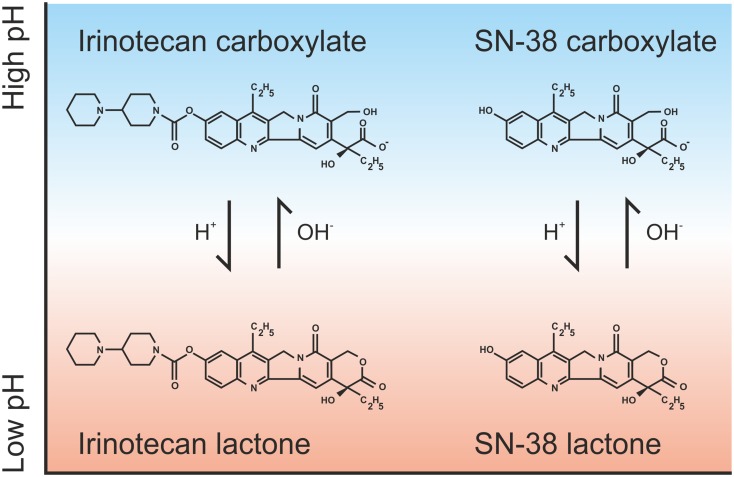
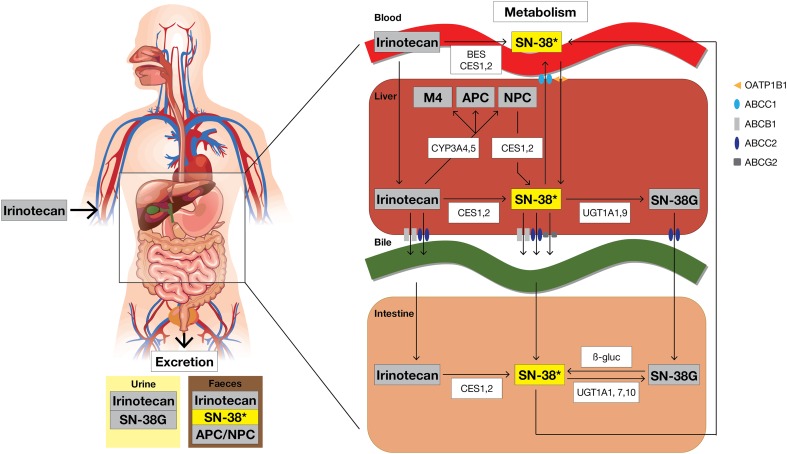
Verification
Claims the paper makes
The claims and statistics of this paper haven’t been checked yet.
Free: it reads the open-access text and checks the first 5 claims that cite a source we can check. Create a free account to check every claim.
Claims other papers make about this one
Each is checked against this paper’s own text: does it say what the citing paper says it does?
In the citing paper
“Irinotecan or its activated form SN38 can be metabolically inactivated by uridine diphosphate glucuronosyltransferase 1A1 (UGT1A1), cytochrome P450-3A4 (CYP3A4) and β-glucuronidase [104].”
From Drug Resistance in Colorectal Cancer: From Mechanism to Clinic (2022) · cites this paper as [104]
Self-check
Percentages, sums and reported differences re-computed from the paper’s own numbers.
The self-check needs the paper’s full text.
Citations
Cites
FOLFIRINOX versus Gemcitabine for Metastatic Pancreatic Cancer
Conroy, T., Desseigne, F., Ychou, M., Bouché, O., Guimbaud, R., Bécouarn, Y., Adenis, A., Raoul, J.-L., Gourgou-Bourgade, S., de la Fouchardière, C., et al. (2011) · New England Journal of Medicine · doi:10.1056/nejmoa1011923 · Cited by 7,810
Cetuximab and Chemotherapy as Initial Treatment for Metastatic Colorectal Cancer
Van Cutsem, E., Köhne, C.-H., Hitre, E., Zaluski, J., Chang Chien, C.-R., Makhson, A., D'Haens, G., Pintér, T., Lim, R., Bodoky, G., et al. (2009) · New England Journal of Medicine · doi:10.1056/nejmoa0805019 · Cited by 3,877
Douillard, J., Cunningham, D., Roth, A., Navarro, M., James, R., Karasek, P., Jandik, P., Iveson, T., Carmichael, J., Alakl, M., et al. (2000) · The Lancet · doi:10.1016/s0140-6736(00)02034-1 · Cited by 3,256 · cited 2×
“The majority of the genetic association studies have focused on neutropenia and diarrhea as clinical endpoints [169].”
BackgroundIrinotecan plus Fluorouracil and Leucovorin for Metastatic Colorectal Cancer
Saltz, L. B., Cox, J. V., Blanke, C., Rosen, L. S., Fehrenbacher, L., Moore, M. J., Maroun, J. A., Ackland, S. P., Locker, P. K., Pirotta, N., et al. (2000) · New England Journal of Medicine · doi:10.1056/nejm200009283431302 · Cited by 3,005
Bosma, P. J., Chowdhury, J. R., Bakker, C., Gantla, S., de Boer, A., Oostra, B. A., Lindhout, D., Tytgat, G. N. J., Jansen, P. L. M., Elferink, R. P. J. O., et al. (1995) · New England Journal of Medicine · doi:10.1056/nejm199511023331802 · Cited by 1,447 · cited 1×
“Wild-type UGT1A1 is characterized by six thymine adenine (TA) repeats in the promotor region, whereas UGT1A1*28 (rs8175347) carriers have an extra TA repeat that impairs UGT1A1 transcription and thereby reduces expression by approximately 70% [234].”
BackgroundVan Cutsem, E., Tabernero, J., Lakomy, R., Prenen, H., Prausová, J., Macarulla, T., Ruff, P., van Hazel, G. A., Moiseyenko, V., Ferry, D., et al. (2012) · Journal of Clinical Oncology · doi:10.1200/jco.2012.42.8201 · Cited by 1,402
MASCC/ISOO clinical practice guidelines for the management of mucositis secondary to cancer therapy
Elad, S., Cheng, K. K. F., Lalla, R. V., Yarom, N., Hong, C., Logan, R. M., Bowen, J., Gibson, R., Saunders, D. P., Zadik, Y., et al. (2020) · Cancer · doi:10.1002/cncr.33100 · Cited by 1,336
Chemotherapy for advanced gastric cancer
Wagner, A. D., Syn, N. L., Moehler, M., Grothe, W., Yong, W. P., Tai, B.-C., Ho, J., & Unverzagt, S. (2017) · Cochrane Database of Systematic Reviews · doi:10.1002/14651858.cd004064.pub4 · Cited by 1,299
Cunningham, D., Pyrhönen, S., James, R. D., Punt, C. J., Hickish, T. F., Heikkila, R., Johannesen, T. B., Starkhammar, H., Topham, C. A., Awad, L., et al. (1998) · The Lancet · doi:10.1016/s0140-6736(98)02309-5 · Cited by 1,259 · cited 2×
“As second-line treatment after 5-fluorouracil- containing regimens, irinotecan leads to a significantly longer OS than 5-fluorouracil with leucovorin or best supportive care (BSC) [166, 167].”
BackgroundFalcone, A., Ricci, S., Brunetti, I., Pfanner, E., Allegrini, G., Barbara, C., Crinò, L., Benedetti, G., Evangelista, W., Fanchini, L., et al. (2007) · Journal of Clinical Oncology · doi:10.1200/jco.2006.09.0928 · Cited by 1,241 · cited 1×
“FOLFOXIRI) substantially increased treatment efficacy, as shown by an RR of 60% and median OS of approximately 23 months [204, 205].”
Background
Research works printed but not linked: 2
- National Institutes of Health Common terminology criteria for adverse events (CTCAE) 2010 Bethesda National Institutes of Health
- Murphy BA Cmelak A Burkey B Netterville J Shyr Y Douglas S Topoisomerase I inhibitors in the treatment of head and neck cancer Oncology (Williston Park) 2001 15 7 Suppl 8 47 52 11497232
Cited by
Anand, U., Dey, A., Chandel, A. K. S., Sanyal, R., Mishra, A., Pandey, D. K., De Falco, V., Upadhyay, A., Kandimalla, R., Chaudhary, A., et al. (2023) · Genes & Diseases · doi:10.1016/j.gendis.2022.02.007 · Cited by 1,834
Drug resistance and new therapies in colorectal cancer
Jeught, K. V. D., Xu, H.-C., Li, Y.-J., Lu, X.-B., & Ji, G. (2018) · World Journal of Gastroenterology · doi:10.3748/wjg.v24.i34.3834 · Cited by 597
Wainberg, Z. A., Melisi, D., Macarulla, T., Pazo Cid, R., Chandana, S. R., De La Fouchardière, C., Dean, A., Kiss, I., Lee, W. J., Goetze, T. O., et al. (2023) · The Lancet · doi:10.1016/s0140-6736(23)01366-1 · Cited by 516
Irinotecan: 25 years of cancer treatment
Bailly, C. (2019) · Pharmacological Research · doi:10.1016/j.phrs.2019.104398 · Cited by 456
Hwang, W. L., Jagadeesh, K. A., Guo, J. A., Hoffman, H. I., Yadollahpour, P., Reeves, J. W., Mohan, R., Drokhlyansky, E., Van Wittenberghe, N., Ashenberg, O., et al. (2022) · Nature Genetics · doi:10.1038/s41588-022-01134-8 · Cited by 426
Okajima, D., Yasuda, S., Maejima, T., Karibe, T., Sakurai, K., Aida, T., Toki, T., Yamaguchi, J., Kitamura, M., Kamei, R., et al. (2021) · Molecular Cancer Therapeutics · doi:10.1158/1535-7163.mct-21-0206 · Cited by 339
“Irinotecan is effective against a broad range of solid tumors including colorectal, pancreatic, lung, and ovarian cancers (41), most of which overexpress TROP2.”
BackgroundIrinotecan—Still an Important Player in Cancer Chemotherapy: A Comprehensive Overview
Kciuk, M., Marciniak, B., & Kontek, R. (2020) · International Journal of Molecular Sciences · doi:10.3390/ijms21144919 · Cited by 266
Chemotherapy induced gastrointestinal toxicities
(2022) · Advances in Cancer Research · doi:10.1016/bs.acr.2022.02.007 · Cited by 226
Ioele, G., Chieffallo, M., Occhiuzzi, M. A., De Luca, M., Garofalo, A., Ragno, G., & Grande, F. (2022) · Molecules · doi:10.3390/molecules27175436 · Cited by 222
“Campotothecins SN-38 (7-ethyl-10-hydroxycamptothecin) Irinotecan Solid tumors, including colorectal, pancreatic and lung cancer [48]”
BackgroundDrug Resistance in Colorectal Cancer: From Mechanism to Clinic
Wang, Q., Shen, X., Chen, G., & Du, J. (2022) · Cancers · doi:10.3390/cancers14122928 · Cited by 160
Li, D., Chen, H., Liu, H., Schlenk, D., Mu, J., Lacorte, S., Ying, G., & Xie, L. (2021) · Environment International · doi:10.1016/j.envint.2021.106543 · Cited by 148
Liu, X., Jiang, J., Liao, Y., Tang, I., Zheng, E., Qiu, W., Lin, M. J., Wang, X., Ji, Y. C., Mei, K., et al. (2021) · Advanced Science · doi:10.1002/advs.202002147 · Cited by 139
Targeting Heterogeneous Tumors Using a Multifunctional Molecular Prodrug
Sharma, A. K., Lee, M.-G., Won, M., Koo, S., Arambula, J. F., Sessler, J. L., Chi, S.-G., & Kim, J. S. (2019) · Journal of the American Chemical Society · doi:10.1021/jacs.9b07171 · Cited by 115
Liposomal Irinotecan: A Review in Metastatic Pancreatic Adenocarcinoma
Frampton, J. E. (2020) · Drugs · doi:10.1007/s40265-020-01336-6 · Cited by 104
Repurposing old drugs to fight multidrug resistant cancers
Dinić, J., Efferth, T., García-Sosa, A. T., Grahovac, J., Padrón, J. M., Pajeva, I., Rizzolio, F., Saponara, S., Spengler, G., & Tsakovska, I. (2020) · Drug Resistance Updates · doi:10.1016/j.drup.2020.100713 · Cited by 95
Clinically relevant drug interactions with multikinase inhibitors: a review
Hussaarts, K. G. A. M., Veerman, G., Jansman, F. G. A., van Gelder, T., Mathijssen, R. H. J., & van Leeuwen, R. W. F. (2019) · Therapeutic Advances in Medical Oncology · doi:10.1177/1758835918818347 · Cited by 106
Self-citationHulshof, E. C., Deenen, M. J., Nijenhuis, M., Soree, B., de Boer‐Veger, N. J., Buunk, A., Houwink, E. J. F., Risselada, A., Rongen, G. A. P. J. M., van Schaik, R. H. N., et al. (2022) · European Journal of Human Genetics · doi:10.1038/s41431-022-01243-2 · Cited by 111
“Decreased UGT1A1 activity leads to increased concentrations of SN-38, which in turn could lead to an increased risk of severe toxicities, such as (febrile) neutropenia and diarrhoea [15].”
Rhabdomyosarcoma: Current Therapy, Challenges, and Future Approaches to Treatment Strategies
Zarrabi, A., Perrin, D., Kavoosi, M., Sommer, M., Sezen, S., Mehrbod, P., Bhushan, B., Machaj, F., Rosik, J., Kawalec, P., et al. (2023) · Cancers · doi:10.3390/cancers15215269 · Cited by 109
Organic Anion Transporting Polypeptides: Emerging Roles in Cancer Pharmacology
Schulte, R. R., & Ho, R. H. (2019) · Molecular Pharmacology · doi:10.1124/mol.118.114314 · Cited by 89
“It is spontaneously converted to an active metabolite, 7-ethyl-10-hydroxycamptothecin (SN-38), by hepatic carboxylesterase and butyrylcholinesterase (de Man et al., 2018).”
BackgroundMicrobiota-Host-Irinotecan Axis: A New Insight Toward Irinotecan Chemotherapy
Yue, B., Gao, R., Wang, Z., & Dou, W. (2021) · Frontiers in Cellular and Infection Microbiology · doi:10.3389/fcimb.2021.710945 · Cited by 94
“Moreover, the prevalence of severe diarrhea (defined as grade 3 or 4) caused by CPT11 can reach up to 22–44% (de Man et al., 2018).”
BackgroundDay, C. J., Bailly, B., Guillon, P., Dirr, L., Jen, F. E. ‐., Spillings, B. L., Mak, J., von Itzstein, M., Haselhorst, T., & Jennings, M. P. (2021) · mBio · doi:10.1128/mbio.03681-20 · Cited by 81
“36 Chemotherapeutic drug (topoisomerase inhibitor) (66) None”
Karas, S., & Innocenti, F. (2021) · JCO Oncology Practice · doi:10.1200/op.21.00624 · Cited by 80
The Mediterranean Diet as source of bioactive compounds with multi-targeting anti-cancer profile
Maruca, A., Catalano, R., Bagetta, D., Mesiti, F., Ambrosio, F. A., Romeo, I., Moraca, F., Rocca, R., Ortuso, F., Artese, A., et al. (2019) · European Journal of Medicinal Chemistry · doi:10.1016/j.ejmech.2019.111579 · Cited by 103
Yue, S., Qin, Y.-F., An, K., Tao, H., Zhou, G., Chen, Y., Jian-qin, J., Tang, Y., & Duan, J. (2021) · Frontiers in Immunology · doi:10.3389/fimmu.2021.628358 · Cited by 77
Topoisomerases and cancer chemotherapy: recent advances and unanswered questions
Bjornsti, M., & Kaufmann, S. H. (2019) · F1000Research · doi:10.12688/f1000research.20201.1 · Cited by 81
Application of pharmacogenetics in oncology
Miteva-Marcheva, N., Ivanov, H. Y., Dimitrov, D. K., & Stoyanova, V. K. (2020) · Biomarker Research · doi:10.1186/s40364-020-00213-4 · Cited by 81
“The first one is also known as breast cancer resistance protein and a specific 421 C > A change is responsible for irinotecan disposition, while the second one has a ABCC2*2 haplotype that is associated with reduced adverse effects from irinotecan treatment (most commonly diarrhea) [33].”
Substances of Natural Origin in Medicine: Plants vs. Cancer
Gielecińska, A., Kciuk, M., Mujwar, S., Çelik, İ., Kołat, D., Kałuzińska‐Kołat, Ż., & Kontek, R. (2023) · Cells · doi:10.3390/cells12070986 · Cited by 84
Docci, L., Milani, N., Ramp, T., Romeo, A. A., Godoy, P., Franyuti, D. O., Krähenbühl, S., Gertz, M., Galetin, A., Parrott, N., et al. (2022) · Lab on a Chip · doi:10.1039/d1lc01161h · Cited by 66
Targeted MMP-2 responsive chimeric polymersomes for therapy against colorectal cancer
Ramezani, P., Abnous, K., Taghdisi, S. M., Zahiri, M., Ramezani, M., & Alibolandi, M. (2020) · Colloids and Surfaces B Biointerfaces · doi:10.1016/j.colsurfb.2020.111135 · Cited by 75
UGT1A1 Guided Cancer Therapy: Review of the Evidence and Considerations for Clinical Implementation
Nelson, R., Seligson, N. D., Bottiglieri, S., Carballido, E. M., Cueto, A. D., Imanirad, I., Levine, R. M., Parker, A. S., Swain, S. M., Tillman, E. M., et al. (2021) · Cancers · doi:10.3390/cancers13071566 · Cited by 71
Bitar, S. A., El-Sabban, M. E., Doughan, S., & Abou-Kheir, W. G. (2023) · World Journal of Gastroenterology · doi:10.3748/wjg.v29.i9.1395 · Cited by 74
Miners, J. O., Polasek, T. M., Hulin, J.-A., Rowland, A., & Meech, R. (2023) · Pharmacology & Therapeutics · doi:10.1016/j.pharmthera.2023.108459 · Cited by 70
Akter, K., Gul, K., & Mumtaz, S. (2025) · Current Issues in Molecular Biology · doi:10.3390/cimb47090716 · Cited by 74
Ingram, N., McVeigh, L. E., Abou‐Saleh, R. H., Maynard, J., Peyman, S. A., McLaughlan, J. R., Fairclough, M., Marston, G., Valleley, E. M. A., Jimenez-Macias, J. L., et al. (2020) · Theranostics · doi:10.7150/thno.49670 · Cited by 68
“seen in healthy tissues at physiological pH (where it is very rapidly converted to the carboxylated form [70])”
BackgroundAn Organ‐on‐Chip Platform for Simulating Drug Metabolism Along the Gut–Liver Axis
Lucchetti, M., Aina, K. O., Grandmougin, L., Jäger, C., Escriva, P. P., Letellier, E., Mosig, A. S., & Wilmes, P. (2024) · Advanced Healthcare Materials · doi:10.1002/adhm.202303943 · Cited by 79
Exploring the potential impact of probiotic use on drug metabolism and efficacy
Purdel, C. N., Ungurianu, A., Adam-Dima, I., & Margina, D. M. (2023) · Biomedicine & Pharmacotherapy · doi:10.1016/j.biopha.2023.114468 · Cited by 71
Hulshof, E. C., de With, M., de Man, F. M., Creemers, G., Deiman, B. A. L. M., Swen, J. J., Houterman, S., Koolen, S. L. W., Bins, S., Thijs, A. M. J., et al. (2022) · European Journal of Cancer · doi:10.1016/j.ejca.2021.12.009 · Cited by 65
Self-citationThe Potential of Topoisomerase Inhibitor-Based Antibody–Drug Conjugates
Han, S., Lim, K. S., Blackburn, B. J., Yun, J., Putnam, C. W., Bull, D. A., & Won, Y. (2022) · Pharmaceutics · doi:10.3390/pharmaceutics14081707 · Cited by 68
He, Y., Zhang, W., Xiao, Q., Fan, L., Huang, D., Chen, W., & He, W. (2022) · Asian Journal of Pharmaceutical Sciences · doi:10.1016/j.ajps.2022.11.002 · Cited by 77
“However, during its treatment, there is dose-limiting toxicity and large interindividual pharmacokinetic variability, and its metabolism is susceptible to environmental and genetic influences [60].”
Vitamins and fatty acids against chemotherapy-induced intestinal mucositis
Alcorta, A., López‐Gómez, L., Capasso, R., & Abalo, R. (2024) · Pharmacology & Therapeutics · doi:10.1016/j.pharmthera.2024.108689 · Cited by 63
Smart design approaches for orally administered lipophilic prodrugs to promote lymphatic transport
Elz, A. S., Trevaskis, N. L., Porter, C. J. H., Bowen, J. M., & Prestidge, C. A. (2021) · Journal of Controlled Release · doi:10.1016/j.jconrel.2021.12.003 · Cited by 64
Cacciola, N. A., Cuciniello, R., Petillo, G. D., Piccioni, M., Filosa, S., & Crispi, S. (2023) · International Journal of Molecular Sciences · doi:10.3390/ijms241612587 · Cited by 67
Mechanisms and emerging strategies for irinotecan-induced diarrhea
Xu, S., Lan, H., Huang, C.-Y., Ge, X., & Zhu, J. Y. (2024) · European Journal of Pharmacology · doi:10.1016/j.ejphar.2024.176614 · Cited by 61
Kamath, S., Stringer, A. M., Prestidge, C. A., & Joyce, P. M. (2023) · Expert Opinion on Drug Delivery · doi:10.1080/17425247.2023.2233900 · Cited by 60
“Natural excretion of CTP11 involves the inactivation of its toxic metabolite (SN-38) into the less-toxic SN-38 G, which is mediated by hepatic uridine diphosphate glucuronosyltrans-ferases in the liver [44].”
BackgroundUnderstanding Cancer’s Defense against Topoisomerase-Active Drugs: A Comprehensive Review
Sharma, N. K., Bahot, A., Sekar, G., Bansode, M., Khunteta, K., Sonar, P. V., Hebale, A., Salokhe, V., & Sinha, B. K. (2024) · Cancers · doi:10.3390/cancers16040680 · Cited by 65
Oršolić, N., & Jembrek, M. J. (2024) · Nutrients · doi:10.3390/nu16213741 · Cited by 61
Tao, G., Huang, J., Moorthy, B., Wang, C., Hu, M. C., Gao, S., & Ghose, R. (2020) · Expert Opinion on Drug Metabolism & Toxicology · doi:10.1080/17425255.2020.1815705 · Cited by 61
Lin, H., Chen, C.-Y., Lin, T., Yeh, L.-F., Hsieh, W., Gao, S., Burnouf, P., Chen, B., Hsieh, T.-J., Dashnyam, P., et al. (2021) · Communications Biology · doi:10.1038/s42003-021-01815-w · Cited by 58
Research progress of colon-targeted oral hydrogel system based on natural polysaccharides
Wang, D., Wang, W., Wang, P., Wang, C., Niu, J., Liu, Y., & Chen, Y. (2023) · International Journal of Pharmaceutics · doi:10.1016/j.ijpharm.2023.123222 · Cited by 53
Hesse, J., Martinelli, J., Aboumanify, O., Ballesta, A., & Relógio, A. (2021) · Computational and Structural Biotechnology Journal · doi:10.1016/j.csbj.2021.08.051 · Cited by 59
“Representing the clock of the liver is important in view of predicting the drug metabolism that mainly occurs in this organ in the whole-body scenario [29,30].”
BackgroundYue, B., Gao, R., Lv, C., Yu, Z., Wang, H., Geng, X., Wang, Z., & Dou, W. (2021) · Frontiers in Pharmacology · doi:10.3389/fphar.2021.774560 · Cited by 55
Lipid-Based Nanocarrier Systems for Drug Delivery: Advances and Applications
Zhao, Y., Li, L., Zhou, E.-F., Wang, J., Wang, Y., Guo, L., & Zhang, X. (2022) · Pharmaceutical Fronts · doi:10.1055/s-0042-1751036 · Cited by 52
Oyaga-Iriarte, E., Insausti, A., Sayar, O., & Aldaz, A. (2019) · Journal of Pharmacological Sciences · doi:10.1016/j.jphs.2019.03.004 · Cited by 49
Sun, R., Zhu, L., Li, L., Song, W., Gong, X., Qi, X., Wang, Y., Ghose, R., Gao, S., Hu, M., et al. (2020) · Toxicology and Applied Pharmacology · doi:10.1016/j.taap.2020.115032 · Cited by 51
Spigel, D. R., Dowlati, A., Chen, Y., Navarro, A., Yang, J. C., Stojanović, G. M., Jové, M., Rich, P., Andric, Z. G., Wu, Y.-L. L. C., et al. (2024) · Journal of Clinical Oncology · doi:10.1200/jco.23.02110 · Cited by 49
Gao, Y., Li, W., Chen, J., Wang, X., Lv, Y., Huang, Y., Zhang, Z., & Xu, F. (2018) · Acta Pharmaceutica Sinica B · doi:10.1016/j.apsb.2018.09.006 · Cited by 49
Bang, Y., Li, C., Lee, K., Chiu, C., Park, J. O., Shan, Y., Kim, J. S., Chen, J., Shim, H., Rau, K., et al. (2019) · Cancer Science · doi:10.1111/cas.14264 · Cited by 48
Intraperitoneal Chemotherapy for Unresectable Peritoneal Surface Malignancies
Guchelaar, N. A. D., Noordman, B. J., Koolen, S. L. W., Mostert, B., Madsen, E. V. E., Burger, J. W. A., Brandt‐Kerkhof, A. R. M., Creemers, G., de Hingh, I. H. J. T., Luyer, M. D. P., et al. (2023) · Drugs · doi:10.1007/s40265-022-01828-7 · Cited by 48
“Irinotecan is a prodrug and requires conversion to its active metabolite SN-38 by carboxylesterases, of which CES1 is expressed in the liver and CES2 in various tissues such as the gastrointestinal mucosa [42].”
BackgroundSelf-citationOn Broken Ne(c)ks and Broken DNA: The Role of Human NEKs in the DNA Damage Response
Pavan, I. C. B., de Oliveira, A. P., Dias, P. R. F., Basei, F. L., Issayama, L. K., Ferezin, C. D. C., Silva, F. R., de Oliveira, A. L., Moura, L. A. R., Martins, M. B., et al. (2021) · Cells · doi:10.3390/cells10030507 · Cited by 48
Pharmacogenetics of Drugs Used in the Treatment of Cancers
Franczyk, B., Rysz, J., & Gluba-Brzózka, A. (2022) · Genes · doi:10.3390/genes13020311 · Cited by 51
“SN-38 has been shown to be 100- to 1000-fold more cytotoxic than irinotecan [57].”
BackgroundThe DNA-topoisomerase Inhibitors in Cancer Therapy
Mastrangelo, S., Attinà, G., Triarico, S., Romano, A., Maurizi, P., & Ruggiero, A. (2022) · Biomedical & Pharmacology Journal · doi:10.13005/bpj/2396 · Cited by 46
Fan, Y., Li, Q., Shen, Q., Liu, Z., Zhang, Z., Hu, S., Yu, W., He, Z., He, Q., & Zhang, Q. (2022) · Frontiers in Oncology · doi:10.3389/fonc.2022.858865 · Cited by 45
“For example, SN-38, the conjugated cytotoxic payload of SG and the active component of irinotecan, showed efficacy only in colorectal, pancreatic, and lung cancer before (45).”
BackgroundCurcumin as a hepatoprotective agent against chemotherapy-induced liver injury
de Porras, V. R., Figols, M., Pous, A. F., & Pardina, E. (2023) · Life Sciences · doi:10.1016/j.lfs.2023.122119 · Cited by 49
Particle and Gel Characterization of Irinotecan-Loaded Double-Reverse Thermosensitive Hydrogel
Din, F. U., Jin, S. G., & Choi, H. (2021) · Polymers · doi:10.3390/polym13040551 · Cited by 44
“Irinotecan is a water-soluble camptothecin derivative for the chemotherapy of metastatic cancer of colon and rectum [9].”
BackgroundAbd-El-Halim, Y. M., Kaoutari, A. E., Silvy, F., Rubis, M., Bigonnet, M., Roques, J., Cros, J. F., Nicolle, R., Iovanna, J., Dusetti, N., et al. (2021) · EBioMedicine · doi:10.1016/j.ebiom.2021.103541 · Cited by 52
Loh, J. S., Tan, L., Lee, W.-L., Ming, L. C., How, C. W., Foo, J. B., Kifli, N., Goh, B. H., & Ong, Y. S. (2021) · Cancers · doi:10.3390/cancers13215346 · Cited by 47
Fathi‐karkan, S., Qindeel, M., Arshad, R., Moafian, Z., Ghazy, E., Rahdar, A., & Ghotekar, S. K. (2024) · Inorganic Chemistry Communications · doi:10.1016/j.inoche.2024.112028 · Cited by 44
Pharmacokinetic and Pharmacogenetic Markers of Irinotecan Toxicity
Hahn, R. Z., Antunes, M. V., Verza, S. G., Perassolo, M. S., Suyenaga, E. S., Schwartsmann, G., & Linden, R. (2018) · Current Medicinal Chemistry · doi:10.2174/0929867325666180622141101 · Cited by 45
Superparamagnetic chitosan nanocomplexes for colorectal tumor-targeted delivery of irinotecan
Wu, D., Zhu, L., Li, Y., Wang, H., Xu, S., Zhang, X., Wu, R. F., & Yang, G. (2020) · International Journal of Pharmaceutics · doi:10.1016/j.ijpharm.2020.119394 · Cited by 39
Ozawa, S., Miura, T., Terashima, J., & Habano, W. (2021) · Cancer Drug Resistance · doi:10.20517/cdr.2021.82 · Cited by 43
Anti-tumor pharmacology of natural products targeting mitosis
Huang, M., Liu, C., Shao, Y., Zhou, S., Hu, G., Yin, S., Pu, W., & Yu, H. (2022) · Cancer Biology and Medicine · doi:10.20892/j.issn.2095-3941.2022.0006 · Cited by 41
Rtibi, K., Selmi, S., Grami, D., Sebaï, H., Amri, M., & Marzouki, L. (2017) · Pathophysiology · doi:10.1016/j.pathophys.2017.07.002 · Cited by 37
Gajula, S. N. R., Pillai, M. S., Samanthula, G., & Sonti, R. (2021) · Bioanalysis · doi:10.4155/bio-2021-0132 · Cited by 37
Bachir, E. H., Poiraud, C., Paget, S., Stoup, N., Moghrabi, S. E., Duchêne, B., Jouy, N., Bongiovanni, A., Tardivel, M., Weiswald, L., et al. (2021) · Biology of the Cell · doi:10.1111/boc.202100003 · Cited by 38
“Irinotecan is a prodrug that must be hydrolysed by carboxyl esterase in the liver and the intestine to generate the active metabolite SN-38 (Ahmed et al., 1999; De Man et al., 2018).”
BackgroundFernández-Murga, M. L., Gil-Ortiz, F., Serrano-García, L., & Llombart‐Cussac, A. (2023) · Pathogens · doi:10.3390/pathogens12091086 · Cited by 37
Managing adverse events of sacituzumab govitecan
Schlam, I. M., Tarantino, P., & Tolaney, S. M. (2023) · Expert Opinion on Biological Therapy · doi:10.1080/14712598.2023.2267975 · Cited by 39
Zhang, S., Dong, Y. J., Chen, X., Tan, C. S. H., Li, M., Miao, K., & Lu, J. (2022) · Chinese Medicine · doi:10.1186/s13020-022-00605-8 · Cited by 36
“Irinotecan is a topoisomerase I inhibitor which suppresses tumor growth by causing DNA double-strand breaks, and is indicated for the treatment of solid tumors including colorectal and lung cancer [14].”
BackgroundAntibody drug conjugates in gastrointestinal cancer: From lab to clinical development
Singh, D., Dheer, D., Samykutty, A. K., & Shankar, R. (2021) · Journal of Controlled Release · doi:10.1016/j.jconrel.2021.10.006 · Cited by 36
Anabtawi, N., Drabison, T., Hu, S., Sparreboom, A., & Talebi, Z. (2022) · Expert Opinion on Drug Metabolism & Toxicology · doi:10.1080/17425255.2022.2113380 · Cited by 35
“Irinotecan is a prodrug that is converted to active metabolite 7-ethyl-10-hydroxycamptothecin (SN-38) via hepatic carboxylesterase [68].”
BackgroundA Membrane-Embedded Macromolecular Catalyst with Substrate Selectivity in Live Cells
Deng, Y., Wu, T., Chen, X., Chen, Y., Fei, Y., Liu, Y., Chen, Z., Xing, H., & Bai, Y. (2022) · Journal of the American Chemical Society · doi:10.1021/jacs.2c11168 · Cited by 35
Pharmacokinetics in Pharmacometabolomics: Towards Personalized Medication
Jian, J., He, D., Gao, S., Tao, X., & Dong, X. W. (2023) · Pharmaceuticals · doi:10.3390/ph16111568 · Cited by 38
Albadari, N. G., Xie, Y., & Li, W. (2024) · Frontiers in Pharmacology · doi:10.3389/fphar.2023.1340401 · Cited by 38
Liposomal Irinotecan: A Review as First-Line Therapy in Metastatic Pancreatic Adenocarcinoma
Brown, M. B., & Blair, H. A. (2025) · Drugs · doi:10.1007/s40265-024-02133-1 · Cited by 34
Liu, Y., Li, J., & Zhu, H. (2024) · Expert Opinion on Drug Metabolism & Toxicology · doi:10.1080/17425255.2024.2348491 · Cited by 33
Metabolomics in pharmacology - a delve into the novel field of pharmacometabolomics
Mussap, M., Loddo, C., Fanni, C., & Fanos, V. (2020) · Expert Review of Clinical Pharmacology · doi:10.1080/17512433.2020.1713750 · Cited by 38
Li, Y., Xie, M., Jones, J. B., Zhang, Z., Wang, Z., Dang, M. T., Wang, X., Lipowska, M., & Mao, H. Z. (2022) · Advanced Healthcare Materials · doi:10.1002/adhm.202102816 · Cited by 37
Naringenin/naringin therapeutic effects and the role of intestinal microflora in them
Huang, X., Wu, H., Wu, X. W., Su, W., & Li, P. (2025) · Pharmacological Research · doi:10.1016/j.phrs.2025.107871 · Cited by 33
Song, S., Sun, D. S., Wang, H., Wang, J., Yan, H., Zhao, X., Fawcett, J. P., Xu, X. P., Cai, D., & Gu, J. (2023) · Acta Pharmaceutica Sinica B · doi:10.1016/j.apsb.2023.01.011 · Cited by 31
Goričar, K., Dolžan, V., & Lenassi, M. (2021) · Frontiers in Pharmacology · doi:10.3389/fphar.2021.671298 · Cited by 30
Tian, X., Yan, J., Sun, C., Li, J., Ning, J., Wang, C., Huo, X., Zhao, W., Yu, Z., Feng, L., et al. (2021) · Chemico-Biological Interactions · doi:10.1016/j.cbi.2021.109453 · Cited by 28
de Boer, N. L., Brandt‐Kerkhof, A. R. M., Madsen, E. V. E., Diepeveen, M., van Meerten, E., van Eerden, R. A. G., de Man, F. M., Bouamar, R., Koolen, S. L. W., de Hingh, I. H. J. T., et al. (2019) · BMJ Open · doi:10.1136/bmjopen-2019-034508 · Cited by 30
Self-citationToxicities and management strategies of emerging antibody–drug conjugates in breast cancer
Kang, S., & Kim, S. (2025) · Therapeutic Advances in Medical Oncology · doi:10.1177/17588359251324889 · Cited by 29
Huang, H., Bow, Y., Wang, C., Chen, Y., Fu, P.-R., Chang, K.-F., Wang, T.-W., Tseng, C.-H., Chen, Y., & Chiu, C. (2020) · Cancers · doi:10.3390/cancers12051348 · Cited by 26
Maksimova, P. E., Golubinskaya, E. P., Seferov, B. D., & Zyablitskaya, E. Y. (2023) · Koloproktologia · doi:10.33878/2073-7556-2023-22-2-160-171 · Cited by 31
Prodrugs in Oncology: Bioactivation and Impact on Therapeutic Efficacy and Toxicity
Kurian, R., & Wang, H. (2025) · International Journal of Molecular Sciences · doi:10.3390/ijms26030988 · Cited by 28
“Rivory et al. reported that deacylation”
Personalized medicine of non-gene-specific chemotherapies for non-small cell lung cancer
Jiang, W., Cai, G., Hu, P. C., & Wang, Y. (2021) · Acta Pharmaceutica Sinica B · doi:10.1016/j.apsb.2021.02.003 · Cited by 26
Chatzimpaloglou, A., Christophoridis, C., Fountoulakis, I., Αντωνοπούλου, Μ., Vlastos, D., Bais, A. F., & Fytianos, K. (2020) · Chemical Engineering Journal · doi:10.1016/j.cej.2020.126866 · Cited by 26
Wu, Y., Cheng, Y., Yang, Y., Wang, D., Yang, X., Fu, C., Zhang, J., & Hu, Y. (2021) · Journal of Ethnopharmacology · doi:10.1016/j.jep.2021.114200 · Cited by 25
Lin, H.-C., Chuang, C.-H., Cheng, M., Lin, Y., & Fang, Y. (2019) · Pharmaceutics · doi:10.3390/pharmaceutics11110569 · Cited by 25
Chung, C. (2021) · Journal of Oncology Pharmacy Practice · doi:10.1177/10781552211005525 · Cited by 28
“Some variants cause varied effects to the metabolism of irinotecan and hence result in different levels of toxicities.(147,150) UGT1A variants such as UGT1A7*3 and UGT1A9*1, and drug transporter polymorphisms (e.”
Background
Metadata
- Authors
- de Man, F. M., Goey, A. K. L., van Schaik, R. H. N., Mathijssen, R. H. J., & Bins, S.
- Affiliations
- Erasmus MC (NL)
- Erasmus MC Cancer Institute (NL)
- Corresponding author
- Bins, Sander
- Venue
- Clinical Pharmacokinetics
- Published
- 2018-03-08
- Volume
- 57
- Issue
- 10
- Pages
- 1229-1254
- ISSN
- 0312-5963 (ISSN-L)
- 1179-1926
- PMC
- PMC6132501
- OpenAlex
- W2790768119
- Cited by
- 421
- References
- 288
- Citations by year
- 2026: 41 · 2025: 51 · 2024: 58 · 2023: 69 · 2022: 63 · 2021: 67 · 2020: 41 · 2019: 22 · 2018: 8
- FWCI
- 6.70
- Type
- journal article
- Language
- en
- Open access
- hybrid
- doi.org
- Licence
- cc-by-nc
- creativecommons.org/licenses/by-nc/4.0 (tdm)
- Locations
- Clinical Pharmacokinetics (publishedVersion, cc-by-nc)
- Europe PMC (PubMed Central) (publishedVersion, other-oa)
- PubMed Central (publishedVersion, cc-by-nc)
- PubMed (publishedVersion)
- EUR Research Repository (Erasmus University Rotterdam) (publishedVersion, other-oa)
- EUR Research Repository (Erasmus University Rotterdam) (submittedVersion, other-oa)
- RePub (Erasmus University Rotterdam) (submittedVersion, other-oa)
- RePub (Erasmus University Rotterdam) (submittedVersion)
- Topics
- Life Sciences › Pharmacology, Toxicology and Pharmaceutics › Pharmacology › Pharmacogenetics and Drug Metabolism
- Life Sciences › Biochemistry, Genetics and Molecular Biology › Molecular Biology › Cancer therapeutics and mechanisms
- Health Sciences › Medicine › Oncology › Drug Transport and Resistance Mechanisms
- Keywords
- irinotecan, pharmacokinetics, pharmacodynamics, pharmacogenetics, SN-38, carboxylesterase, CYP3A4, UGT1A, topoisomerase I inhibitor, dose-limiting toxicity, interindividual variability, drug metabolism, genetic variants
- MeSH terms
- Irinotecan, UGT1A1 Enzyme, Drug Interactions, Humans, Inactivation, Metabolic, Tissue Distribution, Glucuronosyltransferase, Area Under Curve, Polymorphism, Single Nucleotide, Cytochrome P-450 CYP3A, Precision Medicine, Topoisomerase I Inhibitors
About these checks
Registry, retraction, Cites and statistics results are computed, not judged, with one exception: a printed reference that no index lists is read once by a model before it counts as a citation error. Claims are extracted by a model and kept only when their quote appears verbatim in the text; each cited source is then checked, with a model’s help, for whether it says what the claim relies on. Those verdicts can be wrong — read the claim’s quote and the cited source before relying on one.
Statistics and arithmetic are recomputed, not judged.
Confidence bands are shown only for fields calibrated on our annotated test set. None is calibrated yet, so no band is shown.
What counts as a claim ›How we measure confidence ›How we check this ›
Are you an author, or do you see a problem with this page? Request a review
Data sources
Bibliographic data: Semantic Scholar, OpenAlex, Crossref.
Contains information from the Semantic Scholar Academic Graph Datasets, made available under the ODC Attribution License (ODC-BY 1.0).
Semantic Scholar’s data is described in: Kinney, R., et al. (2023). The Semantic Scholar Open Data Platform. arXiv:2301.10140.
