

Individualization of Irinotecan Treatment: A Review of Pharmacokinetics, Pharmacodynamics, and Pharmacogenetics
Open accessThe DOI matches its Crossref record; 287 of the 288 references it cites were found in a registry or an index.
Abstract
Since its clinical introduction in 1998, the topoisomerase I inhibitor irinotecan has been widely used in the treatment of solid tumors, including colorectal, pancreatic, and lung cancer. Irinotecan therapy is characterized by several dose-limiting toxicities and large interindividual pharmacokinetic variability. Irinotecan has a highly complex metabolism, including hydrolyzation by carboxylesterases to its active metabolite SN-38, which is 100- to 1000-fold more active compared with irinotecan itself. Several phase I and II enzymes, including cytochrome P450 (CYP) 3A4 and uridine diphosphate glucuronosyltransferase (UGT) 1A, are involved in the formation of inactive metabolites, making its metabolism prone to environmental and genetic influences. Genetic variants in the DNA of these enzymes and transporters could predict a part of the drug-related toxicity and efficacy of treatment, which has been shown in retrospective and prospective trials and meta-analyses. Patient characteristics, lifestyle and comedication also influence irinotecan pharmacokinetics. Other factors, including dietary restriction, are currently being studied. Meanwhile, a more tailored approach to prevent excessive toxicity and optimize efficacy is warranted. This review provides an updated overview on today's literature on irinotecan pharmacokinetics, pharmacodynamics, and pharmacogenetics.
Overview
The claims and statistics of this paper haven’t been checked yet.
Free: it reads the open-access text and checks the first 5 claims that cite a source we can check. Create a free account to check every claim.
Integrity signals
Registry
Cites
Statistics
Figures
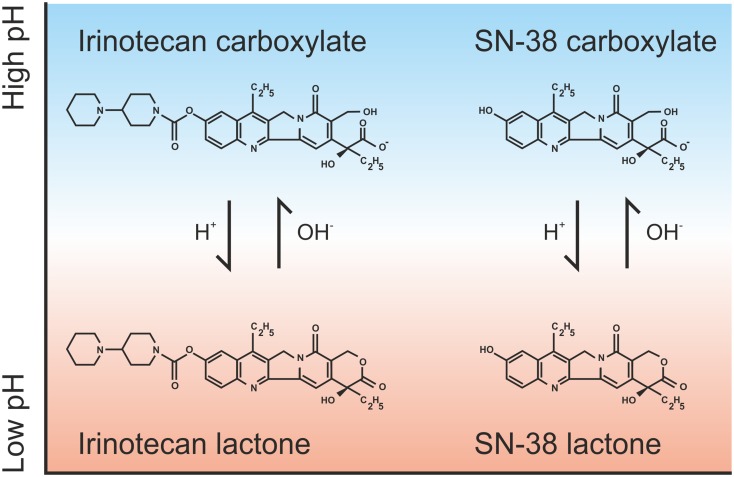
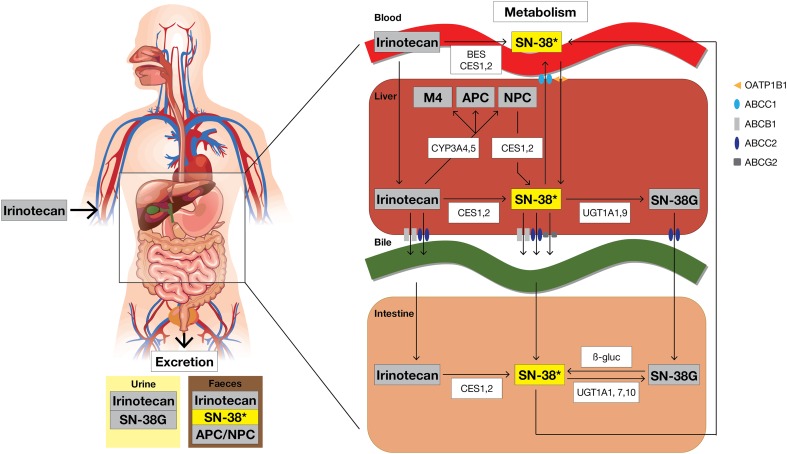
Verification
Claims the paper makes
The claims and statistics of this paper haven’t been checked yet.
Free: it reads the open-access text and checks the first 5 claims that cite a source we can check. Create a free account to check every claim.
Claims other papers make about this one
Each is checked against this paper’s own text: does it say what the citing paper says it does?
In the citing paper
“Irinotecan or its activated form SN38 can be metabolically inactivated by uridine diphosphate glucuronosyltransferase 1A1 (UGT1A1), cytochrome P450-3A4 (CYP3A4) and β-glucuronidase [104].”
From Drug Resistance in Colorectal Cancer: From Mechanism to Clinic (2022) · cites this paper as [104]
Self-check
Percentages, sums and reported differences re-computed from the paper’s own numbers.
The self-check needs the paper’s full text.
Citations
Cites
FOLFIRINOX versus Gemcitabine for Metastatic Pancreatic Cancer
Conroy, T., Desseigne, F., Ychou, M., Bouché, O., Guimbaud, R., Bécouarn, Y., Adenis, A., Raoul, J.-L., Gourgou-Bourgade, S., de la Fouchardière, C., et al. (2011) · New England Journal of Medicine · doi:10.1056/nejmoa1011923 · Cited by 7,810
Cetuximab and Chemotherapy as Initial Treatment for Metastatic Colorectal Cancer
Van Cutsem, E., Köhne, C.-H., Hitre, E., Zaluski, J., Chang Chien, C.-R., Makhson, A., D'Haens, G., Pintér, T., Lim, R., Bodoky, G., et al. (2009) · New England Journal of Medicine · doi:10.1056/nejmoa0805019 · Cited by 3,877
Douillard, J., Cunningham, D., Roth, A., Navarro, M., James, R., Karasek, P., Jandik, P., Iveson, T., Carmichael, J., Alakl, M., et al. (2000) · The Lancet · doi:10.1016/s0140-6736(00)02034-1 · Cited by 3,256 · cited 2×
“The majority of the genetic association studies have focused on neutropenia and diarrhea as clinical endpoints [169].”
BackgroundIrinotecan plus Fluorouracil and Leucovorin for Metastatic Colorectal Cancer
Saltz, L. B., Cox, J. V., Blanke, C., Rosen, L. S., Fehrenbacher, L., Moore, M. J., Maroun, J. A., Ackland, S. P., Locker, P. K., Pirotta, N., et al. (2000) · New England Journal of Medicine · doi:10.1056/nejm200009283431302 · Cited by 3,005
Bosma, P. J., Chowdhury, J. R., Bakker, C., Gantla, S., de Boer, A., Oostra, B. A., Lindhout, D., Tytgat, G. N. J., Jansen, P. L. M., Elferink, R. P. J. O., et al. (1995) · New England Journal of Medicine · doi:10.1056/nejm199511023331802 · Cited by 1,447 · cited 1×
“Wild-type UGT1A1 is characterized by six thymine adenine (TA) repeats in the promotor region, whereas UGT1A1*28 (rs8175347) carriers have an extra TA repeat that impairs UGT1A1 transcription and thereby reduces expression by approximately 70% [234].”
BackgroundVan Cutsem, E., Tabernero, J., Lakomy, R., Prenen, H., Prausová, J., Macarulla, T., Ruff, P., van Hazel, G. A., Moiseyenko, V., Ferry, D., et al. (2012) · Journal of Clinical Oncology · doi:10.1200/jco.2012.42.8201 · Cited by 1,402
MASCC/ISOO clinical practice guidelines for the management of mucositis secondary to cancer therapy
Elad, S., Cheng, K. K. F., Lalla, R. V., Yarom, N., Hong, C., Logan, R. M., Bowen, J., Gibson, R., Saunders, D. P., Zadik, Y., et al. (2020) · Cancer · doi:10.1002/cncr.33100 · Cited by 1,336
Chemotherapy for advanced gastric cancer
Wagner, A. D., Syn, N. L., Moehler, M., Grothe, W., Yong, W. P., Tai, B.-C., Ho, J., & Unverzagt, S. (2017) · Cochrane Database of Systematic Reviews · doi:10.1002/14651858.cd004064.pub4 · Cited by 1,299
Cunningham, D., Pyrhönen, S., James, R. D., Punt, C. J., Hickish, T. F., Heikkila, R., Johannesen, T. B., Starkhammar, H., Topham, C. A., Awad, L., et al. (1998) · The Lancet · doi:10.1016/s0140-6736(98)02309-5 · Cited by 1,259 · cited 2×
“As second-line treatment after 5-fluorouracil- containing regimens, irinotecan leads to a significantly longer OS than 5-fluorouracil with leucovorin or best supportive care (BSC) [166, 167].”
BackgroundFalcone, A., Ricci, S., Brunetti, I., Pfanner, E., Allegrini, G., Barbara, C., Crinò, L., Benedetti, G., Evangelista, W., Fanchini, L., et al. (2007) · Journal of Clinical Oncology · doi:10.1200/jco.2006.09.0928 · Cited by 1,241 · cited 1×
“FOLFOXIRI) substantially increased treatment efficacy, as shown by an RR of 60% and median OS of approximately 23 months [204, 205].”
Background
Research works printed but not linked: 2
- National Institutes of Health Common terminology criteria for adverse events (CTCAE) 2010 Bethesda National Institutes of Health
- Murphy BA Cmelak A Burkey B Netterville J Shyr Y Douglas S Topoisomerase I inhibitors in the treatment of head and neck cancer Oncology (Williston Park) 2001 15 7 Suppl 8 47 52 11497232
Cited by
Items 101–200 of 439
Data Driven Mathematical Model of FOLFIRI Treatment for Colon Cancer
Budithi, A., Su, S., Kirshtein, A., & Shahriyari, L. (2021) · Cancers · doi:10.3390/cancers13112632 · Cited by 28
“assuming 40% efficiency of killing cancer cells for Irinotecan, since at least 60% of the drug is known to be eliminated from the body without being used [103].”
BackgroundWang, H., Bai, H., Wang, J., Zhou, X., Chen, H., Wang, L., Ren, H., Liu, Z., Zhuo, W., Zhou, Z., et al. (2022) · Biomaterials · doi:10.1016/j.biomaterials.2022.121458 · Cited by 25
Vasilogianni, A., Al‐Majdoub, Z. M., Achour, B., Peters, S. A., Barber, J., & Rostami‐Hodjegan, A. (2022) · Clinical Pharmacology & Therapeutics · doi:10.1002/cpt.2633 · Cited by 24
Topoisomerase I poisons-induced autophagy: Cytoprotective, Cytotoxic or Non-protective
Elshazly, A. M., Wright, P., Xu, J., & Gewirtz, D. A. (2022) · Autophagy Reports · doi:10.1080/27694127.2022.2155904 · Cited by 25
Irinotecan-Induced Toxicity: A Pharmacogenetic Study Beyond UGT1A1
de With, M., van Doorn, L., Kloet, E., van Veggel, A., Matić, M., de Neijs, M. J., Hoop, E. O., van Meerten, E., van Schaik, R. H. N., Mathijssen, R. H. J., et al. (2023) · Clinical Pharmacokinetics · doi:10.1007/s40262-023-01279-7 · Cited by 25
Self-citationTRIM Proteins in Colorectal Cancer: TRIM8 as a Promising Therapeutic Target in Chemo Resistance
Marzano, F., Caratozzolo, M. F., Pesole, G., Sbisà, E., & Tullo, A. (2021) · Biomedicines · doi:10.3390/biomedicines9030241 · Cited by 24
“Furthermore, carboxylesterases (CES), uridine diphosphate glucuronosyltransferase (UGT), hepatic cytochrome P-450 enzymes CYP3A, β-glucuronidase and ATP-binding cassette (ABC) transporter protein, involved in the uptake and metabolism of Irinotecan, have a role in chemoresistance [28,29].”
BackgroundSacituzumab govitecan in triple-negative breast cancer: from bench to bedside, and back
Rossi, V., Turati, A., Rosato, A., & Carpanese, D. (2024) · Frontiers in Immunology · doi:10.3389/fimmu.2024.1447280 · Cited by 25
Michaleas, S., Oliver, A. M., Mueller-Berghaus, J., Sarac, S. B., van der Elst, M. E., Müller-Egert, S., Zander, H., Enzmann, H., & Pignatti, F. (2022) · ESMO Open · doi:10.1016/j.esmoop.2022.100497 · Cited by 25
“%) of patients exposed to SG.”
BackgroundInfluentialSun, M., Zhan, H., Long, X., Alsayed, A. M., Wang, Z., Meng, F., Wang, G., Mao, J., Liao, Z., & Chen, M. (2024) · Phytomedicine · doi:10.1016/j.phymed.2024.155371 · Cited by 23
Implementation of a Pharmacogenomic Program in a Brazilian Public Institution
Suarez‐Kurtz, G., Kovaleski, G., Elias, A. B. R., Motta, V. L., Wolch, K., Emerenciano, M., Mansur, M. B., Palladino, A. M., Accioly, M. T. D. S., Ferreira, M. V., et al. (2020) · Pharmacogenomics · doi:10.2217/pgs-2020-0016 · Cited by 23
de Man, F. M., van Eerden, R. A. G., van Doorn, G. M., Hoop, E. O., Koolen, S. L. W., Olieman, J. F., de Bruijn, P., Veraart, J. N., van Halteren, H. K., Sandberg, Y., et al. (2020) · Clinical Pharmacology & Therapeutics · doi:10.1002/cpt.2094 · Cited by 22
“, ratio of the area under the curve (AUC) of SN-38 to the AUC of SN-38G multiplied by the AUC of irinotecan) and toxicity was investigated.(1) Nevertheless, conflicting results were also published regarding this correlation.”
BackgroundResultInfluentialSelf-citationThe role of gut microbial β-glucuronidases in carcinogenesis and cancer treatment: a scoping review
Hillege, L. E., Stevens, M. A. M., Kristen, P. A. J., de Vos‐Geelen, J., Penders, J., Redinbo, M. R., & Smidt, M. L. (2024) · Journal of Cancer Research and Clinical Oncology · doi:10.1007/s00432-024-06028-2 · Cited by 23
Das, R. P., Chakravarti, S., Patel, S. S., Lakhamje, P., Gurjar, M., Gota, V., Singh, B. G., & Kunwar, A. (2020) · International Journal of Pharmaceutics · doi:10.1016/j.ijpharm.2020.119522 · Cited by 22
Saghafi, A., Ghorbani, M., Pakseresht, M., & Shams, A. (2022) · Microchemical Journal · doi:10.1016/j.microc.2022.108047 · Cited by 22
Kryczka, J. M., & Boncela, J. (2022) · Biomedicines · doi:10.3390/biomedicines10071720 · Cited by 21
He, J., Han, S., Wang, Y., Kang, Q., Wang, X., Su, Y., Li, Y., Liu, Y., Cai, H., & Xiu, M. (2023) · Biomedicine & Pharmacotherapy · doi:10.1016/j.biopha.2023.115906 · Cited by 21
SATO, M., Han, Q., Kubota, Y., BARANOV, A., ARDJMAND, D., MIZUTA, K., Morinaga, S., Kang, B. M., Kobayashi, N., Bouvet, M., et al. (2023) · Anticancer Research · doi:10.21873/anticanres.16785 · Cited by 21
Camptothecin in Cancer Therapy: Current Challenges and Emerging Strategies with Nanoemulsions
Pérez-Ortega, H. U., Córdova-Espíritu, R. R., Cano-Serrano, S., García-González, E., Bravo-Sánchez, M. G., Orozco-Mosqueda, M. D. C., Jiménez‐Islas, H., Luna‐Bárcenas, G., & Villaseñor‐Ortega, F. (2025) · Pharmaceutics · doi:10.3390/pharmaceutics17111414 · Cited by 21
The Value of Pharmacogenetics to Reduce Drug-Related Toxicity in Cancer Patients
Mhandire, D. Z., & Goey, A. K. L. (2022) · Molecular Diagnosis & Therapy · doi:10.1007/s40291-021-00575-x · Cited by 20
Self-citationKhorashadizadeh, S., Abbasifar, S., Yousefi, M., Fayedeh, F., & Ghalibaf, A. M. (2024) · Cancer Reports · doi:10.1002/cnr2.70029 · Cited by 23
“This reaches colon epithelial cells and might cause side effects such as neutropenia and diarrhea that could be lethal, decreasing the efficacy of treat-ment [137].”
BackgroundKümler, I., Sørensen, P. G., Palshof, J. A., Høgdall, E. V. S., Skovrider‐Ruminski, W., Theile, S., Fullerton, A., Nielsen, P. G., Jensen, B. V., & Nielsen, D. L. (2018) · Cancer Chemotherapy and Pharmacology · doi:10.1007/s00280-018-3720-7 · Cited by 21
Improving Drug Discovery by Nucleic Acid Delivery in Engineered Human Microlivers
Mâncio-Silva, L., Fleming, H. E., Miller, A. B., Milstein, S., Liebow, A., Haslett, P. A. J., Sepp‐Lorenzino, L., & Bhatia, S. N. (2019) · Cell Metabolism · doi:10.1016/j.cmet.2019.02.003 · Cited by 21
Hu, Y., Zhang, Y., Wang, X., Jiang, K., Wang, H., Yao, S., Liu, Y., Lin, Y.-Z., Wei, G., & Lu, W. (2020) · Molecular Pharmaceutics · doi:10.1021/acs.molpharmaceut.0c00052 · Cited by 20
Pharmacogenomic‐Guided Therapy in Colorectal Cancer
Diasio, R. B., Innocenti, F., & Offer, S. M. (2021) · Clinical Pharmacology & Therapeutics · doi:10.1002/cpt.2334 · Cited by 23
“, ATPbinding cassette B1 and ABCC1) that are associated with an increased risk of severe neutropenia and diarrhea with irinotecan use.(32,33) Two of the most prominent variants are discussed below.”
BackgroundBedon, L., Cecchin, E., Fabbiani, E., Bo, M. D., Buonadonna, A., Polano, M., & Toffoli, G. (2021) · Clinical Pharmacology & Therapeutics · doi:10.1002/cpt.2511 · Cited by 21
Ren, S.-N., Zhang, Z.-Y., Guo, R.-J., Wang, D., Chen, F., Chen, X., & Fang, X. (2023) · World Journal of Gastroenterology · doi:10.3748/wjg.v29.i13.1911 · Cited by 22
Glewis, S., Lingaratnam, S. M., Krishnasamy, M., Martin, J. H., Tie, J., Alexander, M., & Michael, M. (2023) · Journal of Oncology Pharmacy Practice · doi:10.1177/10781552231167554 · Cited by 19
Nakajima, S., Mimura, K., Matsumoto, T., Min, A. K. T., Ito, M., Nakano, H., Neupane, P., Kanke, Y., Okayama, H., Saito, M., et al. (2021) · Scientific Reports · doi:10.1038/s41598-021-96521-2 · Cited by 22
The rising dominance of microbiology: what to expect in the next 15 years?
Kumar, R., Sood, U., Kaur, J., Anand, S., Gupta, V., Patil, K. S., & Lal, R. (2021) · Microbial Biotechnology · doi:10.1111/1751-7915.13953 · Cited by 21
“It was found that during the chemotherapy session a drug called irinotecan (CPT-11) was interacting with host cytochrome P540) enzymes, and downregulation of SN-38 by UDPglucronosyltransferase enzymes (de Man et al., 2018).”
BackgroundMethodDodging the bullet: therapeutic resistance mechanisms in pediatric cancers
Shah, N. (2019) · Cancer Drug Resistance · doi:10.20517/cdr.2019.20 · Cited by 18
Radajewska, A., Moreira, H., Bęben, D., Siwiela, O., Szyjka, A., Gębczak, K., Nowak, P., Frąszczak, J., Emhemmed, F., Muller, C. D., et al. (2023) · International Journal of Molecular Sciences · doi:10.3390/ijms24119544 · Cited by 18
“However, treatment with irinotecan and its combination with 5-fluorouracil and leucovorin can cause serious neutropenia or diarrhea that affects the comfort of the patient’s life and may require the discontinuation of therapy [6].”
BackgroundXiao, L., Dou, W., Wang, Y., Deng, H., Xu, H., & Pan, Y. (2023) · Biochemical Pharmacology · doi:10.1016/j.bcp.2023.115752 · Cited by 18
Hong, J., Won, M., & Ro, H. (2020) · Molecules · doi:10.3390/molecules25245938 · Cited by 21
Jin, K., Liao, Y.-C., Cheng, T., Li, X., Lee, W.-J., Pi, F., Jasinski, D. L., Chen, L.-C., Phelps, M. A., Ho, Y., et al. (2024) · Molecular Pharmaceutics · doi:10.1021/acs.molpharmaceut.3c00845 · Cited by 18
TROP2 as Patient-Tailoring but Not Prognostic Biomarker for Breast Cancer
Liu, X., Zhou, T., Wang, Y., Pei, M., Wang, G., Chu, W., Wang, Q., Du, S., Wang, H., & Wang, C. (2022) · OncoTargets and Therapy · doi:10.2147/ott.s354048 · Cited by 17
Green tea extract prevents CPT-11-induced diarrhea by regulating the gut microbiota
Kon, R., Ikarashi, N., Yamaguchi, A., Teshima, Y., Yamaguchi, T., Miyaoka, K., Fukuda, M., Noguchi, H., Tomimoto, R., Sakai, H., et al. (2023) · Scientific Reports · doi:10.1038/s41598-023-33731-w · Cited by 17
Teng, X., Wu, B., Liang, Z., Zhang, L., Yang, M., Liu, Z., Liang, Q., & Wang, C. (2024) · Cell Biology and Toxicology · doi:10.1007/s10565-024-09922-0 · Cited by 17
Li, G., Zhao, M., & Zhao, L. (2021) · Journal of Pharmaceutical and Biomedical Analysis · doi:10.1016/j.jpba.2021.114380 · Cited by 17
Gençosman, S., Ceylanlı, D., Şehirli, A. Ö., Teralı, K., Bölükbaşı, F., Çetınel, Ş., & Sayıner, S. (2022) · Antioxidants · doi:10.3390/antiox11112219 · Cited by 17
“CPT-11 is metabolized by carboxylesterases (CESs) to form the pharmacologically active metabolites that bind and stabilize the topoisomerase I–DNA complex [32].”
Wang, S., Li, W., Yang, J., Zengyan, Y., Yang, C., & Jin, H. (2020) · Current Drug Metabolism · doi:10.2174/1389200221999200819144204 · Cited by 17
Martínez-Chávez, A., Rosing, H., Gan, C., Wang, Y., Schinkel, A. H., & Beijnen, J. H. (2020) · Journal of Chromatography B · doi:10.1016/j.jchromb.2020.122177 · Cited by 16
Kumar, S., Gahramanov, V., Patel, S. H., Yaglom, J. A., Kaczmarczyk, L. S., Alexandrov, I. A., Gerlitz, G., Salmon‐Divon, M., & Sherman, M. Y. (2023) · International Journal of Molecular Sciences · doi:10.3390/ijms24108717 · Cited by 18
The effects of estrogen on targeted cancer therapy drugs
Zhao, Y., Wang, X., Liu, Y., Wang, H., & Xiang, J. (2022) · Pharmacological Research · doi:10.1016/j.phrs.2022.106131 · Cited by 16
Yue, B., Gao, R., Zhao, L., Liu, D., Lv, C., Wang, Z., Ai, F., Zhang, B., Yu, Z., Geng, X., et al. (2025) · Advanced Science · doi:10.1002/advs.202411052 · Cited by 23
Bernardi, M., Signore, G., Moscardini, A., Pugliese, L. A., Pesce, L., Beltram, F., & Cardarelli, F. (2023) · ACS Applied Bio Materials · doi:10.1021/acsabm.3c00478 · Cited by 16
Lou, S., Chen, H., Cui, Z., Zhang, X., Zhu, C., Zhou, L., Ou, Y., & Zou, F. (2025) · Frontiers in Pharmacology · doi:10.3389/fphar.2025.1516449 · Cited by 16
Solute Carrier Transportome in Chemotherapy-Induced Adverse Drug Reactions
Anderson, J. T., Huang, K. M., Lustberg, M. B., Sparreboom, A., & Hu, S. (2020) · Reviews of physiology, biochemistry and pharmacology · doi:10.1007/112_2020_30 · Cited by 15
Campelj, D. G., Timpani, C. A., Petersen, A. C., Hayes, A., Goodman, C. A., & Rybalka, E. (2020) · Cancers · doi:10.3390/cancers12123810 · Cited by 16
“As a potent topoisomerase I inhibitor [17], IRI treatment causes severe gastrointestinal toxicity, neutropenia and asthenia [18].”
BackgroundSpatially resolved quantification of drug metabolism and efficacy in 3D paper-based tumor mimics
Larson, T. S., Glish, G. L., & Lockett, M. R. (2021) · Analytica Chimica Acta · doi:10.1016/j.aca.2021.339091 · Cited by 17
Barbier, S., Beaufils, B., de Miguel, R., Reyre, M., Meitour, Y. L., Lortie, A., de Boisferon, M. H., Chaumeron, S., Espirito, A., Fossati, L., et al. (2023) · Oncology and Therapy · doi:10.1007/s40487-022-00215-2 · Cited by 15
Gan, C., Wang, J., Wang, Y., Martínez-Chávez, A., Hillebrand, M. J. X., de Vries, N., Beukers, J., Lebre, M. C., Wagenaar, E., Rosing, H., et al. (2023) · Biomedicine & Pharmacotherapy · doi:10.1016/j.biopha.2023.114956 · Cited by 17
Single protein encapsulated SN38 for tumor-targeting treatment
Yu, C., Huang, F., Wang, K., Liu, M., Chow, W. A., Ling, X., Li, F., Causey, J., Huang, X., Cook‐Wiens, G., et al. (2023) · Journal of Translational Medicine · doi:10.1186/s12967-023-04778-0 · Cited by 14
Essential Characteristics of Pharmacogenomics Study Publications
Thorn, C. F., Whirl‐Carrillo, M., Hachad, H., Johnson, J. A., McDonagh, E. M., Ratain, M. J., Relling, M. V., Scott, S. A., Altman, R. B., & Klein, T. E. (2018) · Clinical Pharmacology & Therapeutics · doi:10.1002/cpt.1279 · Cited by 14
Scarabel, L., Garziera, M., Fortuna, S., Asaro, F., Toffoli, G., & Geremia, S. (2020) · Scientific Reports · doi:10.1038/s41598-020-65424-z · Cited by 14
Tao, G., Dagher, F., Li, L., Singh, R., Hu, M., & Ghose, R. (2022) · Food and Chemical Toxicology · doi:10.1016/j.fct.2022.113246 · Cited by 14
Red Blood Cells-Based Vaccines for Ameliorating Cancer Chemoimmunotherapy
Su, L., Hao, Y., Li, R., Pan, W., Ma, X., Weng, J., & Min, Y. (2022) · Acta Biomaterialia · doi:10.1016/j.actbio.2022.10.001 · Cited by 14
Phytotherapeutics in Cancer: From Potential Drug Candidates to Clinical Translation
Grover, P., Thakur, K., Bhardwaj, M., Mehta, L., Raina, S. N., & Rajpal, V. R. (2024) · Current Topics in Medicinal Chemistry · doi:10.2174/0115680266282518231231075311 · Cited by 16
Toxicities From Antibody-Drug Conjugates
Johns, A. C., & Campbell, M. T. (2022) · The Cancer Journal · doi:10.1097/ppo.0000000000000626 · Cited by 15
“Specifically, the UGT1A1*28 polymorphism in White and African/African American patients and the UGT1A1*6 polymorphism in Asian patients lead to increased systemic levels of irinotecan and its active metabolite, SN-38.(23) Administration of ADCs containing irinotecan-related payloads to patients with these UGT polymorp…”
BackgroundMartha, L., Nakata, A., Furuya, S., Liu, W., Zhang, X., Mizoi, K., & Ogihara, T. (2023) · Biochemical and Biophysical Research Communications · doi:10.1016/j.bbrc.2023.04.109 · Cited by 13
Cherifi, F., Silva, A. D., Martins-Branco, D. A., Awada, A. H., & Marta, G. N. (2024) · Expert Opinion on Drug Metabolism & Toxicology · doi:10.1080/17425255.2024.2302460 · Cited by 13
“Renal elimination of SN-38 is known to contribute minimally to the excretion of SN-38, and it is expected that the fecal route will be the major contributor [32,57].”
Overcoming Irinotecan Resistance by Targeting Its Downstream Signaling Pathways in Colon Cancer
Saurav, S., Karfa, S., Vu, T., Liu, Z., Datta, A., Manne, U., Samuel, T., & Datta, P. K. (2024) · Cancers · doi:10.3390/cancers16203491 · Cited by 14
Genotype and Phenotype Concordance for Pharmacogenetic Tests Through Proficiency Survey Testing
Moyer, A. M., McMillin, G. A., Long, T. A., Gandhi, M. J., Mao, R., Smock, K. J., Halley, J. G., & Weck, K. E. (2020) · Archives of Pathology & Laboratory Medicine · doi:10.5858/arpa.2019-0478-cp · Cited by 13
“This may be in part because UGT1A1 testing has not been incorporated into current cancer guidelines and is not routine; thus, testing volumes may be too low for some laboratories to maintain this test.(25) For all genes, there is variability among laboratories in terms of the individual SNVs that can be detected becau…”
BackgroundXue, T., Xu, P., Padelford, J., Xue, X., Wu, A. Y., Li, Y., & Wang, L. (2022) · Investigational New Drugs · doi:10.1007/s10637-022-01231-9 · Cited by 14
Diao, W., Yang, B., Sun, S., Wang, A., Kou, R., Ge, Q., Shi, M., Lian, B., Sun, T., Wu, J., et al. (2022) · Frontiers in Pharmacology · doi:10.3389/fphar.2022.893151 · Cited by 13
“The topoisomerase I inhibitor irinotecan (IRI) mainly relies on its active metabolite SN-38 to exert tumor-suppressive effects and is widely used in the treatment of colorectal and pancreatic cancers but with toxic effects of neutrophil reduction and diarrhea (de Man et al., 2018).”
BackgroundProteomic investigations into resistance in colorectal cancer
Cantor, D. I., Cheruku, H. R., Westacott, J., Shin, J., Mohamedali, A., & Ahn, S. B. (2020) · Expert Review of Proteomics · doi:10.1080/14789450.2020.1713103 · Cited by 14
“(ABC) transporter, multidrug resistance protein (MRP), carboxylesterases, uridine diphosphate glucuronosyltransferase (UGT), β-glucuronidase, and hepatic cytochrome P-450 enzymes CYP3A4/5 [44].”
BackgroundPharmacogenomic Assessment of Patients with Colorectal Cancer and Potential Treatments
Bruera, G., & Ricevuto, E. (2020) · Pharmacogenomics and Personalized Medicine · doi:10.2147/pgpm.s253586 · Cited by 13
Phytocannabinoids as Chemotherapy Adjuncts—A Review for Users
Nahler, G. (2024) · Onco · doi:10.3390/onco4040021 · Cited by 12
Macrophage membrane-coated SN-38-encapsulated liposomes for efficient treatment of colorectal cancer
Qi, X., Hou, X., Wei, Z., Liu, D., Sun, Y., Jiang, Y., Liu, C., Zhou, W., Yang, L., & Liu, K. (2023) · Journal of Drug Delivery Science and Technology · doi:10.1016/j.jddst.2023.104904 · Cited by 12
Tummala, T., Uruchurtu, A. S. S., Cruz, A. D. L., Huntington, K. E., George, A., Liguori, N. R., Zhang, L., Zhou, L., Abbas, A. E., Azzoli, C. G., et al. (2023) · Current Oncology · doi:10.3390/curroncol30110696 · Cited by 12
Anti-Colorectal Cancer Effects of a Novel Camptothecin Derivative PCC0208037 In Vitro and In Vivo
Li, M., Wang, L., Wei, Y., Wang, W., Liu, Z., Zuo, A., Liu, W., Tian, J., & Wang, H. (2022) · Pharmaceuticals · doi:10.3390/ph16010053 · Cited by 13
“SN-38 will then repress cancer cell proliferation by inducing DNA damage by inhibiting the activity of topoisomerase I (Topo I) [8].”
BackgroundJannier, S., Kemmel, V., Sancho, C. S., Chammas, A., Sabo, A.-N., Pencreach, E., Farace, F., Chenard, M. P., Lhermitte, B., Geoerger, B., et al. (2020) · Cancers · doi:10.3390/cancers12103051 · Cited by 12
“Plasmatic irinotecan, SN-38, and rapamycin concentrations were measured using liquid chromatography/mass spectrometer methods [30,31,50].”
MethodAdak, D., Ray, P., & Setua, S. (2024) · Pharmacological Research - Modern Chinese Medicine · doi:10.1016/j.prmcm.2024.100447 · Cited by 14
Aldawod, H., Patel, A. D., Emara, R., Liang, D., Ho, J. S., Amin, T. U., Tuhin, M. T. H., Balgoname, A. A., Kiani, A., Ajlouny, J. M., et al. (2025) · Nature Communications · doi:10.1038/s41467-025-55945-4 · Cited by 11
“Procaine undergoes rapid hydrolysis by butyrylcholinesterase in human plasma in addition to liver CES2, while irinotecan is slowly hydrolyzed by both CES1 and CES2, with less than 5% of the dose bioactivated 27,28 .”
Li, L., Li, C., Chang, P. M., Lai, T., Yong, C.-Y., Feng, S., Hsiao, M., Chang, W., & Huang, C. F. (2022) · Frontiers in Oncology · doi:10.3389/fonc.2022.775541 · Cited by 13
SATO, M., MIZUTA, K., Han, Q., Morinaga, S., Kang, B. M., Kubota, Y., Mori, R., BARANOV, A., Kobayashi, K., ARDJMAND, D., et al. (2024) · In Vivo · doi:10.21873/invivo.13539 · Cited by 13
Huang, K., Xie, S., Wang, W., Wu, Z., Wu, J., Jiang, L., Chen, J., & Li, J. (2022) · Sensors and Actuators B Chemical · doi:10.1016/j.snb.2022.132750 · Cited by 12
Lukina, M. M., Sirotkina, M. A., Orlova, A., Dudenkova, V. V., Komarova, A. D., Plekhanov, A. A., Snopova, L. B., Вадимовна, З. Е., Papkovsky, D. B., Shcheslavskiy, V. I., et al. (2020) · IEEE Journal of Selected Topics in Quantum Electronics · doi:10.1109/jstqe.2020.3047518 · Cited by 12
“In the body, irinotecan is hydrolyzed into the active metabolite SN-38, that interferes with the function of topoisomerase I, DNA-relaxing enzyme [4], [5].”
Backgroundvan de Vlasakker, V. C. J., Guchelaar, N. A. D., van den Heuvel, T. B. M., Lurvink, R. J., van Meerten, E., Bax, R., Creemers, G., van Hellemond, I. E. G., Brandt‐Kerkhof, A. R. M., Madsen, E. V. E., et al. (2024) · BMJ Open · doi:10.1136/bmjopen-2023-077667 · Cited by 10
Self-citationLiu, C., Zhang, Y., Liang, Y., Zhang, T., & Wang, G. (2024) · Briefings in Bioinformatics · doi:10.1093/bib/bbae490 · Cited by 12
“Irinotecan, a camptothecin derivative, had demonstrated antitumor efficacy against diverse solid tumors, including colorectal, pancreatic, ovarian, and lung cancers [51, 52].”
BackgroundGeng, S., Shen, Y., Zhang, C., Wang, N., Gao, X., Luo, X., & Shi, N. (2025) · Frontiers in Pharmacology · doi:10.3389/fphar.2025.1563566 · Cited by 10
Li, Z., Zhang, J., Wu, Y., Wang, F., & Cai, T. (2025) · Drug Metabolism and Disposition · doi:10.1016/j.dmd.2025.100081 · Cited by 12
Zhu, J., Cheng, X., Bahramian, M. B., Yao, K., Li, Z., Hu, B., Wu, T., Sabet, K. A., Cui, J., Tan, J., et al. (2026) · Science Translational Medicine · doi:10.1126/scitranslmed.adr5493 · Cited by 10
Huang, T., Chen, D., Ye, W., Chen, W., Zhang, M., Hao, J.-L., Xu, L., Bai, X., & Mao, S. (2023) · Scientific Reports · doi:10.1038/s41598-023-27889-6 · Cited by 10
Gupta, A., Jesus‐Acosta, A. D., Zheng, L., Lee, V., Kamel, I. R., Le, D. T., Pishvaian, M. J., & Laheru, D. A. (2023) · Frontiers in Oncology · doi:10.3389/fonc.2023.1250136 · Cited by 10
“Experimental evidence demonstrated that nal-IRI led to similar tumor exposure to SN-38, the active metabolite of IRI, compared with conventional IRI at a significantly lower dose, which is assumed to be a result of the drug’s improved permeability and retention properties (14, 15).”
BackgroundKailass, K., Casalena, D. E., Jenane, L., McEdwards, G., Auld, D. S., Sadovski, O., Kaye, E. G., Hudson, E., Nettleton, D. O., Currie, M. A., et al. (2024) · Journal of Medicinal Chemistry · doi:10.1021/acs.jmedchem.3c01850 · Cited by 11
Ibrahim, R., Khoury, R., Ibrahim, T., Cesne, A. L., & Assi, T. (2024) · Critical Reviews in Oncology/Hematology · doi:10.1016/j.critrevonc.2024.104265 · Cited by 10
Machida, E., Miyakura, Y., Takahashi, J. A., Tamaki, S., Ishikawa, H., Hasegawa, F., Kikugawa, R., Tsujinaka, S., Lefor, A. K., & Rikiyama, T. (2019) · Surgical Case Reports · doi:10.1186/s40792-019-0573-1 · Cited by 10
Matsuoka, H., Murakami, R., Abiko, K., Yamaguchi, K. D., Horie, A., Hamanishi, J., Baba, T., & Mandai, M. (2020) · BMC Cancer · doi:10.1186/s12885-020-07225-1 · Cited by 10
Tsotsou, G. E., Gkotzamani, P., Petro, V., Argyropoulou, A., & Καρκαλούσος, Π. (2020) · Analytical Methods · doi:10.1039/d0ay02201b · Cited by 10
Drug Metabolism: Phase II Enzymes
James, M. O. (2021) · Elsevier eBooks · doi:10.1016/b978-0-12-820472-6.00123-7 · Cited by 11
Karas, S., Etheridge, A. S., Nickerson, D. A., Cox, N. J., Mohlke, K. L., Cecchin, E., Toffoli, G., Mathijssen, R. H. J., Forrest, A., Bies, R. R., et al. (2021) · British Journal of Cancer · doi:10.1038/s41416-021-01589-2 · Cited by 10
Self-citationTanaka, M., Kondo, J., Kaneko, K., Endo, H., Onuma, K., Coppo, R., Masuda, M., Kamiura, S., Yoshino, K., Ueda, Y., et al. (2021) · Human Cell · doi:10.1007/s13577-021-00511-5 · Cited by 10
Maszczyk, M., Rzepka, Z., Rok, J., Beberok, A., & Wrześniok, D. M. (2021) · Molecules · doi:10.3390/molecules26154516 · Cited by 10
“, breast, colorectal, lung, gastric, and ovarian [10,11].”
Jing, Y., & Yan, D. (2025) · Frontiers in Physiology · doi:10.3389/fphys.2025.1538733 · Cited by 9
Li, X., Sun, L., Liu, X., Wen, P., Zhang, Y., Mu, Y., Tanaka, M., Cheng, Y., Li, J., & Zhou, W. (2025) · Journal of Controlled Release · doi:10.1016/j.jconrel.2025.114363 · Cited by 10
Takahashi, M., Sakamoto, S., Sakamoto, N., NISHIMURA, S., Hwang, S., Kim, J., & Hosokawa, M. (2025) · Journal of Pharmaceutical Sciences · doi:10.1016/j.xphs.2025.104146 · Cited by 9
Chen, L.-C., Cheng, W.-J., Lin, S.-Y., Hung, M.-T., Sheu, M., Lin, H.-L., & Hsieh, C. (2021) · Drug Delivery · doi:10.1080/10717544.2021.1989087 · Cited by 9
“Recently, a complex drug–drug interaction (DDI) of CPT11 with the involvement of many metabolizing enzymes and P-gp transporters was reviewed and revealed that an important DDI between CPT11 and the combination treatment with ritonavir and lopinavir caused by CYP3A4, UGT1A1, and ABC transporter inhibition resulted in…”
BackgroundMa, G., Guo, Z., Zhang, X., Zhang, H., Wang, Y., Li, J., Yuan, Y., & Zhou, J. (2024) · Sensors and Actuators B Chemical · doi:10.1016/j.snb.2024.135738 · Cited by 9
Yang, T.-C., Liu, S., Lo, W., Chen, S., Tang, Y., & Tseng, Y. (2021) · International Journal of Molecular Sciences · doi:10.3390/ijms22115557 · Cited by 9
Guo, Y., Liu, J., Tang, Q., Li, C., Zhang, Y., Wang, Y., Wang, Y., Bi, Y., Snow, C. D., Kipper, M. J., et al. (2022) · International Journal of Molecular Sciences · doi:10.3390/ijms23126597 · Cited by 9
“CPT-11 is an excellent candidate drug for which to develop a drug sensor, because it has a narrow therapeutic index and because it exhibits wide inter-individual differences in pharmacokinetic and pharmacodynamic behavior [20,21].”
Background
Metadata
- Authors
- de Man, F. M., Goey, A. K. L., van Schaik, R. H. N., Mathijssen, R. H. J., & Bins, S.
- Affiliations
- Erasmus MC (NL)
- Erasmus MC Cancer Institute (NL)
- Corresponding author
- Bins, Sander
- Venue
- Clinical Pharmacokinetics
- Published
- 2018-03-08
- Volume
- 57
- Issue
- 10
- Pages
- 1229-1254
- ISSN
- 0312-5963 (ISSN-L)
- 1179-1926
- PMC
- PMC6132501
- OpenAlex
- W2790768119
- Cited by
- 421
- References
- 288
- Citations by year
- 2026: 41 · 2025: 51 · 2024: 58 · 2023: 69 · 2022: 63 · 2021: 67 · 2020: 41 · 2019: 22 · 2018: 8
- FWCI
- 6.70
- Type
- journal article
- Language
- en
- Open access
- hybrid
- doi.org
- Licence
- cc-by-nc
- creativecommons.org/licenses/by-nc/4.0 (tdm)
- Locations
- Clinical Pharmacokinetics (publishedVersion, cc-by-nc)
- Europe PMC (PubMed Central) (publishedVersion, other-oa)
- PubMed Central (publishedVersion, cc-by-nc)
- PubMed (publishedVersion)
- EUR Research Repository (Erasmus University Rotterdam) (publishedVersion, other-oa)
- EUR Research Repository (Erasmus University Rotterdam) (submittedVersion, other-oa)
- RePub (Erasmus University Rotterdam) (submittedVersion, other-oa)
- RePub (Erasmus University Rotterdam) (submittedVersion)
- Topics
- Life Sciences › Pharmacology, Toxicology and Pharmaceutics › Pharmacology › Pharmacogenetics and Drug Metabolism
- Life Sciences › Biochemistry, Genetics and Molecular Biology › Molecular Biology › Cancer therapeutics and mechanisms
- Health Sciences › Medicine › Oncology › Drug Transport and Resistance Mechanisms
- Keywords
- irinotecan, pharmacokinetics, pharmacodynamics, pharmacogenetics, SN-38, carboxylesterase, CYP3A4, UGT1A, topoisomerase I inhibitor, dose-limiting toxicity, interindividual variability, drug metabolism, genetic variants
- MeSH terms
- Irinotecan, UGT1A1 Enzyme, Drug Interactions, Humans, Inactivation, Metabolic, Tissue Distribution, Glucuronosyltransferase, Area Under Curve, Polymorphism, Single Nucleotide, Cytochrome P-450 CYP3A, Precision Medicine, Topoisomerase I Inhibitors
About these checks
Registry, retraction, Cites and statistics results are computed, not judged, with one exception: a printed reference that no index lists is read once by a model before it counts as a citation error. Claims are extracted by a model and kept only when their quote appears verbatim in the text; each cited source is then checked, with a model’s help, for whether it says what the claim relies on. Those verdicts can be wrong — read the claim’s quote and the cited source before relying on one.
Statistics and arithmetic are recomputed, not judged.
Confidence bands are shown only for fields calibrated on our annotated test set. None is calibrated yet, so no band is shown.
What counts as a claim ›How we measure confidence ›How we check this ›
Are you an author, or do you see a problem with this page? Request a review
Data sources
Bibliographic data: Semantic Scholar, OpenAlex, Crossref.
Contains information from the Semantic Scholar Academic Graph Datasets, made available under the ODC Attribution License (ODC-BY 1.0).
Semantic Scholar’s data is described in: Kinney, R., et al. (2023). The Semantic Scholar Open Data Platform. arXiv:2301.10140.
