

Effects of three types of exercise interventions on healthy old adults’ gait speed: a systematic review and meta-analysis.
Open accessThe DOI matches its Crossref record; 159 of the 159 references it cites were found in a registry or an index.
Abstract
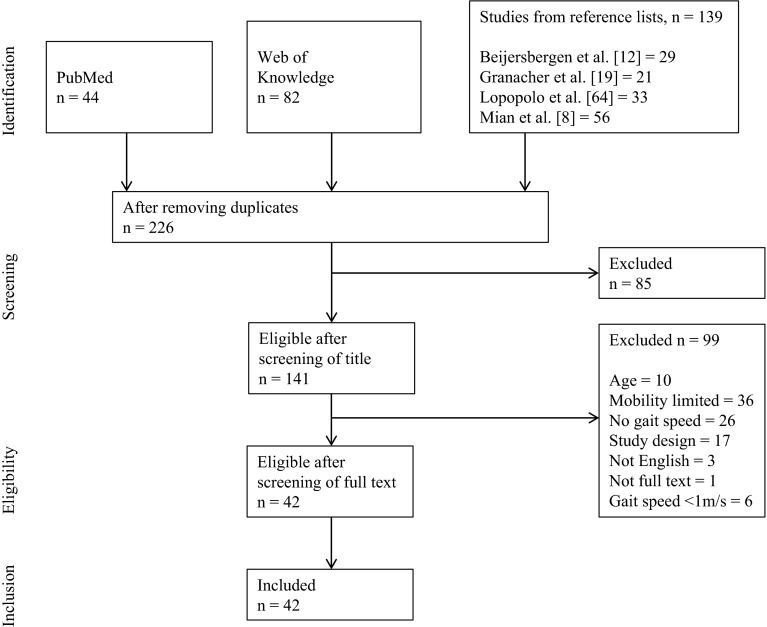
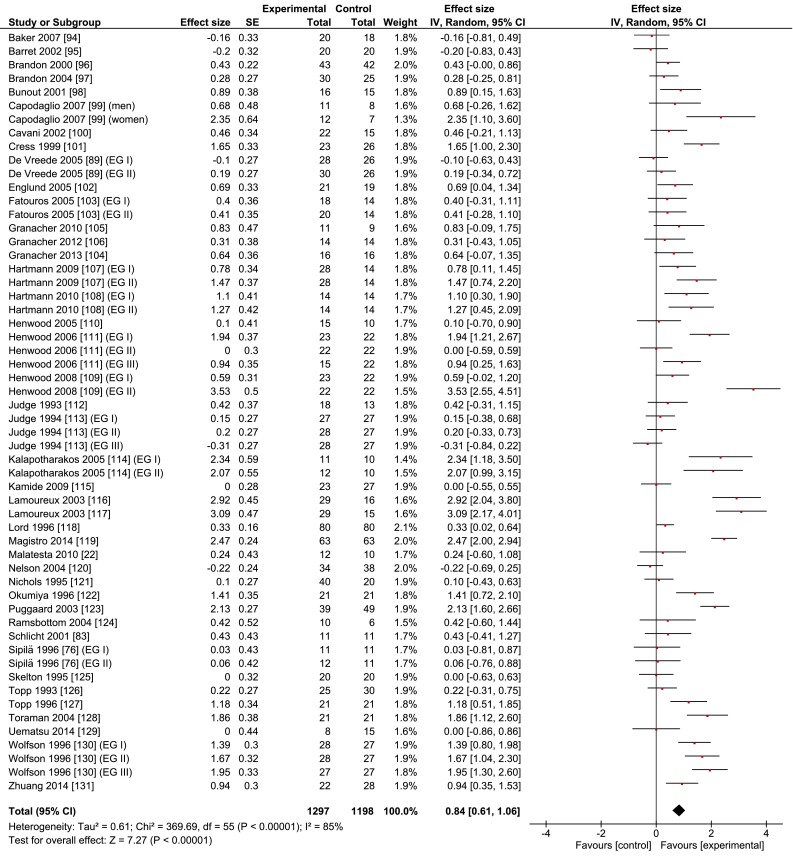
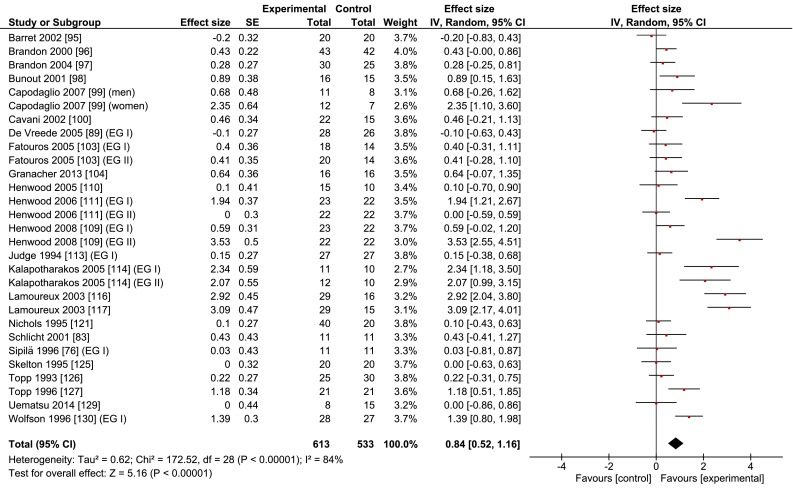
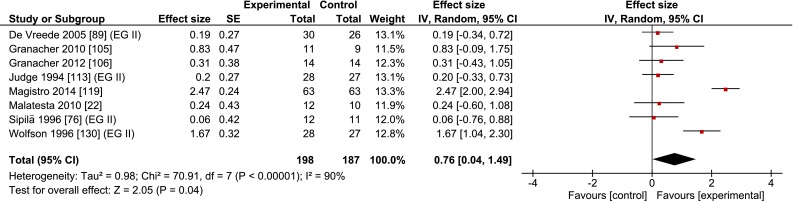
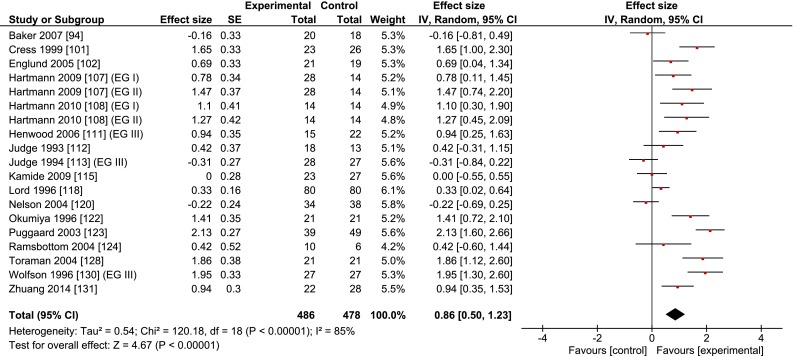
BACKGROUND: Habitual walking speed predicts many clinical conditions later in life, but it declines with age. However, which particular exercise intervention can minimize the age-related gait speed loss is unclear. PURPOSE: Our objective was to determine the effects of strength, power, coordination, and multimodal exercise training on healthy old adults' habitual and fast gait speed. METHODS: We performed a computerized systematic literature search in PubMed and Web of Knowledge from January 1984 up to December 2014. Search terms included 'Resistance training', 'power training', 'coordination training', 'multimodal training', and 'gait speed (outcome term). Inclusion criteria were articles available in full text, publication period over past 30 years, human species, journal articles, clinical trials, randomized controlled trials, English as publication language, and subject age ≥65 years. The methodological quality of all eligible intervention studies was assessed using the Physiotherapy Evidence Database (PEDro) scale. We computed weighted average standardized mean differences of the intervention-induced adaptations in gait speed using a random-effects model and tested for overall and individual intervention effects relative to no-exercise controls. RESULTS: A total of 42 studies (mean PEDro score of 5.0 ± 1.2) were included in the analyses (2495 healthy old adults; age 74.2 years [64.4-82.7]; body mass 69.9 ± 4.9 kg, height 1.64 ± 0.05 m, body mass index 26.4 ± 1.9 kg/m2, and gait speed 1.22 ± 0.18 m/s). The search identified only one power training study, therefore the subsequent analyses focused only on the effects of resistance, coordination, and multimodal training on gait speed. The three types of intervention improved gait speed in the three experimental groups combined (n = 1297) by 0.10 m/s (±0.12) or 8.4% (±9.7), with a large effect size (ES) of 0.84. Resistance (24 studies; n = 613; 0.11 m/s; 9.3%; ES: 0.84), coordination (eight studies, n = 198; 0.09 m/s; 7.6%; ES: 0.76), and multimodal training (19 studies; n = 486; 0.09 m/s; 8.4%, ES: 0.86) increased gait speed statistically and similarly. CONCLUSIONS: Commonly used exercise interventions can functionally and clinically increase habitual and fast gait speed and help slow the loss of gait speed or delay its onset.
Overview
The claims and statistics of this paper haven’t been checked yet.
Free: it reads the open-access text and checks the first 5 claims that cite a source we can check. Create a free account to check every claim.
Integrity signals
Registry
Cites
Statistics
Figures
Verification
Claims the paper makes
The claims and statistics of this paper haven’t been checked yet.
Free: it reads the open-access text and checks the first 5 claims that cite a source we can check. Create a free account to check every claim.
Self-check
Percentages, sums and reported differences re-computed from the paper’s own numbers.
The self-check needs the paper’s full text.
Citations
Cites
Measuring inconsistency in meta-analyses
Higgins, J. P. T., Thompson, S. G., Deeks, J. J., & Altman, D. G. (2003) · BMJ · doi:10.1136/bmj.327.7414.557 · Cited by 63,139 · cited 6×
“Table 4 provides an overall summary of the absolute and relative changes in gait speed and the ESs.”
MethodInfluentialThe Timed “Up & Go”: A Test of Basic Functional Mobility for Frail Elderly Persons
Podsiadlo, D., & Richardson, S. (1991) · Journal of the American Geriatrics Society · doi:10.1111/j.1532-5415.1991.tb01616.x · Cited by 14,418 · cited 1×
“05 m/s functional cut-off scores seem to gain credence [134, 136, 137], these values must be placed within the context of reliability of gait tests, which are in general high [100, 138–140], but studies also report day-to-day changes of over 43 m, in, for example, the 6-minute walk test that exceed the recommended fun…”
BackgroundSarcopenia: European consensus on definition and diagnosis
Cruz-Jentoft, A. J., Baeyens, J. P., Bauer, J. M., Boirie, Y., Cederholm, T., Landi, F., Martin, F. C., Michel, J.-P., Rolland, Y., Schneider, S. M., et al. (2010) · Age and Ageing · doi:10.1093/ageing/afq034 · Cited by 11,601
Reliability of the PEDro Scale for Rating Quality of Randomized Controlled Trials
Maher, C. G., Sherrington, C., Herbert, R. D., Moseley, A. M., & Elkins, M. (2003) · Physical Therapy · doi:10.1093/ptj/83.8.713 · Cited by 4,808 · cited 1×
“The PEDro Scale is used to rate internal study validity and the presence of statistical replicable information on a scale from 0 to 10 with C6 representing a cut-off score for high-quality studies [90].”
MethodGait speed and survival in older adults.
Studenski, S. (2011) · JAMA · doi:10.1001/jama.2010.1923 · Cited by 4,558 · cited 1×
“Habitual walking speed measured on a level surface predicts many conditions later in life, including daily function [38, 39], mobility [40, 41], independence [42], falls [19, 43, 44], fear of falls [45], fractures [43], health [46], mental health [47], cognitive function [48–51], post-acute transition to the community…”
BackgroundAmerican College of Sports Medicine position stand
Otis, C. L. (1997) · Medical Entomology and Zoology · Cited by 4,407
Progression Models in Resistance Training for Healthy Adults
(2009) · Medicine & Science in Sports & Exercise · doi:10.1249/mss.0b013e3181915670 · Cited by 4,332
Progression Models in Resistance Training for Healthy Adults
(2002) · Medicine and Science in Sports and Exercise · doi:10.1097/00005768-200202000-00027 · Cited by 2,979
Guralnik, J. M., Ferrucci, L., Pieper, C. F., Leveille, S. G., Markides, K. S., Ostir, G. V., Studenski, S., Berkman, L. F., & Wallace, R. B. (2000) · The Journals of Gerontology Series A: Biological Sciences and Medical Sciences · doi:10.1093/gerona/55.4.m221 · Cited by 2,898 · cited 1×
“Bipedal locomotion is a hallmark of human evolution, and gait speed affords evolutionary [1], medical [2–5], cognitive [6, 7], and health-related [8, 9] benefits to humans across the lifespan, especially to the aged [10–29].”
BackgroundMeaningful change and responsiveness in common physical performance measures in older adults.
Perera, S., Mody, S. H., Woodman, R. C., & Studenski, S. A. (2006) · Journal of the American Geriatrics Society · doi:10.1111/j.1532-5415.2006.00701.x · Cited by 2,513 · cited 3×
“10 m/s in gait speed is considered substantial relative to self-reported decline in physical function or mobility [134], it is also noted there that”
Background
Research works printed but not linked: 3
- Hortobágyi T Rutgers H The positives of physical activity and the negatives of sedentariness in successful aging The future of health and fitness A plan for getting Europe active by 2025 2014 Nijmegen BlackBox Publishers 54 62
- Deeks JJ, Higgins JPT. Statistical algorithms in review manager 5. In: Collaboration SMGoTC, editor; 2010. p. 1–11.
- Cohen J Statistical power for the behavioral sciences 1988 Hillsdale L. Erlbaum Associates
Cited by
Gait disorders in adults and the elderly: A clinical guide
Pirker, W., & Katzenschlager, R. (2017) · Wiener klinische Wochenschrift · doi:10.1007/s00508-016-1096-4 · Cited by 664
“Commonly used exercise interventions such as muscle strength, power and resistance training as well as coordination training can improve habitual and maximum gait speed in elderly subjects [51].”
BackgroundLacroix, A., Hortobágyi, T., Beurskens, R., & Granacher, U. (2017) · Sports Medicine · doi:10.1007/s40279-017-0747-6 · Cited by 279
“This speed is in line with another metaanalysis, reporting on the effects of three types of exercise interventions on gait speed [19].”
ResultSelf-citationResistance Exercise Training as a Primary Countermeasure to Age-Related Chronic Disease
Mcleod, J. C., Stokes, T., & Phillips, S. M. (2019) · Frontiers in Physiology · doi:10.3389/fphys.2019.00645 · Cited by 254
The 2017 Dutch Physical Activity Guidelines
Committee Dutch Physical Activity Guidelines 2017, Weggemans, R. M., Backx, F. J. G., Borghouts, L., Chinapaw, M., Hopman, M. T. E., Koster, A., Kremers, S., van Loon, L. J. C., May, A., et al. (2018) · International Journal of Behavioral Nutrition and Physical Activity · doi:10.1186/s12966-018-0661-9 · Cited by 227
“There are RCTs that show that strength training increases walking speed in older persons [46, 47].”
BackgroundPeel, N. M., Alapatt, L. J., Jones, L. V., & Hubbard, R. E. (2019) · The Journals of Gerontology: Series A · doi:10.1093/gerona/gly140 · Cited by 201
“Exercise interventions have resulted in clinically meaningful increases in habitual gait speed of healthy older adults, depending on intensity, frequency and duration [25, 26].”
BackgroundWalking ability to predict future cognitive decline in old adults: A scoping review
Kikkert, L. H. J., Vuillerme, N., van Campen, J. P., Hortobágyi, T., & Lamoth, C. J. (2016) · Ageing Research Reviews · doi:10.1016/j.arr.2016.02.001 · Cited by 168
“Mean gait speed values are far beneath standard values of 1.15 [70], 1.22 (Hortobágyi et al., 2015), and 1.30 m/s [71] reported previously.”
InfluentialSelf-citationLow, D. C., Walsh, G. S., & Arkesteijn, M. (2016) · Sports Medicine · doi:10.1007/s40279-016-0559-0 · Cited by 202
Levin, O., Netz, Y., & Ziv, G. (2017) · European Review of Aging and Physical Activity · doi:10.1186/s11556-017-0189-z · Cited by 148
“Besides the beneficial impact of physical training on cognition, it has also been shown to improve mobility [29, 36–39], balance [37, 40], and fine upper limb control [41–44]; see reviews [39, 45, 46].”
BackgroundResultChaabene, H., Prieske, O., Herz, M., Moran, J., Höhne, J., Kliegl, R., Ramirez-Campillo, R., Behm, D. G., Hortobágyi, T., & Granacher, U. (2021) · Ageing Research Reviews · doi:10.1016/j.arr.2021.101265 · Cited by 146
Self-citationWalking Speed, Cognitive Function, and Dementia Risk in the English Longitudinal Study of Ageing
Hackett, R. A., Davies‐Kershaw, H., Cadar, D., Orrell, M. W., & Steptoe, A. (2018) · Journal of the American Geriatrics Society · doi:10.1111/jgs.15312 · Cited by 131
Comparison of time‐matched aerobic, resistance, or concurrent exercise training in older adults
Timmons, J. F., Minnock, D., Hone, M., Cogan, K. E., Murphy, J. C., & Egan, B. (2018) · Scandinavian Journal of Medicine & Science in Sports · doi:10.1111/sms.13254 · Cited by 109
Functional relevance of resistance training-induced neuroplasticity in health and disease
Hortobágyi, T., Granacher, U., Fernández‐del‐Olmo, M., Howatson, G., Manca, A., Deriu, F., Taube, W., Grüber, M., Márquez, G., Lundbye‐Jensen, J., et al. (2020) · Neuroscience & Biobehavioral Reviews · doi:10.1016/j.neubiorev.2020.12.019 · Cited by 133
“In such studies, lower extremity RT improved MVC force of muscles involved in force generation in the stance phase of gait (Hortobágyi et al., 2015).”
BackgroundSelf-citationTollár, J., Nagy, F., & Hortobágyi, T. (2018) · Gerontology · doi:10.1159/000493127 · Cited by 115
Self-citationFactors associated with social isolation in community-dwelling older adults: a cross-sectional study
Merchant, R. A., Liu, G., Lim, J. Y., Fu, X., & Chan, Y. H. (2020) · Quality of Life Research · doi:10.1007/s11136-020-02493-7 · Cited by 85
Santos, L., Ribeiro, A. S., Schoenfeld, B. J., Nascimento, M. A., Tomeleri, C. M., Souza, M. F., Pina, F. L. C., & Cyrino, E. S. (2017) · European Journal of Sport Science · doi:10.1080/17461391.2016.1273394 · Cited by 72
“A recent meta-analysis by Hortobágyi et al. (2015) including 24 randomized controlled trials (n = 613) that investigated the specific effect of RT on walking capacity in older participants indicated that RT improves walking capacity by 9.3% with a large effect size (0.83).”
MethodResultInfluentialWollesen, B., Mattes, K., Schulz, S., Bischoff, L. L., Seydell, L., Bell, J. W., & von DUVILLARD, S. P. (2017) · Frontiers in Aging Neuroscience · doi:10.3389/fnagi.2017.00415 · Cited by 76
Damanti, S., Azzolino, D., Roncaglione, C., Arosio, B., Rossi, P. D., & Cesari, M. (2019) · Nutrients · doi:10.3390/nu11091991 · Cited by 91
Courel-Ibáñez, J., Buendía-Romero, Á., Pallarés, J. G., García-Conesa, S., Martínez-Cava, A., & Izquierdo, M. (2022) · Journal of the American Medical Directors Association · doi:10.1016/j.jamda.2021.05.037 · Cited by 62
The Interaction between Mobility Status and Exercise Specificity in Older Adults
Brahms, C. M., Hortobágyi, T., Kressig, R. W., & Granacher, U. (2021) · Exercise and Sport Sciences Reviews · doi:10.1249/jes.0000000000000237 · Cited by 54
“This is because subclinical mobility limitations (slow gait, low stability, obesity, arthritis) are randomly distributed among older adults (26) and adaptations produced by specific mobility interventions produce general and heterogeneous effects on these older adults’ mobility outcomes.”
BackgroundSelf-citationCURRIER, B. S., D’SOUZA, A. C., SINGH, M. A. F., LOWISZ, C. V., RAWSON, E. S., SCHOENFELD, B. J., SMITH-RYAN, A. E., STEEN, J. P., THOMAS, G. A., TRIPLETT, N. T., et al. (2026) · Medicine & Science in Sports & Exercise · doi:10.1249/mss.0000000000003897 · Cited by 105
Suire, C. N., Eitan, E., Shaffer, N. C., Tian, Q., Studenski, S., Mattson, M. P., & Kapogiannis, D. (2017) · Experimental Gerontology · doi:10.1016/j.exger.2017.08.024 · Cited by 52
“Exercise interventions have also been associated with improvements in walking speed (Hortobagyi et al., 2015; Gregory et al., 2017).”
Torrisi, M., Maggio, M. G., Cola, M. C. D., Zichittella, C., Carmela, C., Porcari, B., Rosa, G. L., Luca, R. D., Naro, A., & Calabrò, R. S. (2021) · Journal of Clinical Neuroscience · doi:10.1016/j.jocn.2021.07.053 · Cited by 67
Kikkert, L. H. J., de Groot, M. H., van Campen, J. P., Beijnen, J. H., Hortobágyi, T., Vuillerme, N., & Lamoth, C. J. C. (2017) · PLoS ONE · doi:10.1371/journal.pone.0178615 · Cited by 58
Self-citationBrach, J. S., Perera, S., Gilmore, S., VanSwearingen, J. M., Brodine, D., Nadkarni, N. K., & Ricci, E. M. (2017) · JAMA Internal Medicine · doi:10.1001/jamainternmed.2017.3609 · Cited by 56
Self-citationMuehlbauer, T., Granacher, U., Borde, R., & Hortobágyi, T. (2017) · Gerontology · doi:10.1159/000480150 · Cited by 57
Self-citationAbe, T., Kitamura, A., Taniguchi, Y., Amano, H., Seino, S., Yokoyama, Y., Nishi, M., Narita, M., Ikeuchi, T., Fujiwara, Y., et al. (2019) · Maturitas · doi:10.1016/j.maturitas.2019.02.002 · Cited by 50
Vestøl, I., Debesay, J., Pajalić, Z., Lid, I. M., & Bergland, A. (2019) · Archives of Public Health · doi:10.1186/s13690-019-0354-0 · Cited by 51
What types of physical activities are effective in developing muscle and bone strength and balance?
Foster, C. E., & Armstrong, M. E. G. (2018) · Journal of Frailty Sarcopenia and Falls · doi:10.22540/jfsf-03-058 · Cited by 51
Aas, S. N., Seynnes, O., Benestad, H. B., & Raastad, T. (2019) · Aging Clinical and Experimental Research · doi:10.1007/s40520-019-01234-2 · Cited by 45
Musculoskeletal adaptations to strength training in frail elderly: a matter of quantity or quality?
Aas, S. N., Breit, M., Karsrud, S., Aase, O. J., Rognlien, S. H., Cumming, K. T., Reggiani, C., Seynnes, O., Rossi, A. P., Toniolo, L., et al. (2020) · Journal of Cachexia Sarcopenia and Muscle · doi:10.1002/jcsm.12543 · Cited by 42
Zhou, Y., Rehman, R. Z. U., Hansen, C., Maetzler, W., Din, S. D., Rochester, L., Hortobágyi, T., & Lamoth, C. J. C. (2020) · Sensors · doi:10.3390/s20154098 · Cited by 39
“The classification results in this heterogeneous population might be explained by the fact that multiple types of fallers are included in the dataset and sub-clinical mobility limitations (slow gait, low stability, obesity, arthritis) are randomly distributed among older adults [40].”
BackgroundSelf-citationBlasco-Lafarga, C., Cordellat, A., Forte, A., Roldán, A., & Monteagudo, P. (2020) · International Journal of Environmental Research and Public Health · doi:10.3390/ijerph17165984 · Cited by 37
López, P., Rech, A., Πετροπούλου, Μ., Newton, R. U., Taaffe, D. R., Galvao, D. A., Turella, D. J. P., Freitas, S. R., & Radaelli, R. (2022) · The Journals of Gerontology Series A · doi:10.1093/gerona/glac230 · Cited by 41
“Given the availability of studies assessing performance measures or sensitivity to change following resistance exercise, this systematic review and meta-analysis were planned to focus on those with a higher number of studies available (eg, 6-minute walking test vs 400-m walk test) and higher sensitivity to change foll…”
BackgroundKikkert, L. H. J., Vuillerme, N., van Campen, J. P., Appels, B. A., Hortobágyi, T., & Lamoth, C. J. C. (2017) · Journal of NeuroEngineering and Rehabilitation · doi:10.1186/s12984-017-0297-z · Cited by 38
“Indeed, habitual gait speed decreases as much as 16% per decade, starting at age 60 [3].”
Self-citationPredictors of gait speed and its change over three years in community-dwelling older people
Pinter, D., Ritchie, S. J., Gattringer, T., Bastin, M. E., Hernández, M. D. C. V., Corley, J., Maniega, S. M., Pattie, A., Dickie, D. A., Gow, A. J., et al. (2018) · Aging · doi:10.18632/aging.101365 · Cited by 40
Diverse Exercises Similarly Reduce Older Adults’ Mobility Limitations
Tollár, J., Nagy, F., Moizs, M., TÓTH, B. E., Sanders, L. M. J., & Hortobágyi, T. (2019) · Medicine & Science in Sports & Exercise · doi:10.1249/mss.0000000000002001 · Cited by 44
Self-citationTeraz, K., Šlosar, L., Paravlić, A. H., de Bruin, E. D., & Marusic, U. (2022) · Frontiers in Psychology · doi:10.3389/fpsyg.2022.837710 · Cited by 32
Eggenberger, P., Tomovic, S., Münzer, T., & de Bruin, E. D. (2017) · PLoS ONE · doi:10.1371/journal.pone.0182180 · Cited by 41
Gait speed response to aerobic versus resistance exercise training in older adults
Henderson, R. M., Leng, X., Chmelo, E. A., Brinkley, T. E., Lyles, M. F., Marsh, A. P., & Nicklas, B. J. (2016) · Aging Clinical and Experimental Research · doi:10.1007/s40520-016-0632-4 · Cited by 37
“12 m/s) in FGS following exercise training [11, 15].”
InfluentialHsu, C., Liang, C., Liao, M.-C., Chou, M.-Y., & Lin, Y. (2017) · Geriatrics and gerontology international/Geriatrics & gerontology international · doi:10.1111/ggi.13034 · Cited by 36
Fransen, B. L., Pijnappels, M. A. G. M., Butter, I. K., Burger, B. J., van Dieën, J. H., & Hoozemans, M. J. M. (2021) · Archives of Orthopaedic and Trauma Surgery · doi:10.1007/s00402-021-03915-y · Cited by 29
Neil‐Sztramko, S., Teggart, K., Moore, C., Sherifali, D., Fitzpatrick‐Lewis, D., Coletta, G., Phillips, S. M., Newbold, K. B., Álvarez, E., Kuspinar, A., et al. (2022) · BMC Geriatrics · doi:10.1186/s12877-022-03170-9 · Cited by 38
Lean, fast and strong: Determinants of functional performance in the elderly
Orssatto, L. B. R., Bezerra, E. S., Schoenfeld, B. J., & Diefenthaeler, F. (2020) · Clinical Biomechanics · doi:10.1016/j.clinbiomech.2020.105073 · Cited by 28
Pagan, J. I., Bradshaw, B. A., Bejte, B., Hart, J. N., Perez, V., Knowles, K. S., Beausejour, J. P., Luzadder, M., Menger, R., Osorio, C., et al. (2024) · Frontiers in Aging · doi:10.3389/fragi.2024.1335534 · Cited by 41
Superior gait performance and balance ability in Latin dancers
Liu, Y., Lin, A.-C., Chen, S., Shih, C.-J., Kuo, T.-Y., Wang, F., Lee, P.-H., & Lee, A. P. (2022) · Frontiers in Medicine · doi:10.3389/fmed.2022.834497 · Cited by 34
Trautwein, S., Barisch‐Fritz, B., Scharpf, A., Ringhof, S., Stein, T., Krell‐Roesch, J., & Wöll, A. (2020) · BMC Geriatrics · doi:10.1186/s12877-020-01635-3 · Cited by 31
Trombini-Souza, F., de Moura, V. T. G., da Silva, L. W. N., Leal, I. D. S., Nascimento, C. A. D.-D., Silva, P. S. T., Perracini, M. R., Sacco, I. D. C. N., de Araújo, R. C., & Nascimento, M. D. M. (2023) · PeerJ · doi:10.7717/peerj.15030 · Cited by 35
Pothier, K., Vrinceanu, T., Intzandt, B., Bosquet, L., Karelis, A. D., Lussier, M., Vu, T. T. M., Nigam, A., Li, K., Berryman, N., et al. (2021) · Experimental Gerontology · doi:10.1016/j.exger.2021.111331 · Cited by 35
Hvid, L. G., Nielsen, M. K. F., Simonsen, C., Andersen, M., & Caserotti, P. (2017) · Experimental Gerontology · doi:10.1016/j.exger.2017.03.019 · Cited by 32
“Previous high-intense progressive power training studies have observed comparable findings (Caserotti et al., 2008; Hortobagyi et al., 2015;Marsh et al., 2009; Reid et al., 2015).”
ResultLower extremity power training improves healthy old adults’ gait biomechanics
Uematsu, A., Hortobágyi, T., Tsuchiya, K., Kadono, N., Kobayashi, H., Ogawa, T., & Suzuki, S. (2018) · Gait & Posture · doi:10.1016/j.gaitpost.2018.03.036 · Cited by 29
Self-citationNuñez-Lisboa, M., Valero‐Breton, M., & Dewolf, A. H. (2023) · Frontiers in Physiology · doi:10.3389/fphys.2023.1194889 · Cited by 26
“Based on the well-documented change in muscle strength with aging described in the last section, a lot of efforts have been made to counteract it using exercise (Christie, 2011; Hortobágyi et al., 2015; Keating et al., 2021; Wu et al., 2021).”
BackgroundBrach, J. S., Perera, S., Shuman, V., Gil, A. B., Kriska, A. M., Nadkarni, N. K., Rockette‐Wagner, B., Cham, R., & VanSwearingen, J. M. (2022) · JAMA Network Open · doi:10.1001/jamanetworkopen.2022.12921 · Cited by 28
Self-citationNunes, P. R. P., de Oliveira, A. A., Martins, F. M., Souza, A. P., & Orsatti, F. L. (2017) · Experimental Gerontology · doi:10.1016/j.exger.2017.08.011 · Cited by 31
“…the 6-minute walk test and the 400-meter walk test, are also related to aerobic fitness and are widely used in the research field to determine fast walking speed (Bouchard et al., 2009; Galvao and Taaffe, 2005; Hortobágyi et al., 2015; Perera et al., 2006; Reis et al., 2012; Straight et al., 2015).”
InfluentialAibar‐Almazán, A., Martínez‐Amat, A., Cruz‐Díaz, D., la Torre‐Cruz, M. J. D., Jiménez‐García, J. D., Zagalaz‐Anula, N., Peiró, M. T. R., de Guevara, N. M.-L., & Hita‐Contreras, F. (2020) · The Journal of Strength and Conditioning Research · doi:10.1519/jsc.0000000000003790 · Cited by 30
“Commonly used exercise interventions (resistance, coordination, and multimodal exercises) have been shown to increase gait speed in healthy old adults (15).”
BackgroundUmegaki, H., Makino, T., Yanagawa, M., Nakashima, H., Kuzuya, M., Sakurai, T., & Toba, K. (2018) · Geriatrics and gerontology international/Geriatrics & gerontology international · doi:10.1111/ggi.13464 · Cited by 25
Zhang, L., Liu, S., Li, Y., Li, S., & Wu, Y. (2021) · Gerontology · doi:10.1159/000514894 · Cited by 24
Geraghty, J., Holland, C., & Rochelle, K. (2016) · Accident Analysis & Prevention · doi:10.1016/j.aap.2015.12.019 · Cited by 29
Effects of a 4-month judo program on gait performance in older adults
Ciaccioni, S., Capranica, L., Forte, R., Pesce, C., & Condello, G. (2020) · The Journal of Sports Medicine and Physical Fitness · doi:10.23736/s0022-4707.20.10446-8 · Cited by 29
Silva, N. C. B. S., Gill, D. P., Gregory, M. A., Bocti, J. P., & Petrella, R. J. (2017) · Experimental Gerontology · doi:10.1016/j.exger.2017.12.011 · Cited by 23
“Further, most studies have failed to comply with 112 current guidelines for exercise in older adults with regards to exercise intensity, frequency and 113 duration (Hortobágyi et al., 2015; Plummer et al., 2015).”
BackgroundResultInfluentialKinematic Mechanisms of How Power Training Improves Healthy Old Adults’ Gait Velocity
Beijersbergen, C. M. I., Granacher, U., Gäbler, M., DeVita, P., & Hortobágyi, T. (2016) · Medicine & Science in Sports & Exercise · doi:10.1249/mss.0000000000001082 · Cited by 25
“46 mIs) (22) and still improved by a similar amount.”
Self-citationPower Training–induced Increases in Muscle Activation during Gait in Old Adults
Beijersbergen, C. M. I., Granacher, U., Gäbler, M., DeVita, P., & Hortobágyi, T. (2017) · Medicine & Science in Sports & Exercise · doi:10.1249/mss.0000000000001345 · Cited by 21
“Power training incorporates exercises with moderately heavy weights and high movement velocities and can increase old adults_ muscle strength and power (3,5,10,31,34) as well as functional performance, including walking speed (10,20).”
BackgroundSelf-citationLee, S. Y., Goh, A., Tan, K., Choo, P. L., Ong, P., Wong, W. P., & Wee, S. L. (2021) · European Review of Aging and Physical Activity · doi:10.1186/s11556-021-00273-x · Cited by 20
A Fall Risk Assessment Model for Community-Dwelling Elderly Individuals Based on Gait Parameters
Zhang, K., Liu, W., Zhang, J., Li, Z., & Liu, J. (2023) · IEEE Access · doi:10.1109/access.2023.3327091 · Cited by 17
Wikman, J. M., Nistrup, A., Vorup, J., Pedersen, M. T., Melchor, P. S., Bangsbo, J., & Pfister, G. U. (2017) · AIMS Public Health · doi:10.3934/publichealth.2017.4.364 · Cited by 24
“Participation in physical activity seems to be a possible way to alleviate the physical decline that is often connected aging [11,12].”
BackgroundForte, R., Pesce, C., Baldassarre, A. D., Shea, J. B., Voelcker‐Rehage, C., Capranica, L., & Condello, G. (2019) · International Journal of Environmental Research and Public Health · doi:10.3390/ijerph16101835 · Cited by 17
Rincé, G., Couturier, C., Berrut, G., Dylis, A., Montero‐Odasso, M., & Deschamps, T. (2021) · Aging Clinical and Experimental Research · doi:10.1007/s40520-021-01812-3 · Cited by 18
“Recent studies have proven that exercise interventions and dual-task training can improve the preferred and fast gait speed in healthy older adults [15], with a clinically Guy Rince and Catherine Couturier contributed equally”
BackgroundKlotzbier, T. J., Korbus, H., Johnen, B., & Schott, N. (2021) · German Journal of Exercise and Sport Research · doi:10.1007/s12662-021-00764-0 · Cited by 17
Olsen, P. Ø., Termannsen, A., Bramming, M., Tully, M. A., & Caserotti, P. (2019) · European Review of Aging and Physical Activity · doi:10.1186/s11556-019-0230-5 · Cited by 20
Woo, J., Chan, R., Ong, S., Bragt, M. C. E., Bos, R., Parikh, P., & de Groot, C. P. G. M. (2019) · Journal of the American Medical Directors Association · doi:10.1016/j.jamda.2019.08.001 · Cited by 13
Beijersbergen, C. M. I., Hortobágyi, T., Beurskens, R., Lenzen-Großimlinghaus, R., Gäbler, M., & Granacher, U. (2016) · Gerontology · doi:10.1159/000444752 · Cited by 17
Self-citationNamsawang, J., Srijunto, W., Werasirirat, P., Sniečkus, A., Bradauskienė, K., Kamandulis, S., & Muanjai, P. (2024) · Journal of Exercise Science & Fitness · doi:10.1016/j.jesf.2024.01.001 · Cited by 17
“54,55 Older adults with a high fall risk tend to walk at a slower pace compared to those with a lower fall risk.”
BackgroundLim, J., & Lim, J. (2017) · Annals of Geriatric Medicine and Research · doi:10.4235/agmr.2017.21.1.17 · Cited by 13
Wang, Q., & Zhao, Y. (2021) · International Journal of Environmental Research and Public Health · doi:10.3390/ijerph18126379 · Cited by 14
Yangöz, Ş. T., Kavradım, S. T., & Özer, Z. (2022) · Applied Psychology Health and Well-Being · doi:10.1111/aphw.12426 · Cited by 14
Verstraeten, L. M. G., Mashni, A., van Wijngaarden, J. P., Meskers, C. G. M., & Maier, A. B. (2023) · Journal of Cachexia Sarcopenia and Muscle · doi:10.1002/jcsm.13372 · Cited by 15
James, C. E., Müller, D., Müller, C. A. H., van de Looij, Y., ALTENMÜLLER, E. O., Kliegel, M., Ville, D. V. D., & Marié, D. (2024) · Heliyon · doi:10.1016/j.heliyon.2024.e26674 · Cited by 20
“In their systematic review and meta-analysis, Hortobagyi et al. (2015) [78] also concluded that exercise intensity played only a minor role among elderly persons.”
The Impact of Pilates Exercises on Motor Control of Inactive Middle-Aged Women
Seghatoleslami, A., Afif, A. H., Irandoust, K., & Taheri, M. (2018) · Sleep and Hypnosis · doi:10.5350/sleep.hypn.2018.20.0160 · Cited by 11
“(2009), but it contradicted by part of the results of a study which concluded that land endurance exercises did not have a significant effect on the walking speed (Hortobágyi et al., 2015).”
ResultÜnver, B., & Akbaş, E. (2018) · Australian Journal on Ageing · doi:10.1111/ajag.12558 · Cited by 11
Fien, S., Henwood, T. R., Climstein, M., Rathbone, E. N., & Keogh, J. (2019) · PeerJ · doi:10.7717/peerj.6973 · Cited by 14
“Although the magnitude of changes in physical performance such as gait speed is typically substantially less than that of the strength improvement (Hortobagyi et al., 2015).”
BackgroundYamamoto, S., Ishii, D., Noguchi, A., Tanamachi, K., Okamoto, Y., Takasaki, Y., Miyata, K., Fujita, Y., Kishimoto, H., Hotta, K., et al. (2019) · International Quarterly of Community Health Education · doi:10.1177/0272684x19896732 · Cited by 11
Walking at work: Maximum gait speed is related to work ability in hospital nursing staff
Aldridge, C., Tringali, V., Rhodes, R., Kershisnik, K., Creditt, D., Gonzalez-Mejia, J. A., Lugo-Vargas, J., & Eby, J. (2020) · Journal of Occupational Health · doi:10.1002/1348-9585.12171 · Cited by 10
Inns, T. B., Pina, I., Macgregor, L. J., Dudchenko, P. A., Crockett, R. A., & Hunter, A. M. (2025) · Frontiers in Aging · doi:10.3389/fragi.2025.1573778 · Cited by 17
Fortaleza, A. C., Rossi, F. E., Neves, L. M., Diniz, T. A., Messias, I. D. A., Barela, J. Â., Horak, F. B., & Júnior, I. F. F. (2023) · Revista Brasileira Ginecologia e Obstetrícia · doi:10.1055/s-0043-1772178 · Cited by 21
Mesinovic, J., Gandham, A., Cervo, M. M., Jansons, P., Glavas, C., Braude, M. R., Rodriguez, J. P., de Courten, B. V., Zengin, A., Beck, B. R., et al. (2025) · Journal of Cachexia Sarcopenia and Muscle · doi:10.1002/jcsm.13789 · Cited by 14
“Several meta-analyses have reported similar gait speed improvements following RT interventions [30–33].”
Brahms, C. M., Heinzel, S., Rapp, M. A., Reisner, V., Wahmkow, G., Rimpel, J., Schauenburg, G., Stelzel, C., & Granacher, U. (2021) · Journal of Cognition · doi:10.5334/joc.146 · Cited by 10
Self-citationKanwar, K., Moore, J. L., Hawkes, R. A., & Salem, G. J. (2021) · Mental health and physical activity · doi:10.1016/j.mhpa.2021.100410 · Cited by 13
“For example, improvements in singletask (ST) walking speed of between 0.12 and 0.17 m/s have been reported following yoga, resistance, coordination, and mixed-exercise programs conducted from between 8 and 40 weeks (Hortobágyi et al., 2015; Zettergren, Lubeski, & Viverito, 2011).”
BackgroundResultInfluentialPieruccini‐Faria, F., Son, S., Zou, G., Almeida, Q. J., Middleton, L. E., Bray, N. W., Lussier, M., Shoemaker, J. K., Speechley, M. R., Liu-Ambrose, T. Y. L., et al. (2025) · Age and Ageing · doi:10.1093/ageing/afaf242 · Cited by 10
Gait Reconstruction From Motion Artefact Corrupted Fabric-Embedded Sensors
Michael, B., & Howard, M. (2018) · IEEE Robotics and Automation Letters · doi:10.1109/lra.2018.2807810 · Cited by 9
“decreased limb strength [25]) or exercise interventions [26].”
BackgroundBuckinx, F., Aubertin‐Leheudre, M., Daoust, R., Hegg, S., Martel, D., Martel-Thibault, M., & Sirois, M. (2023) · The journal of nutrition health & aging · doi:10.1007/s12603-023-1914-1 · Cited by 10
Caruso Soares, B., Bacha, J. M. R., Mello, D. D., Moretto, E. G., Fonseca, T., Vieira, K. S., de Lima, A. F., Lange, B., Torriani-Pasin, C., Deus Lopes, R. D., et al. (2021) · Journal of Aging and Physical Activity · doi:10.1123/japa.2019-0491 · Cited by 8
Vieira, E. R., Tappen, R. M., Gropper, S. S., Severi, M. T., Engström, G., de Oliveira, M. R., Barbosa, A. C., & da Silva, R. A. (2017) · Journal of Aging and Physical Activity · doi:10.1123/japa.2016-0231 · Cited by 11
Energy Cost of Slow and Normal Gait Speeds in Low and Normally Functioning Adults
Rowley, T. W., Cho, C., Swartz, A. M., STAUDENMAYER, J. W., Hyngstrom, A. S., Keenan, K. G., Welch, W. A., & Strath, S. J. (2019) · American Journal of Physical Medicine & Rehabilitation · doi:10.1097/phm.0000000000001228 · Cited by 10
Arm-crank training improves postural stability and physical functioning in older people
Hill, M. W., Oxford, S. W., Duncan, M. J., & Price, M. (2018) · Experimental Gerontology · doi:10.1016/j.exger.2018.10.007 · Cited by 8
“12m/s (9%) among healthy older people (Hortobágyi et al., 2015).”
Bernard, P. L., Blain, H., Gerazime, A., Maurelli, O., Bousquet, J. J., & Ninot, G. (2018) · European Review of Aging and Physical Activity · doi:10.1186/s11556-018-0203-0 · Cited by 11
Beavers, D. P., Hsieh, K. L., Kitzman, D. W., Kritchevsky, S. B., Messier, S. P., Neiberg, R. H., Nicklas, B. J., Rejeski, W. J., & Beavers, K. M. (2022) · PLOS ONE · doi:10.1371/journal.pone.0267779 · Cited by 7
“As structured exercise yields well-recognized improvement in muscle coordination and strength —even among older, sedentary adults [41, 42]—the combination of CR with exercise would be expected to further improve gait speed.”
BackgroundChen, S., Chen, M.-C., Hou, W., & Lin, P. (2025) · Journal of Nursing Research · doi:10.1097/jnr.0000000000000685 · Cited by 11
“This result differs from Hortobágyi et al. (2015), who conducted a systematic review and meta-analysis that included 24 resistance exercise studies with 613 older adults and found gait speed increased 0.11 m s − 1 or 9.3% with an effect size of 0.84.”
InfluentialÜnver, B., & Bek, N. (2021) · Somatosensory & Motor Research · doi:10.1080/08990220.2021.1994940 · Cited by 7
“Ageing leads to neuromuscular and cognitive problems along with the locomotor system alterations, thus gait and balance disturbances may arise (Hortob agyi et al. 2015; Guadagnin et al. 2016).”
BackgroundJames, C. E., Stucker, C. L., Tschopp, C., Fernandes, A., Revol, A., Mili, I., Kliegel, M., Frisoni, G. B., Guevara, A. B., & Marié, D. (2023) · BMC Geriatrics · doi:10.1186/s12877-022-03678-0 · Cited by 12
Jehu, D. A., Paquet, N., & Lajoie, Y. (2017) · Motor Control · doi:10.1123/mc.2017-0024 · Cited by 7
Dajpratham, P., Komas, J., Yamthed, R., Chanthon, P., Kovintaset, K., Claikhem, T., Unnanuntana, A., Vanitcharoenkul, E., Srinonprasert, V., & Sura-amonrattana, U. (2025) · BMC Geriatrics · doi:10.1186/s12877-025-06230-y · Cited by 8
“This is consistent with literature suggesting that resistance, multimodal, and coordination-focused training effectively enhance gait performance in older individuals [31, 32].”
Metadata
- Authors
- Hortobágyi, T., Lesinski, M., Gäbler, M., VanSwearingen, J. M., Malatesta, D., & Granacher, U.
- Affiliations
- University Medical Center Groningen (NL)
- University of Potsdam (DE)
- University of Pittsburgh (US)
- University of Lausanne (CH)
- Corresponding author
- Hortobágyi, Tibor
- ORCID
- Venue
- Sports Medicine
- Published
- 2015-08-19
- Volume
- 45
- Issue
- 12
- Pages
- 1627-1643
- ISSN
- 0112-1642 (ISSN-L)
- 1179-2035
- PMC
- PMC4656792
- OpenAlex
- W1564486650
- Cited by
- 204
- References
- 159
- Citations by year
- 2026: 12 · 2025: 15 · 2024: 16 · 2023: 17 · 2022: 32 · 2021: 24 · 2020: 25 · 2019: 17 · 2018: 15 · 2017: 20 · 2016: 11
- FWCI
- 2.80
- Type
- journal article
- Language
- en
- Update notices
- correction (2016-02-08)
- Open access
- hybrid
- doi.org
- Locations
- Sports Medicine (publishedVersion, cc-by)
- PubMed Central (publishedVersion)
- PubMed (publishedVersion)
- SERVAL (Université de Lausanne) (publishedVersion, other-oa)
- Northumbria Research Link (Northumbria University) (acceptedVersion)
- IRIS (submittedVersion)
- publish.UP (University of Potsdam) (submittedVersion, cc-by)
- University of Groningen research database (University of Groningen / Centre for Information Technology) (submittedVersion, cc-by)
- Funders
- German Research Foundation (MU 3327/2-1)
- Universitair Medisch Centrum Groningen (653013)
- Topics
- Health Sciences › Health Professions › Physical Therapy, Sports Therapy and Rehabilitation › Balance, Gait, and Falls Prevention
- Health Sciences › Medicine › Geriatrics and Gerontology › Frailty in Older Adults
- Health Sciences › Medicine › Public Health, Environmental and Occupational Health › Physical Activity and Health
- Keywords
- walking speed, older adults, resistance training, coordination training, power training, exercise intervention, healthy aging, balance training, postural control, postural sway, postural stability, fall risk, falls in older adults, gait variability, gait tempo, gait cadence
- MeSH terms
- Aged, Exercise Therapy, Gait, Humans, Exercise, Muscle Strength, Resistance Training
About these checks
Registry, retraction, Cites and statistics results are computed, not judged, with one exception: a printed reference that no index lists is read once by a model before it counts as a citation error. Claims are extracted by a model and kept only when their quote appears verbatim in the text; each cited source is then checked, with a model’s help, for whether it says what the claim relies on. Those verdicts can be wrong — read the claim’s quote and the cited source before relying on one.
Statistics and arithmetic are recomputed, not judged.
Confidence bands are shown only for fields calibrated on our annotated test set. None is calibrated yet, so no band is shown.
What counts as a claim ›How we measure confidence ›How we check this ›
Are you an author, or do you see a problem with this page? Request a review
Data sources
Bibliographic data: Semantic Scholar, OpenAlex, Crossref.
Contains information from the Semantic Scholar Academic Graph Datasets, made available under the ODC Attribution License (ODC-BY 1.0).
Semantic Scholar’s data is described in: Kinney, R., et al. (2023). The Semantic Scholar Open Data Platform. arXiv:2301.10140.
