

Effects of three types of exercise interventions on healthy old adults’ gait speed: a systematic review and meta-analysis.
Open accessThe DOI matches its Crossref record; 159 of the 159 references it cites were found in a registry or an index.
Abstract
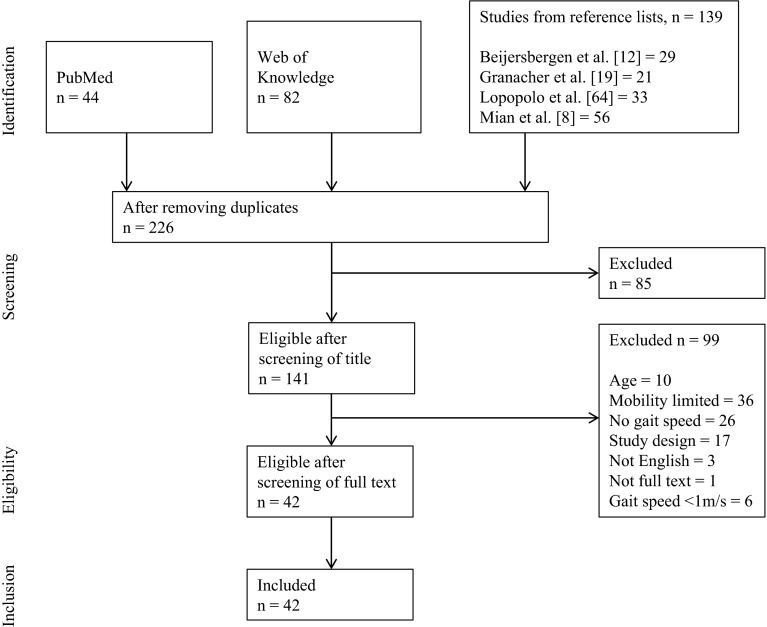
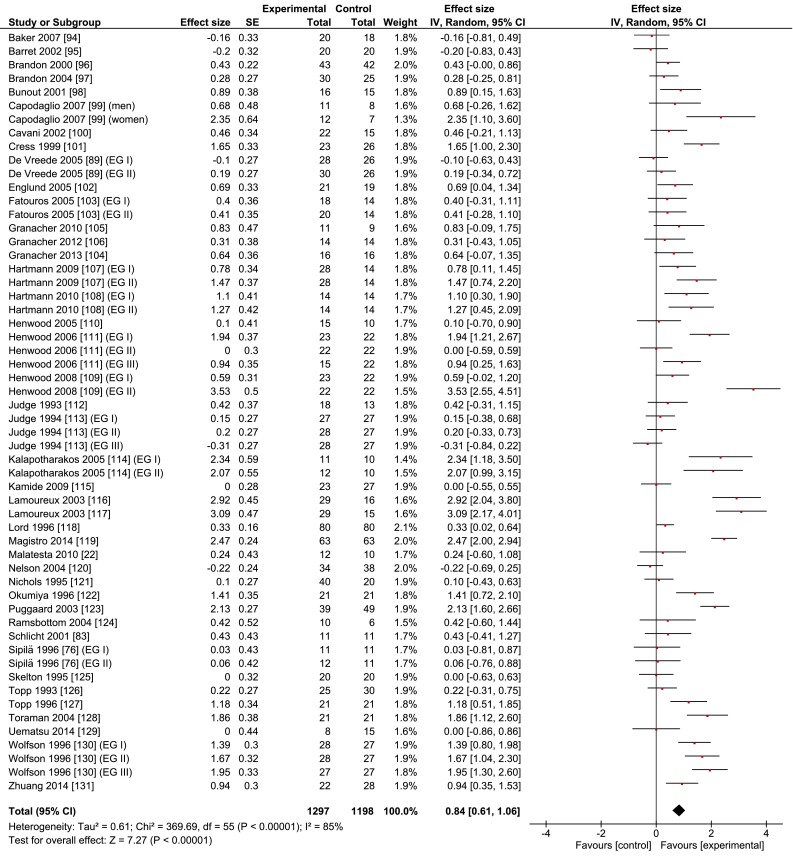
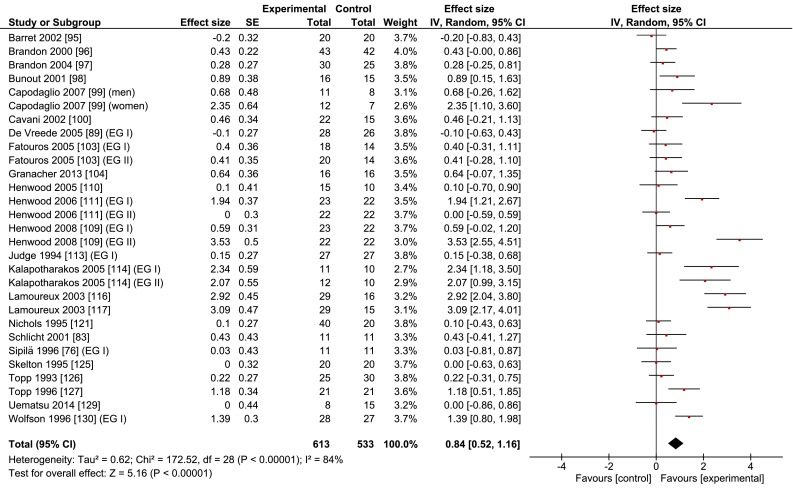
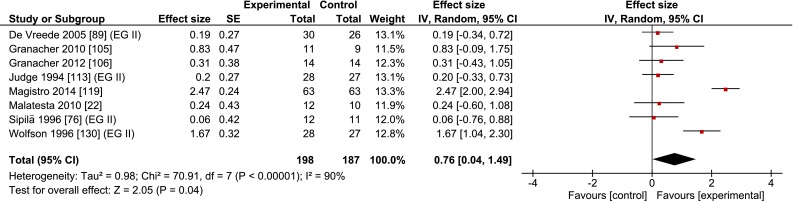
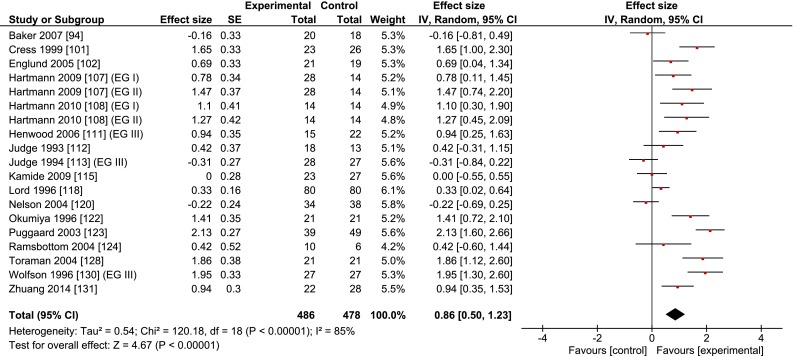
BACKGROUND: Habitual walking speed predicts many clinical conditions later in life, but it declines with age. However, which particular exercise intervention can minimize the age-related gait speed loss is unclear. PURPOSE: Our objective was to determine the effects of strength, power, coordination, and multimodal exercise training on healthy old adults' habitual and fast gait speed. METHODS: We performed a computerized systematic literature search in PubMed and Web of Knowledge from January 1984 up to December 2014. Search terms included 'Resistance training', 'power training', 'coordination training', 'multimodal training', and 'gait speed (outcome term). Inclusion criteria were articles available in full text, publication period over past 30 years, human species, journal articles, clinical trials, randomized controlled trials, English as publication language, and subject age ≥65 years. The methodological quality of all eligible intervention studies was assessed using the Physiotherapy Evidence Database (PEDro) scale. We computed weighted average standardized mean differences of the intervention-induced adaptations in gait speed using a random-effects model and tested for overall and individual intervention effects relative to no-exercise controls. RESULTS: A total of 42 studies (mean PEDro score of 5.0 ± 1.2) were included in the analyses (2495 healthy old adults; age 74.2 years [64.4-82.7]; body mass 69.9 ± 4.9 kg, height 1.64 ± 0.05 m, body mass index 26.4 ± 1.9 kg/m2, and gait speed 1.22 ± 0.18 m/s). The search identified only one power training study, therefore the subsequent analyses focused only on the effects of resistance, coordination, and multimodal training on gait speed. The three types of intervention improved gait speed in the three experimental groups combined (n = 1297) by 0.10 m/s (±0.12) or 8.4% (±9.7), with a large effect size (ES) of 0.84. Resistance (24 studies; n = 613; 0.11 m/s; 9.3%; ES: 0.84), coordination (eight studies, n = 198; 0.09 m/s; 7.6%; ES: 0.76), and multimodal training (19 studies; n = 486; 0.09 m/s; 8.4%, ES: 0.86) increased gait speed statistically and similarly. CONCLUSIONS: Commonly used exercise interventions can functionally and clinically increase habitual and fast gait speed and help slow the loss of gait speed or delay its onset.
Overview
The claims and statistics of this paper haven’t been checked yet.
Free: it reads the open-access text and checks the first 5 claims that cite a source we can check. Create a free account to check every claim.
Integrity signals
Registry
Cites
Statistics
Figures
Verification
Claims the paper makes
The claims and statistics of this paper haven’t been checked yet.
Free: it reads the open-access text and checks the first 5 claims that cite a source we can check. Create a free account to check every claim.
Self-check
Percentages, sums and reported differences re-computed from the paper’s own numbers.
The self-check needs the paper’s full text.
Citations
Cites
Measuring inconsistency in meta-analyses
Higgins, J. P. T., Thompson, S. G., Deeks, J. J., & Altman, D. G. (2003) · BMJ · doi:10.1136/bmj.327.7414.557 · Cited by 63,139 · cited 6×
“Table 4 provides an overall summary of the absolute and relative changes in gait speed and the ESs.”
MethodInfluentialThe Timed “Up & Go”: A Test of Basic Functional Mobility for Frail Elderly Persons
Podsiadlo, D., & Richardson, S. (1991) · Journal of the American Geriatrics Society · doi:10.1111/j.1532-5415.1991.tb01616.x · Cited by 14,418 · cited 1×
“05 m/s functional cut-off scores seem to gain credence [134, 136, 137], these values must be placed within the context of reliability of gait tests, which are in general high [100, 138–140], but studies also report day-to-day changes of over 43 m, in, for example, the 6-minute walk test that exceed the recommended fun…”
BackgroundSarcopenia: European consensus on definition and diagnosis
Cruz-Jentoft, A. J., Baeyens, J. P., Bauer, J. M., Boirie, Y., Cederholm, T., Landi, F., Martin, F. C., Michel, J.-P., Rolland, Y., Schneider, S. M., et al. (2010) · Age and Ageing · doi:10.1093/ageing/afq034 · Cited by 11,601
Reliability of the PEDro Scale for Rating Quality of Randomized Controlled Trials
Maher, C. G., Sherrington, C., Herbert, R. D., Moseley, A. M., & Elkins, M. (2003) · Physical Therapy · doi:10.1093/ptj/83.8.713 · Cited by 4,808 · cited 1×
“The PEDro Scale is used to rate internal study validity and the presence of statistical replicable information on a scale from 0 to 10 with C6 representing a cut-off score for high-quality studies [90].”
MethodGait speed and survival in older adults.
Studenski, S. (2011) · JAMA · doi:10.1001/jama.2010.1923 · Cited by 4,558 · cited 1×
“Habitual walking speed measured on a level surface predicts many conditions later in life, including daily function [38, 39], mobility [40, 41], independence [42], falls [19, 43, 44], fear of falls [45], fractures [43], health [46], mental health [47], cognitive function [48–51], post-acute transition to the community…”
BackgroundAmerican College of Sports Medicine position stand
Otis, C. L. (1997) · Medical Entomology and Zoology · Cited by 4,407
Progression Models in Resistance Training for Healthy Adults
(2009) · Medicine & Science in Sports & Exercise · doi:10.1249/mss.0b013e3181915670 · Cited by 4,332
Progression Models in Resistance Training for Healthy Adults
(2002) · Medicine and Science in Sports and Exercise · doi:10.1097/00005768-200202000-00027 · Cited by 2,979
Guralnik, J. M., Ferrucci, L., Pieper, C. F., Leveille, S. G., Markides, K. S., Ostir, G. V., Studenski, S., Berkman, L. F., & Wallace, R. B. (2000) · The Journals of Gerontology Series A: Biological Sciences and Medical Sciences · doi:10.1093/gerona/55.4.m221 · Cited by 2,898 · cited 1×
“Bipedal locomotion is a hallmark of human evolution, and gait speed affords evolutionary [1], medical [2–5], cognitive [6, 7], and health-related [8, 9] benefits to humans across the lifespan, especially to the aged [10–29].”
BackgroundMeaningful change and responsiveness in common physical performance measures in older adults.
Perera, S., Mody, S. H., Woodman, R. C., & Studenski, S. A. (2006) · Journal of the American Geriatrics Society · doi:10.1111/j.1532-5415.2006.00701.x · Cited by 2,513 · cited 3×
“10 m/s in gait speed is considered substantial relative to self-reported decline in physical function or mobility [134], it is also noted there that”
Background
Research works printed but not linked: 3
- Hortobágyi T Rutgers H The positives of physical activity and the negatives of sedentariness in successful aging The future of health and fitness A plan for getting Europe active by 2025 2014 Nijmegen BlackBox Publishers 54 62
- Deeks JJ, Higgins JPT. Statistical algorithms in review manager 5. In: Collaboration SMGoTC, editor; 2010. p. 1–11.
- Cohen J Statistical power for the behavioral sciences 1988 Hillsdale L. Erlbaum Associates
Cited by
Items 101–200 of 203
Goonasegaran, A. R., Suhaimi, A., & Mokhtar, A. H. (2022) · PubMed · doi:10.23736/s0022-4707.20.11686-4 · Cited by 3
Lin, A.-C., Lin, T.-T., Tan, Y.-K., Pan, W.-R., Shih, C.-J., Lee, C.-J., Chen, S., & Wang, F. (2022) · Sensors · doi:10.3390/s22249683 · Cited by 6
“Substantial evidence demonstrates that exercise interventions, such as muscle strength, endurance, and balance training, contribute to an increase in gait stability in healthy adults, especially older adults [7].”
BackgroundSimon, S., Dully, J., Ludwig, O., Dindorf, C., Bartaguiz, E., Fröhlich, M., & Becker, S. T. (2025) · Frontiers in Sports and Active Living · doi:10.3389/fspor.2025.1546821 · Cited by 7
“The gait distance was chosen according to the results of a systematic review by Hortobágyi et al. (34); therefore, it can be seen as a representative setting for enabling normal gait.”
Vale, R. G. D. S., Guimarães, A. C., Cader, S. A., Wood, R., André, H. I. O. V., de Castro, J. B. P., & Dantas, E. H. M. (2021) · Biomedical Human Kinetics · doi:10.2478/bhk-2022-0005 · Cited by 5
“Moreover, studies reveal improvements due to exercise in several specific variables such as speed [14], balance in walking [31], aerobic endurance [5], flexibility [12], muscle strength, and quality of life [36].”
BackgroundCarneiro, I., Krustrup, P., Castagna, C., Mohr, M., Magalhães, J., Pereira, R., Santos, R., Martins, S., Guimarães, J. T., Coelho, E., et al. (2023) · European Journal of Sport Science · doi:10.1080/17461391.2023.2213195 · Cited by 7
Bewegung und Gesundheit im Alter
Füzéki, E., & Banzer, W. E. (2016) · Springer eBooks · doi:10.1007/978-3-662-50335-5_10 · Cited by 6
de Campos, C. M., de Viveiro, L. A. P., Busse, A. L., Ferdinando, D. C., Filho, W. J., Lange, B. S., & Pompeu, J. E. (2023) · Research Quarterly for Exercise and Sport · doi:10.1080/02701367.2023.2193251 · Cited by 4
“Hortobagyi et al (Hortobágyi et al., 2015). review found the usual gait speed of older people was 1.24 m/s, and that multi-modal training can increase this velocity by 0.09 m/s 40 .”
BackgroundInfluentialIshigaki, T., Misu, S., Miyashita, T., Matsumoto, D., Kamiya, M., Okamae, A., Ogawa, T., Ihira, H., Taniguchi, Y., Ohnuma, T., et al. (2024) · Journal of Aging and Physical Activity · doi:10.1123/japa.2023-0183 · Cited by 7
Self‐reported physical activity and gait in older adults without dementia: A longitudinal study
Krell‐Roesch, J., Syrjanen, J. A., Moeller, T., Krafft, J., Barisch‐Fritz, B., Kremers, W. K., Ali, F., Knopman, D. S., Petersen, R. C., Stein, T., et al. (2024) · Health Science Reports · doi:10.1002/hsr2.70108 · Cited by 4
Mak, T. C. T., Ng, S. S. M., Leung, M. C. Y., & Wong, T. W. L. (2024) · Archives of Gerontology and Geriatrics · doi:10.1016/j.archger.2024.105352 · Cited by 4
The Effects of Different Exergame Intensity Training on Walking Speed in Older Women
Pitta, A., Pereira, G., Lara, J. P. R., Beck, J. K. M., Wolf, R., Mayor, J. J. V., Moreira, N. B., & Rodacki, A. L. F. (2019) · Games for Health Journal · doi:10.1089/g4h.2019.0109 · Cited by 8
Lin, A.-C., Lin, T.-T., Tan, Y.-K., Pan, W.-R., Shih, C.-J., Lee, C.-J., Chen, S., & Wang, F. (2022) · Research Square · doi:10.21203/rs.3.rs-2153584/v1 · Cited by 4
Alegre-Tamariz, J., Sánchez-Medina, J., Runzer-Colmenares, F. M., Ávila-Rodríguez, C., Bermejo-Franco, A., & Parodi, J. F. (2025) · BMC Geriatrics · doi:10.1186/s12877-025-06471-x · Cited by 4
“In accordance with established guidelines and prior published studies on physical function outcomes in older adults, we assumed an expected post-intervention improvement in gait assessment of 0.09 to 0.12 m/s [19].”
InfluentialJochum, D., Siegel, S. D., Plöschberger, G., Fenske, L., & Warneke, K. (2026) · GeroScience · doi:10.1007/s11357-026-02156-4 · Cited by 6
Shuman, V., Brach, J. S., Bean, J. F., & Freburger, J. K. (2023) · Archives of Physical Medicine and Rehabilitation · doi:10.1016/j.apmr.2022.11.018 · Cited by 3
Yamamoto, S., Ishii, D., Ishibashi, K., Okamoto, Y., Kawamura, K., Takasaki, Y., Tagami, M., Tanamachi, K., & Kohno, Y. (2023) · Journal of Aging Research and Lifestyle · doi:10.14283/jarlife.2023.10 · Cited by 4
“Exercise is a crucial intervention for improving physical function and life expectancy in older adults (2-8), apart from educational programs that increase patient adherence to treatment (9) and demonstrate how patient education improves medication adherence rates.”
BackgroundDuijsens, L. J. E., Lechner, L., Peels, D. A., & Bolman, C. A. W. (2024) · Health Education Research · doi:10.1093/her/cyae041 · Cited by 5
“For instance, it improves general physical functioning [27, 28] and life expectancy [29, 30] and lowers the risk of developing chronic diseases [31–35].”
Fosstveit, S. H., Lindberg, K., Bjørnsen, T., Sibayan, E. E., Fjeller, J. S., Løvold, S., Kolnes, T., Vårvik, F. T., Berntsen, S., & Lohne‐Seiler, H. (2023) · International Journal of Environmental Research and Public Health · doi:10.3390/ijerph20227070 · Cited by 5
“…findings correspond with previous research, indicating that power training enhances total lean mass and improves physical function in older men [20–23 To the authors’ knowledge, no study to date has investigated the association between power training-induced changes in body composition and…”
ResultPhysical activity components associated with gait parameters in community-dwelling older adults
Porto, J. M., Pieruccini‐Faria, F., Bandeira, A. C. L., Bôdo, J. S., & de Abreu, D. C. C. (2024) · Journal of Bodywork and Movement Therapies · doi:10.1016/j.jbmt.2023.11.064 · Cited by 4
Wollesen, B., Yellon, T., Langeard, A., Belkin, V., Wunderlich, A., Giannouli, E., Qian, G., Bernardes, R. A., Ossowski, Z. M., Marušič, U., et al. (2024) · Open Research Europe · doi:10.12688/openreseurope.17823.1 · Cited by 4
Impaired Joint Mobility in Older Adults
Chui, K. K., Yen, S., Chen, T., & Christiansen, C. L. (2019) · Elsevier eBooks · doi:10.1016/b978-0-323-60912-8.00015-4 · Cited by 5
Francis‐Coad, J., Hill, A., Flicker, L. A., Etherton‐Beer, C., Burton, E., Wharton, P., Wilkinson, J., Norman, R., Xu, D., Vaz, S. M. A., et al. (2024) · medRxiv · doi:10.1101/2024.07.14.24310124 · Cited by 3
Shuman, V., VanSwearingen, J. M., Perera, S., Mangione, K. K., Freburger, J. K., & Brach, J. S. (2024) · Gait & Posture · doi:10.1016/j.gaitpost.2024.10.010 · Cited by 3
Self-citationVirto, N., Dequin, D. M., Río, X., Zorrilla, A. M., & García-Zapirain, B. (2024) · PLoS ONE · doi:10.1371/journal.pone.0316174 · Cited by 4
Williams, J. R., Hylin, J. C., Fang, Y., & Lerner, Z. F. (2025) · Journal of Biomechanics · doi:10.1016/j.jbiomech.2025.113071 · Cited by 4
Moumeni, I. N., Abdel-Nasser, N. M., Abdullahi, A., Horlister, T. K. B., Mourey, F., & Tsatedem, F. A. (2026) · Journal of Aging and Rehabilitation · doi:10.1097/jagr.0000000000000041 · Cited by 2
Physical activity in older patients: Push your performance capacity to prevent and limit frailty!
Desgorces, F.-D., Gouelle, A., Moss, S., & Noirez, P. (2026) · European Journal of Internal Medicine · doi:10.1016/j.ejim.2026.106962 · Cited by 2
Guadagnin, E. C., Stoelben, K. J. V., Carpes, F. P., & Vaz, M. A. (2022) · Kinesiology · doi:10.26582/k.54.2.17 · Cited by 5
“Many types of training programs lead to successful improvements of muscular parameters (e.g. strength, power, echo intensity, cross-sectional area) and functionality (e.g. gait speed, sit-to-stand) (Hortobagyi, et al., 2015; Labata-Lezaun, et al., 2023; Lopez, et al., 2022) in older adults.”
Pontes, F. L., Villar, R., dos Santos, G. F., Zago, A. S., Beltrame, T., & Bocalini, D. S. (2022) · Revista Brasileira de Geriatria e Gerontologia · doi:10.1590/1981-22562022025.220073.en · Cited by 2
Behavioral and Psychological Factors in Buffering Diabetes-related Disability Development
Tsai, Y., Chuang, L.-L., Lee, Y., & Chiu, C. (2023) · Annals of Behavioral Medicine · doi:10.1093/abm/kaad038 · Cited by 4
Waanders, J. B., Beijersbergen, C. M. I., Murgia, A., & Hortobágyi, T. (2016) · Gerontology · doi:10.1159/000445376 · Cited by 2
Self-citationThiebaud, R. S., Abe, T., Ogawa, M., Loenneke, J. P., & Mitsukawa, N. (2020) · The Journal of Frailty & Aging · doi:10.14283/jfa.2019.26 · Cited by 3
“In addition, this was a sample size consisting of women so these results may not be applicable to men and the walking speeds were higher in our population compared to others (8).”
Evidence on the Use of Gait Analysis - A Review
Laranjo, A., da Costa, S. P., Duarte, F. M., Carvalho, M. A. F., & Arezes, P. (2020) · Advances in intelligent systems and computing · doi:10.1007/978-3-030-58282-1_9 · Cited by 2
Ring‐Dimitriou, S., & Dimitriou, M. (2022) · Springer eBooks · doi:10.1007/978-3-658-34970-7 · Cited by 4
Pontes, F. L., Villar, R., dos Santos, G. F., Zago, A. S., Beltrame, T., & Bocalini, D. S. (2022) · Revista Brasileira de Geriatria e Gerontologia · doi:10.1590/1981-22562022025.220073.pt · Cited by 7
Compared Block Periodized and Non-Periodized Physical Activity Programs in Older Adults
Moreno-Mateos, A., Iglesias, F. J. B., Muñoz, A. S., Díaz, Y. G., & Pascual, C. M. (2024) · Sports · doi:10.3390/sports12050119 · Cited by 1
“The improvement of gait speed by a multi-component low-intensity physical exercise program, such as that of the CG, is presented in different studies, such as the review and meta-analysis conducted by Hortob à gyi [34].”
MethodIntensive Rehabilitation Program in Arterial Occlusive Disease Patients
Marin, L., Lovecchio, N., Kawczyński, A., Febbi, M., Silvestri, D., Pellino, V. C., Gibellini, R., & Vandoni, M. (2021) · Applied Sciences · doi:10.3390/app11031184 · Cited by 2
Claußen, L., Groß, J., & Kibele, A. (2025) · BMC Geriatrics · doi:10.1186/s12877-025-06438-y · Cited by 6
“In terms of physical functioning, improvements in normal walking speed ranged from 6 to 9% across training modalities and were slightly higher than the average increase of 5.8% or 0.07 m/s observed after resistance, coordination, and multimodal training in older adults [111].”
InfluentialMiranda-Casasola, F., Ramirez‐Garcia, G., & Fernández-Ruíz, J. (2026) · Biomedical Signal Processing and Control · doi:10.1016/j.bspc.2026.110964 · Cited by 1
Quijoux, F., Bertin‐Hugault, F., Zawieja, P. P., Lefèvre, M., Vidal, P., & Ricard, D. (2021) · Frontiers in Digital Health · doi:10.3389/fdgth.2020.604552 · Cited by 2
“Thus, by adding inertial measurement units (IMU) on different segments of the body, it is possible to study the spatiotemporal alteration of the gait due to aging or pathologies through inertialocography (ILG) (34, 35) Biomechanics parameters in gait analysis (such as gait speed, number of steps for a U turn, average…”
BackgroundPothier, K., Kaushal, N., Vrinceanu, T., Lussier, M., Bailly, N., Comte, F., Vu, T. T. M., Berryman, N., & Bherer, L. (2022) · International Journal of Environmental Research and Public Health · doi:10.3390/ijerph20010762 · Cited by 1
Fors, M. (2023) · Linköping University medical dissertations · doi:10.3384/9789180752077 · Cited by 1
Unnikrishnan, M., Baby, R. E., & Remya, N. (2024) · International Journal of Health Sciences and Research · doi:10.52403/ijhsr.20240114 · Cited by 1
Dysmobility syndrome: is exercise a key component in its prevention and treatment?
Sebastião, É., & Chomentowski, P. J. (2017) · Journal of Public Health · doi:10.1007/s10389-017-0875-3 · Cited by 1
“…et al. 2012), falls (Sherrington et al. 2016), low lean mass (Peterson et al. 2010), obesity/ high fat mass (Willis et al. 2012), low gait speed (Hortobágyi et al. 2015) and low grip strength (Haider et al. 2017)] have already been established with strong evidence suggesting that exercise can…”
BackgroundHagner–Derengowska, M., Kałużny, K., Kałużna, A., Żukow, W., Leis, K., Domagalska–Szopa, M., Kochański, B., & Budzyński, J. (2020) · International Journal of Rehabilitation Research · doi:10.1097/mrr.0000000000000434 · Cited by 1
“Moreover, it was reported that regular exercise improves both motor (Hortobágyi et al., 2015) and cognitive functions (Guitar et al.”
BackgroundUsing a Towel for Resistance Training in Non-exercising Elderly Women: A Cluster Controlled Trial
Tseng, Y.-H. (2020) · Rehabilitation practice and science · doi:10.6315/tjpmr.202006_48(1).0006 · Cited by 1
ILSE bewegt? Eine IKT-gestützte Bewegungsintervention für 60+
Ring‐Dimitriou, S., & Pühringer, M. (2022) · Springer eBooks · doi:10.1007/978-3-658-34970-7_8 · Cited by 1
Campelo, A. M. (2020) · doi:10.11575/prism/38331 · Cited by 3
Neil‐Sztramko, S., Teggart, K., Moore, C., Sherifali, D., Fitzpatrick‐Lewis, D., Coletta, G., Phillips, S. M., Newbold, K. B., Álvarez, E., Kuspinar, A., et al. (2021) · Research Square · doi:10.21203/rs.3.rs-578194/v2 · Cited by 2
Wolte, C., Gronwald, T., Schaffarczyk, M., & Wilke, J. (2024) · Research Square · doi:10.21203/rs.3.rs-5135420/v1 · Cited by 3
Pinho, J. P. (2016) · Digital Library of Theses and Dissertations (Universidade de São Paulo) · doi:10.11606/t.39.2016.tde-25082016-092631
The Influence of Age and Electrical Nerve Stimulation on Motor Function
Hamilton, L. D. (2018) · CU Scholar (University of Colorado Boulder)
YAMADE, H., MATSUURA, K., NAGATANI, H., & Kato, S. (2019) · Rigakuryoho Kagaku · doi:10.1589/rika.34.441
Efeitos de um treinamento multimodal no controle postural de idosos da comunidade
de Campos, C. M. (2019) · Digital Library of Theses and Dissertations (Universidade de São Paulo) · doi:10.11606/d.5.2019.tde-25102019-161648 · Cited by 1
Age-Related Changes in Gait and Mobility
Ries, J. D. (2019) · Elsevier eBooks · doi:10.1016/b978-0-323-60912-8.00009-9
Molina, B. S., Porto, J. M., Scudilio, G. M., Coelho, A. C., & de Abreu, D. C. C. (2020) · European Journal of Physiotherapy · doi:10.1080/21679169.2020.1792980
de Carvalho, M. (2020) · Digital Library of Theses and Dissertations (Universidade de São Paulo) · doi:10.11606/t.5.2020.tde-14042021-161045
Neil‐Sztramko, S., Teggart, K., Moore, C., Sherifali, D., Fitzpatrick‐Lewis, D., Coletta, G., Phillips, S. M., Newbold, K. B., Álvarez, E., Kuspinar, A., et al. (2021) · Research Square · doi:10.21203/rs.3.rs-578194/v1 · Cited by 1
POREMEĆAJI HODA U STARIJOJ DOBI
Đelilović-Vranić, J., Đozić, E., TiricCampara, M., Nakičević, A., & Tanović, E. (2020) · doi:10.5644/pi2019.194.01
Weerasinghe, W., Thunpaththu, T. M. S. R., Weerasinghe, W., Weerasinghe, W., Walpola, P., Dissanayaka, D., & Karunaratne, A. (2021) · Health · doi:10.4236/health.2021.1310085
A 4-pronged approach to foster healthy aging in older adults
Wilson (2021) · The Journal of Family Practice · doi:10.12788/jfp.0276
“Walking speed, or gait, measured on a level surface has been used as a predictor for various aspects of well-being in older age, such as daily function, mobility, independence, falls, mortality, and hospitalization risk.(25) Reduced gait speed is also one of the key indicators of functional impairment in older adults.”
BackgroundMethodMateos, A. M. (2021) · Gredos (University of Salamanca) · doi:10.14201/gredos.149409 · Cited by 1
Activity Based Restorative Therapy (ABRT) in Myelopathies
Sadowsky, C. L. (2022) · Springer eBooks · doi:10.1007/978-3-030-99906-3_11
Executive dysfunction and effectiveness of physical program in older adults: which association?
Couturier, C., Rincé, G., Chapelet, G., Berrut, G., Montero‐Odasso, M., & Deschamps, T. (2022) · Aging Clinical and Experimental Research · doi:10.1007/s40520-022-02276-9
The Effect of Combined Training on Older Men’s Walking and Turning Kinetics
Ghaderian, M., Ghasemi, G. A., Lenjannejadian, S., & Sadeghi-Demneh, E. (2022) · Physical & Occupational Therapy In Geriatrics · doi:10.1080/02703181.2022.2138680
Factors Associated with Dual-Fluency Walk Speed Improvement after Rehabilitation in Older Patients
Cubillé, M., Couturier, C., Rincé, G., Deschamps, T., Derkinderen, P., de Decker, L., Berrut, G., & Chapelet, G. (2022) · Journal of Clinical Medicine · doi:10.3390/jcm11247443 · Cited by 1
“We considered this clinically meaningful change of 0.1 m/s because it was associ ‐ ated with a significant gain of 1 point on the instrumental autonomy scale (IADL scale, Instrumental Activities of Daily Living) at 6 months [2] and it is concordant with outcomes assessment, such as fall risk [3].”
BackgroundInfluentialThe Relationship Between Physical Activity and Gait in People Aged Over 60—A Systematic Review
Cojusneanu, M., Coutinho, A., & Pinheira, V. M. B. (2023) · Lecture notes in bioengineering · doi:10.1007/978-3-031-22273-3_8
Multi-Task Neuromuscular Generalization and Changes Through the Lifespan
Carey, H. D. (2022) · The Research Repository @ WVU (West Virginia University) · doi:10.33915/etd.11485
Rangon, F. B. (2023) · Digital Library of Theses and Dissertations (Universidade de São Paulo) · doi:10.11606/t.17.2023.tde-10082023-090727
Ford, K. J., & Burns, R. J. (2023) · Aging & Mental Health · doi:10.1080/13607863.2023.2268032 · Cited by 1
“…walking speed differences between married and non-married men and women. prior work which suggests that physical inactivity is associated with walking speed (Stringhini et al., 2018), and that physical activity interventions can improve walking speed among older adults (Hortobágyi et al., 2015).”
BackgroundOsagai anitzeko ariketa-programen eragina adineko pertsonen erorketetan: berrikuspen sistematikoa
Ibarrondo, D. G., & Llodio, I. (2021) · Osagaiz osasun-zientzien aldizkaria · doi:10.26876/osagaiz.2.2021.407
Impacto do exercício físico na qualidade de vida de idosos com doença de Alzheimer
Alessandretti, M., Assunção, R. F. I., Lamounier, L. S., de Oliveira, N. A., de Morais, D. V., dos Santos, P. S., Freitas, A. L. O., de Castro, M. V. O. C., Ribeiro, L. P., & Couto, M. A. (2024) · Europub Journal of Health Research · doi:10.54747/ejhrv5n2-014
Misawa, N., Nishii, M., Morita, S., Yaguchi, Y., Sakai, K., Taketani, M., Shirai, T., Takeuchi, I., & Nishii, T. (2025) · Research Square · doi:10.21203/rs.3.rs-6586131/v1
Robinson, G. L., Drumheller, J., Lydecker, A. D., Rammling, B., Dennis, E. A., Addison, O. R., Prior, S. J., Beamer, B. A., Sorkin, J. D., Gottlieb, H. D., et al. (2025) · JMIR Research Protocols · doi:10.2196/71237
“…was designed based on previous successful telehealth interventions used in the US Department of Veterans Affairs (VA) Gerofit program and our other VA research project, as well as evidence in the literature that similar, multimodal exercise protocols improve gait speed in older adults [14].”
Zhao, N., Miller, R. H., Griffin, L., & Beck, O. N. (2025) · Journal of Applied Physiology · doi:10.1152/japplphysiol.00814.2025
Peoples, B. M., McIntosh, M. C., Harrison, K. D., Smith, B. R., Santamaría-Guzmán, K., Campos-Vargas, S. E., Cifuentes, D. C., Mueller, B. J., Kavazis, A. N., Beck, D. T., et al. (2025) · GeroScience · doi:10.1007/s11357-025-02048-z
“The average 0.1 m/s improvement in self-selected gait speed observed in the BRJ group meets the established minimal clinically important difference [13].”
InfluentialNeil-Sztramko, S. E., Teggart, K., Moore, C., Sherifali, D., Fitzpatrick‐Lewis, D., Coletta, G., Phillips, S. M., Newbold, K. B., Alvarez, E., Kuspinar, A., et al. (2022) · Figshare · doi:10.6084/m9.figshare.20194173
Trautwein, S., Barisch‐Fritz, B., Scharpf, A., Ringhof, S., Stein, T., Krell‐Roesch, J., & Wöll, A. (2020) · Figshare · doi:10.6084/m9.figshare.12668085
Neil-Sztramko, S. E., Teggart, K., Moore, C., Sherifali, D., Fitzpatrick‐Lewis, D., Coletta, G., Phillips, S. M., Newbold, K. B., Alvarez, E., Kuspinar, A., et al. (2022) · Figshare · doi:10.6084/m9.figshare.20194194
Neil-Sztramko, S. E., Teggart, K., Moore, C., Sherifali, D., Fitzpatrick‐Lewis, D., Coletta, G., Phillips, S. M., Newbold, K. B., Alvarez, E., Kuspinar, A., et al. (2022) · Figshare · doi:10.6084/m9.figshare.20194191
Neil-Sztramko, S. E., Teggart, K., Moore, C., Sherifali, D., Fitzpatrick‐Lewis, D., Coletta, G., Phillips, S. M., Newbold, K. B., Alvarez, E., Kuspinar, A., et al. (2022) · Figshare · doi:10.6084/m9.figshare.20194167
Lee, S. Y., Goh, A., Tan, K., Choo, P. L., Ong, P. H., Wong, W. P., & Wee, S.-L. (2021) · Figshare · doi:10.6084/m9.figshare.16767355
Neil-Sztramko, S. E., Teggart, K., Moore, C., Sherifali, D., Fitzpatrick‐Lewis, D., Coletta, G., Phillips, S. M., Newbold, K. B., Alvarez, E., Kuspinar, A., et al. (2022) · Figshare · doi:10.6084/m9.figshare.20194182
Lee, S. Y., Goh, A., Tan, K., Choo, P. L., Ong, P. H., Wong, W. P., & Wee, S.-L. (2021) · Figshare · doi:10.6084/m9.figshare.16767352
Trautwein, S., Barisch‐Fritz, B., Scharpf, A., Ringhof, S., Stein, T., Krell‐Roesch, J., & Wöll, A. (2020) · Figshare · doi:10.6084/m9.figshare.12668088
Trautwein, S., Barisch‐Fritz, B., Scharpf, A., Ringhof, S., Stein, T., Krell‐Roesch, J., & Wöll, A. (2020) · Figshare · doi:10.6084/m9.figshare.12668094
Trautwein, S., Barisch‐Fritz, B., Scharpf, A., Ringhof, S., Stein, T., Krell‐Roesch, J., & Wöll, A. (2020) · Figshare · doi:10.6084/m9.figshare.12668091
Neil-Sztramko, S. E., Teggart, K., Moore, C., Sherifali, D., Fitzpatrick‐Lewis, D., Coletta, G., Phillips, S. M., Newbold, K. B., Alvarez, E., Kuspinar, A., et al. (2022) · Figshare · doi:10.6084/m9.figshare.20194185
Neil-Sztramko, S. E., Teggart, K., Moore, C., Sherifali, D., Fitzpatrick‐Lewis, D., Coletta, G., Phillips, S. M., Newbold, K. B., Alvarez, E., Kuspinar, A., et al. (2022) · Figshare · doi:10.6084/m9.figshare.20194176
Neil-Sztramko, S. E., Teggart, K., Moore, C., Sherifali, D., Fitzpatrick‐Lewis, D., Coletta, G., Phillips, S. M., Newbold, K. B., Alvarez, E., Kuspinar, A., et al. (2022) · Figshare · doi:10.6084/m9.figshare.20194170
Neil-Sztramko, S. E., Teggart, K., Moore, C., Sherifali, D., Fitzpatrick‐Lewis, D., Coletta, G., Phillips, S. M., Newbold, K. B., Alvarez, E., Kuspinar, A., et al. (2022) · Figshare · doi:10.6084/m9.figshare.20194179
Neil-Sztramko, S. E., Teggart, K., Moore, C., Sherifali, D., Fitzpatrick‐Lewis, D., Coletta, G., Phillips, S. M., Newbold, K. B., Alvarez, E., Kuspinar, A., et al. (2022) · Figshare · doi:10.6084/m9.figshare.20194188
Akehurst, E., Scott, D. M., Dorgo, S., & Hayes, A. (2026) · Advanced Exercise and Health Science · doi:10.1016/j.aehs.2026.02.003
Effect of robot-assisted training on cognitive function in post-stroke patients: a meta-analysis
Wang, J., Ding, M., Weng, C., & Cai, H. (2026) · Frontiers in Neurology · doi:10.3389/fneur.2026.1725457
Piccolo, D. D., Corbett, J., Exell, T., Moore, J. M., Wright, A., Alnajjar, M. G. A., Hudson, L. C., Marsh, P. A., Praskacova, V., McNarry, M. A., et al. (2026) · Experimental Physiology · doi:10.1113/ep093501
Chowdhury, M. S. H., Ahamed, M. H., Paul, B., & Siddique, A. B. (2025) · IEEE International Conference on Signal Processing, Information, Communication and Systems (SPICSCON) · doi:10.1109/spicscon69221.2025.11504429
“Gait recognition permits remote identification which is not intrusive but influenced by surface differences [1], speed [2], Fig.”
Dürselen, J., Klatt, S., & Fasold, F. (2026) · Frontiers in Sports and Active Living · doi:10.3389/fspor.2026.1811953
“Established exercise methods, such as strength training, coordination training, fitness training, and balance training, have been shown to positively affect dynamic steady-state balance following a movement intervention (13, 42, 43).”
Shin, H. I., Lee, H. S., Yun, N. Y., Lim, K., Yang, J., Lee, G., & Kim, D. (2026) · IEEE Transactions on Neural Systems and Rehabilitation Engineering · doi:10.1109/tnsre.2026.3719626
Metadata
- Authors
- Hortobágyi, T., Lesinski, M., Gäbler, M., VanSwearingen, J. M., Malatesta, D., & Granacher, U.
- Affiliations
- University Medical Center Groningen (NL)
- University of Potsdam (DE)
- University of Pittsburgh (US)
- University of Lausanne (CH)
- Corresponding author
- Hortobágyi, Tibor
- ORCID
- Venue
- Sports Medicine
- Published
- 2015-08-19
- Volume
- 45
- Issue
- 12
- Pages
- 1627-1643
- ISSN
- 0112-1642 (ISSN-L)
- 1179-2035
- PMC
- PMC4656792
- OpenAlex
- W1564486650
- Cited by
- 204
- References
- 159
- Citations by year
- 2026: 12 · 2025: 15 · 2024: 16 · 2023: 17 · 2022: 32 · 2021: 24 · 2020: 25 · 2019: 17 · 2018: 15 · 2017: 20 · 2016: 11
- FWCI
- 2.80
- Type
- journal article
- Language
- en
- Update notices
- correction (2016-02-08)
- Open access
- hybrid
- doi.org
- Locations
- Sports Medicine (publishedVersion, cc-by)
- PubMed Central (publishedVersion)
- PubMed (publishedVersion)
- SERVAL (Université de Lausanne) (publishedVersion, other-oa)
- Northumbria Research Link (Northumbria University) (acceptedVersion)
- IRIS (submittedVersion)
- publish.UP (University of Potsdam) (submittedVersion, cc-by)
- University of Groningen research database (University of Groningen / Centre for Information Technology) (submittedVersion, cc-by)
- Funders
- German Research Foundation (MU 3327/2-1)
- Universitair Medisch Centrum Groningen (653013)
- Topics
- Health Sciences › Health Professions › Physical Therapy, Sports Therapy and Rehabilitation › Balance, Gait, and Falls Prevention
- Health Sciences › Medicine › Geriatrics and Gerontology › Frailty in Older Adults
- Health Sciences › Medicine › Public Health, Environmental and Occupational Health › Physical Activity and Health
- Keywords
- walking speed, older adults, resistance training, coordination training, power training, exercise intervention, healthy aging, balance training, postural control, postural sway, postural stability, fall risk, falls in older adults, gait variability, gait tempo, gait cadence
- MeSH terms
- Aged, Exercise Therapy, Gait, Humans, Exercise, Muscle Strength, Resistance Training
About these checks
Registry, retraction, Cites and statistics results are computed, not judged, with one exception: a printed reference that no index lists is read once by a model before it counts as a citation error. Claims are extracted by a model and kept only when their quote appears verbatim in the text; each cited source is then checked, with a model’s help, for whether it says what the claim relies on. Those verdicts can be wrong — read the claim’s quote and the cited source before relying on one.
Statistics and arithmetic are recomputed, not judged.
Confidence bands are shown only for fields calibrated on our annotated test set. None is calibrated yet, so no band is shown.
What counts as a claim ›How we measure confidence ›How we check this ›
Are you an author, or do you see a problem with this page? Request a review
Data sources
Bibliographic data: Semantic Scholar, OpenAlex, Crossref.
Contains information from the Semantic Scholar Academic Graph Datasets, made available under the ODC Attribution License (ODC-BY 1.0).
Semantic Scholar’s data is described in: Kinney, R., et al. (2023). The Semantic Scholar Open Data Platform. arXiv:2301.10140.
