

The DOI matches its Crossref record; 62 of the 62 references it cites were found in a registry or an index.
The ‘Critical Power’ Concept: Applications to Sports Performance with a Focus on Intermittent High-Intensity Exercise
Open accessAbstract
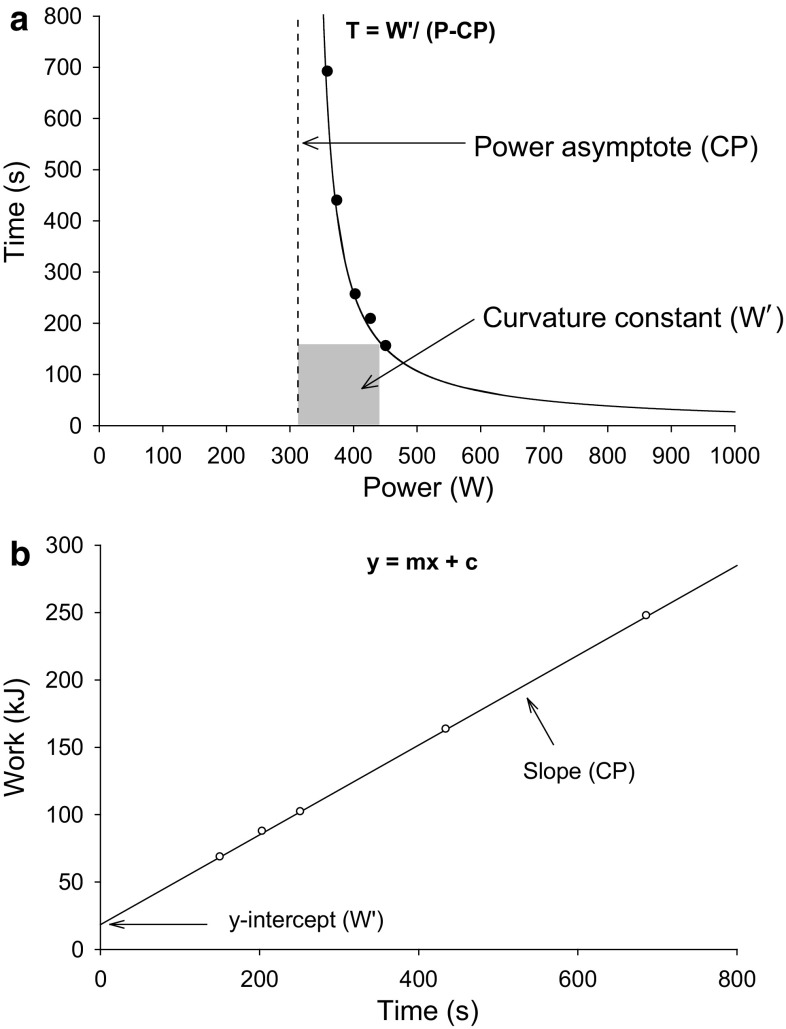
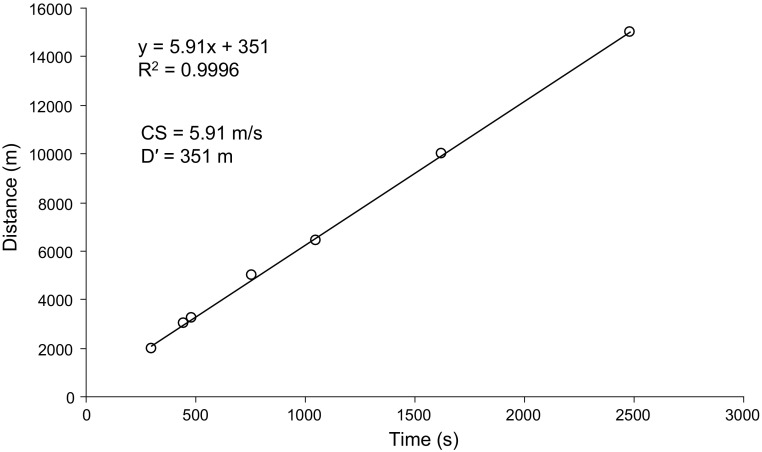
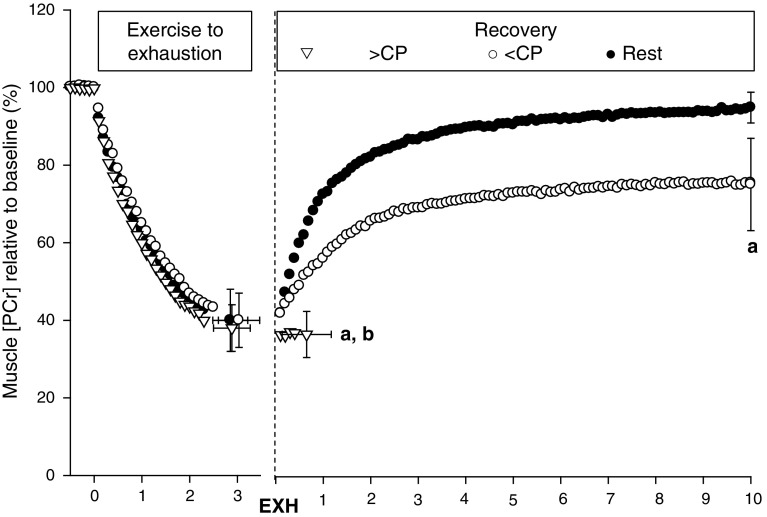
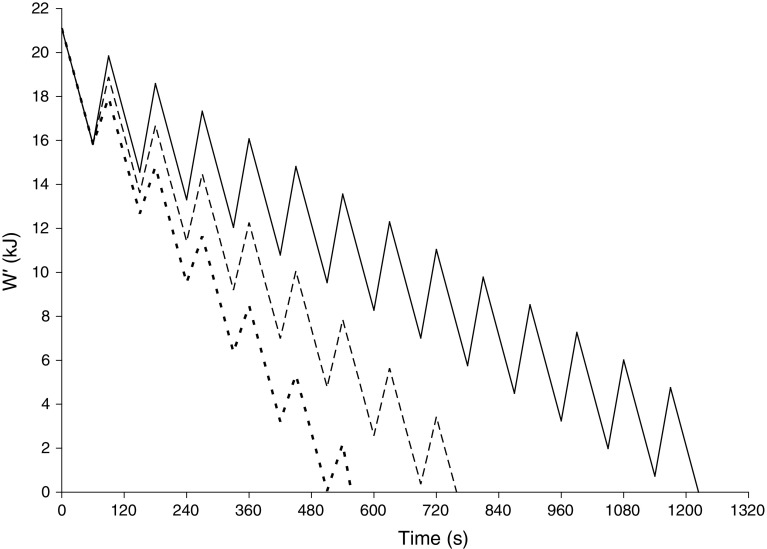
The curvilinear relationship between power output and the time for which it can be sustained is a fundamental and well-known feature of high-intensity exercise performance. This relationship 'levels off' at a 'critical power' (CP) that separates power outputs that can be sustained with stable values of, for example, muscle phosphocreatine, blood lactate, and pulmonary oxygen uptake ([Formula: see text]), from power outputs where these variables change continuously with time until their respective minimum and maximum values are reached and exercise intolerance occurs. The amount of work that can be done during exercise above CP (the so-called W') is constant but may be utilized at different rates depending on the proximity of the exercise power output to CP. Traditionally, this two-parameter CP model has been employed to provide insights into physiological responses, fatigue mechanisms, and performance capacity during continuous constant power output exercise in discrete exercise intensity domains. However, many team sports (e.g., basketball, football, hockey, rugby) involve frequent changes in exercise intensity and, even in endurance sports (e.g., cycling, running), intensity may vary considerably with environmental/course conditions and pacing strategy. In recent years, the appeal of the CP concept has been broadened through its application to intermittent high-intensity exercise. With the assumptions that W' is utilized during work intervals above CP and reconstituted during recovery intervals below CP, it can be shown that performance during intermittent exercise is related to four factors: the intensity and duration of the work intervals and the intensity and duration of the recovery intervals. However, while the utilization of W' may be assumed to be linear, studies indicate that the reconstitution of W' may be curvilinear with kinetics that are highly variable between individuals. This has led to the development of a new CP model for intermittent exercise in which the balance of W' remaining ([Formula: see text]) may be calculated with greater accuracy. Field trials of athletes performing stochastic exercise indicate that this [Formula: see text] model can accurately predict the time at which W' tends to zero and exhaustion is imminent. The [Formula: see text] model potentially has important applications in the real-time monitoring of athlete fatigue progression in endurance and team sports, which may inform tactics and influence pacing strategy.
Overview
The claims and statistics of this paper haven’t been checked yet.
Run the check — free, no account needed. It reads the open-access text and checks the sources it cites.
Integrity signals
Registry
Cites
Statistics
Figures
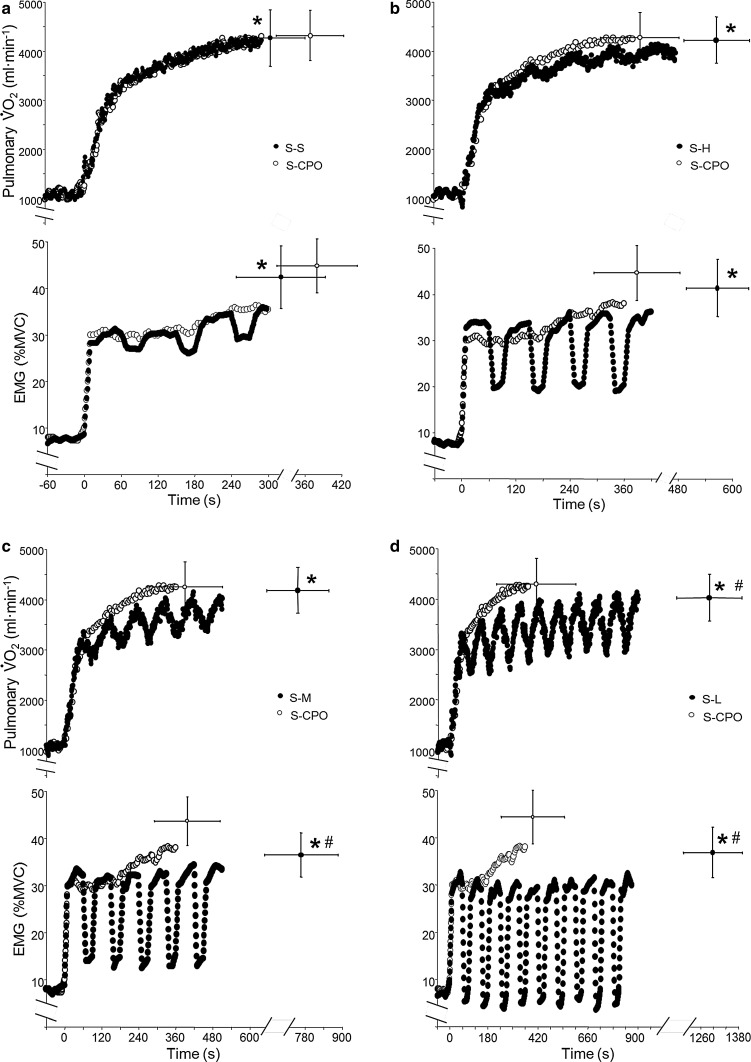
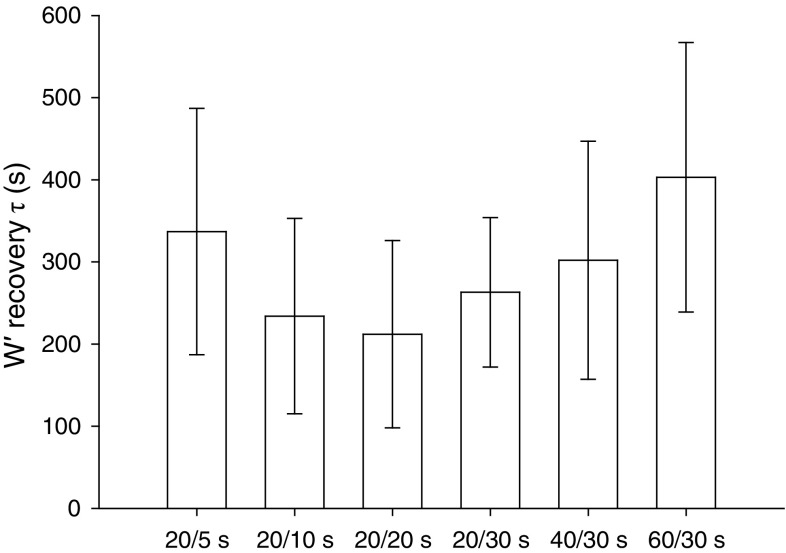
Verification
Claims the paper makes
The claims and statistics of this paper haven’t been checked yet.
Run the check — free, no account needed. It reads the open-access text and checks the sources it cites.
Claims other papers make about this one
Each is checked against this paper’s own text: does it say what the citing paper says it does?
In the citing paper
“Elite athletes sustain ∼96% of CS during the marathon (Jones & Vanhatalo, 2017)”
From Contemporary Nutrition Strategies to Optimize Performance in Distance Runners and Race Walkers (2019) · cites this paper as Jones & Vanhatalo, 2017
Self-check
Percentages, sums and reported differences re-computed from the paper’s own numbers.
The self-check needs the paper’s full text.
Citations
Cites
THE WORK CAPACITY OF A SYNERGIC MUSCULAR GROUP
MONOD, H., & Scherrer, J. (1965) · Ergonomics · doi:10.1080/00140136508930810 · Cited by 903
Metabolic and respiratory profile of the upper limit for prolonged exercise in man
Poole, D. C., Ward, S. A., Gardner, G. W., & Whipp, B. J. (1988) · Ergonomics · doi:10.1080/00140138808966766 · Cited by 780
Critical power as a measure of physical work capacity and anaerobic threshold
MORITANI, T., Nagata, A., DEVRIES, H. A., & Muro, M. (1981) · Ergonomics · doi:10.1080/00140138108924856 · Cited by 578
Critical Power: Implications for Determination of V˙O2max and Exercise Tolerance
JONES, A. M., Vanhatalo, A., Burnley, M., Morton, R. H., & Poole, D. C. (2010) · Medicine & Science in Sports & Exercise · doi:10.1249/mss.0b013e3181d9cf7f · Cited by 551
Self-citationMuscle metabolic responses to exercise above and below the “critical power” assessed using 31 P-MRS
JONES, A. M., Wilkerson, D. P., DiMenna, F. J., Fulford, J., & Poole, D. C. (2007) · American Journal of Physiology-Regulatory, Integrative and Comparative Physiology · doi:10.1152/ajpregu.00731.2007 · Cited by 479
Self-citationOxygen uptake kinetics as a determinant of sports performance
Burnley, M., & JONES, A. M. (2007) · European Journal of Sport Science · doi:10.1080/17461390701456148 · Cited by 468
Self-citationDetermination of Critical Power Using a 3-min All-out Cycling Test
Vanhatalo, A., Doust, J. H., & Burnley, M. (2007) · Medicine & Science in Sports & Exercise · doi:10.1249/mss.0b013e31802dd3e6 · Cited by 357
Slow Component of V˙O2 Kinetics: Mechanistic Bases and Practical Applications
JONES, A. M., GRASSI, B., CHRISTENSEN, P. M., KRUSTRUP, P., BANGSBO, J., & POOLE, D. C. (2011) · Medicine & Science in Sports & Exercise · doi:10.1249/mss.0b013e31821fcfc1 · Cited by 353
Self-citationBlack, M. I., JONES, A. M., Blackwell, J. R., Bailey, S. J., Wylie, L. J., McDonagh, S. T. J., Thompson, C., KELLY, J. A., Sumners, P., Mileva, K. N., et al. (2016) · Journal of Applied Physiology · doi:10.1152/japplphysiol.00942.2016 · Cited by 301
Self-citationA 3-min All-Out Test to Determine Peak Oxygen Uptake and the Maximal Steady State
Burnley, M., Doust, J. H., & Vanhatalo, A. (2006) · Medicine & Science in Sports & Exercise · doi:10.1249/01.mss.0000232024.06114.a6 · Cited by 258
Cited by
Sorted by citations
Items 101–200 of 259
Sex Differences in the Speed–Duration Relationship of Elite Runners across the Lifespan
Fulton, T. J., Sundberg, C. W., Arney, B. E., & Hunter, S. K. (2022) · Medicine & Science in Sports & Exercise · doi:10.1249/mss.0000000000003112 · Cited by 10
Lukasiewicz, C. J., Waterman-Vandiver, K. J., Albert, E. D., Kirby, B. S., & Jacobs, R. A. (2023) · Journal of Applied Physiology · doi:10.1152/japplphysiol.00521.2023 · Cited by 14
Running Critical Power and W´: Influence of the Environment, Timing and Time Trial Order
Ruiz‐Alias, S. A., Ñancupil‐Andrade, A. A., Pérez‐Castilla, A., & García‐Pinillos, F. (2023) · International Journal of Sports Medicine · doi:10.1055/a-2201-7081 · Cited by 10
A submaximal treadmill test to predict critical speed
Follador, L., de Borba, E. F., Neto, A. L. B., & da Silva, S. G. (2020) · Journal of Sports Sciences · doi:10.1080/02640414.2020.1847504 · Cited by 10
Bi-exponential modelling of $$W^{^{\prime}}$$ reconstitution kinetics in trained cyclists
Chorley, A., Bott, R. P., Marwood, S., & Lamb, K. (2021) · European Journal of Applied Physiology · doi:10.1007/s00421-021-04874-3 · Cited by 10
Sports Achievement Prediction and Influencing Factors Analysis Combined with Deep Learning Model
Qi, Z. (2022) · Scientific Programming · doi:10.1155/2022/3547703 · Cited by 11
Kramer, M., du Randt, R., Watson, M., & Pettitt, R. W. (2018) · European Journal of Applied Physiology · doi:10.1007/s00421-018-4047-0 · Cited by 11
Performance prediction, pacing profile and running pattern of elite 1-h track running events
Girardi, M., Gattoni, C., Sponza, L., Marcora, S., & Micklewright, D. P. (2022) · Sport Sciences for Health · doi:10.1007/s11332-022-00945-w · Cited by 9
Comparing Maximal Mean and Critical Speed and Metabolic Powers in Elite and Sub-elite Soccer
Lord, C., Blazevich, A. J., Abbiss, C. R., Drinkwater, E. J., & Ma’ayah, F. (2020) · International Journal of Sports Medicine · doi:10.1055/a-1065-2100 · Cited by 9
Figueiredo, D. H., Figueiredo, D. H., Manoel, F. D. A., & Machado, F. A. (2021) · Frontiers in Physiology · doi:10.3389/fphys.2021.680790 · Cited by 13
Can Popular High-Intensity Interval Training (HIIT) Models Lead to Impossible Training Sessions?
Briand, J., Tremblay, J., & Thibault, G. (2022) · Sports · doi:10.3390/sports10010010 · Cited by 11
Vaccari, F., Stafuzza, J., Giovanelli, N., & Lazzer, S. (2022) · European Journal of Applied Physiology · doi:10.1007/s00421-022-05059-2 · Cited by 8
Acute Oxygen Consumption Response to Fast Start High-Intensity Intermittent Exercise
Miller, P., Perez, N., & Farrell, J. W. (2023) · Sports · doi:10.3390/sports11120238 · Cited by 9
Ravikanti, S., Silang, K. G., Martyn, H. J., Johnson, K. O., Louis, J. B., Bampouras, T. M., Owens, D. J., JONES, A. M., Morton, J. P., & Pugh, J. N. (2025) · Journal of Applied Physiology · doi:10.1152/japplphysiol.00665.2025 · Cited by 8
Self-citationAnaerobic and Aerobic Energy System Contribution During Maximal Exercise: A Systematic Review
Gastin, P. B., & Suppiah, H. T. (2026) · Sports Medicine · doi:10.1007/s40279-026-02414-7 · Cited by 8
Vassallo, C., Gray, A. J., Cummins, C. J., Murphy, A. J., & Waldron, M. (2019) · European Journal of Applied Physiology · doi:10.1007/s00421-019-04266-8 · Cited by 8
Strength-Endurance: Interaction Between Force-Velocity Condition and Power Output
Rivière, J. R., Peyrot, N., Cross, M. R., Messonnier, L. A., & Samozino, P. (2020) · Frontiers in Physiology · doi:10.3389/fphys.2020.576725 · Cited by 8
Green, E. S., Williams, E. R., Feito, Y., & Jenkins, N. T. (2022) · Research Quarterly for Exercise and Sport · doi:10.1080/02701367.2021.1947468 · Cited by 8
Park, C.-H., O'Sullivan, D. M., Kim, M. S., An, Y.-J., & Jung, H. C. (2024) · Journal of Sports Sciences · doi:10.1080/02640414.2024.2416812 · Cited by 7
Mendes, F. M. M., Sanches, P. H. G., Silva, A., dos Reis, I. G. M., Carvalho, P. D. O., Porcari, A. M., & Messias, L. H. D. (2022) · Biology · doi:10.3390/biology11121734 · Cited by 7
Ryoo, H., Cho, S. K.-W., Oh, T., Kim, Y., & Suh, S. (2024) · Frontiers in Physiology · doi:10.3389/fphys.2024.1344340 · Cited by 9
Optimization of the Critical Speed Concept for Tactical Professionals: A Brief Review
Dicks, N. D., & Pettitt, R. W. (2021) · Sports · doi:10.3390/sports9080106 · Cited by 10
Prescription of High-intensity Aerobic Interval Training Based on Oxygen Uptake Kinetics
Festa, R. R., Monsalves‐Álvarez, M., Cancino, J., & Jannas-Vela, S. (2022) · International Journal of Sports Medicine · doi:10.1055/a-1929-0295 · Cited by 9
Can We Accurately Predict Critical Power and W′ from a Single Ramp Incremental Exercise Test?
Caen, K., Bourgois, J., Stuer, L., MERMANS, V., & BOONE, J. (2023) · Medicine & Science in Sports & Exercise · doi:10.1249/mss.0000000000003171 · Cited by 7
Lord, C., Blazevich, A. J., Abbiss, C. R., & Ma’ayah, F. (2020) · Journal of Human Kinetics · doi:10.2478/hukin-2019-0135 · Cited by 7
Herold, J. L., & Sommer, A. (2020) · Sports Engineering · doi:10.1007/s12283-020-00337-8 · Cited by 7
Critical speed estimated by statistically appropriate fitting procedures
Patoz, A., Spicher, R., Pedrani, N., Malatesta, D., & Borrani, F. (2021) · European Journal of Applied Physiology · doi:10.1007/s00421-021-04675-8 · Cited by 7
Patoz, A., Pedrani, N., Spicher, R., Berchtold, A., Borrani, F., & Malatesta, D. (2021) · Frontiers in Physiology · doi:10.3389/fphys.2021.613066 · Cited by 6
Easy Prediction of the Maximal Lactate Steady-State in Young and Older Men and Women
Pogliaghi, S., Teso, M., Ferrari, L., Boone, J., Murias, J. M., & Colosio, A. L. (2023) · Journal of Sports Science and Medicine · doi:10.52082/jssm.2023.68 · Cited by 6
Acute effects of fatigue on internal and external load variables determining cyclists’ power profile
Sánchez‐Jiménez, J. L., Lorente-Casaus, C., Jimenez‐Perez, I., Gandía-Soriano, A., Carpes, F. P., & Priego‐Quesada, J. I. (2023) · Journal of Sports Sciences · doi:10.1080/02640414.2023.2227523 · Cited by 6
Comparison of Physiological Responses between a W´BAL-INT Training Model and a Critical Power Test
Galán‐Rioja, M. Á., González‐Mohíno, F., Abián, J., & González‐Ravé, J. M. (2024) · Journal of Human Kinetics · doi:10.5114/jhk/186976 · Cited by 6
Mirizio, G. G., Muñoz, R., Muñoz, L., Ahumada, F., & Coso, J. D. (2021) · International Journal of Environmental Research and Public Health · doi:10.3390/ijerph18115535 · Cited by 6
Oxygen Uptake at Critical Speed and Power in Running: Perspectives and Practical Applications
Patoz, A., Blokker, T., Pedrani, N., Spicher, R., Borrani, F., & Malatesta, D. (2021) · International Journal of Sports Physiology and Performance · doi:10.1123/ijspp.2021-0207 · Cited by 6
A Comparison of Critical Speed and Critical Power in Runners Using Stryd Running Power
van Rassel, C. R., Sales, K. M., Ajayi, O. O., Nagai, K., & MacInnis, M. J. (2023) · International Journal of Sports Physiology and Performance · doi:10.1123/ijspp.2023-0260 · Cited by 6
A new pathway to approximate energy expenditure and recovery of an athlete
Weigend, F. C., Siegler, J., & Obst, O. (2021) · Genetic and Evolutionary Computation Conference Companion (GECCO Companion) · doi:10.1145/3449726.3459469 · Cited by 6
Critical power: Over 95 years of “evidence” and “evolution”
Gorostiaga, E. M., García-Tabar, I., & Sánchez‐Medina, L. (2022) · Scandinavian Journal of Medicine and Science in Sports · doi:10.1111/sms.14159 · Cited by 6
Wilson, H. K., Bernert, L., Spillane, P., Squires, E., Crawford, L., Piasecki, J., Julian, R., Wilhelm, E. N., Hicks, K. M., & Ansdell, P. (2025) · American Journal of Physiology-Regulatory, Integrative and Comparative Physiology · doi:10.1152/ajpregu.00306.2024 · Cited by 5
Critical Power Is More Strongly Associated With Rowing Performance Than the Second Lactate Threshold
Dwyer, D., Lester, K. D., Siegel, R., Rice, A. J., & Hoffmann, S. M. (2025) · International Journal of Sports Physiology and Performance · doi:10.1123/ijspp.2024-0416 · Cited by 6
Grivas, G. V. (2025) · European Journal of Applied Physiology · doi:10.1007/s00421-025-06085-6 · Cited by 6
Sprint and High-Speed Running in Soccer: Should We Use Absolute or Normalized Thresholds?
Pimenta, R., Antunes, H. D., Maia, F., Ribeiro, J., & Nakamura, F. Y. (2025) · Journal of Human Kinetics · doi:10.5114/jhk/209540 · Cited by 5
Liu, K. C., Sheard, J., Piatrikova, E., Williams, S., Parr, J., Roe, G., Kramer, M., Luna, E., Milton, P., & Frixou, T. (2021) · South African Journal of Sports Medicine · doi:10.17159/2078-516x/2021/v33i1a9738 · Cited by 5
Maunder, E., Rothschild, J. A., Ramonas, A., Delcourt, M., & Kilding, A. E. (2022) · European Journal of Applied Physiology · doi:10.1007/s00421-022-05020-3 · Cited by 5
O'Malley, B. G., Robergs, R. A., & Astorino, T. A. (2024) · Sports Medicine and Health Science · doi:10.1016/j.smhs.2024.02.002 · Cited by 5
Effects of Acute Simulated Altitude on the Maximal Lactate Steady State in Humans
Beever, A. T., Zhuang, A. Y., Murias, J. M., Aboodarda, S. J., & MacInnis, M. J. (2024) · American Journal of Physiology-Regulatory, Integrative and Comparative Physiology · doi:10.1152/ajpregu.00065.2024 · Cited by 5
Jaén‐Carrillo, D., Ruiz‐Alias, S. A., & García‐Pinillos, F. (2025) · European Journal of Applied Physiology · doi:10.1007/s00421-025-05840-z · Cited by 6
Steele, J. R., VanKeersbilck, L., Ward, J., & Hunter, I. (2025) · International Journal of Sports Physiology and Performance · doi:10.1123/ijspp.2025-0218 · Cited by 4
Ding, Q., & Cui, W. (2025) · Energies · doi:10.3390/en18184821 · Cited by 4
Follador, L., de Borba, E. F., & da Silva, S. G. (2021) · Applied Physiology, Nutrition, and Metabolism · doi:10.1139/apnm-2021-0374 · Cited by 5
Miguel‐Ortega, Á., Calleja-González, J., & Mielgo‐Ayuso, J. (2024) · Sport Sciences for Health · doi:10.1007/s11332-024-01261-1 · Cited by 8
Chronic metformin intake improves anaerobic but not aerobic capacity in healthy rats
de Araújo, G. G., LEARSI, S. K., Bastos‐Silva, V. J., Ataíde, T. D. R., & Lima‐Silva, A. E. (2019) · Canadian Journal of Physiology and Pharmacology · doi:10.1139/cjpp-2019-0459 · Cited by 4
Goulding, R. P., Roche, D. M., & Marwood, S. (2021) · European Journal of Applied Physiology · doi:10.1007/s00421-021-04739-9 · Cited by 4
Valenzuela, P. L., Mateo‐March, M., Muriel, X., Zabala, M., Lucia, A., Barranco‐Gil, D., Millet, G. P., Brocherie, F., Burtscher, J., Burtscher, M., et al. (2022) · Journal of Applied Physiology · doi:10.1152/japplphysiol.00224.2022 · Cited by 4
Critical power: Artifact‐based weaknesses
Gorostiaga, E. M., García-Tabar, I., & Sánchez‐Medina, L. (2022) · Scandinavian Journal of Medicine and Science in Sports · doi:10.1111/sms.14260 · Cited by 4
A dynamic model of the bi‐exponential reconstitution and expenditure of W′ in trained cyclists
Chorley, A., Marwood, S., & Lamb, K. (2023) · European Journal of Sport Science · doi:10.1080/17461391.2023.2238679 · Cited by 4
The Relationship Between the Moderate–Heavy Boundary and Critical Speed in Running
Hunter, B., Meyler, S., Maunder, E., Cox, T. H., & Muniz‐Pumares, D. (2024) · International Journal of Sports Physiology and Performance · doi:10.1123/ijspp.2024-0101 · Cited by 4
Effects of Prior Upper Body Exercise on the 3-min All-Out Cycling Test in Men
Johnson, M. A., Williams, N. C., GRAHAM, A. W., Ingram, L., Cooper, S. B., & Sharpe, G. R. (2020) · Medicine & Science in Sports & Exercise · doi:10.1249/mss.0000000000002395 · Cited by 4
Lin, Y., Jin, H., Yan, T., & Kang, J. (2025) · International Journal of Biometeorology · doi:10.1007/s00484-025-02993-6 · Cited by 3
Critical Velocity during Intermittent Running with Changes of Direction
Kirby, B. S., Bradley, E. M., & Wilkins, B. W. (2018) · Medicine & Science in Sports & Exercise · doi:10.1249/mss.0000000000001774 · Cited by 3
Effect of acute heat exposure on the determination of critical power and W′ in women and men
Bourgois, G., Mucci, P., Caen, K., Colosio, A. L., Kerckhove, M., Bourgois, J., Pogliaghi, S., & Boone, J. (2023) · European Journal of Sport Science · doi:10.1080/17461391.2023.2240748 · Cited by 3
Intensity Distribution of Collegiate Cross-Country Competitions
Perez, N., Miller, P., & Farrell, J. W. (2024) · Sports · doi:10.3390/sports12010018 · Cited by 3
Özkaya, Ö., As, H., Peker, A., Burnley, M., & JONES, A. M. (2024) · Medicine & Science in Sports & Exercise · doi:10.1249/mss.0000000000003548 · Cited by 3
Self-citationLipková, L., Struhár, I., Krajňák, J., Puda, D., & Kumstát, M. (2025) · Frontiers in Sports and Active Living · doi:10.3389/fspor.2025.1520914 · Cited by 3
As, H., Çabuk, R., Norouzi, M., Balcı, G. A., & Özkaya, Ö. (2022) · Science & Sports · doi:10.1016/j.scispo.2021.12.009 · Cited by 3
T10 Test as an Alternative Method to Assess Critical Speed and its Potential Application to Runners
de Borba, E. F., Follador, L., Barbosa, S. C., Tartaruga, M. P., & da Silva, S. G. (2022) · Journal of Science in Sport and Exercise · doi:10.1007/s42978-022-00195-9 · Cited by 3
POSTURAL BALANCE ON BASKETBALL INJURIES
Zhang, D., & Feng, W. (2023) · Revista Brasileira de Medicina do Esporte · doi:10.1590/1517-8692202329012022_0749 · Cited by 3
MINAHAN, C. L., & Sabapathy, S. (2023) · Springer eBooks · doi:10.1007/978-3-031-21881-1_9 · Cited by 3
Running work capacity over critical power: a variable rather than a constant parameter
Ruiz‐Alias, S. A., Ñancupil‐Andrade, A. A., Pérez‐Castilla, A., & García‐Pinillos, F. (2024) · Sports Engineering · doi:10.1007/s12283-024-00454-8 · Cited by 3
Functional Speed Reserve as a Proxy for the Anaerobic Speed Reserve Using the Critical Speed Concept
Kramer, M., Thomas, E. J., & van Aswegen, M. (2021) · Annals of Applied Sport Science · doi:10.52547/aassjournal.928 · Cited by 3
Herold, J. L., & Sommer, A. (2020) · European Journal of Applied Physiology · doi:10.1007/s00421-020-04358-w · Cited by 3
Gløersen, Ø. N., Viken, Å., Lund-Hansen, M., & Losnegard, T. (2024) · European Journal of Applied Physiology · doi:10.1007/s00421-024-05531-1 · Cited by 3
The role of coenzyme Q10 in exercise tolerance and muscle strength
Bian, Z., & Wei, L. (2025) · Archives of Physiology and Biochemistry · doi:10.1080/13813455.2025.2507746 · Cited by 4
W′ reconstitution modelling during intermittent exercise performed to task failure
Welburn, A. J., Pugh, C. F., Bailey, S. J., & Ferguson, R. A. (2025) · European Journal of Applied Physiology · doi:10.1007/s00421-025-05912-0 · Cited by 3
Lévénez, M., Lévêque, C., Lafère, C., Guerrero, F., Balestra, C., & Lafère, P. (2025) · Sports · doi:10.3390/sports13100368 · Cited by 2
Evaluating High-Intensity Interval-Training Validity Using Critical Power in Rowing
Dicks, N. D., Phuaklee, P., Ketterling, J. J., & Pettitt, R. W. (2025) · International Journal of Sports Physiology and Performance · doi:10.1123/ijspp.2025-0174 · Cited by 2
Incline dependence of the power-duration relationship in cross-country skiing
Horvath, M., Andersson, E. P., Kölnas, A., Spreitz, A., Boström, H., Sörfeldt, A., & Kuylenstierna, D. (2025) · Frontiers in Physiology · doi:10.3389/fphys.2025.1712475 · Cited by 2
Kontro, H., Mastracci, A., Cheung, S. S., & MacInnis, M. J. (2026) · PLoS ONE · doi:10.1371/journal.pone.0341721 · Cited by 5
Vassallo, C., Kilduff, L. P., Cummins, C. J., Murphy, A. J., Gray, A. J., & Waldron, M. (2021) · European Journal of Sport Science · doi:10.1080/17461391.2021.1931463 · Cited by 3
The effects of menstrual cycle phase on acute critical power testing performance in healthy females
Joniak, K. E., Moore, S. R., Ladan, A. N., Britton, M. L., Cantu, E. I., Wilkins, B. W., & Smith‐Ryan, A. E. (2025) · European Journal of Applied Physiology · doi:10.1007/s00421-025-06000-z · Cited by 2
Hudgins, J. H., Schoeberlein, M. I., & Wilkins, B. W. (2025) · Medicine & Science in Sports & Exercise · doi:10.1249/mss.0000000000003875 · Cited by 2
Weigend, F. C., Clarke, D. C., Obst, O., & Siegler, J. C. (2022) · Annals of Operations Research · doi:10.1007/s10479-022-04947-2 · Cited by 2
Richard, N. A., & Koehle, M. S. (2022) · Sports Medicine - Open · doi:10.1186/s40798-022-00430-1 · Cited by 5
Raimundo, J. A. G., de Aguiar, R. A., Lisbôa, F. D., Ribeiro, G., & Caputo, F. (2022) · Frontiers in Physiology · doi:10.3389/fphys.2022.952818 · Cited by 2
Running Functional Threshold versus Critical Power: Same Concept but Different Values
Ñancupil‐Andrade, A. A., Ruiz‐Alias, S. A., Pérez‐Castilla, A., Jaén‐Carrillo, D., & García‐Pinillos, F. (2023) · International Journal of Sports Medicine · doi:10.1055/a-2155-6813 · Cited by 2
Farklı Tükenme Aralıkları ve Matematiksel Model Kullanımının Kritik Güç Tahminlerine Etkisi
NOROUZI, M., Çabuk, R., Balcı, G. A., As, H., & Özkaya, Ö. (2021) · Spor Bilimleri Dergisi · doi:10.17644/sbd.931304 · Cited by 2
Classification of Male Athletes Based on Critical Power
Olaya-Cuartero, J., Pueo, B., Penichet-Tomás, A., & Jiménez-Olmedo, J. M. (2024) · International Journal of Sports Medicine · doi:10.1055/a-2265-2303 · Cited by 1
Tsai, M., Thomas, S. G., & Klimstra, M. D. (2024) · Algorithms · doi:10.3390/a17110532 · Cited by 1
Barbosa, S. C., Coledam, D. H. C., de Borba, E. F., Franciscon, C., & da Silva, S. G. (2024) · Journal of Bodywork and Movement Therapies · doi:10.1016/j.jbmt.2024.12.027 · Cited by 1
Distance Capacity Above the Critical Speed and Speed Reserves: are they Related?
Lanzarini, L. D. V., Borszcz, F. K., Lana, I. D., Turnes, T., Ventura, T. P., McGawley, K., & de Lucas, R. D. (2025) · International Journal of Sports Medicine · doi:10.1055/a-2595-3199 · Cited by 1
Jaén‐Carrillo, D., Lawley, J. S., Rubio-Peirotén, A., & Cartón-Llorente, A. (2025) · International Journal of Sports Science & Coaching · doi:10.1177/17479541251345777 · Cited by 1
The Effectiveness of Interval Training on Endurance Improvement in Adolescent Tennis Players
Azis, I., Yusnadi, Y., & Hasyim, M. Q. (2024) · ETDC Indonesian Journal of Research and Educational Review · doi:10.51574/ijrer.v4i1.3416 · Cited by 1
Astridge, D. J., Bartram, J. C., Peeling, P., Goods, P. S. R., Girard, O., & Binnie, M. J. (2025) · International Journal of Sports Physiology and Performance · doi:10.1123/ijspp.2025-0057 · Cited by 1
Schoeberlein, M. I., Hudgins, J. H., DeVelasco, O., & Wilkins, B. W. (2025) · Journal of Applied Physiology · doi:10.1152/japplphysiol.00913.2025 · Cited by 2
Ten Common Criticisms of the Critical Power Model Revisited
Black, M. I., Burnley, M., Skiba, P. F., Poole, D. C., Vanhatalo, A., & JONES, A. M. (2026) · International Journal of Sports Medicine · doi:10.1055/a-2913-0037 · Cited by 1
Self-citationCritical velocity during judo-specific throwing exercise (nage-komi)
Franchini, É., Shiroma, S. A., & Júlio, U. F. (2018) · Sport Sciences for Health · doi:10.1007/s11332-018-0500-z · Cited by 1
Response to commentary on: “Over 55 years of critical power: Fact or artifact?”
Gorostiaga, E. M., García-Tabar, I., & Sánchez‐Medina, L. (2022) · Scandinavian Journal of Medicine and Science in Sports · doi:10.1111/sms.14124 · Cited by 1
Critical power as a fatigue threshold in sports: A scoping review
Saif, A., Khan, Z., & Parveen, A. (2022) · Science & Sports · doi:10.1016/j.scispo.2021.05.010 · Cited by 1
(2019) · Swiss Sports & Exercise Medicine · doi:10.34045/ssem/2019/1 · Cited by 1
A 3‐minute recumbent stepper test in chronic stroke
Carl, D., Whitesel, D., Meyrose, C., Westover, J., Khoury, J. C., Gerson, M. C., D, B. M. K. M., Dunning, K. K., & Boyne, P. (2022) · PM&R · doi:10.1002/pmrj.12940 · Cited by 1
Comparison of different models of Wʹ balance in high-level road cycling races
Millour, G., Lajoie, C., & Domingue, F. (2022) · International Journal of Performance Analysis in Sport · doi:10.1080/24748668.2023.2176100 · Cited by 1
W Prime: Evidence-Based Proposal for a New Predictor of Gait Speed in Older Women
Júnior, G. N. D. O., de Sousa, J. D. F. R., Carneiro, M. A. S., Martins, F. M., Santagnello, S. B., Nomelini, R. S., Assumpção, C. D. O., Souza, M. V. C., & Orsatti, F. L. (2023) · Muscles · doi:10.3390/muscles2030022 · Cited by 1
Metadata
- Authors
- Jones, A. M., & Vanhatalo, A.
- Affiliations
- University of Exeter (GB)
- Corresponding author
- Jones, Andrew M.
- Venue
- Sports Medicine
- Published
- 2017-03
- Volume
- 47
- Issue
- S1
- Pages
- 65-78
- ISSN
- 0112-1642 (ISSN-L)
- 1179-2035
- PMC
- PMC5371646
- OpenAlex
- W2598090454
- Cited by
- 259
- References
- 62
- Citations by year
- 2026: 24 · 2025: 36 · 2024: 32 · 2023: 26 · 2022: 36 · 2021: 37 · 2020: 36 · 2019: 15 · 2018: 15 · 2017: 2
- FWCI
- 3.35
- Type
- journal article
- Language
- en
- Open access
- hybrid
- doi.org
- Locations
- Sports Medicine (publishedVersion, cc-by)
- PubMed Central (publishedVersion, cc-by)
- PubMed (publishedVersion)
- Funders
- PepsiCo
- Gran Sasso Science Institute
- Topics
- Health Sciences › Medicine › Orthopedics and Sports Medicine › Sports Performance and Training
- Health Sciences › Medicine › Physiology (medical) › Cardiovascular and exercise physiology
- Social Sciences › Psychology › Developmental and Educational Psychology › Sport Psychology and Performance
- Keywords
- critical power, high-intensity intermittent exercise, work capacity, team sports, endurance sports, pacing strategy, fatigue monitoring, exercise intolerance, phosphocreatine, blood lactate, pulmonary oxygen uptake
- MeSH terms
- Exercise Test, Humans, Oxygen Consumption, Physical Endurance, Exercise, Athletic Performance
About these checks
Registry, retraction, Cites and statistics results are computed, not judged, with one exception: a printed reference that no index lists is read once by a model before it counts as a citation error. Claims are extracted by a model and kept only when their quote appears verbatim in the text; each cited source is then checked, with a model’s help, for whether it says what the claim relies on. Those verdicts can be wrong — read the claim’s quote and the cited source before relying on one.
Statistics and arithmetic are recomputed, not judged.
Confidence bands are shown only for fields calibrated on our annotated test set. None is calibrated yet, so no band is shown.
What counts as a claim ›How we measure confidence ›How we check this ›
Are you an author, or do you see a problem with this page? Request a review
