

The DOI matches its Crossref record; 77 of the 77 references it cites were found in a registry or an index.
Effect of Immobilisation on Neuromuscular Function In Vivo in Humans: A Systematic Review
Open accessAbstract
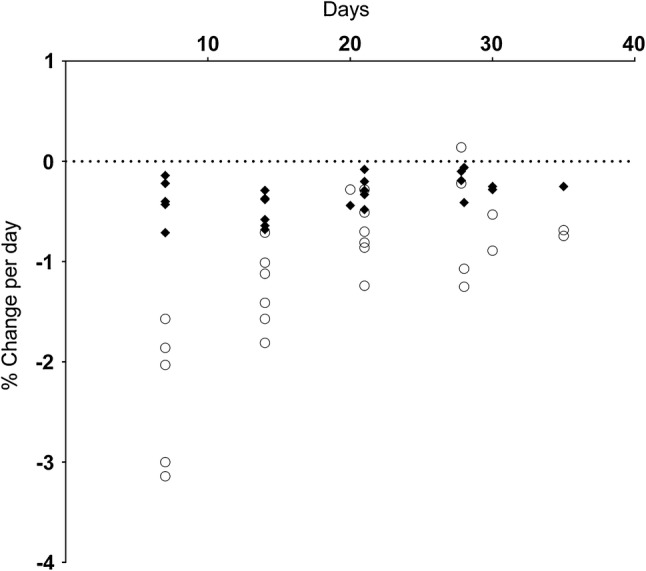
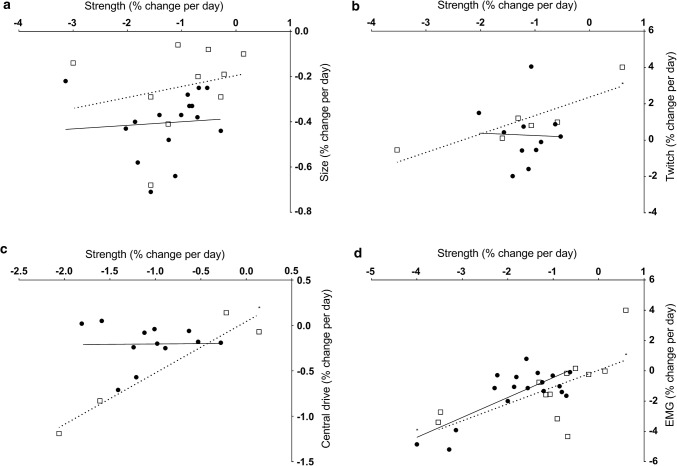
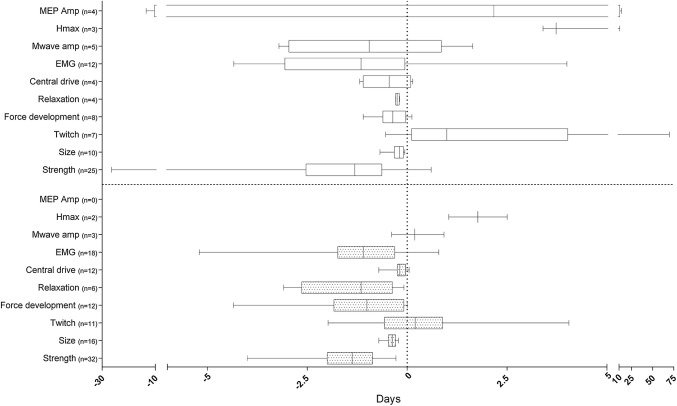
BACKGROUND: Muscle strength loss following immobilisation has been predominantly attributed to rapid muscle atrophy. However, this cannot fully explain the magnitude of muscle strength loss, so changes in neuromuscular function (NMF) may be involved. OBJECTIVES: We systematically reviewed literature that quantified changes in muscle strength, size and NMF following periods of limb immobilisation in vivo in humans. METHODS: Studies were identified following systematic searches, assessed for inclusion, data extracted and quality appraised by two reviewers. Data were tabulated and reported narratively. RESULTS: Forty eligible studies were included, 22 immobilised lower and 18 immobilised upper limbs. Limb immobilisation ranged from 12 h to 56 days. Isometric muscle strength and muscle size declined following immobilisation; however, change magnitude was greater for strength than size. Evoked resting twitch force decreased for lower but increased for upper limbs. Rate of force development either remained unchanged or slowed for lower and typically slowed for upper limbs. Twitch relaxation rate slowed for both lower and upper limbs. Central motor drive typically decreased for both locations, while electromyography amplitude during maximum voluntary contractions decreased for the lower and presented mixed findings for the upper limbs. Trends imply faster rates of NMF loss relative to size earlier in immobilisation periods for all outcomes. CONCLUSIONS: Limb immobilisation results in non-uniform loss of isometric muscle strength, size and NMF over time. Different outcomes between upper and lower limbs could be attributed to higher degrees of central neural control of upper limb musculature. Future research should focus on muscle function losses and mechanisms following acute immobilisation. REGISTRATION: PROSPERO reference: CRD42016033692.
Overview
The claims and statistics of this paper haven’t been checked yet.
Run the check — free, no account needed. It reads the open-access text and checks the sources it cites.
Integrity signals
Registry
Cites
Statistics
Figures
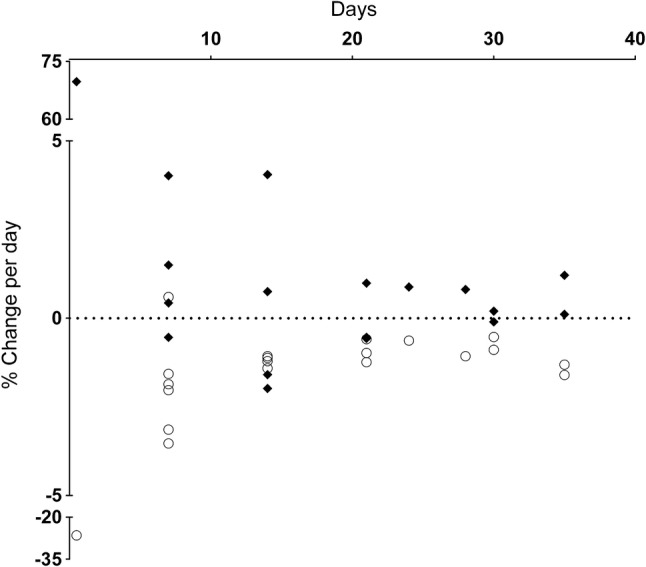
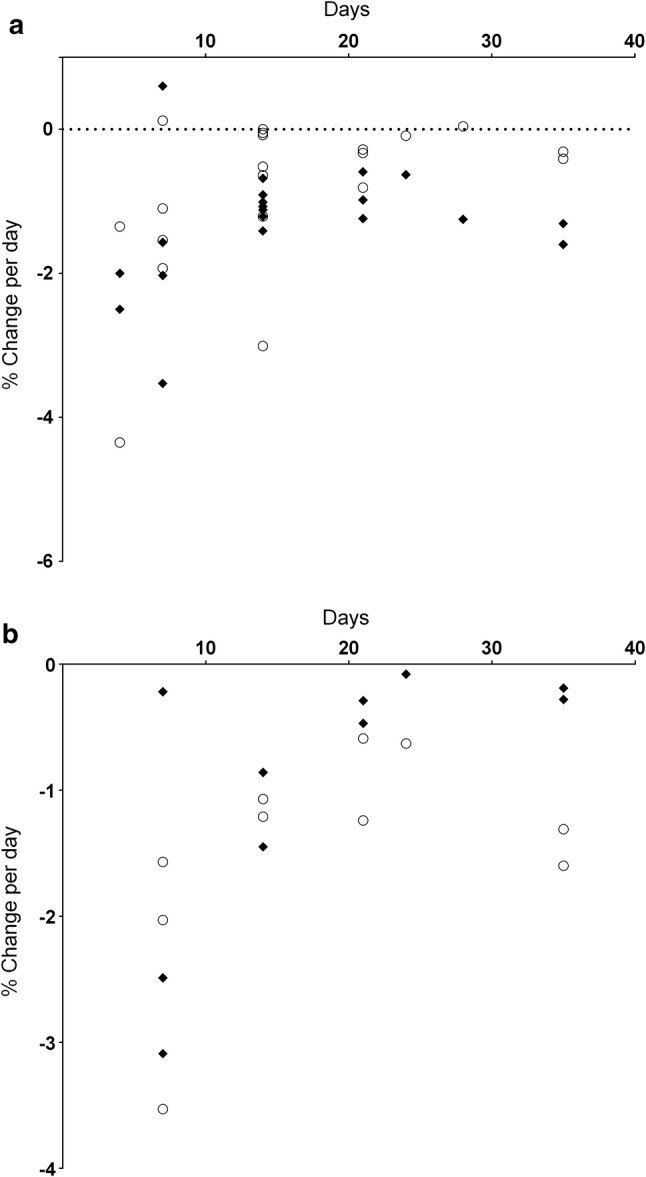
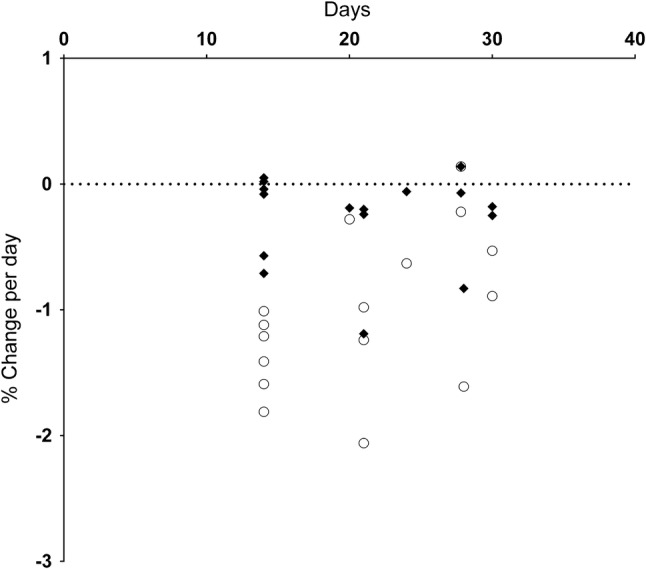
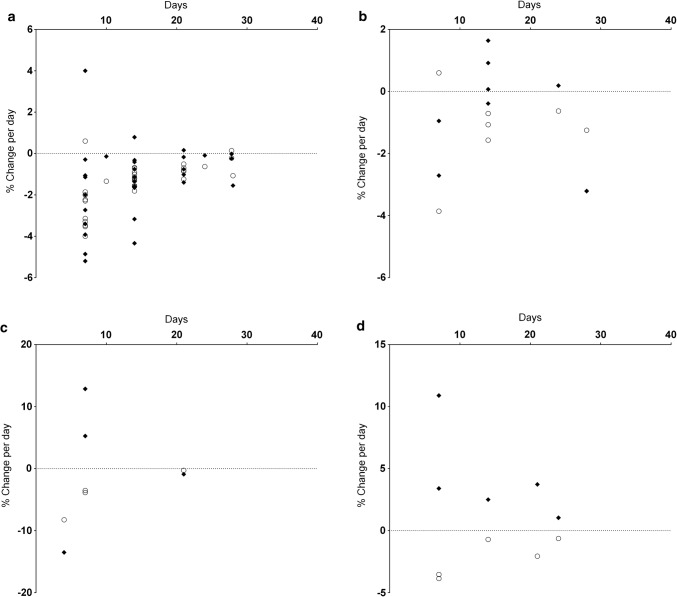
Verification
Claims the paper makes
The claims and statistics of this paper haven’t been checked yet.
Run the check — free, no account needed. It reads the open-access text and checks the sources it cites.
Claims other papers make about this one
Each is checked against this paper’s own text: does it say what the citing paper says it does?
The source backs part of the claim, not all of it — or backs it for a different population, condition or comparison.
In the citing paper
“These suggest a greater contribution of neuromuscular function loss to declines in strength in the initial period(s) of limb unloading, while changes in muscle size dominate in the later stages (68).”
From Nonuniform loss of muscle strength and atrophy during bed rest: a systematic review (2021) · cites this paper as [68]
Experimental — accuracy not yet measuredThe cited source says what the claim attributes to it.
In the citing paper
“Greatest rate of changes in muscle strength and size occurred in the earliest stages of disuse/mechanical unloading, as noted by others (68, 69).”
From Nonuniform loss of muscle strength and atrophy during bed rest: a systematic review (2021) · cites this paper as [68]
Self-check
Percentages, sums and reported differences re-computed from the paper’s own numbers.
The self-check needs the paper’s full text.
Citations
Cites
Preferred Reporting Items for Systematic Reviews and Meta-Analyses: the PRISMA statement
Moher, D., Liberati, A., Tetzlaff, J., Altman, D. G., & for the PRISMA Group (2009) · BMJ · doi:10.1136/bmj.b2535 · Cited by 83,823
Preferred Reporting Items for Systematic Reviews and Meta-Analyses: The PRISMA Statement
Moher, D., Liberati, A., Tetzlaff, J., Altman, D. G., & The PRISMA Group (2009) · PLoS Medicine · doi:10.1371/journal.pmed.1000097 · Cited by 64,042
Preferred reporting items for systematic reviews and meta-analyses: The PRISMA statement
Moher, D., Liberati, A., Tetzlaff, J., Altman, D. G., & the PRISMA Group* (2009) · Annals of Internal Medicine · doi:10.7326/0003-4819-151-4-200908180-00135 · Cited by 37,554
Wang, G., Ma, R., Qiao, G., Wada, K., Aizawa, Y., & Satoh, T. (2015) · Integrative Medicine International · doi:10.1159/000368408 · Cited by 18,657
Calcium's Role in Mechanotransduction during Muscle Development
Benavides Damm, T., & Egli, M. (2014) · Cellular Physiology and Biochemistry · doi:10.1159/000356667 · Cited by 14,502
Thomas, B. H., Ciliska, D., Dobbins, M., & Micucci, S. (2004) · Worldviews on Evidence-Based Nursing · doi:10.1111/j.1524-475x.2004.04006.x · Cited by 2,118
Skeletal muscle loss: cachexia, sarcopenia, and inactivity
Evans, W. J. (2010) · American Journal of Clinical Nutrition · doi:10.3945/ajcn.2010.28608a · Cited by 762
Stimulation of the human motor cortex through the scalp
Rothwell, J. C., Thompson, P. D., Day, B. L., Boyd, S. G., & MARSDEN, C. D. (1991) · Experimental Physiology · doi:10.1113/expphysiol.1991.sp003485 · Cited by 674
Physiological cross‐sectional area of human leg muscles based on magnetic resonance imaging
Fukunaga, T., Roy, R. R., Shellock, F. G., Hodgson, J. A., Day, M. K., Lee, P. L., Kwong-Fu, H. H., & Edgerton, V. R. (1992) · Journal of Orthopaedic Research® · doi:10.1002/jor.1100100623 · Cited by 531
Effects of aging on human skeletal muscle after immobilization and retraining
Suetta, C., Hvid, L. G., Justesen, L., Christensen, U., Neergaard, K., Simonsen, L., Ortenblad, N., Magnusson, S. P., Kjaer, M., & Aagaard, P. (2009) · Journal of Applied Physiology · doi:10.1152/japplphysiol.00290.2009 · Cited by 400
Hortobágyi, T., Dempsey, L. E., Fraser, D. D., Zheng, D., Hamilton, G., Lambert, J., & Dohm, L. (2000) · The Journal of Physiology · doi:10.1111/j.1469-7793.2000.00293.x · Cited by 374
Boer, M. D. D., Selby, A., Atherton, P. J., Smith, K., Seynnes, O., Maganaris, C. N., Maffulli, N., Movin, T., Narici, M. V., & Rennie, M. J. (2007) · The Journal of Physiology · doi:10.1113/jphysiol.2007.142828 · Cited by 357
Effect of limb immobilization on skeletal muscle
Booth, F. W. (1982) · Journal of Applied Physiology · doi:10.1152/jappl.1982.52.5.1113 · Cited by 331
Boer, M. D. D., Maganaris, C. N., Seynnes, O., Rennie, M. J., & Narici, M. V. (2007) · The Journal of Physiology · doi:10.1113/jphysiol.2007.135392 · Cited by 295
Neural control of lengthening contractions
Duchateau, J., & Enoka, R. M. (2016) · Journal of Experimental Biology · doi:10.1242/jeb.123158 · Cited by 250
Nutritional strategies to attenuate muscle disuse atrophy
Wall, B. T., & van Loon, L. J. (2013) · Nutrition Reviews · doi:10.1111/nure.12019 · Cited by 228
Rehabilitation for ankle fractures in adults
Lin, C. C., Donkers, N. A. J., Refshauge, K. M., Beckenkamp, P. R., Khera, K., & Moseley, A. M. (2012) · Cochrane Database of Systematic Reviews · doi:10.1002/14651858.cd005595.pub3 · Cited by 199
Hvid, L., Aagaard, P., Justesen, L., Bayer, M. L., Andersen, J. L., Ørtenblad, N., Kjaer, M., & Suetta, C. (2010) · Journal of Applied Physiology · doi:10.1152/japplphysiol.00637.2010 · Cited by 195
Suetta, C., Frandsen, U., Mackey, A. L., Jensen, L., Hvid, L. G., Bayer, M. L., Petersson, S. J., Schrøder, H. D., Andersen, J. L., Aagaard, P., et al. (2013) · The Journal of Physiology · doi:10.1113/jphysiol.2013.257121 · Cited by 192
Neural factors account for strength decrements observed after short-term muscle unloading
Deschenes, M. R., Giles, J. A., McCoy, R. W., Volek, J. S., Gómez, A. L., & Kraemer, W. J. (2002) · American Journal of Physiology-Regulatory, Integrative and Comparative Physiology · doi:10.1152/ajpregu.00386.2001 · Cited by 173
Physiologic and Biochemical Effects of Immobilization on Muscle
Booth, F. W. (1987) · Clinical Orthopaedics and Related Research · doi:10.1097/00003086-198706000-00004 · Cited by 171
Aging Affects the Transcriptional Regulation of Human Skeletal Muscle Disuse Atrophy
Suetta, C., Frandsen, U., Jensen, L., Jensen, M. M., Jespersen, J. G., Hvid, L. G., Bayer, M. L., Petersson, S. J., Schrøder, H. D., Andersen, J. L., et al. (2012) · PLoS ONE · doi:10.1371/journal.pone.0051238 · Cited by 164
The Effect of Limb Immobilization on Muscle Function and Protein Composition
Jokl, P., & Konstadt, S. N. (1983) · Clinical Orthopaedics and Related Research · doi:10.1097/00003086-198304000-00033 · Cited by 157
Cross-sectional area of the thigh muscle in man measured by computed tomography
Häggmark, T., Jansson, E., & Svane, B. (1978) · Scandinavian Journal of Clinical and Laboratory Investigation · doi:10.3109/00365517809108434 · Cited by 151
Neuromuscular adaptation in human thenar muscles following strength training and immobilization
SALE, D. G., McComas, A. J., MacDOUGALL, J. D., & Upton, A. R. M. (1982) · Journal of Applied Physiology · doi:10.1152/jappl.1982.53.2.419 · Cited by 142
Hypertrophy of chronically unloaded muscle subjected to resistance exercise
Tesch, P. A., Trieschmann, J., & Ekberg, A. (2004) · Journal of Applied Physiology · doi:10.1152/japplphysiol.01051.2003 · Cited by 141
The power of the mind: the cortex as a critical determinant of muscle strength/weakness
Clark, B. C., Mahato, N. K., Nakazawa, M., Law, T., & Thomas, J. S. (2014) · Journal of Neurophysiology · doi:10.1152/jn.00386.2014 · Cited by 132
In Vivo Alterations in Skeletal Muscle Form and Function after Disuse Atrophy
CLARK, B. C. (2009) · Medicine & Science in Sports & Exercise · doi:10.1249/mss.0b013e3181a645a6 · Cited by 131
Changes in muscle function in response to 10 days of lower limb unloading in humans
Berg, H. E., & Tesch, P. A. (1996) · Acta Physiologica Scandinavica · doi:10.1046/j.1365-201x.1996.476217000.x · Cited by 129
Aging impairs the recovery in mechanical muscle function following 4days of disuse
Hvid, L. G., Suetta, C., Nielsen, J., Jensen, M. M., Frandsen, U., Ørtenblad, N., Kjær, M., & Aagaard, P. (2014) · Experimental Gerontology · doi:10.1016/j.exger.2014.01.012 · Cited by 127
Strength training the free limb attenuates strength loss during unilateral immobilization
Farthing, J. P., Krentz, J. R., & Magnus, C. R. A. (2009) · Journal of Applied Physiology · doi:10.1152/japplphysiol.91331.2008 · Cited by 121
Resistance training preserves skeletal muscle function during unloading in humans
SCHULZE, K. E., Gallagher, P. M., & Trappe, S. W. (2002) · Medicine & Science in Sports & Exercise · doi:10.1097/00005768-200202000-00019 · Cited by 120
Pearce, A., Hendy, A. M., Bowen, W., & Kidgell, D. (2013) · Scandinavian Journal of Medicine & Science in Sports · doi:10.1111/j.1600-0838.2012.01453.x · Cited by 113
Measurement of human muscle volume using ultrasonography
Esformes, J. I., Narici, M. V., & Maganaris, C. N. (2002) · European Journal of Applied Physiology · doi:10.1007/s00421-002-0592-6 · Cited by 113
Central nervous adaptations following 1 wk of wrist and hand immobilization
Lundbye‐Jensen, J., & Nielsen, J. B. (2008) · Journal of Applied Physiology · doi:10.1152/japplphysiol.00687.2007 · Cited by 108
Immobilization induces changes in presynaptic control of group Ia afferents in healthy humans
Lundbye‐Jensen, J., & Nielsen, J. B. (2008) · The Journal of Physiology · doi:10.1113/jphysiol.2008.156547 · Cited by 108
Cross education and immobilisation: Mechanisms and implications for injury rehabilitation
Hendy, A. M., Spittle, M., & Kidgell, D. J. (2011) · Journal of science and medicine in sport · doi:10.1016/j.jsams.2011.07.007 · Cited by 105
Neuromuscular plasticity during and following 3 wk of human forearm cast immobilization
Clark, B. C., Issac, L. C., Lane, J. L., Damron, L. A., & Hoffman, R. L. (2008) · Journal of Applied Physiology · doi:10.1152/japplphysiol.90530.2008 · Cited by 91
Cook, S. B., Brown, K., DeRuisseau, K. C., Kanaley, J. A., & Ploutz‐Snyder, L. L. (2010) · Journal of Applied Physiology · doi:10.1152/japplphysiol.01288.2009 · Cited by 90
Magnus, C. R. A., Barss, T. S., Lanovaz, J. L., & Farthing, J. P. (2010) · Journal of Applied Physiology · doi:10.1152/japplphysiol.00597.2010 · Cited by 90
Skeletal muscle adaptations to physical inactivity and subsequent retraining in young men
Campbell, E. L., Seynnes, O., Bottinelli, R., McPhee, J. S., Atherton, P. J., Jones, D. A., Butler-Browne, G. S., & Narici, M. V. (2013) · Biogerontology · doi:10.1007/s10522-013-9427-6 · Cited by 89
Effects of ageing on single muscle fibre contractile function following short‐term immobilisation
Hvid, L. G., Ørtenblad, N., Aagaard, P., Kjaer, M., & Suetta, C. (2011) · The Journal of Physiology · doi:10.1113/jphysiol.2011.215434 · Cited by 88
Resting injured limbs delays recovery: a systematic review.
Nash, C. E., Mickan, S. M., Mar, C. D., & Glasziou, P. (2004) · PubMed · Cited by 88
Effects of joint immobilization on firing rate modulation of human motor units
Seki, K., Taniguchi, Y., & Narusawa, M. (2001) · The Journal of Physiology · doi:10.1111/j.1469-7793.2001.0507k.x · Cited by 87
Early structural adaptations to unloading in the human calf muscles
Seynnes, O., Maganaris, C. N., Boer, M. D. D., di Prampero, P. E., & Narici, M. V. (2008) · Acta Physiologica · doi:10.1111/j.1748-1716.2008.01842.x · Cited by 85
Farthing, J. P., Krentz, J. R., Magnus, C. R. A., Barss, T. S., Lanovaz, J. L., Cummine, J., Esopenko, C., Sarty, G. E., & Borowsky, R. (2011) · Medicine & Science in Sports & Exercise · doi:10.1249/mss.0b013e318210783c · Cited by 77
Alterations in contractile properties of human skeletal muscle induced by joint immobilization
Seki, K., Taniguchi, Y., & Narusawa, M. (2001) · The Journal of Physiology · doi:10.1111/j.1469-7793.2001.0521k.x · Cited by 71
Adaptations to Short-Term Muscle Unloading in Young and Aged Men
Deschenes, M. R., Holdren, A. N., & McCoy, R. W. (2008) · Medicine & Science in Sports & Exercise · doi:10.1249/mss.0b013e318164f4b6 · Cited by 70
Four days of muscle disuse impairs single fiber contractile function in young and old healthy men
Hvid, L. G., Suetta, C., Aagaard, P., Kjær, M., Frandsen, U., & Ørtenblad, N. (2012) · Experimental Gerontology · doi:10.1016/j.exger.2012.11.005 · Cited by 70
Adaptation of the Skeletal System During Long-Duration Spaceflight
Sibonga, J. D., Cavanagh, P. R., Lang, T. F., LeBlanc, A. D., Schneider, V. S., Shackelford, L. C., Smith, S. M., & Vico, L. (2007) · Clinical Reviews in Bone and Mineral Metabolism · doi:10.1007/s12018-008-9012-8 · Cited by 67
Yue, G. H., Bilodeau, M., Hardy, P., & Enoka, R. M. (1997) · Experimental Physiology · doi:10.1113/expphysiol.1997.sp004048 · Cited by 67
Oates, B. R., Glover, E. I., West, D. W. D., Fry, J. L., Tarnopolsky, M. A., & Phillips, S. M. (2010) · Muscle & Nerve · doi:10.1002/mus.21721 · Cited by 64
Cast immobilization increases long‐interval intracortical inhibition
Clark, B. C., Taylor, J. L., Hoffman, R. L., Dearth, D. J., & Thomas, J. S. (2010) · Muscle & Nerve · doi:10.1002/mus.21694 · Cited by 63
Immobilization effects in young and older adults
Urso, M. L., Clarkson, P. M., & Price, T. B. (2005) · European Journal of Applied Physiology · doi:10.1007/s00421-005-0109-1 · Cited by 58
Ngomo, S., Léonard, G., & Mercier, C. (2012) · Neuroscience · doi:10.1016/j.neuroscience.2012.06.018 · Cited by 58
White, M. J., Davies, C. T. M., & Brooksby, P. (1984) · Quarterly Journal of Experimental Physiology · doi:10.1113/expphysiol.1984.sp002860 · Cited by 57
Gender influences neuromuscular adaptations to muscle unloading
Deschenes, M. R., McCoy, R. W., Holdren, A. N., & Eason, M. K. (2009) · European Journal of Applied Physiology · doi:10.1007/s00421-008-0974-5 · Cited by 56
Fuglevand, A. J., Bilodeau, M., & Enoka, R. M. (1995) · Journal of Applied Physiology · doi:10.1152/jappl.1995.78.3.847 · Cited by 51
Neural activation of the triceps surae is impaired following 2�weeks of immobilization
Gondin, J., Guette, M., Maffiuletti, N. A., & Martin, A. (2004) · European Journal of Applied Physiology · doi:10.1007/s00421-004-1225-z · Cited by 47
Seki, K., Kizuka, T., & Yamada, H. (2006) · Journal of Electromyography and Kinesiology · doi:10.1016/j.jelekin.2005.10.008 · Cited by 46
May bed rest cause greater muscle loss than limb immobilization?
Dirks, M. L., Backx, E. M. P., Wall, B. T., Verdijk, L. B., & van Loon, L. J. C. (2016) · Acta Physiologica · doi:10.1111/apha.12699 · Cited by 37
Factors relating to gender specificity of unloading‐induced declines in strength
Deschenes, M. R., McCoy, R. W., & Mangis, K. A. (2012) · Muscle & Nerve · doi:10.1002/mus.23289 · Cited by 35
Seynnes, O., Maffiuletti, N. A., Horstman, A. M. H., & Narici, M. V. (2009) · Muscle & Nerve · doi:10.1002/mus.21228 · Cited by 32
Neuromuscular function following muscular unloading and blood flow restricted exercise
Cook, S. B., Kanaley, J. A., & Ploutz‐Snyder, L. L. (2014) · European Journal of Applied Physiology · doi:10.1007/s00421-014-2864-3 · Cited by 32
Davies, C. T. M., Rutherford, I. C., & Thomas, D. O. (1987) · European Journal of Applied Physiology · doi:10.1007/bf00690897 · Cited by 31
Dimitrov, G. V., & Dimitrova, N. A. (1979) · PubMed · Cited by 29
Effect of hindlimb immobilization upon skeleton muscle calcium in rat
Booth, F. W., & Cl, G. (1973) · Calcified Tissue International · doi:10.1007/bf02015423 · Cited by 28
Rehabilitation for ankle fractures in adults
Lin, C. C., Moseley, A. M., & Refshauge, K. M. (2008) · Cochrane Database of Systematic Reviews · doi:10.1002/14651858.cd005595.pub2 · Cited by 28
Seynnes, O., Maffiuletti, N. A., Maganaris, C. N., Boer, M. D. D., Pensini, M., di Prampero, P. E., & Narici, M. V. (2008) · Acta Physiologica · doi:10.1111/j.1748-1716.2008.01874.x · Cited by 25
Horstman, A. M. H., de Ruiter, C. J., van Duijnhoven, N. T. L., Hopman, M. T. E., & HAAN, A. D. (2011) · European Journal of Applied Physiology · doi:10.1007/s00421-011-1958-4 · Cited by 24
Vaughan, V. G. (1989) · Physical Therapy · doi:10.1093/ptj/69.2.119 · Cited by 19
Rehabilitation for ankle fractures in adults (Cochrane review)
Lin, C. C., Moseley, A. M., & Refshauge, K. M. (2008) · Cochrane Database of Systematic Reviews · Cited by 12
Inada, T., Kaneko, F., & 速水, 達. (2016) · Journal of Electromyography and Kinesiology · doi:10.1016/j.jelekin.2016.01.006 · Cited by 11
Hotta, N., Ishida, K., Sato, K., Koike, T., Katayama, K., & Akima, H. (2011) · Journal of PHYSIOLOGICAL ANTHROPOLOGY · doi:10.2114/jpa2.30.29 · Cited by 10
Two-weeks of elbow immobilization affects torque production but does not change muscle activation
Karolczak, A. P. B., Diefenthaeler, F., Geremia, J. M., & Vaz, M. A. (2009) · Brazilian Journal of Physical Therapy · doi:10.1590/s1413-35552009005000050 · Cited by 9
Deschenes, M. R., McCoy, R. W., Davis, J. M., McGinn, M. C., & Eason, M. K. (2009) · American Journal of Physical Medicine & Rehabilitation · doi:10.1097/phm.0b013e3181911198 · Cited by 8
Early plasticity of human skeletal muscle in response to disuse
Hvid, L. G. (2014) · Acta Physiologica · doi:10.1111/apha.12222 · Cited by 6
Cited by
Post-COVID-19 Fatigue: Potential Contributing Factors
Rudroff, T., Fietsam, A. C., Deters, J. R., Bryant, A., & Kamholz, J. A. (2020) · Brain Sciences · doi:10.3390/brainsci10121012 · Cited by 264
Nonuniform loss of muscle strength and atrophy during bed rest: a systematic review
Marusic, U., Narici, M., Simunic, B., Pisot, R., & Ritzmann, R. (2021) · Journal of Applied Physiology · doi:10.1152/japplphysiol.00363.2020 · Cited by 185
Kruse, A., Rivares, C., Weide, G., Tilp, M., & Jaspers, R. T. (2021) · Frontiers in Physiology · doi:10.3389/fphys.2021.742034 · Cited by 81
Centner, C., & Lauber, B. (2020) · Frontiers in Physiology · doi:10.3389/fphys.2020.00887 · Cited by 79
Metadata
- Authors
- Campbell, M., Varley-Campbell, J., Fulford, J., Taylor, B., Mileva, K. N., & Bowtell, J. L.
- Affiliations
- University of Exeter (GB)
- University of Leeds (GB)
- London South Bank University (GB)
- Corresponding author
- Campbell, Matthew
- Venue
- Sports Medicine
- Published
- 2019-03-21
- Volume
- 49
- Issue
- 6
- Pages
- 931-950
- ISSN
- 0112-1642 (ISSN-L)
- 1179-2035
- PMC
- PMC6548068
- OpenAlex
- W2923239346
- Cited by
- 94
- References
- 77
- Citations by year
- 2026: 11 · 2025: 20 · 2024: 16 · 2023: 9 · 2022: 12 · 2021: 9 · 2020: 17
- FWCI
- 0.84
- Type
- journal article
- Language
- en
- Update notices
- correction (2019-04-04)
- Open access
- hybrid
- doi.org
- Licence
- Locations
- Sports Medicine (publishedVersion, cc-by)
- PubMed Central (publishedVersion, cc-by)
- PubMed (publishedVersion)
- Research Open (London South Bank University) (acceptedVersion)
- Research Open (London South Bank University) (acceptedVersion, cc-by)
- UCL Discovery (University College London) (submittedVersion)
- Open Research Exeter (University of Exeter) (submittedVersion, cc-by)
- Topics
- Life Sciences › Biochemistry, Genetics and Molecular Biology › Molecular Biology › Muscle Physiology and Disorders
- Health Sciences › Medicine › Physiology (medical) › Spaceflight effects on biology
- Physical Sciences › Engineering › Biomedical Engineering › Muscle activation and electromyography studies
- Keywords
- neuromuscular function, muscle strength decline, muscle atrophy, muscle size, rate of force development, upper limb, lower extremity, disuse
- MeSH terms
- Electromyography, Humans, Immobilization, Muscle Contraction, Muscular Atrophy, Organ Size, Reflex, Muscle, Skeletal, Evoked Potentials, Motor, Upper Extremity, Lower Extremity, Muscle Strength
About these checks
Registry, retraction, Cites and statistics results are computed, not judged, with one exception: a printed reference that no index lists is read once by a model before it counts as a citation error. Claims are extracted by a model and kept only when their quote appears verbatim in the text; each cited source is then checked, with a model’s help, for whether it says what the claim relies on. Those verdicts can be wrong — read the claim’s quote and the cited source before relying on one.
Statistics and arithmetic are recomputed, not judged.
Confidence bands are shown only for fields calibrated on our annotated test set. None is calibrated yet, so no band is shown.
What counts as a claim ›How we measure confidence ›How we check this ›
Are you an author, or do you see a problem with this page? Request a review
Data sources
Bibliographic data: Semantic Scholar, OpenAlex, Crossref.
Contains information from the Semantic Scholar Academic Graph Datasets, made available under the ODC Attribution License (ODC-BY 1.0).
Semantic Scholar’s data is described in: Kinney, R., et al. (2023). The Semantic Scholar Open Data Platform. arXiv:2301.10140.
