

Methodological Considerations for Studies in Sport and Exercise Science with Women as Participants: A Working Guide for Standards of Practice for Research on Women
Open accessThe DOI matches its Crossref record; 78 of the 79 references it cites were found in a registry or an index.
Abstract
Until recently, there has been less demand for and interest in female-specific sport and exercise science data. As a result, the vast majority of high-quality sport and exercise science data have been derived from studies with men as participants, which reduces the application of these data due to the known physiological differences between the sexes, specifically with regard to reproductive endocrinology. Furthermore, a shortage of specialist knowledge on female physiology in the sport science community, coupled with a reluctance to effectively adapt experimental designs to incorporate female-specific considerations, such as the menstrual cycle, hormonal contraceptive use, pregnancy and the menopause, has slowed the pursuit of knowledge in this field of research. In addition, a lack of agreement on the terminology and methodological approaches (i.e., gold-standard techniques) used within this research area has further hindered the ability of researchers to adequately develop evidenced-based guidelines for female exercisers. The purpose of this paper was to highlight the specific considerations needed when employing women (i.e., from athletes to non-athletes) as participants in sport and exercise science-based research. These considerations relate to participant selection criteria and adaptations for experimental design and address the diversity and complexities associated with female reproductive endocrinology across the lifespan. This statement intends to promote an increase in the inclusion of women as participants in studies related to sport and exercise science and an enhanced execution of these studies resulting in more high-quality female-specific data.
Overview
The claims and statistics of this paper haven’t been checked yet.
Free: it reads the open-access text and checks the first 5 claims that cite a source we can check. Create a free account to check every claim.
Integrity signals
Registry
Cites
Statistics
Figures
Verification
Claims the paper makes
The claims and statistics of this paper haven’t been checked yet.
Free: it reads the open-access text and checks the first 5 claims that cite a source we can check. Create a free account to check every claim.
Claims other papers make about this one
Each is checked against this paper’s own text: does it say what the citing paper says it does?
The source backs part of the claim, not all of it — or backs it for a different population, condition or comparison.
In the citing paper
“The three-stage menstrual cycle control protocol was implemented to ensure the reliability of the study results28,33,34.”
From Impact of a single swimming session on inflammatory response and iron homeostasis in adolescent female athletes during the luteal phase (2025) · cites this paper as [34]
Experimental — accuracy not yet measuredThe cited source says what the claim attributes to it.
In the citing paper
“Indeed, when female participants are included in the studies, a poor consideration and characterization of the ovarian hormonal status, menstrual cycle phases, and use of oral contraceptives can be observed, leading to lack of information and inherent mixed female population (Elliott-Sale et al. 2021).”
From Analysis of sex-based differences in energy substrate utilization during moderate-intensity aerobic exercise (2022) · cites this paper as Elliott-Sale et al. 2021
The cited source says what the claim attributes to it.
In the citing paper
“the scientific design of the studies was scrutinized for scientific validity [1, 2] as part of the inclusion criteria”
From International society of sports nutrition position stand: nutritional concerns of the female athlete (2023) · cites this paper as [2]
In the citing paper
“In the present study, menstrual cycle control was implemented to ensure that all participants performed the exercise test during the luteal phase, thereby increasing sample homogeneity34.”
From Impact of a single swimming session on inflammatory response and iron homeostasis in adolescent female athletes during the luteal phase (2025) · cites this paper as [34]
Self-check
Percentages, sums and reported differences re-computed from the paper’s own numbers.
The self-check needs the paper’s full text.
Citations
Cites
The Practice Committee of the American Society for Reproductive Medicine
Birmingham, A. (2006) · Cited by 1,925
Harlow, S. D., Gass, M., Hall, J. E., Lobo, R., Maki, P., Rebar, R. W., Sherman, S., Sluss, P. M., & de Villiers, T. J. (2012) · Menopause · doi:10.1097/gme.0b013e31824d8f40 · Cited by 1,705
Harlow, S. D., Gass, M., Hall, J. E., Lobo, R., Maki, P., Rebar, R. W., Sherman, S., Sluss, P. M., de Villiers, T. J., & for the STRAW + 10 Collaborative Group (2012) · The Journal of Clinical Endocrinology & Metabolism · doi:10.1210/jc.2011-3362 · Cited by 1,325
Physical activity change during adolescence: a systematic review and a pooled analysis
Dumith, S. C., Gigante, D. P., Domingues, M. R., & Kohl, H. W. (2011) · International Journal of Epidemiology · doi:10.1093/ije/dyq272 · Cited by 1,275 · cited 1×
“At the recreational level, understanding the impact of changes in ovarian hormone concentration, experienced during the menstrual cycle or as a result of menstrual irregularities, hormonal contraceptive use, pregnancy or the menopause, on the ability and willingness to undertake exercise and physical activity may help…”
BackgroundMcNulty, K. L., Elliott-Sale, K. J., Dolan, E., Swinton, P. A., Ansdell, P., Goodall, S., Thomas, K., & Hicks, K. M. (2020) · Sports Medicine · doi:10.1007/s40279-020-01319-3 · Cited by 812 · cited 2×
“Moreover, if menstrual-cycle status is even considered by researchers, the hormonal profile of the participants is often implied rather than confirmed [25] which may exacerbate the variability between studies.”
BackgroundResultSelf-citationWhere are all the female participants in Sports and Exercise Medicine research?
Costello, J. T., Bieuzen, F., & Bleakley, C. M. (2014) · European Journal of Sport Science · doi:10.1080/17461391.2014.911354 · Cited by 599 · cited 1×
“Despite a recent growing interest in research in sport and exercise science with women as participants, the overall research quantity in this area is still very small compared to research with men as participants [15].”
ResultEffects of the Menstrual Cycle on Exercise Performance
Janse de Jonge, X. A. K. (2003) · Sports Medicine · doi:10.2165/00007256-200333110-00004 · Cited by 432
Methodological Recommendations for Menstrual Cycle Research in Sports and Exercise
JANSE DE JONGE, X., THOMPSON, B., & HAN, A. (2019) · Medicine & Science in Sports & Exercise · doi:10.1249/mss.0000000000002073 · Cited by 382 · cited 1×
“[48] consolidated the approaches and issues observed specifically in menstrual-cycle studies and proposed methodological guidelines for undertaking menstrual cycle-based research in sport and exercise science.”
BackgroundOosthuyse, T., & Bosch, A. N. (2010) · Sports Medicine · doi:10.2165/11317090-000000000-00000 · Cited by 380
Sex differences in exercise metabolism and the role of 17-beta estradiol.
TARNOPOLSKY, M. A. (2008) · Medicine & Science in Sports & Exercise · doi:10.1249/mss.0b013e31816212ff · Cited by 354
Research works printed but not linked: 2
- Hackney AC Constantini N Endocrinology of physical activity in sport 2020 3 Switzerland Humana
- Gove PB Webster’s third new international dictionary of the English language, unabridged, Springfield: Mass 1961 Merriam Co G. & C
Cited by
Items 501–600 of 874
Carrard, J., Angst, T., Weber, N., Bienvenue, J., Infanger, D., Streese, L., Hinrichs, T., Croci, I., Schmied, C. M., Gallart‐Ayala, H., et al. (2023) · F1000Research · doi:10.12688/f1000research.128978.3 · Cited by 2
Exploring the salient factors influencing menstrual health and hygiene: a review
Lakshmi, V., M., J. M. C., Johnson, A., Sabu, J., & Narmadha, M. P. (2023) · International Journal of Reproduction Contraception Obstetrics and Gynecology · doi:10.18203/2320-1770.ijrcog20233326 · Cited by 2
Dolan, E., Esteves, G. P., & Swinton, P. A. (2024) · doi:10.51224/srxiv.450 · Cited by 2
Webster, K. E. (2025) · Arthroscopy The Journal of Arthroscopic and Related Surgery · doi:10.1016/j.arthro.2025.04.030 · Cited by 2
Non-traditional HIIT-style ROTC training elicits positive bone quality and performance adaptations
Redinger, A. L., Allen, S. M. F., Buchanan, S. R., Black, C. D., & Baker, B. S. (2023) · Journal of Sports Sciences · doi:10.1080/02640414.2023.2283998 · Cited by 1
“…ROTC and Controls consisted of having a reported history of musculoskeletal diseases, current or past smoking, metal implants, pregnancy, and secondary amenorrhoea, which was defined as having no menses for more than three consecutive months, without contraceptive use (Elliott-Sale et al., 2021).”
BackgroundWilson, L. J., & Curtis, C. F. (2024) · The Journal of Strength and Conditioning Research · doi:10.1519/jsc.0000000000004773 · Cited by 1
“Further female-specific research is needed in relation to these markers, specifically because the number of women participating in sport and exercise is increasing in many countries (10).”
BackgroundRezaei, R., Seghatoleslami, A., & Abedi, F. (2024) · Health Nexus · doi:10.61838/kman.hn.2.2.5 · Cited by 1
SantaBarbara, K., Helms, E. R., STEWART, T. I., Armour, M., & HARRIS, N. K. (2024) · The Journal of Sports Medicine and Physical Fitness · doi:10.23736/s0022-4707.24.15752-0 · Cited by 1
Zimerer, C., Alves, S. P., Khéde, R. C., Rufo-Tavares, W., Carletti, L., Vancini, R. L., Perez, A. J., & Leite, R. D. (2024) · Journal of Chiropractic Medicine · doi:10.1016/j.jcm.2024.08.011 · Cited by 1
Postural Stability and Gait during Menstrual Cycle
Gimunová, M. (2024) · doi:10.5817/cz.muni.m280-0435-2024 · Cited by 1
Neuromuscular Fatigue During Brazilian Jiujitsu Matches: Analysis of Upper and Lower Limbs
Fagundes, A. D. S., Marinho, A. H., Freitas, I. L., Filho, B. J. P. L., Rodacki, C. D. L. N., Bertuzzi, R., Lima‐Silva, A. E., & Cristina-Souza, G. (2024) · International Journal of Sports Physiology and Performance · doi:10.1123/ijspp.2023-0546 · Cited by 1
McGeever, A., Mallon, N., Bruinvels, G., Pedlar, C. R., Doherty, R., & van Someren, K. A. (2024) · The Journal of Sport and Exercise Science · doi:10.36905/jses.2024.02.01 · Cited by 5
“Methodological guidelines have been outlined in recent publications to improve research in sport and exercise science with female participants (Elliott-Sale et al., 2021); for example, recording hormonal contraceptive use or whether the participants were naturally and regularly menstruating or…”
Rattley, C. A., Ansdell, P., Burgess, L. C., Felton, M., Dewhurst, S., & Neal, R. A. (2024) · Physiologia · doi:10.3390/physiologia4040033 · Cited by 1
Guisado‐Cuadrado, I., Romero‐Parra, N., Cupeiro, R., Elliott-Sale, K. J., Sale, C., & Peinado, A. B. (2024) · European Journal of Applied Physiology · doi:10.1007/s00421-024-05693-y · Cited by 1
“The main strength of this study was the consideration of the hormonal environments throughout the MC and OC cycle, measuring serum 17β-oestradiol and progesterone, and using ovulation tests to measure LH surge according the most recent guidelines (Elliott-Sale et al. 2021).”
InfluentialSelf-citationZinner, C., Wirges, P., Geisler, S., & Isenmann, E. (2025) · The Journal of Sports Medicine and Physical Fitness · doi:10.23736/s0022-4707.25.16485-2 · Cited by 2
Oxygen, Hormones, and Performance: A Case Study of Menstrual Cycle Effects on Athletic Physiology
Martínez-Sánchez, A., Campos-Redondo, A., Ibáñez, S. J., & García-Rubio, J. (2025) · Applied Sciences · doi:10.3390/app15073749 · Cited by 1
Acuna, V. R., & Frytz, P. (2025) · Women in Sport and Physical Activity Journal · doi:10.1123/wspaj.2024-0094 · Cited by 2
Leabeater, A. J., Broatch, J. R., Driller, M. W., James, L. P., Malamouli, M., Halson, S. L., Bishop, D. J., GARNHAM, A. P., & O’Riordan, S. F. (2025) · Medicine & Science in Sports & Exercise · doi:10.1249/mss.0000000000003741 · Cited by 1
Impact of menopause on responses to hypoxia and incidence of acute mountain sickness
Citherlet, T., Raberin, A., Manferdelli, G., & Millet, G. P. (2025) · European Journal of Applied Physiology · doi:10.1007/s00421-025-05790-6 · Cited by 1
“…characterized by the cessation of menstruation, corresponds to a significant reduction of estrogen and progesterone levels and offers a natural model to assess the effects of sex hormones and, indissociably, of age on the physiological responses to hypoxia in women (Elliott-Sale et al. 2021).”
Bowling, L. R., Knight, S. N., Dillard, C. C., & Waldman, H. S. (2025) · The Journal of Strength and Conditioning Research · doi:10.1519/jsc.0000000000005152 · Cited by 1
Illidi, C. R., & Jensen, D. M. (2025) · Applied Physiology, Nutrition, and Metabolism · doi:10.1139/apnm-2025-0043 · Cited by 1
How Do Fluctuations in Endogenous Sex Hormones Affect Breast Pain in Female Athletes?
Brisbine, B. R., Mara, J. K., McKay, A. K. A., Burke, L. M., McCormick, R., Harris, R., MINAHAN, C. L., Ackerman, K. E., & Coltman, C. E. (2025) · Scandinavian Journal of Medicine and Science in Sports · doi:10.1111/sms.70101 · Cited by 1
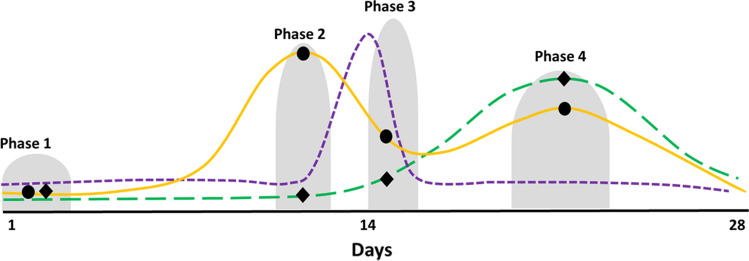
“Upon reviewing the menstrual phases using blood samples collected during the study, it was discovered that Phase 2 had been misclassified in five of the 24 athletes in the study whose hormone levels did not align with established criteria (i.e., higher estradiol in Phase 4 than Phase 2) [27].”
InfluentialSelf-citationAnderson, R., Rollo, I., Martin, D., Burden, R. J., Randell, R. K., Twist, C., & Moss, S. L. (2025) · Experimental Physiology · doi:10.1113/ep092476 · Cited by 2
“However, error in interpreting the result or non-adherence to the testing procedure will increase the possibility of missing a positive ovulation result (Elliott-Sale et al., 2021; Schmalenberger et al., 2021).”
Impact of Low Energy Availability on Hormonal Profiles and Athletic Performance
Xhufi, S., & Bozo, D. (2025) · European Science Review · doi:10.29013/esr-25-5.6-10-17 · Cited by 1
Bretonneau, Q., Arc‐Chagnaud, C., Dugué, B., Dupuy, O., Delpech, N., Enéa, C., & Bosquet, L. (2025) · Frontiers in Pain Research · doi:10.3389/fpain.2025.1614153 · Cited by 1
Hickey, J., O’Loughlin, E., & Reid, D. W. (2025) · New Zealand Journal of Physiotherapy · doi:10.15619/nzjp.v53i2.470 · Cited by 1
Regional dynamic cerebral autoregulation in acute poikilocapnic hypoxia
Friend, A. T., Ewalts, M. T., Horiuchi, M., Rossetti, G. M. K., Sandoo, A., Macdonald, J. H., & Oliver, S. J. (2025) · Journal of Applied Physiology · doi:10.1152/japplphysiol.00376.2024 · Cited by 1
Osmani, F., Villar-Varela, M., & Lago‐Fuentes, C. (2025) · J — Multidisciplinary Scientific Journal · doi:10.3390/j8030033 · Cited by 2
“These phases are characterized by hormonal fluctuations [3] that influence the function of organs and tissues in the body, as well as energy levels, perceived exertion, mood, and various other factors that may impact athletic performance [6].”
Reusch, L., Zunner, B. E. M., Tittlbach, S. A., & Herfet, M. (2025) · Performance Enhancement & Health · doi:10.1016/j.peh.2025.100372 · Cited by 1
Smith, M., Aghayan, M., Little, J. P., Prior, J. C., Cohen, T. R., Soon, Z., Bomide, H., & Purcell, S. A. (2025) · Appetite · doi:10.1016/j.appet.2025.108314 · Cited by 1
Sport and exercise in the heat: Guidelines, performance, and acclimation
Chalmers, S., Siegler, J. C., & Périard, J. D. (2025) · Journal of science and medicine in sport · doi:10.1016/j.jsams.2025.09.011 · Cited by 1
Su, Y., O’Donnell, E., Bailey, S. J., & Leicht, C. A. (2025) · Experimental Physiology · doi:10.1113/ep092680 · Cited by 1
McNulty, K. L., Ansdell, P., Goodall, S., Thomas, K., Elliott-Sale, K. J., Howatson, G., & Hicks, K. M. (2025) · Women in Sport and Physical Activity Journal · doi:10.1123/wspaj.2025-0001 · Cited by 1
Self-citationImpact of the menstrual cycle on oxidative stress, inflammation and iron status at high altitude
Tagliapietra, G., Citherlet, T., Raberin, A., Narang, B. J., Manferdelli, G., Giardini, G., Debevec, T., Pialoux, V., & Millet, G. P. (2025) · Nitric Oxide · doi:10.1016/j.niox.2025.12.001 · Cited by 1
James, K. R., Cannon, J., & Marino, F. E. (2025) · European Journal of Sport Science · doi:10.1002/ejsc.70083 · Cited by 1
Piñol-Granadino, N., Rotllan, C., & Viscor, G. (2025) · Apunts Sports Medicine · doi:10.1016/j.apunsm.2025.100509 · Cited by 1
Relationships Between Hematological Variables and Bone Metabolism in Elite Female Trail Runners
Carrasco‐Marginet, M., Puigarnau, S., Espasa-Labrador, J., Cebrián‐Ponce, Á., Gravina-Cognetti, F., Piñol-Granadino, N., & Irurtia, A. (2026) · Healthcare · doi:10.3390/healthcare14020200 · Cited by 3
Salem, A., Ammar, A., Kerkeni, M., Boujelbane, M. A., Uyar, A. M., Köbel, L. M., Selvaraj, S. A., Zare, R., Heinrich, K. M., Jahrami, H., et al. (2025) · Journal of the International Society of Sports Nutrition · doi:10.1080/15502783.2026.2617283 · Cited by 1
Patrick, B., Urwin, C. S., Betik, A. C., Jardine, W. T., Snipe, R. M. J., Kelly, M. K., Hamilton, D. L., & Carr, A. (2026) · PLoS ONE · doi:10.1371/journal.pone.0341245 · Cited by 1
Abreu, M., Nakamura, F. Y., Carvalho, T. D. A., da Silva, D. C., & Afonso, J. R. (2026) · International Journal of Sports Physiology and Performance · doi:10.1123/ijspp.2025-0560 · Cited by 1
Recacha-Ponce, P., Guisado‐Cuadrado, I., Muriach, M., Baliño, P., Domingo, C. H., Peinado, A. B., Suárez-Alcázar, M. P., & Collado‐Boira, E. (2026) · Women in Sport and Physical Activity Journal · doi:10.1123/wspaj.2025-0140 · Cited by 1
Ribeiro, T. D., Peralta, M., Iglésias, B., Clemente, F. M., Silva, A. F., & Marques, A. (2026) · Performance Enhancement & Health · doi:10.1016/j.peh.2026.100423 · Cited by 1
The Effects of Menstrual Cycle Phase on Gastrointestinal Responses to a Simulated Football Match
Abbott, S. J., Parker, C. J., Hough, J., Hunter, K. A., Johnson, M. A., & Williams, N. C. (2026) · European Journal of Sport Science · doi:10.1002/ejsc.70157 · Cited by 1
“The two experimental trials occurred during P1 (indicated by the onset of bleeding until day 5) and P4 (6–8 days following a positive ovulation test) of the participants' MC, as defined by Elliott‐Sale et al. (2021).”
InfluentialEffects of the Menstrual Cycle on Fat Utilization During 1 Hour of Cycling at Fatmax
García-Ortiz, C., Fernández-Sánchez, J., García-Albín, D., Ranieri, L., Trujillo-Colmena, D., Solano-Lizcano, V., Rodríguez-Castaño, A., Collado‐Mateo, D., Casado, A., & Coso, J. D. (2026) · International Journal of Sports Physiology and Performance · doi:10.1123/ijspp.2025-0349 · Cited by 1
Sex‐based differences in corticospinal excitability and inhibition
Kells, A. M., Pauhl, A. N., & Christie, A. D. (2026) · Experimental Physiology · doi:10.1113/ep093411 · Cited by 1
“…experience a menstrual cycle, with lower concentrations of oestrogen and progesterone in the follicular phase compared to the luteal phase (Elliott-Sale et al., 2021; Joshi & Kapur, 2019; Roeder & Leira, 2021), whereas males experience a daily cycle, with lower concentrations of…”
Menstrual cycle effects on sex differences in motor control during dynamic balance perturbations
Nevanperä, S., Taipale, R. S., Walker, S., & Piirainen, J. M. (2026) · Experimental Physiology · doi:10.1113/ep093608 · Cited by 1
Yoshida, E., Hayashida, H., Lu, T.-L., Seki, Y., & Suzuki, K. (2026) · Physiological Reports · doi:10.14814/phy2.70850 · Cited by 2
“Consequently, there is increasing concern that current standard training programs and guidelines may not necessarily be optimally effective or safely implemented when applied to females (Cowley et al., 2021; Elliott-Sale et al., 2021).”
Sproll, M., Otterbach, N., & Zech, A. (2026) · European Journal of Sport Science · doi:10.1002/ejsc.70174 · Cited by 1
Cabre, H. E., Hirsch, K. R., Moore, S. R., & Smith‐Ryan, A. E. (2026) · Applied Physiology, Nutrition, and Metabolism · doi:10.1139/apnm-2025-0411 · Cited by 1
Salmi, V. M., Karppinen, J. E., Lehti, M., Kyröläinen, H., Ihalainen, J. K., & Taipale, R. S. (2026) · Physiological Reports · doi:10.14814/phy2.70857 · Cited by 1
“…phase of the control menstrual cycle, 4–10 days after the LH and E3G surge, and were followed by measurements in the early-to mid-follicular phase of the subsequent menstrual cycle, 1–8 days following the onset of bleeding, according to methodological recommendations by Elliott-Sale et al. (2021).”
InfluentialFleitas‐Paniagua, P. R., Rasica, L., Azevedo, R. D. A., Iannetta, D., Alvares, T. S., Zagatto, A. M., & Murias, J. M. (2026) · Scandinavian Journal of Medicine and Science in Sports · doi:10.1111/sms.70288 · Cited by 2
“…have been shown to alter substrate utilization [38], females are not included in the data presented in this study, as trying to control for the menstrual cycle phases for nine different conditions would require several months of testing, which would add different confounding factors [39].”
Liebrenz, E., Smith, A. J., Liebrenz, M., Colangelo, J., & Buadze, A. (2026) · Sports · doi:10.3390/sports14050173 · Cited by 1
Bradbury, K. E., McClung, H. L., Ranadive, S. M., Oppenheimer, A. V., Goldenstein, S. J., Stachenfeld, N. S., Charkoudian, N., & Giersch, G. E. W. (2026) · Journal of Applied Physiology · doi:10.1152/japplphysiol.01189.2025 · Cited by 1
McCarthy, S. F., Bornath, D. P. D., Medeiros, P. J., & Hazell, T. J. (2026) · Applied Physiology, Nutrition, and Metabolism · doi:10.1139/apnm-2025-0507 · Cited by 1
Tan, Z. S., Burns, S. F., Lee, Y. X., & Goodwill, A. M. (2026) · Frontiers in Nutrition · doi:10.3389/fnut.2026.1817134 · Cited by 1
“For example, menstrual cycle phase was typically defined using a binary approach (follicular vs. luteal), despite evidence that the cycle can be segmented into multiple sub-phases with distinct hormonal profiles (26).”
Ritta, G. B. D. S., Soares, L. M. B., Abreu, A. C. P., Mendes, G. F., Saunders, B., & Reis, C. E. G. (2026) · International Journal of Sport Nutrition and Exercise Metabolism · doi:10.1123/ijsnem.2026-0022 · Cited by 1
Marques, C., Rebelo, M., Serrano, J., & Fonseca, H. (2026) · Frontiers in Sports and Active Living · doi:10.3389/fspor.2026.1789611 · Cited by 1
“However, the absence of a consistent directional pattern across studies suggests that the observed variability may not be explained solely by statistical limitations (6, 18, 48, 52, 53).”
Menstrual status and bone health in athletes from different sports – a retrospective analysis
ØISTUEN, G. F., Osborne, J. O., Sundgot‐Borgen, J., Noordhof, D. A., Taylor, M., Heikura, I. A., Stellingwerff, T., Solheim, S. A., Lundberg, H. E., Mathisen, T. F., et al. (2026) · BMC Sports Science Medicine and Rehabilitation · doi:10.1186/s13102-026-01781-y · Cited by 1
Gu, J., Wei, Y., Huang, J., Bu, Y., & Xie, S. (2026) · Frontiers in Nutrition · doi:10.3389/fnut.2026.1857513 · Cited by 1
Influence of menstrual cycle on autonomic nervous system, muscular strength and mood states
Serrano, H. M., Gueugneau, N., & Ravier, G. (2026) · Scientific Reports · doi:10.1038/s41598-026-56802-0 · Cited by 1
“…as a MC length between 21 and 35 days, with at least nine consecutive cycles per year, absence of hormonal contraceptive use for three months prior to recruitment, and confirmation of ovulation through both luteinizing hormone surge and an appropriate hormonal profile (verified by blood test) 27 .”
Yang, H., Dong, J., Yang, J., Wu, C. L., & Su, C.-H. (2026) · Nutrients · doi:10.3390/nu18132115 · Cited by 3
“Future studies should draw on sufficiently well-powered female cohorts, report menstrual and hormonal status where it is appropriate, and explore whether food-based antioxidant strategies differ across sexes and life stages [68,69].”
Yeh, K.-T., Cheng, H.-C., Tsai, S., Yu, P.-H., Kuo, Y.-C., & Liu, H. (2026) · The Journal of Strength and Conditioning Research · doi:10.1519/jsc.0000000000005598 · Cited by 1
Osmani, F., García, M. V. S., & Ramos-Álvarez, O. (2026) · Sports · doi:10.3390/sports14070297 · Cited by 1
Mănescu, D. C., Cerullo, G., Petri, C., Petcu, C., Bidiugan, R., Voinea, A., Bidiugan, S., IACOBINI, A. R., Dragomir, A., Gavrila, A. A., et al. (2026) · Nutrients · doi:10.3390/nu18152523 · Cited by 2
Mora‐Rodríguez, R., Mora‐Gonzalez, D., Moreno‐Cabañas, A., Morales‐Palomo, F., García, L., Martin-Gomez, L., Ortega-Alcalde, C., Mora-Gonzalez, M., & Pallarés, J. G. (2026) · Journal of Applied Physiology · doi:10.1152/japplphysiol.00361.2026 · Cited by 1
Digital menstrual tracking risks creating more harm than benefit
Lee, K. M. N., DiMarco, M., Pape, M., Reiches, M. W., Homan, P., Bekker, S., Mountjoy, M. L., & Richardson, S. S. (2026) · BMJ · doi:10.1136/bmj-2026-100858 · Cited by 1
Salokannel, M. M., Hakulinen, O., & Ahtiainen, J. P. (2022) · European Journal of Sport Science · doi:10.1080/17461391.2021.2013954 · Cited by 1
Nutrition and exercise intervention for female fertility
Hackney, A. C., Vaamonde, D., & Manso, J. M. G. (2022) · Elsevier eBooks · doi:10.1016/b978-0-12-818309-0.00024-1 · Cited by 1
Self-citationFemale Football Specific Energy Availability Questionnaire and Menstrual Cycle Hormone Monitoring
Keay, N., Craghill, E., & Francis, G. (2022) · Sports Injuries & Medicine · doi:10.29011/2576-9596.100177 · Cited by 1
Carrard, J., Angst, T., Weber, N., Bienvenue, J., Infanger, D., Streese, L., Hinrichs, T., Croci, I., Schmied, C. M., Gallart‐Ayala, H., et al. (2022) · F1000Research · doi:10.12688/f1000research.128978.1 · Cited by 1
Der „Gender Data Gap“ und geschlechtsspezifische physiologische Unterschiede im Sport
Zimmel, H., & Bischoff, L. L. (2023) · B&G Bewegungstherapie und Gesundheitssport · doi:10.1055/a-2023-9468 · Cited by 1
“[4] Wissen über die weibliche Physiologie in der Sportwissenschaft und die Bereitschaft, experimentelle Designs so anzupassen, dass frauenspezifische Aspekte, wie zum Beispiel der Menstruationszyklus, hormonelle Verhütung oder eine Schwangerschaft einbezogen und beachtet werden.”
BackgroundCarrard, J., Angst, T., Weber, N., Bienvenue, J., Infanger, D., Streese, L., Hinrichs, T., Croci, I., Schmied, C. M., Gallart‐Ayala, H., et al. (2023) · F1000Research · doi:10.12688/f1000research.128978.2 · Cited by 1
Auditing the Representation of Female Athletes in Sports Medicine Research: Achilles Repair
Braman, M., Root, C., Harmon, I., Long, R., Vopat, L., Vopat, B. G., & Herda, A. A. (2024) · Foot & Ankle Orthopaedics · doi:10.1177/24730114241255360 · Cited by 1
“8 There is a combination of physical and psychological/perceived factors present related to menstrual status that can allow us to improve our methodology of female research.”
Exercise and Neuroendocrinology
Hackney, A. C. (2024) · Current topics in behavioral neurosciences · doi:10.1007/7854_2024_491 · Cited by 1
Self-citationBagot, S., Miles-Chan, J. L., Hackney, A. C., Duclos, M., & Isacco, L. (2025) · International Journal of Sport Nutrition and Exercise Metabolism · doi:10.1123/ijsnem.2024-0095 · Cited by 1
Self-citationBrefin, S. L., Anderegg, J., Nigg, C. R., Koschnick, D., Paul, C., & Ketelhut, S. (2025) · International Journal of Sports Science & Coaching · doi:10.1177/17479541251349332 · Cited by 1
“31,38”
Exercise-induced dehydration does not impair cognitive performance in naturally menstruating women
Doohan, M. A., King, N. A., White, M. J., & Stewart, I. B. (2025) · Temperature · doi:10.1080/23328940.2025.2522576 · Cited by 1
“Experimental visits were scheduled four to seven days post-ovulation [18].”
Doroshuk, M. L., Lebrun, C. M., & Doyle–Baker, P. K. (2025) · Women s Health Reports · doi:10.1177/26884844251379415 · Cited by 1
“18 37 Due to the nature of the research question and speci fi c population examined, this study employed the conservative approach of 6 months for participants.”
Self-citationKuikman, M. A., McKay, A. K. A., Harris, R., Elliott-Sale, K. J., Stellingwerff, T., Smith, E. S., McCormick, R., Tee, N., MINAHAN, C. L., Skinner, J., et al. (2023) · Medicine & Science in Sports & Exercise · doi:10.1249/01.mss.0000982808.44546.55 · Cited by 1
Self-citationThe influence of exercise-induced dehydration on cognitive performance in women
Doohan, M. A. (2024) · Queensland University of Technology · doi:10.5204/thesis.eprints.249218 · Cited by 2
Participant identification, selection and recruitmentPreprint
McCrum, C. L., Schneider, C. L., & Zenko, Z. (2025) · doi:10.51224/srxiv.509 · Cited by 1
Shultz, S. J., & Wideman, L. (2025) · Sports Health A Multidisciplinary Approach · doi:10.1177/19417381251319506 · Cited by 1
“4 Using this inclusion criteria also excludes the 20% to 35% of young female athletes who self-report absent (primary and secondary amenorrhea) or irregular cycles (oligomenorrhea), 1,8,9 and the 14% (high school) to 60% (college) of female athletes who report use of oral contraceptives (OCP) to…”
InfluentialFlood, T. R., & Hackney, A. C. (2025) · The Journal of Clinical Endocrinology & Metabolism · doi:10.1210/clinem/dgaf678 · Cited by 1
Self-citationDoroshuk, M. L., Kazakoff, A., Hayden, A., & Doyle–Baker, P. K. (2022) · doi:10.11575/prism/39744 · Cited by 1
Caswell, A. (2023) · doi:10.11575/prism/42047 · Cited by 2
Elliott-Sale, K. J., Hecksteden, A., Wilke, C. F., Kryger, K. O., & Nimphius, S. (2026) · Science and Medicine in Football · doi:10.1080/24733938.2026.2629266 · Cited by 1
“It also incorporates several methodological publications (Janse de Jonge et al. 2019; Elliott-Sale et al. 2021; Elliott-Sale et al. 2024; Verhagen et al. 2025) that provide insights into undertaking high-quality menstrual cycle phase-based studies.”
Self-citationCicchella, A., & Li, Z. (2026) · Encyclopedia · doi:10.3390/encyclopedia6060114 · Cited by 1
PARTEN, A. L., SMITH-RYAN, A. E., SANCHEZ, K. M., HEARD, S. A., O’NEAL, E. K., MCALLISTER, M. J., LYONS, T. S., & WALDMAN, H. S. (2026) · Medicine & Science in Sports & Exercise · doi:10.1249/mss.0000000000004022
McLellan, A. G., Ahmad, N. S. B., Acton, J. P., Punni, H. K., O'Donnell, E., Shepherd, A. I., Perissiou, M., James, L. J., Clifford, T., & Bailey, S. J. (2026) · Food & Function · doi:10.1039/d6fo02338j
Vicente-Loren, C., Lucha-López, M. O., Monti-Ballano, S., Hijazo-Larrosa, S., Vicente-Pina, L., Ferrández-Laliena, L., Tricás-Moreno, J. M., & Hidalgo-García, C. (2026) · Sensors · doi:10.3390/s26123749
Response to a Water Bolus in Long Term Oral Contraceptive Users
Atkins, W. C., McDermott, B. P., Colburn, A. T., & Kavouras, S. A. (2022) · Frontiers in Sports and Active Living · doi:10.3389/fspor.2022.857719
“Although hormonal influence on fluid balance is acknowledged, methodological design often does not account for variations in hormones across the menstrual cycle (Sims and Heather, 2018; Elliott-Sale, 2021).”
Backgroundde Luna, T. A. (2022) · Digital Library of Theses and Dissertations (Universidade de São Paulo) · doi:10.11606/d.5.2022.tde-18072022-153208
Strategies to Reduce Heat Strain During Tennis Match-Play in Hot, Humid Conditions
Debney, M. (2021) · Sheffield Hallam University · doi:10.7190/shu-thesis-00462 · Cited by 1
Alfaro-Magallanes, V. M. (2022) · UPM Digital Archive (Technical University of Madrid) · doi:10.20868/upm.thesis.71841
Frauen im Spitzensport: Forschungslücken und methodische Herausforderungen
Bischoff, L. L. (2022) · Zeitschrift für Sportpsychologie · doi:10.1026/1612-5010/a000364
SCS 5th Annual Conference. São Paulo, Brazil, 2022
Alcaráz, P. E., Cascales, E. M., Blazevich, A. J., Pereira, L. A., Mercer, V. P., Moura, T. B. M. A., Fernandes, V., Freitas, T. T., & Loturco, I. (2023) · Sports · doi:10.3390/sports11050095
Williams, J. S., Stone, J. C., Ritz, S. A., & MacDonald, M. J. (2023) · Scientometrics · doi:10.1007/s11192-023-04741-2 · Cited by 1
“…inclusion (along with sex and gender considerations more broadly) in exercise science studies and the appropriate methodological controls that may—or may not—be needed (Elliott-Sale et al., 2021; Emmonds et al., 2019; Lew & Williams et al., 2022; Sims & Heather, 2018; Zhu et al., 2021).”
BackgroundEpilogue: “How We Arrived at This Point in Time”
Lebrun, C. M. (2023) · Springer eBooks · doi:10.1007/978-3-031-21881-1_24
Self-citationde Carvalho, G. (2023) · Digital Library of Theses and Dissertations (Universidade de São Paulo) · doi:10.11606/t.17.2023.tde-05062023-111512
Admin, Q. S. K., Vemulapalli, A. C., Elias, A. A., Yerramsetti, M. D., Olanisa, O. O., Jain, P., & Khan, S. (2023) · Journal For International Medical Graduates · doi:10.56570/jimgs.v2i2.135 · Cited by 3
Metadata
- Authors
- Elliott-Sale, K. J., Minahan, C. L., de Jonge, X. A. K. J., Ackerman, K. E., Sipilä, S., Constantini, N. W., Lebrun, C. M., & Hackney, A. C.
- Affiliations
- Nottingham Trent University (GB)
- Griffith University (AU)
- Boston Children's Hospital (US)
- University of Jyväskylä (FI)
- Hebrew University of Jerusalem (IL)
- University of Alberta (CA)
- University of North Carolina at Chapel Hill (US)
- Corresponding author
- Elliott-Sale, Kirsty J.
- ORCID
- Venue
- Sports Medicine
- Published
- 2021-03-16
- Volume
- 51
- Issue
- 5
- Pages
- 843-861
- ISSN
- 0112-1642 (ISSN-L)
- 1179-2035
- PMC
- PMC8053180
- OpenAlex
- W3139291660
- Cited by
- 731
- References
- 77
- Citations by year
- 2026: 181 · 2025: 184 · 2024: 152 · 2023: 123 · 2022: 61 · 2021: 30
- FWCI
- 79.30
- Type
- journal article
- Language
- en
- Open access
- hybrid
- doi.org
- Licence
- cc-by
- creativecommons.org/licenses/by/4.0 (tdm)
- creativecommons.org/licenses/by/4.0 (vor)
- Locations
- Sports Medicine (publishedVersion, cc-by)
- PubMed Central (publishedVersion, cc-by)
- PubMed (publishedVersion)
- Nottingham Trent University's Institutional Repository (Nottingham Trent Repository) (acceptedVersion)
- e-space (Manchester Metropolitan University) (acceptedVersion)
- Jyväskylä University Digital Archive (University of Jyväskylä) (submittedVersion, cc-by)
- Griffith Research Online (submittedVersion, cc-by)
- NOVA (University of Newcastle Australia) (submittedVersion)
- Topics
- Health Sciences › Medicine › Public Health, Environmental and Occupational Health › Sex and Gender in Healthcare
- Health Sciences › Medicine › Orthopedics and Sports Medicine › Sports Performance and Training
- Social Sciences › Gender Studies › Sports, Gender, and Society
- Keywords
- female reproductive endocrinology, menstrual cycle, hormonal contraceptive use, pregnancy, menopause, sex differences in physiology, participant selection criteria
- MeSH terms
- Adaptation, Physiological, Female, Humans, Male, Menstrual Cycle, Sports, Exercise, Athletes
About these checks
Registry, retraction, Cites and statistics results are computed, not judged, with one exception: a printed reference that no index lists is read once by a model before it counts as a citation error. Claims are extracted by a model and kept only when their quote appears verbatim in the text; each cited source is then checked, with a model’s help, for whether it says what the claim relies on. Those verdicts can be wrong — read the claim’s quote and the cited source before relying on one.
Statistics and arithmetic are recomputed, not judged.
Confidence bands are shown only for fields calibrated on our annotated test set. None is calibrated yet, so no band is shown.
What counts as a claim ›How we measure confidence ›How we check this ›
Are you an author, or do you see a problem with this page? Request a review
Data sources
Bibliographic data: Semantic Scholar, OpenAlex, Crossref.
Contains information from the Semantic Scholar Academic Graph Datasets, made available under the ODC Attribution License (ODC-BY 1.0).
Semantic Scholar’s data is described in: Kinney, R., et al. (2023). The Semantic Scholar Open Data Platform. arXiv:2301.10140.
