

Effects of Variations in Resistance Training Frequency on Strength Development in Well-Trained Populations and Implications for In-Season Athlete Training: A Systematic Review and Meta-analysis
Open accessThe DOI matches its Crossref record; 52 of the 52 references it cites were found in a registry or an index.
Abstract
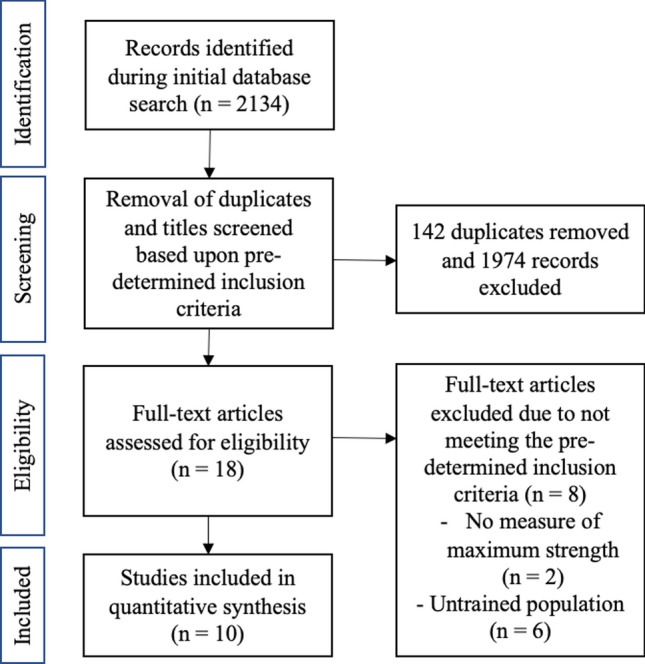
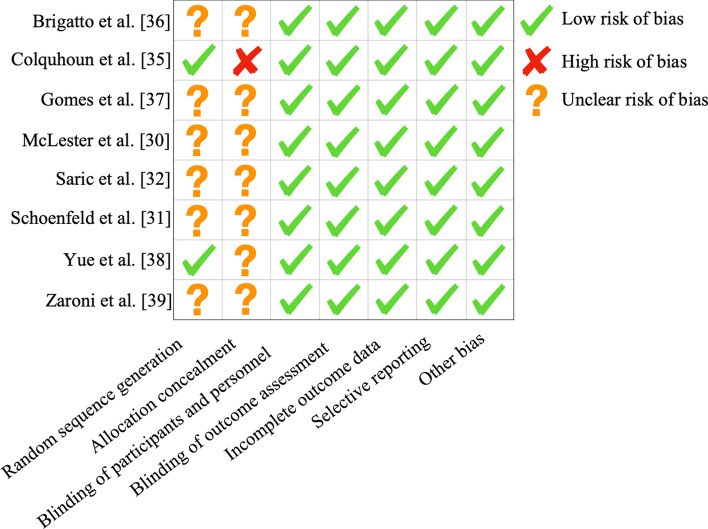
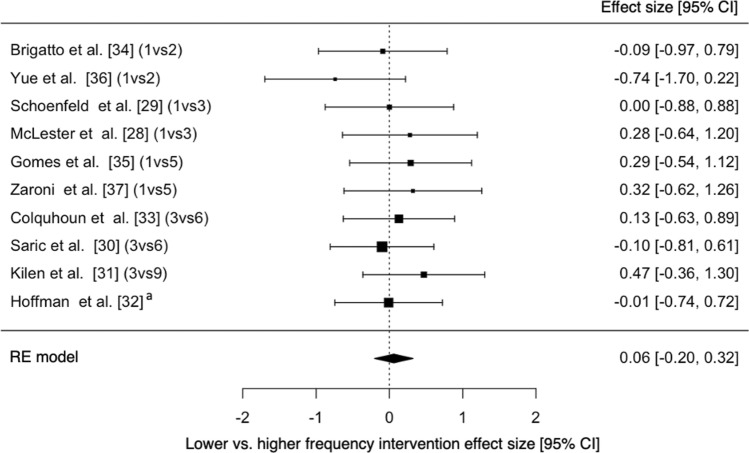
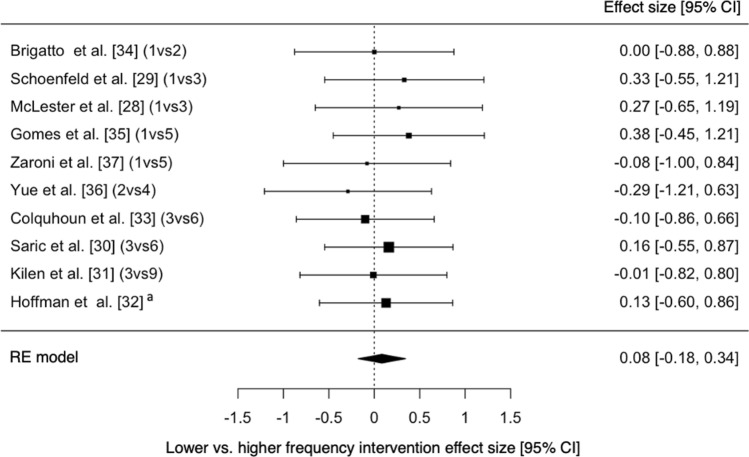
Background: In-season competition and tournaments for team sports can be both long and congested, with some sports competing up to three times per week. During these periods of time, athletes need to prepare technically, tactically and physically for the next fixture and the short duration between fixtures means that, in some cases, physical preparation ceases, or training focus moves to recovery as opposed to progressing adaptations. Objective: The aim of this review was to investigate the effect of training frequency on muscular strength to determine if a potential method to accommodate in-season resistance training, during busy training schedules, could be achieved by utilizing shorter more frequent training sessions across a training week. Methods: A literature search was conducted using the SPORTDiscus, Ovid, PubMed and Scopus databases. 2134 studies were identified prior to application of the following inclusion criteria: (1) maximal strength was assessed, (2) a minimum of two different training frequency groups were included, (3) participants were well trained, and finally (4) compound exercises were included within the training programmes. A Cochrane risk of bias assessment was applied to studies that performed randomized controlled trials and consistency of studies was analysed using I 2 as a test of heterogeneity. Secondary analysis of studies included Hedges’ g effect sizes ( g ) and between-study differences were estimated using a random-effects model. Results: Inconsistency of effects between pre- and post-intervention was low within-group ( I 2 = 0%), and moderate between-group ( I 2 ≤ 73.95%). Risk of bias was also low based upon the Cochrane risk of bias assessment. Significant increases were observed overall for both upper ( p ≤ 0.022) and lower ( p ≤ 0.008) body strength, pre- to post-intervention, when all frequencies were assessed. A small effect was observed between training frequencies for upper ( g ≤ 0.58) and lower body ( g ≤ 0.45). Conclusion: Over a 6–12-week period, there are no clear differences in maximal strength development between training frequencies, in well-trained populations. Such observations may permit the potential for training to be manipulated around competition schedules and volume to be distributed across shorter, but more frequent training sessions within a micro-cycle rather than being condensed into 1–2 sessions per week, in effect, allowing for a micro-dosing of the strength stimuli.
Overview
The claims and statistics of this paper haven’t been checked yet.
Free: it reads the open-access text and checks the first 5 claims that cite a source we can check. Create a free account to check every claim.
Integrity signals
Registry
Cites
Statistics
Figures
Verification
Claims the paper makes
The claims and statistics of this paper haven’t been checked yet.
Free: it reads the open-access text and checks the first 5 claims that cite a source we can check. Create a free account to check every claim.
Claims other papers make about this one
Each is checked against this paper’s own text: does it say what the citing paper says it does?
In the citing paper
“However, voluntary strength was enhanced by lifting heavier loads (≥80% one-repetition maximum), through a complete range of motion, for 2–3 sets, at the beginning of training sessions, and ≥2 sessions/wk.”
Self-check
Percentages, sums and reported differences re-computed from the paper’s own numbers.
The self-check needs the paper’s full text.
Citations
Cites
Preferred Reporting Items for Systematic Reviews and Meta-Analyses: the PRISMA statement
Moher, D., Liberati, A., Tetzlaff, J., Altman, D. G., & for the PRISMA Group (2009) · BMJ · doi:10.1136/bmj.b2535 · Cited by 83,823
Preferred Reporting Items for Systematic Reviews and Meta-Analyses: The PRISMA Statement
Moher, D., Liberati, A., Tetzlaff, J., Altman, D. G., & The PRISMA Group (2009) · PLoS Medicine · doi:10.1371/journal.pmed.1000097 · Cited by 64,042 · cited 1×
“The PRISMA guidelines include 27 items within a checklist that is designed to be used as the basis for reporting systematic reviews [24].”
Measuring inconsistency in meta-analyses
Higgins, J. P. T., Thompson, S. G., Deeks, J. J., & Altman, D. G. (2003) · BMJ · doi:10.1136/bmj.327.7414.557 · Cited by 63,139
Preferred reporting items for systematic reviews and meta-analyses: the PRISMA Statement.
(2009) · PubMed Central · Cited by 44,859
Wang, G., Ma, R., Qiao, G., Wada, K., Aizawa, Y., & Satoh, T. (2015) · Integrative Medicine International · doi:10.1159/000368408 · Cited by 18,657
The Importance of Muscular Strength in Athletic Performance
Suchomel, T. J., Nimphius, S., & Stone, M. H. (2016) · Sports Medicine · doi:10.1007/s40279-016-0486-0 · Cited by 1,466 · cited 4×
“Resistance training focused primarily on the development of strength, rather than strength endurance or hypertrophy, is arguably the most critical focus for improving athletic performance and underpins both individual and team sports [1, 3].”
BackgroundInfluentialNeural adaptation to resistance training
SALE, D. G. (1988) · Medicine & Science in Sports & Exercise · doi:10.1249/00005768-198810001-00009 · Cited by 1,421 · cited 1×
“An increase in strength but no increase in muscle mass may suggest adaptations occurred predominantly due to increased fascicle length, reduction in pennation angle [38] and neural adaptations [39].”
BackgroundThe mechanisms of muscle hypertrophy and their application to resistance training
Schoenfeld, B. J. (2010) · Journal of Strength and Conditioning Research · doi:10.1519/jsc.0b013e3181e840f3 · Cited by 1,214 · cited 1×
“The beneficial effect of increased RT volume on hypertrophic responses has previously been demonstrated [46]; however, the effect on strength is not as clear, or at which point increased volume may reduce the adaptive responses.”
BackgroundPeriodization: Theory and Methodology of Training
Bompa, T. O., & Haff, G. G. (2017) · Cited by 1,158
Self-citationRHEA, M. R. (2004) · Journal of Strength and Conditioning Research · doi:10.1519/00124278-200411000-00040 · Cited by 1,069 · cited 1×
“Rhea [48] has proposed possible thresholds for g values to use based upon training experience (categorized as ‘untrained’, ‘recreationally trained’ and ‘highly trained’) when inspecting treatment effects.”
Background
Research works printed but not linked: 4
- Stowers T McMillan J Scala D Davis V Wilson D Stone M The short term effects of three different strength-power training methods NSCA J 1983 5 3 24 27
- American College of Sports Medicine. ACSM Guidelines for exercise testing and prescription 10th edition: Lippincott Williams & Wilkins; 2018.
- Platonov V Periodization concepts of sports training Theor Pract Phys Cult 1998 8 23 26
- Hopkins W Linear models and effect magnitudes for research, clinical and practical applications Sport Sci 2010 14 49 58
Cited by
Biró, A., Vargas, A. I. C., & Szilágyi, L. S. (2023) · Sensors · doi:10.3390/s24010132 · Cited by 118
Comfort, P., Haff, G. G., Suchomel, T. J., Soriano, M. A., Pierce, K. C., Hornsby, W. G., Haff, E. E., Sommerfield, L. M., Chavda, S., Morris, S. J., et al. (2023) · The Journal of Strength and Conditioning Research · doi:10.1519/jsc.0000000000004476 · Cited by 84
“As with hypertrophy, when weekly volume is matched, training frequency does not seem to influence the magnitude of adaptations to strength training (69).”
BackgroundSelf-citationRobinson, Z. P., Pelland, J. C., Remmert, J. F., Refalo, M. C., Jukic, I., Steele, J., & Zourdos, M. C. (2024) · Sports Medicine · doi:10.1007/s40279-024-02069-2 · Cited by 63
CURRIER, B. S., D’SOUZA, A. C., SINGH, M. A. F., LOWISZ, C. V., RAWSON, E. S., SCHOENFELD, B. J., SMITH-RYAN, A. E., STEEN, J. P., THOMAS, G. A., TRIPLETT, N. T., et al. (2026) · Medicine & Science in Sports & Exercise · doi:10.1249/mss.0000000000003897 · Cited by 105
Swinton, P. A., Schoenfeld, B. J., & Murphy, A. (2024) · Sports Medicine · doi:10.1007/s40279-024-02006-3 · Cited by 51
Behm, D. G., Granacher, U., Warneke, K., Aragão-Santos, J. C., Da Silva-Grigoletto, M. E., & Konrad, A. (2024) · Sports Medicine · doi:10.1007/s40279-023-01949-3 · Cited by 45
“Although there is some disagreement [59], if optimal or more substantial muscle strength, endurance, and hypertrophy gains are the goal, then multiple weekly training sessions are recommended over single weekly sessions, especially for the more highly trained or active individuals [19, 25, 26, 30,…”
BackgroundThe Connection Between Resistance Training, Climbing Performance, and Injury Prevention
Sæterbakken, A. H., Stien, N., Pedersen, H., Langer, K., Scott, S., Michailov, M. L., Grønhaug, G., Baláš, J., Solstad, T. E. J., & Andersen, V. S. (2024) · Sports Medicine - Open · doi:10.1186/s40798-024-00677-w · Cited by 44
“Instead, the authors recommended low volume but frequent training exposure, distributed across the week, rather than condensing the training into focused sessions, once or twice per week [111].”
BackgroundCuthbert, M., Haff, G. G., McMahon, J. J., Evans, M., & Comfort, P. (2023) · Strength and conditioning journal · doi:10.1519/ssc.0000000000000786 · Cited by 39
Self-citationMicrodosing: Old Wine in a New Bottle? Current State of Affairs and Future Avenues
Afonso, J. R., Nakamura, F. Y., Baptista, I., Rendeiro-Pinho, G., Brito, J., & Figueiredo, P. (2022) · International Journal of Sports Physiology and Performance · doi:10.1123/ijspp.2022-0291 · Cited by 28
Lin, T., Chueh, T., & Hung, T. (2023) · Sports Medicine - Open · doi:10.1186/s40798-023-00640-1 · Cited by 19
Pelland, J. C., Remmert, J. F., Robinson, Z. P., Hinson, S. R., & Zourdos, M. C. (2026) · Sports Medicine · doi:10.1007/s40279-025-02344-w · Cited by 18
The Importance of Recovery in Resistance Training Microcycle Construction
Sousa, C. A., Zourdos, M. C., Storey, A. G., & Helms, E. R. (2024) · Journal of Human Kinetics · doi:10.5114/jhk/186659 · Cited by 27
“Indeed, in four recent meta-analyses, three assessing the impact of how frequently exercises are performed in a week on maximal strength gains (Cuthbert et al., 2021; Grgic et al., 2018; Ralston et al., 2018) and one examining the impact of how frequently muscle groups are trained in a week on…”
BackgroundMoran, J., Vali, N., Drury, B., Hammami, R., Tallent, J., Chaabène, H., & Ramírez‐Campillo, R. (2022) · PLoS ONE · doi:10.1371/journal.pone.0277437 · Cited by 19
“[15] revealed no significant differences in strength when well-trained populations were exposed to volume-equated RT programmes of different weekly frequencies.”
BackgroundClemente, F. M., Ramírez‐Campillo, R., Moran, J., Żmijewski, P., Silva, R., & Randers, M. B. (2025) · Sports Medicine - Open · doi:10.1186/s40798-024-00808-3 · Cited by 25
Bonder, I. J., & Shim, A. (2022) · Strength and conditioning journal · doi:10.1519/ssc.0000000000000741 · Cited by 16
Mahmoudi, A., Hammami, R., Drury, B., Clark, N. C., SANDERCOCK, G. R. H., Shaw, I., Shaw, B. S., Chortane, S. G., & Moran, J. (2022) · Journal of Sports Sciences · doi:10.1080/02640414.2022.2145737 · Cited by 12
“Furthermore, a recent meta-analysis (Cuthbert et al., 2021) reported no significant differences in muscle strength when well-trained populations were exposed to volume-equated resistance training programmes of different frequencies in the same week.”
BackgroundPermana, D. A., Kusnanik, N. W., Nurhasan, N., Setijono, H., Arifin, M. Z., & Purwoto, S. P. (2022) · Physical Education Theory and Methodology · doi:10.17309/tmfv.2022.1.16 · Cited by 24
“The basis for giving weights to the plyometric hurdle-box jump exercise refers to studies of the principles and periodization of the exercise (Cuthbert et al., 2021).”
BackgroundHicks, D. S., Drummond, C., Williams, K. J., & van den Tillaar, R. (2022) · International Journal of Environmental Research and Public Health · doi:10.3390/ijerph192215404 · Cited by 16
Cardoso, P., Tavares, F., Loureiro, N., Ferreira, R., Araújo, J. P., Gomes, J. S., Reis, J. F., & Vaz, J. R. (2025) · Sport Sciences for Health · doi:10.1007/s11332-025-01352-7 · Cited by 9
“This not only enhances performance, but also facilitates efficient recovery between training and matches or during congested periods or tournaments within a season [8].”
A Performance Analysis of HYROX: A Review of the Physiologic, Mechanical, and Technical Demands
Davids, C. J. (2025) · Strength and conditioning journal · doi:10.1519/ssc.0000000000000913 · Cited by 13
Knowledge of gym goers on myths and truths in resistance training
Unger, A., Mosgan, C., Wolte, C., Pettauer, S., & Wilke, J. (2025) · Scientific Reports · doi:10.1038/s41598-025-87485-8 · Cited by 10
Cuthbert, M., Haff, G. G., McMahon, J. J., Evans, M., & Comfort, P. (2024) · Strength and conditioning journal · doi:10.1519/ssc.0000000000000863 · Cited by 5
Self-citationPark, M.-H., Lim, S., Lee, J., Kim, B.-J., Oh, S.-B., & Kang, S. (2022) · Exercise Science · doi:10.15857/ksep.2022.00465 · Cited by 4
“[47]은 운동선수들을 대상으로 주 3회 저항성운동을 하 였을 때 6-12주 사이에 근력의 차이를 볼 수 없었다.”
Ihsan, F., Nasrulloh, A., & Nugroho, S. (2024) · doi:10.56984/8zg5608d4e · Cited by 4
Ibrahim, S., Ahmed, S. A., Ahmed, S. M., & Ahmed, S. K. (2021) · Entomology and Applied Science Letters · doi:10.51847/d2e2vvo986 · Cited by 4
Statistical power analysis in exercise science
Uehata, A., & Rein, R. (2025) · Journal of Sports Sciences · doi:10.1080/02640414.2025.2571841 · Cited by 7
Setijono, H., Lolita, Y., Wiriawan, O., & Ashadi, K. (2024) · Physical Education Theory and Methodology · doi:10.17309/tmfv.2024.4.12 · Cited by 8
“Good strength ability will minimise injuries when playing (Cuthbert et al., 2021; Lauersen et al., 2018; Talpey et al., 2017).”
BackgroundLi, Z., Li, R., Zheng, J., Chen, Z., Zhang, X., & Bai, J. (2025) · Journal of Sports Science and Medicine · doi:10.52082/jssm.2025.861 · Cited by 2
Kweon, D., Morgans, R., Thomas, O., Oliver, J. L., Oliveira, R. F. S., Ryan, B., & Radnor, J. M. (2026) · International Journal of Sports Science & Coaching · doi:10.1177/17479541261457478 · Cited by 2
High‐frequency resistance training improves maximal lower‐limb strength more than low frequency
Pedersen, H., Iversen, V. M., Vereide, P. F., Stien, N., Sæterbakken, A. H., Fimland, M. S., Schoenfeld, B. J., & Andersen, V. S. (2024) · European Journal of Sport Science · doi:10.1002/ejsc.12055 · Cited by 5
Ross, S., Ripley, N. J., McMahon, J. J., & Comfort, P. (2025) · International Journal of Sports Science & Coaching · doi:10.1177/17479541251317123 · Cited by 2
“…new concept within strength and conditioning and injury management, however a recent systematic review and meta-analysis by Cuthbert et al., 20 offers promising insight into the potential for micro dosing around congested fi xture scheduling and indicates a need for more empirical research,…”
Self-citationRipley, N. J., Fahey, J. T., Jones, P. A., Batsford, J., Sindall, P., Bramah, C., & Comfort, P. (2025) · PLoS ONE · doi:10.1371/journal.pone.0324436 · Cited by 2
“This is despite evidence to utilise the various low volume, micro-dosed approaches to resistance training to enhance strength without causing delayed onset muscle soreness and inducing fatigue [56,57].”
Self-citationFactors Affecting Physical and Technical Performance in Australian Football
Wing, C., Hart, N. H., Ma’ayah, F., & Nosaka, K. (2023) · The Journal of Strength and Conditioning Research · doi:10.1519/jsc.0000000000004454 · Cited by 1
“Maintaining a player’s strength during the in-season period is also of great importance, and methods including training with loads $1 repetition maximum (25) and microdosing (13) should be considered for this purpose.”
BackgroundQu, W., Lu, D., Sun, X., Sun, J., He, J., Song, W., & Li, D. (2026) · BMC Sports Science Medicine and Rehabilitation · doi:10.1186/s13102-025-01403-z · Cited by 2
“During the season, athletes face a long and intensive competition schedule [1].”
Debunking the myth of morning skate on game day
Brocherie, F., & Perez, J. (2023) · Frontiers in Sports and Active Living · doi:10.3389/fspor.2023.1284613 · Cited by 1
Marco, K. D., Goods, P. S. R., Baldwin, K. M., Hiscock, D. J., & Scott, B. R. (2024) · The Journal of Strength and Conditioning Research · doi:10.1519/jsc.0000000000004932 · Cited by 1
“Our data indicate that a few subjects reported prescribing 85% 1 1RM (taper: 10.1% [16/158], competitive season: 16.3% [27/166], tournament: 7.9% [6/75], travel: 8.8% [8/91]).”
InfluentialKhairunnisa, W., Perdana, S. S., & Azizah, A. N. (2023) · Advances in health sciences research/Advances in Health Sciences Research · doi:10.2991/978-94-6463-184-5_46 · Cited by 1
Time-Saving Versus Time-Efficient Training Terminology, Methods, and Prescription
Bonder, I. J., Waller, M. A., Shim, A., & Tangeman, M. (2023) · Strength and conditioning journal · doi:10.1519/ssc.0000000000000805 · Cited by 1
Carnero-Díaz, Á., Pecci, J., Reverte-Pagola, G., & Silva‐Grigoletto, M. E. D. (2023) · Proceedings of the Institution of Mechanical Engineers Part P Journal of Sports Engineering and Technology · doi:10.1177/17543371231199812 · Cited by 1
“32,33 In addition, micro-dosed eccentric training has been demonstrated to be an optimal in-season alternative for athletes with a high frequency of matches.”
BackgroundBOSTAN, G., & Akalan, C. (2023) · Turkiye Klinikleri Journal of Sports Sciences · doi:10.5336/sportsci.2023-96333
Afonso, J. R., Nakamura, F. Y., Baptista, I., Rendeiro-Pinho, G., Brito, J., & Figueiredo, P. (2024) · Strength and conditioning journal · doi:10.1519/ssc.0000000000000856
The Impact of Resistance Training on Mental Health: Neuropsychological and Behavioral Functioning
Hattabi, S., Fadhlaoui, H., Hammami, N., Forte, P. M., Sortwell, A., & Branquinho, L. (2024) · IntechOpen eBooks · doi:10.5772/intechopen.1008261 · Cited by 1
Elite professional golfers’ physical preparation practices and perceptions
White, S. R., Coughlan, D., Wood, C., Wells, J. E. T., Murray, A., Brearley, S. L., & Moran, J. (2025) · International Journal of Sports Science & Coaching · doi:10.1177/17479541251321260
“43 Of further interest, emerging research indicates that neuromuscular performance outcomes can be maintained, and even in some cases, enhanced several hours (1 – 48 h) after low volume, high intensity strength or externally loaded ballistic ‘ resistance priming ’ training sessions, 44 although it…”
Sato, S., Yoshida, R., Murakami, Y., Kasahara, K., Nosaka, K., & Nakamura, M. (2025) · European Journal of Applied Physiology · doi:10.1007/s00421-025-06023-6
Lin, T.-Y., Chueh, T.-Y., & Hung, T.-M. (2024) · Figshare · doi:10.6084/m9.figshare.26648538
Lin, T.-Y., Chueh, T.-Y., & Hung, T.-M. (2023) · Figshare · doi:10.6084/m9.figshare.24715454
Lin, T.-Y., Chueh, T.-Y., & Hung, T.-M. (2024) · Figshare · doi:10.6084/m9.figshare.24715567
Lin, T.-Y., Chueh, T.-Y., & Hung, T.-M. (2024) · Figshare · doi:10.6084/m9.figshare.26648529
Lin, T.-Y., Chueh, T.-Y., & Hung, T.-M. (2024) · Figshare · doi:10.6084/m9.figshare.26648532
Lin, T.-Y., Chueh, T.-Y., & Hung, T.-M. (2024) · Figshare · doi:10.6084/m9.figshare.26648535
Lin, T.-Y., Chueh, T.-Y., & Hung, T.-M. (2024) · Figshare · doi:10.6084/m9.figshare.26648526
Maroto‐Izquierdo, S., Gómez, M., López‐Ortiz, S., Martin-Rivera, F., Nakamura, M., & Gonzalo‐Skok, Ó. (2026) · International Journal of Sports Physiology and Performance · doi:10.1123/ijspp.2025-0582
Xu, Q., Wang, Y., & Ma, D. (2026) · Annals of Medicine · doi:10.1080/07853890.2026.2658885
Xie, B., Lei, S., Choi, S. M., Wong, W. S. P., Choi, N., & Wang, X. (2026) · Research Quarterly for Exercise and Sport · doi:10.1080/02701367.2026.2708357
dos Santos, J. A. R., Zacca, R., Fernandes, D. G., Oliveira, P. S., & Carvalho, D. (2026) · Sports · doi:10.3390/sports14080325
“Variations in training volume [7], intensity [8], and frequency [9], alongside recovery strategies [10] and nutritional status [11], modulate the direction and magnitude of these adaptations.”
Li, W., Huo, R., Yan, K., Wang, F., Li, X., Suo, J., Tang, J., Ding, L., Du, X., Sun, S., et al. (2026) · Journal of Exercise Science & Fitness · doi:10.1016/j.jesf.2026.200506
“5 10 Therefore, identifying strategies that enhance strength and neuromuscular performance without a corresponding increase in external load represents a key challenge in in-season load management.”
Vasconcelos, T., Ruivo, A., Refalo, M. C., Lucas, G. C., Vasconcelos, P. R., Brito, J. P., Vilaça‐Alves, J., & Oliveira, R. F. S. (2026) · The Journal of Strength and Conditioning Research · doi:10.1519/jsc.0000000000005494
Vasconcelos, T., Alves, A. R., Refalo, M. C., Lucas, G. C., Vasconcelos, P. R., Brito, J. P., Casanova, F., Vilaça‐Alves, J., & Oliveira, R. F. S. (2026) · Muscles · doi:10.3390/muscles5030061
“…the total volume completed [5], the load lifted [4,6,7], the selection of specific exercises, the duration of recovery between sets [8], and the frequency of training stimuli [9], all of which may be influenced by individual factors such as biological sex [10,11], genetics, and lifestyle factors.”
The Physical Match Running Demands of Canadian International Women's Soccer
Cormier, P., Mavignier, B., Geneau, D., & Werle, C. (2026) · The Journal of Strength and Conditioning Research · doi:10.1519/jsc.0000000000005657
Vasconcelos, T., Alves, A. R., Brito, J. P., & Oliveira, R. F. S. (2026) · Applied Sciences · doi:10.3390/app16178724
Lee, K., Kwak, J.-J., Lee, H.-S., & Lee, K.-J. (2026) · Applied Sciences · doi:10.3390/app16189316 · Cited by 1
Chughtai, M. R. B., Zahoor, I., Sohail, S., Arab, A. A., Azfar, H., Ghaffar, T., & Asif, A. A. (2026) · The Healer Journal of Physiotherapy and Rehabilitation Sciences · doi:10.55735/gv3tqw59
Yang, H., Lan, Y., Chen, Y., & Zeng, S. (2026) · Frontiers in Physiology · doi:10.3389/fphys.2026.1951674
Boutagy, A. G., & McKean, M. R. (2026) · medRxiv · doi:10.64898/2026.10.07.26365015 · Cited by 1
Metadata
- Authors
- Cuthbert, M., Haff, G. G., Arent, S. M., Ripley, N., McMahon, J. J., Evans, M., & Comfort, P.
- Affiliations
- The Football Association (GB)
- Edith Cowan University (AU)
- University of South Carolina (US)
- University of Salford (GB)
- Corresponding author
- Cuthbert, Matthew
- Venue
- Sports Medicine
- Published
- 2021-04-22
- Volume
- 51
- Issue
- 9
- Pages
- 1967-1982
- ISSN
- 0112-1642 (ISSN-L)
- 1179-2035
- PMC
- PMC8363540
- OpenAlex
- W3152781475
- Cited by
- 63
- References
- 49
- Citations by year
- 2026: 15 · 2025: 11 · 2024: 17 · 2023: 12 · 2022: 7 · 2021: 1
- FWCI
- 1.97
- Type
- journal article
- Language
- en
- Open access
- hybrid
- doi.org
- Licence
- cc-by
- creativecommons.org/licenses/by/4.0 (tdm)
- creativecommons.org/licenses/by/4.0 (vor)
- Locations
- Sports Medicine (publishedVersion, cc-by)
- PubMed Central (publishedVersion, cc-by)
- PubMed (publishedVersion)
- Australasian Journal of Paramedicine (submittedVersion, cc-by)
- University of Salford Institutional Repository (University of Salford) (submittedVersion, cc-by)
- Rutgers University Community Repository (Rutgers University) (submittedVersion)
- Topics
- Health Sciences › Medicine › Orthopedics and Sports Medicine › Sports Performance and Training
- Health Sciences › Medicine › Orthopedics and Sports Medicine › Sports injuries and prevention
- Health Sciences › Medicine › Physiology (medical) › Cardiovascular and exercise physiology
- Keywords
- maximal strength, team sports, microdosing, compound exercises, well-trained athletes
- MeSH terms
- Adaptation, Physiological, Humans, Seasons, Muscle Strength, Resistance Training, Athletes
About these checks
Registry, retraction, Cites and statistics results are computed, not judged, with one exception: a printed reference that no index lists is read once by a model before it counts as a citation error. Claims are extracted by a model and kept only when their quote appears verbatim in the text; each cited source is then checked, with a model’s help, for whether it says what the claim relies on. Those verdicts can be wrong — read the claim’s quote and the cited source before relying on one.
Statistics and arithmetic are recomputed, not judged.
Confidence bands are shown only for fields calibrated on our annotated test set. None is calibrated yet, so no band is shown.
What counts as a claim ›How we measure confidence ›How we check this ›
Are you an author, or do you see a problem with this page? Request a review
Data sources
Bibliographic data: Semantic Scholar, OpenAlex, Crossref.
Contains information from the Semantic Scholar Academic Graph Datasets, made available under the ODC Attribution License (ODC-BY 1.0).
Semantic Scholar’s data is described in: Kinney, R., et al. (2023). The Semantic Scholar Open Data Platform. arXiv:2301.10140.
