

Resistance Training Induces Improvements in Range of Motion: A Systematic Review and Meta-Analysis
Open accessThe DOI matches its Crossref record; 107 of the 111 references it cites were found in a registry or an index, and 1 are not checked yet; 18 of the 60 sources its claims cite were checked for support.
Abstract
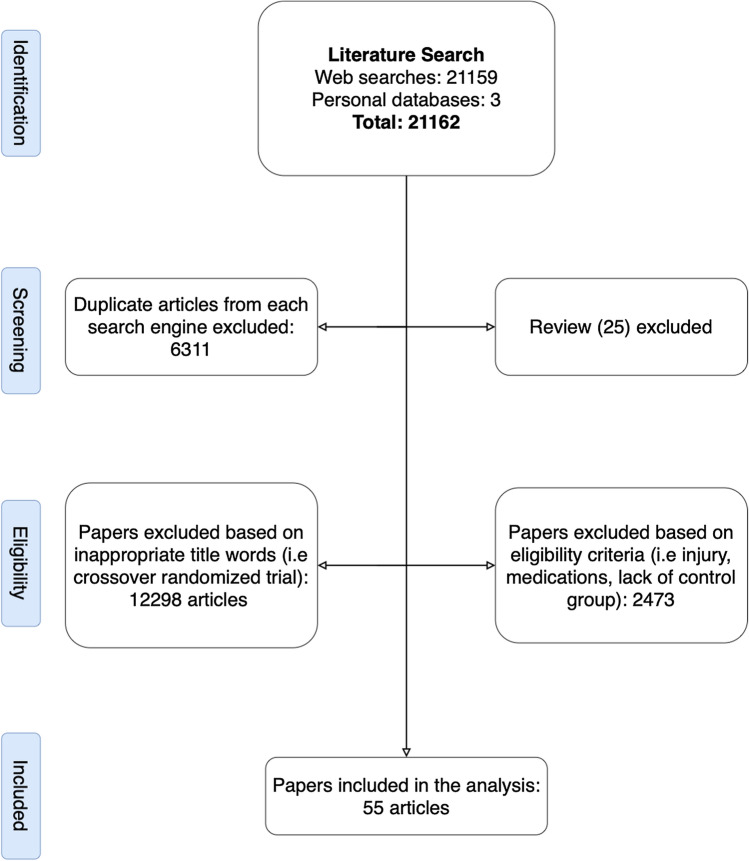
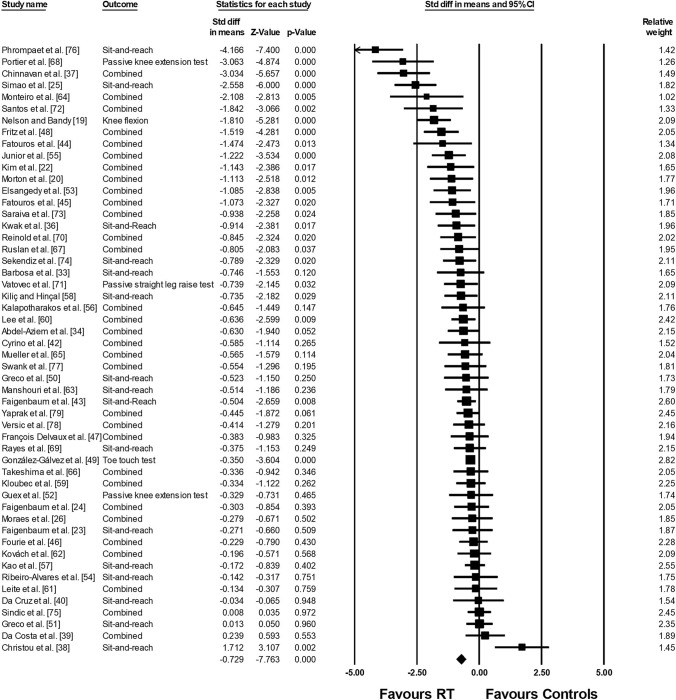
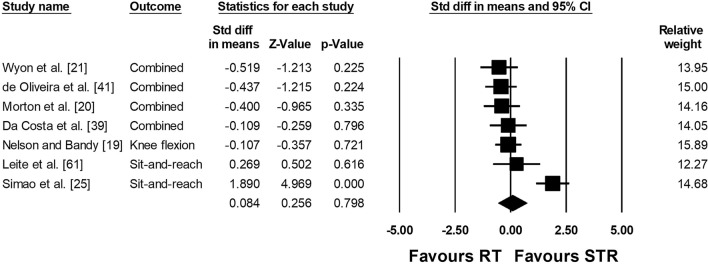
Background: Although it is known that resistance training can be as effective as stretch training to increase joint range of motion, to date no comprehensive meta-analysis has investigated the effects of resistance training on range of motion with all its potential affecting variables. Objective: The objective of this systematic review with meta-analysis was to evaluate the effect of chronic resistance training on range of motion compared either to a control condition or stretch training or to a combination of resistance training and stretch training to stretch training, while assessing moderating variables. Design: For the main analysis, a random-effect meta-analysis was used and for the subgroup analysis a mixed-effect model was implemented. Whilst subgroup analyses included sex and participants’ activity levels, meta-regression included age, frequency, and duration of resistance training. Data Sources: Following the systematic search in four databases (PubMed, Scopus, SPORTDiscus, and Web of Science) and reference lists, 55 studies were found to be eligible. Eligibility Criteria: Controlled or randomized controlled trials that separately compared the training effects of resistance training exercises with either a control group, stretching group, or combined stretch and resistance training group on range of motion in healthy participants. Results: Resistance training increased range of motion (effect size [ES] = 0.73; p < 0.001) with the exception of no significant range of motion improvement with resistance training using only body mass. There were no significant differences between resistance training versus stretch training (ES = 0.08; p = 0.79) or between resistance training and stretch training versus stretch training alone (ES = − 0.001; p = 0.99). Although “trained or active people” increased range of motion (ES = 0.43; p < 0.001) “untrained and sedentary” individuals had significantly ( p = 0.005) higher magnitude range of motion changes (ES = 1.042; p < 0.001). There were no detected differences between sex and contraction type. Meta-regression showed no effect of age, training duration, or frequency. Conclusions: As resistance training with external loads can improve range of motion, stretching prior to or after resistance training may not be necessary to enhance flexibility.
Verified 2026-11-22 · 1 reference not checked yet
Overview
CoChat Summary
TL;DR
This systematic review and meta-analysis of 55 studies found that chronic resistance training with external loads improves joint range of motion to a moderate degree (ES = 0.73, p < 0.001), with no significant difference from stretch training. Additional stretching before or after resistance training may not be necessary to enhance flexibility, though stretch training remains useful for warm-ups and other purposes.
Key findings
- Resistance training increased range of motion (ES = 0.73; p < 0.001), except resistance training using only body mass, which showed no significant improvement (p = 0.11; based on 4 effect sizes).
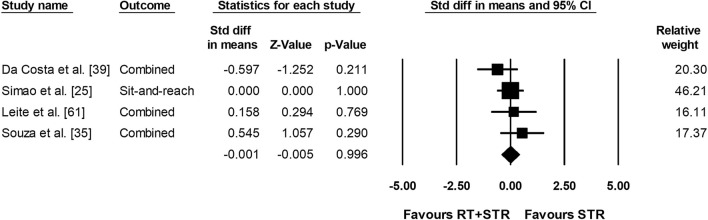
- There were no significant differences between resistance training and stretch training (ES = 0.08; p = 0.79) or between resistance training plus stretch training versus stretch training alone (ES = −0.001; p = 0.99).
- “Untrained and sedentary” individuals had significantly greater range-of-motion changes (ES = 1.042; p < 0.001) than “trained or active” individuals (ES = 0.43; p < 0.001; between-group p = 0.005).
- No significant differences were detected for sex, contraction type, or joint tested; meta-regression showed no effect of age, training duration, or frequency.
Methods
- Systematic review and meta-analysis following PRISMA; searches in PubMed, Scopus, SPORTDiscus, and Web of Science (with Google Scholar and reference/snowballing searches also described), ending May 2022, yielded 55 eligible studies with 2756 participants (mean age 23.9 ± 6.3 years; range 8.1–78.8) and 222 effect sizes.
- Included controlled or randomized controlled trials in healthy participants that separately compared resistance training with a control group, stretching group, or combined stretch and resistance training group on range of motion.
- Main analysis used random-effects meta-analysis; mixed-effects models were used for subgroup analyses (sex, activity level, contraction type, exercise type, joint tested), and meta-regression examined age, training duration, and frequency. Risk of bias was assessed with the PEDro scale and funnel plot/Egger’s test.
Limitations
- The authors state that Comprehensive Meta-Analysis calculates the arithmetic mean when more than one effect size comes from a study, which does not fully account for dependency of effect sizes and may contribute to imprecise estimates.
- The authors state that combining different range-of-motion tests and joints may be less sensitive than comparing the same joints and tests, and that including articles known to the authors could introduce bias, although a further analysis did not detect bias.
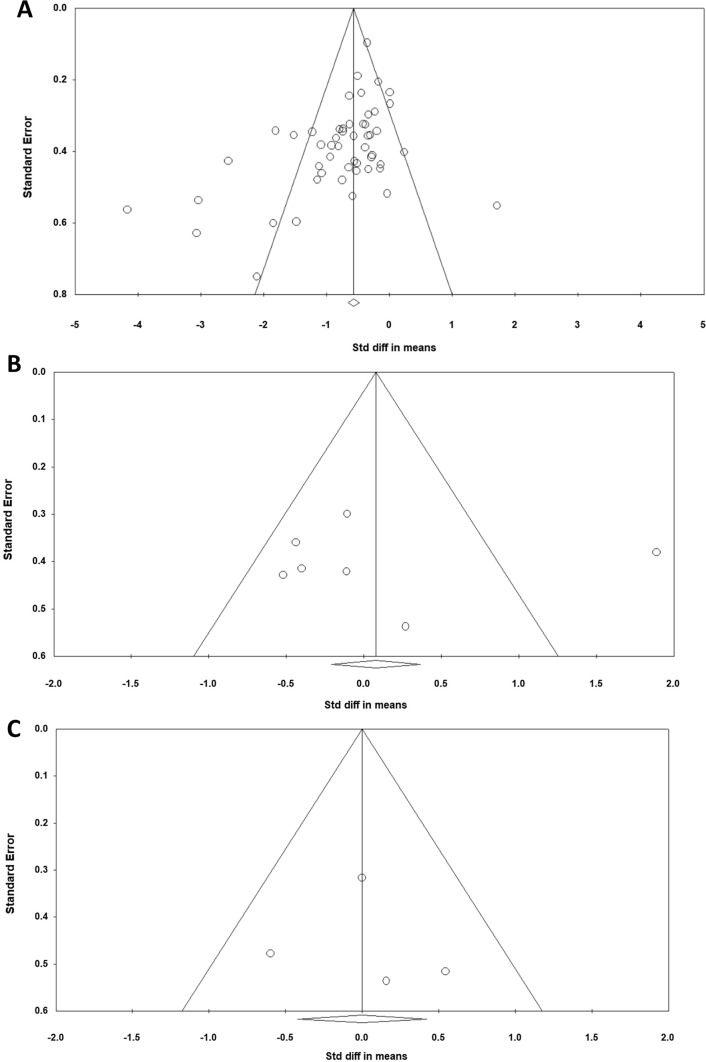
- Reporting bias was indicated for resistance training versus controls (Egger’s intercept −1.89; p = 0.002), but not for the other comparisons; heterogeneity was high in the main analysis (I² = 73.76) and in resistance training versus stretch training (I² = 79.12). The body-mass-only finding is based on only 4 effect sizes, which the authors caution should not be overemphasized.
Model-written summary. Check it against the paper before relying on it.
Integrity signals
Registry
Cites
Statistics
Figures
Verification
Claims the paper makes
15 Valid · 2 Not valid · 21 Not checked · 61 Own results and interpretations
The cited sources support only part of this claim — read each source’s verdict below.
In the paper
“However, neither the commentaries nor the meta-analysis evaluated the specific type of RT (i.e., free weights vs machine RT, vs Pilates, vs calisthenics) effects on ROM.”
§ Resistance Training Induces Improvements in Range of Motion: A Systematic Review and Meta-Analysis > Introduction
What the sources say
- Partly supportedcites [2] Afonso J Olivares-Jabalera J Andrade R Time to move from mandatory stretching? We need to differentiate "can I?" from "do I have to?" Front Physiol 2021 12 714166 10.3389/fphys.2021.714166 34366900 PMC8340604 sourceExperimental — accuracy not yet measured
In “Can I” Vs. “Do I Have To” Stretch To Chronically Improve Range of Motion? (page unavailable), the paper describes the meta-analysis as comparing strength training with stretching and notes heterogeneity in its protocols. It does not establish whether that meta-analysis or the other commentaries evaluated ROM effects by the specific resistance-training types listed in the claim. (LLM, conf=0.72)
- Not checked — no full text of the sourcecites [5] Nuzzo JL The case for retiring flexibility as a major component of physical fitness Sports Med 2020 50 5 853 870 10.1007/s40279-019-01248-w 31845202 source
- Partly supportedcites [12] Afonso J Ramirez-Campillo R Moscao J Rocha T Zacca R Martins A Strength training versus stretching for improving range of motion: a systematic review and meta-analysis Healthcare 2021 9 4 427 10.3390/healthcare9040427 33917036 PMC8067745 sourceExperimental — accuracy not yet measured
The Methods (§2.12, page unavailable) list the meta-analysis’s moderator analyses as ROM type and two risk-of-bias measures, not comparisons among specific resistance-training types. This supports the claim about the meta-analysis, but the cited paper does not establish what the separate prior commentaries evaluated. (LLM, conf=0.84)
plain- Asserted: passes — The authors put it forward as true.
- Checkable: passes — It can be checked against evidence.
- Load-bearing: passes — The paper’s conclusions depend on it.
- Based: passes — The paper gives a reason why it holds.
- Partly supported
The sources with a verdict support this claim; the rest weren’t checked yet, have no full text we could read, or their verdicts aren’t rated yet.
In the paper
“eccentric contractions can provide higher resistive forces or loads [15, 16] of a lengthening muscle–tendon unit”
§ Resistance Training Induces Improvements in Range of Motion: A Systematic Review and Meta-Analysis > Introduction
What the sources say
- Supportedcites [15] Hahn D Stretching the limits of maximal voluntary eccentric force production in vivo J Sport Health Sci 2018 7 3 275 281 10.1016/j.jshs.2018.05.003 30356655 PMC6189274 source
The Introduction (page unavailable) reports that eccentric contractions can produce greater force than comparable isometric contractions, including in some maximal voluntary contractions. The paper qualifies this as a capacity, not a result found in every experiment, which is consistent with the claim’s use of “can.” (LLM, conf=0.91)
- Not checked — no full text of the sourcecites [16] Hollander DB Kraemer RR Kilpatrick MW Ramadan ZG Reeves GV Francois M Maximal eccentric and concentric strength discrepancies between young men and women for dynamic resistance exercise J Strength Cond Res 2007 21 1 34 40 10.1519/00124278-200702000-00007 17313264 source
plainstates a cause- Asserted: passes — The authors put it forward as true.
- Checkable: passes — It can be checked against evidence.
- Load-bearing: passes — The paper’s conclusions depend on it.
- Based: passes — The paper gives a reason why it holds.
- Supported
The sources with a verdict support this claim; the rest weren’t checked yet, have no full text we could read, or their verdicts aren’t rated yet.
In the paper
“The current meta-analysis generally concurs with the findings of Nuzzo [5] and Afonso et al. [12] based on an expanded analysis of 55 studies.”
§ Resistance Training Induces Improvements in Range of Motion: A Systematic Review and Meta-Analysis > Discussion
What the sources say
- Not checked — no full text of the sourcecites Nuzzo [5] Nuzzo JL The case for retiring flexibility as a major component of physical fitness Sports Med 2020 50 5 853 870 10.1007/s40279-019-01248-w 31845202 source
- Supportedcites Afonso et al. [12] Afonso J Ramirez-Campillo R Moscao J Rocha T Zacca R Martins A Strength training versus stretching for improving range of motion: a systematic review and meta-analysis Healthcare 2021 9 4 427 10.3390/healthcare9040427 33917036 PMC8067745 source
The Results (§3.4) report no significant difference between strength training and stretching in range-of-motion gains. The cited paper analyzed 11 articles; the citing sentence describes 55 studies as part of its own expanded analysis, not Afonso et al.’s. (LLM, conf=0.94)
hedged- Asserted: passes — The authors put it forward as true.
- Checkable: passes — It can be checked against evidence.
- Load-bearing: passes — The paper’s conclusions depend on it.
- Based: passes — The paper gives a reason why it holds.
The cited sources that could be checked couldn’t confirm or dispute this claim.
In the paper
“Finally, by removing both the highest and lowest ES [38, 76], we also found a significant moderate effect in favor of RT while heterogeneity decreased (ES = − 0.696; p < 0.001, I2 = 64.07%).”
§ Resistance Training Induces Improvements in Range of Motion: A Systematic Review and Meta-Analysis > Results > Main Analysis
What the sources say
- Not checked — no full text of the sourcecites [38] Christou M Smilios I Sotiropoulos K Volaklis K Pilianidis T Tokmakidis SP Effects of resistance training on the physical capacities of adolescent soccer players J Strength Cond Res 2006 20 4 783 791 17194231 source
- Could not verifycites [76] Phrompaet S Paungmali A Pirunsan U Sitilertpisan P Effects of Pilates training on lumbo-pelvic stability and flexibility Asian J Sports Med 2011 2 1 16 22 10.5812/asjsm.34822 22375213 PMC3289190 sourceExperimental — accuracy not yet measured
The Methods and Results describe a Pilates-versus-control trial and report flexibility and lumbo-pelvic stability outcomes. Our copy does not report the citing authors’ sensitivity analysis, its pooled effect or heterogeneity, or whether this trial supplied the highest or lowest effect size (searched: effect size, sensitivity analysis, heterogeneity). (LLM, conf=0.78)
plainstates a cause- Asserted: passes — The authors put it forward as true.
- Checkable: passes — It can be checked against evidence.
- Load-bearing: unclear — It is unclear whether the paper’s conclusions depend on it.
- Based: passes — The paper gives a reason why it holds.
The sources with a verdict support this claim; the rest weren’t checked yet, have no full text we could read, or their verdicts aren’t rated yet.
In the paper
“There are several reports of substantial ROM increases following eccentric RT [17–19].”
§ Resistance Training Induces Improvements in Range of Motion: A Systematic Review and Meta-Analysis > Introduction
What the sources say
- Supportedcites [17] Delvaux F Schwartz C Decréquy T Devalckeneer T Paulus J Bornheim S Influence of a field hamstring eccentric training on muscle strength and flexibility Inter J Sports Med 2020 41 04 233 241 10.1055/a-1073-7809 31935778 source
The Flexibility results report a significant 11.4° increase in passive hamstring range of motion after eccentric training, with a large effect size. The Discussion also reports range-of-motion increases in two other studies. The paper distinguishes passive range of motion from active range of motion, which did not significantly change in its trial. (LLM, conf=0.92)
- Supportedcites [18] Kay AD Richmond D Talbot C Mina M Baross AW Blazevich AJ Stretching of active muscle elicits chronic changes in multiple strain risk factors Med Sci Sports Exerc 2016 48 7 1388 1396 10.1249/MSS.0000000000000887 27314411 source
The Introduction reports a consistent increase in joint ROM following isotonic eccentric training, comparable to gains from passive stretching programs. The paper’s own Results report a significant 14.7° increase in dorsiflexion ROM after its active-muscle stretching program, which the Discussion describes as qualitatively similar to isokinetic eccentric exercise. (LLM, conf=0.89)
- Not checked — no full text of the sourcecites [19] Nelson RT Bandy WD Eccentric training and static stretching improve hamstring flexibility of high school males J Athl Train 2004 39 3 254 258 15496995 PMC522148
plainstates a cause- Asserted: passes — The authors put it forward as true.
- Checkable: passes — It can be checked against evidence.
- Load-bearing: passes — The paper’s conclusions depend on it.
- Based: passes — The paper gives a reason why it holds.
- Supported
48 more claims · 3 with their cited sources checked
Create a free account to see all 99 claims and every source verdict.
- Probably not a substantial claim. 39
- It may state two separate claims as one. 16
Self-check
Percentages, sums and reported differences re-computed from the paper’s own numbers.
Each contradiction between two passages listed here was confirmed by an independent check.
Rated minor: it would not touch a result — a value no result rests on, a p-value that stays on the same side of the significance level, or a conflict that is clerical, resolved elsewhere in the paper, or outside its own findings.
In the paper
§ Resistance Training Induces Improvements in Range of Motion: A Systematic Review and Meta-Analysis > Abstract > Data Sources
“Following the systematic search in four databases (PubMed, Scopus, SPORTDiscus, and Web of Science) and reference lists, 55 studies were found to be eligible.”
§ Resistance Training Induces Improvements in Range of Motion: A Systematic Review and Meta-Analysis > Methods > Search Strategy
“A literature search following PRISMA review guidelines was performed by six of the co-authors in pairs of two using PubMed, SPORTDiscus, Web of Science, Scopus, and Google Scholar databases.”
Rated minor: it would not touch a result — a value no result rests on, a p-value that stays on the same side of the significance level, or a conflict that is clerical, resolved elsewhere in the paper, or outside its own findings.
In the paper
§ Resistance Training Induces Improvements in Range of Motion: A Systematic Review and Meta-Analysis > Abstract > Results
““untrained and sedentary” individuals had significantly (p = 0.005) higher magnitude range of motion changes (ES = 1.042; p < 0.001).”
§ Resistance Training Induces Improvements in Range of Motion: A Systematic Review and Meta-Analysis > Results > Moderating Variables
“| Untrained and sedentary | 22 | − 1.027 | (− 1.374 to − 0.680) | < 0.001* | |”
Citations
Cites
Measuring inconsistency in meta-analyses
Higgins, J. P. T., Thompson, S. G., Deeks, J. J., & Altman, D. G. (2003) · BMJ · doi:10.1136/bmj.327.7414.557 · Cited by 63,139
Preferred reporting items for systematic reviews and meta-analyses: The PRISMA statement
Moher, D., Liberati, A., Tetzlaff, J., Altman, D. G., & the PRISMA Group* (2009) · Annals of Internal Medicine · doi:10.7326/0003-4819-151-4-200908180-00135 · Cited by 37,554
Borenstein, M., Hedges, L. V., Higgins, J. P. T., & Rothstein, H. R. (2009) · doi:10.1002/9780470743386 · Cited by 14,225
Borenstein, M., Hedges, L. V., Higgins, J. P. T., & Rothstein, H. R. (2021) · doi:10.1002/9781119558378 · Cited by 9,799
Progressive Statistics for Studies in Sports Medicine and Exercise Science
HOPKINS, W. G., MARSHALL, S. W., BATTERHAM, A. M., & HANIN, J. (2009) · Medicine & Science in Sports & Exercise · doi:10.1249/mss.0b013e31818cb278 · Cited by 9,128 · cited 1×
“0 as trivial, small, moderate, large, very large, and extremely large, respectively [31].”
Publication bias in clinical research
Easterbrook, P. J., Gopalan, R., Berlin, J. A., & Matthews, D. R. (1991) · The Lancet · doi:10.1016/0140-6736(91)90201-y · Cited by 3,109 · cited 1×
“It is clearly established that significant positive results are more likely to be published with an increased probability that they would be published in higher impact journals and thus also achieve a higher number of citations [109, 110].”
BackgroundEmpirical assessment of effect of publication bias on meta-analyses
Sutton, A. J. (2000) · BMJ · doi:10.1136/bmj.320.7249.1574 · Cited by 1,398
Borenstein, M., Hedges, L. V., Higgins, J. P. T., Rothstein, H. R., & Ben Van Den, A. (2020) · International Coaching Psychology Review · doi:10.53841/bpsicpr.2020.15.2.121 · Cited by 1,215
Behm, D. G., Blazevich, A. J., Kay, A. D., & McHugh, M. (2016) · Applied Physiology, Nutrition, and Metabolism · doi:10.1139/apnm-2015-0235 · Cited by 762 · cited 4×
“However, a number of reviews [1, 3, 4, 6, 8] have demonstrated that the study designs used in many of these studies lacked ecological validity.”
BackgroundInfluentialSelf-citationA review of the acute effects of static and dynamic stretching on performance
Behm, D. G., & Chaouachi, A. (2011) · European Journal of Applied Physiology · doi:10.1007/s00421-011-1879-2 · Cited by 751 · cited 4×
“However, a number of reviews [1, 3, 4, 6, 8] have demonstrated that the study designs used in many of these studies lacked ecological validity.”
BackgroundInfluentialSelf-citation
Research works printed but not linked: 9
- Behm DG Neuromuscular implications and applications of resistance training J Strength Cond Res 1995 9 4 264 274
- Faigenbaum AD Mediate P Effects of medicine ball training on fitness performance of high-school physical education students Phys Educ 2006 63 3 160 167
- Fourie M Gildenhuys GM Shaw I Shaw BS Toriola AL Goon DT Effects of a mat pilates program on flexibility in elderly women Med Sport 2013 66 4 545 553 24756739
- Delvaux F Schwartz C Decréquy T Devalckeneer T Paulus J Bornheim S Influence of a field hamstring eccentric training on muscle strength and flexibility Int J Sports Med 2020 41 04 233 241 10.1055/a-1073-7809 31935778 · DOI · Paper page
- Greco G Patti A Cataldi S Iovane A Messina G Fischetti F Changes in physical fitness in young female volleyball players after an 8-week in-season Pilates training program Acta Medica Mediterranea 2019 35 3375 3381
- Greco G Messina G Angiulli A Patti A Iovane A Fischetti F A preliminary comparative study on the effects of Pilates training on physical fitness of young female volleyball players Acta Medica Mediterranea 2019 35 783 789
- Manshouri M Rahnama N Babaei KM Effects of pilates exercises on flexibility and volleyball serve skill in female college students Inter J Curr Res 2014 6 12 11188 11192
- Duncan MJ Woodfield LA Acute effects of warm-up protocol on flexibility and vertical jump in children J Exerc Physiol 2006 9 3 9 16
- Afonso J, Ramirez-Campillo R, Moscao J, Rocha T, Zacca R, Martins A, et al. Strength training versus stretching for improving range of motion: a systematic review and meta-Analysis. Healthcare (Basel). 2021 Apr 7;9(4). PMC8067745 33917036 · DOI · Paper page
Cited by
Konrad, A., Alizadeh, S., Daneshjoo, A., Anvar, S. H., Graham, A. P., Zahiri, A., Goudini, R., Edwards, C., Scharf, C., & Behm, D. G. (2023) · Journal of sport and health science/Journal of Sport and Health Science · doi:10.1016/j.jshs.2023.06.002 · Cited by 144
“The studies in our meta-analysis tended to recruit recreationally active or trained subjects but not individuals who need extreme in ROM, such as gymnasts and figure skaters.”
BackgroundSelf-citationBehm, D. G., Alizadeh, S., Daneshjoo, A., Anvar, S. H., Graham, A. P., Zahiri, A., Goudini, R., Edwards, C., Culleton, R., Scharf, C., et al. (2023) · Sports Medicine - Open · doi:10.1186/s40798-023-00652-x · Cited by 115
Self-citationBehm, D. G., Alizadeh, S., Daneshjoo, A., & Konrad, A. (2023) · Sports Medicine · doi:10.1007/s40279-023-01847-8 · Cited by 89
“, free weights, machines, elastic resistance bands, and Pilates) can induce moderate magnitude improvements in ROM [72].”
BackgroundSelf-citationPhysiology of Stretch-Mediated Hypertrophy and Strength Increases: A Narrative Review
Warneke, K., Lohmann, L. H., Lima, C. D., Hollander, K., Konrad, A., Zech, A., Nakamura, M., WIRTH, K. J., Keiner, M., & Behm, D. G. (2023) · Sports Medicine · doi:10.1007/s40279-023-01898-x · Cited by 61
Self-citationBehm, D. G., Konrad, A., Nakamura, M., Alizadeh, S., Culleton, R., Anvar, S. H., Pearson, L. T., Ramírez‐Campillo, R., & SALE, D. G. (2024) · Applied Physiology, Nutrition, and Metabolism · doi:10.1139/apnm-2024-0136 · Cited by 49
Self-citationAfonso, J. R., Andrade, R., Rocha‐Rodrigues, S., Nakamura, F. Y., Sarmento, H., Freitas, S. R., Silva, A. F., Laporta, L., Abarghoueinejad, M., Akyıldız, Z., et al. (2024) · Sports Medicine · doi:10.1007/s40279-024-02002-7 · Cited by 44
“However, alternative interventions may show equal or superior efficacy or effectiveness (e.g., strength training versus stretching for small ROM improvements [24, 405]).”
BackgroundBouguezzi, R., Sammoud, S., Markov, A., Negra, Y., & Chaabene, H. (2023) · Youth · doi:10.3390/youth3010010 · Cited by 23
“Specifically, the authors concluded that RT with an external load can enhance flexibility to a moderate magnitude, and that the flexibility gains between RT and stretching training are not significantly different [12].”
Warneke, K., Thomas, E., Blazevich, A. J., Afonso, J. R., Behm, D. G., Marchetti, P. H., Trajano, G. S., Nakamura, M., Ayala, F., Longo, S., et al. (2025) · Journal of sport and health science/Journal of Sport and Health Science · doi:10.1016/j.jshs.2025.101067 · Cited by 49
“Alizadeh et al. 27 and Afonso et al. 51 reported full-ROM RT to enhance ROM to at least a similar degree, especially if a focus is given to the eccentric phase.”
Self-citationLiu, S., Wu, C., Xiao, S. H. P. B. S., Liu, Y., & Song, Y. (2024) · PLoS ONE · doi:10.1371/journal.pone.0307882 · Cited by 55
Konrad, A., Alizadeh, S., Anvar, S. H., Fischer, J. E., Seguel, J. M., & Behm, D. G. (2024) · Sports Medicine · doi:10.1007/s40279-024-02041-0 · Cited by 21
“In addition to stretch training, other strategies such as resistance training, when performed through the whole ROM [8], or foam rolling [9] can also increase joint ROM long term.”
BackgroundMethodInfluentialSelf-citationWohlann, T., Warneke, K., Kalder, V., Behm, D. G., Schmidt, T., & Schiemann, S. (2024) · European Journal of Applied Physiology · doi:10.1007/s00421-023-05413-y · Cited by 21
“4, the measured tensile force on the muscle continuously decreased, which made re-adjusting of the stretching intensity (ROM excursion) necessary to ensure high mechanical tension.”
BackgroundInfluentialSelf-citationMontalva-Valenzuela, F., Castillo-Paredes, A., Farías‐Valenzuela, C., Andrades-Ramírez, O., Concha‐Cisternas, Y., & Guzmán-Muñoz, E. (2024) · AIMS Public Health · doi:10.3934/publichealth.2024029 · Cited by 31
Lohmann, L. H., Zech, A., Plöschberger, G., Oraže, M., Jochum, D., & Warneke, K. (2024) · Frontiers in Medicine · doi:10.3389/fmed.2024.1451180 · Cited by 21
Jochum, D., Konrad, A., Lohmann, L. H., Cochrane, D. J., Rittweger, J., Vogel, V., & Warneke, K. (2025) · Journal of sport and health science/Journal of Sport and Health Science · doi:10.1016/j.jshs.2025.101033 · Cited by 17
“This is of special interest since Alizadeh et al. 20 suggested full ROM resistance training could also be described as dynamic stretching, which complicates the differentiation between several body-weight exercises and stretching.”
InfluentialSelf-citationIs muscle stiffness a determinant for range of motion in the leg muscles?
Reiner, M. M., Tilp, M., Nakamura, M., & Konrad, A. (2023) · Biology of Sport · doi:10.5114/biolsport.2024.131821 · Cited by 17
Self-citationWeldon, A., Cloak, R., Kirk, C., Ruddock, A. D., Langan‐Evans, C., Detanico, D., Loturco, I., & Kons, R. L. (2024) · The Journal of Strength and Conditioning Research · doi:10.1519/jsc.0000000000004673 · Cited by 22
“…two-thirds of participants in this study did not believe that S&C was very important for the development of flexibility, which is contrary to current research, which suggests resistance exercises may improve flexibility and range of motion to similar effects as static stretching (2,51).”
ResultHosseini, E., Alimoradi, M., Iranmanesh, M., Saki, F., & Konrad, A. (2025) · BMC Sports Science Medicine and Rehabilitation · doi:10.1186/s13102-025-01216-0 · Cited by 26
“The most popular techniques to increase ROM in the long term are strength training [18], foam rolling [19], and various types of stretching [20].”
Self-citationThe knowledge of movement experts about stretching effects: Does the science reach practice?
Warneke, K., Konrad, A., & Wilke, J. (2024) · PLoS ONE · doi:10.1371/journal.pone.0295571 · Cited by 17
Self-citationRosenfeldt, M., Stien, N., Behm, D. G., Sæterbakken, A. H., & Andersen, V. S. (2024) · BMC Sports Science Medicine and Rehabilitation · doi:10.1186/s13102-024-00934-1 · Cited by 13
“Although some individual studies have reported contrasting results, a systematic review and meta-analysis of the literature by Alizadeh et al. [28] revealed similar ROM increases for both RT and stretching for both sexes with overall moderate magnitude increases.”
MethodResultInfluentialSelf-citationWarneke, K., Behm, D. G., Alizadeh, S., Hillebrecht, M., Konrad, A., & WIRTH, K. J. (2024) · Sports Medicine · doi:10.1007/s40279-024-02043-y · Cited by 20
“…stretching exercises to improve individual joint ROM, while full ROM resistance training could be considered a more economical method to induce high degrees of mechanical tension in longer muscle lengths, thus improving full-body active flexibility long term comparable to stretching [59, 90].”
BackgroundResultInfluentialSelf-citationKnowledge of gym goers on myths and truths in resistance training
Unger, A., Mosgan, C., Wolte, C., Pettauer, S., & Wilke, J. (2025) · Scientific Reports · doi:10.1038/s41598-025-87485-8 · Cited by 10
“Two articles examined the effects of RT on flexibility 50,51 .”
The effects of chronic stretch training on musculoskeletal pain
Konrad, A., Nakamura, M., Sardroodian, M., Aboozari, N., Anvar, S. H., & Behm, D. G. (2025) · European Journal of Applied Physiology · doi:10.1007/s00421-025-05747-9 · Cited by 13
Self-citationWhat is resistance exercise? A review of current uses and potential ways forward
Lohmann, L. H., Afonso, J. R., Behm, D. G., Siegel, S., Keiner, M., WIRTH, K. J., Blazevich, A. J., Helms, E. R., Spence, A., & Warneke, K. (2026) · European Journal of Applied Physiology · doi:10.1007/s00421-026-06148-2 · Cited by 9
“This reasoning could explain why Alizadeh et al. (2023) included Pilates in their review on ROM effects following RT interventions.”
Self-citationEffects of Stretching and Resistance Training on Psychophysical Awareness: A Pilot Study
Esposito, G., Ceruso, R., Invernizzi, P. L., Manzi, V., & Raiola, G. (2025) · Applied Sciences · doi:10.3390/app15158259 · Cited by 17
Injury risk analysis of movement restriction and body asymmetry in sports injury prediction
Zhou, S., & Liu, H. (2025) · BMC Sports Science Medicine and Rehabilitation · doi:10.1186/s13102-025-01465-z · Cited by 6
“Movement restriction reflects musculoskeletal dysfunction [7], such as limited range of motion, reduced muscular strength, or ligament stiffness [8].”
Fraile‐Μartinez, O., Montero, C. G., Fraile-Martinez, M., Pekarek, L., Barrena-Blázquez, S., López-González, L., Álvarez-Mon, M. Á., Pekarek, T., Casanova, C., Álvarez‐Mon, M., et al. (2024) · Frontiers in Psychology · doi:10.3389/fpsyg.2024.1387162 · Cited by 15
Liu, W., Li, H., Jiang, H., & Zhang, W.-K. (2024) · Pediatric Rheumatology · doi:10.1186/s12969-024-00967-3 · Cited by 9
“Exercise is known to improve joint range of motion by building muscle strength and increasing ligament flexibility [44, 45], and our results contra-dict conventional knowledge.”
ResultAlternative Flexibility Training
Behm, D. G., Aragão-Santos, J. C., Kooroshfard, N., & Anvar, S. H. (2023) · International Journal of Sports Physical Therapy · doi:10.26603/001c.73311 · Cited by 9
Self-citationFavro, F., Roma, E., Gobbo, S., Bullo, V., Blasio, A. D., Cugusi, L., & Bergamin, M. (2024) · The Journal of Strength and Conditioning Research · doi:10.1519/jsc.0000000000005000 · Cited by 14
“An additional round of searches and data extraction was performed in February 2022 using the same methods, and other eligiblearticles were retrieved in April 2023 from the bibliography of Alizadeh et al. (5).”
InfluentialMurakami, Y., Konrad, A., Kasahara, K., Yoshida, R., Warneke, K., Behm, D. G., & Nakamura, M. (2024) · Journal of Sports Sciences · doi:10.1080/02640414.2024.2320522 · Cited by 4
“Alizadeh et al.’s systematic review and meta-analysis reported that long-term resistance training increases joint ROM (Alizadeh et al., 2023).”
BackgroundSelf-citationWarneke, K., Afonso, J. R., Thomas, E., Rittweger, J., Konrad, A., Moser, O., Lohmann, L. H., Zech, A., Schoenfeld, B. J., & Behm, D. G. (2025) · Sports Medicine · doi:10.1007/s40279-025-02237-y · Cited by 4
“…well as functional (maximal strength) and morphological (muscle thickness) responses [19, 24] were proposed to be similar between active resistance training and passive stretch-induced overload tension [2, 25, 26], although stretching seems less promising under practical time considerations [27].”
Self-citationIn Old Mice, Exercise Induces Inflammation and Fibrosis Unless Alk5‐Inhibitor and Oxytocin Are Used
Cruz, J. M. C., Yeung, H., Alzalzalee, R., Yang, Q., Kabir, H., McDonough, S. A., Mei, X., Conboy, M. J., & Conboy, I. M. (2025) · Journal of Cellular Physiology · doi:10.1002/jcp.70054 · Cited by 6
Konrad, A., Warneke, K., Donti, Ο., Panidi, I., Gaspari, V., Nakamura, M., Thomas, E., & Bogdanis, G. C. (2025) · Sports Medicine - Open · doi:10.1186/s40798-025-00935-5 · Cited by 3
“Not only stretch training can enhance flexibility [2–4] but also other methods such as full ROM resistance training [34] or foam rolling [35].”
Self-citationYang, Y., Wang, J., Wang, T., Yuan, Y., Qiu, B., Hu, W., Wang, F., Tang, Z.-H., & Lin, S.-C. (2025) · BMC Musculoskeletal Disorders · doi:10.1186/s12891-025-09341-0 · Cited by 5
“…that moderate-intensity RT yields the best outcomes for patients with KOA [50], as it provides adequate muscle stimulation without over-burdening the knee joint [51], thereby enhancing muscle strength and endurance, which in turn improves the mechanical stability and function of the joint [52].”
Prevention Strategies of Lower Limb Muscle Injuries
Afonso, J. R., Fonseca, H., Ramírez‐Campillo, R., Olivares-Jabalera, J., & Rocha‐Rodrigues, S. (2023) · Springer eBooks · doi:10.1007/978-3-030-65430-6_209-1 · Cited by 7
Konrad, A., Reiner, M. M., Seguel, J. M., Fischer, J. E., Schöpflin, A., Tilp, M., & Behm, D. G. (2024) · European Journal of Sport Science · doi:10.1002/ejsc.12061 · Cited by 3
“Alizadeh et al. (2023) for example, showed in their meta ‐ analysis that frequent resistance training performed within the full ROM can chronically increase the ROM of a joint.”
Self-citationNakamura, M., Scardina, A., Thomas, E., Warneke, K., & Konrad, A. (2024) · Frontiers in Medicine · doi:10.3389/fmed.2024.1505775 · Cited by 3
Self-citationCruz‐Montecinos, C., López, L., Núñez‐Cortés, R., López‐Bueno, R., Suso‐Martí, L., Méndez-Rebolledo, G., Morral, A., Andersen, L. L., & Calatayud, J. (2025) · Archives of Physical Medicine and Rehabilitation · doi:10.1016/j.apmr.2025.01.419 · Cited by 4
Murakami, Y., Konrad, A., Kasahara, K., Yoshida, R., Warneke, K., Behm, D. G., & Nakamura, M. (2025) · Frontiers in Physiology · doi:10.3389/fphys.2025.1555253 · Cited by 2
Self-citationPamungkas, G., Rismayanthi, C., Nasrulloh, A., & Arjuna, F. (2024) · Physical Education Theory and Methodology · doi:10.17309/tmfv.2024.2.18 · Cited by 2
“Furthermore, several studies concur that specific resistance training exercises can improve flexibility and joint ROM to a significant extent, comparable to traditional flexibility exercises like static and dynamic stretching (Alizadeh et al., 2023; Behm, Aragão-Santos, Korooshfard, & Anvar, 2023).”
BackgroundNamboonlue, S., Dechakhamphu, A., & Raksilp, M. (2024) · Physical Education Theory and Methodology · doi:10.17309/tmfv.2024.3.9 · Cited by 6
“If the exercise is practiced correctly and appropriately, it will help increase muscle Namboonlue, S., Dechakhamphu, A., & Raksilp, M. (2024). flexibility (Alizadeh et al., 2023).”
BackgroundAljallad, M., Günday, Ç., & Hantal, F. Ş. B. (2024) · Türk fizyoterapi ve rehabilitasyon dergisi · doi:10.21653/tjpr.1371313 · Cited by 3
Meng, K. (2025) · American Journal of Men s Health · doi:10.1177/15579883251332731 · Cited by 4
“Numerous studies have demonstrated the positive effects of resistance training on bone health, muscle mass, cardiovascular function, and metabolic function, in addition to the most basic function of developing strength qualities (Alizadeh et al., 2023).”
Hidayat, R., Wan-gang, L., Li, D., & Goodall, S. (2025) · BMC Sports Science Medicine and Rehabilitation · doi:10.1186/s13102-025-01401-1 · Cited by 5
“Furthermore, if older adults engage in training over an extended period, the range of motion in relevant joints may continue to improve, as shown in previous studies [46].”
Progress in research of exercise intervention in inflammatory bowel disease
Sun, S., Chen, J., Zheng, M.-X., Fan, Y.-H., & Lv, B. (2024) · World Chinese Journal of Digestology · doi:10.11569/wcjd.v32.i5.339 · Cited by 2
Resistance Training Causes the Stretch-Induced Force Deficit—A Randomized Cross-Over Study
Warneke, K., Turau, K., Lohmann, L. H., Hillebrecht, M., Behm, D. G., Konrad, A., & Schmidt, T. (2024) · Sports · doi:10.3390/sports12060145 · Cited by 2
“ANOVA revealed signi fi cant interactions for Leg × Time ( η = 0.62, p 0.001) and the three-factor calculation Leg × Time × Condition ( η 2 = 0.57, p = 0.02).”
BackgroundMethodInfluentialSelf-citationBalak, B. K., & Yürük, Z. Ö. (2024) · Türk fizyoterapi ve rehabilitasyon dergisi · doi:10.21653/tjpr.1343344 · Cited by 3
Shahraki, M. J., Nejad, S. J., Jafari, F., Hafshejani, T. T., Safari, M., abo-s-haghi, M. S., Haseli, F., & Pour, N. H. (2023) · Journal of Health Reports and Technology · doi:10.5812/jhrt-141916 · Cited by 2
Muanjai, P., Chaovalit, S., Luangpon, N., Srijunto, W., Chancharoen, P., Namsawang, J., Prasertsri, P., Kamandulis, S., Venckūnas, T., & Boonla, O. (2025) · Sports · doi:10.3390/sports13030065 · Cited by 7
“Moreover, resistance exercises performed across a wide range of motion (ROM), including eccentric training, have been demonstrated to offer additional benefits in terms of flexibility [12–14].”
Xie, L., & Li, Z. (2025) · PLoS ONE · doi:10.1371/journal.pone.0323821 · Cited by 2
“It is a indicator for evaluating the range and degree of joint motion function damage [21,22].”
Özden, P., Tekerci, E., & Velibeyoğlu, K. (2025) · International Journal of Urban Sciences · doi:10.1080/12265934.2025.2595992 · Cited by 2
Hidayat, R. A., Sumaryanti, S., Nugroho, S., & Ihsan, F. (2025) · Health sport rehabilitation · doi:10.58962/hsr.2025.955 · Cited by 2
“According to research by (Alizadeh et al., 2023), physical therapy that focuses on developing muscle strength and flexibility effectively accelerates the healing process of muscle injuries.”
Qu, P., Li, F.-B., Zhou, Y.-W., & Pan, F. (2026) · Behavioral Sciences · doi:10.3390/bs16040553 · Cited by 1
“Previous research indicates that performing resistance training through a full range of motion at the joints can enhance flexibility to a degree comparable to that achieved with static stretching— while simultaneously increasing muscular strength (Alizadeh et al., 2023).”
Joy, E. A., Gardner, L., Lucero, K. S., Thorpe, S., Meng, Y., Erck, E., Murphy, H., Garcha, S., Burch, A., & Foster, A. L. (2026) · Preventing Chronic Disease · doi:10.5888/pcd23.250313 · Cited by 1
Biomechanical risk factors for badminton injuries: a systematic review
Xiao, D., Duan, Y., & Weng, H. (2026) · Research in Sports Medicine · doi:10.1080/15438627.2026.2680707 · Cited by 2
Salat Postures Detection Using a Hybrid Deep Learning Architecture
Rehman, K. U., Javaid, S., Ahmed, M., et al. (2023) · International Journal of Innovations in Science and Technology · doi:10.33411/ijist/581 · Cited by 1
Keeping Your Joints Flexible Throughout Life
Konrad, A., & Behm, D. G. (2023) · Frontiers for Young Minds · doi:10.3389/frym.2023.1239685 · Cited by 1
Self-citationKonrad, A., Reiner, M. M., Seguel, J. M., Fischer, J. E., Schöpflin, A., Tilp, M., & Behm, D. G. (2024) · Frontiers in Sports and Active Living · doi:10.3389/fspor.2023.1335872 · Cited by 3
“Alizadeh et al. (31), for example, showed in their meta-analysis that frequent resistance training performed within the full ROM can chronically increase joint ROM.”
BackgroundSelf-citationA critical analysis of the disconnection between science and practice in weight training
Cereda, F. (2025) · Physical Education and Sports Studies and Research · doi:10.56003/pessr.v4i1.499
“For instance, the belief that "RT reduces flexibility" traces back to outdated perceptions of rigid, limited-range movements (Afonso et al., 2021; Alizadeh et al., 2023), yet persists among gym-goers, with Unger et al. (2025) finding only 36% correctly recognized its falsity.”
ธนาเลิศสมบูรณ์, ภ. (2022) · Chula Digiverse · doi:10.58837/chula.the.2022.764
Mahmoudi, F., Daneshjoo, A., Bahiraei, S., & Sahebozamani, M. (2024) · Physical Treatments - Specific Physical Therapy · doi:10.32598/ptj.14.1.589.1
Self-citationKurhan, S., Kurtoğlu, A., Kurhan, C. O., Eken, Ö., & Çar, B. (2024) · Pedagogy of Physical Culture and Sports · doi:10.15561/26649837.2024.0203 · Cited by 1
“Therefore, the evidence suggests that chronic resistance training can have a positive impact on muscle strength, flexibility, and joint range of motion [4, 20, 21].”
BackgroundAlternative Formen des Beweglichkeitstrainings: wissenschaftliche Erkenntnisse und Mythen im Fokus
Heinke, L. N., & Konrad, A. (2024) · Sportphysio · doi:10.1055/a-2353-5541
Self-citationBae, M., Lee, Y., & Jin, J. (2024) · European Journal of Adapted Physical Activity · doi:10.5507/euj.2024.009
Effects of flywheel training inter-set passive stretching on flexibility and neuromuscular capacity
Moreira, O. C., Chaves, S. F. N., Resende, É. A. D. S., Alves, I. M., Lara, M. E. A., Viana, Í. S. A., Silva, L. S. G., Maroto‐Izquierdo, S., & de Oliveira, C. E. P. (2025) · Sport Sciences for Health · doi:10.1007/s11332-025-01338-5 · Cited by 1
Frozen Shoulder: ein langwieriger Prozess
Lang, C., & Kalmring, M. (2025) · MSK – Muskuloskelettale Physiotherapie · doi:10.1055/a-2509-2968
Mariotto, R. A., Felipe, D. F., da Silva, T. C., Júnior, J. R. A. D. N., & de Oliveira, D. V. (2025) · Geriatric Nursing · doi:10.1016/j.gerinurse.2025.103393 · Cited by 1
Goss, J. M., Watkins, J. M., Kwaiser, M. M., Medellin, A. M., Golzarri‐Arroyo, L., Schigur, A. P., Hobson, J. M., Kercher, V. M. M., & Kercher, K. A. (2025) · Sports · doi:10.3390/sports13070200 · Cited by 1
“Other research has shown that resistance training can improve ROM, though no optimal duration has been established [21].”
Relationship Between Dryland Profile and Kinematics of Breaststroke Pullout Techniques
Costa, M. J., Gay, A., Ferreira, F. A., et al. (2025) · International Journal of Sports Medicine · doi:10.1055/a-2625-4264
Weiss, S., Kreuzer, M., Brunschmid, C., Kern, B., Lohkamp, M., & Diermayr, G. (2025) · Physical Therapy Reviews · doi:10.1080/10833196.2025.2530295
“As eccentric training produces higher resistance forces on the muscle-tendon units in comparison to body weight training or dynamic stretching alone [24], eccentric loading may provide a greater stimulus to increase ROM and to increase muscle strength [12–14 ,17, These physiological adaptations…”
Evaluation and Rehabilitation Options for Orthopedic Disorders of the Canine Pelvic Limb
Maia, F., & Boyd, N. (2025) · Wiley eBooks · doi:10.1002/9781394251452.ch20
Sharma, A., Sharma, N., & Chahal, A. (2025) · The Egyptian Journal of Haematology · doi:10.4103/ejh.ejh_81_24
Effect of Counterforce Brace Placement on Muscle Activation in Healthy Adults
Radpasand, M., & Radpasand, H. (2025) · Journal of Chiropractic Medicine · doi:10.1016/j.jcm.2025.09.012
Terminológia telesných cvičení a základná gymnastika
Slováková, M. (2025) · Belianum. Vydavateľstvo Univerzity Mateja Bela v Banskej Bystrici eBooks · doi:10.24040/2025.9788055722955
Liu, W.-Y., Li, H.-M., Jiang, H., & Zhang, W.-K. (2024) · Figshare · doi:10.6084/m9.figshare.26688338
Behm, D. G., Alizadeh, S., Daneshjoo, A., Anvar, S. H., Graham, A., Zahiri, A., Goudini, R., Edwards, C., Culleton, R., Scharf, C., et al. (2024) · Figshare · doi:10.6084/m9.figshare.26639860
Self-citationLiu, W.-Y., Li, H.-M., Jiang, H., & Zhang, W.-K. (2024) · Figshare · doi:10.6084/m9.figshare.26688335
Behm, D. G., Alizadeh, S., Daneshjoo, A., Anvar, S. H., Graham, A., Zahiri, A., Goudini, R., Edwards, C., Culleton, R., Scharf, C., et al. (2024) · Figshare · doi:10.6084/m9.figshare.26639863
Self-citationLiu, W.-Y., Li, H.-M., Jiang, H., & Zhang, W.-K. (2024) · Figshare · doi:10.6084/m9.figshare.26688332
Liu, W.-Y., Li, H.-M., Jiang, H., & Zhang, W.-K. (2024) · Figshare · doi:10.6084/m9.figshare.26688329
Liu, W.-Y., Li, H.-M., Jiang, H., & Zhang, W.-K. (2024) · Figshare · doi:10.6084/m9.figshare.26688341
Physical Activity in People with Hemophilia
Cruz‐Montecinos, C., Joaquin, C., Andersen, L. L., Daffunchio, C., Soto, V., López, M., Pérez‐Alenda, S., Chimeno‐Hernández, A., Stephensen, D., & Núñez-Cortés, R. (2025) · Seminars in Thrombosis and Hemostasis · doi:10.1055/a-2778-9890 · Cited by 3
Yılmaz, H. B., & Beceni, E. (2025) · Journal of Aging and Long-Term Care · doi:10.51819/jaltc.2025.1772418
Erdoğan, B. (2026) · Akademisyen Kitabevi eBooks · doi:10.37609/akya.3965
Chatzi, C. A., Markozannes, G., Ntzani, E., Rizzo, M., Basios, A., Kalampoki, A., Tsilidis, K. K., Makrilakis, K., Milionis, H. J., Rapti, I., et al. (2026) · Journal of Diabetes and its Complications · doi:10.1016/j.jdiacomp.2026.109305 · Cited by 1
Afonso, J. R., Blazevich, A. J., Behm, D. G., Tilp, M., & Warneke, K. (2026) · Sports Medicine · doi:10.1007/s40279-026-02425-4 · Cited by 1
“In the same vein, the expression “flexibility training” may include stretching but also strength training [15, 16], foam rolling [25], and other training methods [17].”
Self-citationObregón, J., Rodríguez, G., Vera, W., Ruiz, C., & Castillo, A. (2026) · Discover Food · doi:10.1007/s44187-026-00964-3
“Potential publication bias and small-study effects were evaluated using a combination of visual and statistical approaches [40, 42].”
Longakit, J. C., Rodriguez, D. R., Wacan, J. G. S., Bagayas, J. C., -, M. A. S., Cuya, M., Carrillo, L. J., Andallaza, E. J. C., -, Y. S. A., & Mancha, R. L. (2026) · Pedagogy of Physical Culture and Sports · doi:10.15561/26649837.2026.0204
“Research frequently focuses on singular outcomes, such as VO₂max or BMI, or on isolated endurance components, rather than on integrated endurance adaptations that more accurately reflect the multidimensional demands of sport performance [7, 13, 29].”
Warneke, K., Plöschberger, G., Oraže, M., Jochum, D., & Siegel, S. D. (2026) · BMC Medical Imaging · doi:10.1186/s12880-026-02373-5
“However, full ROM resistance training was effective in increasing acute flexibility [70, 75].”
Vision-Based intelligent shoulder joint movement recognition using feature extraction
Fauziah, Budijono, S., Pamungkas, A., et al. (2026) · Franklin Open · doi:10.1016/j.fraope.2026.100665
Riebe, D. A., Magal, M., Kaminsky, L. A., Ross, R. R., Phillips, S. M., Alhassan, S., Arena, R. A., Behm, D. G., Camhi, S. M., Church, T. S., et al. (2026) · Medicine & Science in Sports & Exercise · doi:10.1249/mss.0000000000003997 · Cited by 5
Self-citationLi, H., Shao, E., Sun, D., Huang, Y., Lei, Y., Teng, H., Li, Y. A., Yang, L., Song, Y., Wen, J., et al. (2026) · Computer Methods in Biomechanics & Biomedical Engineering · doi:10.1080/10255842.2026.2691258
PALANCI, Ö., DEMİR, O., Özyaşar, A. F., et al. (2026) · Kocatepe Tıp Dergisi · doi:10.18229/kocatepetip.1817999
Mangaiarkarasi, N., Krishnan, J., Nataesh, S. R., Anbalagan, P., & Karuppaiya, L. (2026) · Journal of Ayurveda and Integrated Medical Sciences · doi:10.21760/jaims.11.6.76
Tena-Portilla, A., Agustín, R. M., Gacto‐Sánchez, M., & Escriche-Escuder, A. (2026) · Physiotherapy Theory and Practice · doi:10.1080/09593985.2026.2717392
Metadata
- Authors
- Alizadeh, S., Daneshjoo, A., Zahiri, A., Anvar, S. H., Goudini, R., Hicks, J. P., Konrad, A., & Behm, D. G.
- Affiliations
- Memorial University of Newfoundland (CA)
- Shahid Bahonar University of Kerman (IR)
- Corresponding author
- Behm, David George
- ORCID
- Venue
- Sports Medicine
- Published
- 2023-01-09
- Volume
- 53
- Issue
- 3
- Pages
- 707-722
- ISSN
- 0112-1642 (ISSN-L)
- 1179-2035
- PMC
- PMC9935664
- OpenAlex
- W4313829071
- Cited by
- 99
- References
- 111
- Citations by year
- 2026: 20 · 2025: 32 · 2024: 35 · 2023: 11
- FWCI
- 5.34
- Type
- journal article
- Language
- en
- Open access
- hybrid
- doi.org
- Licence
- cc-by
- creativecommons.org/licenses/by/4.0 (tdm)
- creativecommons.org/licenses/by/4.0 (vor)
- Locations
- Sports Medicine (publishedVersion, cc-by)
- PubMed Central (publishedVersion, cc-by)
- PubMed (publishedVersion)
- mediaTUM (Technical University of Munich) (submittedVersion, other-oa)
- Funders
- Natural Science and Engineering Research Council of Canada (RGPIN-2017-03728)
- Austrian Science Fund (Project J 4484)
- Topics
- Health Sciences › Medicine › Orthopedics and Sports Medicine › Sports Performance and Training
- Health Sciences › Medicine › Public Health, Environmental and Occupational Health › Physical Activity and Health
- Physical Sciences › Engineering › Biomedical Engineering › Lower Extremity Biomechanics and Pathologies
- Keywords
- resistance training, range of motion, flexibility, stretching, joint mobility, external load, sedentary individuals, training frequency and duration, sex differences
- MeSH terms
- Exercise Therapy, Humans, Exercise, Range of Motion, Articular, Muscle, Skeletal, Resistance Training
About these checks
Registry, retraction, Cites and statistics results are computed, not judged, with one exception: a printed reference that no index lists is read once by a model before it counts as a citation error. Claims are extracted by a model and kept only when their quote appears verbatim in the text; each cited source is then checked, with a model’s help, for whether it says what the claim relies on. Those verdicts can be wrong — read the claim’s quote and the cited source before relying on one.
The claim verdicts this report counts are experimental: their accuracy is not yet measured.
A language model drew the claims from the paper on 2026-10-10, under version 3 of the claim definition (model deepseek-v4.1-flash, prompt extract-v3).
A second model labelled each claim on 2026-10-10 (model jev-1.13-20260917, definition revision gold-guideline-v0.2).
Cited sources are checked with a language model’s help (gpt-6-sol).
Statistics and arithmetic are recomputed, not judged.
Confidence bands are shown only for fields calibrated on our annotated test set. None is calibrated yet, so no band is shown.
What counts as a claim ›How we measure confidence ›How we check this ›
Are you an author, or do you see a problem with this page? Request a review
Data sources
Bibliographic data: Semantic Scholar, OpenAlex, Crossref.
Contains information from the Semantic Scholar Academic Graph Datasets, made available under the ODC Attribution License (ODC-BY 1.0).
Semantic Scholar’s data is described in: Kinney, R., et al. (2023). The Semantic Scholar Open Data Platform. arXiv:2301.10140.
