

Concurrent Strength and Endurance Training: A Systematic Review and Meta-Analysis on the Impact of Sex and Training Status
Open accessThe DOI matches its Crossref record; 174 of the 174 references it cites were found in a registry or an index.
Abstract
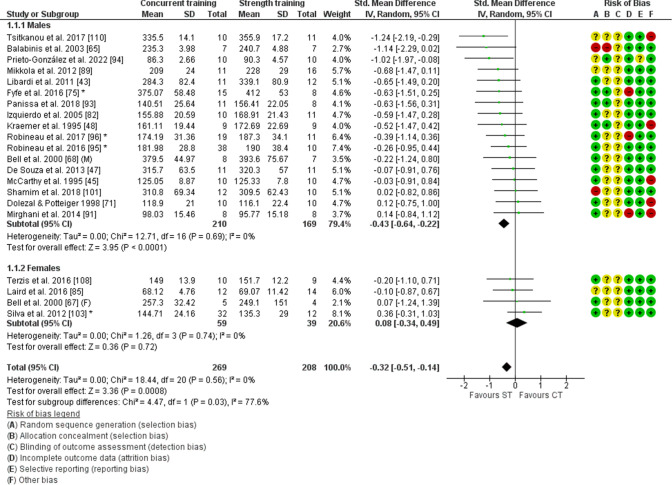
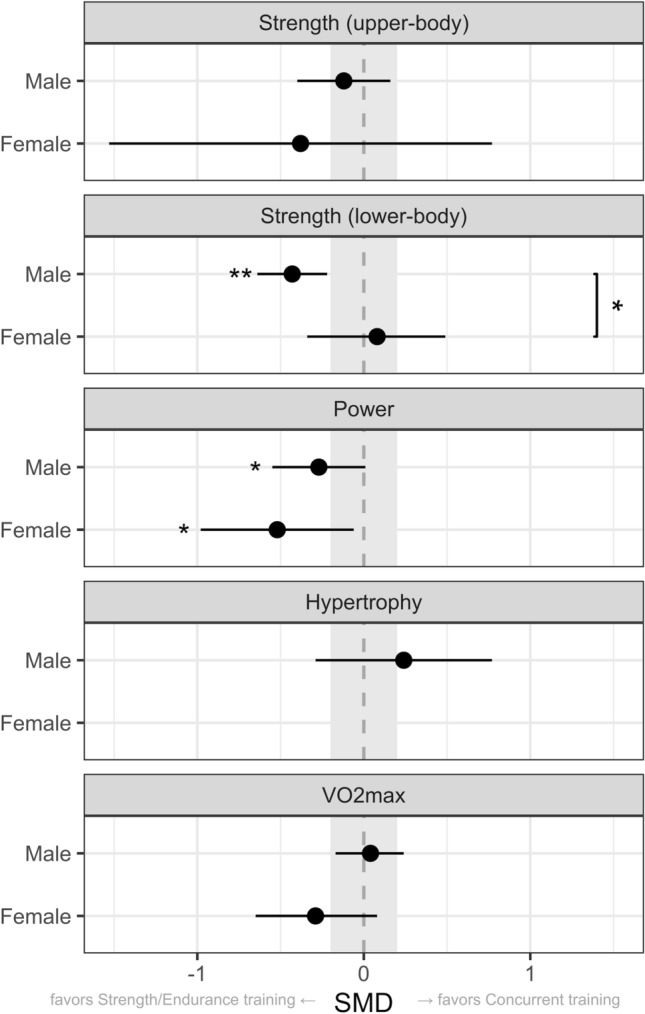
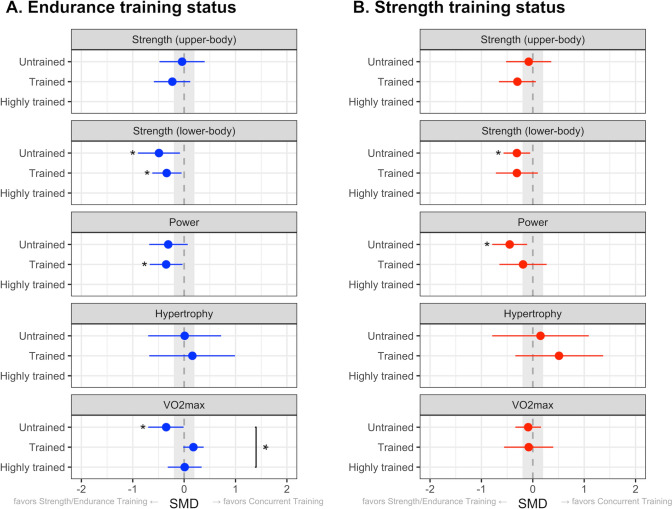
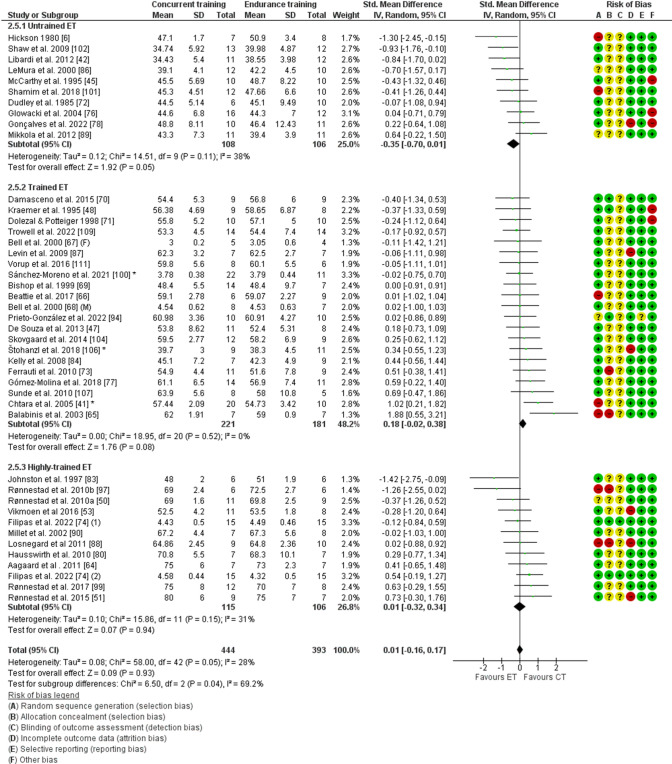
Background: Many sports require maximal strength and endurance performance. Concurrent strength and endurance training can lead to suboptimal training adaptations. However, how adaptations differ between males and females is currently unknown. Additionally, current training status may affect training adaptations. Objective: We aimed to assess sex-specific differences in adaptations in strength, power, muscle hypertrophy, and maximal oxygen consumption ( $$\dot{V}$$ V ˙ O 2max ) to concurrent strength and endurance training in healthy adults. Second, we investigated how training adaptations are influenced by strength and endurance training status. Methods: A systematic review and meta-analysis was conducted according to PRISMA (Preferred Reporting Items for Systematic Reviews and Meta-Analyses) guidelines, and a Cochrane risk of bias was evaluated. ISI Web of science, PubMed/MEDLINE, and SPORTDiscus databases were searched using the following inclusion criteria: healthy adults aged 18–50 years, intervention period of ≥ 4 weeks, and outcome measures were defined as upper- and lower-body strength, power, hypertrophy, and/or $$\dot{V}$$ V ˙ O 2max . A meta-analysis was performed using a random-effects model and reported in standardized mean differences. Results: In total, 59 studies with 1346 participants were included. Concurrent training showed blunted lower-body strength adaptations in males, but not in females (male: − 0.43, 95% confidence interval [− 0.64 to − 0.22], female: 0.08 [− 0.34 to 0.49], group difference: P = 0.03). No sex differences were observed for changes in upper-body strength ( P = 0.67), power ( P = 0.37), or $$\dot{V}$$ V ˙ O 2max ( P = 0.13). Data on muscle hypertrophy were insufficient to draw any conclusions. For training status, untrained but not trained or highly trained endurance athletes displayed lower $$\dot{V}$$ V ˙ O 2max gains with concurrent training ( P = 0.04). For other outcomes, no differences were found between untrained and trained individuals, both for strength and endurance training status. Conclusions: Concurrent training results in small interference for lower-body strength adaptations in males, but not in females. Untrained, but not trained or highly trained endurance athletes demonstrated impaired improvements in $$\dot{V}$$ V ˙ O 2max following concurrent training. More studies on females and highly strength-trained and endurance-trained athletes are warranted. Clinical Trial Registration: PROSPERO: CRD42022370894.
Overview
The claims and statistics of this paper haven’t been checked yet.
Free: it reads the open-access text and checks the first 5 claims that cite a source we can check. Create a free account to check every claim.
Integrity signals
Registry
Cites
Statistics
Figures
Verification
Claims the paper makes
The claims and statistics of this paper haven’t been checked yet.
Free: it reads the open-access text and checks the first 5 claims that cite a source we can check. Create a free account to check every claim.
Claims other papers make about this one
Each is checked against this paper’s own text: does it say what the citing paper says it does?
The source backs part of the claim, not all of it — or backs it for a different population, condition or comparison.
In the citing paper
“In addition, blunted adaptation to PRT may be due to the onset of neuromuscular fatigue [218,231].”
From Global consensus on optimal exercise recommendations for enhancing healthy longevity in older adults (ICFSR) (2025) · cites this paper as [218]
Experimental — accuracy not yet measuredIn the citing paper
“More recent studies showed that concurrent training (AE and PRT in the same session), performed twice weekly, resulted in similar adaptations in lower-upper body strength, power, and V̇O2 peak compared to PRT alone and comparable aerobic fitness to aerobic training alone [[218], [219], [220]] in moderately trained or untrained healthy.”
From Global consensus on optimal exercise recommendations for enhancing healthy longevity in older adults (ICFSR) (2025) · cites this paper as [218]
In the citing paper
“In addition, blunted adaptation to PRT may be due to the onset of neuromuscular fatigue [218,231].”
From Global consensus on optimal exercise recommendations for enhancing healthy longevity in older adults (ICFSR) (2025) · cites this paper as [218]
Self-check
Percentages, sums and reported differences re-computed from the paper’s own numbers.
The self-check needs the paper’s full text.
Citations
Cites
Measuring inconsistency in meta-analyses
Higgins, J. P. T., Thompson, S. G., Deeks, J. J., & Altman, D. G. (2003) · BMJ · doi:10.1136/bmj.327.7414.557 · Cited by 63,139 · cited 1×
“Heterogeneity was evaluated based on I 2 , with values of 25%, 50%, and 75% representing low, moderate, or high levels of heterogeneity, respectively [38].”
Meta-analysis in clinical trials
DerSimonian, R., & Laird, N. (1986) · Controlled Clinical Trials · doi:10.1016/0197-2456(86)90046-2 · Cited by 39,552 · cited 1×
“A random-effect model [36] was adopted and presented in forest plots, and records were weighted according to the inverse variance method for each outcome measure.”
Quantifying heterogeneity in a meta‐analysis
Higgins, J. P. T., & Thompson, S. G. (2002) · Statistics in Medicine · doi:10.1002/sim.1186 · Cited by 36,763 · cited 1×
“I 2 describes the percentage of the variability that is attributable to heterogeneity rather than chance [37].”
The Cochrane Collaboration's tool for assessing risk of bias in randomised trials
Higgins, J. P. T., Altman, D. G., Gotzsche, P. C., Juni, P., Moher, D., Oxman, A. D., Savovic, J., Schulz, K. F., Weeks, L., Sterne, J. A. C., et al. (2011) · BMJ · doi:10.1136/bmj.d5928 · Cited by 33,817
Cochrane Handbook for Systematic Reviews of Interventions: Cochrane Book Series
(2008) · doi:10.1002/9780470712184 · Cited by 25,048 · cited 4×
“1-RM one repetition maximum recommendation of the Cochrane Bias Methods Group and Statistical Methods Group [33].”
InfluentialDermyshi, E., Wang, Y., Yan, C., Hong, W., Qiu, G., Gong, X., & Zhang, T. (2017) · Neonatology · doi:10.1159/000454668 · Cited by 24,451
Progression Models in Resistance Training for Healthy Adults
(2009) · Medicine & Science in Sports & Exercise · doi:10.1249/mss.0b013e3181915670 · Cited by 4,332 · cited 1×
“…endurance training status [28, 29] based on multiple training and physiological performance indicators, such as training experience, attained ̇ V O 2max , and 1-RM. Training status is typically divided into three categories corresponding to untrained, trained, and highly trained athletes [30, 31].”
Defining Training and Performance Caliber: A Participant Classification Framework
McKay, A. K. A., Stellingwerff, T., Smith, E. S., Martin, D. T., Mujika, I., Goosey-Tolfrey, V. L., Sheppard, J., & Burke, L. M. (2022) · International Journal of Sports Physiology and Performance · doi:10.1123/ijspp.2021-0451 · Cited by 3,093 · cited 1×
“Recently, a new classification framework was proposed for determining training status in sport science studies [136].”
Skeletal muscle mass and distribution in 468 men and women aged 18–88 yr
Janssen, I., Heymsfield, S. B., Wang, Z., & Ross, R. (2000) · Journal of Applied Physiology · doi:10.1152/jappl.2000.89.1.81 · Cited by 3,087 · cited 1×
“On average, males have larger muscle fibers, more skeletal muscle mass, and greater strength [11–13], while females tend to have slower contractile properties [14].”
Outlier and influence diagnostics for meta-analysis
Viechtbauer, W., & Cheung, M. W.-L. (2010) · Research Synthesis Methods · doi:10.1002/jrsm.11 · Cited by 2,949 · cited 1×
“Last, sensitivity analyses were performed if one or more studies was considered to be an outlier and/or highly influential based on studen-tized residuals and Cook’s distances [39].”
Research works printed but not linked: 2
- Deeks J, Higgins J. Statistical algorithms in Review Manager 5. 2010.
- Balabinis CP Psarakis CH Moukas M Vassiliou MP Behrakis PK Early phase changes by concurrent endurance and strength training J Strength Cond Res 2003 17 393 401 12741884 · doi:10.1519/1533-4287(2003)017
Cited by
Izquierdo, M., de Souto Barreto, P., Arai, H., Bischoff-Ferrari, H. A., Cadore, E. L., Cesari, M., Chen, L.-K., Coen, P. M., Courneya, K. S., Duque, G., et al. (2025) · The Journal of nutrition, health and aging · doi:10.1016/j.jnha.2024.100401 · Cited by 273
Artificial intelligence in sport: A narrative review of applications, challenges and future trends
Zhou, D., Keogh, J., Ma, Y., Tong, R. K., Khan, A. R., & Jennings, N. R. (2025) · Journal of Sports Sciences · doi:10.1080/02640414.2025.2518694 · Cited by 123
CURRIER, B. S., D’SOUZA, A. C., SINGH, M. A. F., LOWISZ, C. V., RAWSON, E. S., SCHOENFELD, B. J., SMITH-RYAN, A. E., STEEN, J. P., THOMAS, G. A., TRIPLETT, N. T., et al. (2026) · Medicine & Science in Sports & Exercise · doi:10.1249/mss.0000000000003897 · Cited by 105
Hooren, B. V., Aagaard, P., & Blazevich, A. J. (2024) · Sports Medicine · doi:10.1007/s40279-024-02110-4 · Cited by 58
“Indeed, in relatively untrained individu-als—who experience larger fiber growth than better trained individuals—muscle fiber hypertrophy following concurrent training has been shown to attenuate the increase in maximum oxygen consumption for this reason [89].”
InfluentialWang, Z., Qiu, B., Li, R., Han, Y., Petersen, C. J., Liu, S., Zhang, Y., Liu, C., Candow, D. G., & Coso, J. D. (2024) · Nutrients · doi:10.3390/nu16213665 · Cited by 54
“The I 2 statistic was used to measure the degree of heterogeneity, with values less than 50% indicating low heterogeneity, 50–75% indicating moderate heterogeneity, and values greater than 75% indicating high heterogeneity [17,18].”
MethodPhysiological Resilience: What Is It and How Might It Be Trained?
JONES, A. M., & Kirby, B. S. (2025) · Scandinavian Journal of Medicine and Science in Sports · doi:10.1111/sms.70032 · Cited by 52
“While the influence of concurrent endurance and strength training on neuromuscular and metabolic adaptations is controversial, the balance of evidence suggests that interference effects are rather limited [66].”
Sandbakk, Ø. B., Tønnessen, E., Sandbakk, S. B., Losnegard, T., Seiler, S., & Haugen, T. A. (2025) · Sports Medicine - Open · doi:10.1186/s40798-025-00848-3 · Cited by 43
Yan, R., Jia, S., Lu, D., Song, W., Zhang, W., Sun, J., & Li, D. (2025) · The journal of nutrition health & aging · doi:10.1016/j.jnha.2025.100718 · Cited by 33
“Evidence suggests that concurrent aerobic and resistance training can produce an “ interference effect ” [56,57].”
Zhang, M., Fang, W., & Wang, J. (2025) · International Journal of Clinical and Health Psychology · doi:10.1016/j.ijchp.2025.100559 · Cited by 28
“The concept of “ interference effects ” in CT has been extensively discussed at the physiological level (Coffey & Hawley, 2017; Fyfe et al., 2014; Huiberts et al., 2024; Lundberg et al., 2022; Wadsworth et al., 2022).”
Zhao, R., Dong, Y., Zheng, Q., & Yao, J. (2025) · Frontiers in Nutrition · doi:10.3389/fnut.2025.1685014 · Cited by 16
Mănescu, D. C. (2025) · Sports · doi:10.3390/sports13090298 · Cited by 36
“For concurrent training schedules, avoid configurations known to compromise strength–power adaptations (e.g., excessive endurance proximity); evidence suggests careful sequencing mitigates interference effects [14].”
Lecce, E., Bellini, A., Greco, G., Martire, F., di Palumbo, A. S., Sacchetti, M., & Bazzucchi, I. (2025) · The Journal of Physiology · doi:10.1113/jp287589 · Cited by 25
“…on the physiological response to mechanical overload in promoting hypertrophy and the higher metabolic rate promoted by aerobic exercise, further contributing to physical fitness, weight management and individual independence (Coffey & Hawley, 2017; Huiberts et al., 2024; Maiorana et al., 2002).”
Heyne, E., Zeeb, S., Junker, C., Petzinna, A., Schrepper, A., Doenst, T., Koch, L. G., Britton, S. L., & Schwarzer, M. (2024) · Cells · doi:10.3390/cells13050393 · Cited by 15
Importance of strength training for sustaining performance and health in military personnel
Taipale, R. S., Drain, J. R., Vaara, J. P., Nindl, B. C., & Kyröläinen, H. (2024) · BMJ Military Health · doi:10.1136/military-2024-002744 · Cited by 13
Gomes, M., Fitas, A., Santos, P., Pezarat‐Correia, P., & Mendonça, G. V. (2025) · Journal of Sports Sciences · doi:10.1080/02640414.2025.2518827 · Cited by 8
“…an interplay of several factors, including training frequency and intensity (J. Wilson et al., 2012), exercise order and timing (Gao & Yu, 2023), endurance modality (Lundberg et al., 2022), and individual characteristics such as training status (Petre et al., 2021) and sex (Huiberts et al., 2024).”
Li, Z., Qi, Y., Chen, X., Li, J., Zhang, J., Li, P., & Zhou, Z. (2024) · Scandinavian Journal of Medicine and Science in Sports · doi:10.1111/sms.14764 · Cited by 14
Gomes, M., Gonçalves, A. D., Pezarat‐Correia, P., & Mendonça, G. V. (2024) · Journal of Applied Physiology · doi:10.1152/japplphysiol.00680.2024 · Cited by 8
Poli, L., Petrelli, A. C., Fischetti, F., Morsanuto, S., Talaba, L., Cataldi, S., & Greco, G. (2025) · Medicina · doi:10.3390/medicina61050822 · Cited by 9
Zambrano-Villacres, R., Campuzano-Donoso, M., Reytor-González, C., Rossetti, G., Cobellis, L., Cobellis, F., Pilone, V., Simancas‐Racines, D., & Schiavo, L. (2026) · Nutrients · doi:10.3390/nu18111751 · Cited by 9
“Concurrent training programs can be effective when appropriately balanced, avoiding excessive endurance volume that may compromise strength adaptations [169,170].”
Ramos‐Campo, D. J., Andreu‐Caravaca, L., Clemente‐Suárez, V. J., & Rubio‐Arias, J. Á. (2025) · The Journal of Strength and Conditioning Research · doi:10.1519/jsc.0000000000005056 · Cited by 11
“In item 13 (account for risk of bias while interpreting/discussing the results), only 3 studies (18,22,31) achieved a yes.”
InfluentialPower and Endurance: Polar Opposites or Willing Partners?
Ferguson, C., Furrer, R., Murach, K. A., Hepple, R. T., & Rossiter, H. B. (2025) · Medicine & Science in Sports & Exercise · doi:10.1249/mss.0000000000003793 · Cited by 8
“In contrast to the evidence that increases in peak neuromuscular power may be negatively affected by concurrent endurance and resistance exercise training (17,36), meta-analyses show that adaptation in ˙ VO 2max does not seem to be impaired by concurrent training (17,37).”
Denadai, B. S., & Greco, C. C. (2025) · Medical Hypotheses · doi:10.1016/j.mehy.2025.111614 · Cited by 7
Reljic, D., Zieseniss, N., Herrmann, H. J., Neurath, M. F., & Zopf, Y. (2024) · Nutrients · doi:10.3390/nu16162713 · Cited by 12
Shi, F., & Chen, J. (2025) · Aging and Disease · doi:10.14336/ad.2025.0670 · Cited by 8
“…physiological benefits: aerobic exercise primarily enhances cardiorespiratory fitness, insulin sensitivity, and fat oxidation, while resistance training focuses on mechanical tension to stimulate muscle protein synthesis via pathways such as mTOR, thereby improving muscle mass and strength [82].”
Han, Y., Han, Y.-X., Huang, F., Zou, H.-M., Gu, Q., Hu, X. F., Fang, J.-X., Meng, J., & Wang, S. (2025) · Frontiers in Endocrinology · doi:10.3389/fendo.2025.1471608 · Cited by 5
Liu, C., Zhang, Z., Zhang, Y., Kong, H., Zhao, E., & Xie, Y. (2026) · BMC Women s Health · doi:10.1186/s12905-026-04359-5 · Cited by 4
Chen, W. (2025) · Journal of Health Population and Nutrition · doi:10.1186/s41043-025-01031-w · Cited by 4
“Recent work suggests that when volume and intensity are properly managed, concurrent training can yield gains in both domains [127, 128].”
de Haan, M., van der Zwaard, S., Sanders, J., Beek, P. J., & Jaspers, R. T. (2025) · Journal of Sports Science and Medicine · doi:10.52082/jssm.2025.764 · Cited by 8
Vos, L., Vergeer, R. N., Goulding, R. P., Weide, G., de Koning, J. J., Jaspers, R. T., & van der Zwaard, S. (2025) · Applied Artificial Intelligence · doi:10.1080/08839514.2025.2565167 · Cited by 7
“…number of observations (Jordan and Mitchell 2015), in sport science (Mesquida et al. 2023; Stessens et al. 2024) and concurrent training research (Huiberts, Wüst, and van der Zwaard 2024; Schumann et al. 2022) the number of observations is typically small, with a median sample size of…”
InfluentialStatistical power analysis in exercise science
Uehata, A., & Rein, R. (2025) · Journal of Sports Sciences · doi:10.1080/02640414.2025.2571841 · Cited by 7
Jeong, S. Y. (2025) · Cureus · doi:10.7759/cureus.96018 · Cited by 13
“…concurrent endurance and resistance training may produce modest interference effects on lower-body strength in males, though the impact on hypertrophy and overall strength is nuanced and depends on factors such as training status, sex, and the frequency and duration of endurance exercise [102].”
The impact of concurrent training in team sports and soccer
Malamud, O., & Smukas, I. I. R. (2024) · The Journal of Sports Medicine and Physical Fitness · doi:10.23736/s0022-4707.24.16357-8 · Cited by 6
Stronger hearts, weaker leaps? The cardiac power paradox in elite soccer
Papadakis, Z., Κουτλιάνος, Ν., Panoutsakopoulos, V., & Kouidi, E. J. (2025) · European Journal of Applied Physiology · doi:10.1007/s00421-025-06026-3 · Cited by 3
“…the broader literature on concurrent training, which consistently shows that the greatest interference occurs in tasks requiring explosive power rather than maximal strength or endurance (Gomes et al. 2025; Huiberts et al. 2024; Manuel Clemente et al. 2021; Petre et al. 2021; Schumann et al. 2022).”
Nugroho, D., Syaifullah, R., Sabarini, S. S., Liskustyawati, H., Putro, B. N., & Jariono, G. (2024) · Physical Education Theory and Methodology · doi:10.17309/tmfv.2024.4.19 · Cited by 7
“The capacity of muscles to continue moving during high-intensity or static exercise is known as muscular endurance (Huiberts et al., 2024).”
BackgroundFeng, Z., Ying, W., & Jun, W. (2026) · Frontiers in Sports and Active Living · doi:10.3389/fspor.2025.1692399 · Cited by 3
Tsartsapakis, I., Zafeiroudi, A., & Kouthouris, C. (2026) · Journal of Functional Morphology and Kinesiology · doi:10.3390/jfmk11010080 · Cited by 3
“Sex and training status modulate interference effects in concurrent training [28].”
López, P., Rech, A., Petropoulou, M., Silveira, C. B., Molinari, T., Muller, C. T., Casara, P., Bettariga, F., Singh, F., & Radaelli, R. (2026) · Sports Medicine · doi:10.1007/s40279-026-02402-x · Cited by 5
“Interestingly, multiple studies suggest that combining RE and AE (COMB) may compromise gains in lean mass and muscle strength compared with RE alone in healthy adults [24–26], while it may affect cardiorespiratory gains depending on training status [26].”
Does Sprint Interval Training Cause Interference in Concurrent Training? A Meta-Analysis Study
Ferraro-Farro, D., Bandeira‐Guimarães, M., Blanco‐Rambo, E., Vieira, A., Cadore, E. L., & Benítez‐Flores, S. (2026) · International Journal of Sports Medicine · doi:10.1055/a-2820-4527 · Cited by 2
Maximizing Adaptations in Concurrent Training: An Umbrella Review of Meta-analyses
Held, S., Wolf, L., Rappelt, L., Bloch, W., Donath, L., Micke, F., Geisler, S., & Isenmann, E. (2026) · Sports Medicine · doi:10.1007/s40279-026-02401-y · Cited by 3
“Huiberts and colleagues [44] demonstrated that training responses to CT may differ based on an individual’s prior strength or endurance training background.”
InfluentialFemale athletes: a state-of-the-art review of multiorgan influence of exercise training
Gioia, G. D., Segreti, A., Celeski, M., Crispino, S. P., Buzzelli, L., Mango, F., Ferrera, A., Squeo, M. R., Vespasiano, F., Ussia, G. P., et al. (2025) · The Journal of Sports Medicine and Physical Fitness · doi:10.23736/s0022-4707.24.16265-2 · Cited by 1
Campoli, F., Padua, E., Panzarino, M., Caprioli, L., Annino, G., & Lombardo, M. (2025) · Sports · doi:10.3390/sports13080258 · Cited by 1
“Similar results were reported by Huiberts et al. [38], who suggest that gender and training status should always be considered when evaluating the effects of different training modalities on diet and performance.”
Walther, J., Kocbach, J., Haugen, T. A., Schumann, M., & Sandbakk, Ø. B. (2026) · International Journal of Sports Physiology and Performance · doi:10.1123/ijspp.2026-0012 · Cited by 1
Manihuruk, F., Nasrulloh, A., Nugroho, S., Sumaryanto, S., Guntur, G., Prasetyo, Y., Sulistiyono, S., Sumaryanti, S., & Galeko, J. P. (2024) · doi:10.56984/8zg020aznr · Cited by 1
Predicting physical performance after training: insights from machine learning using small samplesPreprint
Vos, L., Vergeer, R. N., Goulding, R. P., Weide, G., de Koning, J. J., Jaspers, R. T., & van der Zwaard, S. (2024) · Research Square · doi:10.21203/rs.3.rs-4707433/v1
Daly, L. S. (2025) · Medicine & Science in Sports & Exercise · doi:10.1249/mss.0000000000003657 · Cited by 2
Ferraz, J. H. T. D., Gameiro, V. L. L., Dutra, T. N., Gonçalves, M. M., de Freitas, F. H., & Miranda, H. L. (2025) · Revista de Educação Física / Journal of Physical Education · doi:10.37310/ref.v94i2.3065
Cheng, Y., Ma, J., Rong Ju, Y. E., Bo, S., & Li, Q. (2025) · BMC Sports Science Medicine and Rehabilitation · doi:10.1186/s13102-025-01464-0 · Cited by 1
“Comparable CT interventions in other age or sex groups have also demonstrated favourable body composition and functional outcomes [33, 37, 41].”
Platen, P. (2025) · Springer eBooks · doi:10.1007/978-3-662-69524-1_11
Effects of concurrent training on speed and agility performance in soccer referees
Baydemir, B., Kaçay, Z., Talaghir, L.-G., & Ivan, P. (2026) · Frontiers in Physiology · doi:10.3389/fphys.2026.1768715 · Cited by 1
Factors Influencing the Efficacy of Concurrent Training in Team Sports: A Narrative Review
Tundidor-Duque, R. M., Pareja‐Blanco, F., Drozd, M., Pereira, L. A., & Loturco, I. (2026) · Journal of Human Kinetics · doi:10.5114/jhk/216685
“…on the athlete’s performance level, with top-level athletes being much more susceptible to the negative (or absent) effects of CT than their less specialized peers, especially regarding speed-and power-related abilities (Blechschmied et al., 2024; Huiberts et al., 2024; Wang and Bo, 2024).”
Huang, S., Wang, Q., Li, Q., Poon, E. T., Xing, H., Ma, X., Lu, D., Liu, H., Bao, D., Huang, Y., et al. (2026) · BMC Sports Science Medicine and Rehabilitation · doi:10.1186/s13102-026-01590-3
“…training (TR) combined with aerobic exercise has been shown to effectively reduce body fat, increase muscle mass, and improve basic strength [4, 5], the systematic implementation of power-oriented training is frequently constrained by limited access to equipment, insufficient technical…”
Papadakis, Z., Κουτλιάνος, Ν., Panoutsakopoulos, V., & Kouidi, E. J. (2026) · Frontiers in Network Physiology · doi:10.3389/fnetp.2026.1741770
“…and explosive power parallels what the current interference theory depicts in concurrent training model (Schumann et al., 2022; Vechin et al., 2021; Huiberts et al., 2024; Arslan et al., 2025; Malamud and Smukas, 2025; Gomes et al., 2025; Wang and Bo, 2024; Chen et al., 2024; Blechschmied et al.,…”
InfluentialLi, S., Yin, Y., Guan, J., & Yu, L. (2026) · Frontiers in Medicine · doi:10.3389/fmed.2026.1760792
Oxidative stress and antioxidant enzyme activities in elite female Turkish cross-country skiers
Seyhan, S., Bilici, M. F., Demir, H., Bilici, Ö. F., Kahraman, M. Z., Sahin, M. F., Ağlar, S., Soylu, Ç., Açar, G., & Kızılca, S. (2026) · BMC Sports Science Medicine and Rehabilitation · doi:10.1186/s13102-026-01674-0
“Studies have reported associations between sustained training exposure and lower resting lipid peroxidation indices, including MDA, particularly under standardized sampling conditions [4, 33–36].”
Nieto, Á. A. V., Díaz, A. H., Millán, M. H., & Sagredo, D. (2026) · Sports Health A Multidisciplinary Approach · doi:10.1177/19417381261438760
“32,38 Concurrent Training (Aerobic + Resistance) The premise that aerobic training blunts hypertrophy has been challenged.”
Haugen, T. A., Sandbakk, Ø., Sandbakk, S. B., & Tønnessen, E. (2026) · The Journal of Strength and Conditioning Research · doi:10.1519/jsc.0000000000005447
Akhmetov, N., Turdaliyev, R. M., Botagariyev, T. A., Kuspanov, N. S., Kystaubaeva, K., & Turebayev, B. (2026) · Women in Sport and Physical Activity Journal · doi:10.1123/wspaj.2026-0009
Zhang, M., Yan, R., Lou, L., Wu, K., Bian, J., Li, D., & Sun, J. (2026) · Sports Health A Multidisciplinary Approach · doi:10.1177/19417381261451825
“23,30,55 However, a growing body of evidence indicated that these training interactions may enhance brain plasticity and cognitive function synergistically.”
Park, J.-H., Kong, S., Kang, E. S., Jang, S., Lee, J., Kang, M., Kwak, T., Kim, Y., Song, J., Khil, J., et al. (2026) · Journal of science and medicine in sport · doi:10.1016/j.jsams.2026.07.008
Pharyngeal Fatigability: A Missing Link in Dysphagia Outcome Measures
Turner, M. B., Atkinson, C., & Toles, L. E. (2026) · Perspectives of the ASHA Special Interest Groups · doi:10.1044/2026_persp-26-00009
castaño, J. C. O., Navandar, A., & Santos‐García, D. J. (2026) · International Journal of Sports Science & Coaching · doi:10.1177/17479541261471819
Paul, K., Ball, N. B., Mara, J. K., Brassington, R. J., & Cooke, J. (2026) · International Journal of Sports Science & Coaching · doi:10.1177/17479541261470672
Lee, J., Kim, T., Hwang, D., Kyun, S., Jang, I., Kim, N., Lim, K., Park, H., Kwon, I., Kim, S.-W., et al. (2026) · Metabolites · doi:10.3390/metabo16090618
“…providing stimuli necessary to preserve muscle function and lean mass. Concurrent resistance and aerobic exercise may provide both mechanical loading of skeletal muscle and oxidative metabolic stimuli, making it an effective strategy for improving body composition and metabolic health [12–14].”
Katanić, B., Aleksić‐Veljković, A., Radaković, R., & Šekeljić, G. (2026) · Zbornik radova Pedagoskog fakulteta Uzice · doi:10.5937/zrpfu2629147k
TANIGUCHI, K., Horiuchi, K., Wada, N., Mizuno, Y., NISHIYAMA, T., Kikuchi, N., & Sugita, M. (2026) · Frontiers in Sports and Active Living · doi:10.3389/fspor.2026.1910721
“Previous studies have reported that concurrent endurance and strength training can induce an interference effect, potentially impairing gains in muscle strength and power performance (14, 15).”
Zhao, Y.-C., Zhang, H.-B., & Wang, W.-L. (2026) · Journal of Sports Sciences · doi:10.1080/02640414.2026.2732611
Kikuchi, S., Zempo, H., Kamiya-Saito, M., Inoguchi, T., Oyabe, S., Homma, H., Shinchi, K., Mochizuki, Y., & Kikuchi, N. (2026) · International Journal of Sports Medicine · doi:10.1055/a-2943-8779
Hormati, A. H., Nasab, N. Y., Asadi, A., & Harran, O. H. (2026) · Asian Journal of Sports Medicine · doi:10.5812/asjsm-165137
Zhao, Y.-C., & Tian, Z. C. (2026) · Science & Sports · doi:10.1016/j.scispo.2026.07.004
Masliuk, R. V., & Рудкевич, О. (2026) · Academic Visions · doi:10.66556/2786-586x.59.masliuk-r
Steidle, T., Meixner, B. J., Lenk, M., Schaffarczyk, M., & Sperlich, B. (2026) · Frontiers in Sports and Active Living · doi:10.3389/fspor.2026.1936767
Wang, T., Guan, N. Y., Amri, S., Kamalden, T. F. T., Gao, Z., & Yuan, Q. (2026) · PeerJ · doi:10.7717/peerj.21807
Владиславович, О. Е., Yuroshkevich, T. A., & Александрович, Ш. А. (2026) · Physical Education and University Sport · doi:10.18500/2782-4594-2026-5-3-272-279
LI, K., Ma, K., Shao, H., & Xu, Z. (2026) · International Journal of Sports Science & Coaching · doi:10.1177/17479541261500529
Gomes, M., Costa, M., Pezarat‐Correia, P., & Mendonça, G. V. (2026) · The Journal of Strength and Conditioning Research · doi:10.1519/jsc.0000000000005698
Metadata
- Authors
- Huiberts, R. O., Wüst, R. C. I., & van der Zwaard, S.
- Affiliations
- Amsterdam Movement Sciences (NL)
- Venue
- Sports Medicine
- Published
- 2023-10-17
- Volume
- 54
- Issue
- 2
- Pages
- 485-503
- ISSN
- 0112-1642 (ISSN-L)
- 1179-2035
- PMC
- PMC10933151
- OpenAlex
- W4387692605
- Cited by
- 75
- References
- 173
- Citations by year
- 2026: 36 · 2025: 27 · 2024: 12
- FWCI
- 4.14
- Type
- journal article
- Language
- en
- Open access
- hybrid
- doi.org
- Licence
- cc-by
- creativecommons.org/licenses/by/4.0 (tdm)
- creativecommons.org/licenses/by/4.0 (vor)
- Locations
- Sports Medicine (publishedVersion, cc-by)
- PubMed Central (publishedVersion, cc-by)
- PubMed (publishedVersion)
- VU Research Portal (publishedVersion, other-oa)
- Pure Amsterdam UMC (submittedVersion, cc-by)
- Topics
- Health Sciences › Medicine › Orthopedics and Sports Medicine › Sports Performance and Training
- Health Sciences › Medicine › Physiology (medical) › Cardiovascular and exercise physiology
- Health Sciences › Nursing › Nutrition and Dietetics › Muscle metabolism and nutrition
- Keywords
- concurrent training, resistance training, endurance training, sex differences, training status, lower limb strength, VO2max, muscle power, muscle hypertrophy, endurance athletes, untrained individuals, training effects, interference effects, healthy adults
- MeSH terms
- Endurance Training, Adaptation, Physiological, Adult, Female, Humans, Hypertrophy, Male, Oxygen Consumption, Physical Endurance, Sex Factors, Sports, Muscle, Skeletal, Muscle Strength, Resistance Training, Athletes
About these checks
Registry, retraction, Cites and statistics results are computed, not judged, with one exception: a printed reference that no index lists is read once by a model before it counts as a citation error. Claims are extracted by a model and kept only when their quote appears verbatim in the text; each cited source is then checked, with a model’s help, for whether it says what the claim relies on. Those verdicts can be wrong — read the claim’s quote and the cited source before relying on one.
Statistics and arithmetic are recomputed, not judged.
Confidence bands are shown only for fields calibrated on our annotated test set. None is calibrated yet, so no band is shown.
What counts as a claim ›How we measure confidence ›How we check this ›
Are you an author, or do you see a problem with this page? Request a review
Data sources
Bibliographic data: Semantic Scholar, OpenAlex, Crossref.
Contains information from the Semantic Scholar Academic Graph Datasets, made available under the ODC Attribution License (ODC-BY 1.0).
Semantic Scholar’s data is described in: Kinney, R., et al. (2023). The Semantic Scholar Open Data Platform. arXiv:2301.10140.
