

Concurrent Strength and Endurance Training: A Systematic Review and Meta-Analysis on the Impact of Sex and Training Status
Open accessThe DOI matches its Crossref record; 174 of the 174 references it cites were found in a registry or an index.
Abstract
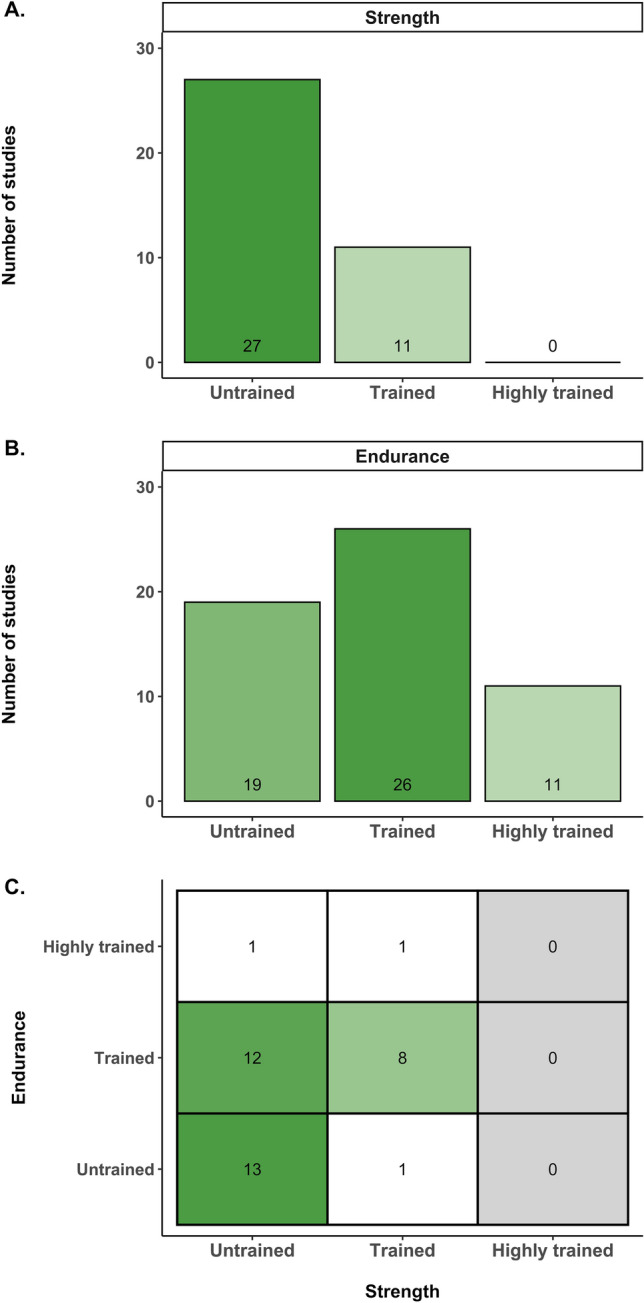
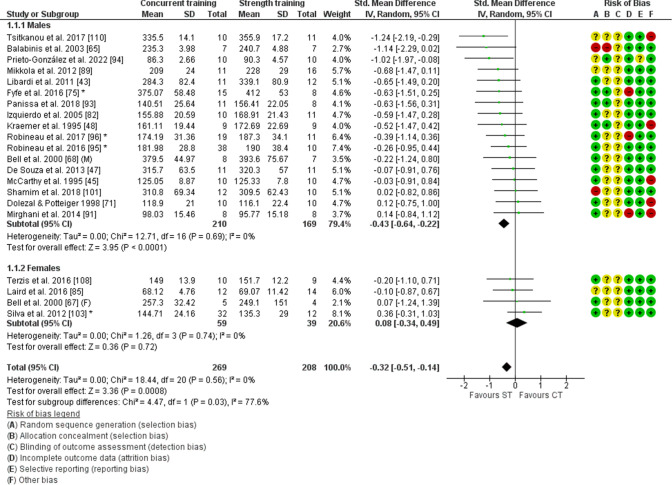
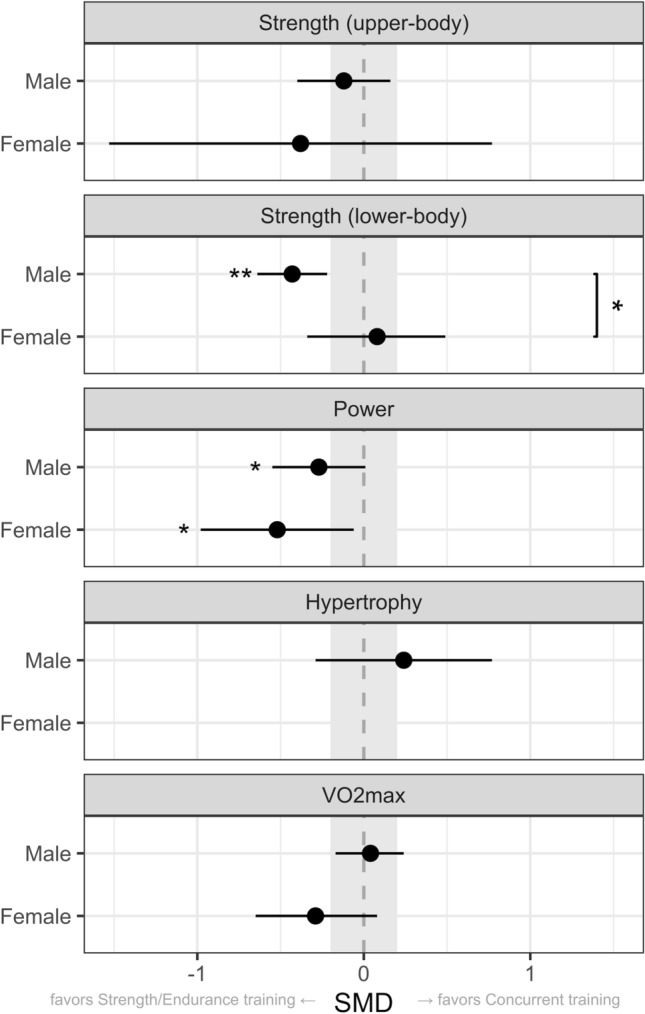
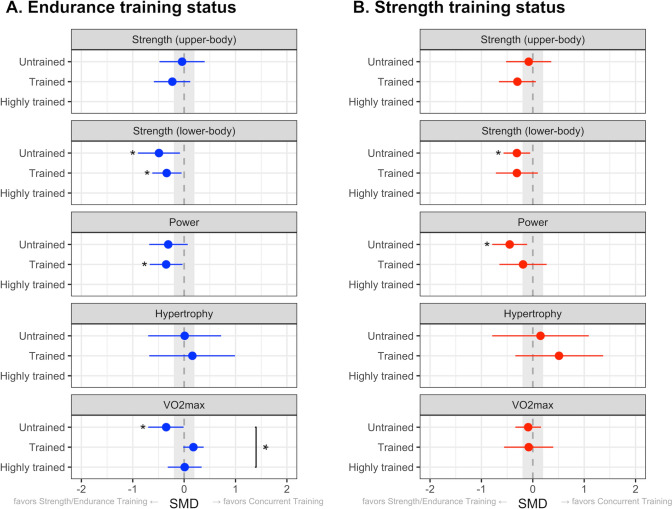
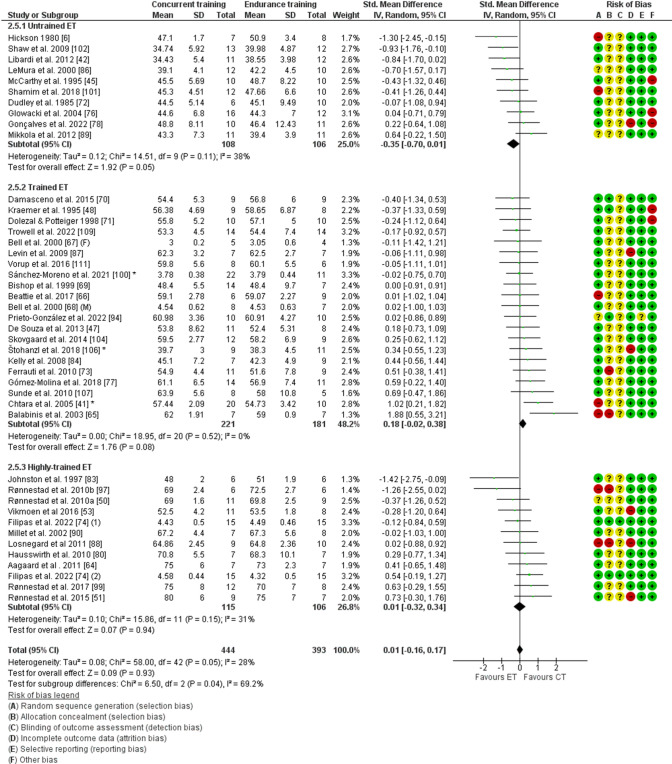
Background: Many sports require maximal strength and endurance performance. Concurrent strength and endurance training can lead to suboptimal training adaptations. However, how adaptations differ between males and females is currently unknown. Additionally, current training status may affect training adaptations. Objective: We aimed to assess sex-specific differences in adaptations in strength, power, muscle hypertrophy, and maximal oxygen consumption ( $$\dot{V}$$ V ˙ O 2max ) to concurrent strength and endurance training in healthy adults. Second, we investigated how training adaptations are influenced by strength and endurance training status. Methods: A systematic review and meta-analysis was conducted according to PRISMA (Preferred Reporting Items for Systematic Reviews and Meta-Analyses) guidelines, and a Cochrane risk of bias was evaluated. ISI Web of science, PubMed/MEDLINE, and SPORTDiscus databases were searched using the following inclusion criteria: healthy adults aged 18–50 years, intervention period of ≥ 4 weeks, and outcome measures were defined as upper- and lower-body strength, power, hypertrophy, and/or $$\dot{V}$$ V ˙ O 2max . A meta-analysis was performed using a random-effects model and reported in standardized mean differences. Results: In total, 59 studies with 1346 participants were included. Concurrent training showed blunted lower-body strength adaptations in males, but not in females (male: − 0.43, 95% confidence interval [− 0.64 to − 0.22], female: 0.08 [− 0.34 to 0.49], group difference: P = 0.03). No sex differences were observed for changes in upper-body strength ( P = 0.67), power ( P = 0.37), or $$\dot{V}$$ V ˙ O 2max ( P = 0.13). Data on muscle hypertrophy were insufficient to draw any conclusions. For training status, untrained but not trained or highly trained endurance athletes displayed lower $$\dot{V}$$ V ˙ O 2max gains with concurrent training ( P = 0.04). For other outcomes, no differences were found between untrained and trained individuals, both for strength and endurance training status. Conclusions: Concurrent training results in small interference for lower-body strength adaptations in males, but not in females. Untrained, but not trained or highly trained endurance athletes demonstrated impaired improvements in $$\dot{V}$$ V ˙ O 2max following concurrent training. More studies on females and highly strength-trained and endurance-trained athletes are warranted. Clinical Trial Registration: PROSPERO: CRD42022370894.
Overview
The claims and statistics of this paper haven’t been checked yet.
Free: it reads the open-access text and checks the first 5 claims that cite a source we can check. Create a free account to check every claim.
Integrity signals
Registry
Cites
Statistics
Figures
Verification
Claims the paper makes
The claims and statistics of this paper haven’t been checked yet.
Free: it reads the open-access text and checks the first 5 claims that cite a source we can check. Create a free account to check every claim.
Claims other papers make about this one
Each is checked against this paper’s own text: does it say what the citing paper says it does?
The source backs part of the claim, not all of it — or backs it for a different population, condition or comparison.
In the citing paper
“In addition, blunted adaptation to PRT may be due to the onset of neuromuscular fatigue [218,231].”
From Global consensus on optimal exercise recommendations for enhancing healthy longevity in older adults (ICFSR) (2025) · cites this paper as [218]
Experimental — accuracy not yet measuredIn the citing paper
“More recent studies showed that concurrent training (AE and PRT in the same session), performed twice weekly, resulted in similar adaptations in lower-upper body strength, power, and V̇O2 peak compared to PRT alone and comparable aerobic fitness to aerobic training alone [[218], [219], [220]] in moderately trained or untrained healthy.”
From Global consensus on optimal exercise recommendations for enhancing healthy longevity in older adults (ICFSR) (2025) · cites this paper as [218]
In the citing paper
“In addition, blunted adaptation to PRT may be due to the onset of neuromuscular fatigue [218,231].”
From Global consensus on optimal exercise recommendations for enhancing healthy longevity in older adults (ICFSR) (2025) · cites this paper as [218]
Self-check
Percentages, sums and reported differences re-computed from the paper’s own numbers.
The self-check needs the paper’s full text.
Citations
Cites
Measuring inconsistency in meta-analyses
Higgins, J. P. T., Thompson, S. G., Deeks, J. J., & Altman, D. G. (2003) · BMJ · doi:10.1136/bmj.327.7414.557 · Cited by 63,139 · cited 1×
“Heterogeneity was evaluated based on I 2 , with values of 25%, 50%, and 75% representing low, moderate, or high levels of heterogeneity, respectively [38].”
Meta-analysis in clinical trials
DerSimonian, R., & Laird, N. (1986) · Controlled Clinical Trials · doi:10.1016/0197-2456(86)90046-2 · Cited by 39,552 · cited 1×
“A random-effect model [36] was adopted and presented in forest plots, and records were weighted according to the inverse variance method for each outcome measure.”
Quantifying heterogeneity in a meta‐analysis
Higgins, J. P. T., & Thompson, S. G. (2002) · Statistics in Medicine · doi:10.1002/sim.1186 · Cited by 36,763 · cited 1×
“I 2 describes the percentage of the variability that is attributable to heterogeneity rather than chance [37].”
The Cochrane Collaboration's tool for assessing risk of bias in randomised trials
Higgins, J. P. T., Altman, D. G., Gotzsche, P. C., Juni, P., Moher, D., Oxman, A. D., Savovic, J., Schulz, K. F., Weeks, L., Sterne, J. A. C., et al. (2011) · BMJ · doi:10.1136/bmj.d5928 · Cited by 33,817
Cochrane Handbook for Systematic Reviews of Interventions: Cochrane Book Series
(2008) · doi:10.1002/9780470712184 · Cited by 25,048 · cited 4×
“1-RM one repetition maximum recommendation of the Cochrane Bias Methods Group and Statistical Methods Group [33].”
InfluentialDermyshi, E., Wang, Y., Yan, C., Hong, W., Qiu, G., Gong, X., & Zhang, T. (2017) · Neonatology · doi:10.1159/000454668 · Cited by 24,451
Progression Models in Resistance Training for Healthy Adults
(2009) · Medicine & Science in Sports & Exercise · doi:10.1249/mss.0b013e3181915670 · Cited by 4,332 · cited 1×
“…endurance training status [28, 29] based on multiple training and physiological performance indicators, such as training experience, attained ̇ V O 2max , and 1-RM. Training status is typically divided into three categories corresponding to untrained, trained, and highly trained athletes [30, 31].”
Defining Training and Performance Caliber: A Participant Classification Framework
McKay, A. K. A., Stellingwerff, T., Smith, E. S., Martin, D. T., Mujika, I., Goosey-Tolfrey, V. L., Sheppard, J., & Burke, L. M. (2022) · International Journal of Sports Physiology and Performance · doi:10.1123/ijspp.2021-0451 · Cited by 3,093 · cited 1×
“Recently, a new classification framework was proposed for determining training status in sport science studies [136].”
Skeletal muscle mass and distribution in 468 men and women aged 18–88 yr
Janssen, I., Heymsfield, S. B., Wang, Z., & Ross, R. (2000) · Journal of Applied Physiology · doi:10.1152/jappl.2000.89.1.81 · Cited by 3,087 · cited 1×
“On average, males have larger muscle fibers, more skeletal muscle mass, and greater strength [11–13], while females tend to have slower contractile properties [14].”
Outlier and influence diagnostics for meta-analysis
Viechtbauer, W., & Cheung, M. W.-L. (2010) · Research Synthesis Methods · doi:10.1002/jrsm.11 · Cited by 2,949 · cited 1×
“Last, sensitivity analyses were performed if one or more studies was considered to be an outlier and/or highly influential based on studen-tized residuals and Cook’s distances [39].”
Fundamentals of Resistance Training: Progression and Exercise Prescription
KRAEMER, W. J., & RATAMESS, N. A. (2004) · Medicine & Science in Sports & Exercise · doi:10.1249/01.mss.0000121945.36635.61 · Cited by 1,992 · cited 2×
“…endurance training status [28, 29] based on multiple training and physiological performance indicators, such as training experience, attained ̇ V O 2max , and 1-RM. Training status is typically divided into three categories corresponding to untrained, trained, and highly trained athletes [30, 31].”
Folland, J. P., & Williams, A. G. (2007) · Sports Medicine · doi:10.2165/00007256-200737020-00004 · Cited by 1,347 · cited 1×
“Men show larger absolute gains in fiber size [120, 121], which may relate to the observation that glycolytic type II fibers have the larger potential to hypertrophy than type I fibers [122].”
Three-level meta-analysis of dependent effect sizes
Van den Noortgate, W., López-López, J. A., Marín-Martínez, F., & Sánchez-Meca, J. (2013) · Behavior Research Methods · doi:10.3758/s13428-012-0261-6 · Cited by 1,130 · cited 1×
“In the present meta-analysis, however, the number of analyzed studies was too small to perform a three-level meta-analysis [163, 164] and could result in biased estimates of the variance and standard error at the third level (i.e., within studies) [163].”
Physiological adaptations to interval training and the role of exercise intensity
MacInnis, M. J., & Gibala, M. J. (2017) · The Journal of Physiology · doi:10.1113/jp273196 · Cited by 1,124 · cited 2×
“This is in line with the time courses of adaptations to endurance training, showing very rapid increases in mitochondrial oxidative capacity [139, 145, 146] and improvements in capillarization [139, 147] and blood volume [148] with ~ 2 to 4 weeks of training, while central cardiovascular…”
Gender differences in strength and muscle fiber characteristics
Miller, A. E. J., MacDougall, J. D., Tarnopolsky, M. A., & Sale, D. G. (1993) · European Journal of Applied Physiology and Occupational Physiology · doi:10.1007/bf00235103 · Cited by 1,094 · cited 3×
“On average, males tend to have larger muscle fibers and a larger percentage of their cross-sectional area occupied by type II fibers [13, 112, 113, 115, 116].”
Biochemical Adaptations to Endurance Exercise in Muscle
Holloszy, J. O., & Booth, F. W. (1976) · Annual Review of Physiology · doi:10.1146/annurev.ph.38.030176.001421 · Cited by 1,053
Intercoder Reliability and Validity of WebPlotDigitizer in Extracting Graphed Data
Drevon, D., Fursa, S. R., & Malcolm, A. L. (2017) · Behavior Modification · doi:10.1177/0145445516673998 · Cited by 1,006 · cited 1×
“If data on group mean and standard deviation were not presented in the text or tables, then baseline and post-intervention data were requested from the corresponding authors or obtained from figures (if present) using WebPlotDigitizer version 4.5 (Pacifica, CA, USA; [32]).”
InfluentialEnzyme activity and fiber composition in skeletal muscle of untrained and trained men.
Gollnick, P. D., Armstrong, R. B., Saubert, C. W., Piehl, K., & Saltin, B. (1972) · Journal of Applied Physiology · doi:10.1152/jappl.1972.33.3.312 · Cited by 940 · cited 1×
“Untrained participants tend to have less type I fibers with fewer mitochondria and capillaries, a lower stroke volume and cardiac output, and a lower ̇ V O 2max compared with endurance-trained athletes [5, 19, 138–141].”
Evaluation of PICO as a knowledge representation for clinical questions.
Huang, X., Lin, J., & Demner‐Fushman, D. (2006) · Europe PMC (PubMed Central) · Cited by 898
Skeletal muscle adaptations during early phase of heavy-resistance training in men and women.
Staron, R. S., Karapondo, D. L., Kraemer, W. J., Fry, A. C., Gordon, S. E., Falkel, J. E., Hagerman, F. C., & Hikida, R. S. (1994) · Journal of Applied Physiology · doi:10.1152/jappl.1994.76.3.1247 · Cited by 796 · cited 1×
“For strength training adaptations, however, relative improvements in lower-body strength and hypertrophy are similar between males and females [17, 113, 117–119].”
Kraemer, W. J., Patton, J. F., Gordon, S. E., Harman, E. A., Deschenes, M. R., Reynolds, K., Newton, R. U., Triplett, N. T., & Dziados, J. E. (1995) · Journal of Applied Physiology · doi:10.1152/jappl.1995.78.3.976 · Cited by 782
Interference of strength development by simultaneously training for strength and endurance.
Hickson, R. C. (1980) · European Journal of Applied Physiology and Occupational Physiology · doi:10.1007/bf00421333 · Cited by 753 · cited 3×
“Only studies from 1980 or later were included, which was after the seminal paper on concurrent training by Hickson [6].”
Capillary supply of the quadriceps femoris muscle of man: adaptive response to exercise
Andersen, P., & Henriksson, J. (1977) · The Journal of Physiology · doi:10.1113/jphysiol.1977.sp011975 · Cited by 749 · cited 2×
“This is in line with the time courses of adaptations to endurance training, showing very rapid increases in mitochondrial oxidative capacity [139, 145, 146] and improvements in capillarization [139, 147] and blood volume [148] with ~ 2 to 4 weeks of training, while central cardiovascular…”
Aging-Associated Cardiovascular Changes and Their Relationship to Heart Failure
Strait, J. B., & Lakatta, E. G. (2012) · Heart Failure Clinics · doi:10.1016/j.hfc.2011.08.011 · Cited by 739 · cited 1×
“Reductions in strength and ̇ V O 2max are expected only with advancing age [166–168], but we do not know how our results extrapolate to older age.”
Fiber Type Composition of the Vastus Lateralis Muscle of Young Men and Women
Staron, R. S., Hagerman, F. C., Hikida, R. S., Murray, T. F., Hostler, D. P., Crill, M. T., Ragg, K. E., & Toma, K. (2000) · Journal of Histochemistry & Cytochemistry · doi:10.1177/002215540004800506 · Cited by 730 · cited 1×
“On average, males tend to have larger muscle fibers and a larger percentage of their cross-sectional area occupied by type II fibers [13, 112, 113, 115, 116].”
Effects of aging, sex, and physical training on cardiovascular responses to exercise.
Ogawa, T., Spina, R. J., Martin, W. H., Kohrt, W. M., Schechtman, K. B., Holloszy, J. O., & Ehsani, A. A. (1992) · Circulation · doi:10.1161/01.cir.86.2.494 · Cited by 701 · cited 2×
“Untrained participants tend to have less type I fibers with fewer mitochondria and capillaries, a lower stroke volume and cardiac output, and a lower ̇ V O 2max compared with endurance-trained athletes [5, 19, 138–141].”
Guidelines to classify subject groups in sport-science research
Pauw, K. D., Roelands, B., Cheung, S. S., de Geus, B., Rietjens, G., & Meeusen, R. (2013) · International Journal of Sports Physiology and Performance · doi:10.1123/ijspp.8.2.111 · Cited by 680 · cited 3×
“Cut-off values used to distinguish untrained, trained, and highly trained athletes were based on previous classification frameworks that were established based on measurement data from 130 studies in males [28] and 82 studies in females [29] for endurance training status.”
Role of muscle loss in the age-associated reduction in VO2 max
Fleg, J. L., & Lakatta, E. G. (1988) · Journal of Applied Physiology · doi:10.1152/jappl.1988.65.3.1147 · Cited by 630 · cited 1×
“Reductions in strength and ̇ V O 2max are expected only with advancing age [166–168], but we do not know how our results extrapolate to older age.”
The Role of Resistance Exercise Intensity on Muscle Fibre Adaptations
Fry, A. C. (2004) · Sports Medicine · doi:10.2165/00007256-200434100-00004 · Cited by 626 · cited 1×
“Men show larger absolute gains in fiber size [120, 121], which may relate to the observation that glycolytic type II fibers have the larger potential to hypertrophy than type I fibers [122].”
Sex differences in human fatigability: mechanisms and insight to physiological responses
Hunter, S. K. (2014) · Acta Physiologica · doi:10.1111/apha.12234 · Cited by 595
Wilson, J. M., Marin, P. J., Rhea, M. R., Wilson, S. M., Loenneke, J. P., & Anderson, J. C. (2012) · Journal of Strength and Conditioning Research · doi:10.1519/jsc.0b013e31823a3e2d · Cited by 587 · cited 2×
“Importantly, prior meta-analyses on concurrent training did not distinguish between both endurance-and strength-trained status [7, 9, 10, 25].”
Neuromuscular adaptations during concurrent strength and endurance training versus strength training
Häkkinen, K., Alen, M., Kraemer, W. J., Gorostiaga, E., Izquierdo, M., Rusko, H., Mikkola, J., Häkkinen, A., Valkeinen, H., Kaarakainen, E., et al. (2003) · European Journal of Applied Physiology · doi:10.1007/s00421-002-0751-9 · Cited by 527
Abe, T., DeHoyos, D. V., Pollock, M. L., & Garzarella, L. (2000) · European Journal of Applied Physiology and Occupational Physiology · doi:10.1007/s004210050027 · Cited by 523
Strength and muscle mass loss with aging process. Age and strength loss
Keller, K., & Engelhardt, M. (2019) · Muscle Ligaments and Tendons Journal · doi:10.32098/mltj.04.2013.17 · Cited by 497
Human variation in skeletal muscle fiber-type proportion and enzyme activities
Simoneau, J. A., & Bouchard, C. (1989) · American Journal of Physiology-Endocrinology and Metabolism · doi:10.1152/ajpendo.1989.257.4.e567 · Cited by 484 · cited 1×
“On average, males tend to have larger muscle fibers and a larger percentage of their cross-sectional area occupied by type II fibers [13, 112, 113, 115, 116].”
Blood volume: its adaptation to endurance training
CONVERTINO, V. A. (1991) · Medicine & Science in Sports & Exercise · doi:10.1249/00005768-199112000-00004 · Cited by 455 · cited 1×
“…showing very rapid increases in mitochondrial oxidative capacity [139, 145, 146] and improvements in capillarization [139, 147] and blood volume [148] with ~ 2 to 4 weeks of training, while central cardiovascular adaptations in maximal stroke volume and cardiac output occur only after month(s)…”
Meta-analysis of multiple outcomes: a multilevel approach
Van den Noortgate, W., López-López, J. A., Marín-Martínez, F., & Sánchez-Meca, J. (2015) · Behavior Research Methods · doi:10.3758/s13428-014-0527-2 · Cited by 450 · cited 1×
“Alternatively, a three-level multi-variate meta-analysis could be used to assess a third level of variance within studies, which would allow for the analysis of multiple methods per outcome [162].”
Bell, G. J., Syrotuik, D., Martin, T. P., Burnham, R., & Quinney, H. A. (2000) · European Journal of Applied Physiology · doi:10.1007/s004210050063 · Cited by 411
Ansdell, P., Thomas, K., Hicks, K. M., Hunter, S. K., Howatson, G., & Goodall, S. (2020) · Experimental Physiology · doi:10.1113/ep088548 · Cited by 403 · cited 1×
“In addition, phases of the menstrual cycle as well as the use of the oral conceptive pill could have an influence on training adaptations and exercise metabolism [117, 158–160], which have not always been controlled for or monitored in training studies with females.”
Muscle fibre type distribution, muscle cross‐sectional area and maximal voluntary strength in humans
SCHANTZ, P., RANDALL‐FOX, E., HUTCHISON, W., TYDÉN, A., & ÅSTRAND, P. ‐. (1983) · Acta Physiologica Scandinavica · doi:10.1111/j.1748-1716.1983.tb07200.x · Cited by 368
Cardiac Remodeling in Response to 1 Year of Intensive Endurance Training
Arbab-Zadeh, A., Perhonen, M., Howden, E., Peshock, R. M., Zhang, R., Adams-Huet, B., Haykowsky, M. J., & Levine, B. D. (2014) · Circulation · doi:10.1161/circulationaha.114.010775 · Cited by 364 · cited 1×
“…in mitochondrial oxidative capacity [139, 145, 146] and improvements in capillarization [139, 147] and blood volume [148] with ~ 2 to 4 weeks of training, while central cardiovascular adaptations in maximal stroke volume and cardiac output occur only after month(s) of training [142, 145, 149, 150].”
Concurrent exercise training: do opposites distract?
Coffey, V. G., & Hawley, J. A. (2017) · The Journal of Physiology · doi:10.1113/jp272270 · Cited by 351 · cited 3×
“…concurrent training, untrained individuals are expected to elicit generic adaptations to both strength and endurance training with additive effects [23], that is, untrained individuals may even increase their muscle size after endurance training [151] or their oxidative capacity after strength…”
InfluentialLOPEZ, P., RADAELLI, R., TAAFFE, D. R., NEWTON, R. U., GALVÃO, D. A., TRAJANO, G. S., TEODORO, J. L., KRAEMER, W. J., HÄKKINEN, K., & PINTO, R. S. (2021) · Medicine & Science in Sports & Exercise · doi:10.1249/mss.0000000000002585 · Cited by 340 · cited 1×
“Together with the greater muscle hypertrophy in untrained participants after strength training [153], one may expect untrained participants to show larger increases in the fiber cross-sectional area following concurrent training.”
Incompatibility of endurance- and strength-training modes of exercise
Dudley, G. A., & Djamil, R. (1985) · Journal of Applied Physiology · doi:10.1152/jappl.1985.59.5.1446 · Cited by 324
Maximal Strength Training Improves Running Economy in Distance Runners
STØREN, Ø., HELGERUD, J., STØA, E. M., & HOFF, J. (2008) · Medicine & Science in Sports & Exercise · doi:10.1249/mss.0b013e318168da2f · Cited by 321
Skeletal Muscle Hypertrophy After Aerobic Exercise Training
Konopka, A. R., & Harber, M. P. (2014) · Exercise and Sport Sciences Reviews · doi:10.1249/jes.0000000000000007 · Cited by 320 · cited 1×
“…training, untrained individuals are expected to elicit generic adaptations to both strength and endurance training with additive effects [23], that is, untrained individuals may even increase their muscle size after endurance training [151] or their oxidative capacity after strength training [152].”
Concurrent Strength and Endurance Training: A Review
Leveritt, M., Abernethy, P. J., Barry, B. K., & Logan, P. A. (1999) · Sports Medicine · doi:10.2165/00007256-199928060-00004 · Cited by 319
Nuzzo, J. L. (2023) · Journal of Strength & Conditioning Research · doi:10.1519/jsc.0000000000004329 · Cited by 304 · cited 3×
“For strength training adaptations, however, relative improvements in lower-body strength and hypertrophy are similar between males and females [17, 113, 117–119].”
The Relevance of Sex Differences in Performance Fatigability
HUNTER, S. K. (2016) · Medicine & Science in Sports & Exercise · doi:10.1249/mss.0000000000000928 · Cited by 298
The muscle fiber type–fiber size paradox: hypertrophy or oxidative metabolism?
van Wessel, T., de Haan, A., van der Laarse, W. J., & Jaspers, R. T. (2010) · European Journal of Applied Physiology · doi:10.1007/s00421-010-1545-0 · Cited by 287 · cited 2×
“As muscle fiber size inverse relates to oxidative capacity [3, 4], this may explain why untrained individuals have more compromised ̇ V O 2max adaptations when combining strength and endurance training compared with trained or highly trained endurance athletes.”
Egan, B., & Sharples, A. P. (2023) · Physiological Reviews · doi:10.1152/physrev.00054.2021 · Cited by 278 · cited 1×
“Instead, many sports demand a combination of a high maximal strength and endurance performance [1, 2].”
Moeyaert, M., Ugille, M., Natasha Beretvas, S., Ferron, J., Bunuan, R., & Van den Noortgate, W. (2017) · International Journal of Social Research Methodology · doi:10.1080/13645579.2016.1252189 · Cited by 274
KLAUSEN, K., ANDERSEN, L. B., & PELLE, I. (1981) · Acta Physiologica Scandinavica · doi:10.1111/j.1748-1716.1981.tb06854.x · Cited by 267 · cited 1×
“Untrained participants tend to have less type I fibers with fewer mitochondria and capillaries, a lower stroke volume and cardiac output, and a lower ̇ V O 2max compared with endurance-trained athletes [5, 19, 138–141].”
Muscle hypertrophy in men and women
CURETON, K. J., COLLINS, M. A., HILL, D. W., & MCELHANNON, F. M. (1988) · Medicine & Science in Sports & Exercise · doi:10.1249/00005768-198808000-00003 · Cited by 265 · cited 1×
“Males tend to have greater improvements in absolute muscle size, strength, and power compared with females [15, 16], but females showed larger relative increases in upper-body strength than males [17].”
Neuromuscular adaptations to concurrent strength and endurance training
McCARTHY, J. P., POZNIAK, M. A., & AGRE, J. C. (2002) · Medicine & Science in Sports & Exercise · doi:10.1097/00005768-200203000-00019 · Cited by 261
Maximum Strength-Power-Performance Relationships in Collegiate Throwers
STONE, M. H., SANBORN, K., OʼBRYANT, H. S., HARTMAN, M., STONE, M. E., PROULX, C., WARD, B., & HRUBY, J. (2003) · Journal of Strength and Conditioning Research · doi:10.1519/00124278-200311000-00019 · Cited by 254
Concurrent Strength and Endurance Training: From Molecules to Man
Nader, G. A. (2006) · Medicine & Science in Sports & Exercise · doi:10.1249/01.mss.0000233795.39282.33 · Cited by 248 · cited 1×
“Instead, many sports demand a combination of a high maximal strength and endurance performance [1, 2].”
Effects of concurrent endurance and strength training on running economy and &OV0312;O2 kinetics
MILLET, G. P., JAOUEN, B., BORRANI, F., & CANDAU, R. (2002) · Medicine & Science in Sports & Exercise · doi:10.1097/00005768-200208000-00018 · Cited by 247
Sex differences in resistance training: a systematic review and meta-analysis
Roberts, B. M., Nuckols, G., & Krieger, J. W. (2020) · Journal of Strength and Conditioning Research · doi:10.1519/jsc.0000000000003521 · Cited by 240 · cited 2×
“For strength training adaptations, however, relative improvements in lower-body strength and hypertrophy are similar between males and females [17, 113, 117–119].”
Dolezal, B. A., & Potteiger, J. A. (1998) · Journal of Applied Physiology · doi:10.1152/jappl.1998.85.2.695 · Cited by 228
Compatibility of adaptive responses with combining strength and endurance training
McCARTHY, J. P., AGRE, J. C., GRAF, B. K., POZNIAK, M. A., & VAILAS, A. C. (1995) · Medicine & Science in Sports & Exercise · doi:10.1249/00005768-199503000-00021 · Cited by 228
Chtara, M., Chamari, K., Chaouachi, M., Chaouachi, A., Koubaa, D., Feki, Y., Millet, G. P., & Amri, M. (2005) · British Journal of Sports Medicine · doi:10.1136/bjsm.2004.015248 · Cited by 207
Neuromuscular Fatigue and Recovery in Male and Female Athletes during Heavy Resistance Exercise
Häkkinen, K. (1993) · International Journal of Sports Medicine · doi:10.1055/s-2007-1021146 · Cited by 206 · cited 1×
“The impaired lower-body strength gains in males could also relate to skeletal muscle metabolism and fatigability [131–134], associated with their lower percentage type I fibers.”
Effects of Resistance, Endurance, and Concurrent Exercise on Training Outcomes in Men
GLOWACKI, S. P., MARTIN, S. E., MAURER, A., BAEK, W., GREEN, J. S., & CROUSE, S. F. (2004) · Medicine & Science in Sports & Exercise · doi:10.1249/01.mss.0000147629.74832.52 · Cited by 205
LeMura, L. M., von Duvillard, S. P., Andreacci, J., Klebez, J. M., Chelland, S. A., & Russo, J. (2000) · European Journal of Applied Physiology · doi:10.1007/s004210000234 · Cited by 202
Acute Hormonal Responses to Heavy Resistance Exercise in Men and Women at Different Ages
Häkkinen, K., & Pakarinen, A. (1995) · International Journal of Sports Medicine · doi:10.1055/s-2007-973045 · Cited by 201 · cited 1×
“Circulating testosterone levels in males acutely increase following strength exercise [123, 124], which activates muscle protein synthesis via the anabolic Akt/mTOR pathway and androgen receptors [125, 126].”
Δίπλα, Κ., Kraemer, R. R., Constantini, N., & Hackney, A. C. (2020) · HORMONES · doi:10.1007/s42000-020-00214-w · Cited by 199 · cited 1×
“…athletes can suffer from female athlete triad or relative energy deficiency in sport, affecting their reproductive endocrinology and training adaptability [161], which might provide an additional complicating factor in understanding the interference effect of concurrent training in female athletes.”
Rønnestad, B. R., Hansen, E. A., & Raastad, T. (2009) · European Journal of Applied Physiology · doi:10.1007/s00421-009-1307-z · Cited by 198
Effect of Resistance, Endurance, and Concurrent Training on TNF-α, IL-6, and CRP
LIBARDI, C. A., DE SOUZA, G. V., CAVAGLIERI, C. R., MADRUGA, V. A., & CHACON-MIKAHIL, M. P. T. (2012) · Medicine & Science in Sports & Exercise · doi:10.1249/mss.0b013e318229d2e9 · Cited by 195
Chtara, M., Chaouachi, A., Levin, G. T., Chaouachi, M., Chamari, K., Amri, M., & Laursen, P. B. (2008) · Journal of Strength and Conditioning Research · doi:10.1519/jsc.0b013e31816a4419 · Cited by 191 · cited 1×
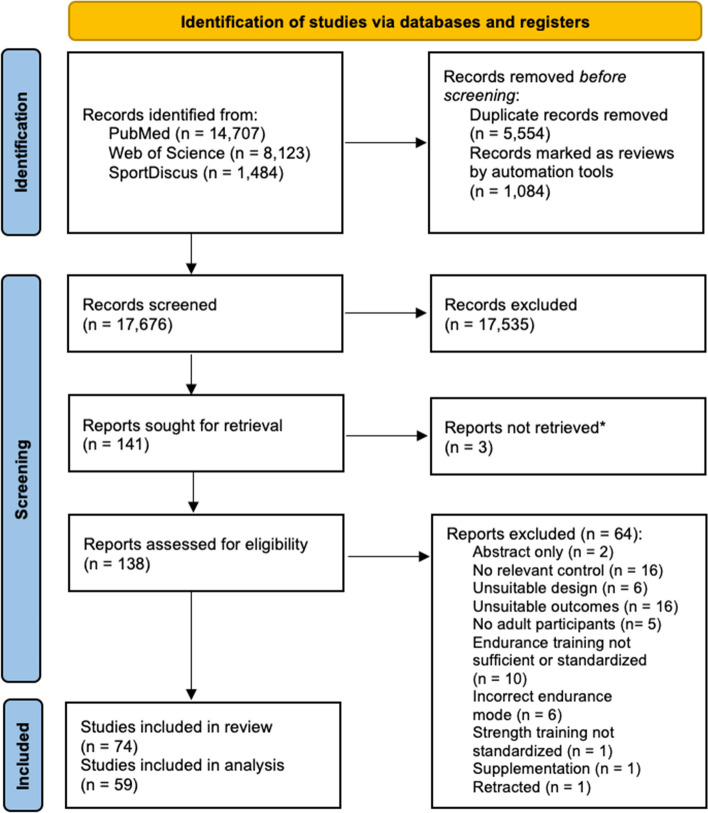
“From these articles, 74 studies [6, 30, 40– 111”
Sex differences in contractile properties and fatigue resistance of human skeletal muscle
Wüst, R. C. I., Morse, C. I., De Haan, A., Jones, D. A., & Degens, H. (2008) · Experimental Physiology · doi:10.1113/expphysiol.2007.041764 · Cited by 185 · cited 1×
“On average, males have larger muscle fibers, more skeletal muscle mass, and greater strength [11–13], while females tend to have slower contractile properties [14].”
Self-citationChanges in power with resistance training in older and younger men and women
Jozsi, A. C., Campbell, W. W., Joseph, L., Davey, S. L., & Evans, W. J. (1999) · The Journals of Gerontology Series A: Biological Sciences and Medical Sciences · doi:10.1093/gerona/54.11.m591 · Cited by 179 · cited 1×
“Males tend to have greater improvements in absolute muscle size, strength, and power compared with females [15, 16], but females showed larger relative increases in upper-body strength than males [17].”
Consequences of Combining Strength and Endurance Training Regimens
Nelson, A. G., Arnall, D. A., Loy, S. F., Silvester, L. J., & Conlee, R. K. (1990) · Physical Therapy · doi:10.1093/ptj/70.5.287 · Cited by 176
Ingjer, F. (1979) · European Journal of Applied Physiology · doi:10.1007/bf00426942 · Cited by 171
Maximal Strength Training Improves Cycling Economy in Competitive Cyclists
Sunde, A., Støren, Ø., Bjerkaas, M., Larsen, M. H., Hoff, J., & Helgerud, J. (2010) · Journal of Strength and Conditioning Research · doi:10.1519/jsc.0b013e3181aeb16a · Cited by 167
Acute hormonal responses to heavy resistance exercise in younger and older men
Kraemer, W. J., H�kkinen, K., Newton, R. U., McCormick, M., Nindl, B. C., Volek, J. S., Gotshalk, L. A., Fleck, S. J., Campbell, W. W., Gordon, S. E., et al. (1998) · European Journal of Applied Physiology · doi:10.1007/s004210050323 · Cited by 167 · cited 1×
“Circulating testosterone levels in males acutely increase following strength exercise [123, 124], which activates muscle protein synthesis via the anabolic Akt/mTOR pathway and androgen receptors [125, 126].”
Guidelines to classify female subject groups in sport-science research
Decroix, L., De Pauw, K., Foster, C., & Meeusen, R. (2016) · International Journal of Sports Physiology and Performance · doi:10.1123/ijspp.2015-0153 · Cited by 167 · cited 5×
“Unified classification systems have been introduced to categorize participants’ strength training status [27] and endurance training status [28, 29] based on multiple training and physiological performance indicators, such as training experience, attained ̇ V O 2max , and 1-RM. Training status is…”
InfluentialStrength training improves performance and pedaling characteristics in elite cyclists
Rønnestad, B. R., Hansen, J., Hollan, I., & Ellefsen, S. (2014) · Scandinavian Journal of Medicine and Science in Sports · doi:10.1111/sms.12257 · Cited by 164
Aagaard, P., Andersen, J. L., Bennekou, M., Larsson, B., Olesen, J. L., Crameri, R., Magnusson, S. P., & Kjær, M. (2011) · Scandinavian Journal of Medicine & Science in Sports · doi:10.1111/j.1600-0838.2010.01283.x · Cited by 159
Hendrickson, N. R., Sharp, M. A., Alemany, J. A., Walker, L. A., Harman, E. A., Spiering, B. A., Hatfield, D. L., Yamamoto, L. M., Maresh, C. M., Kraemer, W. J., et al. (2010) · European Journal of Applied Physiology · doi:10.1007/s00421-010-1462-2 · Cited by 158
Schumann, M., Feuerbacher, J. F., Sünkeler, M., Freitag, N., Rønnestad, B. R., Doma, K., & Lundberg, T. R. (2022) · Sports Medicine · doi:10.1007/s40279-021-01587-7 · Cited by 156 · cited 7×
“Recently, an updated meta-analysis [7] concluded that power gains were impaired with concurrent strength and endurance training, but that hypertrophy and maximal strength development were not compromised.”
InfluentialIzquierdo, M., Häkkinen, K., Ibáñez, J., Kraemer, W. J., & Gorostiaga, E. M. (2005) · European Journal of Applied Physiology · doi:10.1007/s00421-004-1280-5 · Cited by 155
The effects of strength training on endurance performance and muscle characteristics
BISHOP, D., JENKINS, D. G., MACKINNON, L. T., McENIERY, M., & CAREY, M. F. (1999) · Medicine & Science in Sports & Exercise · doi:10.1097/00005768-199906000-00018 · Cited by 153
Physiological Adaptation in Women Concurrently Training for Strength and Endurance
Gravelle, B. L., & Blessing, D. L. (2000) · The Journal of Strength and Conditioning Research · doi:10.1519/00124278-200002000-00002 · Cited by 153
Sex differences in fatigability and recovery relative to the intensity–duration relationship
Ansdell, P., Brownstein, C. G., Škarabot, J., Hicks, K. M., Howatson, G., Thomas, K., Hunter, S. K., & Goodall, S. (2019) · The Journal of Physiology · doi:10.1113/jp278699 · Cited by 150 · cited 1×
“The impaired lower-body strength gains in males could also relate to skeletal muscle metabolism and fatigability [131–134], associated with their lower percentage type I fibers.”
Testosterone Signals through mTOR and Androgen Receptor to Induce Muscle Hypertrophy
BASUALTO-ALARCÓN, C., JORQUERA, G., ALTAMIRANO, F., JAIMOVICH, E., & ESTRADA, M. (2013) · Medicine & Science in Sports & Exercise · doi:10.1249/mss.0b013e31828cf5f3 · Cited by 147 · cited 1×
“Circulating testosterone levels in males acutely increase following strength exercise [123, 124], which activates muscle protein synthesis via the anabolic Akt/mTOR pathway and androgen receptors [125, 126].”
Sex-based comparisons of myofibrillar protein synthesis after resistance exercise in the fed state
West, D. W. D., Burd, N. A., Churchward-Venne, T. A., Camera, D. M., Mitchell, C. J., Baker, S. K., Hawley, J. A., Coffey, V. G., & Phillips, S. M. (2012) · Journal of Applied Physiology · doi:10.1152/japplphysiol.00170.2012 · Cited by 143 · cited 1×
“Despite the lower testosterone levels in females [127], strength exercise-induced muscle protein synthesis seems to be similar between sexes [128–130], suggesting that other factors, such as mechanical signals contribute to the activation of muscle protein synthesis.”
Howden, E. J., Perhonen, M., Peshock, R. M., Zhang, R., Arbab-Zadeh, A., Adams-Huet, B., & Levine, B. D. (2015) · Journal of Applied Physiology · doi:10.1152/japplphysiol.00092.2015 · Cited by 138 · cited 1×
“…in mitochondrial oxidative capacity [139, 145, 146] and improvements in capillarization [139, 147] and blood volume [148] with ~ 2 to 4 weeks of training, while central cardiovascular adaptations in maximal stroke volume and cardiac output occur only after month(s) of training [142, 145, 149, 150].”
Landen, S., Hiam, D., Voisin, S., Jacques, M., Lamon, S., & Eynon, N. (2023) · The Journal of Physiology · doi:10.1113/jp279499 · Cited by 137
Murias, J. M., Kowalchuk, J. M., & Paterson, D. H. (2010) · Journal of Applied Physiology · doi:10.1152/japplphysiol.01152.2009 · Cited by 134 · cited 2×
“In response to endurance training, increases in ̇ V O 2max are mostly explained by improvements in cardiac output [142–144], although early increases in ̇ V O 2max seem to relate to greater maximal arterial-venous oxygen differences [142].”
Effects of Single vs. Multiple Sets of Weight Training: Impact of Volume, Intensity, and Variation
Kramer, J. B., Stone, M. H., OʼBryant, H. S., Conley, M. S., Johnson, R. L., Nieman, D. C., Honeycutt, D. R., & Hoke, T. P. (1997) · The Journal of Strength and Conditioning Research · doi:10.1519/1533-4287(1997)011 · Cited by 127
Contrasts in muscle and myofibers of elite male and female bodybuilders
Alway, S. E., Grumbt, W. H., Gonyea, W. J., & Stray-Gundersen, J. (1989) · Journal of Applied Physiology · doi:10.1152/jappl.1989.67.1.24 · Cited by 126
Vikmoen, O., Ellefsen, S., Trøen, Ø., Hollan, I., Hanestadhaugen, M., Raastad, T., & Rønnestad, B. R. (2015) · Scandinavian Journal of Medicine and Science in Sports · doi:10.1111/sms.12468 · Cited by 125
Losnegard, T., Mikkelsen, K., Rønnestad, B. R., Hallén, J., Rud, B., & Raastad, T. (2011) · Scandinavian Journal of Medicine & Science in Sports · doi:10.1111/j.1600-0838.2009.01074.x · Cited by 121
Paul, R. W., Sonnier, J. H., Johnson, E. E., Hall, A. T., Osman, A., Connors, G. M., Freedman, K. B., & Bishop, M. E. (2022) · The American Journal of Sports Medicine · doi:10.1177/03635465221131281 · Cited by 118 · cited 1×
“In general, female participation in research tends to be under-represented compared with male participants in sport science and sports medicine studies (~ 70% of studies included only male participants, often college students [156, 157]).”
Pastor, D. A., & Lazowski, R. A. (2018) · Multivariate Behavioral Research · doi:10.1080/00273171.2017.1365684 · Cited by 117 · cited 1×
“Consequently, we performed a traditional two-level meta-analysis based on random effects [165] and selected one measurement method for each outcome instead.”
Tang, J. E., Hartman, J. W., & Phillips, S. M. (2006) · Applied Physiology, Nutrition, and Metabolism · doi:10.1139/h06-026 · Cited by 116 · cited 1×
“…training, untrained individuals are expected to elicit generic adaptations to both strength and endurance training with additive effects [23], that is, untrained individuals may even increase their muscle size after endurance training [151] or their oxidative capacity after strength training [152].”
Damasceno, M. V., Lima‐Silva, A. E., Pasqua, L. A., Tricoli, V., Duarte, M., Bishop, D. J., & Bertuzzi, R. (2015) · European Journal of Applied Physiology · doi:10.1007/s00421-015-3130-z · Cited by 116
Endurance Training and V˙O2max: Role of Maximal Cardiac Output and Oxygen Extraction
MONTERO, D., DIAZ-CAÑESTRO, C., & LUNDBY, C. (2015) · Medicine & Science in Sports & Exercise · doi:10.1249/mss.0000000000000640 · Cited by 113 · cited 1×
“In response to endurance training, increases in ̇ V O 2max are mostly explained by improvements in cardiac output [142–144], although early increases in ̇ V O 2max seem to relate to greater maximal arterial-venous oxygen differences [142].”
In-season strength maintenance training increases well-trained cyclists’ performance
Rønnestad, B. R., Hansen, E. A., & Raastad, T. (2010) · European Journal of Applied Physiology · doi:10.1007/s00421-010-1622-4 · Cited by 109
Human neuromuscular aging: Sex differences revealed at the myocellular level
Roberts, B. M., Lavin, K. M., Many, G. M., Thalacker-Mercer, A., Merritt, E. K., Bickel, C. S., Mayhew, D. L., Tuggle, S. C., Cross, J. M., Kosek, D. J., et al. (2018) · Experimental Gerontology · doi:10.1016/j.exger.2018.02.023 · Cited by 109 · cited 1×
“Despite the lower testosterone levels in females [127], strength exercise-induced muscle protein synthesis seems to be similar between sexes [128–130], suggesting that other factors, such as mechanical signals contribute to the activation of muscle protein synthesis.”
Spiering, B. A., Kraemer, W. J., Vingren, J. L., Ratamess, N. A., Anderson, J. M., Armstrong, L. E., Nindl, B. C., Volek, J. S., Häkkinen, K., & Maresh, C. M. (2009) · The Journal of Steroid Biochemistry and Molecular Biology · doi:10.1016/j.jsbmb.2009.02.005 · Cited by 104 · cited 1×
“Circulating testosterone levels in males acutely increase following strength exercise [123, 124], which activates muscle protein synthesis via the anabolic Akt/mTOR pathway and androgen receptors [125, 126].”
The Effect of Strength Training on Performance Indicators in Distance Runners
Beattie, K., Carson, B. P., Lyons, M., Rossiter, A., & Kenny, I. C. (2017) · Journal of Strength and Conditioning Research · doi:10.1519/jsc.0000000000001464 · Cited by 104
Mikkola, J., Rusko, H., Izquierdo, M., Gorostiaga, E., & Häkkinen, K. (2012) · International Journal of Sports Medicine · doi:10.1055/s-0031-1295475 · Cited by 102
Specific Training Effects of Concurrent Aerobic and Strength Exercises Depend on Recovery Duration
Robineau, J., Babault, N., Piscione, J., Lacome, M., & Bigard, A. X. (2016) · Journal of Strength and Conditioning Research · doi:10.1519/jsc.0000000000000798 · Cited by 101
Classification and Determination Model of Resistance Training Status
Santos Junior, E. R. T., de Salles, B. F., Dias, I., Ribeiro, A. S., Simão, R., & Willardson, J. M. (2021) · Strength & Conditioning Journal · doi:10.1519/ssc.0000000000000627 · Cited by 100 · cited 5×
“Unified classification systems have been introduced to categorize participants’ strength training status [27] and endurance training status [28, 29] based on multiple training and physiological performance indicators, such as training experience, attained ̇ V O 2max , and 1-RM. Training status is…”
Influentialvan der Zwaard, S., de Ruiter, C. J., Noordhof, D. A., Sterrenburg, R., Bloemers, F. W., de Koning, J. J., Jaspers, R. T., & van der Laarse, W. J. (2016) · Journal of Applied Physiology · doi:10.1152/japplphysiol.00355.2016 · Cited by 99 · cited 3×
“Differences in ̇ V O 2max between untrained and trained endurance athletes are largely explained by differences in cardiac output, stroke volume, and mitochondrial oxidative capacity [19, 137].”
Strength training improves 5‐min all‐out performance following 185 min of cycling
Rønnestad, B. R., Hansen, E. A., & Raastad, T. (2011) · Scandinavian Journal of Medicine & Science in Sports · doi:10.1111/j.1600-0838.2009.01035.x · Cited by 97
Sport Science on Women, Women in Sport Science
Mujika, I., & Taipale, R. S. (2019) · International Journal of Sports Physiology and Performance · doi:10.1123/ijspp.2019-0514 · Cited by 96 · cited 1×
“In general, female participation in research tends to be under-represented compared with male participants in sport science and sports medicine studies (~ 70% of studies included only male participants, often college students [156, 157]).”
Kristiansen, M. V., Madeleine, P., Hansen, E. A., & Samani, A. (2013) · Scandinavian Journal of Medicine and Science in Sports · doi:10.1111/sms.12167 · Cited by 95
van der Zwaard, S., van der Laarse, W. J., Weide, G., Bloemers, F. W., Hofmijster, M. J., Levels, K., Noordhof, D. A., de Koning, J. J., de Ruiter, C. J., & Jaspers, R. T. (2018) · The FASEB Journal · doi:10.1096/fj.201700827r · Cited by 93 · cited 4×
“…that require both high sprint/ peak power and endurance (e.g., rowing and cycling) indeed seem to experience that optimizing both traits at the same time is more difficult, as highlighted by the inverse relationships between athletes’ sprint/peak power and endurance performance/ ̇ V O 2max [3, 24].”
InfluentialSex Dimorphism of VO2max Trainability: A Systematic Review and Meta-analysis
Díaz-Cañestro, C., & Montero, D. (2019) · Sports Medicine · doi:10.1007/s40279-019-01180-z · Cited by 93
Basal muscle intracellular amino acid kinetics in women and men
Fujita, S., Rasmussen, B. B., Bell, J. A., Cadenas, J. G., & Volpi, E. (2007) · American Journal of Physiology-Endocrinology and Metabolism · doi:10.1152/ajpendo.00173.2006 · Cited by 90
Under the Hood: Skeletal Muscle Determinants of Endurance Performance
van der Zwaard, S., Brocherie, F., & Jaspers, R. T. (2021) · Frontiers in Sports and Active Living · doi:10.3389/fspor.2021.719434 · Cited by 89 · cited 2×
“Untrained participants tend to have less type I fibers with fewer mitochondria and capillaries, a lower stroke volume and cardiac output, and a lower ̇ V O 2max compared with endurance-trained athletes [5, 19, 138–141].”
Fyfe, J. J., Bartlett, J. D., Hanson, E. D., Stepto, N. K., & Bishop, D. J. (2016) · Frontiers in Physiology · doi:10.3389/fphys.2016.00487 · Cited by 88
(13376925), S. L., Hiam, D., Voisin, S. A. C., (13283841), M. J., Lamon, S., & (13308696), N. E. (2024) · Figshare · Cited by 85
Bell, G., Syrotuik, D., Socha, T., Maclean, I., & Quinney, H. A. (1997) · Journal of Strength and Conditioning Research · doi:10.1519/00124278-199702000-00012 · Cited by 82
Prieto-González, P., & Sedláček, J. (2022) · International Journal of Environmental Research and Public Health · doi:10.3390/ijerph191710773 · Cited by 76
Concurrent Training with Different Aerobic Exercises
Silva, R., Cadore, E., Kothe, G., Guedes, M., Alberton, C., Pinto, S., Pinto, R., Trindade, G., & Kruel, L. F. (2012) · International Journal of Sports Medicine · doi:10.1055/s-0031-1299698 · Cited by 75
Vikmoen, O., Raastad, T., Seynnes, O., Bergstrøm, K., Ellefsen, S., & Rønnestad, B. R. (2016) · PLOS ONE · doi:10.1371/journal.pone.0150799 · Cited by 72
Ferrauti, A., Bergermann, M., & Fernandez-Fernandez, J. (2010) · Journal of Strength and Conditioning Research · doi:10.1519/jsc.0b013e3181d64e9c · Cited by 71
Petré, H., Hemmingsson, E., Rosdahl, H., & Psilander, N. (2021) · Sports Medicine · doi:10.1007/s40279-021-01426-9 · Cited by 71 · cited 6×
“However, they included 27 studies in the meta-analysis (vs 59 studies in our study) and applied a different classification for training status (i.e., several participant groups that were considered moderately trained in [10] were classified as untrained in the our study).”
InfluentialSkovgaard, C., Christensen, P. M., Larsen, S., Andersen, T. R., Thomassen, M., & Bangsbo, J. (2014) · Journal of Applied Physiology · doi:10.1152/japplphysiol.01226.2013 · Cited by 70
Oosthuyse, T., Strauss, J. A., & Hackney, A. C. (2022) · European Journal of Applied Physiology · doi:10.1007/s00421-022-05090-3 · Cited by 70 · cited 1×
“In addition, phases of the menstrual cycle as well as the use of the oral conceptive pill could have an influence on training adaptations and exercise metabolism [117, 158–160], which have not always been controlled for or monitored in training studies with females.”
Tsitkanou, S., Spengos, K., Stasinaki, A., Zaras, N., Bogdanis, G., Papadimas, G., & Terzis, G. (2017) · Scandinavian Journal of Medicine & Science in Sports · doi:10.1111/sms.12751 · Cited by 65
Liu, Y., Christensen, P. M., Hellsten, Y., & Gliemann, L. (2022) · Medicine & Science in Sports & Exercise · doi:10.1249/mss.0000000000002955 · Cited by 65 · cited 1×
“…to endurance training, showing very rapid increases in mitochondrial oxidative capacity [139, 145, 146] and improvements in capillarization [139, 147] and blood volume [148] with ~ 2 to 4 weeks of training, while central cardiovascular adaptations in maximal stroke volume and cardiac output…”
Quantitative measurement of muscle fiber composition in a normal population
Toft, I., Lindal, S., Bønaa, K. H., & Jenssen, T. (2003) · Muscle & Nerve · doi:10.1002/mus.10373 · Cited by 63 · cited 2×
“On average, males have larger muscle fibers, more skeletal muscle mass, and greater strength [11–13], while females tend to have slower contractile properties [14].”
Molecular Adaptations to Concurrent Training
de Souza, E., Tricoli, V., Roschel, H., Brum, P., Bacurau, A. V., Ferreira, J. C., Aoki, M., Neves-Jr, M., Aihara, A., da Rocha Correa Fernandes, A., et al. (2012) · International Journal of Sports Medicine · doi:10.1055/s-0032-1312627 · Cited by 62
Lundberg, T. R., Feuerbacher, J. F., Sünkeler, M., & Schumann, M. (2022) · Sports Medicine · doi:10.1007/s40279-022-01688-x · Cited by 62 · cited 1×
“Importantly, prior meta-analyses on concurrent training did not distinguish between both endurance-and strength-trained status [7, 9, 10, 25].”
Gergley, J. C. (2009) · Journal of Strength and Conditioning Research · doi:10.1519/jsc.0b013e3181a0629d · Cited by 61
Libardi, C. A., Souza, G. V., GÁspari, A. F., Santos, C. F. D., Leite, S. T., Dias, R., Frollini, A. B., Brunelli, D. T., Cavaglieri, C. R., Madruga, V. A., et al. (2011) · Journal of Sports Sciences · doi:10.1080/02640414.2011.609896 · Cited by 60
Hausswirth, C., Argentin, S., Bieuzen, F., Meur, Y. L., Couturier, A., & Brisswalter, J. (2009) · Journal of Electromyography and Kinesiology · doi:10.1016/j.jelekin.2009.04.008 · Cited by 59
10 weeks of heavy strength training improves performance-related measurements in elite cyclists
Rønnestad, B. R., Hansen, J., & Nygaard, H. (2016) · Journal of Sports Sciences · doi:10.1080/02640414.2016.1215499 · Cited by 58
Long-Term Strength Adaptation: A 15-Year Analysis of Powerlifting Athletes
Latella, C., Teo, W., Spathis, J. G., & van den Hoek, D. (2020) · The Journal of Strength and Conditioning Research · doi:10.1519/jsc.0000000000003657 · Cited by 57 · cited 1×
“Prior observations in highly trained powerlifters revealed that stronger males, but not females, gain less strength over time, indicative of a ceiling effect [154].”
Terzis, G. D., Spengos, K., Methenitis, S. K., Aagaard, P., Karandreas, N., & Bogdanis, G. C. (2016) · European Journal of Applied Physiology · doi:10.1007/s00421-016-3369-z · Cited by 55
Protein metabolism in women and men: Similarities and disparities
Markofski, M. M., & Volpi, E. (2011) · Current Opinion in Clinical Nutrition and Metabolic Care · doi:10.1097/mco.0b013e3283412343 · Cited by 54 · cited 1×
“Despite the lower testosterone levels in females [127], strength exercise-induced muscle protein synthesis seems to be similar between sexes [128–130], suggesting that other factors, such as mechanical signals contribute to the activation of muscle protein synthesis.”
Adding strength to endurance training does not enhance aerobic capacity in cyclists
Psilander, N., Frank, P., Flockhart, M., & Sahlin, K. (2014) · Scandinavian Journal of Medicine and Science in Sports · doi:10.1111/sms.12338 · Cited by 51
van der Zwaard, S., Weide, G., Levels, K., Eikelboom, M. R. I., Noordhof, D. A., Hofmijster, M. J., van der Laarse, W. J., de Koning, J. J., de Ruiter, C. J., & Jaspers, R. T. (2018) · Journal of Sports Sciences · doi:10.1080/02640414.2018.1439434 · Cited by 50 · cited 1×
“…that require both high sprint/ peak power and endurance (e.g., rowing and cycling) indeed seem to experience that optimizing both traits at the same time is more difficult, as highlighted by the inverse relationships between athletes’ sprint/peak power and endurance performance/ ̇ V O 2max [3, 24].”
Knowles, O. E., Aisbett, B., Main, L. C., Drinkwater, E. J., Orellana, L., & Lamon, S. (2019) · Sports Medicine · doi:10.1007/s40279-019-01132-7 · Cited by 48 · cited 2×
“For strength training adaptations, however, relative improvements in lower-body strength and hypertrophy are similar between males and females [17, 113, 117–119].”
Levin, G. T., Mcguigan, M. R., & Laursen, P. B. (2009) · Journal of Strength and Conditioning Research · doi:10.1519/jsc.0b013e3181b990c2 · Cited by 47
Acute response and chronic adaptation to exercise in women
MITCHELL, J. H., TATE, C., RAVEN, P., COBB, F., KRAUS, W., MOREADITH, R., O??TOOLE, M., SALTIN, B., & WENGER, N. (1992) · Medicine & Science in Sports & Exercise · doi:10.1249/00005768-199206001-00008 · Cited by 47 · cited 1×
“Grosso modo , males tend to have a higher ̇ V O 2max , even after normalization to body mass or fat-free mass [18–20], likely because females are generally smaller and have a lower cardiac output and stroke volume, hemoglobin levels, and blood volume [18–21].”
Lee, M. J. C., Ballantyne, J. K., Chagolla, J., Hopkins, W. G., Fyfe, J. J., Phillips, S. M., Bishop, D. J., & Bartlett, J. D. (2020) · PLOS ONE · doi:10.1371/journal.pone.0233134 · Cited by 46
Concurrent Training in Rugby Sevens: Effects of High-Intensity Interval Exercises
Robineau, J., Lacome, M., Piscione, J., Bigard, X., & Babault, N. (2017) · International Journal of Sports Physiology and Performance · doi:10.1123/ijspp.2015-0370 · Cited by 43
Shaw, B. S., & Shaw, I. (2009) · PubMed Central · Cited by 40
de Souza, E. O., Tricoli, V., Aoki, M. S., Roschel, H., Brum, P. C., Bacurau, A. V. N., Silva-Batista, C., Wilson, J. M., Neves, M., Soares, A. G., et al. (2014) · Journal of Strength and Conditioning Research · doi:10.1519/jsc.0000000000000525 · Cited by 40
Laird, R. H., Elmer, D. J., Barberio, M. D., Salom, L. P., Lee, K. A., & Pascoe, D. D. (2016) · Journal of Strength and Conditioning Research · doi:10.1519/jsc.0000000000001412 · Cited by 40
Gómez‐Molina, J., Ogueta‐Alday, A., Cámara, J., Stickley, C. D., & García-López, J. (2017) · European Journal of Sport Science · doi:10.1080/17461391.2017.1404133 · Cited by 40
van der Zwaard, S., Brocherie, F., Kom, B. L. G., Millet, G. P., Deldicque, L., van der Laarse, W. J., Girard, O., & Jaspers, R. T. (2018) · Journal of Applied Physiology · doi:10.1152/japplphysiol.00946.2017 · Cited by 40 · cited 1×
“…is in line with the time courses of adaptations to endurance training, showing very rapid increases in mitochondrial oxidative capacity [139, 145, 146] and improvements in capillarization [139, 147] and blood volume [148] with ~ 2 to 4 weeks of training, while central cardiovascular adaptations…”
Kelly, C. M., Burnett, A. F., & Newton, M. J. (2008) · Journal of Strength and Conditioning Research · doi:10.1519/jsc.0b013e318163534a · Cited by 39
Vorup, J., Tybirk, J., Gunnarsson, T. P., Ravnholt, T., Dalsgaard, S., & Bangsbo, J. (2016) · European Journal of Applied Physiology · doi:10.1007/s00421-016-3356-4 · Cited by 38 · cited 1×
“From these articles, 74 studies [6, 30, 40– 111”
The Effect of Maximal- and Explosive-Strength Training on Performance Indicators in Cyclists
Beattie, K., Carson, B. P., Lyons, M., & Kenny, I. C. (2016) · International Journal of Sports Physiology and Performance · doi:10.1123/ijspp.2016-0015 · Cited by 36
Spiliopoulou, P., Zaras, N., Methenitis, S., Papadimas, G., Papadopoulos, C., Bogdanis, G. C., & Terzis, G. (2021) · Journal of Strength & Conditioning Research · doi:10.1519/jsc.0000000000003172 · Cited by 36
Jones, T. W., Howatson, G., Russell, M., & French, D. N. (2016) · Journal of Strength and Conditioning Research · doi:10.1519/jsc.0000000000001135 · Cited by 34
Peltonen, J. E., Hägglund, H., Koskela-Koivisto, T., Koponen, A. S., Aho, J. M., Rissanen, A., Shoemaker, J. K., Tiitinen, A. E., & Tikkanen, H. O. (2013) · Respiratory Physiology & Neurobiology · doi:10.1016/j.resp.2013.05.014 · Cited by 32 · cited 1×
“Grosso modo , males tend to have a higher ̇ V O 2max , even after normalization to body mass or fat-free mass [18–20], likely because females are generally smaller and have a lower cardiac output and stroke volume, hemoglobin levels, and blood volume [18–21].”
Shamim, B., Devlin, B. L., Timmins, R. G., Tofari, P., Lee Dow, C., Coffey, V. G., Hawley, J. A., & Camera, D. M. (2018) · Sports Medicine · doi:10.1007/s40279-018-0999-9 · Cited by 32
Using V̇ o 2max as a marker of training status in athletes—can we do better?
Podlogar, T., Leo, P. D., & Spragg, J. (2022) · Journal of Applied Physiology · doi:10.1152/japplphysiol.00723.2021 · Cited by 32
Panissa, V. L. G., Fukuda, D. H., de Oliveira, F. P., Parmezzani, S. S., Campos, E. Z., Rossi, F. E., Franchini, É., & Lira, F. S. (2018) · Europe PMC (PubMed Central) · Cited by 29
Effects of Concurrent Training on 1RM and VO2 in Adults: Systematic Review with Meta-analysis
Pito, P. G., Cardoso, J. R., Tufano, J. J., & Guariglia, D. A. (2021) · International Journal of Sports Medicine · doi:10.1055/a-1506-3007 · Cited by 28 · cited 2×
“Others [8] showed that maximal oxygen consumption ( ̇ V O 2max ) gains were also not compromised by concurrent training.”
InfluentialImpairment of Performance Variables After In-Season Strength-Training Cessation in Elite Cyclists
Rønnestad, B. R., Hansen, J., Hollan, I., Spencer, M., & Ellefsen, S. (2015) · International Journal of Sports Physiology and Performance · doi:10.1123/ijspp.2015-0372 · Cited by 26
STRENGTH TRAINING IN FEMALE DISTANCE RUNNERS: IMPACT ON RUNNING ECONOMY: 47
Johnston, R. E., Quinn, T. J., Kertzer, R., & Vroman, N. B. (1995) · Medicine & Science in Sports & Exercise · doi:10.1249/00005768-199505001-00047 · Cited by 25
Sánchez‐Moreno, M., Rodríguez‐Rosell, D., Díaz-Cueli, D., Pareja‐Blanco, F., & González‐Badillo, J. J. (2021) · International Journal of Sports Physiology and Performance · doi:10.1123/ijspp.2020-0349 · Cited by 25
Filipas, L., Bonato, M., Maggio, A., Gallo, G., & Codella, R. (2022) · Scandinavian Journal of Medicine and Science in Sports · doi:10.1111/sms.14257 · Cited by 23
Trowell, D. A., Fox, A. S., Saunders, N., Vicenzino, B., & Bonacci, J. (2021) · Scandinavian Journal of Medicine and Science in Sports · doi:10.1111/sms.14092 · Cited by 20
Training-Induced Muscle Adaptations During Competitive Preparation in Elite Female Rowers
van der Zwaard, S., Koppens, T. F. P., Weide, G., Levels, K., Hofmijster, M. J., de Koning, J. J., & Jaspers, R. T. (2021) · Frontiers in Sports and Active Living · doi:10.3389/fspor.2021.781942 · Cited by 20 · cited 1×
“During the general and competitive preparation phase, elite female rowers showed large gains in their muscle physiological cross-sectional area and/or fascicle length [155], indicating that such a ceiling effect was absent during this phase of the season in females.”
Exercise Physiology in Men and Women
Lundsgaard, A., Fritzen, A. M., & Kiens, B. (2017) · Principles of Gender-Specific Medicine · doi:10.1016/b978-0-12-803506-1.00017-6 · Cited by 19
Effect of combined resistance and aerobic training on reactive hyperemia in men
Kawano, H., Fujimoto, K., Higuchi, M., & Miyachi, M. (2009) · The Journal of Physiological Sciences · doi:10.1007/s12576-009-0057-3 · Cited by 17
Creatine Monohydrate Use Among Elite Australian Power Lifters
Stanton, R., & Abt, G. (2000) · The Journal of Strength and Conditioning Research · Cited by 15
Timmins, R. G., Shamim, B., Tofari, P. J., Hickey, J. T., & Camera, D. M. (2020) · International Journal of Sports Physiology and Performance · doi:10.1123/ijspp.2019-0788 · Cited by 14
Mirghani, S. J., Agha-Alinejad, H., Azarbayjani, M. A., Mazidi, A., & Mirghani, S. A. (2014) · Baltic Journal of Health and Physical Activity · doi:10.2478/bjha-2014-0001 · Cited by 12
Sontag, S. A., Trevino, M. A., Herda, T. J., Sterczala, A. J., Miller, J. D., Parra, M. E., Dimmick, H. L., & Deckert, J. A. (2021) · European Journal of Applied Physiology · doi:10.1007/s00421-021-04622-7 · Cited by 12 · cited 1×
“While sex-related neuromuscular differences could contribute, no sex differences have been observed in the number of motor units or motor unit activation patterns for upper-and lower-body muscles [112, 113], nor in neuromuscular adaptations following exercise training [114].”
Effects of minimal dose of strength training on running performance in female recreational runners
Štohanzl, M., Baláš, J., & Draper, N. (2018) · The Journal of Sports Medicine and Physical Fitness · doi:10.23736/s0022-4707.17.07124-9 · Cited by 8
Valenzuela, P. L., Mateo‐March, M., Muriel, X., Zabala, M., Lucia, A., Barranco‐Gil, D., Millet, G. P., Brocherie, F., Burtscher, J., Burtscher, M., et al. (2022) · Journal of Applied Physiology · doi:10.1152/japplphysiol.00224.2022 · Cited by 6 · cited 2×
“It has been suggested that instead of ̇ V O 2max , other physiological performance-based parameters such as critical power, could be used to classify endurance training status [169, 170].”
Gonçalves, R., Motta‐Santos, D., Szmuchrowski, L. A., Couto, B. P., Soares, Y. M., Damasceno, V. D. O., Pedrosa, G. F., Drummond, M. D. M., Lima, F. V., & Silva, A. S. (2021) · Biology of Sport · doi:10.5114/biolsport.2022.107483 · Cited by 5
(2013) · Europe PMC (PubMed Central)
Research works printed but not linked: 2
- Deeks J, Higgins J. Statistical algorithms in Review Manager 5. 2010.
- Balabinis CP Psarakis CH Moukas M Vassiliou MP Behrakis PK Early phase changes by concurrent endurance and strength training J Strength Cond Res 2003 17 393 401 12741884 · doi:10.1519/1533-4287(2003)017
Cited by
Izquierdo, M., de Souto Barreto, P., Arai, H., Bischoff-Ferrari, H. A., Cadore, E. L., Cesari, M., Chen, L.-K., Coen, P. M., Courneya, K. S., Duque, G., et al. (2025) · The Journal of nutrition, health and aging · doi:10.1016/j.jnha.2024.100401 · Cited by 273
Artificial intelligence in sport: A narrative review of applications, challenges and future trends
Zhou, D., Keogh, J., Ma, Y., Tong, R. K., Khan, A. R., & Jennings, N. R. (2025) · Journal of Sports Sciences · doi:10.1080/02640414.2025.2518694 · Cited by 123
CURRIER, B. S., D’SOUZA, A. C., SINGH, M. A. F., LOWISZ, C. V., RAWSON, E. S., SCHOENFELD, B. J., SMITH-RYAN, A. E., STEEN, J. P., THOMAS, G. A., TRIPLETT, N. T., et al. (2026) · Medicine & Science in Sports & Exercise · doi:10.1249/mss.0000000000003897 · Cited by 105
Hooren, B. V., Aagaard, P., & Blazevich, A. J. (2024) · Sports Medicine · doi:10.1007/s40279-024-02110-4 · Cited by 58
“Indeed, in relatively untrained individu-als—who experience larger fiber growth than better trained individuals—muscle fiber hypertrophy following concurrent training has been shown to attenuate the increase in maximum oxygen consumption for this reason [89].”
InfluentialWang, Z., Qiu, B., Li, R., Han, Y., Petersen, C. J., Liu, S., Zhang, Y., Liu, C., Candow, D. G., & Coso, J. D. (2024) · Nutrients · doi:10.3390/nu16213665 · Cited by 54
“The I 2 statistic was used to measure the degree of heterogeneity, with values less than 50% indicating low heterogeneity, 50–75% indicating moderate heterogeneity, and values greater than 75% indicating high heterogeneity [17,18].”
Method
Metadata
- Authors
- Huiberts, R. O., Wüst, R. C. I., & van der Zwaard, S.
- Affiliations
- Amsterdam Movement Sciences (NL)
- Venue
- Sports Medicine
- Published
- 2023-10-17
- Volume
- 54
- Issue
- 2
- Pages
- 485-503
- ISSN
- 0112-1642 (ISSN-L)
- 1179-2035
- PMC
- PMC10933151
- OpenAlex
- W4387692605
- Cited by
- 75
- References
- 173
- Citations by year
- 2026: 36 · 2025: 27 · 2024: 12
- FWCI
- 4.14
- Type
- journal article
- Language
- en
- Open access
- hybrid
- doi.org
- Licence
- cc-by
- creativecommons.org/licenses/by/4.0 (tdm)
- creativecommons.org/licenses/by/4.0 (vor)
- Locations
- Sports Medicine (publishedVersion, cc-by)
- PubMed Central (publishedVersion, cc-by)
- PubMed (publishedVersion)
- VU Research Portal (publishedVersion, other-oa)
- Pure Amsterdam UMC (submittedVersion, cc-by)
- Topics
- Health Sciences › Medicine › Orthopedics and Sports Medicine › Sports Performance and Training
- Health Sciences › Medicine › Physiology (medical) › Cardiovascular and exercise physiology
- Health Sciences › Nursing › Nutrition and Dietetics › Muscle metabolism and nutrition
- Keywords
- concurrent training, resistance training, endurance training, sex differences, training status, lower limb strength, VO2max, muscle power, muscle hypertrophy, endurance athletes, untrained individuals, training effects, interference effects, healthy adults
- MeSH terms
- Endurance Training, Adaptation, Physiological, Adult, Female, Humans, Hypertrophy, Male, Oxygen Consumption, Physical Endurance, Sex Factors, Sports, Muscle, Skeletal, Muscle Strength, Resistance Training, Athletes
About these checks
Registry, retraction, Cites and statistics results are computed, not judged, with one exception: a printed reference that no index lists is read once by a model before it counts as a citation error. Claims are extracted by a model and kept only when their quote appears verbatim in the text; each cited source is then checked, with a model’s help, for whether it says what the claim relies on. Those verdicts can be wrong — read the claim’s quote and the cited source before relying on one.
Statistics and arithmetic are recomputed, not judged.
Confidence bands are shown only for fields calibrated on our annotated test set. None is calibrated yet, so no band is shown.
What counts as a claim ›How we measure confidence ›How we check this ›
Are you an author, or do you see a problem with this page? Request a review
Data sources
Bibliographic data: Semantic Scholar, OpenAlex, Crossref.
Contains information from the Semantic Scholar Academic Graph Datasets, made available under the ODC Attribution License (ODC-BY 1.0).
Semantic Scholar’s data is described in: Kinney, R., et al. (2023). The Semantic Scholar Open Data Platform. arXiv:2301.10140.
