

Assessing the presence and motivations of orthorexia nervosa among athletes and adults with eating disorders: a cross-sectional study
Open accessThe DOI matches its Crossref record; 75 of the 75 references it cites were found in a registry or an index.
Abstract
Purpose: Orthorexia nervosa involves restricting diet based on quality rather than quantity. Although orthorexia is well reported in many at-risk populations, limited data addresses its presence in individuals with eating disorder history (EDs) or athletes. We aimed to identify the presence and potential drivers of orthorexia in adults with EDs and endurance athletes, compared to control subjects. Methods: Participants ≥ 18y included: people with a diagnosed eating disorder (ED as per DSM-5); endurance athletes (training/competing ≥ 5 h/week); or control subjects. Participants (n = 197) completed an online survey assessing orthorexia (eating habits questionnaire, EHQ), eating motivations (TEMS-B) and compulsive exercise (CET). Results: ED had the highest orthorexia symptom severity (92.0 ± 3.02, n = 32), followed by athletes (76.2 ± 2.74, n = 54) and controls (71.0 ± 1.80, n = 111) (F (2) = 18.2, p < 0.001). A strong positive correlation existed between weight control motives and higher orthorexia symptom severity (r = 0.54, 95% CI [1.35, 2.36], p < 0.001), while a weak negative association existed between Hunger and Pleasure motives and higher orthorexia symptom severity (r = 0.23, 95% CI [− 2.24, − 0.34], p = 0.008; r = 0.26, 95% CI [− 2.11, − 0.47], p = 0.002, respectively). A moderate positive relationship was found between CET and orthorexia symptom severity (95% CI [1.52, 3.12], p < 0.001). Conclusion: Adults with ED history and endurance athletes have greater orthorexia symptom severity compared to control. Clinicians working with at-risk populations should screen patients and be aware of red-flags of orthorexic traits, desire to control weight, and compulsive exercise behavior. Level of evidence: III: Evidence obtained from cohort studies.
Overview
The claims and statistics of this paper haven’t been checked yet.
Free: it reads the open-access text and checks the first 5 claims that cite a source we can check. Create a free account to check every claim.
Integrity signals
Registry
Cites
Statistics
Figures
Verification
Claims the paper makes
The claims and statistics of this paper haven’t been checked yet.
Free: it reads the open-access text and checks the first 5 claims that cite a source we can check. Create a free account to check every claim.
Claims other papers make about this one
Each is checked against this paper’s own text: does it say what the citing paper says it does?
The source backs part of the claim, not all of it — or backs it for a different population, condition or comparison.
In the citing paper
“Moreover, the available evidence suggests that orthorexia can be a predictor of eating disorders, particularly in specific populations, such as student-athletes and individuals with IBS [ 40 , 59 , 60 ].”
From Examining Associations Between Fasting Behavior, Orthorexia Nervosa, and Eating Disorders (2024) · cites this paper as [40]
Experimental — accuracy not yet measured
Self-check
Percentages, sums and reported differences re-computed from the paper’s own numbers.
The self-check needs the paper’s full text.
Citations
Cites
Estimating the Dimension of a Model
Schwarz, G. (1978) · The Annals of Statistics · doi:10.1214/aos/1176344136 · Cited by 47,033 · cited 1×
“Model parsimony was compared using Schwartz’s Bayesian Information Criteria (BIC) [44], with a lower BIC indicating a more parsimonious (simpler) model fit compared to other candidate models.”
MethodThe REDCap consortium: building an international community of software platform partners
Harris, P. A., Taylor, R., Minor, B. L., Elliott, V., Fernandez, M., O'Neal, L., McLeod, L., Delacqua, G., Delacqua, F., Kirby, J., et al. (2019) · Journal of Biomedical Informatics · doi:10.1016/j.jbi.2019.103208 · Cited by 24,013
Healthism and the Medicalization of Everyday Life
Crawford, R. (1980) · International Journal of Health Services · doi:10.2190/3h2h-3xjn-3kay-g9ny · Cited by 1,946 · cited 2×
“Alternatively, our results may be related to the dominant sociocultural belief of healthism and the development of an orthorexic society [50–54].”
BackgroundResultSet correlation and contingency tables
Cohen, J. (1988) · Applied Psychological Measurement · doi:10.1177/014662168801200410 · Cited by 1,825 · cited 1×
“The magnitude of PPM was interpreted as: 0.1 = small, 0.3 = medium, > 0.5 = large [45].”
InfluentialThe SCOFF questionnaire: Assessment of a new screening tool for eating disorders
Morgan, J. F., Reid, F., & Lacey, J. H. (1999) · BMJ · doi:10.1136/bmj.319.7223.1467 · Cited by 1,416 · cited 1×
“The SCOFF comprises binary ‘yes’, ‘no’ questions with SCOFF ≥ 2 indicating possible ED [40, 42].”
Mental health in elite athletes: International Olympic Committee consensus statement (2019)
Reardon, C. L., Hainline, B., Aron, C. M., Baron, D., Baum, A. L., Bindra, A., Budgett, R., Campriani, N., Castaldelli-Maia, J. M., Currie, A., et al. (2019) · British Journal of Sports Medicine · doi:10.1136/bjsports-2019-100715 · Cited by 1,277
Weight Science: Evaluating the Evidence for a Paradigm Shift
Bacon, L., & Aphramor, L. (2011) · Nutrition Journal · doi:10.1186/1475-2891-10-9 · Cited by 733
On orthorexia nervosa: A review of the literature and proposed diagnostic criteria
Dunn, T. M., & Bratman, S. (2016) · Eating Behaviors · doi:10.1016/j.eatbeh.2015.12.006 · Cited by 635 · cited 1×
“Despite growing literature supporting the inclusion of orthorexia into revisions of the DSM [7, 8], orthorexia research is limited by poor study designs, small sample sizes, inaccurate measurement tools, and a lack of consensus on the definition and diagnostic criteria [1, 9, 10].”
BackgroundThe clinical basis of orthorexia nervosa: emerging perspectives
Koven, N., & Abry, A. (2015) · Neuropsychiatric Disease and Treatment · doi:10.2147/ndt.s61665 · Cited by 480 · cited 2×
“Other groups considered to be at high-risk of orthorexia, including athletes and those with a history of EDs, have not been studied to date [2, 19].”
BackgroundWhy we eat what we eat. The Eating Motivation Survey (TEMS)
Renner, B., Sproesser, G., Strohbach, S., & Schupp, H. T. (2012) · Appetite · doi:10.1016/j.appet.2012.04.004 · Cited by 446
Definition and Diagnostic Criteria for Orthorexia Nervosa: A Narrative Review of the Literature
Cena, H., Barthels, F., Cuzzolaro, M., Bratman, S., Brytek-Matera, A., Dunn, T., Varga, M., Missbach, B., & Donini, L. M. (2019) · Eating and Weight Disorders - Studies on Anorexia, Bulimia and Obesity · doi:10.1007/s40519-018-0606-y · Cited by 398
Taranis, L., Touyz, S., & Meyer, C. (2011) · European Eating Disorders Review · doi:10.1002/erv.1108 · Cited by 321
Orthorexia nervosa: A review of psychosocial risk factors
McComb, S. E., & Mills, J. S. (2019) · Appetite · doi:10.1016/j.appet.2019.05.005 · Cited by 290 · cited 7×
“Driven by the pursuit of optimum health, individuals with ortho-rexia develop self-imposed, extremely restrictive dietary rules, often associated with malnutrition, reduced quality of life, social isolation, depression, anxiety and increased suicidality [2–4].”
BackgroundInfluentialVarga, M., Thege, B. K., Dukay-Szabó, S., Túry, F., & van Furth, E. F. (2014) · BMC Psychiatry · doi:10.1186/1471-244x-14-59 · Cited by 263 · cited 1×
“In a systematic review, McComb and Mills [2] found exercise to be positively associated with orthorexia among university student athletes [62, 63] and European women [64], with exercise frequency, compulsive exercise and investment in being physically fit associated with higher levels of orthorexia…”
BackgroundThe interrelationship between orthorexia nervosa, perfectionism, body image and attachment style
Barnes, M. A., & Caltabiano, M. L. (2017) · Eating and Weight Disorders - Studies on Anorexia, Bulimia and Obesity · doi:10.1007/s40519-016-0280-x · Cited by 263 · cited 2×
“In a systematic literature review on the psychosocial risk factors of orthorexia, McComb and Mills [2] reported that a history of an eating disorder is the strongest predictor of developing orthorexia, with previous engagement in dieting and poor body image also strong explainers [25, 59, 60].”
BackgroundResultSysko, R., Glasofer, D. R., Hildebrandt, T., Klimek, P., Mitchell, J. E., Berg, K. C., Peterson, C. B., Wonderlich, S. A., & Walsh, B. T. (2015) · International Journal of Eating Disorders · doi:10.1002/eat.22388 · Cited by 254 · cited 2×
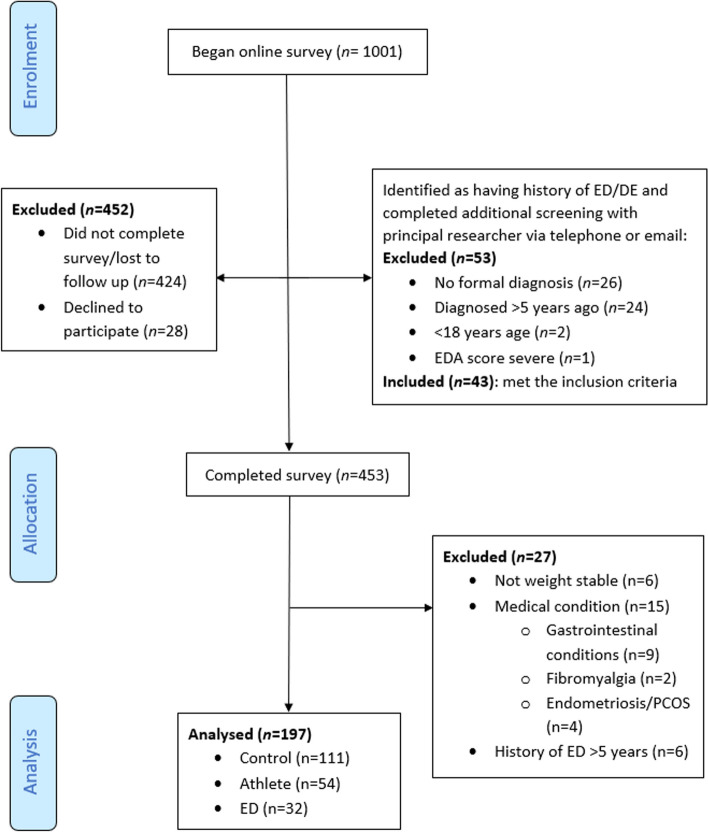
“…a diagnosed eating disorder (active within the past 5 years (new diagnosis or relapse) and considered ‘mild’ or ‘moderate’ as per DSM-5 criteria [5, 37] with formal diagnosis confirmed through letter from a member of the participants’ treating team (e.g. Psychologist, Doctor, Dietitian); (b)…”
BackgroundMethodStigma and Eating and Weight Disorders
Puhl, R., & Suh, Y. (2015) · Current Psychiatry Reports · doi:10.1007/s11920-015-0552-6 · Cited by 240 · cited 1×
“Furthermore Furthermore, dieting has been shown to be a strong predictor of orthorexia [31, 33, 61, 72, 73], with people in larger bodies more likely to diet [74–76].”
BackgroundEvidence and gaps in the literature on orthorexia nervosa
Varga, M., Dukay-Szabó, S., Túry, F., & van Furth Eric, F. (2013) · Eating and Weight Disorders - Studies on Anorexia, Bulimia and Obesity · doi:10.1007/s40519-013-0026-y · Cited by 232
Wells, K. R., Jeacocke, N. A., Appaneal, R., Smith, H. D., Vlahovich, N., Burke, L. M., & Hughes, D. (2020) · British Journal of Sports Medicine · doi:10.1136/bjsports-2019-101813 · Cited by 209 · cited 4×
“The relationship between compulsive exercise and eating disorders is well established [31–34], with athletes and active individuals at higher risk of developing exercise addiction and ED’s compared to the general population [20].”
BackgroundInfluentialMissbach, B., Hinterbuchinger, B., Dreiseitl, V., Zellhofer, S., Kurz, C., & König, J. (2015) · PLOS ONE · doi:10.1371/journal.pone.0135772 · Cited by 206
Are intuitive eating and eating disorder symptomatology opposite poles of the same construct?
Tylka, T. L., & Wilcox, J. A. (2006) · Journal of Counseling Psychology · doi:10.1037/0022-0167.53.4.474 · Cited by 201 · cited 1×
“Understanding motivations for eating can help to identify both normal or adaptive eating and pathological or maladaptive eating [68].”
BackgroundThe prevalence of orthorexia nervosa among eating disorder patients after treatment
Segura-Garcia, C., Ramacciotti, C., Rania, M., Aloi, M., Caroleo, M., Bruni, A., Gazzarrini, D., Sinopoli, F., & De Fazio, P. (2015) · Eating and Weight Disorders - Studies on Anorexia, Bulimia and Obesity · doi:10.1007/s40519-014-0171-y · Cited by 194 · cited 1×
“In a systematic review, McComb and Mills [2] found exercise to be positively associated with orthorexia among university student athletes [62, 63] and European women [64], with exercise frequency, compulsive exercise and investment in being physically fit associated with higher levels of orthorexia…”
BackgroundA Plea for Diversity in Eating Disorders Research
Halbeisen, G., Brandt, G., & Paslakis, G. (2022) · Frontiers in Psychiatry · doi:10.3389/fpsyt.2022.820043 · Cited by 164
A consensus document on definition and diagnostic criteria for orthorexia nervosa
Donini, L. M., Barrada, J. R., Barthels, F., Dunn, T. M., Babeau, C., Brytek-Matera, A., Cena, H., Cerolini, S., Cho, H.-H., Coimbra, M., et al. (2022) · Eating and Weight Disorders - Studies on Anorexia, Bulimia and Obesity · doi:10.1007/s40519-022-01512-5 · Cited by 163
The connection between exercise addiction and orthorexia nervosa in German fitness sports
Rudolph, S. (2017) · Eating and Weight Disorders - Studies on Anorexia Bulimia and Obesity · doi:10.1007/s40519-017-0437-2 · Cited by 152 · cited 1×
“…review, McComb and Mills [2] found exercise to be positively associated with orthorexia among university student athletes [62, 63] and European women [64], with exercise frequency, compulsive exercise and investment in being physically fit associated with higher levels of orthorexia [3, 64, 65].”
BackgroundPrevalence of orthorexia nervosa among ashtanga yoga practitioners: a pilot study
Herranz Valera, J., Acuña Ruiz, P., Romero Valdespino, B., & Visioli, F. (2014) · Eating and Weight Disorders - Studies on Anorexia, Bulimia and Obesity · doi:10.1007/s40519-014-0131-6 · Cited by 143
Are the Motives for Food Choices Different in Orthorexia Nervosa and Healthy Orthorexia?
Depa, J., Barrada, J. R., & Roncero, M. (2019) · Nutrients · doi:10.3390/nu11030697 · Cited by 142 · cited 1×
“While other studies have explored eating motivations and orthorexia [46], this is the first study to examine this relationship using The Eating Motivations Survey.”
MethodOberle, C. D., Nadai, A. S. D., & Madrid, A. L. (2020) · Eating and Weight Disorders - Studies on Anorexia Bulimia and Obesity · doi:10.1007/s40519-020-00896-6 · Cited by 141 · cited 1×
“…body of research suggests that orthorexia is more than an obsession with healthy eating, but rather a fixation on pursuing ‘perfect’ health at all costs, inclusive of compulsive exercise and other health enhancing behaviors such as reducing alcohol intake and cessation of smoking [28, 60, 66, 67].”
BackgroundOrthorexia nervosa: An integrative literature review of a lifestyle syndrome
Håman, L., Barker-Ruchti, N., Patriksson, G., & Lindgren, E.-C. (2015) · International Journal of Qualitative Studies on Health and Well-being · doi:10.3402/qhw.v10.26799 · Cited by 140 · cited 1×
“Given that orthorexia is defined as the pursuit of optimal health, weight manipulation may be a component of orthorexia, as weight is commonly used as a proxy marker for health in an orthorexic society [19, 51].”
BackgroundOrthorexic and restrained eating behaviour in vegans, vegetarians, and individuals on a diet
Barthels, F., Meyer, F. P., & Pietrowsky, R. (2018) · Eating and Weight Disorders - Studies on Anorexia Bulimia and Obesity · doi:10.1007/s40519-018-0479-0 · Cited by 134 · cited 2×
“This study found that higher orthorexia symptoms were associated with past eating disorder history and as such, support the association between the development of orthorexia and a history of an eating disorder, though a causal direction is yet to be established [23, 61].”
BackgroundResultTremelling, K., Sandon, L., Vega, G. L., & McAdams, C. J. (2017) · Journal of the Academy of Nutrition and Dietetics · doi:10.1016/j.jand.2017.05.001 · Cited by 127
Garcia, F. D., Grigioni, S., Chelali, S., Meyrignac, G., Thibaut, F., & Dechelotte, P. (2010) · The World Journal of Biological Psychiatry · doi:10.3109/15622975.2010.483251 · Cited by 115 · cited 1×
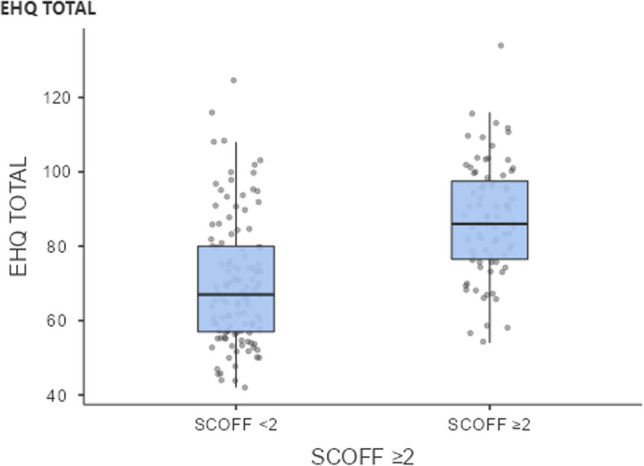
“Disordered eating was measured using the SCOFF (‘Sick, Control, One Stone, Fat, Food’), a 5-item survey often used as a screening tool for EDs and disordered eating [39–41].”
MethodTorstveit, M. K., Fahrenholtz, I. L., Lichtenstein, M. B., Stenqvist, T. B., & Melin, A. K. (2019) · BMJ Open Sport & Exercise Medicine · doi:10.1136/bmjsem-2018-000439 · Cited by 113
Diet and anxiety. An exploration into the Orthorexic Society
Rangel, C., Dukeshire, S., & MacDonald, L. (2011) · Appetite · doi:10.1016/j.appet.2011.08.024 · Cited by 106
Zickgraf, H. F., Ellis, J. M., & Essayli, J. H. (2019) · Appetite · doi:10.1016/j.appet.2018.12.006 · Cited by 101
Solmi, F., Hatch, S. L., Hotopf, M., Treasure, J., & Micali, N. (2015) · International Journal of Eating Disorders · doi:10.1002/eat.22373 · Cited by 89
Predictors of orthorexic behaviours in patients with eating disorders: a preliminary study
Brytek-Matera, A., Rogoza, R., Gramaglia, C., & Zeppegno, P. (2015) · BMC Psychiatry · doi:10.1186/s12888-015-0628-1 · Cited by 84 · cited 1×
“…review, McComb and Mills [2] found exercise to be positively associated with orthorexia among university student athletes [62, 63] and European women [64], with exercise frequency, compulsive exercise and investment in being physically fit associated with higher levels of orthorexia [3, 64, 65].”
BackgroundAttitudes toward orthorexia nervosa relative to DSM‐5 eating disorders
Simpson, C. C., & Mazzeo, S. E. (2017) · International Journal of Eating Disorders · doi:10.1002/eat.22710 · Cited by 83
Sex differences in orthorexic eating behaviors: A systematic review and meta-analytical integration
Strahler, J. (2019) · Nutrition · doi:10.1016/j.nut.2019.06.015 · Cited by 83 · cited 2×
“…body of research suggests that orthorexia is more than an obsession with healthy eating, but rather a fixation on pursuing ‘perfect’ health at all costs, inclusive of compulsive exercise and other health enhancing behaviors such as reducing alcohol intake and cessation of smoking [28, 60, 66, 67].”
BackgroundMeyer, C., Plateau, C. R., Taranis, L., Brewin, N., Wales, J., & Arcelus, J. (2016) · Journal of Eating Disorders · doi:10.1186/s40337-016-0113-3 · Cited by 77 · cited 1×
“Compulsive exercise describes the rigid and highly driven urge to be physically active and an inability to stop even in light of negative consequences (injury, disrupted personal relationships, missing social events) [20, 31, 32].”
BackgroundVegetarian diet and orthorexia nervosa: a review of the literature
Brytek‐Matera, A. (2019) · Eating and Weight Disorders - Studies on Anorexia Bulimia and Obesity · doi:10.1007/s40519-019-00816-3 · Cited by 76 · cited 1×
“In turn, an orthorexic society is created whereby orthorexic behaviors are normalized (and often praised), resulting in the development of a “socially acceptable eating disorder” or pseudo recovery for people experiencing diagnosable eating disorders [10, 54–58].”
BackgroundOpitz, M.-C., Newman, E., Alvarado Vázquez Mellado, A. S., Robertson, M. D. A., & Sharpe, H. (2020) · Appetite · doi:10.1016/j.appet.2020.104797 · Cited by 76
Murray, H. B., Kuo, B., Eddy, K. T., Breithaupt, L., Becker, K. R., Dreier, M. J., Thomas, J. J., & Staller, K. (2021) · International Journal of Eating Disorders · doi:10.1002/eat.23414 · Cited by 74
Self-citationHayes, O., Wu, M. S., De Nadai, A. S., & Storch, E. A. (2017) · Journal of Cognitive Psychotherapy · doi:10.1891/0889-8391.31.2.124 · Cited by 74 · cited 1×
“[14, 15]; and Dietitians/Nutritionists (50–74”
Orthorexia: eating right in the context of healthism
Hanganu-Bresch, C. (2019) · Medical Humanities · doi:10.1136/medhum-2019-011681 · Cited by 74 · cited 1×
“Alternatively, our results may be related to the dominant sociocultural belief of healthism and the development of an orthorexic society [50–54].”
ResultKiss-Leizer, M., Tóth‐Király, I., & Rigó, A. (2019) · Eating and Weight Disorders - Studies on Anorexia Bulimia and Obesity · doi:10.1007/s40519-019-00642-7 · Cited by 72 · cited 5×
“People with high orthorexia symptoms may also not enjoy the ‘pleasure side’ of physical activity, but rather view activity as a tool to achieve their pursuit of optimal health [28], characteristics reminiscent of compulsive exercise.”
BackgroundResultInfluentialBert, F., Gualano, M. R., Voglino, G., Rossello, P., Perret, J. P., & Siliquini, R. (2019) · PLoS ONE · doi:10.1371/journal.pone.0221399 · Cited by 65 · cited 4×
“To date, the relationship between orthorexia and weight is yet to be established, with some research suggesting that a lack of weight loss focus is a key distinction between orthorexia and other eating disorders [1, 4, 7].”
BackgroundResultInfluentialAmbwani, S., Shippe, M., Gao, Z., & Austin, S. B. (2019) · Journal of Eating Disorders · doi:10.1186/s40337-019-0246-2 · Cited by 62 · cited 1×
“This study was entirely advertised and conducted online, predominately through social media accounts, most of whom likely have followers who are more ‘health conscious’ and thus may not truly be representative of the general population [56, 78].”
BackgroundHealth beliefs, behaviors, and symptoms associated with orthorexia nervosa
Oberle, C. D., Klare, D. L., & Patyk, K. C. (2019) · Eating and Weight Disorders - Studies on Anorexia Bulimia and Obesity · doi:10.1007/s40519-019-00657-0 · Cited by 58
Valente, M., Brenner, R., Cesuroğlu, T., Bunders, J., & Syurina, E. V. (2020) · Appetite · doi:10.1016/j.appet.2020.104840 · Cited by 58 · cited 1×
“Several measurement tools are available to assess orthorexia, though all have been criticized for their lack of validity and sensitivity leading to an overestimation of prevalence rates [9, 55].”
Penaforte, F. R. O., Barroso, S. M., Araújo, M. E., & Japúr, C. C. (2018) · Jornal Brasileiro de Psiquiatria · doi:10.1590/0047-2085000000179 · Cited by 57
Brytek‐Matera, A. (2020) · Nutrients · doi:10.3390/nu12030646 · Cited by 54
Strahler, J., Wachten, H., & Mueller‐Alcazar, A. (2021) · Journal of Behavioral Addictions · doi:10.1556/2006.2021.00004 · Cited by 52 · cited 3×
“Interestingly, in more recent systematic review, Strahler et al. [35], found a small correlation between exercise and orthorexia, suggesting that regular exercise may impact orthorexia development, though is unlikely to be the most critical risk factor in developing orthorexia.”
BackgroundResultSantarossa, S., Lacasse, J., Larocque, J., & Woodruff, S. J. (2018) · Eating and Weight Disorders - Studies on Anorexia Bulimia and Obesity · doi:10.1007/s40519-018-0594-y · Cited by 51
Psychosocial etiology of maladaptive exercise and its role in eating disorders: A systematic review
Gorrell, S., Flatt, R. E., Bulik, C. M., & Grange, D. L. (2021) · International Journal of Eating Disorders · doi:10.1002/eat.23524 · Cited by 51 · cited 2×
“The relationship between compulsive exercise and eating disorders is well established [31–34], with athletes and active individuals at higher risk of developing exercise addiction and ED’s compared to the general population [20].”
BackgroundResultTraits of Orthorexia Nervosa and the Determinants of These Behaviors in Elite Athletes
Surała, O., Malczewska‐Lenczowska, J., Sadowska, D., Grabowska, I., & Białecka-Dębek, A. (2020) · Nutrients · doi:10.3390/nu12092683 · Cited by 49
An unhealthy health behavior: analysis of orthorexic tendencies among Hungarian gym attendees
Bóna, E., Szél, Z., Kiss, D., & Gyarmathy, V. A. (2018) · Eating and Weight Disorders - Studies on Anorexia Bulimia and Obesity · doi:10.1007/s40519-018-0592-0 · Cited by 44 · cited 1×
“In a systematic literature review on the psychosocial risk factors of orthorexia, McComb and Mills [2] reported that a history of an eating disorder is the strongest predictor of developing orthorexia, with previous engagement in dieting and poor body image also strong explainers [25, 59, 60].”
BackgroundRestrained Eating and Vegan, Vegetarian and Omnivore Dietary Intakes
Brytek‐Matera, A. (2020) · Nutrients · doi:10.3390/nu12072133 · Cited by 43 · cited 1×
“While the EHQ is yet to be extensively used in research, our results align with those from other research groups [11, 47–49] who showed that individuals following restrictive eating patterns (e.g. those with a past/present experience of an eating disorder) displayed higher orthorexia symptom…”
ResultBody image and body change behaviors associated with orthorexia symptoms in males
White, M., Berry, R., & Rodgers, R. F. (2020) · Body Image · doi:10.1016/j.bodyim.2020.05.003 · Cited by 42 · cited 1×
“Additionally, it has been suggested that orthorexia differs from other diagnosable EDs in its notable absence of weight loss goals [4, 7, 23], though some research suggests there may still be a preoccupation with body weight and shape and body dissatisfaction [2, 24–27].”
BackgroundTrait mindfulness differentiates the interest in healthy diet from orthorexia nervosa
Strahler, J. (2021) · Eating and Weight Disorders - Studies on Anorexia, Bulimia and Obesity · doi:10.1007/s40519-020-00927-2 · Cited by 40 · cited 1×
“…body of research suggests that orthorexia is more than an obsession with healthy eating, but rather a fixation on pursuing ‘perfect’ health at all costs, inclusive of compulsive exercise and other health enhancing behaviors such as reducing alcohol intake and cessation of smoking [28, 60, 66, 67].”
BackgroundOrthorexic eating behavior in vegans is linked to health, not to animal welfare
Barthels, F., Poerschke, S., Müller, R., & Pietrowsky, R. (2019) · Eating and Weight Disorders - Studies on Anorexia Bulimia and Obesity · doi:10.1007/s40519-019-00679-8 · Cited by 38 · cited 2×
“Yet, other research indicates that a desire to manipulate weight and shape, and a drive for thinness and body dissat-isfaction are core components of orthorexia [10, 24, 25, 34, 70], a theory supported by the findings of this study.”
BackgroundResultAmbwani, S., Sellinger, G., Rose, K. L., Richmond, T. K., & Sonneville, K. R. (2020) · Nutrients · doi:10.3390/nu12061708 · Cited by 37
A Psychometric Exploration of an Italian Translation of the SCOFF Questionnaire
Pannocchia, L., Di Fiorino, M., Giannini, M., & Vanderlinden, J. (2011) · European Eating Disorders Review · doi:10.1002/erv.1105 · Cited by 37
Kalika, E., Egan, H. H., & Mantzios, M. (2022) · Eating and Weight Disorders - Studies on Anorexia Bulimia and Obesity · doi:10.1007/s40519-022-01407-5 · Cited by 30
Orthorexia Nervosa, Intuitive Eating, and Eating Competence in Female and Male College Students
Rodgers, R. F., White, M., & Berry, R. (2021) · Eating and Weight Disorders - Studies on Anorexia, Bulimia and Obesity · doi:10.1007/s40519-020-01054-8 · Cited by 28 · cited 1×
“In a cross-sectional study of 605 college students, Rodgers [69] found that restrictive eating patterns are associated with less positive eating behaviors, even if the restriction is motivated by the premise of improved health.”
BackgroundYung, J. J., & Tabri, N. (2022) · International Journal of Eating Disorders · doi:10.1002/eat.23719 · Cited by 28 · cited 1×
“Orthorexia has been linked with perfectionistic characteristics, which may be applied to both food and exercise [28–30].”
BackgroundPerfectionistic self-presentation and orthorexia in exercisers
Pratt, V. B., Madigan, D. J., & Hill, A. P. (2021) · Eating and Weight Disorders - Studies on Anorexia Bulimia and Obesity · doi:10.1007/s40519-021-01262-w · Cited by 23 · cited 1×
“However, there is limited research assessing the relationship between exercise and orthorexia [29, 35].”
BackgroundValente, M., Cesuroğlu, T., Labrie, N., & Syurina, E. V. (2021) · Health Communication · doi:10.1080/10410236.2021.1875558 · Cited by 21 · cited 3×
“Yet, other research indicates that a desire to manipulate weight and shape, and a drive for thinness and body dissat-isfaction are core components of orthorexia [10, 24, 25, 34, 70], a theory supported by the findings of this study.”
BackgroundResultOrthorexia Nervosa Is a Concern in Gastroenterology: A Scoping Review
Tuck, C. J., Sultan, N., Tonkovic, M., & Biesiekierski, J. R. (2022) · Neurogastroenterology & Motility · doi:10.1111/nmo.14427 · Cited by 19
Self-citationUnderstanding Disordered Eating Risks in Patients with Gastrointestinal Conditions
Riehl, M. E., & Scarlata, K. (2021) · Journal of the Academy of Nutrition and Dietetics · doi:10.1016/j.jand.2021.03.001 · Cited by 18 · cited 1×
“…rates of orthorexia have been reported to be anywhere between 0 and 97% [2, 11], in certain high-risk populations, including adults who follow restrictive eating patterns (e.g. gluten-free, dairy-free, low FODMAP[11]); adults with disorders of gut-brain interaction [11–13]; yoga practitioners (86”
BackgroundCresswell, C., Watson, H. J., Jones, E. J., Howell, J. A., & Egan, S. J. (2022) · Eating Behaviors · doi:10.1016/j.eatbeh.2022.101683 · Cited by 14 · cited 1×
“Furthermore Furthermore, dieting has been shown to be a strong predictor of orthorexia [31, 33, 61, 72, 73], with people in larger bodies more likely to diet [74–76].”
BackgroundWeinstock, M., & Mazzeo, S. E. (2022) · Eating Behaviors · doi:10.1016/j.eatbeh.2022.101671 · Cited by 6
Exposure to thin and non-thin bodies elicits 'feeling fat': Validation of a novel state measure.
Wilson, S., Mehak, A., & Racine, S. (2022) · Eating Behaviors · doi:10.1016/j.eatbeh.2022.101700 · Cited by 3
Pardini, S., Szubert, J., Novara, C., & Brytek‐Matera, A. (2022) · European Psychiatry · doi:10.1192/j.eurpsy.2022.401 · Cited by 2
Exposure to thin and non-thin bodies elicits ‘feeling fat’: Validation of a novel state measurePreprint
Wilson, S., Mehak, A., & Racine, S. E. (2020) · doi:10.31234/osf.io/txjrp · Cited by 1
Research works printed but not linked: 2
- 38. Ambwani S, Gleaves D, Graham E (2013) Measuring "ortho- rexia": Development of the eating habits questionnaire. Int J Educ Psychol Assess 12:2
- 76. Rothblum ED (2018) Slim chance for permanent weight loss. Archiv Sci Psychol 6(1):63
Cited by
Examining Associations Between Fasting Behavior, Orthorexia Nervosa, and Eating Disorders
Domaszewski, P., Rogowska, A. M., & Żylak, K. (2024) · Nutrients · doi:10.3390/nu16244275 · Cited by 8
Hebebrand, J., Seitz, J., & Matthews, A. L. (2024) · International Journal of Eating Disorders · doi:10.1002/eat.24313 · Cited by 8
Karaağaç, R. M., & Kalkan, İ. (2025) · Behavioral Sciences · doi:10.3390/bs15030301 · Cited by 5
“In contrast, Foyster et al. (2023) found that an eating motivation such as “health”, which is considered to be a basic component of orthorexia, was positively associated with ON tendency.”
InfluentialEating disorders among athletes: causes, symptoms, and health consequences
Mikulska, J., Lewandowski, M., Kurkiewicz, W., Woźniak, O., Wąsik, J., Gryboś, K., Sepioło, W., Kiełbratowska, J., & Kwiatkowska, Z. (2025) · Quality in Sport · doi:10.12775/qs.2025.41.60061 · Cited by 3
Peres, S. Q. C. A., Almeida, M., Donofre, G. S., & da Silva, W. R. (2025) · Psychology Health & Medicine · doi:10.1080/13548506.2025.2543804 · Cited by 1
Metadata
- Authors
- Foyster, M., Sultan, N., Tonkovic, M., Govus, A., Burton-Murray, H., Tuck, C. J., & Biesiekierski, J. R.
- Affiliations
- La Trobe University (AU)
- Corresponding author
- Biesiekierski, Jessica R.
- Venue
- Eating and Weight Disorders - Studies on Anorexia, Bulimia and Obesity
- Published
- 2023-12-09
- Volume
- 28
- Issue
- 1
- Pages
- 101-101
- ISSN
- 1124-4909 (ISSN-L)
- 1590-1262
- PMC
- PMC10710386
- OpenAlex
- W4389506411
- Cited by
- 11
- References
- 74
- Citations by year
- 2026: 3 · 2025: 4 · 2024: 4
- FWCI
- 3.21
- Type
- journal article
- Language
- en
- Open access
- gold
- doi.org
- Licence
- cc-by
- creativecommons.org/licenses/by/4.0 (tdm)
- creativecommons.org/licenses/by/4.0 (vor)
- Locations
- Eating and Weight Disorders - Studies on Anorexia Bulimia and Obesity (publishedVersion, cc-by)
- PubMed Central (publishedVersion, cc-by)
- PubMed (publishedVersion)
- DOAJ (DOAJ: Directory of Open Access Journals) (submittedVersion, cc-by-sa)
- Figshare (submittedVersion, cc-by)
- La Trobe University (cc-by)
- Funders
- National Institute of Diabetes and Digestive and Kidney Diseases (K23DK131334)
- Topics
- Social Sciences › Psychology › Clinical Psychology › Eating Disorders and Behaviors
- Health Sciences › Nursing › Nutrition and Dietetics › Nutrition, Health and Food Behavior
- Health Sciences › Medicine › Psychiatry and Mental health › Child Nutrition and Feeding Issues
- Keywords
- orthorexia nervosa, eating disorders, endurance athletes, eating motivation, compulsive exercise, dietary restriction
- MeSH terms
- Orthorexia Nervosa, Adult, Feeding and Eating Disorders, Cross-Sectional Studies, Feeding Behavior, Humans, Motivation, Surveys and Questionnaires, Health Behavior, Athletes
About these checks
Registry, retraction, Cites and statistics results are computed, not judged, with one exception: a printed reference that no index lists is read once by a model before it counts as a citation error. Claims are extracted by a model and kept only when their quote appears verbatim in the text; each cited source is then checked, with a model’s help, for whether it says what the claim relies on. Those verdicts can be wrong — read the claim’s quote and the cited source before relying on one.
Statistics and arithmetic are recomputed, not judged.
Confidence bands are shown only for fields calibrated on our annotated test set. None is calibrated yet, so no band is shown.
What counts as a claim ›How we measure confidence ›How we check this ›
Are you an author, or do you see a problem with this page? Request a review
Data sources
Bibliographic data: Semantic Scholar, OpenAlex, Crossref.
Contains information from the Semantic Scholar Academic Graph Datasets, made available under the ODC Attribution License (ODC-BY 1.0).
Semantic Scholar’s data is described in: Kinney, R., et al. (2023). The Semantic Scholar Open Data Platform. arXiv:2301.10140.
