

Recommendations for the conduct of clinical trials for drugs to treat or prevent sarcopenia
Open accessThe DOI matches its Crossref record; 93 of the 93 references it cites were found in a registry or an index.
Abstract
PURPOSE: Sarcopenia is an age-related muscle condition which is frequently a precursor of frailty, mobility disability and premature death. It has a high prevalence in older populations and presents a considerable social and economic burden. Potential treatments are under development but, as yet, no guidelines support regulatory studies for new drugs to manage sarcopenia. The objective of this position paper is therefore to suggest a set of potential endpoints and target population definitions to stimulate debate and progress within the medico-scientific and regulatory communities. METHODS: A multidisciplinary expert working group was hosted by the European Society for Clinical and Economic Aspects of Osteoporosis and Osteoarthritis, which reviewed and discussed the recent literature from a perspective of clinical experience and guideline development. Relevant parallels were drawn from the development of definition of osteoporosis as a disease and clinical assessment of pharmaceutical treatments for that indication. RESULTS: A case-finding decision tree is briefly reviewed with a discussion of recent prevalence estimations of different relevant threshold values. The selection criteria for patients in regulatory studies are discussed according to the aims of the investigation (sarcopenia prevention or treatment) and the stage of project development. The possible endpoints of such studies are reviewed and a plea is made for the establishment of a core outcome set to be used in all clinical trials of sarcopenia. CONCLUSIONS: The current lack of guidelines for the assessment of new therapeutic treatments for sarcopenia could potentially hinder the delivery of effective medicines to patients at risk.
Overview
The claims and statistics of this paper haven’t been checked yet.
Free: it reads the open-access text and checks the first 5 claims that cite a source we can check. Create a free account to check every claim.
Integrity signals
Registry
Cites
Statistics
Figures
Verification
Claims the paper makes
The claims and statistics of this paper haven’t been checked yet.
Free: it reads the open-access text and checks the first 5 claims that cite a source we can check. Create a free account to check every claim.
Claims other papers make about this one
Each is checked against this paper’s own text: does it say what the citing paper says it does?
In the citing paper
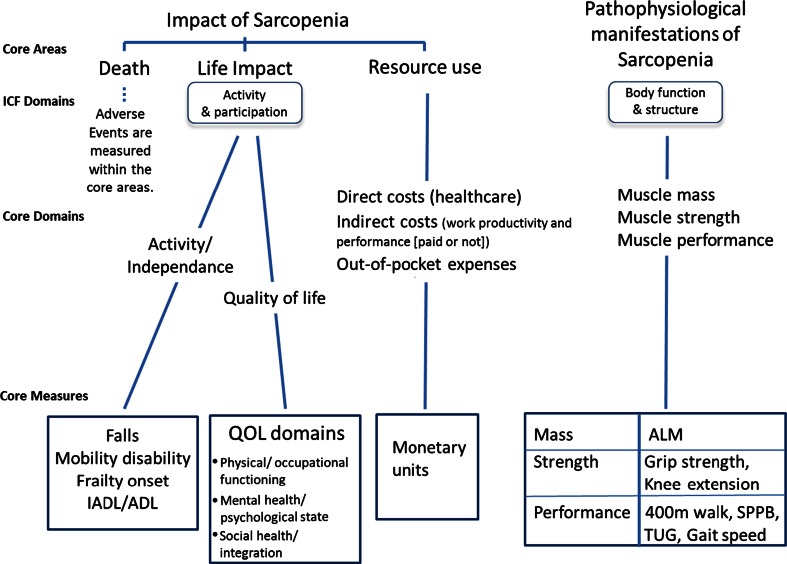
“To aid future development of new therapeutic targets for sarcopenia, recommendations for the conduct of clinical trials have been developed, along with the proposal for a core outcome set to include the domains of activity/independence, quality of life, costs, and muscle mass, strength and performance [105,106].”
From Is There Enough Evidence for Osteosarcopenic Obesity as a Distinct Entity? A Critical Literature Review (2019) · cites this paper as [105]
Self-check
Percentages, sums and reported differences re-computed from the paper’s own numbers.
The self-check needs the paper’s full text.
Citations
Cites
(1992) · PubMed · Cited by 33,716
The MOS 36-ltem Short-Form Health Survey (SF-36): I. Conceptual Framework and Item Selection
Ware, J. E., & Sherbourne, C. D. (1992) · Medical Care · doi:10.1097/00005650-199206000-00002 · Cited by 30,033 · cited 1×
“Probably the most suitable instrument at the present time is the SF-36 [72], since it adequately covers the three key domains (physical/occupational function, social health/integration, and mental health/ psychological state), is not too onerous to complete, is well known and has proved suitable in more than one sarco…”
BackgroundFrailty in Older Adults: Evidence for a Phenotype
Fried, L. P., Tangen, C. M., Walston, J., Newman, A. B., Hirsch, C., Gottdiener, J., Seeman, T., Tracy, R., Kop, W. J., Burke, G., et al. (2001) · The Journals of Gerontology Series A: Biological Sciences and Medical Sciences · doi:10.1093/gerona/56.3.m146 · Cited by 24,907
EuroQol: a new facility for the measurement of health-related quality of life
(1990) · Health Policy · doi:10.1016/0168-8510(90)90421-9 · Cited by 15,736
Sarcopenia: European consensus on definition and diagnosis
Cruz-Jentoft, A. J., Baeyens, J. P., Bauer, J. M., Boirie, Y., Cederholm, T., Landi, F., Martin, F. C., Michel, J.-P., Rolland, Y., Schneider, S. M., et al. (2010) · Age and Ageing · doi:10.1093/ageing/afq034 · Cited by 11,601 · cited 4×
“In the words of the European Working Group on Sarcopenia in Older People (EWGSOP), sarcopenia is a condition ‘characterized by progressive and generalized loss of skeletal muscle mass and strength, with a risk of adverse outcomes such as physical disability, poor quality of life and death’ [2].”
BackgroundInfluentialSelf-citationGuralnik, J. M., Simonsick, E. M., Ferrucci, L., Glynn, R. J., Berkman, L. F., Blazer, D. G., Scherr, P. A., & Wallace, R. B. (1994) · Journal of Gerontology · doi:10.1093/geronj/49.2.m85 · Cited by 9,792 · cited 4×
“The concept of targeting such a population to slow or prevent the progression to sarcopenia might be considered as being similar to the recently completed LIFE study [53] in which older persons with a sedentary lifestyle and at high risk of mobility disability (Short Physical Performance Battery [SPPB] score \10) but…”
BackgroundInfluentialThe metabolic phenotype in obesity: Fat mass, body fat distribution, and adipose tissue function
Goossens, G. H. (2017) · Obesity Facts · doi:10.1159/000471488 · Cited by 8,481
Gait speed and survival in older adults.
Studenski, S. (2011) · JAMA · doi:10.1001/jama.2010.1923 · Cited by 4,558 · cited 1×
“8 m/s [2, 30]; below this level there is a strong association with reduced survival and increased risk of disability [31–34].”
BackgroundSelf-citationSarcopenia in Asia: Consensus Report of the Asian Working Group for Sarcopenia
Chen, L.-K., Liu, L.-K., Woo, J., Assantachai, P., Auyeung, T.-W., Bahyah, K. S., Chou, M.-Y., Chen, L.-Y., Hsu, P.-S., Krairit, O., et al. (2014) · Journal of the American Medical Directors Association · doi:10.1016/j.jamda.2013.11.025 · Cited by 4,051 · cited 1×
“It is likely that different thresholds may also have to be made for different ethnic groups [37, 38].”
BackgroundEpidemiology of Sarcopenia among the Elderly in New Mexico
Baumgartner, R. N., Koehler, K. M., Gallagher, D., Romero, L., Heymsfield, S. B., Ross, R. R., Garry, P. J., & Lindeman, R. D. (1998) · American Journal of Epidemiology · doi:10.1093/oxfordjournals.aje.a009520 · Cited by 4,004 · cited 1×
“Since, ALM varies according to body size, it is often indexed to the square of body height and thresholds applied by, for example, a rule of two standard deviations below a reference population [43] (giving cut-offs of \5.”
Method
Cited by
Sarcopenia: revised European consensus on definition and diagnosis
Cruz-Jentoft, A. J., Bahat, G., Bauer, J., Boirie, Y., Bruyère, O., Cederholm, T., Cooper, C., Landi, F., Rolland, Y., Sayer, A. A., et al. (2019) · Age and Ageing · doi:10.1093/ageing/afy169 · Cited by 13,818
“A wide variety of tests and tools are now available for characterisation of sarcopenia in practice and in research (Table 2) [38, 39].”
BackgroundSelf-citationSarcopenia: revised European consensus on definition and diagnosis
Cruz-Jentoft, A. J., Bahat, G., Bauer, J., Boirie, Y., Bruyère, O., Cederholm, T., Cooper, C., Landi, F., Rolland, Y., Sayer, A. A., et al. (2019) · Age and Ageing · doi:10.1093/ageing/afz046 · Cited by 3,803
Self-citationSarcopenia in daily practice: assessment and management
Beaudart, C., McCloskey, E., Bruyère, O., Cesari, M., Rolland, Y., Rizzoli, R., Araujo de Carvalho, I., Amuthavalli Thiyagarajan, J., Bautmans, I., Bertière, M.-C., et al. (2016) · BMC Geriatrics · doi:10.1186/s12877-016-0349-4 · Cited by 850
Self-citationGale, C. R., Westbury, L., & Cooper, C. (2018) · Age and Ageing · doi:10.1093/ageing/afx188 · Cited by 590
“Sarcopenia is a major contributor to risk of functional decline and physical frailty [23].”
BackgroundSelf-citationBeaudart, C., Rolland, Y., Cruz-Jentoft, A. J., Bauer, J. M., Sieber, C., Cooper, C., Al-Daghri, N., Araujo de Carvalho, I., Bautmans, I., Bernabei, R., et al. (2019) · Calcified Tissue International · doi:10.1007/s00223-019-00545-w · Cited by 528
Self-citationon behalf of the SPRINTT Consortium, Marzetti, E., Calvani, R., Tosato, M., Cesari, M., Di Bari, M., Cherubini, A., Collamati, A., D’Angelo, E., Pahor, M., et al. (2017) · Aging Clinical and Experimental Research · doi:10.1007/s40520-016-0704-5 · Cited by 438
“As a consequence, no definite treatment guidelines are presently available [3].”
BackgroundSelf-citationEpidemiology of sarcopenia and insight into possible therapeutic targets
Dennison, E. M., Sayer, A. A., & Cooper, C. (2017) · Nature Reviews Rheumatology · doi:10.1038/nrrheum.2017.60 · Cited by 294
Self-citationThe Future Prevalence of Sarcopenia in Europe: A Claim for Public Health Action
Ethgen, O., Beaudart, C., Buckinx, F., Bruyère, O., & Reginster, J. Y. (2017) · Calcified Tissue International · doi:10.1007/s00223-016-0220-9 · Cited by 280
“Whereas it is well accepted that sarcopenia is directly linked to frailty [17], and subsequently to at least a twofold increase in overall mortality compared to age-matched subjects [18], the recent recognition of sarcopenia as an independent disease [2] will most likely contribute to an earlier diagnosis and to a mor…”
BackgroundSelf-citationSarcopenia and health‐related quality of life: A systematic review and meta‐analysis
Beaudart, C., Demonceau, C., Reginster, J., Locquet, M., Cesari, M., Cruz Jentoft, A. J., & Bruyère, O. (2023) · Journal of Cachexia, Sarcopenia and Muscle · doi:10.1002/jcsm.13243 · Cited by 237
“Therefore, the use of this specific questionnaire in clinical trials evaluating treatments for the management of sarcopenia should be recommended, as patient-related outcomes are encouraged to be included as co-primary endpoints in such trials.(73) The results also revealed a larger difference of HRQoL between sarcope…”
BackgroundSelf-citationHealth Care Costs Associated With Muscle Weakness: A UK Population-Based Estimate
Pinedo-Villanueva, R., Westbury, L. D., Syddall, H. E., Sanchez-Santos, M. T., Dennison, E. M., Robinson, S. M., & Cooper, C. (2019) · Calcified Tissue International · doi:10.1007/s00223-018-0478-1 · Cited by 221
Self-citationQuality of life assessment in musculo-skeletal health
Beaudart, C., Biver, E., Bruyère, O., Cooper, C., Al-Daghri, N., Reginster, J.-Y., & Rizzoli, R. (2018) · Aging Clinical and Experimental Research · doi:10.1007/s40520-017-0794-8 · Cited by 198
“Even if therapeutic interventions in the field of sarcopenia and frailty are still in their infancy [87, 88], these tools can be used to assess the relevance of these interventions and their effectiveness in terms of change in quality of life.”
Self-citationVellas, B., Fielding, R. A., Bens, C., Bernabei, R., Cawthon, P. M., Cederholm, T., Cruz-Jentoft, A. J., Del Signore, S., Donahue, S., Morley, J., et al. (2018) · The Journal of Frailty & Aging · doi:10.14283/jfa.2017.30 · Cited by 195
“They also mentioned the need to reach consensus on a core outcome set to bring standardization and comparability to research and improve the evidence base (34).”
BackgroundSelf-citationDiagnosing sarcopenia: Functional perspectives and a new algorithm from the ISarcoPRM
Kara, M., Kaymak, B., Frontera, W., Ata, A., Ricci, V, Ekiz, T., Chang, K., Han, D., Michail, X., Quittan, M., et al. (2021) · Journal of Rehabilitation Medicine · doi:10.2340/16501977-2851 · Cited by 183
“Sarcopenia is an important public health problem, since it is a precursor of physical frailty, mobility limitation, and premature death (15).”
BackgroundExercise Intolerance in Older Adults With Heart Failure With Preserved Ejection Fraction
Pandey, A., Shah, S. J., Butler, J., Kellogg, D. L., Lewis, G. D., Forman, D. E., Mentz, R. J., Borlaug, B. A., Simon, M. A., Chirinos, J. A., et al. (2021) · Journal of the American College of Cardiology · doi:10.1016/j.jacc.2021.07.014 · Cited by 184
Self-citationLiu, D., Wang, S., Liu, S., Wang, Q., Che, X., & Wu, G. (2024) · Molecular Aspects of Medicine · doi:10.1016/j.mam.2024.101270 · Cited by 168
Lozano-Montoya, I., Correa-Pérez, A., Abraha, I., Soiza, R. L., Cherubini, A., O'Mahony, D., & Cruz-Jentoft, A. J. (2017) · Clinical Interventions in Aging · doi:10.2147/cia.s132496 · Cited by 130
Self-citationCesari, M., Landi, F., Calvani, R., Cherubini, A., Bari, M. D., KORTEBEIN, P. M., Signore, S. D., Lain, R. L., Vellas, B. J., Pahor, M., et al. (2017) · Aging Clinical and Experimental Research · doi:10.1007/s40520-016-0716-1 · Cited by 128
Self-citationComparison of the performance of five screening methods for sarcopenia
Locquet, M., Beaudart, C., Reginster, J.-Y., Petermans, J., & Bruyère, O. (2017) · Clinical Epidemiology · doi:10.2147/clep.s148638 · Cited by 109
“35 Through this analysis, we hope to provide a clearer picture of the existing tools that can help the practitioner to investigate the presence or absence of sarcopenia, with the ultimate aim of making every effort to prevent muscular disability, by acting on modifiable factors and lifestyle habits.”
Self-citationThe clinical impact and biological mechanisms of skeletal muscle aging
Aversa, Z., Zhang, X., Fielding, R. A., Lanza, I., & LeBrasseur, N. K. (2019) · Bone · doi:10.1016/j.bone.2019.05.021 · Cited by 101
“The recognition of sarcopenia as an important clinical syndrome has led to multidisciplinary efforts to identify, understand, prevent, and treat this condition [3-5].”
BackgroundSelf-citationHars, M., Biver, E., Chevalley, T., Herrmann, F., Rizzoli, R., Ferrari, S., & Trombetti, A. (2016) · Journal of Bone and Mineral Research · doi:10.1002/jbmr.2878 · Cited by 104
Self-citationCT of Patients With Hip Fracture: Muscle Size and Attenuation Help Predict Mortality
Boutin, R. D., Bamrungchart, S., Bateni, C. P., Beavers, D. P., Beavers, K. M., Meehan, J. P., & Lenchik, L. (2017) · American Journal of Roentgenology · doi:10.2214/ajr.16.17226 · Cited by 91
“Although sarcopenia is considered an independent and potentially treatable risk factor for adverse outcomes [27], there is no universal agreement on diagnostic criteria [28].”
Galé, C. R., Marioni, R. E., Harris, S. E., Starr, J. M., & Deary, I. J. (2018) · Clinical Epigenetics · doi:10.1186/s13148-018-0538-4 · Cited by 105
Defining sarcopenia: some caveats and challenges
Sanchez-Rodriguez, D., Marco, E., & Cruz-Jentoft, A. J. (2020) · Current Opinion in Clinical Nutrition & Metabolic Care · doi:10.1097/mco.0000000000000621 · Cited by 77
Self-citationBeaudart, C., Locquet, M., Reginster, J.-Y., Delandsheere, L., Petermans, J., & Bruyère, O. (2018) · Aging Clinical and Experimental Research · doi:10.1007/s40520-017-0866-9 · Cited by 84
“, with sarcopenia) of effective treatment [29, 30].”
Self-citationReginster, J.-Y., Beaudart, C., Al-Daghri, N., Avouac, B., Bauer, J., Bere, N., Bruyère, O., Cerreta, F., Cesari, M., Rosa, M. M., et al. (2021) · Aging Clinical and Experimental Research · doi:10.1007/s40520-020-01663-4 · Cited by 79
Self-citationBauer, J. M., Cruz-Jentoft, A. J., Fielding, R. A., Kanis, J. A., Reginster, J.-Y., Bruyère, O., Cesari, M., Chapurlat, R., Al-Daghri, N., Dennison, E., et al. (2019) · Calcified Tissue International · doi:10.1007/s00223-019-00561-w · Cited by 83
Self-citationGeerinck, A., Alekna, V., Beaudart, C., Bautmans, I., Cooper, C. C., Orlandi, F. D. S., Konstantynowicz, J., Montero‐Errasquín, B., Topinková, E., Τσεκούρα, Μ., et al. (2019) · PLoS ONE · doi:10.1371/journal.pone.0216065 · Cited by 93
“The results of this study should prove particularly valuable in the interpretation of data from interventional clinical trials, and will hopefully expedite the adoption of this PROM in clinical trials [15].”
Self-citationXia, Z., Cholewa, J., Zhao, Y., Shang, H.-Y., Yang, Y.-Q., Araújo Pessôa, K., Su, Q.-S., Lima-Soares, F., & Zanchi, N. E. (2017) · Frontiers in Physiology · doi:10.3389/fphys.2017.00434 · Cited by 76
“The effectiveness of existing pharmaceutical and nutritional supplement interventions such as antioxidants and antiinflammatory agents does not appear to either fully manage age related atrophy or has not been explored in detail (Reginster et al., 2016).”
BackgroundLopes, L. C. C., Mota, J. F., Prestes, J., Schincaglia, R. M., Silva, D. M., Queiroz, N. P., Freitas, A. T. V. D. S., Lira, F. S., & Peixoto, M. D. R. G. (2019) · Archives of Physical Medicine and Rehabilitation · doi:10.1016/j.apmr.2019.06.006 · Cited by 76
Makizako, H., Nakai, Y., Tomioka, K., Taniguchi, Y., Sato, N., Wada, A., Kiyama, R., Tsutsumimoto, K., Ohishi, M., Kiuchi, Y., et al. (2020) · Journal of Clinical Medicine · doi:10.3390/jcm9051386 · Cited by 86
“Sarcopenia is defined as a general loss of skeletal muscle mass and strength and is considered a major health problem for older individuals [1,2].”
BackgroundOrsso, C. E., Montes‐Ibarra, M., Findlay, M., van der Meij, B. S., de van der Schueren, M. A. E., Landi, F., Laviano, A., & Prado, C. M. (2022) · Journal of Cachexia, Sarcopenia and Muscle · doi:10.1002/jcsm.12954 · Cited by 73
“One may argue that the study design most suitable to single nutrient trials may be the placebo-controlled, doubleblinded, parallel arm as recommended in drug trials.(73) This design is common among food supplement trials but may be challenging to be achieved in other nutrition or multimodal interventions, especially i…”
BackgroundZhao, M., Gao, J., Li, M., & Wang, K. (2019) · Journal of the American Medical Directors Association · doi:10.1016/j.jamda.2018.11.007 · Cited by 71
Invernizzi, M., Alessandro de, S. I. R. E., D’Andrea, F., Carrera, D., Renò, F., Migliaccio, S., Iolascon, G., & Cisari, C. (2018) · Aging Clinical and Experimental Research · doi:10.1007/s40520-018-1090-y · Cited by 70
Cox, A., Fairclough, S. J., Kosteli, M., & Noonan, R. J. (2019) · Sports Medicine · doi:10.1007/s40279-019-01215-5 · Cited by 72
Beaudart, C., Edwards, M. H., Moss, C. L., Reginster, J., Moon, R. J., Parsons, C. M., Demoulin, C., Rizzoli, R., Biver, E., Dennison, E. M., et al. (2016) · Age and Ageing · doi:10.1093/ageing/afw192 · Cited by 74
“Evaluating the impact of sarcopenia on individuals’ HRQoL with a disease-specific tool is important to better detect effect of treatment and observe longitudinal changes of quality of life in subjects suffering from sarcopenia [15].”
BackgroundSelf-citationGriffen, C., Duncan, M., Hattersley, J., Weickert, M. O., Dallaway, A., & Renshaw, D. (2022) · Experimental Gerontology · doi:10.1016/j.exger.2021.111651 · Cited by 54
Obstacles to the Early Diagnosis and Management of Sarcopenia: Current Perspectives
Ooi, H., & Welch, C. (2024) · Clinical Interventions in Aging · doi:10.2147/cia.s438144 · Cited by 62
“60”
Gáspárik, A. I., Mihai, G., Beaudart, C., Olivier, B., Pop, R.-M., Jean-Yves, R., & Pascanu, I. M. (2017) · Archives of Osteoporosis · doi:10.1007/s11657-017-0397-1 · Cited by 54
“These subjects had to complete, in addition to SarQoL, two other questionnaires: SF-36 composed of 36 items measuring eight HRQoL domains (physical functioning, role limitation due to physical problems, pain, general health, vitality, social functioning, role limitation due to emotional problems, and mental health), s…”
MethodOsteoporosis in Frail Patients: A Consensus Paper of the Belgian Bone Club
Gielen, E., Bergmann, P., Bruyère, O., Cavalier, E., Delanaye, P., Goemaere, S., Kaufman, J., Locquet, M., Reginster, J., Rozenberg, S., et al. (2017) · Calcified Tissue International · doi:10.1007/s00223-017-0266-3 · Cited by 58
“This may be, in part, related to the absence of guidelines supporting regulatory studies for NCE to manage sarcopenia [75].”
BackgroundSelf-citationMorphological and Functional Aspects of Human Skeletal Muscle
Trovato, F. M., Imbesi, R., Conway, N., & Castrogiovanni, P. (2016) · Journal of Functional Morphology and Kinesiology · doi:10.3390/jfmk1030289 · Cited by 58
Development of Pharmacotherapies for the Treatment of Sarcopenia
Rooks, D., & Roubenoff, R. (2019) · The Journal of Frailty & Aging · doi:10.14283/jfa.2019.11 · Cited by 46
“The identification of approved trial endpoints will guide drug development to use relevant assessments that can be compared across treatments (66-68 , 96 ) and answer several”
Beaudart, C., Rabenda, V., Simmons, M., Geerinck, A., de Carvalho, I. A., Reginster, J., Thiyagarajan, J. A., & Bruyère, O. (2017) · The journal of nutrition health & aging · doi:10.1007/s12603-017-0934-z · Cited by 48
“This highlights the importance of conducting other well-designed RCTs that take into account the recommendations of scientific societies (14, 44).”
Self-citationThe Current Landscape of Pharmacotherapies for Sarcopenia
Bahat, G., & Özkök, S. (2024) · Drugs & Aging · doi:10.1007/s40266-023-01093-7 · Cited by 48
“They have come up with several recommendations for standardization of designs and outcomes to contribute to an improvement of the methodological robustness and comparability of clinical trials, but acknowledging the remaining uncertainties at the same time [298].”
Publication Trends for Sarcopenia in the World: A 20-Year Bibliometric Analysis
Yuan, D., Jin, H., Liu, Q., Zhang, J., Ma, B., Xiao, W., & Li, Y. (2022) · Frontiers in Medicine · doi:10.3389/fmed.2022.802651 · Cited by 42
“However, there are no clear treatments and interventions available (7).”
BackgroundSARcopenia Assessment in Hypertension: The SARAH Study
Kara, M., Kara, Ö., Ceran, Y., Kaymak, B., Kaya, T. C., Çıtır, B. N., Durmuş, M. E., Durmuşoğlu, E., Razaq, S., Doğan, Y., et al. (2022) · American Journal of Physical Medicine & Rehabilitation · doi:10.1097/phm.0000000000002045 · Cited by 43
“Prevention of sarcopenia-related morbidity and mortality, among aging people in particular, depends on early detection and treatment, more importantly on unraveling the relationships betweenmuscle loss, decline inmuscle function and physical performance, and the aforementioned potential predictors.(3) To our best know…”
BackgroundSyddall, H. E., Westbury, L. D., Shaw, S., Dennison, E. M., Cooper, C. C., & Galé, C. R. (2017) · Calcified Tissue International · doi:10.1007/s00223-017-0337-5 · Cited by 40
“It is a major contributor to the risk of physical frailty, functional impairment, poor health-related quality of life and premature death [2].”
BackgroundSelf-citationAlturki, M., Beyer, I., Mets, T., & Bautmans, I. (2018) · Experimental Gerontology · doi:10.1016/j.exger.2018.10.011 · Cited by 36
Self-citationSoares, L. A., Lima, L. P., Prates, A. C. N., Arrieiro, A. N., Teixeira, L. A. D. C., Duarte, T. C., dos Santos, J. M., Lage, V. K. D. S., de Paula, F. A., Costa, H. S., et al. (2023) · Scientific Reports · doi:10.1038/s41598-023-28549-5 · Cited by 37
Safonova, Y. A., Lesnyak, O. M., Baranova, I. A., Сулейманова, А. К., & Zotkin, E. G. (2019) · Rheumatology Science and Practice · doi:10.14412/1995-4484-2019-38-45 · Cited by 35
Hangelbroek, R. W. J., Knuiman, P., Tieland, M., & de Groot, L. C. P. G. M. (2018) · Experimental Gerontology · doi:10.1016/j.exger.2018.02.008 · Cited by 30
“Ageing is associated with a substantial reduction in skeletal muscle mass and strength, known as sarcopenia (Reginster et al., 2016).”
Muscle endocrinology and its relation with nutrition
Romagnoli, C., Pampaloni, B., & Brandi, M. L. (2019) · Aging Clinical and Experimental Research · doi:10.1007/s40520-019-01188-5 · Cited by 34
Self-citationSarcopenia, the last organ insufficiency
Cruz-Jentoft, A. J. (2016) · European Geriatric Medicine · doi:10.1016/j.eurger.2016.01.003 · Cited by 37
“1878-7649/ 2016 Elsevier Masson SAS and European Union Geriatric Medicine Socie the first steps of development [22], so innovative approaches may be needed [23].”
BackgroundSelf-citationGeerinck, A., Bruyère, O., Locquet, M., Reginster, J., & Beaudart, C. (2018) · Advances in Therapy · doi:10.1007/s12325-018-0820-z · Cited by 42
Self-citationJiménez‐García, J. D., Martínez‐Amat, A., Hita‐Contreras, F., Fábrega‐Cuadros, R., Álvarez-Salvago, F., & Aibar‐Almazán, A. (2021) · International Journal of Environmental Research and Public Health · doi:10.3390/ijerph18115893 · Cited by 32
Nutraceuticals for the treatment of sarcopenia in chronic liver disease
Hey, P., Gow, P. J., Testro, A., Apostolov, R., Chapman, B., & Sinclair, M. J. (2020) · Clinical Nutrition ESPEN · doi:10.1016/j.clnesp.2020.11.015 · Cited by 30
Zhao, M., Liu, S., Han, X., Li, Z., Liu, B., Chen, J., & Li, X. (2022) · BioMed Research International · doi:10.1155/2022/7464815 · Cited by 37
“…dynapenia in modern-day youth[27] and sarcopenia in elder individuals (i.e., the loss of skeletal muscle mass associated with aging, neuromuscular factors independent of muscle size contribute to muscle weakness, fall risk, declining quality of life, and loss of functional movement)[28, 29].”
Exercise, muscle, and the applied load-bone strength balance
Giangregorio, L., & El-Kotob, R. (2016) · Osteoporosis International · doi:10.1007/s00198-016-3780-7 · Cited by 30
“There has been heightened interest in interventions that can improve muscle size and strength in older adults to prevent falls, frailty, and fractures [103].”
BackgroundCaulfield, L., Heslop, P., Walesby, K. E., Sumukadas, D., Sayer, A. A., & Witham, M. D. (2020) · Journal of the American Medical Directors Association · doi:10.1016/j.jamda.2020.07.012 · Cited by 27
Sepsis-Induced Myopathy and Gut Microbiome Dysbiosis: Mechanistic Links and Therapeutic Targets
Mankowski, R. T., Laitano, O., Darden, D. B., Kelly, L. S., Munley, J. A., Loftus, T. J., Mohr, A. M., Efron, P. A., & Thomas, R. M. (2021) · Shock · doi:10.1097/shk.0000000000001843 · Cited by 27
Torres, J. L., Vaz, C. T., Pinheiro, L. C., Braga, L. D. S., Moreira, B. D. S., de Oliveira, C. M., & Lima‐Costa, M. F. (2023) · Public Health · doi:10.1016/j.puhe.2023.01.005 · Cited by 25
Functional tests associated with sarcopenia in moderate chronic obstructive pulmonary disease
Lage, V. K. D. S., Silva, G. P., Lacerda, A. C. R., de Paula, F. A., Lima, L. P., Santos, J. N. V., de Almeida, H. C., Pinto, A. G., Figueiredo, P. H. S., Costa, H. S., et al. (2020) · Expert Review of Respiratory Medicine · doi:10.1080/17476348.2021.1850276 · Cited by 25
Scarlata, S., Cardaci, V., Santangelo, C., Matarese, M., Cesari, M., & Incalzi, R. A. (2021) · COPD Journal of Chronic Obstructive Pulmonary Disease · doi:10.1080/15412555.2021.1941834 · Cited by 20
“Sarcopenia is a major contributor to the risk of functional decline and physical frailty [24].”
BackgroundMeasure What Matters Most in Sarcopenia: Regional vs. Appendicular Muscle Mass?
Kara, M., Frontera, W. R., & Özçakar, L. (2021) · Journal of the American Medical Directors Association · doi:10.1016/j.jamda.2021.02.006 · Cited by 19
Selecting Potential Pharmacological Interventions in Sarcopenia
Kilsby, A. J., Sayer, A. A., & Witham, M. D. (2017) · Drugs & Aging · doi:10.1007/s40266-017-0444-z · Cited by 20
Englund, D. A., Price, L. L., Grosicki, G. J., Iwai, M., Kashiwa, M., Liu, C. K., Reid, K. F., & Fielding, R. A. (2018) · The Journals of Gerontology Series A · doi:10.1093/gerona/gly199 · Cited by 24
“Compared with measures of maximal strength, fatigue-inducing assessments of muscle function more closely reflect the physical demands of prolonged functional tasks encountered in the everyday life of an older adult (3,4).”
BackgroundSelf-citationOflazoğlu, U., Alacacıoğlu, A., Varol, U., Küçükzeybek, Y., Salman, T., Önal, H. T., Yılmaz, H. E., Yıldız, Y., Taşkaynatan, H., Saray, S., et al. (2020) · Supportive Care in Cancer · doi:10.1007/s00520-020-05477-y · Cited by 21
“Muscle quality, a novel concept, is a relatively new term that refers to both micro- and macroscopic changes in muscle architecture and composition, as well as the muscle function per given unit of muscle mass [55].”
BackgroundMarcos-Pardo, P. J., González-Gálvez, N., Carbonell‐Baeza, A., Jiménez‐Pavón, D., & Vaquero‐Cristóbal, R. (2022) · Experimental Gerontology · doi:10.1016/j.exger.2022.112044 · Cited by 17
“These results are important given that an underestimation or overestimation of the frequency of sarcopenia could affect proposed interventions by growing the risk of providing treatment to false-positive older adults or not providing treatment to false-negative older adults (Reginster et al., 2016).”
BackgroundMessina, C., Vitale, J. A., Anchora, L. P., Chianca, V., Vicentin, I., Albano, D., Gitto, S., & Sconfienza, L. M. (2020) · European Journal of Clinical Nutrition · doi:10.1038/s41430-020-0638-z · Cited by 19
“Recommendations for the conduct of clinical trials for drugs to treat or prevent sarcopenia [26] European Union 2016 European Society for Clinical and Economic Aspects of Osteoporosis and Osteoarthritis”
MethodLu, J., Xu, Q., Zhu, S., Chen, L., Ding, L., Hua, H., Xu, X., & Hu, J. (2021) · Nutrition · doi:10.1016/j.nut.2021.111553 · Cited by 18
Silva, A. C., Pereira, M. A., Peixoto, L. M., Rosse, I. C., Ferreira‐Júnior, J. B., de Oliveira, E. C., Becker, L. K., & Coelho, D. B. (2023) · Geriatric Nursing · doi:10.1016/j.gerinurse.2023.08.015 · Cited by 16
Cui, M., Jiao, D., Liu, Y., Zhu, Y., Li, X., Zhu, Z., Zhang, J., Banu, A. A., Wang, Y., Qian, M., et al. (2024) · BMC Public Health · doi:10.1186/s12889-024-18234-1 · Cited by 16
“…living [41], and mobility and upper extremity strength [42] suggested that weakened social relationships might increase the risk of sarcopenia, a major factor in frailty [43], and some measures of frailty, including upper extremity strength and walking ability, were direct measures of sar-copenia.”
BackgroundBea, J. W., Wassertheil-Smoller, S. W., Wertheim, B. C., Klimentidis, Y. C., Chen, Z., Zaslavsky, O., Manini, T. M., Womack, C. R., Kroenke, C. H., LaCroix, A. Z., et al. (2018) · Journal of Aging Research · doi:10.1155/2018/8491092 · Cited by 17
“Sarcopenia, defined as a progressive loss of skeletal muscle mass, is a significant public health concern linked to diminished quality of life, disability, and even mortality in older adults [1, 2].”
BackgroundGao, B., Chen, W., Liu, Y., Li, Y., Li, X., Ding, C., Guan, W., Xu, G., & Chen, X. (2022) · Supportive Care in Cancer · doi:10.1007/s00520-021-06729-1 · Cited by 14
“Therefore, screening of sarcopenia in cancer patients, which could predict ultimate prognosis and provide guidance for patients initiate nutrition interventions and exercise, which can help reverse sarcopenia [6].”
Populations and outcome measures used in ongoing research in sarcopenia
Peña-Ordónez, G. G., Bustamante-Montes, L. P., Ramírez‐Durán, N., Sánchez-Castellano, C., & Cruz-Jentoft, A. J. (2016) · Aging Clinical and Experimental Research · doi:10.1007/s40520-016-0610-x · Cited by 13
Self-citationCOVID-19 in Older Patients: Assessment of Post-COVID-19 Sarcopenia
Sampalo, A. L., Cobos-Palacios, L., Vilches-Pérez, A., Sanz‐Cánovas, J., Vargas‐Candela, A., Mancebo-Sevilla, J. J., Hernández-Negrín, H., Gómez‐Huelgas, R., & Bernal-López, M. R. (2023) · Biomedicines · doi:10.3390/biomedicines11030733 · Cited by 14
“[11,12] The selection of tools may depend on the patient, access to technical resources in the healthcare testing setting, or the purpose of the test.”
BackgroundSánchez‐Rodríguez, D., Bruyère, O., Surquin, M., Reginster, J., & Beaudart, C. (2024) · Aging Clinical and Experimental Research · doi:10.1007/s40520-023-02681-8 · Cited by 12
Self-citationBuckinx, F., Landi, F., Cesari, M., Fieding, R. A., Visser, M., Engelke, K., Maggi, S., Dennison, E. M., Al‐Daghri, N. M., Allepaerts, S., et al. (2018) · Journal of Cachexia Sarcopenia and Muscle · doi:10.1002/jcsm.12387 · Cited by 12
Self-citationMacêdo, S. G. G. F., Macêdo, P. R. D. S., Barbosa, W. S., & Maciel, Á. C. C. (2024) · BMC Geriatrics · doi:10.1186/s12877-024-05155-2 · Cited by 11
Portal, D., Melamed, G., Segal, G., & Itelman, E. (2022) · Journal of Clinical Medicine · doi:10.3390/jcm11123500 · Cited by 12
“While pharmaceutical therapies might be beneficial for those who suffer from sarcopenia [8], currently, the mainstay of sarcopenia treatment is focused on resistance exercise to increase muscle mass [9].”
BackgroundKara, Ö., Kara, M., Kaymak, B., Kaya, T. C., Çıtır, B. N., Durmuş, M. E., Durmuşoğlu, E., Doğan, Y., Tiftik, T., Turan, G., et al. (2022) · Aging Clinical and Experimental Research · doi:10.1007/s40520-022-02145-5 · Cited by 10
Kołodziej, M., & Ignasiak, Z. (2019) · Aging Clinical and Experimental Research · doi:10.1007/s40520-019-01413-1 · Cited by 11
Chen, W., Yuan, Q., Li, X., Yao, J., Yuan, L., Chen, X., & Gao, B. (2024) · Cancer Medicine · doi:10.1002/cam4.7452 · Cited by 10
“12 Our study has revealed that SO is associated with a poor prognosis in gastrointestinal cancers.”
BackgroundSu, I. J., Li, Y., & Chen, L. (2021) · Journal of Rehabilitation Therapy · doi:10.29245/2767-5122/2021/1.1123 · Cited by 10
Gany, S. L. S., Tan, J. K., Chin, K., Hakimi, N. H., Rani, N. A., Ihsan, N., & Makpol, S. (2022) · Frontiers in Molecular Biosciences · doi:10.3389/fmolb.2022.1008908 · Cited by 9
“Since sarcopenia is now recognised as a significant clinical phenomenon, interdisciplinary efforts are being made to recognise, comprehend, prevent and treat this disorder (Cooper et al., 2013; Jean-Yves Reginster, 2016).”
BackgroundPasdar, Y., Moradi, S., Saedi, S., Moradinazar, M., Rahmani, N., Hamzeh, B., & Najafi, F. (2022) · Scientific Reports · doi:10.1038/s41598-022-16120-7 · Cited by 7
Can Biological Drugs Diminish the Risk of Sarcopenia in Psoriatic Patients? A Systematic Review
Piętowska, Z., Nowicka, D., & Szepietowski, J. C. (2022) · Life · doi:10.3390/life12030435 · Cited by 8
Li, L., Xing, M., Wang, R., Ding, X., Xia, W., & Yu, X. (2025) · BMC Geriatrics · doi:10.1186/s12877-025-05806-y · Cited by 5
“This inaccurate identification of sarcopenia risk could impact the proposed interventions and public health policies [30].”
Sánchez‐Rodríguez, D., Marco, E., Ronquillo-Moreno, N., Miralles, R., Mojal, S., Vázquez‐Ibar, O., Escalada, F., & Muniesa, J. M. (2016) · Maturitas · doi:10.1016/j.maturitas.2016.08.019 · Cited by 6
“In addition, recommendations for the conduct of clinical trials for drugs to treat or prevent sarcopenia (16)(17) and reports on pharmacological interventions in frailty and sarcopenia have been developed only recently by consensus of international experts (18)(19).”
InfluentialWhich quality of life for the sarcopenic patient?
Beaudart, C., Bonnefoy, M., Gilbert, T., Paillaud, É., Raynaud-Simon, A., Guérin, O., Jeandel, C., Lesourd, B., Haïne, M., Ferry, M., et al. (2021) · Gériatrie et Psychologie Neuropsychiatrie du Viellissement · doi:10.1684/pnv.2021.0948 · Cited by 5
Self-citationSuggestions on sarcopenia-related trials
Bahat, G., Tufan, A., Tufan, F., & Karan, M. A. (2016) · Aging Clinical and Experimental Research · doi:10.1007/s40520-016-0601-y · Cited by 3
“[1] on recommendations for the conduct of clinical trials for drugs to treat or prevent sarcopenia with great, special interest.”
BackgroundRobot-Assisted Group Exercise Program for targeting Sarcopenia in Older Adults: Preliminary Results
Bogliolo, M., Burlando, F., Germinario, A., Vallone, F., Pilotto, A., & Micheli, E. (2024) · IEEE-RAS International Conference on Humanoid Robots (Humanoids) · doi:10.1109/humanoids58906.2024.10769857 · Cited by 2
“The participants were chosen by the medical staff of Galliera Hospital following an assessment based on Hand Grip [12], BIA [13], and Gait Speed test [14], to determine the diagnosis and severity of Sarcopenia.”
Self-citationDevelopment of pharmacological interventions for the treatment of sarcopenia
Yang, D., Su, L., Zhang, L., Li, Y., Huang, T., & Huang, X. (2026) · Annals of Translational Medicine · doi:10.21037/atm-2025-1-184 · Cited by 2
Sarcopenia definitions: Critical issues
Iolascon, G., & Moretti, A. (2018) · Edorium Journal of Disability and Rehabilitation · doi:10.5348/d05-2018-36-ed-2 · Cited by 3
“According to the European Society for Clinical and Economic Aspects of Osteoporosis and Osteoarthritis (ESCEO), the International Classification of Functioning, Disability and Health (ICF) framework of the World Health Organization (WHO) based on the use of a common language for the definition and measurement of funct…”
EVALUATION OF THE DIFFERENCES OF HOUSEHOLD INCOME AND PHYSICAL FITNESS VARIABLES IN ELDERLY KOREANS
ahn, H.-K., & So, W.-Y. (2018) · Journal of Men s Health · doi:10.22374/1875-6859.14.3.7 · Cited by 3
Prevalence of Sarcopenia According to the Method Used to Determine Physical Performance
Sáez, C., & García-Isidoro, S. (2022) · IntechOpen eBooks · doi:10.5772/intechopen.100467 · Cited by 1
Miedany, Y. M. E. (2022) · Springer eBooks · doi:10.1007/978-3-030-87950-1_3 · Cited by 1
Perioperative Care Program: Zurich-POPS Zurich-PeriOperative-care-for-older-PatientS
Bischoff-Ferrari, H. A. (2022) · Springer eBooks · doi:10.1007/978-3-030-91483-7_17 · Cited by 1
Self-citationSetiawan, I., Widyawan, D., & Purwanto, S. (2024) · Jurnal Pendidikan Olah Raga · doi:10.31571/jpo.v13i1.6848 · Cited by 6
Curado, C. (2016) · Americanae (AECID Library) · Cited by 1
SARC‐F to screen or diagnose sarcopenia in cancer? A point‐blank refusal
Malas, F. Ü., Kara, M., & Özçakar, L. (2021) · Cancer · doi:10.1002/cncr.33464 · Cited by 1
“Last but not least, a screening test should not/cannot replace a diagnostic tool for sarcopenia, which is a paramount public health problem causing physical frailty, mobility limitations, and even premature aging and mortality.(6) To this end, together with basic functional tests (ie, grip strength, chair stand test,…”
Background
Metadata
- Authors
- Reginster, J.-Y., Cooper, C., Rizzoli, R., Kanis, J. A., Appelboom, G., Bautmans, I., Bischoff-Ferrari, H. A., Boers, M., Brandi, M. L., Bruyère, O., Cherubini, A., Flamion, B., Fielding, R. A., Gasparik, A. I., Van Loon, L., McCloskey, E., Mitlak, B. H., Pilotto, A., Reiter-Niesert, S., Rolland, Y., Tsouderos, Y., Visser, M., & Cruz-Jentoft, A. J.
- Affiliations
- University of Liège (BE)
- University of Oxford (GB)
- University of Geneva (CH)
- Columbia University Irving Medical Center (US)
- Vrije Universiteit Brussel (BE)
- University Hospital Zurich (CH)
- Amsterdam UMC Location Vrije Universiteit Amsterdam (NL)
- University of Florence (IT)
- Istituto Nazionale di Riposo e Cura per Anziani (IT)
- University of Namur (BE)
- Tufts University (US)
- University of Sheffield (GB)
- Eli Lilly (United States) (US)
- Ente Ospedaliero Ospedali Galliera (IT)
- Université de Toulouse (FR)
- Institut de Recherches Internationales Servier (France) (FR)
- Vrije Universiteit Amsterdam (NL)
- Hospital Universitario Ramón y Cajal (ES)
- Corresponding author
- Bruyère, Olivier
- ORCID
- Venue
- Aging Clinical and Experimental Research
- Published
- 2015-12-30
- Volume
- 28
- Issue
- 1
- Pages
- 47-58
- ISSN
- 1594-0667 (ISSN-L)
- 1720-8319
- PMC
- PMC4768478
- OpenAlex
- W2214973932
- Cited by
- 112
- References
- 93
- Citations by year
- 2026: 1 · 2025: 1 · 2024: 15 · 2023: 8 · 2022: 15 · 2021: 12 · 2020: 7 · 2019: 13 · 2018: 14 · 2017: 16 · 2016: 10
- FWCI
- 1.64
- Type
- journal article
- Language
- en
- Open access
- hybrid
- doi.org
- Licence
- cc-by
- creativecommons.org/licenses/by/4.0 (tdm)
- creativecommons.org/licenses/by/4.0 (vor)
- Locations
- Aging Clinical and Experimental Research (publishedVersion, cc-by)
- Europe PMC (PubMed Central) (publishedVersion, cc-by)
- PubMed Central (publishedVersion, cc-by)
- PubMed (publishedVersion)
- Research Publications (Maastricht University) (publishedVersion, cc-by)
- Pure Amsterdam UMC (publishedVersion, other-oa)
- VU Research Portal (publishedVersion, other-oa)
- Archive ouverte UNIGE (University of Geneva) (publishedVersion)
- White Rose Research Online (University of Leeds, The University of Sheffield, University of York) (acceptedVersion)
- ePrints Soton (University of Southampton) (acceptedVersion)
- Zurich Open Repository and Archive (University of Zurich) (acceptedVersion)
- Research Bank (Australian Catholic University) (submittedVersion)
- LA Referencia (Red Federada de Repositorios Institucionales de Publicaciones Científicas) (submittedVersion, other-oa)
- Florence Research (University of Florence) (submittedVersion)
- Università Politecnica delle Marche (Università Politecnica delle Marche) (submittedVersion)
- Open Repository and Bibliography (University of Liège) (submittedVersion)
- CINECA IRIS Institutional Research Information System (University of Bari Aldo Moro) (submittedVersion, other-oa)
- Archive ouverte UNIGE (University of Geneva) (submittedVersion, cc-by)
- VUBIR (Vrije Universiteit Brussel) (submittedVersion)
- Zurich Open Repository and Archive (University of Zurich) (submittedVersion)
- Data Archiving and Networked Services (DANS) (submittedVersion, other-oa)
- Data Archiving and Networked Services (DANS) (submittedVersion)
- Funders
- Medical Research and Materiel Command, U.S. Army Medical Department
- US Department of Agriculture
- Topics
- Health Sciences › Medicine › Physiology (medical) › Nutrition and Health in Aging
- Life Sciences › Biochemistry, Genetics and Molecular Biology › Molecular Biology › Muscle Physiology and Disorders
- Physical Sciences › Mathematics › Statistics and Probability › Statistical Methods in Clinical Trials
- Keywords
- sarcopenia, clinical trial design, drug development, sarcopenia prevention, core outcome set, clinical trial endpoints, patient selection criteria, sarcopenia prevalence, regulatory guidelines, frailty, older adults
- MeSH terms
- Aged, Clinical Trials as Topic, Humans, Research Design, Practice Guidelines as Topic, Medication Therapy Management, Sarcopenia
About these checks
Registry, retraction, Cites and statistics results are computed, not judged, with one exception: a printed reference that no index lists is read once by a model before it counts as a citation error. Claims are extracted by a model and kept only when their quote appears verbatim in the text; each cited source is then checked, with a model’s help, for whether it says what the claim relies on. Those verdicts can be wrong — read the claim’s quote and the cited source before relying on one.
Statistics and arithmetic are recomputed, not judged.
Confidence bands are shown only for fields calibrated on our annotated test set. None is calibrated yet, so no band is shown.
What counts as a claim ›How we measure confidence ›How we check this ›
Are you an author, or do you see a problem with this page? Request a review
Data sources
Bibliographic data: Semantic Scholar, OpenAlex, Crossref.
Contains information from the Semantic Scholar Academic Graph Datasets, made available under the ODC Attribution License (ODC-BY 1.0).
Semantic Scholar’s data is described in: Kinney, R., et al. (2023). The Semantic Scholar Open Data Platform. arXiv:2301.10140.
