

Recommendations for the conduct of clinical trials for drugs to treat or prevent sarcopenia
Open accessThe DOI matches its Crossref record; 93 of the 93 references it cites were found in a registry or an index.
Abstract
PURPOSE: Sarcopenia is an age-related muscle condition which is frequently a precursor of frailty, mobility disability and premature death. It has a high prevalence in older populations and presents a considerable social and economic burden. Potential treatments are under development but, as yet, no guidelines support regulatory studies for new drugs to manage sarcopenia. The objective of this position paper is therefore to suggest a set of potential endpoints and target population definitions to stimulate debate and progress within the medico-scientific and regulatory communities. METHODS: A multidisciplinary expert working group was hosted by the European Society for Clinical and Economic Aspects of Osteoporosis and Osteoarthritis, which reviewed and discussed the recent literature from a perspective of clinical experience and guideline development. Relevant parallels were drawn from the development of definition of osteoporosis as a disease and clinical assessment of pharmaceutical treatments for that indication. RESULTS: A case-finding decision tree is briefly reviewed with a discussion of recent prevalence estimations of different relevant threshold values. The selection criteria for patients in regulatory studies are discussed according to the aims of the investigation (sarcopenia prevention or treatment) and the stage of project development. The possible endpoints of such studies are reviewed and a plea is made for the establishment of a core outcome set to be used in all clinical trials of sarcopenia. CONCLUSIONS: The current lack of guidelines for the assessment of new therapeutic treatments for sarcopenia could potentially hinder the delivery of effective medicines to patients at risk.
Overview
The claims and statistics of this paper haven’t been checked yet.
Free: it reads the open-access text and checks the first 5 claims that cite a source we can check. Create a free account to check every claim.
Integrity signals
Registry
Cites
Statistics
Figures
Verification
Claims the paper makes
The claims and statistics of this paper haven’t been checked yet.
Free: it reads the open-access text and checks the first 5 claims that cite a source we can check. Create a free account to check every claim.
Claims other papers make about this one
Each is checked against this paper’s own text: does it say what the citing paper says it does?
In the citing paper
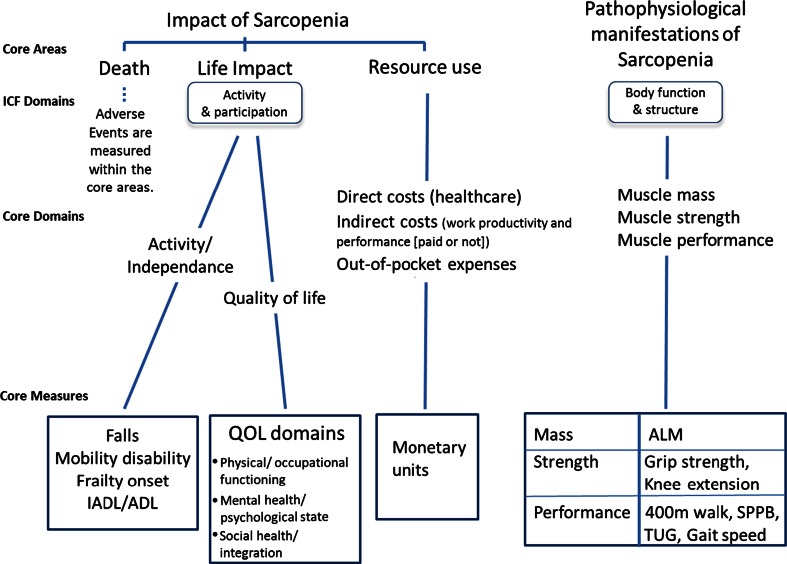
“To aid future development of new therapeutic targets for sarcopenia, recommendations for the conduct of clinical trials have been developed, along with the proposal for a core outcome set to include the domains of activity/independence, quality of life, costs, and muscle mass, strength and performance [105,106].”
From Is There Enough Evidence for Osteosarcopenic Obesity as a Distinct Entity? A Critical Literature Review (2019) · cites this paper as [105]
Self-check
Percentages, sums and reported differences re-computed from the paper’s own numbers.
The self-check needs the paper’s full text.
Citations
Cites
(1992) · PubMed · Cited by 33,716
The MOS 36-ltem Short-Form Health Survey (SF-36): I. Conceptual Framework and Item Selection
Ware, J. E., & Sherbourne, C. D. (1992) · Medical Care · doi:10.1097/00005650-199206000-00002 · Cited by 30,033 · cited 1×
“Probably the most suitable instrument at the present time is the SF-36 [72], since it adequately covers the three key domains (physical/occupational function, social health/integration, and mental health/ psychological state), is not too onerous to complete, is well known and has proved suitable in more than one sarco…”
BackgroundFrailty in Older Adults: Evidence for a Phenotype
Fried, L. P., Tangen, C. M., Walston, J., Newman, A. B., Hirsch, C., Gottdiener, J., Seeman, T., Tracy, R., Kop, W. J., Burke, G., et al. (2001) · The Journals of Gerontology Series A: Biological Sciences and Medical Sciences · doi:10.1093/gerona/56.3.m146 · Cited by 24,907
EuroQol: a new facility for the measurement of health-related quality of life
(1990) · Health Policy · doi:10.1016/0168-8510(90)90421-9 · Cited by 15,736
Sarcopenia: European consensus on definition and diagnosis
Cruz-Jentoft, A. J., Baeyens, J. P., Bauer, J. M., Boirie, Y., Cederholm, T., Landi, F., Martin, F. C., Michel, J.-P., Rolland, Y., Schneider, S. M., et al. (2010) · Age and Ageing · doi:10.1093/ageing/afq034 · Cited by 11,601 · cited 4×
“In the words of the European Working Group on Sarcopenia in Older People (EWGSOP), sarcopenia is a condition ‘characterized by progressive and generalized loss of skeletal muscle mass and strength, with a risk of adverse outcomes such as physical disability, poor quality of life and death’ [2].”
BackgroundInfluentialSelf-citationGuralnik, J. M., Simonsick, E. M., Ferrucci, L., Glynn, R. J., Berkman, L. F., Blazer, D. G., Scherr, P. A., & Wallace, R. B. (1994) · Journal of Gerontology · doi:10.1093/geronj/49.2.m85 · Cited by 9,792 · cited 4×
“The concept of targeting such a population to slow or prevent the progression to sarcopenia might be considered as being similar to the recently completed LIFE study [53] in which older persons with a sedentary lifestyle and at high risk of mobility disability (Short Physical Performance Battery [SPPB] score \10) but…”
BackgroundInfluentialThe metabolic phenotype in obesity: Fat mass, body fat distribution, and adipose tissue function
Goossens, G. H. (2017) · Obesity Facts · doi:10.1159/000471488 · Cited by 8,481
Gait speed and survival in older adults.
Studenski, S. (2011) · JAMA · doi:10.1001/jama.2010.1923 · Cited by 4,558 · cited 1×
“8 m/s [2, 30]; below this level there is a strong association with reduced survival and increased risk of disability [31–34].”
BackgroundSelf-citationSarcopenia in Asia: Consensus Report of the Asian Working Group for Sarcopenia
Chen, L.-K., Liu, L.-K., Woo, J., Assantachai, P., Auyeung, T.-W., Bahyah, K. S., Chou, M.-Y., Chen, L.-Y., Hsu, P.-S., Krairit, O., et al. (2014) · Journal of the American Medical Directors Association · doi:10.1016/j.jamda.2013.11.025 · Cited by 4,051 · cited 1×
“It is likely that different thresholds may also have to be made for different ethnic groups [37, 38].”
BackgroundEpidemiology of Sarcopenia among the Elderly in New Mexico
Baumgartner, R. N., Koehler, K. M., Gallagher, D., Romero, L., Heymsfield, S. B., Ross, R. R., Garry, P. J., & Lindeman, R. D. (1998) · American Journal of Epidemiology · doi:10.1093/oxfordjournals.aje.a009520 · Cited by 4,004 · cited 1×
“Since, ALM varies according to body size, it is often indexed to the square of body height and thresholds applied by, for example, a rule of two standard deviations below a reference population [43] (giving cut-offs of \5.”
MethodProfessor Kanis, J. A., Melton, L. J., Christiansen, C., Johnston, C. C., & Khaltaev, N. (1994) · Journal of Bone and Mineral Research · doi:10.1002/jbmr.5650090802 · Cited by 3,849
Fielding, R. A., Vellas, B., Evans, W. J., Bhasin, S., Morley, J. E., Newman, A. B., Abellan van Kan, G., Andrieu, S., Bauer, J., Breuille, D., et al. (2011) · Journal of the American Medical Directors Association · doi:10.1016/j.jamda.2011.01.003 · Cited by 3,256 · cited 2×
“Since, the loss of muscle mass and strength is inherent in normal ageing, the switch towards a pathological condition must be established empirically, by the combination of diagnostic thresholds and associated risk of mobility-related outcomes, poor quality of life and death [2–4].”
BackgroundSelf-citationGoodpaster, B. H., Park, S. W., Harris, T. B., Kritchevsky, S. B., Nevitt, M., Schwartz, A. V., Simonsick, E. M., Tylavsky, F. A., Visser, M., Newman, A. B., et al. (2006) · The Journals of Gerontology Series A: Biological Sciences and Medical Sciences · doi:10.1093/gerona/61.10.1059 · Cited by 3,083 · cited 1×
“This contributes to the declining muscle strength [20] but is not completely explanatory [10, 21].”
BackgroundSelf-citationEuropean guidance for the diagnosis and management of osteoporosis in postmenopausal women
Kanis, J. A., McCloskey, E. V., Johansson, H., Cooper, C., Rizzoli, R., Reginster, J.-Y., & on behalf of the Scientific Advisory Board of the European Society for Clinical and Economic Aspects of Osteoporosis and Osteoarthritis (ESCEO) and the Committee of Scientific Advisors of the International Osteoporosis Foundation (IOF) (2013) · Osteoporosis International · doi:10.1007/s00198-012-2074-y · Cited by 2,948
Self-citationGuralnik, J. M., Ferrucci, L., Pieper, C. F., Leveille, S. G., Markides, K. S., Ostir, G. V., Studenski, S., Berkman, L. F., & Wallace, R. B. (2000) · The Journals of Gerontology Series A: Biological Sciences and Medical Sciences · doi:10.1093/gerona/55.4.m221 · Cited by 2,898 · cited 1×
“8 m/s [2, 30]; below this level there is a strong association with reduced survival and increased risk of disability [31–34].”
BackgroundConsensus development conference: Diagnosis, prophylaxis, and treatment of osteoporosis
(1993) · The American Journal of Medicine · doi:10.1016/0002-9343(93)90218-e · Cited by 2,874
Studenski, S. A., Peters, K. W., Alley, D. E., Cawthon, P. M., McLean, R. R., Harris, T. B., Ferrucci, L., Guralnik, J. M., Fragala, M. S., Kenny, A. M., et al. (2014) · The Journals of Gerontology: Series A · doi:10.1093/gerona/glu010 · Cited by 2,545 · cited 7×
“The target population for the treatment of sarcopenia (or pre-sarcopenia) should be men and women aged 65 years or more [2, 30].”
BackgroundInfluentialFRAX™ and the assessment of fracture probability in men and women from the UK
Kanis, J. A., Johnell, O., Oden, A., Johansson, H., & McCloskey, E. (2008) · Osteoporosis International · doi:10.1007/s00198-007-0543-5 · Cited by 2,467 · cited 1×
“FRAX) with or without the incorporation of a BMD value [29].”
BackgroundSelf-citationSkeletal muscle: A brief review of structure and function
Frontera, W. R., & Ochala, J. (2015) · Calcified Tissue International · doi:10.1007/s00223-014-9915-y · Cited by 1,758 · cited 1×
“Importantly, muscle constitutes an important reserve of protein that can be called upon in periods of undernutrition [16].”
BackgroundMuscaritoli, M., Anker, S. D., Argilés, J., Aversa, Z., Bauer, J. M., Biolo, G., Boirie, Y., Bosaeus, I., Cederholm, T., Costelli, P., et al. (2010) · Clinical Nutrition · doi:10.1016/j.clnu.2009.12.004 · Cited by 1,732
Newman, A. B., Kupelian, V., Visser, M., Simonsick, E. M., Goodpaster, B. H., Kritchevsky, S. B., Tylavsky, F. A., Rubin, S. M., Harris, T. B., & on Behalf of the Health, A. A. B. C. S. I. (2006) · The Journals of Gerontology Series A: Biological Sciences and Medical Sciences · doi:10.1093/gerona/61.1.72 · Cited by 1,692 · cited 1×
“A key feature of this definition is the incorporation of low muscle strength (frequently referred to as dynapenia), which is generally more strongly associated with poor function and disability than low muscle mass [9].”
BackgroundSelf-citationFelson, D. T., Anderson, J. J., Boers, M., Bombardier, C., Chernoff, M., Fried, B., Furst, D., Goldsmith, C., Kieszak, S., Lightfoot, R., et al. (1993) · Arthritis & Rheumatism · doi:10.1002/art.1780360601 · Cited by 1,640
Self-citationThe healthcare costs of sarcopenia in the United States
Janssen, I., Shepard, D. S., Katzmarzyk, P. T., & Roubenoff, R. (2004) · Journal of the American Geriatrics Society · doi:10.1111/j.1532-5415.2004.52014.x · Cited by 1,546 · cited 1×
“2 billion) [85].”
Longitudinal study of muscle strength, quality, and adipose tissue infiltration
Delmonico, M. J., Harris, T. B., Visser, M., Park, S. W., Conroy, M. B., Velasquez-Mieyer, P., Boudreau, R., Manini, T. M., Nevitt, M., Newman, A. B., et al. (2009) · The American Journal of Clinical Nutrition · doi:10.3945/ajcn.2009.28047 · Cited by 1,446 · cited 3×
“This contributes to the declining muscle strength [20] but is not completely explanatory [10, 21].”
BackgroundSelf-citationAging of skeletal muscle: a 12-yr longitudinal study
Frontera, W. R., Hughes, V. A., Fielding, R. A., Fiatarone, M. A., Evans, W. J., & Roubenoff, R. (2000) · Journal of Applied Physiology · doi:10.1152/jappl.2000.88.4.1321 · Cited by 1,443
Self-citationPahor, M., Guralnik, J. M., Ambrosius, W. T., Blair, S., Bonds, D. E., Church, T. S., Espeland, M. A., Fielding, R. A., Gill, T. M., Groessl, E. J., et al. (2014) · JAMA · doi:10.1001/jama.2014.5616 · Cited by 1,427 · cited 1×
“The concept of targeting such a population to slow or prevent the progression to sarcopenia might be considered as being similar to the recently completed LIFE study [53] in which older persons with a sedentary lifestyle and at high risk of mobility disability (Short Physical Performance Battery [SPPB] score \10) but…”
MethodSelf-citationVisser, M., Goodpaster, B. H., Kritchevsky, S. B., Newman, A. B., Nevitt, M., Rubin, S. M., Simonsick, E. M., Harris, T. B., & Study, F. T. H. A. (2005) · The Journals of Gerontology Series A: Biological Sciences and Medical Sciences · doi:10.1093/gerona/60.3.324 · Cited by 1,403 · cited 2×
“mass is very relevant to muscle quality [22, 46] and to the decline in gait speed [36].”
BackgroundSelf-citationRusso, J., Trujillo, C. A., Wingerson, D., Decker, K., Ries, R., Wetzler, H., & Roy-Byrne, P. (1998) · Medical Care · doi:10.1097/00005650-199805000-00015 · Cited by 1,308
Cesari, M., Kritchevsky, S. B., Penninx, B. W. H. J., Nicklas, B. J., Simonsick, E. M., Newman, A. B., Tylavsky, F. A., Brach, J. S., Satterfield, S., Bauer, D. C., et al. (2005) · Journal of the American Geriatrics Society · doi:10.1111/j.1532-5415.2005.53501.x · Cited by 1,192 · cited 1×
“8 m/s [2, 30]; below this level there is a strong association with reduced survival and increased risk of disability [31–34].”
BackgroundSelf-citationSarcopenic obesity: definition, cause and consequences
Stenholm, S., Harris, T. B., Rantanen, T., Visser, M., Kritchevsky, S. B., & Ferrucci, L. (2008) · Current Opinion in Clinical Nutrition and Metabolic Care · doi:10.1097/mco.0b013e328312c37d · Cited by 1,070
Self-citationDrozdzowska, B., Pluskiewicz, W., Halaba, Z. P., Misiołek, H., & Beck, B. R. (2005) · Cited by 984
Appendicular skeletal muscle mass: effects of age, gender, and ethnicity
Gallagher, D., Visser, M., De Meersman, R. E., Sepúlveda, D., Baumgartner, R. N., Pierson, R. N., Harris, T., & Heymsfield, S. B. (1997) · Journal of Applied Physiology · doi:10.1152/jappl.1997.83.1.229 · Cited by 966
Self-citationVisser, M., Kritchevsky, S. B., Goodpaster, B. H., Newman, A. B., Nevitt, M., Stamm, E., & Harris, T. B. (2002) · Journal of the American Geriatrics Society · doi:10.1046/j.1532-5415.2002.50217.x · Cited by 845 · cited 1×
“mass is very relevant to muscle quality [22, 46] and to the decline in gait speed [36].”
BackgroundSelf-citationTen Year Probabilities of Osteoporotic Fractures According to BMD and Diagnostic Thresholds
Kanis, J. A., Johnell, O., Oden, A., De Laet, C., Dawson, A., & Jonsson, B. (2001) · Osteoporosis International · doi:10.1007/s001980170006 · Cited by 832 · cited 1×
“This threshold provides an indicator that defines individuals with a significantly greater fracture risk than the population average [28].”
BackgroundSelf-citationConsensus Development Conference: A Cross-Cultural Study
Larsen, J. K., & Rogers, E. M. (1984) · Knowledge · doi:10.1177/107554708400500406 · Cited by 751
Kopera, H., & Ziegler, R. (1989) · Klinische Wochenschrift · doi:10.1007/bf01719785 · Cited by 749
Landi, F., Cruz-Jentoft, A. J., Liperoti, R., Russo, A., Giovannini, S., Tosato, M., Capoluongo, E., Bernabei, R., & Onder, G. (2013) · Age and Ageing · doi:10.1093/ageing/afs194 · Cited by 619
Self-citationGrip Strength Cutpoints for the Identification of Clinically Relevant Weakness
Alley, D. E., Shardell, M. D., Peters, K. W., McLean, R. R., Dam, T.-T. L., Kenny, A. M., Fragala, M. S., Harris, T. B., Kiel, D. P., Guralnik, J. M., et al. (2014) · The Journals of Gerontology Series A: Biological Sciences and Medical Sciences · doi:10.1093/gerona/glu011 · Cited by 535 · cited 1×
“The FNIH-SP analysis [39] identified two threshold values each for men and for women; thus defining three strength groups: low, intermediate and high.”
MethodSarcopenia: burden and challenges for public health
Beaudart, C., Rizzoli, R., Bruyère, O., Reginster, J.-Y., & Biver, E. (2014) · Archives of Public Health · doi:10.1186/2049-3258-72-45 · Cited by 495 · cited 1×
“The public health problem associated with sarcopenia is likely to be substantial [84] but, because of the uncertainty in the diagnosis of sarcopenia its prevalence and epidemiology, the size of the problem is far from clear.”
BackgroundSelf-citationMcLean, R. R., Shardell, M. D., Alley, D. E., Cawthon, P. M., Fragala, M. S., Harris, T. B., Kenny, A. M., Peters, K. W., Ferrucci, L., Guralnik, J. M., et al. (2014) · The Journals of Gerontology: Series A · doi:10.1093/gerona/glu012 · Cited by 475 · cited 1×
“The FNIH-SP group examined the effect of including this and other anthropomorphic factors in their classification and regression tree analyses to identify the most appropriate model for the prediction of slow gait speed, including the ratio of strength to body size (grip strength/height, grip strength/ height(2), grip…”
MethodSmart wearable body sensors for patient self-assessment and monitoring
Appelboom, G., Camacho, E., Abraham, M. E., Bruce, S. S., Dumont, E. L., Zacharia, B. E., D’Amico, R., Slomian, J., Reginster, J. Y., Bruyère, O., et al. (2014) · Archives of Public Health · doi:10.1186/2049-3258-72-28 · Cited by 448 · cited 1×
“Recently, however, with the development of mobile electronic devices [69], smart wearable sensors and motion detectors are becoming much cheaper and more reliable for research purposes [70], potentially allowing a more objective assessment.”
BackgroundSelf-citationQuality of Life in Sarcopenia and Frailty
Rizzoli, R., Reginster, J.-Y., Arnal, J.-F., Bautmans, I., Beaudart, C., Bischoff-Ferrari, H., Biver, E., Boonen, S., Brandi, M.-L., Chines, A., et al. (2013) · Calcified Tissue International · doi:10.1007/s00223-013-9758-y · Cited by 425 · cited 3×
“A specific age-related tool (see reference [8]) Aging Clin Exp Res”
BackgroundMethodInfluentialSelf-citationStaron, R. S., Leonardi, M. J., Karapondo, D. L., Malicky, E. S., Falkel, J. E., Hagerman, F. C., & Hikida, R. S. (1991) · Journal of Applied Physiology · doi:10.1152/jappl.1991.70.2.631 · Cited by 401 · cited 1×
“A major difference with bone is that muscle mass can be lost and rebuilt fairly rapidly, at least in younger adults, but this ability to rebuild muscle diminishes significantly in older individuals [15].”
BackgroundCawthon, P. M., Peters, K. W., Shardell, M. D., McLean, R. R., Dam, T.-T. L., Kenny, A. M., Fragala, M. S., Harris, T. B., Kiel, D. P., Guralnik, J. M., et al. (2014) · The Journals of Gerontology Series A: Biological Sciences and Medical Sciences · doi:10.1093/gerona/glu023 · Cited by 388 · cited 1×
“The FNIH-SP analysis [42] found that appendicular lean mass (ALM; the sum of the lean mass of both arms and both legs) was significantly and positively correlated with grip strength in men and in women.”
MethodUsing Timed Up-and-Go to Identify Frail Members of the Older Population
Savva, G. M., Donoghue, O. A., Horgan, F., O'Regan, C., Cronin, H., & Kenny, R. A. (2013) · The Journals of Gerontology Series A: Biological Sciences and Medical Sciences · doi:10.1093/gerona/gls190 · Cited by 363 · cited 2×
“The relevant functional outcome measures in this phase are gait speed, lower leg strength and possibly other more functional tests such as SPPB [58] and Timed Up and Go (TUG) [59], which have their minimal clinically meaning differences already established.”
BackgroundAn evidence-based comparison of operational criteria for the presence of sarcopenia
Dam, T.-T., Peters, K. W., Fragala, M., Cawthon, P. M., Harris, T. B., McLean, R., Shardell, M., Alley, D. E., Kenny, A., Ferrucci, L., et al. (2014) · The Journals of Gerontology Series A: Biological Sciences and Medical Sciences · doi:10.1093/gerona/glu013 · Cited by 363 · cited 3×
“This novel method of adjusting the measurement of lean mass probably explains in large part the differential rates of diagnosis of sarcopenia with respect to EWGSOP criteria [44] and will need further confirmation.”
BackgroundMethodInfluentialSayer, A. A., Syddall, H. E., Martin, H. J., Dennison, E. M., Roberts, H. C., & Cooper, C. (2006) · Age and Ageing · doi:10.1093/ageing/afl024 · Cited by 354 · cited 1×
“Probably the most suitable instrument at the present time is the SF-36 [72], since it adequately covers the three key domains (physical/occupational function, social health/integration, and mental health/ psychological state), is not too onerous to complete, is well known and has proved suitable in more than one sarco…”
BackgroundSelf-citationBischoff-Ferrari, H. A., Orav, J. E., Kanis, J. A., Rizzoli, R., Schlögl, M., Staehelin, H. B., Willett, W. C., & Dawson-Hughes, B. (2015) · Osteoporosis International · doi:10.1007/s00198-015-3194-y · Cited by 332 · cited 1×
“Bischoff-Ferrari and colleagues [49] have also explored the consequences of using different definitions of sarcopenia to prospectively identify community-dwelling seniors who”
BackgroundSelf-citationInternational working group on Sarcopenia
Chumlea, W. C., Cesari, M., Evans, W. J., Ferrucci, L., Fielding, R. A., Pahor, M., Studenski, S., & Vellas, B. (2011) · The Journal of nutrition, health and aging · doi:10.1007/s12603-011-0092-7 · Cited by 332
Self-citationTHE FUNCTIONAL ASSESSMENT OF ELDERLY PEOPLE
Lawton, M. P. (1971) · Journal of the American Geriatrics Society · doi:10.1111/j.1532-5415.1971.tb01206.x · Cited by 323 · cited 2×
“‘Life impact’ includes assessments of mobility/disability which, for sarcopenia, would include the strong endpoints of falls and fractures, reduced mobility, frailty onset (e.g. Fried criteria [80], Instrumental Activities of Daily Living, (Basic Activities of Daily Living [81]), as well as PRO instruments relating to…”
Impact of nutrition on muscle mass, strength, and performance in older adults
for the IOF CSA Nutrition Working Group, Mithal, A., Bonjour, J.-P., Boonen, S., Burckhardt, P., Degens, H., El Hajj Fuleihan, G., Josse, R., Lips, P., Morales Torres, J., et al. (2013) · Osteoporosis International · doi:10.1007/s00198-012-2236-y · Cited by 301
Self-citationFrailty and sarcopenia: definitions and outcome parameters
Cooper, C., Dere, W., Evans, W., Kanis, J. A., Rizzoli, R., Sayer, A. A., Sieber, C. C., Kaufman, J.-M., Abellan van Kan, G., Boonen, S., et al. (2012) · Osteoporosis International · doi:10.1007/s00198-012-1913-1 · Cited by 299 · cited 1×
“these individuals a pharmaceutical product could be of help and indeed numerous agents currently under assessment for the treatment of sarcopenia, including testosterone, dehydroepiandrosterone, oestrogen, growth hormone, ghrelin, angiotensin converting enzyme inhibitor, eicosapentaenoic acid and ryanodine receptor mo…”
BackgroundSelf-citationCesari, M., Fielding, R. A., Pahor, M., Goodpaster, B., Hellerstein, M., Van Kan, G. A., Anker, S. D., Rutkove, S., Vrijbloed, J. W., Isaac, M., et al. (2012) · Journal of Cachexia, Sarcopenia and Muscle · doi:10.1007/s13539-012-0078-2 · Cited by 285
Self-citationThe Lifestyle Interventions and Independence for Elders Study: Design and Methods
Fielding, R. A., Rejeski, W. J., Blair, S., Church, T., Espeland, M. A., Gill, T. M., Guralnik, J. M., Hsu, F.-C., Katula, J., King, A. C., et al. (2011) · The Journals of Gerontology Series A: Biological Sciences and Medical Sciences · doi:10.1093/gerona/glr123 · Cited by 278 · cited 1×
“The result of the 400 m walk test [61] measures the time taken to walk that distance and has a high test– retest reliability [62].”
BackgroundSelf-citationKoster, A., Ding, J., Stenholm, S., Caserotti, P., Houston, D. K., Nicklas, B. J., You, T., Lee, J. S., Visser, M., Newman, A. B., et al. (2011) · The Journals of Gerontology Series A: Biological Sciences and Medical Sciences · doi:10.1093/gerona/glr070 · Cited by 274 · cited 2×
“Obese individuals with sarcopenia are a subgroup with a particularly high risk of adverse outcomes; the evidence suggests that the co-existence of these conditions creates a synergy in the risk of developing multiple comorbidities [10, 11].”
BackgroundSelf-citationIsidori, A. M. (2000) · Journal of Clinical Endocrinology & Metabolism · doi:10.1210/jc.85.5.1954 · Cited by 267 · cited 1×
“comitant obesity [10, 22], since this will exacerbate the drop in anabolic hormone production [23] and negatively”
BackgroundBeavers, K. M., Beavers, D. P., Houston, D. K., Harris, T. B., Hue, T. F., Koster, A., Newman, A. B., Simonsick, E. M., Studenski, S. A., Nicklas, B. J., et al. (2013) · The American Journal of Clinical Nutrition · doi:10.3945/ajcn.112.047860 · Cited by 259 · cited 2×
“mass is very relevant to muscle quality [22, 46] and to the decline in gait speed [36].”
BackgroundQuality of life and physical components linked to sarcopenia: The SarcoPhAge study
Beaudart, C., Reginster, J. Y., Petermans, J., Gillain, S., Quabron, A., Locquet, M., Slomian, J., Buckinx, F., & Bruyère, O. (2015) · Experimental Gerontology · doi:10.1016/j.exger.2015.05.003 · Cited by 248 · cited 1×
“Probably the most suitable instrument at the present time is the SF-36 [72], since it adequately covers the three key domains (physical/occupational function, social health/integration, and mental health/ psychological state), is not too onerous to complete, is well known and has proved suitable in more than one sarco…”
BackgroundSelf-citationStenholm, S., Alley, D., Bandinelli, S., Griswold, M. E., Koskinen, S., Rantanen, T., Guralnik, J. M., & Ferrucci, L. (2009) · International Journal of Obesity · doi:10.1038/ijo.2009.62 · Cited by 248 · cited 1×
“should be an adjustment factor (fat mass should also be considered as an adjustment factor) [40].”
BackgroundTools in the Assessment of Sarcopenia
Cooper, C., Fielding, R., Visser, M., van Loon, L. J., Rolland, Y., Orwoll, E., Reid, K., Boonen, S., Dere, W., Epstein, S., et al. (2013) · Calcified Tissue International · doi:10.1007/s00223-013-9757-z · Cited by 246 · cited 1×
“Unlike the relatively straight-forward measurement of BMD and its comparison to a reference, muscle mass can be estimated by a variety of techniques and there are numerous methods for adjusting the result for body size and corpulence [7].”
MethodSelf-citationHicks, G. E., Shardell, M., Alley, D. E., Miller, R. R., Bandinelli, S., Guralnik, J., Lauretani, F., Simonsick, E. M., & Ferrucci, L. (2012) · The Journals of Gerontology Series A: Biological Sciences and Medical Sciences · doi:10.1093/gerona/glr055 · Cited by 229 · cited 1×
“sion) have also shown their value in research [64, 65] but specialised equipment is required.”
BackgroundMorley, J. E. (2012) · Family Practice · doi:10.1093/fampra/cmr063 · Cited by 218 · cited 1×
“Indeed ‘‘sarcopenia can be considered for muscle, what osteoporosis is to bone’’ [13].”
BackgroundFighting Against Age Discrimination in Clinical Trials
Cherubini, A., Signore, S. D., Ouslander, J., Semla, T., & Michel, J. (2010) · Journal of the American Geriatrics Society · doi:10.1111/j.1532-5415.2010.03032.x · Cited by 199
Self-citationVestergaard, S., Nayfield, S. G., Patel, K. V., Eldadah, B., Cesari, M., Ferrucci, L., Ceresini, G., & Guralnik, J. M. (2009) · The Journals of Gerontology Series A: Biological Sciences and Medical Sciences · doi:10.1093/gerona/gln017 · Cited by 197 · cited 1×
“important aspect of muscle performance and various methods exist to measure it [66–68], but no clear choice stands out at this stage.”
BackgroundPapanicolaou, D. A., Ather, S. N., Zhu, H., Zhou, Y., Lutkiewicz, J., Scott, B. B., & Chandler, J. (2013) · The Journal of nutrition, health and aging · doi:10.1007/s12603-013-0335-x · Cited by 196 · cited 1×
“A recently published international phase II study in sarcopenia, which was designed to test the effects of the selective androgen receptor modulator [54], selected women of 65 years old or more, with low ALM (ALM/ height(2) versus reference), self-reported mobility disability and an SPPB score between 4 and 9.”
BackgroundRolland, Y. M., Cesari, M., Miller, M. E., Penninx, B. W., Atkinson, H. H., & Pahor, M. (2004) · Journal of the American Geriatrics Society · doi:10.1111/j.1532-5415.2004.52267.x · Cited by 194 · cited 1×
“The result of the 400 m walk test [61] measures the time taken to walk that distance and has a high test– retest reliability [62].”
BackgroundSelf-citationThe Role of Dietary Protein Intake in the Prevention of Sarcopenia of Aging
Beasley, J. M., Shikany, J. M., & Thomson, C. A. (2013) · Nutrition in Clinical Practice · doi:10.1177/0884533613507607 · Cited by 191 · cited 1×
“tored and any dietary failings or anaemia corrected [56, 57].”
BackgroundMost older pedestrians are unable to cross the road in time: a cross-sectional study
Asher, L., Aresu, M., Falaschetti, E., & Mindell, J. (2012) · Age and Ageing · doi:10.1093/ageing/afs076 · Cited by 186 · cited 2×
“Longer duration exercise tests have a stronger case for being a meaningful function outcome and are highly relevant to older patients for whom crossing the road may be a risky enterprise [35].”
BackgroundEstimation of sarcopenia prevalence using various assessment tools
Beaudart, C., Reginster, J., Slomian, J., Buckinx, F., Dardenne, N., Quabron, A., Slangen, C., Gillain, S., Pétermans, J., & Bruyère, O. (2014) · Experimental Gerontology · doi:10.1016/j.exger.2014.11.014 · Cited by 183 · cited 1×
“Testing the various thresholds suggested by EWGSOP on a Belgian cohort aged 65 years or more, Beaudart and colleagues found that the prevalence of sarcopenia (men and women) varied from 9 to 18 % [48].”
BackgroundSelf-citationOutcome measures in rheumatoid arthritis randomised trials over the last 50 years
Kirkham, J. J., Boers, M., Tugwell, P., Clarke, M., & Williamson, P. R. (2013) · Trials · doi:10.1186/1745-6215-14-324 · Cited by 171 · cited 2×
“Even if the main endpoints might vary in different studies, having a core outcome set would enhance trial comparison and therefore improve the evidence base, as has been shown for rheumatological diseases [76, 77].”
BackgroundSelf-citationPuts, M. T. E., Shekary, N., Widdershoven, G. A. M., Heldens, J., Lips, P. T. A. M., & Deeg, D. J. H. (2006) · Quality of Life Research · doi:10.1007/s11136-006-9121-0 · Cited by 154
Scott, D., Hayes, A., Sanders, K. M., Aitken, D., Ebeling, P. R., & Jones, G. (2014) · Osteoporosis International · doi:10.1007/s00198-013-2431-5 · Cited by 148 · cited 2×
“In the study by Scott and colleagues [47], the baseline data of an adult cohort (n = 1100) were analysed using various definitions of sarcopenia and the results correlated with the 5-year falls risk scores.”
MethodResultFairhall, N., Sherrington, C., Lord, S. R., Kurrle, S. E., Langron, C., Lockwood, K., Monaghan, N., Aggar, C., & Cameron, I. D. (2014) · Age and Ageing · doi:10.1093/ageing/aft204 · Cited by 136
Drug Policy for an Aging Population — The European Medicines Agency's Geriatric Medicines Strategy
Cerreta, F., Eichler, H.-G., & Rasi, G. (2012) · New England Journal of Medicine · doi:10.1056/nejmp1209034 · Cited by 133 · cited 1×
“How any improvement in physical functioning might lead to reduced costs for healthcare systems will be important to support the submission [60].”
BackgroundInteraction Between Bone and Muscle in Older Persons with Mobility Limitations
Ferrucci, L., Baroni, M., Ranchelli, A., Lauretani, F., Maggio, M., Mecocci, P., & Ruggiero, C. (2014) · Current Pharmaceutical Design · doi:10.2174/13816128113196660690 · Cited by 131 · cited 1×
“Both are consequences of biological ageing and both are associated with higher risk of mobility limitation, fractures and disability in the activities of daily living [12].”
BackgroundBüyükkılıç, G. (2011) · Marmara Üniversitesi Hukuk Fakültesi Hukuk Araştırmaları dergisi · Cited by 120
Chronology of age-related disease definitions: Osteoporosis and sarcopenia
Bijlsma, A. Y., Meskers, C. G. M., Westendorp, R. G. J., & Maier, A. B. (2012) · Ageing Research Reviews · doi:10.1016/j.arr.2012.01.001 · Cited by 120 · cited 1×
“Bijlsma and colleagues [14] identified a number of milestones in the development of the recognition of osteoporosis as a disease, including: coining the term (in 1830), the development of non-invasive imaging [dual-energy X-ray absorptiometry (DXA)] (1987), the increasing pharmaceutical interest (linked to the develop…”
BackgroundBarbat-Artigas, S., Rolland, Y., Cesari, M., Abellan van Kan, G., Vellas, B., & Aubertin-Leheudre, M. (2013) · The Journals of Gerontology Series A: Biological Sciences and Medical Sciences · doi:10.1093/gerona/gls254 · Cited by 117 · cited 1×
“sion) have also shown their value in research [64, 65] but specialised equipment is required.”
BackgroundSelf-citationSarcopenia: A useful paradigm for physical frailty
Cruz-Jentoft, A. J., & Michel, J. (2013) · European Geriatric Medicine · doi:10.1016/j.eurger.2013.02.009 · Cited by 82 · cited 1×
“Sarcopenia is a syndrome characterised by progressive and generalized loss of skeletal muscle mass and strength; it is a major pathway leading to physical frailty [1].”
BackgroundSelf-citationLeBrasseur, N. K., Bhasin, S., Miciek, R., & Storer, T. W. (2008) · Journal of the American Geriatrics Society · doi:10.1111/j.1532-5415.2008.01953.x · Cited by 82 · cited 1×
“carrying a bag in each hand with a combined weight of 20–25 % of body weight [63].”
BackgroundBarbat-Artigas, S., Pion, C. H., Leduc-Gaudet, J.-P., Rolland, Y., & Aubertin-Leheudre, M. (2014) · Journal of the American Medical Directors Association · doi:10.1016/j.jamda.2013.12.008 · Cited by 76 · cited 1×
“impact muscle quality [24], increasing the risk of sarcopenia in both men and women [11, 25].”
BackgroundSelf-citationRomero‐Ortuño, R., & O'Shea, D. B. (2013) · Age and Ageing · doi:10.1093/ageing/afs189 · Cited by 76
Comprehensive Approach to Sarcopenia Treatment
Wakabayashi, H., & Sakuma, K. (2014) · Current Clinical Pharmacology · doi:10.2174/1574884708666131111192845 · Cited by 69 · cited 1×
“While numerous research centres are trying to develop either pharmaceutical agents, specific oral nutritional supplements or specific exercise regimes to try to counteract muscle decline [5], this lack of consensus on diagnosis, and consequently guidelines, is likely to cause inefficiencies in time and resources.”
BackgroundBautmans, I., Njemini, R., Predom, H., Lemper, J., & Mets, T. (2008) · Journal of the American Geriatrics Society · doi:10.1111/j.1532-5415.2007.01571.x · Cited by 67
Self-citationSchaap, L. A., Pluijm, S. M. F., Deeg, D. J. H., Penninx, B. W., Nicklas, B. J., Lips, P., Harris, T. B., Newman, A. B., Kritchevsky, S. B., Cauley, J. A., et al. (2008) · Clinical Endocrinology · doi:10.1111/j.1365-2265.2007.02997.x · Cited by 66 · cited 1×
“The loss in muscle mass is shaped by the decline in the production of growth and anabolic sex hormones, although the exact relationship between hormone status and muscle function is complex both in men and women [18, 19].”
BackgroundSelf-citationZeng, P., Wu, S., Han, Y., Liu, J., Zhang, Y., Zhang, E., Zhang, Y., Gong, H., Pang, J., Tang, Z., et al. (2014) · Archives of Gerontology and Geriatrics · doi:10.1016/j.archger.2014.08.010 · Cited by 59 · cited 1×
“It is likely that different thresholds may also have to be made for different ethnic groups [37, 38].”
BackgroundKhoudary, S. R. E., McClure, C. K., VoPham, T., Karvonen-Gutierrez, C. A., Sternfeld, B., Cauley, J. A., Khalil, N., & Sutton-Tyrrell, K. (2014) · The Journals of Gerontology Series A · doi:10.1093/gerona/glt285 · Cited by 55 · cited 1×
“The loss in muscle mass is shaped by the decline in the production of growth and anabolic sex hormones, although the exact relationship between hormone status and muscle function is complex both in men and women [18, 19].”
BackgroundMuscle weakness, fatigue, and torque variability: Effects of age and mobility status
Kent‐Braun, J. A., Callahan, D. M., Fay, J. L., Foulis, S. A., & Buonaccorsi, J. P. (2013) · Muscle & Nerve · doi:10.1002/mus.23903 · Cited by 53
Vellas, B., Pahor, M., Manini, T., Rooks, D., Guralnik, J. M., Morley, J., Studenski, S., Evans, W., Asbrand, C., Fariello, R., et al. (2013) · The Journal of nutrition, health and aging · doi:10.1007/s12603-013-0362-7 · Cited by 43 · cited 1×
“Considerations for target populations for pharmaceutical trials in sarcopenia have been made previously [50, 51] and most recently by Vellas and colleagues [52].”
BackgroundSelf-citationBoers, M., Idzerda, L., Kirwan, J. R., Beaton, D., Escorpizo, R., Boonen, A., Magasi, S., Sinha, I., Stucki, G., & Tugwell, P. (2014) · The Journal of Rheumatology · doi:10.3899/jrheum.131307 · Cited by 42 · cited 1×
“0’’, which outlines the intellectual process of deciding first what to measure (domains), and then how to measure it (instruments) [79].”
BackgroundSelf-citationCooperación para la Innovación Europea sobre el Envejecimiento Activo y Saludable
Lizana, F. G. (2012) · Medicina Clínica · doi:10.1016/j.medcli.2012.06.017 · Cited by 40
Peak muscle mass in young men and sarcopenia in the ageing male
Frost, M., Nielsen, T. L., Brixen, K., & Andersen, M. (2014) · Osteoporosis International · doi:10.1007/s00198-014-2960-6 · Cited by 21 · cited 1×
“After a peak and a plateau phase in tissue growth, senescence steps in [17]; a process of biological ageing resulting in the gradual deterioration of bone density, muscle mass and strength.”
BackgroundBuckinx, F., Beaudart, C., Slomian, J., Maquet, D., Demonceau, M., Gillain, S., Pétermans, J., Reginster, J., & Bruyère, O. (2015) · Technology and Health Care · doi:10.3233/thc-140883 · Cited by 9 · cited 1×
“Recently, however, with the development of mobile electronic devices [69], smart wearable sensors and motion detectors are becoming much cheaper and more reliable for research purposes [70], potentially allowing a more objective assessment.”
BackgroundSelf-citation
Cited by
Sarcopenia: revised European consensus on definition and diagnosis
Cruz-Jentoft, A. J., Bahat, G., Bauer, J., Boirie, Y., Bruyère, O., Cederholm, T., Cooper, C., Landi, F., Rolland, Y., Sayer, A. A., et al. (2019) · Age and Ageing · doi:10.1093/ageing/afy169 · Cited by 13,818
“A wide variety of tests and tools are now available for characterisation of sarcopenia in practice and in research (Table 2) [38, 39].”
BackgroundSelf-citationSarcopenia: revised European consensus on definition and diagnosis
Cruz-Jentoft, A. J., Bahat, G., Bauer, J., Boirie, Y., Bruyère, O., Cederholm, T., Cooper, C., Landi, F., Rolland, Y., Sayer, A. A., et al. (2019) · Age and Ageing · doi:10.1093/ageing/afz046 · Cited by 3,803
Self-citationSarcopenia in daily practice: assessment and management
Beaudart, C., McCloskey, E., Bruyère, O., Cesari, M., Rolland, Y., Rizzoli, R., Araujo de Carvalho, I., Amuthavalli Thiyagarajan, J., Bautmans, I., Bertière, M.-C., et al. (2016) · BMC Geriatrics · doi:10.1186/s12877-016-0349-4 · Cited by 850
Self-citationGale, C. R., Westbury, L., & Cooper, C. (2018) · Age and Ageing · doi:10.1093/ageing/afx188 · Cited by 590
“Sarcopenia is a major contributor to risk of functional decline and physical frailty [23].”
BackgroundSelf-citationBeaudart, C., Rolland, Y., Cruz-Jentoft, A. J., Bauer, J. M., Sieber, C., Cooper, C., Al-Daghri, N., Araujo de Carvalho, I., Bautmans, I., Bernabei, R., et al. (2019) · Calcified Tissue International · doi:10.1007/s00223-019-00545-w · Cited by 528
Self-citation
Metadata
- Authors
- Reginster, J.-Y., Cooper, C., Rizzoli, R., Kanis, J. A., Appelboom, G., Bautmans, I., Bischoff-Ferrari, H. A., Boers, M., Brandi, M. L., Bruyère, O., Cherubini, A., Flamion, B., Fielding, R. A., Gasparik, A. I., Van Loon, L., McCloskey, E., Mitlak, B. H., Pilotto, A., Reiter-Niesert, S., Rolland, Y., Tsouderos, Y., Visser, M., & Cruz-Jentoft, A. J.
- Affiliations
- University of Liège (BE)
- University of Oxford (GB)
- University of Geneva (CH)
- Columbia University Irving Medical Center (US)
- Vrije Universiteit Brussel (BE)
- University Hospital Zurich (CH)
- Amsterdam UMC Location Vrije Universiteit Amsterdam (NL)
- University of Florence (IT)
- Istituto Nazionale di Riposo e Cura per Anziani (IT)
- University of Namur (BE)
- Tufts University (US)
- University of Sheffield (GB)
- Eli Lilly (United States) (US)
- Ente Ospedaliero Ospedali Galliera (IT)
- Université de Toulouse (FR)
- Institut de Recherches Internationales Servier (France) (FR)
- Vrije Universiteit Amsterdam (NL)
- Hospital Universitario Ramón y Cajal (ES)
- Corresponding author
- Bruyère, Olivier
- ORCID
- Venue
- Aging Clinical and Experimental Research
- Published
- 2015-12-30
- Volume
- 28
- Issue
- 1
- Pages
- 47-58
- ISSN
- 1594-0667 (ISSN-L)
- 1720-8319
- PMC
- PMC4768478
- OpenAlex
- W2214973932
- Cited by
- 112
- References
- 93
- Citations by year
- 2026: 1 · 2025: 1 · 2024: 15 · 2023: 8 · 2022: 15 · 2021: 12 · 2020: 7 · 2019: 13 · 2018: 14 · 2017: 16 · 2016: 10
- FWCI
- 1.64
- Type
- journal article
- Language
- en
- Open access
- hybrid
- doi.org
- Licence
- cc-by
- creativecommons.org/licenses/by/4.0 (tdm)
- creativecommons.org/licenses/by/4.0 (vor)
- Locations
- Aging Clinical and Experimental Research (publishedVersion, cc-by)
- Europe PMC (PubMed Central) (publishedVersion, cc-by)
- PubMed Central (publishedVersion, cc-by)
- PubMed (publishedVersion)
- Research Publications (Maastricht University) (publishedVersion, cc-by)
- Pure Amsterdam UMC (publishedVersion, other-oa)
- VU Research Portal (publishedVersion, other-oa)
- Archive ouverte UNIGE (University of Geneva) (publishedVersion)
- White Rose Research Online (University of Leeds, The University of Sheffield, University of York) (acceptedVersion)
- ePrints Soton (University of Southampton) (acceptedVersion)
- Zurich Open Repository and Archive (University of Zurich) (acceptedVersion)
- Research Bank (Australian Catholic University) (submittedVersion)
- LA Referencia (Red Federada de Repositorios Institucionales de Publicaciones Científicas) (submittedVersion, other-oa)
- Florence Research (University of Florence) (submittedVersion)
- Università Politecnica delle Marche (Università Politecnica delle Marche) (submittedVersion)
- Open Repository and Bibliography (University of Liège) (submittedVersion)
- CINECA IRIS Institutional Research Information System (University of Bari Aldo Moro) (submittedVersion, other-oa)
- Archive ouverte UNIGE (University of Geneva) (submittedVersion, cc-by)
- VUBIR (Vrije Universiteit Brussel) (submittedVersion)
- Zurich Open Repository and Archive (University of Zurich) (submittedVersion)
- Data Archiving and Networked Services (DANS) (submittedVersion, other-oa)
- Data Archiving and Networked Services (DANS) (submittedVersion)
- Funders
- Medical Research and Materiel Command, U.S. Army Medical Department
- US Department of Agriculture
- Topics
- Health Sciences › Medicine › Physiology (medical) › Nutrition and Health in Aging
- Life Sciences › Biochemistry, Genetics and Molecular Biology › Molecular Biology › Muscle Physiology and Disorders
- Physical Sciences › Mathematics › Statistics and Probability › Statistical Methods in Clinical Trials
- Keywords
- sarcopenia, clinical trial design, drug development, sarcopenia prevention, core outcome set, clinical trial endpoints, patient selection criteria, sarcopenia prevalence, regulatory guidelines, frailty, older adults
- MeSH terms
- Aged, Clinical Trials as Topic, Humans, Research Design, Practice Guidelines as Topic, Medication Therapy Management, Sarcopenia
About these checks
Registry, retraction, Cites and statistics results are computed, not judged, with one exception: a printed reference that no index lists is read once by a model before it counts as a citation error. Claims are extracted by a model and kept only when their quote appears verbatim in the text; each cited source is then checked, with a model’s help, for whether it says what the claim relies on. Those verdicts can be wrong — read the claim’s quote and the cited source before relying on one.
Statistics and arithmetic are recomputed, not judged.
Confidence bands are shown only for fields calibrated on our annotated test set. None is calibrated yet, so no band is shown.
What counts as a claim ›How we measure confidence ›How we check this ›
Are you an author, or do you see a problem with this page? Request a review
Data sources
Bibliographic data: Semantic Scholar, OpenAlex, Crossref.
Contains information from the Semantic Scholar Academic Graph Datasets, made available under the ODC Attribution License (ODC-BY 1.0).
Semantic Scholar’s data is described in: Kinney, R., et al. (2023). The Semantic Scholar Open Data Platform. arXiv:2301.10140.
