

Fibers reinforced composite hydrogels with improved lubrication and load-bearing capacity
Open accessThe DOI matches its Crossref record; 36 of the 36 references it cites were found in a registry or an index.
Abstract
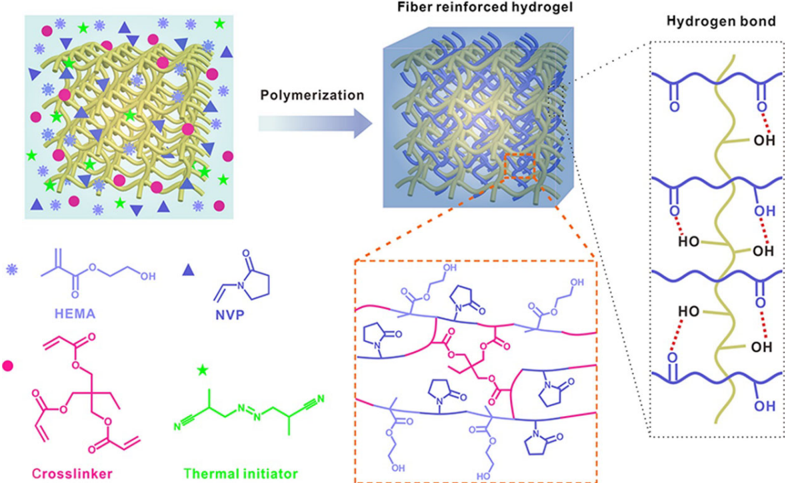
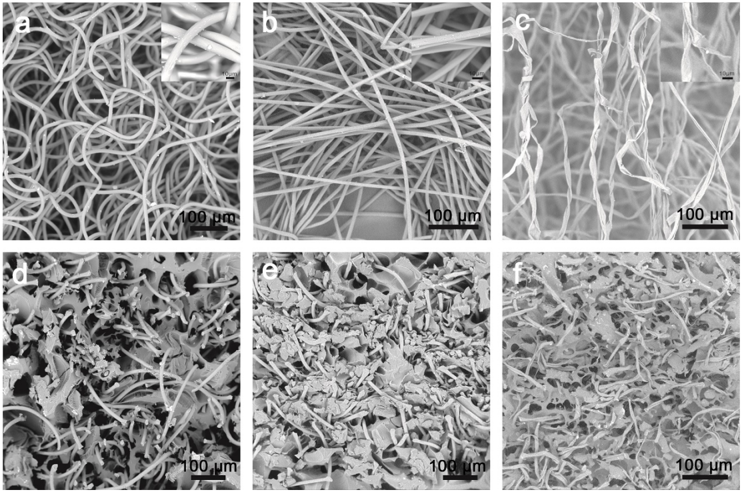
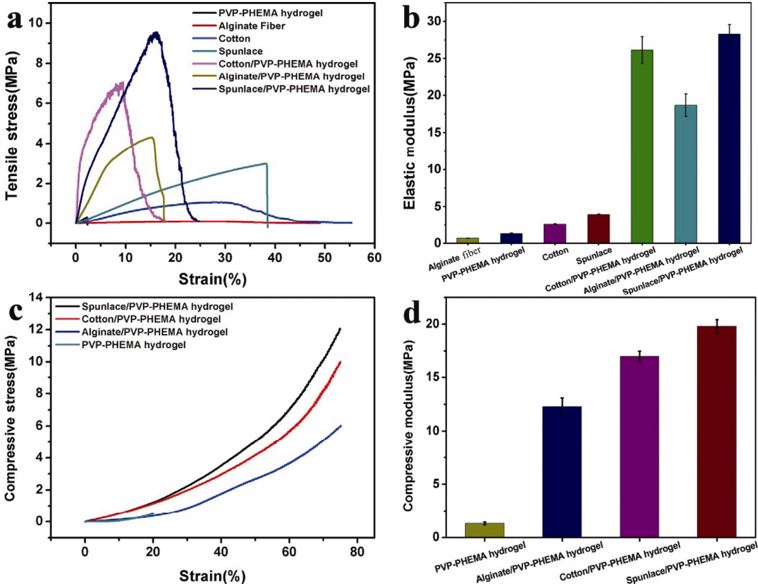
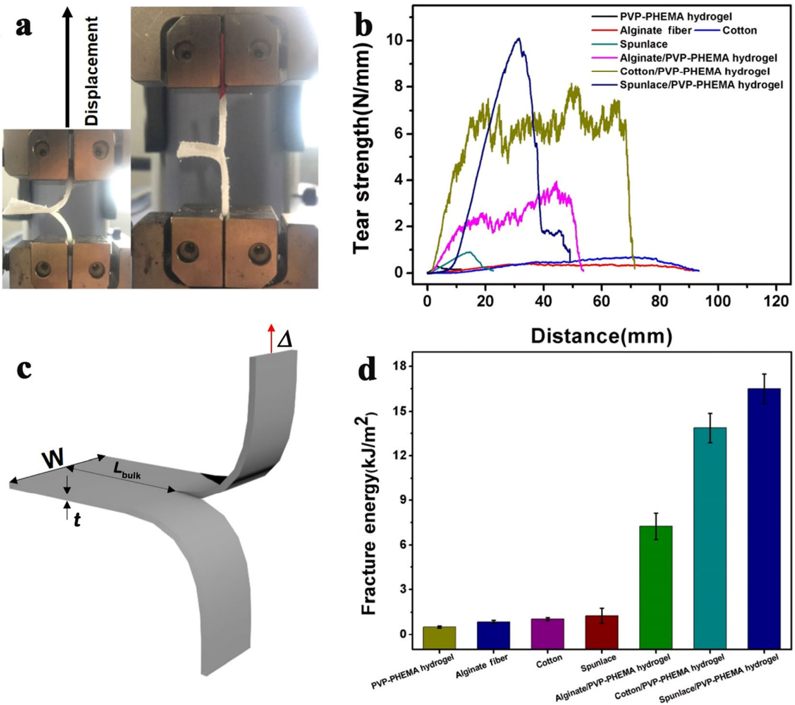
Hydrogels as one kind of soft materials with a typical three-dimensional (3D) hydrophilic network have been getting great attention in the field of biolubrication. However, traditional hydrogels commonly show poor tribology performance under high-load conditions because of their poor mechanical strength and toughness. Herein, pure chemical-crosslinking hydrogels mixed with different types of the micron-scale fibers can meet the requirements of strength and toughness for biolubrication materials, meanwhile the corresponding tribology performance improves significantly. In a typical case, three kinds of reinforcement matrix including needle-punched fibers, alginate fibers, and cottons are separately combined with Poly( n -vinyl pyrrolidone)-poly(2-hydroxyethyl methacrylate (PVP-PHEMA) hydrogels to prepare fibers reinforced composite hydrogels. The experimental results show that the mechanical properties of fibers reinforced composite hydrogels improve greatly comparable with pure PVP-PHEMA hydrogels. Among three kinds of fibers reinforced composite hydrogel, the as-prepared composite hydrogels reinforced with needle-punched fibers possess the best strength, modulus, and anti-tearing properties. Friction tests indicate that the fibers reinforced composite hydrogels demonstrate stable water-lubrication performance comparable with pure PVP-PHEMA hydrogels. Besides, the hydrogel-spunlace fiber samples show the best load-bearing and anti-wear capacities. The improved tribology performance of the composite hydrogels is highly related to mechanical property and the interaction between the fibers and hydrogel network. Finally, spunlace fibers reinforced hydrogel materials with high load-bearing and low friction properties are expected to be used as novel biomimetic lubrication materials.
Overview
The claims and statistics of this paper haven’t been checked yet.
Free: it reads the open-access text and checks the first 5 claims that cite a source we can check. Create a free account to check every claim.
Integrity signals
Registry
Cites
Statistics
Figures





Verification
Claims the paper makes
The claims and statistics of this paper haven’t been checked yet.
Free: it reads the open-access text and checks the first 5 claims that cite a source we can check. Create a free account to check every claim.
Claims other papers make about this one
Each is checked against this paper’s own text: does it say what the citing paper says it does?
The cited source says what the claim attributes to it.
In the citing paper
“Similar behavior was reported by various research groups suggesting adding fiber improves the scaffold’s mechanical strength and that a higher density of fiber content in the hydrogel yielded high strength [29, 38–41].”
From Development of silk microfiber-reinforced bioink for muscle tissue engineering and in situ printing by a handheld 3D printer (2025) · cites this paper as [39]
Self-check
Percentages, sums and reported differences re-computed from the paper’s own numbers.
The self-check needs the paper’s full text.
Citations
Cites
Hydrogels for Tissue Engineering
Lee, K. Y., & Mooney, D. J. (2001) · Chemical Reviews · doi:10.1021/cr000108x · Cited by 5,277
Bioinspired structural materials
Wegst, U. G. K., Bai, H., Saiz, E., Tomsia, A. P., & Ritchie, R. O. (2015) · Nature Materials · doi:10.1038/nmat4089 · Cited by 4,721
Physical hydrogels composed of polyampholytes demonstrate high toughness and viscoelasticity
Sun, T. L., Kurokawa, T., Kuroda, S., Ihsan, A. B., Akasaki, T., Sato, K., Haque, M. A., Nakajima, T., & Gong, J. P. (2013) · Nature Materials · doi:10.1038/nmat3713 · Cited by 2,089
Lin, P., Ma, S., Wang, X., & Zhou, F. (2015) · Advanced Materials · doi:10.1002/adma.201405022 · Cited by 915
Self-citationMoutos, F. T., Freed, L. E., & Guilak, F. (2007) · Nature Materials · doi:10.1038/nmat1822 · Cited by 738
Weak Hydrogen Bonding Enables Hard, Strong, Tough, and Elastic Hydrogels
Hu, X., Vatankhah‐Varnoosfaderani, M., Zhou, J., Li, Q., & Sheiko, S. S. (2015) · Advanced Materials · doi:10.1002/adma.201503724 · Cited by 596
Zhao, D., Huang, J., Zhong, Y., Li, K., Zhang, L., & Cai, J. (2016) · Advanced Functional Materials · doi:10.1002/adfm.201601645 · Cited by 539
Stiff, strong, and tough hydrogels with good chemical stability
Li, J., Suo, Z., & Vlassak, J. J. (2014) · J. Mater. Chem. B · doi:10.1039/c4tb01194e · Cited by 381
Self-citationFracture toughness of hydrogels: measurement and interpretation
Long, R., & Hui, C.-Y. (2016) · Soft Matter · doi:10.1039/c6sm01694d · Cited by 303
Synthesis of Hydrogels with Extremely Low Surface Friction
Gong, J. P., Kurokawa, T., Narita, T., Kagata, G., Osada, Y., Nishimura, G., & Kinjo, M. (2001) · Journal of the American Chemical Society · doi:10.1021/ja003794q · Cited by 276
Cited by
Wang, Y., Zhai, W., Cheng, S., Li, J., & Zhang, H. (2023) · Friction · doi:10.1007/s40544-022-0710-x · Cited by 216
“[94] Li J, Gao L, Xu R, Ma S, Ma Z, Liu Y, Wu Y, Feng L, Cai M, Zhou F.”
BackgroundSelf-citationHydrogel scaffolds in bone regeneration: Their promising roles in angiogenesis
Liu, J., Yang, L., Liu, K., & Gao, F. (2023) · Frontiers in Pharmacology · doi:10.3389/fphar.2023.1050954 · Cited by 109
Chen, Q., Zhang, X., Chen, K., Feng, C., Wang, D., Qi, J., Li, X., Zhao, X., Chai, Z., & Zhang, D. (2022) · ACS Applied Materials & Interfaces · doi:10.1021/acsami.2c13641 · Cited by 86
Bausch, B., Frankl, S. D., Becher, D., Menz, F., Baier, T., Bauer, M., Böse, O., & Hölzle, M. (2023) · Journal of Energy Storage · doi:10.1016/j.est.2023.106841 · Cited by 63
Najihah, A. Z., Hassan, M. Z., & Ismail, Z. (2024) · International Journal of Biological Macromolecules · doi:10.1016/j.ijbiomac.2024.132411 · Cited by 44
Zhang, L., Fang, J., Fu, L., Chen, L., Dai, W., Huang, H., Wang, J., Zhang, X., Cai, Q., & Yang, X. (2021) · Chemical Engineering Journal · doi:10.1016/j.cej.2021.130428 · Cited by 38
Zhang, R., Zhao, W., Ning, F., Zhen, J., Qiang, H., Zhang, Y., Liu, F., & Jia, Z. (2022) · Polymers · doi:10.3390/polym14194063 · Cited by 33
An Updated Review on Advances in Hydrogel-Based Nanoparticles for Liver Cancer Treatment
Far, B. F., Isfahani, A. A., Nasiriyan, E., Pourmolaei, A., Mahmoudvand, G., Rouzbahani, A. K., Amin, M. N., & Naimi‐Jamal, M. R. (2023) · Livers · doi:10.3390/livers3020012 · Cited by 33
Almasi, M. J., & Xiong, D. (2024) · Journal of Bionic Engineering · doi:10.1007/s42235-024-00480-z · Cited by 29
Recent progress of bioinspired cartilage hydrogel lubrication materials
Zhao, X., Zhao, W., Zhang, Y., Zhang, X., Ma, Z., Wang, R., Wei, Q., Ma, S., & Zhou, F. (2022) · Biosurface and Biotribology · doi:10.1049/bsb2.12047 · Cited by 28
Self-citationA self-reinforced tough and multifunctional polyvinyl alcohol fabric composite hydrogel
Xiang, C., Lei, L., Ning, H., Hu, N., Li, A., Liu, Y., Liu, F., Zou, R., Wen, J., Wu, X., et al. (2023) · Composites Science and Technology · doi:10.1016/j.compscitech.2023.110212 · Cited by 25
Self-citationMoghimi, N., Kamaraj, M., Zehtabi, F., Amin Yavari, S., Kohandel, M., Khademhosseini, A., & John, J. V. (2024) · Journal of Materials Chemistry B · doi:10.1039/d3tb02924g · Cited by 24
Hydrogels for Lubrication: Synthesis, Properties, Mechanism, and Challenges
Hu, L., Yang, Y., Yu, W., & Xu, L. (2024) · Lubricants · doi:10.3390/lubricants12060186 · Cited by 24
Microgel-Modified Bilayered Hydrogels Dramatically Boosting Load-Bearing and Lubrication
Peng, L., Fu, D., Zhang, T., Ma, S., & Zhou, F. (2023) · ACS Macro Letters · doi:10.1021/acsmacrolett.3c00398 · Cited by 24
Self-citationChen, Q., Yan, X., Chen, K., Feng, C., Wang, D., Li, X., Zhao, X., Chai, Z., Wang, Q., Zhang, D., et al. (2023) · Journal of Materials Chemistry B · doi:10.1039/d2tb02511f · Cited by 23
Advancements of Biomacromolecular Hydrogel Applications in Food Nutrition and Health
Ye, Z., Sun, L., Xiang, Q., Hao, Y., Liu, H., He, Q. Z., Yang, X., & Liao, W. (2024) · Journal of Agricultural and Food Chemistry · doi:10.1021/acs.jafc.4c05903 · Cited by 25
Shah, S. A., Sohail, M. F., Nakielski, P., Rinoldi, C., Zargarian, S. S., Kosik‐Kozioł, A., Ziai, Y., Bayan, M. A. H., Zakrzewska, A., Rybak, D., et al. (2024) · Biomacromolecules · doi:10.1021/acs.biomac.4c01133 · Cited by 25
Jafri, N. F., Salleh, K. M., Ghazali, N. A., Hua, C. C., Wang, C., & Zakaria, S. (2025) · International Journal of Biological Macromolecules · doi:10.1016/j.ijbiomac.2025.140707 · Cited by 20
Su, X., Xu, K., Zhao, X., Yu, T., Fan, W., & Sui, K. (2024) · Composites Communications · doi:10.1016/j.coco.2024.101970 · Cited by 20
Wang, Z., Meng, F., Zhang, Y., & Guo, H. (2023) · Langmuir · doi:10.1021/acs.langmuir.2c03109 · Cited by 18
Kamaraj, M., Rezayof, O., Barer, A., Kim, H., Moghimi, N., Joshi, A., Dokmeci, M. R., Khademhosseini, A., Alambeigi, F., & John, J. V. (2025) · Biomaterials Advances · doi:10.1016/j.bioadv.2024.214057 · Cited by 17
Separator threads in yarn-shaped supercapacitors to avoid short-circuiting upon length
He, N., Song, J., Liao, J., Zhao, F., & Gao, W. (2022) · npj Flexible Electronics · doi:10.1038/s41528-022-00150-2 · Cited by 17
“Li et al.(32) also found that the load-bearing and anti-wearing capabilities of hydrogel can be largely improved via fiber reinforcement.”
BackgroundZhang, X., Chen, Q., Chen, K., Feng, H., Feng, C., Li, X., Zhang, D., & Ge, S. (2024) · ACS Applied Materials & Interfaces · doi:10.1021/acsami.4c11080 · Cited by 17
Poly(2-Hydroxyethyl Methacrylate) Hydrogels for Contact Lens Applications–A Review
Saptaji, K., Iza, N. R., Widianingrum, S., Mulia, V. K., & Setiawan, I. (2021) · Makara Journal of Science · doi:10.7454/mss.v25i3.1237 · Cited by 23
Chen, Z., Liu, G., Zou, Y., Du, K., Zhou, F., & Liu, W. (2024) · Tribology International · doi:10.1016/j.triboint.2024.110136 · Cited by 15
Self-citationInjectable MXene/Ag-HA composite hydrogel for enhanced alveolar bone healing and mechanistic study
Li, J., Fan, Z., Guan, Z., & Ruan, J. (2024) · Frontiers in Bioengineering and Biotechnology · doi:10.3389/fbioe.2024.1485437 · Cited by 15
Self-citationShao, J., Pu, J., Chen, F., Liu, Y., & Song, J. (2025) · International Journal of Biological Macromolecules · doi:10.1016/j.ijbiomac.2025.139612 · Cited by 13
Self-citationSynergistic lubrication and fracture mechanisms of composite surface textures
Zhang, H., Ni, J., Yang, L., Feng, K., Meng, Z., & Zhu, Z. (2024) · Tribology International · doi:10.1016/j.triboint.2024.109866 · Cited by 9
Yan, X., Yu, J., Zhang, Y., Jia, Y., Chen, K., Chen, Q., Zhang, X., Feng, H., Feng, C., & Zhang, D. (2023) · Langmuir · doi:10.1021/acs.langmuir.3c01610 · Cited by 9
Xu, Y., Zhu, J., Zhou, L., Yang, B., Liu, Z., Liu, Y., Tang, L., & Jiang, Z. (2024) · Composites Part A Applied Science and Manufacturing · doi:10.1016/j.compositesa.2024.108221 · Cited by 9
Self-citationBioinspired design of strong, tough and slippery hydrogels beyond the natural soft tissues
Chen, K., Chen, Q., Yan, X., Zhang, X., Feng, H., Feng, C., Li, X., Zhang, D., & Ge, S. (2025) · Materials Today Chemistry · doi:10.1016/j.mtchem.2025.102633 · Cited by 8
de Souza, S. O. L., de Oliveira, S. M., Silva, L. M., & Oréfice, R. L. (2022) · Journal of Applied Polymer Science · doi:10.1002/app.52527 · Cited by 8
Wang, H., Wu, J. F., Wang, K., Su, Y., Zhang, X., Liu, Y., & Zhang, J. (2024) · Friction · doi:10.1007/s40544-024-0898-z · Cited by 7
Self-citationTribological performance analysis of nano-FeS films deposited on the surface of bearing steel
Zhang, G., Ma, Z., Yin, Y., Li, Q., Li, C., Ma, T., & Ma, S. (2023) · Colloids and Surfaces A Physicochemical and Engineering Aspects · doi:10.1016/j.colsurfa.2023.131453 · Cited by 7
Self-citationAdvances in high-strength lubricating hydrogels
Feng, J., Jin, A., Li, J., Yu, Z., Li, J., Liu, M., Cao, Y., & Lin, W. (2025) · European Polymer Journal · doi:10.1016/j.eurpolymj.2025.114390 · Cited by 5
Self-citationRuseva, K., Todorovа, K., Zhivkova, T., Milcheva, R. S., Ivanov, D., Dimitrov, P., Alexandrova, R., & Vassileva, E. (2023) · Gels · doi:10.3390/gels9020090 · Cited by 5
“Some of the strategies for strengthening hydrogels used so far include the formation of polymer nanocomposites [8], polymer hydrogels with ideally homogeneous networks [9], fiber-reinforced hydrogels [10] and interpenetrating polymer networks (IPNs) [11].”
BackgroundTreccani, S., Bonadies, I., Ferruti, P., Alongi, J., Scarpa, E., Laurienzo, P., Raucci, M. G., Fasolino, I., & Ranucci, E. (2025) · Biomaterials Advances · doi:10.1016/j.bioadv.2025.214415 · Cited by 5
Toughening Polyamidoamine Hydrogels through Covalent Grafting of Short Silk Fibers
Maggi, F., Manfredi, A., Carosio, F., Maddalena, L., Alongi, J., Ferruti, P., & Ranucci, E. (2022) · Molecules · doi:10.3390/molecules27227808 · Cited by 5
“It is possible to prepare fiber-reinforced composite hydrogels that combine the best properties of both components and meet the strength and toughness requirements indispensable for various technological applications [20,21], including as scaffolds for tissue engineering [22–26].”
BackgroundHighly Tough, Stretchable and Self-Healing Polyampholyte Elastomers with Dual Adhesiveness
Yin, P., Liu, Y., Huang, D., & Zhang, C. (2022) · International Journal of Molecular Sciences · doi:10.3390/ijms23094548 · Cited by 5
“Polyampholyte hydrogels can be formed when polyampholytes with a suitable degree of crosslinking are swollen in water, and they may find a wide range of applications in the field of biomedical engineering [10,11], tribology [12,13] and antifouling [14].”
BackgroundSelf-citationWang, Z., & Ma, T. (2023) · Journal of Applied Polymer Science · doi:10.1002/app.53935 · Cited by 5
Design and tribological study of cartilage-inspired biphasic hydrogel-containing composites
Li, X., Guo, Z., Zheng, Z., Wu, Z., Yang, Y., & Yuan, C. (2025) · Friction · doi:10.26599/frict.2025.9441090 · Cited by 4
Macroscale solid superlubricity from the perspective of tribochemistry
Shi, J., Tan, L., Long, H., Zhang, J., & Wang, C. (2026) · Advances in Colloid and Interface Science · doi:10.1016/j.cis.2026.103812 · Cited by 3
Fiber composite hydrogels: Advances in food preservation and biomedical applications
Xu, X., Ning, Q., Chen, H., & Pang, J. (2025) · Process Biochemistry · doi:10.1016/j.procbio.2025.05.019 · Cited by 3
Facile and efficient fabrication of a water-induced high lubricating coating on PVC
Long, X., Yuan, Z., Fu, S., Dai, Z., He, R., Su, Q., Yang, K., Meng, S., & Li, C. (2026) · European Polymer Journal · doi:10.1016/j.eurpolymj.2026.114585 · Cited by 2
Almasi, M. J., Gong, C., Abdelhussein, A., & Xiong, D. (2026) · Macromolecular Research · doi:10.1007/s13233-026-00505-y · Cited by 2
Stretching of immersed polyelectrolyte brushes in shear flow
Qiao, Y., He, Q., Huang, H., Mastropietro, D., Jiang, Z., Zhou, H., Liu, Y., Tirrell, M., & Chen, W. (2023) · Nanoscale · doi:10.1039/d3nr04187e · Cited by 1
Self-citationLi, H., He, H., Chen, W., Dong, Y., Wu, X., Xia, Z., Zhou, Y., Yang, L., Deng, H., Huang, Z., et al. (2025) · International Journal of Polymeric Materials · doi:10.1080/00914037.2025.2481418 · Cited by 1
“Moreover, nanomaterials can enhance the mechanical strength of hydrogels through nano-enhancement including hydrogen bonding, hydrophobic forces, or charge interactions [11] .”
Zhang, X., Chen, K., Chen, K., Feng, H., Zhang, H., Zhang, D., & Ge, S. R. (2025) · Tribology International · doi:10.1016/j.triboint.2025.111134 · Cited by 1
Photocurable 3D-printed anti-tearing ionogels for flexible sensors
Wang, Z., Liu, Y., Zhang, Y., Hu, J., Rong, Y., Lv, J., & Huang, X. (2026) · Reactive and Functional Polymers · doi:10.1016/j.reactfunctpolym.2026.106643 · Cited by 1
Self-citationLiang, X., Guo, Z., Li, Z. Y., Qiu, Y., Wang, Z., & Yuan, C. (2021) · Macromolecular Materials and Engineering · doi:10.1002/mame.202100844 · Cited by 1
Lu, R., Ning, H., Wu, X., Wang, S., Xiang, C., Lee, A., Hu, N., Zhao, L., Jiao, F., Shi, X., et al. (2026) · Nano Materials Science · doi:10.1016/j.nanoms.2026.03.016 · Cited by 1
Almasi, M. J., Gong, C., Abdelhussein, A., & Xiong, D. (2026) · Journal of Bioactive and Compatible Polymers · doi:10.1177/08839115261448560
Wu, Q., Jia, H., Xiang, S., Du, J., Fei, J., & Wang, S. (2026) · Physics of Fluids · doi:10.1063/5.0334202
Li, X., Qin, L., Wu, Z., Huang, Q., Guo, Z., Bai, X., & Yuan, C. (2026) · Journal of Materials Research and Technology · doi:10.1016/j.jmrt.2026.07.207
Characterization Techniques and Their Efficacy for Hydrogels and Ferrogels
Awasthi, S. (2026) · Materials horizons · doi:10.1007/978-981-95-9077-3_4
Liu, Y., Xue, C., Yang, Y., Liu, C., Yin, Y., Lu, W., & Zhang, H. (2026) · Advanced Functional Materials · doi:10.1002/adfm.77811
Self-citationA review of polyvinyl alcohol (PVA) hydrogels for orthopedic applications
Abbondandolo, A. G., Castro, C., Lowman, A. M., Peppas, N. A., & Brewer, E. C. (2026) · Acta Biomaterialia · doi:10.1016/j.actbio.2026.09.026
Textile-material-based hydrogel composites: from material design to wearable applications
Liang, X., Huang, H., Su, F., Jia, W., Niu, L., Sun, Z., & Fang, J. (2026) · Journal of Materials Chemistry A · doi:10.1039/d6ta06631c
Park, Y., Heo, G., Cho, C.-H., Choi, S.-G., Kim, M. H., Yoo, J., Choi, J., & Park, M.-H. (2026) · Friction · doi:10.26599/frict.2026.9441336
Metadata
- Authors
- Li, J., Gao, L., Xu, R., Ma, S., Ma, Z., Liu, Y., Wu, Y., Feng, L., Cai, M., & Zhou, F.
- Affiliations
- Chinese Academy of Sciences (CN)
- Lanzhou Jiaotong University (CN)
- Corresponding author
- Ma, Shuanhong
- Wu, Yang
- ORCID
- Venue
- Friction
- Publisher
- Tsinghua University Press
- Published
- 2020-10-21
- Volume
- 10
- Issue
- 1
- Pages
- 54-67
- ISSN
- 2223-7690 (ISSN-L)
- 2223-7704
- OpenAlex
- W3094356667
- Cited by
- 57
- References
- 36
- Citations by year
- 2026: 11 · 2025: 9 · 2024: 14 · 2023: 13 · 2022: 7 · 2021: 3
- FWCI
- 1.92
- Type
- journal article
- Language
- en
- Open access
- diamond
- doi.org
- Licence
- cc-by
- creativecommons.org/licenses/by/4.0 (tdm)
- creativecommons.org/licenses/by/4.0 (vor)
- Locations
- Friction (publishedVersion, cc-by)
- Lanzhou University Institutional Repository (submittedVersion)
- Funders
- China Association for Science and Technology (2017QNRC0181)
- National Natural Science Foundation of China (51705507, 51828302, 51805514)
- Chinese Academy of Sciences (QYZDY-SSW-JSC013)
- Topics
- Physical Sciences › Materials Science › Biomaterials › Hydrogels: synthesis, properties, applications
- Physical Sciences › Engineering › Mechanics of Materials › Tribology and Wear Analysis
- Physical Sciences › Engineering › Mechanical Engineering › Tribology and Lubrication Engineering
- Keywords
- fiber-reinforced hydrogels, composite hydrogels, biolubrication, tribology, alginate fibers, cotton fiber, chemical crosslinking, mechanical strength, bearing capacity, anti-wear, water lubrication
About these checks
Registry, retraction, Cites and statistics results are computed, not judged, with one exception: a printed reference that no index lists is read once by a model before it counts as a citation error. Claims are extracted by a model and kept only when their quote appears verbatim in the text; each cited source is then checked, with a model’s help, for whether it says what the claim relies on. Those verdicts can be wrong — read the claim’s quote and the cited source before relying on one.
Statistics and arithmetic are recomputed, not judged.
Confidence bands are shown only for fields calibrated on our annotated test set. None is calibrated yet, so no band is shown.
What counts as a claim ›How we measure confidence ›How we check this ›
Are you an author, or do you see a problem with this page? Request a review
Data sources
Bibliographic data: Semantic Scholar, OpenAlex, Crossref.
Contains information from the Semantic Scholar Academic Graph Datasets, made available under the ODC Attribution License (ODC-BY 1.0).
Semantic Scholar’s data is described in: Kinney, R., et al. (2023). The Semantic Scholar Open Data Platform. arXiv:2301.10140.
