

Biochar compost blends facilitate switchgrass growth in mine soils by reducing Cd and Zn bioavailability
Open accessThe DOI matches its Crossref record; 73 of the 74 references it cites were found in a registry or an index, and 1 are not checked yet; none of the 21 sources its claims cite is checked for support yet.
Abstract
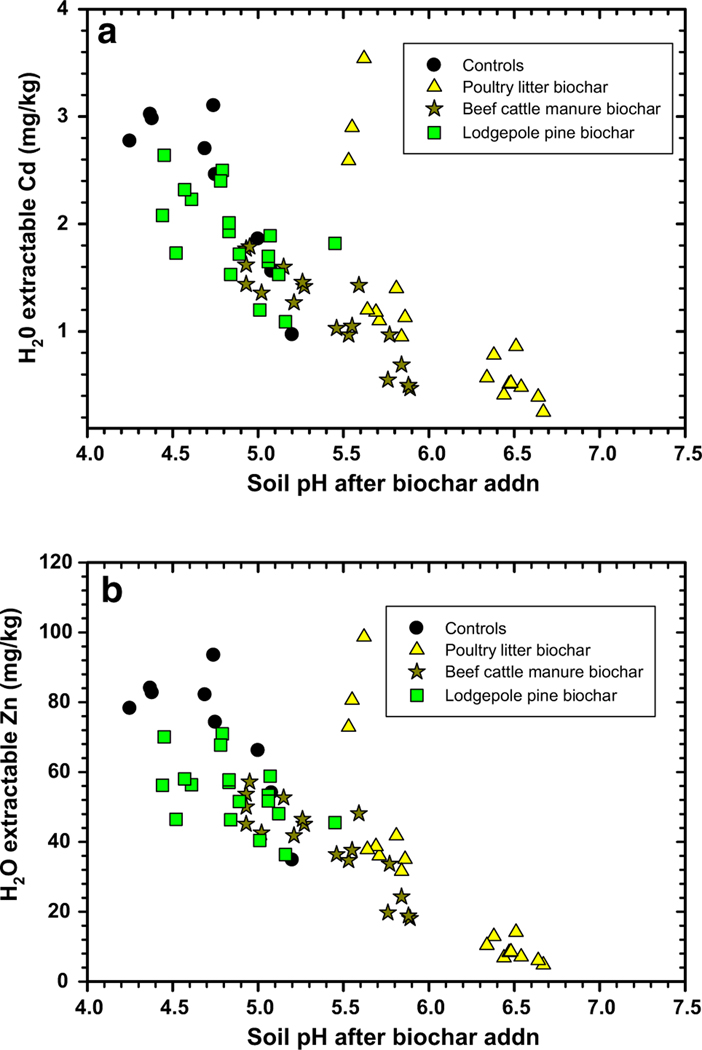
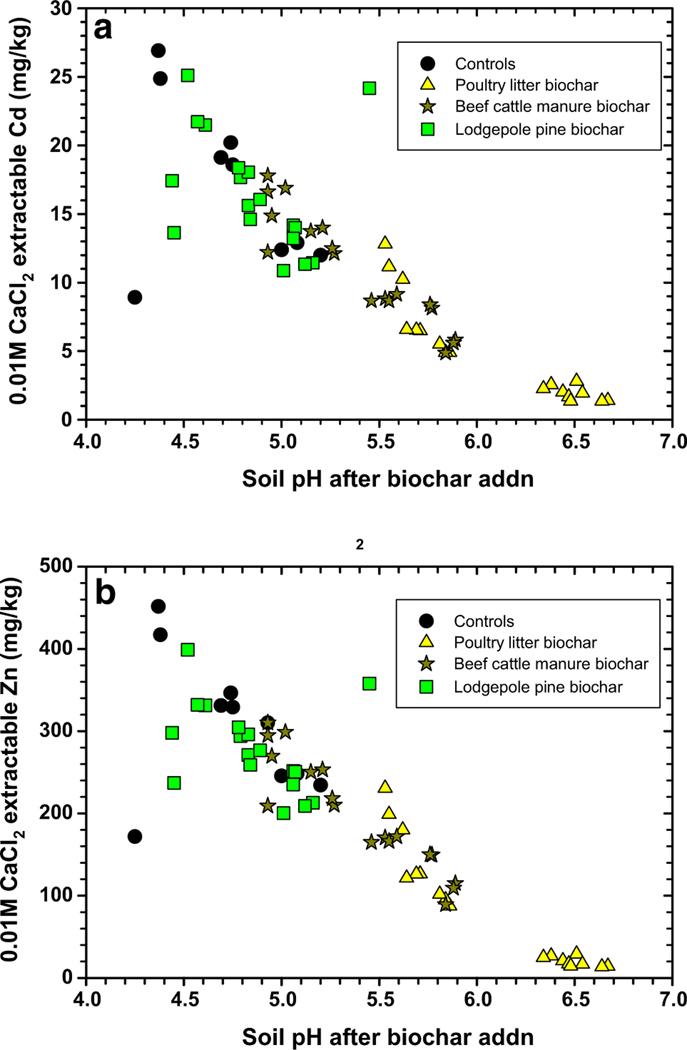
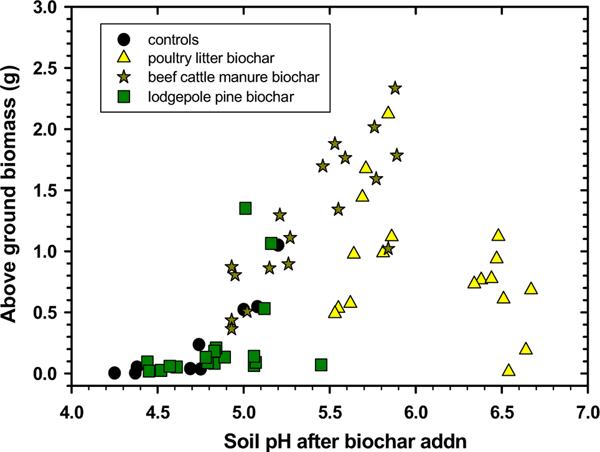
Biochars have the potential to reclaim mine-impacted soils; however, their variable physico-chemical properties incite speculation about their successful remediation performance. This investigation examined the capability of biochars produced from three different feedstocks along with a compost blend to improve switchgrass growth conditions in a mine-impacted soil by examining influences on soil pH, grass metal contents, and soil-extractable metal concentrations. Cadmium (Cd)- and zinc (Zn)-contaminated mine soil was collected from a site near Webb City, Missouri, USA—a location within the Tri-State Mining District. In a full factorial design, soil was treated with a 0%, 2.5%, and 5% ( w/w ) compost mixture (wood chips + beef cattle manure), and 0%, 2.5% and 5% of each biochar pyrolyzed from beef cattle manure, poultry litter, and lodgepole pine feedstocks. Switchgrass ( Panicum virgatum , ‘Cave-In-Rock’ variety) was grown in a greenhouse for 50 days and the mass of shoots (above-ground biomass) and roots was assessed, while soil pH, deionized H 2 O- and 0.01 M CaCl 2 -extractable Cd and Zn concentrations were measured. Poultry litter biochar and compost had the greatest ability to raise soil pH (from 4.40 to 6.61), beef cattle manure biochar and compost moderately raised pH (from 4.4 to 5.92), and lodgepole pine biochar and compost weakly raised pH (from 4.40 to 5.05). Soils treated with beef cattle manure biochar, poultry litter biochar significantly reduced deionized H 2 O- and 0.01 M CaCl 2 -extractable Cd and Zn concentrations, while lodgepole pine biochar-treated soils showed mixed results. Switchgrass shoot and root masses were greatest in soil treated with compost in combination with either beef cattle manure biochar or poultry litter biochar. Soils treated with 5% beef cattle manure biochar + 5% compost had greater reductions in total Cd and Zn concentrations measured in switchgrass shoots and roots compared to the other two treatments. The three biochars and compost mixtures applied to heavy metal, mine-impacted soil had considerable performance dissimilarities for improving switchgrass productivity. Switchgrass growth was noticeably improved after treatment with the compost in combination with biochar from beef cattle manure or poultry litter. This may be explained by the increased soil pH that promoted Zn and Cd precipitation and organic functional groups that reduced soil-available heavy metal concentrations. Our results imply that creating designer biochars is an important management component in developing successful mine-site phytostabilization programs.
Checked 2026-11-22 · 1 reference not checked yet
Overview
CoChat Summary
TL;DR
Biochars from poultry litter and beef cattle manure, especially blended with compost, raised acidic mine soil pH and reduced Cd and Zn bioavailability enough to improve switchgrass growth. Lodgepole pine biochar was consistently less effective for pH amelioration and metal immobilization.
Key findings
- Poultry litter biochar + compost raised soil pH most (from 4.40 to 6.61), beef cattle manure biochar + compost moderately (from 4.40 to 5.92), and lodgepole pine biochar + compost weakly (abstract reports 4.40 to 5.05; results text reports 4.40 to 4.81).
- 5% poultry litter biochar + compost reduced 0.01 M CaCl2-extractable Cd from 20.2 to 1.4 mg/kg and Zn from 346 to 14 mg/kg, i.e., 93% and 96% reductions versus the control.
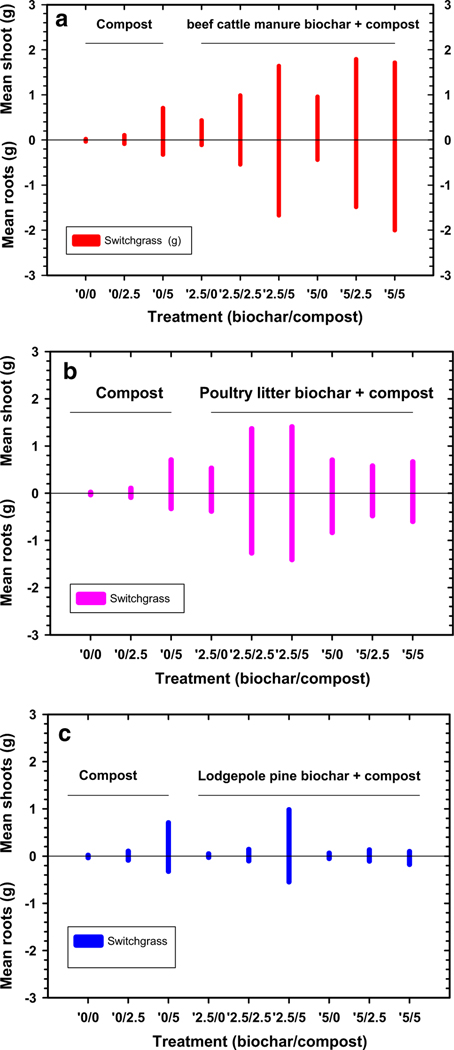
- Switchgrass shoot and root masses were greatest with compost plus either beef cattle manure biochar or poultry litter biochar; 5% beef cattle manure biochar + 5% compost gave greater reductions in total Cd and Zn in shoots and roots than the other two treatments.
- Total Cd in switchgrass shoots was reduced by 74% with 5% poultry litter biochar + 5% compost and 64% with 5% beef cattle manure biochar + 5% compost; total Zn was reduced by 81% and 94%, respectively. Lodgepole pine biochar alone did not significantly reduce bioavailable Cd and Zn versus the control (P < 0.27), though adding compost improved reductions (P < 0.01).
Methods
- Full factorial greenhouse experiment using Cd- and Zn-contaminated mine soil from near Webb City, Missouri, USA (Tri-State Mining District), treated with 0%, 2.5%, and 5% compost (wood chips + beef cattle manure) and 0%, 2.5%, and 5% biochar from beef cattle manure, poultry litter, or lodgepole pine.
- Switchgrass (Panicum virgatum, ‘Cave-In-Rock’) was grown for 50 days in triplicate pots; shoot and root masses, soil pH, deionized H2O- and 0.01 M CaCl2-extractable Cd and Zn, and total Cd and Zn in plant digests were measured, with metals quantified by ICP-OES.
- Two-way ANOVA tested biochar and compost as fixed factors, with significance at P < 0.05.
Limitations
- The paper does not include an explicit limitations section.
- Evident from the text: this was a 50-day greenhouse pot study on one mine-impacted soil, so field-scale phytostabilization performance and longer-term durability are not demonstrated.
- Evident from the text: poultry litter biochar was produced under proprietary pyrolysis conditions, limiting reproducibility; some treatments showed mixed results or outliers, such as three H2O-extractable Cd and Zn outliers with 2.5% poultry litter biochar + 0% compost.
Model-written summary. Check it against the paper before relying on it.
Integrity signals
Registry
Cites
Statistics
Figures
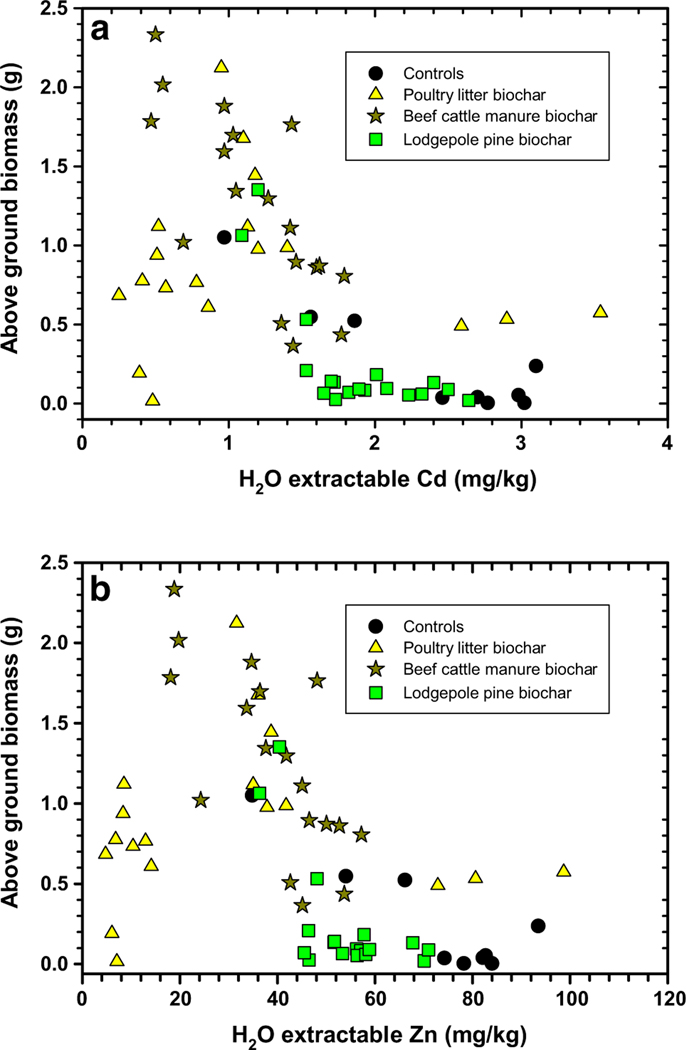
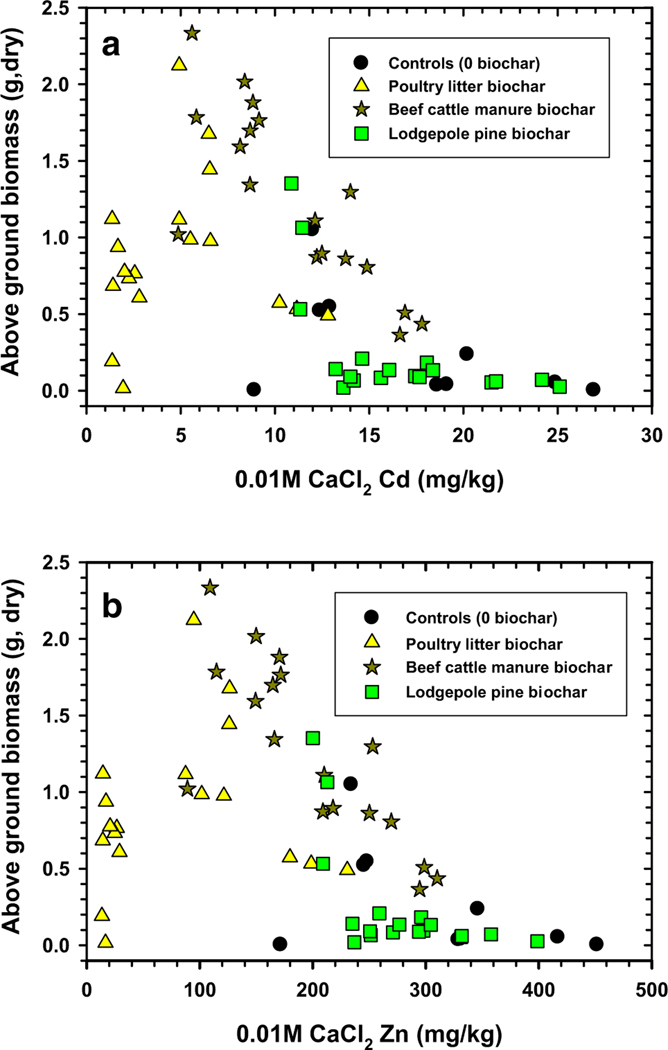
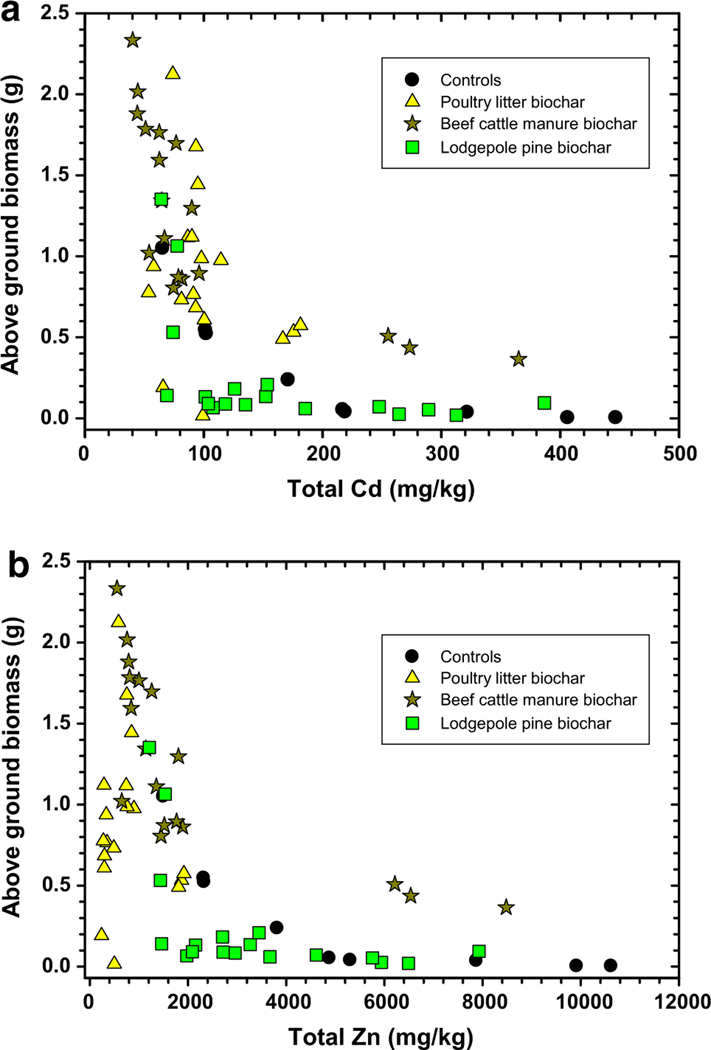
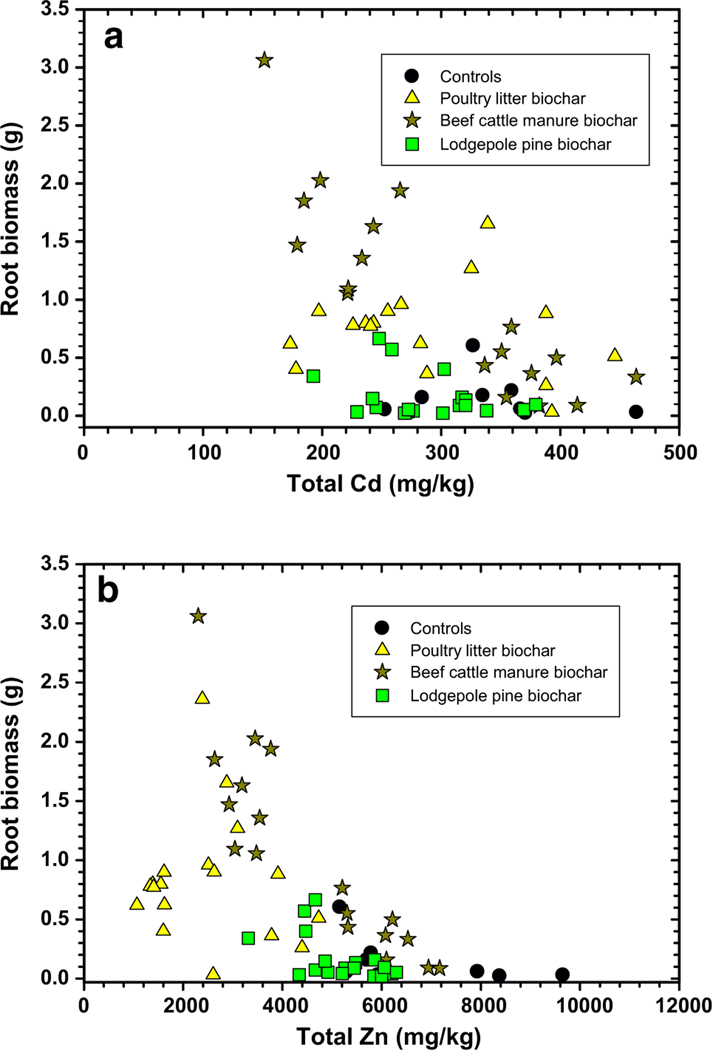
Verification
Claims the paper makes
0 Valid · 0 Not valid · 16 Not checked · 86 Own results and interpretations
A result the paper reports from its own data — it cites no other source for it, so there is none to check. The quote shows it is in the paper.
In the paper
“In most cases, the interaction between biochar and compost was significant on switchgrass root and shoot growth.”
§ Biochar compost blends facilitate switchgrass growth in mine soils by reducing Cd and Zn bioavailability > Results and discussion > Switchgrass growth in treated and untreated soil
plainstates an association- Asserted: passes — The authors put it forward as true.
- Checkable: passes — It can be checked against evidence.
- Load-bearing: passes — The paper’s conclusions depend on it.
- Based: passes — The paper gives a reason why it holds.
- Rests on 2 assumptions not shown here.
A result the paper reports from its own data — it cites no other source for it, so there is none to check. The quote shows it is in the paper.
In the paper
“Ideally, switchgrass growth in soil was optimal after treatment with 2.5% poultry litter biochar and either 2.5% or 5% compost treatment.”
§ Biochar compost blends facilitate switchgrass growth in mine soils by reducing Cd and Zn bioavailability > Results and discussion > Switchgrass growth in treated and untreated soil
hedgedstates a cause- Asserted: passes — The authors put it forward as true.
- Checkable: passes — It can be checked against evidence.
- Load-bearing: passes — The paper’s conclusions depend on it.
- Based: passes — The paper gives a reason why it holds.
A result the paper reports from its own data — it cites no other source for it, so there is none to check. The quote shows it is in the paper.
In the paper
“The soil controls treated with 0% biochar and 0% or with 2.5% compost alone had minimal switchgrass shoot growth.”
§ Biochar compost blends facilitate switchgrass growth in mine soils by reducing Cd and Zn bioavailability > Results and discussion > Switchgrass growth in treated and untreated soil
plain- Asserted: passes — The authors put it forward as true.
- Checkable: passes — It can be checked against evidence.
- Load-bearing: passes — The paper’s conclusions depend on it.
- Based: passes — The paper gives a reason why it holds.
A result the paper reports from its own data — it cites no other source for it, so there is none to check. The quote shows it is in the paper.
In the paper
“Poorer switchgrass shoots and root mean masses occurred in soil treated with lodgepole pine biochar and compost (Fig. 3; Table 4).”
§ Biochar compost blends facilitate switchgrass growth in mine soils by reducing Cd and Zn bioavailability > Results and discussion > Switchgrass growth in treated and untreated soil
plainstates a cause- Asserted: passes — The authors put it forward as true.
- Checkable: passes — It can be checked against evidence.
- Load-bearing: unclear — It is unclear whether the paper’s conclusions depend on it.
- Based: passes — The paper gives a reason why it holds.
- Rests on 2 assumptions not shown here.
A result the paper states — it cites no source for it, so there is none to check. The quote shows it is in the paper.
In the paper
“In general, compost by itself was able to reduce soil-extractable Cd and Zn concentrations and total Cd and Zn in switchgrass shoots particularly at the 5% application rate.”
§ Biochar compost blends facilitate switchgrass growth in mine soils by reducing Cd and Zn bioavailability > Conclusions
plainstates a cause- Asserted: passes — The authors put it forward as true.
- Checkable: passes — It can be checked against evidence.
- Load-bearing: passes — The paper’s conclusions depend on it.
- Based: passes — The paper gives a reason why it holds.
53 more claims
Create a free account to see all 102 claims and every source verdict.
- Probably not a substantial claim. 19
- It may state two separate claims as one. 29
- The quote only partly states this claim. 4
Citations
Cites
Mineral Nutrition of Higher Plants
(1995) · Elsevier eBooks · doi:10.1016/b978-0-12-473542-2.x5000-7 · Cited by 19,181
Trace Elements in Soils and Plants
Kabata-Pendias, A. (2010) · doi:10.1201/b10158 · Cited by 11,918
Trace Elements in Soils and Plants
Kabata-Pendias, A. (2000) · CRC Press eBooks · doi:10.1201/9781420039900 · Cited by 5,078
Biochar as a sorbent for contaminant management in soil and water: A review
Ahmad, M., Rajapaksha, A. U., Lim, J. E., Zhang, M., Bolan, N., Mohan, D., Vithanage, M., Lee, S. S., & Ok, Y. S. (2014) · Chemosphere · doi:10.1016/j.chemosphere.2013.10.071 · Cited by 4,662
Wuana, R. A., & Okieimen, F. E. (2011) · ISRN Ecology · doi:10.5402/2011/402647 · Cited by 3,822
Development of biochar-based functional materials: toward a sustainable platform carbon material
Liu, W.-J., Jiang, H., & Yu, H.-Q. (2015) · Chemical Reviews · doi:10.1021/acs.chemrev.5b00195 · Cited by 1,754
Impact of pyrolysis temperature and manure source on physicochemical characteristics of biochar
Cantrell, K. B., Hunt, P. G., Uchimiya, M., Novak, J. M., & Ro, K. S. (2012) · Bioresource Technology · doi:10.1016/j.biortech.2011.11.084 · Cited by 1,502
Self-citationImpact of Biochar Amendment on Fertility of a Southeastern Coastal Plain Soil
Novak, J. M., Busscher, W. J., Laird, D. L., Ahmedna, M., Watts, D. W., & Niandou, M. A. S. (2009) · Soil Science · doi:10.1097/ss.0b013e3181981d9a · Cited by 1,291
Self-citationCharacterization of biochars to evaluate recalcitrance and agronomic performance
Enders, A., Hanley, K., Whitman, T., Joseph, S., & Lehmann, J. (2012) · Bioresource Technology · doi:10.1016/j.biortech.2012.03.022 · Cited by 1,113
Biochar: A synthesis of its agronomic impact beyond carbon sequestration
Spokas, K. A., Cantrell, K. B., Novak, J. M., Archer, D. W., Ippolito, J. A., Collins, H. P., Boateng, A. A., Lima, I. M., Lamb, M. C., McAloon, A. J., et al. (2012) · Journal of Environmental Quality · doi:10.2134/jeq2011.0069 · Cited by 1,014
Self-citationEnvironmental Impacts of Metal Ore Mining and Processing: A Review
Dudka, S., & Adriano, D. C. (1997) · Journal of Environmental Quality · doi:10.2134/jeq1997.00472425002600030003x · Cited by 815
Review of the pyrolysis platform for coproducing bio‐oil and biochar
Laird, D. A., Brown, R. C., Amonette, J. E., & Lehmann, J. (2009) · Biofuels, Bioproducts and Biorefining · doi:10.1002/bbb.169 · Cited by 777
The immobilisation and retention of soluble arsenic, cadmium and zinc by biochar
Beesley, L., & Marmiroli, M. (2011) · Environmental Pollution · doi:10.1016/j.envpol.2010.10.016 · Cited by 769
Soil contamination with cadmium, consequences and remediation using organic amendments
Khan, M. A., Khan, S., Khan, A., & Alam, M. (2017) · Science of The Total Environment · doi:10.1016/j.scitotenv.2017.06.030 · Cited by 711
Cadmium in plants on polluted soils: Effects of soil factors, hyperaccumulation, and amendments
Kirkham, M. B. (2006) · Geoderma · doi:10.1016/j.geoderma.2006.08.024 · Cited by 651 · cited 2×
“2002; Kirkham 2006).”
BackgroundO'Connor, D., Peng, T., Zhang, J., Tsang, D. C. W., Alessi, D. S., Shen, Z., Bolan, N. S., & Hou, D. (2018) · Science of The Total Environment · doi:10.1016/j.scitotenv.2017.11.132 · Cited by 607
Cardoso, E. J. B. N., Vasconcellos, R. L. F., Bini, D., Miyauchi, M. Y. H., Santos, C. A. D., Alves, P. R. L., Paula, A. M. D., Nakatani, A. S., Pereira, J. D. M., & Nogueira, M. A. (2013) · Scientia Agricola · doi:10.1590/s0103-90162013000400009 · Cited by 605
Bioavailability of heavy metals in soils: definitions and practical implementation—a critical review
Kim, R.-Y., Yoon, J.-K., Kim, T.-S., Yang, J. E., Owens, G., & Kim, K.-R. (2015) · Environmental Geochemistry and Health · doi:10.1007/s10653-015-9695-y · Cited by 541
Characteristics and applications of biochar for environmental remediation: a review
Xie, T., Reddy, K. R., Wang, C., Yargicoglu, E., & Spokas, K. (2015) · Critical Reviews in Environmental Science and Technology · doi:10.1080/10643389.2014.924180 · Cited by 527
Yuan, J. ‐., & Xu, R. ‐. (2011) · Soil Use and Management · doi:10.1111/j.1475-2743.2010.00317.x · Cited by 500
Application of biochar on mine tailings: Effects and perspectives for land reclamation
Fellet, G., Marchiol, L., Delle Vedove, G., & Peressotti, A. (2011) · Chemosphere · doi:10.1016/j.chemosphere.2011.03.053 · Cited by 499
Rizwan, M., Ali, S., Qayyum, M. F., Ibrahim, M., Zia-ur-Rehman, M., Abbas, T., & Ok, Y. S. (2016) · Environmental Science and Pollution Research · doi:10.1007/s11356-015-5697-7 · Cited by 497
Digestion of plant tissue for analysis by ICP emission spectroscopy
Huang, C. L., & Schulte, E. E. (1985) · Communications in Soil Science and Plant Analysis · doi:10.1080/00103628509367657 · Cited by 455
Cadmium Toxicity and Tolerance in Plants
(2019) · Elsevier eBooks · doi:10.1016/c2017-0-02050-5 · Cited by 401 · cited 2×
“Cadmium is not an essential plant nutrient but is taken up by plants nonetheless (Kirkham 2006; Hasan et al. 2009).”
BackgroundCharacteristics and nutrient values of biochars produced from giant reed at different temperatures
Zheng, H., Wang, Z., Deng, X., Zhao, J., Luo, Y., Novak, J., Herbert, S., & Xing, B. (2013) · Bioresource Technology · doi:10.1016/j.biortech.2012.12.044 · Cited by 397
Self-citationNie, C., Yang, X., Niazi, N. K., Xu, X., Wen, Y., Rinklebe, J., Ok, Y. S., Xu, S., & Wang, H. (2018) · Chemosphere · doi:10.1016/j.chemosphere.2018.02.134 · Cited by 340
Riley, R. G., & Zachara, J. M. (1992) · doi:10.2172/5202264 · Cited by 256
Biochar and Manure Affect Calcareous Soil and Corn Silage Nutrient Concentrations and Uptake
Lentz, R. D., & Ippolito, J. A. (2012) · Journal of Environmental Quality · doi:10.2134/jeq2011.0126 · Cited by 230
Self-citationBrown, S. L., Henry, C. L., Chaney, R., Compton, H., & DeVolder, P. S. (2003) · Plant and Soil · doi:10.1023/a:1022558013310 · Cited by 229
Physical and mineral-nutrition properties of sand-based turfgrass root zones amended with biochar
Brockhoff, S. R., Christians, N. E., Killorn, R. J., Horton, R., & Davis, D. D. (2010) · Agronomy Journal · doi:10.2134/agronj2010.0188 · Cited by 219
Hu, X.-F., Jiang, Y., Shu, Y., Hu, X., Liu, L., & Luo, F. (2014) · Journal of Geochemical Exploration · doi:10.1016/j.gexplo.2014.08.001 · Cited by 207
Ahmad, M., Usman, A. R. A., Al-Faraj, A. S., Ahmad, M., Sallam, A., & Al-Wabel, M. I. (2018) · Chemosphere · doi:10.1016/j.chemosphere.2017.11.156 · Cited by 206
Ducey, T. F., Ippolito, J. A., Cantrell, K. B., Novak, J. M., & Lentz, R. D. (2013) · Applied Soil Ecology · doi:10.1016/j.apsoil.2013.01.006 · Cited by 203
Self-citationWaqas, M., Khan, S., Qing, H., Reid, B. J., & Chao, C. (2014) · Chemosphere · doi:10.1016/j.chemosphere.2013.11.064 · Cited by 198
Phosphorus release behaviors of poultry litter biochar as a soil amendment
Wang, Y., Lin, Y., Chiu, P. C., Imhoff, P. T., & Guo, M. (2015) · Science of The Total Environment · doi:10.1016/j.scitotenv.2015.01.093 · Cited by 193 · cited 1×
“2012) and poultry litter feedstock (Cantrell et al. 2012; Wang et al. 2015).”
Novak, J. M., Cantrell, K. B., Watts, D. W., Busscher, W. J., & Johnson, M. G. (2014) · Journal of Soils and Sediments · doi:10.1007/s11368-013-0680-8 · Cited by 181
Self-citation(2015) · Biochar for Environmental Management · doi:10.4324/9780203762264-11 · Cited by 168 · cited 1×
“Biochar is a material produced by pyrolysis of organic feedstocks under anoxic conditions using temperatures ranging from 350 to 900 °C (Laird et al. 2009; Boateng et al. 2015).”
MethodReclamation of Drastically Disturbed Lands
(2000) · Agronomy Monographs · doi:10.2134/agronmonogr41 · Cited by 168
Biochar elemental composition and factors infl uencing nutrient retention
(2015) · Biochar for Environmental Management · doi:10.4324/9780203762264-14 · Cited by 155 · cited 2×
“Biochar produced from lodgepole pine and poultry litter feedstocks both had alkaline pH values (pH > 9, Table S2) which is typical for these two feedstocks (Novak et al. 2013; Ippolito et al. 2015).”
BackgroundApplication of Biochar for Soil Remediation
Sizmur, T., Quilliam, R. S., Puga, A. P., Moreno‐Jiménez, E., Beesley, L., & Gomez-Eyles, J. L. (2015) · SSSA special publication series · doi:10.2136/sssaspecpub63.2014.0046.5 · Cited by 126
Novak, J. M., Ippolito, J. A., Ducey, T. F., Watts, D. W., Spokas, K. A., Trippe, K. M., Sigua, G. C., & Johnson, M. G. (2018) · Chemosphere · doi:10.1016/j.chemosphere.2018.04.107 · Cited by 119
Self-citationANAWAR, H. M., AKTER, F., SOLAIMAN, Z. M., & STREZOV, V. (2015) · Pedosphere · doi:10.1016/s1002-0160(15)30046-1 · Cited by 119
Cui, H., Zhou, J., Zhao, Q., Si, Y., Mao, J., Fang, G., & Liang, J. (2013) · Journal of Soils and Sediments · doi:10.1007/s11368-013-0654-x · Cited by 116
Kelly, C. N., Peltz, C. D., Stanton, M., Rutherford, D. W., & Rostad, C. E. (2014) · Applied Geochemistry · doi:10.1016/j.apgeochem.2014.02.003 · Cited by 115
Biochar enhances seedling growth and alters root symbioses and properties of sub-boreal forest soils
Robertson, S. J., Rutherford, P. M., López-Gutiérrez, J. C., & Massicotte, H. B. (2012) · Canadian Journal of Soil Science · doi:10.4141/cjss2011-066 · Cited by 115
Mineral Nutrition and Yield Response
Marschner, H. (1995) · Mineral Nutrition of Higher Plants · doi:10.1016/b978-012473542-2/50008-0 · Cited by 108
Godbold, D. L., Horst, W. J., Collins, J. C., Thurman, D. A., & Marschner, H. (1984) · Journal of Plant Physiology · doi:10.1016/s0176-1617(84)80084-x · Cited by 104
Biochars Reduce Mine Land Soil Bioavailable Metals
Ippolito, J. A., Berry, C. M., Strawn, D. G., Novak, J. M., Levine, J., & Harley, A. (2017) · Journal of Environmental Quality · doi:10.2134/jeq2016.10.0388 · Cited by 103
Self-citationBradford, G. R., Page, A. L., Lund, L. J., & Olmstead, W. (1975) · Journal of Environmental Quality · doi:10.2134/jeq1975.00472425000400010029x · Cited by 99
Novak, J. M., Cantrell, K. B., & Watts, D. W. (2013) · BioEnergy Research · doi:10.1007/s12155-012-9228-9 · Cited by 98
Self-citationPoultry litter-based activated carbon for removing heavy metal ions in water
Guo, M., Qiu, G., & Song, W. (2009) · Waste Management · doi:10.1016/j.wasman.2009.08.010 · Cited by 98
State of remediation and metal toxicity in the Tri-State Mining District, USA
Johnson, A. W., Gutiérrez, M., Gouzie, D., & McAliley, L. R. (2015) · Chemosphere · doi:10.1016/j.chemosphere.2015.09.080 · Cited by 86
Fly Ash and Lime‐Stabilized Biosolid Mixtures in Mine Spoil Reclamation: Simulated Weathering
Abbott, D. E., Essington, M. E., Mullen, M. D., & Ammons, J. T. (2001) · Journal of Environmental Quality · doi:10.2134/jeq2001.302608x · Cited by 77
Reclaiming Mined Lands with Biosolids, Manures, and Papermill Sludges
Haering, K. C., Lee Daniels, W., & Feagley, S. E. (2000) · Agronomy Monographs · doi:10.2134/agronmonogr41.c24 · Cited by 76
Remediation of biochar on heavy metal polluted soils
Wang, S., Xu, Y., Norbu, N., & Wang, Z. (2018) · IOP Conference Series: Earth and Environmental Science · doi:10.1088/1755-1315/108/4/042113 · Cited by 63
Biochar alleviates phytotoxicity in Ficus elastica grown in Zn-contaminated soil
Kumar, A., Tsechansky, L., Lew, B., Raveh, E., Frenkel, O., & Gräber, E. R. (2017) · The Science of The Total Environment · doi:10.1016/j.scitotenv.2017.11.013 · Cited by 59
Introduction to Biochar as an Agricultural and Environmental Amendment
Guo, M., He, Z., & Uchimiya, S. M. (2015) · SSSA special publication series · doi:10.2136/sssaspecpub63.2014.0034 · Cited by 59
Immobilization of Ni and Cd in soil by biochar derived from unfertilized dates
Ehsan, M., Barakat, M. A., Husein, D. Z., & Ismail, S. M. (2014) · Water, Air, & Soil Pollution · doi:10.1007/s11270-014-2123-6 · Cited by 54
Schreurs, E., Voets, T., & Thewys, T. (2011) · Biomass and Bioenergy · doi:10.1016/j.biombioe.2011.09.005 · Cited by 40
Erodibility of Fly Ash Used as a Topsoil Substitute in Mineland Reclamation
Gorman, J. M., Sencindiver, J. C., Horvath, D. J., Singh, R. N., & Keefer, R. F. (2000) · Journal of Environmental Quality · doi:10.2134/jeq2000.00472425002900030016x · Cited by 38
Characterization the potential of biochar from cow and pig manure for geoecology application
Gunamantha, I. M., & Widana, G. A. B. (2018) · IOP Conference Series Earth and Environmental Science · doi:10.1088/1755-1315/131/1/012055 · Cited by 36
Cadmium application and pH effects on growth and cadmium accumulation in switchgrass
Reed1, R. L., Sanderson, M. A., Allen, V. G., & Zartman, R. E. (2002) · Communications in Soil Science and Plant Analysis · doi:10.1081/css-120003881 · Cited by 34
Biochar enhances seedling growth and alters root symbioses and properties of sub-boreal forest soils
Robertson, S. J., Rutherford, P. M., López‐Gutiérrez, J. C., et al. (2012) · BioOne Complete (BioOne) · doi:10.1139/cjss2011-066 · Cited by 33 · cited 1×
“The plant nutrient compositional differences are consistent with other compositional results in biochar produced from lodgepole pine (Robertson et al. 2012) and poultry litter feedstock (Cantrell et al.”
Background(2005) · Europe PMC (PubMed Central) · Cited by 26
Kinetic leaching of high sulphur mine rejects amended with biochar: Buffering implication
Jain, S., Baruah, B. P., & Khare, P. (2014) · Ecological Engineering · doi:10.1016/j.ecoleng.2014.08.003 · Cited by 25
Gasified grass and wood biochars facilitate plant establishment in acid mine soils
Phillips, C. L., Trippe, K. M., Whittaker, G., Griffith, S. M., Johnson, M. G., & Banowetz, G. M. (2016) · Journal of Environmental Quality · doi:10.2134/jeq2015.09.0470 · Cited by 19
Self-citationHanauer, T., Jung, S., Felix‐Henningsen, P., Schnell, S., & Steffens, D. (2012) · Journal of Plant Nutrition and Soil Science · doi:10.1002/jpln.201100367 · Cited by 19
Figueroa, F. M., Castro-Larragoitia, J., Aragón, A., et al. (2009) · Environmental Earth Sciences · doi:10.1007/s12665-009-0183-5 · Cited by 18
A Supply Chain Approach to Biochar Systems
Anderson, N., Bergman, R. D., & Page‐Dumroese, D. S. (2016) · Cambridge University Press eBooks · doi:10.1017/9781316337974.003 · Cited by 18
Amelioration of Coal Mine Spoils through Fly Ash Application as
Srivastava, A., & Chhonkar, P. K. (2000) · Journal of Scientific & Industrial Research · Cited by 17
Hensley, D. L., & Carpenter, P. L. (1984) · Plant and Soil · doi:10.1007/bf02184328 · Cited by 13
Brown, R. W., Amacher, M. C., Mueggler, W. F., & Kotuby‐Amacher, J. (2003) · doi:10.2737/rmrs-rp-41 · Cited by 12
Ecorestoration Of Waste Dump By The Establishment Of Grass-Legume Cover
Maiti, D., & Maiti, S. K. (2014) · International journal of scientific and technology research · Cited by 11
Bohn, H., McNeal, B., & OʼConnor, G. (1980) · Soil Science · doi:10.1097/00010694-198006000-00010
Research works printed but not linked: 5
- ASTM (2006) Petroleum products, lubricants, and fossil fuels: gaseous fuels, coal, and coke. ASTM International, Conshohocken
- Gibson AM (1972) Wilderness Bonanza: the Tri-State Mining District of Mossouri, Kansas, and Oklahoma. Univ. Oklahoma Press, Norman (ISBN: 13:9780806109909)
- Ippolito JA, Spokas KA, Novak JM, Lentz RD, Cantrell KB (2015) Biochar elemental composition and factors influencing nutrient retention. In: Lehmann J, Joseph SJ (eds) Biochar for environmental management: science, technology, and implementation, 2nd edn. Earthscan, Rutledge, pp 139– 164
- Li RS, Daniels WL (1997) Reclamation of coal refuse with papermill sludge amendment. In: Brandt JE (ed) Proceedings national meeting American Society Surficial Mining and Reclamation, Austin TX, ASSMR, Princeton, WV, USA, 10–15 May, pp 277– 290
- Norland MR (1993) Reclamation of abandoned Tri-State Mining District lead-zinc chat tailing. In: Proceedings of the Association of Abandoned Mine Land Programs, Jackson, WY, USA, 13–15 Sept 1993, pp 1– 33
Cited by
Ippolito, J. A., Cui, L., Kammann, C., Wrage-Mönnig, N., Estavillo, J. M., Fuertes-Mendizabal, T., Cayuela, M. L., Sigua, G., Novak, J., Spokas, K., et al. (2020) · Biochar · doi:10.1007/s42773-020-00067-x · Cited by 927
Self-citationAntonangelo, J. A., Sun, X., & Zhang, H. (2021) · Journal of Environmental Management · doi:10.1016/j.jenvman.2020.111443 · Cited by 210
Lyu, H., Tang, J., Cui, M., Gao, B., & Shen, B. (2020) · Chemosphere · doi:10.1016/j.chemosphere.2019.125609 · Cited by 181
Gao, Y., Wu, P., Jeyakumar, P., Bolan, N., Wang, H., Gao, B., Wang, S., & Wang, B. (2022) · Journal of Environmental Management · doi:10.1016/j.jenvman.2022.114973 · Cited by 164
Mudhoo, A., Ramasamy, D. L., Bhatnagar, A., Usman, M., & Sillanpää, M. E. T. (2020) · Ecotoxicology and Environmental Safety · doi:10.1016/j.ecoenv.2020.110587 · Cited by 128
Metadata
- Authors
- Novak, J. M., Ippolito, J. A., Watts, D. W., Sigua, G. C., Ducey, T. F., & Johnson, M. G.
- Affiliations
- Agricultural Research Service (US)
- Colorado State University (US)
- Environmental Protection Agency (US)
- Corresponding author
- Novak, Jeffrey M.
- ORCID
- Venue
- Biochar
- Published
- 2019-03
- Volume
- 1
- Issue
- 1
- Pages
- 97-114
- ISSN
- 2524-7867 (ISSN-L)
- 2524-7972
- PMC
- PMC8939468
- OpenAlex
- W2925771411
- Cited by
- 103
- References
- 69
- Citations by year
- 2026: 6 · 2025: 8 · 2024: 17 · 2023: 15 · 2022: 21 · 2021: 14 · 2020: 14 · 2019: 8
- FWCI
- 4.27
- Type
- journal article
- Language
- en
- Open access
- hybrid
- doi.org
- Licence
- cc-by
- creativecommons.org/licenses/by/4.0 (tdm)
- creativecommons.org/licenses/by/4.0 (vor, 28 d)
- Locations
- Biochar (publishedVersion, cc-by)
- PubMed (publishedVersion)
- PubMed Central (acceptedVersion, cc-by)
- Funders
- Agricultural Research Service (USDA-ARS (60-6657-1-204) and USEPA (DE-12-92342301-2))
- Topics
- Physical Sciences › Environmental Science › Pollution › Heavy metals in environment
- Physical Sciences › Environmental Science › Water Science and Technology › Adsorption and biosorption for pollutant removal
- Physical Sciences › Environmental Science › Water Science and Technology › Environmental and Analytical Chemistry Studies
- Keywords
- switchgrass, mine-impacted soils, cadmium, zinc, heavy metal bioavailability, soil remediation, soil pH, poultry litter biochar, plant metal uptake, Tri-State Mining District, soil reclamation, biomass production
About these checks
Registry, retraction, Cites and statistics results are computed, not judged, with one exception: a printed reference that no index lists is read once by a model before it counts as a citation error. Claims are extracted by a model and kept only when their quote appears verbatim in the text; each cited source is then checked, with a model’s help, for whether it says what the claim relies on. Those verdicts can be wrong — read the claim’s quote and the cited source before relying on one.
A language model drew the claims from the paper on 2026-10-10, under version 3 of the claim definition (model deepseek-v4.1-flash, prompt extract-v3).
A second model labelled each claim on 2026-10-10 (model jev-1.13-20260917, definition revision gold-guideline-v0.2).
Statistics and arithmetic are recomputed, not judged.
Confidence bands are shown only for fields calibrated on our annotated test set. None is calibrated yet, so no band is shown.
What counts as a claim ›How we measure confidence ›How we check this ›
Are you an author, or do you see a problem with this page? Request a review
Data sources
Bibliographic data: Semantic Scholar, OpenAlex, Crossref.
Contains information from the Semantic Scholar Academic Graph Datasets, made available under the ODC Attribution License (ODC-BY 1.0).
Semantic Scholar’s data is described in: Kinney, R., et al. (2023). The Semantic Scholar Open Data Platform. arXiv:2301.10140.
