

From small to large-scale: a review of recombinant spider silk and collagen bioproduction
Open accessThe DOI matches its Crossref record; 61 of the 62 references it cites were found in a registry or an index.
Abstract
Abstract Advancements in material science have led to the development of new composites and biomaterials. Spider silk and human collagen are examples of animal-derived polymers for which sourcing has been challenging. Interest in strong, sustainable products derived from these biopolymers and increasing demand in bio-based solutions are driving forces for investments in non-animal-based production processes namely for use in biomedical applications. An outline of the current landscape of microbial-based bioprocesses is a useful tool to guide further development of novel biomaterials based on these proteins. While bioproduction can deliver a sustainable source for human collagen and for spider silk, it has been challenging to obtain the desired products via microbial-based bio-industrial processes. Optimization through improvements in upstream processes and better adapted large-scale downstream process steps, including replacing chromatography steps with freeze drying and autoclaving for endotoxin removal (silk) and filtration (collagen) has enabled large-scale production and recent capacity expansion of manufacturing, aiming to deliver hundreds of tonnes of product per year. This article reviews the considerable advances that were made in microbial processes for production of human collagen and spider-silk based biomaterials in the past 30 years in translating the laboratory results into scalable processes. Main challenges for successful large-scale implementation—such as recombinant silk durability and the continuous need to improve process economics—and main opportunities such as demand growth of recombinant spider silk and human collagen are outlined.
Overview
The claims and statistics of this paper haven’t been checked yet.
Free: it reads the open-access text and checks the first 5 claims that cite a source we can check. Create a free account to check every claim.
Integrity signals
Registry
Cites
Statistics
Figures
Verification
Claims the paper makes
The claims and statistics of this paper haven’t been checked yet.
Free: it reads the open-access text and checks the first 5 claims that cite a source we can check. Create a free account to check every claim.
Claims other papers make about this one
Each is checked against this paper’s own text: does it say what the citing paper says it does?
The cited source says what the claim attributes to it.
In the citing paper
“Bacteria can also be used to produce silk biopolymers (via fermentation with E. coli ) [59,60].”
From Innovative Approaches to an Eco-Friendly Cosmetic Industry: A Review of Sustainable Ingredients (2024) · cites this paper as [60]
The check wasn’t confident either way, so it gives no verdict — never disputed.
In the citing paper
“Nevertheless, 'vegan' and 'halal' labels cannot be used if any of those ingredients are used in the composition [60].”
From Innovative Approaches to an Eco-Friendly Cosmetic Industry: A Review of Sustainable Ingredients (2024) · cites this paper as [60]
Experimental — accuracy not yet measuredThe check wasn’t confident either way, so it gives no verdict — never disputed.
In the citing paper
“When combined with capryl glycoside, fibroin from silkworms can be used as a surfactant [60].”
From Innovative Approaches to an Eco-Friendly Cosmetic Industry: A Review of Sustainable Ingredients (2024) · cites this paper as [60]
Experimental — accuracy not yet measured
Self-check
Percentages, sums and reported differences re-computed from the paper’s own numbers.
The self-check needs the paper’s full text.
Citations
Cites
Functional and bioactive properties of collagen and gelatin from alternative sources: A review
Gómez-Guillén, M. C., Giménez, B., López-Caballero, M. E., & Montero, M. P. (2011) · Food Hydrocolloids · doi:10.1016/j.foodhyd.2011.02.007 · Cited by 2,052 · cited 1×
“Animal sources may carry prions, such as bovine spongiform encephalopathy (BSE) or potentially cause allergic reactions if used in medical settings, therefore making them clinically undesirable [5, 73].”
BackgroundExtracellular Matrix Assembly: A Multiscale Deconstruction
Mouw, J. K., Ou, G., & Weaver, V. M. (2014) · Nature Reviews Molecular Cell Biology · doi:10.1038/nrm3902 · Cited by 1,534 · cited 10×
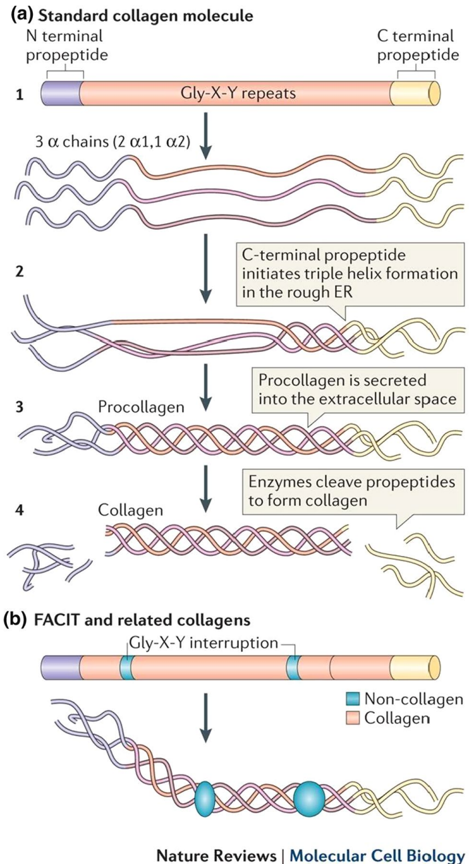
“Following lysyl and prolyl hydroxylation and O-linked glycosylation, α-chains associate to form procollagen and triple helix trimerization is initiated by the association of the C-propeptide domains (see [11] for a detailed description).”
BackgroundInfluentialEscherichia coli Physiology in Luria-Bertani Broth
Sezonov, G., Joseleau-Petit, D., & D'Ari, R. (2007) · Journal of Bacteriology · doi:10.1128/jb.01368-07 · Cited by 1,137 · cited 1×
“For industrial bioproduction, Escherichia coli is one of the most widely used organisms due to economically viable cell growth, high cell density, ease of manipulation and often it is also used for proof of concept at laboratory scale [20, 21].”
BackgroundForeign gene expression in yeast: a review
Romanos, M. A., Scorer, C. A., & Clare, J. J. (1992) · Yeast · doi:10.1002/yea.320080602 · Cited by 1,032 · cited 1×
“cerevisiae were found prior to this, perhaps related to the lack of tightly-regulated promoters in this yeast [44].”
BackgroundThe Biomedical Use of Silk: Past, Present, Future
Holland, C., Numata, K., Rnjak‐Kovacina, J., & Seib, F. P. (2019) · Advanced Healthcare Materials · doi:10.1002/adhm.201800465 · Cited by 815
Spider Silk Fibers Spun from Soluble Recombinant Silk Produced in Mammalian Cells
Lazaris, A., Arcidiacono, S., Huang, Y., Zhou, J.-F., Duguay, F., Chretien, N., Welsh, E. A., Soares, J. W., & Karatzas, C. N. (2002) · Science · doi:10.1126/science.1065780 · Cited by 747 · cited 2×
“1007/s43939-022-00024-4 Review technology platforms have been tested, including expression of recombinant spider silk elements in transgenic animals, Bombyx mori (Kraig Biocraft Laboratories, cited in [1]) and in transgenic goats (Nexia Biotechnologies, cited in [8]) and expression of recombinant collagen in transgeni…”
BackgroundHypotheses that correlate the sequence, structure, and mechanical properties of spider silk proteins
Hayashi, C. Y., Shipley, N. H., & Lewis, R. V. (1999) · International Journal of Biological Macromolecules · doi:10.1016/s0141-8130(98)00089-0 · Cited by 595 · cited 1×
“The different combination of these conserved motifs directly affects the mechanical properties of the fibres [7].”
BackgroundXia, X.-X., Qian, Z.-G., Ki, C. S., Park, Y. H., Kaplan, D. L., & Lee, S. Y. (2010) · Proceedings of the National Academy of Sciences · doi:10.1073/pnas.1003366107 · Cited by 561 · cited 11×
“Du and collaborators [24] produced recombinant collagen-like proteins with a C-terminal 27-residue-long foldon sequence derived from the native T4 phage fibritin to stabilize the triple helix, with an additional His tag, using Terrific Broth (TB) at 37 °C and IPTG as the protein expression inducer.”
BackgroundMethodInfluentialRecombinant collagen and gelatin for drug delivery
Olsen, D. (2003) · Advanced Drug Delivery Reviews · doi:10.1016/j.addr.2003.08.008 · Cited by 506 · cited 6×
“In yeast, human prolyl hydroxylases were co-expressed with human collagen, since the organism lacks native prolyl hydroxylases (reviewed in [3]).”
BackgroundInfluentialExpression of the lacZ gene from two methanol-regulated promoters in Pichia pastoris
Tschopp, J. F., Brust, P. F., Cregg, J. M., Stillman, C. A., & Gingeras, T. R. (1987) · Nucleic Acids Research · doi:10.1093/nar/15.9.3859 · Cited by 377
Research works printed but not linked: 3
- Thill GP, Davis GR, Stillman C. Positive and negative effects of multi-copy integrated expression vectors on protein expression in Pichia pastoris. In: Proceedings of the 6th international symposium on genetics of microorganisms; 1991. p. 477-90.
- Yonenaga A. Chapter 28-Future man-made fiber. In: High-performance and specialty fibers. Tokyo: Springer; 2016. p. 442-3.
- Ma XX, Fan DD, Zhu CH, Shang ZF, Mi Y. Optimization of fermentation medium for collagen production of recombinant Pichia pastoris during induction phase. J Chem Pharm Res. 2014;6:1802-9.
Cited by
Precision Fermentation as an Alternative to Animal Protein, a Review
Knychala, M. M., Boing, L. A., Ienczak, J. L., Trichez, D., & Stambuk, B. U. (2024) · Fermentation · doi:10.3390/fermentation10060315 · Cited by 164
“Thus, the expression of recombinant collagens using different prokaryotic and eukaryotic systems is an alternative strategy to address these aforementioned issues, and there have been many publications regarding the production of recombinant collagen [189].”
BackgroundInnovative Approaches to an Eco-Friendly Cosmetic Industry: A Review of Sustainable Ingredients
Sasounian, R., Martinez, R. M., Lopes, A. M., Giarolla, J., Rosado, C., Magalhães, W. V., Velasco, M. V. R., & Baby, A. R. (2024) · Clean Technologies · doi:10.3390/cleantechnol6010011 · Cited by 96
“When combined with capryl glycoside, fibroin from silkworms can be used as a surfactant [60].”
BackgroundCollagen-Based Wound Dressings: Innovations, Mechanisms, and Clinical Applications
Alberts, A., Bratu, A. G., Niculescu, A.-G., & Grumezescu, A. M. (2025) · Gels · doi:10.3390/gels11040271 · Cited by 75
“Adapted from open-access sources [38,39]. fiber.”
Rahaman, M. T., & Khan, M. S. H. (2025) · International Journal of Environmental Science and Technology · doi:10.1007/s13762-025-06481-7 · Cited by 46
Tolmachev, D. A., Malkamäki, M., Linder, M. B., & Sammalkorpi, M. (2023) · Biomacromolecules · doi:10.1021/acs.biomac.3c00637 · Cited by 35
Emam, A. N. (2025) · Discover Applied Sciences · doi:10.1007/s42452-025-07780-x · Cited by 33
“(iii) Finally, the glue that links the strands of collagen molecules is composed of relatively long-chained proteins antioxidants like below oxidase enzymes and hence conferring on the collagen fibers the mechanical strength and insolubility, as a result [57].”
Current Progress on Scale‐Up and Commercialization of Microbially‐Produced Silk
Breslauer, D. N. (2024) · Advanced Functional Materials · doi:10.1002/adfm.202408386 · Cited by 28
Sustainable Hydrogels for Medical Applications: Biotechnological Innovations Supporting One Health
Romano, S., Yazdanpanah, S., Petillo, O., Conte, R., Sepe, F., Peluso, G., & Calarco, A. (2025) · Gels · doi:10.3390/gels11070559 · Cited by 21
“Naturally occurring silks come in various forms and are known for their outstanding mechanical properties, including high strength, flexibility, biocompatibility, and biodegrad-ability [75,76].”
Trossmann, V. T., Lentz, S., & Scheibel, T. (2023) · Journal of Functional Biomaterials · doi:10.3390/jfb14080434 · Cited by 19
Research Progress on Spider‐Inspired Tough Fibers†
Liu, S., Cui, Z., Liu, Z., Zhao, W., & Zhou, X. Y. (2023) · Chinese Journal of Chemistry · doi:10.1002/cjoc.202300328 · Cited by 12
Orasugh, J. T., Temane, L. T., Ray, S. S., & Chattopadhyay, D. (2024) · ACS symposium series · doi:10.1021/bk-2024-1487.ch008 · Cited by 12
Sellitto, M. R., Larobina, D., Soricellis, C. D., Amante, C., Falcone, G., Russo, P., Bernardes, B. G., Oliveira, A. L., & Gaudio, P. D. (2025) · Gels · doi:10.3390/gels11080603 · Cited by 10
“However, despite its promising characteristics, large-scale production of silk proteins remains a challenge due to the limited natural sources [16].”
Chen, Y. Y., Murphy, E. J., Cao, Z. Q., Buckley, C., Cortese, Y. J., Chee, B. S., & Scheibel, T. (2024) · ACS Biomaterials Science & Engineering · doi:10.1021/acsbiomaterials.4c01605 · Cited by 10
4D bioprinting of protein-based bioinks for tissue engineering and disease models
Waidi, Y. O., & Gugulothu, S. B. (2025) · Biomaterials Science · doi:10.1039/d5bm01284h · Cited by 9
Maharjan, R., Shin, C. Y., Lee, S.-K., Ha, E., Park, H., Kim, J.-S., Kim, K. H., Kim, N. A., Kim, M.-S., & Jeong, S. H. (2026) · International Journal of Pharmaceutics X · doi:10.1016/j.ijpx.2026.100575 · Cited by 8
“Fourier-Domain Low-Coherence Interferometry quantifies cake porosity in the 10 – 500 μ m range (Gomes and Salgueiro, 2022), while cryogenic electron microscopy resolves protein clustering at 2.8 Å during primary drying.”
InfluentialBhattacharyya, A., & Noh, I. (2025) · Bioactive Materials · doi:10.1016/j.bioactmat.2025.12.008 · Cited by 8
“Further, several companies are commercializing microorganism-synthesized bacterial cellulose, alginate, chitosan, recombinant collagen, gelatin, silk, and poly(hydroxy butyrate) products for beauty care, healthcare, and animal-free fashion [211 – 213], by capitalizing on these advantages.”
Gunawardhana, G. A. N. K., Ching, Y. C., Noothalapati, H., & Gunathilake, T. M. S. U. (2026) · International Journal of Biological Macromolecules · doi:10.1016/j.ijbiomac.2026.150384 · Cited by 6
Self-sensing magnetic actuator based on sustainable collagen hybrid nanocomposites
Andonegi, M., Tubio, C. R., Pereira, N. M., Costa, C. M., Lanceros-Méndez, S., de la Caba, K., & Guerrero, P. (2024) · International Journal of Biological Macromolecules · doi:10.1016/j.ijbiomac.2024.134364 · Cited by 6
Bi, Z., & Crnković, T. (2024) · Journal of Industrial Textiles · doi:10.1177/15280837241254510 · Cited by 3
Deptuch, T., Kucharczyk, K., Florczak, A., & Dams‐Kozlowska, H. (2023) · Journal of Biomedical Materials Research Part A · doi:10.1002/jbm.a.37644 · Cited by 3
Abir, S. S. H., Tamirisakandala, S., Wigham, C., Varude, V. R., Steinbach, T., Barbee, A., Tithi, A. D., Walczyk, D., Koffas, M. A. G., Zha, R. H., et al. (2025) · Journal of Natural Fibers · doi:10.1080/15440478.2025.2562472 · Cited by 2
“Hemp fiber has emerged as a leading candidate for eco-CONTACT ingredients in personal care formulations (Gomes and Salgueiro 2022).”
Silk-based biomaterial scaffolds for dental tissue regeneration
Ghosh, S. K., Gupta, S., Kapusetti, G., & Kundu, S. C. (2026) · Communications Materials · doi:10.1038/s43246-026-01098-w · Cited by 3
“Batch-to-batch variability can arise from the silk source, extraction method (e.g., LiBr vs. Ajisawa ’ s reagent), and processing parameters,affectingmolecularweightandultimatelymechanicalproperties 61,62 .”
Silk-based drug delivery systems: Advances, challenges, and future perspectives
Polat, H. K., Turanlı, Y., Tunçel, E., & Kurt, N. (2026) · Bulletin of Materials Science · doi:10.1007/s12034-026-03596-6 · Cited by 2
Recent advances in extracellular matrix-inspired nanocarriers
Rao, S., & Kiick, K. L. (2025) · Expert Opinion on Drug Delivery · doi:10.1080/17425247.2025.2519809 · Cited by 2
“Despite progress in the microbial production of recombinant collagen, the yields are low compared to animal-derived collagens, resulting in higher costs [118].”
Bioinspired Polymers for Regenerative Medicine
Khajehmohammadi, M., Tolabi, H., Kabbani, L., & Ashammakhi, N. A. (2025) · Springer eBooks · doi:10.1007/978-3-031-87744-5_2 · Cited by 2
Biotechnologically Derived Materials as Drug Delivery Systems for Tissue Regeneration
Yazdanpanah, S., Romano, S., Galderisi, U., Sepe, F., Peluso, G., Conte, R., & Calarco, A. (2026) · Frontiers in Bioscience-Elite · doi:10.31083/fbe44545 · Cited by 1
Natural spider silk enhances mechanical performance of collagen scaffold under stretching conditionsPreprint
Tsiareshyna, M., Huang, S. Y.-T., Liao, C., Tang, M., Wong, T. Y., & Tso, I. (2025) · bioRxiv (Cold Spring Harbor Laboratory) · doi:10.1101/2025.03.27.645864
Unrevealing the potential of fibrous biomaterials in cartilage tissue engineering: a review
Mali, S. S., Thorat, D. S., Singh, A. K., Patil, P. R., Patil, S. S., Kundale, A., Ushir, Y. V., Bhagwat, D. A., Shafi, S., & Singh, S. K. (2025) · Zeitschrift für Naturforschung C · doi:10.1515/znc-2025-0118
“[43].”
Synthetic biology and climate change: innovations for a sustainable future
da Silva, E. F., Palmeiras, M. D. A., Rocha, A. P., Pascoal, P. V., Prado, N. V., Araujo, M. M. C., Bonfim, K., Rosinha, G. M. S., & BITTENCOURT, D. M. D. C. (2025) · Pesquisa Agropecuária Brasileira · doi:10.1590/s1678-3921.pab2025.v60.04148
Unravelling the Mysteries of Spider Silk: A Path to Biomedical Breakthroughs
Mukherjee, A., & Pramanik, A. (2026) · Textile science and clothing technology · doi:10.1007/978-3-032-16230-4_10
Logan, B., & Sun, T. (2026) · Processes · doi:10.3390/pr14081219
Vieira, R. D. S., Amorim, F. T. D. S., Aires, F. I. D. S., de Castro, L. M. S., Sousa, P. D. S., Pereira, I. B., Salamba, M. Q., Dari, D. N., & dos Santos, J. C. S. (2026) · Cell engineering · doi:10.1007/978-3-032-17514-4_9
Biomedical Applications of Silk Protein Nanoparticles
Nangare, S., Nadaf, S. J., Karade, P. G., THAKARE, S., & Jadhav, N. R. (2026) · Smart nanomaterials technology · doi:10.1007/978-981-95-1135-8_10
Kumari, J., Chopra, S., Bharati, S., Bhatia, A., Kanwal, A., & Kanwar, N. (2026) · Drug Development and Industrial Pharmacy · doi:10.1080/03639045.2026.2707555
Re-envisioning Naturally Reinforced Collagen Biomaterials
Bhalerao, A., & Kandasubramanian, B. (2026) · Biomedical Materials & Devices · doi:10.1007/s44174-026-00776-0
Influence of chemical and interfacial surface engineering of spider silk – a review
Murali, B., & Narendiranath Babu, T. (2026) · Composite Interfaces · doi:10.1080/09276440.2026.2749276
Metadata
- Authors
- Gomes, V., & Salgueiro, S. P.
- Corresponding author
- Salgueiro, Sancha P.
- Venue
- Discover Materials
- Published
- 2022-04-03
- Volume
- 2
- Issue
- 1
- ISSN
- 2730-7727 (ISSN-L)
- OpenAlex
- W4226487015
- Semantic Scholar
- 9639e8c18fc15ecd454bd950c6d0123288a3b319
- Cited by
- 35
- References
- 62
- Citations by year
- 2026: 12 · 2025: 12 · 2024: 7 · 2023: 4
- FWCI
- 1.44
- Type
- journal article
- Language
- en
- Open access
- gold
- doi.org
- Licence
- cc-by
- creativecommons.org/licenses/by/4.0 (tdm)
- creativecommons.org/licenses/by/4.0 (vor)
- Locations
- Discover Materials (publishedVersion, cc-by)
- DOAJ (DOAJ: Directory of Open Access Journals) (submittedVersion)
- Topics
- Physical Sciences › Materials Science › Biomaterials › Silk-based biomaterials and applications
- Life Sciences › Biochemistry, Genetics and Molecular Biology › Molecular Biology › Protein purification and stability
- Life Sciences › Biochemistry, Genetics and Molecular Biology › Molecular Biology › Viral Infectious Diseases and Gene Expression in Insects
- Keywords
- recombinant spider silk, recombinant human collagen, microbial production, large-scale bioprocessing, downstream processing, endotoxin removal, freeze-drying, autoclaving, filtration, biomaterials, bio-based materials, process economics
About these checks
Registry, retraction, Cites and statistics results are computed, not judged, with one exception: a printed reference that no index lists is read once by a model before it counts as a citation error. Claims are extracted by a model and kept only when their quote appears verbatim in the text; each cited source is then checked, with a model’s help, for whether it says what the claim relies on. Those verdicts can be wrong — read the claim’s quote and the cited source before relying on one.
Statistics and arithmetic are recomputed, not judged.
Confidence bands are shown only for fields calibrated on our annotated test set. None is calibrated yet, so no band is shown.
What counts as a claim ›How we measure confidence ›How we check this ›
Are you an author, or do you see a problem with this page? Request a review
Data sources
Bibliographic data: Semantic Scholar, OpenAlex, Crossref.
Contains information from the Semantic Scholar Academic Graph Datasets, made available under the ODC Attribution License (ODC-BY 1.0).
Semantic Scholar’s data is described in: Kinney, R., et al. (2023). The Semantic Scholar Open Data Platform. arXiv:2301.10140.
