

From small to large-scale: a review of recombinant spider silk and collagen bioproduction
Open accessThe DOI matches its Crossref record; 61 of the 62 references it cites were found in a registry or an index.
Abstract
Abstract Advancements in material science have led to the development of new composites and biomaterials. Spider silk and human collagen are examples of animal-derived polymers for which sourcing has been challenging. Interest in strong, sustainable products derived from these biopolymers and increasing demand in bio-based solutions are driving forces for investments in non-animal-based production processes namely for use in biomedical applications. An outline of the current landscape of microbial-based bioprocesses is a useful tool to guide further development of novel biomaterials based on these proteins. While bioproduction can deliver a sustainable source for human collagen and for spider silk, it has been challenging to obtain the desired products via microbial-based bio-industrial processes. Optimization through improvements in upstream processes and better adapted large-scale downstream process steps, including replacing chromatography steps with freeze drying and autoclaving for endotoxin removal (silk) and filtration (collagen) has enabled large-scale production and recent capacity expansion of manufacturing, aiming to deliver hundreds of tonnes of product per year. This article reviews the considerable advances that were made in microbial processes for production of human collagen and spider-silk based biomaterials in the past 30 years in translating the laboratory results into scalable processes. Main challenges for successful large-scale implementation—such as recombinant silk durability and the continuous need to improve process economics—and main opportunities such as demand growth of recombinant spider silk and human collagen are outlined.
Overview
The claims and statistics of this paper haven’t been checked yet.
Free: it reads the open-access text and checks the first 5 claims that cite a source we can check. Create a free account to check every claim.
Integrity signals
Registry
Cites
Statistics
Figures
Verification
Claims the paper makes
The claims and statistics of this paper haven’t been checked yet.
Free: it reads the open-access text and checks the first 5 claims that cite a source we can check. Create a free account to check every claim.
Claims other papers make about this one
Each is checked against this paper’s own text: does it say what the citing paper says it does?
The cited source says what the claim attributes to it.
In the citing paper
“Bacteria can also be used to produce silk biopolymers (via fermentation with E. coli ) [59,60].”
From Innovative Approaches to an Eco-Friendly Cosmetic Industry: A Review of Sustainable Ingredients (2024) · cites this paper as [60]
The check wasn’t confident either way, so it gives no verdict — never disputed.
In the citing paper
“Nevertheless, 'vegan' and 'halal' labels cannot be used if any of those ingredients are used in the composition [60].”
From Innovative Approaches to an Eco-Friendly Cosmetic Industry: A Review of Sustainable Ingredients (2024) · cites this paper as [60]
Experimental — accuracy not yet measuredThe check wasn’t confident either way, so it gives no verdict — never disputed.
In the citing paper
“When combined with capryl glycoside, fibroin from silkworms can be used as a surfactant [60].”
From Innovative Approaches to an Eco-Friendly Cosmetic Industry: A Review of Sustainable Ingredients (2024) · cites this paper as [60]
Experimental — accuracy not yet measured
Self-check
Percentages, sums and reported differences re-computed from the paper’s own numbers.
The self-check needs the paper’s full text.
Citations
Cites
Functional and bioactive properties of collagen and gelatin from alternative sources: A review
Gómez-Guillén, M. C., Giménez, B., López-Caballero, M. E., & Montero, M. P. (2011) · Food Hydrocolloids · doi:10.1016/j.foodhyd.2011.02.007 · Cited by 2,052 · cited 1×
“Animal sources may carry prions, such as bovine spongiform encephalopathy (BSE) or potentially cause allergic reactions if used in medical settings, therefore making them clinically undesirable [5, 73].”
BackgroundExtracellular Matrix Assembly: A Multiscale Deconstruction
Mouw, J. K., Ou, G., & Weaver, V. M. (2014) · Nature Reviews Molecular Cell Biology · doi:10.1038/nrm3902 · Cited by 1,534 · cited 10×
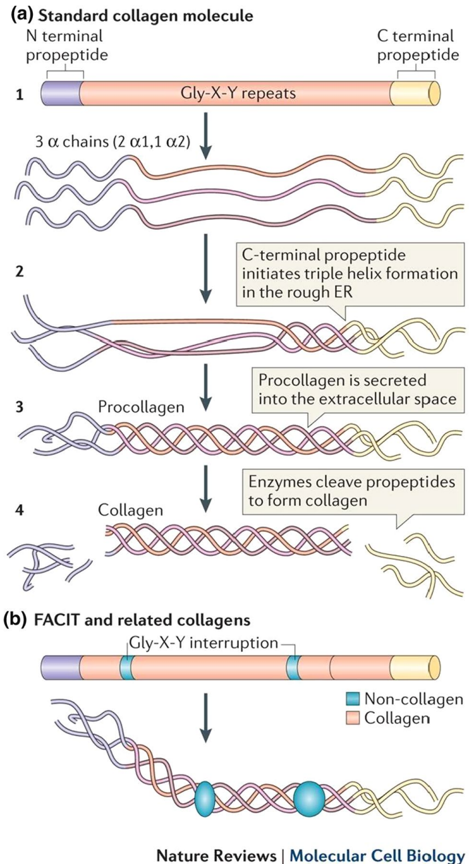
“Following lysyl and prolyl hydroxylation and O-linked glycosylation, α-chains associate to form procollagen and triple helix trimerization is initiated by the association of the C-propeptide domains (see [11] for a detailed description).”
BackgroundInfluentialEscherichia coli Physiology in Luria-Bertani Broth
Sezonov, G., Joseleau-Petit, D., & D'Ari, R. (2007) · Journal of Bacteriology · doi:10.1128/jb.01368-07 · Cited by 1,137 · cited 1×
“For industrial bioproduction, Escherichia coli is one of the most widely used organisms due to economically viable cell growth, high cell density, ease of manipulation and often it is also used for proof of concept at laboratory scale [20, 21].”
BackgroundForeign gene expression in yeast: a review
Romanos, M. A., Scorer, C. A., & Clare, J. J. (1992) · Yeast · doi:10.1002/yea.320080602 · Cited by 1,032 · cited 1×
“cerevisiae were found prior to this, perhaps related to the lack of tightly-regulated promoters in this yeast [44].”
BackgroundThe Biomedical Use of Silk: Past, Present, Future
Holland, C., Numata, K., Rnjak‐Kovacina, J., & Seib, F. P. (2019) · Advanced Healthcare Materials · doi:10.1002/adhm.201800465 · Cited by 815
Spider Silk Fibers Spun from Soluble Recombinant Silk Produced in Mammalian Cells
Lazaris, A., Arcidiacono, S., Huang, Y., Zhou, J.-F., Duguay, F., Chretien, N., Welsh, E. A., Soares, J. W., & Karatzas, C. N. (2002) · Science · doi:10.1126/science.1065780 · Cited by 747 · cited 2×
“1007/s43939-022-00024-4 Review technology platforms have been tested, including expression of recombinant spider silk elements in transgenic animals, Bombyx mori (Kraig Biocraft Laboratories, cited in [1]) and in transgenic goats (Nexia Biotechnologies, cited in [8]) and expression of recombinant collagen in transgeni…”
BackgroundHypotheses that correlate the sequence, structure, and mechanical properties of spider silk proteins
Hayashi, C. Y., Shipley, N. H., & Lewis, R. V. (1999) · International Journal of Biological Macromolecules · doi:10.1016/s0141-8130(98)00089-0 · Cited by 595 · cited 1×
“The different combination of these conserved motifs directly affects the mechanical properties of the fibres [7].”
BackgroundXia, X.-X., Qian, Z.-G., Ki, C. S., Park, Y. H., Kaplan, D. L., & Lee, S. Y. (2010) · Proceedings of the National Academy of Sciences · doi:10.1073/pnas.1003366107 · Cited by 561 · cited 11×
“Du and collaborators [24] produced recombinant collagen-like proteins with a C-terminal 27-residue-long foldon sequence derived from the native T4 phage fibritin to stabilize the triple helix, with an additional His tag, using Terrific Broth (TB) at 37 °C and IPTG as the protein expression inducer.”
BackgroundMethodInfluentialRecombinant collagen and gelatin for drug delivery
Olsen, D. (2003) · Advanced Drug Delivery Reviews · doi:10.1016/j.addr.2003.08.008 · Cited by 506 · cited 6×
“In yeast, human prolyl hydroxylases were co-expressed with human collagen, since the organism lacks native prolyl hydroxylases (reviewed in [3]).”
BackgroundInfluentialExpression of the lacZ gene from two methanol-regulated promoters in Pichia pastoris
Tschopp, J. F., Brust, P. F., Cregg, J. M., Stillman, C. A., & Gingeras, T. R. (1987) · Nucleic Acids Research · doi:10.1093/nar/15.9.3859 · Cited by 377
Production of recombinant proteins by high cell density culture of Escherichia coli
Choi, J. H., Keum, K. C., & Lee, S. Y. (2006) · Chemical Engineering Science · doi:10.1016/j.ces.2005.03.031 · Cited by 347 · cited 1×
“For industrial bioproduction, Escherichia coli is one of the most widely used organisms due to economically viable cell growth, high cell density, ease of manipulation and often it is also used for proof of concept at laboratory scale [20, 21].”
BackgroundBiomimetic spinning of artificial spider silk from a chimeric minispidroin
Andersson, M., Jia, Q., Abella, A., Lee, X.-Y., Landreh, M., Purhonen, P., Hebert, H., Tenje, M., Robinson, C. V., Meng, Q., et al. (2017) · Nature Chemical Biology · doi:10.1038/nchembio.2269 · Cited by 317 · cited 1×
“Silk fibres are then formed by pumping the protein solution through a glass capillary [63].”
BackgroundSpider silks: recombinant synthesis, assembly, spinning, and engineering of synthetic proteins
Scheibel, T. (2004) · Microbial Cell Factories · doi:10.1186/1475-2859-3-14 · Cited by 290 · cited 6×
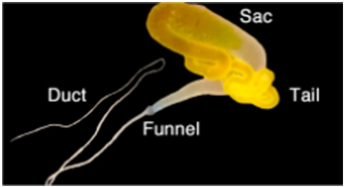
“This part of the major ampullate gland is important in formation of the silk fibres, though the exact mechanisms involved in fibre spinning are still being discussed [9, 10].”
BackgroundInfluentialProduction of synthetic spider dragline silk protein in Pichia pastoris
Fahnestock, S. R., & Bedzyk, L. A. (1997) · Applied Microbiology and Biotechnology · doi:10.1007/s002530050884 · Cited by 260 · cited 4×
“As a complement to their prokaryotic approach, Fahnestock and Bedzyk [34] were able to produce higher levels of high-molecular-weight proteins by testing also P. pastoris as the host organism and using a glycerol/methanol fermentation medium.”
BackgroundMethodInfluentialBiotechnological Production of Spider‐Silk Proteins Enables New Applications
Vendrely, C., & Scheibel, T. (2007) · Macromolecular Bioscience · doi:10.1002/mabi.200600255 · Cited by 227 · cited 2×
“Despite the major contributions and improvements in lab-scale production of recombinant spider silk, two important issues with the bacterial production, to date, still stand: the discrepancy in the codon usage of the host organism relative to that of the spiders and the repetitiveness of the genetic structure of spidr…”
BackgroundProduction of self-assembling biomaterials for tissue engineering
Kyle, S., Aggeli, A., Ingham, E., & McPherson, M. J. (2009) · Trends in Biotechnology · doi:10.1016/j.tibtech.2009.04.002 · Cited by 226
Synthetic spider dragline silk proteins and their production in Escherichia coli
Fahnestock, S. R., & Irwin, S. L. (1997) · Applied Microbiology and Biotechnology · doi:10.1007/s002530050883 · Cited by 206 · cited 12×
“Du and collaborators [24] produced recombinant collagen-like proteins with a C-terminal 27-residue-long foldon sequence derived from the native T4 phage fibritin to stabilize the triple helix, with an additional His tag, using Terrific Broth (TB) at 37 °C and IPTG as the protein expression inducer.”
BackgroundMethodInfluentialSpider Silk for Tissue Engineering Applications
Salehi, S., Koeck, K., & Scheibel, T. (2020) · Molecules · doi:10.3390/molecules25030737 · Cited by 203 · cited 1×
“Despite the major contributions and improvements in lab-scale production of recombinant spider silk, two important issues with the bacterial production, to date, still stand: the discrepancy in the codon usage of the host organism relative to that of the spiders and the repetitiveness of the genetic structure of spidr…”
BackgroundMatrix metalloproteinase collagenolysis in health and disease
Amar, S., Smith, L., & Fields, G. B. (2017) · Biochimica et Biophysica Acta (BBA) - Molecular Cell Research · doi:10.1016/j.bbamcr.2017.04.015 · Cited by 194 · cited 1×
“Enzymatic removal of the propeptide domains is carried out by collagen type-specific matrix metalloproteinases (MMPs), as well as by furin-like proprotein convertases [19].”
BackgroundLiquid crystals and flow elongation in a spider's silk production line
Knight, D. P., & Vollrath, F. (1999) · Proceedings of the Royal Society of London. Series B: Biological Sciences · doi:10.1098/rspb.1999.0667 · Cited by 191 · cited 1×
“In native production of spider silk, small amounts of silk are stored inside the animal in liquid phase, as dope, and processed upon extrusion [39].”
BackgroundVuorela, A. (1997) · The EMBO Journal · doi:10.1093/emboj/16.22.6702 · Cited by 179 · cited 3×
“6 g/L [13, 25], and recombinant human collagen yields have gone from 15 mg/L in 1996 [79], to current 3–5 g/L [84, 85] in P.”
BackgroundSilk Spinning in Silkworms and Spiders
Andersson, M., Johansson, J., & Rising, A. (2016) · International Journal of Molecular Sciences · doi:10.3390/ijms17081290 · Cited by 172 · cited 6×
“This part of the major ampullate gland is important in formation of the silk fibres, though the exact mechanisms involved in fibre spinning are still being discussed [9, 10].”
BackgroundInfluentialRecombinant Production of Spider Silk Proteins
Heidebrecht, A., & Scheibel, T. (2013) · Advances in applied microbiology · doi:10.1016/b978-0-12-407679-2.00004-1 · Cited by 162 · cited 2×
“In this process, based on findings from the laboratory of Bayreuth University biomaterials Professor Thomas Scheibel [49], glucose syrup is fed to genetically modified E. coli bacteria cells for bioproduction in bioreactors of more than 50 m3 capacity [50].”
MethodTrimble, R. B., Atkinson, P. H., Tschopp, J. F., Townsend, R. R., & Maley, F. (1991) · Journal of Biological Chemistry · doi:10.1016/s0021-9258(18)54426-4 · Cited by 160 · cited 1×
“cerevisiae glycoproteins, have been shown to be immunogenic [45].”
BackgroundStein, H., Wilensky, M., Tsafrir, Y., Rosenthal, M., Amir, R., Avraham, T., Ofir, K., Dgany, O., Yayon, A., & Shoseyov, O. (2009) · Biomacromolecules · doi:10.1021/bm900571b · Cited by 152 · cited 2×
“Other producing systems have meanwhile developed and the most advanced in producing fully hydroxylated recombinant human collagen type I has so far been the tobacco plant production systems [72].”
BackgroundBioinspired supramolecular fibers drawn from a multiphase self-assembled hydrogel
Wu, Y., Shah, D. U., Liu, C., Yu, Z., Liu, J., Ren, X., Rowland, M. J., Abell, C., Ramage, M. H., & Scherman, O. A. (2017) · Proceedings of the National Academy of Sciences · doi:10.1073/pnas.1705380114 · Cited by 145 · cited 1×
“[98] drew a silklike supramolecular fibre from a supramolecular polymer–colloidal hydrogel (SPCH) composed of 98% water and 2% silica and cellulose (wt%).”
BackgroundThe Natural Selection of Sexual Cannibalism
Buskirk, R. E., Frohlich, C., & Ross, K. G. (1984) · The American Naturalist · doi:10.1086/284227 · Cited by 138 · cited 1×
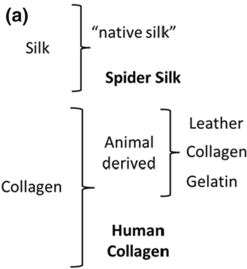
“As mentioned, sourcing is a challenge for human collagen and also for spider silk: due to their cannibalistic behaviour it has not been possible to domesticate spiders (see for example [6]).”
BackgroundToman, P. D., Chisholm, G., McMullin, H., Giere, L. M., Olsen, D. R., Kovach, R. J., Leigh, S. D., Fong, B. E., Chang, R., Daniels, G. A., et al. (2000) · Journal of Biological Chemistry · doi:10.1074/jbc.m002284200 · Cited by 136 · cited 2×
“Optimization of the medium composition yielded procollagen expression levels of 3 to 4 μg/mg of total protein, with a key requirement for glutamate being identified as a medium supplement to obtain maximum production levels [88].”
BackgroundHigh‐level production of human type I collagen in the yeast Pichia pastoris
Nokelainen, M., Tu, H., Vuorela, A., Notbohm, H., Kivirikko, K. I., & Myllyharju, J. (2001) · Yeast · doi:10.1002/yea.730 · Cited by 135
Production of protein-based polymers in Pichia pastoris
Werten, M. W. T., Eggink, G., Stuart, M. A. C., & de Wolf, F. A. (2019) · Biotechnology Advances · doi:10.1016/j.biotechadv.2019.03.012 · Cited by 132 · cited 1×
“The synthesis of [(GA)3GX]n variants has proved to be useful for biomedical applications as a self-assembling module in several block copolymers to form, for instance, the coating of surgical implants [35].”
BackgroundSilkworm and spider silk electrospinning: a review
Belbéoch, C., Lejeune, J., Vroman, P., & Salaün, F. (2021) · Environmental Chemistry Letters · doi:10.1007/s10311-020-01147-x · Cited by 121 · cited 1×
“As more applications are developed for spider silk [2], and the medical need for human or “human-like” collagen continues, research becomes constrained for lack of raw material, resulting in increased interest in alternatives such as recombinant solutions.”
BackgroundRecombinant expression of hydroxylated human collagen in Escherichia coli
Rutschmann, C., Baumann, S., Cabalzar, J., Luther, K. B., & Hennet, T. (2013) · Applied Microbiology and Biotechnology · doi:10.1007/s00253-013-5447-z · Cited by 113 · cited 3×
“Table 1 Production organism, growth media, carbon source and inducer for recombinant spider silk and collagen expression Protein expression Host Media/C-source Induction Spider silk Collagen Escherichia coli LB/TB IPTG [22, 24] [74, 77] Glucose IPTG [23, 25] [78] Glucose Thermal induction n.”
BackgroundMethodProduction of recombinant collagen: state of the art and challenges
Wang, T., Lew, J., Premkumar, J., Poh, C. L., & Win Naing, M. (2017) · Engineering Biology · doi:10.1049/enb.2017.0003 · Cited by 111 · cited 9×
“2 Structure of the natural proteins As mentioned above, the spider silk proteins and fibrillar collagens both present very long (more than 1000 amino acid residues) amino-acid sequences, with three distinct regions: a non-repetitive N terminal domain, a long repetitive, modular domain, and a non-repetitive C-terminal…”
BackgroundInfluentialExpression of recombinant human type I‒III collagens in the yeast Pichia pastoris
Myllyharju, J., Nokelainen, M., Vuorela, A., & Kivirikko, K. I. (2000) · Biochemical Society Transactions · doi:10.1042/0300-5127:0280353 · Cited by 110 · cited 1×
“5 g/L of recombinant collagen, similar to previously obtained expression levels, reinforcing previous findings in terms of achieving high-level production of recombinant collagen and suggesting further optimization of recombinant collagen production [80, 81].”
ResultFertala, A. (2020) · Bioengineering · doi:10.3390/bioengineering7040155 · Cited by 109 · cited 1×
“In their native setting, all fibrillar collagens are initially synthesized intracellularly as precursor molecules that contain large amino- and carboxy-terminal propeptides and are targeted to the rough endoplasmic reticulum (RER), where post-translational modifications take place, leading to the assembly of procollag…”
BackgroundSynthesis of recombinant human procollagen II in a stably transfected tumour cell line (HT1080)
Fertala, A., Sieron, A. L., Ganguly, A., Li, S. W., Ala-Kokko, L., Anumula, K. R., & Prockop, D. J. (1994) · Biochemical Journal · doi:10.1042/bj2980031 · Cited by 101 · cited 1×
“In the lumen of the RER, particular lysine and proline residues within the collagen propeptides are hydroxylated by lysyl and prolyl hydroxylase enzymes to promote the stability of the triple helices following formation, resulting in a mechanically stable fibril [17].”
BackgroundAn, B., Kaplan, D. L., & Brodsky, B. (2014) · Frontiers in Chemistry · doi:10.3389/fchem.2014.00040 · Cited by 99
Multicomponent nature underlies the extraordinary mechanical properties of spider dragline silk
Kono, N., Nakamura, H., Mori, M., Yoshida, Y., Ohtoshi, R., Malay, A. D., Pedrazzoli Moran, D. A., Tomita, M., Numata, K., & Arakawa, K. (2021) · Proceedings of the National Academy of Sciences · doi:10.1073/pnas.2107065118 · Cited by 99
Simulation of Flow in the Silk Gland
Breslauer, D. N., Lee, L. P., & Muller, S. J. (2008) · Biomacromolecules · doi:10.1021/bm800752x · Cited by 90 · cited 1×
“Other teams contended that shear forces convert the protein from random coil and alpha helical domains predominant in the “storage” (dope) step to a predominantly beta-sheet formed fibre [38].”
BackgroundProduction of Recombinant Hydroxylated Human Type III Collagen Fragment in Saccharomyces cerevisiae
Vaughan, P., Galanis, M., RICHARDS, K. M., Tebb, T. A., Ramshaw, J. A. M., & Werkmeister, J. A. (1998) · DNA and Cell Biology · doi:10.1089/dna.1998.17.511 · Cited by 73 · cited 2×
“Although the fragment was smaller than triple-helical domains found in interstitial collagens, high hydroxylation levels were obtained, indicating potential to make hydroxylated triple-helix-containing products for medical applications [87].”
BackgroundRecombinant Spider Silk Genetically Functionalized with Affinity Domains
Jansson, R., Thatikonda, N., Lindberg, D., Rising, A., Johansson, J., Nygren, P., & Hedhammar, M. (2014) · Biomacromolecules · doi:10.1021/bm500114e · Cited by 65 · cited 2×
“coli and could bind antibodies via the Z-domain [37].”
BackgroundJapan The Society of Fiber Science and Techno (2016) · Springer eBooks · doi:10.1007/978-4-431-55203-1 · Cited by 65
Grobben, A. H., Steele, P. J., Somerville, R. A., & Taylor, D. M. (2004) · Biotechnology and Applied Biochemistry · doi:10.1042/ba20030149 · Cited by 63 · cited 2×
“Animal sources may carry prions, such as bovine spongiform encephalopathy (BSE) or potentially cause allergic reactions if used in medical settings, therefore making them clinically undesirable [5, 73].”
BackgroundPakkanen, O., Hämäläinen, E., Kivirikko, K. I., & Myllyharju, J. (2003) · Journal of Biological Chemistry · doi:10.1074/jbc.m304405200 · Cited by 62 · cited 1×
“a Glycerol Methanol [34] [81, 82, 84, 85] Saccharomyces cerevisae Glucose Galactose [43] [89]”
MethodPurification and cytotoxicity of tag‐free bioengineered spider silk proteins
Dams‐Kozlowska, H., Majer, A., Tomasiewicz, P., Lozinska, J., Kaplan, D. L., & Mackiewicz, A. A. (2012) · Journal of Biomedical Materials Research Part A · doi:10.1002/jbm.a.34353 · Cited by 58 · cited 12×
“Du and collaborators [24] produced recombinant collagen-like proteins with a C-terminal 27-residue-long foldon sequence derived from the native T4 phage fibritin to stabilize the triple helix, with an additional His tag, using Terrific Broth (TB) at 37 °C and IPTG as the protein expression inducer.”
BackgroundMethodInfluentialBiosynthesis of an Amphiphilic Silk-Like Polymer
Werten, M. W. T., Moers, A. P. H. A., Vong, T., Zuilhof, H. T., van Hest, J. C. M., & de Wolf, F. A. (2008) · Biomacromolecules · doi:10.1021/bm701111z · Cited by 57 · cited 5×
“6 g/L [13, 25], and recombinant human collagen yields have gone from 15 mg/L in 1996 [79], to current 3–5 g/L [84, 85] in P.”
BackgroundMethodInfluentialYang, Y., Qian, Z., Zhong, J., & Xia, X. (2016) · Process Biochemistry · doi:10.1016/j.procbio.2016.01.006 · Cited by 57 · cited 11×
“Du and collaborators [24] produced recombinant collagen-like proteins with a C-terminal 27-residue-long foldon sequence derived from the native T4 phage fibritin to stabilize the triple helix, with an additional His tag, using Terrific Broth (TB) at 37 °C and IPTG as the protein expression inducer.”
BackgroundMethodInfluentialZepeda, A. B., Pessoa, A., & Farías, J. G. (2018) · Brazilian Journal of Microbiology · doi:10.1016/j.bjm.2018.03.010 · Cited by 53 · cited 1×
“This promoter was used for the construction of a production vector, together with a secretion signal and the histidine dehydrogenase (HIS4) selectable marker gene [30, 31], enabling the full-length expression of the heterologous recombinant silk, which had not been the case with E.”
MethodA simple cost-effective methodology for large-scale purification of recombinant non-animal collagens
Peng, Y. Y., Stoichevska, V., Madsen, S., Howell, L., Dumsday, G. J., Werkmeister, J. A., & Ramshaw, J. A. M. (2014) · Applied Microbiology and Biotechnology · doi:10.1007/s00253-013-5475-8 · Cited by 50 · cited 4×
“Table 1 Production organism, growth media, carbon source and inducer for recombinant spider silk and collagen expression Protein expression Host Media/C-source Induction Spider silk Collagen Escherichia coli LB/TB IPTG [22, 24] [74, 77] Glucose IPTG [23, 25] [78] Glucose Thermal induction n.”
BackgroundMethodInfluentialJansson, R., Lau, C. H., Ishida, T., Ramström, M., Sandgren, M. O. J., & Hedhammar, M. (2016) · Biotechnology Journal · doi:10.1002/biot.201500412 · Cited by 41 · cited 3×
“a [76] Pichia pastoris Methanol Methanol [13, 36] n.”
BackgroundProduction of Food-Processing Enzymes From Recombinant Microorganisms
Srivastava, N. (2018) · Elsevier eBooks · doi:10.1016/b978-0-12-813280-7.00043-8 · Cited by 37 · cited 1×
“This promoter was used for the construction of a production vector, together with a secretion signal and the histidine dehydrogenase (HIS4) selectable marker gene [30, 31], enabling the full-length expression of the heterologous recombinant silk, which had not been the case with E.”
MethodRuottinen, M., Bollók, M., Kögler, M., Neubauer, A., Krause, M., Hämäläinen, E., Myllyharju, J., Vasala, A., & Neubauer, P. B. (2008) · BMC Biotechnology · doi:10.1186/1472-6750-8-33 · Cited by 35 · cited 2×
“A tenfold increase in yield of stable recombinant human collagen II was obtained, when compared to the pulse method [83].”
BackgroundResultFermentation optimization of a Saccharomyces cerevisiae strain producing 1F9 recombinant spidroin
Сидорук, К. В., Davydova, L. I., Kozlov, D. G., Gubaidullin, D. G., Glazunov, A. V., Bogush, V. G., & Debabov, V. G. (2015) · Applied Biochemistry and Microbiology · doi:10.1134/s0003683815070066 · Cited by 33 · cited 2×
“[43] achieved optimal protein expression with a system based on engineered strains of the S.”
BackgroundMethodProsdocimi, F., BITTENCOURT, D. M. D. C., da Silva, F. R., Kirst, M., Motta, P. C., & Rech, E. L. (2011) · PLoS ONE · doi:10.1371/journal.pone.0021634 · Cited by 32 · cited 1×
“Major ampullate gland spidroin, the most studied spider silk, is formed by two proteins, MaSp1 and MaSp2, which seem to be translated from evolutionarily related genes [12].”
BackgroundGellermann, P., Schneider-Barthold, C., Bolten, S. N., Overfelt, E., Scheper, T. H., & Pepelanova, I. (2019) · Journal of Functional Biomaterials · doi:10.3390/jfb10030039 · Cited by 30 · cited 4×
“6 g/L [13, 25], and recombinant human collagen yields have gone from 15 mg/L in 1996 [79], to current 3–5 g/L [84, 85] in P.”
BackgroundMethodInfluentialGuo, J., Luo, Y., Fan, D., Yang, B., Gao, P., Ma, X., & Zhu, C. (2010) · Biotechnology and Applied Biochemistry · doi:10.1042/ba20100081 · Cited by 29 · cited 2×
“a [76] Pichia pastoris Methanol Methanol [13, 36] n.”
BackgroundChan, S. W. P., Hung, S., Raman, S. K., Hatfield, G. W., Lathrop, R. H., Silva, N. A. D., & Wang, S. (2010) · Biomacromolecules · doi:10.1021/bm100052y · Cited by 28 · cited 3×
“Chan [89] described a novel recombinant type III human collagen production strategy by designing oligonucleotides favouring correct hybridizations, during de novo gene assembly, for gene synthesis.”
BackgroundMethodDu, C., Wang, M., Liu, J., Pan, M., Cai, Y., & Yao, J. (2008) · Applied Microbiology and Biotechnology · doi:10.1007/s00253-008-1427-0 · Cited by 28 · cited 1×
“Table 1 Production organism, growth media, carbon source and inducer for recombinant spider silk and collagen expression Protein expression Host Media/C-source Induction Spider silk Collagen Escherichia coli LB/TB IPTG [22, 24] [74, 77] Glucose IPTG [23, 25] [78] Glucose Thermal induction n.”
BackgroundOptimal Temperature Control Policy for a Two‐Stage Recombinant Fermentation Process
Hortaçsu, A., & Ryu, D. D. Y. (1990) · Biotechnology Progress · doi:10.1021/bp00006a001 · Cited by 18 · cited 1×
“Thermal induction between 34 and 39 °C has proven to be critical to ensure steady presence of plasmid-harbouring cells at a lower temperature and to maximize protein expression at a higher temperature [75].”
BackgroundMethod for the Destruction of Endotoxin in Synthetic Spider Silk Proteins
Decker, R. E., Harris, T. I., Memmott, D. R., Peterson, C., Lewis, R. V., & Jones, J. A. (2018) · Scientific Reports · doi:10.1038/s41598-018-29719-6 · Cited by 12
The formation of a quaternary structure by recombinant analogs of spider silk proteins
Sokolova, O. S., Bogush, V. G., Davydova, L. I., Polevova, S., Antonov, S. A., Neretina, T. V., Klinov, D. V., Debabov, V. G., & Kirpichnikov, M. P. (2010) · Molecular Biology · doi:10.1134/s0026893310010188 · Cited by 10 · cited 1×
“Under in vitro conditions, self-assembling has been promoted via treatment step in ethanol by [13], as described above, and also by artificial spinning through a microspinneret by [42], which could enhance the development of downstream processing spinning technology for large-scale fibre production.”
Method
Research works printed but not linked: 3
- Thill GP, Davis GR, Stillman C. Positive and negative effects of multi-copy integrated expression vectors on protein expression in Pichia pastoris. In: Proceedings of the 6th international symposium on genetics of microorganisms; 1991. p. 477-90.
- Yonenaga A. Chapter 28-Future man-made fiber. In: High-performance and specialty fibers. Tokyo: Springer; 2016. p. 442-3.
- Ma XX, Fan DD, Zhu CH, Shang ZF, Mi Y. Optimization of fermentation medium for collagen production of recombinant Pichia pastoris during induction phase. J Chem Pharm Res. 2014;6:1802-9.
Cited by
Precision Fermentation as an Alternative to Animal Protein, a Review
Knychala, M. M., Boing, L. A., Ienczak, J. L., Trichez, D., & Stambuk, B. U. (2024) · Fermentation · doi:10.3390/fermentation10060315 · Cited by 164
“Thus, the expression of recombinant collagens using different prokaryotic and eukaryotic systems is an alternative strategy to address these aforementioned issues, and there have been many publications regarding the production of recombinant collagen [189].”
BackgroundInnovative Approaches to an Eco-Friendly Cosmetic Industry: A Review of Sustainable Ingredients
Sasounian, R., Martinez, R. M., Lopes, A. M., Giarolla, J., Rosado, C., Magalhães, W. V., Velasco, M. V. R., & Baby, A. R. (2024) · Clean Technologies · doi:10.3390/cleantechnol6010011 · Cited by 96
“When combined with capryl glycoside, fibroin from silkworms can be used as a surfactant [60].”
BackgroundCollagen-Based Wound Dressings: Innovations, Mechanisms, and Clinical Applications
Alberts, A., Bratu, A. G., Niculescu, A.-G., & Grumezescu, A. M. (2025) · Gels · doi:10.3390/gels11040271 · Cited by 75
“Adapted from open-access sources [38,39]. fiber.”
Rahaman, M. T., & Khan, M. S. H. (2025) · International Journal of Environmental Science and Technology · doi:10.1007/s13762-025-06481-7 · Cited by 46
Tolmachev, D. A., Malkamäki, M., Linder, M. B., & Sammalkorpi, M. (2023) · Biomacromolecules · doi:10.1021/acs.biomac.3c00637 · Cited by 35
Metadata
- Authors
- Gomes, V., & Salgueiro, S. P.
- Corresponding author
- Salgueiro, Sancha P.
- Venue
- Discover Materials
- Published
- 2022-04-03
- Volume
- 2
- Issue
- 1
- ISSN
- 2730-7727 (ISSN-L)
- OpenAlex
- W4226487015
- Cited by
- 35
- References
- 62
- Citations by year
- 2026: 12 · 2025: 12 · 2024: 7 · 2023: 4
- FWCI
- 1.44
- Type
- journal article
- Language
- en
- Open access
- gold
- doi.org
- Licence
- cc-by
- creativecommons.org/licenses/by/4.0 (tdm)
- creativecommons.org/licenses/by/4.0 (vor)
- Locations
- Discover Materials (publishedVersion, cc-by)
- DOAJ (DOAJ: Directory of Open Access Journals) (submittedVersion)
- Topics
- Physical Sciences › Materials Science › Biomaterials › Silk-based biomaterials and applications
- Life Sciences › Biochemistry, Genetics and Molecular Biology › Molecular Biology › Protein purification and stability
- Life Sciences › Biochemistry, Genetics and Molecular Biology › Molecular Biology › Viral Infectious Diseases and Gene Expression in Insects
- Keywords
- recombinant spider silk, recombinant human collagen, microbial production, large-scale bioprocessing, downstream processing, endotoxin removal, freeze-drying, autoclaving, filtration, biomaterials, bio-based materials, process economics
About these checks
Registry, retraction, Cites and statistics results are computed, not judged, with one exception: a printed reference that no index lists is read once by a model before it counts as a citation error. Claims are extracted by a model and kept only when their quote appears verbatim in the text; each cited source is then checked, with a model’s help, for whether it says what the claim relies on. Those verdicts can be wrong — read the claim’s quote and the cited source before relying on one.
Statistics and arithmetic are recomputed, not judged.
Confidence bands are shown only for fields calibrated on our annotated test set. None is calibrated yet, so no band is shown.
What counts as a claim ›How we measure confidence ›How we check this ›
Are you an author, or do you see a problem with this page? Request a review
Data sources
Bibliographic data: Semantic Scholar, OpenAlex, Crossref.
Contains information from the Semantic Scholar Academic Graph Datasets, made available under the ODC Attribution License (ODC-BY 1.0).
Semantic Scholar’s data is described in: Kinney, R., et al. (2023). The Semantic Scholar Open Data Platform. arXiv:2301.10140.
