

A comprehensive review of mental health services across selected countries in sub-Saharan Africa: assessing progress, challenges, and future direction
Open accessThe DOI matches its Crossref record; 89 of the 90 references it cites were found in a registry or an index.
Abstract
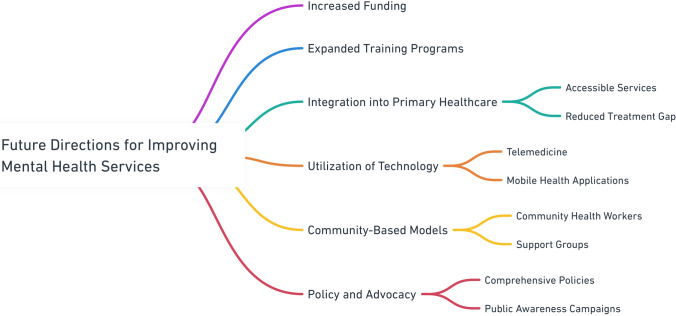
Mental health is a crucial but frequently neglected aspect of general health and well-being that faces numerous challenges, including underfunding, shortage of trained professionals, pervasive stigma, inadequate infrastructure, and insufficient policies in sub-Saharan Africa. This review reports the significant progress and initiatives that have been made in this region. South Africa, Nigeria, Uganda, Kenya, Tanzania, Ethiopia, Rwanda, and Ghana have developed national policies and integrated mental health services into primary healthcare, marking a shift towards community-based care and reducing stigma through awareness campaigns. Countries such as South Africa and Rwanda have robust infrastructure, while Ethiopia and Kenya emphasize training primary healthcare providers and community-based models. Ghana’s Mental Health Act and Uganda’s collaboration with NGOs has enhanced awareness and resource mobilization. Mental healthcare-targeted programs, such as Kenya’s Friendship Bench and Ethiopia’s Health Extension Program, have demonstrated the efficacy of community-based interventions. South Africa has leveraged innovative approaches, such as telepsychiatry, to expand access to holistic mental health services, particularly in rural areas. Partnerships with traditional healers in Uganda and Rwanda have enhanced early identification and referral. Despite these advancements, challenges persist. Common issues include a severe shortage of mental health professionals, inadequate budget allocation, limited access to services in rural areas, and the need for comprehensive policy frameworks that continue to stall the desired goals. Urban-centric services in Nigeria, financial constraints in Tanzania, and resource limitations in Ethiopia and Rwanda have hindered equitable access. While public–private partnerships and technological innovations are emerging, the dominance of institutionalized care in several regions limits community outreach. To chart the path forward, improving mental health services in Sub-Saharan Africa requires increased funding, expanded training programs for mental health professionals, and incorporation of mental health into basic healthcare systems. Utilizing technology such as telemedicine and mobile health applications holds promise for overcoming geographical barriers and supporting ongoing education. Community-based models and advocacy efforts are essential for reducing stigma, promoting sustainable mental healthcare, and enhancing the overall well-being of citizens insub-Saharan Africa.
Overview
The claims and statistics of this paper haven’t been checked yet.
Free: it reads the open-access text and checks the first 5 claims that cite a source we can check. Create a free account to check every claim.
Integrity signals
Registry
Cites
Statistics
Figures
Verification
Claims the paper makes
The claims and statistics of this paper haven’t been checked yet.
Free: it reads the open-access text and checks the first 5 claims that cite a source we can check. Create a free account to check every claim.
Claims other papers make about this one
Each is checked against this paper’s own text: does it say what the citing paper says it does?
The source backs part of the claim, not all of it — or backs it for a different population, condition or comparison.
In the citing paper
“In Sub‐Saharan Africa, the burden of co‐occurring disorders is amplified by weak health systems, limited specialist availability and poorly coordinated service delivery [6].”
From Treatment Experiences of Individuals With Co-Occurring Mental Health and Substance Use Disorders and Perspectives of Mental Health Workers in Ashanti Region, Ghana (2026) · cites this paper as [6]
Experimental — accuracy not yet measured
Self-check
Percentages, sums and reported differences re-computed from the paper’s own numbers.
The self-check needs the paper’s full text.
Citations
Cites
Charlson, F. J., Ferrari, A. J., Santomauro, D. F., Diminic, S., Stockings, E., Scott, J. G., McGrath, J. J., & Whiteford, H. A. (2018) · Schizophrenia Bulletin · doi:10.1093/schbul/sby058 · Cited by 1,647 · cited 2×
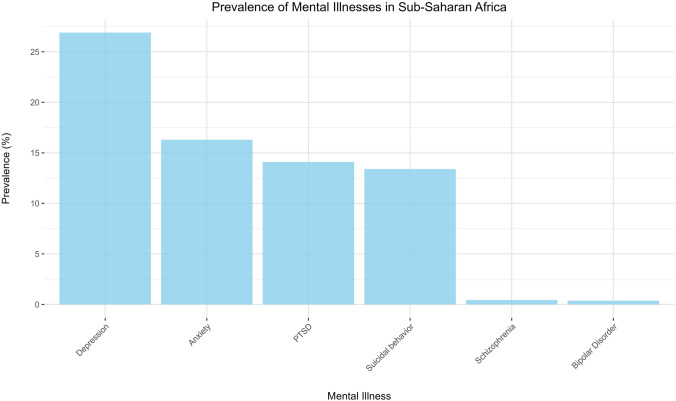
“1 Prevalence of Mental Illnesses in Sub-Saharan Africa [3, 22] Vol.:(0123456789) Discover [10] reflect more specific patterns.”
InfluentialUnited Nations High Commissioner for Refugees (UNHCR)
(2014) · International Year Book and Statesmen's Who's Who · doi:10.1163/1570-6664_iyb_sim_org_40277 · Cited by 1,489 · cited 1×
“The Mental Health and Psychosocial Support (MHPSS) program uses mobile technology to provide mental health education, self-help tools, and tele-counseling services [82].”
Barriers to mental health treatment: results from the WHO World Mental Health surveys
Andrade, L. H., Alonso, J., Mneimneh, Z., Wells, J. E., Al-Hamzawi, A., Borges, G., Bromet, E., Bruffaerts, R., de Girolamo, G., de Graaf, R., et al. (2014) · Psychological Medicine · doi:10.1017/s0033291713001943 · Cited by 1,289 · cited 1×
“These challenges are multifaceted and encompass financial, structural, cultural, and political dimensions [111, 112].”
Mental Health Service Provision in Low- and Middle-Income Countries
Rathod, S., Pinninti, N., Irfan, M., Gorczynski, P., Rathod, P., Gega, L., & Naeem, F. (2017) · Health Services Insights · doi:10.1177/1178632917694350 · Cited by 866 · cited 1×
“However, 15% of Ethiopians are affected by major mental illnesses or substance abuse disorders, and a population of over 100 million is left to be cared for by approximately 60 psychiatrists [68, 69].”
Colizzi, M., Lasalvia, A., & Ruggeri, M. (2020) · International Journal of Mental Health Systems · doi:10.1186/s13033-020-00356-9 · Cited by 727 · cited 2×
“These services encompass various interventions, including medical care, psychological counseling, social support, and vocational training, designed to help individuals regain their independence and enhance their overall quality of life [25].”
Identifying Key Challenges Facing Healthcare Systems In Africa And Potential Solutions
Oleribe, O. E., Momoh, J., Uzochukwu, B. S., Mbofana, F., Adebiyi, A., Barbera, T., Williams, R., & Taylor Robinson, S. D. (2019) · International Journal of General Medicine · doi:10.2147/ijgm.s223882 · Cited by 685 · cited 1×
“This lack of funding results in inadequate facilities, insufficient medications, and scarcity of well-trained mental health specialists [113].”
Barnett, M. L., Gonzalez, A., Miranda, J., Chavira, D. A., & Lau, A. S. (2018) · Administration and Policy in Mental Health and Mental Health Services Research · doi:10.1007/s10488-017-0815-0 · Cited by 431 · cited 1×
“Hospital-based mental health services in Ethiopia are provided by a few specialized psychiatric hospitals and psychiatric units in general hospitals [57, 65, 66].”
The prevalence of mental health problems in sub-Saharan adolescents: A systematic review
Jörns-Presentati, A., Napp, A.-K., Dessauvagie, A. S., Stein, D. J., Jonker, D., Breet, E., Charles, W., Swart, R. L., Lahti, M., Suliman, S., et al. (2021) · PLOS ONE · doi:10.1371/journal.pone.0251689 · Cited by 317 · cited 3×
“1 Prevalence of Mental Illnesses in Sub-Saharan Africa [3, 22] Vol.:(0123456789) Discover [10] reflect more specific patterns.”
Kigozi, F., Ssebunnya, J., Kizza, D., Cooper, S., Ndyanabangi, S., & the Mental Health and Poverty Project (2010) · International Journal of Mental Health Systems · doi:10.1186/1752-4458-4-1 · Cited by 253 · cited 2×
“…national mental health policy since 1996, Uganda’s policy aims to decentralize and integrate mental health services into primary health care (PHC), promote evidence-based treatments, involve families and communities, protect the rights of individuals with mental illness, and combat stigma [44–46].”
Keynejad, R., Spagnolo, J., & Thornicroft, G. (2021) · Evidence Based Mental Health · doi:10.1136/ebmental-2021-300254 · Cited by 219 · cited 1×
“The mhGAP-Intervention Guide (mhGAP-IG) has been implemented in several regions to train primary healthcare providers to identify and manage mental health disorders [72].”
Research works printed but not linked: 11
- Federal Ministry of Health. National mental healthstrategy 2020–2025. Natl Ment Heal. 2020;2025:2020–5.
- Africa Polling Institute. Mental Health in Nigeria Survey–Press Release. 2020. Available from: https://africapolling.org/2020/01/13/mental-health-in-nigeria-survey-report-2020/
- Providing Sustainable Mental and Neurological Health Care in Ghana and Kenya: Workshop Summary. [Internet]. 2016. Available from: https://www.ncbi.nlm.nih.gov/books/NBK350305/ 26447267
- Ayano G. Primary mental health care services in Ethiopia: experiences, opportunities and challenges from east African country. J Neuropsychopharmacol Ment Heal. 2016;1(4):113.
- Fekadu A, Desta M, Alem A, Prince M. A descriptive analysis of admissions to Amanuel psychiatric hospital in Ethiopia. Ethiop J Heal Dev. 2007;21(2):1–6.
- Ambikile JS, Iseselo MK. Challenges to the provision of home care and support for people with severe mental illness: experiences and perspectives of patients, caregivers, and healthcare providers in Dar es Salaam, Tanzania. PLOS Glob Public Heal. 2023;3(1): e0001518. 10.1371/journal.pgph.0001518. PMC10021743 36963044 · DOI
- Mwambingu PH, Andrea D, Katomero J. Using mobile phones in improving mental health services delivery in Tanzania: a feasibility study at mirembe national mental health hospital in Dodoma. J Glob Heal Sci. 2019;1(1):1–8.
- Ntakirutimana D, Irechukwu EN. Psychological intervention and patients depression recovery in Rwanda. A case of ndera neuro-psychiatric hospital. Strateg J Bus Chang Manag. 2023;10(3):1.
- Social Innovations Journal. Using Mobile Technology to Provide Mental Healthcare in Ghana [Internet]. 2016. Available from: https://socialinnovationsjournal.org/editions/issue-50/75-disruptive-innovations/2874-using-mobile-technology-to-provide-mental-healthcare-in-ghana
- Gbenga AP, Aimiomode A, Nwosu CL, Seluman I. Social media as a veritable tool for mental health support in Nigeria. Int J Res Sci Innov. 2023;X(VII):179–87.
- Ogunwale A, Fadipe B, Bifarin O. Indigenous mental healthcare and human rights abuses in Nigeria: the role of cultural syntonicity and stigmatization. Front Public Heal. 2023. 10.3389/fpubh.2023.1122396/full. PMC10327483 37427251 · doi:10.3389/fpubh.2023.1122396/full
Cited by
Lamba, K., Rani, S., & Shabaz, M. (2026) · Discover Mental Health · doi:10.1007/s44192-026-00373-z · Cited by 28
“Users whose selfreported survey scores contained inconsistencies, possibly due to recall bias [3, 41].”
The global burden of mental and substance use disorders among adolescents and young adults
Zhao, X., Liu, L., Zhang, L., Zhao, P., Jiang, W., & Nahata, M. C. (2026) · Molecular Psychiatry · doi:10.1038/s41380-026-03503-9 · Cited by 21
“Future studies should explore ongoing potential pandemic impacts.”
Oso, T. A., Ahmed, M. M., Okesanya, O. J., Adebayo, U. O., Obadeyi, K. B., Othman, Z. K., & Lucero‐Prisno, D. E. (2025) · Journal of Alzheimer s Disease · doi:10.1177/13872877251407700 · Cited by 9
“140”
Self-citationFreeman, T. P., Lees, R., Wadsworth, E., Carney, T., Castillo‐Carniglia, Á., Cerdá, M., Kalayasiri, R., Kilmer, B., Lorenzetti, V., Manthey, J., et al. (2026) · The Lancet Psychiatry · doi:10.1016/s2215-0366(26)00087-8 · Cited by 11
Okesanya, O. J., Adebayo, U. O., Ngwoke, I., Agboola, A. O., Atewologun, F. A., Ajayi, S. B., Olaleke, N. O., Oso, T. A., & Lucero‐Prisno, D. E. (2025) · Exploration of Digital Health Technologies · doi:10.37349/edht.2025.101174 · Cited by 7
Self-citationObioha, W. C., Chukwuemeka, N. A., Okechi, I. D., & Eze, E. I. (2025) · Discover Social Science and Health · doi:10.1007/s44155-025-00323-0 · Cited by 4
“In Nigeria, services are historically hospital-based, urban-centric, and under-resourced, with less than 10% of the population accessing professional psychological care despite the presence of specialized facilities such as Yaba and Aro [16].”
Okesanya, O. J., Ogaya, J. B., Ahmed, M. M., Lamem, M. F. H., Kab, T., Elhadi, Y. A. M., Musa, S. S., Eshun, G., Oso, T. A., & Lucero‐Prisno, D. E. (2026) · Advances in Public Health · doi:10.1155/adph/3240636 · Cited by 4
Self-citationTransforming public mental health: a review on global trends, challenges, and pathways to change
Okesanya, O. J., Oso, T. A., Adebayo, U. O., Obadofin, J. A., Abdulghaniy, R. O., Bamigbade, A. A., Ogaya, J. B., Ngwoke, I., Ahmed, M. M., & Aban, J. L. (2026) · Health Care Analysis · doi:10.1007/s10728-025-00549-8 · Cited by 5
“Logistical barriers include a severe shortage of trained mental health professionals, particularly in LMICs, where there is fewer than one psychiatrist per 100,000 people [ 10 ].”
InfluentialSelf-citationPark, A., Jez, O., Kilian, R., Charles, A., Kalha, J., Korde, P., Lachman, M., Mahlke, C., Moran, G. S., Nakku, J. E. M., et al. (2025) · Epidemiology and Psychiatric Sciences · doi:10.1017/s2045796025100140 · Cited by 7
Yesuf, S. A. (2025) · BMC Public Health · doi:10.1186/s12889-025-23825-7 · Cited by 3
“These realities mirror patterns in Kenya and Nigeria, where retirement transitions disproportionately affect those without familial financial buffers [50].”
InfluentialBaatiema, L., Sanuade, O. A., Kunfah, S. M. P., Owusu-Ansah, K. D., Allen, L. N., Weobong, B., Abimbola, S., de-Graft Aikins, A., Koram, K. A., & Kruk, M. E. (2025) · PLOS Mental Health · doi:10.1371/journal.pmen.0000386 · Cited by 3
“…are attendees have their Mental Neurologcal and Substance condition detected [14], and about 2% receive treatment for their conditions [15] Despite this high burden of mental health illness in the population, access to mental healthcare has remained a fundamental health system challenge [16,17].”
Sadio, A. J., Gbeasor‐Komlanvi, F. A., Mama, A.-H., Tchankoni, M. K., Koglo, K. G., Gabkiangbe, I., Agbetoglo, G. A., Attisso, G., Ousmane, A., Banka, V., et al. (2025) · BMJ Public Health · doi:10.1136/bmjph-2025-003730 · Cited by 2
Oladosu, A. O., Frempong, C. S., Anaduaka, U. S., Katsande, S., & Awuku-Amador, S. (2025) · BMC Pregnancy and Childbirth · doi:10.1186/s12884-025-08486-z · Cited by 2
“The country continues to face high maternal mortality rates, whereas mental health services remain under-resourced and largely inaccessible [13, 14].”
Eladi, J., Sanga, S., & Ambikile, J. S. (2026) · PLOS mental health. · doi:10.1371/journal.pmen.0000608 · Cited by 3
Eghosa, E., & Bukola, S. T. (2026) · Frontiers in Psychology · doi:10.3389/fpsyg.2026.1830779 · Cited by 2
“Moreover, challenges such as climate sensitivity, infrastructure limitations, and limited awareness further constrain the application of TASs, especially in sub-Saharan Africa (Nyatuka and De La Harpe, 2022; Mba et al., 2024; Atewologun et al., 2025).”
Adewuya, A. O., Ola, B. A., Coker, O., Oladipo, O. E., Olibamoyo, O., & Atilola, O. (2025) · Implementation Science Communications · doi:10.1186/s43058-025-00798-7 · Cited by 1
“This crisis is particularly acute in sub-Saharan Africa, where under-resourced health systems, a severe shortage of a specialist workforce, and pervasive stigma combine to create formidable barriers to care [5–7].”
Heunis, C., Kigozi, G., Maeko, M., & van Jaarsveldt, D. E. (2025) · BMC Nursing · doi:10.1186/s12912-025-03606-8 · Cited by 3
“Despite its widespread prevalence – worldwide [2], across sub-Saharan Africa [3], and South Africa [4–6] – MH remains a critical yet often overlooked component of overall health and well-being.”
Akinyelure, F. M. (2025) · doi:10.38124/ijisrt/25jul1532 · Cited by 28
Bapolisi, A. M., Foucart, J., Kabambi, D., Mirishe, R., Musa, E., Ruvunangiza, A., Bosomi, J., Bulabula, V., Ilunga, M., Kajibwami, E., et al. (2025) · JMIR Mental Health · doi:10.2196/81291 · Cited by 3
“Moreover, in these regions, mental health remains a marginal concern due to limited resource allocation and low levels of mental health literacy, both of which contribute to reduced accessibility and acceptability of mental health services [8].”
Onu, J. U., Ononiwu, C. N., Olatayo, T. I., Adenaike, F. S., Okoye, O. C., Ononiwu, U., Akujobi, N. C., & Uwakwe, R. (2025) · Transactions of the Royal Society of Tropical Medicine and Hygiene · doi:10.1093/trstmh/traf135 · Cited by 1
Matsebula, C. N., Singwane, T. P., & Rapholo, F. (2026) · Discover Mental Health · doi:10.1007/s44192-026-00403-w · Cited by 1
“This resonates with Atewologun et al. [1], who note a lack of financial and structural support as an enormous and global struggle within the field.”
Sadio, A. J., Biaou, D. M. M., Efalou, P., Gbeasor‐Komlanvi, F. A., Gabkiangbe, I., Tchankoni, M. K., Koglo, G., Agbetoglo, G. A., Mewezinoh, B., Zouténé, M., et al. (2026) · BMJ Open Respiratory Research · doi:10.1136/bmjresp-2025-003776 · Cited by 1
“19 20 Beyond these psycho-social factors, overweight and obesity are also noted as major risk factors.”
Bimrew, M., Field, S., Beňová, L., Meudec, M., Gebremedhin, S., Workicho, A., Bekele, D., Alamdo, A. G., & Asefa, A. (2026) · BMC Health Services Research · doi:10.1186/s12913-026-14284-w · Cited by 3
“This burden is often exacerbated in low-and middle-income countries (LMICs) due to conflict, poverty, and limited access to services [2, 3].”
Suicide literacy in The Gambia
Eneojo, N. I. F., ADAMU, V., & Arafat, S. M. Y. (2026) · Discover Mental Health · doi:10.1007/s44192-026-00503-7 · Cited by 1
“The Gambia appears to lag in both service availability and in the presence of documented literacy or anti-stigma campaigns [18].”
InfluentialA bibliometric analysis of large language models in mental health research
Hussiny, M. A., Trust Saidi, Pikkarainen, M. A., & Gazerani, P. (2026) · Frontiers in Psychiatry · doi:10.3389/fpsyt.2026.1838199 · Cited by 2
Zhao, Q., Wen, S., & Yu, W. (2026) · Australian Journal of Psychology · doi:10.1080/00049530.2026.2710168 · Cited by 1
“However, it also highlights potential challenges regarding the cross-cultural generalisability of AI diagnostic protocols and their clinical applicability in low-and middle-income countries (LMICs) with constrained mental health resources (Atewologun et al., 2025; Xia et al., 2025).”
The future of psychiatry: Reflections on the past three decades and projections for the next three
Ndetei, D. M., Mutiso, V., & Nyamai, P. K. (2025) · International Review of Psychiatry · doi:10.1080/09540261.2025.2569467 · Cited by 1
Darko, G., Anokye, G. A., Yinzooya, Y. M., & Agengre, T. (2026) · Health Expectations · doi:10.1111/hex.70801
Indrawanto, D., Kartikawati, D., Fauzi, M. S., Azhar, A. W., Wahyuni, S. I., Umiyati, S., Resmi, P. C., Pradapa, S. Y. F., & Ramadhani, E. (2025) · Journal of Clinical Neuroscience · doi:10.1016/j.jocn.2025.111254
Nkabini, S. M., Nkabini-Anderson, L., & Zuma, F. (2025) · medRxiv · doi:10.1101/2025.09.16.25335905
“…PTSD is a mental disorder that develops after an individual experiences a traumatic or life-threatening past event, that consistently replays in their present life either through flashbacks, nightmares, or when they are partaking in certain activities that link to the traumatic event (2,4).”
Boateng, P. A., Duah, I. O., Ampong, J., Dowuona-Hammond, M., & Marciano, L. (2025) · medRxiv · doi:10.1101/2025.10.02.25337221
Aderinwale, Z. A., Majeed, A. O., & Adetola-Kazeem, H. (2025) · CogNexus · doi:10.63084/cognexus.v1i03.190 · Cited by 1
“…the core of the mental health crisis across the continent is a chronic lack of qualified professionals, psychiatrists, psychologists, psychiatric nurses, social workers, and lay counsellors, whose skills are crucial for prevention, diagnosis, treatment, and rehabilitation (Atewologun et al., 2025).”
A Bibliometric Analysis of Large Language Models in Mental Health Research (Preprint)Preprint
Hussiny, M. A., Trust Saidi, Pikkarainen, M., & Gazerani, P. (2025) · doi:10.2196/preprints.87333
Smith, G., Hanlon, B., & Grinter, D. J. (2025) · International Journal of Qualitative Studies on Health and Well-Being · doi:10.1080/17482631.2025.2581398
Ahmed, A. Y., & Ahmed, A. (2025) · Annals of Psychiatry and Treatment · doi:10.17352/apt.000066
Malebatja, M. F., Schoor, J. W. V., & Mokwena, K. E. (2025) · International Journal of Research in Business and Social Science (2147-4478) · doi:10.20525/ijrbs.v14i8.4369
Strategies for collaborative mental health care in post-conflict Tigray: A qualitative study
Berhe, K. T., Ward, P., Mwanri, L., & Gesesew, H. A. (2026) · SSM - Mental Health · doi:10.1016/j.ssmmh.2026.100587 · Cited by 1
Gonzalez, B. L., Amoateng, P., Obiri, N. K., & Canli, T. (2026) · Nature Mental Health · doi:10.1038/s44220-025-00557-6
Between law and reality: moral injury in resource-limited psychiatry
Seervi, A., & Sharma, I. (2026) · BJPsych International · doi:10.1192/bji.2025.10090
Feasibility of Katatagan Plus as a mental health early intervention for at-risk youth
Co, T. A. C., Hechanova, M. R. M., Castro, E. D. B., Yusay, C. T. C., & Egusquiza, F. R. (2026) · Journal of Child and Adolescent Mental Health · doi:10.2989/17280583.2025.2580472 · Cited by 3
“Traditionally, mental healthcare has been reactive, largely adult-focused, and institutionalised (Atewologun, 2025).”
Forensic mental health services in selected Sub Saharan African countries: A scoping review
Madondo, C., Mangezi, W. O., Batterham, R. W., & der Putten, M. V. (2026) · International Journal of Law and Psychiatry · doi:10.1016/j.ijlp.2026.102187
Cultural beliefs and mental health: Exploring Ethiopia's spiritual and societal pathways
Mardes, S., Putra, Y., Purwanto, S., Putri, R. D., & Ramadhani, E. (2026) · EXPLORE · doi:10.1016/j.explore.2026.103346
Application of Explainable AI in Neuroscience: Enhancing Autism ScreeningPreprint
Geman, O., Sharghilavan, S., Abbasi, H., Toderean, R., Postolache, O. A., Mihai, A.-S., & Karppa, M. (2026) · bioRxiv (Cold Spring Harbor Laboratory) · doi:10.64898/2026.02.13.705821 · Cited by 1
Michaux, N., Brigden, T., Nizamuddin, S., & Berg, R. S. (2026) · Journal of Medical Ethics · doi:10.1136/jme-2026-111727
Patel, P., Brown, S., Markham, A., Beckenstrom, A. C., Friedemann, M., Kingslake, J., Highfield, J. A., Summers, C., Holmes, E. A., & Morriss, R. K. (2026) · medRxiv · doi:10.64898/2026.03.02.26347416
Bhattacharjee, T., Mugotitsa, B., Ochola, M., Momanyi, R. O., Andeso, P., Amadi, D., Mailosi, D., Najjemba, L., Greenfield, J., Mabe, K., et al. (2026) · Frontiers in Psychiatry · doi:10.3389/fpsyt.2026.1751529
Razouqi, Y., El‐Abid, H., & Khalki, L. (2026) · Journal of Alzheimer s Disease · doi:10.1177/13872877261430304
“44,45”
Boateng, P. A., Duah, I. O., Ampong, J., Dowuona-Hammond, M., Schulz, P. J., & Marciano, L. (2026) · PLoS ONE · doi:10.1371/journal.pone.0342264 · Cited by 2
Krishnakumari, K., Munivenkatappa, M., Hegde, S., & Muralidharan, K. (2026) · European Journal of Trauma & Dissociation · doi:10.1016/j.ejtd.2026.100672
Momoh, I. S. (2026) · International Journal of Public Health and Pharmacology · doi:10.52589/ijphp-np1ipq87
Njoku, M. I., Nwafor, C. C., Eze, C. C., Ezeakile, O. E., Meka, A., Ekeke, N., Iyama, F., Egbule, D., Chukwu, J., Esekhaigbe, C. E., et al. (2026) · PLoS ONE · doi:10.1371/journal.pone.0345182
“Moreover, a comprehensive review of mental health services across selected countries in sub-Saharan Africa revealed that community-based models of care coupled with advocacy are important for reducing stigma and promoting sustainable mental healthcare in the region [50].”
Miezah, D., Opoku, M. P., Kumi, E. O., & Gyimah, E. M. (2026) · BMC Public Health · doi:10.1186/s12889-026-27464-4
“In Ghana and many sub-Saharan African contexts, there are weak institutional support programmes for vulnerable individuals, such as those living with activity limitations or psychological distress [77, 78].”
Mwogosi, A., Marungu, J., Wasanda, N., Kabage, F., Kingako, D., & Nestory, V. (2026) · Mental Health and Digital Technologies · doi:10.1108/mhdt-07-2025-0043 · Cited by 2
Zefack, J. T., Agbornyenty, A. M., Akeh, M. L., Kibu, O. D., Ajamah, F., Nkengfua, S. F., Ndive, C.-E. A.-N., Fotindong, E. A., Butts, S. J., Francis, B., et al. (2026) · Research Square · doi:10.21203/rs.3.rs-9157657/v1
Agor, D. C., Smith, A. J., Koshy, G., Ayonrinde, O., Meanley, S., Liebrenz, M., & Persaud, A. (2026) · Geopsychiatry · doi:10.1016/j.geopsy.2026.100094
Boakye, D. S., Kumah, E., Setordzi, M., & Adjorlolo, S. (2026) · Discover Mental Health · doi:10.1007/s44192-026-00461-0
“Many countries in the region have critical shortages of mental health professionals, with Uganda having only 0.08 psychiatrists per 100,000 people, placing it among the countries with the lowest psychiatrist-to-population ratios worldwide [13].”
InfluentialHeimbruch, H. H. H., Onwudiwe, A. O., Ogundare, S. A., & Eke, D. O. (2026) · Epidemiology and Health Data Insights · doi:10.63946/ehdi/18571
Odame, J., Osei, E. A., Aryeh-Adjei, A. A., & Amoah, E. O. (2026) · Discover Education · doi:10.1007/s44217-026-01568-w
“Across Africa, mental health systems face severe workforce shortages, limited specialist training, and chronic underinvestment [2, 13].”
Sibomana, O., Ogunniyi, T. J., Fatokun, B. S., Munyantore, J., Bassey, E. E., Oke, G. I., Uzairue, L., Precious, F. K., Okereke, M., & Ndayambaje, E. (2026) · Discover Mental Health · doi:10.1007/s44192-026-00505-5
“Collectively, these findings suggest that although many interventions demonstrate effectiveness in controlled settings, scaling them in low-resource, conflict-affected contexts requires addressing funding gaps, workforce capacity, and local acceptability [75, 76].”
InfluentialGosse, R. A., Mosha, S. R., Livingstone, G., Msengi, E. A., & Chona, E. Z. (2026) · BMJ Global Health · doi:10.1136/bmjgh-2025-022058 · Cited by 1
Latey, D. A. K., & Lubajo, R. (2026) · Advances in computational intelligence and robotics book series · doi:10.4018/979-8-2600-2238-2.ch006
Moagi, M. M., & Mangwegape, D. S. (2026) · International Journal of Environmental Research and Public Health · doi:10.3390/ijerph23101277
Systemic School-Based Counselling: Models for Under-Resourced Global Contexts
Mallick, M. K. (2026) · IGI Global eBooks · doi:10.4018/979-8-3373-8152-7.ch012
Beliefs, referrals, and mental healthcare pathways in the Eastern Democratic Republic of Congo
Vagheni, M. M., Mbeva, J.-B. K., Piripiri, A. L., Kavulivwa, J. Z., Ricciardelli, R., Andjafono, D. O. L. E., & Vivalya, B. M. N. (2026) · PLOS Global Public Health · doi:10.1371/journal.pgph.0006715
“In low-income countries (and high-income countries too), many individuals with mental health needs are treated in primary healthcare (PHC) hospitals, which serve as gatekeepers to psychiatric hospitals [1].”
Wambui, E., Paul, S. K., Watiri, J., Nderi, M., Waruingi, S., Wekesah, F. M., & Mwanga, D. M. (2026) · Research Square · doi:10.21203/rs.3.rs-9760747/v1
Youth sports and mental health in sub-Saharan Africa
Tshube, T., Hitchcock, M., Hainline, B. W., & Reardon, C. L. (2026) · British Journal of Sports Medicine · doi:10.1136/bjsports-2025-111517
Sawhney, M. S., Schippert, A. C., Chiduo, M. G., Lutambi, A. M., Emidi, B., Hovland, O. J., Ødemark, I. L., Thorvik, C., Grov, E. K., & Kisa, S. (2026) · Frontiers in Public Health · doi:10.3389/fpubh.2026.1878653 · Cited by 2
Pharmacological treatment for obesity: a scalable solution for South Africa
Conradie-Smit, M., & Lübbe, J. (2026) · South African Journal of Surgery · doi:10.36303/sajs.04658
Mental Health Awareness and Help-seeking Behaviours Among Medical Students in NigeriaPreprint
Ogedengbe, W., & Odugbemi, T. (2026) · Research Square · doi:10.21203/rs.3.rs-10082428/v1
Latela, T., Ramalisa, R. J., & Mulaudzi, F. M. (2026) · Social Psychiatry and Psychiatric Epidemiology · doi:10.1007/s00127-026-03173-6
“Similar resource-related challenges were reported in Senegal, where limited personnel, inadequate mental health resources, and funding constraints were identified as barriers to strengthening mental healthcare services and implementation efforts [ 33, 37].”
Teuwen, D. E., Dedeken, P., Kayirangwa, J., Leers, T., Sebera, F. M., Muhire, P., Utumatwishima, J. N., & Boon, P. (2026) · Epilepsy & Behavior Reports · doi:10.1016/j.ebr.2026.100886
Citron, D., Kim, H., Kasujja, R., Mwalili, S., Gathungu, D. K., Chambwe, C., Platais, I., Assefa, F. B., Braithwaite, R. S., & Bershteyn, A. (2026) · BMJ Global Health · doi:10.1136/bmjgh-2025-020217
“23 24 27 Thus, while screening is now available in outpatient and primary care, treatment for depression and other common mental disorders is limited.”
Grov, E. K., Chiduo, M. G., Emidi, B., Lutambi, A. M., Kısa, S., Sawhney, M. S., Hovland, O. J., Thorvik, C., Ødemark, I. L., & Schippert, A. C. (2026) · International Journal of Africa Nursing Sciences · doi:10.1016/j.ijans.2026.101165
Karomo, M., & Ashipala, D. O. (2026) · Africa Journal of Nursing and Midwifery · doi:10.25159/2520-5293/21579
Mental disorders in the Black population: a scoping review
Silva, R. S., Rodrigues, Y. S., de Souza, E. S., da Silva, B. P., de Souza, L. F. D., Reis, I. H., Oliveira, A. P. D. M. E., Mendes, D. F., & Rosa, P. L. F. S. (2026) · Frontiers in Public Health · doi:10.3389/fpubh.2026.1903601
“Diagnoses established by medical and non-medical clinicians were eligible because diagnostic responsibilities vary inter-nationally across professions, service models, and different health systems (16).”
Fola-Bolumole, O., Bella-Awusah, T. T., & Omigbodun, O. O. (2026) · doi:10.2196/preprints.110540
bashaija, A., Aja, L., Otitoju, A. M., Faith, U., Bwema, K., Bahebwa, G., & Kiyundo, Z. (2026) · F1000Research · doi:10.12688/f1000research.190346.1
Tahlil, A. A., Mohamed, M. A., Ali, L. A., Abdi, M. A., Ahmed, H. S., Mohamud, N. A., Adam, A. H., & Osman, A. Y. (2026) · Frontiers in Public Health · doi:10.3389/fpubh.2026.1935035
Oyetola, E. O., Jagunmolu, H. A., Adeyemo, R. O., Oyelude, S. O., Lawal, Y. A., Lawal, R. A., Okelola, F., Ogundiran, V. O., & Ajagbe, K. A. (2026) · Discover Public Health · doi:10.1186/s12982-026-02873-3
Wolthusen, R. P. F., Jaguga, F., Ongeri, L., Adorjan, K., Schulze, T. G., Atwoli, L., & Fiagbe, D. (2026) · JAMA Psychiatry · doi:10.1001/jamapsychiatry.2026.3125
Medical education in Africa: reflection on postgraduate psychiatric training and systemic reform
Kotzé, C. (2026) · BJPsych Advances · doi:10.1192/bja.2026.10239
Nandera, K. V., Okorobe, P. M., Wamala, J.-D. L., Mpuuga, E., Otim, D., Muruhuura, M., Nagawa, M. R., Mpiindi, M., Kayera, J., Onama, J., et al. (2026) · BMC Health Services Research · doi:10.1186/s12913-026-15800-8
Abolakale, M. S., & Omidire, M. F. (2026) · Journal of Child & Adolescent Mental Health · doi:10.2989/17280583.2026.2727419
Ogidan, O. C., Owoyomi, O. A., Ojo, B. O., Ogundana, D. M., Gentry, O. A., Odiru, A. D., & Olofintoye, O. C. (2026) · African Journal of Health Nursing and Midwifery · doi:10.52589/ajhnm-mqklxcxh
Akalın, D., & Cankorur, V. Ş. (2026) · JMIR Formative Research · doi:10.2196/97656
Madundo, K., Momanyi, R., Kajumba, M., Ndaimani, A., Jaguga, F., Cherenack, E. M., Mew, E., Salm, M., Puffer, E. S., & Knettel, B. A. (2026) · Cambridge Prisms Global Mental Health · doi:10.1017/gmh.2026.10329
“Initiatives in East Africa have further highlighted the lack of regional collaborations, advo-cating for harmonization of policy and equitable mental health services (Atewologun et al., 2025; EACMHN, 2025; East African Community, 2025).”
Odero, R., Chirchir, J., & Ndzulu, S. (2026) · Research Square · doi:10.21203/rs.3.rs-11422364/v1
Psychological distress among smallholder farmers in rural Tanzania: Drivers and coping mechanisms
Shayo, G., & Faße, A. (2026) · SSM - Mental Health · doi:10.1016/j.ssmmh.2026.100719
Metadata
- Authors
- Atewologun, F., Adigun, O. A., Okesanya, O. J., Hassan, H. K., Olabode, O. N., Micheal, A. S., Ahmed, M. M., Ukoaka, B. M., Idris, N. B., Oso, T. A., & Lucero-Prisno, D. E.
- Affiliations
- Ladoke Akintola University of Technology (NG)
- University College Hospital, Ibadan (NG)
- University of Thessaly (GR)
- Adeleke University (NG)
- SIMAD University (SO)
- Al-Hikmah University (NG)
- Corresponding author
- Atewologun, Faith
- Adigun, Olaniyi Abideen
- Okesanya, Olalekan John
- Hassan, Hakeem Kayode
- Micheal, Abioye Sunday
- Ahmed, Mohamed Mustaf
- Ukoaka, Bonaventure Michael
- Idris, Nimat Bola
- Oso, Tolutope Adebimpe
- ORCID
- Venue
- Discover Mental Health
- Published
- 2025-04-07
- Volume
- 5
- Issue
- 1
- Pages
- 49-49
- ISSN
- 2731-4383 (ISSN-L)
- PMC
- PMC11977099
- OpenAlex
- W4409269839
- Cited by
- 89
- References
- 90
- Citations by year
- 2026: 66 · 2025: 23
- FWCI
- 17.34
- Type
- journal article
- Language
- en
- Open access
- gold
- doi.org
- Licence
- cc-by
- creativecommons.org/licenses/by/4.0 (tdm)
- creativecommons.org/licenses/by/4.0 (vor)
- Locations
- Discover Mental Health (publishedVersion, cc-by)
- PubMed Central (publishedVersion, cc-by)
- PubMed (publishedVersion)
- LSHTM Research Online (London School of Hygiene and Tropical Medicine) (acceptedVersion)
- DOAJ (DOAJ: Directory of Open Access Journals) (submittedVersion, cc-by-sa)
- Topics
- Health Sciences › Medicine › Psychiatry and Mental health › Mental Health Treatment and Access
- Social Sciences › Psychology › Clinical Psychology › Psychiatric care and mental health services
- Social Sciences › Psychology › Clinical Psychology › Historical Psychiatry and Medical Practices
- Keywords
- mental health services, sub-Saharan Africa, mental health policy, community mental health services, mental health stigma, mental health workforce shortage, Friendship Bench, health extension, telepsychiatry, mobile health, traditional healers, public-private partnerships, mental health funding, access to mental health care, rural mental health
About these checks
Registry, retraction, Cites and statistics results are computed, not judged, with one exception: a printed reference that no index lists is read once by a model before it counts as a citation error. Claims are extracted by a model and kept only when their quote appears verbatim in the text; each cited source is then checked, with a model’s help, for whether it says what the claim relies on. Those verdicts can be wrong — read the claim’s quote and the cited source before relying on one.
Statistics and arithmetic are recomputed, not judged.
Confidence bands are shown only for fields calibrated on our annotated test set. None is calibrated yet, so no band is shown.
What counts as a claim ›How we measure confidence ›How we check this ›
Are you an author, or do you see a problem with this page? Request a review
Data sources
Bibliographic data: Semantic Scholar, OpenAlex, Crossref.
Contains information from the Semantic Scholar Academic Graph Datasets, made available under the ODC Attribution License (ODC-BY 1.0).
Semantic Scholar’s data is described in: Kinney, R., et al. (2023). The Semantic Scholar Open Data Platform. arXiv:2301.10140.
