

The DOI matches its Crossref record; 46 of the 46 references it cites were found in a registry or an index.
AI Risk Assessment: A Scenario-Based, Proportional Methodology for the AI Act
Abstract
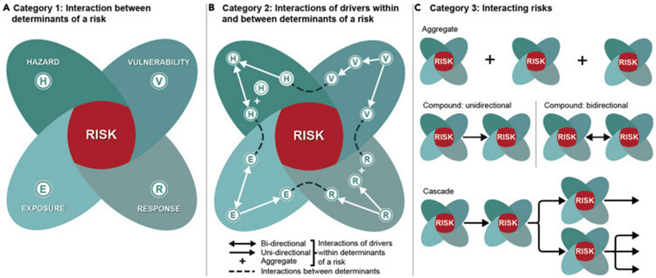
The EU Artificial Intelligence Act (AIA) defines four risk categories for AI systems: unacceptable, high, limited, and minimal. However, it lacks a clear methodology for the assessment of these risks in concrete situations. Risks are broadly categorized based on the application areas of AI systems and ambiguous risk factors. This paper suggests a methodology for assessing AI risk magnitudes, focusing on the construction of real-world risk scenarios. To this scope, we propose to integrate the AIA with a framework developed by the Intergovernmental Panel on Climate Change (IPCC) reports and related literature. This approach enables a nuanced analysis of AI risk by exploring the interplay between (a) risk determinants, (b) individual drivers of determinants, and (c) multiple risk types. We further refine the proposed methodology by applying a proportionality test to balance the competing values involved in AI risk assessment. Finally, we present three uses of this approach under the AIA: to implement the Regulation, to assess the significance of risks, and to develop internal risk management systems for AI deployers.
Overview
The claims and statistics of this paper haven’t been checked yet.
Run the check — free, no account needed. It reads the open-access text and checks the sources it cites.
Integrity signals
Registry
Cites
Statistics
Figures
Verification
Claims the paper makes
The claims and statistics of this paper haven’t been checked yet.
Run the check — free, no account needed. It reads the open-access text and checks the sources it cites.
Claims other papers make about this one
Each is checked against this paper’s own text: does it say what the citing paper says it does?
In the citing paper
“the three-tier classification system for GPAIs -standard, openly licensed, and systemically risky -may fail to account for the peculiarities of downstream applications, potentially leading to over-inclusive or underinclusive risk categories [5,6].”
From Generative AI in EU law: Liability, privacy, intellectual property, and cybersecurity (2024) · cites this paper as [5]
Self-check
Percentages, sums and reported differences re-computed from the paper’s own numbers.
The self-check needs the paper’s full text.
Citations
Cites
(2013) · American Economic Review · doi:10.1257/aer.103.6.i · Cited by 7,413
A framework for vulnerability analysis in sustainability science
Turner, B. L., Kasperson, R. E., Matson, P. A., McCarthy, J. J., Corell, R. W., Christensen, L., Selin, N. E., Kasperson, J. X., Luers, A. L., Martello, M. L., et al. (2003) · Proceedings of the National Academy of Sciences · doi:10.1073/pnas.1231335100 · Cited by 4,378
On the quantitative definition of risk
Kaplan, S., & Garrick, B. J. (1981) · Risk Analysis · doi:10.1111/j.1539-6924.1981.tb01350.x · Cited by 3,103
The Brussels Effect: How the European Union Rules the World
Bradford, A. (2020) · doi:10.1093/oso/9780190088583.001.0001 · Cited by 1,349
A Theory of Constitutional Rights
Alexy, R., & Rivers, J. (2002) · Cited by 1,244
Determinants of Risk: Exposure and Vulnerability
Cardona, O.-D., van Aalst, M. K., Birkmann, J., Fordham, M., McGregor, G., Perez, R., Pulwarty, R. S., Schipper, E. L. F., Sinh, B. T., Décamps, H., et al. (2012) · Managing the Risks of Extreme Events and Disasters to Advance Climate Change Adaptation · doi:10.1017/cbo9781139177245.005 · Cited by 1,007
A framework for complex climate change risk assessment
Simpson, N. P., Mach, K. J., Constable, A., Hess, J., Hogarth, R., Howden, M., Lawrence, J., Lempert, R. J., Muccione, V., Mackey, B., et al. (2021) · One Earth · doi:10.1016/j.oneear.2021.03.005 · Cited by 722
Really Responsive Risk-Based Regulation
Black, J., & Baldwin, R. (2010) · Law & Policy · doi:10.1111/j.1467-9930.2010.00318.x · Cited by 387
On Balancing and Subsumption. A Structural Comparison
Alexy, R. (2003) · Ratio Juris · doi:10.1046/j.0952-1917.2003.00244.x · Cited by 350
Vulnerability and vulnerable groups from an intersectionality perspective
Kuran, C. H. A., Morsut, C., Kruke, B. I., Krüger, M., Segnestam, L., Orru, K., Nævestad, T. O., Airola, M., Keränen, J., Gabel, F., et al. (2020) · International Journal of Disaster Risk Reduction · doi:10.1016/j.ijdrr.2020.101826 · Cited by 349
Risk Management: History, Definition, and Critique
Dionne, G. (2013) · Risk Management and Insurance Review · doi:10.1111/rmir.12016 · Cited by 287
Some extensions on risk matrix approach
Ni, H., Chen, A., & Chen, N. (2010) · Safety Science · doi:10.1016/j.ssci.2010.04.005 · Cited by 242
Identifying and evaluating layers of vulnerability – a way forward
Luna, F. (2018) · Developing World Bioethics · doi:10.1111/dewb.12206 · Cited by 217
Skin Cancer Concerns in People of Color: Risk Factors and Prevention
Gupta, A., Bharadwaj, M., & Mehrotra, R. (2016) · Europe PMC (PubMed Central) · doi:10.22034/apjcp.2016.17.12.5257 · Cited by 169
Smuha, N. A., Rengers, E., Harkens, A., Li, W., MacLaren, J., Piselli, R., & Yeung, K. (2021) · doi:10.2139/ssrn.3899991 · Cited by 153
Risk and the limits of governance: Exploring varied patterns of risk‐based governance acrossEurope
Rothstein, H., Borraz, O., & Huber, M. (2013) · Regulation & Governance · doi:10.1111/j.1748-5991.2012.01153.x · Cited by 148
Hacker, P. (2022) · Computer Law and Security Review · doi:10.48550/arxiv.2211.13960 · Cited by 141
Renn, O. (2014) · Routledge eBooks · doi:10.4324/9781849772440 · Cited by 130
ALARP—What does it really mean?
Jones‐Lee, M., & Aven, T. (2011) · Reliability Engineering & System Safety · doi:10.1016/j.ress.2011.02.006 · Cited by 127
Limits on Limitations: The Essence of Fundamental Rights in the EU
Lenaerts, K. (2019) · German Law Journal · doi:10.1017/glj.2019.62 · Cited by 94
Supporting ALARP decision making by cost benefit analysis and multiattribute utility theory
French, S., Bedford, T., & Atherton, E. (2005) · Journal of Risk Research · doi:10.1080/1366987042000192408 · Cited by 93
When risk‐based regulation aims low: Approaches and challenges
Black, J., & Baldwin, R. (2012) · Regulation & Governance · doi:10.1111/j.1748-5991.2011.01124.x · Cited by 92
Chamberlain, J. (2022) · European Journal of Risk Regulation · doi:10.1017/err.2022.38 · Cited by 82
The Role of Risk in Regulatory Processes
Black, J. (2010) · doi:10.1093/oxfordhb/9780199560219.003.0014 · Cited by 80
ALARP and CBA all in the same game
Ale, B. J. M., Hartford, D. N. D., & Slater, D. (2015) · Safety Science · doi:10.1016/j.ssci.2015.02.012 · Cited by 77
Black, J. (2010) · OECD Reviews of Regulatory Reform/OECD reviews of regulatory reform · doi:10.1787/9789264082939-11-en · Cited by 66
Incompleteness and Reasoned Choice
Sen, A. K. (2004) · Synthese · doi:10.1023/b:synt.0000029940.51537.b3 · Cited by 62
Liu, H.-Y., Lauta, K. C., & Maas, M. M. (2018) · Futures · doi:10.1016/j.futures.2018.04.009 · Cited by 59
The ALARP principle in process safety
Baybutt, P. (2013) · Process Safety Progress · doi:10.1002/prs.11599 · Cited by 56
Handbook of Legal Reasoning and Argumentation
Bongiovanni, G., Postema, G. J., Rotolo, A., Sartor, G., Valentini, C., & Walton, D. (2018) · Springer eBooks · doi:10.1007/978-90-481-9452-0 · Cited by 53
Self-citationArtificial Intelligence, Computational Modelling and Criminal Proceedings
Quattrocolo, S. (2020) · Legal studies in international, european and comparative criminal law · doi:10.1007/978-3-030-52470-8 · Cited by 53
Using the ALARP principle for safety management in the energy production sector of chemical industry
Abrahamsen, E. B., Abrahamsen, H. B., Milazzo, M. F., & Selvik, J. T. (2017) · Reliability Engineering & System Safety · doi:10.1016/j.ress.2017.08.014 · Cited by 47
Predicting Recidivism Risk Meets AI Act
DIJCK, G. V. (2022) · European Journal on Criminal Policy and Research · doi:10.1007/s10610-022-09516-8 · Cited by 43
The EU AI Act: Between Product Safety and Fundamental RightsPreprint
Almada, M., & Petit, N. (2022) · SSRN Electronic Journal · doi:10.2139/ssrn.4308072 · Cited by 33
A summary of the 'ALARP’ principle and associated thinking
Hurst, J., McIntyre, J., Tamauchi, Y., Kinuhata, H., & Kodama, T. (2018) · Journal of Nuclear Science and Technology · doi:10.1080/00223131.2018.1551814 · Cited by 31
Bai, Y. S., & Jin, W. (2015) · Elsevier eBooks · doi:10.1016/b978-0-08-099997-5.00038-1 · Cited by 28
The Principle of Proportionality
Tridimas, T. (2018) · Oxford University Press eBooks · doi:10.1093/oso/9780199533770.003.0010 · Cited by 26
The EU Artificial Intelligence Act: Regulating Subliminal AI SystemsPreprint
Neuwirth, R. J. (2022) · SSRN Electronic Journal · doi:10.2139/ssrn.4135848 · Cited by 23
The Internet and Constitutional Law
Pollicino, O., & Romeo, G. (2016) · Routledge eBooks · doi:10.4324/9781315684048 · Cited by 20
Risk, uncertainty and regulation
Krebs, J. R. (2011) · Philosophical Transactions of the Royal Society A Mathematical Physical and Engineering Sciences · doi:10.1098/rsta.2011.0174 · Cited by 17
Proportionality Principle for the Ethics of Artificial Intelligence
Karliuk, M. (2022) · AI and Ethics · doi:10.1007/s43681-022-00220-1 · Cited by 15
Ufert, F. (2020) · DOAJ (DOAJ: Directory of Open Access Journals) · doi:10.15166/2499-8249/394 · Cited by 13
A dynamic model for balancing values
Maranhão, J. S. D. A., de Souza, E. G., & Sartor, G. (2021) · doi:10.1145/3462757.3466143 · Cited by 7
Compliance as Costs and Benefits
Khanna, V. S. (2021) · Cambridge University Press eBooks · doi:10.1017/9781108759458.002 · Cited by 6
Science in trade disputes related to potential risk: comparative case studies
Millstone, E. P., van Zwanenberg, P., Marris, C., Levidow, L., & Torgersen, H. (2004) · Research Portal (King's College London) · Cited by 4
Art. 25: Data protection by design and by default
(2023) · doi:10.5040/9781509932535.0065 · Cited by 1
Research works printed but not linked: 3
- Garrett, B., & Monahan, J. (2020). Judging risk. California Law Review, 108(2), 439–493.
- Mahler, T. (2007). Defining legal risk. SSRN Scholarly Paper. Rochester, NY. https://papers.ssrn.com/abstract=1014364
- Sunstein, C. R. (2004). Risk and reason. Cambridge Books, Cambridge University Press. https://ideas.repec.org/b/cup/cbooks/9780521016254.html
Cited by
Generative AI in EU law: Liability, privacy, intellectual property, and cybersecurity
Novelli, C., Casolari, F., Hacker, P., Spedicato, G., & Floridi, L. (2024) · Computer Law & Security Review · doi:10.1016/j.clsr.2024.106066 · Cited by 124
Self-citationTruly risk-based regulation of Artificial Intelligence: how to implement the EU's AI act
Ebers, M. (2025) · European Journal of Risk Regulation · doi:10.1017/err.2024.78 · Cited by 126
Generative Ai in EU Law: Liability, Privacy, Intellectual Property, and Cybersecurity
Novelli, C., Casolari, F., Hacker, P., Spedicato, G., & Floridi, L. (2024) · doi:10.2139/ssrn.4821952 · Cited by 57
Self-citationWarthon, M. (2024) · Internet Policy Review · doi:10.14763/2024.3.1801 · Cited by 4
Zabolotna, H. (2026) · Visnyk of the Lviv University. Series Law · doi:10.30970/vla.2026.82.182
Metadata
- Authors
- Novelli, C., Casolari, F., Rotolo, A., Taddeo, M., & Floridi, L.
- ORCID
- Novelli, Claudio
- Venue
- Digital Society
- Published
- 2024-03-07
- Volume
- 3
- Issue
- 1
- ISSN
- 2731-4650
- 2731-4669
- Cited by
- 90
- References
- 46
- Language
- en
- Funders
- Alma Mater Studiorum - Università di Bologna
About these checks
Registry, retraction, Cites and statistics results are computed, not judged, with one exception: a printed reference that no index lists is read once by a model before it counts as a citation error. Claims are extracted by a model and kept only when their quote appears verbatim in the text; each cited source is then checked, with a model’s help, for whether it says what the claim relies on. Those verdicts can be wrong — read the claim’s quote and the cited source before relying on one.
Statistics and arithmetic are recomputed, not judged.
Confidence bands are shown only for fields calibrated on our annotated test set. None is calibrated yet, so no band is shown.
What counts as a claim ›How we measure confidence ›How we check this ›
Are you an author, or do you see a problem with this page? Request a review
Data sources
Bibliographic data: Semantic Scholar, OpenAlex, Crossref.
Contains information from the Semantic Scholar Academic Graph Datasets, made available under the ODC Attribution License (ODC-BY 1.0).
Semantic Scholar’s data is described in: Kinney, R., et al. (2023). The Semantic Scholar Open Data Platform. arXiv:2301.10140.
