

The DOI matches its Crossref record; 17 of the 17 references it cites were found in a registry or an index; none of the 8 sources its claims cite is checked for support yet.
Epidemiological study of oral allergy syndrome in birch pollen dispersal-free regions
Open accessAbstract
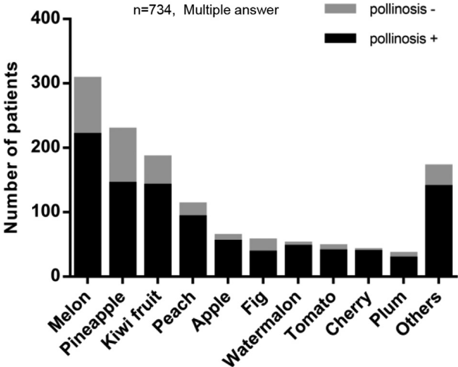
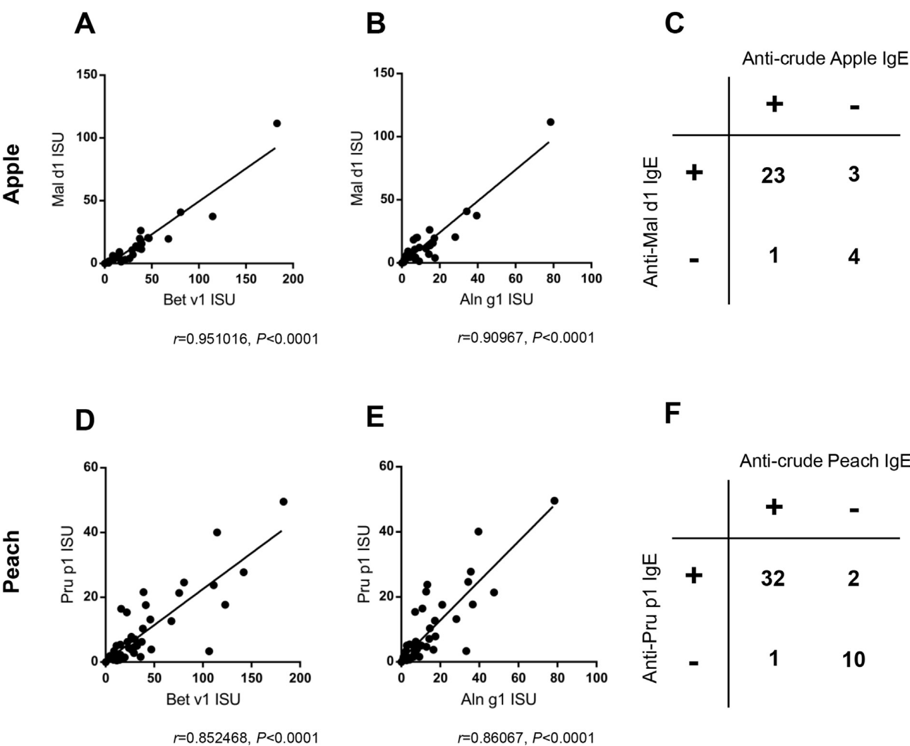
BACKGROUND: Oral allergy syndrome (OAS) is an immediate allergy caused by a cross-reaction of highly homologous common antigens (pan-allergens) contained in fruits/vegetables and pollen. METHODS: A questionnaire was provided to 6824 outpatient visitors and serum levels of specific IgEs against crude antigens and pan-allergen components were measured to study the relationship between the prevalence of OAS and pollinosis in the Fukui Prefecture where there is almost no dispersal of birch pollen. RESULTS: The prevalence of OAS was 10.8%. The rate of pollinosis complication in the OAS group was 67.4%, and OAS was observed in 16.8% of pollinosis patients. Causative foods in order of frequency were melon, pineapple, kiwi fruit, peach, and apple. A significantly higher number of patients from the OAS group were positive for birch, alder, and timothy grass-specific IgE. The rate of positivity for anti-component IgE corresponding to pollen in OAS group was also significantly higher. Of 34 patients with OAS caused by eating apples, 28 (82.4%) were positive for Mal d1-specific IgE. Of the 52 patients with peach-induced OAS, 41 (78.8%) were positive for Pur p1-specific IgE. The concordance rates between crude antigen-specific IgE and anti-PR-10 component-specific IgE were 87.1% and 93.3% for apple and peach respectively. CONCLUSIONS: In regions where birch pollen is not dispersed, OAS patients have a significant association with the onset of Bet v1-associated allergy. Anti-PR-10 component IgE was useful in diagnosing OAS, and crude antigen-specific IgE was also associated with apple and peach allergies.
Overview
AI snapshot
Written from the paper’s full text.
TL;DR
In a Fukui Prefecture survey of 6,824 outpatients and family members in a region with almost no birch pollen dispersal, oral allergy syndrome (OAS) prevalence was reported as 10.8% and was strongly associated with pollinosis and Bet v1/PR-10 sensitization. Component IgE against PR-10 allergens, especially Mal d1 and Pru p1, was useful for apple- and peach-related OAS and showed high concordance with crude antigen IgE.
Key findings
- OAS symptoms were reported in 734 of 6,824 respondents; the abstract states prevalence was 10.8%, while the Results text reports 734 individuals as 10.2%. Women had higher OAS prevalence than men (13.1% vs 5.7%; p < 0.0001; odds ratio 2.51).
- Among 734 OAS patients, 496 (67.4%) had pollinosis; OAS occurred in 16.8% of pollinosis patients vs 6.2% of those without pollinosis (p < 0.0001; odds ratio 3.03).
- Causative foods, in descending order, were melon (307 patients, 42%), pineapple (228; 31%), kiwi (185; 25%), peach (112; 15%), and apple (36; 9%). Excluding pineapple- and kiwi-related cases (n = 93), OAS prevalence was 9.3%.
- The OAS group had significantly higher positivity for birch (31.7% vs 8.6%), alder (17.7% vs 2.0%), timothy grass (31.7% vs 19.9%), Bet v1 (29.3% vs 9.3%), Aln g1 (26.5% vs 7.3%), and Phl p1 (24.1% vs 13.9%). Of 34 apple-OAS patients, 28 (82.4%) were Mal d1-positive; of 52 peach-OAS patients, 41 (78.8%) were Pru p1-positive. Concordance between crude and PR-10 component IgE was 87.1% for apple and 93.3% for peach.
Methods
- Questionnaire survey of patients aged 10 years and above visiting the Department of Otorhinolaryngology at the University of Fukui Hospital and related hospitals as outpatients, plus attendant families; OAS was identified when respondents reported oral reactions within 15 minutes after eating and the causative food was plausible for OAS.
- Blood was collected from consenting participants: 249 in the OAS group and 151 controls. Component-specific IgE was measured with immuno-CAP ISAC (positive at ≥0.35 ISU/mL), crude antigen-specific IgE with MAST-33 (positive at ≥0.70 UA/mL), and apple/peach crude antigen-specific IgE with ImmunoCAP (positive at ≥0.35 UA/mL).
- Statistical significance was tested with the Wilcoxon test and Fisher’s exact test; analyses used Stata v13.0.
Limitations
- The paper states that more epidemiological investigations are needed and that it remains unclear whether birch pollen-sensitized individuals in the birch-free study area were exposed to the antigen.
- The paper notes that pineapple and kiwi fruit may cause nonspecific oral symptoms; excluding those cases reduced OAS prevalence to 9.3%.
- Evident from the text: OAS classification relied on self-reported questionnaire responses rather than clinical challenge, and the IgE component analyses were limited to the subset with serum samples (249 OAS patients and 151 controls). The abstract and Results also differ in reporting OAS prevalence as 10.8% vs 10.2%.
Model-written summary. Check it against the paper before relying on it.
Integrity signals
Registry
Cites
Statistics
Figures
Verification
Claims the paper makes
58 Own result · 9 Own interpretation · 4 No full text of the sources · 2 Check pending · 2 Own method · 1 Not checked yet
A result the paper reports from its own data — it cites no other source for it, so there is none to check. The quote shows it is in the paper.
In the paper
“Additionally, the 15 people who did not list apple or peach under foods that cause OAS despite being positive for both Mal d1-specific IgE and Pru p1-specific IgE responded that they had OAS symptoms caused by either kiwi, melon, mango, or watermelon.”
§ Epidemiological study of oral allergy syndrome in birch pollen dispersal-free regions > Apple and peach OAS
plainn = 15- Asserted: passes — The authors put it forward as true.
- Checkable: passes — It can be checked against evidence.
- Load-bearing: unclear — It is unclear whether the paper’s conclusions depend on it.
- Based: passes — The paper gives a reason why it holds.
A result the paper reports from its own data — it cites no other source for it, so there is none to check. The quote shows it is in the paper.
In the paper
“Of the 69 Mal d1-specific IgE positive patients, 28 (40%) responded that apples caused OAS symptoms.”
§ Epidemiological study of oral allergy syndrome in birch pollen dispersal-free regions > Apple and peach OAS
plainn = 249- Asserted: passes — The authors put it forward as true.
- Checkable: passes — It can be checked against evidence.
- Load-bearing: unclear — It is unclear whether the paper’s conclusions depend on it.
- Based: passes — The paper gives a reason why it holds.
A result the paper reports from its own data — it cites no other source for it, so there is none to check. The quote shows it is in the paper.
In the paper
“All 28 of these patients tested positive for Bet v1-specific IgE and Aln g1-specific IgE.”
§ Epidemiological study of oral allergy syndrome in birch pollen dispersal-free regions > Discussion
plainstates an associationn = 28- Asserted: passes — The authors put it forward as true.
- Checkable: passes — It can be checked against evidence.
- Load-bearing: passes — The paper’s conclusions depend on it.
- Based: passes — The paper gives a reason why it holds.
A result the paper reports from its own data — it cites no other source for it, so there is none to check. The quote shows it is in the paper.
In the paper
“The profilin in birch pollen is Bet v2, and 37 of the 249 OAS patients (14.9%) were positive for Bet v2-specific IgE.”
§ Epidemiological study of oral allergy syndrome in birch pollen dispersal-free regions > Melon OAS
plainn = 249- Asserted: passes — The authors put it forward as true.
- Checkable: passes — It can be checked against evidence.
- Load-bearing: passes — The paper’s conclusions depend on it.
- Based: passes — The paper gives a reason why it holds.
A result the paper reports from its own data — it cites no other source for it, so there is none to check. The quote shows it is in the paper.
In the paper
“125 out of 2191 men (5.7%), and 609 out of 4633 women (13.1%); thus women had OAS symptoms more often (p < 0.0001; odds ratio: 2.51)”
§ Epidemiological study of oral allergy syndrome in birch pollen dispersal-free regions > Prevalence of OAS
plainstates an associationn = 734- Asserted: passes — The authors put it forward as true.
- Checkable: passes — It can be checked against evidence.
- Load-bearing: unclear — It is unclear whether the paper’s conclusions depend on it.
- Based: passes — The paper gives a reason why it holds.
A result the paper reports from its own data — it cites no other source for it, so there is none to check. The quote shows it is in the paper.
In the paper
“In comparison, patients with nasal symptoms complicated by conjunctival symptoms (370 individuals) included 63 OAS patients (17.0%; p ¼ 0.0035, odds ratio: 1.62)”
§ Epidemiological study of oral allergy syndrome in birch pollen dispersal-free regions > Features of PFAS symptoms
plainstates an associationn = 370 ·- Asserted: passes — The authors put it forward as true.
- Checkable: passes — It can be checked against evidence.
- Load-bearing: unclear — It is unclear whether the paper’s conclusions depend on it.
- Based: passes — The paper gives a reason why it holds.
A result the paper reports from its own data — it cites no other source for it, so there is none to check. The quote shows it is in the paper.
In the paper
“At 3 people each (3.9%), there were few people who tested positive for Bet v1-specific IgE, negative for Mal d1-specific IgE, and negative for Pru p1-specific IgE.”
§ Epidemiological study of oral allergy syndrome in birch pollen dispersal-free regions > Apple and peach OAS
plainn = 3- Asserted: passes — The authors put it forward as true.
- Checkable: passes — It can be checked against evidence.
- Load-bearing: unclear — It is unclear whether the paper’s conclusions depend on it.
- Based: passes — The paper gives a reason why it holds.
A result the paper reports from its own data — it cites no other source for it, so there is none to check. The quote shows it is in the paper.
In the paper
“Of 34 patients with OAS caused by eating apples, 28 (82.4%) were positive for Mal d1-specific IgE.”
§ Epidemiological study of oral allergy syndrome in birch pollen dispersal-free regions > Abstract
plainstates an associationn = 34- Asserted: passes — The authors put it forward as true.
- Checkable: passes — It can be checked against evidence.
- Load-bearing: unclear — It is unclear whether the paper’s conclusions depend on it.
- Based: passes — The paper gives a reason why it holds.
A result the paper reports from its own data — it cites no other source for it, so there is none to check. The quote shows it is in the paper.
In the paper
“However, a negative Bet v1-specific IgE/positive Cry j1-specific IgE status was a negative factor for the onset of OAS, i.e., a factor for it being less likely, with an odds ratio of 0.64 (p ¼ 0.038).”
§ Epidemiological study of oral allergy syndrome in birch pollen dispersal-free regions > Relationship between Japanese cedar pollinosis and OAS
plainstates an association- Asserted: passes — The authors put it forward as true.
- Checkable: passes — It can be checked against evidence.
- Load-bearing: passes — The paper’s conclusions depend on it.
- Based: passes — The paper gives a reason why it holds.
A result the paper reports from its own data — it cites no other source for it, so there is none to check. The quote shows it is in the paper.
In the paper
“Among 44 patients with Amb a1-specific-IgE positive pollinosis, 20 had symptoms of OAS (45.4%).”
§ Epidemiological study of oral allergy syndrome in birch pollen dispersal-free regions > Melon OAS
plainstates an associationn = 44- Asserted: passes — The authors put it forward as true.
- Checkable: passes — It can be checked against evidence.
- Load-bearing: unclear — It is unclear whether the paper’s conclusions depend on it.
- Based: passes — The paper gives a reason why it holds.
- It may state two separate claims as one. 24
- Probably not a substantial claim. 5
A result the paper reports from its own data — it cites no other source for it, so there is none to check. The quote shows it is in the paper.
In the paper
“Among OAS patients, there was an odds ratio of 4.06 for being positive for Bet v1specific IgE, which is a significantly high value, in contrast to the odds ratio for being positive for Cry j1-specific IgE, which was not significant, at 1.30 (Table 4).”
§ Epidemiological study of oral allergy syndrome in birch pollen dispersal-free regions > Relationship between Japanese cedar pollinosis and OAS
plainstates an association- Asserted: passes — The authors put it forward as true.
- Checkable: passes — It can be checked against evidence.
- Load-bearing: passes — The paper’s conclusions depend on it.
- Based: passes — The paper gives a reason why it holds.
It may state two separate claims as one.
A result the paper reports from its own data — it cites no other source for it, so there is none to check. The quote shows it is in the paper.
In the paper
“Among the 69 who tested positive for Pru p1-specific IgE, the concentration of Pru p1-specific IgE exhibited a significant correlation with Bet v1-specific IgE concentration and Aln g1-specific IgE concentration (Bet v1 vs. Pru p1: r ¼ 0.8525; p < 0.0001, Aln g1 vs. Pru p1: r ¼ 0.8607; p < 0.0001, Fig.”
§ Epidemiological study of oral allergy syndrome in birch pollen dispersal-free regions > Discussion
plainstates an association- Asserted: passes — The authors put it forward as true.
- Checkable: passes — It can be checked against evidence.
- Load-bearing: passes — The paper’s conclusions depend on it.
- Based: passes — The paper gives a reason why it holds.
It may state two separate claims as one.
A result the paper reports from its own data — it cites no other source for it, so there is none to check. The quote shows it is in the paper.
In the paper
“However, when IgE was measured, the OAS group was positive for anti-alder at a rate of 17.1%, and the rate of positivity for anti-Aln g1, which is an alder pollen component, was not greater than the rate of positivity for birch pollen, at 26.5%.”
§ Epidemiological study of oral allergy syndrome in birch pollen dispersal-free regions > Discussion
plain- Asserted: passes — The authors put it forward as true.
- Checkable: passes — It can be checked against evidence.
- Load-bearing: passes — The paper’s conclusions depend on it.
- Based: passes — The paper gives a reason why it holds.
It may state two separate claims as one.
A result the paper reports from its own data — it cites no other source for it, so there is none to check. The quote shows it is in the paper.
In the paper
“In regions with no birch pollen dispersal, our results show that among OAS patients, the rate of positivity was 31.7% for antibirch and 29.3% for anti-Bet v1.”
§ Epidemiological study of oral allergy syndrome in birch pollen dispersal-free regions > Discussion
plain- Asserted: passes — The authors put it forward as true.
- Checkable: passes — It can be checked against evidence.
- Load-bearing: passes — The paper’s conclusions depend on it.
- Based: passes — The paper gives a reason why it holds.
It may state two separate claims as one.
A result the paper reports from its own data — it cites no other source for it, so there is none to check. The quote shows it is in the paper.
In the paper
“The OAS group positivity rate vs. control group positivity rate was 0% vs. 0.7%, 0.4% vs. 0.7%, and 0% vs. 0.7% for the Art v3-specific IgE, Pur p3-specific IgE, and Tri a14-specific IgE groups respectively.Neither the control group nor the OAS group had any patients who tested positive for Ara h9-specific IgE.All these forms of specific IgE had very low positivity rates, and there was no signific”
§ Epidemiological study of oral allergy syndrome in birch pollen dispersal-free regions > Sensitization rate against lipid transfer protein (LTP)
plain- Asserted: passes — The authors put it forward as true.
- Checkable: passes — It can be checked against evidence.
- Load-bearing: passes — The paper’s conclusions depend on it.
- Based: passes — The paper gives a reason why it holds.
It may state two separate claims as one.
A result the paper reports from its own data — it cites no other source for it, so there is none to check. The quote shows it is in the paper.
In the paper
“An analysis of the relationship between OAS and pollinosis onset showed that oral symptoms manifested before pollinosis in 208 people (42%), and simultaneously in 87 people (17%).Pollinosis was manifest before OAS in 114 people (23%), and the time of onset was unclear in 87 people (18%), showing that many people perceived oral symptoms before pollinosis symptoms.”
§ Epidemiological study of oral allergy syndrome in birch pollen dispersal-free regions > Relationship with pollinosis onset
plainn = 208- Asserted: passes — The authors put it forward as true.
- Checkable: passes — It can be checked against evidence.
- Load-bearing: passes — The paper’s conclusions depend on it.
- Based: passes — The paper gives a reason why it holds.
It may state two separate claims as one.
A result the paper reports from its own data — it cites no other source for it, so there is none to check. The quote shows it is in the paper.
In the paper
“Among the 69 Mal d1-specific IgE positive patients, the concentration of Mal d 1-specific IgE had a significant correlation with Bet v1-specific IgE and Aln g1-specific IgE (Bet v1 vs. Mal d1: r ¼ 0.9510; p < 0.0001, Aln g1 vs. Mal d1: r ¼ 0.9097; p < 0.0001, Fig. 2A, B).”
§ Epidemiological study of oral allergy syndrome in birch pollen dispersal-free regions > Discussion
plainstates an association- Asserted: passes — The authors put it forward as true.
- Checkable: passes — It can be checked against evidence.
- Load-bearing: passes — The paper’s conclusions depend on it.
- Based: passes — The paper gives a reason why it holds.
It may state two separate claims as one.
A result the paper reports from its own data — it cites no other source for it, so there is none to check. The quote shows it is in the paper.
In the paper
“There were 64 Mal d1-specific IgE and Pru p 1-specific IgE positive patients, with a rate of positivity of 92.7% for each of the groups.”
§ Epidemiological study of oral allergy syndrome in birch pollen dispersal-free regions > Apple and peach OAS
plain- Asserted: passes — The authors put it forward as true.
- Checkable: passes — It can be checked against evidence.
- Load-bearing: unclear — It is unclear whether the paper’s conclusions depend on it.
- Based: passes — The paper gives a reason why it holds.
It may state two separate claims as one.
A result the paper reports from its own data — it cites no other source for it, so there is none to check. The quote shows it is in the paper.
In the paper
“All the 6 people with OAS symptoms with apple and negative for Mal d1specific IgE, and the 11 patients with similar OAS symptoms with peach and negative for Pru p1-specific IgE, were negative for Bet v1specific IgE and Aln g1-specific IgE.”
§ Epidemiological study of oral allergy syndrome in birch pollen dispersal-free regions > Apple and peach OAS
plainn = 11- Asserted: passes — The authors put it forward as true.
- Checkable: passes — It can be checked against evidence.
- Load-bearing: passes — The paper’s conclusions depend on it.
- Based: passes — The paper gives a reason why it holds.
It may state two separate claims as one.
A result the paper reports from its own data — it cites no other source for it, so there is none to check. The quote shows it is in the paper.
In the paper
“and Bet v1 (birch, 29.3% vs. 9.3%, p < 0.0001), Aln g1 (alder, 26.5% vs. 7.3%, p < 0.0001), and Phl p1 (timothy grass, 24.1% vs. 13.9%,p < 0.05), which are the main allergen components of the pollen of these species,”
§ Epidemiological study of oral allergy syndrome in birch pollen dispersal-free regions > Pollen sensitization rate
plainstates an association- Asserted: passes — The authors put it forward as true.
- Checkable: passes — It can be checked against evidence.
- Load-bearing: passes — The paper’s conclusions depend on it.
- Based: passes — The paper gives a reason why it holds.
It may state two separate claims as one.
A result the paper reports from its own data — it cites no other source for it, so there is none to check. The quote shows it is in the paper.
In the paper
“There were 26 patients who reported that their oral symptoms from OAS worsened when pollen was being dispersed (5%), 299 reported no change (60%), 5 reported an improvement (1%), and 66 were unclear (33%); thus, only a few patients perceived any change in oral symptoms when pollen was being dispersed.”
§ Epidemiological study of oral allergy syndrome in birch pollen dispersal-free regions > Relationship with pollinosis onset
plainn = 734- Asserted: passes — The authors put it forward as true.
- Checkable: passes — It can be checked against evidence.
- Load-bearing: passes — The paper’s conclusions depend on it.
- Based: passes — The paper gives a reason why it holds.
It may state two separate claims as one.
A result the paper reports from its own data — it cites no other source for it, so there is none to check. The quote shows it is in the paper.
In the paper
“Thirteen of these 37 patients were only positive for Bet v2-specific IgE, while the other 24 patients were positive for both Bet v1-and Bet v2specific IgE.”
§ Epidemiological study of oral allergy syndrome in birch pollen dispersal-free regions > Melon OAS
plainn = 37- Asserted: passes — The authors put it forward as true.
- Checkable: passes — It can be checked against evidence.
- Load-bearing: passes — The paper’s conclusions depend on it.
- Based: passes — The paper gives a reason why it holds.
It may state two separate claims as one.
A result the paper reports from its own data — it cites no other source for it, so there is none to check. The quote shows it is in the paper.
In the paper
“All 5 patients with oral symptoms with soy were positive for Gly m4-, Bet v1-, and Aln g1-specific IgE.However, all were found to be negative for IgE against crude soy antigen, and all had PFAS.”
§ Epidemiological study of oral allergy syndrome in birch pollen dispersal-free regions > OAS with soy
plainn = 5- Asserted: passes — The authors put it forward as true.
- Checkable: passes — It can be checked against evidence.
- Load-bearing: passes — The paper’s conclusions depend on it.
- Based: passes — The paper gives a reason why it holds.
It may state two separate claims as one.
A result the paper reports from its own data — it cites no other source for it, so there is none to check. The quote shows it is in the paper.
In the paper
“Out of 2959 patients with pollinosis, OAS symptoms were observed in 16.8%, which was significantly higher than 6.2% out of the 3776 patients without pollinosis (p < 0.0001; odds ratio: 3.03) (Table 1).”
§ Epidemiological study of oral allergy syndrome in birch pollen dispersal-free regions > Relationship with allergic disease
plainstates an associationn = 2,959 ·- Asserted: passes — The authors put it forward as true.
- Checkable: passes — It can be checked against evidence.
- Load-bearing: passes — The paper’s conclusions depend on it.
- Based: passes — The paper gives a reason why it holds.
It may state two separate claims as one.
A result the paper reports from its own data — it cites no other source for it, so there is none to check. The quote shows it is in the paper.
In the paper
“The OAS group positivity rate vs. control group positivity rate was 0% vs. 0.7%, 0.4% vs. 0.7%, and 0% vs. 0.7% for the Art v3-specific IgE, Pur p3-specific IgE, and Tri a14-specific IgE groups respectively.”
§ Epidemiological study of oral allergy syndrome in birch pollen dispersal-free regions > Sensitization rate against lipid transfer protein (LTP)
plain- Asserted: passes — The authors put it forward as true.
- Checkable: passes — It can be checked against evidence.
- Load-bearing: passes — The paper’s conclusions depend on it.
- Based: passes — The paper gives a reason why it holds.
It may state two separate claims as one.
A result the paper reports from its own data — it cites no other source for it, so there is none to check. The quote shows it is in the paper.
In the paper
“However, no significant difference was found between the OAS group and the control group with respect to the positivity rates for specific IgE against crude antigens of ragweed pollen (4.8% vs. 3.3%), mugwort pollen (19.2% vs. 17.9%), or Japanese cedar pollen (68.2% vs. 59.6%) or for the respective main component-specific IgE, Amb a1 (ragweed pollen, 10.8% vs. 9.3%), Alt v1 (mugwort pollen, 13.7%”
§ Epidemiological study of oral allergy syndrome in birch pollen dispersal-free regions > Pollen sensitization rate
plain- Asserted: passes — The authors put it forward as true.
- Checkable: passes — It can be checked against evidence.
- Load-bearing: passes — The paper’s conclusions depend on it.
- Based: passes — The paper gives a reason why it holds.
It may state two separate claims as one.
A result the paper reports from its own data — it cites no other source for it, so there is none to check. The quote shows it is in the paper.
In the paper
“The age distribution of men was largely from teens to the 30 s; for women, it was more frequently from the 20 s to the 60 s (13% and 16%), with a statistically significant higher incidence (p < 0.005) than for men (Table 2).”
§ Epidemiological study of oral allergy syndrome in birch pollen dispersal-free regions > Prevalence of OAS
plainstates an association- Asserted: passes — The authors put it forward as true.
- Checkable: passes — It can be checked against evidence.
- Load-bearing: unclear — It is unclear whether the paper’s conclusions depend on it.
- Based: passes — The paper gives a reason why it holds.
It may state two separate claims as one.
A result the paper reports from its own data — it cites no other source for it, so there is none to check. The quote shows it is in the paper.
In the paper
“There were 42 patients who tested positive for birch and alder (54%) pollen, 35 positive for birch only (45%), and 1 positive for alder (1%).”
§ Epidemiological study of oral allergy syndrome in birch pollen dispersal-free regions > Discussion
plainn = 42- Asserted: passes — The authors put it forward as true.
- Checkable: passes — It can be checked against evidence.
- Load-bearing: passes — The paper’s conclusions depend on it.
- Based: passes — The paper gives a reason why it holds.
It may state two separate claims as one.
A result the paper reports from its own data — it cites no other source for it, so there is none to check. The quote shows it is in the paper.
In the paper
“Additionally, 71 patients tested positive for both anti-Bet v1 and anti-alder IgE (91%), 7 tested positive for anti-Bet v1 only (9%), and none for anti-Aln g1 IgE.”
§ Epidemiological study of oral allergy syndrome in birch pollen dispersal-free regions > Discussion
plainn = 71- Asserted: passes — The authors put it forward as true.
- Checkable: passes — It can be checked against evidence.
- Load-bearing: passes — The paper’s conclusions depend on it.
- Based: passes — The paper gives a reason why it holds.
It may state two separate claims as one.
A conclusion the paper draws from its own results — it cites no other source for it, so there is none to check. The quote shows it is in the paper.
In the paper
“Most causative foods were from the Cucurbitaceae and Rosaceae species, and Bet v1 sensitization was found to be a significant factor for the onset of OAS; complications with other allergic diseases were also significant risk factors.”
§ Epidemiological study of oral allergy syndrome in birch pollen dispersal-free regions > Discussion
plainstates an association- Asserted: passes — The authors put it forward as true.
- Checkable: passes — It can be checked against evidence.
- Load-bearing: passes — The paper’s conclusions depend on it.
- Based: passes — The paper gives a reason why it holds.
It may state two separate claims as one.
What the paper did — it cites no source for this, so there is none to check. The quote shows it is in the paper.
In the paper
“The MAST-33 results were significantly correlated with those of ImmunoCAP (data not shown).”
§ Epidemiological study of oral allergy syndrome in birch pollen dispersal-free regions > Pollen sensitization rate
plainstates an association- Asserted: passes — The authors put it forward as true.
- Checkable: passes — It can be checked against evidence.
- Load-bearing: fails — The paper’s conclusions may not depend on it.
- Based: passes — The paper gives a reason why it holds.
Probably not a substantial claim. The paper’s conclusions may not depend on it.
In the paper
“The causative allergen is Bet v1, a main allergen component of birch pollen, which belongs to the pathogenesis-related protein 10 (PR-10) family of pan-allergens.7”
§ Epidemiological study of oral allergy syndrome in birch pollen dispersal-free regions > Introduction
What the sources say
- Not checked yetcites [7] Hauser, 2010, Panallergens and their impact on the allergic patient, Allergy Asthma Clin Immunol source
plain- Asserted: passes — The authors put it forward as true.
- Checkable: passes — It can be checked against evidence.
- Load-bearing: fails — The paper’s conclusions may not depend on it.
- Based: passes — The paper gives a reason why it holds.
Probably not a substantial claim. The paper’s conclusions may not depend on it. It may state two separate claims as one.
A conclusion the paper draws from its own results — it cites no other source for it, so there is none to check. The quote shows it is in the paper.
In the paper
“The present study has shown that in regions where almost no birch pollen is dispersed, the incidence of OAS is higher than expected, at about 10%, and that it commonly affects women and birch, alder, and timothy pollinosis patients.”
§ Epidemiological study of oral allergy syndrome in birch pollen dispersal-free regions > Discussion
boostedstates an association- Asserted: passes — The authors put it forward as true.
- Checkable: passes — It can be checked against evidence.
- Load-bearing: passes — The paper’s conclusions depend on it.
- Based: passes — The paper gives a reason why it holds.
It may state two separate claims as one.
In the paper
“The plant pan-allergen profilin was recently reported to be associated with cross-sensitization to melon allergy.9”
§ Epidemiological study of oral allergy syndrome in birch pollen dispersal-free regions > Melon OAS
What the sources say
- Not checked — no full text of the sourcecites [9] Asero, 2011, The nature of melon allergy in ragweed-allergic subjects: a study of 1000 patients, Allergy Asthma Proc source
plainstates an association- Asserted: passes — The authors put it forward as true.
- Checkable: passes — It can be checked against evidence.
- Load-bearing: fails — The paper’s conclusions may not depend on it.
- Based: passes — The paper gives a reason why it holds.
Probably not a substantial claim. The paper’s conclusions may not depend on it.
A conclusion the paper draws from its own results — it cites no other source for it, so there is none to check. The quote shows it is in the paper.
In the paper
“Therefore, it seems that OAS symptoms have appeared after pollen antigen sensitization and then pollinosis symptoms develop.”
§ Epidemiological study of oral allergy syndrome in birch pollen dispersal-free regions > Discussion
hedgedstates a possible cause- Asserted: passes — The authors put it forward as true.
- Checkable: passes — It can be checked against evidence.
- Load-bearing: passes — The paper’s conclusions depend on it.
- Based: passes — The paper gives a reason why it holds.
It may state two separate claims as one.
In the paper
“The incidence of OAS varies depends on the environment, plant cultivation circumstances, ethnic groups, and regional differences, 13 which is why cedar pollinosis is overwhelmingly more common in Japan than”
§ Epidemiological study of oral allergy syndrome in birch pollen dispersal-free regions > Discussion
What the sources say
- Not checked — no full text of the sourcecites [13] Bircher, 1994, IgE to food allergens are highly prevalent in patients allergic to pollens, with and without symptoms of food allergy, Clin Exp Allergy source
plainstates an association- Asserted: passes — The authors put it forward as true.
- Checkable: passes — It can be checked against evidence.
- Load-bearing: unclear — It is unclear whether the paper’s conclusions depend on it.
- Based: passes — The paper gives a reason why it holds.
It may state two separate claims as one.
In the paper
“Previous studies have suggested cross-reactivity between ragweed pollen and melon.9”
§ Epidemiological study of oral allergy syndrome in birch pollen dispersal-free regions > Melon OAS
What the sources say
- Not checked — no full text of the sourcecites [9] Asero, 2011, The nature of melon allergy in ragweed-allergic subjects: a study of 1000 patients, Allergy Asthma Proc source
hedgedstates an association- Asserted: passes — The authors put it forward as true.
- Checkable: passes — It can be checked against evidence.
- Load-bearing: fails — The paper’s conclusions may not depend on it.
- Based: passes — The paper gives a reason why it holds.
Probably not a substantial claim. The paper’s conclusions may not depend on it.
In the paper
“PFAS is known to be caused by birch and grass pollen (ragweed or mugwort).5,6”
§ Epidemiological study of oral allergy syndrome in birch pollen dispersal-free regions > Introduction
What the sources say
boostedstates a cause- Asserted: passes — The authors put it forward as true.
- Checkable: passes — It can be checked against evidence.
- Load-bearing: passes — The paper’s conclusions depend on it.
- Based: passes — The paper gives a reason why it holds.
Probably not a substantial claim.
The paper relies on this without support.
There are high rates of OAS and PFAS in Hokkaido and Nagano, where there is a large amount of birch pollen, but almost no reported cases in other regions.
“There are high rates of OAS and PFAS cases in Hokkaido and Nagano, where there is a large amount of birch pollen, but almost no reported cases in other regions.”
The paper relies on this without support.
Alder grows all over Japan, contains components homologous with Bet v1, and disperses very little pollen.
“Trees with pollen such as alder, which grows all over Japan, contain components homologous with Bet v1.Alder, however, disperses very little pollen.”
The paper relies on this without support.
The questionnaire survey population of outpatient visitors and their attendant families is representative of the Fukui Prefecture population for estimating OAS prevalence.
“The questionnaire survey was conducted in patients' aged 10 years and above, who visited the Department of Otorhinolaryngology at the University of Fukui Hospital and related hospitals as outpatients, along with their attendant families.”
Self-check
Percentages, sums and reported differences re-computed from the paper’s own numbers.
Each contradiction between two passages listed here was confirmed by an independent check.
Rated major: it would touch a result — a value a result rests on, reported and recomputed p-values on opposite sides of the significance level, two passages that conflict with no sign which is right, or a cited work retracted before this paper was published.
In the paper
§ Epidemiological study of oral allergy syndrome in birch pollen dispersal-free regions > Comparison between birch-specific IgE and Bet v1-specific IgE
“The OAS group had 69 birch-specific IgE positive patients, and 69 Bet v1-specific IgE positive patients.”
§ Epidemiological study of oral allergy syndrome in birch pollen dispersal-free regions > Apple and peach OAS
“Bet v 1 14 9.3 73 29 <.0001 4.06 Birch 13 8.6 79 32 <.0001 4.93”
Rated minor: it would not touch a result — a value no result rests on, a p-value that stays on the same side of the significance level, or a conflict that is clerical, resolved elsewhere in the paper, or outside its own findings.
In the paper
“peach (112; 15%), and apple (36; 9%).”
§ Epidemiological study of oral allergy syndrome in birch pollen dispersal-free regions > Causative foods
Reported 9 · recomputed 4.904632
Rated minor: it would not touch a result — a value no result rests on, a p-value that stays on the same side of the significance level, or a conflict that is clerical, resolved elsewhere in the paper, or outside its own findings.
In the paper
“and 66 were unclear (33%);”
§ Epidemiological study of oral allergy syndrome in birch pollen dispersal-free regions > Relationship with pollinosis onset
Reported 33 · recomputed 13.306452
Rated minor: it would not touch a result — a value no result rests on, a p-value that stays on the same side of the significance level, or a conflict that is clerical, resolved elsewhere in the paper, or outside its own findings.
In the paper
“OAS symptoms were observed in 734 individuals (10.2%);”
§ Epidemiological study of oral allergy syndrome in birch pollen dispersal-free regions > Prevalence of OAS
Reported 10.2 · recomputed 10.756155
Rated minor: it would not touch a result — a value no result rests on, a p-value that stays on the same side of the significance level, or a conflict that is clerical, resolved elsewhere in the paper, or outside its own findings.
In the paper
§ Epidemiological study of oral allergy syndrome in birch pollen dispersal-free regions > Apple and peach OAS
“Peach-specific IgE was similarly measured in 45 of the 52 who had symptoms with peach out of the 249 patients of the OAS group.”
§ Epidemiological study of oral allergy syndrome in birch pollen dispersal-free regions > Discussion
“Peach 35 63.6 <.0001 22.3 7 12.7 0.0042 7.19 9 16.4 <.0001 0.19 4 7.27 <.0001 0.12 55”
Rated minor: it would not touch a result — a value no result rests on, a p-value that stays on the same side of the significance level, or a conflict that is clerical, resolved elsewhere in the paper, or outside its own findings.
In the paper
§ Epidemiological study of oral allergy syndrome in birch pollen dispersal-free regions > Apple and peach OAS
“The results showed 26 Mal d1-specific IgE positive patients, with 5 negative patients.”
§ Epidemiological study of oral allergy syndrome in birch pollen dispersal-free regions > Apple and peach OAS
“out of 5 Mal d1-specific IgE positive patients, 4 were negative for apple-specific IgE (80%).”
Rated minor: it would not touch a result — a value no result rests on, a p-value that stays on the same side of the significance level, or a conflict that is clerical, resolved elsewhere in the paper, or outside its own findings.
In the paper
§ Epidemiological study of oral allergy syndrome in birch pollen dispersal-free regions > Discussion
“Additionally, 71 patients tested positive for both anti-Bet v1 and anti-alder IgE (91%),”
§ Epidemiological study of oral allergy syndrome in birch pollen dispersal-free regions > Apple and peach OAS
“Alder 3 2 44 18 <.000110.6”
Citations
Cites
Kleine‐Tebbe, J., Wangorsch, A., Vogel, L., Crowell, D. N., Haustein, U., & Vieths, S. (2002) · Journal of Allergy and Clinical Immunology · doi:10.1067/mai.2002.128946 · Cited by 333
Ortolani, C., Ispano, M., Pastorello, E. A., Ansaloni, R., & Magri, G. C. (1989) · Journal of Allergy and Clinical Immunology · doi:10.1016/0091-6749(89)90083-3 · Cited by 322
Oral allergy syndrome (OAS): symptoms of IgE‐mediated hypersensitivity to foods
Amlot, P. L., Kemeny, D. M., Zachary, C. B., Parkes, P. E., & Lessof, M. H. (1987) · Clinical & Experimental Allergy · doi:10.1111/j.1365-2222.1987.tb02317.x · Cited by 302
Panallergens and their impact on the allergic patient
Hauser, M., Roulias, A., Ferreira, F., & Egger, M. (2010) · Allergy, Asthma & Clinical Immunology · doi:10.1186/1710-1492-6-1 · Cited by 243
Pascal, M., Muñoz‐Cano, R., Reina, Z., Palacin, A., Vilella, R., Picado, C., Juan, M., Sánchez-López, J., Rueda, M., Salcedo, G., et al. (2012) · Clinical & Experimental Allergy · doi:10.1111/j.1365-2222.2012.04071.x · Cited by 194
BIRCHER, A. J., VAN MELLE, G., HALLER, E., CURTY, B., & FREI, P. C. (1994) · Clinical & Experimental Allergy · doi:10.1111/j.1365-2222.1994.tb00248.x · Cited by 136
Kondo, Y., & Urisu, A. (2009) · Allergology International · doi:10.2332/allergolint.09-rai-0136 · Cited by 120
Clinical relevance of IgE to recombinant Gly m 4 in the diagnosis of adult soybean allergy
Fukutomi, Y., Sjölander, S., Nakazawa, T., Borres, M. P., Ishii, T., Nakayama, S., Tanaka, A., Taniguchi, M., Saito, A., Yasueda, H., et al. (2012) · Journal of Allergy and Clinical Immunology · doi:10.1016/j.jaci.2012.01.031 · Cited by 71
Kondo, Y., Tokuda, R., Urisu, A., & Matsuda, T. (2002) · Clinical & Experimental Allergy · doi:10.1046/j.0954-7894.2002.01337.x · Cited by 62
Muluk, N. B., & Cingi, C. (2018) · American Journal of Rhinology and Allergy · doi:10.2500/ajra.2018.32.4489 · Cited by 56
Cited by
Sorted by citations
Executive summary: Japanese guidelines for allergic rhinitis 2020
Okano, M., Fujieda, S., Gotoh, M., Kurono, Y., Matsubara, A., Ohta, N., Kamijo, A., Yamada, T., Nakamaru, Y., Asako, M., et al. (2022) · Allergology International · doi:10.1016/j.alit.2022.11.003 · Cited by 60
Self-citationKato, Y., Morikawa, T., & Fujieda, S. (2025) · Allergology International · doi:10.1016/j.alit.2024.08.007 · Cited by 45
Self-citationKiguchi, T., Yamamoto-Hanada, K., Saito-Abe, M., Sato, M., Irahara, M., Ogita, H., Miyagi, Y., Inuzuka, Y., Toyokuni, K., Nishimura, K., et al. (2021) · PLOS ONE · doi:10.1371/journal.pone.0249649 · Cited by 41
Lipp, T., Acar Şahin, A., Aggelidis, X., Arasi, S., Barbalace, A., Bourgoin, A., Bregu, B., Brighetti, M. A., Caeiro, E., Caglayan Sozmen, S., et al. (2021) · Allergy · doi:10.1111/all.14742 · Cited by 39
Al‐Shaikhly, T., Cox, A. L., Nowak-Wegrzyn, A. H., Cianferoni, A., Katelaris, C. H., Ebo, D. G., Konstantinou, G. Ν., Brucker, H., Yang, H., Protudjer, J. L. P., et al. (2024) · The Journal of Allergy and Clinical Immunology In Practice · doi:10.1016/j.jaip.2024.09.037 · Cited by 22
Guan, K., Li, L., & Chang, C. (2022) · Current Protein & Peptide Science · doi:10.2174/1389203723666220815095725 · Cited by 19
Anaphylaxis across Europe: are pollen food syndrome and lipid transfer protein allergy so far apart?
Olivieri, B., Stoenchev, K. V., & Skypala, I. J. (2022) · Current Opinion in Allergy and Clinical Immunology · doi:10.1097/aci.0000000000000847 · Cited by 18
Pollen Food Allergy Syndrome in Allergic March
Yasudo, H., Yamamoto-Hanada, K., Yang, L., Saito-Abe, M., Sato, M., Miyaji, Y., Shimada, M., Hirai, S., Toyokuni, K., Ishikawa, F., et al. (2022) · Nutrients · doi:10.3390/nu14132658 · Cited by 15
Hwang, Y., Motomura, C., Fukuda, H., Kishikawa, R., Watanabe, N., & Yoshihara, S. (2022) · PeerJ · doi:10.7717/peerj.14243 · Cited by 13
Tree Allergen Pollen-Related Content as Pollution Source in the City of Ourense (NW Spain)
Álvarez-López, S., Fernández-González, M., González-Fernández, E., Garrido, A., & Rodríguez‐Rajo, F. J. (2020) · Forests · doi:10.3390/f11111129 · Cited by 11
Update on the global prevalence and severity of kiwifruit allergy: a scoping review
James, C. A., Welham, S. J. M., & Rose, P. (2023) · International Journal of Food Science & Technology · doi:10.1111/ijfs.16680 · Cited by 10
Kato, Y., Morikawa, T., Kato, E., Yoshida, K., Imoto, Y., Sakashita, M., Osawa, Y., Takabayashi, T., Kubo, M., Miura, K., et al. (2021) · The Journal of Immunology · doi:10.4049/jimmunol.2000518 · Cited by 10
Self-citationSong, K. B., Park, M. J., Choi, E. J., Jung, S., Yoon, J., Cho, H., Kim, B., Ahn, K., Kim, K. W., Shin, Y. H., et al. (2022) · Pediatric Allergy and Immunology · doi:10.1111/pai.13786 · Cited by 9
Pollen Food Allergy Syndrome—Two Decades Apart: A Follow-up AAAAI Survey
Wong, L. S. Y., Cox, A. L., Cianferoni, A., Katelaris, C. H., Ebo, D. G., Konstantinou, G. Ν., Brucker, H., Protudjer, J. L. P., Blatman, K. S. H., Boechat, J. L., et al. (2026) · The Journal of Allergy and Clinical Immunology In Practice · doi:10.1016/j.jaip.2026.01.008 · Cited by 4
[Pollen-food syndrom. A rewiev with a twist].
O’Farrill-Romanillos, P. M., Bermúdez-Márquez, J. E., Maldonado-Domínguez, E. D., López-Moreno, N. V., Reyes-Aguilar, J. J., Rivera-Alvarado, K. L., Ruiz-López, S. P., & Herrera-Sánchez, D. A. (2022) · PubMed · doi:10.29262/ram.v69isupl1.1018
Adè, S., Dovonou, A., Efio, M., Houedanou, H., Yabi, Y., Fanou, L., & Harries, A. D. (2024) · Journal of the Pan African Thoracic Society · doi:10.25259/jpats_12_2024 · Cited by 3
Approach to children with IgE-mediated food allergy with a focus on oral allergy syndrome
Ha, E. K., Kim, J. H., Shin, J., Shin, Y. H., Jee, H. M., & Han, M. Y. (2024) · Allergy Asthma & Respiratory Disease · doi:10.4168/aard.2024.12.2.78 · Cited by 2
Shimamura, A., Ishii, H., Matsuoka, T., Watanabe, D., Yonaga, T., Masuyama, K., & Sakurai, D. (2024) · Allergy · doi:10.1111/all.16398 · Cited by 2
Demir, H., Unterhauser, J., Strobl, M. R., Vollmann, U., Repiská, K., Wozniak‐Knopp, G., Tollinger, M., & Bohle, B. (2025) · Allergology International · doi:10.1016/j.alit.2025.11.006 · Cited by 1
Chen, C., Bai, T., Zhang, C., Wang, Z., Meng, X., Wu, Y., Chen, H., & Li, X. (2026) · Journal of Agricultural and Food Chemistry · doi:10.1021/acs.jafc.6c04110 · Cited by 1
Current research gaps and unmet clinical needs in food allergy
Ohya, Y. (2019) · Allergology International · doi:10.1016/j.alit.2019.12.002 · Cited by 1
The present situation and prospect about pollen-food allergy syndrome
Osawa, Y. (2020) · 耳鼻咽喉科免疫アレルギー · doi:10.5648/jjiao.38.43
Self-citationPositive Rate of Antigen-specific Immunoglobulin E Antibodies and Food Allergy Status
Higashiyama, Y., Asako, M., Utsunomiya, T., Shimono, M., Kuwahara, T., Ihara, H., Sugita, Y., Morita, M., Kawachi, R., Hamada, S., et al. (2021) · Nihon Bika Gakkai Kaishi (Japanese Journal of Rhinology) · doi:10.7248/jjrhi.60.485
Skypala, I. J. (2023) · Elsevier eBooks · doi:10.1016/b978-0-323-96018-2.00039-0
Recent Advances in the Management of Allergic Rhinitis
Kitamura, Y. (2023) · Practica Oto-Rhino-Laryngologica · doi:10.5631/jibirin.116.837
Suh, J.-H. (2026) · Allergy Asthma & Respiratory Disease · doi:10.4168/aard.2026.14.2.77
Kamekura, R., Kumai, T., Suzuki, M., Maeda, E., Suzuki, T., Izumi, K., Takezaki, S., Sakai, H., Morita, K., Sakashita, T., et al. (2026) · Auris Nasus Larynx · doi:10.1016/j.anl.2026.05.004
Oral Allergy Syndrome: A Review of Epidemiology, Pathogenesis, and Current Management Strategies
Płachta, W., Sieradzka, A., Zdrodowska, G., Wyrzykowska-Kucharska, J., Jeczkało, M., Shevkopilas, Y., & Litwin, K. (2026) · Journal of Education Health and Sport · doi:10.12775/jehs.2026.93.72600
Metadata
- Authors
- Osawa, Y., Ito, Y., Takahashi, N., Sugimoto, C., Kohno, Y., Mori, S., Morikawa, T., Kato, Y., Okamoto, M., Kanno, M., Takabayashi, T., & Fujieda, S.
- Affiliations
- University of Fukui (JP)
- Fukui Katsuyama General Hospital (JP)
- Fukui Red Cross Hospital (JP)
- Corresponding author
- Fujieda, Shigeharu
- ORCID
- Venue
- Allergology International
- Publisher
- Elsevier BV
- Published
- 2020-04
- Volume
- 69
- Issue
- 2
- Pages
- 246-252
- ISSN
- 1323-8930 (ISSN-L)
- OpenAlex
- W2988015445
- Semantic Scholar
- aca2be32921c795f168c31b21ce18bad7ea436c4
- Cited by
- 31
- References
- 17
- Citations by year
- 2026: 5 · 2025: 1 · 2024: 5 · 2023: 3 · 2022: 10 · 2021: 4 · 2020: 2
- FWCI
- 3.12
- Type
- journal article
- Language
- en
- Open access
- gold
- doi.org
- Licence
- Locations
- Allergology International (publishedVersion, cc-by-nc-nd)
- PubMed (publishedVersion)
- DOAJ (DOAJ: Directory of Open Access Journals) (submittedVersion, cc-by-sa)
- Funders
- Japan Agency for Medical Research and Development (19ek0410050h0002)
- Topics
- Health Sciences › Medicine › Immunology and Allergy › Food Allergy and Anaphylaxis Research
- Health Sciences › Medicine › Immunology and Allergy › Allergic Rhinitis and Sensitization
- Health Sciences › Medicine › Pulmonary and Respiratory Medicine › Asthma and respiratory diseases
- Keywords
- oral allergy syndrome, birch pollen, pollinosis, PR-10 allergens, specific IgE, cross-reactivity, apple allergy, peach allergy, prevalence, Fukui Prefecture
- MeSH terms
- Adult, Allergens, Cross Reactions, Female, Food Hypersensitivity, Fruit, Rhinitis, Allergic, Seasonal, Humans, Immunoglobulin E, Japan, Male, Middle Aged, Pollen, Surveys and Questionnaires, Prevalence, Betula, Antigens, Plant
About these checks
Registry, retraction, Cites and statistics results are computed, not judged, with one exception: a printed reference that no index lists is read once by a model before it counts as a citation error. Claims are extracted by a model and kept only when their quote appears verbatim in the text; each cited source is then checked, with a model’s help, for whether it says what the claim relies on. Those verdicts can be wrong — read the claim’s quote and the cited source before relying on one.
A language model drew the claims from the paper on 2026-11-12, under version 3 of the claim definition (model deepseek-v4.1-flash, prompt extract-v3).
A second model labelled each claim on 2026-11-12 (model jev-1.13-20260917, definition revision gold-guideline-v0.2).
Statistics and arithmetic are recomputed, not judged.
Confidence bands are shown only for fields calibrated on our annotated test set. None is calibrated yet, so no band is shown.
What counts as a claim ›How we measure confidence ›How we check this ›
Are you an author, or do you see a problem with this page? Request a review
