

The DOI matches its Crossref record; 1 of the 1 references it cites were found in a registry or an index.
Statins and Lp(a): The plot thickens
Overview
The claims and statistics of this paper haven’t been checked yet.
Run the check — free, no account needed. It reads the open-access text and checks the sources it cites.
Integrity signals
Registry
Cites
Statistics
Figures
Verification
Claims the paper makes
The claims and statistics of this paper haven’t been checked yet.
Run the check — free, no account needed. It reads the open-access text and checks the sources it cites.
Claims other papers make about this one
Each is checked against this paper’s own text: does it say what the citing paper says it does?
The source backs part of the claim, not all of it — or backs it for a different population, condition or comparison.
In the citing paper
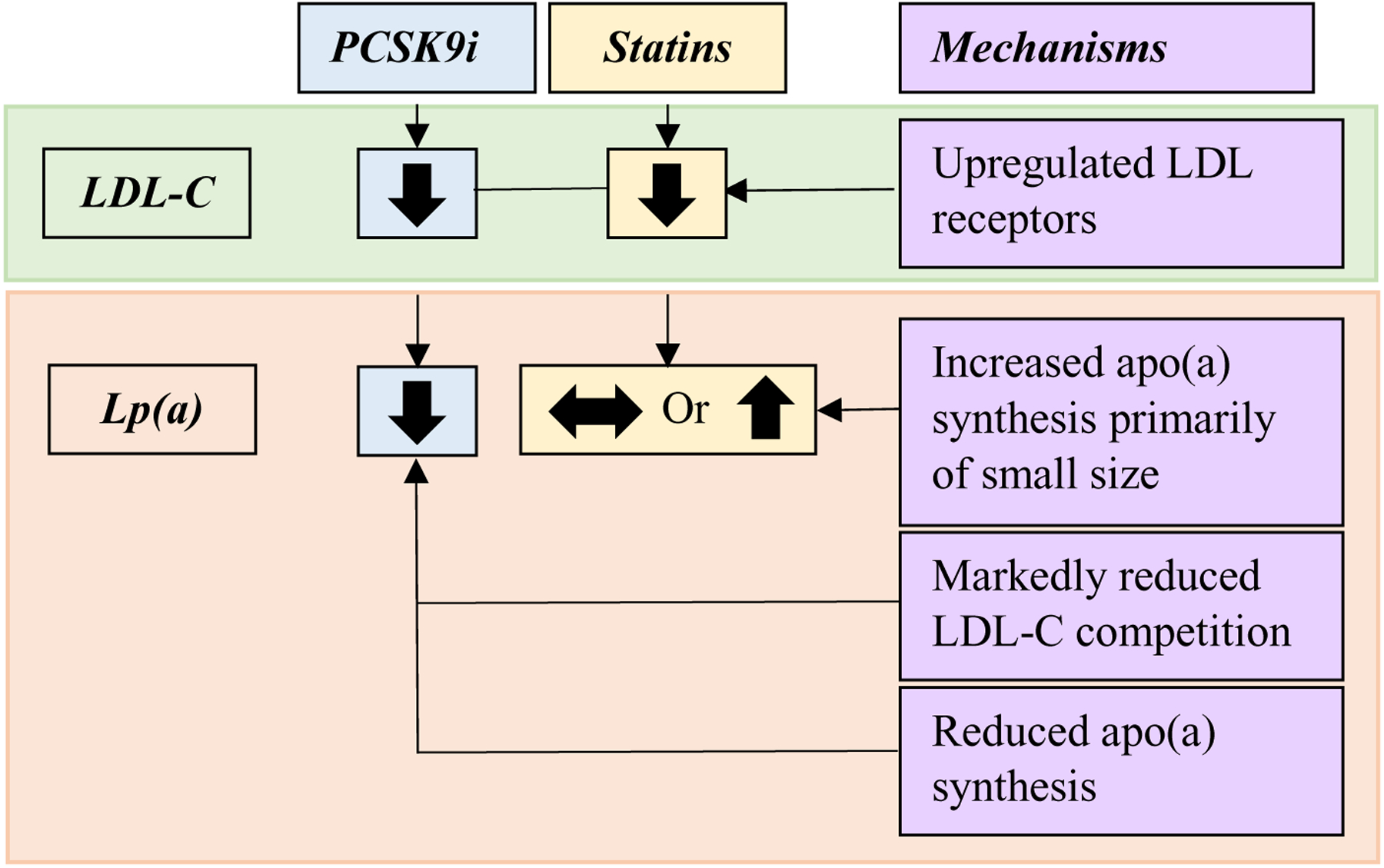
“Paradoxically, while PCSK9 inhibitors (which upregulate LDLR) have been found to significantly lower Lp(a), statins (which also upregulate LDLR by a different mechanism) do not86.”
From Functional interrogation of cellular Lp(a) uptake by genome-scale CRISPR screening (2025) · cites this paper as [86]
Experimental — accuracy not yet measuredIn the citing paper
“Paradoxically, while PCSK9 inhibitors (which upregulate LDLR) have been found to significantly lower Lp(a), statins (which also upregulate LDLR by a different mechanism) do not86.”
From Functional interrogation of cellular Lp(a) uptake by genome-scale CRISPR screening (2025) · cites this paper as [86]
Self-check
Percentages, sums and reported differences re-computed from the paper’s own numbers.
The self-check needs the paper’s full text.
Citations
Cites
Healthy Dietary Interventions and Lipoprotein (a) Plasma Levels: Results from the Omni Heart Trial
Haring, B., Wyler von Ballmoos, M. C., Appel, L. J., & Sacks, F. M. (2014) · PLoS ONE · doi:10.1371/journal.pone.0114859 · Cited by 46
Research works printed but not linked: 18
- Cheesman, 2000, An analysis of the interaction between mouse apolipoprotein B100 and apolipoprotein(a), J. Biol. Chem., 275, 28195, 10.1074/jbc.M002772200 · DOI
- Reyhana Yahya, 2019, Statin treatment increases lipoprotein(a) levels in subjects with low molecular weight apolipoprotein(a) phenotype, Atherosclerosis, 201, 10.1016/j.atherosclerosis.2019.07.001 · DOI
- Kostner, 1989, HMG CoA reductase inhibitors lower LDL cholesterol without reducing Lp(a) levels, Circulation, 80, 1313, 10.1161/01.CIR.80.5.1313 · DOI
- Hunninghake, 1993, Effects of one year of treatment with pravastatin, an HMG-CoA reductase inhibitor, on lipoprotein(a), J. Clin. Pharmacol., 33, 574, 10.1002/j.1552-4604.1993.tb04706.x · DOI
- Haffner, 1995, Effect of simvastatin on Lp(a) concentrations, Clin. Cardiol., 18, 261, 10.1002/clc.4960180507 · DOI
- Fieseler, 1991, Serum Lp(a) concentrations are unaffected by treatment with the HMG-CoA reductase inhibitor Pravastatin: results of a 2-year investigation, Clin. Chim. Acta, 204, 291, 10.1016/0009-8981(91)90239-9 · DOI
- van Wissen, 2003, Long term statin treatment reduces lipoprotein(a) concentrations in heterozygous familial hypercholesterolaemia, Heart, 89, 893, 10.1136/heart.89.8.893 · DOI · Paper page
- Willeit, 2018, Baseline and on-statin treatment lipoprotein(a) levels for prediction of cardiovascular events: individual patient-data meta-analysis of statin outcome trials, Lancet, 392, 1311, 10.1016/S0140-6736(18)31652-0 · DOI · Paper page
- Sahebkar, 2017, Lipid and Blood Pressure Meta-analysis Collaboration (LBPMC) Group. Comparison of the effects of fibrates versus statins on plasma lipoprotein(a) concentrations: a systematic review and meta-analysis of head-to-head randomized controlled trials, BMC Med., 15, 22, 10.1186/s12916-017-0787-7 · DOI
- Tsimikas, 2019, Statin therapy increases lipoprotein(a) levels, Eur. Heart J., 0, 1
- Klausen, 1993, Apolipoprotein(a) polymorphism predicts the increase of Lp(a) by pravastatin in patients with familial hypercholesterolaemia treated with bile acid sequestration, Eur. J. Clin. Investig., 23, 240, 10.1111/j.1365-2362.1993.tb00768.x · DOI
- Ginsberg, 1998, Effects of reducing dietary saturated fatty acids on plasma lipids and lipoproteins in healthy subjects: the DELTA Study, Protocol 1, Arterioscler. Thromb. Vasc. Biol., 18, 441, 10.1161/01.ATV.18.3.441 · DOI
- Silaste, 2004, Changes in dietary fat intake alter plasma levels of oxidized low-density lipoprotein and lipoprotein(a), Arterioscler. Thromb. Vasc. Biol., 24, 498, 10.1161/01.ATV.0000118012.64932.f4 · DOI
- Enkhmaa, 2017, The roles of apo(a) size, phenotype, and dominance pattern in PCSK9-inhibition-induced reduction in Lp(a) with alirocumab, J. Lipid Res., 58, 2008, 10.1194/jlr.M078212 · DOI
- Romagnuolo, 2015, Lipoprotein(a) catabolism is regulated by proprotein convertase subtilisin/kexin type 9 through the low density lipoprotein receptor, J. Biol. Chem., 290, 11649, 10.1074/jbc.M114.611988 · DOI · Paper page
- Watts, 2017, Factorial effects of evolocumab and atorvastatin on lipoprotein metabolism, Circulation, 135, 338, 10.1161/CIRCULATIONAHA.116.025080 · DOI · Paper page
- Scanu, 2002, Issues concerning the monitoring of statin therapy in hypercholesterolemic subjects with high plasma lipoprotein(a) levels, Lipids, 37, 439, 10.1007/s11745-002-0915-1 · DOI
- Grundy, 2019, 2018 AHA/ACC/AACVPR/AAPA/ABC/ACPM/ADA/AGS/APhA/ASPC/NLA/PCNA guideline on the management of blood cholesterol: executive summary: a report of the American College of Cardiology/American heart association task force on clinical practice guidelines, J. Am. Coll. Cardiol., 73, 3168, 10.1016/j.jacc.2018.11.002 · DOI · Paper page
Cited by
Sorted by citations
Functional interrogation of cellular Lp(a) uptake by genome-scale CRISPR screening
Khan, T. G., Bragazzi Cunha, J., Raut, C., Burroughs, M., Vyas, H. S., Leix, K., Goonewardena, S. N., Smrcka, A. V., Speliotes, E. K., & Emmer, B. T. (2025) · Atherosclerosis · doi:10.1016/j.atherosclerosis.2025.119174 · Cited by 6
Metadata
- Authors
- Enkhmaa, B., & Berglund, L.
- Venue
- Atherosclerosis
- Publisher
- Elsevier BV
- Published
- 2019-10
- Volume
- 289
- Pages
- 173-175
- ISSN
- 0021-9150
- PMC
- PMC7098730
- Cited by
- 17
- References
- 1
- Language
- en
- Funders
- UC Davis Clinical and Translational Science Center (UL1 TR001860)
- NIH Building Interdisciplinary Research Careers in Women’s Health/K12 Program (2K12HD051958)
About these checks
Registry, retraction, Cites and statistics results are computed, not judged, with one exception: a printed reference that no index lists is read once by a model before it counts as a citation error. Claims are extracted by a model and kept only when their quote appears verbatim in the text; each cited source is then checked, with a model’s help, for whether it says what the claim relies on. Those verdicts can be wrong — read the claim’s quote and the cited source before relying on one.
Statistics and arithmetic are recomputed, not judged.
Confidence bands are shown only for fields calibrated on our annotated test set. None is calibrated yet, so no band is shown.
What counts as a claim ›How we measure confidence ›How we check this ›
Are you an author, or do you see a problem with this page? Request a review
How to cite
Cite CoChat for the checks on this page, and the paper for its own findings.
- This page
- CoChat. (2026). Citation check: Statins and Lp(a): The plot thickens. https://app.cochat.ai/papers/10.1016/j.atherosclerosis.2019.07.021
- The paper
- Enkhmaa, B., & Berglund, L. (2019). Statins and Lp(a): The plot thickens. Atherosclerosis. https://doi.org/10.1016/j.atherosclerosis.2019.07.021
