

The DOI matches its Crossref record; 9 of the 9 references it cites were found in a registry or an index.
The mediation role of executive functions as predictors between physical activity and academic performance in high school students
Overview
The claims and statistics of this paper haven’t been checked yet.
Run the check — free, no account needed. It reads the open-access text and checks the sources it cites.
Integrity signals
Registry
Cites
Statistics
Figures
Verification
Claims the paper makes
The claims and statistics of this paper haven’t been checked yet.
Run the check — free, no account needed. It reads the open-access text and checks the sources it cites.
Claims other papers make about this one
Each is checked against this paper’s own text: does it say what the citing paper says it does?
In the citing paper
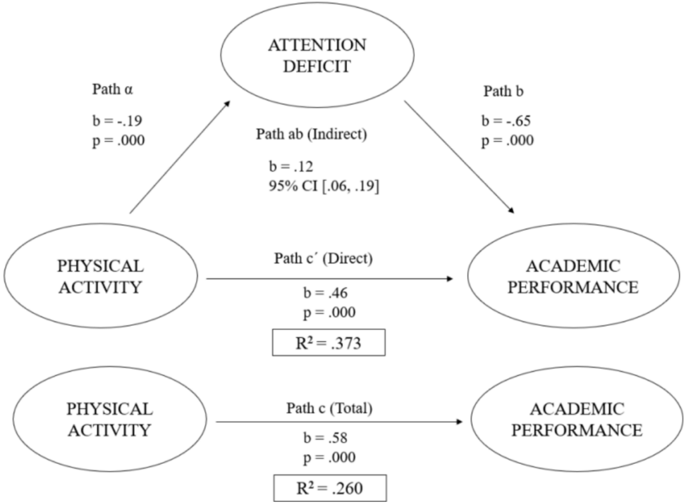
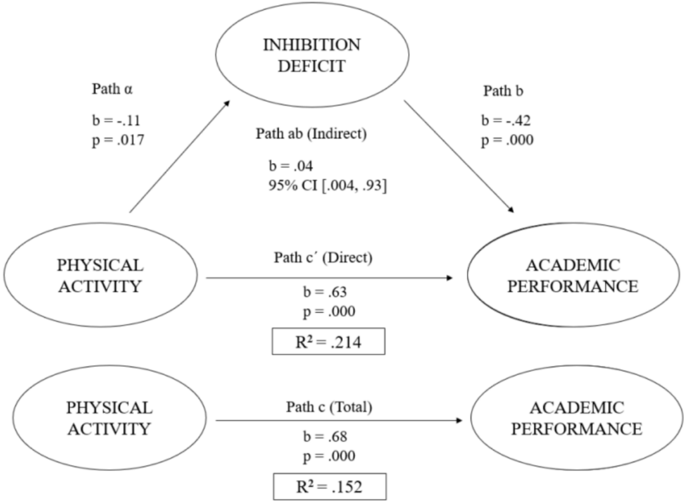
“Attention deficit (β= −0.65, P<0.01) and inhibitory deficit (β=−0.42, P<0.01) negatively predicted AP (Martín-Bozas et al., 2025).”
From Physical activity and academic performance in adolescents: a systematic review of intensity, frequency, and mediating factors (2026) · cites this paper as Martín-Bozas et al., 2025
In the citing paper
“Evidence from selected studies suggested that PA may influence AP indirectly through attention, inhibitory control, self-concept, and physical and mental health.”
From Physical activity and academic performance in adolescents: a systematic review of intensity, frequency, and mediating factors (2026) · cites this paper as Martín-Bozas et al., 2025
Self-check
Percentages, sums and reported differences re-computed from the paper’s own numbers.
The self-check needs the paper’s full text.
Citations
Cites
Assessment and Development of Executive Function (EF) During Childhood
Anderson, P. (2002) · Child Neuropsychology · doi:10.1076/chin.8.2.71.8724 · Cited by 2,218
Zimmermann, P., & Iwanski, A. (2014) · International Journal of Behavioral Development · doi:10.1177/0165025413515405 · Cited by 916
de Greeff, J. W., Bosker, R. J., Oosterlaan, J., Visscher, C., & Hartman, E. (2018) · Journal of Science and Medicine in Sport · doi:10.1016/j.jsams.2017.09.595 · Cited by 841
Haverkamp, B. F., Wiersma, R., Vertessen, K., van Ewijk, H., Oosterlaan, J., & Hartman, E. (2020) · Journal of Sports Sciences · doi:10.1080/02640414.2020.1794763 · Cited by 238
(2020) · Handbook of Clinical Neurology · doi:10.1016/b978-0-444-64150-2.00020-4 · Cited by 223
Nakagawa, T., Koan, I., Chen, C., Matsubara, T., Hagiwara, K., Lei, H., Hirotsu, M., Yamagata, H., & Nakagawa, S. (2020) · International Journal of Environmental Research and Public Health · doi:10.3390/ijerph17020614 · Cited by 124
Faught, E. L., Gleddie, D., Storey, K. E., Davison, C. M., & Veugelers, P. J. (2017) · PLOS ONE · doi:10.1371/journal.pone.0181938 · Cited by 95
James, J., Pringle, A., Mourton, S., & Roscoe, C. M. P. (2023) · Children · doi:10.3390/children10061019 · Cited by 60
Wang, T., & Guo, C. (2022) · International Journal of Environmental Research and Public Health · doi:10.3390/ijerph19084678 · Cited by 13
Research works printed but not linked: 58
- Aadland, 2017, Executive functions do not mediate prospective relations between indices of physical activity and academic performance: the active smarter kids (ASK) study, Frontiers in Psychology, 8, 1088, 10.3389/fpsyg.2017.01088 · DOI
- Abín, 2020, Predicting mathematics achievement in secondary education: the role of cognitive, motivational, and emotional variables, Frontiers in Psychology, 11, 876, 10.3389/fpsyg.2020.00876 · DOI
- Álvarez-Bueno, 2017, Academic achievement and physical activity: A meta-analysis, Pediatrics, 140, 10.1542/peds.2017-1498 · DOI · Paper page
- Arabi, 2023, Relationship between the executive function of children and the duration of physical activity with the mediating role of alpha, beta and theta brainwaves, Current Psychology, 42, 21239, 10.1007/s12144-023-04313-w · DOI
- Barbosa, 2020, Physical activity and academic achievement: an umbrella review, International Journal of Environmental Research and Public Health, 17, 5972, 10.3390/ijerph17165972 · DOI · Paper page
- Becker, 2014, Behavioral self-regulation and executive function both predict visuomotor skills and early academic achievement, Early Childhood Research Quarterly, 29, 411, 10.1016/j.ecresq.2014.04.014 · DOI
- Berrios-Aguayo, 2022, Effect of physical activity and fitness on executive functions and academic performance in children of elementary school. A systematic review, Cultura, Ciencia y Deporte, 17, 85
- Caamaño-Navarrete, F., Arriagada-Hernández, C., Fuentes-Vilugrón, G., Jara-Tomckowiack, L., Levin-Catrilao, A., del Val Martín, P., Muñoz-Troncoso, F., & Delgado-Floody, P. Healthy lifestyle related to executive functions in chilean university students: a pilot study.Healthcare. 12(10):1022. doi: 10.3390/healthcare12101022. · DOI
- Castejón, 2014, Aprendizaje y rendimiento académico, Editorial Club Universitario
- Chacón-Cuberos, 2020, Physical activity and academic performance in children and preadolescents: a systematic review, Apunts Educación Física y Deportes, 139, 1, 10.5672/apunts.2014-0983.es.(2020/1).139.01 · DOI
- Christiansen, 2019, Effects of exercise on cognitive performance in children and adolescents with ADHD: potential mechanisms and evidence based recommendations, Journal of Clinical Medicine, 8, 841, 10.3390/jcm8060841 · DOI
- Cronbach, 2004, My current thoughts on coefficient alpha and successor procedures, Educational and Psychological Measurement, 64, 391, 10.1177/0013164404266386 · DOI
- Dalton, 2011, Gender differences in ethics research: the importance of controlling for the social desirability response bias, Journal of Business Ethics, 103, 73, 10.1007/s10551-011-0843-8 · DOI
- Diamond, 2013, Executive functions, Annual Review of Psychology, 64, 135, 10.1146/annurev-psych-113011-143750 · DOI · Paper page
- Diamond, 2019, Randomized control trial of tools of the mind: marked benefits to kindergarten children and their teachers, PLoS ONE, 14, 10.1371/journal.pone.0222447 · DOI
- Ding, 2024, The mediating role of executive function between socioeconomic status and academic achievement: A meta-analytic structural equation model, Learning and Individual Differences, 110, 10.1016/j.lindif.2024.102418 · DOI
- Dong, 2022, The relationship between physical activity and trait anxiety in college students: The mediating role of executive function, Frontiers in Human Neuroscience, 16, 10.3389/fnhum.2022.1009540 · DOI
- Escarbajal Frutos, 2019, Los Programas de Mejora del Aprendizaje y del Rendimiento como medida inclusiva de atención a la diversidad en la Región de Murcia, Revista Interuniversitaria de Formación del Profesorado, 33, 29
- Escolano-Pérez, 2021, Academic Achievement in Spanish Secondary School Students: The Inter-Related Role of Executive Functions, Physical Activity and Gender, International Journal of Environmental Research and Public Health, 18, 1816, 10.3390/ijerph18041816 · DOI
- Escolano-Pérez, 2023, Physical Activity in Schoolchildren: Effect on Executive Functions, Academic Performance and Quality of Life, Apunts Educación Física y Deportes, 153, 114
- Ferrão, 2022, The evaluation of students’ progression in lower secondary education in Brazil: Exploring the path for equity, Studies in Educational Evaluation, 75, 10.1016/j.stueduc.2022.101220 · DOI
- Friedman, 2004, The relations among inhibition and interference control function: A latent variable analysis, Journal of Experimental Psychology: General, 133, 101, 10.1037/0096-3445.133.1.101 · DOI · Paper page
- Gallardo, 2023, Is there any relationship between physical activity levels and academic achievement? A cross-cultural study among spanish and chilean adolescents, Behavioral Sciences, 13, 238, 10.3390/bs13030238 · DOI
- Gamino, 2022, Higher-order executive function in middle school: training teachers to enhance cognition in young adolescents, Frontiers in Psychology, 13, 10.3389/fpsyg.2022.867264 · DOI
- Gandotra, 2022, A meta-analysis of the relationship between motor skills and executive functions in typically developing children, Journal of Cognition and Development, 23, 83, 10.1080/15248372.2021.1979554 · DOI
- García-Gil, 2022, Análisis del rendimiento académico y la salud mental de los alumnos de educación secundaria según el acceso a los recursos tecnológicos, Educación XX1, 25, 243, 10.5944/educxx1.31833 · DOI
- Gil-Madrona, 2019, Objective and subjective factors associated with Spanish students’ performance in science in PISA 2015, Cultura y Educación, 31, 671, 10.1080/11356405.2019.1656485 · DOI
- Hartung, 2020, Developmental transformations in the structure of executive functions, Journal of Experimental Child Psychology, 89
- Li, 2020, Relationship between SES and academic achievement of junior high school students in China: the mediating effect of self-concept, Frontiers in Psychology, 10, 2513, 10.3389/fpsyg.2019.02513 · DOI
- Martínez-Gómez, 2009, Reliability and validity of the PAQ-A questionnaire to assess physical activity in Spanish adolescents, Revista española de salud pública, 83, 427, 10.1590/S1135-57272009000300008 · DOI
- Mezcua-Hidalgo, 2019, 48-hour effects of monitored cooperative high intensity interval training on adolescent cognitive functioning, Perceptual and motor skills, 126, 202, 10.1177/0031512518825197 · DOI
- Mulder, 2014, Psychometric properties and convergent and predictive validity of an executive function test battery for two-year-olds, Frontiers in Psychology, 5, 733, 10.3389/fpsyg.2014.00733 · DOI
- Muñoz Cantero, 2018, Elementos predictores del rendimiento matemático en estudiantes de educación secundaria obligatoria, Revista de currículum y formación del profesorado, 22, 391, 10.30827/profesorado.v22i3.8008 · DOI
- Muntaner-Mas, 2022, Do physical fitness and executive function mediate the relationship between physical activity and academic achievement? An examination using structural equation modelling, Children, 9, 823, 10.3390/children9060823 · DOI
- OECD, 2023, PISA 2022 results (volume i): the state of learning and equity in education, OECD Publishing
- Ogrodnik, 2020, Examining associations between physical activity and academic performance in a large sample of ontario students: the role of inattention and hyperactivity, Journal of Physical Activity & Health, 17, 1231, 10.1123/jpah.2020-0174 · DOI
- Padmapriya, 2024, The prospective associations of 24-hour movement behaviors and domain-specific activities with executive function and academic achievement among school-aged children in Singapore, Frontiers in Public Health, 12, 10.3389/fpubh.2024.1412634 · DOI
- Paloș, 2019, Relations between academic performance, student engagement and student burnout: A cross-lagged analysis of a two-wave study, Studies in Educational Evaluation, 60, 199, 10.1016/j.stueduc.2019.01.005 · DOI
- Pang, 2024, Assessing detrimental influences of fear of missing out on psychological well-being: the moderating role of self-presentation, upward contrast, and social media stalking, Applied Research Quality Life, 19, 881, 10.1007/s11482-024-10272-6 · DOI
- Pang, 2024, Determining influence of service quality on user identification, belongingness, and satisfaction on mobile social media: Insight from emotional attachment perspective, Journal of Retailing and Consumer Services, 77, 10.1016/j.jretconser.2023.103688 · DOI
- Pang, 2023, Untangling the effect of cognitive trust and perceived value on health-related information seeking, sharing and psychological well-being: Motivations sought perspective, Telematics and Informatics, 79, 10.1016/j.tele.2023.101964 · DOI
- Park, 2023, Exploring the mediating role of executive function in the relationship between aerobic fitness and academic achievement in adolescents, Brain Sciences, 13, 614, 10.3390/brainsci13040614 · DOI
- Perpiñá, 2023, Executive functions are important for academic achievement, but emotional intelligence too, Scandinavian Journal of Psychology, 64, 470, 10.1111/sjop.12907 · DOI
- Samuels, 2023, Executive functioning and adolescents’ academic performance on standardized exams, Journal of Educational and Developmental Psychology., 13, 10, 10.5539/jedp.v13n2p10 · DOI
- Schmidt-Kassow, 2023, The brain in motion–cognitive effects of simultaneous motor activity, Front in Integrative Neuroscience, 17, 10.3389/fnint.2023.1127310 · DOI
- Singh, 2019, Effects of physical activity interventions on cognitive and academic performance in children and adolescents: A novel combination of a systematic review and recommendations from an expert panel, British Journal of Sports Medicine, 53, 640, 10.1136/bjsports-2017-098136 · DOI · Paper page
- Sun, 2024, Predicting academic achievement from the collaborative influences of executive function, physical fitness, and demographic factors among primary school students in China: Ensemble learning methods, BMC Public Health, 24, 274, 10.1186/s12889-024-17769-7 · DOI
- Tanineh, 2023, Cardiorespiratory fitness, motor coordination, and academic achievement in school students (11-13 years), Global Pediatric Health., 10, 10.1177/2333794X231207311 · DOI
- Thompson, 1994, Emotion regulation: A theme in search of definition, Monographs of the Society for Research in Child Development, 59, 25, 10.2307/1166137 · DOI
- Van der Niet, 2015, Associations between daily physical activity and executive functioning in primary school aged children, Journal of Science and Medicine in Sport, 18, 673, 10.1016/j.jsams.2014.09.006 · DOI · Paper page
- Van Dijk, 2014, The association between objectively measured physical activity and academic achievement in adolescents: findings from the GOALS study, Journal of Sport and Exercise Psychology, 36, 460, 10.1123/jsep.2014-0014 · DOI
- Verburgh, 2014, Physical exercise and executive functions in preadolescent children, adolescents and young adults: A meta-analysis, British Journal of Sports Medicine, 48, 973, 10.1136/bjsports-2012-091441 · DOI · Paper page
- Vilà, 2019, Análisis de regresión lineal múltiple con SPSS: Un ejemplo práctico, REIRE Revista d'innovació i Recerca en Educació, 12, 1
- Visier-Alfonso, 2022, Mediators between physical activity and academic achievement: A systematic review, Scandinavian Journal of Medicine & Science Sports, 32, 452, 10.1111/sms.14107 · DOI
- World Health Organization, 2020, WHO guidelines on physical activity and sedentary behaviour: At a glance, World Health Organization
- Yang, 2023, The association between meeting physical activity guidelines and academic performance among junior high school adolescents in China evidence from the China education tracking survey, Frontiers in Psychology, 14
- Zelazo, 2012, Hot and cool executive function in childhood and adolescence: development and plasticity, Child Development Perspectives, 6, 354, 10.1111/j.1750-8606.2012.00246.x · DOI · Paper page
- Zorza, 2017, Predictive influence of executive functions, effortful control, empathy, and social behavior on the academic performance in early adolescents, The Journal of Early Adolescence, 39, 253, 10.1177/0272431617737624 · DOI
Cited by
Sorted by citations
Jee, H. (2026) · Journal of Exercise Rehabilitation · doi:10.12965/jer.2550854.427
Metadata
- Authors
- Martín-Bozas, F., Escolano-Pérez, E., & Bestué-Laguna, M.
- Venue
- Contemporary Educational Psychology
- Publisher
- Elsevier BV
- Published
- 2025-06
- Volume
- 81
- Pages
- 102364
- ISSN
- 0361-476X
- Cited by
- 3
- References
- 9
- Language
- en
- Licence
- Funders
- Government of Aragon
- Ministerio de Ciencia, Innovación y Universidades
- Universidad de Zaragoza
About these checks
Registry, retraction, Cites and statistics results are computed, not judged, with one exception: a printed reference that no index lists is read once by a model before it counts as a citation error. Claims are extracted by a model and kept only when their quote appears verbatim in the text; each cited source is then checked, with a model’s help, for whether it says what the claim relies on. Those verdicts can be wrong — read the claim’s quote and the cited source before relying on one.
Statistics and arithmetic are recomputed, not judged.
Confidence bands are shown only for fields calibrated on our annotated test set. None is calibrated yet, so no band is shown.
What counts as a claim ›How we measure confidence ›How we check this ›
Are you an author, or do you see a problem with this page? Request a review
