

The DOI matches its Crossref record; 71 of the 72 references it cites were found in a registry or an index.
Rate-Limiting Steps in Yeast Protein Translation
Open accessAbstract
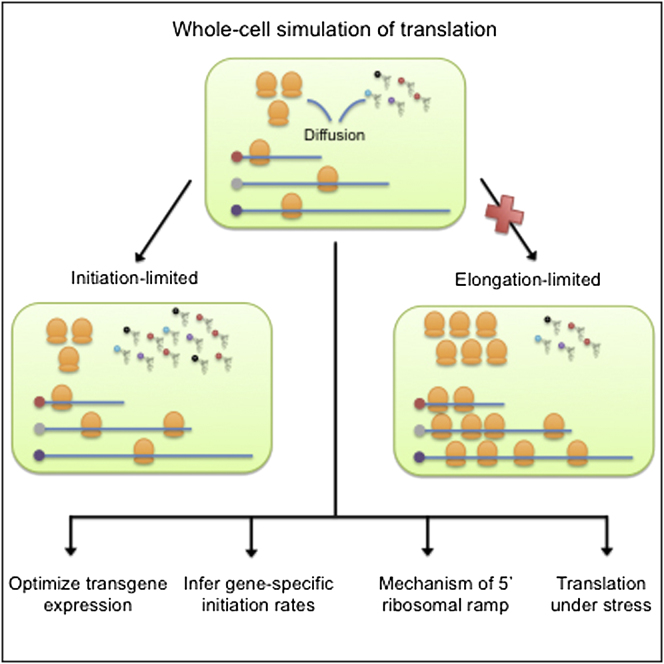
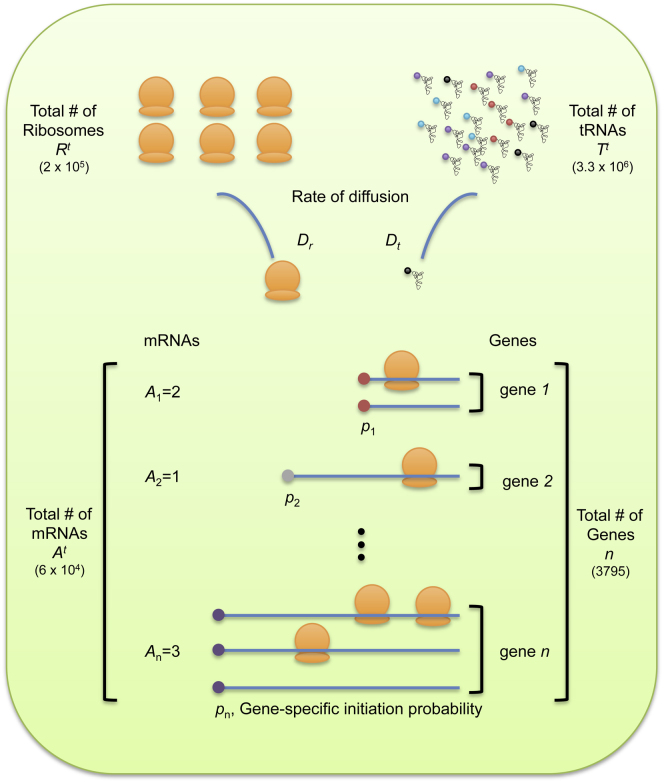
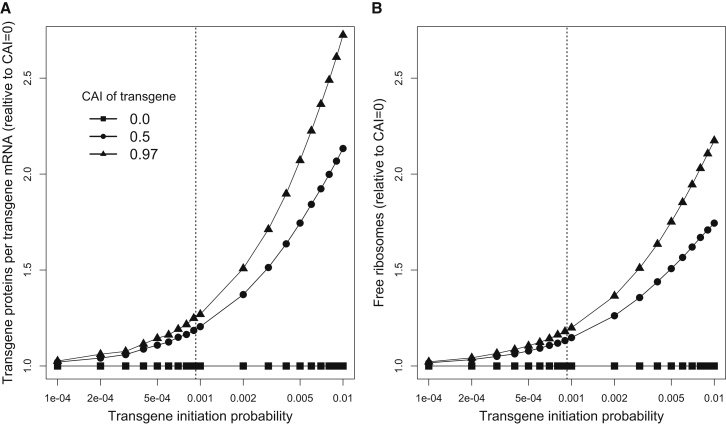
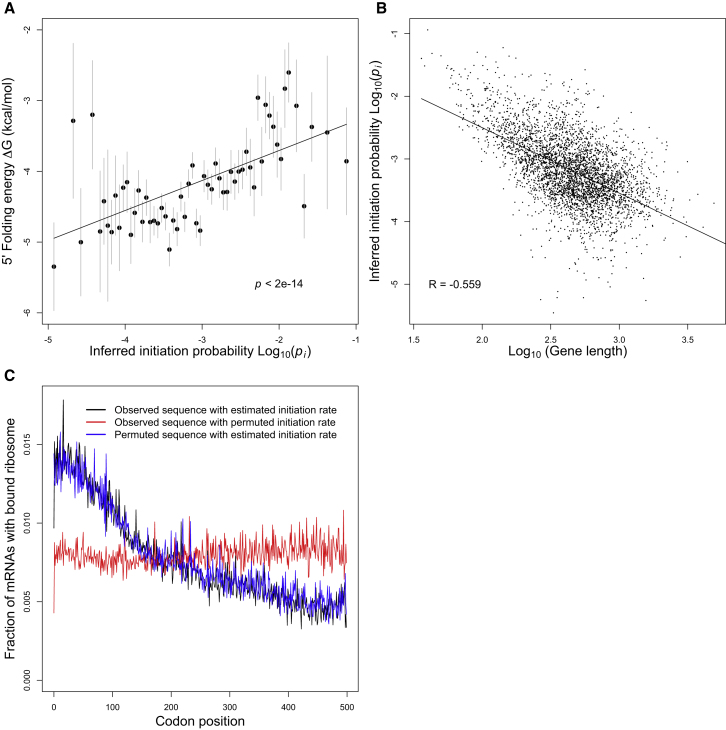
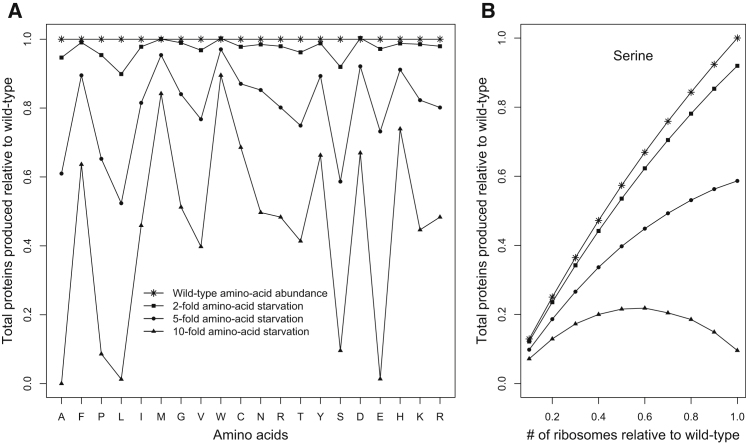
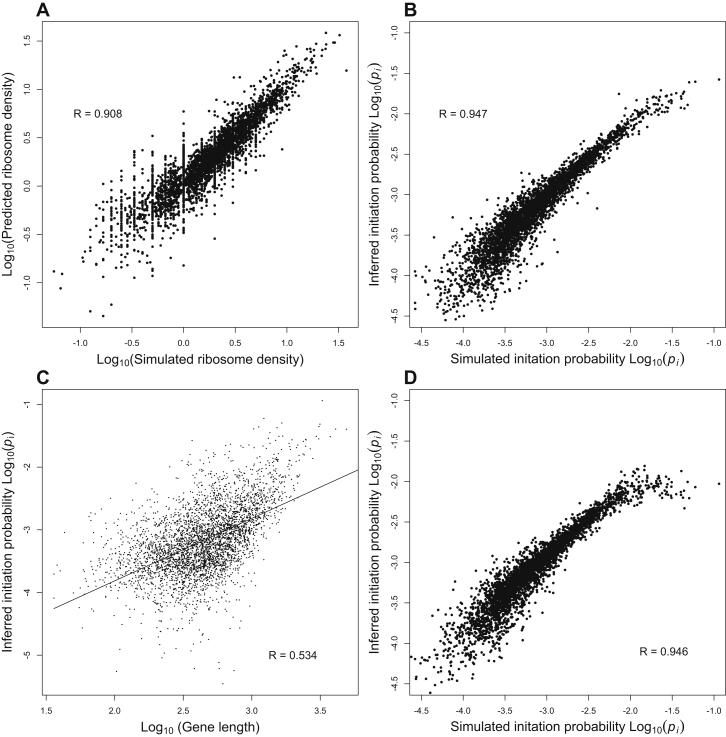
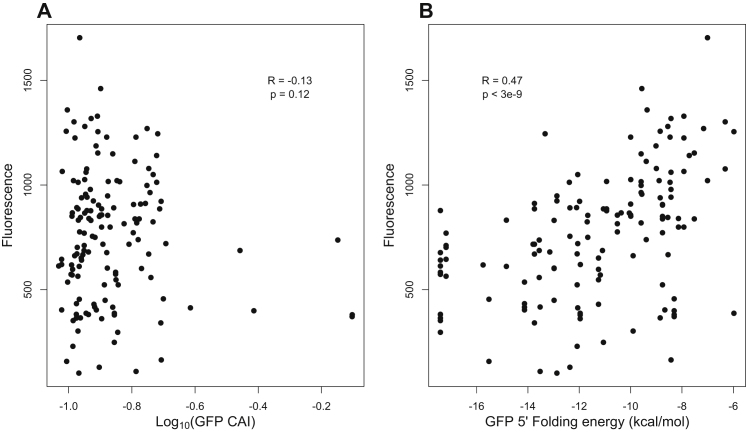
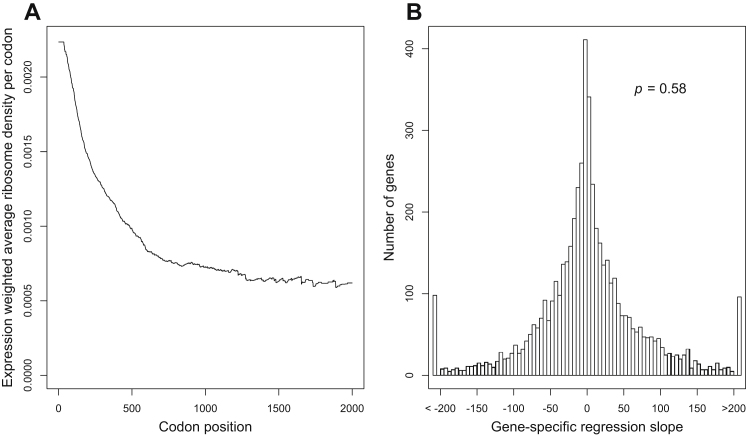
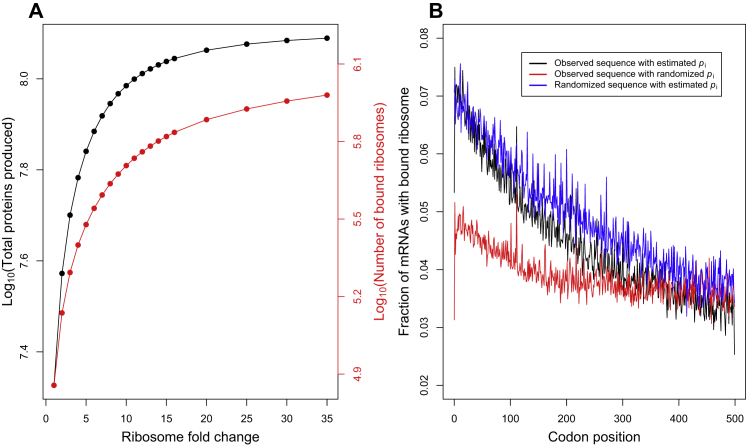
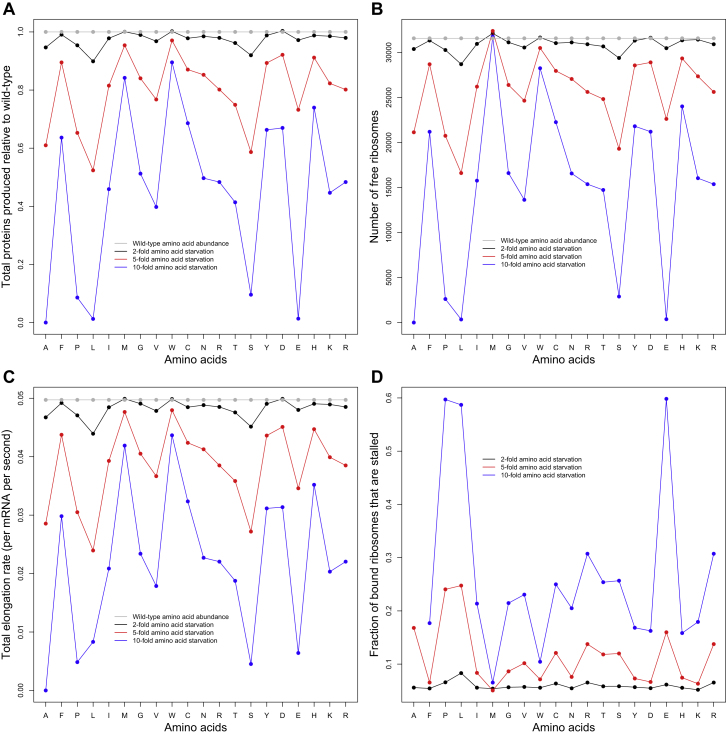
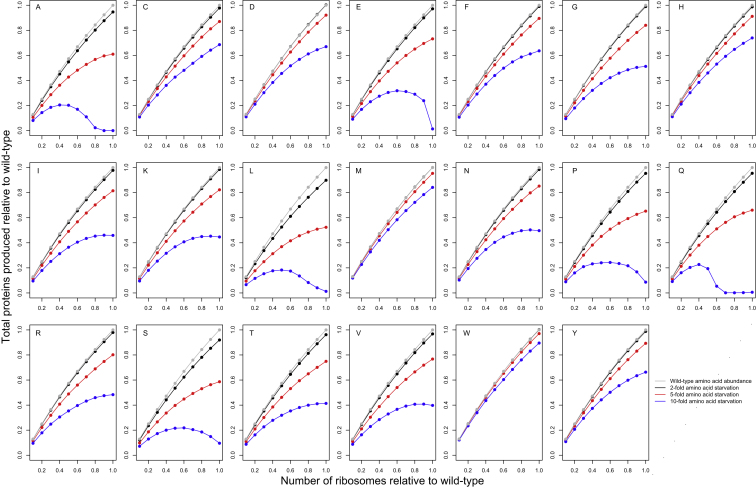
Deep sequencing now provides detailed snapshots of ribosome occupancy on mRNAs. We leverage these data to parameterize a computational model of translation, keeping track of every ribosome, tRNA, and mRNA molecule in a yeast cell. We determine the parameter regimes in which fast initiation or high codon bias in a transgene increases protein yield and infer the initiation rates of endogenous Saccharomyces cerevisiae genes, which vary by several orders of magnitude and correlate with 5' mRNA folding energies. Our model recapitulates the previously reported 5'-to-3' ramp of decreasing ribosome densities, although our analysis shows that this ramp is caused by rapid initiation of short genes rather than slow codons at the start of transcripts. We conclude that protein production in healthy yeast cells is typically limited by the availability of free ribosomes, whereas protein production under periods of stress can sometimes be rescued by reducing initiation or elongation rates.
Overview
The claims and statistics of this paper haven’t been checked yet.
Run the check — free, no account needed. It reads the open-access text and checks the sources it cites.
Integrity signals
Registry
Cites
Statistics
Figures
Verification
Claims the paper makes
The claims and statistics of this paper haven’t been checked yet.
Run the check — free, no account needed. It reads the open-access text and checks the sources it cites.
Claims other papers make about this one
Each is checked against this paper’s own text: does it say what the citing paper says it does?
The source backs part of the claim, not all of it — or backs it for a different population, condition or comparison.
In the citing paper
“Some studies have shown that protein expression level drops if the 5′-end leader region has more secondary structure5,50–53.”
From Algorithm for optimized mRNA design improves stability and immunogenicity (2023) · cites this paper as [52]
Experimental — accuracy not yet measuredThe cited source says what the claim attributes to it.
In the citing paper
“Most surprising, in contrast to previous reports47–49, we found 5’ UTRs that are highly structured, such as the dengue virus (DEN2), can support efficient translation.”
From Combinatorial optimization of mRNA structure, stability, and translation for RNA-based therapeutics (2022) · cites this paper as [49]
Self-check
Percentages, sums and reported differences re-computed from the paper’s own numbers.
The self-check needs the paper’s full text.
Citations
Cites
Exact stochastic simulation of coupled chemical reactions
Gillespie, D. T. (1977) · The Journal of Physical Chemistry · doi:10.1021/j100540a008 · Cited by 10,215
Sharp, P. M., & Li, W.-H. (1987) · Nucleic Acids Research · doi:10.1093/nar/15.3.1281 · Cited by 3,992
Genome-Wide Analysis in Vivo of Translation with Nucleotide Resolution Using Ribosome Profiling
Ingolia, N. T., Ghaemmaghami, S., Newman, J. R. S., & Weissman, J. S. (2009) · Science · doi:10.1126/science.1168978 · Cited by 3,853
The mechanism of eukaryotic translation initiation and principles of its regulation
Jackson, R. J., Hellen, C. U. T., & Pestova, T. V. (2010) · Nature Reviews Molecular Cell Biology · doi:10.1038/nrm2838 · Cited by 2,759
A "Silent" Polymorphism in the MDR 1 Gene Changes Substrate Specificity
Kimchi-Sarfaty, C., Oh, J. M., Kim, I.-W., Sauna, Z. E., Calcagno, A. M., Ambudkar, S. V., & Gottesman, M. M. (2007) · Science · doi:10.1126/science.1135308 · Cited by 2,416
Fast folding and comparison of RNA secondary structures
Hofacker, I. L., Fontana, W., Stadler, P. F., Bonhoeffer, S., Tacker, M., & Schuster, P. M. (1994) · Monatshefte für Chemie - Chemical Monthly · doi:10.1007/bf00818163 · Cited by 2,314
The economics of ribosome biosynthesis in yeast
Warner, J. R. (1999) · Trends in Biochemical Sciences · doi:10.1016/s0968-0004(99)01460-7 · Cited by 1,933
The UCSC Genome Browser Database
Karolchik, D. (2003) · Nucleic Acids Research · doi:10.1093/nar/gkg129 · Cited by 1,890
Saccharomyces Genome Database: the genomics resource of budding yeast
Cherry, J., Hong, E., Amundsen, C., Balakrishnan, R., Binkley, G., Chan, E. T., Christie, K., Costanzo, M., Dwight, S., Engel, S., et al. (2011) · Nucleic Acids Res. · doi:10.1093/nar/gkr1029 · Cited by 1,886
Automated design of synthetic ribosome binding sites to control protein expression
Salis, H. M., Mirsky, E. A., & Voigt, C. A. (2009) · Nature Biotechnology · doi:10.1038/nbt.1568 · Cited by 1,844
Research works printed but not linked: 1
- Tuller, 2010, An evolutionarily conserved mechanism for controlling the efficiency of protein translation, Cell, 141, 344, 10.1016/j.cell.2010.03.031 · DOI · Paper page
Cited by
Sorted by citations
On the Dependency of Cellular Protein Levels on mRNA Abundance
Liu, Y., Beyer, A., & Aebersold, R. (2016) · Cell · doi:10.1016/j.cell.2016.03.014 · Cited by 3,221
Pseudouridine profiling reveals regulated mRNA pseudouridylation in yeast and human cells
Carlile, T. M., Rojas-Durán, M. F., Zinshteyn, B., Shin, H., Bartoli, K. M., & Gilbert, W. V. (2014) · Nature · doi:10.1038/nature13802 · Cited by 1,042
Codon optimality, bias and usage in translation and mRNA decay
Hanson, G., & Coller, J. (2018) · Nature Reviews Molecular Cell Biology · doi:10.1038/nrm.2017.91 · Cited by 825
Codon Bias as a Means to Fine-Tune Gene Expression
Quax, T. E. F., Claassens, N. J., Söll, D. G., & John van der, O. O. S. T. (2015) · Molecular Cell · doi:10.1016/j.molcel.2015.05.035 · Cited by 791
“…translation elongation at the coding region’s 5 0 end; these investigators claimed that this earlier observed phenomenon was an artifact either of the ribosome profiling experiment (Ingolia et al., 2011) or of the data analysis, because shorter genes have higher initiation rates (Shah et al., 2013).”
BackgroundRibosome profiling: new views of translation, from single codons to genome scale
Ingolia, N. T. (2014) · Nature Reviews Genetics · doi:10.1038/nrg3645 · Cited by 668
Metadata
- Authors
- Shah, P., Ding, Y., Niemczyk, M., Kudla, G., & Plotkin, J. B.
- Affiliations
- University of Pennsylvania (US)
- Wellcome Centre for Cell Biology (GB)
- Corresponding author
- Plotkin, Joshua B.
- Venue
- Cell
- Publisher
- Elsevier BV
- Published
- 2013-06
- Volume
- 153
- Issue
- 7
- Pages
- 1589-1601
- ISSN
- 0092-8674 (ISSN-L)
- PMC
- PMC3694300
- OpenAlex
- W2011503994
- Cited by
- 463
- References
- 72
- Citations by year
- 2026: 15 · 2025: 24 · 2024: 31 · 2023: 33 · 2022: 37 · 2021: 27 · 2020: 40 · 2019: 37 · 2018: 42 · 2017: 50 · 2016: 48 · 2015: 26 · 2014: 44 · 2013: 9
- FWCI
- 18.98
- Type
- journal article
- Language
- en
- Open access
- hybrid
- doi.org
- Licence
- Locations
- Cell (publishedVersion, cc-by)
- Europe PMC (PubMed Central) (publishedVersion, cc-by)
- PubMed Central (publishedVersion, cc-by)
- PubMed (publishedVersion)
- Edinburgh Research Explorer (University of Edinburgh) (submittedVersion, cc-by)
- Funders
- Burroughs Wellcome Fund
- Army Research Office (D12AP00025, W911NF-12-1-0552)
- James S. McDonnell Foundation
- David and Lucile Packard Foundation
- U.S. Department of the Interior
- Wellcome Trust (077248)
- Alfred P. Sloan Foundation (RFP-12-16)
- Topics
- Life Sciences › Biochemistry, Genetics and Molecular Biology › Molecular Biology › RNA and protein synthesis mechanisms
- Life Sciences › Biochemistry, Genetics and Molecular Biology › Molecular Biology › RNA Research and Splicing
- Life Sciences › Biochemistry, Genetics and Molecular Biology › Molecular Biology › Genomics and Chromatin Dynamics
- Keywords
- mRNA translation, ribosome occupancy, translation initiation rate, codon usage bias, free ribosomes, protein production, Saccharomyces cerevisiae, tRNA availability, stress response
- MeSH terms
- Codon, Markov Chains, Models, Genetic, Ribosomes, RNA, Messenger, RNA, Transfer, Saccharomyces cerevisiae, Protein Biosynthesis
About these checks
Registry, retraction, Cites and statistics results are computed, not judged, with one exception: a printed reference that no index lists is read once by a model before it counts as a citation error. Claims are extracted by a model and kept only when their quote appears verbatim in the text; each cited source is then checked, with a model’s help, for whether it says what the claim relies on. Those verdicts can be wrong — read the claim’s quote and the cited source before relying on one.
Statistics and arithmetic are recomputed, not judged.
Confidence bands are shown only for fields calibrated on our annotated test set. None is calibrated yet, so no band is shown.
What counts as a claim ›How we measure confidence ›How we check this ›
Are you an author, or do you see a problem with this page? Request a review
