

The DOI matches its Crossref record; 67 of the 67 references it cites were found in a registry or an index.
Kinase-mediated RAS signaling via membraneless cytoplasmic protein granules
Open accessPublished version of a preprint
Abstract
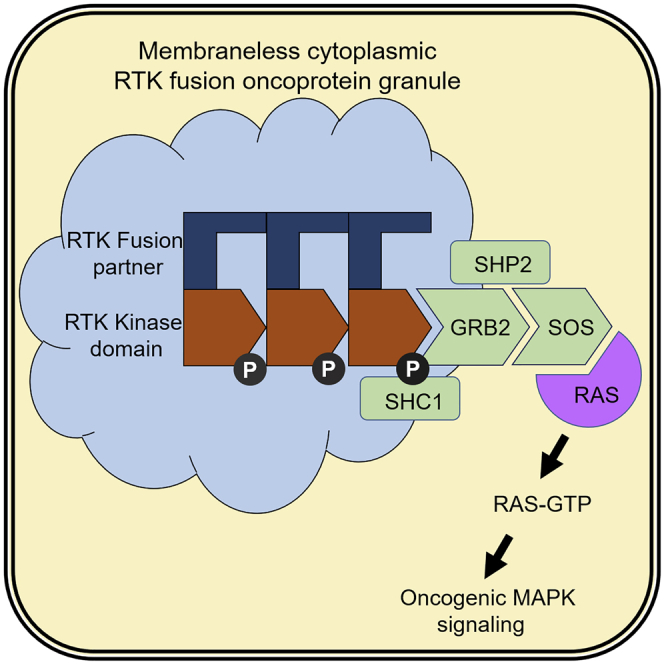
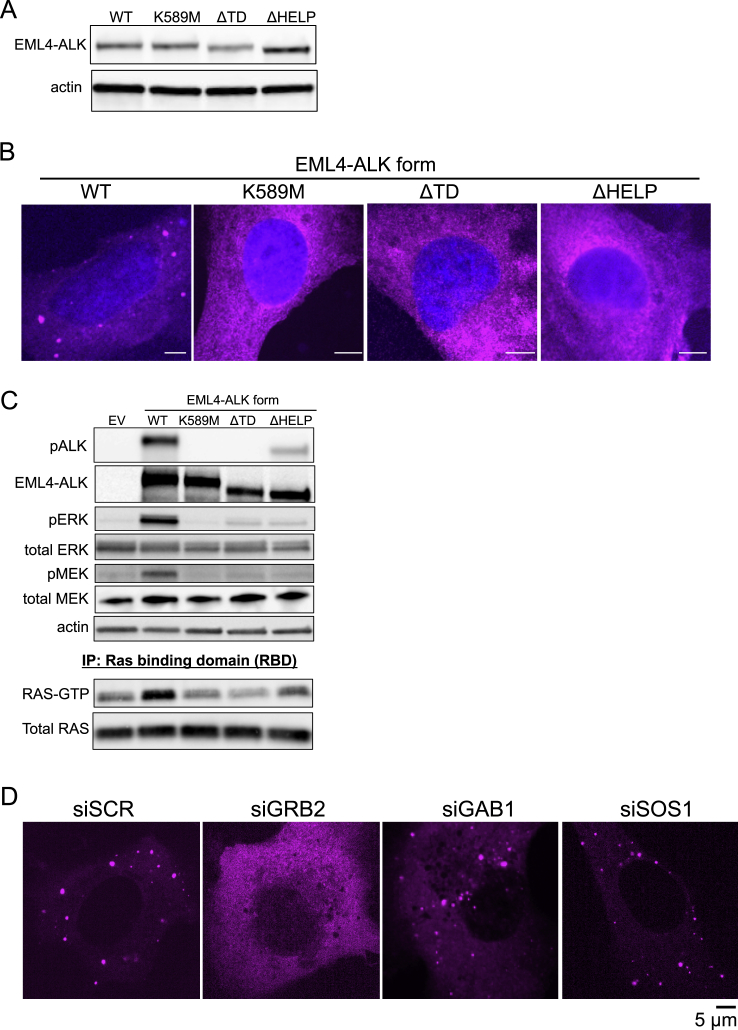
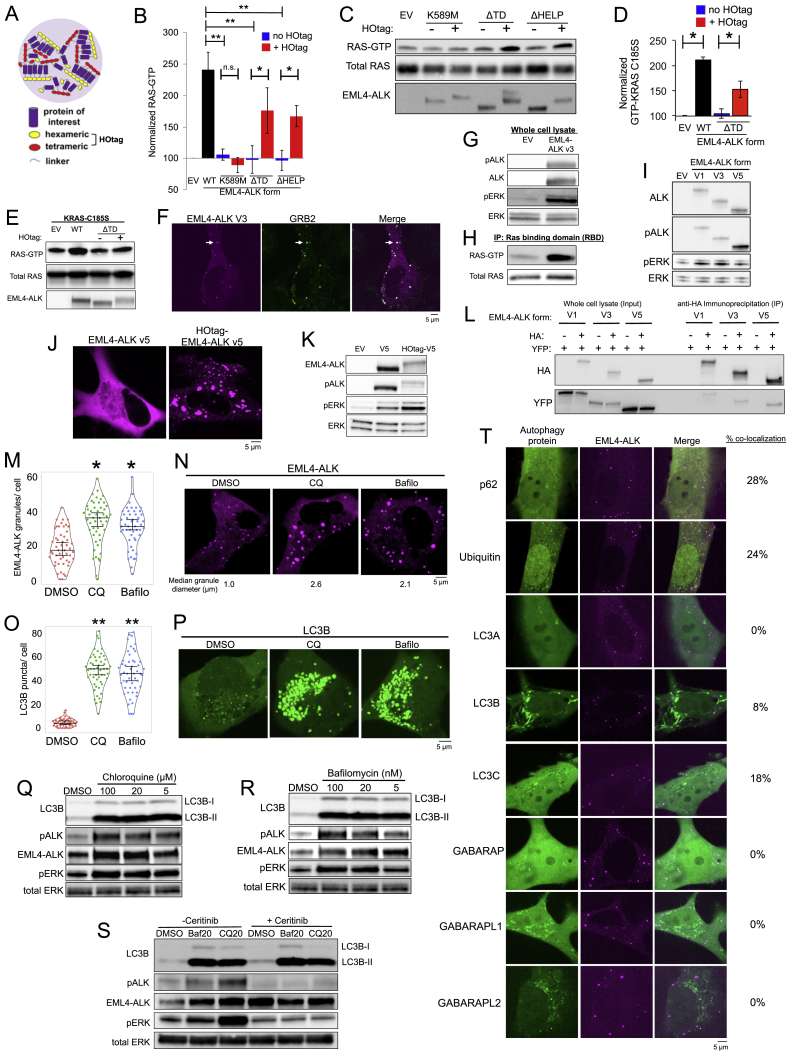
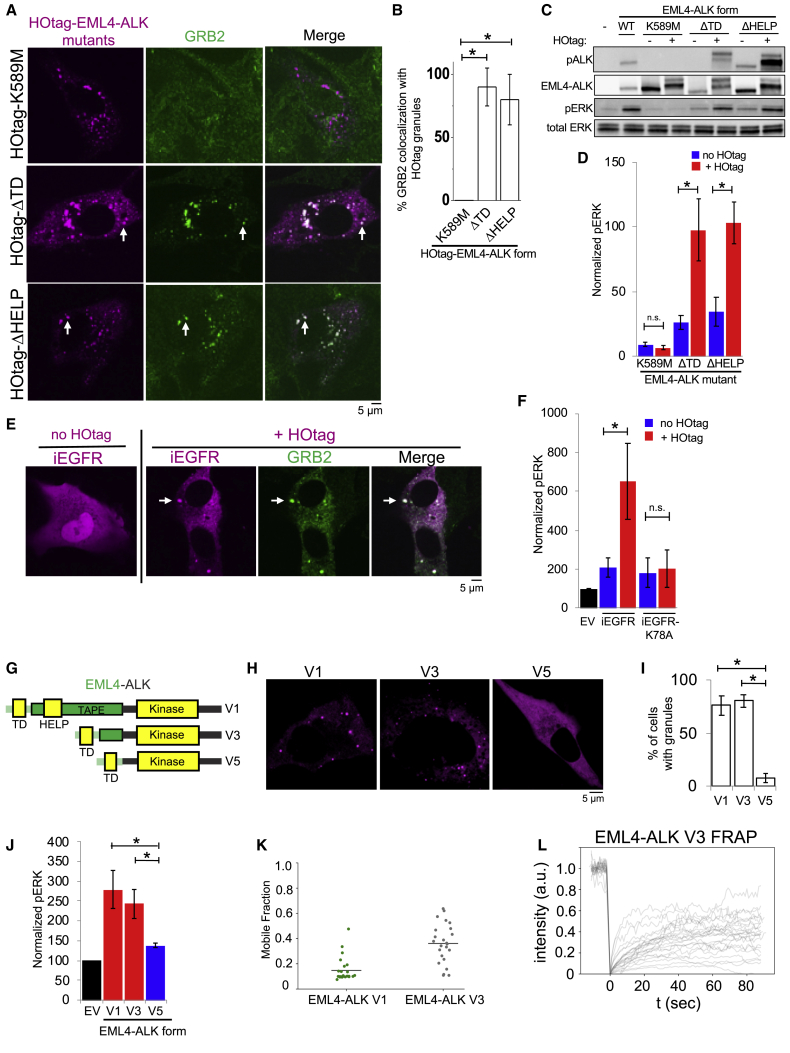
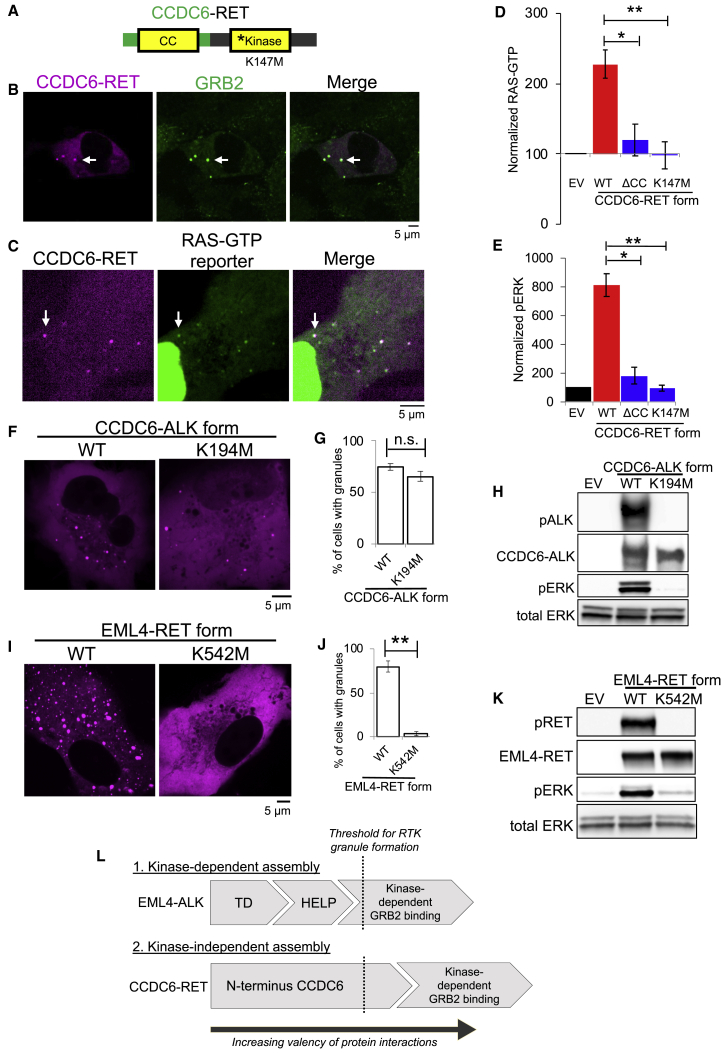
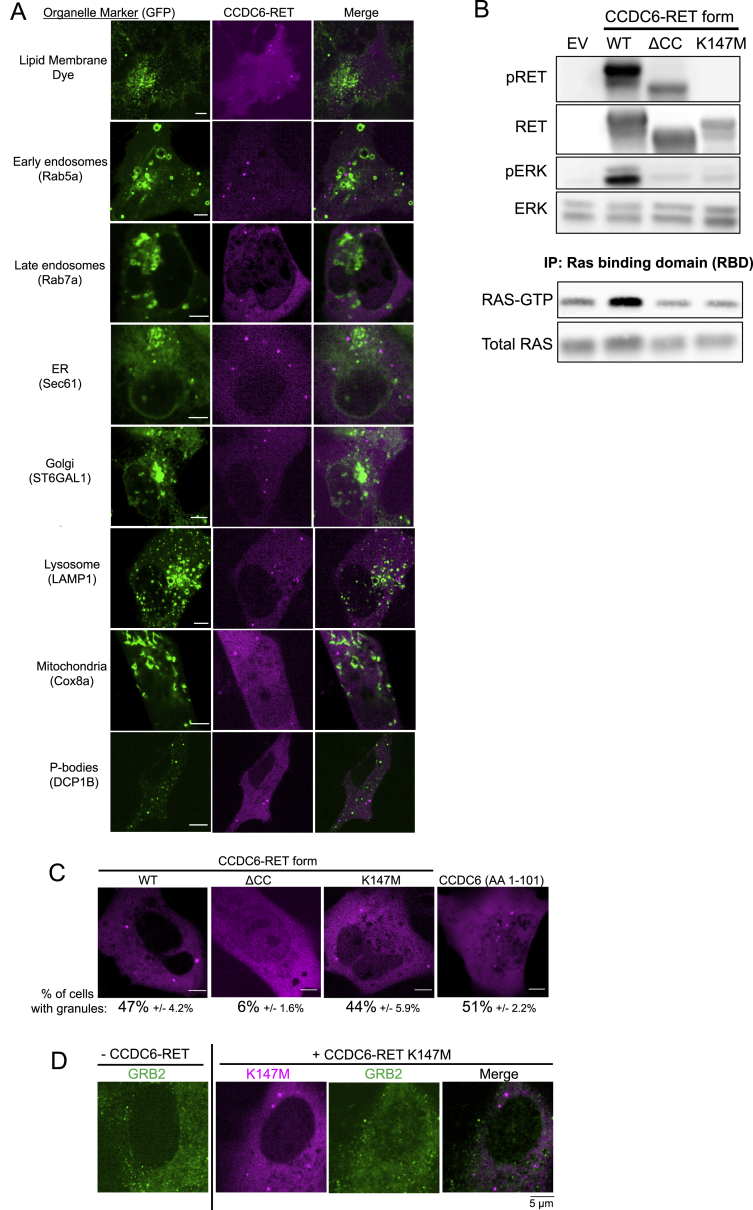
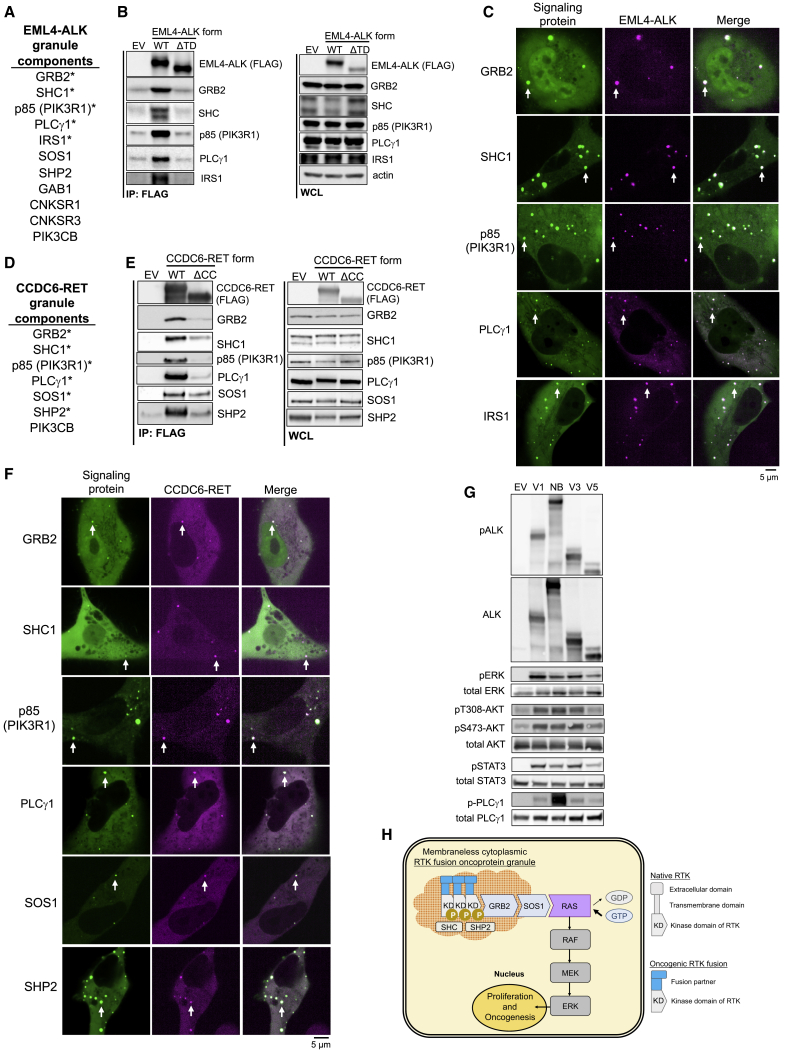
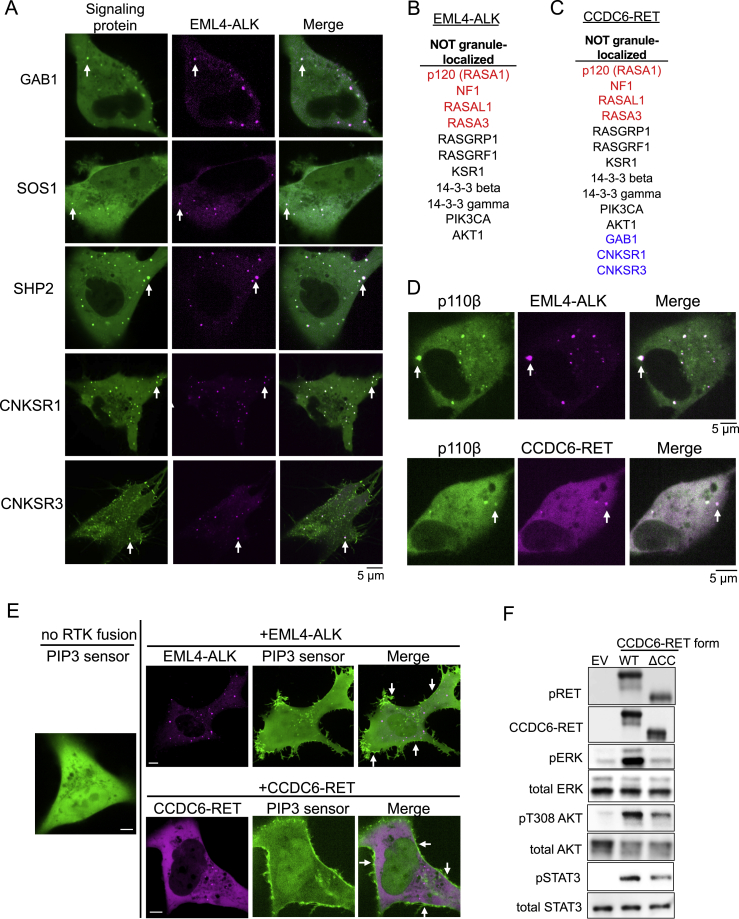
Receptor tyrosine kinase (RTK)-mediated activation of downstream effector pathways such as the RAS GTPase/MAP kinase (MAPK) signaling cascade is thought to occur exclusively from lipid membrane compartments in mammalian cells. Here, we uncover a membraneless, protein granule-based subcellular structure that can organize RTK/RAS/MAPK signaling in cancer. Chimeric (fusion) oncoproteins involving certain RTKs including ALK and RET undergo de novo higher-order assembly into membraneless cytoplasmic protein granules that actively signal. These pathogenic biomolecular condensates locally concentrate the RAS activating complex GRB2/SOS1 and activate RAS in a lipid membrane-independent manner. RTK protein granule formation is critical for oncogenic RAS/MAPK signaling output in these cells. We identify a set of protein granule components and establish structural rules that define the formation of membraneless protein granules by RTK oncoproteins. Our findings reveal membraneless, higher-order cytoplasmic protein assembly as a distinct subcellular platform for organizing oncogenic RTK and RAS signaling.
Overview
The claims and statistics of this paper haven’t been checked yet.
Run the check — free, no account needed. It reads the open-access text and checks the sources it cites.
Integrity signals
Registry
Cites
Statistics
Figures
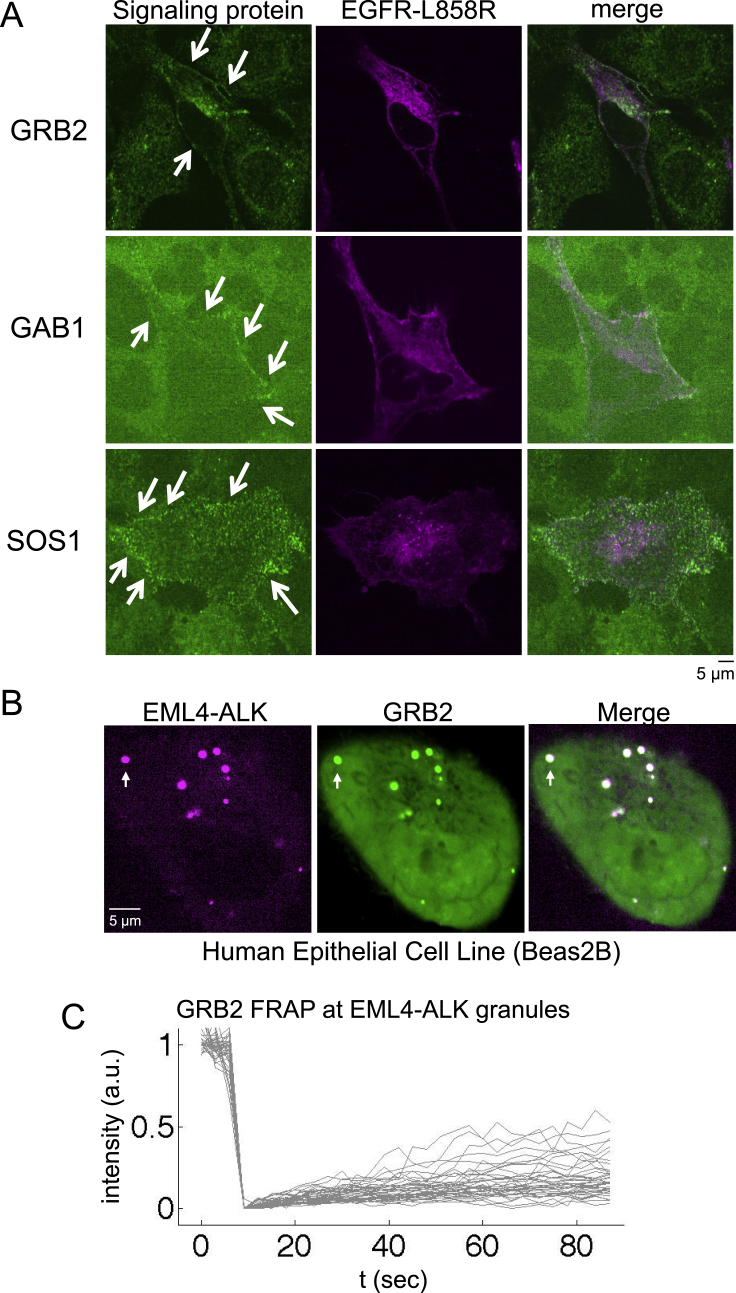
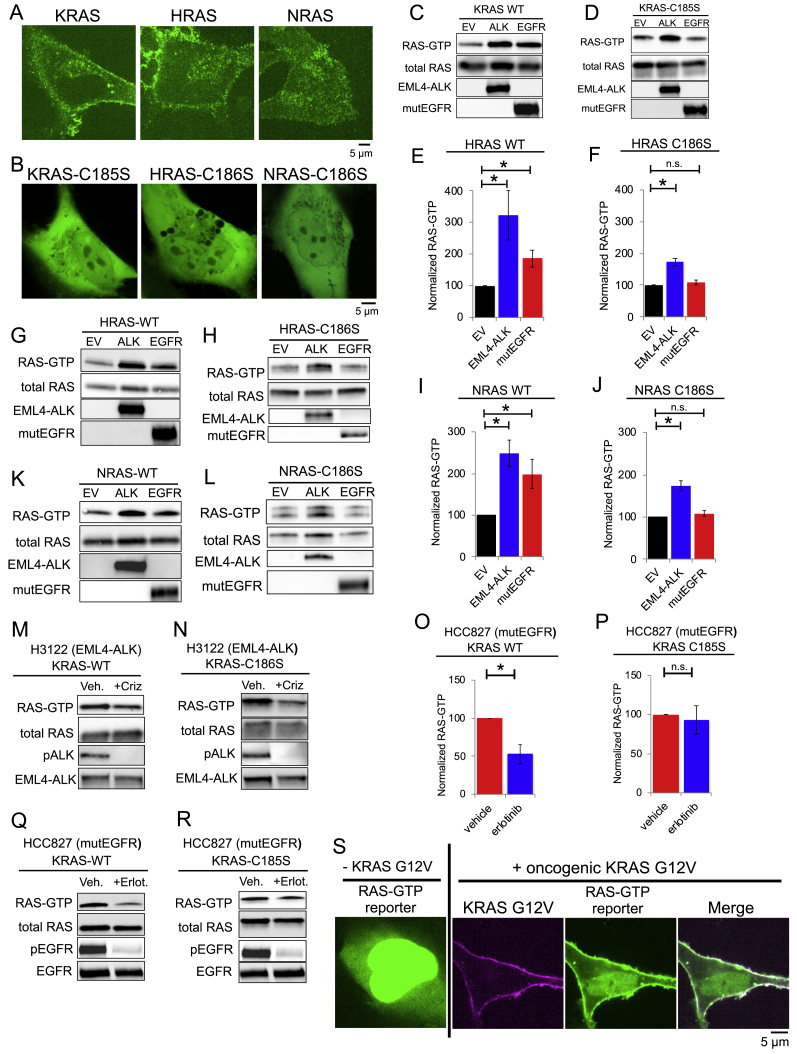
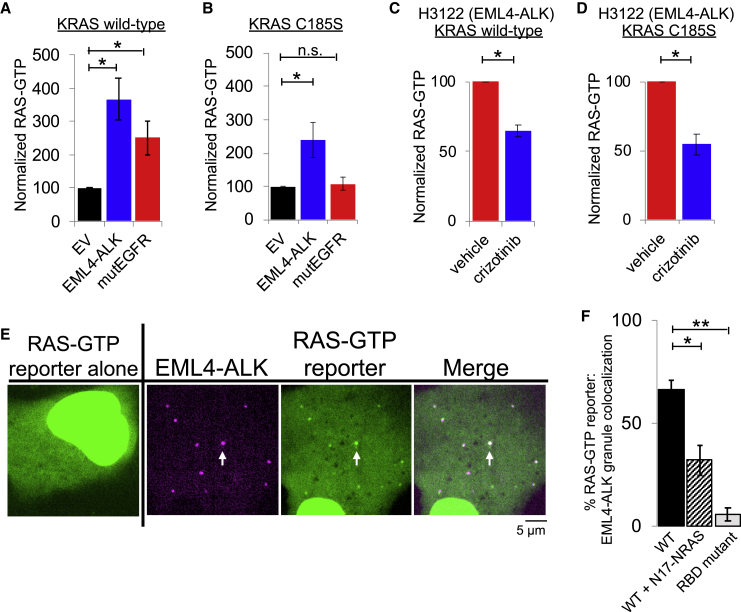
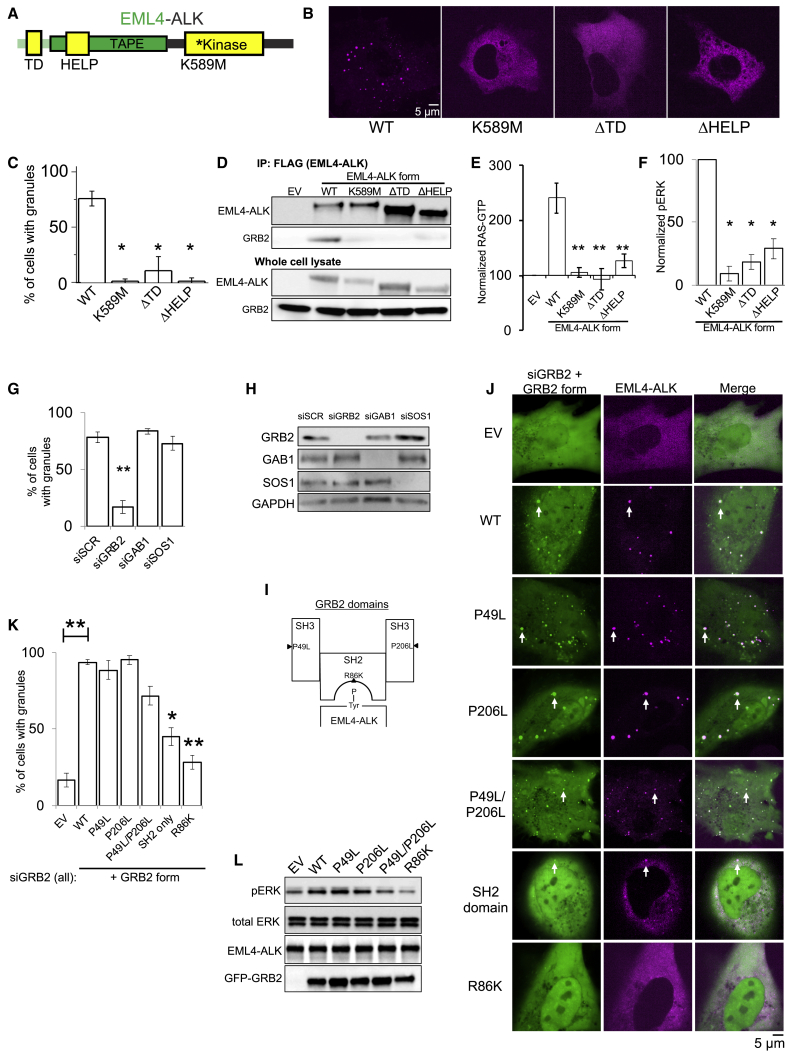
Verification
Claims the paper makes
The claims and statistics of this paper haven’t been checked yet.
Run the check — free, no account needed. It reads the open-access text and checks the sources it cites.
Claims other papers make about this one
Each is checked against this paper’s own text: does it say what the citing paper says it does?
The source backs part of the claim, not all of it — or backs it for a different population, condition or comparison.
In the citing paper
“Related to this, the intracellular EML4-ALK fusion protein has been shown to recruit RTK adaptor proteins, resulting in the elicitation of cytoplasmic KRAS localization47.”
From Mechanisms of KRAS inhibitor resistance in KRAS-mutant colorectal cancer harboring Her2 amplification and aberrant KRAS localization (2025) · cites this paper as [47]
Experimental — accuracy not yet measured
Self-check
Percentages, sums and reported differences re-computed from the paper’s own numbers.
The self-check needs the paper’s full text.
Citations
Cites
NIH Image to ImageJ: 25 years of image analysis
Schneider, C. A., Rasband, W. S., & Eliceiri, K. W. (2012) · Nature Methods · doi:10.1038/nmeth.2089 · Cited by 64,638
Cell Signaling by Receptor Tyrosine Kinases
Lemmon, M. A., & Schlessinger, J. (2010) · Cell · doi:10.1016/j.cell.2010.06.011 · Cited by 7,929
Biomolecular condensates: organizers of cellular biochemistry
Banani, S. F., Lee, H. O., Hyman, A. A., & Rosen, M. K. (2017) · Nature Reviews Molecular Cell Biology · doi:10.1038/nrm.2017.7 · Cited by 6,058
Identification of the transforming EML4–ALK fusion gene in non-small-cell lung cancer
Soda, M., Choi, Y. L., Enomoto, M., Takada, S., Yamashita, Y., Ishikawa, S., Fujiwara, S.-I., Watanabe, H., Kurashina, K., Hatanaka, H., et al. (2007) · Nature · doi:10.1038/nature05945 · Cited by 5,439
Liquid phase condensation in cell physiology and disease
Shin, Y., & Brangwynne, C. P. (2017) · Science · doi:10.1126/science.aaf4382 · Cited by 4,143
Oncogenic Signaling Pathways in The Cancer Genome Atlas
Sanchez-Vega, F., Mina, M., Armenia, J., Chatila, W. K., Luna, A., La, K. C., Dimitriadoy, S., Liu, D. L., Kantheti, H. S., Saghafinia, S., et al. (2018) · Cell · doi:10.1016/j.cell.2018.03.035 · Cited by 3,201
Self-citationA Liquid-to-Solid Phase Transition of the ALS Protein FUS Accelerated by Disease Mutation
Patel, A., Lee, H. O., Jawerth, L. M., Maharana, S., Jahnel, M., Hein, M. Y., Stoynov, S., Mahamid, J., Saha, S., Franzmann, T. M., et al. (2015) · Cell · doi:10.1016/j.cell.2015.07.047 · Cited by 2,927
Alberti, S., Gladfelter, A., & Mittag, T. (2019) · Cell · doi:10.1016/j.cell.2018.12.035 · Cited by 2,856
Molliex, A., Temirov, J. P., Lee, J., Coughlin, M., Kanagaraj, A., Kim, H. J., Mittag, T., & Taylor, J. P. (2015) · Cell · doi:10.1016/j.cell.2015.09.015 · Cited by 2,690
Advanced methods of microscope control using μManager software
Edelstein, A., Tsuchida, M. A., Amodaj, N., Pinkard, H., Vale, R. D., & Stuurman, N. (2014) · Journal of Biological Methods · doi:10.14440/jbm.2014.36 · Cited by 1,927
Erlotinib in Lung Cancer — Molecular and Clinical Predictors of Outcome
Tsao, M., Sakurada, A., Cutz, J.-C., Zhu, C., Kamel‐Reid, S., Squire, J. A., Lorimer, I. A. J., Zhang, T., Liu, G., Daneshmand, M., et al. (2005) · New England Journal of Medicine · doi:10.1056/nejmoa050736 · Cited by 1,815
Computer Control of Microscopes Using µManager
Edelstein, A., Amodaj, N., Hoover, K., Vale, R. D., & Stuurman, N. (2010) · Current Protocols in Molecular Biology · doi:10.1002/0471142727.mb1420s92 · Cited by 1,678
The SH2 and SH3 domain-containing protein GRB2 links receptor tyrosine kinases to ras signaling
Lowenstein, E. J., Daly, R. J., Batzer, A., Li, W., Margolis, B. L., Lammers, R., Ullrich, A., Skolnik, E. Y., Bar‐Sagi, D., & Schlessinger, J. (1992) · Cell · doi:10.1016/0092-8674(92)90167-b · Cited by 1,632
ATPase-Modulated Stress Granules Contain a Diverse Proteome and Substructure
Jain, S., Wheeler, J., Walters, R. W., Agrawal, A., Barsic, A. J., & Parker, R. (2016) · Cell · doi:10.1016/j.cell.2015.12.038 · Cited by 1,597
Phase separation of signaling molecules promotes T cell receptor signal transduction
Su, X., Ditlev, J. A., Hui, E., Xing, W., Banjade, S., Okrut, J., King, D., Taunton, J., Rosen, M. K., & Vale, R. D. (2016) · Science · doi:10.1126/science.aad9964 · Cited by 1,260
Mechanisms of receptor tyrosine kinase activation in cancer
Du, Z., & Lovly, C. M. (2018) · Molecular Cancer · doi:10.1186/s12943-018-0782-4 · Cited by 1,066
The SH2 and SH3 domains of mammalian Grb2 couple the EGF receptor to the Ras activator mSos1
Rozakis-Adcock, M., Fernley, R. T., Wade, J. D., Pawson, T. J., & Bowtell, D. D. L. (1993) · Nature · doi:10.1038/363083a0 · Cited by 1,009
Understanding and targeting resistance mechanisms in NSCLC
Rotow, J. K., & Bivona, T. G. (2017) · Nature reviews. Cancer · doi:10.1038/nrc.2017.84 · Cited by 997
Self-citationLi, N., Batzer, A., Daly, R. J., Yajnik, V., Skolnik, E. Y., Chardin, P., Bar‐Sagi, D., Margolis, B. L., & Schlessinger, J. (1993) · Nature · doi:10.1038/363085a0 · Cited by 938
An Acylation Cycle Regulates Localization and Activity of Palmitoylated Ras Isoforms
Rocks, O., Peyker, A., Kahms, M., Verveer, P., Koerner, C., Lumbierres, M., Kuhlmann, J., Waldmann, H., Wittinghofer, A., & Bastiaens, P. (2005) · Science · doi:10.1126/science.1105654 · Cited by 866
γ-Secretase Cleavage and Nuclear Localization of ErbB-4 Receptor Tyrosine Kinase
Ni, C.-Y., Murphy, M. P., Golde, T. E., & Carpenter, G. F. (2001) · Science · doi:10.1126/science.1065412 · Cited by 858
Biochemical and Structural Analysis of Common Cancer-Associated KRAS Mutations
Hunter, J. C., Manandhar, A., Carrasco, M. A., Gurbani, D., Gondi, S., & Westover, K. D. (2015) · Molecular Cancer Research · doi:10.1158/1541-7786.mcr-15-0203 · Cited by 786
Direct visualization of Ras proteins in spatially distinct cell surface microdomains
Prior, I. A., Muncke, C., Parton, R. G., & Hancock, J. F. (2003) · The Journal of Cell Biology · doi:10.1083/jcb.200209091 · Cited by 743
Monahan, Z. T., Ryan, V. H., Janke, A. M., Burke, K. A., Rhoads, S. N., Zerze, G. H., O’Meally, R. N., Dignon, G. L., Conicella, A. E., Zheng, W., et al. (2017) · The EMBO Journal · doi:10.15252/embj.201696394 · Cited by 692
The Centrosome Is a Selective Condensate that Nucleates Microtubules by Concentrating Tubulin
Woodruff, J. B., Gomes, B. F., Widlund, P. O., Mahamid, J., Honigmann, A., & Hyman, A. A. (2017) · Cell · doi:10.1016/j.cell.2017.05.028 · Cited by 685
Ras signalling on the endoplasmic reticulum and the Golgi
Chiu, V. K., Bivona, T., Hach, A., Sajous, J. B., Silletti, J., Wiener, H., Johnson, R. L., Cox, A. D., & Philips, M. R. (2002) · Nature Cell Biology · doi:10.1038/ncb783 · Cited by 594
Self-citationThe p21 ras C-terminus is required for transformation and membrane association
Willumsen, B. M., Christensen, A., Hubbert, N. L., Papageorge, A. G., & Lowy, D. R. (1984) · Nature · doi:10.1038/310583a0 · Cited by 584
Kroschwald, S., Maharana, S., Matějů, D., Malinovska, L., Nüske, E., Poser, I., Richter, D., & Alberti, S. (2015) · eLife · doi:10.7554/elife.06807 · Cited by 545
Chimeric green fluorescent protein as a tool for visualizing subcellular organelles in living cells
Rizzuto, R., Brini, M., Pizzo, P., Murgia, M., & Pozzan, T. (1995) · Current Biology · doi:10.1016/s0960-9822(95)00128-x · Cited by 499
The t(15;17) translocation alters a nuclear body in a retinoic acid‐reversible fashion.
Koken, M. H. M., Puvion-dutilleul, F., Guillemin, M.-C., Viron, A., Linares‐Cruz, G., Stuurman, N., de Jong, L., Szostecki, C., Calvo, F. M., & Chomienne, C. (1994) · The EMBO Journal · doi:10.1002/j.1460-2075.1994.tb06356.x · Cited by 496
Cancer-Specific Retargeting of BAF Complexes by a Prion-like Domain
Boulay, G., Sandoval, G. J., Riggi, N., Iyer, S., Buisson, R., Naigles, B., Awad, M. E., Rengarajan, S., Volorio, A., McBride, M. J., et al. (2017) · Cell · doi:10.1016/j.cell.2017.07.036 · Cited by 487
Quantitative assessment of fluorescent proteins
Cranfill, P. J. C., Sell, B., Baird, M. A., Allen, J. R., Lavagnino, Z., de Gruiter, H. M., Kremers, G., Davidson, M. W., Ustione, A., & Piston, D. W. (2016) · Nature Methods · doi:10.1038/nmeth.3891 · Cited by 485
Plowman, S. J., Muncke, C., Parton, R. G., & Hancock, J. F. (2005) · Proceedings of the National Academy of Sciences · doi:10.1073/pnas.0504114102 · Cited by 468
McWhirter, J. R., Galasso, D. L., & Wang, J. Y. J. (1993) · Molecular and Cellular Biology · doi:10.1128/mcb.13.12.7587 · Cited by 422
Kinase-controlled phase transition of membraneless organelles in mitosis
Rai, A. K., Chen, J., Selbach, M., & Pelkmans, L. (2018) · Nature · doi:10.1038/s41586-018-0279-8 · Cited by 387
A molecular assembly phase transition and kinetic proofreading modulate Ras activation by SOS
Huang, W. Y. C., Alvarez, S. A., Kondo, Y., Lee, Y. K., Chung, J. K., Lam, H. Y. M., Biswas, K. H., Kuriyan, J., & Groves, J. T. (2019) · Science · doi:10.1126/science.aau5721 · Cited by 352
Targeting RAS Membrane Association: Back to the Future for Anti-RAS Drug Discovery?
Cox, A. D., Der, C. J., & Philips, M. R. (2015) · Clinical Cancer Research · doi:10.1158/1078-0432.ccr-14-3214 · Cited by 351
Farnesol modification of Kirsten-ras exon 4B protein is essential for transformation.
Jackson, J. H., Cochrane, C. G., Bourne, J. R., Solski, P. A., Buss, J. E., & Der, C. J. (1990) · Proceedings of the National Academy of Sciences · doi:10.1073/pnas.87.8.3042 · Cited by 338
ALK, ROS1, and NTRK Rearrangements in Metastatic Colorectal Cancer
Pietrantonio, F., Di Nicolantonio, F., Schrock, A. B., Lee, J., Tejpar, S., Sartore-Bianchi, A., Hechtman, J. F., Christiansen, J., Novara, L., Tebbutt, N., et al. (2017) · JNCI: Journal of the National Cancer Institute · doi:10.1093/jnci/djx089 · Cited by 317
Depalmitoylated Ras traffics to and from the Golgi complex via a nonvesicular pathway
Goodwin, J., Drake, K. R., Rogers, C., Wright, L. P., Lippincott-Schwartz, J., Philips, M., & Kenworthy, A. (2005) · Journal of Cell Biology · doi:10.1083/jcb.200502063 · Cited by 308
RET Aberrations in Diverse Cancers: Next-Generation Sequencing of 4,871 Patients
Kato, S., Subbiah, V., Marchlik, E., Elkin, S. K., Carter, J. L., & Kurzrock, R. (2016) · Clinical Cancer Research · doi:10.1158/1078-0432.ccr-16-1679 · Cited by 285
RAS-MAPK dependence underlies a rational polytherapy strategy in EML4-ALK–positive lung cancer
Hrustanovic, G., Olivas, V. R., Pazarentzos, E., Tulpule, A., Asthana, S., Blakely, C. M., Okimoto, R. A., Lin, L., Neel, D. S., Sabnis, A. J., et al. (2015) · Nature Medicine · doi:10.1038/nm.3930 · Cited by 278
Self-citationMutant ras-encoded proteins with altered nucleotide binding exert dominant biological effects.
Sigal, I. S., Gibbs, W. W., D'Alonzo, J., Temeles, G. L., Wolanski, B., Socher, S. H., & Scolnick, E. M. (1986) · Proceedings of the National Academy of Sciences · doi:10.1073/pnas.83.4.952 · Cited by 267
Improved split fluorescent proteins for endogenous protein labeling
Feng, S., Sekine, S., Pessino, V., Li, H., Leonetti, M. D., & Huang, B. (2017) · Nature Communications · doi:10.1038/s41467-017-00494-8 · Cited by 264
Self-citationThe Dynamics of Mammalian P Body Transport, Assembly, and Disassembly In Vivo
Aizer, A., Brody, Y., Ler, L. W., Sonenberg, N., Singer, R. H., & Shav‐Tal, Y. (2008) · Molecular Biology of the Cell · doi:10.1091/mbc.e08-05-0513 · Cited by 227
EML4-ALK Variants: Biological and Molecular Properties, and the Implications for Patients
Sabir, S. R., Yeoh, S., Jackson, G., & Bayliss, R. W. (2017) · Cancers · doi:10.3390/cancers9090118 · Cited by 224
PI(3,4,5)P 3 Engagement Restricts Akt Activity to Cellular Membranes
Ebner, M., Lučić, I., Leonard, T. A., & Yudushkin, I. A. (2017) · Molecular Cell · doi:10.1016/j.molcel.2016.12.028 · Cited by 222
Visualizing Dynamics of Cell Signaling In Vivo with a Phase Separation-Based Kinase Reporter
Zhang, Q., Huang, H., Zhang, L., Wu, R. S., Chung, C.-I., Zhang, S., Torra, J., Schepis, A., Coughlin, S. R., Kornberg, T. B., et al. (2018) · Molecular Cell · doi:10.1016/j.molcel.2017.12.008 · Cited by 149
Ras/MAPK signaling from endomembranes
Fehrenbacher, N., Bar-Sagi, D., & Philips, M. (2009) · Molecular Oncology · doi:10.1016/j.molonc.2009.06.004 · Cited by 131
Cussac, D., Frech, M., & Chardin, P. (1994) · The EMBO Journal · doi:10.1002/j.1460-2075.1994.tb06717.x · Cited by 125
Passive Noise Filtering by Cellular Compartmentalization
Stoeger, T., Battich, N., & Pelkmans, L. (2016) · Cell · doi:10.1016/j.cell.2016.02.005 · Cited by 120
Childress, M. A., Himmelberg, S. M., Chen, H., Deng, W., Davies, M. A., & Lovly, C. M. (2018) · Molecular Cancer Research · doi:10.1158/1541-7786.mcr-18-0171 · Cited by 108
Richards, M. W., O’Regan, L., Röth, D., Montgomery, J. M., Straube, A., Fry, A. M., & Bayliss, R. W. (2015) · Biochemical Journal · doi:10.1042/bj20150039 · Cited by 101
Tyrosine kinase gene fusions in cancer: translating mechanisms into targeted therapies
Medves, S., & Demoulin, J. (2011) · Journal of Cellular and Molecular Medicine · doi:10.1111/j.1582-4934.2011.01415.x · Cited by 99
den Hertog, J., & Hunter, T. R. (1996) · The EMBO Journal · doi:10.1002/j.1460-2075.1996.tb00665.x · Cited by 84
Santos, R. C. D., Garay, C., & Antonescu, C. N. (2015) · Cellular Signalling · doi:10.1016/j.cellsig.2015.07.004 · Cited by 70
Spatial Regulation of EGFR Signaling by Sprouty2
Kim, H. J., Taylor, L. J., & Bar‐Sagi, D. (2007) · Current Biology · doi:10.1016/j.cub.2007.01.059 · Cited by 70
VPS35 binds farnesylated N-Ras in the cytosol to regulate N-Ras trafficking
Zhou, M., Wiener, H. H., Su, W., Zhou, Y., Liot, C., Ahearn, I. M., Hancock, J. F., & Philips, M. R. (2016) · The Journal of Cell Biology · doi:10.1083/jcb.201604061 · Cited by 59
Quantitative microscopy reveals dynamics and fate of clustered IRE1α
Belyy, V., Tran, N.-H., & Walter, P. (2019) · Proceedings of the National Academy of Sciences · doi:10.1073/pnas.1915311117 · Cited by 54
Src‐dependent autophagic degradation of Ret in FAK‐signalling‐defective cancer cells
Sandilands, E., Serrels, B., Wilkinson, S., & Frame, M. C. (2012) · EMBO Reports · doi:10.1038/embor.2012.92 · Cited by 54
LC3C-Mediated Autophagy Selectively Regulates the Met RTK and HGF-Stimulated Migration and Invasion
Bell, E. S., Coelho, P. P., Ratcliffe, C. D. H., Rajadurai, C. V., Peschard, P., Vaillancourt, R., Zuo, D., & Park, M. (2019) · Cell Reports · doi:10.1016/j.celrep.2019.11.063 · Cited by 53
TCR-Induced Activation of Ras Proceeds at the Plasma Membrane and Requires Palmitoylation of N-Ras
Rubio, I., Grund, S., Song, S.-P., Biskup, C. U., Bandemer, S., Fricke, M., Förster, M., Graziani, A., Wittig, U., & Kliche, S. (2010) · The Journal of Immunology · doi:10.4049/jimmunol.1000334 · Cited by 50
Regulated Intramembrane Cleavage of the EGF Receptor
Liao, H., & Carpenter, G. F. (2012) · Traffic · doi:10.1111/j.1600-0854.2012.01371.x · Cited by 38
A Novel ALK Fusion in Pediatric Medullary Thyroid Carcinoma
Hillier, K., Hughes, A. L., Shamberger, R. C., Shusterman, S., Pérez‐Atayde, A. R., Wassner, A. J., Iafrate, A. J., Dubuc, A. M., Janeway, K. A., Rothenberg, S. M., et al. (2019) · Thyroid · doi:10.1089/thy.2019.0041 · Cited by 33
Receptor Tyrosine Kinases: Translocation Partners in Hematopoietic Disorders
Nelson, K. N., Peiris, M. N., Meyer, A. N., Siari, A., & Donoghue, D. J. (2016) · Trends in Molecular Medicine · doi:10.1016/j.molmed.2016.11.002 · Cited by 33
Stop fRETting the Target: Next-Generation RET Inhibitors Have Arrived
Iams, W. T., & Lovly, C. M. (2018) · Cancer Discovery · doi:10.1158/2159-8290.cd-18-0489 · Cited by 11
Real-Time Visualization and Quantification of Native Ras Activation in Single Living Cells
Biskup, C. U., & Rubio, I. (2013) · Methods in molecular biology · doi:10.1007/978-1-62703-791-4_19 · Cited by 7
Cited by
Sorted by citations
KRAS Mutation: From Undruggable to Druggable in Cancer
Huang, L., Guo, Z., Wang, F., & Fu, L. (2021) · Signal Transduction and Targeted Therapy · doi:10.1038/s41392-021-00780-4 · Cited by 1,127
A framework for understanding the functions of biomolecular condensates across scales
Lyon, A. S., Peeples, W. B., & Rosen, M. K. (2021) · Nature Reviews Molecular Cell Biology · doi:10.1038/s41580-020-00303-z · Cited by 895
Liquid–liquid phase separation drives cellular function and dysfunction in cancer
Mehta, S., & Zhang, J. (2022) · Nature reviews. Cancer · doi:10.1038/s41568-022-00444-7 · Cited by 464
ALK-positive lung cancer: a moving target
Schneider, J. L., Lin, J. J., & Shaw, A. T. (2023) · Nature Cancer · doi:10.1038/s43018-023-00515-0 · Cited by 198
Wu, Y., Zhou, L., Zou, Y., Zhang, Y., Zhang, M., Xu, L., Zheng, L., He, W., Yu, K., Li, T., et al. (2023) · Nature Cancer · doi:10.1038/s43018-023-00522-1 · Cited by 134
Metadata
- Authors
- Tulpule, A., Guan, J., Neel, D. S., Allegakoen, H. R., Lin, Y. P., Brown, D., Chou, Y.-T., Heslin, A., Chatterjee, N., Perati, S., Menon, S., Nguyen, T. A., Debnath, J., Ramirez, A. D., Shi, X., Yang, B., Feng, S., Makhija, S., Huang, B., & Bivona, T. G.
- Affiliations
- University of California, San Francisco (US)
- Corresponding author
- Huang, Bo
- Bivona, Trever G.
- ORCID
- Venue
- Cell
- Publisher
- Elsevier BV
- Published
- 2021-05
- Volume
- 184
- Issue
- 10
- Pages
- 2649-2664.e18
- ISSN
- 0092-8674 (ISSN-L)
- PMC
- PMC8127962
- OpenAlex
- W3155633297
- Cited by
- 189
- References
- 67
- Citations by year
- 2026: 25 · 2025: 35 · 2024: 36 · 2023: 46 · 2022: 27 · 2021: 18
- FWCI
- 7.54
- Type
- journal article
- Language
- en
- Open access
- hybrid
- doi.org
- Licence
- Locations
- Cell (publishedVersion, cc-by)
- SSRN Electronic Journal (publishedVersion)
- bioRxiv (Cold Spring Harbor Laboratory) (acceptedVersion, cc-by-nc)
- PubMed Central (publishedVersion, cc-by)
- PubMed (publishedVersion)
- Funders
- NIH
- NCI Cancer Moonshot
- Topics
- Life Sciences › Biochemistry, Genetics and Molecular Biology › Molecular Biology › Protein Kinase Regulation and GTPase Signaling
- Life Sciences › Biochemistry, Genetics and Molecular Biology › Molecular Biology › RNA Research and Splicing
- Life Sciences › Biochemistry, Genetics and Molecular Biology › Cell Biology › Cellular transport and secretion
- Keywords
- biomolecular condensates, receptor tyrosine kinase, RAS/MAPK pathway, anaplastic lymphoma kinase, RET, fusion oncoproteins, cancer signaling
- MeSH terms
- Biomolecular Condensates, Cytoplasmic Granules, Enzyme Activation, Humans, Neoplasms, Signal Transduction, Oncogene Proteins, Fusion, ras Proteins, SOS1 Protein, Adaptor Proteins, Signal Transducing, GRB2 Adaptor Protein, HEK293 Cells
About these checks
Registry, retraction, Cites and statistics results are computed, not judged, with one exception: a printed reference that no index lists is read once by a model before it counts as a citation error. Claims are extracted by a model and kept only when their quote appears verbatim in the text; each cited source is then checked, with a model’s help, for whether it says what the claim relies on. Those verdicts can be wrong — read the claim’s quote and the cited source before relying on one.
Statistics and arithmetic are recomputed, not judged.
Confidence bands are shown only for fields calibrated on our annotated test set. None is calibrated yet, so no band is shown.
What counts as a claim ›How we measure confidence ›How we check this ›
Are you an author, or do you see a problem with this page? Request a review
