

Sexual dimorphism in the complete Drosophila male central nervous system connectome
Open accessThe DOI matches its Crossref record; 219 of the 219 references it cites were found in a registry or an index; 1 of the 196 sources its claims cite were checked for support.
Abstract
Sex differences in behavior exist across all animals, typically under strong genetic regulation. In Drosophila, fruitless/doublesex transcription factors identify dimorphic neurons, but their organization into functional circuits remains unclear. We present the connectome of the entire Drosophila male central nervous system. This contains 166,700 neurons spanning the brain and nerve cord, fully proofread and annotated, including fruitless/doublesex expression and 11,710 neuron types. We provide the first comprehensive comparison between male and female brain connectomes to synaptic resolution, finding 8,069 isomorphic, 138 dimorphic, 289 male-specific, and 71 female-specific types. This resource enables analysis of full sensory-to-motor circuits underlying complex behaviors and the impact of dimorphic elements. Sex-specific/dimorphic neurons are concentrated in higher brain centers, while the sensory and motor periphery is largely isomorphic. Within higher centers, male-specific connections are organized into hotspots defined by male-specific neurons or arbors. Dimorphic neurons reroute information across sexes.
Overview
CoChat Summary
TL;DR
The paper presents the complete connectome of the adult male Drosophila central nervous system and the first brainwide synaptic-resolution comparison with female connectomes, finding that sex-specific and dimorphic neurons are concentrated in higher brain centres while the sensory and motor periphery is largely isomorphic. It identifies dimorphic hotspots and circuit switches that reroute sensory information into sex-specific behaviours.
Key findings
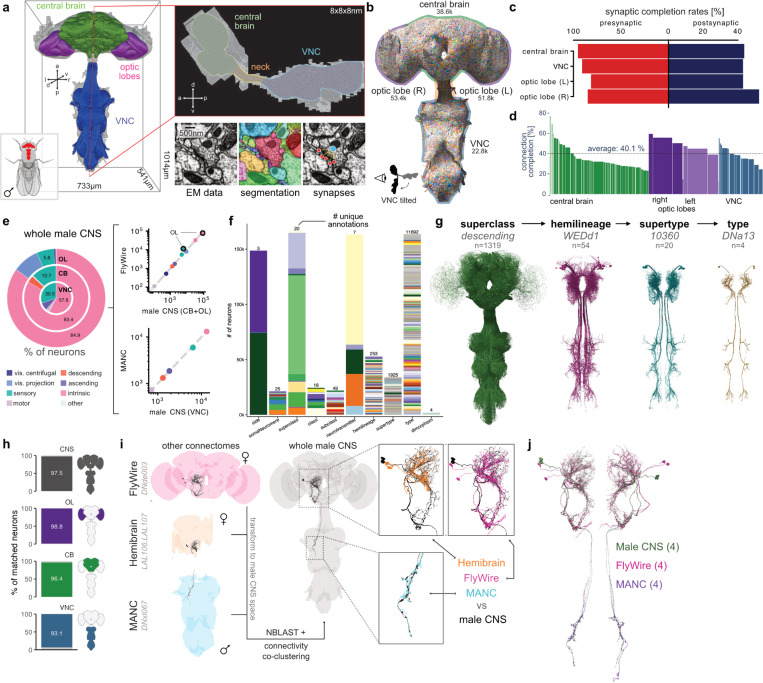
- The male CNS connectome contains 166,691 neurons, 11,691 cell types, and 25.6M edges between 166,391 neurons; neuropil completion is 94% presynaptic and 42% postsynaptic, with 40.1% connection completeness.
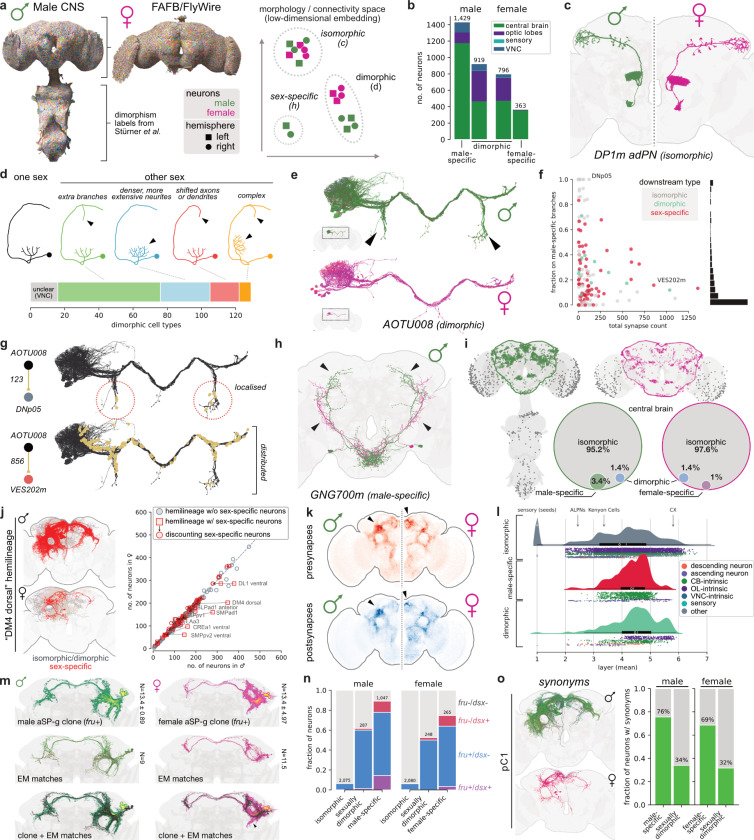
- Male–female comparison identifies 7,205 isomorphic, 114 dimorphic, 262 male-specific, and 69 female-specific types; 331 sex-specific and 114 sexually dimorphic cell types comprise 4.8% of the male and 2.4% of the female central brain.
- Sex-specific/dimorphic neurons occupy deeper connectome layers (mean layer 4.3 and 4.5, respectively, versus 3.9 for isomorphic neurons), and only 2.5% of male-specific versus 18.5% of isomorphic neurons are in sensory-periphery layers 1–3.
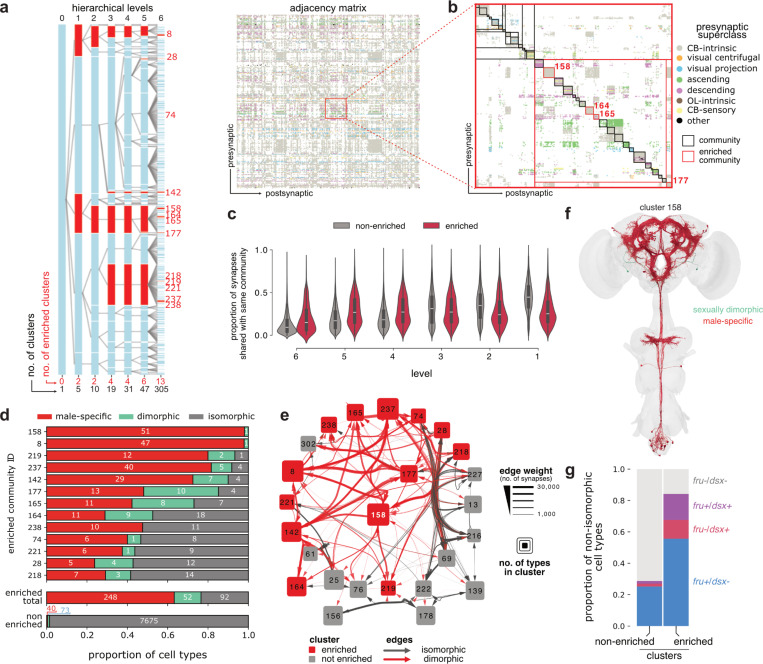
- About 6.3% of male and 1.3% of female central-brain edges are dimorphic; 18% of male and 8% of female neurons have significant dimorphic connectivity, and 13 of 305 clusters are enriched for dimorphic/male-specific types, containing 300 of 413 (72%) non-isomorphic types.
Methods
- One adult male CNS was imaged with seven enhanced focused ion beam scanning electron microscopy systems over 13 months, yielding 160 teravoxels at 8×8×8 nm isotropic resolution (0.082 mm³ total volume); automated segmentation and synapse detection found 46 million presynapses and 312 million PSDs with average precision/recall of 0.82/0.81.
- The dataset was proofread with an estimated 44 person-years of effort and annotated for 166,691 neurons and 11,691 types; cell types were cross-matched across FAFB/FlyWire, hemibrain, and MANC using NBLAST morphology and connectivity similarity, and fruitless/doublesex expression was annotated by registering light microscopy data.
- Analyses included maximum-flow mapping from sensory modalities to motor domains, a t-statistic on left/right hemisphere edge weights with FDR correction to define dimorphic edges, hierarchical stochastic block modelling for community enrichment, and probabilistic graph traversal for layer assignment.
Limitations
- Stated: comprehensive across-sex comparisons were possible only to the FAFB/FlyWire female brain; comparisons to the female nerve cord were restricted because the FANC dataset is partially proofread, and the BANC dataset was still a work in progress. The paper also states that functional analysis is required to confirm predictions, that developmental homology may be missed for highly divergent neurons, and that the connectome is a lifetime snapshot.
- Stated/evident: low sample numbers (n=2 brains) preclude statistical analysis for some comparisons, such as olfactory receptor neuron counts; maximum flow does not use connection sign, so negative inferences should be cautious; expert curation was required to separate biological signal from technical noise; and some neurons could not be reconstructed due to sample artefacts or segmentation issues.
Model-written summary. Check it against the paper before relying on it.
Integrity signals
Registry
Cites
Statistics
Figures
Verification
Claims the paper makes
1 Valid · 3 Not valid · 70 Not checked · 224 Own results and interpretations
The sources with a verdict support this claim; the rest weren’t checked yet, have no full text we could read, or their verdicts aren’t rated yet.
In the paper
“with 94% pre- and 42% postsynaptic completion rates in neuropils, this dataset is similar to or exceeds previously published connectomes30–34 (Fig 1c, Fig S9g).”
§ Sexual dimorphism in the complete connectome of the Drosophila male central nervous system > Results > A complete connectome of a whole male CNS
What the sources say
- Not checked yetcites [30] Dorkenwald S., Matsliah A., Sterling A.R., Schlegel P., Yu S.-C., McKellar C.E., Lin A., Costa M., Eichler K., Yin Y., (2024). Neuronal wiring diagram of an adult brain. Nature 634, 124– 138. 39358518 PMC11446842
- Not matchedcites [31] Schlegel P., Yin Y., Bates A.S., Dorkenwald S., Eichler K., Brooks P., Han D.S., Gkantia M., dos Santos M., Munnelly E.J., (2024). Whole-brain annotation and multi-connectome cell typing of Drosophila. Nature 634, 139– 152. 39358521 PMC11446831
More than one paper fits this citation.
- Supportedcites [32] Scheffer L.K., Xu C.S., Januszewski M., Lu Z., Takemura S.-Y., Hayworth K.J., Huang G.B., Shinomiya K., Maitlin-Shepard J., Berg S., (2020). A connectome and analysis of the adult central brain. Elife 9. 10.7554/eLife.57443. PMC7546738 32880371 source
The citation cluster 30–34 is attached to 'previously published connectomes', so what is attributed to Scheffer et al. (2020) is being one of those prior connectomes, not the 94%/42% figures (those describe the citing dataset). Our copy confirms this: it presents a synaptic-resolution connectome of the adult Drosophila central brain ('Producing a connectome comprising reconstructed neurons and the chemical synapses between them...', Connectome reconstruction) and quantifies its pre-/postsynaptic completion — '>90% of the T-bars in our dataset were contained in identified neurons' with PSD sampling 'typically ranging from 20% to 85%' (Assessing connection completeness), plus per-region completion percentages in Table 2 (What is included). The specific numbers 94% and 42% do not appear anywhere in our copy (searched: 94%/42% completion, Table 1/Table 2 percentages, comparison with previously published connectomes), but no passage contradicts the claim either. (LLM, conf=0.80)
- Not checked yetcites [33] Marin E.C., Morris B.J., Stürner T., Champion A.S., Krzeminski D., Badalamente G., Gkantia M., Dunne C.R., Eichler K., Takemura S.-Y., (2024). Systematic annotation of a complete adult male Drosophila nerve cord connectome reveals principles of functional organisation. 10.7554/elife.97766.1. source
- Not checked yetcites [34] Takemura S.-Y., Hayworth K.J., Huang G.B., Januszewski M., Lu Z., Marin E.C., Preibisch S., Xu C.S., Bogovic J., Champion A.S., (2024). A connectome of the male Drosophila ventral nerve cord. 10.7554/elife.97769.1. source
plainSingle case- Asserted: passes — The authors put it forward as true.
- Checkable: passes — It can be checked against evidence.
- Load-bearing: passes — The paper’s conclusions depend on it.
- Based: passes — The paper gives a reason why it holds.
A result the paper reports from its own data — it cites no other source for it, so there is none to check. The quote shows it is in the paper.
In the paper
“Within higher centres, male-specific connections are organised into hotspots defined by male-specific neurons or arbours.”
§ Sexual dimorphism in the complete connectome of the Drosophila male central nervous system > Abstract
plainstates an association- Asserted: passes — The authors put it forward as true.
- Checkable: passes — It can be checked against evidence.
- Load-bearing: passes — The paper’s conclusions depend on it.
- Based: passes — The paper gives a reason why it holds.
A result the paper reports from its own data — it cites no other source for it, so there is none to check. The quote shows it is in the paper.
In the paper
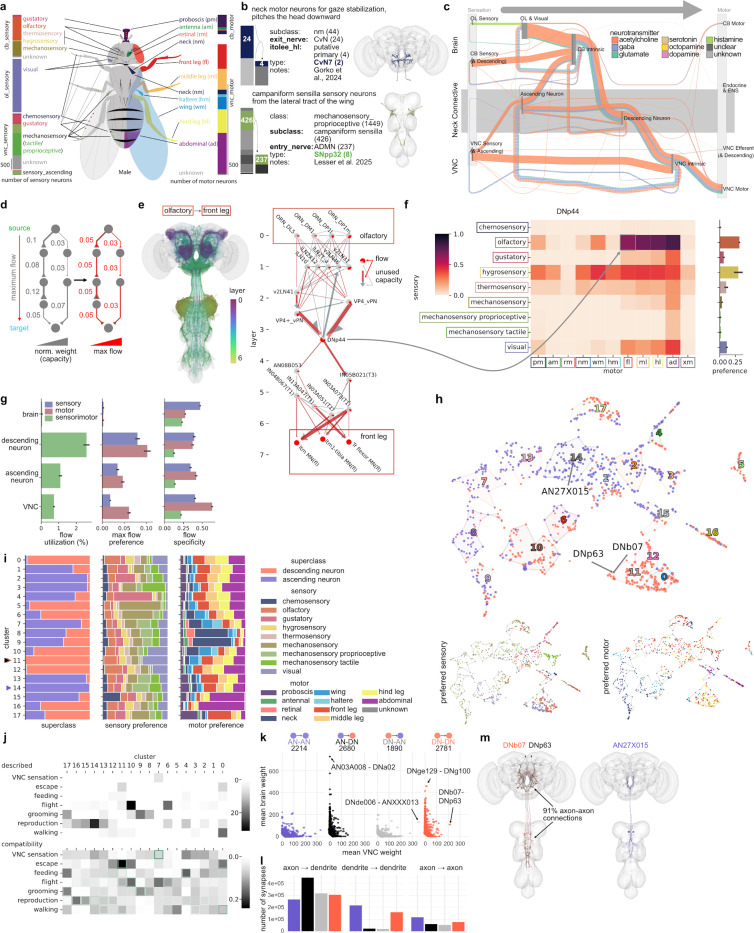
“We comprehensively mapped sensory and motor neurons across the brain and nerve cord (Fig 2a and Fig S2a).”
§ Sexual dimorphism in the complete connectome of the Drosophila male central nervous system > Results > Information flow from sensory to motor
plainSingle case- Asserted: passes — The authors put it forward as true.
- Checkable: passes — It can be checked against evidence.
- Load-bearing: passes — The paper’s conclusions depend on it.
- Based: passes — The paper gives a reason why it holds.
A result the paper reports from its own data — it cites no other source for it, so there is none to check. The quote shows it is in the paper.
In the paper
“Building on this foundation, we present the first finished connectome of an entire male Drosophila central nervous system.”
§ Sexual dimorphism in the complete connectome of the Drosophila male central nervous system > Introduction
plainSingle case- Asserted: passes — The authors put it forward as true.
- Checkable: passes — It can be checked against evidence.
- Load-bearing: passes — The paper’s conclusions depend on it.
- Based: passes — The paper gives a reason why it holds.
In the paper
“Clusters also structure connectivity between ascending and descending neurons (Fig S2c), which could previously only be analyzed by matching of some cell types across partial connectome datasets from different animals50.”
§ Sexual dimorphism in the complete connectome of the Drosophila male central nervous system > Results > Information flow from sensory to motor
What the sources say
- Not checked yetcites [50] Stürner T., Brooks P., Serratosa Capdevila L., Morris B.J., Javier A., Fang S., Gkantia M., Cachero S., Beckett I.R., Marin E.C., (2025). Comparative connectomics of Drosophila descending and ascending neurons. Nature. 10.1038/s41586-025-08925-z. PMC12222017 40307549 source
plainstates an association- Asserted: passes — The authors put it forward as true.
- Checkable: passes — It can be checked against evidence.
- Load-bearing: unclear — It is unclear whether the paper’s conclusions depend on it.
- Based: passes — The paper gives a reason why it holds.
120 more claims
Create a free account to see all 298 claims and to verify the 184 references still open.
- It may state two separate claims as one. 112
- Probably not a substantial claim. 92
Self-check
Percentages, sums and reported differences re-computed from the paper’s own numbers.
Each contradiction between two passages listed here was confirmed by an independent check.
Rated major: it would touch a result — a value a result rests on, reported and recomputed p-values on opposite sides of the significance level, two passages that conflict with no sign which is right, or a cited work retracted before this paper was published.
In the paper
§ Sexual dimorphism in the complete connectome of the Drosophila male central nervous system > Results > Global analysis of sexually dimorphic connectivity
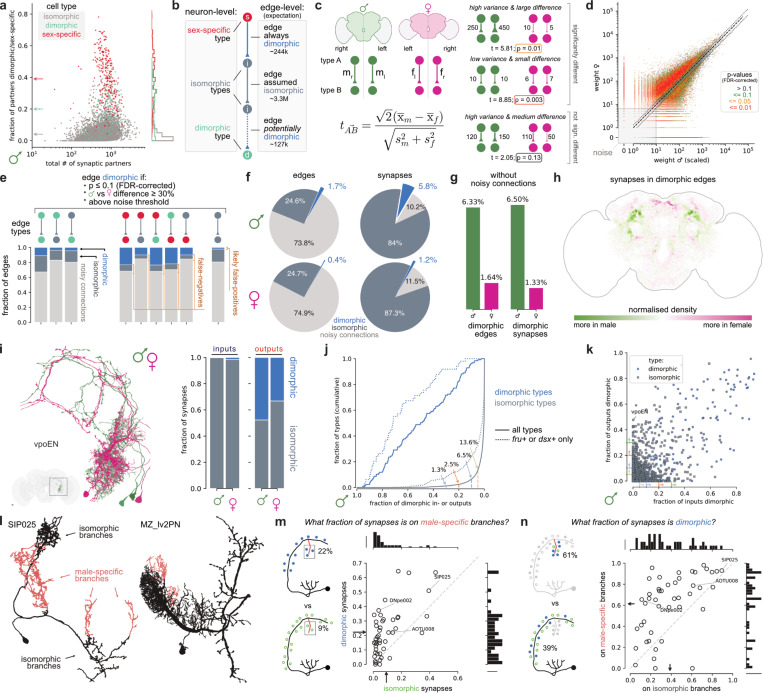
“we therefore defined a noise threshold for each dataset and ignored weak edges below these weights (<8 for male CNS, <11 for FAFB/FlyWire, Fig S8e)”
§ Sexual dimorphism in the complete connectome of the Drosophila male central nervous system > Methods > Definition of dimorphic edges
“To achieve a 90% probability of an isomorphic edge in the male also being present in the female dataset, it needs to consist of >10 synapses. In the opposite direction, that threshold is >7 synapses”
Rated major: it would touch a result — a value a result rests on, reported and recomputed p-values on opposite sides of the significance level, two passages that conflict with no sign which is right, or a cited work retracted before this paper was published.
In the paper
“From the t-statistic, p-values were calculated using a two-sample t-test with 3 degrees of freedom as implemented in scipy.stats.sf 175.”
§ Sexual dimorphism in the complete connectome of the Drosophila male central nervous system > Methods > Definition of dimorphic edges
Reported 3 · recomputed 2
Rated minor: it would not touch a result — a value no result rests on, a p-value that stays on the same side of the significance level, or a conflict that is clerical, resolved elsewhere in the paper, or outside its own findings.
In the paper
§ Sexual dimorphism in the complete connectome of the Drosophila male central nervous system > Abstract
“finding 7,205 isomorphic, 114 dimorphic, 262 male-specific and 69 female-specific types.”
§ Sexual dimorphism in the complete connectome of the Drosophila male central nervous system > Results > Dimorphic neurons are strongly clustered and interconnected
“Starting from the type-to-type connectome graph for the male central brain, we obtained hierarchically grouped nodes into clusters of similar connectivity (Fig 9a,b; see Methods for details). This identified two key modes of involvement of the dimorphic and male-specific types in the network structure. First, only 13 out of 305 clusters were statistically enriched for dimorphic or male-specific types, constituting 300 of 413 (72%) non-isomorphic types.”
Rated minor: it would not touch a result — a value no result rests on, a p-value that stays on the same side of the significance level, or a conflict that is clerical, resolved elsewhere in the paper, or outside its own findings.
In the paper
§ Sexual dimorphism in the complete connectome of the Drosophila male central nervous system > Results > Olfactory system
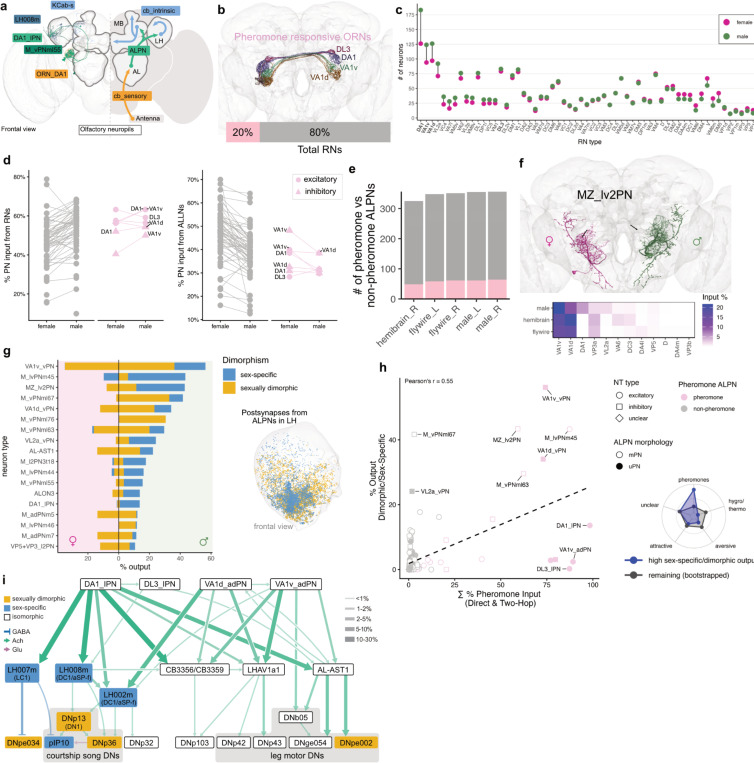
“We next annotated the output neurons of the antennal lobe (projection neurons, ALPNs, 188 types)”
§ Sexual dimorphism in the complete connectome of the Drosophila male central nervous system > Methods > Olfactory system analysis
“In the male CNS we annotated 71 types of uniglomerular ALPNs (284 neurons) and 117 types of multiglomerular ALPNs (409 neurons) and 6 ALON types (14 output neurons with distinctive morphology compared with classic ALPNs). In the text, when we refer to ALPNs, this includes ALONs.”
Citations
Cites
Deep Residual Learning for Image Recognition
He, K., Zhang, X., Ren, S., & Sun, J. (2016) · 2016 IEEE Conference on Computer Vision and Pattern Recognition (CVPR) · doi:10.1109/cvpr.2016.90 · Cited by 235,474
Controlling the False Discovery Rate: A Practical and Powerful Approach to Multiple Testing
Benjamini, Y., & Hochberg, Y. (1995) · Journal of the Royal Statistical Society Series B: Statistical Methodology · doi:10.1111/j.2517-6161.1995.tb02031.x · Cited by 109,482
SciPy 1.0: fundamental algorithms for scientific computing in Python
Virtanen, P., Gommers, R., Oliphant, T. E., Haberland, M., Reddy, T., Cournapeau, D., Burovski, E., Peterson, P., Weckesser, W., Bright, J., et al. (2020) · Nature Methods · doi:10.1038/s41592-019-0686-2 · Cited by 38,430
Community structure in social and biological networks
Girvan, M., & Newman, M. E. J. (2002) · Proceedings of the National Academy of Sciences · doi:10.1073/pnas.122653799 · Cited by 15,502
SciPy 1.0: fundamental algorithms for scientific computing in Python
Virtanen, P., Gommers, R., Oliphant, T. E., Haberland, M., Reddy, T., Cournapeau, D., Burovski, E., Peterson, P., Weckesser, W., Bright, J., et al. (2019) · Apollo - University of Cambridge Repository · doi:10.17863/cam.64134 · Cited by 10,460
Elastix: a toolbox for intensity-based medical image registration
Klein, S., Staring, M., Murphy, K., Viergever, M. A., & Pluim, J. (2010) · IEEE Transactions on Medical Imaging · doi:10.1109/tmi.2009.2035616 · Cited by 4,311
Deep Residual Learning for Image Recognition
He, K., Zhang, X., Ren, S., & Sun, J. (2015) · arXiv · doi:10.48550/arxiv.1512.03385 · Cited by 4,196
Statistical mechanics of community detection
Reichardt, J., & Bornholdt, S. (2006) · Physical Review E · doi:10.1103/physreve.74.016110 · Cited by 2,048
A GAL4-Driver Line Resource for Drosophila Neurobiology
Jenett, A., Rubin, G. M., Ngo, T.-T. B., Shepherd, D., Murphy, C., Dionne, H., Pfeiffer, B. D., Cavallaro, A., Hall, D., Jeter, J., et al. (2012) · Cell Reports · doi:10.1016/j.celrep.2012.09.011 · Cited by 1,449
Self-citationA connectome and analysis of the adult Drosophila central brain
Scheffer, L. K., Xu, C. S., Januszewski, M., Lu, Z., Takemura, S.-Y., Hayworth, K. J., Huang, G. B., Shinomiya, K., Maitlin-Shepard, J., Berg, S., et al. (2020) · eLife · doi:10.7554/elife.57443 · Cited by 1,128
Self-citation
Cited by
Distributed control circuits across a brain-and-cord connectome
Bates, A. S., Phelps, J. S., Kim, M., Yang, H. H., Matsliah, A., Ajabi, Z., Perlman, E., Delgado, K. M., Osman, M. A. M., Salmon, C. K., et al. (2026) · Nature · doi:10.1038/s41586-026-10735-w · Cited by 97
Self-citationSynaptic-resolution connectomics: towards large brains and connectomic screening
Helmstaedter, M. N. (2025) · Nature reviews. Neuroscience · doi:10.1038/s41583-025-00998-z · Cited by 32
Connectome simulations identify a central pattern generator for fly walking
Pugliese, S. M., Chou, G. M., Abe, E. T. T., Turcu, D., Lancaster, J. K., Tuthill, J. C., & Brunton, B. W. (2026) · Nature · doi:10.1101/2025.09.12.675944 · Cited by 27
Synaptic connectome of a neurosecretory network in the Drosophila brain
McKim, T. H., Gera, J., Gayban, A. J. B., Christie, K., Shin, J., Reinhard, N., Manoli, G., Hilpert, S., Callaerts, P., van Breugel, F., et al. (2026) · eLife · doi:10.1101/2024.08.28.609616 · Cited by 26
Differential neuronal survival defines a novel axis of sexual dimorphism in the Drosophila brain
Allen, A. M., Neville, M. C., Nojima, T., Alejevski, F., & Goodwin, S. F. (2026) · Cell Genomics · doi:10.1016/j.xgen.2025.101125 · Cited by 16
A global molecular code for birth order and neuronal identity in Drosophila
Cachero, S., Mitletton, M., Beckett, I. R., Marin, E. C., Capdevila, L. S., Gkantia, M., Soffers, J. H., Lacin, H., Jefferis, G. S. X. E., & Doná, E. (2026) · Nature · doi:10.1038/s41586-026-10797-w · Cited by 16
Self-citationConnectomic Analysis of Mitochondria in the Central Brain of DrosophilaPreprint
Longden, K. D., Rivlin, P. K., Januszewski, M., Neace, E. R., Scheffer, L. K., Ordish, C., Clements, J., Phillips, E., Smith, N. L., Takemura, S., et al. (2024) · eLife · doi:10.1101/2024.04.21.590464 · Cited by 15
Self-citationNetworks of sexually dimorphic neurons that regulate social behaviors in Drosophila
Rubin, G. M., Managan, C., Dreher, M., Kim, E., Miller, S. W., Boone, K. N., Robie, A. A., Taylor, A. L., Branson, K. M., Schretter, C. E., et al. (2026) · Current Biology · doi:10.1016/j.cub.2026.08.013 · Cited by 13
Self-citationThe digital sphinx: Can a worm brain control a fly body?Preprint
Brunton, B. W., Abe, E. T. T., Hu, J., & Tuthill, J. C. (2026) · eLife · doi:10.7554/elife.111516 · Cited by 11
The role of insulin and octopamine in regulating energy homeostasis and locomotion in insects
Bisen, R. S., Liessem, S., Held, M., & Ache, J. M. (2025) · Current Opinion in Insect Science · doi:10.1016/j.cois.2025.101457 · Cited by 10
Transcription factor codes patterning neuronal groundplans of the cerebrum
Elkahlah, N. A., Lin, Y., Pan, Y., Carter, J. A., Shirangi, T. R., & Clowney, E. J. (2026) · Nature · doi:10.1038/s41586-026-10526-3 · Cited by 10
Central versus peripheral neural control of a coordinated walking pattern in DrosophilaPreprint
Sapkal, N., Kumar, D. S., Sunke, S., Mancini, N., Pitchford, J., Murakami, K., & Bidaye, S. S. (2026) · bioRxiv (Cold Spring Harbor Laboratory) · doi:10.64898/2026.04.29.721658 · Cited by 10
Specialized parallel pathways for adaptive control of visual object pursuit
Collie, M. F., Jin, C., Rockwell, V., Kellogg, E. J., Vanderbeck, Q. X., Hartman, A. K., Holtz, S. L., & Wilson, R. I. (2026) · Neuron · doi:10.1016/j.neuron.2026.01.001 · Cited by 8
Reyes, M., Lee, Y. S., Ali, M. M., Sundaramurthi, P., Dhungana, N., Nguyen, A., Zimmerman, T., Capponi, S., & Sitaraman, D. (2026) · iScience · doi:10.1016/j.isci.2026.115564 · Cited by 7
Tastekin, I., Vicente, I. D. H., Beresford, R. J., Morris, B. J., Beckett, I. R., Schlegel, P., Gkantia, M., FlyEM Project Team, Cambridge Connectomics Group, Marin, E. C., et al. (2026) · Cell · doi:10.1016/j.cell.2026.08.016 · Cited by 7
Self-citationThe Connectome Interpreter ToolkitPreprint
Yin, Y., Hoeller, J., Mathiasen, A., Tsang, J., Charrier, M. E., & Cardona, A. (2025) · bioRxiv (Cold Spring Harbor Laboratory) · doi:10.1101/2025.09.29.679410 · Cited by 5
Self-citationStrain variation identifies a neural substrate for behavioral evolution in Drosophila
Ryba, A. R., Brand, P., Coleman, R. T., Greenfeld, Y., Tsitohay, Y. N., Hollunder, F., Keller, K. R., Hathiyari, M., Wei, T., Barbano, P. E., et al. (2026) · Current Biology · doi:10.1016/j.cub.2026.01.071 · Cited by 5
Recent experience and internal state shape local search strategies in flies
Goldschmidt, D., Guo, Y., Chitnis, S. S., Christoforou, C. P., Turner‐Evans, D. B., Ribeiro, C., Hermundstad, A. M., Jayaraman, V., & Haberkern, H. (2026) · Current Biology · doi:10.1016/j.cub.2026.02.037 · Cited by 5
Self-citationGraph embeddings for identifying symmetries in connectomesPreprint
Shan, H., & Litwin-Kumar, A. (2025) · bioRxiv (Cold Spring Harbor Laboratory) · doi:10.64898/2025.12.06.692615 · Cited by 5
Control of walking direction by descending and dopaminergic neurons in Drosophila
Liessem, S., Dahlhoff, S., Iqbal, F. M., Palacios-Muñoz, A., Cascino-Milani, F., Volk, H., Erginkaya, M., Diniz, A. M., Gorostiza, E. A., Büschges, A., et al. (2026) · Current Biology · doi:10.1016/j.cub.2026.06.045 · Cited by 5
Neural basis of sexually dimorphic decision-making
Day, M., & Rezával, C. (2025) · Current Opinion in Neurobiology · doi:10.1016/j.conb.2025.103146 · Cited by 5
Uncovering Sex Differences in the Drosophila Ventral Nerve Cord Through Connectome AlignmentPreprint
Matsliah, A., Salmon, C. K., Bates, A. S., Yang, H. H., Lee, D. D., Saul, L. K., Silverman, B., Gager, J., Yu, S.-C., Willie, K. P., et al. (2026) · SSRN Electronic Journal · doi:10.2139/ssrn.7500840 · Cited by 5
Self-citationA connectome and transcriptome identity shift through a single transcription factor isoform
Smolin, N., Dombrovski, M., Hina, B. W., Moreno‐Sanchez, A., Gossart, R., Carmona, C., Rehan, A., Hussein, R. H., Mirshahidi, P., Ausborn, J., et al. (2026) · Current Biology · doi:10.1101/2024.06.14.598883 · Cited by 4
A central somatotopic map of the fly leg supports spatially targeted grooming
Elabbady, L., Chou, G. M., Sustar, A., Cook, A., Collman, F., & Tuthill, J. C. (2026) · Current Biology · doi:10.1016/j.cub.2026.03.045 · Cited by 4
The organization of visual pathways in the Drosophila brain
Hoeller, J., Zhao, A., Nern, A., Rogers, E. M., Romani, S., & Reiser, M. B. (2026) · Cell · doi:10.1016/j.cell.2026.08.014 · Cited by 4
Self-citationFrom the fly connectome to exact ring attractor dynamicsPreprint
Biswas, T., Stanoev, A., Romani, S., & Fitzgerald, J. E. (2024) · bioRxiv (Cold Spring Harbor Laboratory) · doi:10.1101/2024.11.01.621596 · Cited by 4
Self-citationTassara, F., Barella, M., Troncoso, T. S. F., Simó, L., Serrao, M. M. F., Rodríguez-Caron, M., Ispizua, J. I., Ellisman, M. H., de la Iglesia, H. O., Ceriani, M. F., et al. (2026) · ACS Photonics · doi:10.1021/acsphotonics.6c01278 · Cited by 4
Connectomic mapping of pharyngeal and gut sensory circuits in adult Drosophila
Giakoumas, D. S., Zhu, J. M., Jamal, A., & Yao, Z. (2026) · iScience · doi:10.1016/j.isci.2026.117359 · Cited by 3
Central complex representations of self-movement are sufficient to compute wind direction in flight
May, C. E., Cellini, B., Stupski, S. D., Lopez, A. P., Mangat, N., van Breugel, F., & Nagel, K. I. (2026) · Science Advances · doi:10.1126/sciadv.aeh7220 · Cited by 3
Vectorial efference copy and visuomotor transformation through gap junctionsPreprint
Falt, T., Ammer, G., Serbe-Kamp, E., Kroell, L. M., Friedrich, A. B., Mota, S. G., Simsova, E., & Fenk, L. M. (2026) · bioRxiv (Cold Spring Harbor Laboratory) · doi:10.64898/2026.08.11.744090 · Cited by 3
Neural control of respiration in DrosophilaPreprint
Luo, Y., Sustar, A., Ispizua, J. I., Kondakath, G., Yang, Y. J., van Breugel, F., & Tuthill, J. C. (2026) · bioRxiv (Cold Spring Harbor Laboratory) · doi:10.64898/2026.07.28.740380 · Cited by 3
Biased connectivity shapes food odor categorization in the Drosophila mushroom body
Chan, I. C. W., Kossio, F. Y. K., & Tavosanis, G. (2026) · Cell Reports · doi:10.1016/j.celrep.2026.117911 · Cited by 3
“37 In the present study, we focused our connectome analysis on this group of FPNs (9 PN types; 14–15 neurons per hemisphere; STAR Methods) and compared them with another group of PNs that specifically responds to various pheromones and odors present at egg-laying sites, termed…”
Neural coordination of wing and leg movements during a terrestrial threat display
Cao, S., & Anderson, D. J. (2026) · Current Biology · doi:10.1016/j.cub.2026.09.056 · Cited by 3
FlyHack: Stress-Testing Mechanistic Claims in a Connectome-Constrained Visual ModelPreprint
Dhawan, A. (2026) · arXiv · doi:10.48550/arxiv.2610.13018 · Cited by 3
“Recent connectomes now span the adult Drosophila brain, visual system and male central nervous system (Dorkenwald et al., 2024; Nern et al., 2025; Berg et al., 2026), making it possible to build network models whose architecture is constrained by anatomy and whose remaining parameters are fitted by…”
Guo, L., Zhang, N., Tang, P., Dolin, J., Kiassat, L., Yoshikawa, S., & Simpson, J. H. (2026) · iScience · doi:10.1016/j.isci.2026.114902 · Cited by 2
Self-citationRecent social experience alters song behavior in Drosophila
Roemschied, F. A., Ireland, E. C., Calhoun, A. J., Choi, M., Ahmed, O. M., & Murthy, M. (2026) · Current Biology · doi:10.1016/j.cub.2026.02.003 · Cited by 2
Connectome analysis reveals brain-wide visual processing in Drosophila
Kim, S. Y., & Kim, A. J. (2026) · iScience · doi:10.64898/2026.02.02.700492 · Cited by 2
McLachlan, A., Court, R., Pilgrim, C., Longden, K. D., Brown, N. H., Osumi-Sutherland, D., Jefferis, G. S. X. E., & Armstrong, J. D. (2026) · bioRxiv (Cold Spring Harbor Laboratory) · doi:10.64898/2026.06.16.732577 · Cited by 2
Self-citationCastillo, L., Fajner, V., Yalbir, E., Shahul, S., Ruff, B., Lee, V. J., Koger, A., Heller, J., Ishii, K., Morad, V., et al. (2026) · Current Biology · doi:10.1016/j.cub.2026.07.076 · Cited by 2
Method of the Year: EM connectomics
Marx, V. (2025) · Nature Methods · doi:10.1038/s41592-025-02906-w · Cited by 2
Divergent co-transmission by a predictive motor circuit modulates auditory processing
Bennett, M. M., Cheong, H. S., Boone, K. N., Salman, F., Ralston, J. D., Luthman, J., Daly, K. C., Card, G. M., & Dacks, A. M. (2026) · Current Biology · doi:10.1016/j.cub.2026.06.080 · Cited by 2
Self-citationElectrical synapses mediate visual orientation behavior
Frighetto, G., Dombrovski, M., Castillo, L., Meera, P., Mirshahidi, P., Mirshahidi, P. S., Sanfilippo, P., Vaccari, A., Kandimalla, P., Hartenstein, V., et al. (2026) · Current Biology · doi:10.1016/j.cub.2026.09.060 · Cited by 2
Neural evolution of complex motor behaviors: insights from Drosophila courtship song
Ding, Y., & Lillvis, J. L. (2025) · Current Opinion in Neurobiology · doi:10.1016/j.conb.2025.103131 · Cited by 2
Sequencing of distinct wing behaviors during Drosophila courtship
Li, X., Thieringer, K., Gao, Y., & Murthy, M. (2026) · Current Biology · doi:10.1016/j.cub.2026.01.042 · Cited by 2
Yad, M. A. A., & Nabila, N. T. (2026) · arXiv · doi:10.48550/arxiv.2610.29205 · Cited by 2
“…created by (Scheffer et al., 2020), the whole adult central brain, FlyWire, was created by (Dorkenwald et al., 2024; Schlegel et al., 2024),the male Drosophila central brain, BANC, was created by (Berg et al., 2026) and the central brain and nerve cord in BANC was created by (Bates et al., 2026).”
Fu, W. Y., & Spradling, A. C. (2026) · Development · doi:10.1242/dev.205668 · Cited by 2
From Support to StatePreprint
Chen, W. (2026) · Zenodo (CERN European Organization for Nuclear Research) · doi:10.5281/zenodo.22931880 · Cited by 2
Sexual dimorphism in the cell number of the adult Drosophila brain
Singh, N. P., & Harbison, S. T. (2026) · PLoS ONE · doi:10.1371/journal.pone.0342456 · Cited by 1
A multi-resolution imaging and analysis pipeline for comparative circuit reconstruction in insectsPreprint
Gillet, V., Sayre, M. E., Badalamente, G. S., Schieber, N. L., Tedore, K., Funke, J., & Heinze, S. (2026) · bioRxiv (Cold Spring Harbor Laboratory) · doi:10.64898/2026.02.25.708065 · Cited by 1
Self-citationConnectomes: a re-emerging hub dataset for neuroscience
Kyllmann, S., & Keesey, I. W. (2026) · Frontiers in Neuroscience · doi:10.3389/fnins.2026.1911198 · Cited by 1
Kopel, E. (2026) · arXiv · doi:10.48550/arxiv.2609.33054 · Cited by 1
“The complete connectome of the male Drosophila central nervous system [7, 9], which joins the brain and the ventral nerve cord (VNC), makes a whole-CNS version of these questions possible.”
InfluentialLazar, A. A., Shukla, S., & Zhou, Y. (2026) · bioRxiv (Cold Spring Harbor Laboratory) · doi:10.64898/2026.08.22.746456 · Cited by 1
“To further validate the topographic mapping methodology and the observed spatial profile of the sum and difference of synaptic counts mentioned above, we applied a similar topographic mapping to the LPLC2 axons and a skeletal analysis of GF dendrites in the recently released MaleCNS dataset [18].”
How much of fly walking is written in the wiring?Preprint
Guan, I. Y. N., Zhao, Y., Zhang, D., Lyu, S., & Chen, I.-M. (2026) · arXiv · doi:10.48550/arxiv.2609.38665 · Cited by 1
FlyCNS: Connectome-Grounded Information Organization for Communication-Constrained Embodied ControlPreprint
Zhang, J., Lin, J., & Lu, G. (2026) · arXiv · doi:10.48550/arxiv.2609.28816 · Cited by 1
“Whole-CNS rendering adapted from [9] descending brain-to-body coordination.”
Sustar, A., Qiu, C., Xiong, Y., Dickman, D. K., & Tuthill, J. C. (2026) · eLife · doi:10.7554/elife.111371 · Cited by 1
A multi-resolution imaging and analysis pipeline for comparative circuit reconstruction in insectsPreprint
Gillet, V., Sayre, M. E., Badalamente, G. S., Schieber, N. L., Tedore, K., Funke, J., & Heinze, S. (2026) · eLife · doi:10.7554/elife.110789 · Cited by 1
Self-citationHow neural feedback enables flexible visual processing in Drosophila
Mickels, C. A., & Turner, M. H. (2025) · Trends in Neurosciences · doi:10.1016/j.tins.2025.10.012 · Cited by 1
Organization and evolution of sex-biased gene expression in Drosophila adult sexual circuitsPreprint
Chen, D. S., Gifford, H., Kurmangaliyev, Y. Z., & Ding, Y. (2026) · bioRxiv (Cold Spring Harbor Laboratory) · doi:10.64898/2026.02.28.708756 · Cited by 1
A state-dependent neural circuit resolves approach-avoidance conflict
Bodas, D. S., Demirci, S., Procenko, O., Balcou, M., Baumeister, L., Segal, D., Scheunemann, L., & Rezával, C. (2026) · Science Advances · doi:10.64898/2026.02.05.704045 · Cited by 1
Salman, F., Jonaitis, J., Ralston, J. D., Cook, O. M., Bennett, M. M., Sizemore, T. R., Guarniere, C. J., Ramachandra, K. L., Coates, K. E., Fox, J. L., et al. (2026) · Journal of Neurophysiology · doi:10.1152/jn.00571.2025 · Cited by 1
Torres, M. P., Jiang, R. H., Herndon, N., Ma, D., Kurmangaliyev, Y. Z., Guo, F., & Rosbash, M. (2025) · bioRxiv (Cold Spring Harbor Laboratory) · doi:10.64898/2025.12.26.696620 · Cited by 1
Sensorimotor behavior from an untrained brain-and-nerve-cord connectomePreprint
Minnick, J., Gonzalez-Ferrer, J., Geng, J., Eshraghian, J. K., Mostajo-Radji, M. A., Haussler, D., & Teodorescu, M. (2026) · arXiv · doi:10.48550/arxiv.2610.33881 · Cited by 1
“One is the Brain And Nerve Cord connectome (BANC), from a female[12], and the other is the male central nervous system connectome[13].”
Imprecision in Vision: Lessons From Neural Circuits in the Fly
Wernet, M. F., & Silies, M. (2026) · BioEssays · doi:10.1002/bies.70122 · Cited by 1
Olfactory Search Behavior Across Flow Regimes Supports a Unifying FrameworkPreprint
Houle, J., Lopez, A. P., Christie, K. W., Kumar, G., Stupski, S. D., Nair, A., & van Breugel, F. (2026) · bioRxiv (Cold Spring Harbor Laboratory) · doi:10.64898/2026.07.21.739673 · Cited by 1
Simulating Alzheimer's amyloid-like pathology on a fly central nervous system connectomePreprint
Jo, T. (2026) · arXiv · doi:10.48550/arxiv.2610.19153 · Cited by 1
An, D. (2026) · bioRxiv (Cold Spring Harbor Laboratory) · doi:10.64898/2026.09.19.752860 · Cited by 1
Hunger states modulate aggression via opposing dopamine pathways
Wang, J., Lv, Q., Gao, Y., Yang, Y., Ning, J., Chen, D., Wang, W., Zhang, X., Li, Z., Shao, Y., et al. (2026) · Nature Communications · doi:10.1038/s41467-026-76608-y · Cited by 1
The Connectome and the Quest for the Functional Logic of the Drosophila Early Olfactory SystemPreprint
Lazar, A. A., & Zhou, Y. (2026) · arXiv · doi:10.48550/arxiv.2608.19290 · Cited by 1
Connectome-based biophysical modeling of a figure-ground discrimination circuitPreprint
Ziyin, L., Lu, Y., Borst, A., Dorkenwald, S., & Poggio, T. (2026) · bioRxiv (Cold Spring Harbor Laboratory) · doi:10.64898/2026.09.17.752514 · Cited by 1
A Drosophila Whole-Connectome Network Can Learn Human-Designed Cognitive TasksPreprint
Cho, J., Kang, M., & Kim, D. (2026) · arXiv · doi:10.48550/arxiv.2610.10014 · Cited by 1
“A recurrent network with the processed MaleCNS topology can learn bounded addition and controlled grounded relational language through separate fits.”
InfluentialUnique neural activity states predict action selection in response to visual threat
Zucker-Scharff, I., Brezovec, B. E., Hao, Y. A., Wang, Y., Choi, M., Su, S. J., & Clandinin, T. R. (2026) · Current Biology · doi:10.1016/j.cub.2026.07.077
The use of Drosophila to study sleep impairments in stimulant use disorder
Miles, M., Karatas, M., & Rothenfluh, A. (2026) · Frontiers in Cell and Developmental Biology · doi:10.3389/fcell.2026.1913395
Gaze Control in Drosophila During Pursuit and Navigation
Chiappe, M. E., & Fenk, L. M. (2026) · Annual Review of Vision Science · doi:10.1146/annurev-vision-101322-105900
A Multi-Input Optic Glomerulus Mediates Opposing Behavioral Responses to Visual ObjectsPreprint
Ribeiro, I., Chen, W.-Q., Drummond, N., Sauter, M., Prech, S., & Borst, A. (2026) · eLife · doi:10.64898/2026.01.26.701771
Population morphology implies a common developmental blueprint for Drosophila motion detectors
Drummond, N., Zhao, A., & Borst, A. (2026) · PLoS Computational Biology · doi:10.1371/journal.pcbi.1014657
Self-citationMotor neurons organize Drosophila feeding sequences via a disinhibitory cascade
Sui, X.-W., Yi, J.-J., Zhou, Y., Wang, Y.-L., Zhang, X., Tu, Y., Cao, L.-H., & Luo, D.-G. (2026) · Nature Neuroscience · doi:10.1038/s41593-026-02412-y
Learning the wiring rules of a mammalian cortical columnPreprint
Richter, O., & Schneidman, E. (2026) · bioRxiv (Cold Spring Harbor Laboratory) · doi:10.64898/2026.07.09.737432
Navigation circuits: Calcium spikes know which way the wind blows
Nguyen, T.-L. L., & Fisher, Y. E. (2026) · Current Biology · doi:10.1016/j.cub.2025.12.031
The female larval fly CNS connectome: first draftPreprint
Mohinta, S., Franco-Barranco, D., Lee, S. Y., Gómez‐Gálvez, P., Agrawal, S., Clayton, M., Barnes, C. L., Randel, N., Correia, A., Ceffa, N. G., et al. (2026) · bioRxiv (Cold Spring Harbor Laboratory) · doi:10.64898/2026.09.28.754924
Self-citationBayer, E. A., & Schier, A. F. (2026) · bioRxiv (Cold Spring Harbor Laboratory) · doi:10.64898/2026.09.01.748112
Fisher, J. D., Crown, A. M., Sorkaç, A., Moșneanu, R. A., Martinez-Machado, S., Snell, N. J., Vishwanath, N., Monje, S. J., Vo, A., Wu, A. H., et al. (2026) · Current Biology · doi:10.1016/j.cub.2026.08.003
Structured Connectivity Across Multiple Drosophila Mushroom BodiesPreprint
Pleijzier, M. W., Schlegel, P., Capdevila, L. S., Cambridge Connectomics Group, FlyEM project, Longden, K. D., & Jefferis, G. S. X. E. (2026) · bioRxiv (Cold Spring Harbor Laboratory) · doi:10.64898/2026.09.06.749654
Self-citationBrovkina, M. V., & Clowney, E. J. (2026) · bioRxiv (Cold Spring Harbor Laboratory) · doi:10.64898/2026.04.14.718444
Female acoustic signaling of sexual immaturity depresses male courtship in DrosophilaPreprint
Bernet, M., & von Philipsborn, A. C. (2026) · eLife · doi:10.64898/2026.06.09.731064
Clemens, J., & Murthy, M. (2021) · bioRxiv (Cold Spring Harbor Laboratory) · doi:10.1101/2021.05.26.445391
Braun, L. M., Nordal, M. K., Rambø, S.-N. H., Clopath, C., & Cogno, S. G. (2026) · bioRxiv (Cold Spring Harbor Laboratory) · doi:10.64898/2026.09.02.748960
Ventimiglia, D., Chamiec-Case, E., Lee, C. S., Ruff, B., & Asahina, K. (2026) · bioRxiv (Cold Spring Harbor Laboratory) · doi:10.64898/2026.02.20.706896
Lv, Q., Gao, Y., Yang, Y., Ning, J., & Sun, Y. (2026) · Insect Science · doi:10.1111/1744-7917.70351
Motor control of the Drosophila antennaePreprint
Kophs, E. C., McCabe, T. C., Moon, S., Lee, S. S., Siwanowicz, I., & Suver, M. P. (2026) · bioRxiv (Cold Spring Harbor Laboratory) · doi:10.64898/2026.08.19.745841
Self-citationAbdominal-B neurons selectively drive vibrations in DrosophilaPreprint
Steinfath, E., Alizadeh, K., & Clemens, J. (2026) · bioRxiv (Cold Spring Harbor Laboratory) · doi:10.64898/2026.07.12.737445
Gualtieri, C., & Vonhoff, F. (2026) · Journal of Visualized Experiments · doi:10.3791/71399
How About Flies? Economic Behavior of Connectome-Derived AgentsPreprint
Zhao, X. (2026) · SSRN Electronic Journal · doi:10.2139/ssrn.7503718
Synaptic placement reflects shared input in Drosophila descending neuronsPreprint
Zhang, X. (2026) · arXiv · doi:10.48550/arxiv.2610.00690
Specific, cumulative and reversible odour learning in a whole-brain connectome model of DrosophilaPreprint
Asis, D. F. (2026) · arXiv · doi:10.48550/arxiv.2611.09930
Shibusawa, R. (2026) · SSRN Electronic Journal · doi:10.2139/ssrn.7537393
Sexually Dimorphic Visual Processing in the Yellow-Fever Mosquito, Aedes aegyptiPreprint
Ruiz, C., Stupski, S. D., Qian, R., Wu, A., Dominguez, S., Theobald, J. C., & Riffell, J. A. (2026) · bioRxiv (Cold Spring Harbor Laboratory) · doi:10.64898/2026.09.02.748965
Humanoid Locomotion with a Fly-Inspired Recurrent ControllerPreprint
Guan, I. Y. N., Zhao, Y., Zhang, D., & Lyu, S. (2026) · arXiv · doi:10.48550/arxiv.2609.27001
“0 [1].”
Metadata
- Authors
- Berg, S., Beckett, I. R., Costa, M., Schlegel, P., Januszewski, M., Marin, E. C., Nern, A., Preibisch, S., Qiu, W., Takemura, S.-Y., Fragniere, A. M. C., Champion, A. S., Adjavon, D.-Y., Cook, M., Gkantia, M., Hayworth, K. J., Huang, G. B., Katz, W. T., Kämpf, F., Lu, Z., Ordish, C., Paterson, T., Stürner, T., Trautman, E. T., Whittle, C. R., Burnett, L. E., Hoeller, J., Li, F., Loesche, F., Morris, B. J., Pietzsch, T., Pleijzier, M. W., Silva, V., Yin, Y., Ali, I., Badalamente, G., Bates, A. S., Beresford, R. J., Bogovic, J., Brooks, P., Cachero, S., Canino, B. S., Chaisrisawatsuk, B., Clements, J., Crowe, A., de Haan Vicente, I., Dempsey, G., Donà, E., Dos Santos, M., Dreher, M., Dunne, C. R., Eichler, K., Finley-May, S., Flynn, M. A., Hameed, I., Hopkins, G. P., Hubbard, P. M., Kiassat, L., Kovalyak, J., Lauchie, S. A., Leonard, M., Lohff, A., Longden, K. D., Maldonado, C. A., Moitra, I., Moon, S. S., Mooney, C., Munnelly, E. J., Okeoma, N., Olbris, D. J., Pai, A., Patel, B., Phillips, E. M., Plaza, S. M., Richards, A., Rivas Salinas, J., Roberts, R. J. V., Rogers, E. M., Scott, A. L., Scuderi, L. A., Seenivasan, P., Serratosa Capdevila, L., Smith, C., Svirskas, R., Takemura, S., Tastekin, I., Thomson, A., Umayam, L., Walsh, J. J., Whittome, H., Xu, C. S., Yakal, E. A., Yang, T., Zhao, A., George, R., Jain, V., Jayaraman, V., Korff, W., Meissner, G. W., Romani, S., Funke, J., Knecht, C., Saalfeld, S., Scheffer, L. K., Waddell, S., Card, G. M., Ribeiro, C., Reiser, M. B., Hess, H. F., Rubin, G. M., & Jefferis, G. S. X. E.
- Affiliations
- Howard Hughes Medical Institute (US)
- MRC Laboratory of Molecular Biology (GB)
- University of Cambridge (GB)
- Google (Switzerland) (CH)
- University of Oxford (GB)
- Harvard University (US)
- Champalimaud Foundation (PT)
- Google (United States) (US)
- Corresponding author
- Berg, Stuart
- Rubin, Gerald M.
- Jefferis, Gregory S.X.E.
- ORCID
- Berg, Stuart
- Beckett, Isabella R.
- Costa, Marta
- Schlegel, Philipp
- Januszewski, Michał
- Marin, Elizabeth C.
- Nern, Aljoscha
- Preibisch, Stephan
- Qiu, Wei
- Takemura, Shin-ya
- Champion, Andrew S.
- Adjavon, Diane-Yayra
- Cook, Michael
- Gkantia, Marina
- Hayworth, Kenneth J.
- Huang, Gary B.
- Katz, William T.
- Kämpf, Florian
- Lu, Zhiyuan
- Ordish, Christopher
- Paterson, Tyler
- Stürner, Tomke
- Trautman, Eric T.
- Whittle, Catherine R.
- Burnett, Laura E.
- Hoeller, Judith
- Li, Feng
- Loesche, Frank
- Morris, Billy J.
- Pietzsch, Tobias
- Pleijzier, Markus W.
- Yin, Yijie
- Badalamente, Griffin
- Bates, Alexander Shakeel
- Beresford, Rory J.
- Bogovic, John
- Brooks, Paul
- Cachero, Sebastian
- Canino, Brandon S.
- Clements, Jody
- Dempsey, Georgia
- Dreher, Marisa
- Dunne, Christopher R.
- Eichler, Katharina
- Finley-May, Samantha
- Flynn, Miriam A.
- Hopkins, Gary Patrick
- Hubbard, Philip M.
- Kovalyak, Julie
- Lauchie, Shirley A.
- Leonard, Meghan
- Lohff, Alanna
- Longden, Kit D.
- Maldonado, Charli A.
- Moitra, Ilina
- Moon, Sung Soo
- Mooney, Caroline
- Munnelly, Eva J.
- Okeoma, Nneoma
- Olbris, Donald J.
- Pai, Anika
- Phillips, Emily M.
- Plaza, Stephen M.
- Roberts, Ruairí J.V.
- Rogers, Edward M.
- Scott, Ashley L.
- Seenivasan, Pavithraa
- Smith, Claire
- Takemura, Satoko
- Tastekin, Ibrahim
- Thomson, Alexander
- Umayam, Lowell
- Walsh, John J.
- Whittome, Holly
- Xu, C. Shan
- Yakal, Emily A.
- Yang, Tansy
- Zhao, Arthur
- Jain, Viren
- Jayaraman, Vivek
- Korff, Wyatt
- Meissner, Geoffrey W.
- Romani, Sandro
- Funke, Jan
- Knecht, Christopher
- Saalfeld, Stephan
- Scheffer, Louis K.
- Waddell, Scott
- Card, Gwyneth M.
- Ribeiro, Carlos
- Reiser, Michael B.
- Hess, Harald F.
- Rubin, Gerald M.
- Jefferis, Gregory S.X.E.
- Venue
- Cell
- Publisher
- Elsevier BV
- Published
- 2026-09
- Volume
- 189
- Issue
- 18
- Pages
- 5504-5526.e15
- ISSN
- 0092-8674 (ISSN-L)
- PMC
- PMC12636603
- OpenAlex
- W7207807810
- Cited by
- 141
- References
- 199
- Citations by year
- 2026: 129
- FWCI
- 151.22
- Type
- journal article
- Language
- en
- Open access
- hybrid
- doi.org
- Licence
- cc-by
- www.elsevier.com/tdm/userlicense/1.0/ (tdm)
- www.elsevier.com/legal/tdmrep-license (tdm)
- creativecommons.org/licenses/by/4.0/ (vor)
- Locations
- Cell (publishedVersion, cc-by)
- bioRxiv (Cold Spring Harbor Laboratory) (submittedVersion, cc-by)
- PubMed Central (publishedVersion, cc-by)
- PubMed (publishedVersion)
- Apollo (University of Cambridge) (submittedVersion, cc-by)
- Europe PMC (PubMed Central) (submittedVersion, cc-by)
- PubMed (submittedVersion)
- Funders
- Howard Hughes Medical Institute Janelia Research Campus
- Wellcome Trust
- Topics
- Life Sciences › Neuroscience › Cellular and Molecular Neuroscience › Neurobiology and Insect Physiology Research
- Life Sciences › Neuroscience › Cellular and Molecular Neuroscience › Neuroscience and Neuropharmacology Research
- Life Sciences › Neuroscience › Cellular and Molecular Neuroscience › Axon Guidance and Neuronal Signaling
- Keywords
- sexual dimorphism, sex differences in behavior, neuronal cell types, sensory-motor circuits, higher brain centers
- MeSH terms
- Animals, Brain, Central Nervous System, DNA-Binding Proteins, Drosophila melanogaster, Female, Male, Nerve Tissue Proteins, Neurons, Sex Characteristics, Transcription Factors, Drosophila Proteins, Connectome
About these checks
Registry, retraction, Cites and statistics results are computed, not judged, with one exception: a printed reference that no index lists is read once by a model before it counts as a citation error. Claims are extracted by a model and kept only when their quote appears verbatim in the text; each cited source is then checked, with a model’s help, for whether it says what the claim relies on. Those verdicts can be wrong — read the claim’s quote and the cited source before relying on one.
A language model drew the claims from the paper on 2026-11-28, under version 3 of the claim definition (model deepseek-v4.1-flash, prompt extract-v3).
A second model labelled each claim on 2026-11-28 (model jev-1.13-20260917, definition revision gold-guideline-v0.2).
Cited sources are checked with a language model’s help (qwen3.8-omni-flash).
Statistics and arithmetic are recomputed, not judged.
Confidence bands are shown only for fields calibrated on our annotated test set. None is calibrated yet, so no band is shown.
What counts as a claim ›How we measure confidence ›How we check this ›
Are you an author, or do you see a problem with this page? Request a review
Data sources
Bibliographic data: Semantic Scholar, OpenAlex, Crossref.
Contains information from the Semantic Scholar Academic Graph Datasets, made available under the ODC Attribution License (ODC-BY 1.0).
Semantic Scholar’s data is described in: Kinney, R., et al. (2023). The Semantic Scholar Open Data Platform. arXiv:2301.10140.
