

The DOI matches its Crossref record; 71 of the 71 references it cites were found in a registry or an index.
Warburg-like metabolic transformation underlies neuronal degeneration in sporadic Alzheimer’s disease
Open accessAbstract
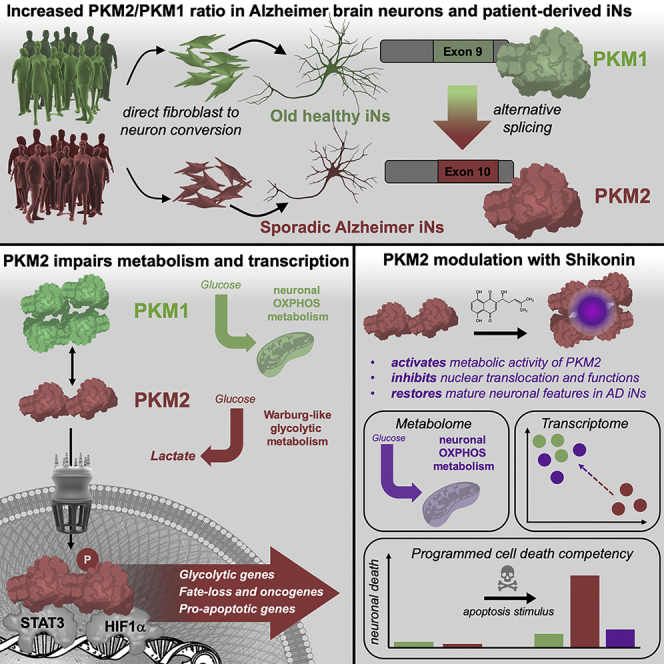
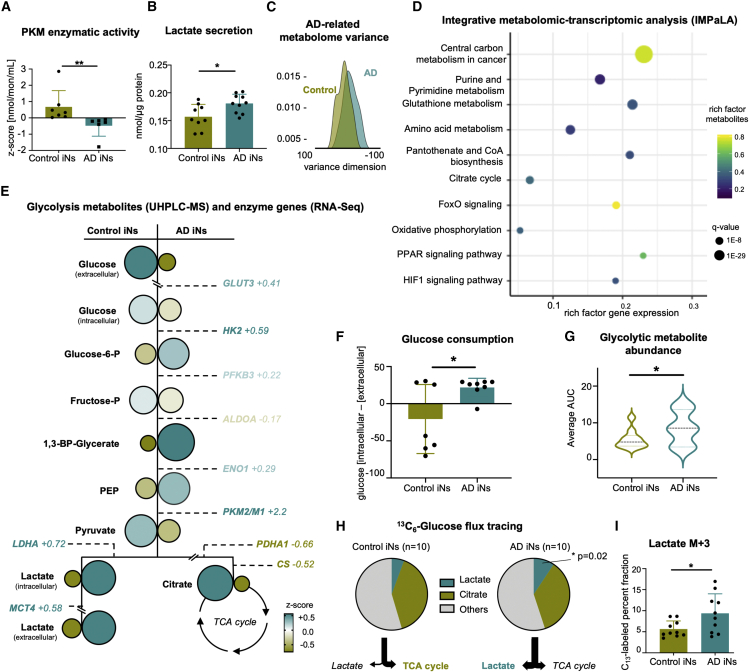
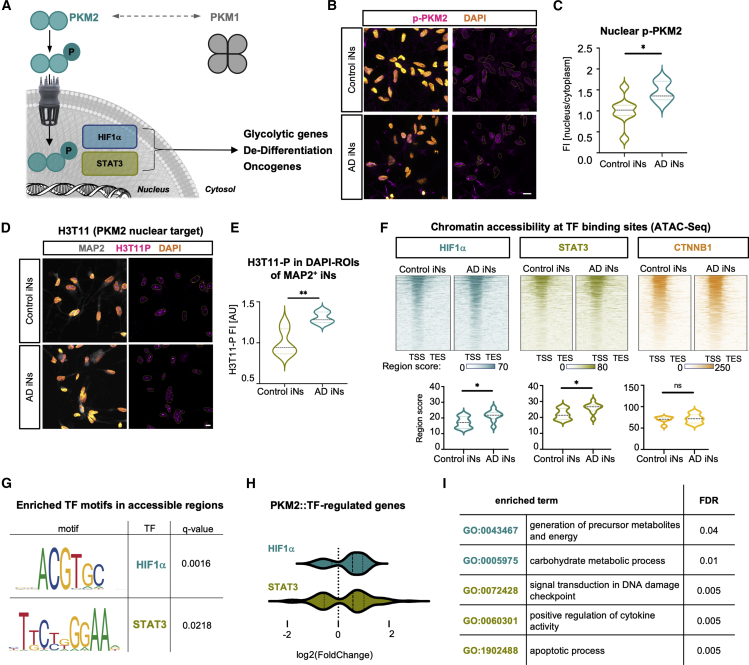
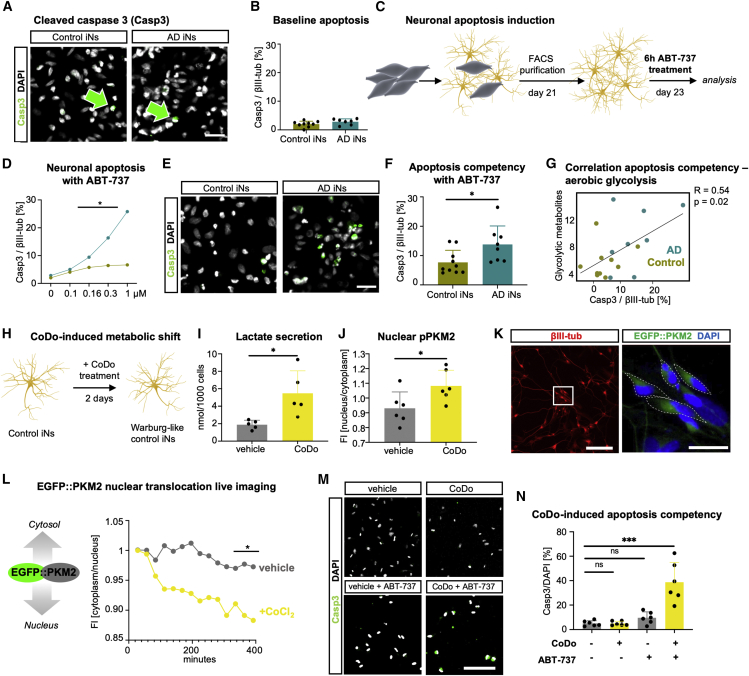
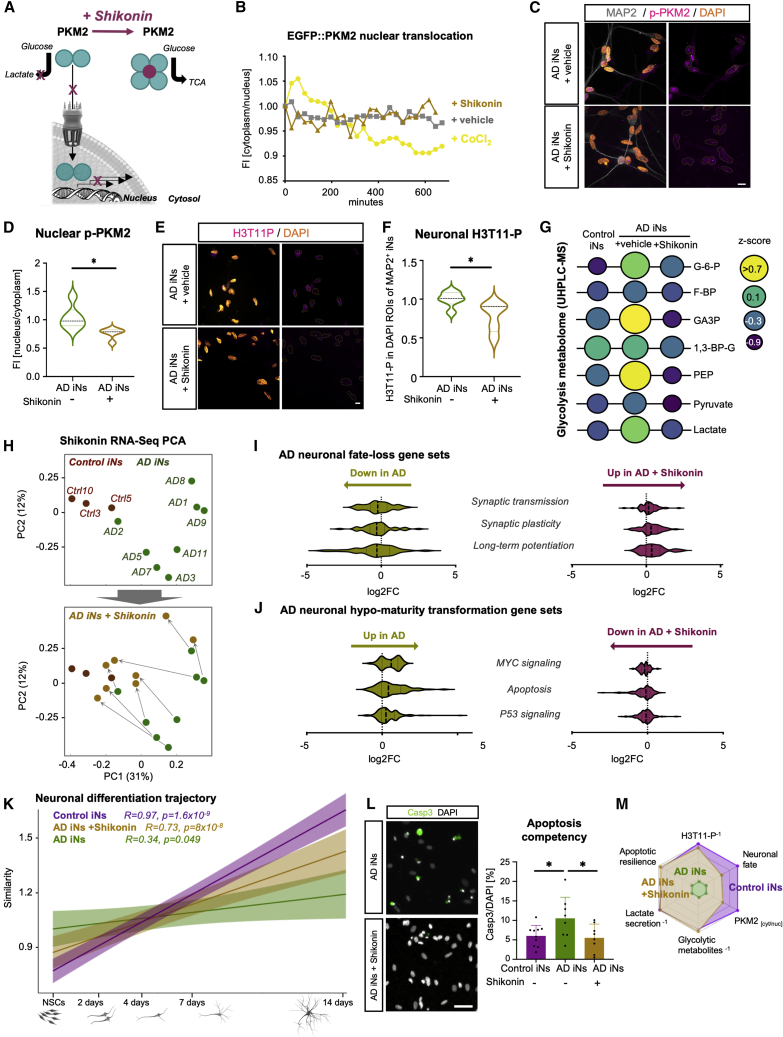
The drivers of sporadic Alzheimer's disease (AD) remain incompletely understood. Utilizing directly converted induced neurons (iNs) from AD-patient-derived fibroblasts, we identified a metabolic switch to aerobic glycolysis in AD iNs. Pathological isoform switching of the glycolytic enzyme pyruvate kinase M (PKM) toward the cancer-associated PKM2 isoform conferred metabolic and transcriptional changes in AD iNs. These alterations occurred via PKM2's lack of metabolic activity and via nuclear translocation and association with STAT3 and HIF1α to promote neuronal fate loss and vulnerability. Chemical modulation of PKM2 prevented nuclear translocation, restored a mature neuronal metabolism, reversed AD-specific gene expression changes, and re-activated neuronal resilience against cell death.
Overview
The claims and statistics of this paper haven’t been checked yet.
Run the check — free, no account needed. It reads the open-access text and checks the sources it cites.
Integrity signals
Registry
Cites
Statistics
Figures
Verification
Claims the paper makes
The claims and statistics of this paper haven’t been checked yet.
Run the check — free, no account needed. It reads the open-access text and checks the sources it cites.
Claims other papers make about this one
Each is checked against this paper’s own text: does it say what the citing paper says it does?
The source backs part of the claim, not all of it — or backs it for a different population, condition or comparison.
In the citing paper
“These neurons exhibited several age-associated dysregulations such as instability of mature neuronal fate, increased cellular senescence, and metabolic shifts (11, 24, 25)”
From Modeling late-onset Alzheimer’s disease neuropathology via direct neuronal reprogramming (2024) · cites this paper as [25]
Experimental — accuracy not yet measuredThe source backs part of the claim, not all of it — or backs it for a different population, condition or comparison.
In the citing paper
“but no AD hallmark neuropathology was shown.”
From Modeling late-onset Alzheimer’s disease neuropathology via direct neuronal reprogramming (2024) · cites this paper as [25]
Experimental — accuracy not yet measuredThe cited source says what the claim attributes to it.
In the citing paper
“Recent studies have directly induced neurons from individuals with AD through NGN2/ASCL1 overexpression.”
From Modeling late-onset Alzheimer’s disease neuropathology via direct neuronal reprogramming (2024) · cites this paper as [25]
Self-check
Percentages, sums and reported differences re-computed from the paper’s own numbers.
The self-check needs the paper’s full text.
Citations
Cites
WGCNA: an R package for weighted correlation network analysis
Langfelder, P., & Horvath, S. (2008) · BMC Bioinformatics · doi:10.1186/1471-2105-9-559 · Cited by 27,252
Understanding the Warburg Effect: The Metabolic Requirements of Cell Proliferation
Vander Heiden, M. G., Cantley, L. C., & Thompson, C. B. (2009) · Science · doi:10.1126/science.1160809 · Cited by 16,197
deepTools2: a next generation web server for deep-sequencing data analysis
Ramírez, F., Ryan, D. P., Grüning, B., Bhardwaj, V., Kilpert, F., Richter, A. S., Heyne, S., Dündar, F., & Manke, T. (2016) · Nucleic Acids Research · doi:10.1093/nar/gkw257 · Cited by 8,096
MetaboAnalyst 5.0: narrowing the gap between raw spectra and functional insights
Pang, Z., Chong, J., Zhou, G., Morais, D. A. D. L., Chang, L., Barrette, M., Gauthier, C., Jacques, P., Li, S., & Xia, J. (2021) · Nucleic Acids Research · doi:10.1093/nar/gkab382 · Cited by 3,972
Metabolic Reprogramming: A Cancer Hallmark Even Warburg Did Not Anticipate
Ward, P. S., & Thompson, C. B. (2012) · Cancer Cell · doi:10.1016/j.ccr.2012.02.014 · Cited by 3,233
Fang, E. F., Hou, Y., Palikaras, K., Adriaanse, B. A., Kerr, J. S., Yang, B., Lautrup, S., Hasan-Olive, M. M., Caponio, D., Dan, X., et al. (2019) · Nature Neuroscience · doi:10.1038/s41593-018-0332-9 · Cited by 1,740
Pyruvate Kinase M2 Is a PHD3-Stimulated Coactivator for Hypoxia-Inducible Factor 1
Luo, W., Hu, H., Chang, R., Zhong, J., Knabel, M., O'Meally, R., Cole, R. N., Pandey, A., & Semenza, G. L. (2011) · Cell · doi:10.1016/j.cell.2011.03.054 · Cited by 1,463
Zebrafish heart regeneration occurs by cardiomyocyte dedifferentiation and proliferation
Jopling, C., Sleep, E., Raya, M., Martí, M., Raya, A., & Belmonte, J. C. I. (2010) · Nature · doi:10.1038/nature08899 · Cited by 1,333
Nuclear PKM2 regulates β-catenin transactivation upon EGFR activation
Yang, W., Xia, Y., Ji, H., Zheng, Y., Liang, J., Huang, W., Gao, X., Aldape, K., & Lu, Z. (2011) · Nature · doi:10.1038/nature10598 · Cited by 1,051
Johnson, E. C. B., Dammer, E. B., Duong, D. M., Ping, L., Zhou, M., Yin, L., Higginbotham, L. A., Guajardo, A., White, B., Troncoso, J. C., et al. (2020) · Nature Medicine · doi:10.1038/s41591-020-0815-6 · Cited by 1,001
Cited by
Sorted by citations
Induced pluripotent stem cells (iPSCs): molecular mechanisms of induction and applications
Cerneckis, J., Cai, H., & Shi, Y. (2024) · Signal Transduction and Targeted Therapy · doi:10.1038/s41392-024-01809-0 · Cited by 452
Redox regulation: mechanisms, biology and therapeutic targets in diseases
Li, B., Ming, H., Qin, S., Nice, E. C., Dong, J., Du, Z., & Huang, C. (2025) · Signal Transduction and Targeted Therapy · doi:10.1038/s41392-024-02095-6 · Cited by 389
Mitochondria: It is all about energy
Casanova, A., Wevers, A., Ledesma, S. N., & Pruimboom, L. (2023) · Frontiers in Physiology · doi:10.3389/fphys.2023.1114231 · Cited by 350
Herdy, J. R., Traxler, L., Agarwal, R. K., Karbacher, L., Schlachetzki, J. C. M., Boehnke, L., Zangwill, D., Galasko, D., Glass, C. K., Mertens, J., et al. (2022) · Cell Stem Cell · doi:10.1016/j.stem.2022.11.010 · Cited by 208
Self-citationZhang, Y., Song, H., Li, M., & Lu, P. (2024) · Clinical and Translational Medicine · doi:10.1002/ctm2.1614 · Cited by 84
Metadata
- Authors
- Traxler, L., Herdy, J. R., Stefanoni, D., Eichhorner, S., Pelucchi, S., Szücs, A., Santagostino, A., Kim, Y., Agarwal, R. K., Schlachetzki, J. C. M., Glass, C. K., Lagerwall, J., Galasko, D., Gage, F. H., D’Alessandro, A., & Mertens, J.
- Affiliations
- Universität Innsbruck (AT)
- Salk Institute for Biological Studies (US)
- University of Colorado Anschutz (US)
- University of Michigan (US)
- University of California San Diego (US)
- Corresponding author
- Traxler, Larissa
- ORCID
- Venue
- Cell Metabolism
- Publisher
- Elsevier BV
- Published
- 2022-09
- Volume
- 34
- Issue
- 9
- Pages
- 1248-1263.e6
- ISSN
- 1550-4131 (ISSN-L)
- PMC
- PMC9458870
- OpenAlex
- W4292379491
- Cited by
- 179
- References
- 70
- Citations by year
- 2026: 35 · 2025: 56 · 2024: 49 · 2023: 29 · 2022: 10
- FWCI
- 22.29
- Type
- journal article
- Language
- en
- Open access
- hybrid
- doi.org
- Licence
- Locations
- Cell Metabolism (publishedVersion, cc-by)
- PubMed Central (publishedVersion, cc-by)
- PubMed (publishedVersion)
- Archivio Istituzionale della Ricerca (Universita Degli Studi Di Milano) (submittedVersion, other-oa)
- ELTE Digital Institutional Repository (EDIT) (Eötvös Loránd University) (submittedVersion, other-oa)
- Funders
- Alzheimer's Disease Research Center, Emory University (AG062429)
- Leona M. and Harry B. Helmsley Charitable Trust (P30CA23100)
- Marshallplan-Jubiläumsstiftung
- National Institute on Aging (AG056306, AG056511, AG057706)
- BrightFocus Foundation
- European Commission (H2020-MSCA-IF-2017-797205)
- Austrian Science Fund
- Hungarian Scientific Research Fund (ANN-135291)
- European Research Council (ERC-STG-2019-852086)
- Horizon 2020 Marie Skłodowska-Curie Actions
- Milky Way Research Foundation (P30014195)
- Topics
- Life Sciences › Neuroscience › Cellular and Molecular Neuroscience › Alzheimer's disease research and treatments
- Life Sciences › Biochemistry, Genetics and Molecular Biology › Cancer Research › Cancer, Hypoxia, and Metabolism
- Life Sciences › Neuroscience › Neurology › Neuroinflammation and Neurodegeneration Mechanisms
- Keywords
- sporadic Alzheimer's disease, neurodegeneration, aerobic glycolysis, Warburg effect, PKM2, induced neurons, patient-derived fibroblasts, nuclear translocation, STAT3, HIF-1α, neuronal vulnerability, metabolic reprogramming
- MeSH terms
- Alzheimer Disease, Glycolysis, Humans, Neoplasms, Pyruvate Kinase, Protein Isoforms
About these checks
Registry, retraction, Cites and statistics results are computed, not judged, with one exception: a printed reference that no index lists is read once by a model before it counts as a citation error. Claims are extracted by a model and kept only when their quote appears verbatim in the text; each cited source is then checked, with a model’s help, for whether it says what the claim relies on. Those verdicts can be wrong — read the claim’s quote and the cited source before relying on one.
Statistics and arithmetic are recomputed, not judged.
Confidence bands are shown only for fields calibrated on our annotated test set. None is calibrated yet, so no band is shown.
What counts as a claim ›How we measure confidence ›How we check this ›
Are you an author, or do you see a problem with this page? Request a review
