

The DOI matches its Crossref record; 99 of the 102 references it cites were found in a registry or an index.
Excessive use of disinfectants against COVID-19 posing a potential threat to living beings
Open accessAbstract
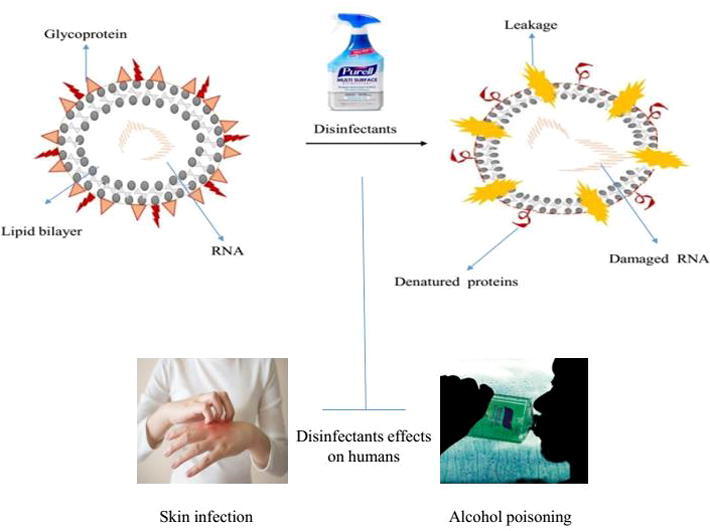
The severe acute respiratory syndrome coronavirus 2 (SARS-CoV-2) emerged in Wuhan city of China in late December 2019 and identified as a novel coronavirus disease 2019 (COVID-19). On January 30, the World Health Organization (WHO) declared the coronavirus outbreak a global public health emergency. The rapid spread of the pathogen across the communities shock the entire population. As no existing therapy were available during the pandemic. Health professionals recommended frequent washing of hands with soap and alcohol-based sanitizers. Disinfectants were extensively sprayed to minimize the possibility of getting COVID-19. Despite the potential benefits of these germicidal agents against COVID-19. Alcohol-based hand sanitizers lead to dry skin, infection, and alcohol poisoning. Children are considered more prone to alcohol poisoning and other major health concern. Precautionary measures should be ensured to protect the community from the possible risk associated with disinfectants.
Overview
The claims and statistics of this paper haven’t been checked yet.
Run the check — free, no account needed. It reads the open-access text and checks the sources it cites.
Integrity signals
Registry
Cites
Statistics
Figures
Verification
Claims the paper makes
The claims and statistics of this paper haven’t been checked yet.
Run the check — free, no account needed. It reads the open-access text and checks the sources it cites.
Claims other papers make about this one
Each is checked against this paper’s own text: does it say what the citing paper says it does?
The source backs part of the claim, not all of it — or backs it for a different population, condition or comparison.
In the citing paper
“The phenomenon of cross-resistance between disinfectants and antimicrobials has been reported for several disinfectants and is associated with a further increase in AMR during the pandemic period [5, 10, 11].”
From Profiling the resistome and virulome of Bacillus strains used for probiotic-based sanitation: a multicenter WGS analysis (2025) · cites this paper as [5]
Experimental — accuracy not yet measuredThe source backs part of the claim, not all of it — or backs it for a different population, condition or comparison.
In the citing paper
“In addition, they have shown high environmental impact and the capacity to favor the selection of disinfectant- and drug-tolerant/resistant strains [5].”
From Profiling the resistome and virulome of Bacillus strains used for probiotic-based sanitation: a multicenter WGS analysis (2025) · cites this paper as [5]
Experimental — accuracy not yet measuredThe source backs part of the claim, not all of it — or backs it for a different population, condition or comparison.
In the citing paper
“Consistent with this, during the COVID-19 pandemic, when chemical disinfection was significantly increased in both sanitary and non-sanitary settings, a significant increase in AMR was recorded [5, 10, 11, 21].”
From Profiling the resistome and virulome of Bacillus strains used for probiotic-based sanitation: a multicenter WGS analysis (2025) · cites this paper as [5]
Experimental — accuracy not yet measured
Self-check
Percentages, sums and reported differences re-computed from the paper’s own numbers.
The self-check needs the paper’s full text.
Citations
Cites
Lai, C.-C., Shih, T.-P., Ko, W.-C., Tang, H.-J., & Hsueh, P.-R. (2020) · International Journal of Antimicrobial Agents · doi:10.1016/j.ijantimicag.2020.105924 · Cited by 6,068
Antiseptics and Disinfectants: Activity, Action, and Resistance
McDonnell, G. E., & Russell, A. D. (1999) · Clinical Microbiology Reviews · doi:10.1128/cmr.12.1.147 · Cited by 4,795
Persistence of coronaviruses on inanimate surfaces and their inactivation with biocidal agents.
Kampf, G., Todt, D., Pfaender, S., & Steinmann, E. (2020) · Journal of Hospital Infection · doi:10.1016/j.jhin.2020.01.022 · Cited by 3,796
Bellini, M., Charalampidis, S., Herbert, P., Bonatsos, V., Crane, J., Muthusamy, A., Dor, F., & Papalois, V. E. (2022) · BioMed Research International · doi:10.1155/2738 · Cited by 2,431
Disinfection, Sterilization, and Preservation
Block, S. S. (1977) · Soil Science · doi:10.1097/00010694-197712000-00013 · Cited by 1,963
Contrasting Computational Models of Mate Preference Integration Across 45 Countries
Conroy‐Beam, D., Buss, D. M., Asao, K., Sorokowska, A., Sorokowski, P., Aavik, T., Akello, G., Alhabahba, M. M., Alm, C., Amjad, N., et al. (2019) · Scientific Reports · doi:10.1038/s41598-019-52748-8 · Cited by 1,796
Guideline for disinfection and sterilization in healthcare facilities, 2008
Rutala, W. A., & Weber, D. J. (2008) · Infection Control and Hospital Epidemiology · Cited by 1,402
How can airborne transmission of COVID-19 indoors be minimised?
Morawska, L., Tang, J. W., Bahnfleth, W., Bluyssen, P. M., Boerstra, A., Buonanno, G., Cao, J., Dancer, S., Floto, A., Franchimon, F., et al. (2020) · Environment International · doi:10.1016/j.envint.2020.105832 · Cited by 1,343
Role of hand hygiene in healthcare-associated infection prevention
Allegranzi, B., & Pittet, D. (2009) · Journal of Hospital Infection · doi:10.1016/j.jhin.2009.04.019 · Cited by 1,064
Encyclopedia of Food Microbiology
(2014) · Elsevier eBooks · doi:10.1016/c2009-1-61842-6 · Cited by 952
Research works printed but not linked: 5
- Bennett, 2014, Mandell, douglas, and bennett's principles and practice of infectious diseases: 2-volume set, Elsevier Health Sciences.
- Moon, J.M., Chun, B.J., Min, Y.I.J.T.J.o.e.m., 2006b. Hemorrhagic gastritis and gas emboli after ingesting 3% hydrogen peroxide. 30, 403-406. · DOI
- Olson, 2007, Poisoning & drug overdose, Lange Medical
- Organization, 2020, Cleaning and disinfection of environmental surfaces in the context of COVID-19: interim guidance, 15 May 2020, World Health
- Tarka, 2016, Evaluation of chemical agents intended for surface disinfection with the use of carrier methods. Bactericidal, yeasticidal and sporocidal activity, Postepy Mikrobiologii, 55, 99
Cited by
Sorted by citations
Dhama, K., Patel, S. K., Kumar, R., Masand, R., Rana, J., Yatoo, M. I., Tiwari, R., Sharun, K., Mohapatra, R. K., Natesan, S., et al. (2021) · Environmental Science and Pollution Research · doi:10.1007/s11356-021-14429-w · Cited by 214
Anand, U., Adelodun, B., Cabreros, C., Kumar, P., Suresh, S., Dey, A., Ballesteros, F., & Bontempi, E. (2022) · Environmental Chemistry Letters · doi:10.1007/s10311-022-01498-7 · Cited by 207
Peng, W., Yue, X., Chen, H., Ling, N., Zhou, Q., Yu, Q., Wei, Z., Guan, R., Lam, S. S., Rinklebe, J., et al. (2022) · Journal of Hazardous Materials · doi:10.1016/j.jhazmat.2022.129304 · Cited by 86
Alonso, V. P. P., Gonçalves, M. P. M. B. B., de Brito, F. A. E., Barboza, G. R., Rocha, L. D. O., & Silva, N. C. C. (2022) · Comprehensive Reviews in Food Science and Food Safety · doi:10.1111/1541-4337.13089 · Cited by 58
Disinfectants against SARS-CoV-2: A Review
Xiao, S., Yuan, Z., & Huang, Y. P. (2022) · Viruses · doi:10.3390/v14081721 · Cited by 62
Pseudoscience and fraudulent products for COVID-19 management
Chavda, V. P., Sonak, S. S., Munshi, N. K., & Dhamade, P. N. (2022) · Environmental Science and Pollution Research · doi:10.1007/s11356-022-21967-4 · Cited by 48
Zhang, J., Xu, Z., Chu, W., Ju, F., Jin, W., Li, P., & Xiao, R. (2023) · Water Research · doi:10.1016/j.watres.2023.120635 · Cited by 42
Agathokleous, E., Barceló, ., Iavicoli, I., Tsatsakis, A. M., & Calabrese, E. J. (2021) · Environmental Pollution · doi:10.1016/j.envpol.2021.118429 · Cited by 41
Non‐thermal plasma decontamination of microbes: a state of the art
Xu, Y., & Bassi, A. S. (2024) · Biotechnology Progress · doi:10.1002/btpr.3511 · Cited by 42
Impacts of COVID-19 on the Aquatic Environment and Implications on Aquatic Food Production
Yusoff, F. M., Abdullah, A. F., Aris, A. Z., & Umi, W. A. D. (2021) · Sustainability · doi:10.3390/su132011281 · Cited by 39
D’Accolti, M., Soffritti, I., Bini, F., Mazziga, E., Mazzacane, S., & Caselli, E. (2022) · Microorganisms · doi:10.3390/microorganisms10020225 · Cited by 39
Miao, Z., Sun, Y., Tao, Z., Chen, Y., Ma, Y., Zhu, D., Huang, X., & Zha, Z. (2021) · Advanced Healthcare Materials · doi:10.1002/adhm.202100722 · Cited by 33
Immunomodulatory nanosystems: An emerging strategy to combat viral infections
Khatun, S., Putta, C. L., Hak, A., & Rengan, A. K. (2023) · Biomaterials and Biosystems · doi:10.1016/j.bbiosy.2023.100073 · Cited by 31
D’Accolti, M., Soffritti, I., Bonfante, F., Ricciardi, W., Mazzacane, S., & Caselli, E. (2021) · Viruses · doi:10.3390/v13112227 · Cited by 29
D’Accolti, M., Soffritti, I., Bini, F., Mazziga, E., Cason, C., Comar, M., Volta, A., Bisi, M., Fumagalli, D., Mazzacane, S., et al. (2023) · Microbiome · doi:10.1186/s40168-023-01512-2 · Cited by 27
Povidone-iodine loaded bigels: Characterization and effect as a hand antiseptic agent
Vergara, D., Loza-Rodríguez, N., Acevedo, F., Bustamante, M., & Serrano, O. L. (2022) · Journal of Drug Delivery Science and Technology · doi:10.1016/j.jddst.2022.103427 · Cited by 27
Han, F., Lang, C., & Qiu, Y. (2022) · Journal of Cleaner Production · doi:10.1016/j.jclepro.2022.133509 · Cited by 27
Hashemi, F., Hoepner, L., Hamidinejad, F. S., Haluza, D., Afrashteh, S., Abbasi, A., Omeragić, E., Imamović, B., Rasheed, N. A., Taher, T. M. J., et al. (2023) · Environmental Science and Pollution Research · doi:10.1007/s11356-023-27197-6 · Cited by 27
Membrane technologies for sustainable development goals: A critical review of bright horizons
Ali, A. A., Al–Othman, A., Tawalbeh, M., Ali, A., Quist-Jensen, C. A., & Shirazi, M. M. A. (2024) · Journal of environmental chemical engineering · doi:10.1016/j.jece.2024.114998 · Cited by 28
D’Accolti, M., Soffritti, I., Bini, F., Mazziga, E., Arnoldo, L., Volta, A., Bisi, M., Antonioli, P., Laurenti, P., Ricciardi, W., et al. (2023) · International Journal of Molecular Sciences · doi:10.3390/ijms24076535 · Cited by 28
The COVID-19 epidemic and other notifiable infectious diseases in China
Bai, B., Jiang, Q., & Hou, J. (2021) · Microbes and Infection · doi:10.1016/j.micinf.2021.104881 · Cited by 23
Mehta, S., Gupta, D., & Nagaiah, T. C. (2021) · ChemElectroChem · doi:10.1002/celc.202101336 · Cited by 22
Islam, M. T., Das, S. K., Nahim, M. A. M., Karim, M. R., Kundu, R., Khan, M. A. R., Rahman, S., Al‐Gawati, M. A., Alodhayb, A. N., & Ahsan, H. M. (2025) · RSC Advances · doi:10.1039/d5ra01733e · Cited by 21
Ambrosino, A., Pironti, C., Dell’Annunziata, F., Giugliano, R., Chianese, A., Moccia, G., Caro, F. D., Galdiero, M., Franci, G., & Motta, O. (2022) · Scientific Reports · doi:10.1038/s41598-022-09575-1 · Cited by 21
O’Reilly, P., Loiselle, G., Darragh, R., Slipski, C. J., & Bay, D. C. (2025) · npj Antimicrobials and Resistance · doi:10.1038/s44259-025-00108-0 · Cited by 19
Indirect effects of COVID-19 on the environment: How deep and how long?
Vadiati, M., Beynaghi, A., Bhattacharya, P., Bandala, E. R., & Mozafari, M. (2021) · The Science of The Total Environment · doi:10.1016/j.scitotenv.2021.152255 · Cited by 19
Pollution free UV-C radiation to mitigate COVID-19 transmission
Kumar, A., Raj, A., Gupta, A., Gautam, S., Kumar, M., Bherwani, H., & Anshul, A. (2022) · Gondwana Research · doi:10.1016/j.gr.2022.07.010 · Cited by 19
Atalay, S., Gęgotek, A., Domingues, P. M., & Skrzydlewska, E. (2021) · Redox Biology · doi:10.1016/j.redox.2021.102074 · Cited by 19
Chen, W., Yang, H., Peng, C., & Wu, T. (2023) · Environmental Science and Pollution Research · doi:10.1007/s11356-023-25167-6 · Cited by 18
Biomass-derived Carbon dots and their coated surface as a potential antimicrobial agent
Pricilla, R. B., Maruthapandi, M., Durairaj, A., Kuřitka, I., Luong, J. H. T., & Gedanken, A. (2023) · Biomass Conversion and Biorefinery · doi:10.1007/s13399-023-03968-6 · Cited by 17
Issaka, E., Wariboko, M. A., & Agyekum, E. A. (2023) · Biomedical Materials & Devices · doi:10.1007/s44174-023-00084-x · Cited by 17
Wanguyun, A. P., Oishi, W., & Sano, D. (2023) · Food and Environmental Virology · doi:10.1007/s12560-023-09571-2 · Cited by 15
Gunasegaran, J., Teh, Y. Y., Lim, C.-W., & Ng, S. (2024) · Safety and Health at Work · doi:10.1016/j.shaw.2024.02.005 · Cited by 15
Unveiling an In Situ H 2 O 2 Production: Rechargeable Zinc‐H 2 O 2 Battery Powering 26 LEDs
Mehta, S., Kaur, S., Garg, K., Singh, M., & Nagaiah, T. C. (2025) · Angewandte Chemie International Edition · doi:10.1002/anie.202505593 · Cited by 15
Khan, Z., Ualiyeva, D., Khan, A., Zaman, N., Sapkota, S., Khan, A., Ali, B., & Ghafoor, D. (2021) · Journal of Environmental and Public Health · doi:10.1155/2021/5524098 · Cited by 15
Self-citationCaporalini, S., Azimi, B., Zergat, S., Chaharsoughi, M. A., Maleki, H., Batoni, G., & Danti, S. (2025) · Journal of Functional Biomaterials · doi:10.3390/jfb16070249 · Cited by 17
Giordano, F., Petrolini, V. M., Spagnolo, D., Fidente, R. M., Lanciotti, L., Baldassarri, L., Moretti, F. L., Brambilla, E., Lonati, D., Schicchi, A., et al. (2022) · BMC Public Health · doi:10.1186/s12889-022-12860-3 · Cited by 14
Global Catastrophic Biological Risks in the Post-COVID-19 World: Time to Act Is Now
Kambouris, M. E. (2023) · OMICS A Journal of Integrative Biology · doi:10.1089/omi.2022.0178 · Cited by 17
Guillain-Barre syndrome: An autoimmune disorder post-COVID-19 vaccination?
Khan, Z., Ahmad, U., Ualiyeva, D., Amissah, O. B., Khan, A., Noor, Z., & Zaman, N. (2021) · Clinical Immunology Communications · doi:10.1016/j.clicom.2021.12.002 · Cited by 15
Self-citationSingh, S. S., Sharma, D., Singh, C., Kumar, S., Singh, P. R., Sharma, A., Das, D. K., Pinnaka, A. K., Thakur, K. G., Ringe, R. P., et al. (2023) · Journal of Applied Microbiology · doi:10.1093/jambio/lxad054 · Cited by 13
Antiviral activity of galvanic microcells of zinc and copper contained within painted surfaces
Spisak, W., Kaszczyszyn, M., Szar, M., Kozak, J., & Stachowicz, K. (2022) · Scientific Reports · doi:10.1038/s41598-022-05330-8 · Cited by 12
Bini, F., Soffritti, I., D’Accolti, M., Mazziga, E., Caballero, J. D., David, S., Argimon, S., Aanensen, D. M., Volta, A., Bisi, M., et al. (2025) · BMC Genomics · doi:10.1186/s12864-025-11582-1 · Cited by 11
“The phenomenon of cross-resistance between disin-fectants and antimicrobials has been reported for several disinfectants and is associated with a further increase in AMR during the pandemic period [5, 10, 11].”
InfluentialTong, Y., Ma, S., Zhu, Z., Chen, X., & Wang, J. (2024) · Sustainable Chemistry and Pharmacy · doi:10.1016/j.scp.2024.101775 · Cited by 12
Akinwande, N., Ashezua, T. T., Gweryina, R. I., Somma, S. A., Oguntolu, F. A., Usman, A., Abdurrahman, N. O., Kaduna, F. S., Adajime, T. P., Kuta, F. A., et al. (2022) · Heliyon · doi:10.1016/j.heliyon.2022.e11513 · Cited by 11
Direct Inhibition of SARS-CoV-2 Spike Protein by Peracetic Acid
Yamamoto, Y., Nakano, Y., Murae, M., Shimizu, Y., Sakai, S., Ogawa, M., Mizukami, T., Inoue, T., Onodera, T., Takahashi, Y., et al. (2022) · International Journal of Molecular Sciences · doi:10.3390/ijms24010020 · Cited by 11
Impacts of COVID-19's restriction measures on personal exposure to VOCs and aldehydes in Taipei City
Yen, Y.-C., Ku, C.-H., Hsiao, T.-C., Chi, K. H., Peng, C., & Chen, Y. (2023) · The Science of The Total Environment · doi:10.1016/j.scitotenv.2023.163275 · Cited by 11
Wei, S., Hu, X., Hu, X., Wan, Y., Fan, G., & Wang, J. (2023) · Brazilian Journal of Medical and Biological Research · doi:10.1590/1414-431x2023e12784 · Cited by 11
Samenjo, K. T., Ramanathan, A. R., Gwer, S. O., Bailey, R. C., Otieno, F., Koksal, E., Sprecher, B., Price, R. A., Bakker, C. A., & Diehl, J. C. (2023) · Frontiers in Medical Technology · doi:10.3389/fmedt.2023.1183179 · Cited by 11
Bacteria–surface interactions: role of impacting bacteria-laden droplets
Shyam, S., Misra, S., Mitra, S., & Mitra, S. K. (2024) · Soft Matter · doi:10.1039/d4sm00196f · Cited by 11
Propylene glycol inactivates respiratory viruses and prevents airborne transmission
Styles, C. T., Zhou, J., Flight, K. E., Brown, J. C., Lewis, C. B., Wang, X., Oever, M. V., Peacock, T. P., Wang, Z., Millns, R., et al. (2023) · EMBO Molecular Medicine · doi:10.15252/emmm.202317932 · Cited by 10
Health Risks of Pest Control and Disinfection Workers after the COVID-19 Pandemic in South Korea
Choi, Y., Huh, D., Kim, L., Lee, S. J., & Moon, K. W. (2022) · Journal of Environmental Sciences · doi:10.1016/j.jes.2023.05.004 · Cited by 10
Fast Bacterial Inactivation Kinetics on an Inherently Antimicrobial Anionic Block Polymer
Wells, K. M., Miller, M. M., Ghiladi, R. A., & Spontak, R. J. (2023) · ACS Applied Engineering Materials · doi:10.1021/acsaenm.3c00155 · Cited by 8
Critical Review of Biomedical Waste Management for Future Pandemics: Pharmaceutical Perspective
Agarwal, S., Saha, H., Kaushik, S., Patil, V. M., & Verma, S. K. (2024) · ACS Chemical Health & Safety · doi:10.1021/acs.chas.4c00067 · Cited by 10
Twentieth Century Dogmas Prevent Sustainable Healthcare
Dietert, R. R. (2021) · American Journal of Biomedical Science & Research · doi:10.34297/ajbsr.2021.13.001890 · Cited by 8
Alshubaith, I. H., Alhajri, S. M., Alhajri, A. S., Alsultan, R. A., Azhar, E. I., Alhussaini, B. H., Solami, L. S. A., de Oliveira, M. C., Khafaga, A. F., Al‐Qurashi, A. D., et al. (2022) · Environmental Science and Pollution Research · doi:10.1007/s11356-022-22468-0 · Cited by 8
RetractedEvaluation of the impact of different disinfectants on new coronavirus and human health
Mahmudiono, T., Ramaiah, P., Maleki, H., Doewes, R. I., Shalaby, M. N., Alsaikhan, F., & Mohammadi, M. J. (2022) · Reviews on Environmental Health · doi:10.1515/reveh-2022-0051 · Cited by 8
Sousa, M., Oliveira, I. M., Correia, L., Gomes, I. B., Sousa, C. A., Braga, D. F. O., & Simões, M. V. (2024) · The Science of The Total Environment · doi:10.1016/j.scitotenv.2024.170352 · Cited by 7
D’Accolti, M., Soffritti, I., Bini, F., Mazziga, E., & Caselli, E. (2024) · Microbial Biotechnology · doi:10.1111/1751-7915.14529 · Cited by 7
Lobotková, M., Hybská, H., Turčániová, E., Salva, J., Schwarz, M., & Hýrošová, T. (2023) · Sustainability · doi:10.3390/su15086867 · Cited by 7
Ganie, S. A., & Mady, M. F. (2025) · ACS ES&T Water · doi:10.1021/acsestwater.5c00200 · Cited by 6
Lachenmeier, D. W. (2022) · Side effects of drugs annual · doi:10.1016/bs.seda.2022.07.006 · Cited by 6
Banerjee, D., Pal, D., Sarkar, U., & Das, M. (2023) · Journal of Hazardous Materials Advances · doi:10.1016/j.hazadv.2023.100283 · Cited by 5
Ismail, H., Phan, Y.-H., Chandriah, K., Arman, M. R., Mokhtar, N. N., Hamdan, S. A., & Yew, S. Q. (2023) · Heliyon · doi:10.1016/j.heliyon.2023.e20258 · Cited by 7
Hwang, S. H., Won, J., & Park, W. M. (2023) · Scientific Reports · doi:10.1038/s41598-023-46519-9 · Cited by 5
On the emergence of a health-pollutant-climate nexus in the wake of a global pandemic
VishnuRadhan, R., Thresyamma, D. D., Eldho, T. I., Dhiman, R., & Bhavan, S. G. (2021) · Environmental Science and Pollution Research · doi:10.1007/s11356-021-16392-y · Cited by 5
Covid-19 Sürecinde Koruyucu Sağlık ve Hijyen Ürünlerinin Satışı ve Tüketimi Üzerine Bir İnceleme
AKYÜZ, H. Ö., & AYTEKİN, İ. (2022) · Medical Research Reports · doi:10.55517/mrr.1062587 · Cited by 5
He, J., Liang, Q., Zhang, S., Yu, M., Xu, H., Cao, M., Su, Y., Lin, C., Jin, G., & Liu, Z. (2025) · Journal of Building Engineering · doi:10.1016/j.jobe.2025.114300 · Cited by 4
Effect of COVID-19 pandemic on social factors
Sindhwani, R., Gudavalleti, P. K., & Saddikuti, V. (2022) · Elsevier eBooks · doi:10.1016/b978-0-323-91307-2.00003-1 · Cited by 4
Владимировна, К. Л., Paliy, А., Kornieikov, О. M., Belikov, K. M., & Bryleva, K. (2024) · Regulatory Mechanisms in Biosystems · doi:10.15421/022477 · Cited by 4
Next Generation Self-Sanitising Face Coverings: Nanomaterials and Smart Thermo-Regulation Systems
Pattanaik, P., Venkatraman, P. D., Tripathy, H. P., Butler, J. A., Mishra, D. K., & Holderbaum, W. (2024) · Textiles · doi:10.3390/textiles5010001 · Cited by 5
Najib, Y. S., Ayipo, Y. O., Abubakar, S., Mordi, M. N., Rabiu, A. A., Rowaiye, A. B., Sayeeda, R., Rahnuma, A., Meghla, B. A., Adnan, N., et al. (2022) · Journal of Applied Pharmaceutical Science · doi:10.7324/japs.2021.120101 · Cited by 4
Valentukeviciene, M., Andriulaitytė, I., & Žurauskienė, R. (2022) · International Journal of Environmental Research and Public Health · doi:10.3390/ijerph192114486 · Cited by 4
Quaternary Ammonium Compounds: Usage in Households during COVID-19 Pandemic, Boon, or Bane?
Sharma, A., Singh, N., Thomas, A., Shrivastava, P. K., & Sharma, A. (2022) · Asian Pacific Journal of Health Sciences · doi:10.21276/apjhs.2022.9.4s.26 · Cited by 4
Hosseini, A., Rashid, M. A., Leite, G., Barlow, G. M., Parodi, G., Sanchez, M., Ayyad, S., Pimentel, M. L., Morales, W., Weitsman, S. R., et al. (2023) · Digestive Diseases and Sciences · doi:10.1007/s10620-023-08061-6 · Cited by 4
Hardcastle, T. C., den Hollander, D., Ganchi, F., Naidoo, S., & Shangase, T. N. (2021) · Bangladesh Journal of Medical Science · doi:10.3329/bjms.v20i5.55410 · Cited by 4
Kambouris, M. E. (2024) · Advanced sciences and technologies for security applications · doi:10.1007/978-3-031-60019-7_8 · Cited by 3
Cárdenas, O. G. G., López-Macías, H. J., Calzada, K. P., Arias-Robledo, G., Oyoque-Salcedo, G., Jazo, I. Z., Loeza-Lara, P. D., Heil, M., & Hernández-Zepeda, O. F. (2026) · Plants · doi:10.3390/plants15010144 · Cited by 3
Selam, M. N., Tegegne, A. M., Ababu, A., Matsabisa, M. G., & Birhanu, G. (2023) · Infection and Drug Resistance · doi:10.2147/idr.s411835 · Cited by 3
Jariyaboon, M., Masrinoul, P., Komaikul, J., Muenkaew, K., Juntarapornchai, S., Ketsuwan, K., Rodpai, E., Ruangdachsuwan, S., Palabodeewat, S., & Chitichotpanya, C. (2023) · Emergent Materials · doi:10.1007/s42247-023-00520-0 · Cited by 3
Bearth, A., Köppel, G., Schöni, N., Ropelato, S., & Siegrist, M. (2023) · Applied Ergonomics · doi:10.1016/j.apergo.2023.104095 · Cited by 3
Liu, J., Li, Y., Wang, M., & Yang, J. (2024) · World Journal of Virology · doi:10.5501/wjv.v13.i2.91286 · Cited by 3
Teong, S. P., Armugam, A., Chan, S. P., & Zhang, Y. (2023) · Journal of Applied Polymer Science · doi:10.1002/app.54399 · Cited by 3
Genetic diversity of murine norovirus associated with ethanol sensitivity
Wanguyun, A. P., Oishi, W., & Sano, D. (2025) · Applied Microbiology and Biotechnology · doi:10.1007/s00253-025-13410-8 · Cited by 3
Unveiling an In Situ H 2 O 2 Production: Rechargeable Zinc‐H 2 O 2 Battery Powering 26 LEDs
Mehta, S., Kaur, S., Garg, K., Singh, M., & Nagaiah, T. C. (2025) · Angewandte Chemie · doi:10.1002/ange.202505593 · Cited by 3
Koval’ska, O. V., & Blazheyevskіy, M. (2021) · Journal of organic and pharmaceutical chemistry · doi:10.24959/ophcj.21.244359 · Cited by 3
Hashemi, H., Ghareghani, S., Nasimi, N., & Shahbazi, M. (2022) · The American Journal of Emergency Medicine · doi:10.1016/j.ajem.2022.09.020 · Cited by 3
Lee, E.-S., Lee, H., Park, Y. J., Chung, K. H., & Kim, H. S. (2026) · Chemosphere · doi:10.1016/j.chemosphere.2026.144831 · Cited by 2
Abdelbaky, A. A., Mahfouz, M., Kasem, E. A., & Sherif, A. H. (2026) · Regional Studies in Marine Science · doi:10.1016/j.rsma.2026.105069 · Cited by 2
Брицун, В. М., Попова, І. В., Ковальова, С. О., & Петренко, Т. В. (2024) · Asthma and allergy · doi:10.31655/2307-3373-2024-2-32-37 · Cited by 2
Antiseptics: An expeditious third force in the prevention and management of coronavirus diseases
Okeke, K. N. C., Ahamefule, C. S., Nnabuife, O. O., Orabueze, I. N., Iroegbu, C. U., Egbe, K. A., & Ike, A. C. (2024) · Current Research in Microbial Sciences · doi:10.1016/j.crmicr.2024.100293 · Cited by 3
Ha, K., Ryu, S., & Trinh, C. T. (2025) · Biotechnology Advances · doi:10.1016/j.biotechadv.2025.108531 · Cited by 2
Zhao, B., Zhou, J., Nakada, N., Ihara, M., Liu, Y., Wong, Y. J., Honda, R., & Tanaka, H. (2025) · Water Research · doi:10.1016/j.watres.2025.123439 · Cited by 2
Ehsanifar, M., Yavari, Z., Motaghedifar, M. R., & Mehdi, R. (2022) · Journal of Community Medicine and Health Solutions · doi:10.29328/journal.jcmhs.1001014 · Cited by 2
Fast Synthesis of Graphene Oxide−β-Lactam as a Residue-Free Environmental Bacterial Inhibitor
Hu, C., Heng, P., Zeng, Y., Zhang, Q., Zhao, M., Yang, Z., & He, Y. (2022) · ACS Omega · doi:10.1021/acsomega.2c02328 · Cited by 2
Impacts of hand sanitizer on human health and environment: a review
Bala, S., & Ahamad, F. (2023) · Environment Conservation Journal · doi:10.36953/ecj.23572619 · Cited by 2
Son, S., Lee, Y. H., & Jang, S. (2023) · Sustainability · doi:10.3390/su151612645 · Cited by 2
Hashemi, F., Hoepner, L., Hamidinejad, F. S., Haluza, D., Afrashteh, S., Abbasi, A., Omeragić, E., Imamović, B., Rasheed, N. A., Taher, T. M. J., et al. (2022) · Research Square · doi:10.21203/rs.3.rs-2267501/v1 · Cited by 2
Pal, D., Banerjee, D., & Sarkar, U. (2024) · Journal of Environmental Management · doi:10.1016/j.jenvman.2024.120649 · Cited by 1
Bioaerosols and their health effects
Kallawicha, K., Chao, H. J., Wongsasuluk, P., & Thanvisitthpon, N. T. (2024) · Elsevier eBooks · doi:10.1016/b978-0-443-16090-5.00009-x · Cited by 1
Singh, D., Dimri, A. G., Pandey, A., Nayak, S. K., Bhat, B., & Das, M. (2024) · Biomedical and Therapeutics Letters · doi:10.62110/sciencein.btl.2024.v11.915 · Cited by 1
Metadata
- Authors
- Ghafoor, D., Khan, Z., Khan, A., Ualiyeva, D., & Zaman, N.
- Affiliations
- Chinese Academy of Sciences (CN)
- Lanzhou University (CN)
- University of Swat (PK)
- Corresponding author
- Khan, Zafran
- Venue
- Current Research in Toxicology
- Publisher
- Elsevier BV
- Published
- 2021
- Volume
- 2
- Pages
- 159-168
- ISSN
- 2666-027X (ISSN-L)
- PMC
- PMC7931675
- OpenAlex
- W3135563563
- Cited by
- 151
- References
- 102
- Citations by year
- 2026: 9 · 2025: 17 · 2024: 25 · 2023: 38 · 2022: 38 · 2021: 24
- FWCI
- 3.66
- Type
- journal article
- Language
- en
- Open access
- gold
- doi.org
- Licence
- Locations
- Current Research in Toxicology (publishedVersion, cc-by-nc-nd)
- PubMed Central (publishedVersion, cc-by-nc-nd)
- PubMed (publishedVersion)
- DOAJ (DOAJ: Directory of Open Access Journals) (submittedVersion, cc-by-sa)
- Topics
- Health Sciences › Medicine › Infectious Diseases › Infection Control in Healthcare
- Life Sciences › Immunology and Microbiology › Applied Microbiology and Biotechnology › Antimicrobial agents and applications
- Health Sciences › Medicine › Pulmonary and Respiratory Medicine › Infection Control and Ventilation
- Keywords
- COVID-19 pandemic, SARS-CoV-2, disinfectants, alcohol-based hand rub, alcohol poisoning, dry skin, children, occupational exposure, environmental health risk
About these checks
Registry, retraction, Cites and statistics results are computed, not judged, with one exception: a printed reference that no index lists is read once by a model before it counts as a citation error. Claims are extracted by a model and kept only when their quote appears verbatim in the text; each cited source is then checked, with a model’s help, for whether it says what the claim relies on. Those verdicts can be wrong — read the claim’s quote and the cited source before relying on one.
Statistics and arithmetic are recomputed, not judged.
Confidence bands are shown only for fields calibrated on our annotated test set. None is calibrated yet, so no band is shown.
What counts as a claim ›How we measure confidence ›How we check this ›
Are you an author, or do you see a problem with this page? Request a review
