

The DOI matches its Crossref record; 52 of the 52 references it cites were found in a registry or an index.
Plasma amyloid β 42/40 ratios as biomarkers for amyloid β cerebral deposition in cognitively normal individuals
Open accessAbstract
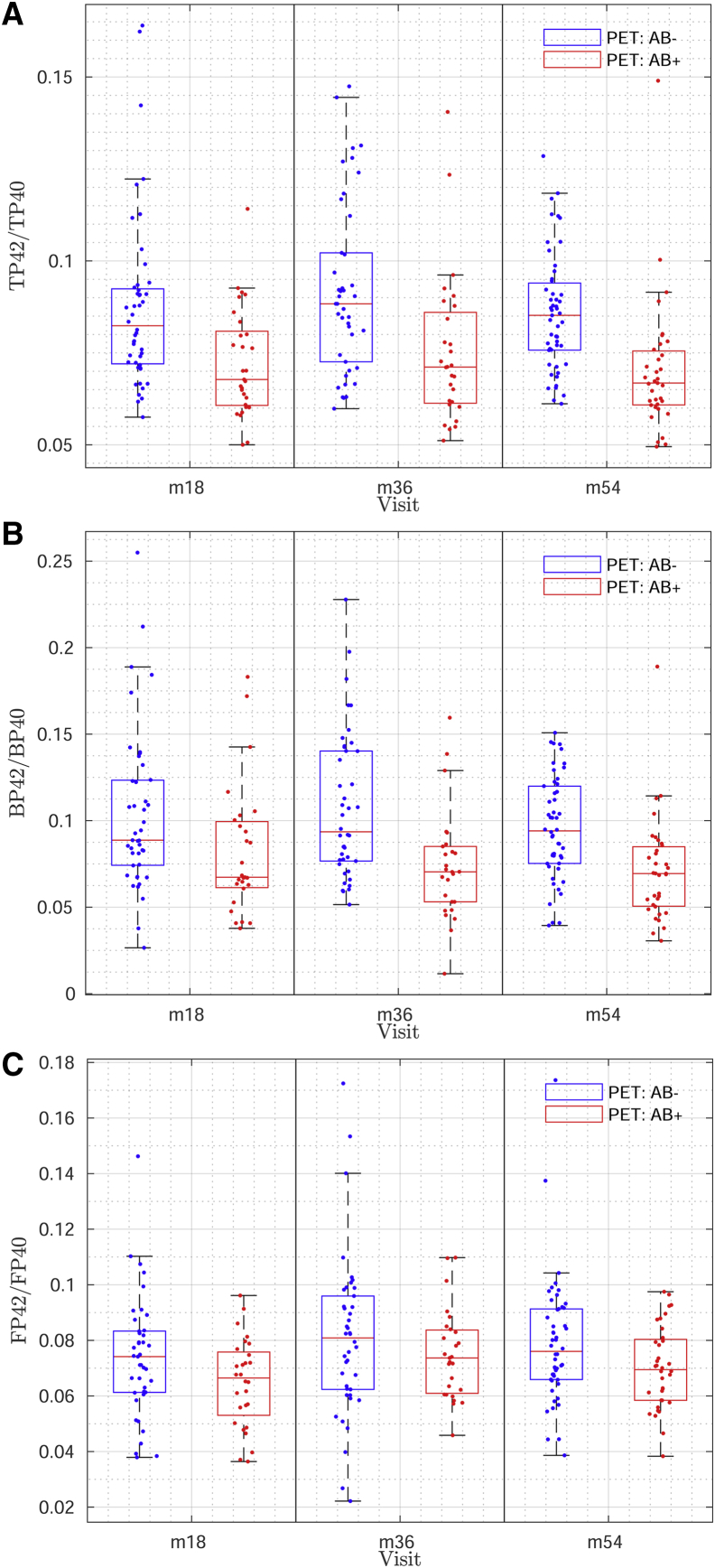
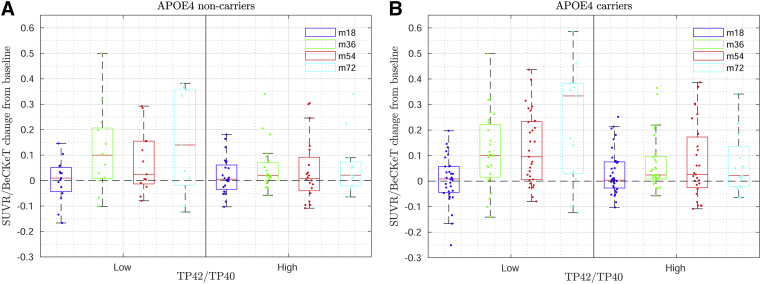
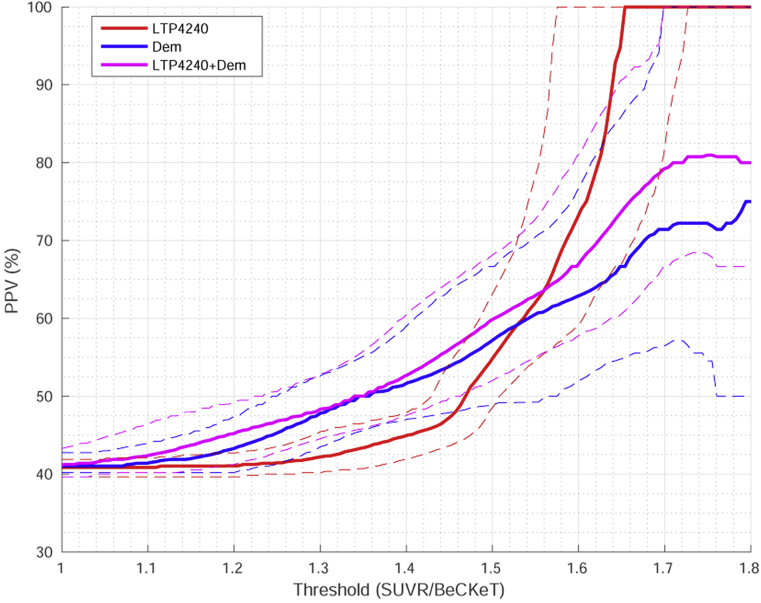
Introduction: Plasma amyloid β (Aβ) peptides have been previously studied as candidate biomarkers to increase recruitment efficiency in secondary prevention clinical trials for Alzheimer's disease. Methods: Free and total Aβ42/40 plasma ratios (FP42/40 and TP42/40, respectively) were determined using ABtest assays in cognitively normal subjects from the Australian Imaging, Biomarker and Lifestyle Flagship Study. This population was followed‐up for 72 months and their cortical Aβ burden was assessed with positron emission tomography. Results: Cross‐sectional and longitudinal analyses showed an inverse association of Aβ42/40 plasma ratios and cortical Aβ burden. Optimized as a screening tool, TP42/40 reached 81% positive predictive value of high cortical Aβ burden, which represents 110% increase over the population prevalence of cortical Aβ positivity. Discussion: These findings support the use of plasma Aβ42/40 ratios as surrogate biomarkers of cortical Aβ deposition and enrichment tools, reducing the number of subjects submitted to invasive tests and, consequently, recruitment costs in clinical trials targeting cognitively normal individuals.
Overview
The claims and statistics of this paper haven’t been checked yet.
Run the check — free, no account needed. It reads the open-access text and checks the sources it cites.
Integrity signals
Registry
Cites
Statistics
Figures
Verification
Claims the paper makes
The claims and statistics of this paper haven’t been checked yet.
Run the check — free, no account needed. It reads the open-access text and checks the sources it cites.
Claims other papers make about this one
Each is checked against this paper’s own text: does it say what the citing paper says it does?
In the citing paper
“Blood biomarkers for the presymptomatic phase of Alzheimer’s disease are largely lacking, although recent progress in the analysis of amyloid-β, tau, and neurofilament light chain (NfL) in the blood have been reported5–10.”
From Serum neurofilament dynamics predicts neurodegeneration and clinical progression in presymptomatic Alzheimer’s disease (2019) · cites this paper as [5]
In the citing paper
“Although previous studies have found associations between CSF and PET Aβ and plasma Aβ using different immunoassays,7,12,13,14,44,45 the present Elecsys assays produced among the best accuracies and they are the first fully automated assays to have these greater accuracies.”
From Performance of Fully Automated Plasma Assays as Screening Tests for Alzheimer Disease–Related β-Amyloid Status (2019) · cites this paper as [12]
In the citing paper
“Many candidate blood biomarkers have failed in replication studies,7,8 but somewhat promising results have been seen for plasma tau, neurofilament light chain (NFL), and combinations of Aβ42 and Aβ40.9,10,11,12,13,14,15,16,17”
From Performance of Fully Automated Plasma Assays as Screening Tests for Alzheimer Disease–Related β-Amyloid Status (2019) · cites this paper as [12]
In the citing paper
“more recent studies have demonstrated that it correlates with brain Aβ and can differentiate patients with AD from healthy control participants.12,13”
From Performance of Fully Automated Plasma Assays as Screening Tests for Alzheimer Disease–Related β-Amyloid Status (2019) · cites this paper as [12]
Self-check
Percentages, sums and reported differences re-computed from the paper’s own numbers.
The self-check needs the paper’s full text.
Citations
Cites
Sperling, R. A., Aisen, P. S., Beckett, L. A., Bennett, D. A., Craft, S., Fagan, A. M., Iwatsubo, T., Jack, C. R., Kaye, J., Montine, T. J., et al. (2011) · Alzheimer's & Dementia · doi:10.1016/j.jalz.2011.03.003 · Cited by 7,155
2016 Alzheimer's disease facts and figures
Alzheimer's Association (2016) · Alzheimer's & Dementia · doi:10.1016/j.jalz.2016.03.001 · Cited by 5,069
Hypothetical model of dynamic biomarkers of the Alzheimer's pathological cascade
Jack, C. R., Knopman, D. S., Jagust, W. J., Shaw, L. M., Aisen, P. S., Weiner, M. W., Petersen, R. C., & Trojanowski, J. Q. (2010) · The Lancet Neurology · doi:10.1016/s1474-4422(09)70299-6 · Cited by 4,806
Advancing research diagnostic criteria for Alzheimer's disease: the IWG-2 criteria
Dubois, B., Feldman, H. H., Jacova, C., Hampel, H., Molinuevo, J. L., Blennow, K., DeKosky, S. T., Gauthier, S., Selkoe, D., Bateman, R., et al. (2014) · The Lancet Neurology · doi:10.1016/s1474-4422(14)70090-0 · Cited by 3,321
Villemagne, V. L., Burnham, S., Bourgeat, P., Brown, B., Ellis, K. A., Salvado, O., Szoeke, C., Macaulay, S. L., Martins, R., Maruff, P., et al. (2013) · The Lancet Neurology · doi:10.1016/s1474-4422(13)70044-9 · Cited by 2,279
Self-citationTwo Phase 3 Trials of Bapineuzumab in Mild-to-Moderate Alzheimer's Disease
Salloway, S., Sperling, R., Fox, N. C., Blennow, K., Klunk, W., Raskind, M., Sabbagh, M., Honig, L. S., Porsteinsson, A. P., Ferris, S., et al. (2014) · New England Journal of Medicine · doi:10.1056/nejmoa1304839 · Cited by 1,960
2015 Alzheimer's disease facts and figures
Alzheimer's Association (2015) · Alzheimer s & Dementia · doi:10.1016/j.jalz.2015.02.003 · Cited by 1,684
Phase 3 Trials of Solanezumab for Mild-to-Moderate Alzheimer's Disease
Doody, R. S., Thomas, R. G., Farlow, M., Iwatsubo, T., Vellas, B., Joffe, S., Kieburtz, K., Raman, R., Sun, X., Aisen, P. S., et al. (2014) · New England Journal of Medicine · doi:10.1056/nejmoa1312889 · Cited by 1,668
RAGE mediates amyloid-β peptide transport across the blood-brain barrier and accumulation in brain
Deane, R., Du Yan, S., Submamaryan, R. K., LaRue, B., Jovanovic, S., Hogg, E., Welch, D., Manness, L., Lin, C., Yu, J., et al. (2003) · Nature Medicine · doi:10.1038/nm890 · Cited by 1,426
Beach, T. G., Monsell, S. E., Phillips, L. E., & Kukull, W. (2012) · Journal of Neuropathology & Experimental Neurology · doi:10.1097/nen.0b013e31824b211b · Cited by 1,103 · cited 1×
“8 [27], which could seriously skew the results of any test and is almost certainly a relevant source of variability between studies.”
Background
Cited by
Sorted by citations
2018 Alzheimer's disease facts and figures
Alzheimer's Association (2018) · Alzheimer's & Dementia · doi:10.1016/j.jalz.2018.02.001 · Cited by 1,912
Dominantly Inherited Alzheimer Network, Preische, O., Schultz, S. A., Apel, A., Kuhle, J., Kaeser, S. A., Barro, C., Gräber, S., Kuder-Buletta, E., LaFougere, C., et al. (2019) · Nature Medicine · doi:10.1038/s41591-018-0304-3 · Cited by 927
Self-citationCurrent state of Alzheimer’s fluid biomarkers
Molinuevo, J. L., Ayton, S., Batrla, R., Bednar, M. M., Bittner, T., Cummings, J., Fagan, A. M., Hampel, H., Mielke, M. M., Mikulskis, A., et al. (2018) · Acta Neuropathologica · doi:10.1007/s00401-018-1932-x · Cited by 518
Palmqvist, S., Janelidze, S., Stomrud, E., Zetterberg, H., Karl, J., Zink, K., Bittner, T., Mattsson, N., Eichenlaub, U., Blennow, K., et al. (2019) · JAMA Neurology · doi:10.1001/jamaneurol.2019.1632 · Cited by 435
de Wolf, F., Ghanbari, M., Licher, S., McRae‐McKee, K., Gras, L. A., Weverling, G. J., Wermeling, P. R., Sedaghat, S., Ikram, M. K., Waziry, R., et al. (2020) · Brain · doi:10.1093/brain/awaa054 · Cited by 325
Chen, X., & Mobley, W. C. (2019) · Frontiers in Neuroscience · doi:10.3389/fnins.2019.00659 · Cited by 302
Verberk, I. M. W., Misdorp, E. O., Koelewijn, J., Ball, A. J., Blennow, K., Dage, J. L., Fandos, N., Hansson, O., Hirtz, C., Janelidze, S., et al. (2021) · Alzheimer s & Dementia · doi:10.1002/alz.12510 · Cited by 243
Self-citationFunctional roles and networks of non-coding RNAs in the pathogenesis of neurodegenerative diseases
Wu, Y.-Y., & Kuo, H.-C. (2020) · Journal of Biomedical Science · doi:10.1186/s12929-020-00636-z · Cited by 213
Total Aβ 42 /Aβ 40 ratio in plasma predicts amyloid-PET status, independent of clinical AD diagnosis
Doecke, J. D., Pérez‐Grijalba, V., Fandos, N., Fowler, C. J., Villemagne, V. L., Masters, C. L., Pesini, P., & Sarasa, M. (2020) · Neurology · doi:10.1212/wnl.0000000000009240 · Cited by 202
Self-citationVergallo, A., Mégret, L., Lista, S., Cavedo, E., Zetterberg, H., Blennow, K., Vanmechelen, E., Vos, A. D., Habert, M., Potier, M., et al. (2019) · Alzheimer s & Dementia · doi:10.1016/j.jalz.2019.03.009 · Cited by 178
Self-citationDetection and treatment of Alzheimer’s disease in its preclinical stage
Rafii, M. S., & Aisen, P. S. S. (2023) · Nature Aging · doi:10.1038/s43587-023-00410-4 · Cited by 179
Fowler, C., Rainey-Smith, S. R., Bird, S., Bomke, J., Bourgeat, P., Brown, B. M., Burnham, S. C., Bush, A. I., Chadunow, C., Collins, S., et al. (2021) · Journal of Alzheimer's Disease Reports · doi:10.3233/adr-210005 · Cited by 164
Self-citationClinical Research on Alzheimer’s Disease: Progress and Perspectives
Sun, B., Li, W., Zhu, C., Jin, W., Zeng, F., Liu, Y.-H., Bu, X., Zhu, J., Yao, X., & Wang, Y. (2018) · Neuroscience Bulletin · doi:10.1007/s12264-018-0249-z · Cited by 171
Whittaker, D. S., Akhmetova, L., Carlin, D., Romero, H., Welsh, D. K., Colwell, C. S., & Desplats, P. (2023) · Cell Metabolism · doi:10.1016/j.cmet.2023.07.014 · Cited by 147
Therapeutic Strategies Targeting Amyloid-β in Alzheimer’s Disease
Pinheiro, L. M. V., & Faustino, C. M. C. (2019) · Current Alzheimer Research · doi:10.2174/1567205016666190321163438 · Cited by 144
Pérez‐Grijalba, V., Romero, J., Pesini, P., Sarasa, L., Monleón, I., José, I. S., Arbizu, J., Martínez‐Lage, P., Munuera, J., Ruiz, A., et al. (2019) · The Journal of Prevention of Alzheimer s Disease · doi:10.14283/jpad.2018.41 · Cited by 148
Self-citationPET staging of amyloidosis using striatum
Hanseeuw, B. J., Betensky, R. A., Mormino, E. C., Schultz, A. P., Sepulcre, J., Becker, J. A., Jacobs, H. I. L., Buckley, R. F., LaPoint, M. R., Vannini, P., et al. (2018) · Alzheimer s & Dementia · doi:10.1016/j.jalz.2018.04.011 · Cited by 134
Meyer, S. D., Schaeverbeke, J. M., Verberk, I. M. W., Gille, B., Schaepdryver, M. D., Luckett, E. S., Gabel, S., Bruffaerts, R., Mauroo, K., Thijssen, E. H., et al. (2020) · Alzheimer s Research & Therapy · doi:10.1186/s13195-020-00728-w · Cited by 102
Plasma amyloid beta levels are associated with cerebral amyloid and tau deposition
Risacher, S. L., Fandos, N., Romero, J., Sherriff, I., Pesini, P., Saykin, A. J., & Apostolova, L. G. (2019) · Alzheimer s & Dementia Diagnosis Assessment & Disease Monitoring · doi:10.1016/j.dadm.2019.05.007 · Cited by 96
Self-citationMiao, R., Chen, H.-Y., Gill, S., Naude, J., Smith, E., & Ismail, Z. (2021) · medRxiv · doi:10.1177/08919887211016068 · Cited by 93
Current advances in plasma and cerebrospinal fluid biomarkers in Alzheimer's disease
Leuzy, A., Cullen, N. C., Mattsson, N., & Hansson, O. (2021) · Current Opinion in Neurology · doi:10.1097/wco.0000000000000904 · Cited by 91
Alzheimer’s disease – the journey of a healthy brain into organ failure
Golde, T. E. (2022) · Molecular Neurodegeneration · doi:10.1186/s13024-022-00523-1 · Cited by 98
Thijssen, E. H., Verberk, I. M. W., Vanbrabant, J., Koelewijn, A., Heijst, H., Scheltens, P., van der Flier, W. M., Vanderstichele, H., Stoops, E., & Teunissen, C. E. (2021) · Scientific Reports · doi:10.1038/s41598-021-89004-x · Cited by 85
Plasma biomarkers for amyloid, tau, and cytokines in Down syndrome and sporadic Alzheimer’s disease
Startin, C. M., Ashton, N. J., Hamburg, S., Hithersay, R., Wiseman, F. K., Mok, K. Y., Hardy, J., Lleó, A., Lovestone, S., Parnetti, L., et al. (2019) · Alzheimer s Research & Therapy · doi:10.1186/s13195-019-0477-0 · Cited by 87
Tosun, D., Veitch, D. P., Aisen, P. S. S., Jack, C. R., Jagust, W. J., Petersen, R. C., Saykin, A. J., Bollinger, J., Ovod, V., Mawuenyega, K. G., et al. (2021) · Brain Communications · doi:10.1093/braincomms/fcab008 · Cited by 86
Increasing the reproducibility of fluid biomarker studies in neurodegenerative studies
Mattsson, N., Palmqvist, S., Blennow, K., & Hansson, O. (2020) · Nature Communications · doi:10.1038/s41467-020-19957-6 · Cited by 70
Zeng, X., Chen, Y., Sehrawat, A., Lee, J., Lafferty, T. K., Kofler, J., Berman, S., Sweet, R. A., Tudorascu, D., Klunk, W. E., et al. (2024) · Molecular Neurodegeneration · doi:10.1186/s13024-024-00711-1 · Cited by 79
Self-citationFan, L., Tzen, K., Chen, Y., Chen, T., Lai, Y., Yen, R., Huang, Y.-Y., Shiue, C., Yang, S., & Chiu, M. (2018) · Frontiers in Aging Neuroscience · doi:10.3389/fnagi.2018.00175 · Cited by 64
Bateman, R. J., Blennow, K., Doody, R. S., Hendrix, S. B., Lovestone, S., Salloway, S., Schindler, R. J., Weiner, M. W., Zetterberg, H., Aisen, P. S. S., et al. (2019) · The Journal of Prevention of Alzheimer s Disease · doi:10.14283/jpad.2019.21 · Cited by 62
Shahpasand‐Kroner, H., Klafki, H.-W., Bauer, C., Schuchhardt, J., Hüttenrauch, M., Stazi, M., Bouter, C., Wirths, O., Vogelgsang, J. S., & Wiltfang, J. (2018) · Alzheimer s Research & Therapy · doi:10.1186/s13195-018-0448-x · Cited by 61
Blood amyloid-β oligomerization associated with neurodegeneration of Alzheimer’s disease
Youn, Y. C., Kang, S., Suh, J., Park, Y. H., Kang, M. J., Pyun, J., Choi, S. H., Jeong, J. H., Park, K. W., Lee, H., et al. (2019) · Alzheimer s Research & Therapy · doi:10.1186/s13195-019-0499-7 · Cited by 62
Fuller, O. K., Whitham, M., Mathivanan, S., & Febbraio, M. A. (2020) · Cells · doi:10.3390/cells9102182 · Cited by 60
The AB255 Study Group, Pérez‐Grijalba, V., Arbizu, J., Romero, J., Prieto, E., Pesini, P., Sarasa, L., Guillén, F., Monleón, I., José, I. S., et al. (2019) · Alzheimer s Research & Therapy · doi:10.1186/s13195-019-0549-1 · Cited by 60
Self-citationBiomarkers of Alzheimer Disease
Budelier, M. M., & Bateman, R. J. (2019) · The Journal of Applied Laboratory Medicine · doi:10.1373/jalm.2019.030080 · Cited by 59
study, O. B. O. T. F., de Rojas, I., Romero, J., Rodríguez‐Gómez, O., Pesini, P., Sanabria, Á., Pérez‐Cordón, A., Ruiz, C. A., Hernández, I., Rosende‐Roca, M., et al. (2018) · Alzheimer s Research & Therapy · doi:10.1186/s13195-018-0444-1 · Cited by 55
Self-citationSupraja, P., Tripathy, S., Singh, R., Singh, V., Chaudhury, G., & Singh, S. G. (2021) · Biosensors and Bioelectronics · doi:10.1016/j.bios.2021.113294 · Cited by 53
NAKAI, T., Yamada, K., & Mizoguchi, H. (2021) · International Journal of Molecular Sciences · doi:10.3390/ijms22115549 · Cited by 53
Diagnosis and Treatment of Alzheimer’s Disease:
Bomasang-Layno, E., & Bronsther, R. (2021) · Delaware Journal of Public Health · doi:10.32481/djph.2021.09.009 · Cited by 60
Plasma proteomic evidence for increased β-amyloid pathology after SARS-CoV-2 infection
Duff, E. P., Zetterberg, H., Heslegrave, A., Dehghan, A., Elliott, P., Allen, N. E., Runz, H., Laban, R., Veleva, E., Whelan, C. D., et al. (2025) · Nature Medicine · doi:10.1038/s41591-024-03426-4 · Cited by 61
Chatterjee, P., Elmi, M., Goozee, K. G., Shah, T. M., Sohrabi, H. R., Dias, C. B., Pedrini, S., Shen, K., Asih, P. R., Dave, P., et al. (2019) · Journal of Alzheimer s Disease · doi:10.3233/jad-190533 · Cited by 50
Nabers, A., Hafermann, H., Wiltfang, J., & Gerwert, K. B. (2019) · Alzheimer s & Dementia Diagnosis Assessment & Disease Monitoring · doi:10.1016/j.dadm.2019.01.008 · Cited by 47
Plasma Amyloid-β Biomarker Associated with Cognitive Decline in Preclinical Alzheimer’s Disease
Lim, Y. Y., Maruff, P. T., Kaneko, N., Doecke, J. D., Fowler, C. J., Villemagne, V. L., Kato, T., Rowe, C. C., Arahata, Y., Iwamoto, S., et al. (2020) · Journal of Alzheimer s Disease · doi:10.3233/jad-200475 · Cited by 48
Self-citationAdvances in Brain Amyloid Imaging
Krishnadas, N., Villemagne, V. L., Doré, V., & Rowe, C. C. (2021) · Seminars in Nuclear Medicine · doi:10.1053/j.semnuclmed.2020.12.005 · Cited by 48
Self-citationHampel, H. J., Goetzl, E. J., Kapogiannis, D., Lista, S., & Vergallo, A. (2019) · Frontiers in Pharmacology · doi:10.3389/fphar.2019.00310 · Cited by 47
Huang, H., Lin, Y., Panyod, S., Chen, R.-A., Lin, Y., Chai, L. M. X., Hsu, C., Wu, W., Lu, K., Huang, Y., et al. (2022) · Journal of Ethnopharmacology · doi:10.1016/j.jep.2022.115872 · Cited by 48
Wang, Y., Liu, S., Spiteri, A. G., Huynh, A. L. H., Chu, C., Masters, C. L., Goudey, B., Pan, Y., & Jin, L. (2024) · Alzheimer s Research & Therapy · doi:10.1186/s13195-024-01540-6 · Cited by 48
Self-citationHenneghan, A. M., Haley, A. P., & Kesler, S. R. (2019) · Biological Research For Nursing · doi:10.1177/1099800419887230 · Cited by 45
A Review of Application of Aβ42/40 Ratio in Diagnosis and Prognosis of Alzheimer’s Disease
Xu, C., Zhao, L., & Dong, C. (2022) · Journal of Alzheimer s Disease · doi:10.3233/jad-220673 · Cited by 46
Alzheimer's disease neuropathology and its estimation with fluid and imaging biomarkers
Thal, D. R., Poesen, K., Vandenberghe, R. R., & Meyer, S. D. (2025) · Molecular Neurodegeneration · doi:10.1186/s13024-025-00819-y · Cited by 55
Alzheimer’s disease: amyloid-based pathogenesis and potential therapies
Zhou, Y., Sun, Y., Ma, Q., & Liu, Y. (2018) · Cell Stress · doi:10.15698/cst2018.07.143 · Cited by 45
Amyloid-β as a Blood Biomarker for Alzheimer’s Disease: A Review of Recent Literature
Wang, X., Sun, Y., Li, T., Cai, Y., & Han, Y. (2019) · Journal of Alzheimer s Disease · doi:10.3233/jad-190714 · Cited by 41
Hayato, S., Takenaka, O., Reddy, S. H. S., Landry, I. S., Reyderman, L., Koyama, A., Swanson, C. J., Yasuda, S., & Hussein, Z. (2022) · CPT Pharmacometrics & Systems Pharmacology · doi:10.1002/psp4.12862 · Cited by 41
Pascual‐Lucas, M., Allué, J. A., Sarasa, L., Fandos, N., Castillo, S., Terencio, J. V., Sarasa, M., Tartari, J. P., Sanabria, Á., Tárraga, L., et al. (2023) · Alzheimer s Research & Therapy · doi:10.1186/s13195-022-01143-z · Cited by 41
Self-citationJang, H., Kim, J. S., Lee, H. J., Kim, C., Na, D. L., Kim, H. J., Allué, J. A., Sarasa, L., Castillo, S., Pesini, P., et al. (2021) · Alzheimer s Research & Therapy · doi:10.1186/s13195-021-00911-7 · Cited by 36
Self-citationBiomarkers in neurodegenerative diseases: a broad overview
Sathish, S., & Ayyavoo, V. (2024) · Exploration of Neuroprotective Therapy · doi:10.37349/ent.2024.00075 · Cited by 39
Chen, T., Lai, Y.-H., Ke, T.-L., Chen, J.-P., Lee, Y.-J., Lin, S.-Y., Lin, P.-C., Wang, P., & Cheng, I. H.-J. (2019) · Dementia and Geriatric Cognitive Disorders · doi:10.1159/000505435 · Cited by 36
Feinkohl, I., Schipke, C. G., Kruppa, J., Menne, F., Winterer, G., Pischon, T., & Peters, O. (2020) · Journal of Alzheimer s Disease · doi:10.3233/jad-200046 · Cited by 38
Gessi, S., Poloni, T. E., Negro, G., Varani, K., Pasquini, S., Vincenzi, F., Borea, P. A., & Merighi, S. (2021) · Cells · doi:10.3390/cells10092344 · Cited by 36
Plasma Amyloid-β in Relation to Cardiac Function and Risk of Heart Failure in General Population
Zhu, F., Wolters, F. J., Yaqub, A., Leening, M. J. G., Ghanbari, M., Boersma, E. H., Ikram, M. A., & Kavousi, M. (2022) · JACC Heart Failure · doi:10.1016/j.jchf.2022.09.006 · Cited by 33
Yuan, W., Yuan, H., Li, R., Yong, R., Mitrović, I. Z., Lim, E. G., Duan, S., & Song, P. (2024) · Analytica Chimica Acta · doi:10.1016/j.aca.2024.342447 · Cited by 33
Vogelgsang, J. S., Shahpasand‐Kroner, H., Vogelgsang, R., Streit, F., Vukovich, R., & Wiltfang, J. (2018) · Experimental Brain Research · doi:10.1007/s00221-018-5210-x · Cited by 34
Longitudinal evaluation of the natural history of amyloid-β in plasma and brain
Burnham, S. C., Fandos, N., Fowler, C. J., Pérez‐Grijalba, V., Doré, V., Doecke, J. D., Shishegar, R., Cox, T. O., Fripp, J., Rowe, C. C., et al. (2020) · Brain Communications · doi:10.1093/braincomms/fcaa041 · Cited by 32
Self-citationAlbani, D., Marizzoni, M., Ferrari, C., Fusco, F., Boeri, L., Raimondi, I., Jovicich, J., Babiloni, C., Soricelli, A., Lizio, R., et al. (2018) · Journal of Alzheimer s Disease · doi:10.3233/jad-180321 · Cited by 31
Nirmalraj, P. N., Schneider, T. R., & Felbecker, A. (2021) · Science Advances · doi:10.1126/sciadv.abj2137 · Cited by 28
Tan, R., Wang, Y., Mi, X., Li, H., & Tu, Y. (2021) · Sensors and Actuators B Chemical · doi:10.1016/j.snb.2021.131065 · Cited by 31
Zheng, H., Wu, Z., Mielke, M. M., Murray, A. M., & Ryan, J. L. (2024) · The Journal of Prevention of Alzheimer s Disease · doi:10.14283/jpad.2024.142 · Cited by 29
Edwards, N. C., Lao, P. J., Alshikho, M. J., Ericsson, O. M., Rizvi, B. M., Petersen, M. E., O’Bryant, S. E., Aguilar, L. F., Simoes, S., Mapstone, M. E., et al. (2024) · Brain Communications · doi:10.1093/braincomms/fcae331 · Cited by 34
Bandara, E. M. S., Asih, P. R., Pedrini, S., Hone, E., Fernando, W. M. A. D. B., & Martins, R. N. (2025) · Molecular Neurobiology · doi:10.1007/s12035-025-05219-3 · Cited by 37
Aging and APOE ‐ε4 are determinative factors of plasma A β 42 levels
Nakamura, T., Kawarabayashi, T., Seino, Y., Hirohata, M., Nakahata, N., Narita, S., Itoh, K., Nakaji, S., & Shoji, M. (2018) · Annals of Clinical and Translational Neurology · doi:10.1002/acn3.635 · Cited by 31
Effect of the ABCA1 agonist CS-6253 on amyloid-β and lipoprotein metabolism in cynomolgus monkeys
Noveir, S. D., Kerman, B. E., Xian, H., Meuret, C. J., Smadi, S., Martinez, A. E., Johansson, J., Zetterberg, H., Parks, B. A., Kuklenyik, Z., et al. (2022) · Alzheimer s Research & Therapy · doi:10.1186/s13195-022-01028-1 · Cited by 30
Relation of plasma β‐amyloid, clusterin, and tau with cerebral microbleeds: Framingham Heart Study
Romero, J. R., Demissie, S., Beiser, A., Himali, J. J., DeCarli, C. S., Levy, D. A., & Seshadri, S. S. (2020) · Annals of Clinical and Translational Neurology · doi:10.1002/acn3.51066 · Cited by 30
Rudolph, M. D., Sutphen, C. L., Register, T. C., Whitlow, C. T., Sai, K. K. S., Hughes, T. M., Bateman, J. R., Dage, J. L., Russ, K. A., Mielke, M. M., et al. (2024) · Alzheimer s & Dementia · doi:10.1002/alz.13835 · Cited by 25
Zhang, Y., Ferreira, P. C. L., Jacobsen, E. P., Bellaver, B., Pascoal, T. A., Snitz, B. E., Chang, C. H., Villemagne, V. L., Ganguli, M., & Karikari, T. K. (2024) · Alzheimer s & Dementia · doi:10.1002/alz.13829 · Cited by 25
Self-citationRavichandran, S., Snyder, P. J., Alber, J., Murchison, C., Chaby, L. E., Jeromin, A., & Arthur, E. (2025) · Alzheimer s Research & Therapy · doi:10.1186/s13195-024-01668-5 · Cited by 28
Stylianaki, I., Polizopoulou, Z. S., Theodoridis, A. M., Koutouzidou, G., Baka, R. D., & Papaioannou, N. G. (2020) · Journal of Veterinary Internal Medicine · doi:10.1111/jvim.15812 · Cited by 30
He, L., Barreto, P. D. S., Giudici, K. V., Aggarwal, G., Nguyen, A. D., Morley, J. E., Li, Y., Bateman, R. J., Vellas, B. J., for the MAPT/DSA Group, et al. (2020) · The Journals of Gerontology Series A · doi:10.1093/gerona/glaa284 · Cited by 26
The Association of Kidney Function with Plasma Amyloid-β Levels and Brain Amyloid Deposition
Sedaghat, S., Ji, Y., Hughes, T. M., Coresh, J., Grams, M. E., Folsom, A. R., Sullivan, K., Murray, A. M., Gottesman, R. F., Mosley, T. H., et al. (2023) · Journal of Alzheimer s Disease · doi:10.3233/jad-220765 · Cited by 29
Neurotoxic Microglial Activation via IFNγ‐Induced Nrf2 Reduction Exacerbating Alzheimer's Disease
Kang, Y. J., Hyeon, S. J., McQuade, A., Lim, J., Baek, S. H., Diep, Y. N., Do, K., Jeon, Y., Jo, D., Lee, C. J., et al. (2024) · Advanced Science · doi:10.1002/advs.202304357 · Cited by 28
Kritikos, M., Clouston, S., Diminich, E. D., Deri, Y., Yang, X., Carr, M. A., Gandy, S., Sano, M. C., Bromet, E. J., & Luft, B. J. (2020) · Neurology and Therapy · doi:10.1007/s40120-020-00189-1 · Cited by 25
O’Keefe, L. V., & Denton, D. (2018) · BioMed Research International · doi:10.1155/2018/5195416 · Cited by 25
The Role of Age on Beta-Amyloid1–42 Plasma Levels in Healthy Subjects
Zecca, C., Pasculli, G., Tortelli, R., Dell’Abate, M. T., Capozzo, R., Barulli, M. R., Barone, R., Accogli, M., Arima, S., Pollice, A., et al. (2021) · Frontiers in Aging Neuroscience · doi:10.3389/fnagi.2021.698571 · Cited by 26
Andersson, E., Schultz, N., Saito, T., Saido, T. C., Blennow, K., Gouras, G. K., Zetterberg, H., & Hansson, O. (2023) · Alzheimer s Research & Therapy · doi:10.1186/s13195-023-01196-8 · Cited by 26
DTI-ALPS index as a predictor of cognitive decline over 1 year
Jungwon, J., Lee, J. H., Choi, C., & Lee, J. (2024) · Neuroradiology · doi:10.1007/s00234-024-03521-w · Cited by 23
Single-molecule studies of amyloid proteins: from biophysical properties to diagnostic perspectives
Wu, J., Cao, C., Loch, R. A., Tiiman, A., & Luo, J. (2020) · Quarterly Reviews of Biophysics · doi:10.1017/s0033583520000086 · Cited by 24
Diffusion MRI relates to plasma Aβ42/40 in PET negative participants without dementia
DeSimone, J. C., Wang, W., Loewenstein, D., Duara, R., Smith, G. E., McFarland, K. N., Armstrong, M. J., Weber, D. M., Barker, W., Coombes, S. A., et al. (2024) · Alzheimer s & Dementia · doi:10.1002/alz.13693 · Cited by 22
Mehta, P. D., Patrick, B. A., Miller, D. L., Coyle, P. K., & Wısnıewskı, T. (2020) · Journal of Alzheimer s Disease · doi:10.3233/jad-200861 · Cited by 22
Ashford, M. T., Veitch, D. P., Neuhaus, J. M., Nosheny, R. L., Tosun, D., & Weiner, M. W. (2021) · Alzheimer s & Dementia · doi:10.1002/alz.12253 · Cited by 23
Association of Plasma Aβ 42 /Aβ 40 Ratio and Late-Onset Epilepsy
Johnson, E. L., Sullivan, K., Schneider, A. L. C., Simino, J. M., Mosley, T. H., Kucharska‐Newton, A., Knopman, D. S., & Gottesman, R. F. (2023) · Neurology · doi:10.1212/wnl.0000000000207635 · Cited by 20
Huang, L., Chao, S., Hu, C., Chien, L., Chiou, H.-Y., Lo, Y., & Hsieh, Y. (2022) · Frontiers in Aging Neuroscience · doi:10.3389/fnagi.2022.889101 · Cited by 20
D’Alonzo, Z. J., Lam, V., Takechi, R., Nesbit, M., Vaccarezza, M., & Mamo, J. C. L. (2023) · Genes & Nutrition · doi:10.1186/s12263-023-00722-5 · Cited by 19
Zhang, P., Zhou, Y., Chen, G., Li, J., Wang, B., & Lu, X. (2022) · BMC Musculoskeletal Disorders · doi:10.1186/s12891-022-05580-7 · Cited by 15
Nanoparticle-based colorimetric sensors to detect neurodegenerative disease biomarkers
Fan, Q., Gao, Y., Mazur, F., & Chandrawati, R. (2021) · Biomaterials Science · doi:10.1039/d1bm01226f · Cited by 17
Biomarkers and Tools for Predicting Alzheimer's Disease in the Preclinical Stage
Li, T., Yang, Q. Z., Hu, X., & Han, Y. (2022) · Kölner Universitäts PublikationsServer (Universität zu Köln) · Cited by 17
Relationship of plasma biomarkers to digital cognitive tests in Alzheimer's disease
Toniolo, S., Zhao, S., Scholcz, A., Amein, B., Ganse‐Dumrath, A., Heslegrave, A., Thompson, S., Manohar, S., Zetterberg, H., & Husain, M. (2024) · Alzheimer s & Dementia Diagnosis Assessment & Disease Monitoring · doi:10.1002/dad2.12590 · Cited by 19
Kim, H. J., Choi, W., Lee, J. S., Choi, J., Choi, N., & Hwang, K. S. (2021) · Biosensors and Bioelectronics · doi:10.1016/j.bios.2021.113668 · Cited by 17
Park, M., Ahn, J., Kim, Y.-J., Lee, J., Lee, J.-C., Hwang, S., & Kim, K. (2024) · Cells · doi:10.3390/cells13131085 · Cited by 17
Lashkari, K., Teague, G. C., Beattie, U. K., Betts, J. C., Kumar, S., McLaughlin, M., & López, F. J. (2020) · PLoS ONE · doi:10.1371/journal.pone.0236283 · Cited by 16
Sharda, N., Ahlschwede, K. M., Curran, G. L., Lowe, V. J., & Kandimalla, K. K. (2020) · Journal of Pharmacology and Experimental Therapeutics · doi:10.1124/jpet.120.000086 · Cited by 14
Winston, C. N., Langford, O., Levin, N., Raman, R., Yarasheski, K. E., West, T., Abdel‐Latif, S., Donohue, M., Nakamura, A., Toba, K., et al. (2023) · Journal of Alzheimer s Disease · doi:10.3233/jad-221118 · Cited by 16
Self-citationAnti-Inflammatory Agents: An Approach to Prevent Cognitive Decline in Alzheimer’s Disease
Brod, S. A. (2021) · Journal of Alzheimer s Disease · doi:10.3233/jad-215125 · Cited by 16
Metadata
- Authors
- Fandos, N., Pérez‐Grijalba, V., Pesini, P., Olmos, S., Bossa, M., Villemagne, V. L., Doecke, J., Fowler, C., Masters, C. L., Sarasa, M., & AIBL Research Group
- Affiliations
- R&D Department Araclon Biotech Ltd. Zaragoza Spain
- Universidad de Zaragoza (ES)
- The University of Melbourne (AU)
- Commonwealth Scientific and Industrial Research Organisation (AU)
- Corresponding author
- Pesini, Pedro
- ORCID
- Venue
- Alzheimer's & Dementia: Diagnosis, Assessment & Disease Monitoring
- Publisher
- Wiley
- Published
- 2017-01
- Volume
- 8
- Issue
- 1
- Pages
- 179-187
- ISSN
- 2352-8729 (ISSN-L)
- PMC
- PMC5602863
- OpenAlex
- W2750795037
- Cited by
- 187
- References
- 52
- Citations by year
- 2026: 9 · 2025: 20 · 2024: 22 · 2023: 27 · 2022: 20 · 2021: 32 · 2020: 23 · 2019: 18 · 2018: 16
- FWCI
- 12.81
- Type
- journal article
- Language
- en
- Open access
- gold
- doi.org
- Licence
- Locations
- Alzheimer s & Dementia Diagnosis Assessment & Disease Monitoring (publishedVersion, cc-by-nc-nd)
- PubMed Central (publishedVersion, cc-by-nc-nd)
- PubMed (publishedVersion)
- Minerva Access (University of Melbourne) (submittedVersion, cc-by-nc-nd)
- DOAJ (DOAJ: Directory of Open Access Journals) (submittedVersion, cc-by-sa)
- VUBIR (Vrije Universiteit Brussel) (submittedVersion)
- Topics
- Health Sciences › Medicine › Psychiatry and Mental health › Dementia and Cognitive Impairment Research
- Life Sciences › Neuroscience › Cellular and Molecular Neuroscience › Alzheimer's disease research and treatments
- Health Sciences › Medicine › Oncology › Cancer-related cognitive impairment studies
- Keywords
- amyloid-beta, Alzheimer's disease biomarkers, cognitively normal individuals, clinical trial recruitment, screening tool, positron emission tomography
About these checks
Registry, retraction, Cites and statistics results are computed, not judged, with one exception: a printed reference that no index lists is read once by a model before it counts as a citation error. Claims are extracted by a model and kept only when their quote appears verbatim in the text; each cited source is then checked, with a model’s help, for whether it says what the claim relies on. Those verdicts can be wrong — read the claim’s quote and the cited source before relying on one.
Statistics and arithmetic are recomputed, not judged.
Confidence bands are shown only for fields calibrated on our annotated test set. None is calibrated yet, so no band is shown.
What counts as a claim ›How we measure confidence ›How we check this ›
Are you an author, or do you see a problem with this page? Request a review
