

The DOI matches its Crossref record; 58 of the 60 references it cites were found in a registry or an index.
IL-4 Receptor Alpha Signaling through Macrophages Differentially Regulates Liver Fibrosis Progression and Reversal
Open accessAbstract
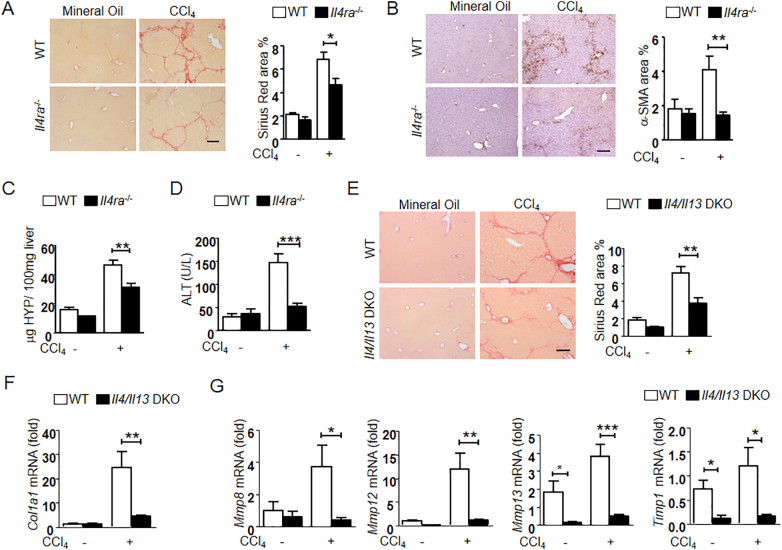
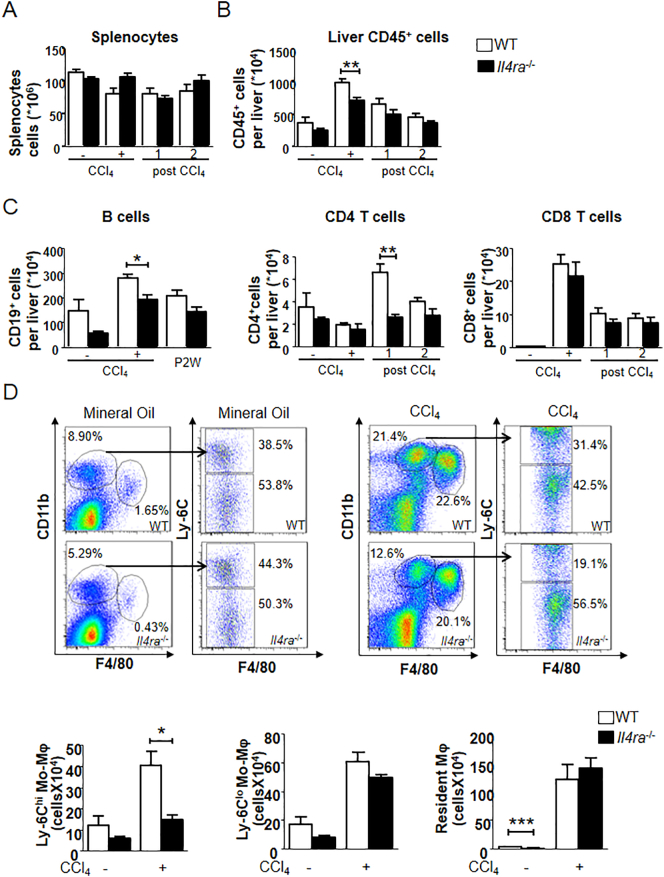
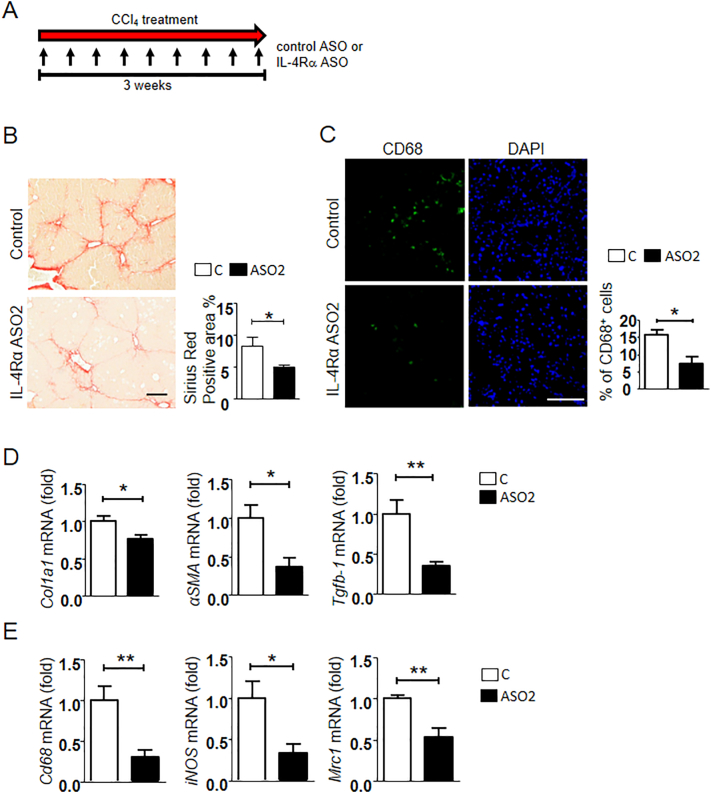
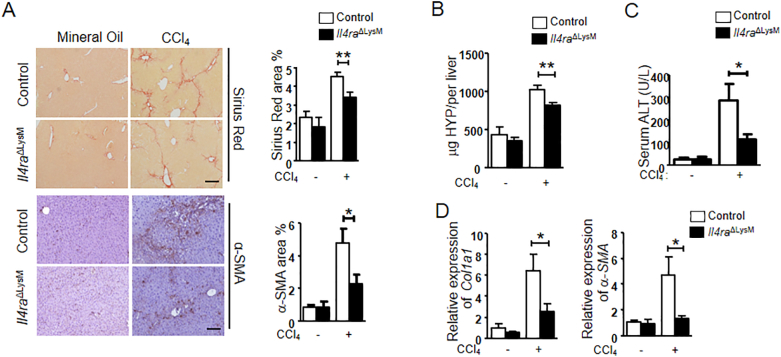
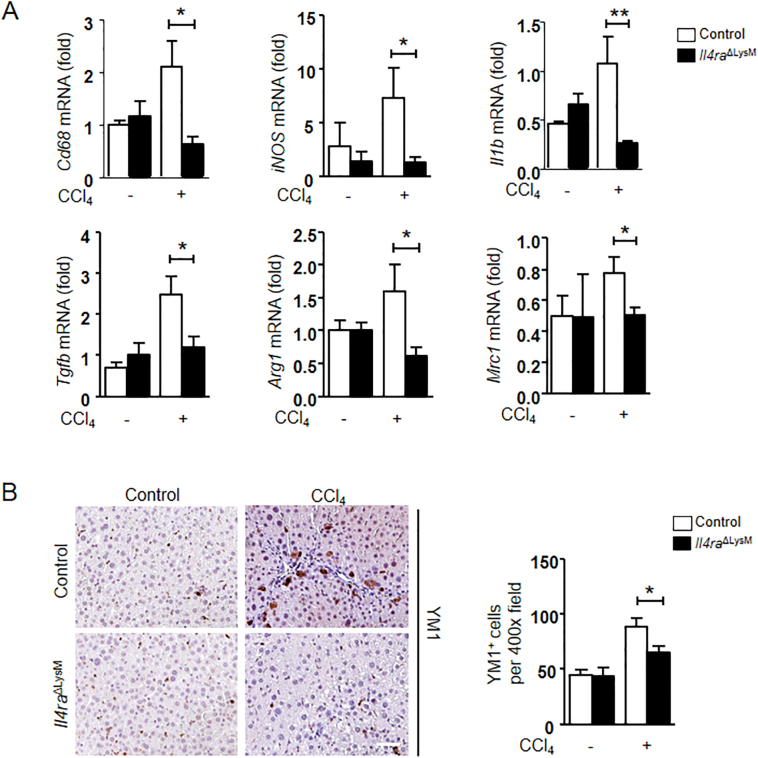
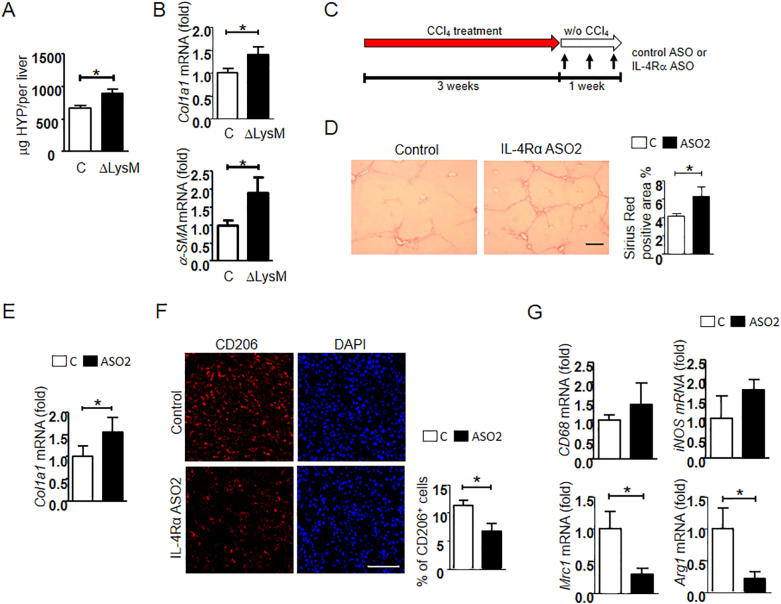
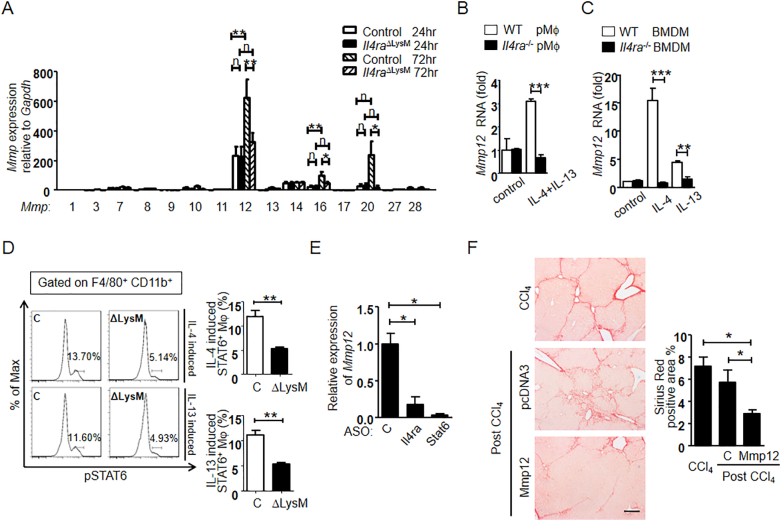
Chronic hepatitis leads to liver fibrosis and cirrhosis. Cirrhosis is a major cause of worldwide morbidity and mortality. Macrophages play a key role in fibrosis progression and reversal. However, the signals that determine fibrogenic vs fibrolytic macrophage function remain ill defined. We studied the role of interleukin-4 receptor α (IL-4Rα), a potential central switch of macrophage polarization, in liver fibrosis progression and reversal. We demonstrate that inflammatory monocyte infiltration and liver fibrogenesis were suppressed in general IL-4Rα −/− as well as in macrophage-specific IL-4Rα −/− (IL-4Rα ΔLysM ) mice. However, with deletion of IL-4Rα ΔLysM spontaneous fibrosis reversal was retarded. Results were replicated by pharmacological intervention using IL-4Rα-specific antisense oligonucleotides. Retarded resolution was linked to the loss of M2-type resident macrophages, which secreted MMP-12 through IL-4 and IL-13-mediated phospho-STAT6 activation. We conclude that IL-4Rα signaling regulates macrophage functional polarization in a context-dependent manner. Pharmacological targeting of macrophage polarization therefore requires disease stage-specific treatment strategies. Research in Context Alternative (M2-type) macrophage activation through IL-4Rα promotes liver inflammation and fibrosis progression but speeds up fibrosis reversal. This demonstrates context dependent, opposing roles of M2-type macrophages. During reversal IL-4Rα induces fibrolytic MMPs, especially MMP-12, through STAT6. Liver-specific antisense oligonucleotides efficiently block IL-4Rα expression and attenuate fibrosis progression.
Overview
The claims and statistics of this paper haven’t been checked yet.
Run the check — free, no account needed. It reads the open-access text and checks the sources it cites.
Integrity signals
Registry
Cites
Statistics
Figures
Verification
Claims the paper makes
The claims and statistics of this paper haven’t been checked yet.
Run the check — free, no account needed. It reads the open-access text and checks the sources it cites.
Claims other papers make about this one
Each is checked against this paper’s own text: does it say what the citing paper says it does?
The cited source doesn’t support the claim as written.
In the citing paper
“As shown by Weng et al. (65), IL-4Rα deficiency -despite its role in monocyte-to-resolutive macrophage differentiation- can paradoxically exacerbate fibrosis when present during active fibrogenesis, emphasizing the stage- and context-dependent nature of macrophage reprogramming.”
From Strategies to promote liver fibrosis amelioration with involvement of restorative macrophages (2026) · cites this paper as [65]
Checked by a reasoning model — may be wrong.
Experimental — accuracy not yet measuredThe cited source says what the claim attributes to it.
In the citing paper
“Mechanistically, IL-4 and IL-13 were shown to activate STAT6 in macrophages, leading to overexpression of the fibrolytic enzyme MMP-12 (65).”
From Strategies to promote liver fibrosis amelioration with involvement of restorative macrophages (2026) · cites this paper as [65]
The cited source says what the claim attributes to it.
In the citing paper
“Notably, disruption of IL-4Rα signaling has yielded context-dependent effects: while genetic deletion reduces macrophage populations and ameliorates fibrosis, antisense-mediated inhibition during regression impairs restorative polarization and delays fibrosis resolution (65).”
From Strategies to promote liver fibrosis amelioration with involvement of restorative macrophages (2026) · cites this paper as [65]
Self-check
Percentages, sums and reported differences re-computed from the paper’s own numbers.
The self-check needs the paper’s full text.
Citations
Cites
Macrophage activation and polarization: nomenclature and experimental guidelines
Murray, P. J., Allen, J. E., Biswas, S. K., Fisher, E. A., Gilroy, D. W., Goerdt, S., Gordon, S., Hamilton, J. A., Ivashkiv, L. B., Lawrence, T., et al. (2014) · Immunity · doi:10.1016/j.immuni.2014.06.008 · Cited by 6,337
Alternative activation of macrophages: mechanism and functions
Gordon, S., & Martinez, F. O. (2010) · Immunity · doi:10.1016/j.immuni.2010.05.007 · Cited by 4,197
Schuppan, D., & Afdhal, N. H. (2008) · The Lancet · doi:10.1016/s0140-6736(08)60383-9 · Cited by 2,089
Self-citationStein, M., Keshav, S., Harris, N., & Gordon, S. (1992) · The Journal of experimental medicine · doi:10.1084/jem.176.1.287 · Cited by 1,960
Marcellin, P., Gane, E., Buti, M., Afdhal, N., Sievert, W., Jacobson, I. M., Washington, M. K., Germanidis, G., Flaherty, J. F., Schall, R. A., et al. (2013) · The Lancet · doi:10.1016/s0140-6736(12)61425-1 · Cited by 1,788
Macrophage heterogeneity in liver injury and fibrosis
Tacke, F., & Zimmermann, H. W. (2014) · Journal of Hepatology · doi:10.1016/j.jhep.2013.12.025 · Cited by 1,061
Ramachandran, P., Pellicoro, A., Vernon, M. A., Boulter, L., Aucott, R. L., Ali, A., Hartland, S. N., Snowdon, V. K., Cappon, A., Gordon-Walker, T. T., et al. (2012) · Proceedings of the National Academy of Sciences · doi:10.1073/pnas.1119964109 · Cited by 1,001
Chang, T., Liaw, Y., Wu, S., Schiff, E. R., Han, K., Lai, C., Safadi, R., Lee, S. S., Halota, W., Goodman, Z. D., et al. (2010) · Hepatology · doi:10.1002/hep.23785 · Cited by 973
Fichtner‐Feigl, S., Strober, W., Kawakami, K., Puri, R. K., & Kitani, A. (2005) · Nature Medicine · doi:10.1038/nm1332 · Cited by 905
Arginase-1–Expressing Macrophages Suppress Th2 Cytokine–Driven Inflammation and Fibrosis
Pesce, J. T., Ramalingam, T. R., Mentink-Kane, M. M., Wilson, M. S., El Kasmi, K. C., Smith, A. M., Thompson, R. W., Cheever, A. W., Murray, P. J., & Wynn, T. A. (2009) · PLoS Pathogens · doi:10.1371/journal.ppat.1000371 · Cited by 816
Cited by
Sorted by citations
The role of macrophages in nonalcoholic fatty liver disease and nonalcoholic steatohepatitis
Kazankov, K., Jørgensen, S. M. D., Thomsen, K. L., Møller, H. J., Vilstrup, H., George, J., Schuppan, D., & Grønbæk, H. (2019) · Nature Reviews Gastroenterology & Hepatology · doi:10.1038/s41575-018-0082-x · Cited by 941
Self-citationShared and distinct mechanisms of fibrosis
Distler, J. H. W., Györfi, A., Ramanujam, M., Whitfield, M. L., Königshoff, M., & Lafyatis, R. (2019) · Nature Reviews Rheumatology · doi:10.1038/s41584-019-0322-7 · Cited by 674
Macrophage Polarization and Its Role in Liver Disease
Wang, C., Ma, C., Gong, L., Guo, Y., Fu, K., Zhang, Y., Zhou, H., & Li, Y. (2021) · Frontiers in Immunology · doi:10.3389/fimmu.2021.803037 · Cited by 591
Macrophages in wound healing: activation and plasticity
Kim, S. Y., & Nair, M. G. (2019) · Immunology and Cell Biology · doi:10.1111/imcb.12236 · Cited by 536
Liver fibrosis: Direct antifibrotic agents and targeted therapies
Schuppan, D., Ashfaq–Khan, M., Yang, A. T., & Kim, Y. O. (2018) · Matrix Biology · doi:10.1016/j.matbio.2018.04.006 · Cited by 451
Self-citation
Metadata
- Authors
- Weng, S.-Y., Wang, X., Vijayan, S., Tang, Y., Kim, Y. O., Padberg, K., Regen, T., Molokanova, O., Chen, T., Bopp, T., Schild, H., Brombacher, F., Crosby, J. R., McCaleb, M. L., Waisman, A., Bockamp, E., & Schuppan, D.
- Affiliations
- Johannes Gutenberg University Mainz (DE)
- South African Medical Research Council (ZA)
- Ionis Pharmaceuticals (United States) (US)
- Beth Israel Deaconess Medical Center (US)
- Corresponding author
- Schuppan, Detlef
- ORCID
- Venue
- EBioMedicine
- Publisher
- Elsevier BV
- Published
- 2018-03
- Volume
- 29
- Pages
- 92-103
- ISSN
- 2352-3964 (ISSN-L)
- PMC
- PMC5925448
- OpenAlex
- W2790513179
- Cited by
- 128
- References
- 60
- Citations by year
- 2026: 14 · 2025: 18 · 2024: 11 · 2023: 18 · 2022: 17 · 2021: 21 · 2020: 9 · 2019: 15 · 2018: 4
- FWCI
- 7.68
- Type
- journal article
- Language
- en
- Open access
- gold
- doi.org
- Licence
- Locations
- EBioMedicine (publishedVersion, cc-by-nc-nd)
- Europe PMC (PubMed Central) (publishedVersion, cc-by-nc-nd)
- PubMed Central (publishedVersion, cc-by-nc-nd)
- PubMed (publishedVersion)
- Gutenberg Open Science (submittedVersion, cc-by-nc-nd)
- Digital Access to Scholarship at Harvard (DASH) (Harvard University) (submittedVersion, cc-by)
- DOAJ (DOAJ: Directory of Open Access Journals) (submittedVersion)
- Gutenberg Open Science
- Funders
- National Science Council
- European Commission
- European Research Council
- Topics
- Health Sciences › Medicine › Hepatology › Liver physiology and pathology
- Health Sciences › Medicine › Cardiology and Cardiovascular Medicine › Cardiac Fibrosis and Remodeling
- Health Sciences › Medicine › Hepatology › Liver Disease Diagnosis and Treatment
- Keywords
- IL-4 receptor alpha, liver fibrosis, macrophage polarization, M2 macrophages, fibrosis reversal, chronic hepatitis, STAT6 signaling, MMP-12, IL-13, IL-4, inflammatory monocytes, antisense oligonucleotides, liver cirrhosis
- MeSH terms
- RAW 264.7 Cells, Animals, Disease Models, Animal, Liver Cirrhosis, Macrophage Activation, Macrophages, Spleen, Signal Transduction, Gene Expression, T-Lymphocyte Subsets, Cytokines, Mice, Knockout, Disease Progression, Matrix Metalloproteinases, Myeloid Cells, STAT6 Transcription Factor, Mice, Interleukin-4 Receptor alpha Subunit, Non-alcoholic Fatty Liver Disease
About these checks
Registry, retraction, Cites and statistics results are computed, not judged, with one exception: a printed reference that no index lists is read once by a model before it counts as a citation error. Claims are extracted by a model and kept only when their quote appears verbatim in the text; each cited source is then checked, with a model’s help, for whether it says what the claim relies on. Those verdicts can be wrong — read the claim’s quote and the cited source before relying on one.
Statistics and arithmetic are recomputed, not judged.
Confidence bands are shown only for fields calibrated on our annotated test set. None is calibrated yet, so no band is shown.
What counts as a claim ›How we measure confidence ›How we check this ›
Are you an author, or do you see a problem with this page? Request a review
