

Ozone inactivation of acid stressed Listeria monocytogenes and Listeria innocua in orange juice using a bubble column
The DOI matches its Crossref record; 32 of the 32 references it cites were found in a registry or an index.
Abstract
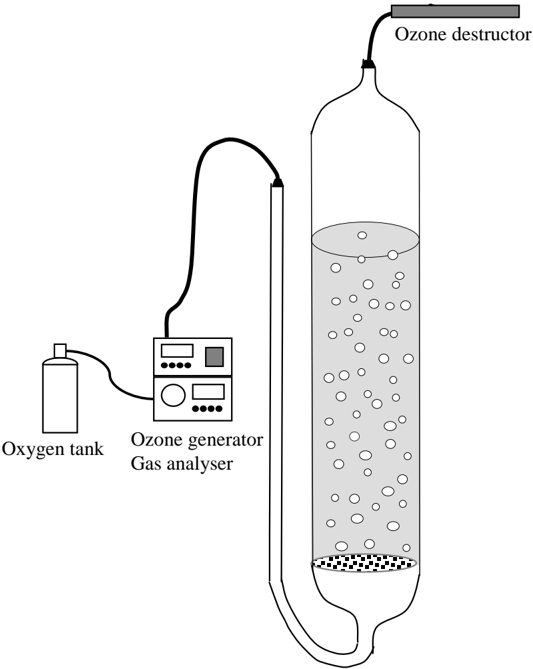
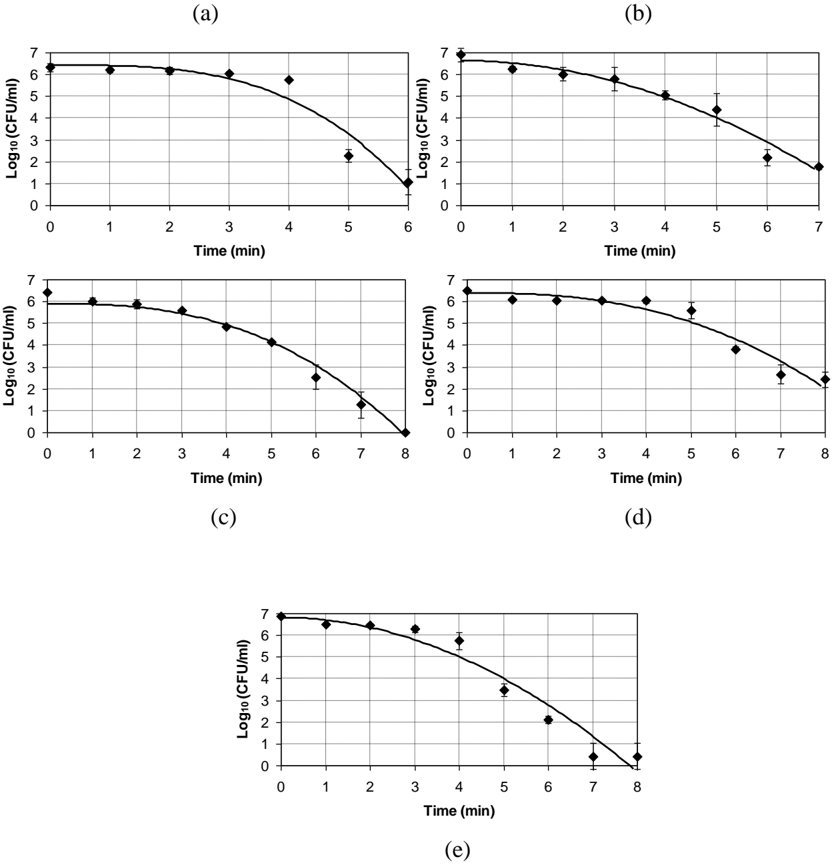
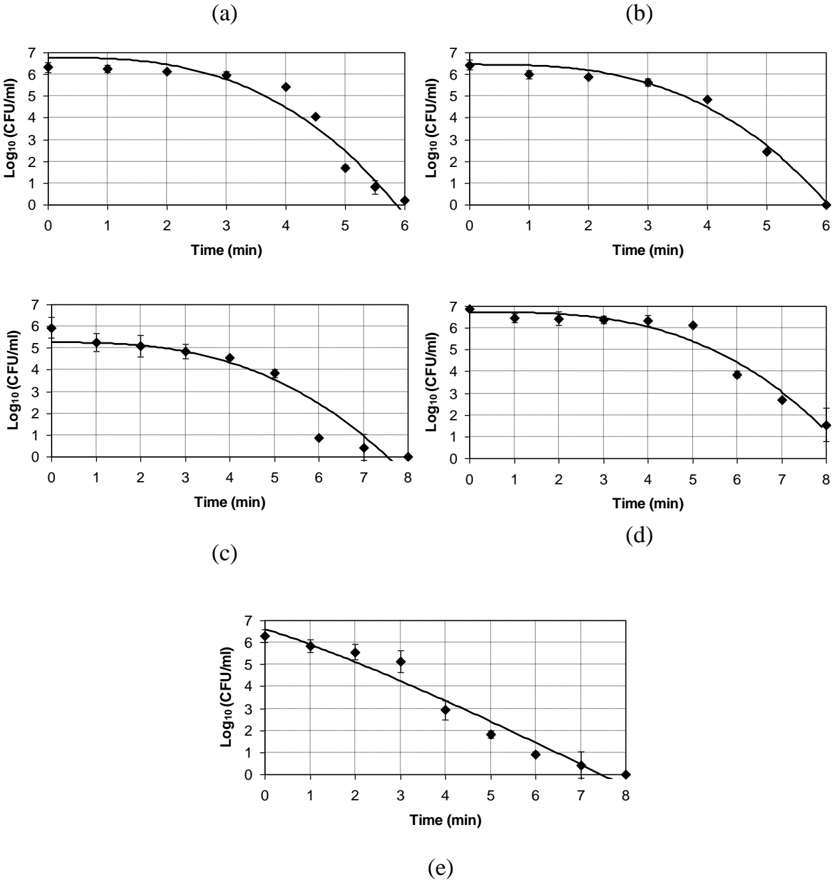
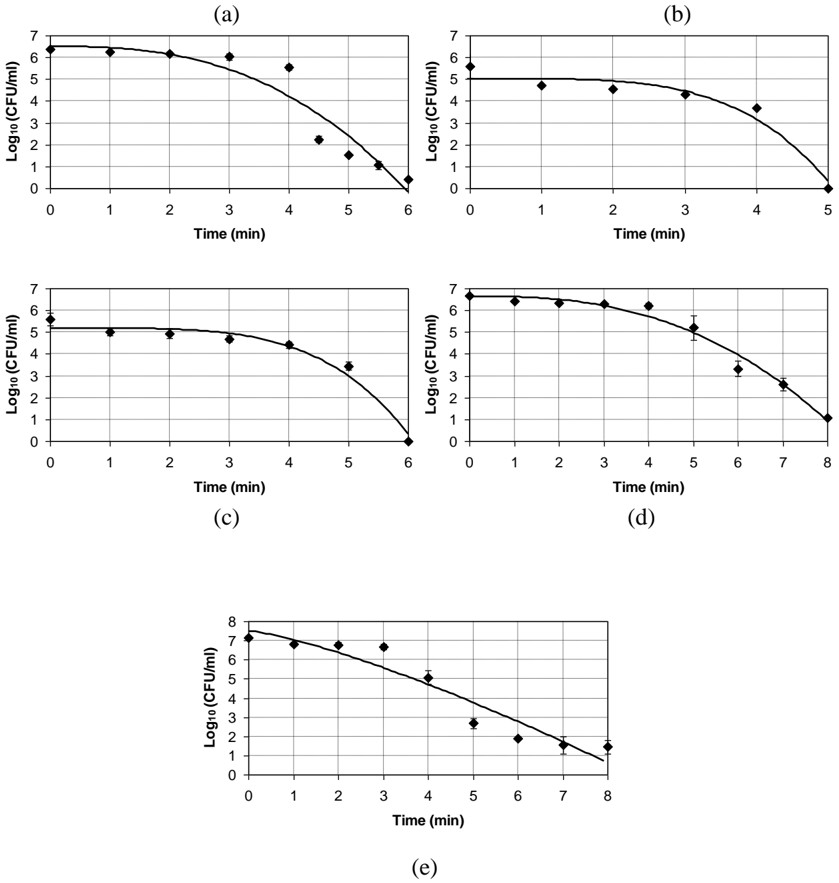
Abstract Orange juice inoculated with Listeria monocytogenes strains ATCC 7644, NCTC 11994 and Listeria innocua NCTC 11288 (10 6 CFU/ml) as challenge microorganisms was treated with direct ozone at 0.098 mg/min/ml for different time periods (0–8 min) using an ozone bubble column. Ozone treatment of mild acid stressed and mild acid stress-habituated (pH 5.5) cells of L. monocytogenes resulted in higher inactivation times compared to control non-acid stressed cells. Additionally acid stressed cells habituated in orange juice (ATCC 7644 & NCTC 11288), showed higher inactivation times during ozonation by comparison with the control as well as the mild-acid stressed cells. Overall the gaseous ozone treatment applied to orange juice resulted in a population reduction of 5 log cycles within a time range that varied between 5 and 9 min.
Overview
The claims and statistics of this paper haven’t been checked yet.
Free: it reads the open-access text and checks the first 5 claims that cite a source we can check. Create a free account to check every claim.
Integrity signals
Registry
Cites
Statistics
Figures
Verification
Claims the paper makes
The claims and statistics of this paper haven’t been checked yet.
Free: it reads the open-access text and checks the first 5 claims that cite a source we can check. Create a free account to check every claim.
Claims other papers make about this one
Each is checked against this paper’s own text: does it say what the citing paper says it does?
In the citing paper
“The effectiveness of ozone for inactivation of Listeria species (5 log cycle reduction) at a concentration of 75-78 µg/ml of ozone between 5.05 and 8.44 min treatments in orange juice was reported earlier by Patil, Valdramidis, Cullen, Frias, and Bourke (2010).”
From Effect of ozone and ultrasound treatments on polyphenol content, browning enzyme activities, and shelf life of tender coconut water (2020) · cites this paper as Patil, Valdramidis, Cullen, Frias, and Bourke (2010)
Self-check
Percentages, sums and reported differences re-computed from the paper’s own numbers.
The self-check needs the paper’s full text.
Citations
Cites
Basic aspects of food preservation by hurdle technology
Leistner, L. (2000) · International Journal of Food Microbiology · doi:10.1016/s0168-1605(00)00161-6 · Cited by 1,155
GInaFiT, a freeware tool to assess non-log-linear microbial survivor curves
Geeraerd, A. H., Valdramidis, V. P., & Van Impe, J. F. (2005) · International Journal of Food Microbiology · doi:10.1016/j.ijfoodmicro.2004.11.038 · Cited by 1,144
Self-citationOn the use of the Weibull model to describe thermal inactivation of microbial vegetative cells
van Boekel, M. (2002) · International Journal of Food Microbiology · doi:10.1016/s0168-1605(01)00742-5 · Cited by 988
Application of Ozone for Enhancing the Microbiological Safety and Quality of Foods: A Review
Kim, J.-G., Yousef, A. E., & Dave, S. (1999) · Journal of Food Protection · doi:10.4315/0362-028x-62.9.1071 · Cited by 896
Mafart, P., Couvert, O., Gaillard, S., & Leguerinel, I. (2002) · International Journal of Food Microbiology · doi:10.1016/s0168-1605(01)00624-9 · Cited by 876
Rodgers, S. L., Cash, J. N., Siddiq, M., & Ryser, E. T. (2004) · Journal of Food Protection · doi:10.4315/0362-028x-67.4.721 · Cited by 391
Lou, Y., & Yousef, A. E. (1997) · Applied and Environmental Microbiology · doi:10.1128/aem.63.4.1252-1255.1997 · Cited by 371
Salmonella acid shock proteins are required for the adaptive acid tolerance response
Foster, J. W. (1991) · Journal of Bacteriology · doi:10.1128/jb.173.21.6896-6902.1991 · Cited by 319
Mazzotta, A. S. (2001) · Journal of Food Protection · doi:10.4315/0362-028x-64.3.315 · Cited by 268
Buchanan, R. L., & Edelson, S. G. (1996) · Applied and Environmental Microbiology · doi:10.1128/aem.62.11.4009-4013.1996 · Cited by 231
Optimization of ozone treatment of fresh-cut green leaf lettuce
Ölmez, H., & Akbas, M. Y. (2009) · Journal of Food Engineering · doi:10.1016/j.jfoodeng.2008.07.026 · Cited by 192
Effect of ozone processing on anthocyanins and ascorbic acid degradation of strawberry juice
Tiwari, B. K., O’Donnell, C. P., Patras, A., Brunton, N. P., & Cullen, P. J. (2008) · Food Chemistry · doi:10.1016/j.foodchem.2008.08.085 · Cited by 174
Self-citationInactivation of Viruses and Bacteria by Ozone, With and Without Sonication
Burleson, G. R., Murray, T. M., & Pollard, M. (1975) · Applied Microbiology · doi:10.1128/aem.29.3.340-344.1975 · Cited by 169
Koutsoumanis, K. P., & Sofos, J. N. (2004) · Letters in Applied Microbiology · doi:10.1111/j.1472-765x.2004.01491.x · Cited by 163
Inactivation of Escherichia coli in orange juice using ozone
Patil, S., Bourke, P., Frías, J. M., Tiwari, B. K., & Cullen, P. J. (2009) · Innovative Food Science & Emerging Technologies · doi:10.1016/j.ifset.2009.05.011 · Cited by 141
Self-citationAnalysis of the role of the Listeria monocytogenes F0F1-ATPase operon in the acid tolerance response
Cotter, P. D., Gahan, C. G. M., & Hill, C. (2000) · International Journal of Food Microbiology · doi:10.1016/s0168-1605(00)00305-6 · Cited by 134
Anthocyanin and colour degradation in ozone treated blackberry juice
Tiwari, B. K., O’Donnell, C. P., Muthukumarappan, K., & Cullen, P. J. (2008) · Innovative Food Science & Emerging Technologies · doi:10.1016/j.ifset.2008.08.002 · Cited by 127
Self-citationKinetics of Freshly Squeezed Orange Juice Quality Changes during Ozone Processing
Tiwari, B. K., Muthukumarappan, K., O’Donnell, C. P., & Cullen, P. J. (2008) · Journal of Agricultural and Food Chemistry · doi:10.1021/jf800515e · Cited by 119
Self-citationSurvival of Escherichia coli O157:H7, Listeria monocytogenes, and Salmonella in Juice Concentrates
Oyarzábal, O. A., Nogueira, M. C. L., & Gombas, D. E. (2003) · Journal of Food Protection · doi:10.4315/0362-028x-66.9.1595 · Cited by 101
Basics of Stress Adaptation and Implications in New-Generation Foods
Yousef, A., & Courtney, P. (2002) · Microbial Stress Adaptation and Food Safety · doi:10.1201/9781420012828.ch1 · Cited by 100 · cited 1×
“295 Foodborne bacteria encounter organic and inorganic acids in foods or in the 296 gastrointestinal tract and cells of the host (Yousef & Courtney, 2003).”
BackgroundYuk, H., Yoo, M.-Y., Yoon, J., Moon, K., Marshall, D. L., & Oh, D. (2006) · Journal of Food Science · doi:10.1111/j.1365-2621.2006.tb15636.x · Cited by 94
Cheng, H.-Y., Yu, R., & Chou, C. (2002) · Food Research International · doi:10.1016/s0963-9969(02)00107-2 · Cited by 89
Identification of Listeria monocytogenes from Unpasteurized Apple Juice Using Rapid Test Kits
Sado, P. N., Jinneman, K. C., Husby, G., Sorg, S. M., & Omiecinski, C. J. (1998) · Journal of Food Protection · doi:10.4315/0362-028x-61.9.1199 · Cited by 86
Caggia, C., Scifò, G. O., Restuccia, C., & Randazzo, C. L. (2008) · Food Control · doi:10.1016/j.foodcont.2008.02.003 · Cited by 59
Refrigerated Fruit Juices: Quality and Safety Issues
Esteve, M. J., & Frígola, A. (2007) · Advances in food and nutrition research · doi:10.1016/s1043-4526(06)52003-0 · Cited by 55
Gaseous ozone treatment inactivates Listeria innocua in vitro
Fan, L., Song, J. I., McRae, K. B., Walker, B., & Sharpe, D. V. (2007) · Journal of Applied Microbiology · doi:10.1111/j.1365-2672.2007.03522.x · Cited by 40
Extrinsic control parameters for ozone inactivation ofEscherichia coliusing a bubble column
Patil, S., Cullen, P. J., Kelly, B., Frías, J. M., & Bourke, P. (2009) · Journal of Applied Microbiology · doi:10.1111/j.1365-2672.2009.04255.x · Cited by 32
Self-citationHansen, T. B., & Knøchel, S. (2001) · International Journal of Food Microbiology · doi:10.1016/s0168-1605(00)00467-0
Acid responses of Listeria monocytogenes
Phan‐Thanh, L., Mahouin, F., & Aligé, S. (2000) · International Journal of Food Microbiology · doi:10.1016/s0168-1605(00)00167-7
Picart‐Palmade, L., Dumay, E. M., & Cheftel, J. C. (2002) · Innovative Food Science & Emerging Technologies · doi:10.1016/s1466-8564(02)00055-3
Skandamis, P. N., Yoon, Y., Stopforth, J. D., Kendall, P. A., & Sofos, J. N. (2007) · Food Microbiology · doi:10.1016/j.fm.2007.10.008
Inactivation by ozone of Listeria innocua on salmon-trout during cold-smoke processing
Vaz‐Velho, M., da Silva, Pessoa, J., & Gibbs, P. A. (2005) · Food Control · doi:10.1016/j.foodcont.2005.03.007
Research works printed but not linked: 3
- Johnson, E. A. (2003). Microbial adaptation and survival in foods. In: Microbial Stress adaptation and Food Safety (pp 84-85). Ed: Yousef and Juneja, CRC press.
- Muthukumarappan, K., Halaweish, F., & Naidu, A.S. (2000). Ozone. In: Natural Food Anti-Microbial Systems (pp. 783-800).
- Ryser, E. T., & Marth, E. H. (ed.) 1991. Listeria, listeriosis, and food safety. Marcel Dekker, New York.
Cited by
Nonthermal Technologies for Fruit and Vegetable Juices and Beverages: Overview and Advances
Bevilacqua, A., Petruzzi, L., Perricone, M., Speranza, B., Campaniello, D., Sinigaglia, M., & Corbo, M. R. (2018) · Comprehensive Reviews in Food Science and Food Safety · doi:10.1111/1541-4337.12299 · Cited by 190
Rajashri, K., Roopa, B. S., Negi, P. S., & Rastogi, N. K. (2020) · Journal of Food Processing and Preservation · doi:10.1111/jfpp.14363 · Cited by 58
Metadata
- Authors
- Patil, S., Valdramidis, V. P., Cullen, P. J., Frias, J. M., & Bourke, P.
- Venue
- Food Control
- Publisher
- Elsevier BV
- Published
- 2010-12
- Volume
- 21
- Issue
- 12
- Pages
- 1723-1730
- ISSN
- 0956-7135
- Cited by
- 31
- References
- 32
- Language
- en
- Licence
- www.elsevier.com/tdm/userlicense/1.0/ (tdm)
About these checks
Registry, retraction, Cites and statistics results are computed, not judged, with one exception: a printed reference that no index lists is read once by a model before it counts as a citation error. Claims are extracted by a model and kept only when their quote appears verbatim in the text; each cited source is then checked, with a model’s help, for whether it says what the claim relies on. Those verdicts can be wrong — read the claim’s quote and the cited source before relying on one.
Statistics and arithmetic are recomputed, not judged.
Confidence bands are shown only for fields calibrated on our annotated test set. None is calibrated yet, so no band is shown.
What counts as a claim ›How we measure confidence ›How we check this ›
Are you an author, or do you see a problem with this page? Request a review
Data sources
Bibliographic data: Semantic Scholar, OpenAlex, Crossref.
Contains information from the Semantic Scholar Academic Graph Datasets, made available under the ODC Attribution License (ODC-BY 1.0).
Semantic Scholar’s data is described in: Kinney, R., et al. (2023). The Semantic Scholar Open Data Platform. arXiv:2301.10140.
