

The DOI matches its Crossref record.
Enhanced continental chemical weathering during the multiple early Eocene hyperthermals: New constraints from the southern Indian Ocean
Overview
The claims and statistics of this paper haven’t been checked yet.
Run the check — free, no account needed. It reads the open-access text and checks the sources it cites.
Integrity signals
Registry
Cites
Statistics
Figures
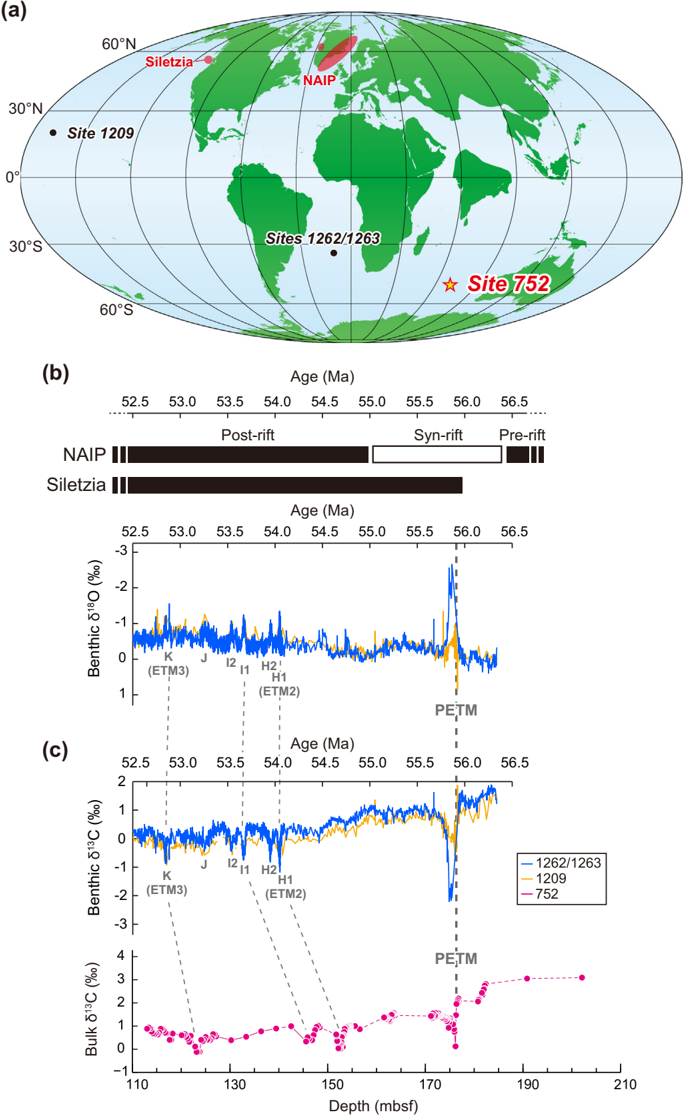
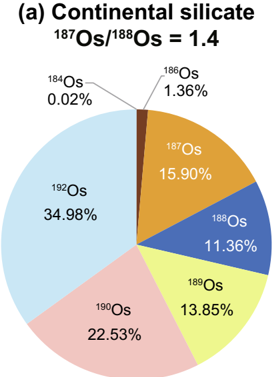
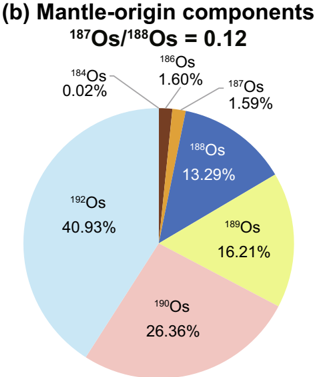
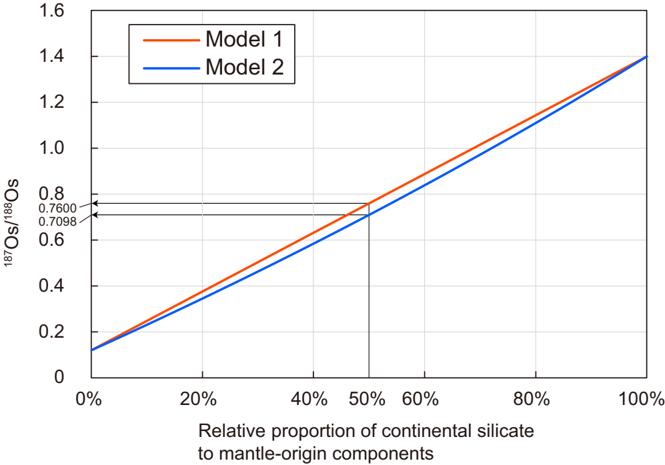
Verification
Claims the paper makes
The claims and statistics of this paper haven’t been checked yet.
Run the check — free, no account needed. It reads the open-access text and checks the sources it cites.
Claims other papers make about this one
Each is checked against this paper’s own text: does it say what the citing paper says it does?
In the citing paper
“The kinetic box model is basically similar to those provided by Tanaka et al. (83) and Sato et al. (84).”
From Earth orbital rhythms links timing of Deccan trap volcanism phases and global climate change (2025) · cites this paper as [83]
Self-check
Percentages, sums and reported differences re-computed from the paper’s own numbers.
The self-check needs the paper’s full text.
Citations
Cites
No references could be resolved yet.
Research works printed but not linked: 113
- Abels, 2012, Terrestrial carbon isotope excursions and biotic change during Palaeogene hyperthermals, Nat. Geosci., 5, 326, 10.1038/ngeo1427 · DOI
- Abels, 2016, Environmental impact and magnitude of paleosol carbonate carbon isotope excursions marking five early Eocene hyperthermals in the Bighorn Basin, Wyoming, Clim. Past, 12, 1151, 10.5194/cp-12-1151-2016 · DOI
- Agnini, 2009, An early Eocene carbon cycle perturbation at ∼52.5 Ma in the Southern Alps: Chronology and biotic response, Paleoceanography, 24, PA2209, 10.1029/2008PA001649 · DOI
- Agnini, 2016, Stable isotope and calcareous nannofossil assemblage record of the late Paleocene and early Eocene (Cicogna section), Clim. Past, 12, 883, 10.5194/cp-12-883-2016 · DOI
- Alves, 2002, Osmium isotope binary mixing arrays in arc volcanism, Earth Planet. Sci. Lett., 198, 355, 10.1016/S0012-821X(02)00524-1 · DOI
- Babila, 2016, A continental shelf perspective of ocean acidification and temperature evolution during the Paleocene-Eocene Thermal Maximum, Geology, 44, 275, 10.1130/G37522.1 · DOI
- Bains, 2000, Termination of global warmth at the Palaeocene/Eocene boundary through productivity feedback, Nature, 407, 171, 10.1038/35025035 · DOI
- Berner, 1994, GEOCARB II; a revised model of atmospheric CO2 over Phanerozoic time, Am. J. Sci., 294, 56, 10.2475/ajs.294.1.56 · DOI
- Berner, 1983, The carbonate-silicate geochemical cycle and its effect on atmospheric carbon dioxide over the last 100 million years, Am. J. Sci., 205, 641, 10.2475/ajs.283.7.641 · DOI · Paper page
- Bond, 2017, On the causes of mass extinctions, Palaeogeogr. Palaeoclimatol. Palaeoecol., 478, 3, 10.1016/j.palaeo.2016.11.005 · DOI
- Bottini, 2012, Osmium-isotope evidence for volcanism, weathering, and ocean mixing during the early Aptian OAE 1a, Geology, 40, 583, 10.1130/G33140.1 · DOI
- Bowen, 2004, A humid climate state during the Palaeocene/Eocene thermal maximum, Nature, 432, 495, 10.1038/nature03115 · DOI
- Bowen, 2008, Mechanisms of PETM global change constrained by a new record from central Utah, Geology, 36, 379, 10.1130/G24597A.1 · DOI
- Bowen, 2010, Rapid carbon sequestration at the termination of the Palaeocene-Eocene Thermal Maximum, Nat. Geosci., 3, 866, 10.1038/ngeo1014 · DOI
- Brady, 1991, The effect of silicate weathering on global temperature and atmospheric CO2, J. Geophys. Res., 96, 18101, 10.1029/91JB01898 · DOI
- Caves, 2016, Cenozoic carbon cycle imbalances and a variable weathering feedback, Earth Planet. Sci. Lett., 450, 152, 10.1016/j.epsl.2016.06.035 · DOI
- Chen, 2020, Spatial change of precipitation in response to the Paleocene-Eocene thermal Maximum warming in China, Glob. Planet. Change, 194, 103313, 10.1016/j.gloplacha.2020.103313 · DOI
- Cogné, 2006, Trends and rhythms in global seafloor generation rate, Geochemistry, Geophys. Geosystems, 7, Q03011, 10.1029/2005GC001148 · DOI
- Cohen, 2002, New geochemical evidence for the onset of volcanism in the Central Atlantic magmatic province and environmental change at the Triassic-Jurassic boundary, Geology, 30, 267, 10.1130/0091-7613(2002)030<0267:NGEFTO>2.0.CO;2 · DOI
- Cohen, 2004, Osmium isotope evidence for the regulation of atmospheric CO2 by continental weathering, Geology, 32, 157, 10.1130/G20158.1 · DOI
- Cohen, 2007, The impact of the Central Atlantic Magmatic Province on climate and on the Sr- and Os-isotope evolution of seawater, Palaeogeogr. Palaeoclimatol. Palaeoecol., 244, 374, 10.1016/j.palaeo.2006.06.036 · DOI
- Cramer, 2003, Orbital climate forcing of δ13C excursions in the late Paleocene-early Eocene (chrons C24n–C25n), Paleoceanography, 18, 1097, 10.1029/2003PA000909 · DOI
- Cramwinckel, 2018, Synchronous tropical and polar temperature evolution in the Eocene, Nature, 559, 382, 10.1038/s41586-018-0272-2 · DOI
- Dalai, 2006, The Late Eocene 187Os/188Os excursion: Chemostratigraphy, cosmic dust flux and the Early Oligocene glaciation, Earth Planet. Sci. Lett., 241, 477, 10.1016/j.epsl.2005.11.035 · DOI
- Dallanave, 2015, Early to middle Eocene magneto-biochronology of the southwest Pacific Ocean and climate influence on sedimentation : Insights from the Mead Stream section, New Zealand, GSA Bull., 127, 643, 10.1130/B31147.1 · DOI
- Dessert, 2001, Erosion of Deccan Traps determined by river geochemistry: Impact on the global climate and the 87Sr/86Sr ratio of seawater, Earth Planet. Sci. Lett., 188, 459, 10.1016/S0012-821X(01)00317-X · DOI
- Dessert, 2003, Basalt weathering laws and the impact of basalt weathering on the global carbon cycle, Chem. Geol., 202, 257, 10.1016/j.chemgeo.2002.10.001 · DOI
- Dickson, 2015, Evidence for weathering and volcanism during the PETM from Arctic Ocean and Peri-Tethys osmium isotope records, Palaeogeogr. Palaeoclimatol. Palaeoecol., 438, 300, 10.1016/j.palaeo.2015.08.019 · DOI
- Dunkley Jones, 2013, Climate model and proxy data constraints on ocean warming across the Paleocene-Eocene Thermal Maximum, Earth-Science Rev., 125, 123, 10.1016/j.earscirev.2013.07.004 · DOI
- Du Vivier, 2014, Marine 187Os/188Os isotope stratigraphy reveals the interaction of volcanism and ocean circulation during Oceanic Anoxic Event 2, Earth Planet. Sci. Lett., 389, 23, 10.1016/j.epsl.2013.12.024 · DOI
- Eddy, 2017, Age and volcanic stratigraphy of the Eocene Siletzia oceanic plateau in Washington and on Vancouver Island, Lithosphere, 9, 652
- Farley, 1995, Cenozoic variations in the flux of interplanetary dust recorded by 3He in a deep-sea sediment, Nature, 376, 153, 10.1038/376153a0 · DOI
- Galeotti, 2010, Orbital chronology of Early Eocene hyperthermals from the Contessa Road section, central Italy, Earth Planet. Sci. Lett., 290, 192, 10.1016/j.epsl.2009.12.021 · DOI
- Gernon, 2021, Global chemical weathering dominated by continental arcs since the mid-Palaeozoic, Nat. Geosci., 14, 690, 10.1038/s41561-021-00806-0 · DOI
- Gibson, 2016, The influence of melt flux and crustal processing on Re–Os isotope systematics of ocean island basalts: Constraints from Galápagos, Earth Planet. Sci. Lett., 449, 345, 10.1016/j.epsl.2016.05.021 · DOI
- Gutjahr, 2017, Very large release of mostly volcanic carbon during the Palaeocene-Eocene Thermal Maximum, Nature, 548, 573, 10.1038/nature23646 · DOI
- Handley, 2012, Changes in the hydrological cycle in tropical East Africa during the Paleocene-Eocene Thermal Maximum, Palaeogeogr. Palaeoclimatol. Palaeoecol., 329–330, 10, 10.1016/j.palaeo.2012.02.002 · DOI
- Harper, 2020, The Magnitude of Surface Ocean Acidification and Carbon Release During Eocene Thermal Maximum 2 (ETM‐2) and the Paleocene‐Eocene Thermal Maximum (PETM), Paleoceanogr. Paleoclimatol., 35, 10.1029/2019PA003699 · DOI
- Hassler, 2000, Rapid determination of Os isotopic composition by sparging OsO4 into a magnetic-sector ICP-MS, Chem. Geol., 166, 1, 10.1016/S0009-2541(99)00180-1 · DOI
- Hodell, 2007, Variations in the strontium isotope composition of seawater during the Paleocene and early Eocene from ODP Leg 208 (Walvis Ridge), Geochem. Geophys. Geosyst., 8, Q09001, 10.1029/2007GC001607 · DOI
- Jenkyns, 2010, Geochemistry of oceanic anoxic events. Geochemistry, Geophys. Geosystems, 11, 1
- Kato, 2005, Major and trace element geochemistry and Os isotopic composition of metalliferous umbers from the Late Cretaceous Japanese accretionary complex, Geochem. Geophys. Geosyst., 6, Q07004, 10.1029/2005GC000920 · DOI
- Kato, 2011, Marine Os isotopic fluctuations in the early Eocene greenhouse interval as recorded by metalliferous umbers from a Tertiary ophiolite in Japan, Gondwana Res., 20, 594, 10.1016/j.gr.2010.12.007 · DOI
- Kimura, 2014, Precise determination of Os isotope ratios in the 15–4000 pg range using a sparging method using enhanced-sensitivity multiple Faraday collector-inductively coupled plasma-mass spectrometry, J. Anal. At. Spectrom., 29, 1483, 10.1039/C4JA00092G · DOI
- Kuroda, 2010, Marine osmium isotope record across the Triassic-Jurassic boundary from a Pacific pelagic site, Geology, 38, 1095, 10.1130/G31223.1 · DOI
- Kuwahara, 2021, Rapid coupling between solid earth and ice volume during the Quaternary, Sci. Rep., 11, 5695, 10.1038/s41598-021-84448-7 · DOI
- Laurin, 2016, Frequency modulation reveals the phasing of orbital eccentricity during Cretaceous Oceanic Anoxic Event II and the Eocene hyperthermals, Earth Planet. Sci. Lett., 442, 143, 10.1016/j.epsl.2016.02.047 · DOI
- Lauretano, 2015, Frequency, magnitude and character of hyperthermal events at the onset of the Early Eocene Climatic Optimum, Clim. Past, 11, 1313, 10.5194/cp-11-1313-2015 · DOI
- Levasseur, 1999, The osmium riverine flux and the oceanic mass balance of osmium, Earth Planet. Sci. Lett., 174, 7, 10.1016/S0012-821X(99)00259-9 · DOI
- Li, 2013, Evolution of carbon cycle over the past 100 million years, Geochim. Cosmochim. Acta, 103, 11, 10.1016/j.gca.2012.10.014 · DOI
- Li, 2009, Evolution of the Cenozoic carbon cycle: The roles of tectonics and CO2 fertilization, Global Biogeochem. Cycles, 23, GB1009, 10.1029/2008GB003220 · DOI
- Liu, 2019, Assessing the Contributions of Comet Impact and Volcanism Toward the Climate Perturbations of the Paleocene-Eocene Thermal Maximum, Geophys. Res. Lett., 46, 14798, 10.1029/2019GL084818 · DOI
- Lourens, 2005, Astronomical pacing of late Palaeocene to early Eocene global warming events, Nature, 435, 1083, 10.1038/nature03814 · DOI
- Ma, 2014, Carbon sequestration during the Palaeocene-Eocene Thermal Maximum by an efficient biological pump, Nat. Geosci., 7, 382, 10.1038/ngeo2139 · DOI
- McInerney, 2011, The Paleocene-Eocene Thermal Maximum: A Perturbation of Carbon Cycle, Climate, and Biosphere with Implications for the Future, Annu. Rev. Earth Planet. Sci., 39, 489, 10.1146/annurev-earth-040610-133431 · DOI
- Meija, 2016, Isotopic compositions of the elements 2013 (IUPAC Technical Report), Pure Appl. Chem., 88, 293, 10.1515/pac-2015-0503 · DOI
- Müller, 2008, Long-term sea-level fluctuations driven by ocean basin dynamics, Science, 319, 1357, 10.1126/science.1151540 · DOI
- Müller, 2019, A Global Plate Model Including Lithospheric Deformation Along Major Rifts and Orogens Since the Triassic, Tectonics, 38, 1884, 10.1029/2018TC005462 · DOI
- Nicolo, 2007, Multiple early Eocene hyperthermals: Their sedimentary expression on the New Zealand continental margin and in the deep sea, Geology, 35, 699, 10.1130/G23648A.1 · DOI
- Nozaki, 2012, A method for rapid determination of Re and Os isotope compositions using ID-MC-ICP-MS combined with the sparging method, Geostand. Geoanalyt. Res., 36, 131, 10.1111/j.1751-908X.2011.00125.x · DOI
- Nozaki, 2019, A Miocene impact ejecta layer in the pelagic Pacific Ocean, Sci. Rep., 9, 16111, 10.1038/s41598-019-52709-1 · DOI
- Ohta, 2022, Precise and accurate analytical method for determination of osmium isotope ratios at the 1–15 pg level by MC-ICP-MS equipped with sparging introduction and high-sensitivity discrete dynode-type ion-counting detectors, J. Anal. At. Spectrom., 10.1039/D2JA00089J · DOI
- Pagani, 2006, Arctic hydrology during global warming at the Palaeocene/Eocene thermal maximum, Nature, 442, 671, 10.1038/nature05043 · DOI
- Paquay, 2012, Heterogeneous seawater 187Os/188Os during the Late Pleistocene glaciations, Earth Planet. Sci. Lett., 349–350, 126, 10.1016/j.epsl.2012.06.051 · DOI
- Pegram, 1999, The osmium isotopic composition change of Cenozoic sea water as inferred from a deep-sea core corrected for meteoritic contributions, Geochim. Cosmochim. Acta, 63, 4053, 10.1016/S0016-7037(99)00308-7 · DOI
- Penman, 2014, Rapid and sustained surface ocean acidification during the Paleocene-Eocene Thermal Maximum, Paleoceanography, 29, 357, 10.1002/2014PA002621 · DOI
- Percival, 2016, Osmium isotope evidence for two pulses of increased continental weathering linked to Early Jurassic volcanism and climate change, Geology, 44, 759, 10.1130/G37997.1 · DOI
- Percival, 2020, Complex Interactions Between Large Igneous Province Emplacement and Global-Temperature Changes During the Cenomanian-Turonian Oceanic Anoxic Event (OAE 2), Paleoceanogr. Paleoclimatol., 35, 10.1029/2020PA004016 · DOI
- Percival, 2021, Determining the style and provenance of magmatic activity during the Early Aptian Oceanic Anoxic Event (OAE 1a), Glob. Planet. Change, 200, 10.1016/j.gloplacha.2021.103461 · DOI
- Peucker-Ehrenbrink, 1995, The marine 187Os/186Os record of the past 80 million years, Earth Planet. Sci. Lett., 130, 155, 10.1016/0012-821X(95)00003-U · DOI · Paper page
- Peucker-Ehrenbrink, 2001, Rhenium-osmium isotope systematics and platinum group element concentrations: Loess and the upper continental crust. Geochemistry, Geophys. Geosyst., 2, 10.1029/2001GC000172 · DOI
- Peucker-Ehrenbrink, 2000, The marine osmium isotope record, Terra Nov., 12, 205, 10.1046/j.1365-3121.2000.00295.x · DOI · Paper page
- Pogge von Strandmann, 2021, Lithium isotope evidence for enhanced weathering and erosion during the Paleocene-Eocene Thermal Maximum, Sci. Adv., 7, eabh4224, 10.1126/sciadv.abh4224 · DOI
- Ravizza, 2001, An osmium isotope excursion associated with the Late Paleocene thermal maximum: Evidence of intensified chemical weathering, Paleoceanography, 16, 155, 10.1029/2000PA000541 · DOI
- Ravizza, 2003, Chemostratigraphic Evidence of Deccan Volcanism from the Marine Osmium Isotope Record, Science, 302, 1392, 10.1126/science.1089209 · DOI · Paper page
- Ravizza, 2003, The marine 187Os/188Os record of the Eocene-Oligocene transition: The interplay of weathering and glaciation, Earth Planet. Sci. Lett., 210, 151, 10.1016/S0012-821X(03)00137-7 · DOI
- Ravizza, 2008, Os isotope chemostratigraphy applied to organic-rich marine sediments from the Eocene-Oligocene transition on the West African margin (ODP Site 959), Paleoceanography, 23, PA2204, 10.1029/2007PA001460 · DOI
- Ravizza, 2012, A geochemical clock in earliest Paleogene pelagic carbonates based on the impact-induced Os isotope excursion at the Cretaceous-Paleogene boundary, Paleoceanography, 27, PA3219, 10.1029/2012PA002301 · DOI · Paper page
- Reisberg, 1993, Os isotope systematics in ocean island basalts, Earth Planet. Sci. Lett., 120, 149, 10.1016/0012-821X(93)90236-3 · DOI
- Richter, 1993, Simple models for the geochemical response of the ocean to climatic and tectonic forcing, Earth Planet. Sci. Lett., 119, 121, 10.1016/0012-821X(93)90010-7 · DOI
- Robinson, 2009, A high-resolution marine 187Os/188Os record for the late Maastrichtian: Distinguishing the chemical fingerprints of Deccan volcanism and the KP impact event, Earth Planet. Sci. Lett., 281, 159, 10.1016/j.epsl.2009.02.019 · DOI · Paper page
- Röhl, 2007, On the duration of the Paleocene-Eocene thermal maximum (PETM), Geochem. Geophys. Geosyst., 8, Q12002, 10.1029/2007GC001784 · DOI
- Schiano, 1997, Osmium-strontium-neodymium-lead isotopic covariations in mid-ocean ridge basalt glasses and the heterogeneity of the upper mantle, Earth Planet. Sci. Lett., 150, 363, 10.1016/S0012-821X(97)00098-8 · DOI
- Schmitz, 2007, Abrupt increase in seasonal extreme precipitation at the Paleocene-Eocene boundary, Geology, 35, 215, 10.1130/G23261A.1 · DOI
- Seto, 1991, Data report: oxygen and carbon isotope records of the upper Maestrichtian to lower Eocene benthic foraminifers at Site 752 in the eastern Indian Ocean, 885, 10.2973/odp.proc.sr.121.184.1991 · DOI
- Slotnick, 2012, Large-Amplitude Variations in Carbon Cycling and Terrestrial Weathering during the Latest Paleocene and Earliest Eocene: The Record at Mead Stream, New Zealand, J. Geol., 120, 487, 10.1086/666743 · DOI
- Slotnick, 2015, Early Paleogene variations in the calcite compensation depth: New constraints using old borehole sediments from across Ninetyeast Ridge, central Indian Ocean, Clim. Past, 11, 473, 10.5194/cp-11-473-2015 · DOI
- Sluijs, 2009, Warm and wet conditions in the Arctic region during Eocene Thermal Maximum 2, Nat. Geosci., 2, 777, 10.1038/ngeo668 · DOI
- Smith, 2007, Magnitude of the carbon isotope excursion at the Paleocene-Eocene thermal maximum: The role of plant community change, Earth Planet. Sci. Lett., 262, 50, 10.1016/j.epsl.2007.07.021 · DOI
- Stap, 2010, High-resolution deep-sea carbon and oxygen isotope records of Eocene Thermal Maximum 2 and H2, Geology, 38, 607, 10.1130/G30777.1 · DOI
- Storey, 2007, Timing and duration of volcanism in the North Atlantic Igneous Province: Implications for geodynamics and links to the Iceland hotspot, Chem. Geol., 241, 264, 10.1016/j.chemgeo.2007.01.016 · DOI
- Sullivan, 2020, High resolution osmium data record three distinct pulses of magmatic activity during cretaceous Oceanic Anoxic Event 2 (OAE-2), Geochim. Cosmochim. Acta, 285, 257, 10.1016/j.gca.2020.04.002 · DOI
- Tejada, 2009, Ontong Java Plateau eruption as a trigger for the early Aptian oceanic anoxic event, Geology, 37, 855, 10.1130/G25763A.1 · DOI
- Thomas, 2018, Early Eocene Thermal Maximum 3: Biotic Response at Walvis Ridge (SE Atlantic Ocean), Paleoceanogr. Paleoclimatology, 33, 862, 10.1029/2018PA003375 · DOI
- Turgeon, 2008, Cretaceous oceanic anoxic event 2 triggered by a massive magmatic episode, Nature, 454, 323, 10.1038/nature07076 · DOI
- van der Ploeg, 2018, Middle Eocene greenhouse warming facilitated by diminished weathering feedback, Nat. Commun., 9, 2877, 10.1038/s41467-018-05104-9 · DOI
- Walker, 1981, A negative feedback mechanism for the long-term stabilization of Earth’s surface temperature, J. Geophys. Res., 86, 9776, 10.1029/JC086iC10p09776 · DOI · Paper page
- Wells, 2014, Geologic history of Siletzia, a large igneous province in the Oregon and Washington Coast Range: Correlation to the geomagnetic polarity time scale and implications for a long-lived Yellowstone hotspot, Geosphere, 10, 692, 10.1130/GES01018.1 · DOI
- Wessel, 1998, New, improved version of generic mapping tools released. Eos, Trans. Am. Geophys. Union, 79, 579, 10.1029/98EO00426 · DOI
- Westerhold, 2020, An astronomically dated record of Earth’s climate and its predictability over the last 66 million years, Science, 369, 1383, 10.1126/science.aba6853 · DOI · Paper page
- Westerhold, 2017, (DS01) Benthic stable isotope data for ODP Site 198–1209, PANGAEA
- Westerhold, 2018, Global Extent of Early Eocene Hyperthermal Events: A New Pacific Benthic Foraminiferal Isotope Record From Shatsky Rise (ODP Site 1209), Paleoceanogr. Paleoclimatol., 33, 626, 10.1029/2017PA003306 · DOI
- Wieczorek, 2013, Geochemical evidence for volcanic activity prior to and enhanced terrestrial weathering during the Paleocene Eocene Thermal Maximum, Geochim. Cosmochim. Acta, 119, 391, 10.1016/j.gca.2013.06.005 · DOI
- Wing, 2005, Transient Floral Change and Rapid Global Warming at the Paleocene-Eocene Boundary, Science, 310, 993, 10.1126/science.1116913 · DOI
- Yasukawa, 2017, Earth system feedback statistically extracted from the Indian Ocean deep-sea sediments recording Eocene hyperthermals, Sci. Rep., 7, 11304, 10.1038/s41598-017-11470-z · DOI
- Yasukawa, 2015, Rare-earth, major, and trace element geochemistry of deep-sea sediments in the Indian Ocean: Implications for the potential distribution of REY-rich mud in the Indian Ocean, Geochem. J., 49, 621, 10.2343/geochemj.2.0361 · DOI
- Zachos, 2008, An early Cenozoic perspective on greenhouse warming and carbon-cycle dynamics, Nature, 451, 279, 10.1038/nature06588 · DOI · Paper page
- Zachos, 2010, Tempo and scale of late Paleocene and early Eocene carbon isotope cycles: Implications for the origin of hyperthermals, Earth Planet. Sci. Lett., 299, 242, 10.1016/j.epsl.2010.09.004 · DOI
- Zachos, 2006, Extreme warming of mid-latitude coastal ocean during the Paleocene-Eocene Thermal Maximum: Inferences from TEX86 and isotope data, Geology, 34, 737, 10.1130/G22522.1 · DOI
- Zachos, 2003, A Transient Rise in Tropical Sea Surface Temperature During the Paleocene-Eocene Thermal Maximum, Science, 302, 1551, 10.1126/science.1090110 · DOI
- Zachos, 2001, Trends, Rhythms, and Aberration in Global Climate 65 Ma to Present, Science, 292, 686, 10.1126/science.1059412 · DOI · Paper page
- Zeebe, 2019, Solar System chaos and the Paleocene-Eocene boundary age constrained by geology and astronomy, .Science, 365, 926, 10.1126/science.aax0612 · DOI
- Zhou, 1992, Sedimentation history of the South Pacific pelagic clay province over the last 85 million years Inferred from the geochemistry of Deep Sea Drilling Project Hole 596, Paleoceanography, 7, 441, 10.1029/92PA01063 · DOI
Cited by
Earth orbital rhythms links timing of Deccan trap volcanism phases and global climate change
Westerhold, T., Dallanave, E., Penman, D., Schoene, B., Röhl, U., Gussone, N., & Kuroda, J. (2025) · Science Advances · doi:10.1126/sciadv.adr8584 · Cited by 17
Metadata
- Authors
- Tanaka, E., Yasukawa, K., Ohta, J., & Kato, Y.
- Venue
- Geochimica et Cosmochimica Acta
- Publisher
- Elsevier BV
- Published
- 2022-08
- Volume
- 331
- Pages
- 192-211
- ISSN
- 0016-7037
- Cited by
- 17
- References
- 0
- Language
- en
- Licence
- Funders
- Japan Society for the Promotion of Science (JP15H05771, JP18J22633, JP20H02678, JP20H05658, JP21J00998)
- University of Tokyo
About these checks
Registry, retraction, Cites and statistics results are computed, not judged, with one exception: a printed reference that no index lists is read once by a model before it counts as a citation error. Claims are extracted by a model and kept only when their quote appears verbatim in the text; each cited source is then checked, with a model’s help, for whether it says what the claim relies on. Those verdicts can be wrong — read the claim’s quote and the cited source before relying on one.
Statistics and arithmetic are recomputed, not judged.
Confidence bands are shown only for fields calibrated on our annotated test set. None is calibrated yet, so no band is shown.
What counts as a claim ›How we measure confidence ›How we check this ›
Are you an author, or do you see a problem with this page? Request a review
How to cite
Cite CoChat for the checks on this page, and the paper for its own findings.
- This page
- CoChat. (2026). Citation check: Enhanced continental chemical weathering during the multiple early Eocene hyperthermals: New constraints from the southern Indian Ocean. https://app.cochat.ai/papers/10.1016/j.gca.2022.05.022
- The paper
- Tanaka, E., Yasukawa, K., Ohta, J., & Kato, Y. (2022). Enhanced continental chemical weathering during the multiple early Eocene hyperthermals: New constraints from the southern Indian Ocean. Geochimica et Cosmochimica Acta. https://doi.org/10.1016/j.gca.2022.05.022
